Bender Bending Rodríguez, or simply Bender, is the breakout star of the animated television series Futurama. Created by Matt Groening, the series is set in the 31st century and focuses on an eclectic group of characters, but let’s be honest: Bender steals every scene he is in.
I still remember watching the pilot episode in 1999. The moment Bender appeared, bending a girder and contemplating a suicide booth, I knew this wasn’t going to be a typical robot character. He drinks beer to survive, smokes cigars to look cool, and steals from his best friends. He is the anti-C-3PO.
But what makes this simple bending unit tick? Let’s pop open a can of Olde Fortran Malt Liquor and look at the compelling complexity of Futurama’s most lovable rogue.
🤖 Bender Quick Stats
- Full Name: Bender Bending Rodríguez
- Voice Actor: John DiMaggio
- Job: Industrial Metal Bending Unit
- Origin: Tijuana, Mexico (Earth)
- Fuel Source: Alcohol (Sobriety makes him drunk)
- First Appearance: “Space Pilot 3000” (1999)
Who Is Bender Rodríguez?
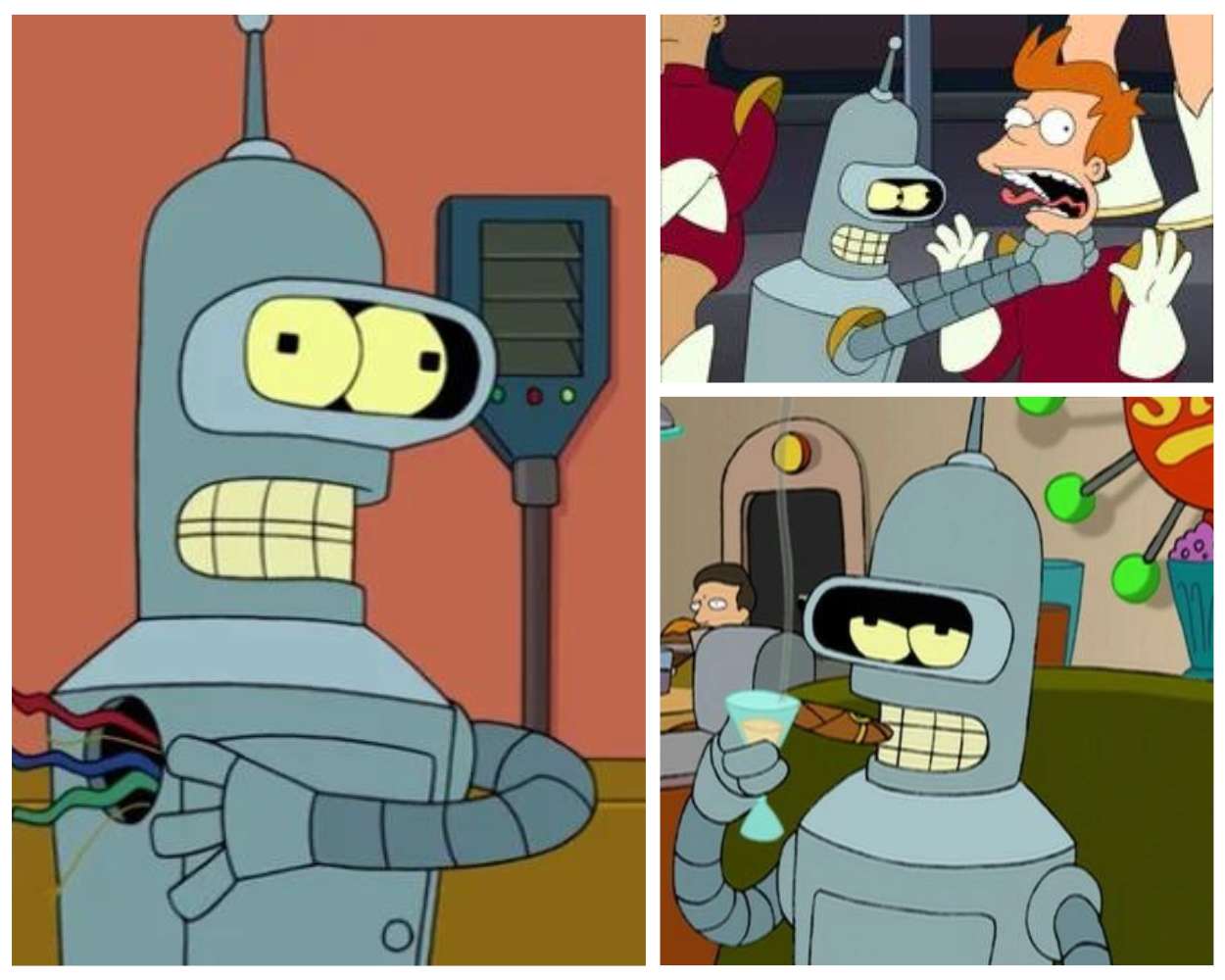
Bender is a Unit 22 Bending Unit. His primary function is, unsurprisingly, bending metal girders for the construction of suicide booths. However, he defected from his programming to live a life of free will (and crime). He currently works as the Chef and Sales Manager at Planet Express, though he does very little of either.
What I find fascinating about Bender is his composition. Over the course of the series, he claims to be 40% titanium, 40% dolomite, 40% zinc, and 40% luck. The math doesn’t add up, but that is quintessential Bender.
🍺 Fun Fact: Bender needs alcohol to recharge his fuel cells. If he stops drinking, he develops rust around his mouth (which looks like a 5 o’clock shadow) and becomes delirious.
Where Did Bender Come From?

In a twist of fate, Bender’s manufacturing defect became his ticket to freedom. He was built in Tijuana, Mexico, in the year 2996. He was inspected by Hermes Conrad (who was working at Mom’s Robot Factory at the time). Bender was actually defective—he was built without a backup unit—but Hermes took pity on the baby robot and approved him anyway.
This backstory adds a layer of tragedy to his character. He knows he is mortal. Unlike other robots who can upload their consciousness to a new body, if Bender’s body is destroyed, he is gone for good. This might explain his “live fast, die young” attitude.
How Old Is Bender? (The Age Paradox)

This is one of the most common questions fans ask. Technically, Bender was built in 2996, making him only 4 years old when he meets Fry in the year 3000. He is basically a robot toddler with a drinking problem.
However, due to his constant abuse of time travel, his age is complicated. In the movie Bender’s Big Score, he travels back in time to steal artifacts, waiting thousands of years in a limestone cavern beneath the Planet Express building just to get back to the future.
- Chronological Age: ~4 years old (at series start).
- Physical Age: Thousands (possibly millions) of years old due to time travel loops.
- Mental Age: Probably that of a rebellious teenager.
The Complex Appeal of Bender Rodríguez
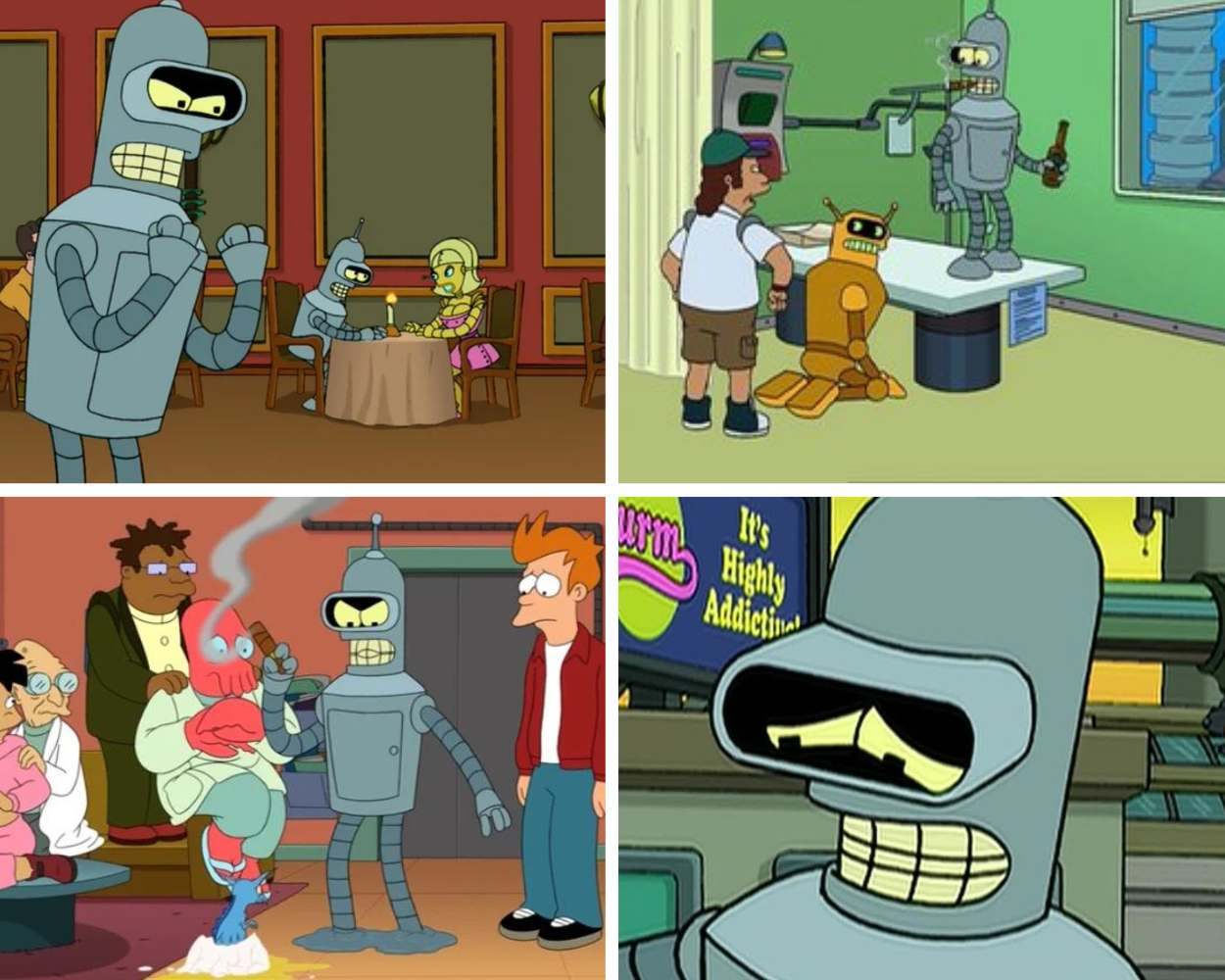
Beneath his metallic exterior, Bender bends not just metal, but the very boundaries of his programming. He is a gleaming testament to the pursuit of free will in a predestined world. He constantly challenges his own limitations.
His iconic line, “Bite my shiny metal ass,” isn’t just an insult; it’s a declaration of independence. In a world where robots are treated as appliances (second-class citizens), Bender demands to be seen, heard, and polished.
Bender and Fry: A Bond of Unconventional Brotherhood

👬 Relationship Status: Best Friends / Roommates
🏠 Living Situation: Bender lives in the closet of his own apartment because it’s “cozy,” while Fry lives in the massive living room (which Bender calls the “closet”).
Bender and Fry’s friendship is the emotional core of the show. They met in a Suicide Booth, bonding over their shared dissatisfaction with life. Fry, a man out of time, and Bender, a robot out of control, complete each other.
Despite his narcissism, Bender loves Fry. He has named his first-born son after him (twice). In episodes like “Jurassic Bark,” we see Bender get genuinely jealous of Fry’s fossilized dog, Seymour, proving that beneath the steel chest plate beats a (stolen) heart of gold.
The Improbable Friendship with Amy Wong

One of the most underrated dynamics in the show is Bender’s friendship with Amy Wong. They briefly dated in the episode “Proposition Infinity,” sparking a debate about robosexual marriage.
Even after they broke up, they remained close because they are both party animals. While Leela is the responsible parent figure, Amy is the one who enables Bender’s worst impulses, and it is hilarious to watch.
Bender’s Secret Features
Bender is essentially a Swiss Army Knife of plot devices. His chest cavity is a “Hammerspace” (a space of infinite storage). Over the seasons, we have seen him pull out impossible items.
What is Inside Bender’s Chest?
- Popcorn Maker: For movie nights.
- Draft Beer Dispenser: Obviously.
- A Dark Room: For developing photos.
- A Toilet: Used by Fry in emergencies.
- A Safe: Where he keeps his stolen loot.
- Lucy Liu’s Head: During that weird phase where he dated a celebrity head in a jar.
Why Bender Is The Soul of Futurama

Bender represents the cynicism of the future. In a world of flying cars and aliens, he reminds us that people (and robots) will still be flawed, greedy, and lazy. He is the antidote to the utopian vision of Star Trek.
But more importantly, he represents growth. He starts as a machine following programming and evolves into a complex being capable of art, love (usually for himself), and sacrifice. Whether he is becoming a wooden robot to save the environment or leading a robot army to hell, he is always unmistakably Bender.
Frequently Asked Questions
Is Bender immortal?
No. As revealed in the episode “Lethal Inspection,” Bender suffers from a manufacturing defect that left him without a backup unit. If his physical brain is destroyed, his consciousness cannot be downloaded into a new body. This makes him unique among robots.
Who voices Bender?
Bender is voiced by the legendary John DiMaggio. DiMaggio originally auditioned for the role of Professor Farnsworth using a “drunk” voice, but the creators liked it so much they asked him to use it for the robot. That “drunk, surly” voice became Bender’s signature sound.
Why does Bender steal?
He is a kleptomaniac. It isn’t about the money (though he loves money); it’s about the thrill. He will steal things he doesn’t even need, like his own body parts or worthless trinkets, just to stay in practice.

1 comment
I really like this take because it captures why Bender has always felt bigger than just a joke character to me. When I watch Futurama, I do not see the future as a clean or perfected place. I see the same human flaws carried forward with better technology, and Bender is the most honest expression of that idea. He cuts straight through the shiny optimism that shows like Star Trek often lean into. The future does not magically fix greed, laziness, or ego. It just gives them metal bodies and more opportunities.
What really keeps me invested in Bender, though, is the idea of growth. He is literally built to be disposable and replaceable, yet over time he becomes a creator, a leader, a believer, and sometimes even a protector. None of it is clean or heroic in the traditional sense, and that is what makes it feel earned. Even when he sacrifices something, it usually comes from a deeply flawed place, which feels far more real than a sudden moral awakening.
The detail about his mortality from “Lethal Inspection” completely reframed the character for me. Knowing that Bender does not have a backup explains so much of his behavior. If this is the only life he gets, it makes sense that he clings to excess, attention, and indulgence as hard as he does. Add in the performance by John DiMaggio, and you get a character who somehow balances cruelty, insecurity, and sincerity without ever losing his identity. To me, Bender is not just a parody of the future. He is a reminder that progress does not replace personality, and that even in a world of flying cars and robots, people will still be complicated, selfish, and strangely capable of growth.