
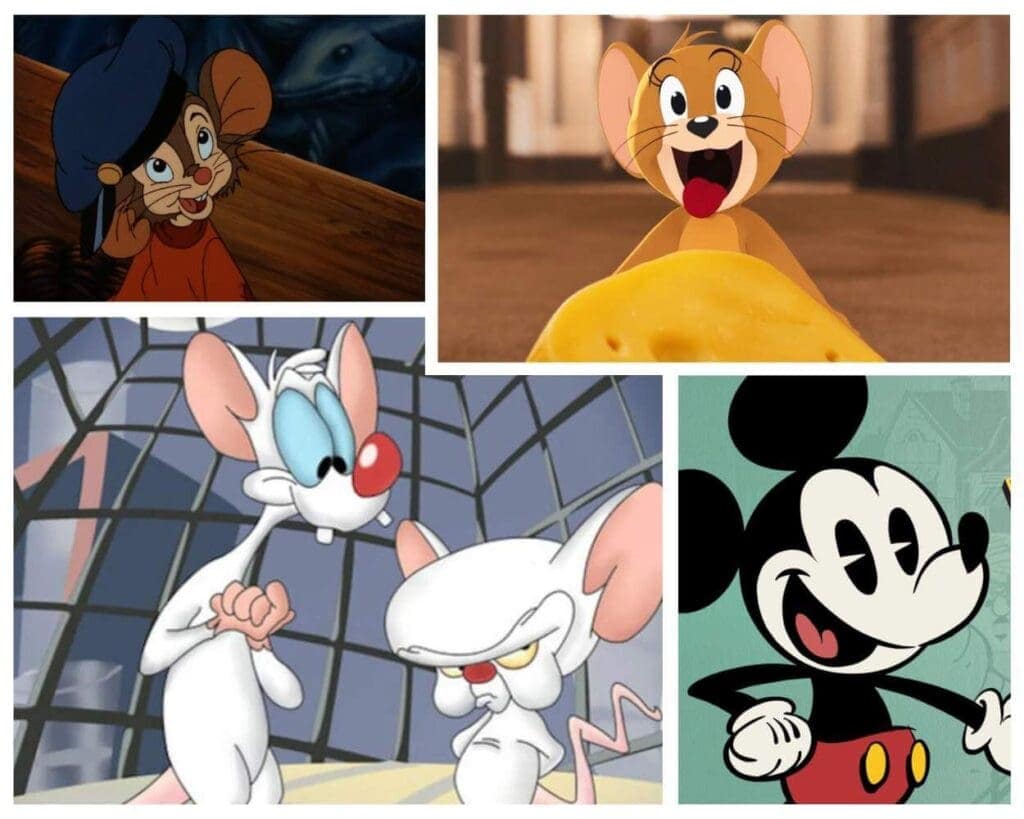
A mouse is the smallest thing a cartoon can build a hero out of, and that is exactly the point. In animation, mice are never merely about being cute; they are about power, specifically the gap between how little a character seems to have and how much they command.
The great mouse cartoon characters are tiny, fragile, and outmatched on paper, and they win anyway, dismantling cats, humans, and entire systems through wit, engineering, or a flat refusal to quit. Size is the setup; leverage is the punchline.
Rank them by fame and a pattern surfaces, because the mice we remember are the ones who proved that stature has nothing to do with how much room a character can take up.
The Underdog Paradox: Reading a Mouse’s Micro-Leverage
Strip away the whiskers and a cartoon mouse is a study in leverage, the art of moving something huge from a position of almost no power.
The measure that separates a legend from a background rodent is micro-leverage: the specific tool a mouse uses to punch this far above its weight.
Three tools cover almost all of them.
- The Saboteur (Wit). Wins by outsmarting something bigger. Trickery, misdirection, and an intimate knowledge of every crack and shortcut turn size into a tactical advantage. Jerry is the prototype.
- The Engineer (Ingenuity). Wins by building, planning, or deducing. Tools, contraptions, and organized intellect make raw size irrelevant. Brain and the Rescue Aid Society live here.
- The Persister (Heart). Wins by refusing to quit. Aspiration, loyalty, and endurance outlast every giant in the room. Mickey and Fievel are its patron saints.
The role has also drifted by decade.
The 1940s built the mouse as a tactical saboteur, Jerry outfoxing Tom; the 1980s recast it as an urban explorer picking through a huge world, Basil in The Great Mouse Detective; and the modern era promoted it to cultural critic, the mouse who judges and reshapes the human world, Remy in Ratatouille.
Mouse Cartoon Characters, Ranked by Popularity
The order runs on cultural footprint: franchise reach, cross-generational recognition, and how widely each mouse cartoon character is still searched and referenced today. Design and staying power break the ties.
Itchy (The Simpsons)
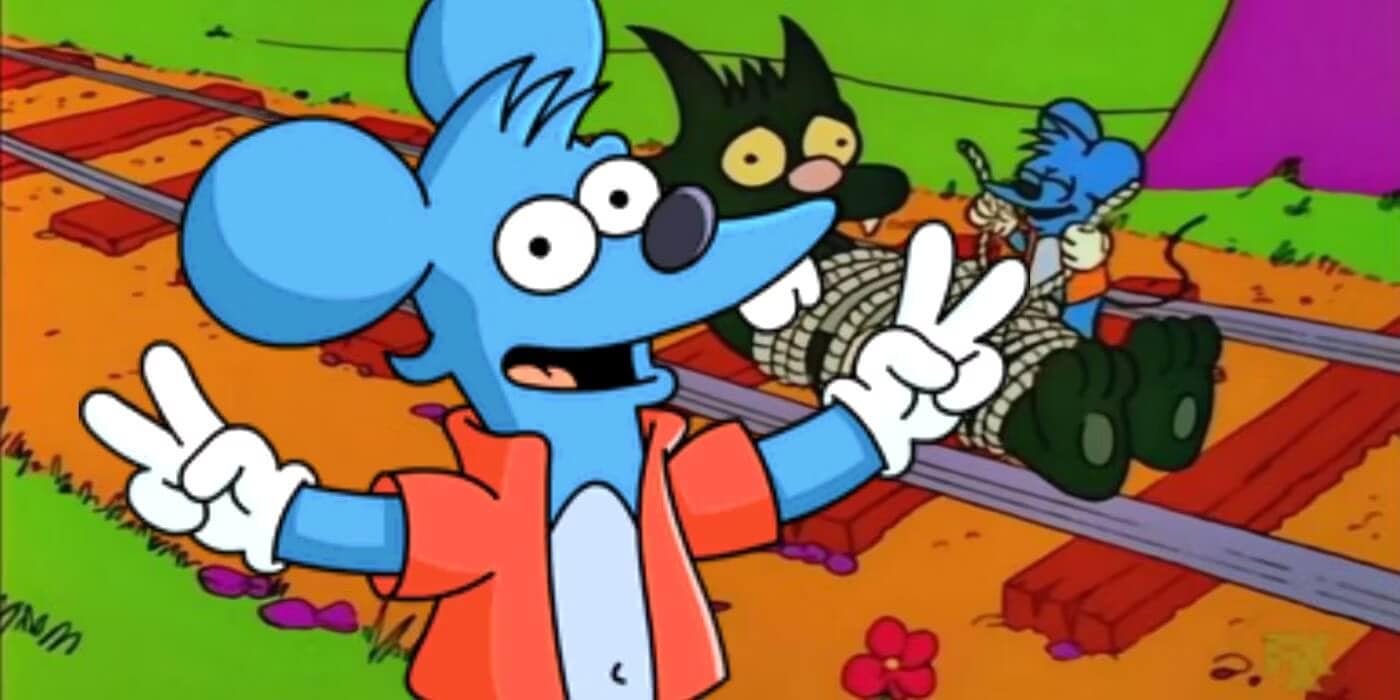
Itchy is the mouse cartoon character as weaponized malice, the star of The Simpsons’ show-within-a-show and a gleeful parody of every cat-and-mouse cartoon before him. Where Jerry merely outwits his cat, Itchy annihilates Scratchy with inventive, cartoonishly gruesome creativity in every short. His leverage is imagination turned lethal, the tactical saboteur pushed to its darkest, funniest extreme.
- Archetype: The Saboteur (Wit)
- Micro-leverage: improvised mayhem as art; the trickster mouse with no off switch.
- Why he closes the list: a merciless satire of the exact archetype this list celebrates.
Danger Mouse (Danger Mouse)
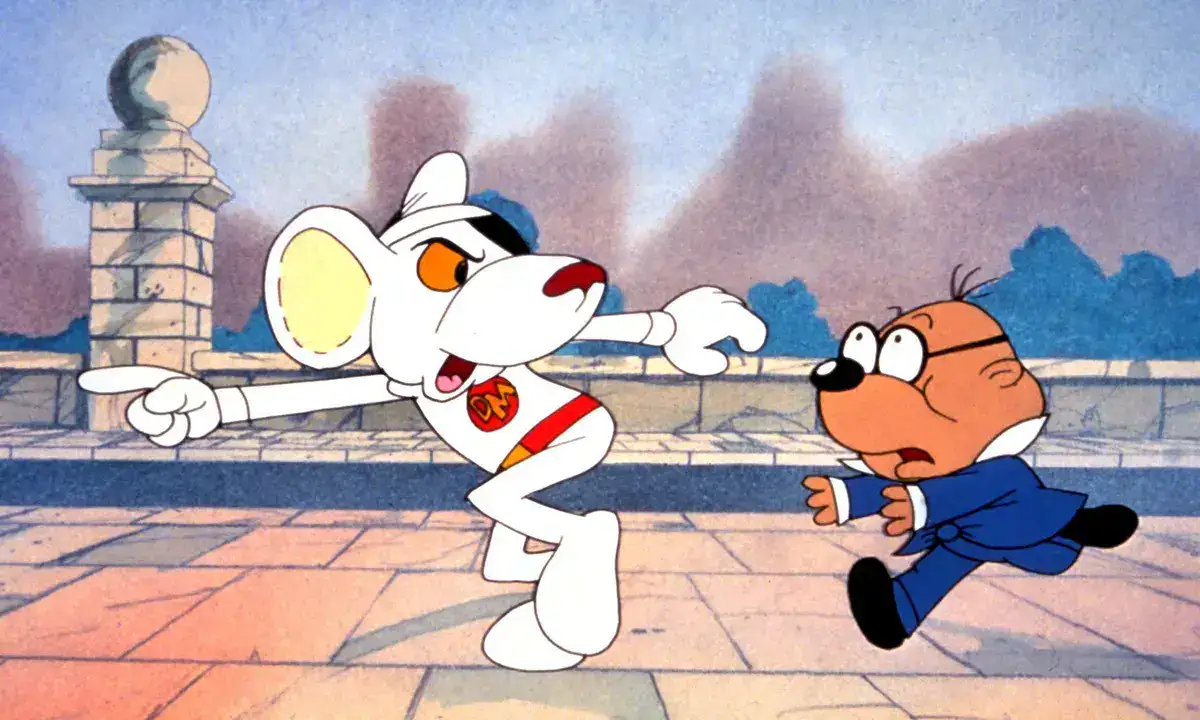
Danger Mouse is the world’s greatest secret agent packed into a one-eyed white mouse, a British spy spoof that turned espionage into slapstick.
The 1981 series sends him and his panicky sidekick Penfold against absurd villains, and he wins on wit, gadgetry, and unflappable dapper composure. His leverage is tradecraft: among mouse cartoon characters, the smallest agent in the room is also the sharpest.
- Archetype: The Saboteur (Wit)
- Micro-leverage: spycraft and nerve; outsmarting villains twice his size.
- Why he counts: the eyepatch alone is one of animation’s great silhouettes.
Roquefort (The Aristocats)
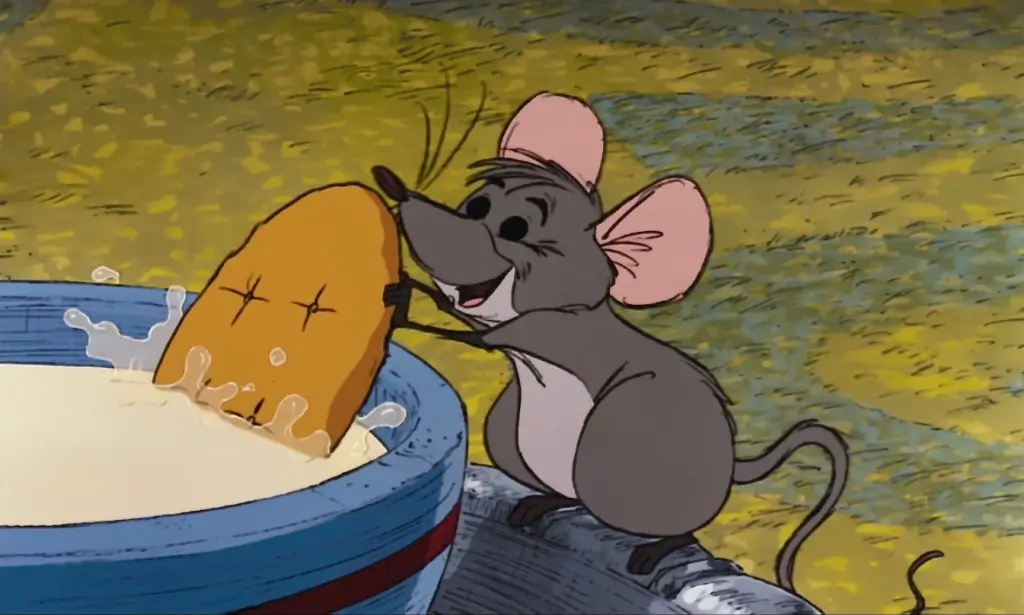
Roquefort is the mouse counselor of The Aristocats, a timid Parisian who serves as the cats’ loyal, legal-minded friend. The 1970 film uses him as the small ally who risks himself to help Duchess and her kittens outmaneuver the scheming butler Edgar.
His leverage is loyalty under pressure, a nervous mouse who does the frightening thing because his friends need it done.
- Archetype: The Persister (Heart)
- Micro-leverage: devotion over fear; the timid friend who comes through in the clutch.
- Why he is here: a gentle deep-cut mouse cartoon character with an outsized sense of duty.
Timothy Q. Mouse (Dumbo)
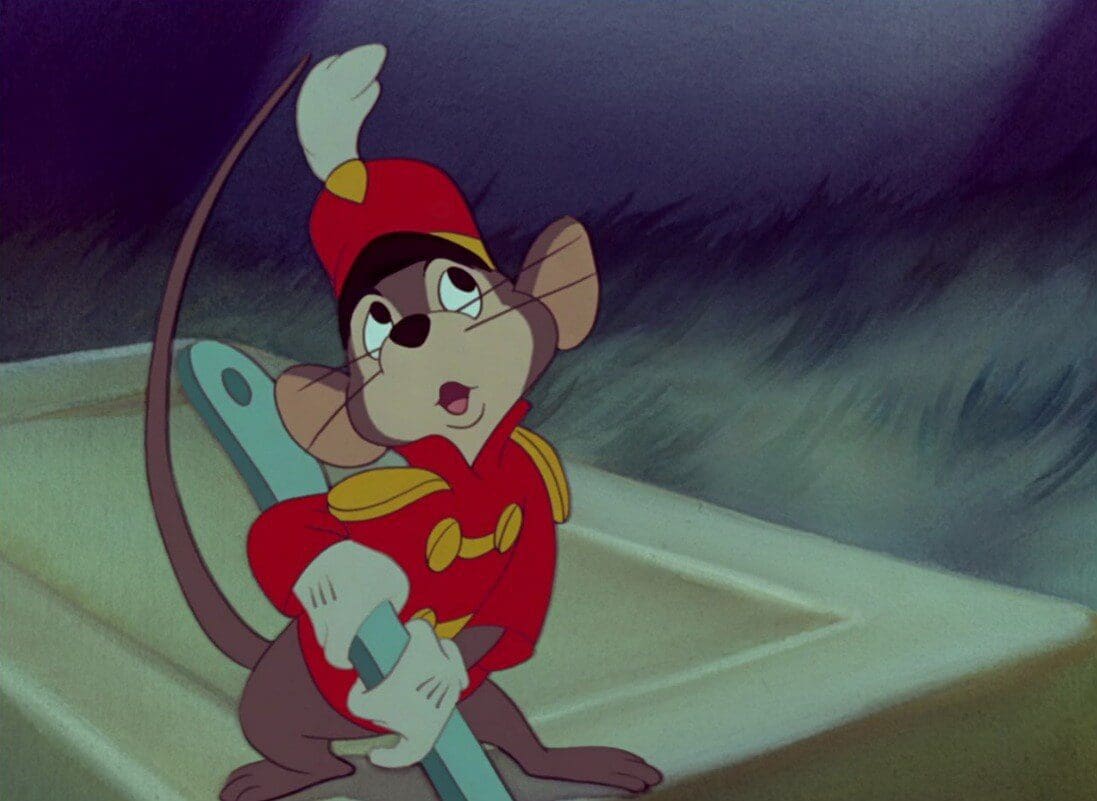
Timothy Q. Mouse flips the oldest gag in the book, a mouse who terrifies elephants and uses it to befriend the loneliest one.
Disney’s 1941 Dumbo hands him the emotional engine of the film: he is the small voice of belief that convinces a bullied elephant he can fly. His leverage is conviction, the persistence to see potential where the whole circus sees a freak.
- Archetype: The Persister (Heart)
- Micro-leverage: belief as a lever; a mouse who lifts an elephant with encouragement.
- Why he is here: the most quietly essential mentor in the Disney canon.
Bernard (The Rescuers)
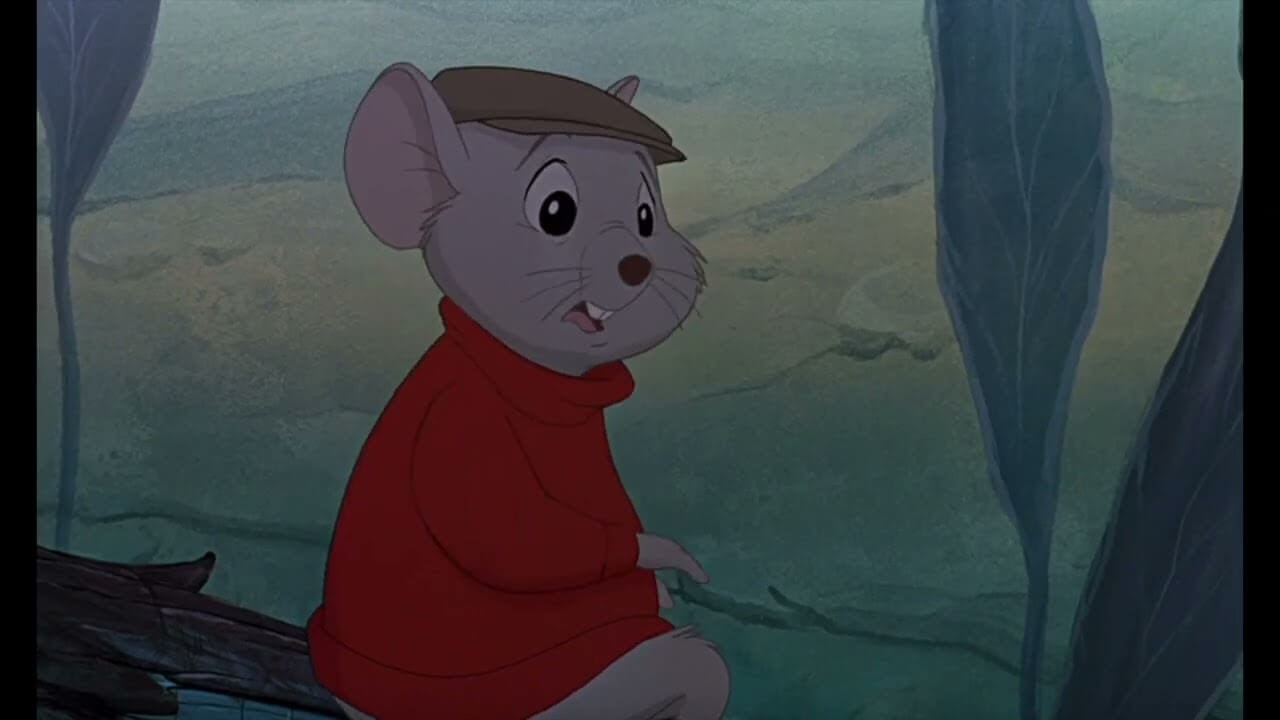
Bernard is the Rescue Aid Society’s anxious janitor turned reluctant field agent, the detail man who notices the thing everyone else misses.
The 1977 film makes his caution a strength, pairing his methodical problem-solving with Miss Bianca’s daring to pull off a rescue neither could manage alone. His leverage is thoroughness: he wins by out-preparing a threat, not out-muscling it.
- Archetype: The Engineer (Ingenuity)
- Micro-leverage: preparation over bravado; the careful one who engineers the escape.
- Why he counts: the everyman half of Disney’s most beloved mouse duo.
Miss Bianca (The Rescuers)
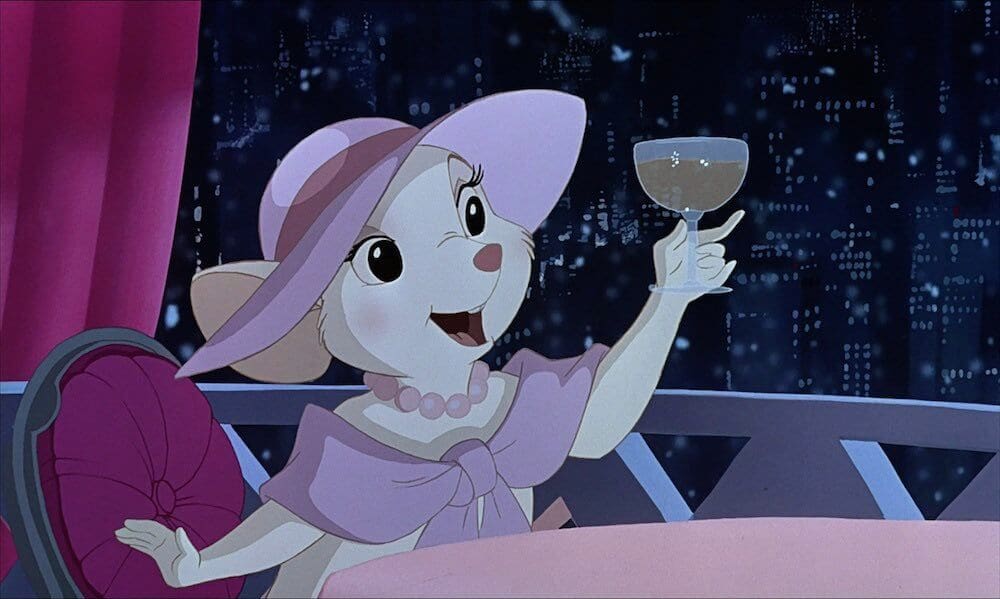
Miss Bianca is the elegant brains of the Rescue Aid Society, a white mouse who runs international rescue missions in a fur coat.
The 1977 Disney film pairs her poise with real problem-solving, and she drives the plan to save Penny as much as any animated hero would. Her leverage is competence: she treats an organized mouse network as a tool powerful enough to take on human villains.
- Archetype: The Engineer (Ingenuity)
- Micro-leverage: organization as power; a global rescue network run entirely by mice.
- Why she is here: one of animation’s first mouse heroines with real agency.
Gus (Cinderella)
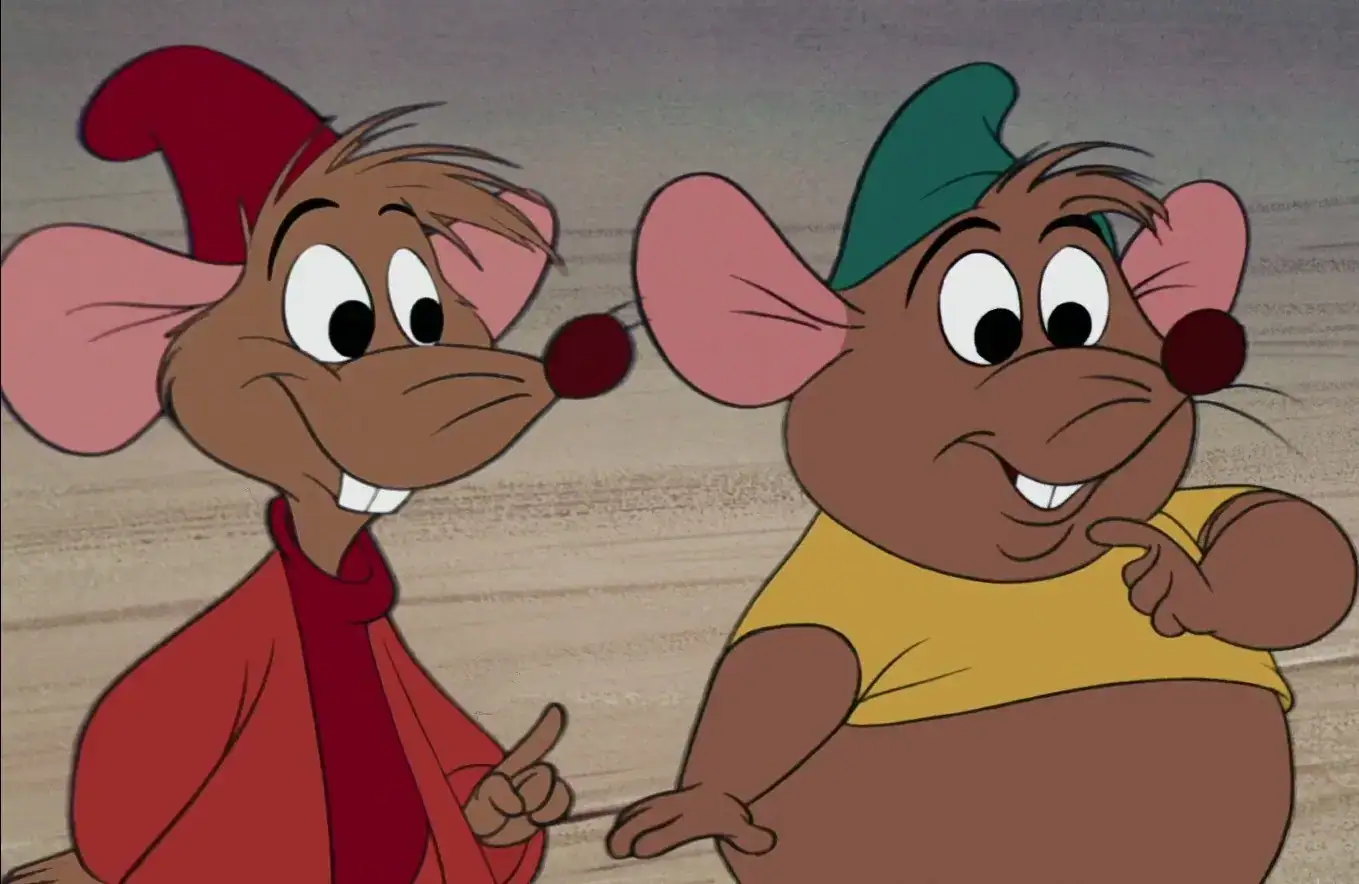
Gus is Jaq’s opposite number, the plump, slow, cheese-loving heart of the Cinderella mice.
He is clumsy and easily frightened, yet the 1950 film keeps handing him the moments that require raw courage over cleverness, and he keeps rising to them. His leverage is loyalty: he is not the smart one, but he is the one who will not run when it counts.
- Archetype: The Persister (Heart)
- Micro-leverage: courage over cunning; the timid one who shows up anyway.
- Why he counts: proof heart can carry a character as far as wit.
Jaq (Cinderella)
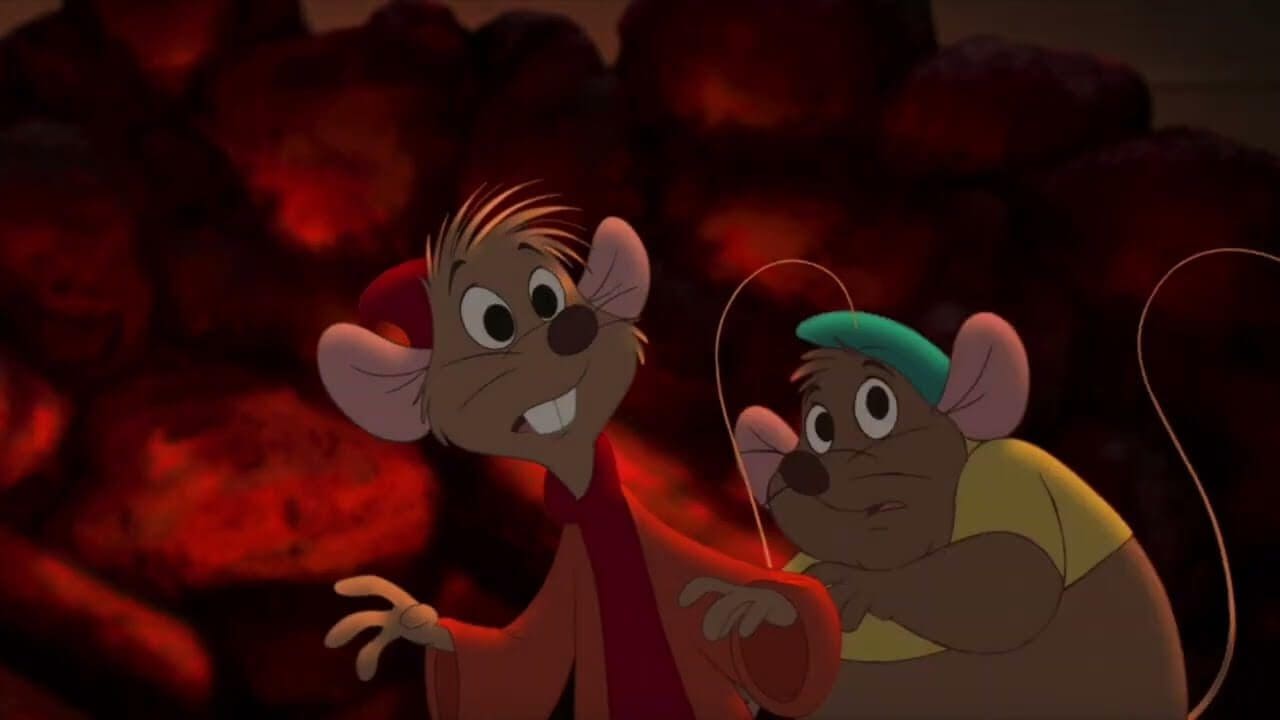
Jaq is the tactician of Cinderella’s mouse crew, the quick, clever one who plans the operations the others carry out.
The 1950 film leans on him for its sharpest suspense, organizing the run to free Cinderella from her locked tower while dodging Lucifer the cat. His leverage is planning: he treats a house full of giant threats as a puzzle to be solved.
- Archetype: The Saboteur (Wit)
- Micro-leverage: the strategist; outmaneuvering a cat through pure planning.
- Why he lands: the brains of the Cinderelly rescue squad.
Pinky and the Brain (Animaniacs)
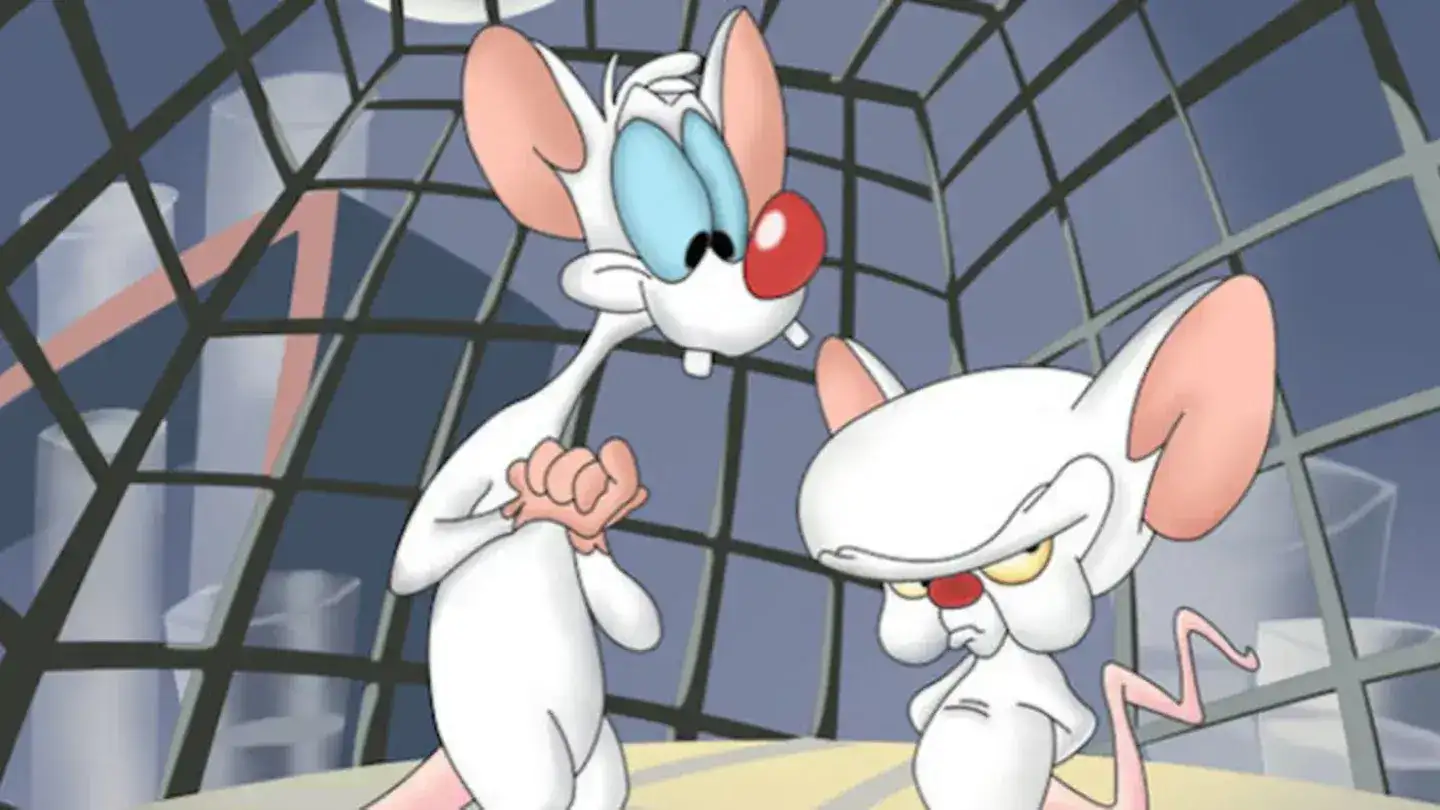
Pinky and the Brain are the mad-scientist wing among mouse cartoon characters, one genius and one fool plotting to take over the planet from a lab cage every single night.
Brain is pure ingenuity, engineering baroque schemes that collapse for reasons Pinky never sees coming, and their 1990s run turned that loop into a comedy institution. Their leverage is intellect aimed impossibly high, a mouse trying to conquer the world with a blueprint and a cage-mate.
- Archetype: The Engineer (Ingenuity)
- Micro-leverage: brainpower over body; world domination attempted one contraption at a time.
- Why they count: the funniest argument that a mouse could out-think the whole planet.
Fievel Mousekewitz (An American Tail)
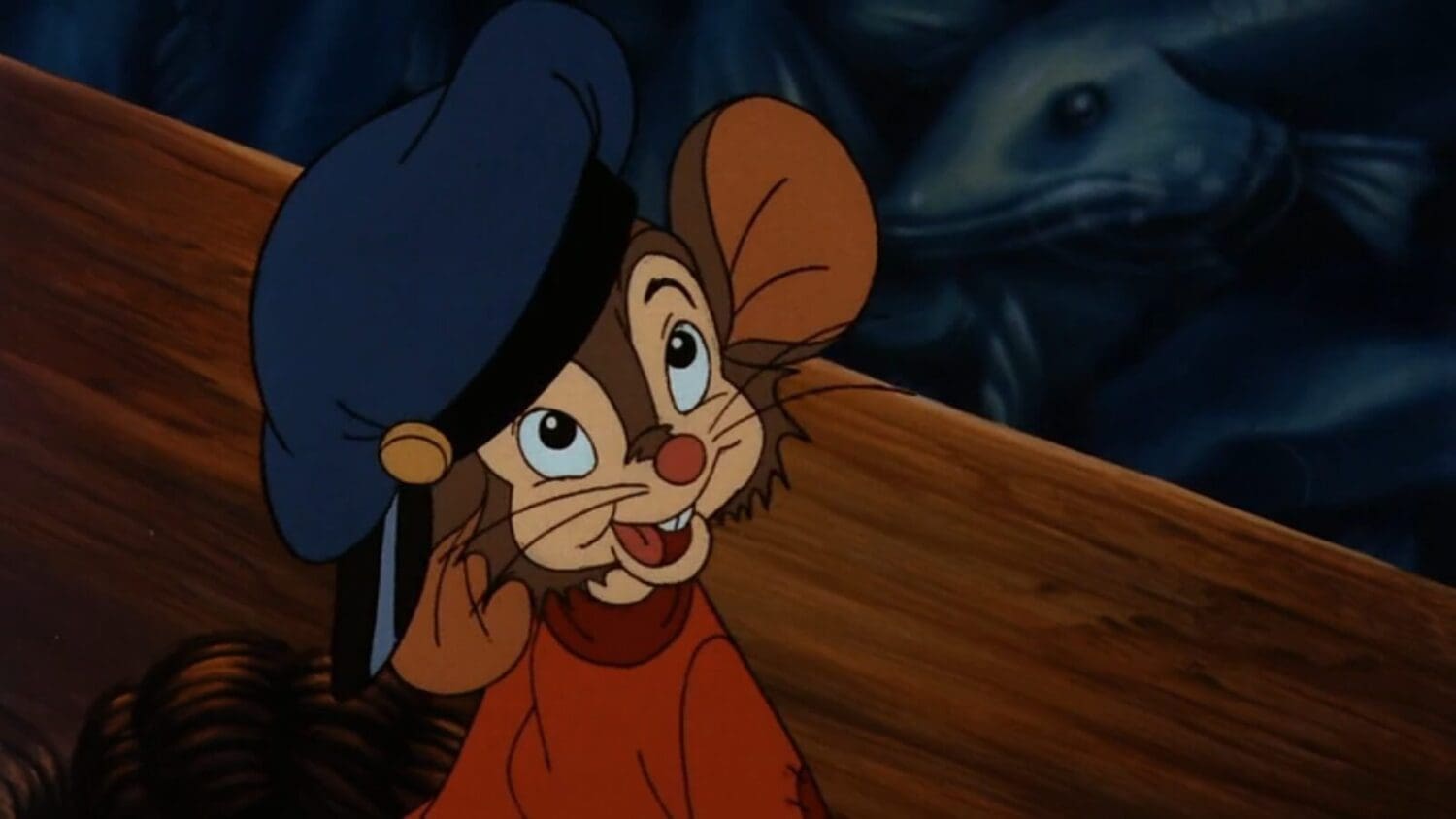
Fievel Mousekewitz carries one of the great persistence arcs among mouse cartoon characters, a young mouse separated from his family and crossing an entire country to find them again. An American Tail put him on screen in 1986, and his refusal to stop searching, set to “Somewhere Out There,” made him an emblem of hope for a generation.
His leverage is heart: nothing he faces is bigger than his conviction that he will find his way home.
- Archetype: The Persister (Heart)
- Micro-leverage: hope as fuel; a small dreamer who out-endures every obstacle.
- Why he is here: the underdog paradox told as a sweeping epic.
Mighty Mouse (Terrytoons)
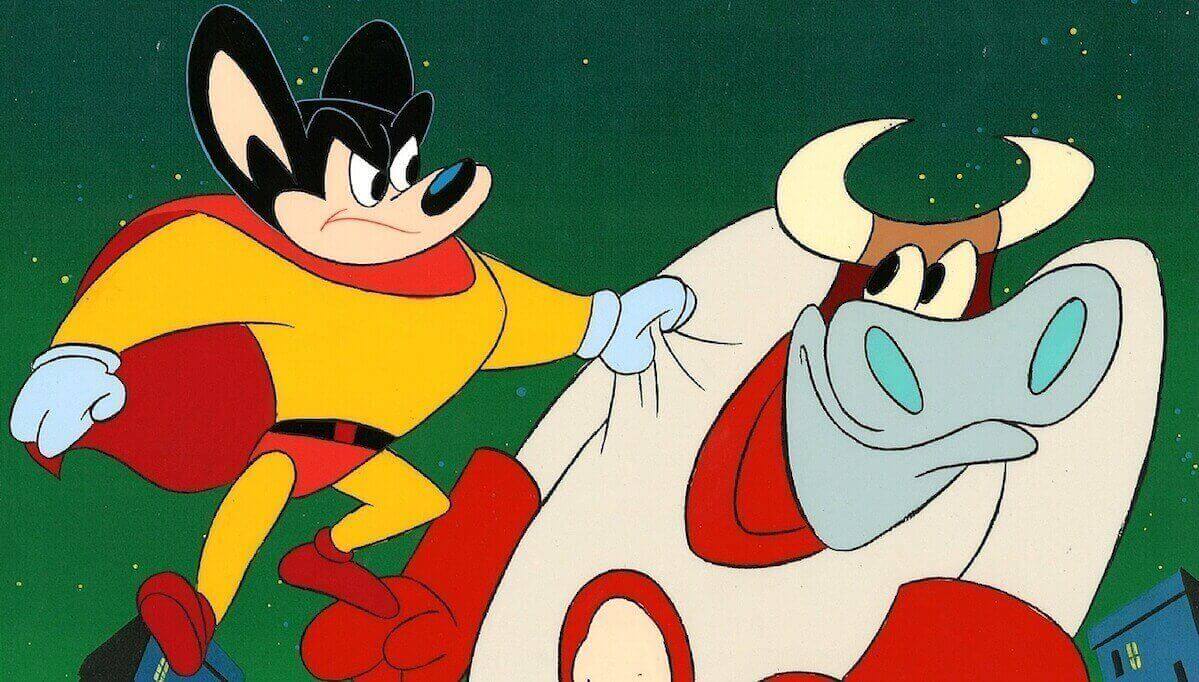
Mighty Mouse is the joke that answers the underdog paradox by cheating it, a mouse who simply got superpowers.
Terrytoons launched him in the early 1940s in a cape and a mouse-with-wings emblem, a straight parody of Superman that outlived most of the heroes it spoofed across eighty-plus shorts. He is the one mouse here whose leverage is literal strength, which is exactly what makes him funny.
- Archetype: The Persister (Heart)
- Micro-leverage: the paradox inverted; the small one handed actual super-strength.
- Why he ranks: a mid-century icon who made mouse and superhero rhyme.
Stuart Little (Stuart Little)
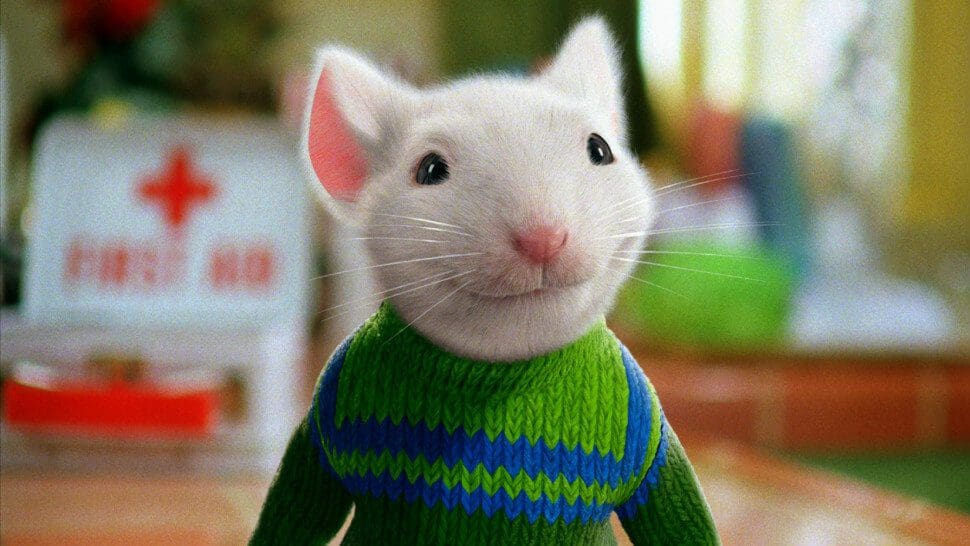
Stuart Little is the mouse adopted into a human family, a two-inch New Yorker navigating a world built ten times too big for him. E.B. White wrote him in 1945, and the hit films at the turn of the millennium made him a household name, but the core stays constant: Stuart treats his size as a detail, not a limit. He sails toy boats and races toy cars through a giant city on nothing but nerve.
- Archetype: The Persister (Heart)
- Micro-leverage: unshakable poise; a tiny body that simply refuses to feel small.
- Why he lands here: the plucky outsider who belongs everywhere he goes.
Speedy Gonzales (Looney Tunes)
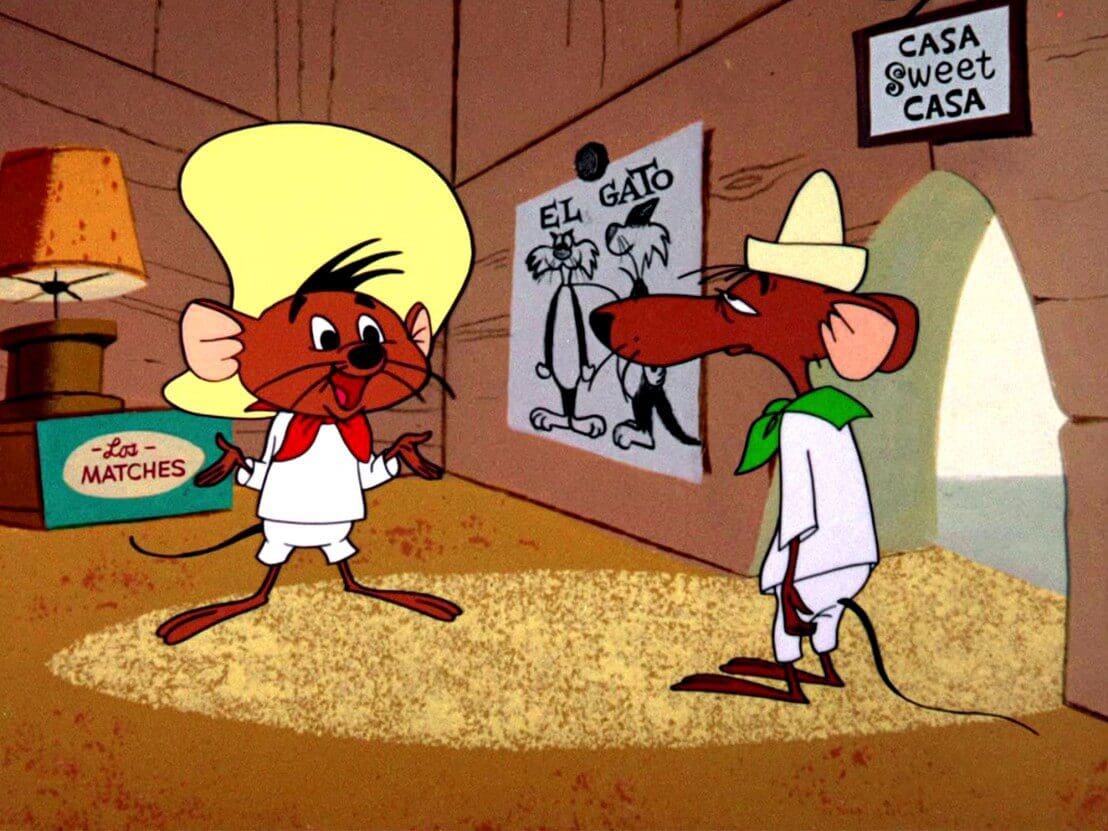
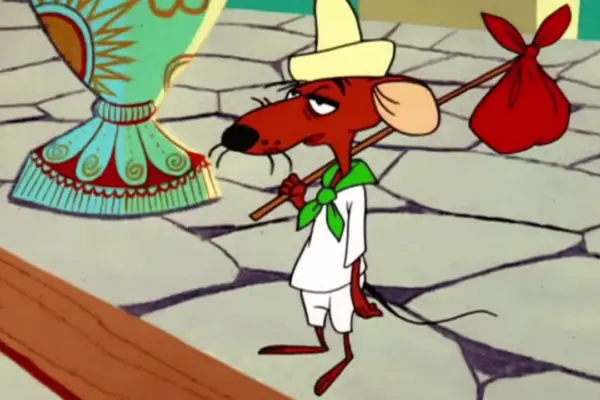
Speedy Gonzales turns speed into pure leverage, the fastest mouse in Mexico outrunning every cat that tries to catch him. Robert McKimson introduced him in 1953, and the whole design is motion, the oversized sombrero and blur lines telling you he is gone before a predator finishes the thought. He is the hero of his village, the little guy who wins by being uncatchable.
- Archetype: The Saboteur (Wit)
- Micro-leverage: velocity as a superpower; you cannot trap what you cannot catch.
- Why he counts: a rescue hero disguised as a speedster.
Jerry Mouse (Tom and Jerry)
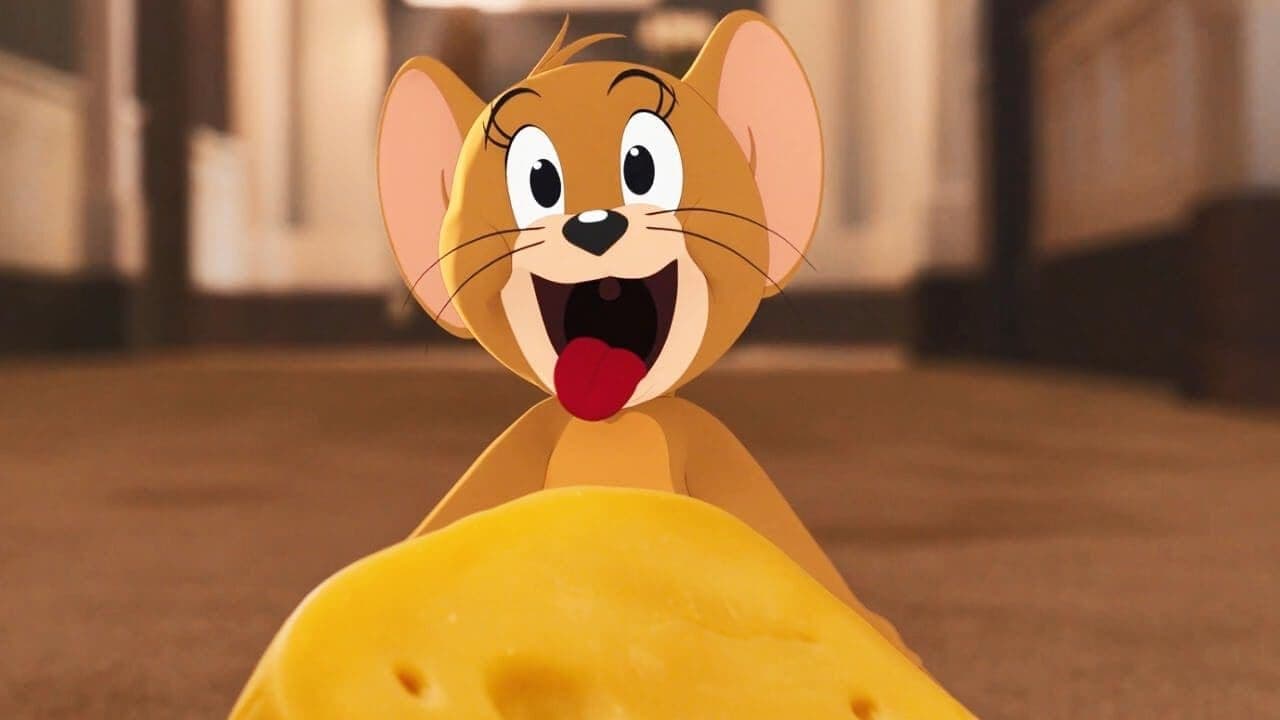
Jerry Mouse is the blueprint for the tactical saboteur, a small brown mouse who has spent since 1940 humiliating a cat ten times his size.
Hanna and Barbera designed Jerry to disappear, all soft curves and negative space built to vanish into a wall crack the instant Tom lunges. That design is the strategy: he wins because he is small enough to exploit every gap Tom cannot reach.
- Archetype: The Saboteur (Wit)
- Micro-leverage: the home-field advantage of being small; every crack and floorboard becomes a weapon.
- Why he endures: the purest expression of the underdog paradox in animation.
Minnie Mouse (Disney)
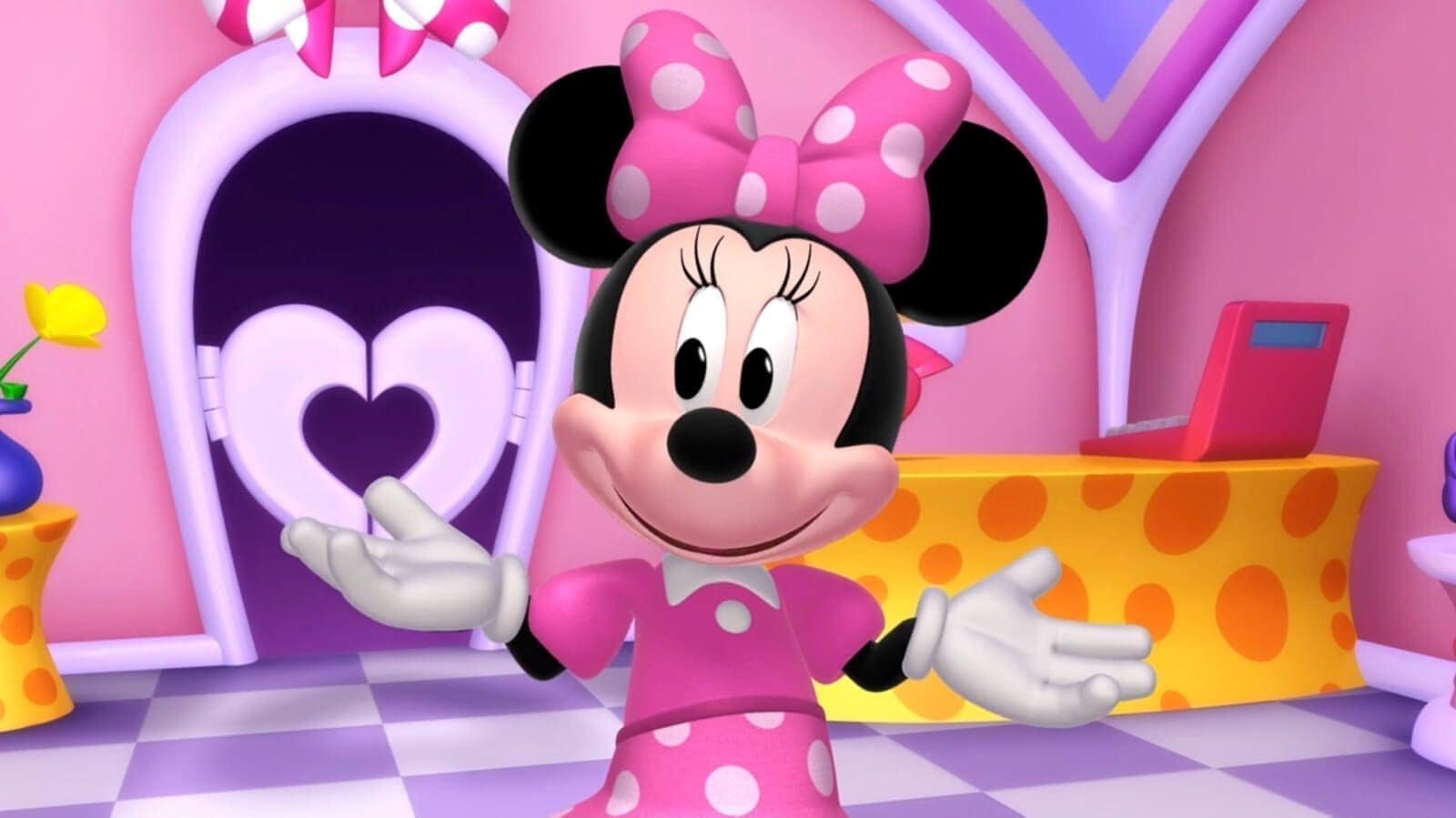
Minnie Mouse arrived alongside Mickey in 1928 and quietly became an icon on her own terms. The old shorts liked to cast Minnie as the damsel, but the character underneath is resourceful, independent, and kind, and her polka-dot bow is as instantly readable a piece of design as her partner’s ears.
Her leverage is presence: she turned a supporting role into a permanent seat at the top of Disney’s roster.
- Archetype: The Persister (Heart)
- Micro-leverage: identity through design; a bow and a personality that refused to stay in the background.
- Why she ranks this high: half of the most famous duo in cartoons, and iconic on her own.
Mickey Mouse (Disney)
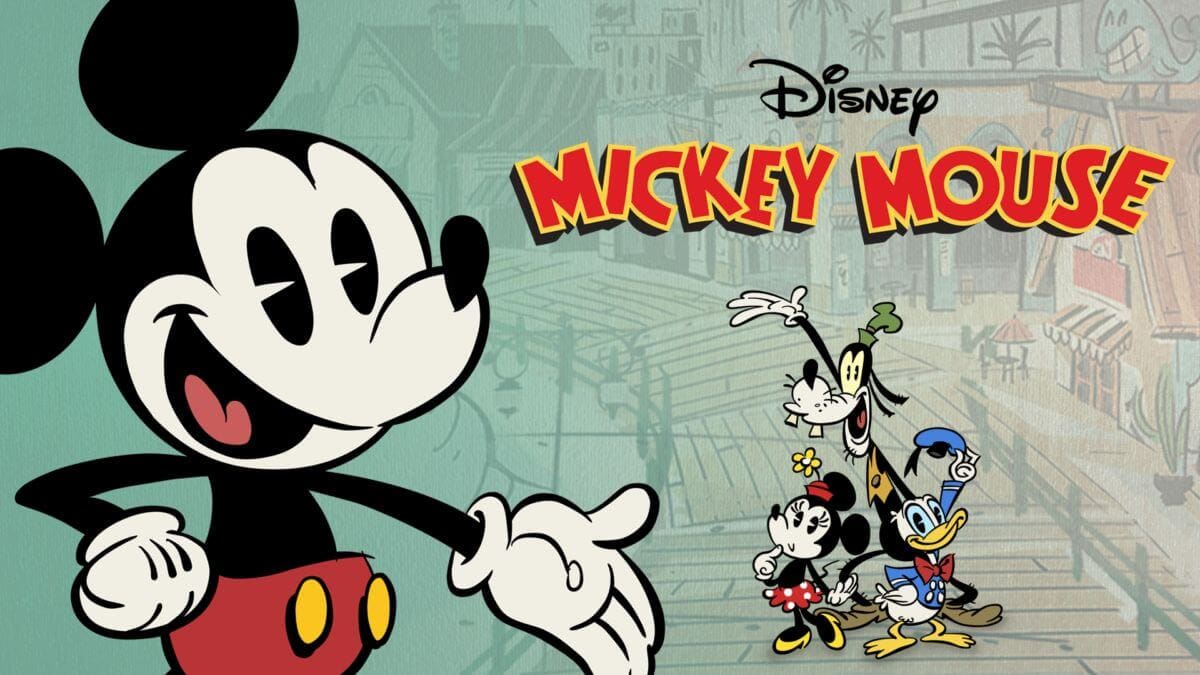
Mickey Mouse is not just the most famous mouse cartoon character in animation; he is the most reproduced character on earth, a three-circle silhouette so simple a child can draw it. Walt Disney and Ub Iwerks built Mickey in 1928 as a plucky everyman, and his real leverage was never strength but persistence, the small optimist who outlasts every setback and turned into an empire along the way. His design is the ultimate micro-leverage: a shape so clean it made one mouse into a global logo.
- Archetype: The Persister (Heart)
- Micro-leverage: pure staying power; a simple shape and a stubborn optimism that conquered a century.
- Why he is number one: no cartoon character, mouse or otherwise, is more recognizable.
Small Body, Big Leverage, In Short
Popularity crowns Mickey, Minnie, and Jerry, but the category rewards range: Fievel for heart, Brain for ambition, Speedy for pure velocity.
The mouse cartoon characters that endure all prove the same thesis in different keys, that the smallest body in the room can carry the most leverage.
That is the underdog paradox, and it is why the mouse never goes out of style.
Which mouse cartoon character wields the most leverage for you, a global icon like Mickey or a deep cut nobody expects?
Drop your pick in the comments.
The best cases might headline the next update.
Fun early animation fact: when Paul Terry and Terrytoons first created him in 1942’s The Mouse of Tomorrow, he was actually named Super Mouse. They changed his name to Mighty Mouse in 1944 when they realized another comic book company owned the rights to Supermouse. Such a classic parody that ended up outlasting its inspiration!