
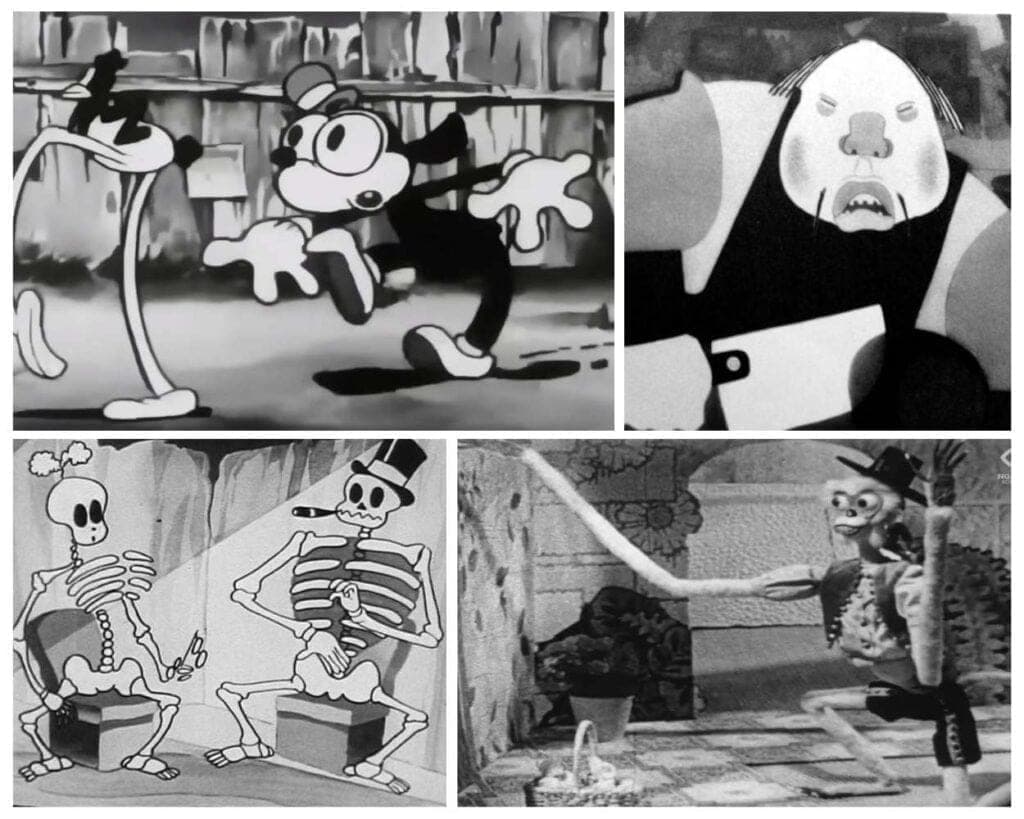
Early cartoons can feel unsettling in ways their creators may not have intended.
Characters bend as though they have no bones. Faces stretch, scenery comes alive, and cheerful music keeps playing while something impossible happens in the background.
Sometimes the darkness was deliberate.
Fleischer Studios sent Bimbo into graveyards, secret societies, and rooms that changed shape around him. Ladislas Starevich built a stop-motion underworld from fur, wire, scraps, and glass eyes.
Other films became creepy with age. Worn prints, damaged soundtracks, flickering projection, and handmade puppets can make an innocent musical experiment look like recovered footage from a nightmare.
This list contains 11 cartoons from the 1930s, plus The Skeleton Dance from 1929. That earlier Disney short belongs here because it helped establish the musical graveyard style that several later cartoons followed.
Before you watch
- Included: Eleven shorts from 1930-1935, plus one influential short from 1929
- Formats: Traditional animation, stop motion, and one unfinished Soviet film
- Important warning: Not every film was intended as horror
- Viewing: Copyright and restoration rights vary by title, country, and uploaded copy
Why Do Old Cartoons Feel So Creepy?
There is no single answer.
- Rubber-hose movement: Arms, legs, faces, and objects stretch without following realistic anatomy
- Unstable environments: Walls, roads, furniture, and shadows can become characters without warning
- Simple faces: Dot eyes and fixed smiles can look blank to modern viewers
- Early sound: Repetitive music and rough recording quality can make a scene feel hypnotic
- Old prints: High contrast, missing frames, scratches, and uneven speed change the original appearance
- Pre-Code freedom: Before stricter enforcement of Hollywood’s Production Code in 1934, American cartoons could be unusually morbid, suggestive, or violent
These shorts also were not made exclusively for small children.
They played in movie theatres as part of programs watched by mixed audiences. A cartoon could contain music for adults, topical jokes, death imagery, and slapstick without being separated into a modern children’s category.
The 1929 Prologue
12. The Skeleton Dance
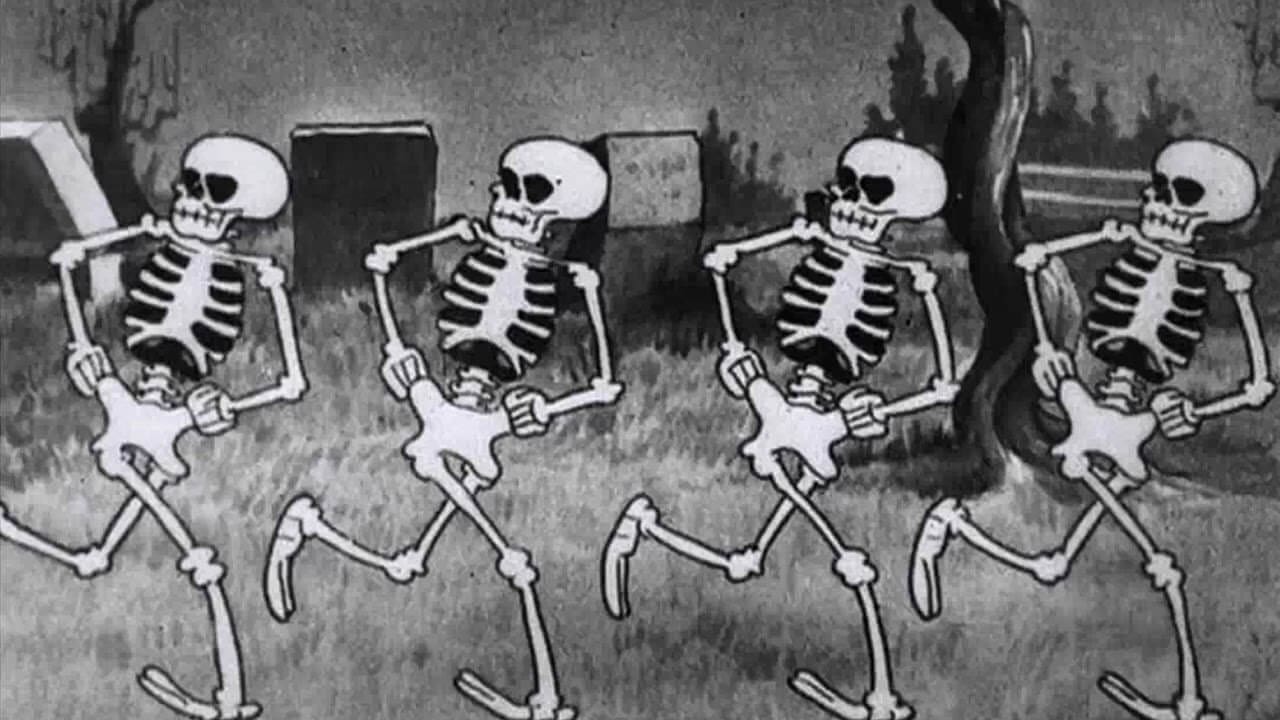
Four skeletons leave their graves and turn a cemetery into a musical stage.
That is nearly the entire story, but the simplicity is what makes the short so memorable.
Bones become instruments. One skeleton plays another like a xylophone. Cats fight, owls stare, and the dancers race back underground when morning arrives.
Film file
- Studio: Walt Disney Productions
- Release: August 22, 1929
- Series: The first Silly Symphony
- Music: Carl Stalling, using original and existing musical material
Disney created the Silly Symphonies as a place to experiment with music, mood, and movement without building every cartoon around Mickey Mouse. Disney’s official film entry identifies The Skeleton Dance as the first short in the series.
The Skeleton Dance shows how quickly that freedom led toward the macabre.
The short is playful rather than frightening, but the rattling bones and empty graveyard became part of the visual vocabulary of early sound cartoons.
Fleischer Studios’ Animated Nightmares
11. Swing You Sinners!
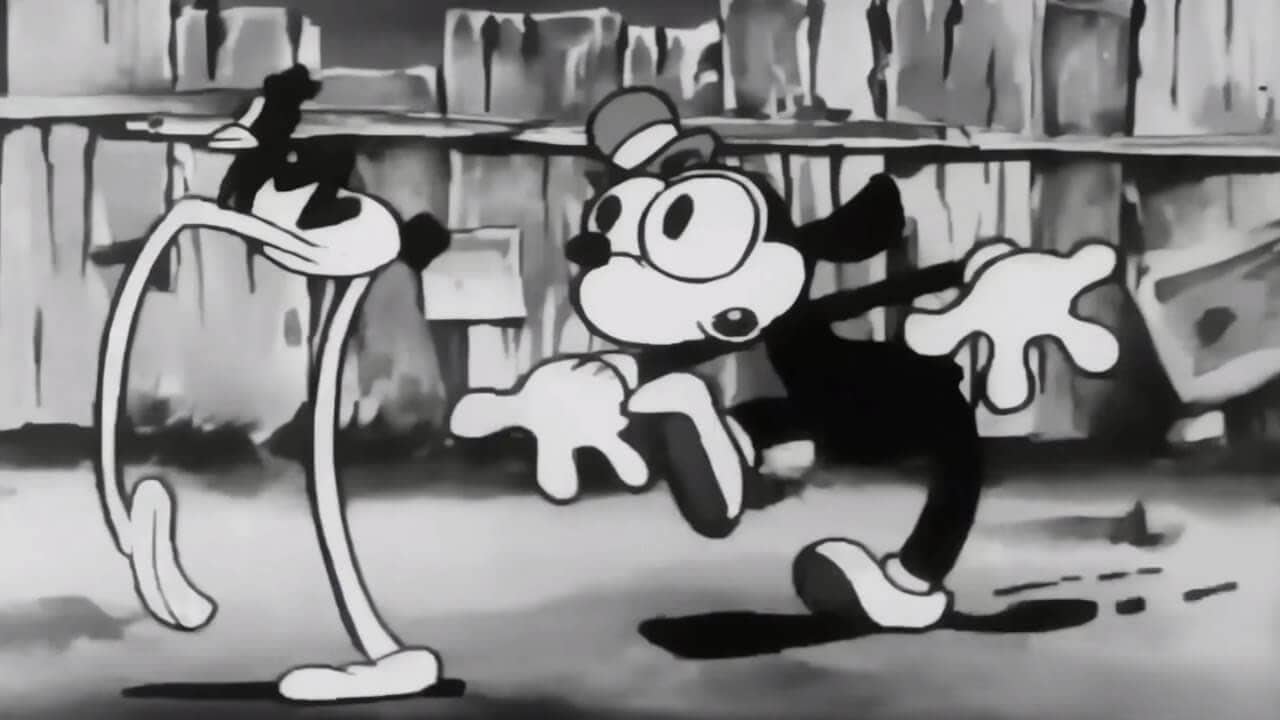
Bimbo tries to steal a chicken and runs from the police into a cemetery.
That decision turns a minor crime into a supernatural trial.
Gravestones accuse him. Ghosts sing about his sins. Buildings, trees, and pieces of the landscape become part of a punishment that grows louder and stranger as he tries to escape.
Film file
- Studio: Fleischer Studios
- Release: 1930
- Director: Dave Fleischer
- Star: Bimbo
The short is built around music rather than a conventional plot. Its title song drives the ghosts, the transformations, and the repeated accusations.
MoMA has highlighted the film in its Fleischer Cartoons: Spooky! Surreal! program as an example of the studio’s loose-limbed, macabre animation.
What makes it disturbing is not simply that Bimbo enters a graveyard.
It is that the entire world agrees he is guilty.
10. Bimbo’s Initiation
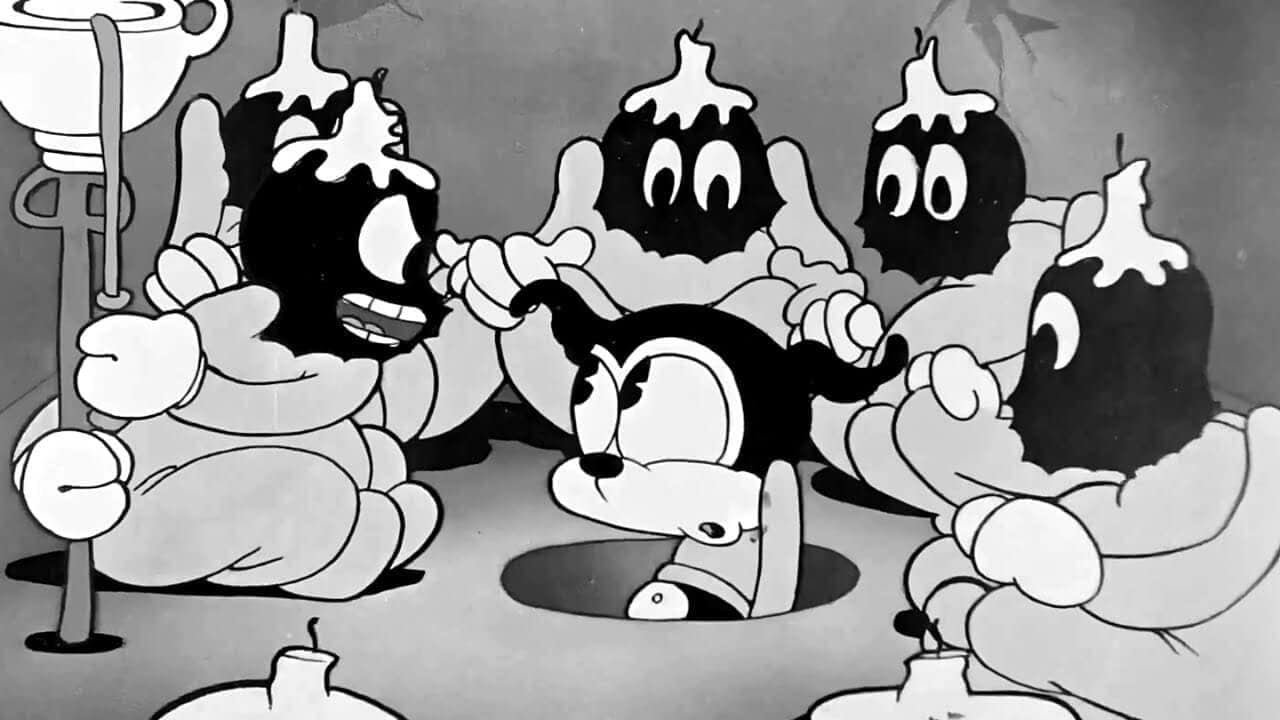
Bimbo falls through a manhole and lands inside a secret society’s underground headquarters.
Masked figures repeatedly ask him the same question:
“Wanna be a member?”
Every time he refuses, the floor drops away and sends him into another trap.
The rooms fold, rotate, stretch, and reconnect without obeying any stable map. By the time Betty Boop appears, the film has become less a story than an anxiety dream about being unable to leave.
Film file
- Studio: Fleischer Studios
- Release: July 24, 1931
- Director: Dave Fleischer
- Series: Talkartoon
Bimbo was not originally Betty Boop’s supporting pet.
He was already a Fleischer star when Betty appeared as a canine singer in Dizzy Dishes in 1930. Her design gradually became human, her popularity grew, and she eventually eclipsed him.
Bimbo’s Initiation captures the studio before that transition was complete.
Haunted Houses and Inflatable Towns
9. Spooks
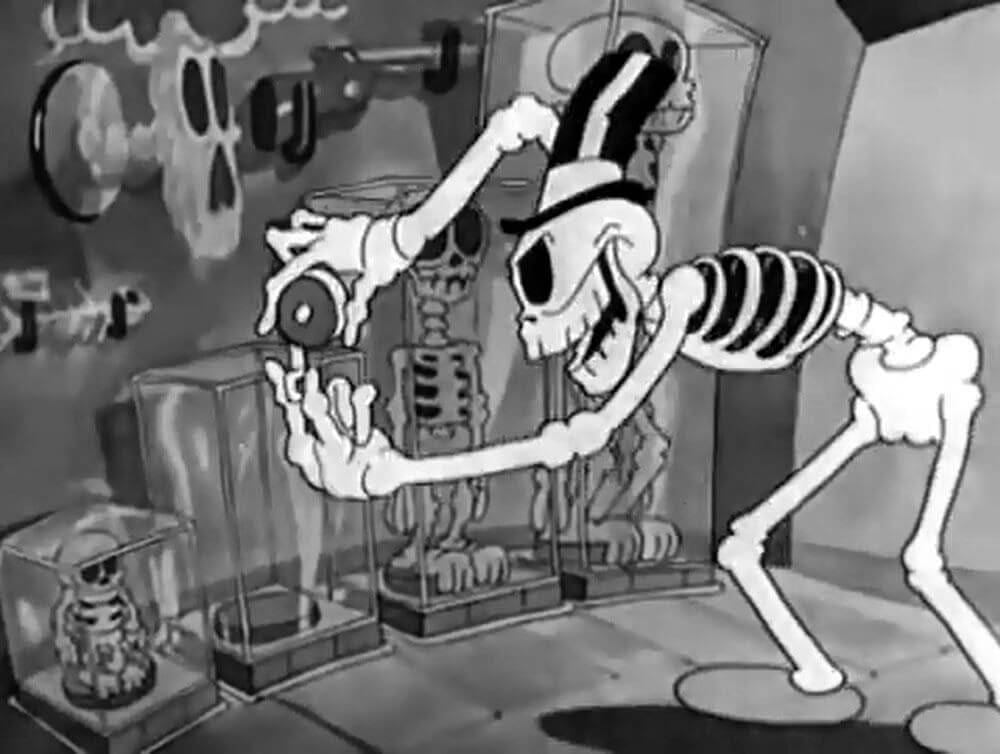
Oswald the Lucky Rabbit enters a haunted house filled with masks, skeletons, musical instruments, and references to The Phantom of the Opera.
The cartoon was produced in 1930 under Walter Lantz, after Oswald had passed out of Walt Disney’s control.
Film file
- Studio: Walter Lantz Productions for Universal
- Release: 1930
- Character: Oswald the Lucky Rabbit
- Style: Haunted-house comedy with musical and horror-film references
Oswald’s history gives the short an odd place in animation.
Disney and Ub Iwerks had created the character, but Universal controlled the rights. Losing Oswald helped push Disney toward creating Mickey Mouse.
By the time Spooks appeared, another studio was using the rabbit for a stranger and rougher kind of comedy.
8. Balloon Land

Everything in Balloon Land is inflatable.
The people, houses, animals, and trees can all be punctured.
That makes the Pincushion Man less like a normal villain and more like an extinction event.
Film file
- Studio: Ub Iwerks Studio
- Release: 1935
- Series: ComiColor
- Alternate title: The Pincushion Man, used for later home-movie releases
The premise is colourful and childlike, but the threat is unusually direct. The villain does not want to rule the town or steal anything from it.
He wants to pop everyone.
The Balloon People eventually organize an inflatable army and drive him away, so the short does end happily. That does not make his first march through the town any less alarming.
7. The Headless Horseman
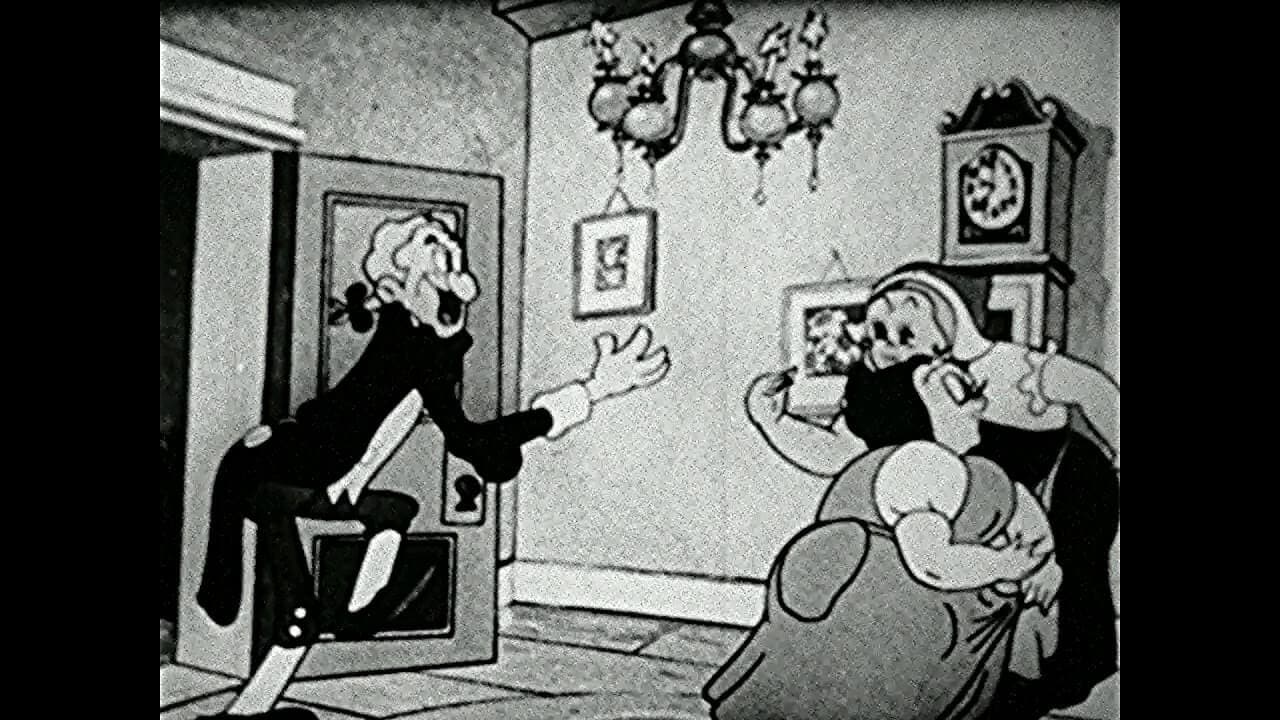
Ub Iwerks also produced this 1934 ComiColor adaptation of Washington Irving’s The Legend of Sleepy Hollow.
Most of the short treats Ichabod Crane as a broad comic figure.
Then night arrives.
The road narrows, shadows grow, and the Headless Horseman chases Ichabod through a sequence that feels far more atmospheric than the rest of the cartoon.
Film file
- Studio: Ub Iwerks Studio
- Release: 1934
- Source: Washington Irving’s The Legend of Sleepy Hollow
- Ending: The haunting is revealed as a prank
The prank explanation does not erase what the audience has already seen.
Iwerks understood that a sudden change in lighting, scale, and speed could make a comedy briefly feel like horror.
Van Beuren’s Forgotten Tom and Jerry
6. Wot a Night
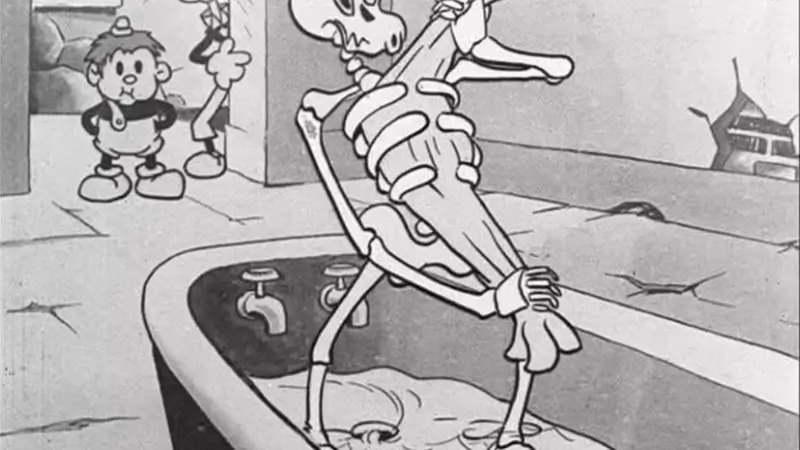
Two taxi drivers take mysterious passengers to a remote castle during a storm.
When the passengers disappear without paying, the drivers follow them inside and meet skeletons, ghosts, and objects that refuse to stay dead.
Film file
- Studio: Van Beuren Studios
- Release: August 1, 1931
- Directors: John Foster and Vernon Stallings
- Importance: The first Van Beuren Tom and Jerry cartoon
These are not MGM’s cat and mouse.
Van Beuren’s Tom and Jerry are two human men, one tall and one short. Their series began nine years before Hanna and Barbera introduced the famous animals in 1940.
Later television distributors renamed the older pair Dick and Larry to prevent confusion.
The name changed.
The wet, empty castle and dancing skeletons remained.
5. Magic Mummy
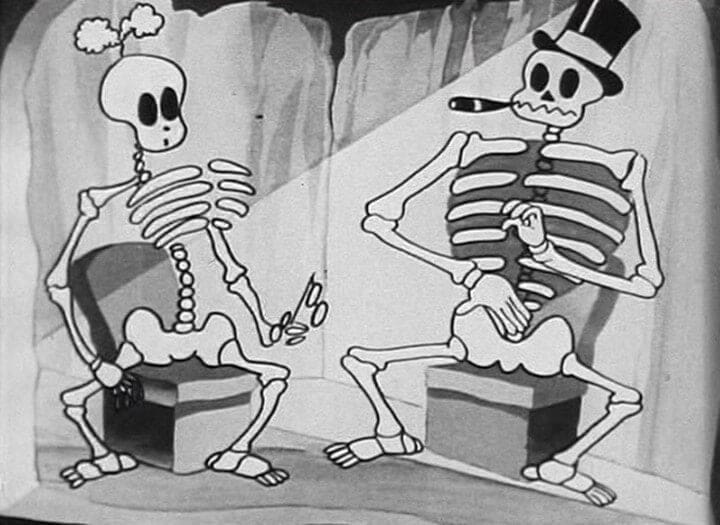
The same Tom and Jerry return in a 1933 mystery involving a stolen mummy.
The investigation leads to a magician performing inside a tomb for an audience of skeletons.
The mummy comes alive to sing, the dead applaud, and the scene unfolds with the casual logic of a nightclub routine.
Film file
- Studio: Van Beuren Studios
- Release: 1933
- Characters: The human Tom and Jerry, later called Dick and Larry
- Mood: Police comedy mixed with a supernatural musical
Knowing that Magic Mummy and Wot a Night star the same forgotten duo makes both films easier to understand.
This was not one accidental trip into horror.
Their series repeatedly treated ghosts, skeletons, and impossible transformations as ordinary comedy material.
Stop-Motion That Became Nightmare Fuel
4. The Mascot
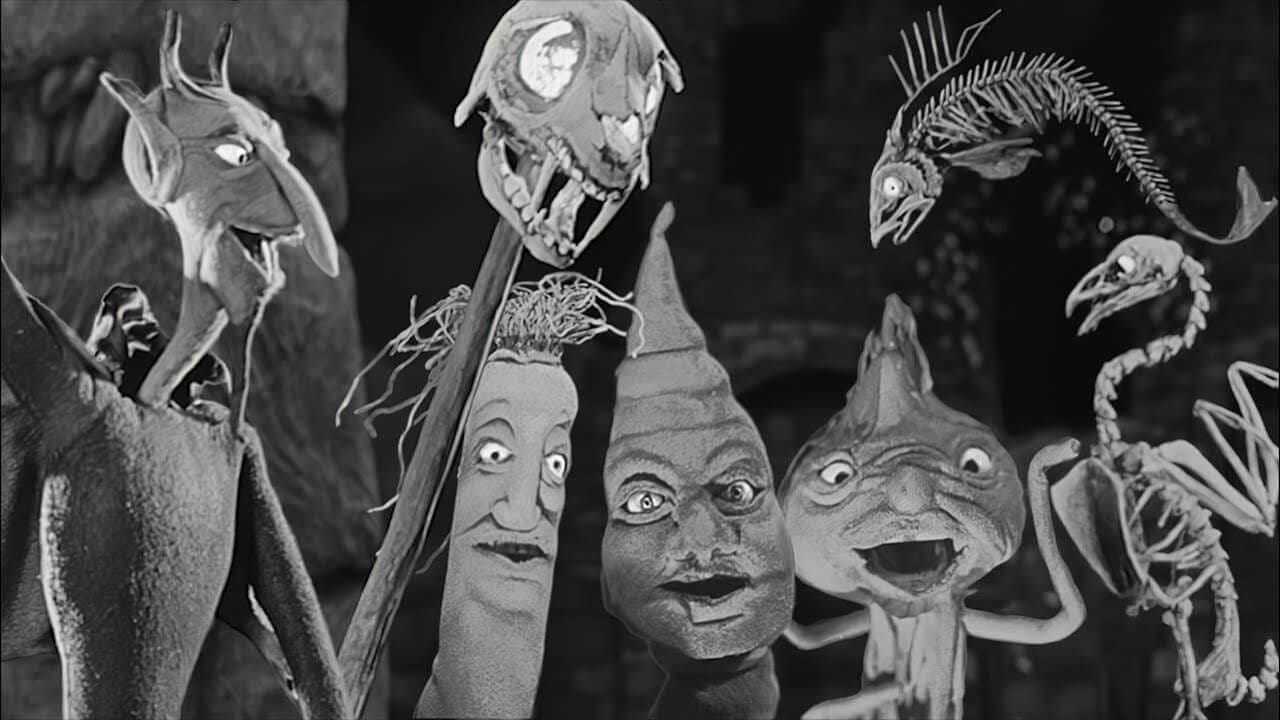
A toy dog comes to life and leaves home to find an orange for a sick girl.
Its journey leads through city streets and into a gathering of demons, thieves, discarded objects, and animal-like creatures ruled by the Devil.
The film is properly known as The Mascot, or Fétiche. “The Devil’s Ball” is the title often given to its most famous sequence or to shortened releases built around that material.
Film file
- Creators: Ladislas Starevich and Irène Starevich
- Production: Made in France in the early 1930s
- Technique: Stop-motion puppets with complex armatures and mixed materials
- Famous sequence: The gathering commonly called “The Devil’s Ball”
Starevich used real fur, glass eyes, wire, and found materials to give the puppets a physical presence that cel animation cannot reproduce.
Animation Resources notes in its The Mascot reference guide that he created motion blur by smearing petroleum jelly on glass placed between the puppet and the camera.
The underworld sequence is frightening because everything looks as though it was built from objects that already had another life.
3. Experimental Animation, Also Known as The Peanut Vendor
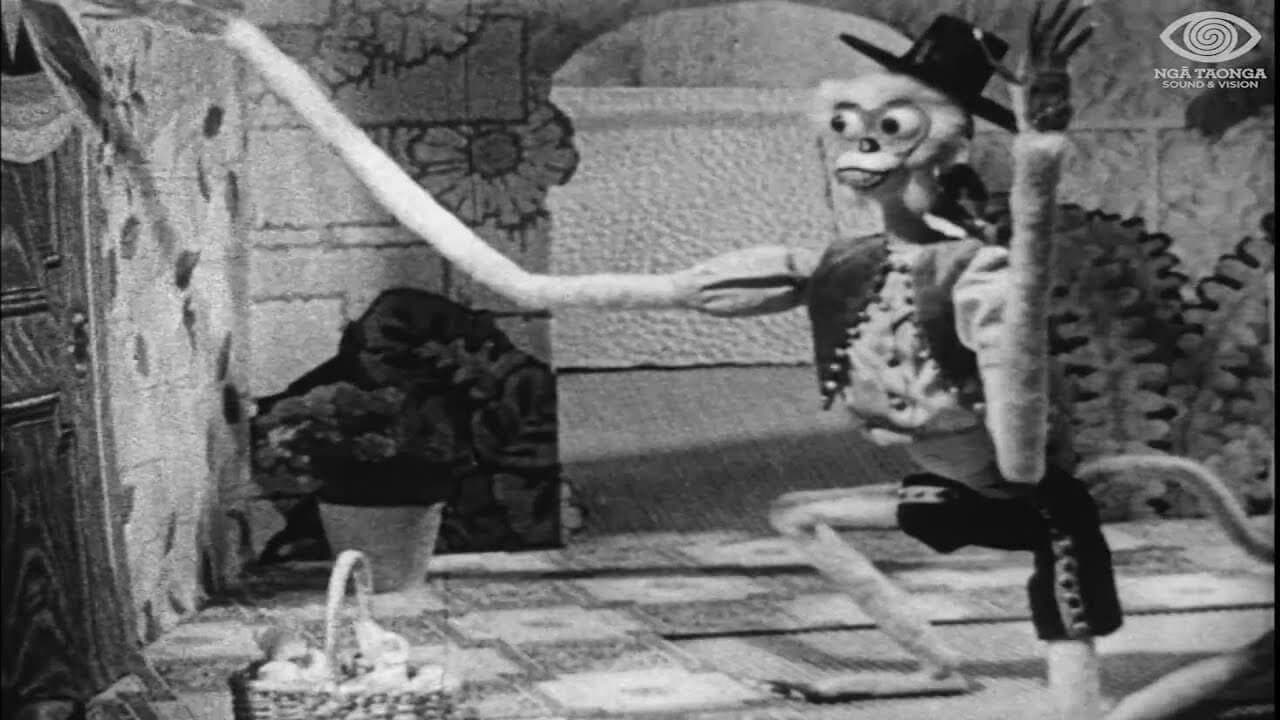
This is the entry most commonly misidentified.
The creepy stop-motion monkey was not made by Fleischer Studios.
It comes from Len Lye’s independently produced Experimental Animation, made in Britain in 1933 and also circulated under the title The Peanut Vendor.
Film file
- Creator: Len Lye
- Release: 1933
- Format: Short stop-motion experiment
- Music: A recording of “The Peanut Vendor” by Red Nichols and His Five Pennies
Lye built the puppet himself. Its long arms, fixed eyes, interchangeable mouths, and detachable tail were designed to demonstrate what he could do with stop motion. The Len Lye Centre describes the film as an independently produced calling card for his animation work.
The result was intended as a calling card for future work.
Modern viewers often experience it as something closer to a cursed object.
There was also a separate Fleischer Screen Song titled The Peanut Vendor in 1933. That longer production mixed conventional animation, live action, and sing-along material.
The two films share music and a title, but they are not the same cartoon.
Beyond American Animation
2. Ugoki-e Kori no Tatehiki

A fox disguises itself as a samurai and enters a temple occupied by a young tanuki.
The tanuki tries to frighten the intruder away. When the tricks fail, the contest grows into a series of transformations involving animals, people, monsters, and distorted shapes.
Film file
- Creator: Ikuo Oishi
- Country: Japan
- Release: 1933
- English title: Often translated as The Moving Picture Fight of the Fox and the Raccoon Dog
The Japanese Animated Film Classics archive identifies the short as Oishi’s masterpiece.
Its transformations are not simply random surrealism.
Foxes and tanuki are both famous shapeshifters in Japanese folklore. Stories in which they compete through disguise and transformation existed long before animation.
The cartoon becomes easier to follow once that cultural context is understood.
It still does not become less strange.
1. The Tale of the Priest and of His Workman Balda
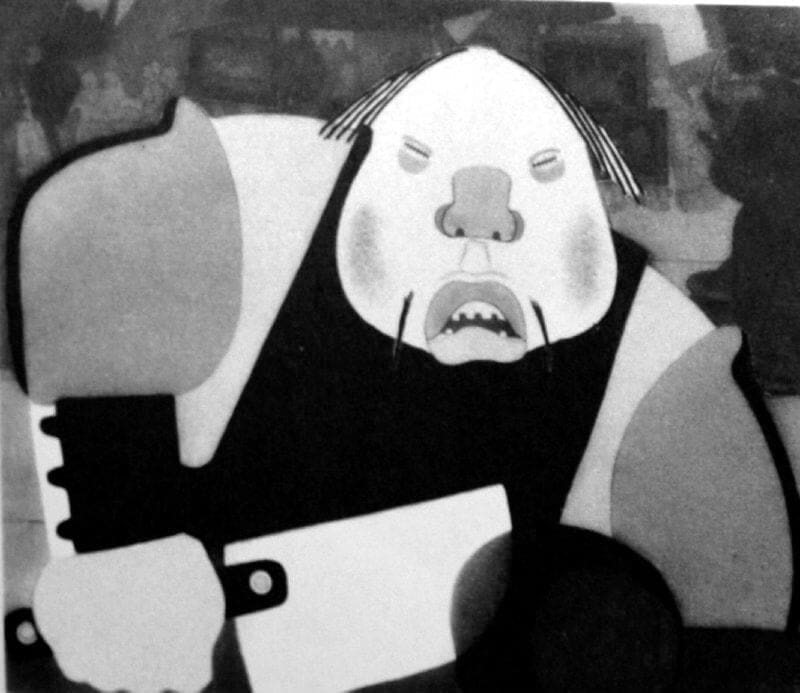
This unfinished Soviet project may be the hardest film on the list to shake because so little of it survives.
Director Mikhail Tsekhanovsky planned an animated feature based on Alexander Pushkin’s verse tale. Dmitri Shostakovich composed its score during 1933 and 1934, as documented in the composer’s official work catalogue.
Film file
- Director: Mikhail Tsekhanovsky
- Source: Alexander Pushkin’s poem
- Composer: Dmitri Shostakovich
- Surviving material: The roughly four-minute “Bazaar” sequence
Most of the production was never completed or was lost during the Second World War.
The surviving Bazaar sequence is crowded with distorted bodies, shouting merchants, animals, signs, and faces that seem to merge into one moving mass.
It is difficult to know how the complete feature would have balanced comedy, satire, music, and grotesque imagery.
All that remains is the busiest and most feverish fragment.
Which of These Cartoons Were Meant to Be Scary?
Swing You Sinners!, Bimbo’s Initiation, Spooks, and parts of The Mascot deliberately use fear, death, demons, or haunted settings.
The Peanut Vendor is different.
Len Lye appears to have wanted viewers to admire the puppet’s movement, not fear its face. The unease comes from the materials, the fixed expression, and the way modern audiences interpret handmade movement.
Balloon Land sits somewhere between the two.
It is a fairy-tale adventure with a villain designed to frighten the Balloon People. Yet the sight of an entire population vulnerable to one pin feels darker than the cheerful presentation suggests.
Can You Watch These Cartoons Legally?
Several titles circulate freely because their original copyrights have expired in the United States or because archives have made historical copies available.
That does not mean every upload is automatically legal everywhere.
Copyright terms vary by country, and a restored edition may contain newly protected work even when the underlying film is old.
The most dependable options are official studio channels, national film archives, museums, and established public-domain collections that identify their source material.
Quick Answers About Creepy 1930s Cartoons
What is the creepiest cartoon from the 1930s? Swing You Sinners! and Bimbo’s Initiation are the strongest traditional-animation choices. The Mascot is the most disturbing stop-motion entry.
Why is The Skeleton Dance included if it is from 1929? It was the first Silly Symphony and helped establish the musical graveyard imagery that influenced cartoons in the following decade.
Why do Fleischer cartoons feel so strange? The studio embraced elastic bodies, urban settings, jazz rhythms, sudden transformations, and backgrounds that could become part of the action.
Are the old Tom and Jerry characters the cat and mouse? No. Van Beuren’s Tom and Jerry were two human characters introduced in 1931.
Is Balloon Land the same as The Pincushion Man? Yes. The Pincushion Man is a later title used for home-movie releases.
Is The Devil’s Ball a separate Starevich movie? It is best understood as the famous underworld sequence from The Mascot, although shortened editions and alternate releases sometimes use it as a title.
Who made the creepy Peanut Vendor monkey? Len Lye made it for Experimental Animation in 1933. It should not be confused with Fleischer Studios’ different Screen Song of the same name.
When Animation Had No Fixed Rules
These cartoons came from a period when studios were still deciding what sound animation could do.
One studio synchronized skeletons to music.
Another sent its leading dog into a supernatural trial.
A stop-motion artist assembled an underworld from scraps, fur, and glass.
A Japanese animator turned traditional shapeshifting folklore into a contest of moving drawings.
Some of these films were designed to unsettle.
Others became unsettling because the handmade techniques survived longer than the assumptions behind them.
Either way, they remain difficult to forget.
For more strange animation history, see what happened to Screwy Squirrel and explore my guide to monster cartoon characters.
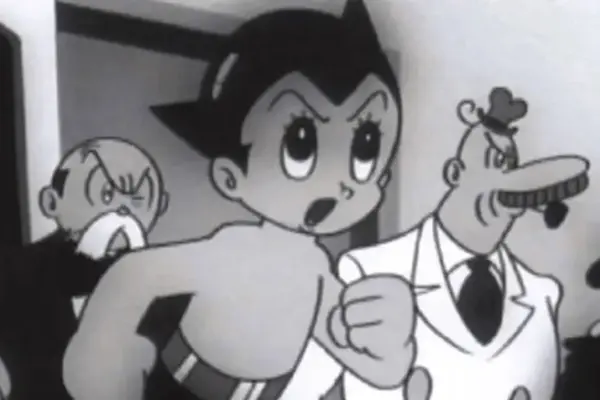
Fleischer Studios absolute creepiest masterpieces were the Betty Boop shorts featuring jazz legend Cab Calloway. In Minnie the Moocher (1932) and Snow-White (1933), they rotoscoped Calloway’s actual dance moves onto a ghostly walrus and a singing skeleton, creating some of the most beautifully surreal, hypnotic footage of the 1930s.