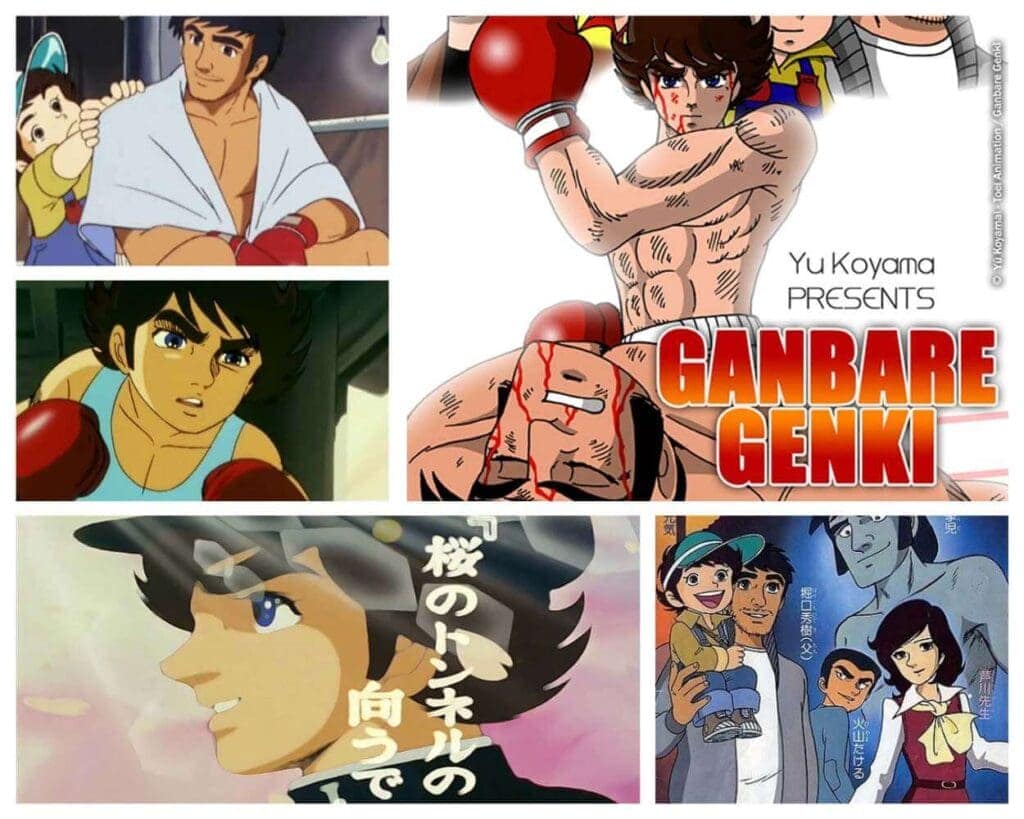
Ganbare Genki is a 1980 boxing anime that opens by killing the hero’s father in the ring. Then it spends the rest of its run on a five-year-old who decides to finish the job.
Most write-ups call it a warm coming-of-age story about a boy training with his dad.
However, that is not this show.
The father is dead by episode five, and the entire series runs on his absence.
So here is what Ganbare Genki really is, who made it, and why the anime stops before the fight everyone waited for.
What Ganbare Genki Is
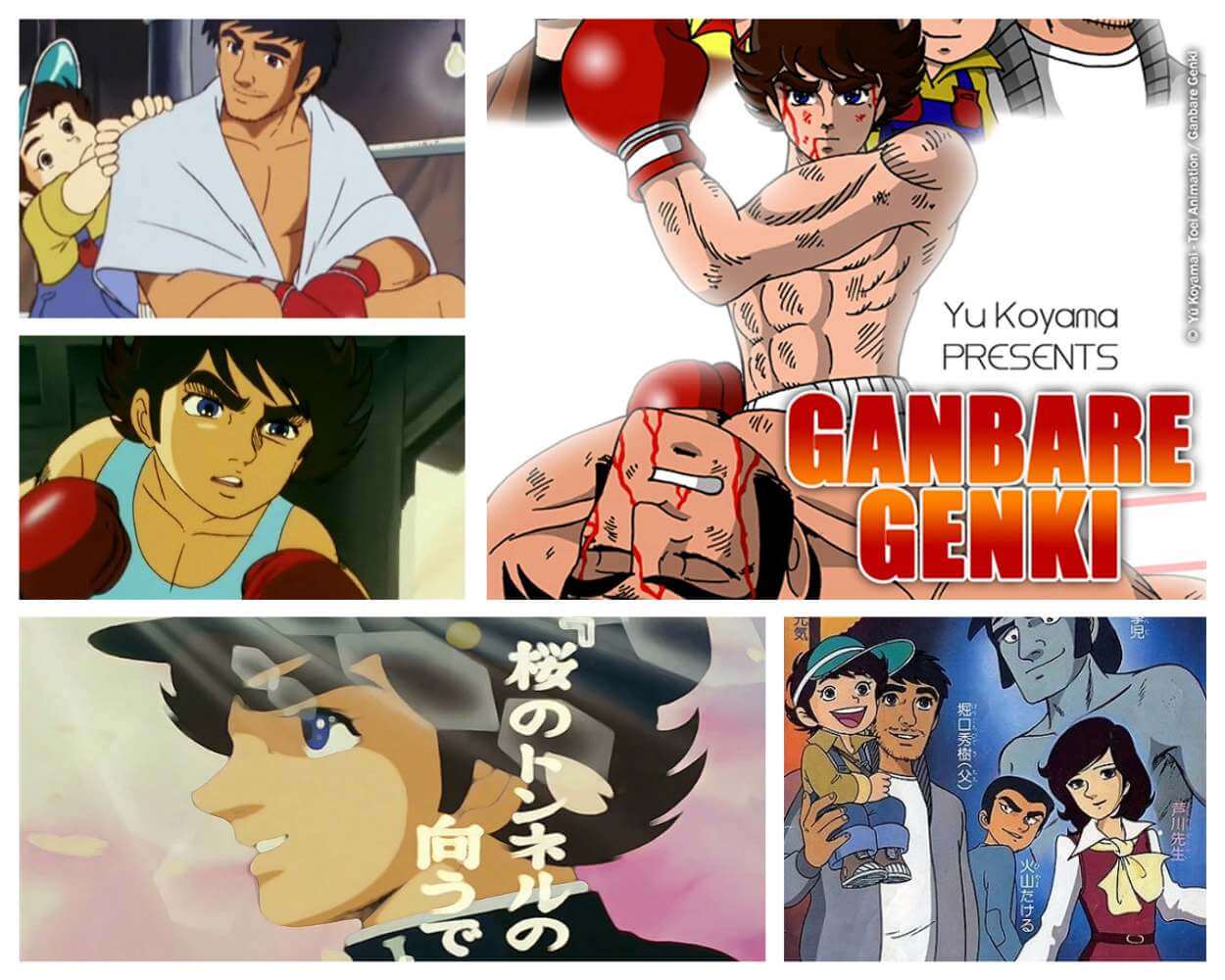
Yu Koyama serialised the manga in Weekly Shonen Sunday from 1976 to 1981. Then Toei Animation adapted it, and Fuji TV aired it on Wednesday evenings.
- Broadcast: 16 July 1980 to 1 April 1981, Wednesdays at 19:00 on Fuji TV
- Episodes: 35
- Manga: 28 volumes, later reissued in 12 wide-format editions
- Award: The 22nd Shogakukan Manga Award, boys and girls category
The Death That Starts Everything
Genki’s father boxes under the name Shark Horiguchi. He is not a champion, though, and he never was.
Instead he is a 31-year-old six-round lightweight who quit when his wife died, then drifted the country taking exhibition fights with his son in tow.
Eventually he decides to come back properly.
- Real name: Horiguchi Hideki, fighting as Shark Horiguchi
- The comeback: After a gap of five years and eight months, he returns two weight classes down at featherweight
- What happens: He wins twice, then meets a seventeen-year-old prodigy named Seki Kenji
- The result: He loses by knockout, and he dies from the brutal weight cut combined with the fall from the ring
- Career record: 31 fights, 21 wins with 11 knockouts, 10 losses
Genki Horiguchi
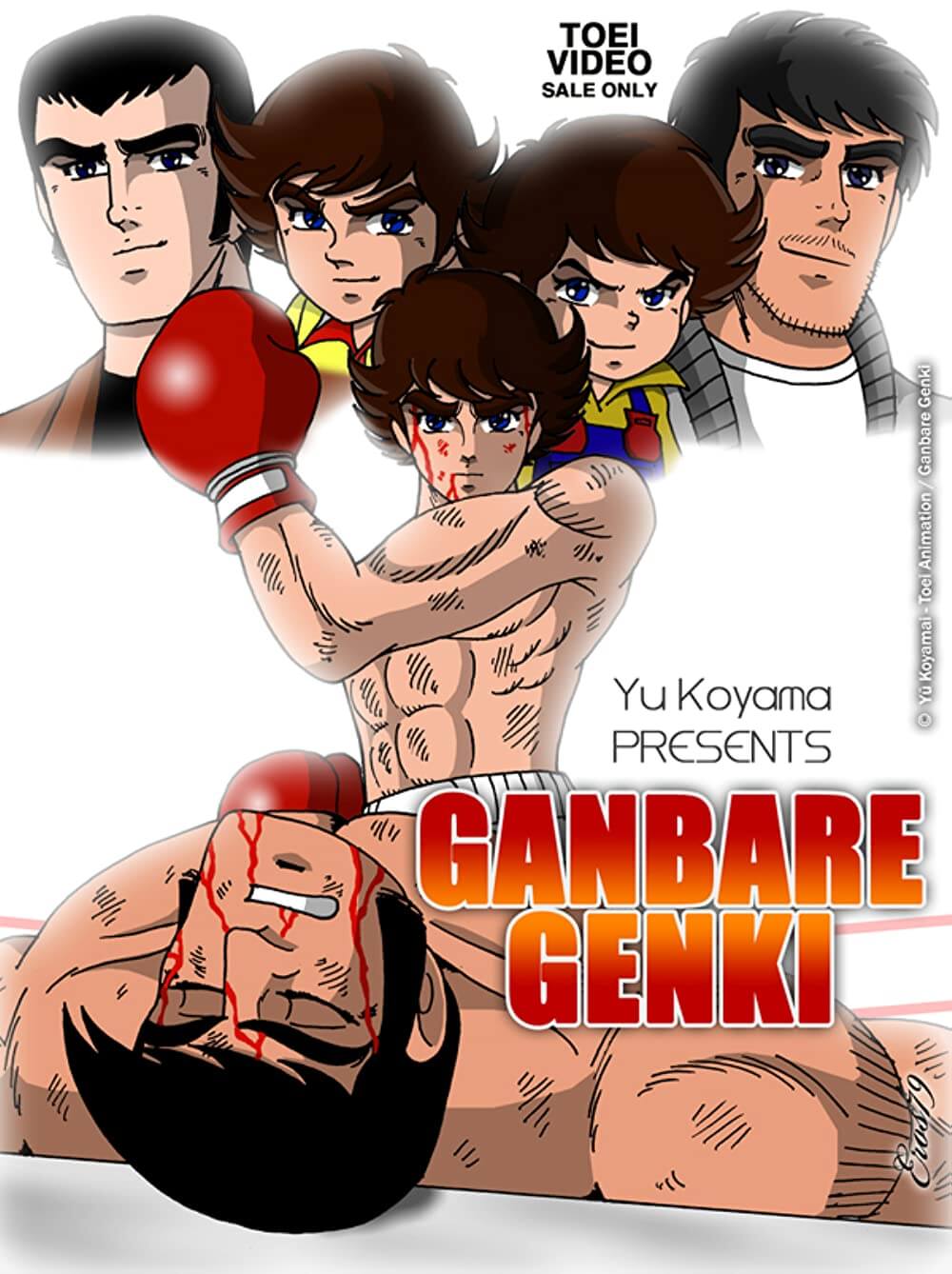
Genki was born at the cost of his mother’s life, and his father raised him alone. After the funeral his maternal grandparents take him in, although they had never approved of his father.
They even try to rename him Tanuma Genki.
Yet his grandfather relents, and decides the boy will keep the Horiguchi name.
- The title: Ganbare Genki means “Do your best, Genki”, so the show is literally named after cheering him on
- His training: Done in secret for years, because his grandparents forbid it
- The move: He leaves for Tokyo alone as soon as he finishes middle school
- His target: Seki Kenji, the man who beat his father
Seki Kenji, the Rival
Most sports anime keep the rival at arm’s length until the finale. Ganbare Genki does the opposite, because Seki is responsible for the death in episode five.
What the series does with him afterwards is the interesting part.
- The fight: At seventeen he mocked both Shark and Genki, then panicked at the older man’s refusal to fall
- The turn: He over-attacked, knocked Shark out of the ring, and afterwards apologised to Genki directly
- His career: WBA world champion at nineteen, then unbeaten at the top for fourteen years
- His trademark: Called knockouts, naming the round and the time in advance
The People Who Raise Him
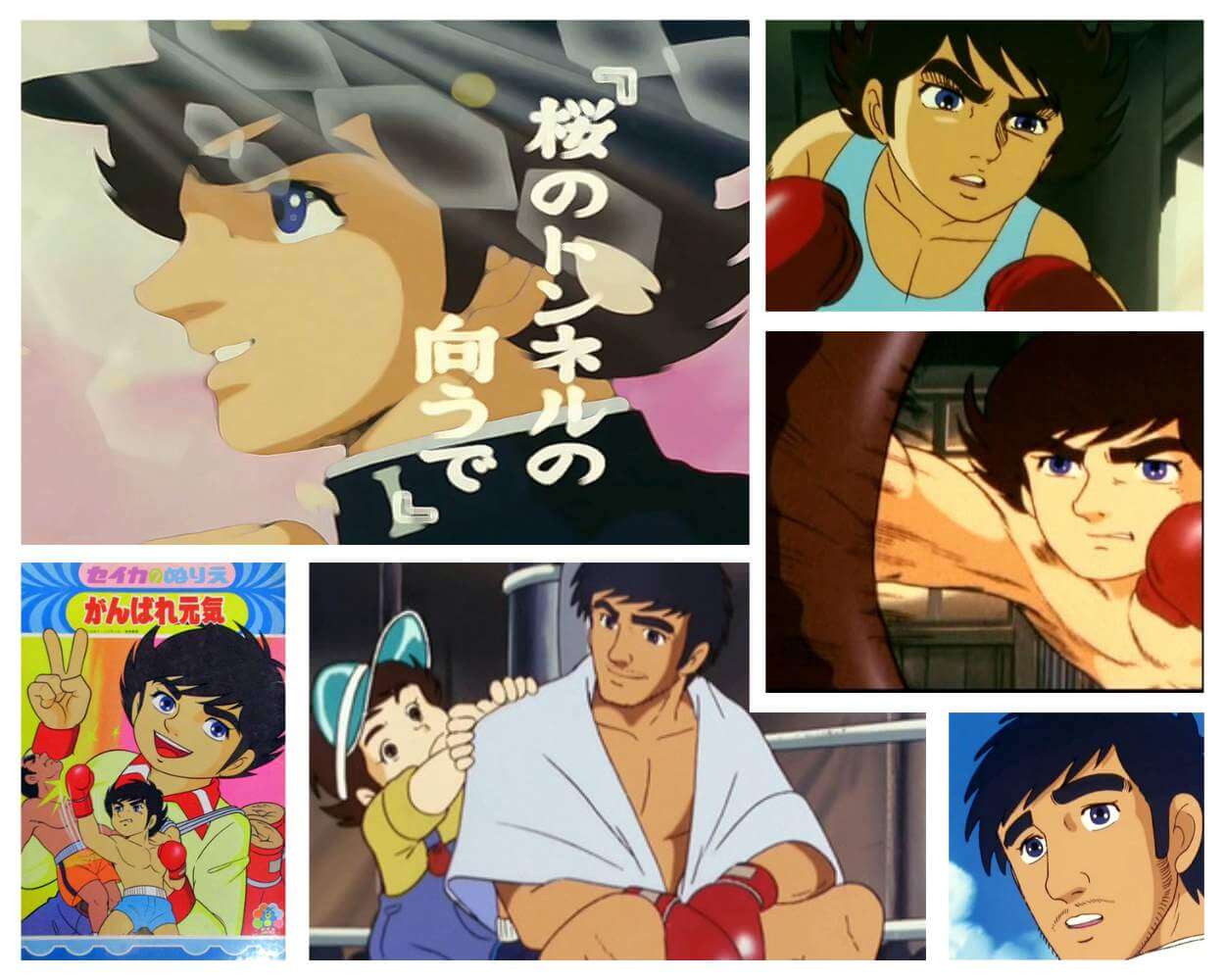
Genki has no coach for most of the story. Instead he has a teacher and a broken former fighter, and both of them matter more than any gym would.
- Ashikawa Yuko: His primary school teacher, and the single biggest influence on his life
- The uncomfortable part: She looks like his dead mother Minako, although they are no relation at all
- Mishima Eiji: A former student champion who fell apart after Seki knocked him out, and who trains Genki anyway
- The grandparents: Tanuma Kisaburo and Aiko, who took him in while opposing everything he wanted
Who Yu Koyama Is
Koyama was born in Shizuoka in 1948, and his training was unusual for a sports mangaka. He learned the job inside two of the most violent studios in the industry.
- 1968: He joined Saito Production, the studio behind Golgo 13
- 1971: Studio Ship, working with Kazuo Koike, so he trained alongside the writer of Lone Wolf and Cub
- 1973: A debut in Shonen Sunday with Ore wa Chokkaku
- Later: He created O~i! Ryoma and Azumi
The Galaxy Express 999 Team Made This
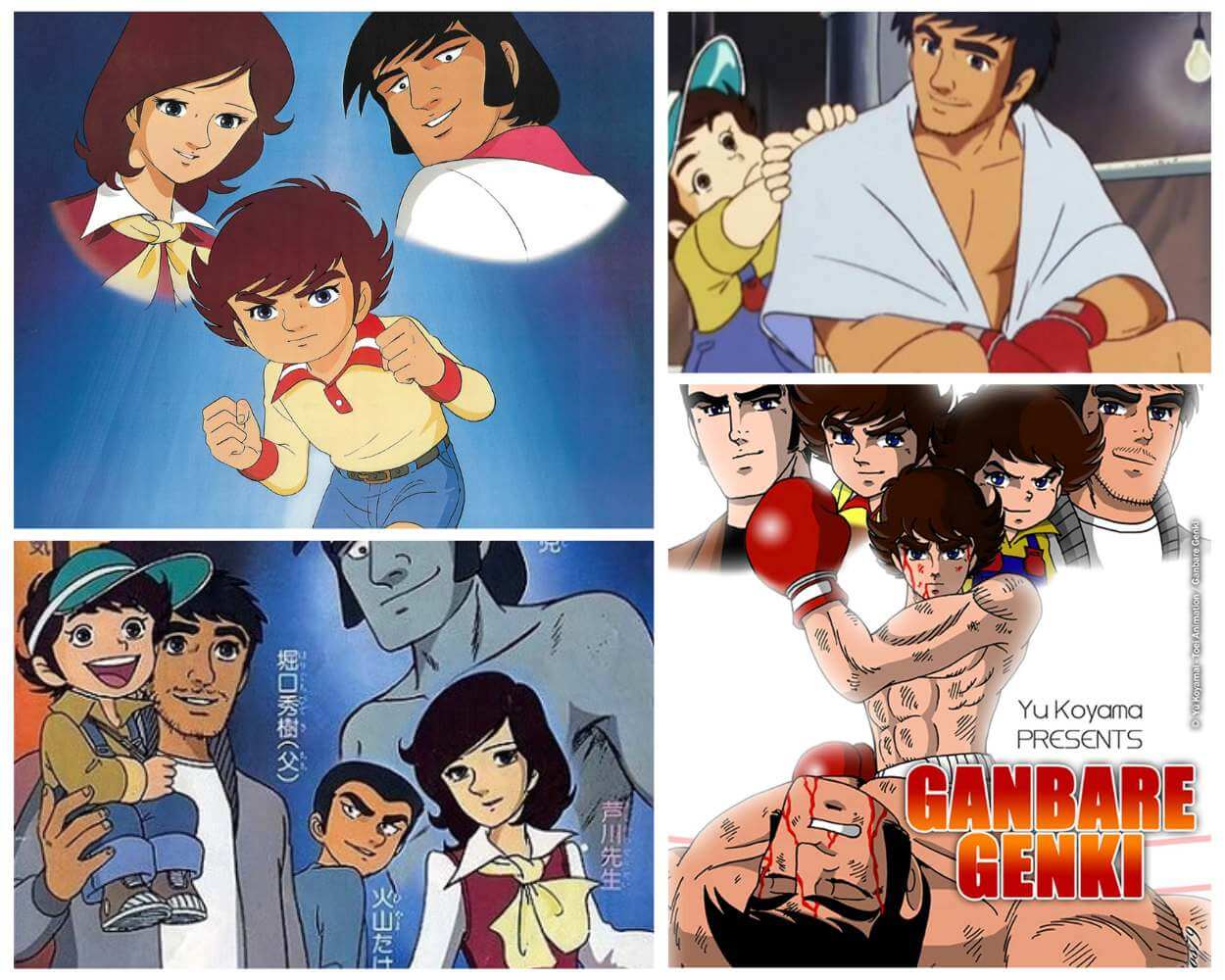
This is the hard fact the show is never given credit for. Toei did not hand Ganbare Genki to a B-unit, because they put the Galaxy Express 999 film crew on it.
- Director: Rintaro, who also made Galaxy Express 999, Captain Harlock and later Metropolis
- Character design and animation direction: Kazuo Komatsubara, from the same films
- Art direction: Takamura Mukuo, again from the 999 team
- Scripts: Shunichi Yukimuro, who wrote all 35 episodes by himself
The Music
Koichi Morita scored the series, and he also wrote both theme songs. Yoji Unno wrote the lyrics, while Kinya Hori and the group Korogi ’73 performed them.
- Opening: “Kaze ni Nare”, which means “Become the Wind”
- Ending: “Masshiro na Ring e”, or “To the Pure White Ring”
- Release: Nippon Columbia put the single out in July 1980
- Chart: It reached number three on the Oricon chart
Why the Anime Stops Before the Fight
Toei expected a long run. Therefore the writers padded the schedule with anime-original episodes, specifically so the show would not catch up to a manga still in serialisation.
Then the ratings decided otherwise.
- What happened: Fuji TV cancelled the series after 35 episodes
- How far it got: Only as far as Mishima’s death and Genki leaving for Tokyo
- What you never see: The rematch with Seki, and the world title, and the ending
- The last shot: A hint that Genki and Seki will one day meet in the ring
An Olympic Gold Medal Traces Back to This Manga
Here is the fact that should sell the series to anyone who thinks a 1976 boxing comic has nothing left to say.
- Who: Sena Irie, who won boxing gold at the Tokyo 2020 Olympics
- The record: She became the first Japanese woman ever to take an Olympic boxing gold
- Her division: Featherweight, which is the division Genki fights in
- Why she started: She read her mother’s copy of Ganbare Genki as a primary school pupil
Where to Watch Ganbare Genki
Finding this one is harder than it should be, since there has never been an official English release. Even so, Toei has made real efforts at home.
- 2021: Toei Animation streamed all 35 episodes free on its museum YouTube channel, five at a time
- Home video: Toei Video released the complete series on a single Blu-ray disc in December 2021
- The manga: Still in print in Japan, although no licensed English edition exists
Ganbare Genki is not the gentle underdog show its reputation suggests.
It is a series about a child who watches his father die for a title, and then quietly decides to go and get it.
Nearly fifty years later, a boxer who read it as a girl went out and won an Olympic gold in the same weight class.