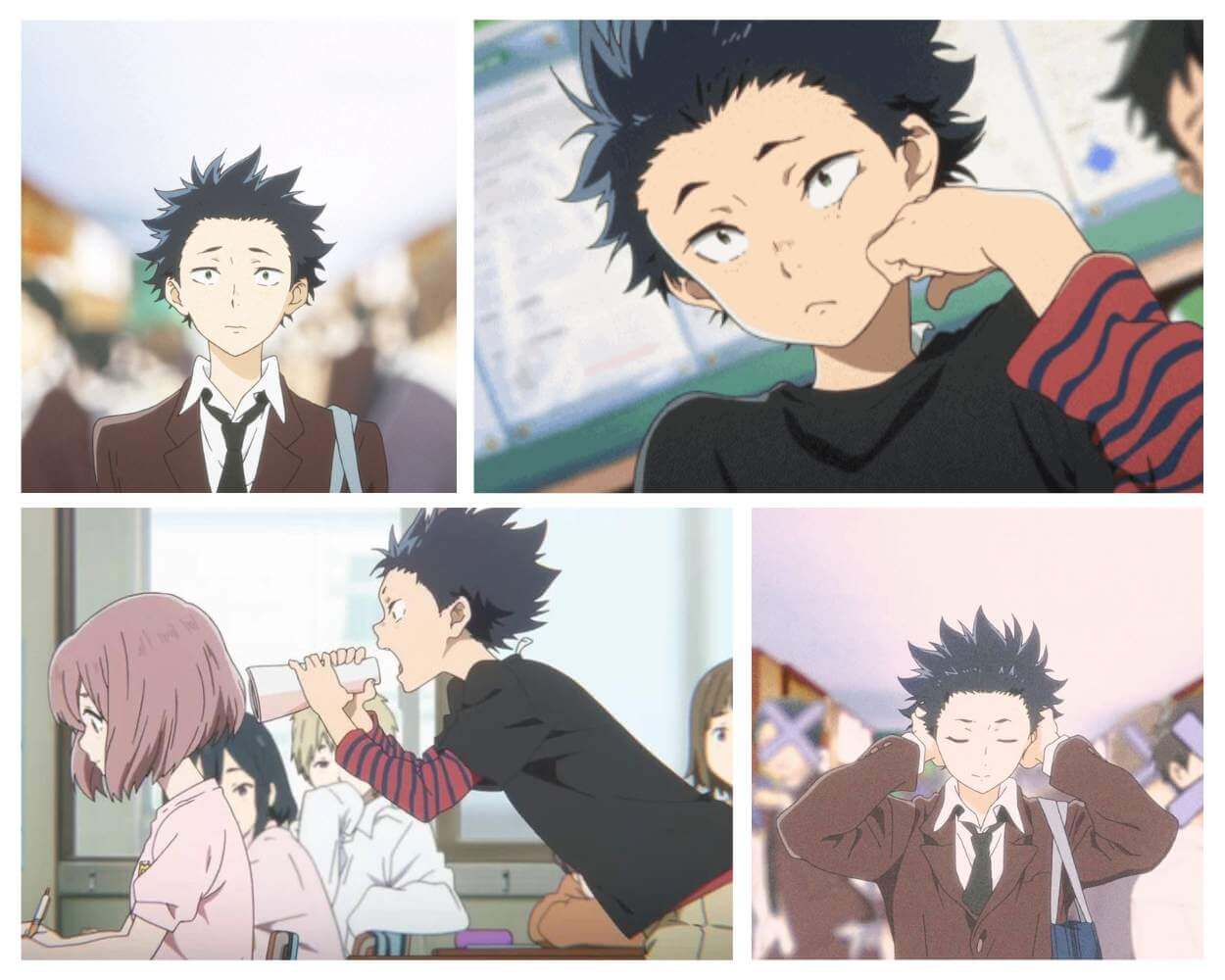
Shoya Ishida is one of the hardest characters in anime to love, and that is exactly the point. He starts A Silent Voice as a sixth-grade bully who torments a deaf classmate until she transfers schools. He ends it as a young man begging that same girl to help him live.
The distance between those two people is the whole story.
Yoshitoki Oima created him for the manga Koe no Katachi, later adapted by Kyoto Animation into the 2016 film. What follows is his arc from start to finish, including the parts most character write-ups skip.
The Boy Who Was Bored
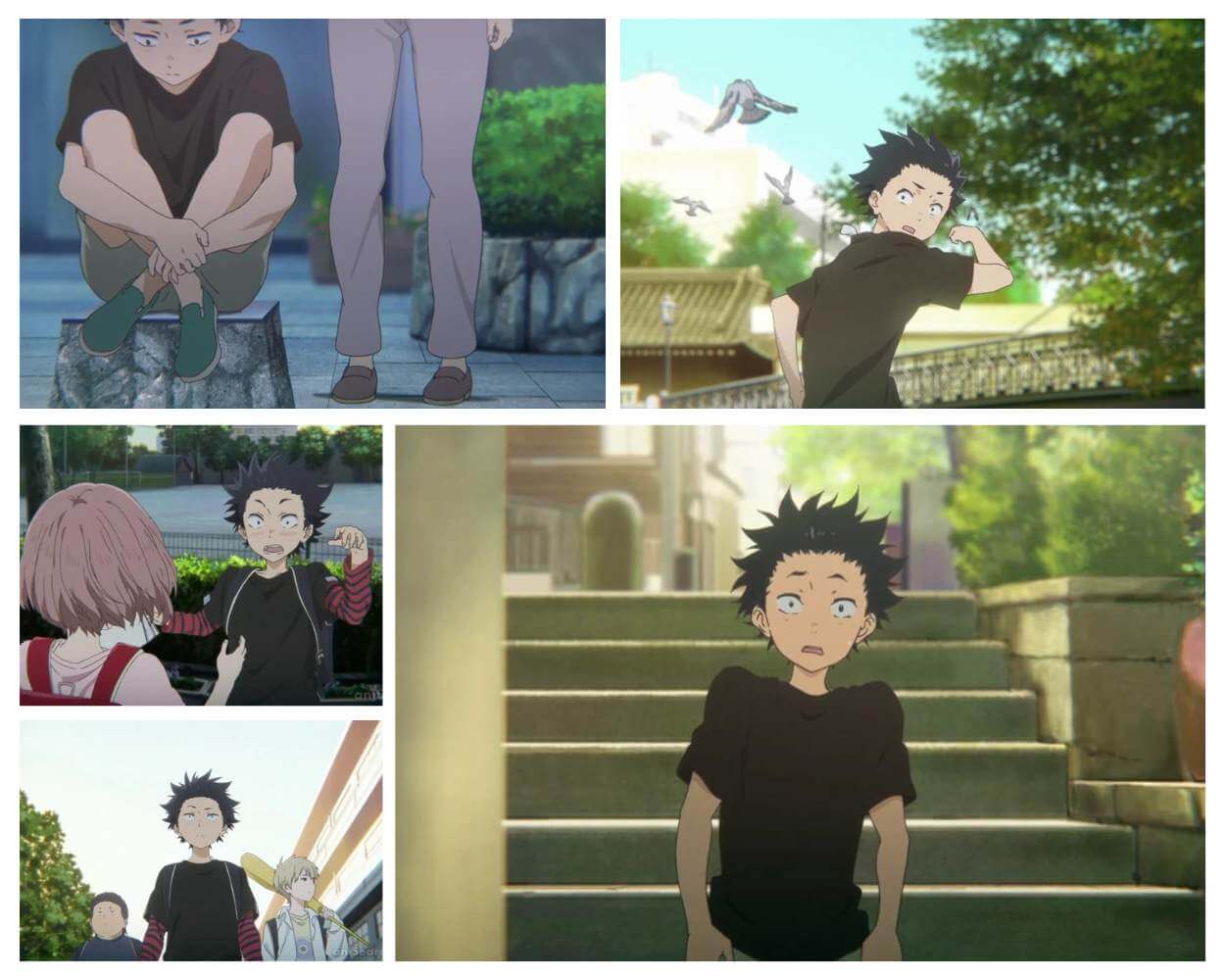
Here is the detail people get wrong about young Shoya. He was not a boy warped by a broken home or a cruel upbringing. His mother Miyako is warm and steady, and he adored her. Instead, his older sister handed him a throwaway line that he took as gospel: life is a war against boredom.
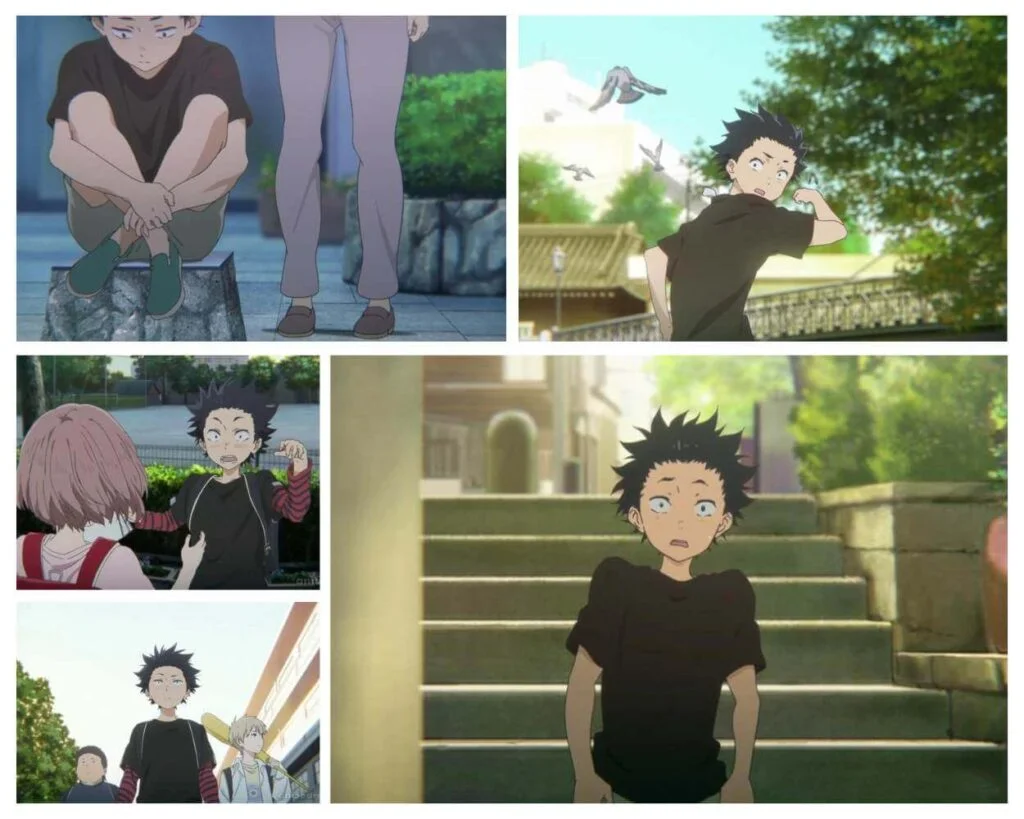
So he chased entertainment the way some kids chase approval. He jumped off bridges into rivers with his friends Kazuki Shimada and Keisuke Hirose. He looked for the next thrill and rarely thought past it. Then Shoko Nishimiya transferred into his class, and his boredom found a target.
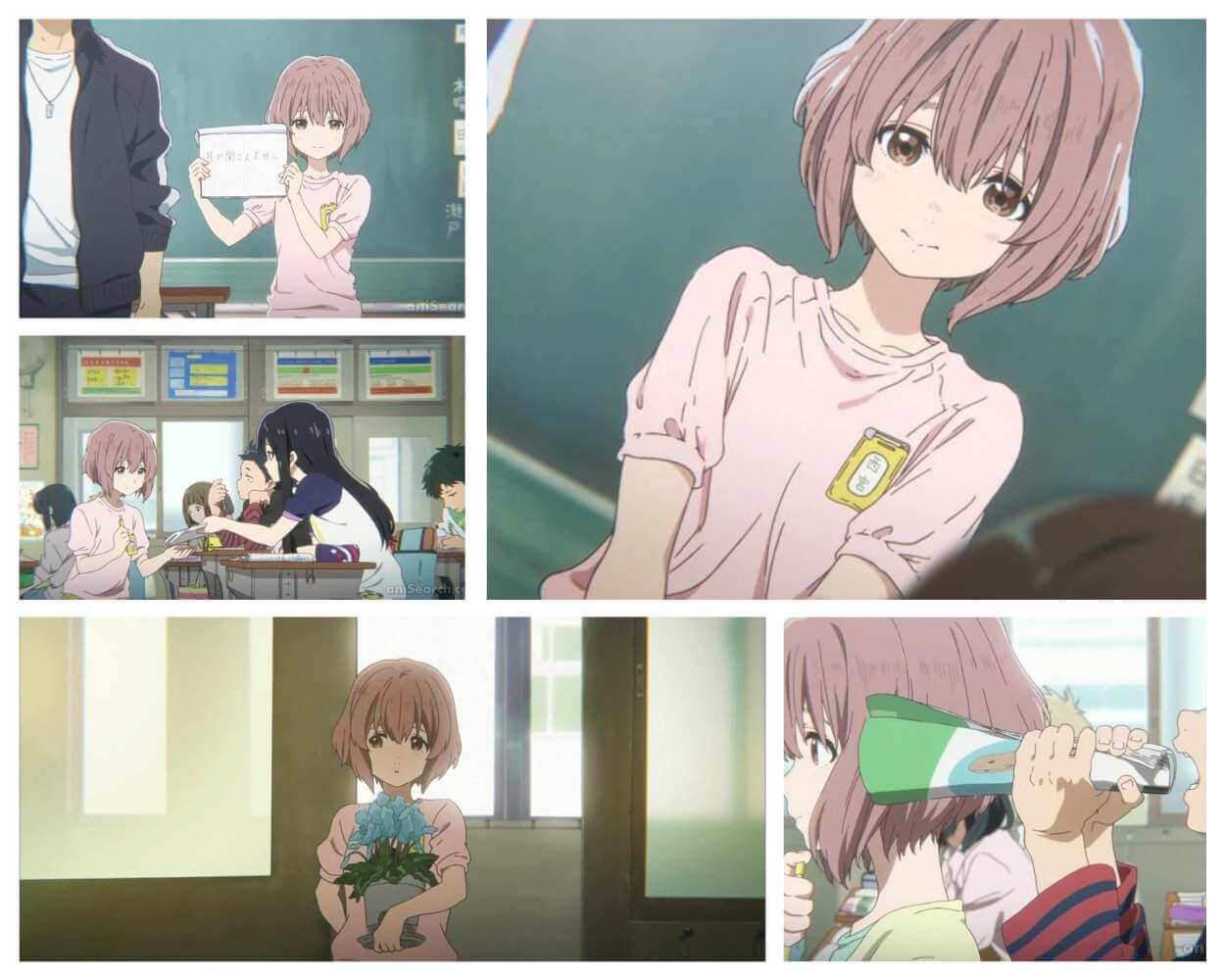
She was deaf, she wrote in a notebook to communicate, and she smiled through everything. To Shoya, she was novelty first and a person second. He mocked her, mimicked her, and turned her into the class joke. Crucially, he could not read the harm, because he had never once tried to imagine her side of it.
The Moment It Stopped Being a Game
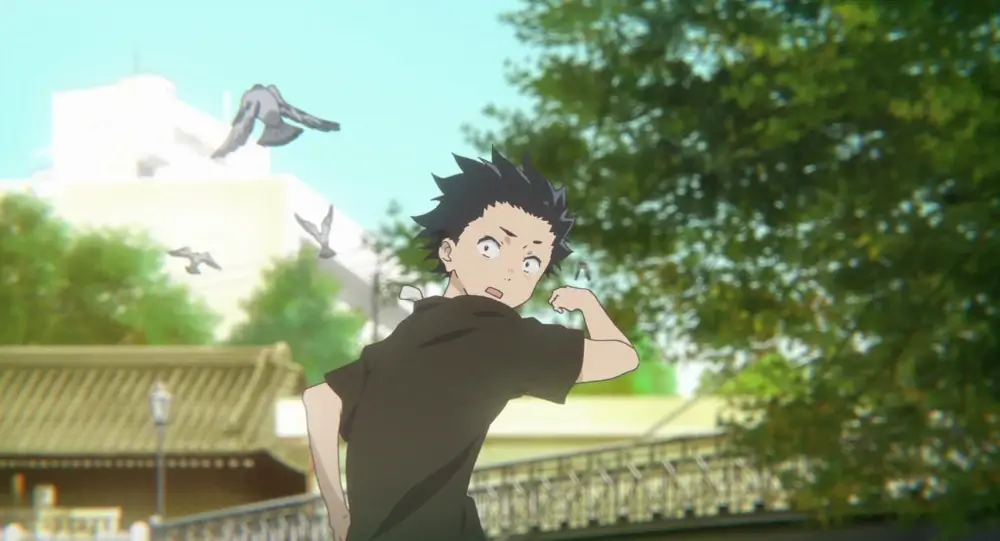
The cruelty escalated until Shoya started ripping the hearing aids out of Shoko’s ears, once hard enough to make her bleed. That is where the story stops being childhood mischief and turns into something with a price tag attached.
When the principal investigated, the class turned on him instantly. The same classmates who laughed along, and the teacher who let it slide, pointed at Shoya alone. His friends became his bullies. Within weeks he went from ringleader to outcast, and the transformation took no effort at all from anyone.
Then Shoko transferred away. Before she left, Shoya noticed she had been quietly scrubbing the insults off his desk, the same way he had watched people scrub hers. She had been trying to help him, and he had never noticed. From that day, he cleaned his own desk alone every morning.
Five Years of Silence
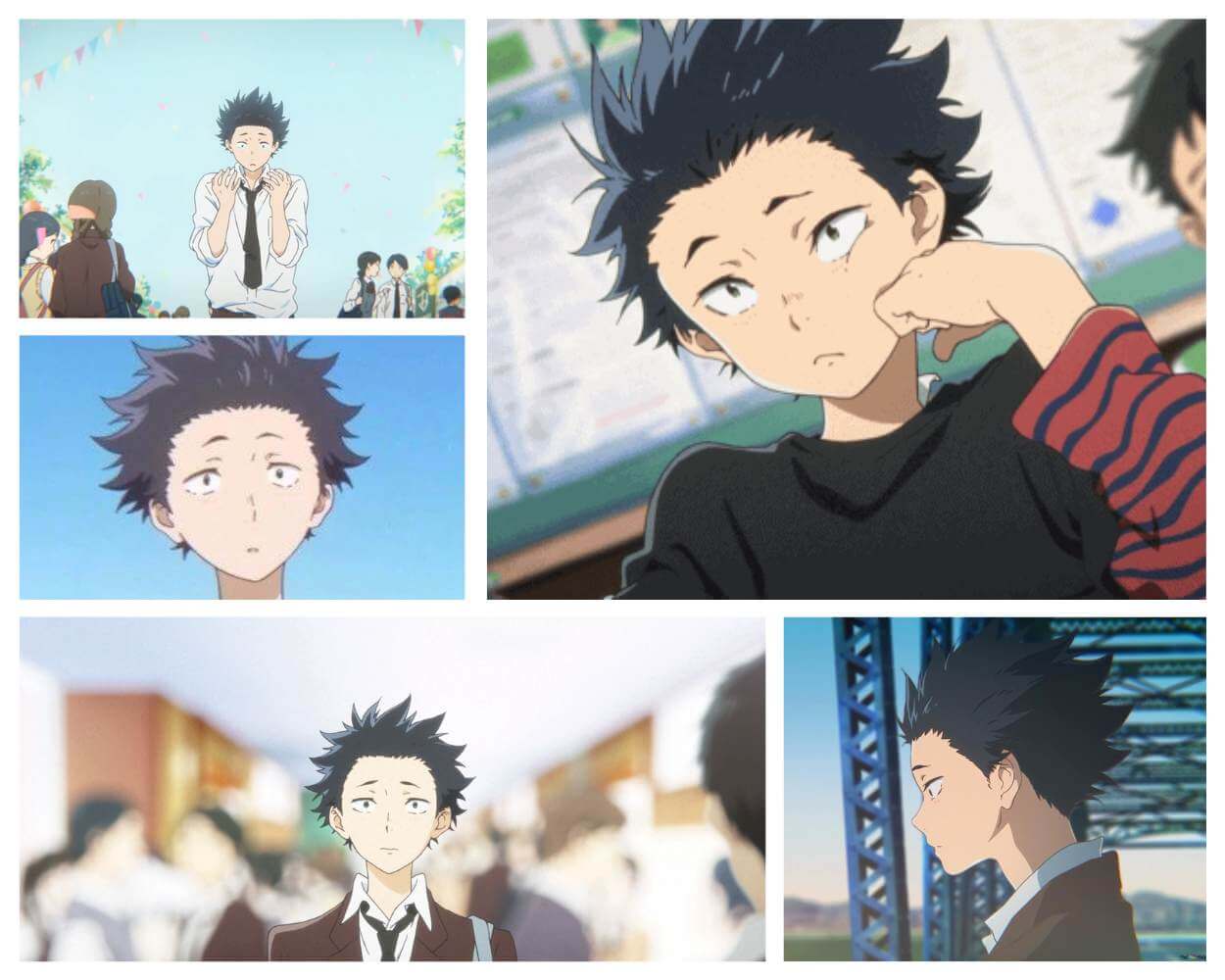
Middle school offered no reset. On day one, Kazuki told everyone what Shoya had done, and the label followed him into high school. So he stopped looking people in the face altogether.
This is where the story gives us its most famous image. Shoya cannot meet anyone’s eyes, so his mind covers every face around him with a large blue X. It is a simple visual, yet it captures social anxiety better than paragraphs of dialogue could. The world becomes a corridor of crossed-out people, and it is one of the sharpest visual shorthands in modern anime.
By his final year of high school, he had decided to end his life. He worked, saved the money to pay his mother back, and settled his accounts. Before going through with it, though, he wanted to do one last thing: return the communication notebook Shoko had left behind years earlier.
The Notebook and the Second Chance
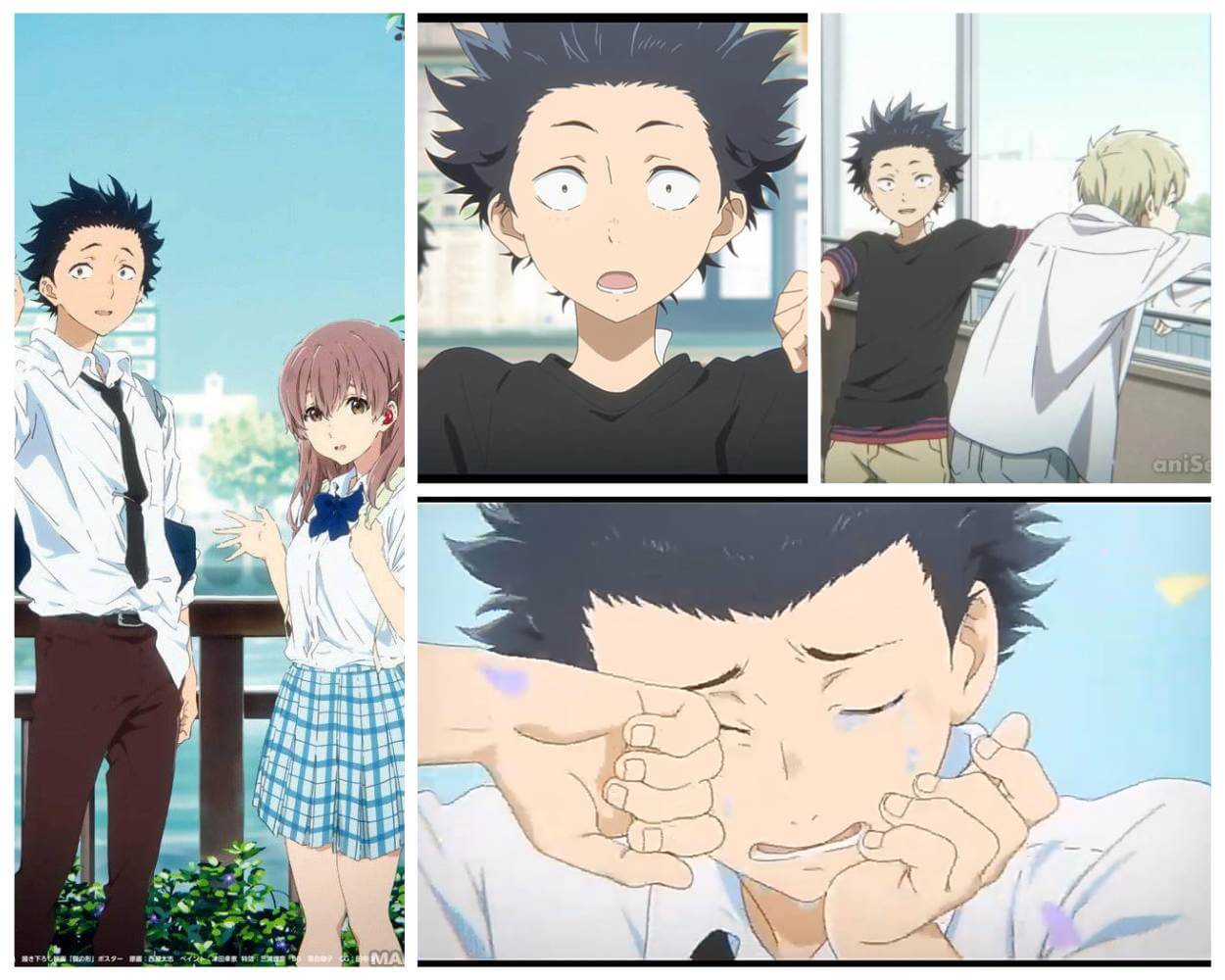
The reunion does not go the way he planned. Shoya finds Shoko, hands back the notebook, and then does something he had not intended: he signs to her, asking whether they could be friends. He had taught himself sign language in the years between.
It is the same sign Shoko once made to him in sixth grade, the one he did not understand and laughed off. She cries. He is mortified, because he never meant to ask. And just like that, the plan he had made for his own ending quietly falls apart.
His mother works it out anyway. When she realizes what the saved money was for, she threatens to burn it in front of him, making her point without a lecture: his life is worth more to her than any debt. He promises her he will keep living.
Learning to Be a Person Again
What follows is not a tidy redemption montage. Shoya rebuilds a life almost by accident, and he keeps tripping over his own self-hatred while doing it.
Tomohiro Nagatsuka becomes his first real friend in years, and the first face to lose its X, after Shoya sacrifices his mother’s bike to stop Tomohiro’s from being stolen. Yuzuru, Shoko’s fiercely protective younger sister, starts out sabotaging him at every turn and slowly becomes something like a little sister to him. He tracks down Miyoko Sahara, the classmate who once befriended Shoko, and reunites them.
Even so, he is still doing it for the wrong reasons at first. He is not befriending Shoko so much as repaying her, and the story is sharp enough to call him on it. Old classmates resurface, the past detonates in the middle of his new friend group, and he ends up right back where he started, convinced he deserves nothing.
The Fall and the Bridge
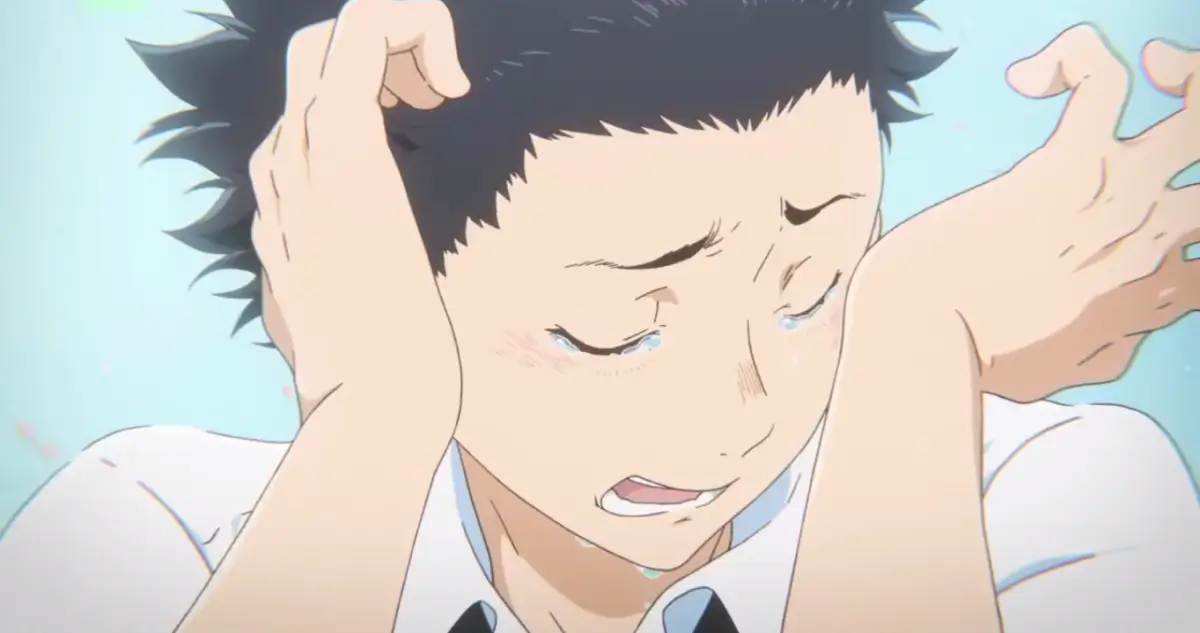
The story’s darkest turn belongs to Shoko, who reaches her own breaking point and tries to take her own life. Shoya reaches her in time and pulls her back, but he goes over the balcony himself and ends up in a coma.
His old friends Kazuki and Keisuke are the ones who drag him out of the river, a fact he does not learn until much later.
When he wakes, he goes looking for her.
They meet on the bridge where they used to feed the fish, and Shoya finally says the thing he has been circling for the entire story. He apologizes properly. Then he asks her to help him live.
That line reframes the whole arc. For most of the book he has been trying to hand Shoko back a happiness he stole, treating himself as a debt to be paid. Asking for help is the first time he admits he wants to be here too.
Why Shoya Works as a Character
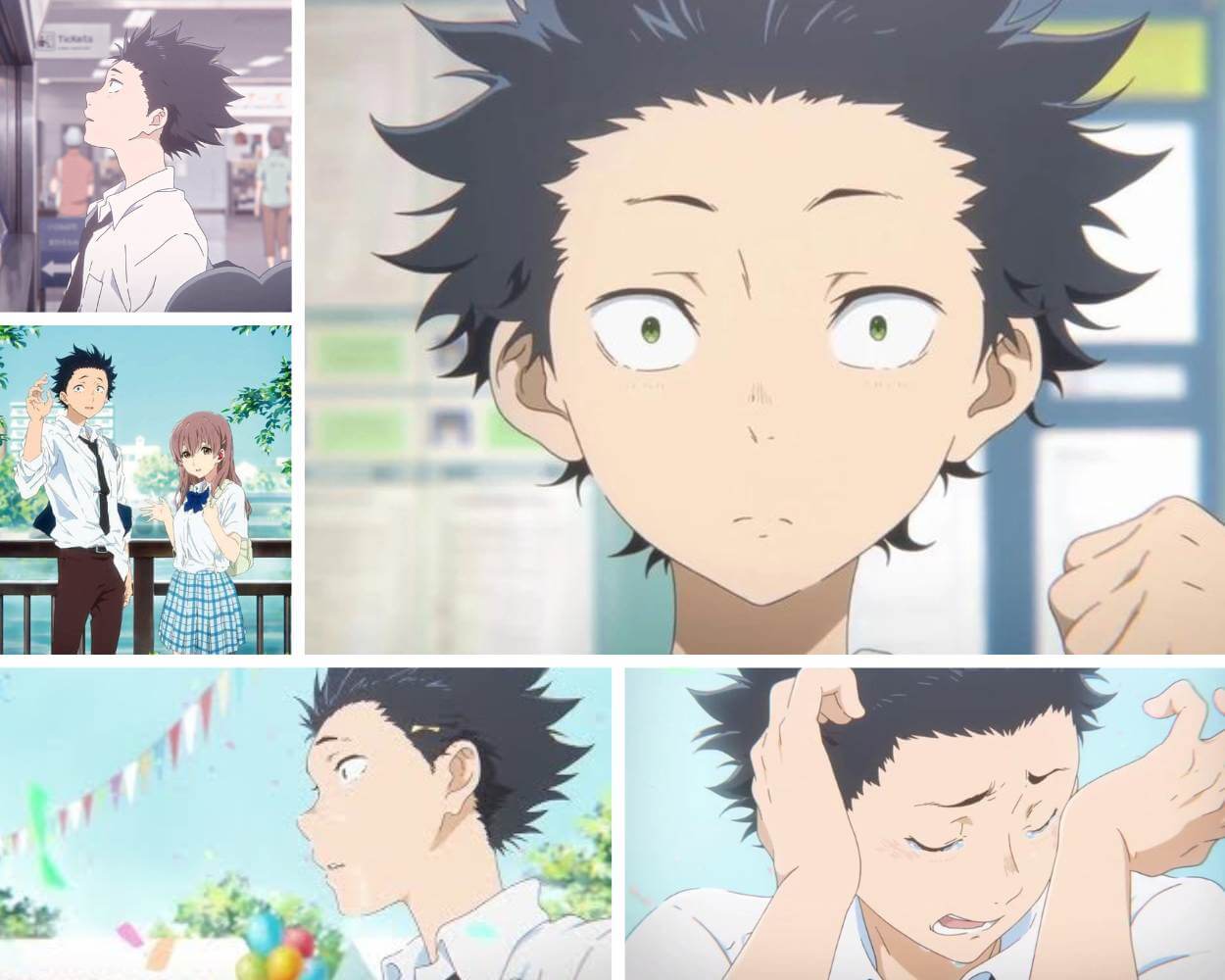
A Silent Voice refuses to make him easy. It never argues that he was secretly good, and it never lets him off with an apology. His guilt is not noble, either. For long stretches it is self-pity wearing a nicer coat, and the story keeps exposing that.
The book is also honest about the crowd. Shoya was the loudest bully, yet the classmates who laughed, the friends who joined in, and the teacher who ignored it all walked away clean by making him the sole villain.
That refusal to let anyone off the hook is what lifts the story above a simple bully-turned-good tale.
Worth noting for anyone who has seen only one version: the film softens him. Kyoto Animation leans into his anxiety and withdrawal, while the manga keeps more of his anger and resentment intact.
The bully-to-hero arc lands differently depending on which one you meet first.
Frequently Asked Questions About Shoya Ishida
A few of the questions that come up most around this character.
Why did Shoya bully Shoko Nishimiya? Boredom, mostly. His sister told him life was a war against boredom, and he took it literally. Shoko arrived as something new and different, and he had no ability to imagine her experience. It was not a reaction to a troubled home life, since his relationship with his mother was warm.
Does Shoya end up with Shoko? The story deliberately leaves it ambiguous. They finish it walking forward together, and plenty of hints point to romantic feelings on his side, but Oima never spells it out.
Who voices Shoya Ishida? Miyu Irino voices the teenage Shoya in Japanese, with Mayu Matsuoka as his child self. In the English dub it is Robbie Daymond, with Ryan Shanahan as young Shoya.
Is Shoya Ishida a good person? That is the question the story keeps asking. He does real, lasting harm as a child and spends years trying to make up for it. A Silent Voice suggests the more useful question is not what he is, but what he chooses to do next.
What do the X marks on faces mean? They are how Shoya’s mind copes with being unable to look people in the eye. As he grows closer to someone and starts to trust them, their X falls away.
Shoya Ishida works because he is never fully forgiven, not even by himself.
If you want more characters built on this kind of transformation, our character glow-up breakdowns cover plenty more. So what did you make of his arc, and did the ending land for you?
Let me know in the comments.