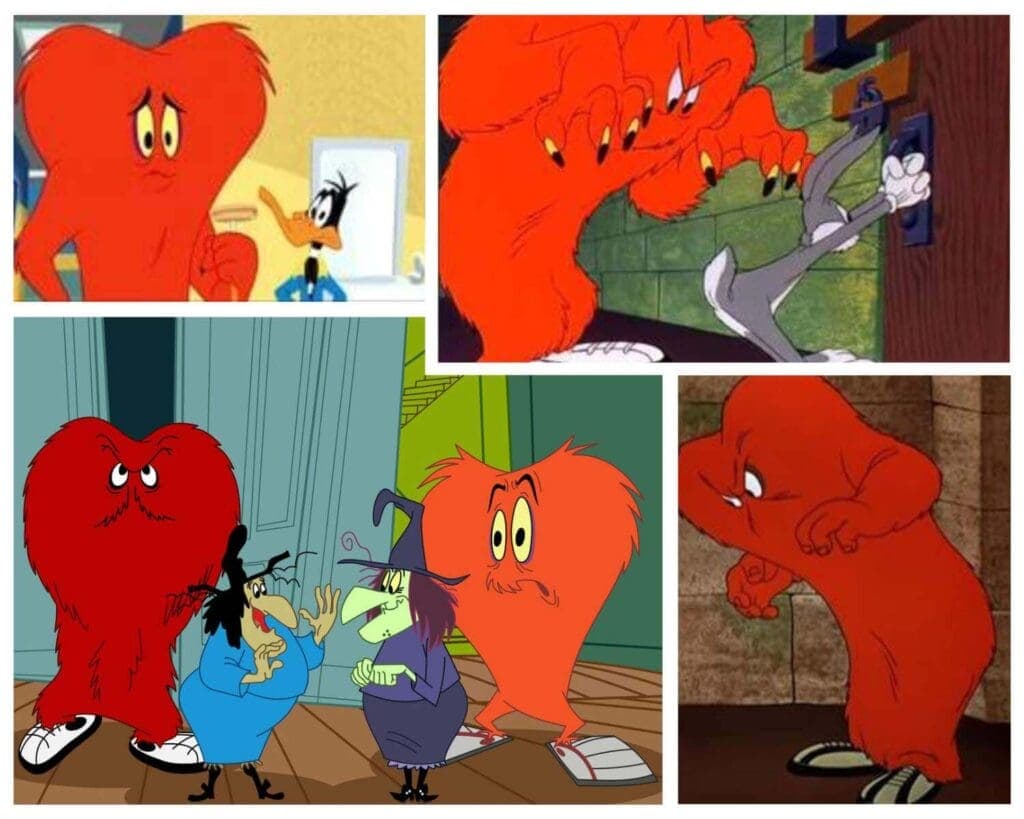
Gossamer is the big red monster from Looney Tunes, all hair and sneakers and little else. Chuck Jones built him to be frightening, then made him funny instead, and he is one of the few characters to survive that switch.
He has no dialogue to speak of, no backstory worth the name, and a design so simple a child can draw it. He has also outlived almost everything around him.
What makes him worth an article is the version most people picture. The shy red giant with a name took thirty-four years and three cartoons to assemble.
The monster, the name and the personality all arrived separately, and none of them arrived first.
He Was Unnamed for His First Two Films
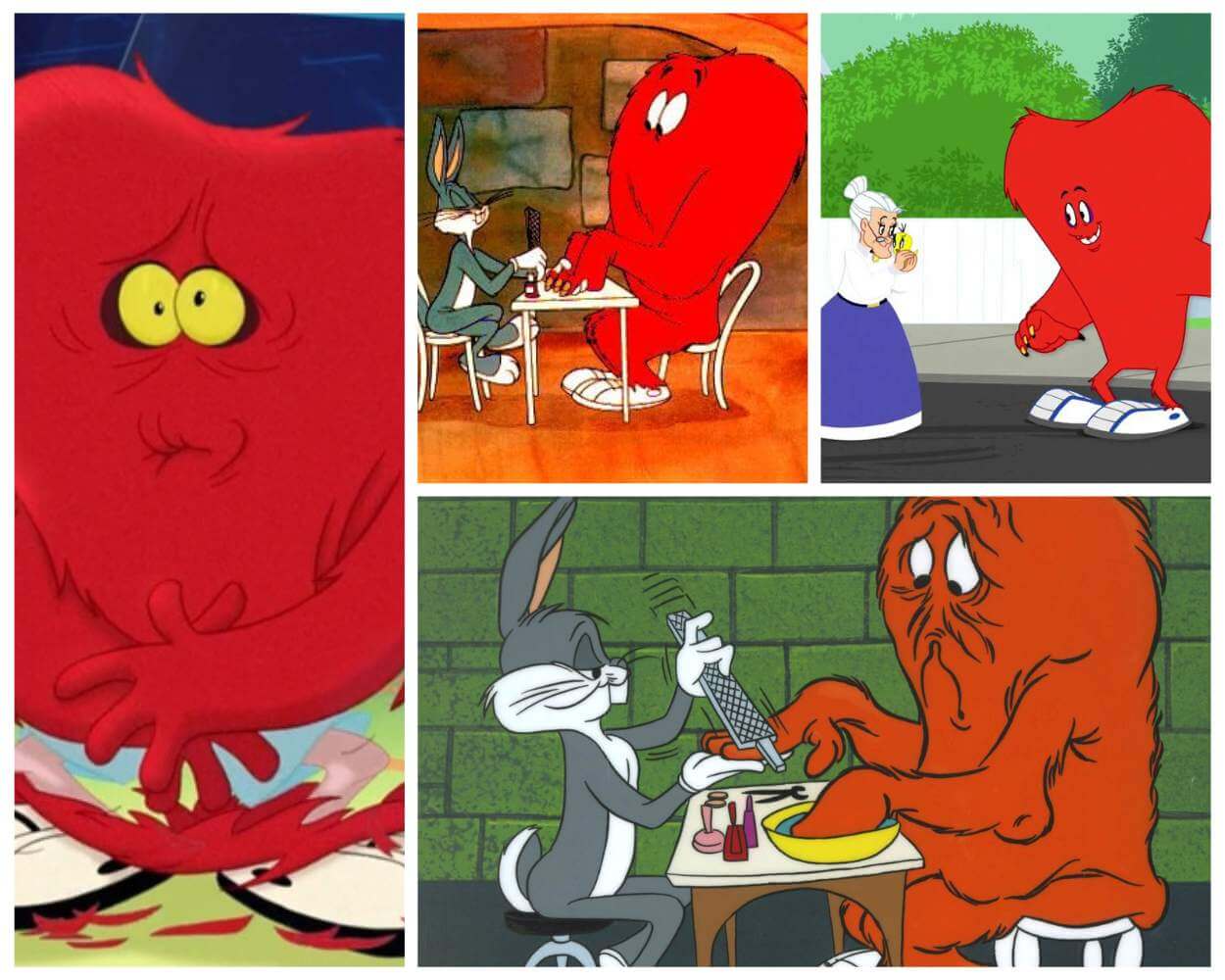
The name Gossamer is the last thing about him to appear, not the first, and the sequence is the single most misreported fact about the character.
- In Hair-Raising Hare, 1946, the monster has no name at all.
- In Water, Water Every Hare, 1952, he is called Rudolph.
- He was known informally for years as the Tennis-Shoe Monster.
- He was only named Gossamer in 1980, in Duck Dodgers and the Return of the 24½th Century.
What He Looks Like
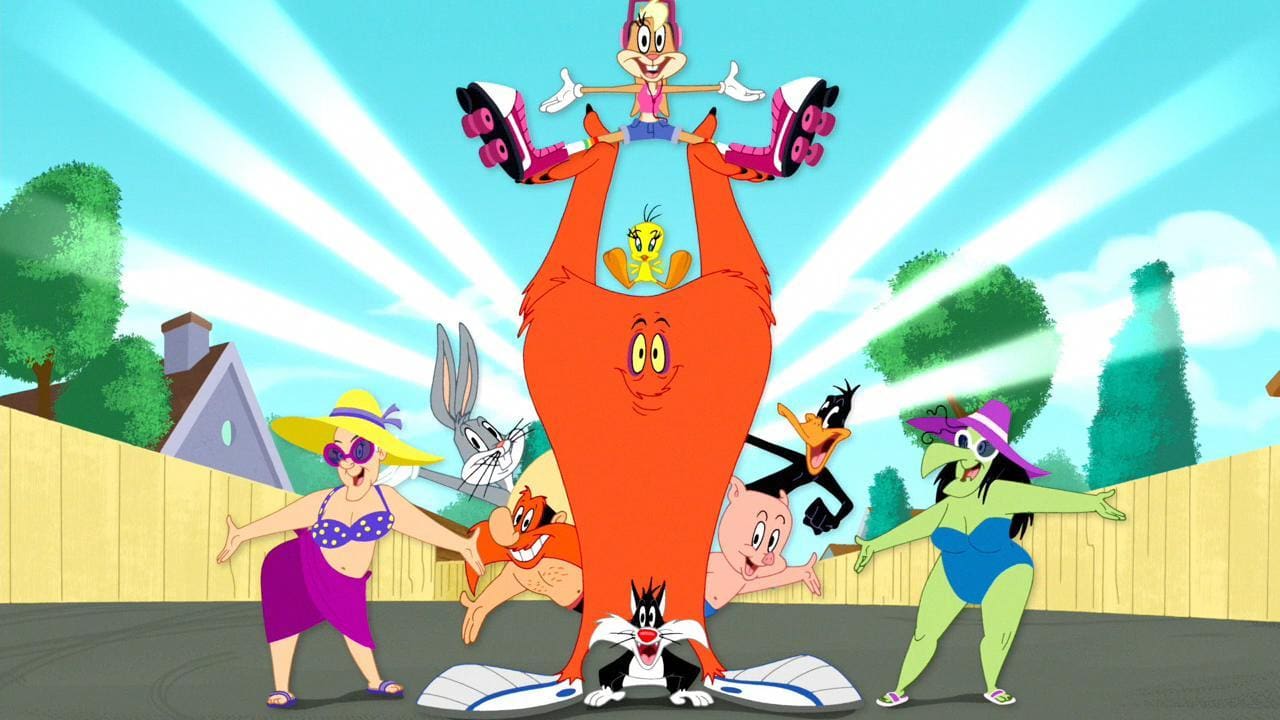
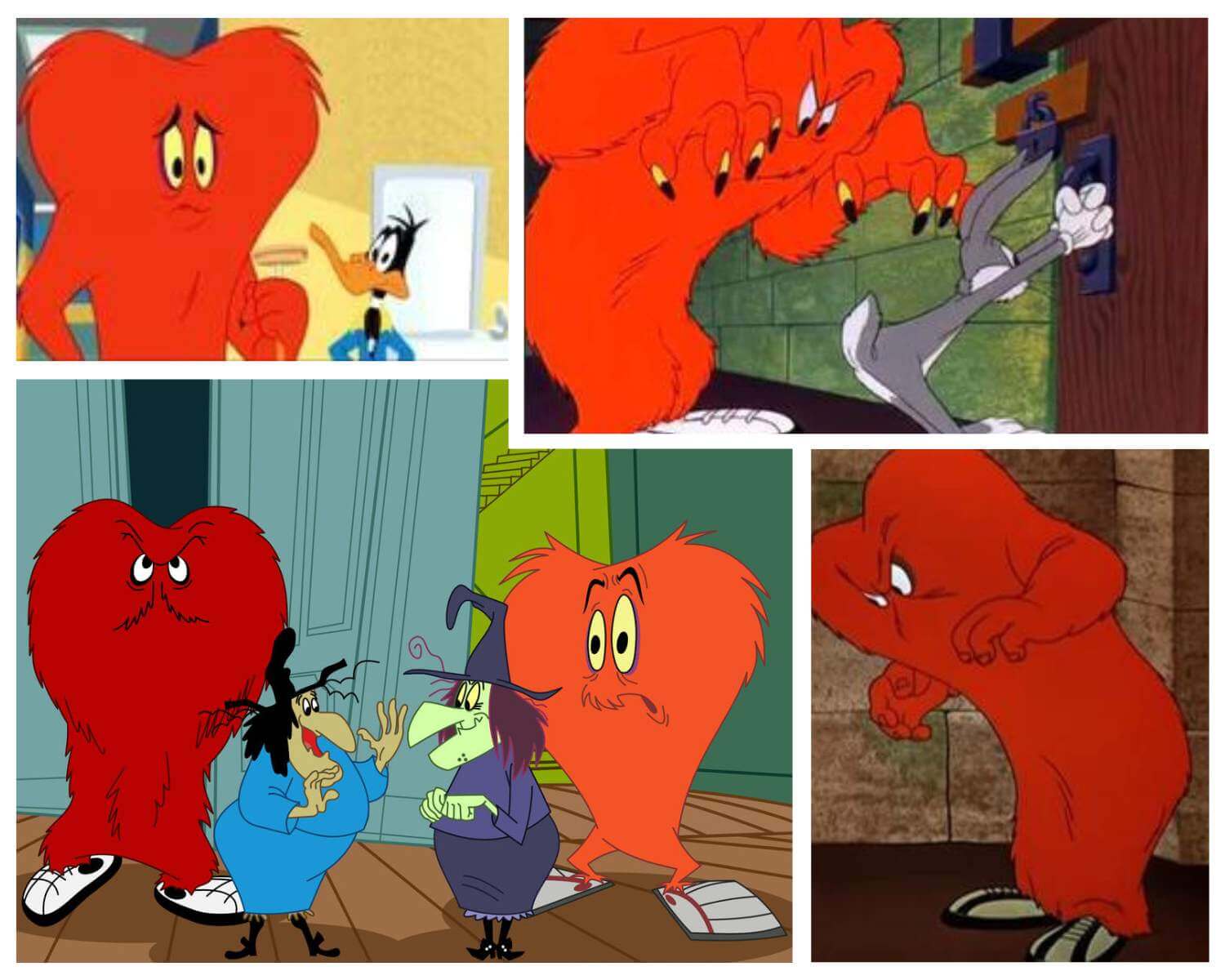
The design is the whole character, because there is almost nothing else to him, and it is a masterclass in doing a lot with little.
- He is a towering mass of red or orange hair with no visible body underneath.
- Two thin legs in white tennis shoes stick out at the bottom.
- Two eyes and a wide mouth float near the top of the hair.
- Oversized hands with claws emerge from the sides.
Hair-Raising Hare, 1946
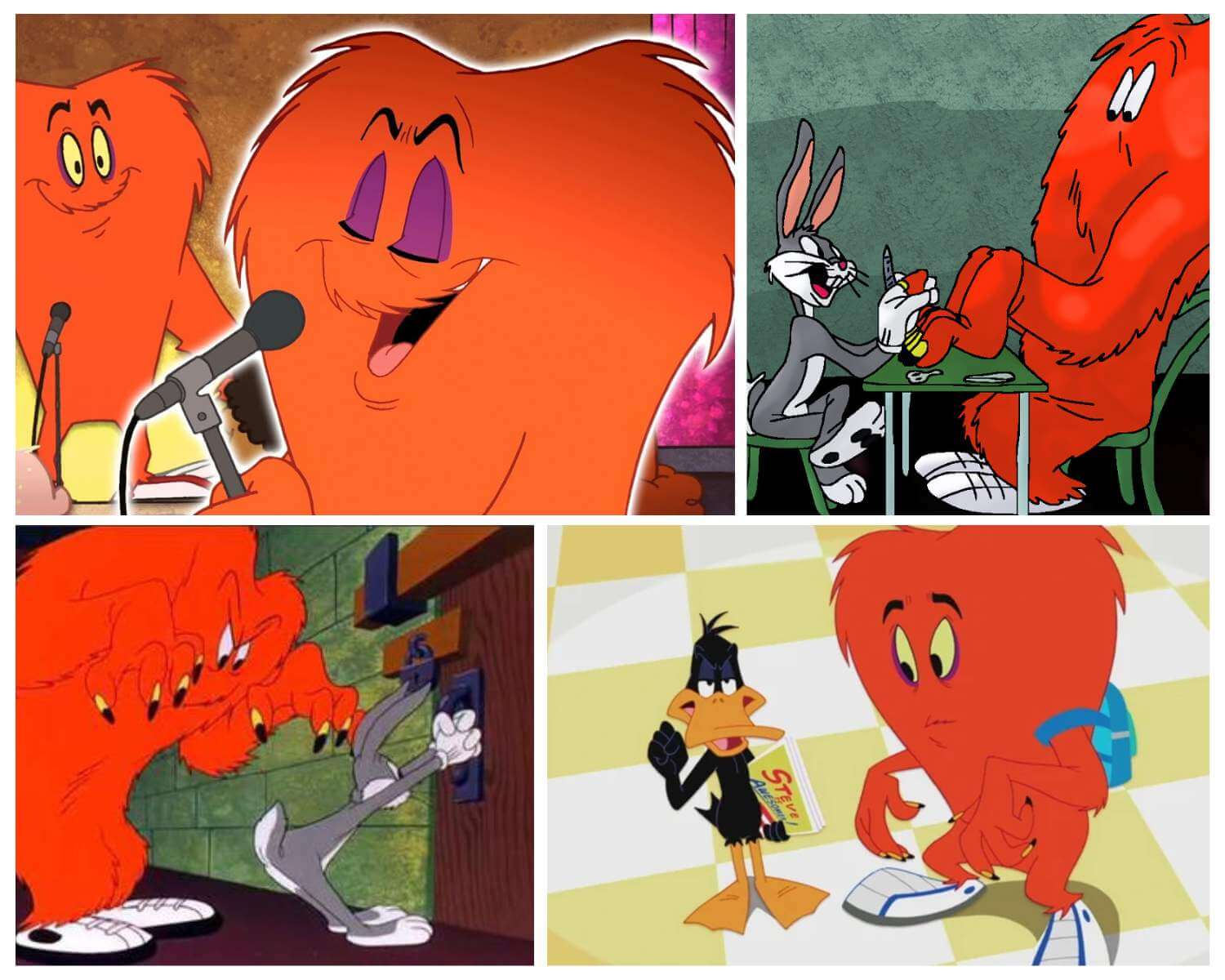
The debut is one of the most quoted cartoons Jones ever made, and Gossamer is the reason it works.
- A mad scientist modelled on Peter Lorre lures Bugs Bunny to his castle.
- The scientist means to feed Bugs to the monster.
- Bugs disarms him by giving him a manicure and gushing about his hands.
- He finally routs the monster by pointing out the watching audience.
Water, Water Every Hare, 1952
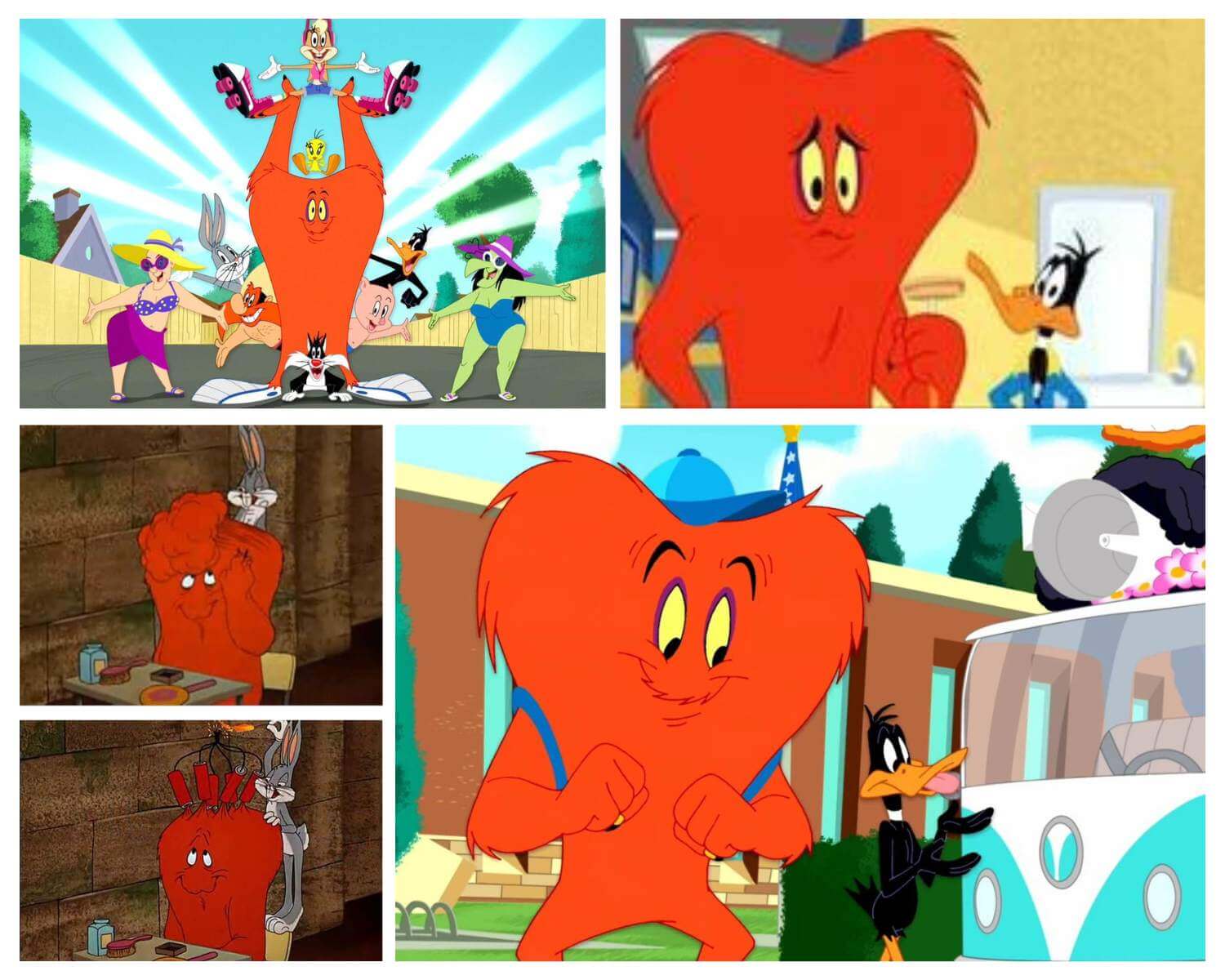
Jones brought the monster back six years later for a short that reuses the premise and adds the character’s best remembered gag.
- A different mad scientist needs a brain for a giant robot.
- The monster, here called Rudolph, is sent to fetch Bugs.
- Bugs stalls him with a full beauty-salon routine.
- The title puns on a line from The Rime of the Ancient Mariner.
The Long Gap and the Name
After 1952 the monster effectively vanished for nearly three decades, which is why his naming happened so late.
- He made no significant appearances through the 1950s, 60s and 70s.
- Jones revived him for Duck Dodgers and the Return of the 24½th Century in 1980.
- There he serves as a henchman alongside Marvin the Martian.
- Marvin names him Gossamer on screen, and the name finally stuck.
The Looney Tunes Show Reinvented Him
In the 2011 series, Gossamer finally got the one thing the shorts never gave him: a personality and a home life.
- The show reimagines him as a shy child rather than a monster henchman.
- His mother is the witch Lezah, whose name is Hazel backwards.
- Kwesi Boakye voiced this younger version.
- The stories put him in ordinary situations like babysitting and school.
Who Has Voiced Gossamer
For a character with so few lines, Gossamer has passed through a remarkable number of voices, which says something about how long he has stayed in rotation.
- Mel Blanc originated him and held the role from 1946 to 1980.
- Later voices include Maurice LaMarche, Jim Cummings and Joe Alaskey.
- Kwesi Boakye played the child version in The Looney Tunes Show.
- Fred Tatasciore and Eric Bauza have handled him in recent productions.
Where to Find Him Now
Gossamer never headlines, but he has become a reliable cameo the studio reaches for whenever it needs an instantly readable monster.
- He appeared in Space Jam: A New Legacy alongside Lola Bunny on the Tune Squad.
- Recent shows like Bugs Bunny Builders and Tiny Toons Looniversity feature him too.
- He had a henchman role in Looney Tunes: Back in Action.
- He featured across Tiny Toon Adventures in the 1990s.
Frequently Asked Questions About Gossamer
A few of the questions that come up most about this character.
What is the big red monster in Looney Tunes called? Gossamer, though he was unnamed in his 1946 debut and called Rudolph in 1952 before getting the name Gossamer in 1980.
Why is he called Gossamer? Chuck Jones named him ironically, since gossamer means something light and delicate and the character is a huge hairy brute. Marvin the Martian gives him the name on screen.
When did Gossamer first appear? In the short Hair-Raising Hare, released on 25 May 1946, directed by Chuck Jones.
Is Gossamer red or orange? Both, depending on the short and the print. Reference sources list him as orange in some appearances and red in others.
More Questions About the Looney Tunes Monster
Who voices Gossamer? Mel Blanc originated the role and voiced him until 1980. Since then Maurice LaMarche, Jim Cummings, Joe Alaskey, Kwesi Boakye, Eric Bauza and Fred Tatasciore have all played him.
Is Gossamer in Space Jam? Yes, he appears on the Tune Squad in Space Jam: A New Legacy, where his hair absorbs an opponent’s attack.
Who is Gossamer’s mother? In The Looney Tunes Show he is the son of the witch Lezah, whose name is Hazel spelled backwards, a nod to the classic character Witch Hazel.
What was Gossamer originally named? He had no name in 1946, was called Rudolph in 1952, and was only named Gossamer in 1980.
Gossamer is proof that a great cartoon design does not need a story attached to it. Four features, a pair of sneakers and a talent for being outwitted have kept him working for the better part of eighty years, long after more complicated characters faded.
So which Gossamer appearance is your favourite, and did you know he went nameless for so long?
Let me know in the comments.