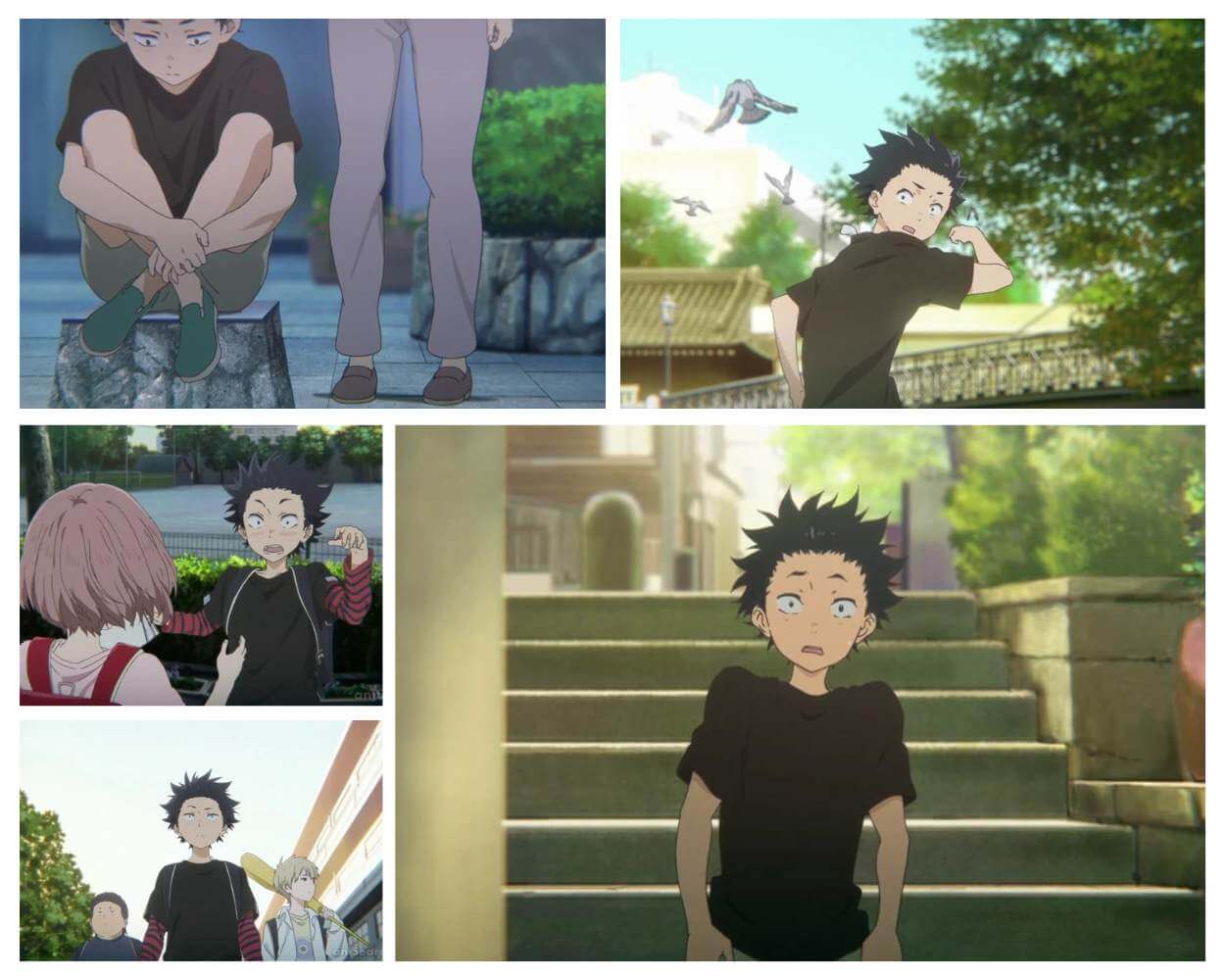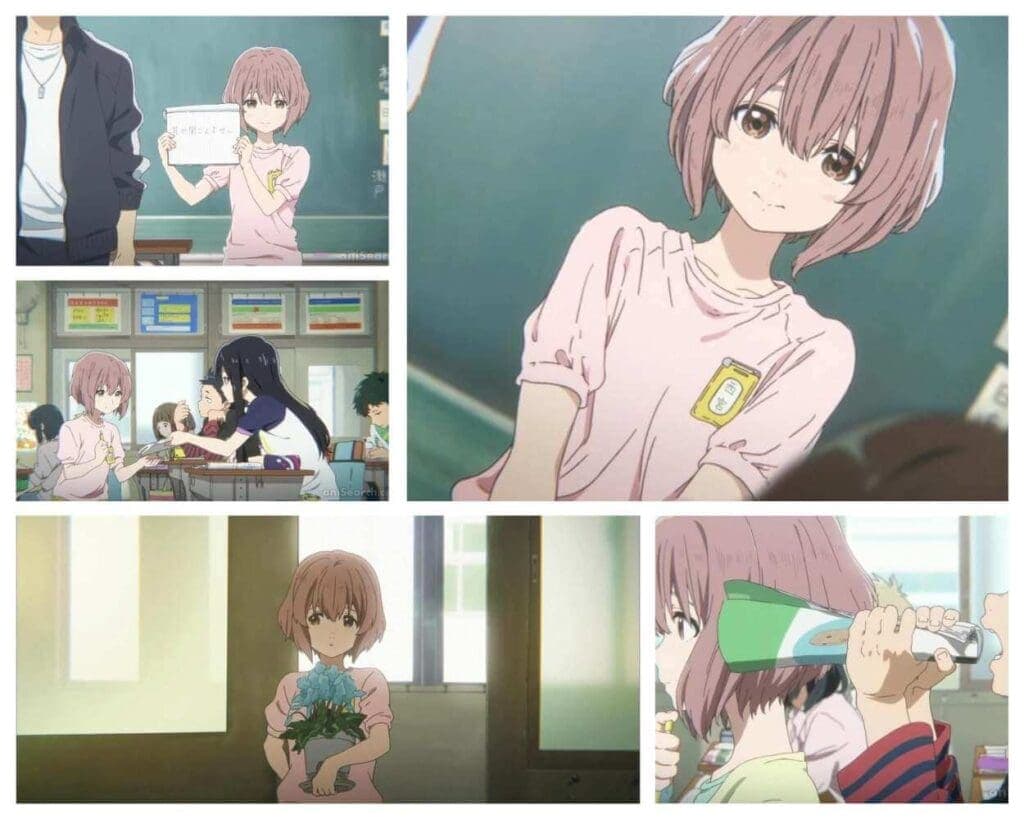
Shoko Nishimiya is usually described online as a cheerful, resilient girl who smiles through hardship and inspires everyone around her.
That reading is not just incomplete.
It is close to the opposite of the character Yoshitoki Oima wrote.
So the smiling is real, and it is also a mask. Shoko blames herself for everything that has happened to her, believes she is useless, and spends most of the story apologising to people who wronged her.
A Silent Voice is largely about how long it takes anyone to notice.
Who Shoko Nishimiya Is
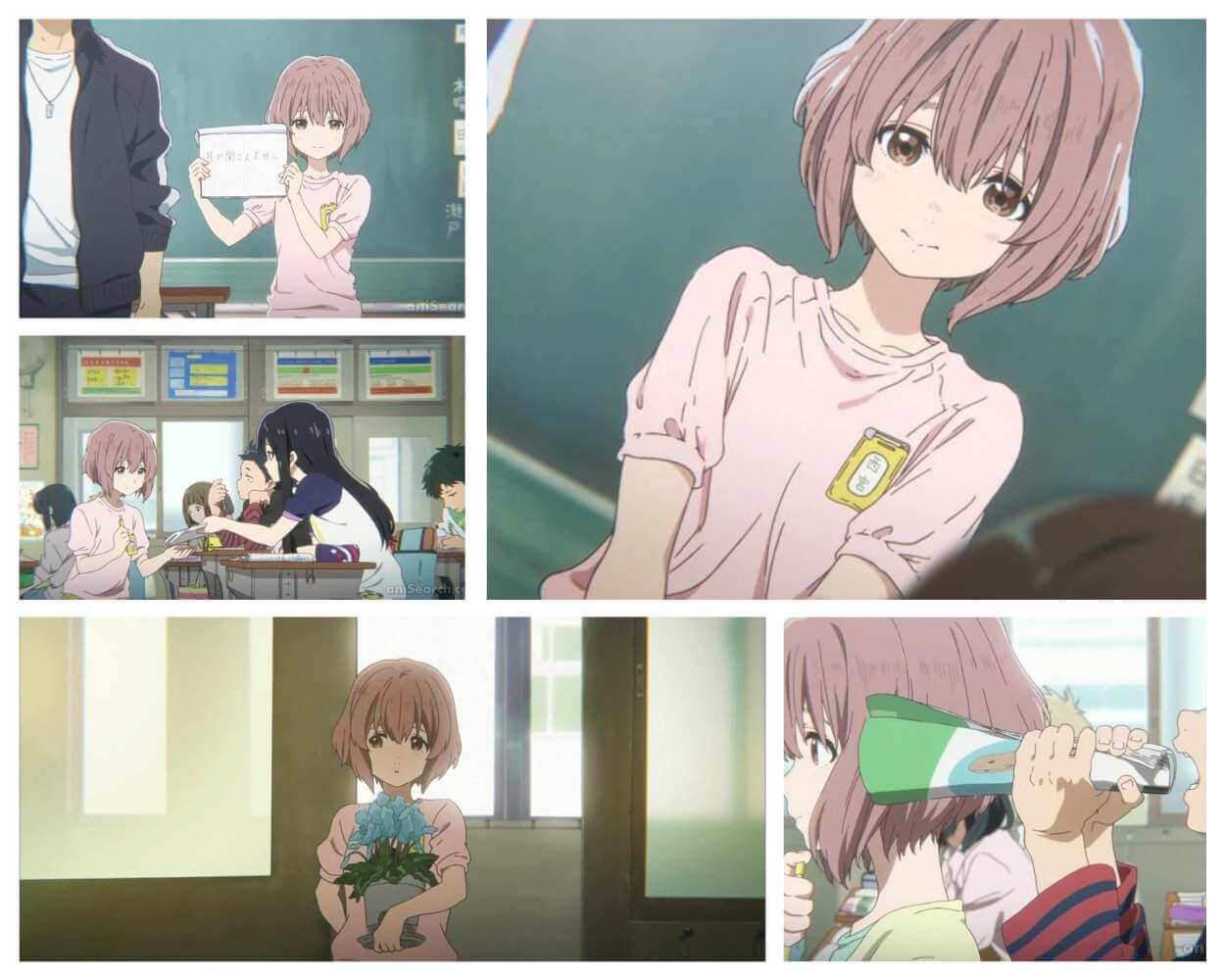
Shoko is a deaf girl who transfers into a mainstream elementary school and becomes the target of her classmates. The story follows what that does to her over the next several years.
- She is the female lead, alongside Shoya Ishida as narrator and protagonist.
- Her hearing loss is severe enough that she is effectively deaf.
- She can register pitch and tone, though not individual words.
- Japanese Sign Language is her primary language.
Her Family Cut Her Off Before the Bullying Started
The story usually begins at sixth grade. In truth it begins much earlier, and the source of her self-blame sits here.
- Her family discovered she was deaf when she was three.
- Her father’s side of the family cut all ties with her and her mother.
- Her mother Yaeko chose a mainstream school over a school for the deaf.
- That decision was meant to stop her relying on her disability.
What Happened in Sixth Grade
Shoya Ishida’s bullying is the event the whole story turns on, and it was not a few unkind words.
- Eight of her hearing aids were broken or lost within five months.
- Shoya tore one out of her ear, and the injury drew blood.
- That damage was permanent, and she is later seen wearing only one aid.
- She was made to transfer schools again.
She Is Not the Cheerful Girl the Internet Thinks She Is
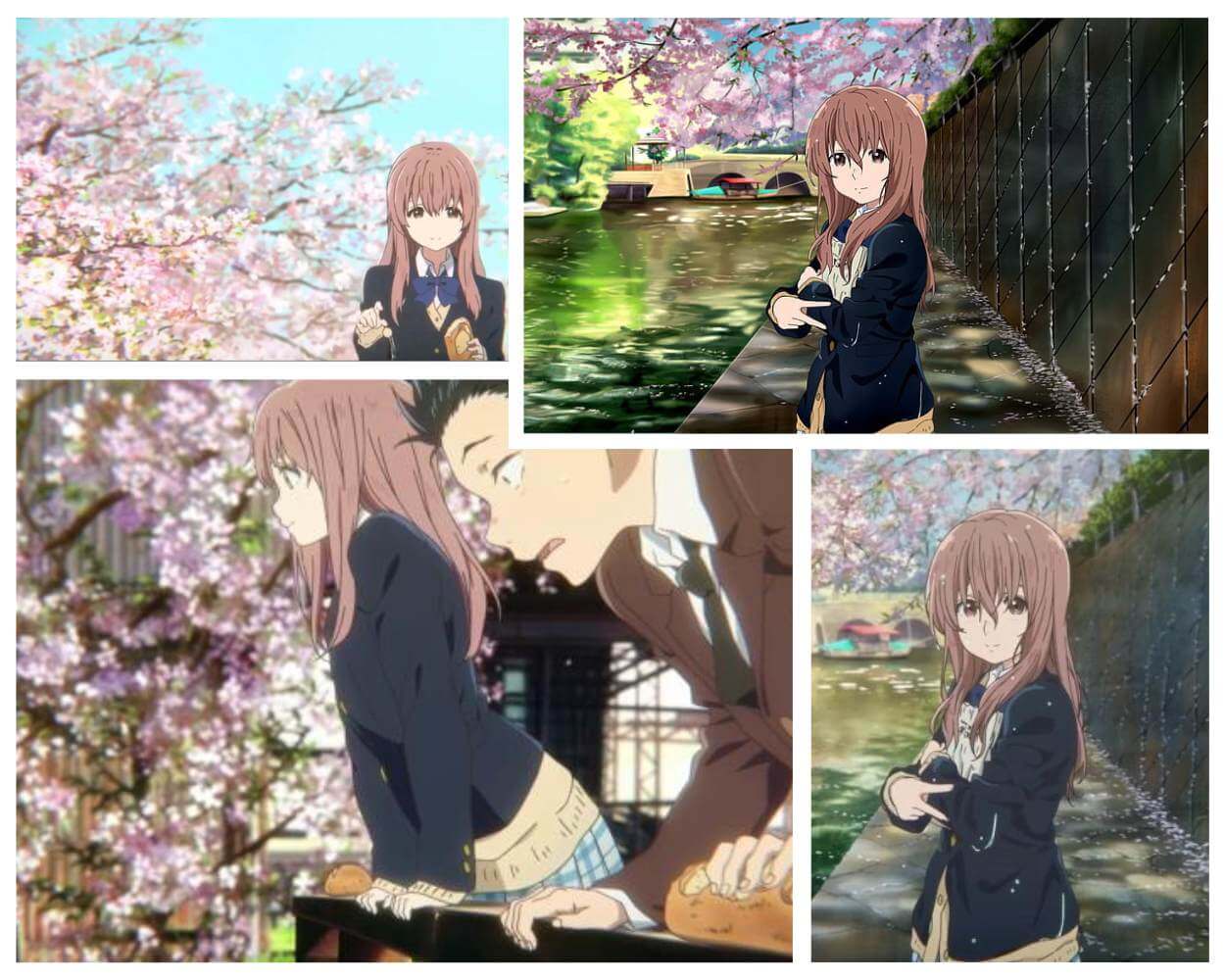
This is the part most write-ups get wrong, and it is the whole point of the character.
- She hates herself, and she fears she is useless to the people around her.
- Rather than blaming those who hurt her, she takes the blame herself.
- Her constant smiling is a way of managing other people, not a mood.
- She apologises compulsively, including to her own bullies.
Naoka Ueno
Most articles about Shoko leave Ueno out, which is a mistake. She is the character who sees Shoko most clearly.
- Ueno joined Shoya in bullying Shoko in elementary school.
- She is infatuated with Shoya and blames Shoko for coming between them.
- She corners Shoko on a ferris wheel and tells her exactly how she feels.
- Yuzuru secretly records the encounter and shows it to Shoya.
Her Mother, Her Sister and Her Grandmother
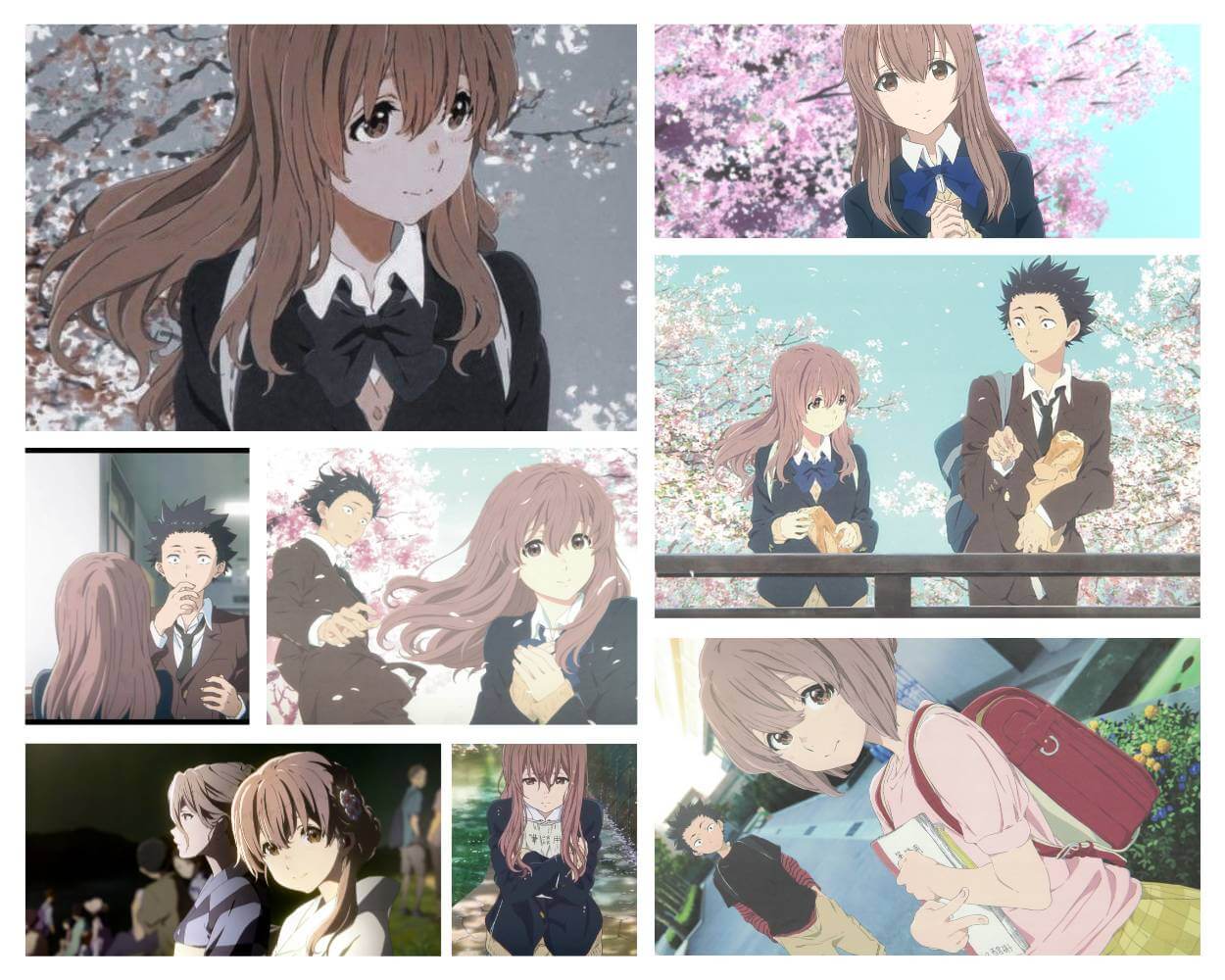
The Nishimiya household is three generations of women getting on with it after the men left.
- Yaeko, her mother, is hard on her and fiercely protective of her.
- Ito, her grandmother, largely raised the two sisters and dies during the story.
- Yuzuru, her younger sister, skips school to stay near her.
- Yuzuru is openly hostile to Shoya turning up again.
How Shoko Communicates
Her methods are more varied than a single label suggests, and the story pays close attention to them.
- Japanese Sign Language is her first and preferred means of communication.
- She carries a notebook so people can write to her.
- She lip-reads where she can, and she speaks aloud despite finding it difficult.
- Speaking is what leaves her most exposed, and she does it anyway.
The Turn
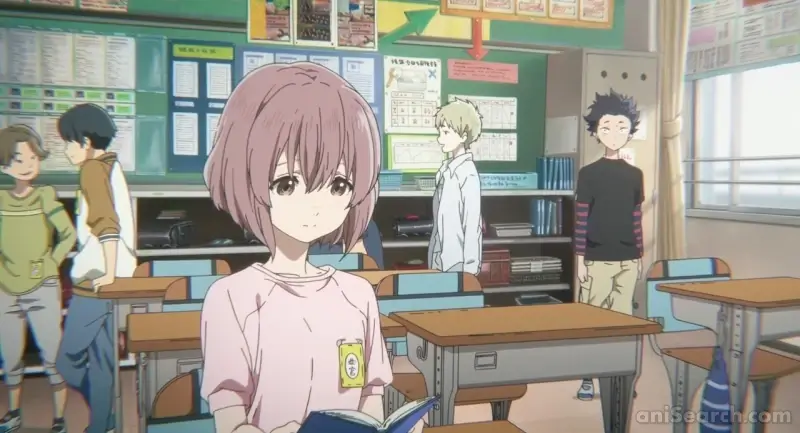
The story’s most difficult sequence follows the collapse of the group Shoya had assembled around her.
- Shoko concludes that she is the cause of everyone’s unhappiness.
- She attempts to take her own life, and Shoya intervenes.
- He is badly injured and left in a coma as a result.
- She then has to face what she nearly did, and what it cost him.
The Voices Behind Shoko
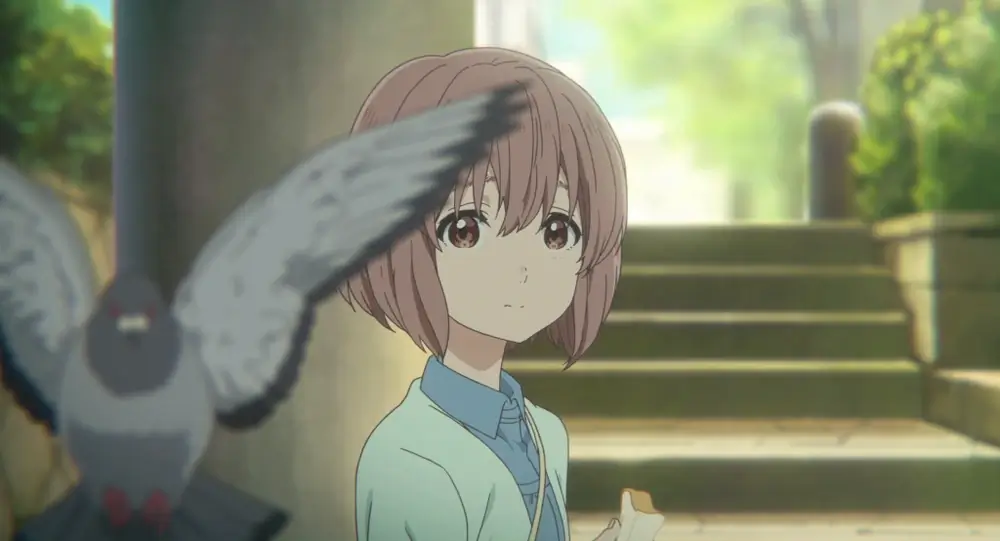
The casting on both versions is unusually considered, and one choice in particular stands out.
- Saori Hayami voices Shoko in Japanese.
- Hayami worked with consultants to portray her speech respectfully.
- Lexi Cowden voices her in the English dub.
- Cowden is deaf in real life.
The Film Itself
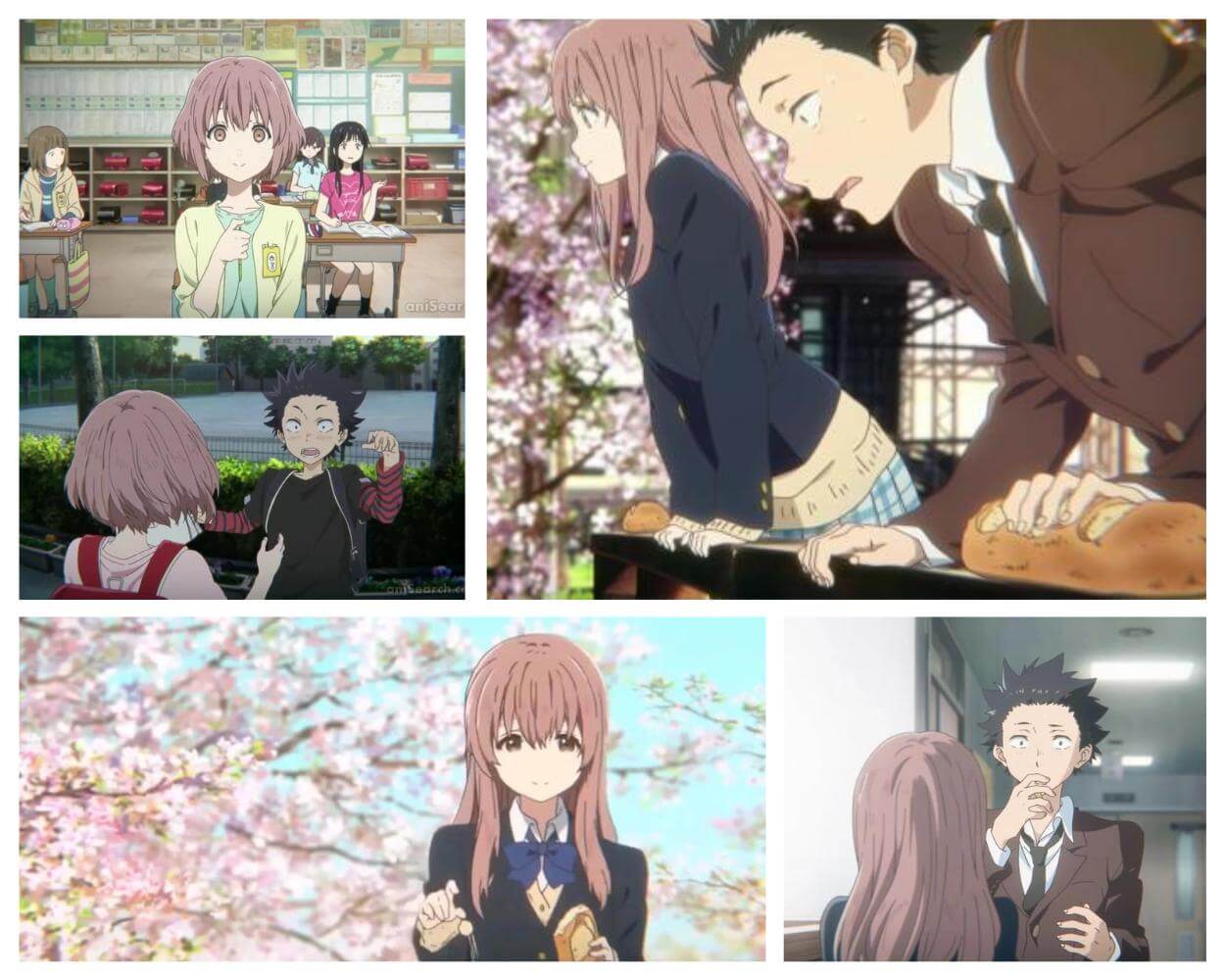
Kyoto Animation adapted the manga in 2016, and the production choices serve Shoko’s perspective directly.
- Kensuke Ushio composed the score, built largely around piano.
- The sound design uses silence deliberately to sit inside her experience.
- Backgrounds are based on real locations in Ogaki City, Gifu Prefecture.
- Oima grew up there, which is why the setting feels so specific.
Frequently Asked Questions About Shoko Nishimiya
A few of the questions that come up most about this character.
Who voices Shoko Nishimiya? Saori Hayami in Japanese and Lexi Cowden in English. Cowden is deaf, which made the casting notable at the time.
Is Shoko Nishimiya completely deaf? Her hearing loss is severe enough to be effectively total. She can perceive pitch and tone, but not individual words.
Why does Shoko blame herself? Her father’s family abandoned her over her deafness when she was three, and she absorbed the idea that she is the problem. That belief shapes almost everything she does.
Does Shoko end up with Shoya? The story deliberately leaves their relationship open. They become essential to each other without the work committing to a romance.
Shoko’s Relationships and Story Questions
How old is Shoko Nishimiya? Twelve when she debuts, seventeen after the first time skip, and twenty by the later chapters of the manga.
What is Shoko’s relationship with Ueno? Ueno bullied her and remains hostile for years. Shoko still seeks her out later, because she values people who tell her the truth.
How does Shoko communicate? Mainly through Japanese Sign Language, supported by a notebook, lip-reading and her own speech.
Who created Shoko Nishimiya? Yoshitoki Oima, who wrote and drew the Koe no Katachi manga before Kyoto Animation adapted it.
Shoko endures as a character because the writing refuses to make her easy. She is kind and she is deeply unwell, and the story treats those as separate facts rather than resolving one into the other. So what did you make of her ending?
Let me know in the comments.