The Aracuan Bird is one of Disney’s strangest recurring characters.
He is not a hero, villain, or traditional sidekick.
He appears without warning, sings his own name, ignores the rules of the scene, and usually leaves Donald Duck furious.
The bird first appeared in The Three Caballeros, which premiered in Mexico City in December 1944 before reaching American theatres in February 1945.
Disney later brought him back for the Donald Duck short Clown of the Jungle, the musical feature Melody Time, television cartoons, and Legend of the Three Caballeros.
The short answer
Who is the Aracuan Bird?
- A chaotic South American bird introduced in The Three Caballeros
- Named after the Portuguese word aracuã, used for chachalacas of the genus Ortalis
- Best known for breaking the fourth wall and tormenting Donald Duck
- Originally voiced by Pinto Colvig, the longtime voice of Goofy
- Later voiced by Frank Welker and Dee Bradley Baker
What Kind of Bird Is the Aracuan?
The Disney character is fictional, but the name is not.
In Brazilian Portuguese, aracuã is a common name applied to several chachalacas in the genus Ortalis. These are noisy, chickenlike birds found across parts of Central and South America.
The Portuguese Infopédia dictionary defines aracuã as a name used for several American birds in that genus.
Disney’s version is not a realistic drawing of one exact species.
Real chachalacas are generally brown or grey, with long tails and loud calls. The cartoon bird is bright pink, red, yellow, and purple, with a long beak and an almost human ability to manipulate the world around him.
The safest description is:
The Aracuan Bird is a fictional Disney trickster whose name and noisy personality were inspired by real South American chachalacas.
That is more accurate than saying his real species remains unidentified.
The Aracuan Bird’s First Appearance
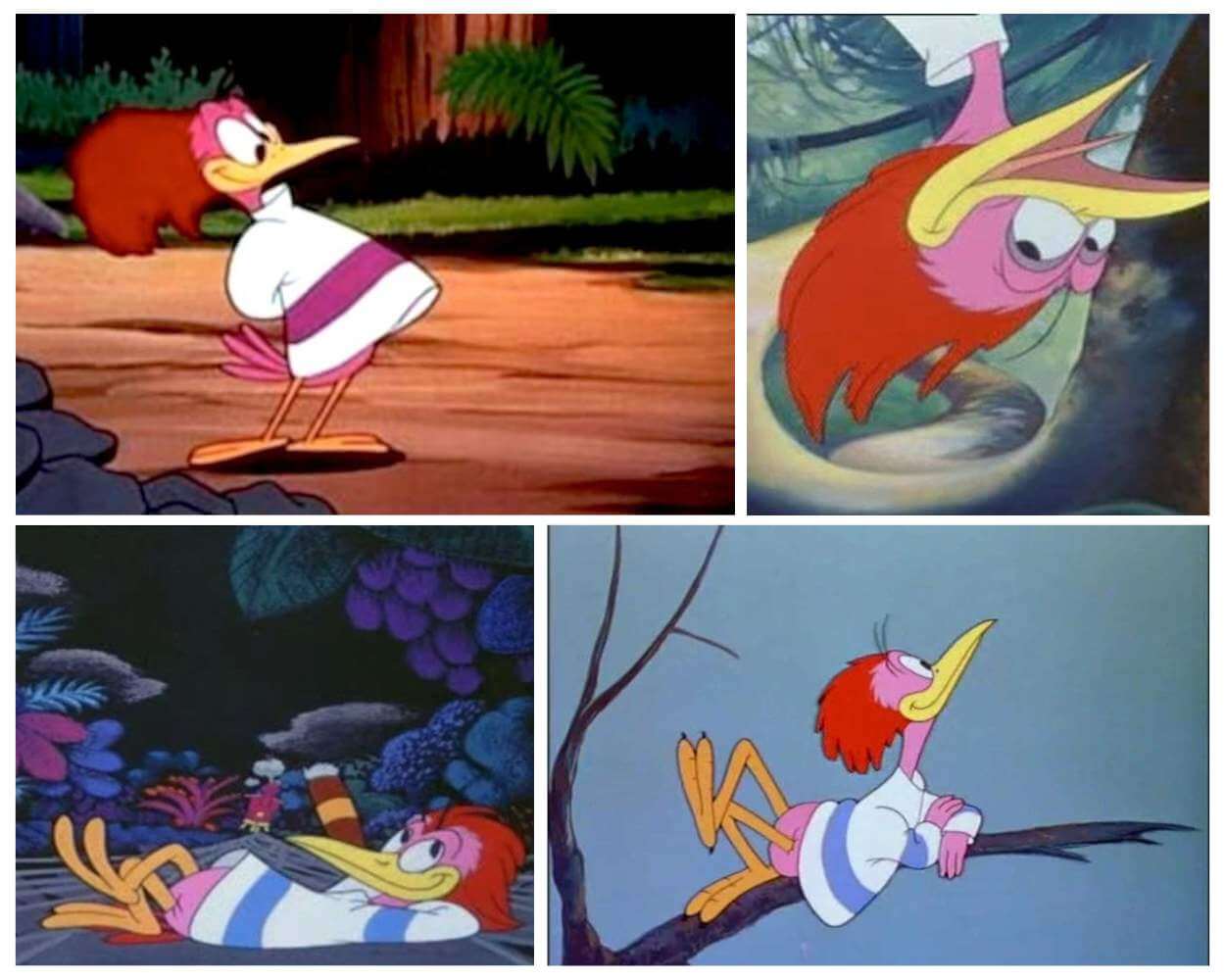
The Three Caballeros
The Aracuan Bird first appears during the rare-bird sequence in The Three Caballeros.
Donald watches a film about unusual birds of South America. The narrator describes the Aracuan as one of the most eccentric birds ever seen.
The bird then proves the description correct.
He sings a rapid song built around his own name, slips in and out of the projected film, and reaches beyond the screen to shake Donald’s hand.
Later, while Donald and José Carioca travel toward Bahia, the Aracuan redraws the railway tracks with chalk. The train follows every impossible line he creates.
The official Disney D23 character entry identifies The Three Caballeros as his first major appearance and lists the classic productions in which he bothers Donald.
The character works because he is not limited by the story’s physical rules.
Donald and José have to travel through the world of the movie.
The Aracuan can simply redraw it.
Why the Character Feels So Unusual
Most Disney comedy characters have a clear personality and goal.
Donald wants something and loses his temper when he cannot get it. Goofy tries to perform an ordinary task and misunderstands every step. Chip and Dale want food or a safe home.
The Aracuan Bird usually wants only to interrupt.
He behaves as though he knows he is animated:
- He enters and leaves the film frame whenever he chooses
- He changes objects and scenery to create new gags
- He treats Donald’s frustration as part of his performance
- His song functions as both an introduction and a warning
That makes him feel closer to a screwball cartoon trickster than to a conventional Disney animal.
He is still a Disney character, but his speed and disregard for continuity give him a rougher, more unpredictable energy.
Clown of the Jungle Gave Him a Starring Role
Clown of the Jungle was released on June 20, 1947.
In the short, Donald travels through a South American jungle trying to photograph rare birds.
The Aracuan repeatedly ruins the photographs, distracts Donald, imitates other birds, and turns the entire expedition into a personal attack on the photographer.
Disney’s official film entry describes the bird as driving Donald nearly mad by sabotaging his attempts to photograph the jungle wildlife.
This is the clearest version of their relationship.
The Aracuan does not dislike Donald in the way a traditional enemy might.
He sees Donald as the ideal audience for a joke because no other Disney character reacts with so much anger.
Melody Time and “Blame It on the Samba”
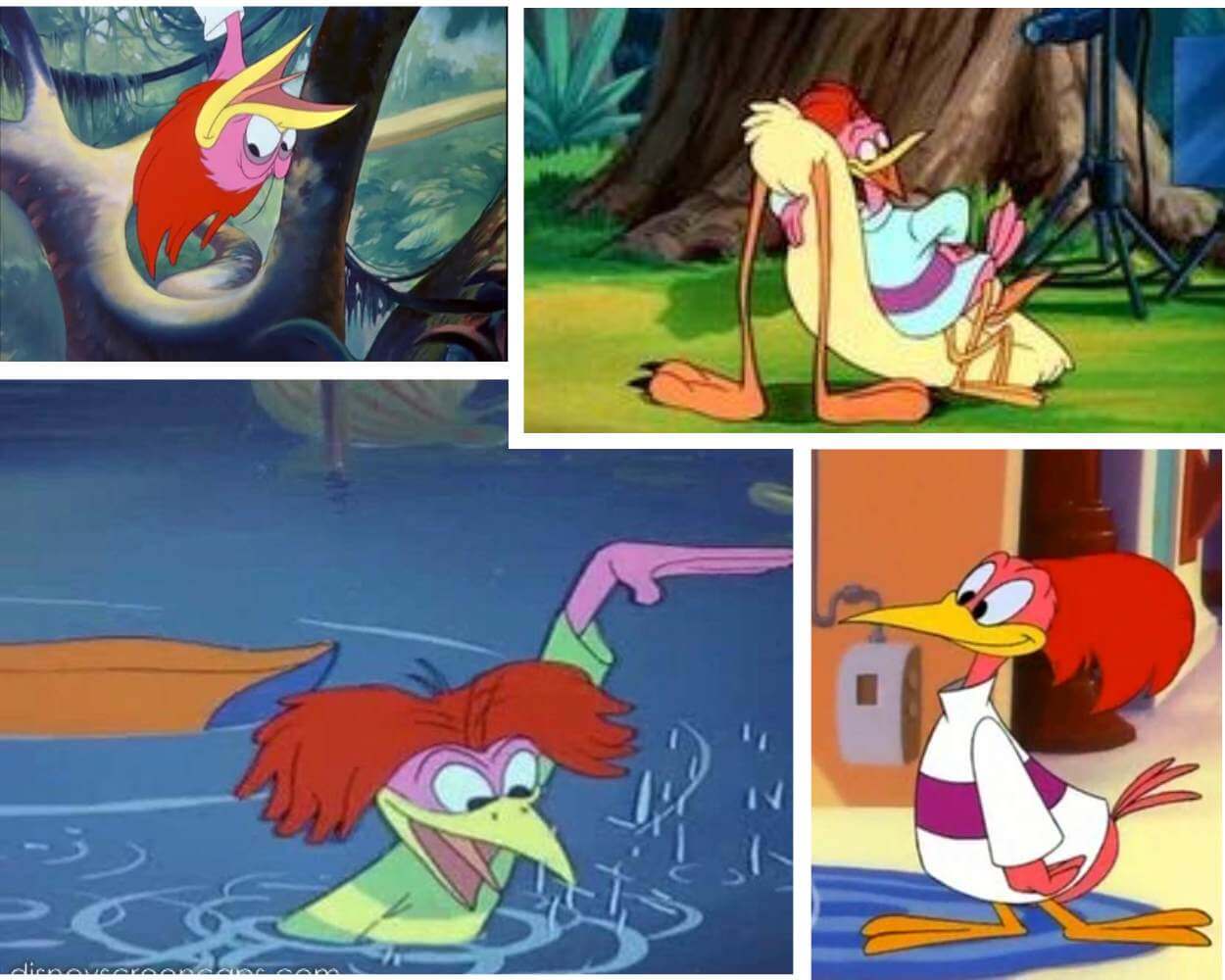
The Aracuan returned in Disney’s 1948 musical anthology Melody Time.
He appears in the final sequence, “Blame It on the Samba,” alongside Donald Duck and José Carioca.
Donald and José begin the segment tired and unhappy.
The Aracuan pulls them into a fast, colorful performance built around samba music, surreal transformations, and live-action footage of organist Ethel Smith.
A D23 history of Melody Time explains that the sequence had originally been planned for a third Latin American feature that Disney never completed. The material was later revived for Melody Time.
The sequence uses the Aracuan differently from Clown of the Jungle.
He is still chaotic, but he is not simply tormenting Donald.
Here he uses that energy to pull Donald and José out of their bad mood.
The Aracuan Bird’s Major Appearances
| Production | Year | Role |
|---|---|---|
| The Three Caballeros | 1944 | Debut and fourth-wall-breaking musical interruption |
| Clown of the Jungle | 1947 | Main antagonist and comic partner for Donald |
| Melody Time | 1948 | Leads Donald and José into “Blame It on the Samba” |
| Mickey Mouse Works | 2000 | Returns in “Bird Brained Donald” |
| House of Mouse | 2001-2002 | Cameos and the featured episode “Donald and the Aracuan Bird” |
| Legend of the Three Caballeros | 2018 | Recurring character named Ari |
Some online lists also include planned cameos, deleted material, park decorations, parades, and small game references.
Those are harder to document consistently, so the table focuses on his clear screen roles.
Mickey Mouse Works and House of Mouse
After decades away from new animation, the Aracuan returned in the Mickey Mouse Works short “Bird Brained Donald.”
Donald again tries to photograph him and again fails.
The short later appeared within House of Mouse, where the character also received his own framing-story episode, “Donald and the Aracuan Bird.”
Donald is ordered to look after the club’s special guest. The Aracuan creates chaos while allowing Donald to take the blame.
The episode is a direct continuation of the joke established in the 1940s:
Donald knows exactly what the bird is capable of, but nobody else believes him until it is too late.
Legend of the Three Caballeros
The 2018 series Legend of the Three Caballeros gave the bird a larger recurring role and called him Ari.
The show follows Donald, José, and Panchito through a serialized fantasy adventure. Ari becomes part of the supporting cast rather than appearing only to destroy one scene.
Disney’s official series entry credits Dee Bradley Baker as Ari the Aracuan Bird.
The expanded role did not make Ari normal.
He still communicates through frantic sounds, physical comedy, and sudden appearances, but the series gives him more opportunities to help the Caballeros instead of merely distracting them.
Who Voiced the Aracuan Bird?
The original article listed José Oliveira as one of the bird’s main voices, but most animation cast references identify Pinto Colvig as the original performer.
Colvig was already famous as the voice of Goofy. His high-speed song, cackling sounds, and elastic vocal effects became a large part of the Aracuan’s identity.
- Pinto Colvig: The classic 1940s appearances
- Frank Welker: Mickey Mouse Works and House of Mouse
- Dee Bradley Baker: Ari in Legend of the Three Caballeros
José Oliveira voiced José Carioca in the Latin American films. Some modern databases have mixed or duplicated the Aracuan credit, which is probably why older character guides sometimes assign the bird to Oliveira.
Because several classic roles were uncredited onscreen, absolute certainty is difficult. Pinto Colvig remains the standard and best-supported original attribution.
What Does the Aracuan Bird Look Like?
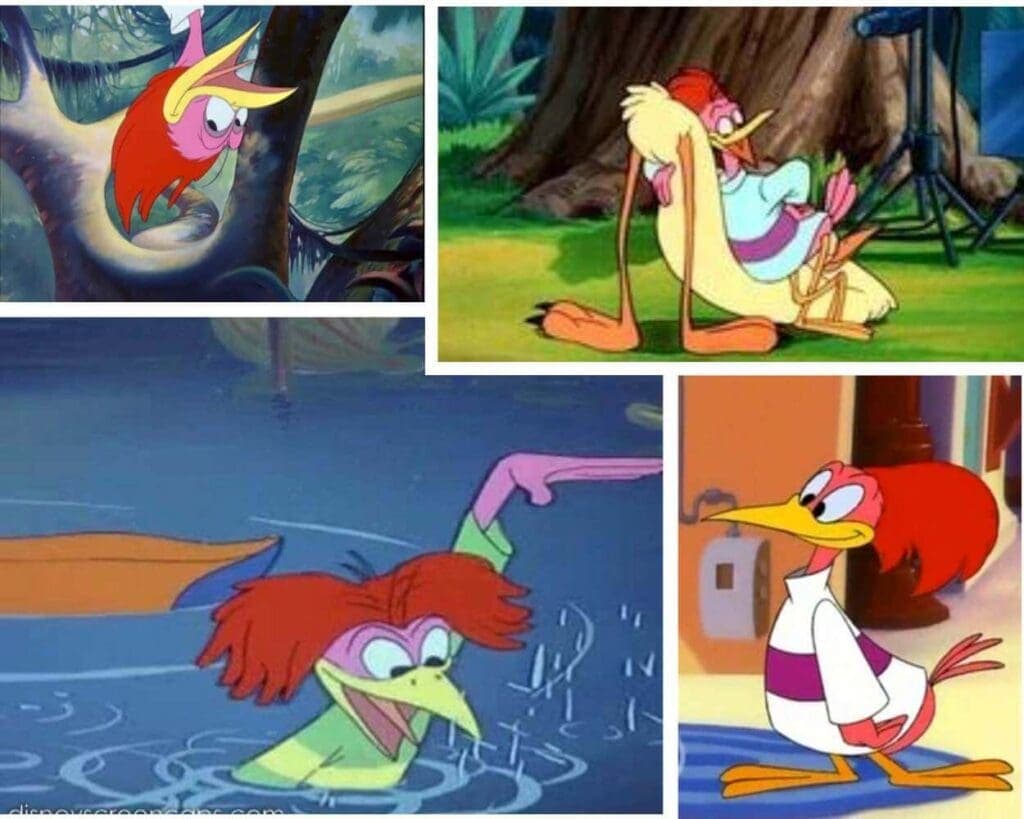
The Disney Aracuan is designed for speed and visual confusion rather than realism.
His features include:
- Bright pink or magenta body feathers
- A red crest and tail
- A long yellow beak
- Thin orange legs
- Large eyes and an exaggerated grin
- A long neck that bends and stretches for gags
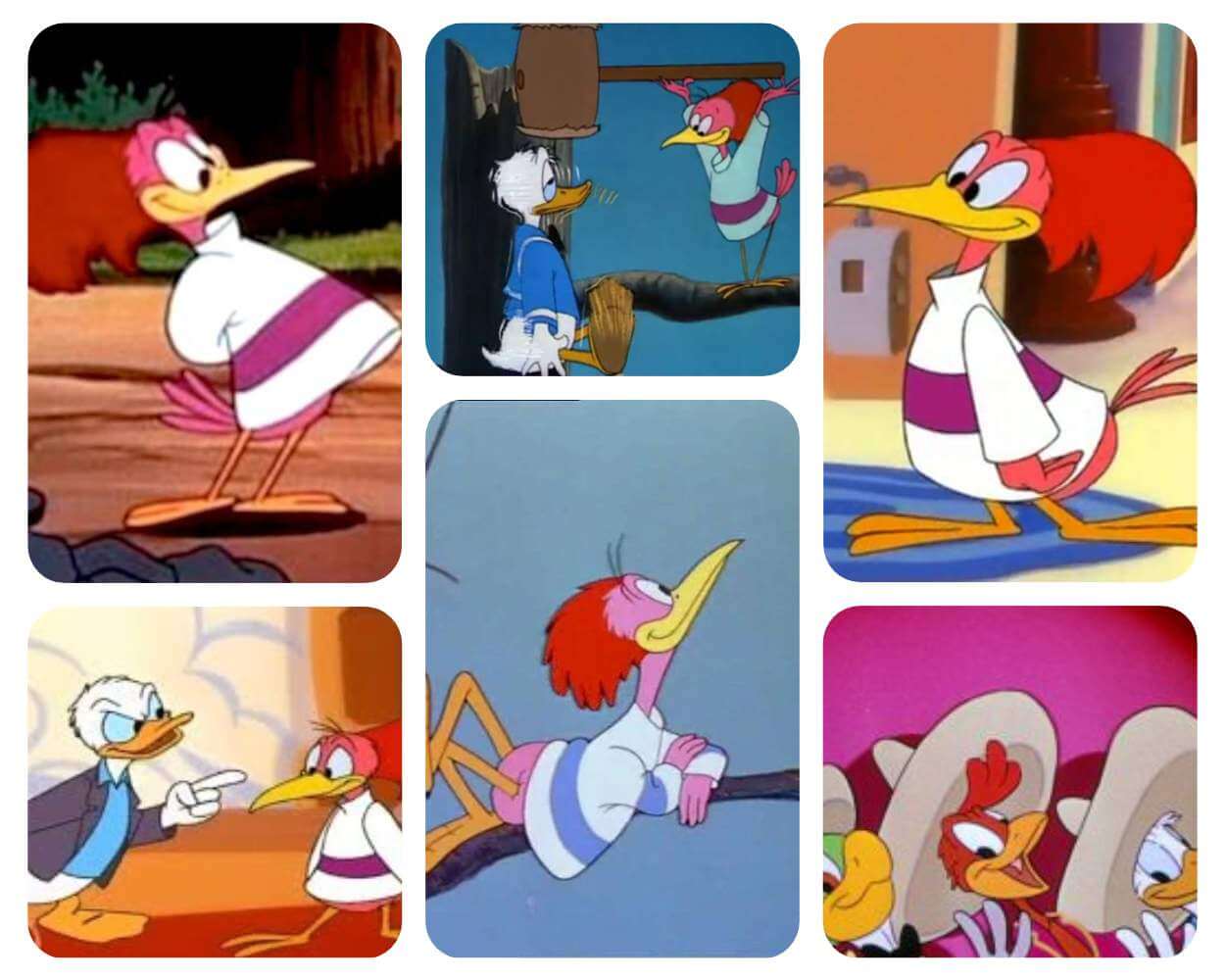
The design does not closely resemble a real chachalaca.
That seems intentional.
The real bird provides the name, tropical setting, and noisy call. Disney exaggerates everything else until the character can function like a living visual effect.
Why Disney Keeps Bringing Him Back
The Aracuan Bird is useful because he creates instant disorder.
He does not need a long introduction or complicated motivation.
Put him beside Donald, and the scene already has a structure:
- The Aracuan does something impossible
- Donald tries to stop or expose him
- Nobody believes Donald
- The bird escapes while Donald receives the punishment
That pattern makes the character easy to revive even after a long absence.
It also explains why he works particularly well with Donald rather than Mickey or Goofy.
Mickey might solve the problem.
Goofy might accidentally join the game.
Donald turns every interruption into a personal war.
Quick Answers About the Aracuan Bird
Who is the Aracuan Bird? He is a chaotic Disney bird introduced in The Three Caballeros. He is best known for singing his name, breaking the fourth wall, and frustrating Donald Duck.
Is the Aracuan Bird a real species? No. The character is fictional, but the name aracuã is used in Brazil for real chachalacas in the genus Ortalis.
When did the Aracuan Bird first appear? He debuted in The Three Caballeros, which premiered in Mexico City on December 21, 1944.
Who voiced the original Aracuan Bird? Pinto Colvig is the standard credit for the classic version.
What other movies feature him? His main classic appearances are The Three Caballeros, Clown of the Jungle, and Melody Time.
Does the Aracuan Bird talk? He usually communicates through songs, laughs, cackles, and vocal effects rather than normal conversation.
Why is he called Ari? Legend of the Three Caballeros uses Ari as his shorter personal name.
Disney’s Forgotten Agent of Chaos
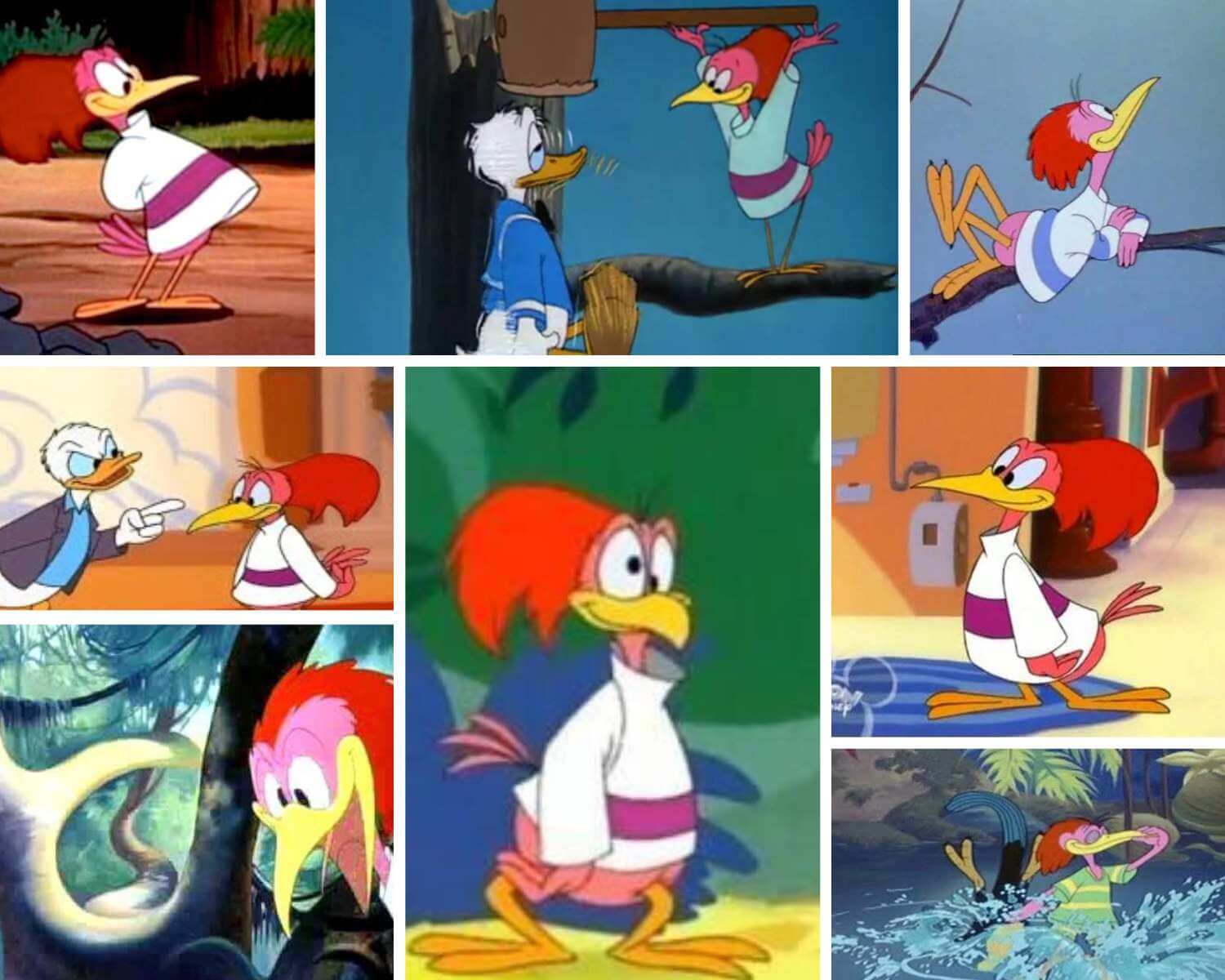
The Aracuan Bird never became one of Disney’s major stars.
That may be why he still feels so unusual.
He was never softened into a dependable friend, given a sentimental backstory, or forced into a clear moral role.
He enters, sings, breaks the scene, and disappears.
His real-world inspiration is a noisy South American bird.
His cartoon identity is pure disruption.
That combination made him the perfect opponent for Donald Duck and one of the strangest characters to survive Disney’s 1940s Latin American films.
For more unusual animated birds, see my guide to bird cartoon characters.