The best Batman cartoons span more than fifty years, from Filmation’s flat 1968 shorts to a 1940s noir currently running on Prime Video.
Batman has been animated more often than any other superhero, and the quality range is enormous.
Below are the ten Batman cartoons that matter, ranked from weakest to strongest, with what each one was trying to do and whether it worked. The newest entry has its second season landing this month.
The Best Batman Cartoons, Ranked
These Batman cartoons are ranked on storytelling, animation and how much each added to the character. Number one sits at the bottom.
Batman Unlimited (2015-2016)
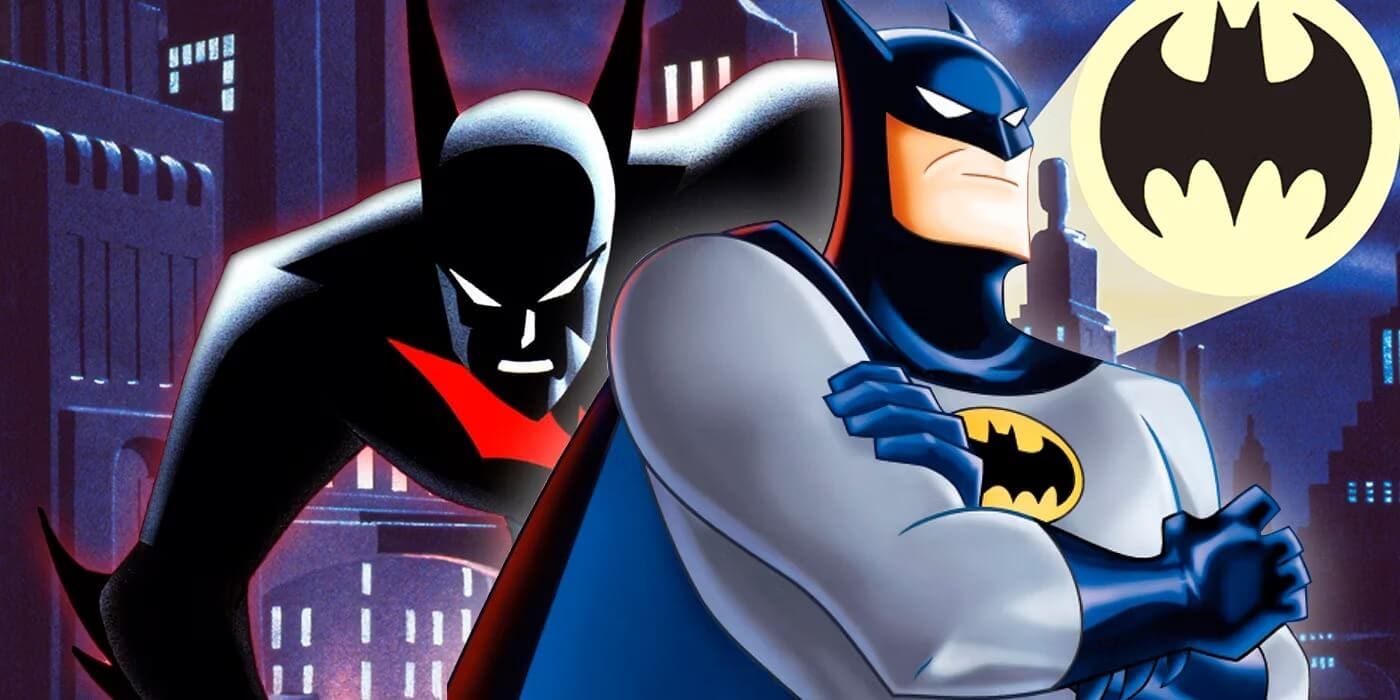
This is not a television series at all, which is worth knowing before you go looking. Batman Unlimited is a set of three direct-to-video films built around a toy line, aimed squarely at younger viewers.
- Format: Three feature-length films rather than episodes
- Aimed at: Children, with Justice League support and familiar villains
- Style: Bright, blocky and heavily merchandise-driven
- Worth it if: You need something undemanding for a young child
The Adventures of Batman (1968-1969)
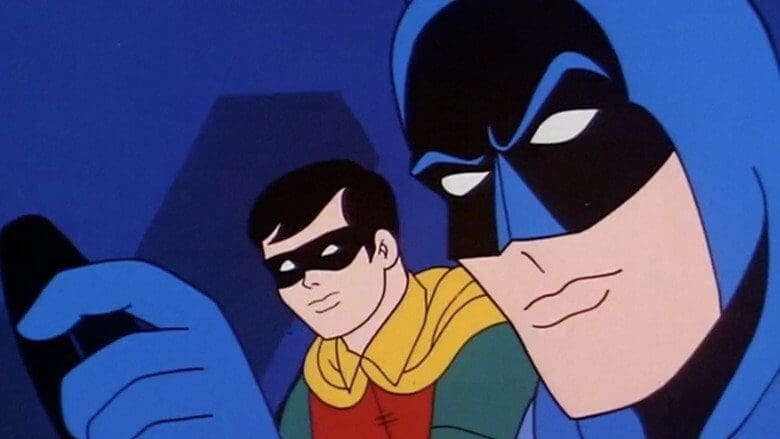
The first of the Batman cartoons, made by Filmation while the Adam West live-action series was still fresh in everyone’s memory. It is stiff, cheap and repetitive throughout. Even so, it is where all of this started.
- Studio: Filmation
- Tone: Straight-faced camp, carried over from the 1966 live-action show
- Villains: The famous rogues, played broadly
- Historical value: The first time Batman was animated for television
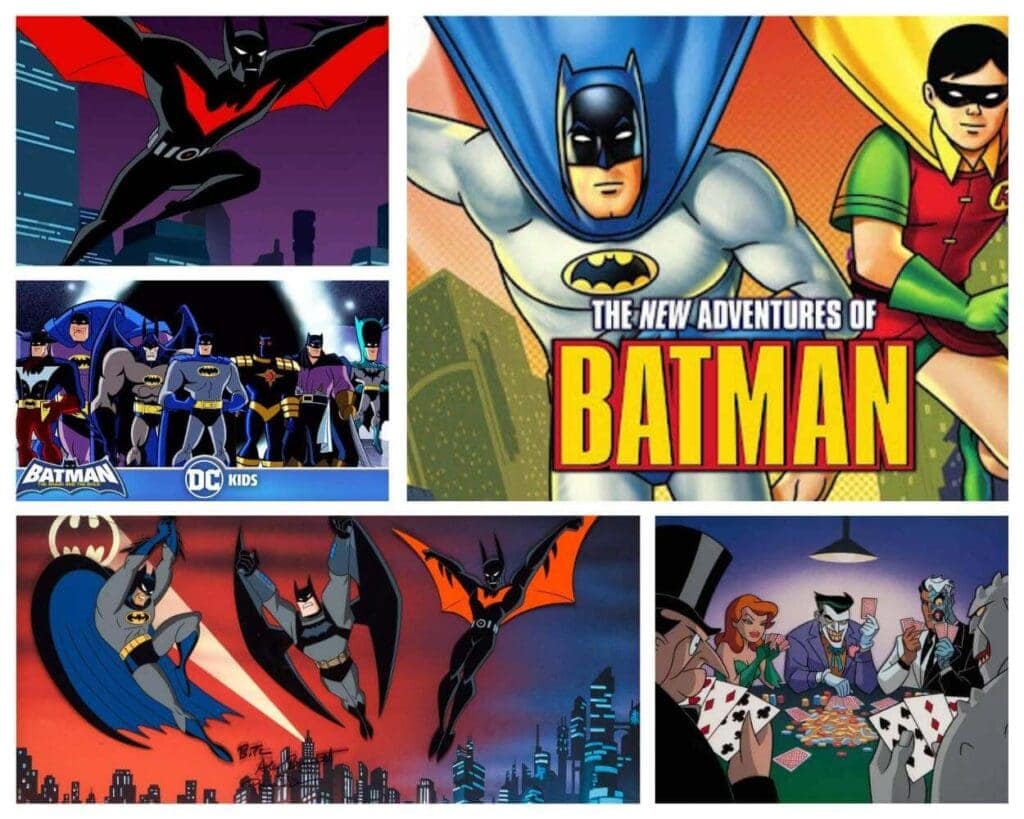
The New Adventures of Batman (1977)
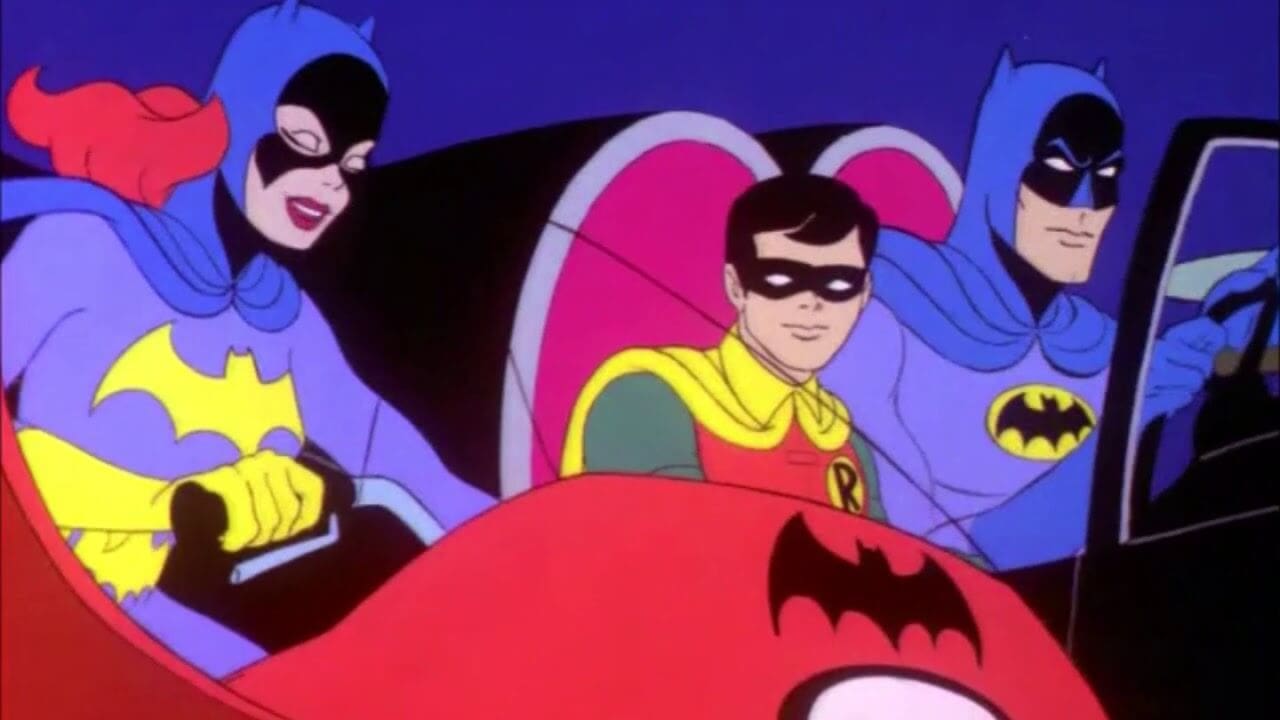
Filmation returned nine years later with a sixteen-episode revival. This time they also brought Bat-Mite along as comic relief. Adam West and Burt Ward came back to voice Batman and Robin.
- Ran: 16 episodes in 1977
- Returning: Adam West and Burt Ward from the live-action series
- New addition: Bat-Mite, the fifth-dimensional imp
- Tone: Broad comedy aimed at Saturday mornings
Beware the Batman (2013-2014)
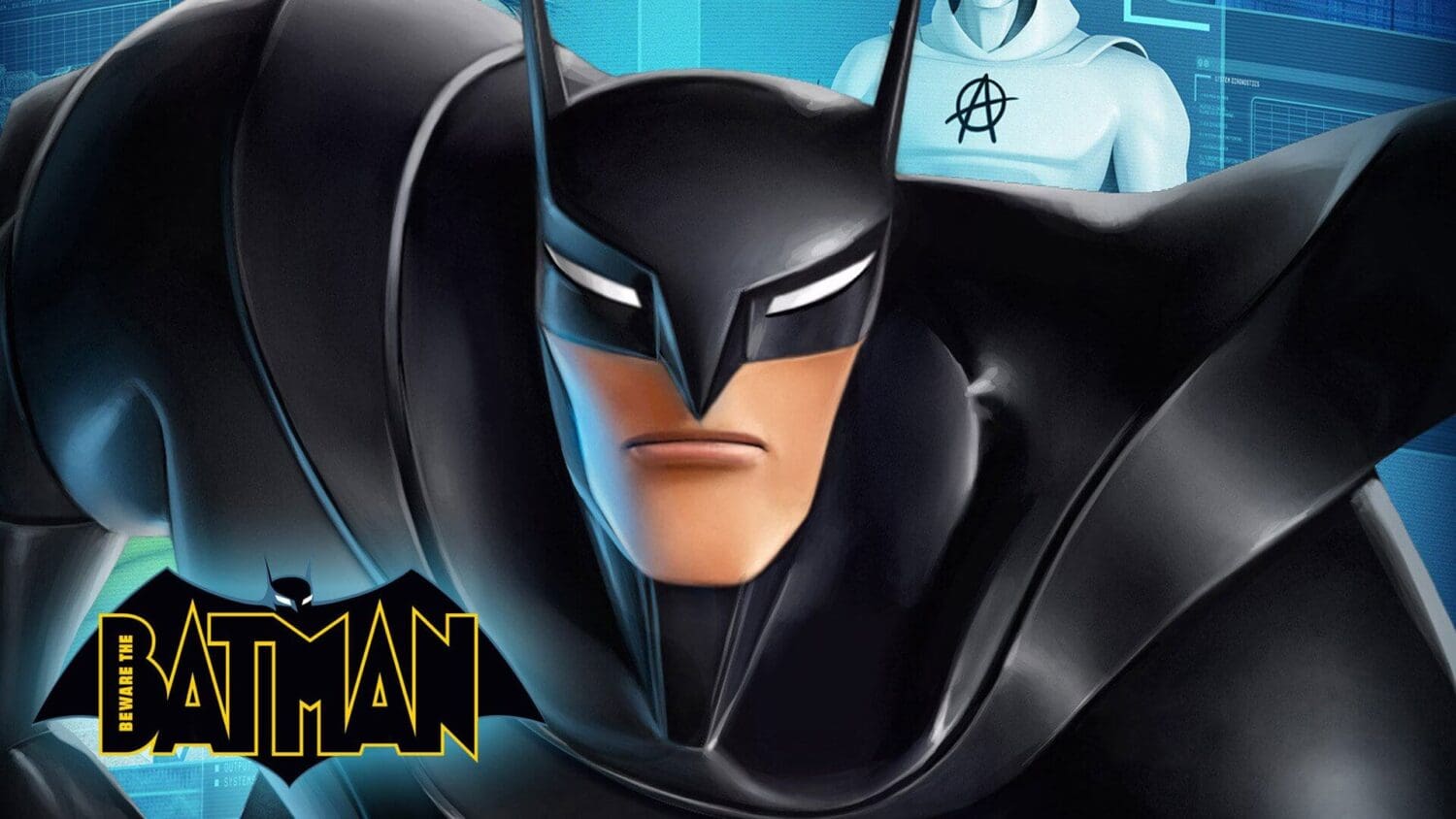
The most divisive series here, and the most unlucky. It went with computer animation and built its cast around obscure villains. Furthermore, it gave Batman a bodyguard rather than a Robin.
- Ran: 26 episodes across 2013 and 2014
- Ally: Katana, in place of the usual sidekick
- Villains: Anarky, Professor Pyg and Magpie rather than the marquee names
- Problem: Cartoon Network pulled it from the schedule partway through
The Batman (2004-2008)
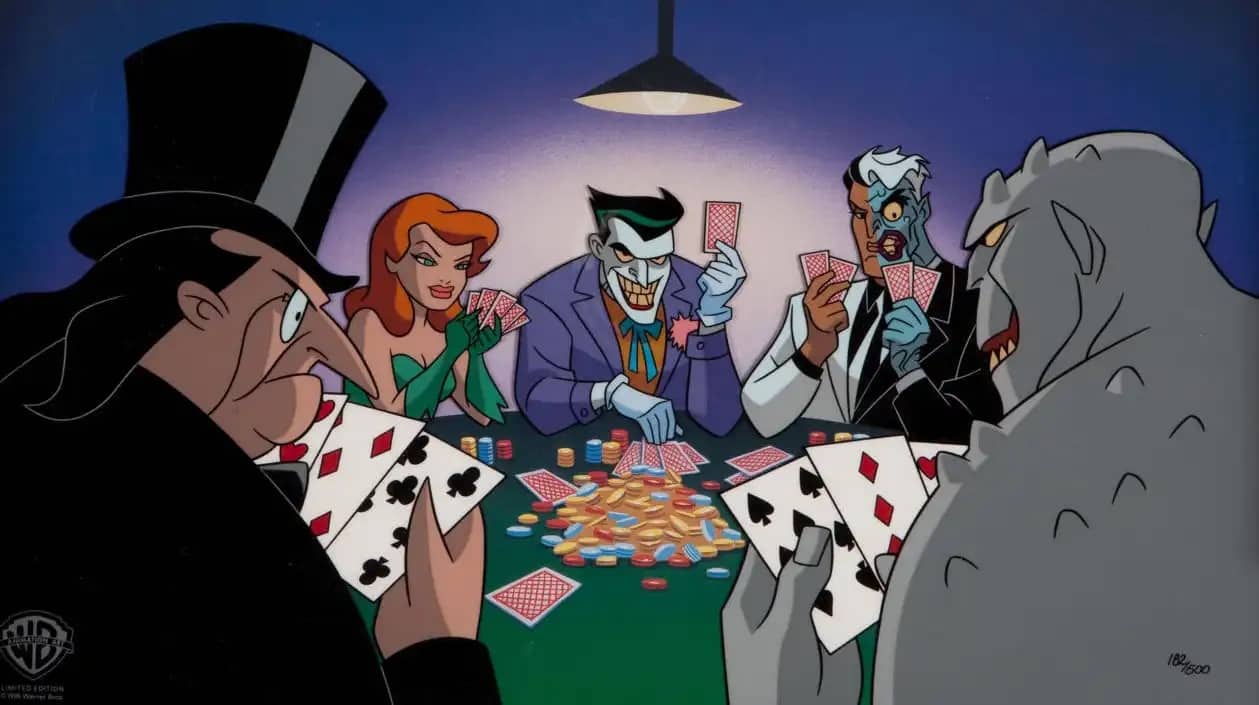
The unenviable job of following the definitive version, which this series handled by not trying to compete on the same ground. Instead it goes younger, faster and considerably more stylised.
- Ran: 65 episodes across five seasons
- Batman: Rino Romano, with Alastair Duncan as Alfred
- Setting: Bruce Wayne’s early years, still learning
- Signature choice: A wiry, acrobatic Joker who fights like a predator
Batman: Caped Crusader (2024 onwards)
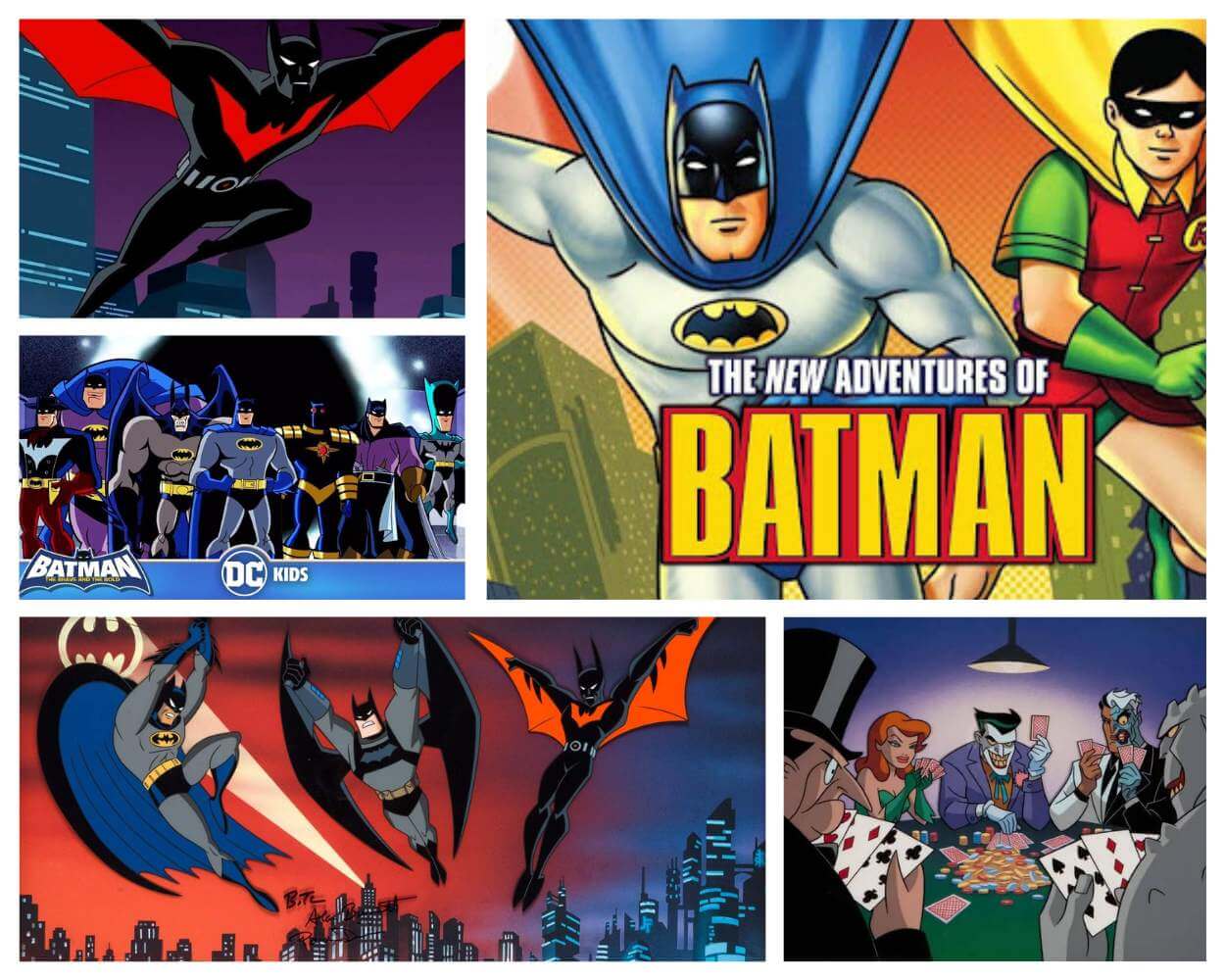
The newest of the Batman cartoons, and the closest thing to a direct sequel to the 1992 series. Bruce Timm developed it with James Tucker as co-showrunner, and J.J. Abrams and Matt Reeves executive produce.
It is set in the 1940s and plays as period noir rather than superhero television.
- Season one: Ten episodes, released together on Prime Video in August 2024
- Season two: Ten more episodes arriving on 31 July 2026
- Batman: Hamish Linklater, with Christina Ricci as Catwoman and Minnie Driver as the Penguin
- Reception: Critically excellent, sitting in the mid-nineties on the review aggregators
The New Batman Adventures (1997-1999)
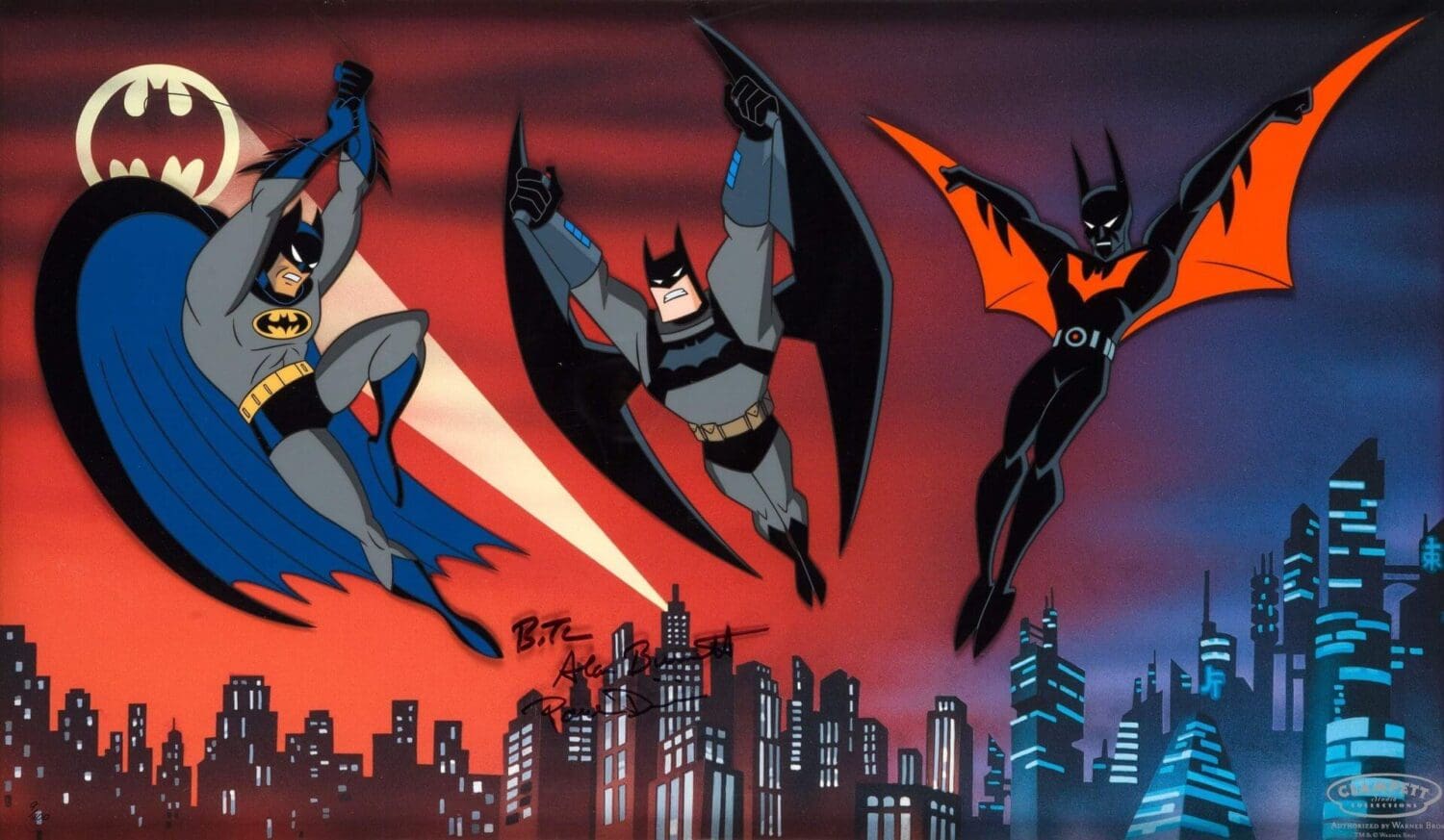
This is a continuation rather than a reboot, running 24 episodes with most of the original cast intact and a completely redrawn visual style. Everything got simplified, flattened and sharpened.
- Ran: 24 episodes
- Change: A streamlined redesign of every character
- Additions: Tim Drake as Robin, plus a fully established Batgirl
- Continuity: Directly continuous with the 1992 series
Batman: The Brave and the Bold (2008-2011)
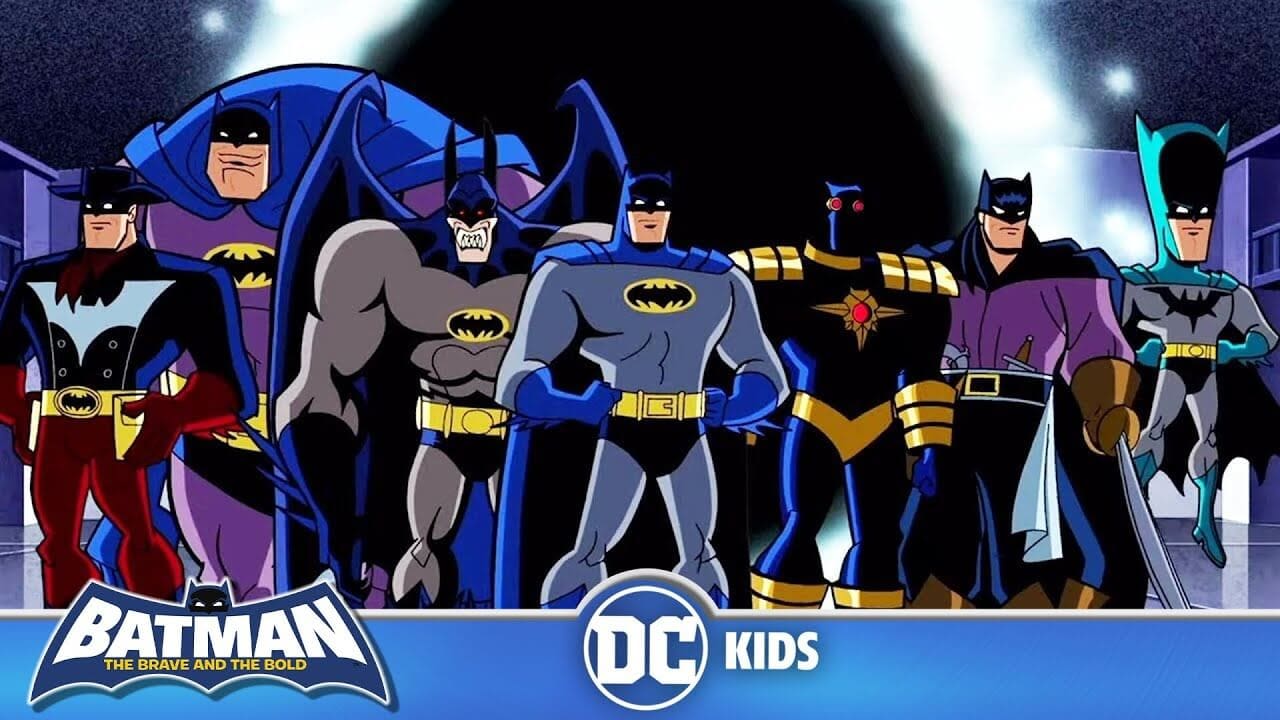
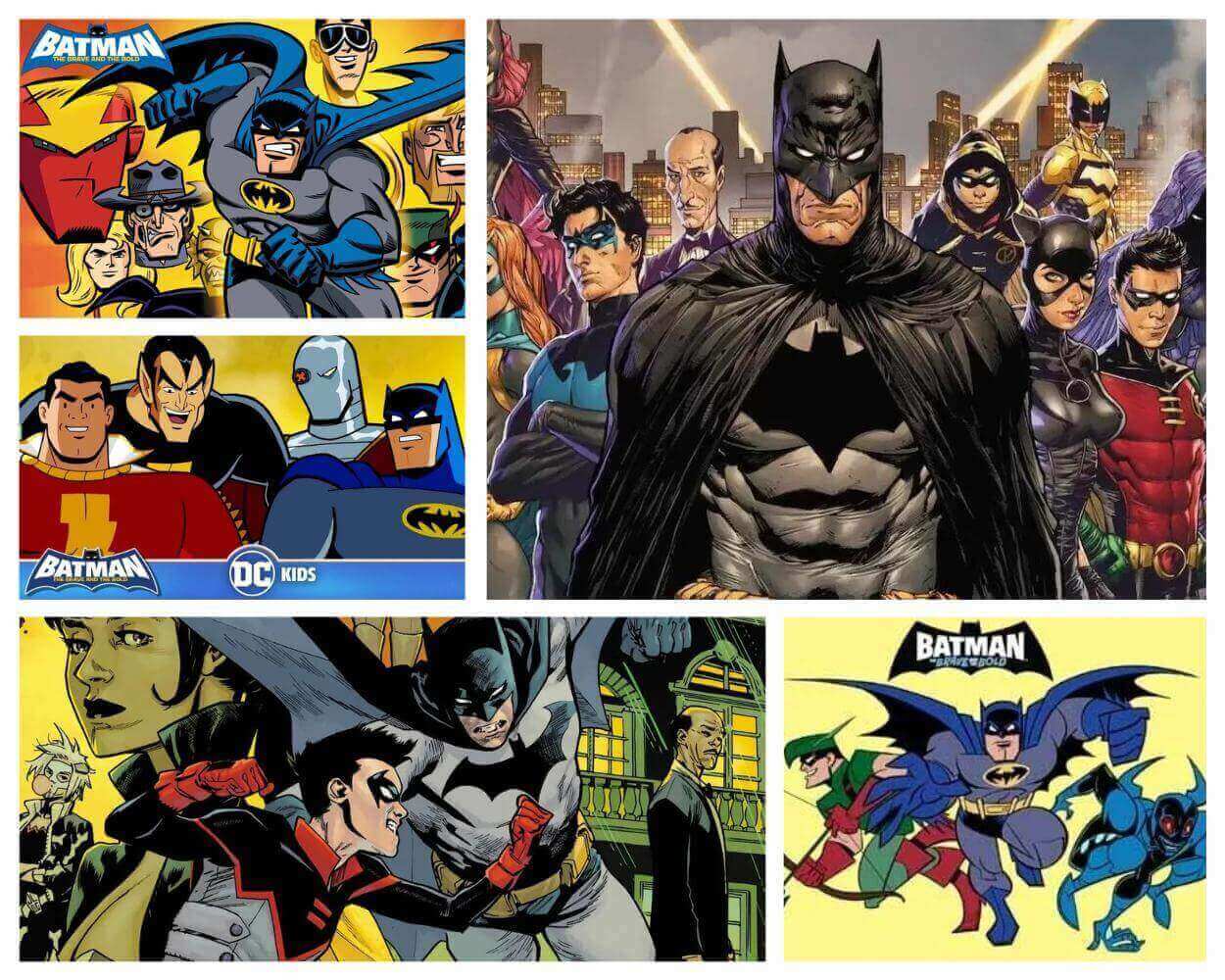
Sixty-five episodes of Batman teaming up with whoever the writers fancied, played entirely straight despite how ridiculous it gets. Diedrich Bader’s Batman is dry, competent and never in on the joke.
- Ran: 65 episodes across three seasons
- Format: A self-contained cold open, then an unrelated main story
- Range: A full musical episode, and an episode about Bruce confronting his parents’ killer
- Finale: Bat-Mite deliberately gets the show cancelled
Batman Beyond (1999-2001)
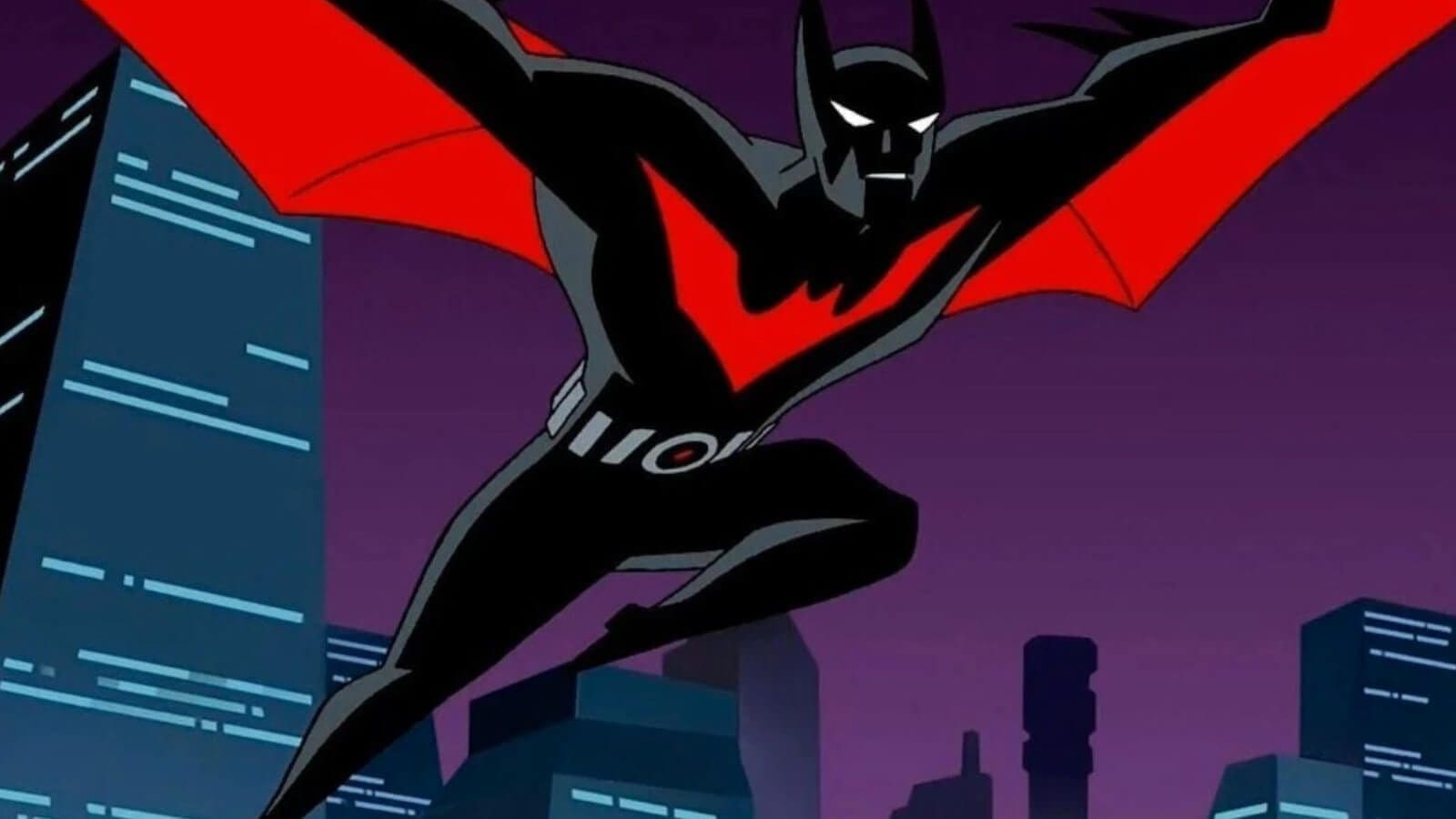
An old, bitter Bruce Wayne trains a teenager to replace him in a Gotham fifty years further on. It should not have worked. Nevertheless, it produced the most emotionally serious Batman on television.
- Ran: 52 episodes
- Premise: Terry McGinnis takes the cowl under Bruce’s supervision
- Setting: A neon, cyberpunk Gotham decades in the future
- Themes: Ageing, inheritance and what the mission costs
Batman: The Animated Series (1992-1995)
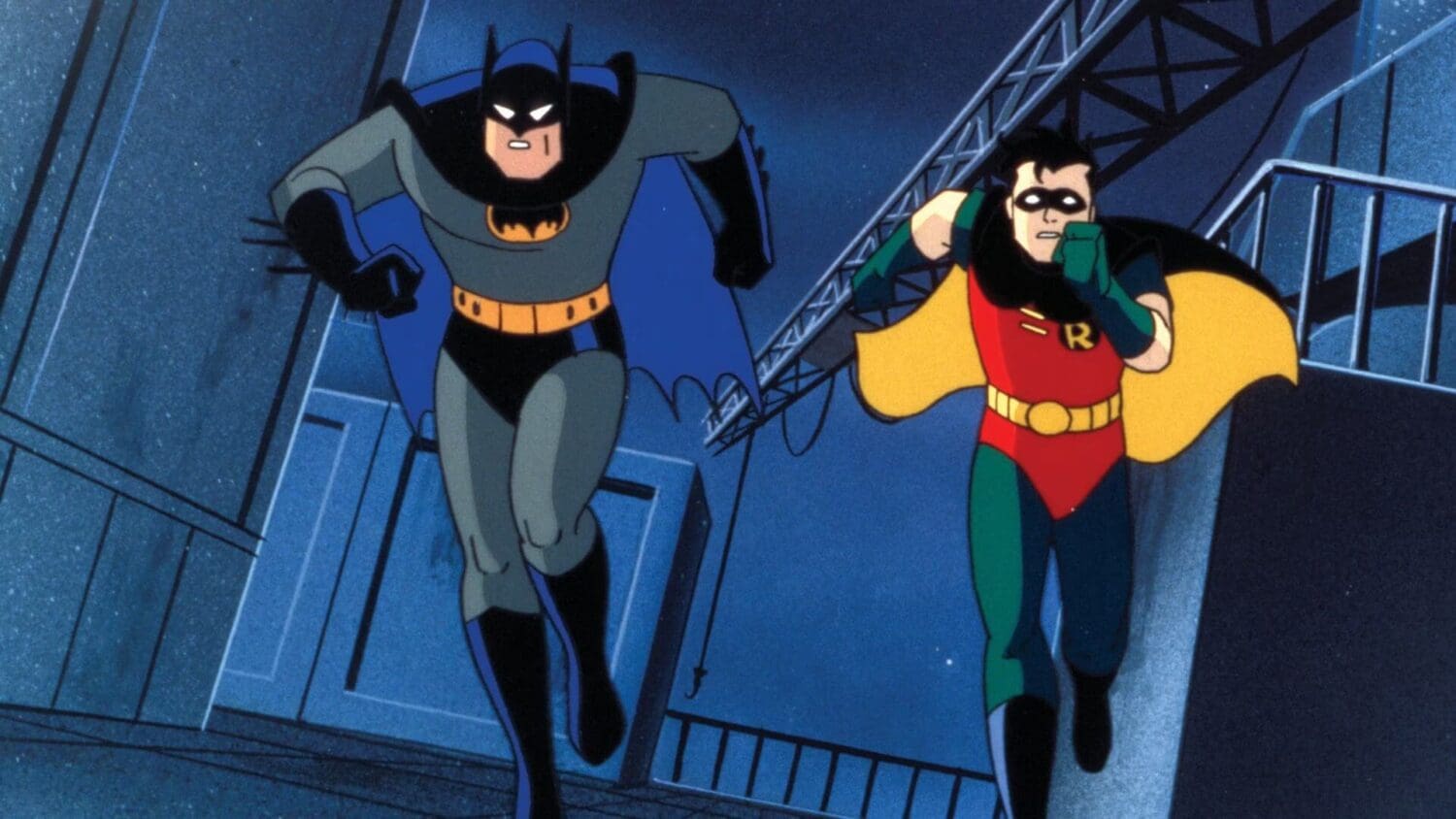
Eighty-five episodes reset what a superhero cartoon could be, and nothing since has displaced it. Kevin Conroy and Mark Hamill defined Batman and the Joker so thoroughly that both kept the roles for thirty years.
- Ran: 85 episodes from 1992 to 1995
- Look: Painted on black backgrounds, giving the series its dark art deco style
- Introduced: Harley Quinn, created by Paul Dini and Bruce Timm for “Joker’s Favor”
- Rewrote: Mr Freeze, turned from a gimmick villain into a tragedy in “Heart of Ice”
Which Batman Cartoons Share a Universe
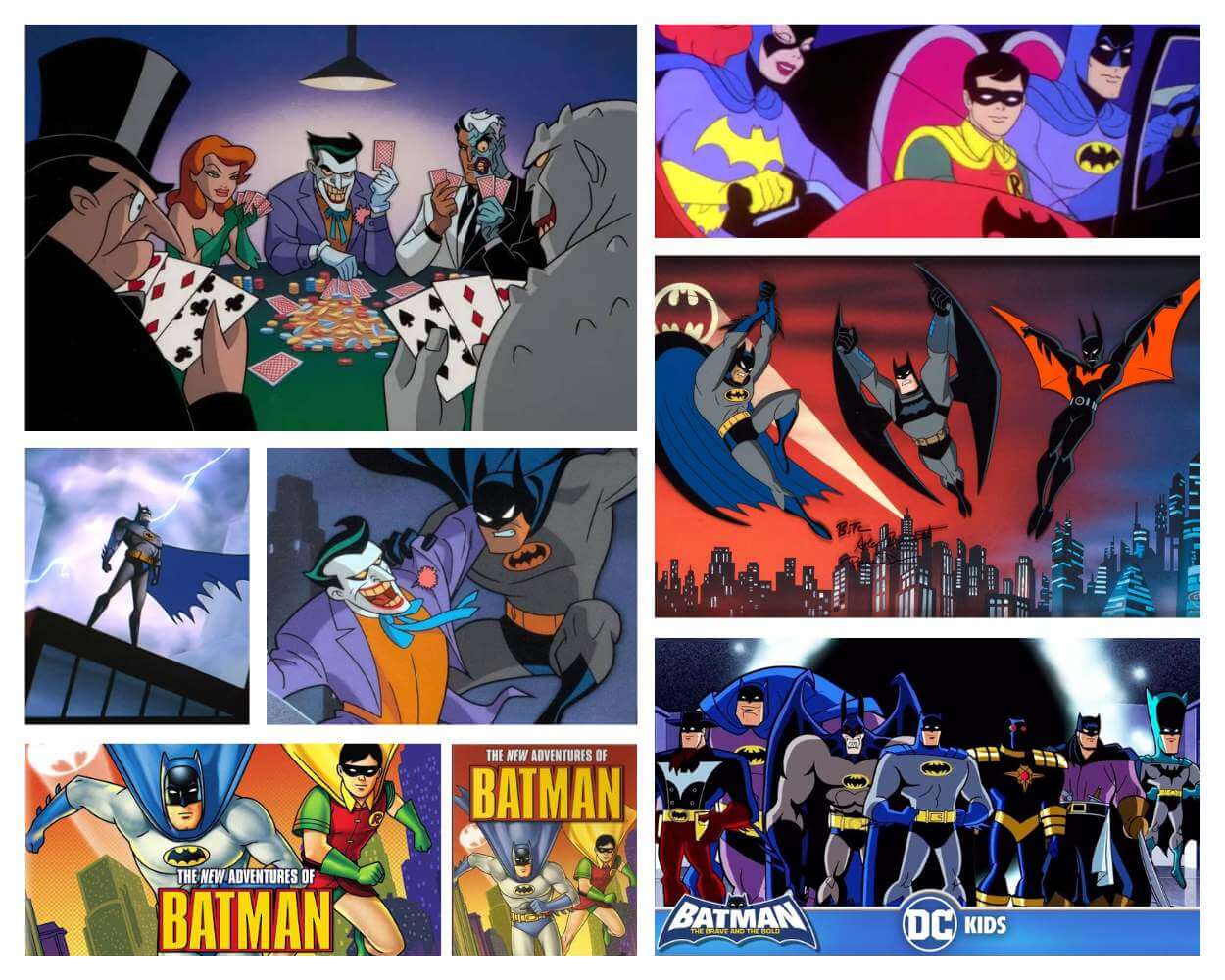
Some of these connect, although most do not, which trips people up constantly. Only one shared continuity exists among them.
- The DC Animated Universe: Batman: The Animated Series, The New Batman Adventures and Batman Beyond
- Also inside it: Superman: The Animated Series, Justice League and Justice League Unlimited
- Standalone: The Batman, The Brave and the Bold, Beware the Batman and Caped Crusader
- The Filmation shows: Their own thing entirely, tied to the 1966 live-action series in tone
Where Batman Turns Up Without His Own Show
Some of his best animated work sits outside the Batman cartoons that carry his name. These are worth knowing about.
- Super Friends: 1973 to 1986, where Batman was a fixture across many rebranded versions
- Justice League and Justice League Unlimited: 2001 to 2006, and arguably Conroy’s best material
- Young Justice: 2010 to 2022, where he mentors rather than leads
- Harley Quinn: The adult animated comedy, which treats Batman as a straight man
The Animated Films Worth Your Time
The direct-to-video line is enormous, and it is wildly inconsistent. A handful are as good as anything on the list above.
- Mask of the Phantasm (1993): A theatrical film from the 1992 team, and the best of them
- Batman Beyond: Return of the Joker (2000): Seek out the uncut version rather than the edited release
- Under the Red Hood (2010): The strongest of the modern standalone films
- The Dark Knight Returns, Parts One and Two (2012 and 2013): A faithful adaptation of the Frank Miller book
What the 1992 Series Changed for Batman Cartoons
Batman: The Animated Series did not merely rank first here. It altered what television animation was allowed to be, and every Batman cartoon since has worked in its shadow.
- Tone: It proved a children’s cartoon could be truly sombre and still sell
- Craft: The dark deco look, painted on black, gave it a visual identity nothing else had
- Casting: It established voice acting as a craft with recognisable stars
- Influence: Every serious animated superhero show since has been measured against it
Ten series across more than fifty years, ranging from toy advertisement to art.
If you are new to Batman cartoons, start with Batman: The Animated Series.
If you have seen it, Batman Beyond is the one people underrate, and Caped Crusader is the one to catch up on before its second season lands.
Which of the Batman cartoons did you grow up on?
Let me know in the comments.