I’m going to say something that might sound dramatic, but I mean it.
Studio Ghibli men ruined a lot of “cool guy” characters for me.
Because Ghibli doesn’t usually write men as loud heroes who flex for the camera. It writes men who show up. Who carry things. Who listen. Who protect without performing it.
And yes, I know the internet loves to toss names like Hayao Miyazaki into “best male characters” lists. I get why people do it. I still think it’s wrong. He’s a creator, not a character. I’m here to talk about the men and male coded characters who actually live inside the stories.
My quick promise before we start:
- ✅ I’m keeping this list rooted in the films and the on-screen behavior I can point to.
- 💡 I’m not ranking based on jawlines. I’m ranking based on presence, integrity, and impact.
- 🚀 If you want the broader universe after this, I’ll keep it connected to the Studio Ghibli universe so you can keep exploring.
Best Studio Ghibli Male Characters Ranked: How I Judge Them
Let’s be real. “Best” is subjective. My best is not your best.
But I don’t do random picks either. I’m picky.
This is what I reward in my ranking:
- ✅ Kindness under pressure: Who stays decent when it would be easier to be cruel.
- ✅ Actual courage: Not just fighting. Choosing the hard right thing.
- ✅ Growth: I want arcs, not vibes.
- ✅ Emotional intelligence: Not perfect feelings. Honest ones.
- 💡 Rewatch pull: If I still think about them years later, they rank higher.
Most Handsome Studio Ghibli Characters: My Definition Is Not About Looks
When people search “most handsome Studio Ghibli characters,” they usually mean “who is the prettiest.”
That’s fine. I’m not above a good-looking animated man.
But for me, Ghibli “handsome” is behavioral. It’s competence plus gentleness. It’s bravery without ego.
If I call a Ghibli guy “handsome,” I usually mean:
- ✅ He’s safe to be around.
- ✅ He respects boundaries.
- ✅ He does the work without demanding credit.
- 💡 He’s not allergic to feelings.
Studio Ghibli Male Characters in Romantic Movies
Some Ghibli romances are soft and grounded. Some are strange and magical. Almost none of them feel like a generic love story template.
When I want the romance angle specifically, I jump between character lists and film lists, because it’s easier to match the mood.
If romance is what you’re craving, here’s where I go next:
- ✅ For the romance watchlist: best romantic Studio Ghibli movies
- 💡 For the magical companions and non-human chaos that always shows up in the middle of love stories: Studio Ghibli creatures
- 🚀 For the “what do I watch after Ghibli” spiral: movies like Studio Ghibli
14Tombo (Kiki’s Delivery Service)
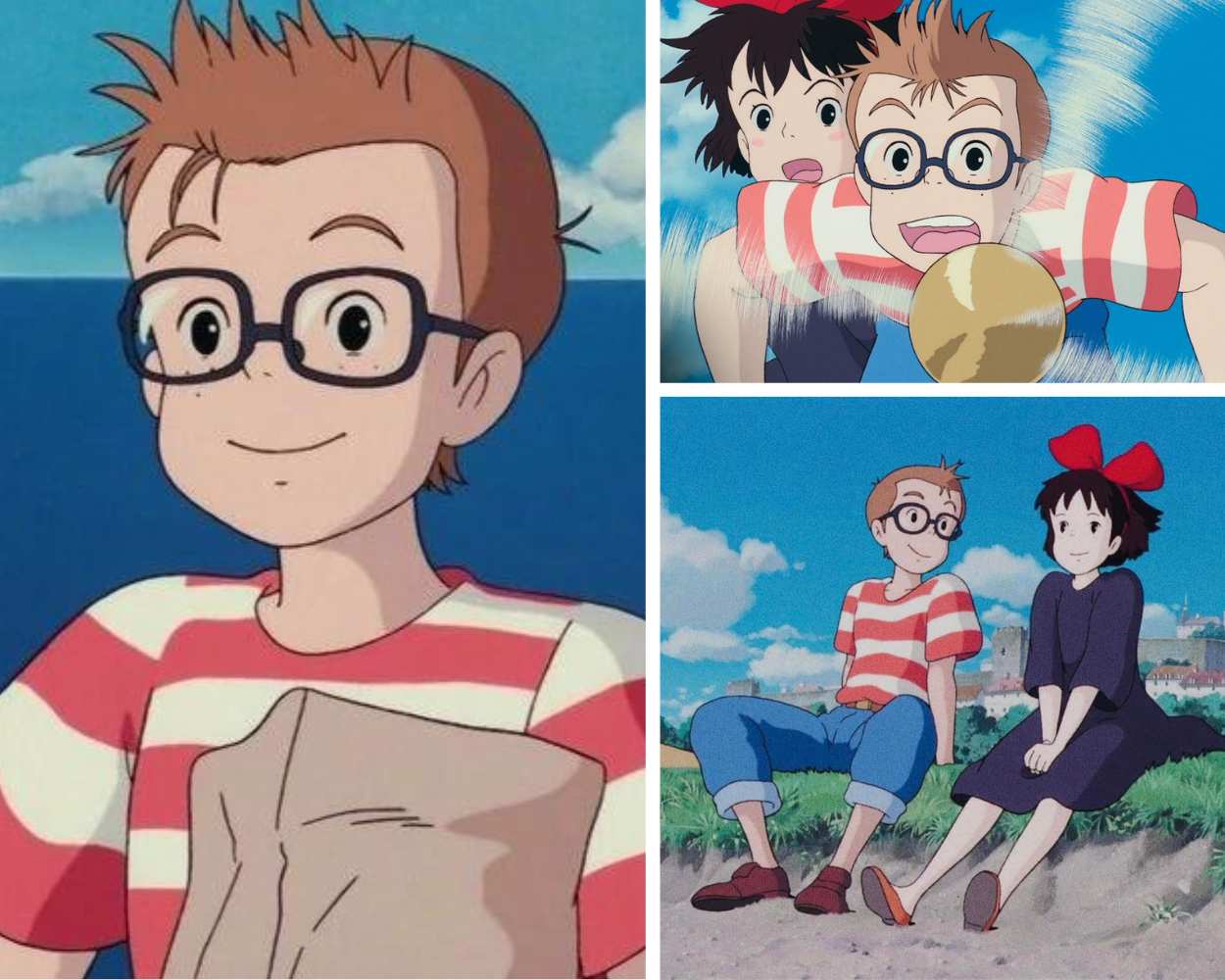
Tombo is the kind of boy character I wish more coming of age stories used.
He’s not “smooth.” He’s excited. Curious. Slightly awkward. And genuinely supportive once Kiki lets him in.
I also love that he’s obsessed with flight in a way that feels pure, not performative.
Why Tombo ranks high for me:
- ✅ He’s a green flag because he respects Kiki’s pace.
- ✅ His interest in her feels admiring, not possessive.
- 💡 If you like craft details, I always appreciate the note from character designer Katsuya Kondō about how intentional Tombo’s look was.
13Jiji (Kiki’s Delivery Service)
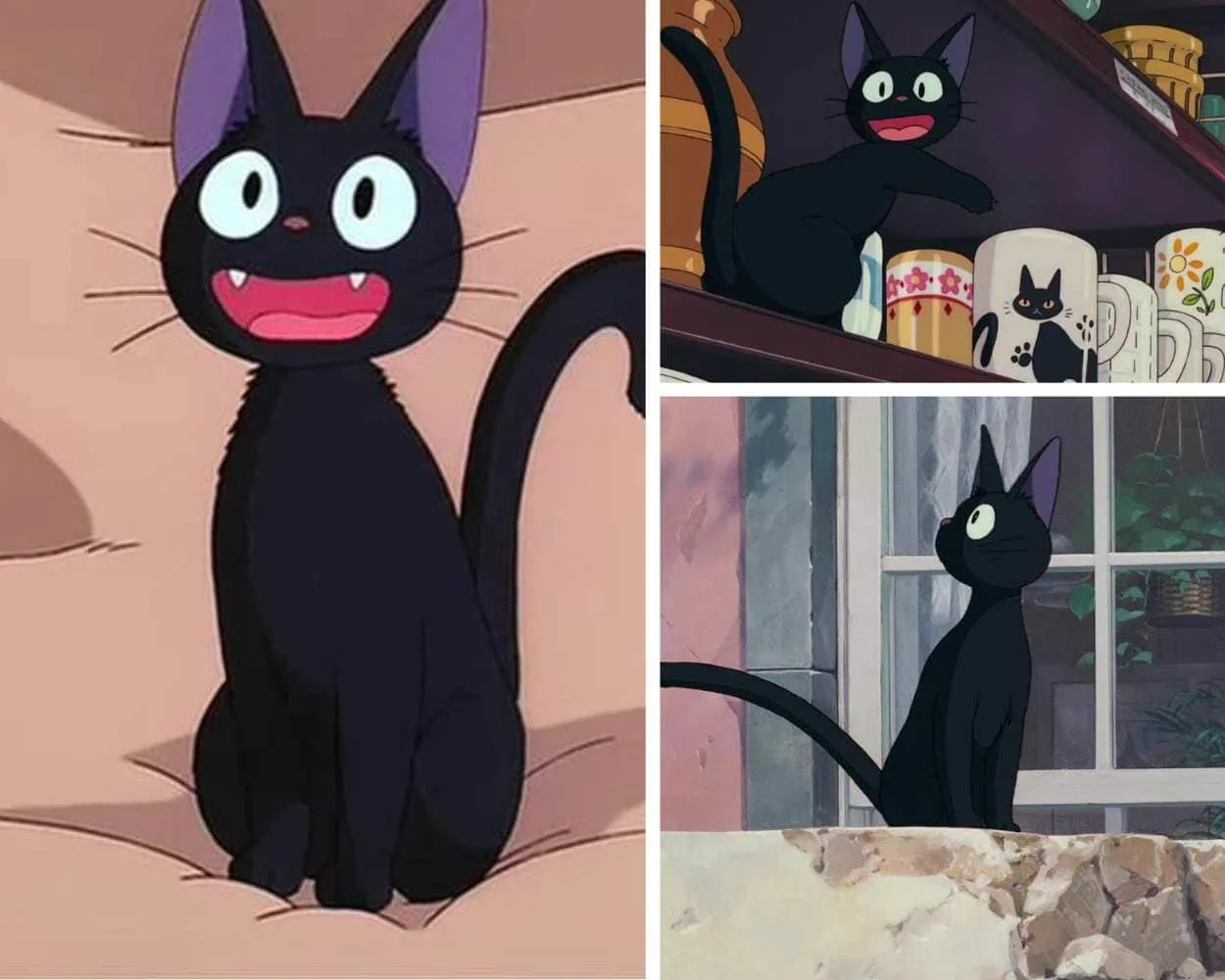
Jiji is technically a cat, but he’s also one of the most emotionally honest “male” presences in Ghibli.
He’s protective. He’s snarky. He gets scared. He still shows up.
And I love that his arc isn’t just comic relief. It’s about independence and change.
He also belongs in any conversation about Studio Ghibli creatures, because Ghibli’s non-human companions often carry the deepest emotional weight.
My favorite Jiji detail:
- ✅ The “stuffed cat” moment is funny, but it also shows how loyal he is.
- 💡 His relationship with Lily feels like a small story about growing up and letting go.
12Shun (From Up On Poppy Hill)
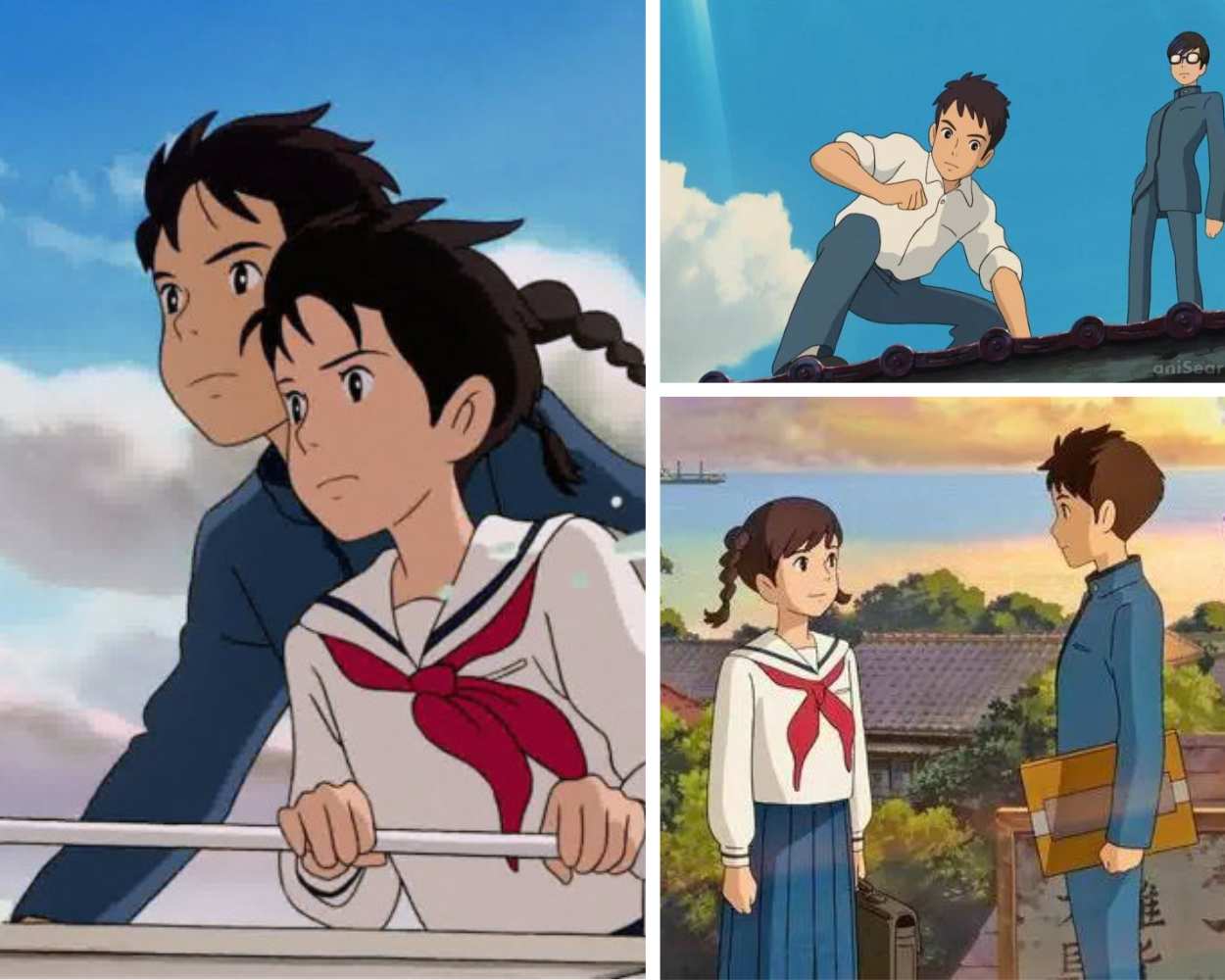
Shun is a romantic lead who feels human to me.
He’s not perfect. He’s not written as a fantasy boyfriend. He’s just a teenage boy with ambition, pride, and a messy situation that forces him to grow up fast.
In From Up on Poppy Hill, I love that the connection builds through shared effort and shared history, not grand speeches.
Why I remember Shun:
- ✅ He cares about community, not just himself.
- ✅ He’s charming, but the story never lets him coast on charm.
- 💡 He’s one of my go-to examples of “Ghibli writes romance like real life.”
11Fukuo (Kiki’s Delivery Service)
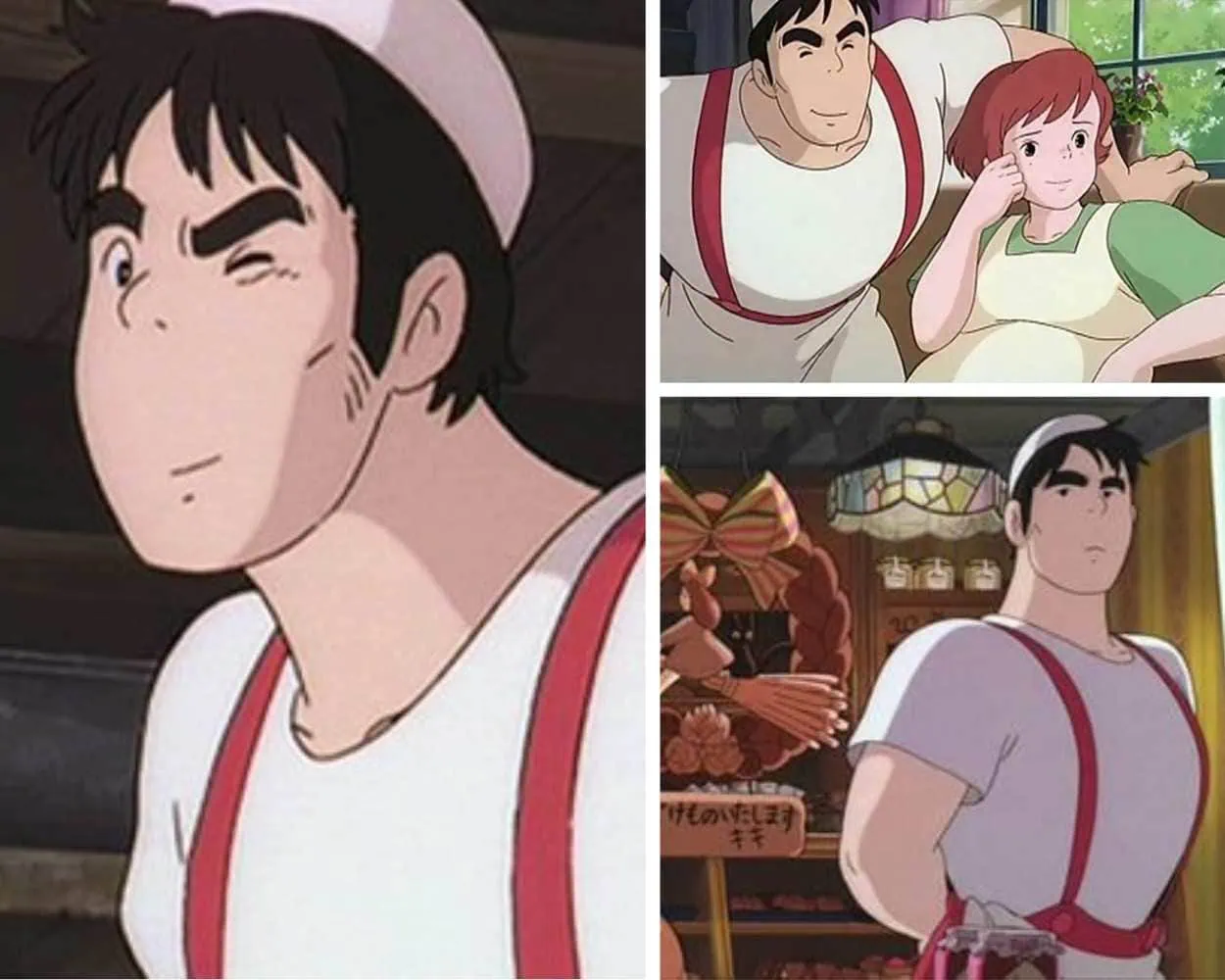
Fukuo is quiet “dad energy,” even when he’s not being loud about it.
He works. He supports Osono. He quietly makes space for Kiki to build a life.
And the bread logo detail will always get me. It’s such a small act of support, but it’s real support.
Why he makes my “kindest male characters” shortlist:
- ✅ He helps without needing a spotlight.
- ✅ He treats Kiki like a person, not a burden.
- 💡 This is the kind of masculinity I wish cartoons normalized more often.
10Lord Yupa (Nausicaa of the Valley of the Wind)
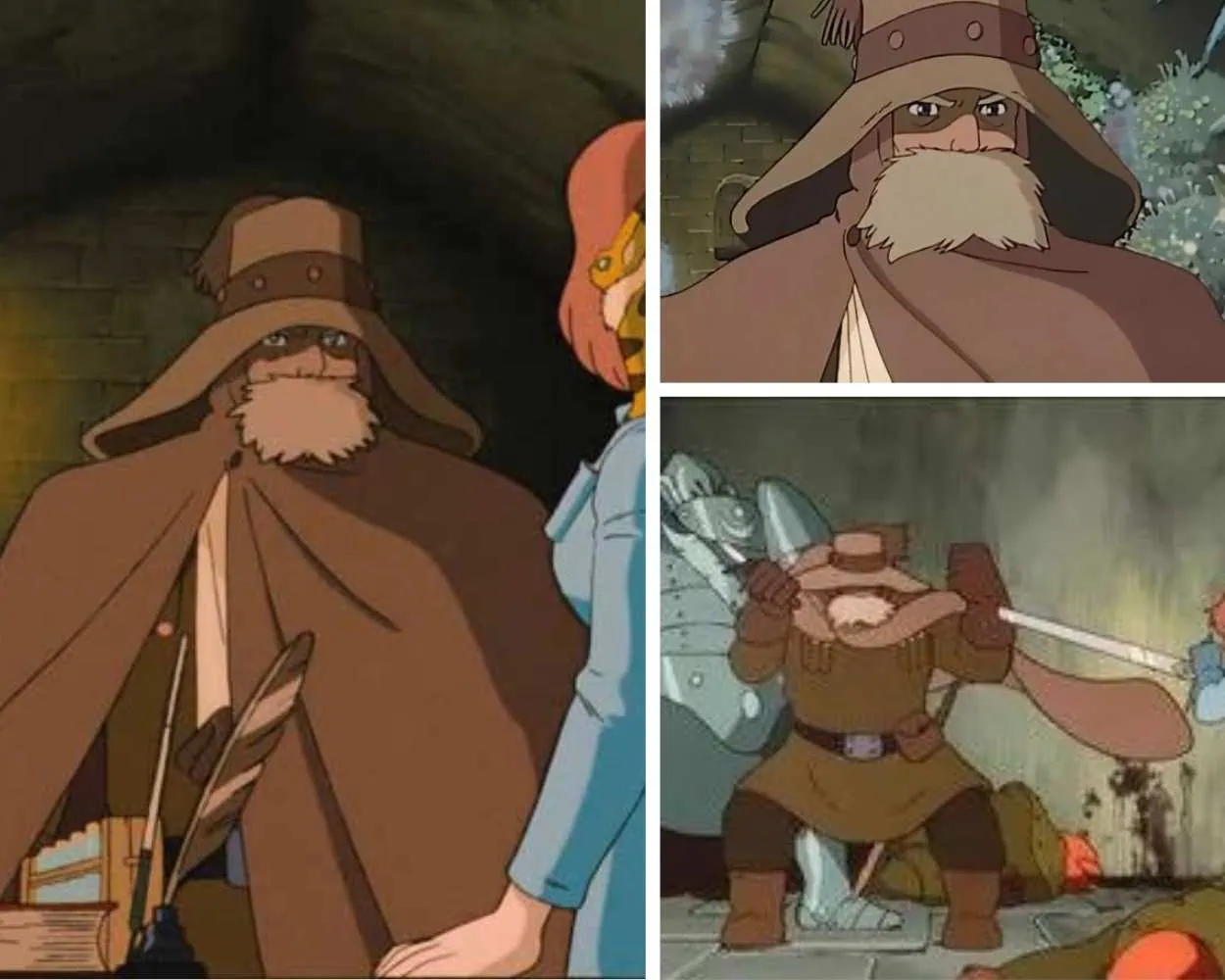
Lord Yupa is the mentor archetype done right.
He’s skilled, yes. But what makes him memorable to me is that he’s also humble enough to keep learning.
I always respect “wise” characters more when they still act curious.
Why I rate Yupa:
- ✅ He protects without controlling.
- ✅ He’s a scholar and a fighter, not one-dimensional.
- 💡 His presence makes the world feel bigger and more dangerous.
9Howl (Howl’s Moving Castle)

Howl is pretty. Everybody knows that.
But the reason he ranks top tier for me is that he’s a mess in a way that feels emotionally honest.
He’s charming and cowardly. Powerful and avoidant. Tender and dramatic.
And Sophie doesn’t “fix” him. She holds him accountable while building her own strength. That’s what makes their dynamic hit.
Why Howl is iconic (beyond the hair):
- ✅ He’s not written as a perfect prince. He’s written as a real person with magical consequences.
- ✅ His love shows up through protection and presence, not dominance.
- 💡 If you want more romance coded Ghibli men, I’d pair Howl with the list in best romantic Studio Ghibli movies.
8Sho (Arrietty)
Sho is one of the gentlest male characters in the catalog, and he’s written with real vulnerability.
He’s polite and reserved, but you can feel the weight he’s carrying. The fear. The loneliness. The sense that time is limited.
Watching him meet Arrietty always feels like watching a person remember how to hope again.
Why Sho matters to me:
- ✅ He’s soft without being weak.
- ✅ His arc is about perspective, not power.
- 💡 He’s a reminder that “male lead” does not need to mean “dominant lead.”
7Jiro Horikoshi (The Wind Rises)
Jiro is complicated, and that’s why he’s powerful.
I love characters who chase beauty and craft, then have to confront what their craft becomes in the real world.
His dreams are gorgeous. His reality is heavy. That tension is the point.
Why he ranks high for me:
- ✅ He’s a dreamer who still does the work.
- ✅ He’s a reminder that ambition always has consequences.
- 💡 I respect that the film doesn’t let him off the hook, but it also doesn’t flatten him into a villain.
6Seiji Amasawa (Whisper Of The Heart)
Seiji is ambition with heart.
I love that he’s serious about his craft, but he’s also still a teenager. He’s proud. He’s stubborn. He’s trying to become someone, and he doesn’t always know how to say it cleanly.
His bond with Shizuku works for me because it’s not just romance. It’s mutual motivation.
It’s also why I keep looping him into relationship with Shizuku deepens conversations. He’s one of the best examples of Ghibli romance being tied to growth.
Why I’m a Seiji defender:
- ✅ He takes his dream seriously, even when adults dismiss it.
- ✅ He challenges Shizuku, and she challenges him back.
- 💡 This is the kind of “young love” writing I trust.
5Tatsuo Kusakabe (My Neighbor Totoro)

Tatsuo is one of the kindest male characters in Studio Ghibli movies. That’s not even a debate for me.
He’s a father under stress. A husband worried about his wife. A man trying to keep the home gentle for his daughters anyway.
And he does it without turning into a stiff, emotionless “strong dad” stereotype.
Why Tatsuo is top tier:
- ✅ He listens to his kids instead of dismissing them.
- ✅ He makes fear feel manageable, not shameful.
- 💡 If you want “healthy masculinity” examples in animation, he’s one of my first picks.
4Pazu (Castle In The Sky)
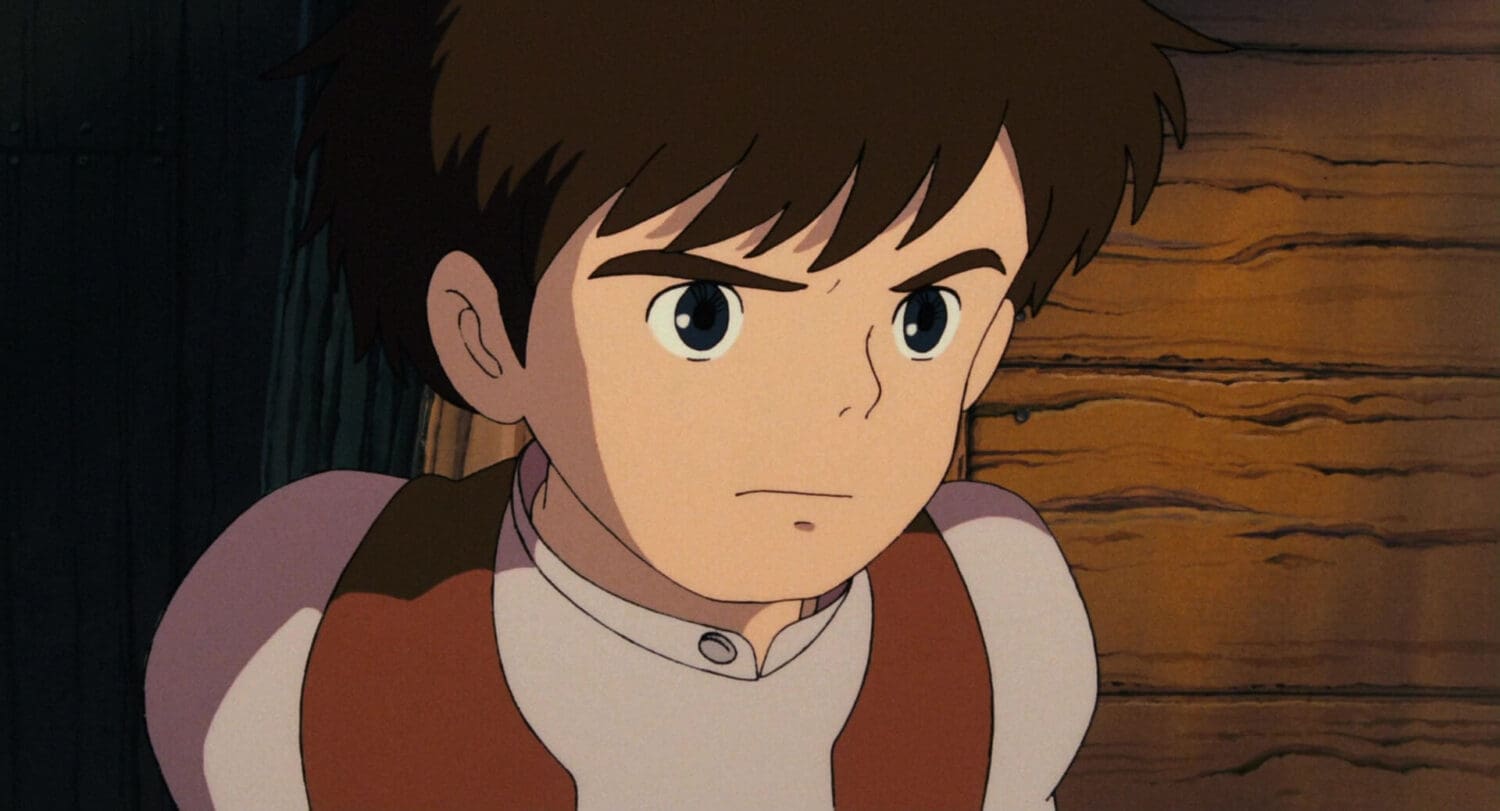
Pazu is loyal in a way I trust.
He’s brave, but not reckless. He believes people, even when it would be easier not to. He keeps moving even when the adults around him are lying, chasing, or stealing.
And yes, I love that the story lets his bond with Sheeta feel tender without turning it into melodrama.
If you’re into romance plus action energy, I get why people connect this to romantic connection storytelling patterns.
Why Pazu works:
- ✅ He protects Sheeta without treating her like property.
- ✅ He’s driven by love and truth, not ego.
- 💡 He’s an underrated “good boy lead” in animation.
3Fujimoto (Ponyo)

Fujimoto is stressed dad energy turned into a whole sea wizard.
He wants control. He’s terrified of humans. He’s not wrong about pollution either, even if his methods are extreme.
What makes him interesting to me is that he isn’t heartless. He’s scared. That’s different.
Why I include Fujimoto:
- ✅ He’s a “villain-ish” character motivated by fear and love, not just evil.
- ✅ His arc is basically learning to let go.
- 💡 I love when Ghibli writes men who have to unlearn control.
2Haku (Spirited Away)
Haku is one of the most “handsome” characters in the obvious sense, sure.
But what makes him unforgettable to me is the feeling around him. The loyalty. The quiet desperation. The way he’s trapped inside someone else’s system and still tries to do right by Chihiro.
Also, his design is just beautiful. Human form and dragon form. It’s iconic.
And yes, the world is filled with quirky characters and animations. Haku is one of the best examples of that balance between mystery and emotion.
Why Haku ranks top tier for me:
- ✅ He’s protective without being controlling.
- ✅ He’s a reminder that identity can be stolen and recovered.
- 💡 He’s one of the strongest “quiet hero” characters in Ghibli.
1Prince Ashitaka (Princess Mononoke)
If you ask me for the moral center of Studio Ghibli, I think of Ashitaka first.
He sees both sides. He refuses to flatten anyone into “monster” or “hero.”
And he keeps choosing compassion, even when compassion costs him.
He’s voiced by Yôji Matsuda in Japanese, and the performance has the exact calm intensity this character needs.
Also, the “curse” plot element is part of why this film sticks with me. It’s not just fantasy. It’s a countdown. It forces urgency.
When I want more mythic villain lore after this film, I get why people end up exploring lists like demon’s origins even outside Ghibli.
Why Ashitaka is my number one:
- ✅ He’s brave, but never bloodthirsty.
- ✅ He’s kind, but never naive.
- 🚀 He’s the best example I know of “strength without ego.”
Honorable Mentions I Refuse to Leave Out
These are the characters people ask about constantly, and I get why. They’re iconic.
Some of them are not human. Some of them are not clearly gendered. I’m still including them because they’re part of why Ghibli feels alive.
Kamajī (Spirited Away)
I love Kamajī because he looks intimidating and acts grumpy, then quietly proves he has a heart.
He’s one of my favorite examples of “care expressed through work.”
Why I rank Kamajī as top tier “kindness in disguise”:
- ✅ He helps Chihiro without turning it into a lecture.
- ✅ He protects the soot workers like a tired manager who still cares.
- 💡 He’s a reminder that grumpy does not mean cruel.
Asbel (Nausicaa of the Valley of the Wind)
Asbel is the type of supporting male character I trust. Loyal, brave, and willing to change his perspective when he learns something new.
He’s also a good counterbalance to the bigger political chaos around him.
Why Asbel belongs on a “best male characters” list:
- ✅ He’s supportive without disappearing into the background.
- ✅ He learns. That matters.
- 💡 He brings warmth to a world that could easily feel bleak.
No-Face (Spirited Away)
No-Face is the character people misunderstand the most, in my opinion.
He’s not “evil.” He’s lonely. He absorbs what’s around him because he doesn’t know who he is without it.
Is No-Face a male character in Spirited Away?
- ✅ I think of No-Face as male coded because fandom often frames him that way.
- 💡 In the story itself, I focus less on gender and more on what he represents: hunger, loneliness, and imitation.
- 🚀 Either way, he’s one of the most unforgettable spirits in animation.
Totoro (My Neighbor Totoro)
Totoro is not “handsome” in the traditional sense. Totoro is comfort.
He feels like a guardian you don’t have to earn. You just have to be a kid who needs one.
Why I include Totoro in a male character list:
- ✅ He’s often treated as male coded in pop culture and merchandising.
- 💡 I personally think of him as a protective forest presence first, not a gendered character.
- 🚀 Totoro is still one of the most iconic “masculine gentle guardian” archetypes in animation.
River Spirit (Spirited Away)
The River Spirit scene is one of the purest examples of Ghibli’s environmental storytelling.
It’s gross, funny, and oddly emotional once you realize what you’re actually watching.
Why the River Spirit matters to me:
- ✅ It turns “pollution” into a visual moment you can’t forget.
- ✅ It shows Chihiro becoming competent through work, not magic.
- 💡 It’s one of the scenes I reference when someone says animation cannot be meaningful.
Frequently Asked Questions
Who are the best Studio Ghibli male characters ranked?
My top tier is Ashitaka, Howl, Haku, Tatsuo, and Kamajī. I rank them highest because they combine kindness, courage, and emotional depth. They also hold up every time I rewatch.
Who are the most handsome Studio Ghibli characters?
If we’re talking classic “handsome,” I see why people pick Howl and Haku. But in my personal definition, “handsome” also includes safe, supportive men like Tatsuo and Fukuo.
Who are the kindest male characters in Studio Ghibli movies?
Tatsuo is my number one. After that, I think about Kamajī, Fukuo, and Pazu. They help without demanding credit, and they show care through action.
Which Studio Ghibli male characters are in romantic movies?
Howl, Seiji, Shun, Tombo, and Pazu are some of the most romance-relevant male leads. If you want a full watchlist organized by relationship vibe, I’d go straight to best romantic Studio Ghibli movies.
Is No-Face a male character in Spirited Away?
I think of No-Face as male coded because that’s how fandom tends to frame him, but the film itself doesn’t make gender the point. I focus on what he represents: loneliness, imitation, and the way environments shape us.

1 comment
THE HEROES & WARRIORS
1. Ashitaka (Princess Mononoke) – The cursed Emishi prince; arguably Ghibli’s strongest and kindest male lead.
2. Pazu (Castle in the Sky) – The brave orphan miner who helps Sheeta find Laputa.
3. Porco Rosso / Marco Pagot (Porco Rosso) – The WWI ace pilot cursed to look like a pig.
4. Lord Yupa (Nausicaä of the Valley of the Wind) – The legendary swordsman and explorer.
5. Asbel (Nausicaä of the Valley of the Wind) – The Pejite prince who befriends Nausicaä.
THE WIZARDS, SPIRITS & MYSTERIOUS MEN
6. Howl Jenkins Pendragon (Howl’s Moving Castle) – The dramatic, vain, but charming wizard.
7. Haku / Nigihayami Kohaku Nushi (Spirited Away) – The spirit of the Kohaku River who takes the form of a white dragon.
8. No-Face (Spirited Away) – The lonely spirit who offers gold and eats everything in sight.
9. Totoro (My Neighbor Totoro) – The giant, fuzzy King of the Forest.
10. The Baron (Whisper of the Heart / The Cat Returns) – The dapper, suit-wearing cat statue come to life.
11. Calcifer (Howl’s Moving Castle) – The sassy fire demon who powers the castle.
THE DREAMERS & EVERYDAY GUYS
12. Jiro Horikoshi (The Wind Rises) – The engineer obsessed with designing beautiful airplanes.
13. Seiji Amasawa (Whisper of the Heart) – The boy who wants to be a master violin maker.
14. Tombo (Kiki’s Delivery Service) – The aviation nerd who is fascinated by Kiki’s flying.
15. Sosuke (Ponyo) – The kind 5-year-old boy who finds and protects Ponyo.
16. Tatsuo Kusakabe (My Neighbor Totoro) – The gentle, supportive father of Satsuki and Mei.
17. Shun Kazama (From Up on Poppy Hill) – The student journalist and leader of the Latin Quarter.
THE VILLAINS & RIVALS
18. Colonel Muska (Castle in the Sky) – The power-hungry secret agent who wants to control Laputa’s weapon.
19. Donald Curtis (Porco Rosso) – The arrogant American pilot and rival to Porco.
20. Jigo (Princess Mononoke) – The wandering monk and mercenary hunter.
THE ANIMAL COMPANIONS (MALE)
21. Jiji (Kiki’s Delivery Service) – Kiki’s sarcastic black cat (in the American dub) or humble companion (in Japanese).
22. Muta / Renaldo Moon (The Cat Returns) – The grumpy, large white cat.
23. Yakul (Princess Mononoke) – Ashitaka’s loyal Red Elk.