Studio Ghibli romance is a different animal from the rest of anime. You will not find dramatic confessions in the rain. You will not find love triangles milked for a dozen episodes. Instead, Ghibli shows love quietly.
It might be a shared meal, a held glance, or someone choosing to stay. I have watched most of these films more times than I will admit. Still, the romances stick with me, precisely because they stay so understated.
For decades, Studio Ghibli has drawn gorgeous, hand-drawn worlds for fans everywhere. Their love stories live right inside that craft and those iconic characters. So here are my favorite couples from across the studio’s films.
First, a quick heads-up.
Not every pairing here is a full-blown romance. A few are first crushes. A couple are lifelong partnerships.
One or two are deep friendships that simply feel like love.
That range is exactly what makes Studio Ghibli romance worth talking about.
My Favorite Studio Ghibli Romances
Osono and Fukuo (Kiki’s Delivery Service)
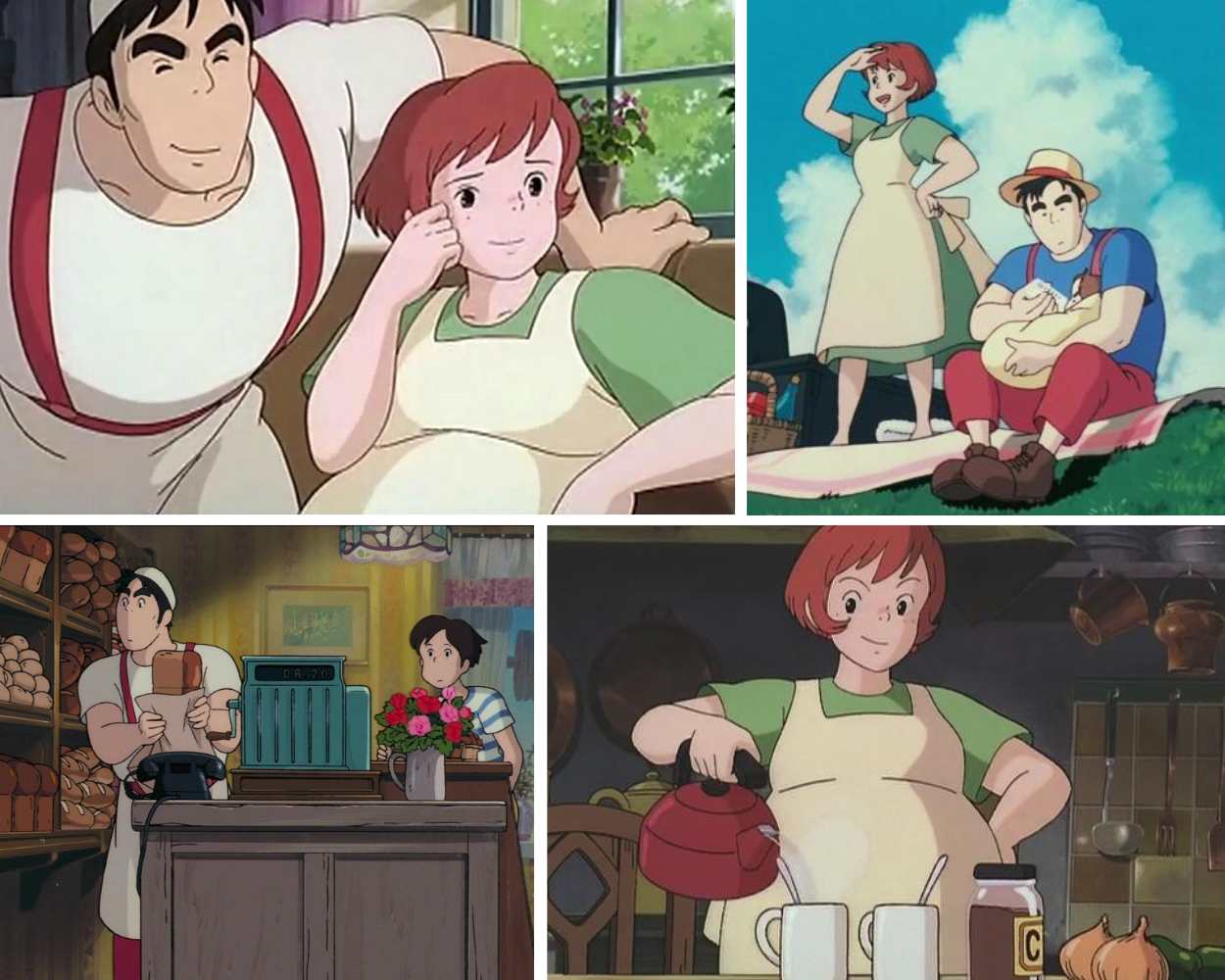
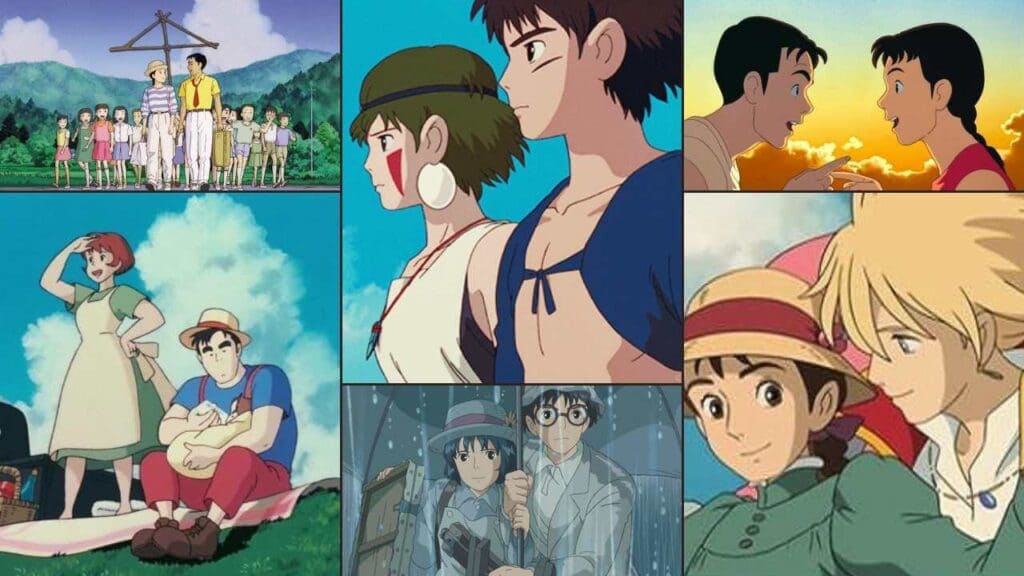
Osono and Fukuo run the bakery that takes Kiki in. For me, they are the quiet heart of the movie. Osono is warm, pregnant, and endlessly kind. Meanwhile, Fukuo is the huge, mostly silent baker who barely speaks all film. Yet you never doubt that they adore each other.
Their marriage is background texture, not plot. Even so, it tells you everything about the loving home Kiki has landed in.
Most coming-of-age stories skip the happy grown-up marriage entirely. Because of that, I love that Ghibli bothered to show one.
The film: Hayao Miyazaki directed Kiki’s Delivery Service, which arrived in 1989.
Arrietty and Shawn (The Secret World of Arrietty)
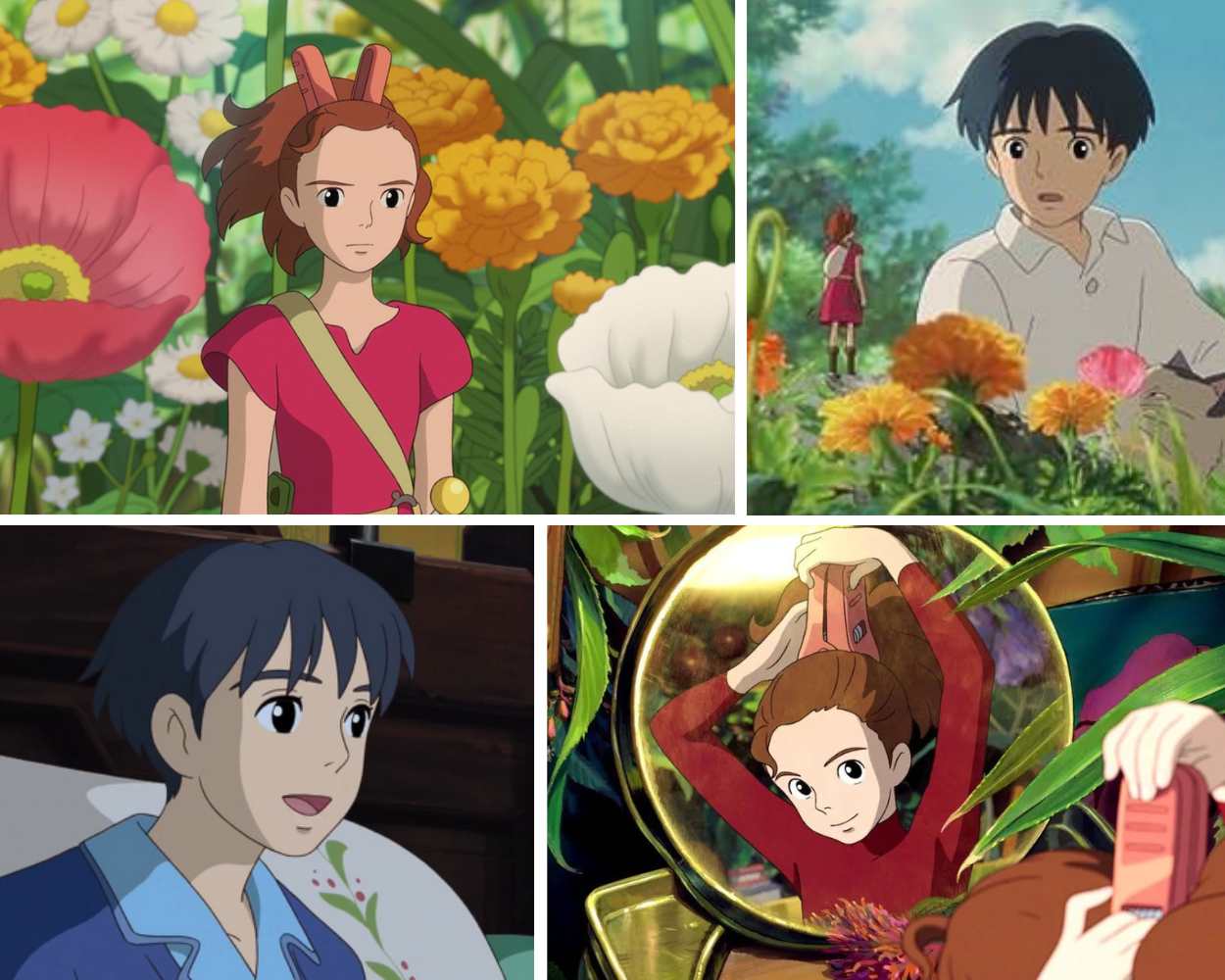
Arrietty is a Borrower, a tiny person who lives under the floorboards. Then there is Shawn, the sickly human boy who spots her. Their bond is barely romantic. Really, it is a careful, curious friendship between two people who should not trust each other.
Borrowers grow up fearing humans.
Still, Arrietty takes a chance on Shawn against her family’s advice. In turn, he earns that trust and guards their secret. The film never says where the two of them end up. Because of that restraint, The Secret World of Arrietty keeps lingering for me.
The film: Hiromasa Yonebayashi made his feature debut with this 2010 movie. It adapts Mary Norton’s 1952 novel The Borrowers. The US dub calls the boy Shawn, while the original Japanese calls him Sho.
Taeko and Toshio (Only Yesterday)
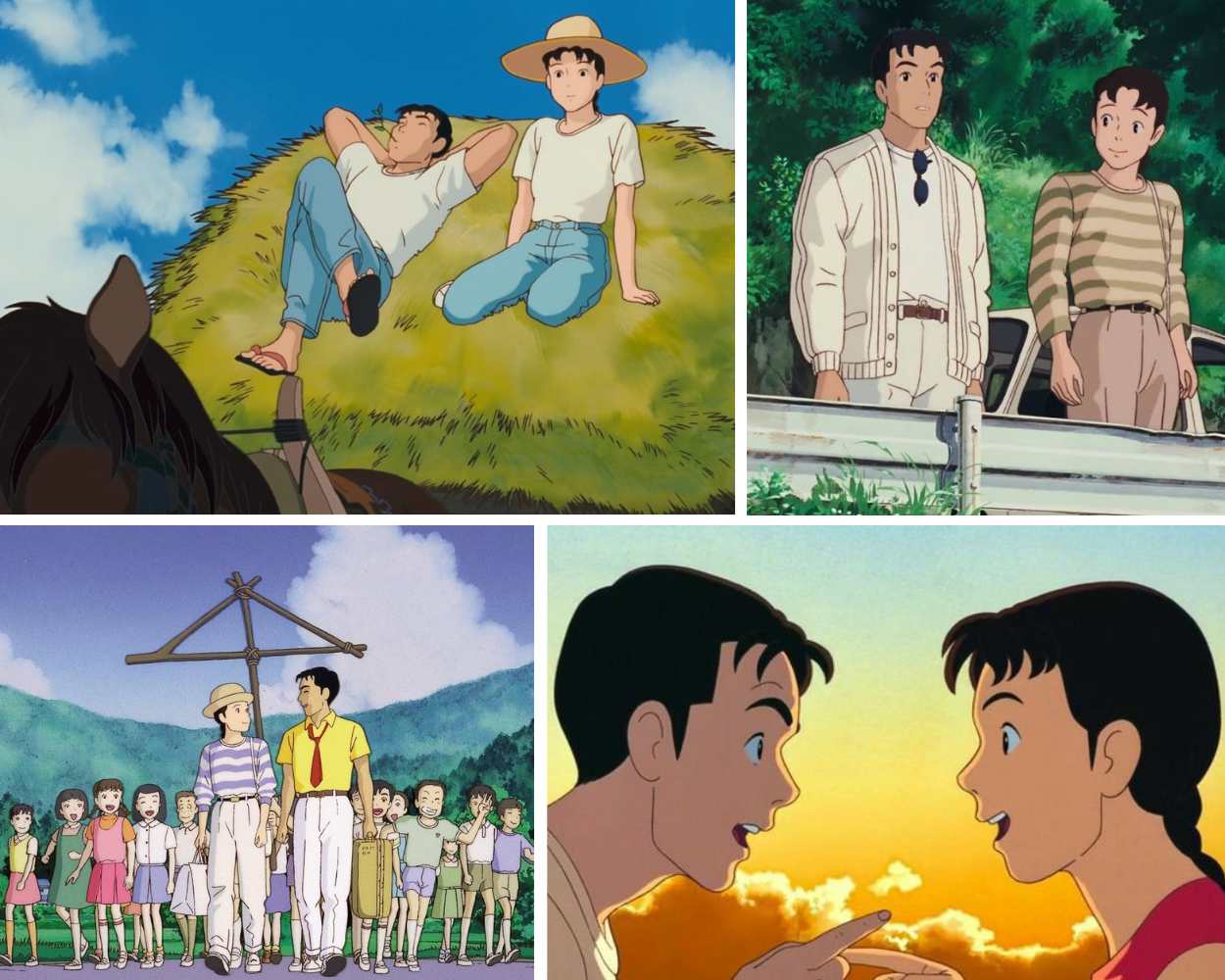
Only Yesterday follows Taeko, a 27-year-old office worker.
First, she takes a trip to the countryside. Soon her mind drifts back to her ten-year-old self. Out there, she meets Toshio, a down-to-earth farmer. Little by little, she wonders if his quiet rural life is the one she truly wants. The romance is barely spoken aloud, which is why it lands.
This is not a fairy tale. Instead, it follows a grown woman deciding what she wants her life to be. Love is just one honest piece of that reflection on childhood. For me, it might be the most mature story the studio ever told.
The film: Isao Takahata directed this one in 1991, not Miyazaki. It adapts a 1982 manga. His films tend to feel quieter and more grounded than Miyazaki’s, and this one proves the point.
Shizuku and Seiji (Whisper of the Heart)
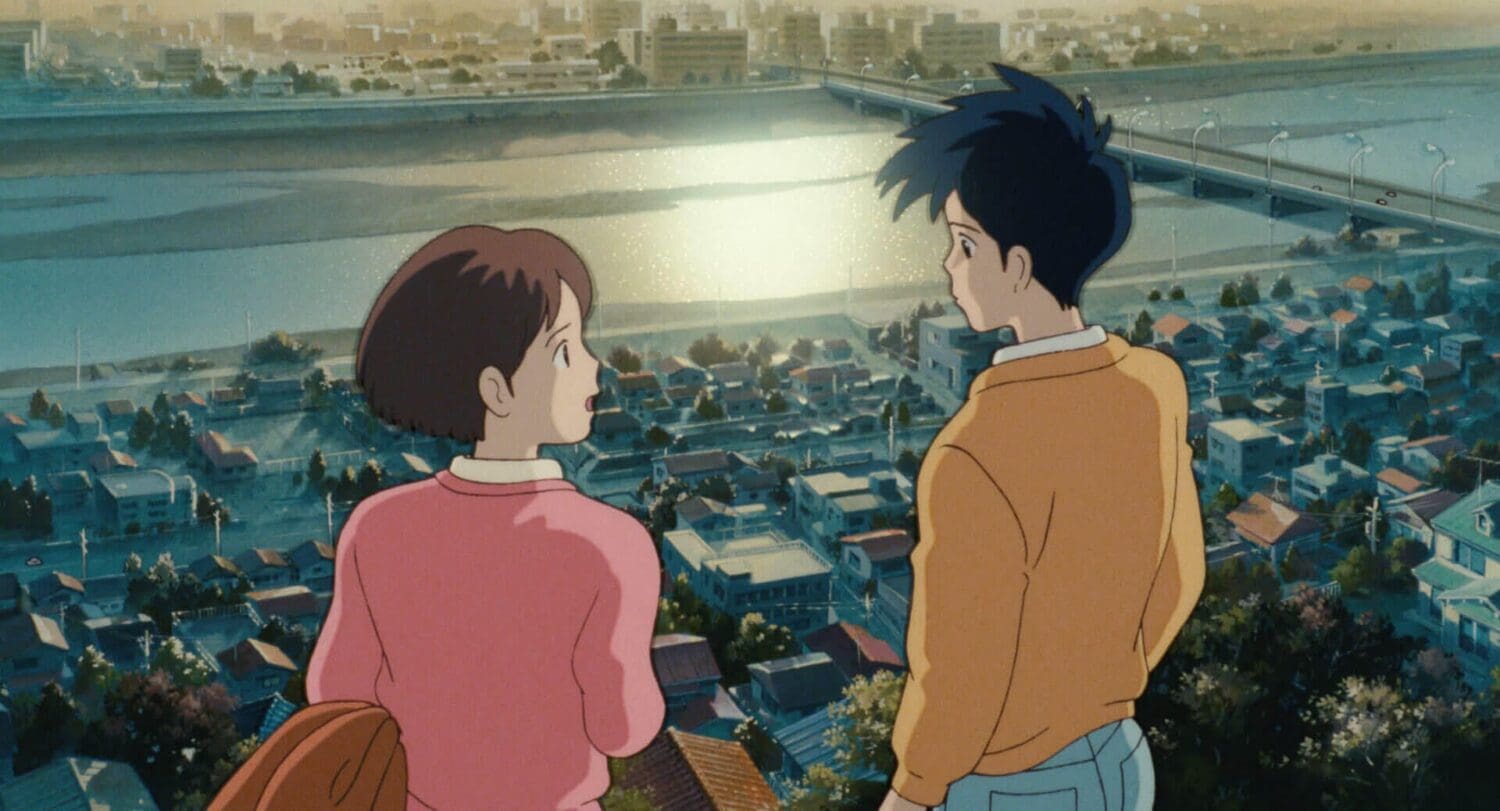
This is my pick for the loveliest Studio Ghibli romance on the list.
Shizuku is a bookish teenager who dreams of writing. Seiji, meanwhile, is a boy quietly training to become a violin maker. What I love here is simple. They push each other to chase their own goals.
Neither one dissolves into the couple and forgets who they are. So it becomes first love that respects ambition. In one scene, he plays violin while she sings along to Country Roads. For me, that is one of the best moments in any Ghibli film.
The film: Yoshifumi Kondo directed this movie, his only feature. Many at Ghibli hoped he would become their next great director. Sadly, he died in 1998 at just 47. Miyazaki wrote the screenplay.
Fujimoto and Granmamare (Ponyo)
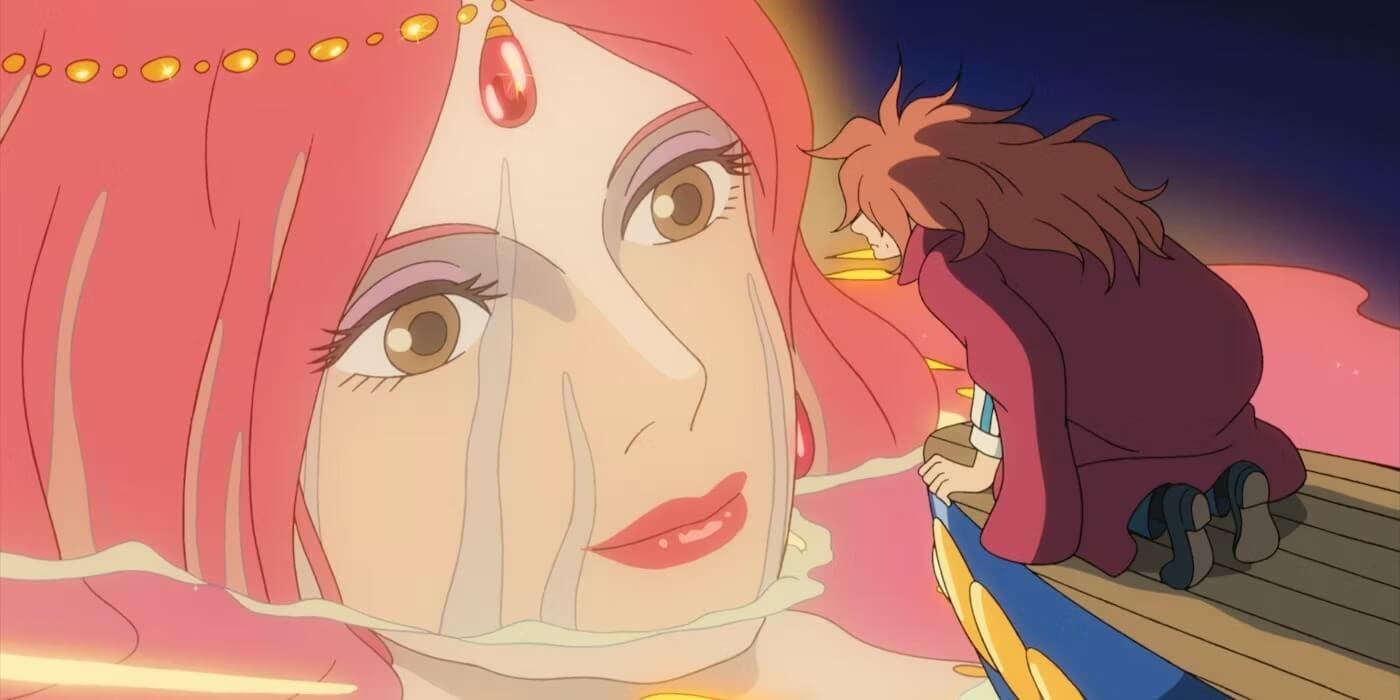
Ponyo’s parents are a truly odd couple, and I mean that as praise. Fujimoto is a former human turned fussy underwater sorcerer.
By contrast, Granmamare is the towering, glowing goddess of the sea. They could not be more different in size, temperament, or realm.
Even so, the film treats their love as rock solid. In fact, it quietly mirrors the kids’ story at the center of the movie.
Their bond ignores every rule about who belongs with whom. That makes for a nice contrast between the two sets of characters.
The film: Miyazaki directed Ponyo in 2008. He drew loosely on Hans Christian Andersen’s fairy tale The Little Mermaid.
Ponyo and Sosuke (Ponyo)
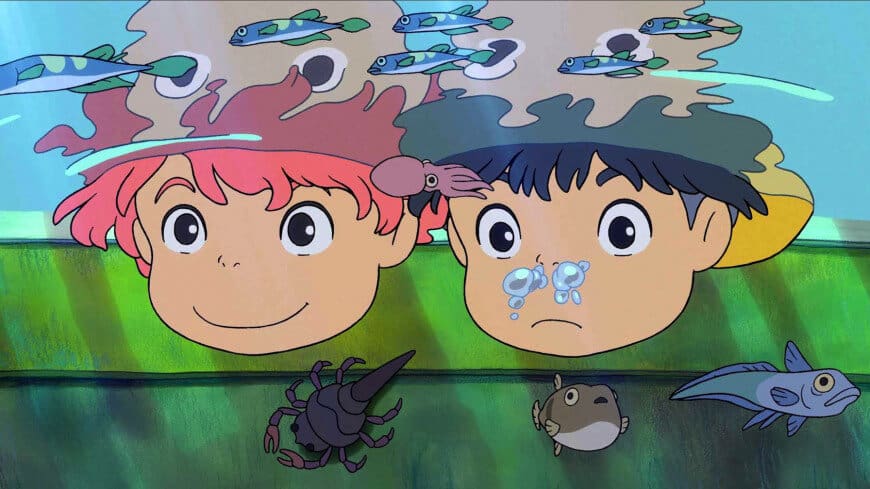
Sosuke is a five-year-old who finds a little fish trapped in a jar.
Then he rescues her and names her Ponyo. This is not romance in any grown-up sense. Rather, it is the fierce, total loyalty small kids are capable of. In fact, Ponyo reshapes the whole ocean to get back to him.
I find it more moving than a lot of straight love stories. There is zero calculation in it. It is simply, I found you, and I am keeping you. For my money, that is the purest version of the whole idea.
Did you know: Ponyo’s real name in the film is Brunhilde. Sosuke renames her Ponyo after pulling her out of that jar.
Kiki and Tombo (Kiki’s Delivery Service)
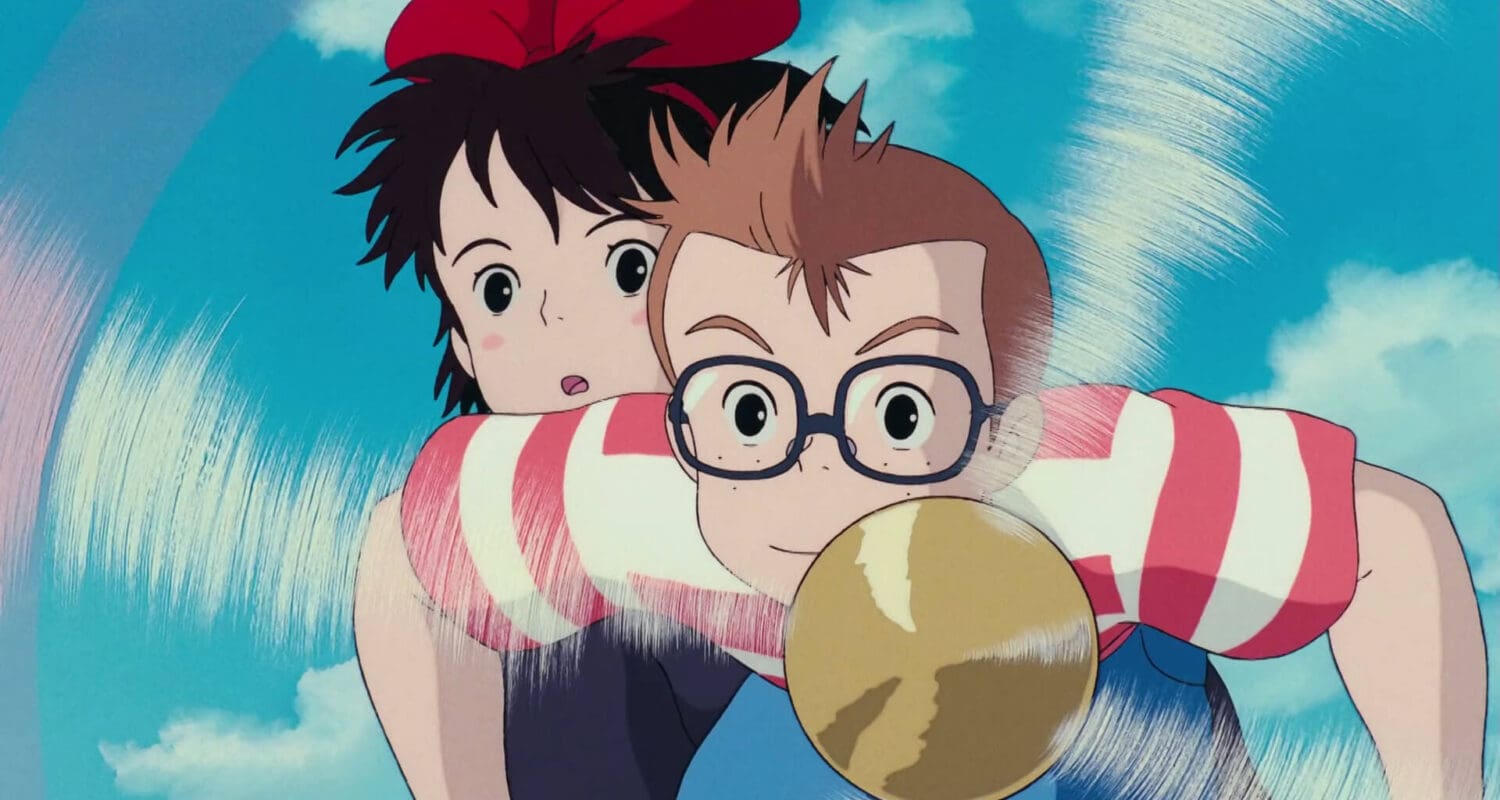
Tombo is the aviation-obsessed boy who keeps trying to befriend Kiki. At first, he is a little much. But that is the point.
Their friendship grows from awkward pestering into the real thing, and maybe the start of more. It never tips into a big romance, and it should not. After all, Kiki is only thirteen and still figuring out who she is.
Tombo is simply the first person who likes her for exactly that. In the end, it stays sweet without ever getting sticky.
Did you know: Tombo’s name comes from the Japanese word for dragonfly. That is a fitting nod to a boy obsessed with flying.
Jiro and Nahoko (The Wind Rises)
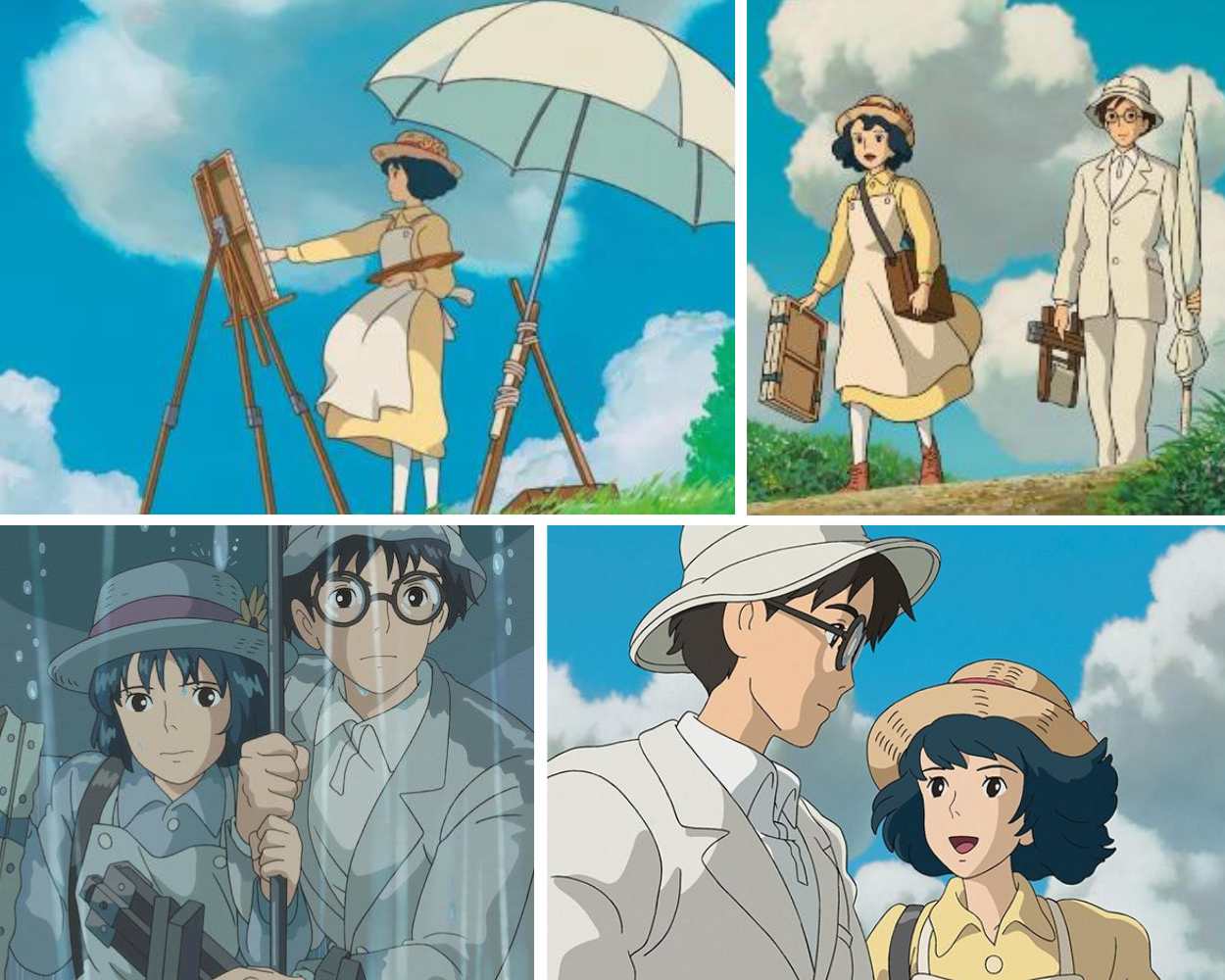
This is the one that wrecks me. Jiro is a brilliant aircraft designer chasing his dream of beautiful planes.
Then there is Nahoko, the woman he loves. Sadly, she is slowly dying of tuberculosis. Their love runs on quiet devotion and borrowed time. The film never lets you forget how little of it they have.
Miyazaki even based Jiro on a real engineer. Somehow, that makes the ache hit even harder. In the end, it is a love story about being fully present while you still can.
The film: Miyazaki made The Wind Rises in 2013. He modeled Jiro on the real Jiro Horikoshi, who designed Japan’s Mitsubishi A6M Zero fighter plane. Nahoko is fictional, and her tuberculosis drives the film’s quiet heartbreak.
Chihiro and Haku (Spirited Away)
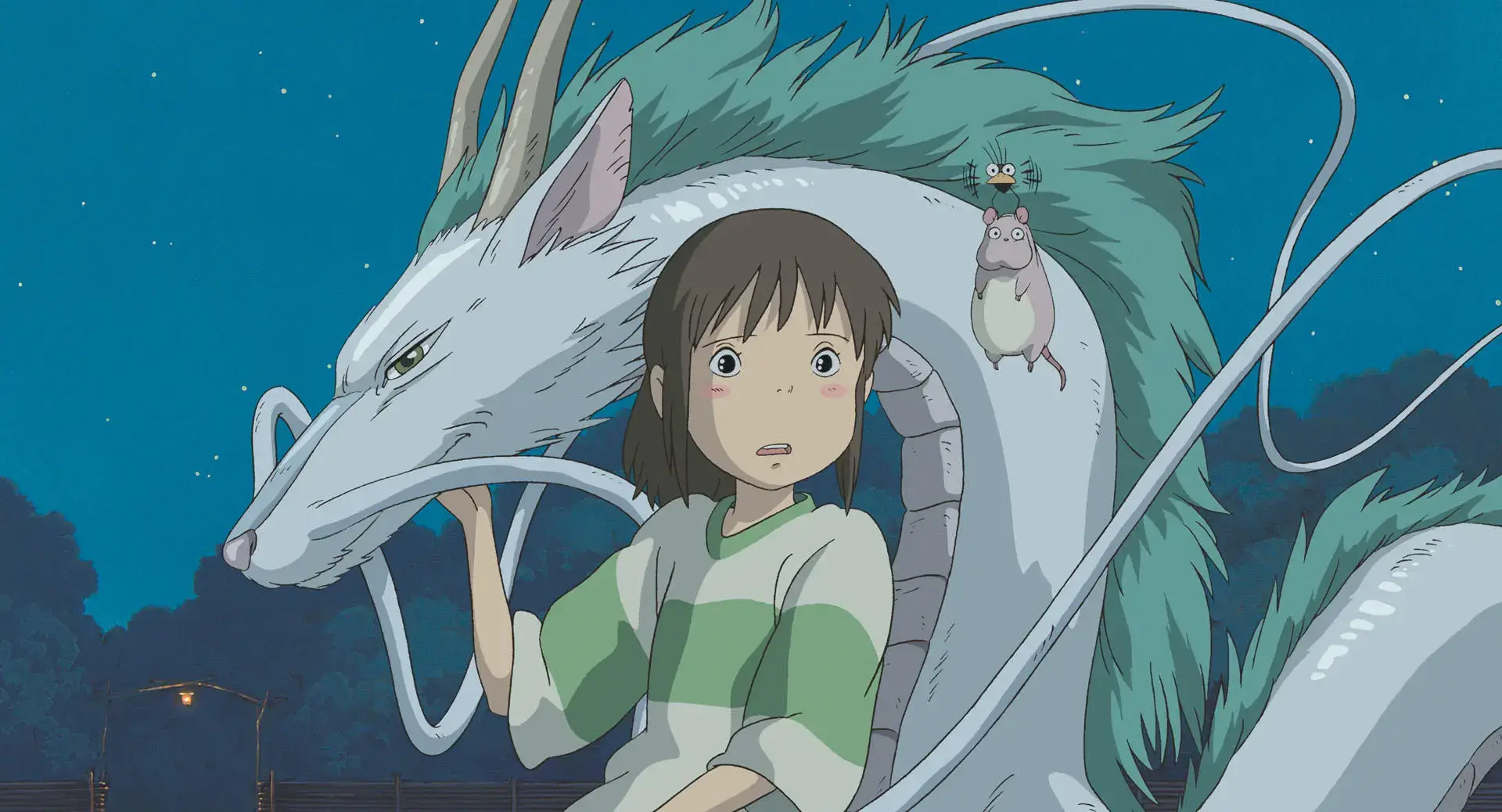
When Chihiro lands in the spirit world, she is lost and terrified. Haku is the first one to show her any kindness. Their bond then carries the entire film. Is it a romance? Sort of. It is first love in that hazy, powerful way you feel it as a kid. You feel it before you even have words for it.
Later, Haku turns out to be the spirit of a river Chihiro fell into as a child. That twist recasts their whole connection as something older than either of them knew.
Even now, the goodbye at the end gets me every time.
Did you know: Spirited Away won the Academy Award for Best Animated Feature in 2003. It remains one of the very few hand-drawn, non-English films ever to take that prize.
Howl and Sophie (Howl’s Moving Castle)
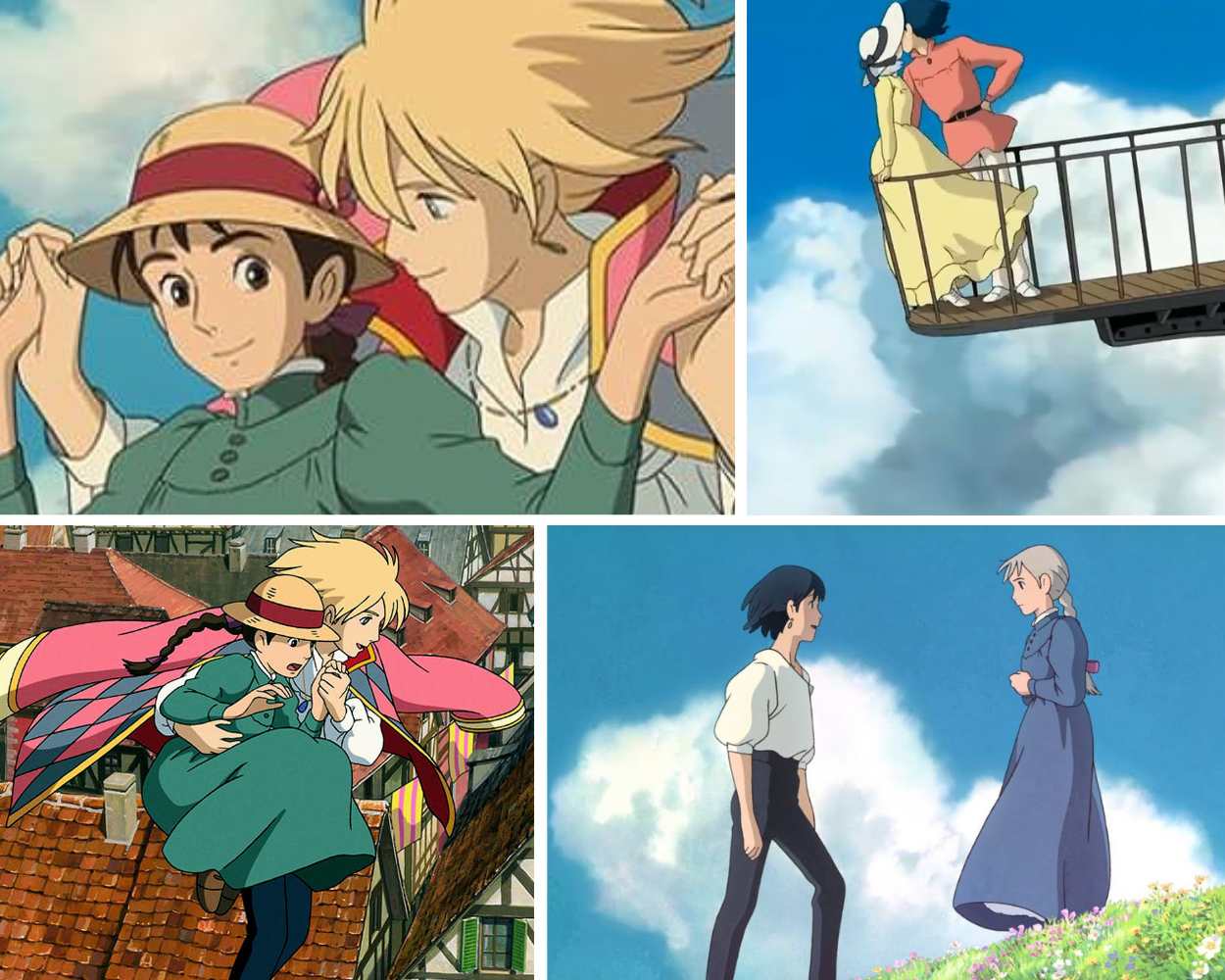
This is my favorite romance the studio has ever done. Howl is a vain, dramatic wizard who runs from everything. By contrast, Sophie is a quiet hatmaker. One night, the Witch of the Waste curses her, and she wakes up as an old woman.
That witch had once pursued Howl, so pure jealousy drives the whole spell. Thrown together in his walking castle, the two slowly steady each other. Best of all, they fall for each other’s character, not their looks.
Howl sees past Sophie’s aged body. Sophie sees straight through Howl’s glamour to the scared kid underneath. Because of that, they both grow braver.
The film: Miyazaki made Howl’s Moving Castle in 2004. It adapts Diana Wynne Jones’s 1986 novel of the same name.
Ashitaka and San (Princess Mononoke)
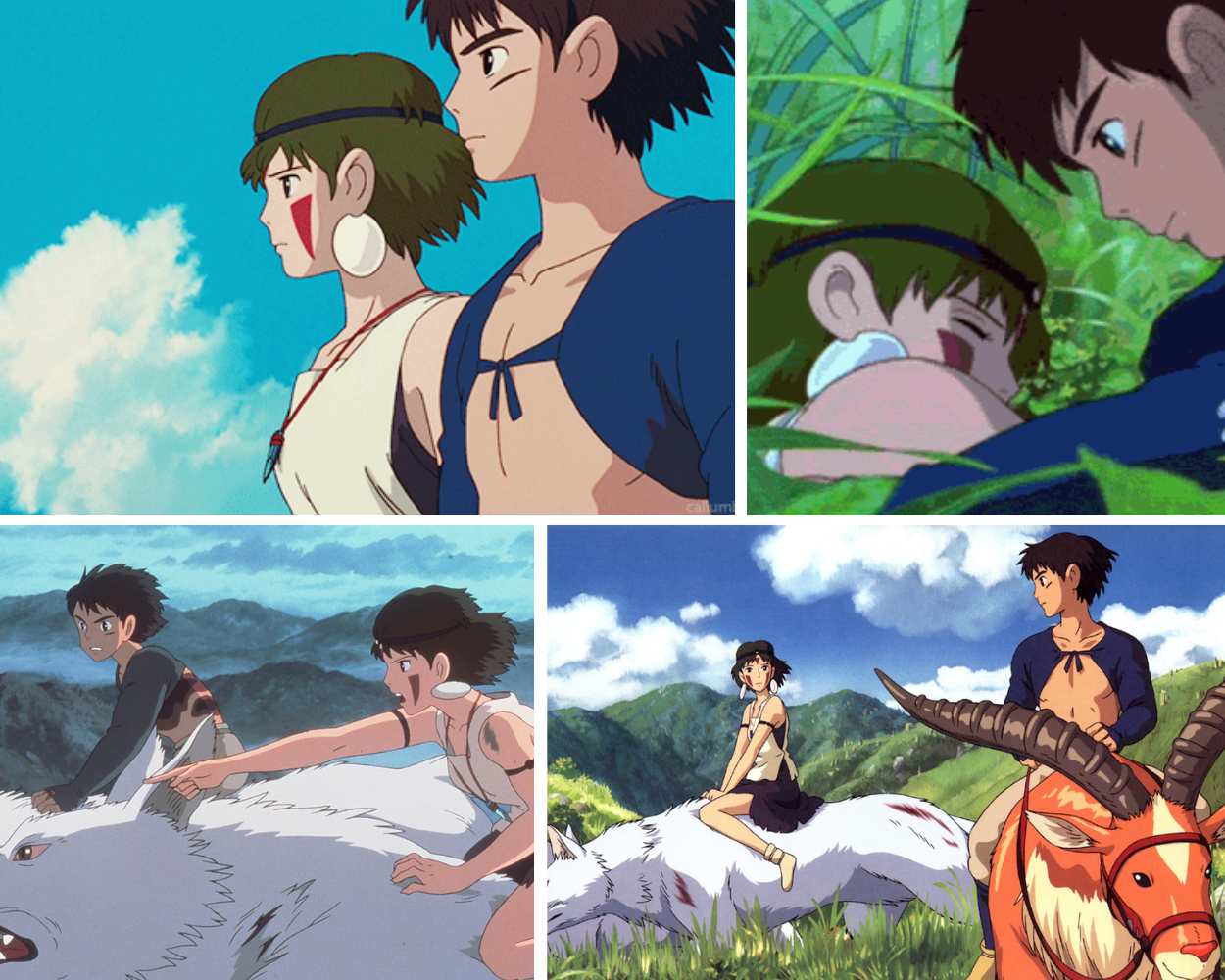
Ashitaka and San are less a couple than two people who deeply respect each other. A huge divide sits between them. For one, he is a cursed prince trying to broker peace. She, on the other hand, is a wolf-raised human who hates humanity. There is real attraction here. Still, the film keeps its eye on the bigger fight between nature and industry. The ending is the most honest part. They do not ride off together. Instead, San stays with her forest, and Ashitaka stays near the humans. They simply agree to visit. Love that respects who someone really is, rather than demanding they change, is rare and brave. For me, it is a perfect note for the studio to go out on.
The film: Miyazaki wrote and directed Princess Mononoke in 1997. The film is famous for its environmental themes and its sprawling scope.
That is my tour through Studio Ghibli romance.
It runs from a married couple you barely notice to the love stories that define the studio. What ties them together is restraint.
Ghibli trusts a glance, a shared song, or a quiet goodbye. Other films need a swelling orchestra to do the same work.
So if you are building a watchlist, start with Whisper of the Heart and Howl’s Moving Castle.
Then work your way through the rest.