In a Studio Ghibli film, magic is not a superpower. It is a neighbor. A soot-covered spirit hauls coal in a boiler room. A giant forest guardian naps in a tree.
None of it feels out of place. That is the trick Hayao Miyazaki pulls off better than anyone.
The Studio Ghibli creatures feel less like monsters and more like fellow residents of a living world.
So I put together a field guide to the best Studio Ghibli creatures, ranked by popularity and sorted by their role in each story.
These are the Studio Ghibli creatures I would hand a newcomer first, counting up to the one that started it all.
Each entry gets a Spirit Taxonomy card, so you can read its role, its motivation, and its vibe at a glance.
The Best Studio Ghibli Creatures, Ranked
Teto (Nausicaa of the Valley of the Wind)

We start with a deep cut. Nausicaa is one of the studio’s earliest masterpieces, and Teto is its secret weapon. He is a little fox-squirrel who bites Nausicaa’s hand raw when they meet, then becomes her loyal shadow.
- He sports brown fur with yellow stripes and looks like he wandered out of a Pokemon game decades early.
- That bite-then-bond moment is a quiet lesson in patience and trust.
- He is small, but he never leaves her side.
Role: the Companion, personal and loyal
Motivation: protect the one human who earned his trust
Spirit wisdom: “Bite first, cuddle later. I decide who is worth trusting, and it is rarely you at first.”
Vibe rating: 7 out of 10, feisty and pocket-sized
Field note: underseen, but the blueprint for every loyal Ghibli sidekick that followed.
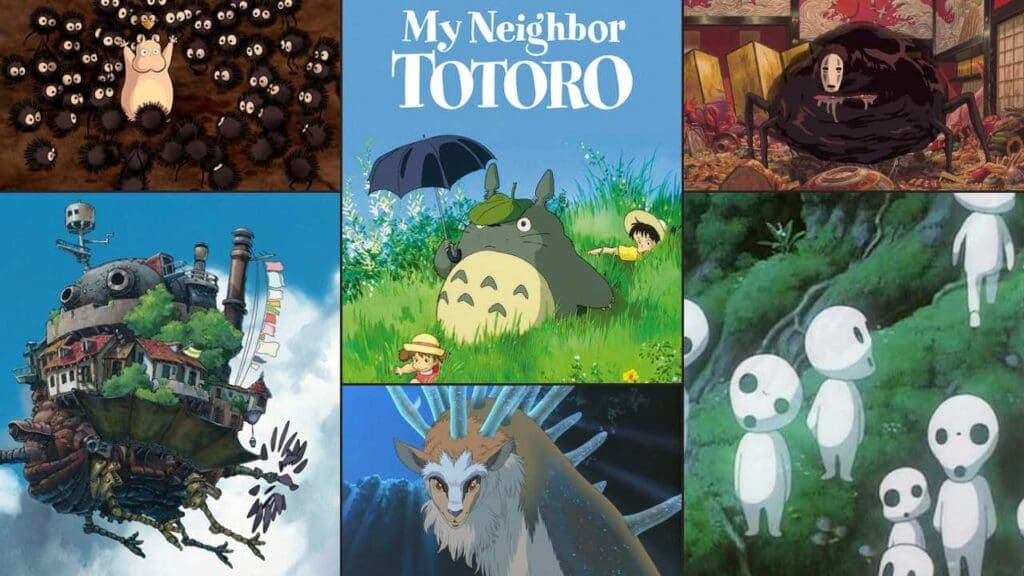
Howl’s Castle (Howl’s Moving Castle)

Is a walking house a creature? In Ghibli’s world, absolutely. The castle lurches across the hills on mechanical legs, puffing steam like it is breathing, kept alive by the fire magic of the demon Calcifer.
- Its exterior is a glorious junk-pile of homes, cannons, ears, and odd bits.
- Inside sits a cramped living room, a kitchen, and rooms for Howl and Markl.
- When Calcifer weakens, the whole structure grinds to a halt.
Role: the Functional Spirit, a living structure
Motivation: keep moving, keep Howl hidden
Spirit wisdom: “Mind the loose step by the boiler. I am held together by magic and stubbornness, in that order.”
Vibe rating: 8 out of 10, chaotic and cozy and structurally questionable
My read: the castle has more personality than most cartoon leads.
Forest Spirit (Princess Mononoke)

The Forest Spirit, or Shishigami, is the beating heart of Princess Mononoke. A deer-like god by day and a towering Nightwalker after dark, it is both the giver of life and the bringer of death. It plays no favorites.
- It heals Ashitaka’s bullet wound, yet refuses to lift the curse killing the boar.
- Its power is calm, ancient, and completely indifferent to human sides.
- When its head is stolen, the forest itself begins to die.
Role: the Guardian, nature and the divine
Motivation: keep the balance of life and death
Spirit wisdom: “I give life at dawn and take it by moonlight. Do not mistake my calm for mercy.”
Vibe rating: 9 out of 10, awe-inspiring and a little terrifying
The verdict: the most powerful of these Studio Ghibli creatures, and the least sentimental.
Ponyo (Ponyo)
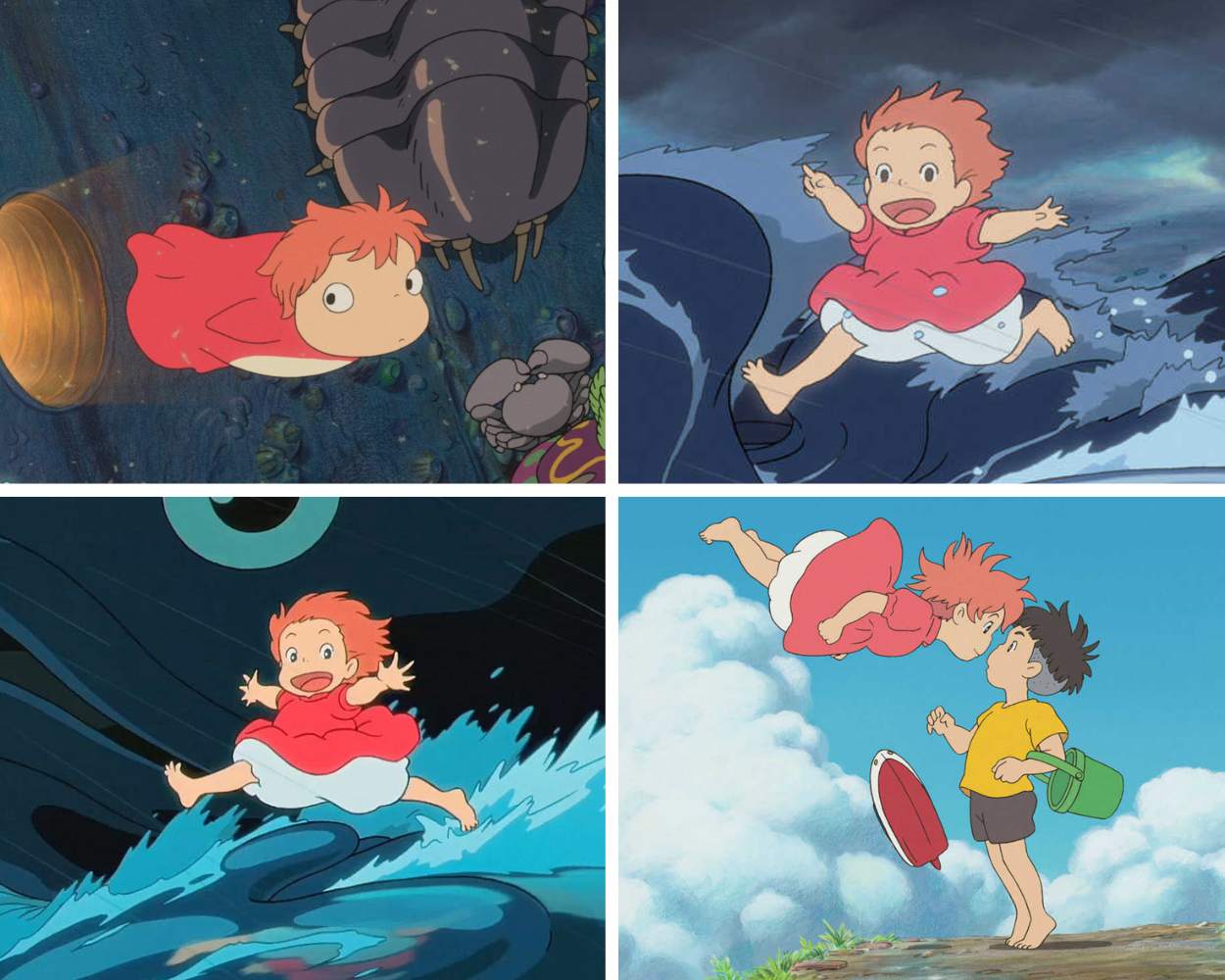
Ponyo is a goldfish who wants to be a little girl, and she wants it with the full, unstoppable force of a five-year-old. Born to a sea goddess and a wizard who was once human, she is magic and mischief in equal measure.
- She can flip between her goldfish form and a human one.
- She adores ham and adores her human friend Sosuke even more.
- Her raw wanting is powerful enough to throw the ocean off balance.
Role: the Companion, with divine lineage
Motivation: become human, stay with Sosuke, eat ham
Spirit wisdom: “I want ham, I want legs, and I want my friend. Do not tell me I cannot have all three.”
Vibe rating: 8 out of 10, pure toddler chaos energy
Where it lands: less mysterious than the older Studio Ghibli creatures, but impossible not to love.
Kodama (Princess Mononoke)

The Kodama are the little white tree spirits that rattle their heads in the deep woods of Princess Mononoke. These pale creatures are unsettling and adorable at once, and they are doing quiet, important work.
- They are a living gauge of the forest’s health, thick where it thrives.
- They watch silently as San leads Ashitaka to the Forest Spirit.
- When the forest dies, so do they, until a single Kodama returns to signal rebirth.
Role: the Guardian, nature and the divine
Motivation: exist as the pulse of the forest
Spirit wisdom: “We rattle when we gather. If the woods are healthy, you will hear us before you see us.”
Vibe rating: 8 out of 10, creepy, cute, and quietly vital
My take: one of the most meme-able designs Ghibli ever drew, and rooted in real folklore.
Haku (Spirited Away)
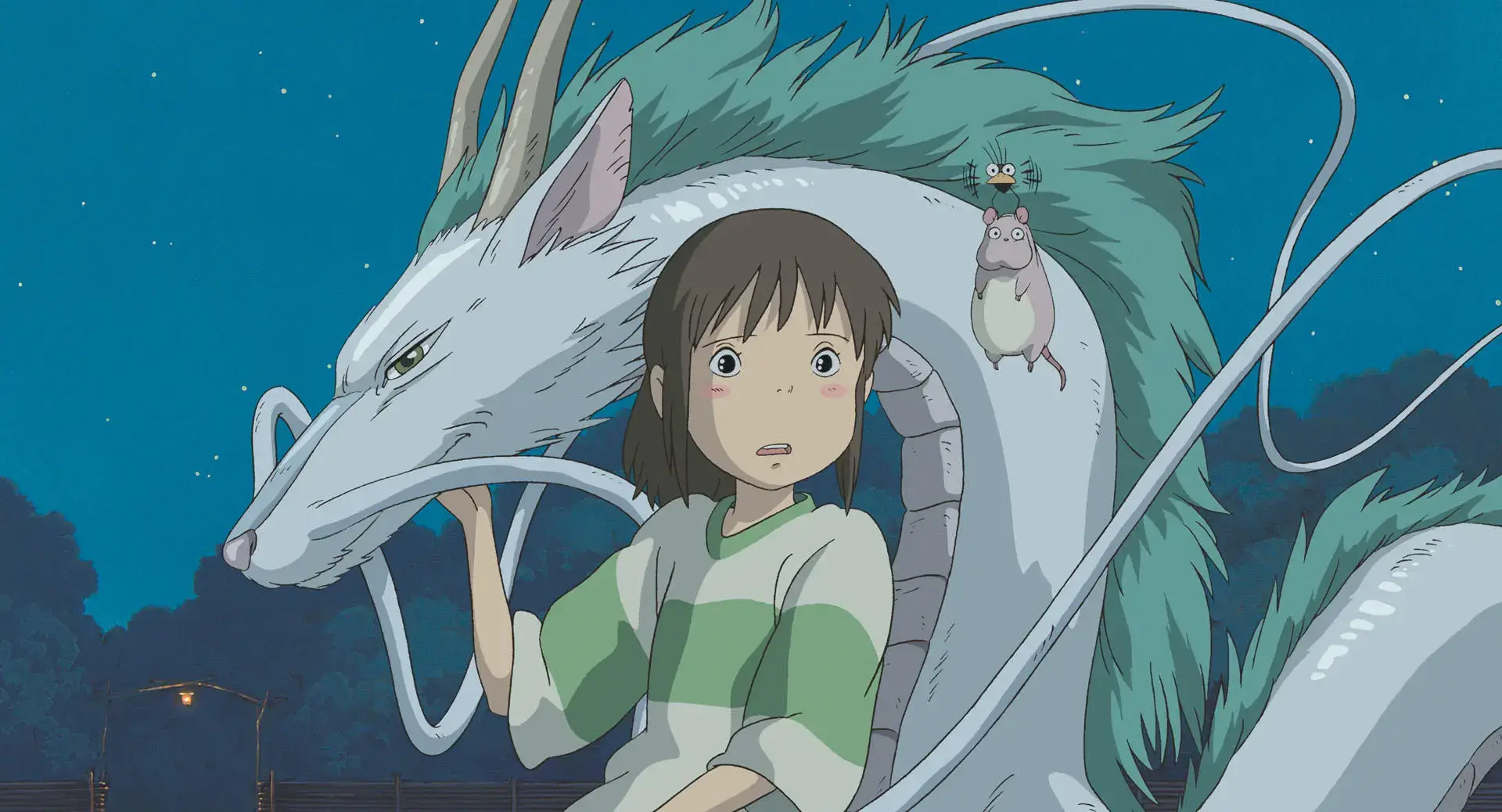
Haku is the deuteragonist of Spirited Away and one of the most quietly tragic figures in the Ghibli canon. His real name is Nigihayami Kohakunushi, and he is the spirit of a river that no longer exists.
- In his dragon form he is a sleek white serpent with a flowing green mane and long whiskers.
- As a human, he looks like a solemn boy with cropped black hair.
- He serves Yubaba, but everything he does is aimed at protecting Chihiro.
Role: the Guardian, a river spirit
Motivation: guide Chihiro home and reclaim his name
Spirit wisdom: “I forgot my own name once. Hold on to yours, or this place will take it.”
Vibe rating: 9 out of 10, elegant, tragic, and dependable
For me: the emotional anchor of Ghibli’s most famous film.
Soot Sprites (My Neighbor Totoro and Spirited Away)

The little balls of living soot are pure Ghibli charm, and they are the reason the studio’s world feels stitched together. They turn up in two different films, doing two different jobs.
- They chatter in high-pitched squeaks that shift with their mood.
- In the boiler room they haul coal for Kamaji, powered by star-shaped candy.
- Left with no purpose, they simply crumble back into soot.
Role: the Workplace Spirit, functional and mundane
Motivation: stay useful, earn a snack
Spirit wisdom: “Give us a job and a bit of star candy, and we haul coal all night. Leave us idle and we fall apart.”
Vibe rating: 9 out of 10, hardworking, huggable, snack-motivated
My call: the tiny glue that makes the whole Ghibli universe feel connected.
Catbus (My Neighbor Totoro)

A grinning cat that is also a bus, with a dozen legs and glowing eyes for headlights. The Catbus is one of the most inventive things Ghibli has ever put on screen, and it only shows up when it is truly needed.
- Its seats are warm fur that shapes itself to each passenger.
- It races Mei and Satsuki through the night when their family needs help.
- Its design draws on the bakeneko, a shape-shifting cat from Japanese folklore.
Role: the Companion, part transport, part guardian
Motivation: carry lost children safely home
Spirit wisdom: “Hop in. Twelve legs, no seatbelts, and I always know where the missing kids are.”
Vibe rating: 9 out of 10, whimsical, warm, and faintly cursed
The pitch: the most photogenic of all the Studio Ghibli creatures.
Calcifer (Howl’s Moving Castle)

Calcifer is a fire demon who cut a deal with the wizard Howl, and he might be the most quotable spirit in the studio’s history. He was once a falling star, caught by Howl the instant before he burned out.
- He runs on firewood and complaints, in roughly equal amounts.
- He powers the castle, but he is chained to its hearth and cannot roam.
- His bond with Howl is a tangle of magic, debt, and grudging affection.
Role: the Workplace Spirit, hearth guardian and flame
Motivation: survive, and keep the castle running
Spirit wisdom: “Keep me fed and I keep the castle walking. Put me out, and everything stops.”
Vibe rating: 10 out of 10, high-maintenance, low-stress, all cozy
Why it ranks here: the best hearth in animation, and the wittiest.
No-Face (Spirited Away)

No-Face is the Ghibli creature that launched a thousand memes, and also one of its darkest ideas. A lonely, masked spirit drawn to Chihiro’s kindness in Spirited Away, he has no real self of his own.
- He speaks in grunts and learns by copying whoever is near him.
- Surrounded by the bathhouse’s greed, he turns greedy and monstrous.
- Away from it, and beside Chihiro, he becomes gentle again.
Role: the Anomaly, the unclassifiable one
Motivation: belong to someone, mirror what he sees
Spirit wisdom: “I become whatever surrounds me. Fill the room with greed, and you will not like what I turn into.”
Vibe rating: 8 out of 10, lonely, dangerous, weirdly sympathetic
Bottom line: the most fascinating spirit Ghibli ever wrote, and a warning wrapped in a mask.
Totoro (My Neighbor Totoro)

There was never any doubt about the top spot. Totoro is the giant, sleepy forest guardian from My Neighbor Totoro, and he is the face of the entire studio for a reason.
- He belongs to a small tribe, seen as Big, Mid, and Mini Totoro.
- Mei stumbles onto the little ones chasing acorns, then finds the great Totoro asleep in the woods.
- The image of him sharing an umbrella in the rain is pure, gentle magic.
Role: the Guardian, nature and the divine
Motivation: watch over the forest and the children in it
Spirit wisdom: “I mostly sleep. But stand under my tree in the rain, and I will share my umbrella.”
Vibe rating: 10 out of 10, the gold standard of gentle
Top of the tree: not just the best of the Studio Ghibli creatures, but the mascot of animation itself.
The Crossover Map: One World, Many Films
Here is the detail casual fans miss. The Soot Sprites appear in both My Neighbor Totoro and Spirited Away, thirteen years apart. That is not laziness, it is design.
Miyazaki reuses that little soot creature on purpose, and the effect is quietly powerful. It suggests every Ghibli film shares the same spirit world, even when the stories never touch. That shared design makes the Studio Ghibli creatures feel like one connected family. The bakeneko roots of the Catbus, the river gods, the tree spirits: all of it feels like one connected ecology. It reads as a single world, not a set of separate movies. Once you notice it, you start seeing the whole Ghibli universe as a single breathing place.
The Folklore Connection: Yokai, Kami, and Tree Spirits
Most of these Studio Ghibli creatures did not spring from nowhere. They grow straight out of Japanese folklore, which is a big part of why they feel so real.
So what is a yokai? It is a broad class of spirits, monsters, and supernatural beings in Japanese folk belief, ranging from the terrifying to the mischievous. Ghibli leans on that tradition constantly. The Kodama are drawn from real tree spirits, called kodama, long believed to live inside old trees. The Catbus channels the bakeneko, a cat that gains magical powers with age. The Forest Spirit and Totoro both echo the idea of kami, the nature deities of Shinto that inhabit forests, rivers, and mountains. The Soot Sprites even have a folk name, susuwatari, the little wanderers said to haunt empty houses. Ghibli did not invent this world so much as translate it.
The Artistic Evolution: From Cel Paint to Now
The look of these Studio Ghibli creatures has quietly transformed over four decades, even as the spirit stayed the same.
The earliest spirits, from Nausicaa in 1984 and Totoro in 1988, were hand-painted on cels, one frame at a time. By Princess Mononoke in 1997, the studio was blending that hand-drawn art with early digital tools to pull off the Forest Spirit’s eerie glow. Yet Ghibli famously resisted going fully computer-animated, sticking with hand-drawn 2D long after the rest of the industry moved on. Their first fully 3D film, Earwig and the Witch in 2020, was the rare outlier, and even Miyazaki’s recent work returned to hand-drawn animation. That stubborn craft is exactly why a soot sprite from 1988 and a spirit from the 2020s still feel like they belong in the same world.
The Full Ghibli Bestiary, by Species
If you want to go deeper, here is a broader field guide to the Studio Ghibli creatures scattered across the studio’s films.
Cats: Cat King, Baron Humbert von Gikkingen, Jiji, Muta, Prince Lune, Yuki, and the rest of the Cat Returns and Kiki crew.
Dragons: Haku, the River Spirit, Therru, and Kalessin from Tales from Earthsea.
Spirits: No-Face, Haku, Kamaji, Radish Spirit, Stink Spirit, River Spirit, Boh, Yubaba, Zeniba, and the bathhouse staff.
Foxes and fox-squirrels: Teto, Lin, and the fox-squirrels of Laputa.
Dogs: Heen from Howl’s Moving Castle, plus Jeff and Koro.
Raccoon dogs: Bunta, Gonta, Shoukichi, and the whole shape-shifting clan from Pom Poko.
Celestial beings: Kaguya and the King of the Moon from The Tale of Princess Kaguya.
Wolves: Moro and her children from Princess Mononoke.
Totoro Tribe: Big Totoro, Mid Totoro, and Mini Totoro.
Ravens and birds: Toto and Yubaba’s strange bird-headed servants.
Your Turn
That is my ranked field guide, but the Ghibli world is deep, and I know I left out somebody’s favorite.
So tell me: which of these Studio Ghibli creatures would you crown number one, and which deep-cut spirit did I rank too low?
Drop it in the comments, and tell me if you would put anyone above Totoro.