Most animated kids’ movies hand you a villain you forget by the closing credits. A Bug’s Life did not. Hopper, the grasshopper who runs a protection racket over a colony of ants, is one of the meanest, smartest, and most intimidating antagonists Pixar has ever made, and he has stuck with me since I first saw the film as a kid.
This is a full breakdown of Hopper: who he is, who voiced him, the trauma that drives him, the production drama swirling around the movie, and why he still works decades later. If you want the quick official record first, here is A Bug’s Life on Britannica.
Who Is Hopper in A Bug’s Life?
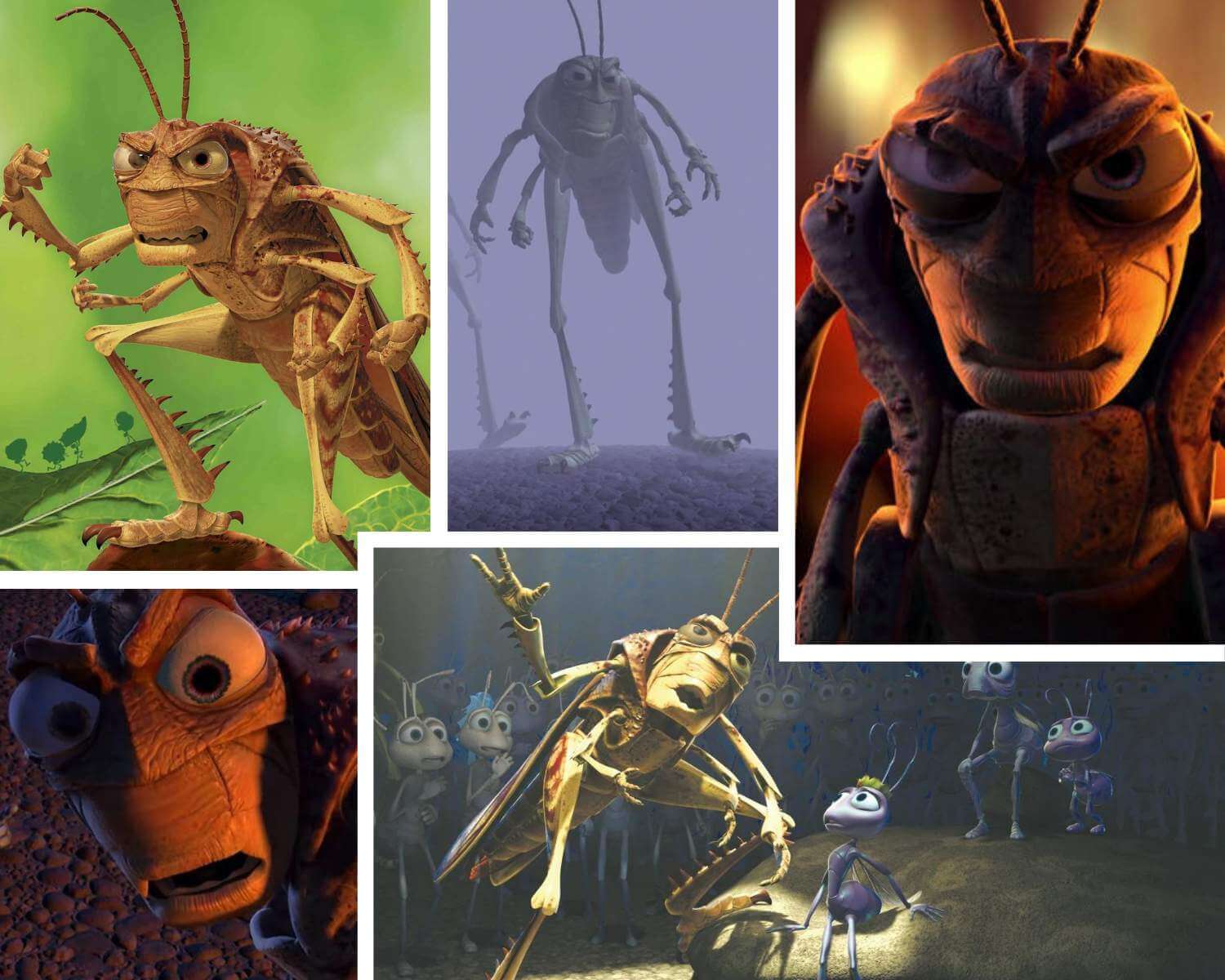
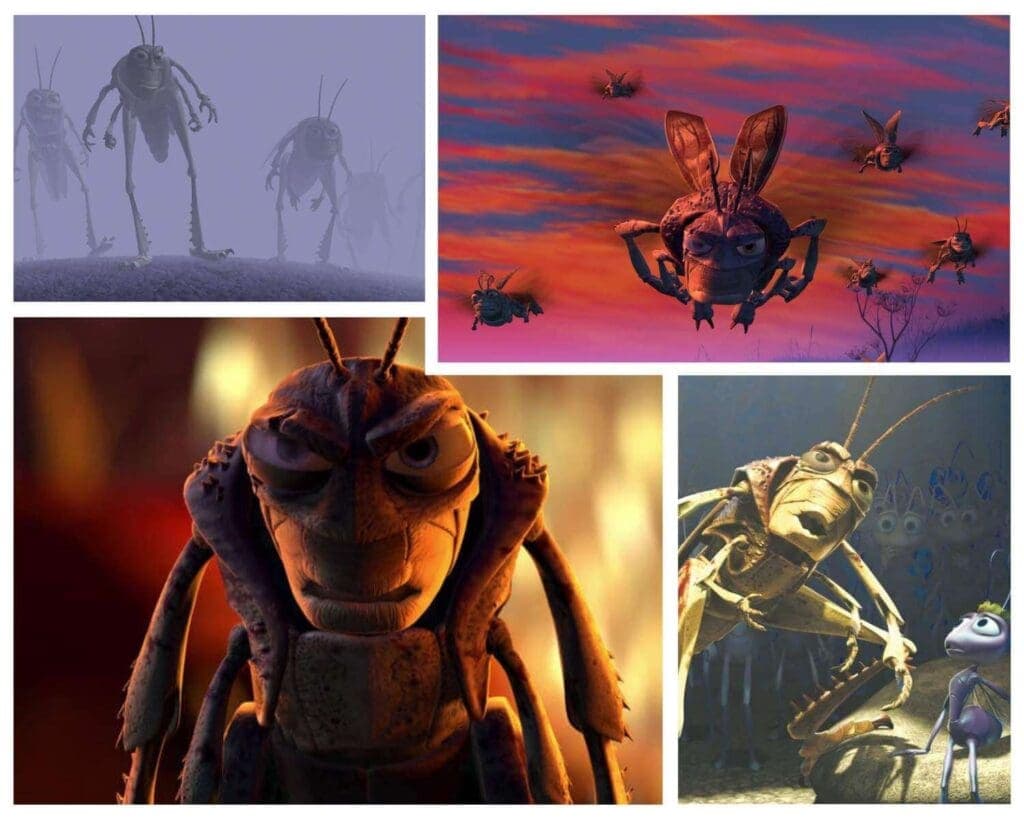
Hopper is the leader of a gang of grasshoppers who turn up every season to extort food from Flik’s ant colony, supposedly in exchange for protection. He is Flik’s arch-nemesis and the engine of the entire plot. When Flik accidentally destroys the season’s food offering, Hopper doubles the demand and sets the whole story in motion.
What lifts him above a generic bully is the way he frames the world. In his very first scene he writes off the food chain as “one of those circle of life kind of things,” and that cold, predator-and-prey logic runs through everything he does. The grasshoppers are bigger, so the ants serve them. Simple. Until it is not.
- Role: the primary antagonist and leader of the grasshopper gang
- Goal: keep the ants afraid and harvesting food for him
- Function: the pressure that forces Flik to grow from outcast to hero
The Voice Behind Hopper: Kevin Spacey
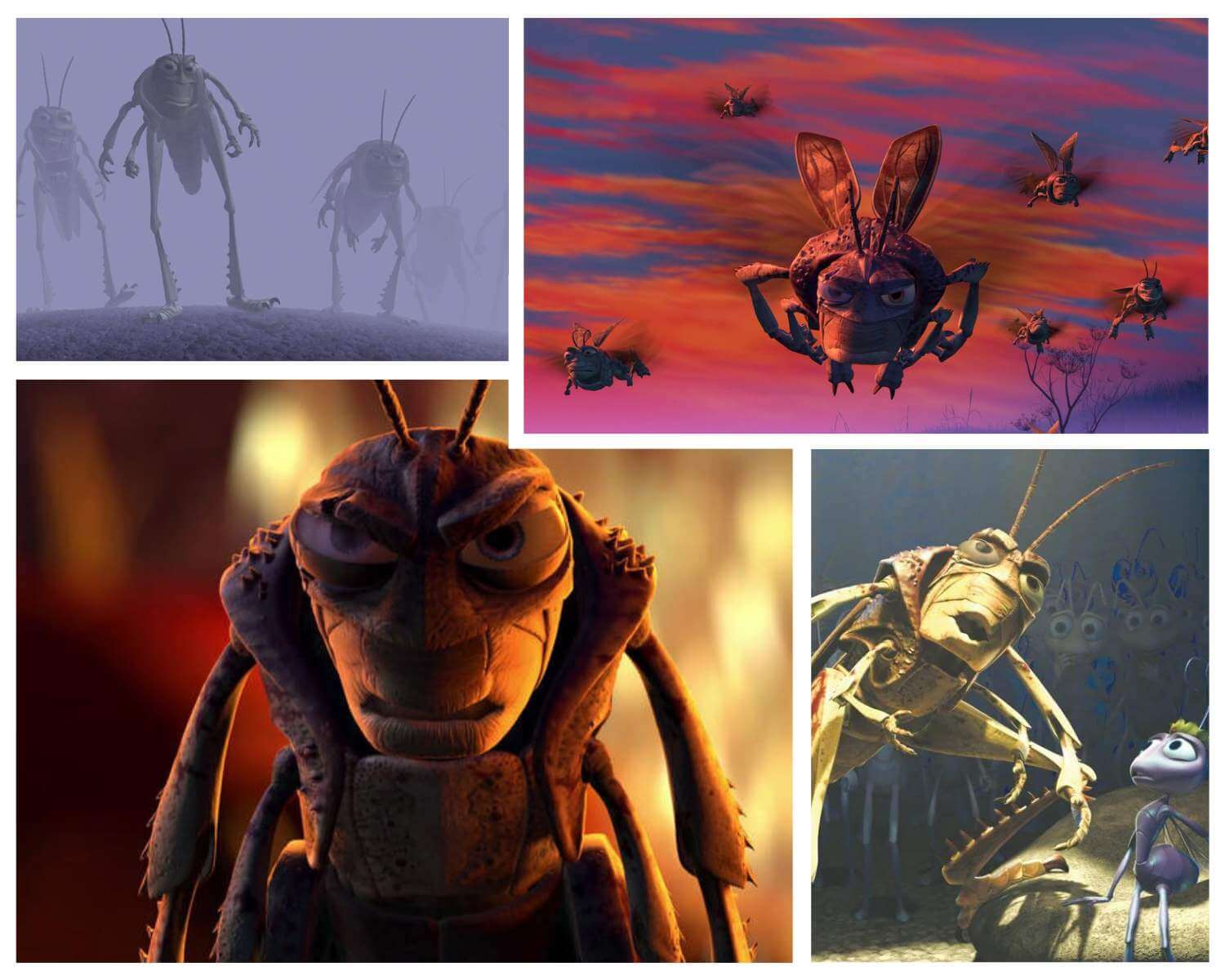
Hopper was voiced by Kevin Spacey, who was at the peak of his villain era when the film arrived. That smooth, quiet, slightly amused menace is a huge part of why the character lands. Hopper rarely shouts. He talks softly and lets the threat just sit there, which is far scarier than any roar.
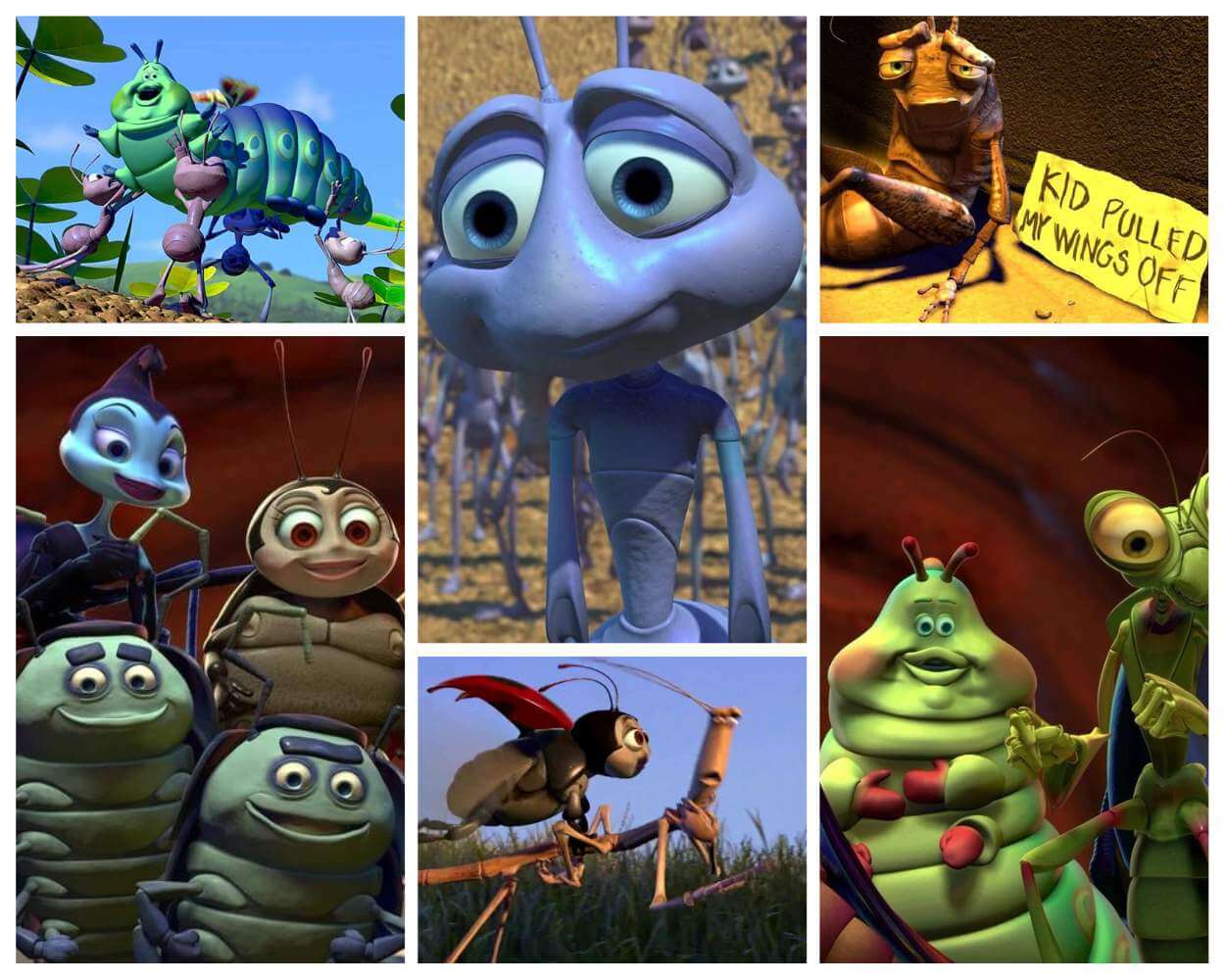
The rest of the cast leaned hard on 90s sitcom stars, which is fun to clock once you know: Dave Foley as Flik, Julia Louis-Dreyfus as Princess Atta, David Hyde Pierce and Brad Garrett among the circus bugs, and Pixar’s good-luck charm John Ratzenberger as P.T. Flea.
Hopper’s Design and That Blind Eye
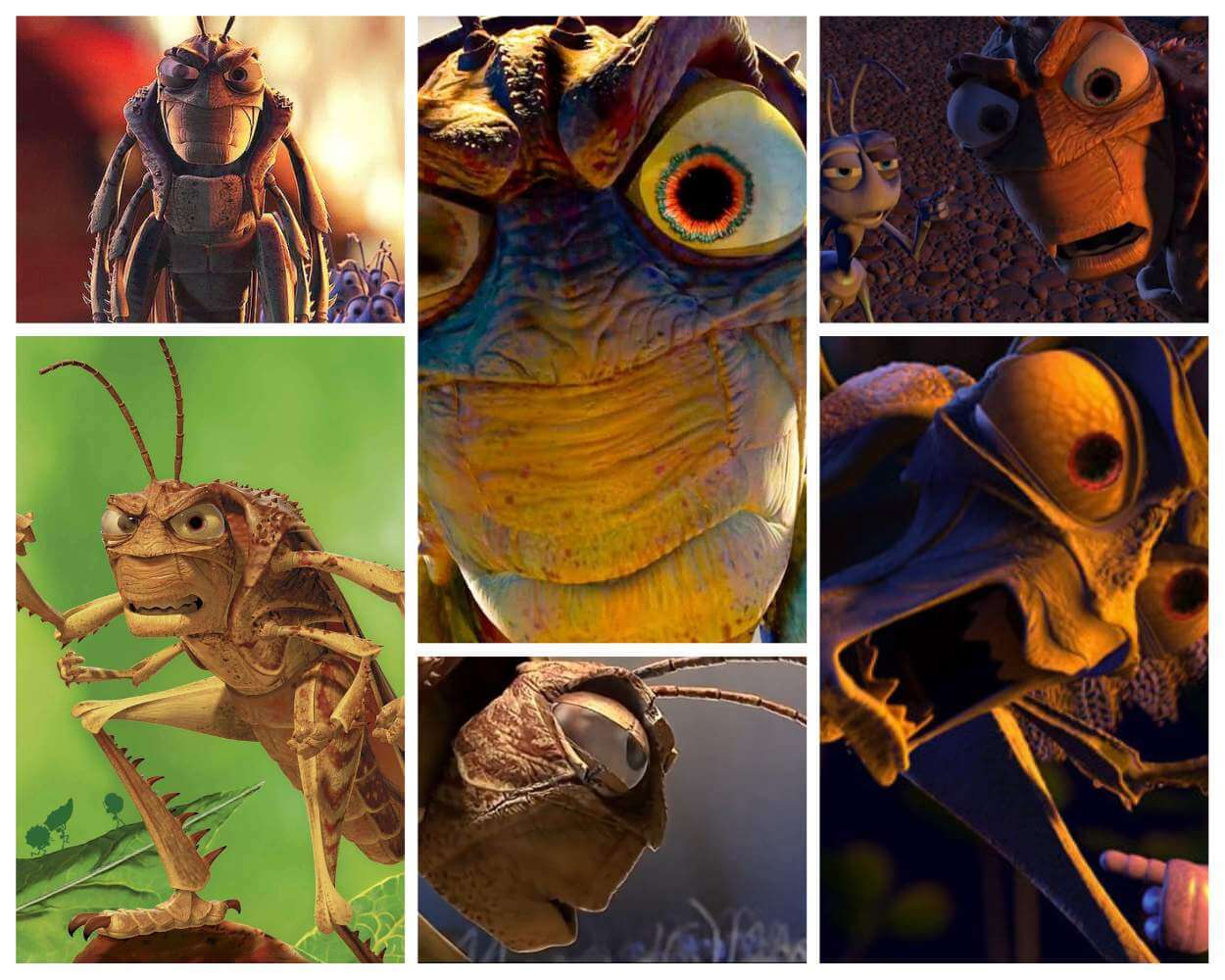
The animators gave Hopper a look that screams danger before he says a word. He is tall, lean, and angular, he towers over the ants, and he has piercing reddish eyes. Look closely and you will notice a long scar across one of them. As Pixar’s own character notes put it, his tough exterior hides an even tougher, smarter operator underneath.
That scar is not a random design flourish. It is the key to his whole psychology.
What Makes Hopper Such a Great Villain
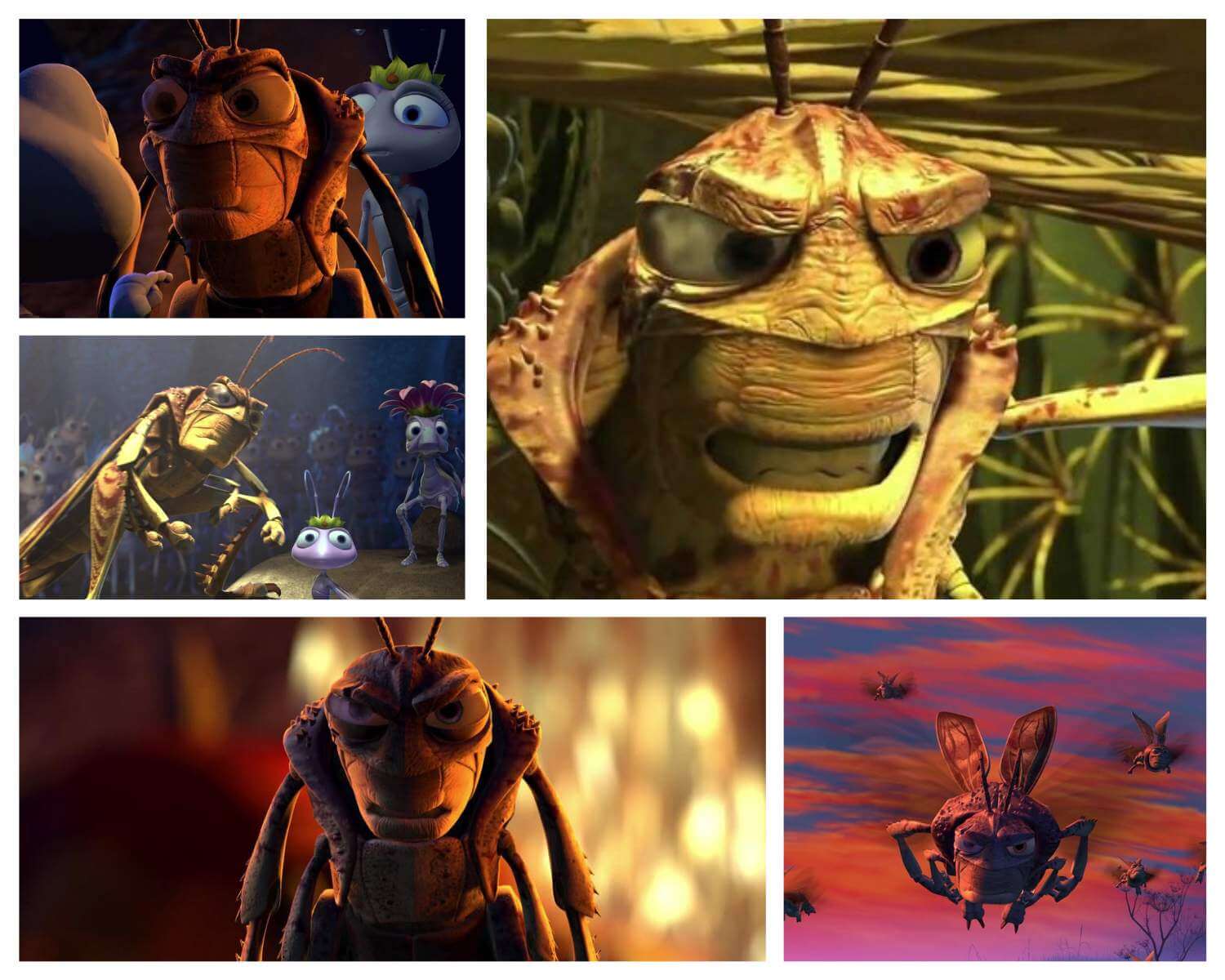
For my money, Hopper is one of Pixar’s two or three best villains, and it is because his menace is built on a real idea rather than pure cruelty. He is not frightening because he is loud. He is frightening because he understands exactly how power works, and he is terrified of what happens if the bugs he oppresses ever figure it out.
That is the genius of the character. His cruelty is strategic. Every threat, every punishment, every show of force exists to maintain an illusion of control over a crowd that could overwhelm him in seconds.
Molt and the Deathbed Promise
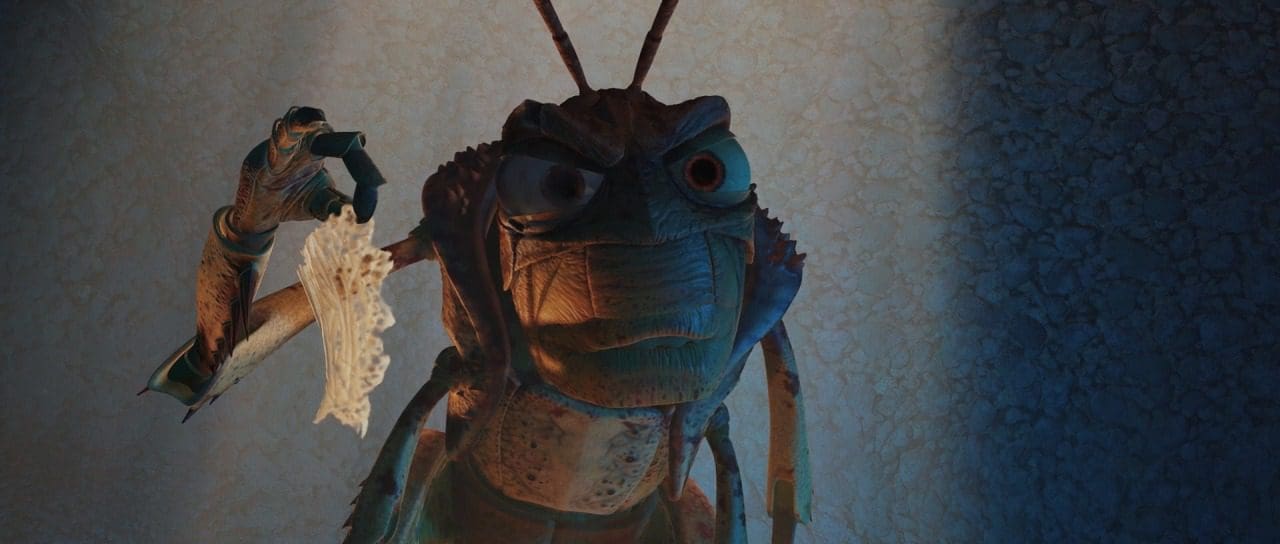
Hopper is not a solo act. He drags along his dim-witted younger brother Molt, who is equal parts comic relief and constant liability. Their dynamic gives Hopper a surprising amount of personality, plus one of the film’s best running jokes.
- Molt idolizes his brother and undermines him by accident at every turn
- His habit of shedding his skin when nervous is one of the film’s best visual gags
- Their bickering keeps Hopper from being a flat, humorless threat
A Karmic Ending
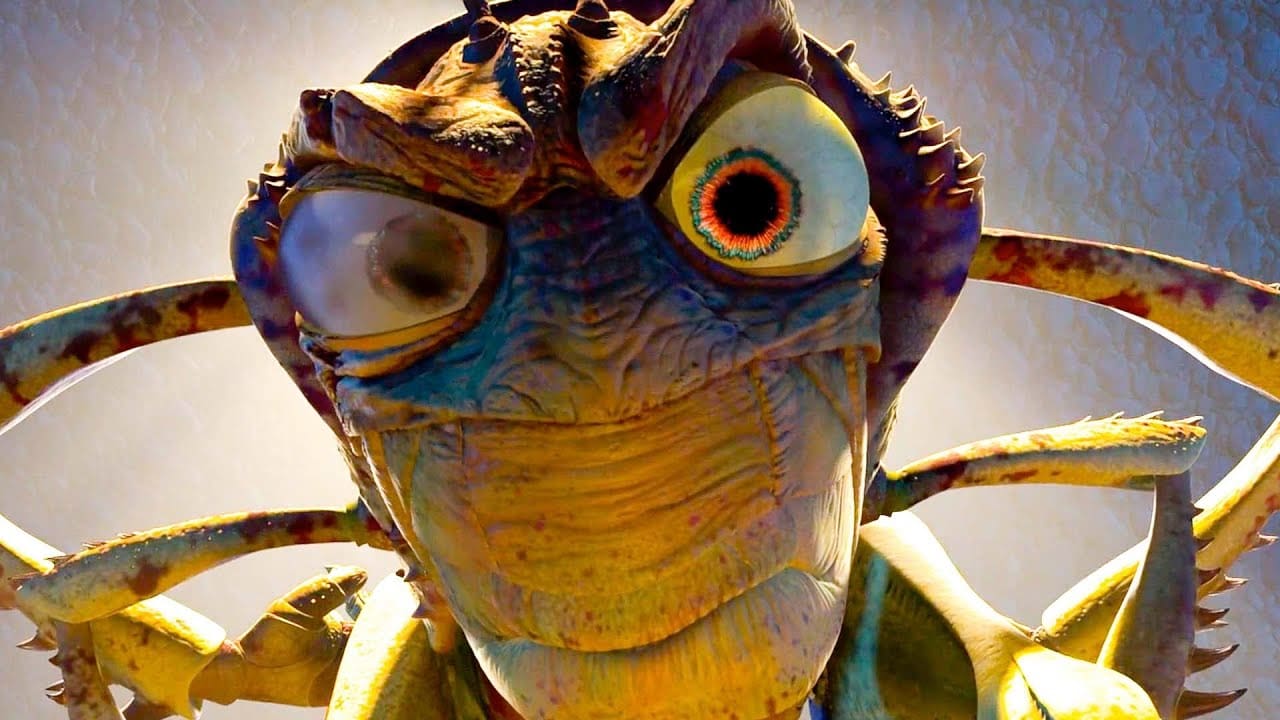
Hopper’s downfall is one of the most satisfying in any Pixar film, because it pays off everything the movie set up about him. Once the ants realize their strength and unite, the gang scatters, but Hopper grabs Flik for one last act of revenge. And then the story circles right back to that circle-of-life idea from his very first scene.
The Making of Hopper and A Bug’s Life
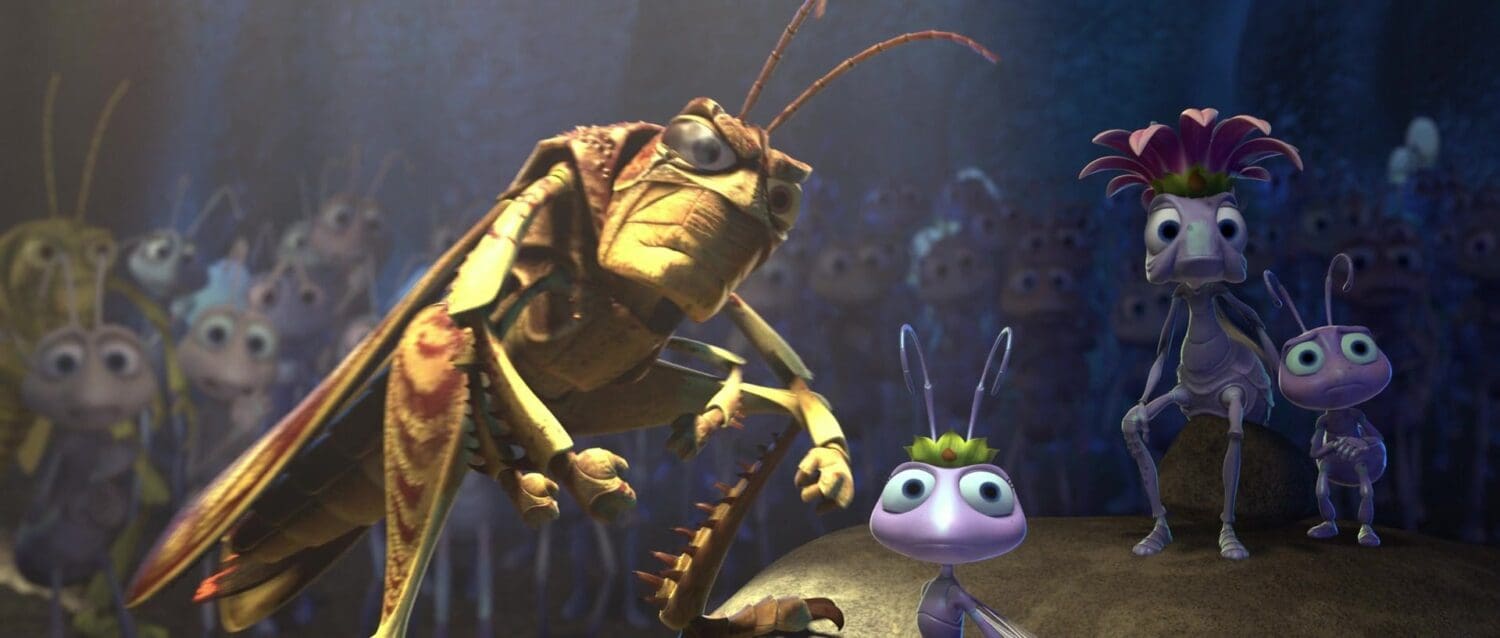
A Bug’s Life was Pixar’s second feature film, released in 1998, three years after Toy Story changed the game. It was directed by John Lasseter and co-directed by Andrew Stanton, the only film Stanton co-directed before going solo on Finding Nemo and WALL-E. Randy Newman wrote the score.
The story grew out of Aesop’s fable about the ant and the grasshopper, but the structure owes just as much to Akira Kurosawa’s Seven Samurai: a vulnerable village hires a band of warriors to defend it, except here the “warriors” turn out to be a hapless circus troupe.
The film was also a pile of technical firsts for Pixar. It was their first movie with a true villain who dies, their first without any human characters, their first led by female characters, and the first to play one of Pixar’s now-traditional short films in front of it. The crowd work alone was brutal, with some shots animating hundreds of individual, fully acting ants.
Hopper’s Influence on Later Animated Villains
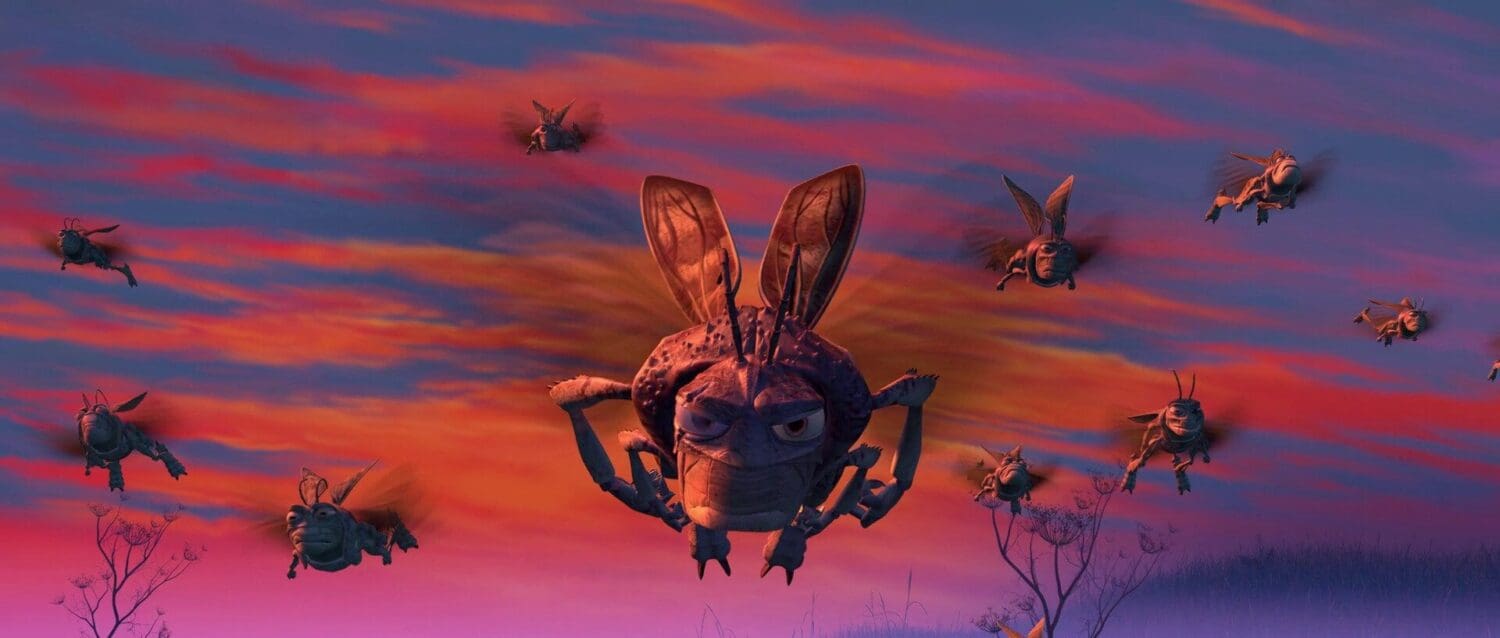
Hopper helped show that an animated villain aimed at kids could carry real intelligence and a coherent worldview, not just a menacing laugh. He belongs to a great lineage of charismatic animated villains who win you over even as they terrify you.
Disney’s Scar had blazed that trail a few years before A Bug’s Life, and you can see the same calculated, charming menace carried forward in later characters like Syndrome in Pixar’s own The Incredibles and Lord Farquaad from Shrek. What ties them all together is the thing Hopper nailed: a villain is scariest when he is smart, in control, and just a little bit relatable.
That is what makes Hopper endure. He is not just a big scary bug. He is a tightly written villain whose fear, intelligence, and cruelty all connect, right down to the bird that finishes him. Decades later, he still stands as one of Pixar’s finest antagonists.
Where does Hopper rank for you among animated villains, and is there a Pixar baddie you think tops him? Drop your pick in the comments.