
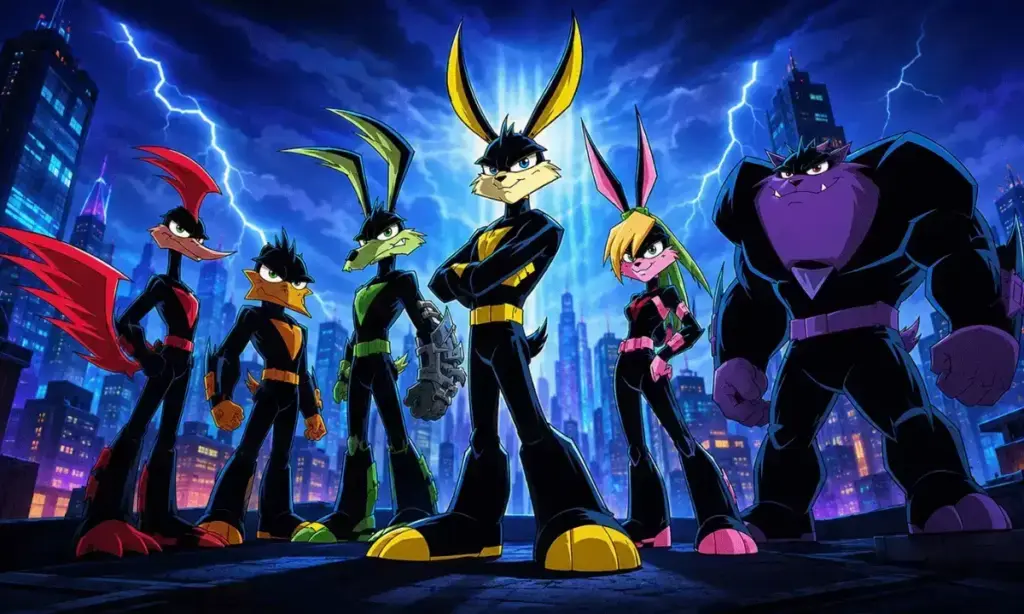
Loonatics Unleashed is one of the strangest experiments in the history of the Looney Tunes brand.
In 2005, someone looked at Bugs, Daffy, and the rest of the gang and asked a wild question. What if they were gritty superheroes in the year 2772?
The result ran for two seasons, drew a wave of fan outrage, and then mostly vanished. But it left behind six reinvented characters worth taking seriously.
This is the Loonatics Autopsy, a full deconstruction of the reboot, character by character, built to answer one question.
Was it a bold evolution of the brand, or a desperate 2000s stunt?
The Loonatics Autopsy: Our Methodology
Before we open up the patient, here is how this analysis works. Across five deep-dive companion pieces, we have taken apart each core Loonatic using two simple tools.
- The Divergence Score: a measure of how far each character travels from their Looney Tunes ancestor. It tracks the original trait, the heroic shift, and whether that change feels earned or forced.
- The Nexus: a map of how the six characters connect. A team only works if the pieces fit, so we trace how each member’s role plays off the others.
We are not summarizing episodes here. We are deconstructing archetypes, to see whether Loonatics Unleashed held together as a story or fell apart as a cash-in.
The Character Dossiers
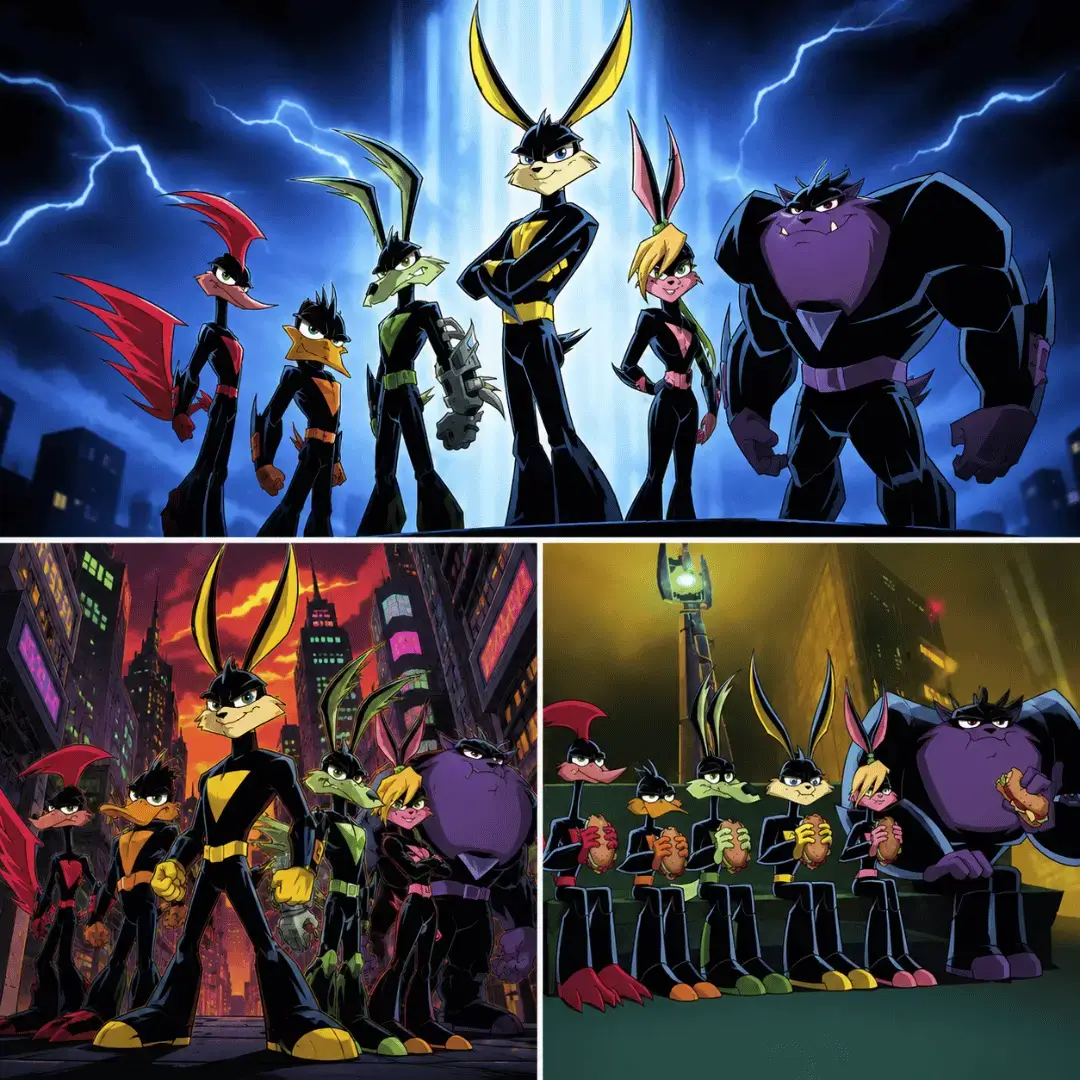
Here are the six residents of Acmetropolis, lined up for examination. Five are reboots of animation icons; one is a total original. Together, they represent the entire experiment in miniature.
To understand if this team was a success or a stunt, we examine:
-
The Leader (Ace): Does he carry the weight of Bugs Bunny’s legacy, or does he buckle under the pressure of “General” status?
-
The Original (Lexi): Does her status as an original creation make her the team’s most valuable asset?
-
The Brains & The Brawn (Tech, Slam, Rev): How these three balanced the team’s intellectual and physical extremes.
-
The Wildcard (Danger): Whether his “narcissism-to-heroism” arc provided the team’s best character growth.
Ace Bunny: The Burden of Leadership
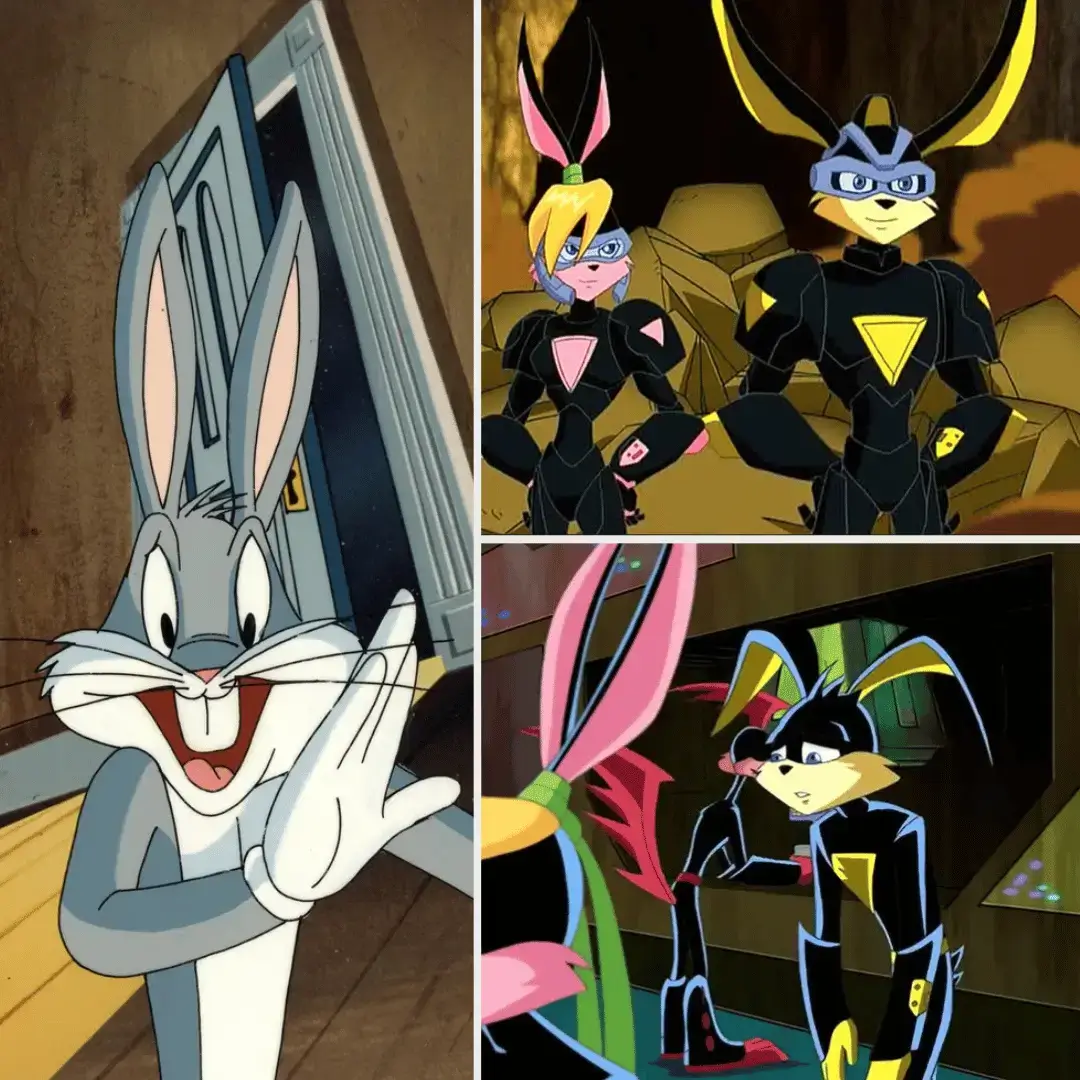
Bugs Bunny was effortless. Ace Bunny is anything but. The redesign kept the gray fur but swapped Bugs’ rounded, relaxed look for a sharp, angular hero in a black suit with yellow trim.
- The look: gone is the loose, wisecracking silhouette. Ace is streamlined, armored, and built to read as a leader on sight.
- The role: Bugs won by causing chaos. Ace wins by controlling it, trading the trickster for a disciplined tactical general.
- The power: laser vision that demands focus, plus the alien Guardian Strike Sword, all backed by serious martial arts.
Tech E. Coyote: The Strategist
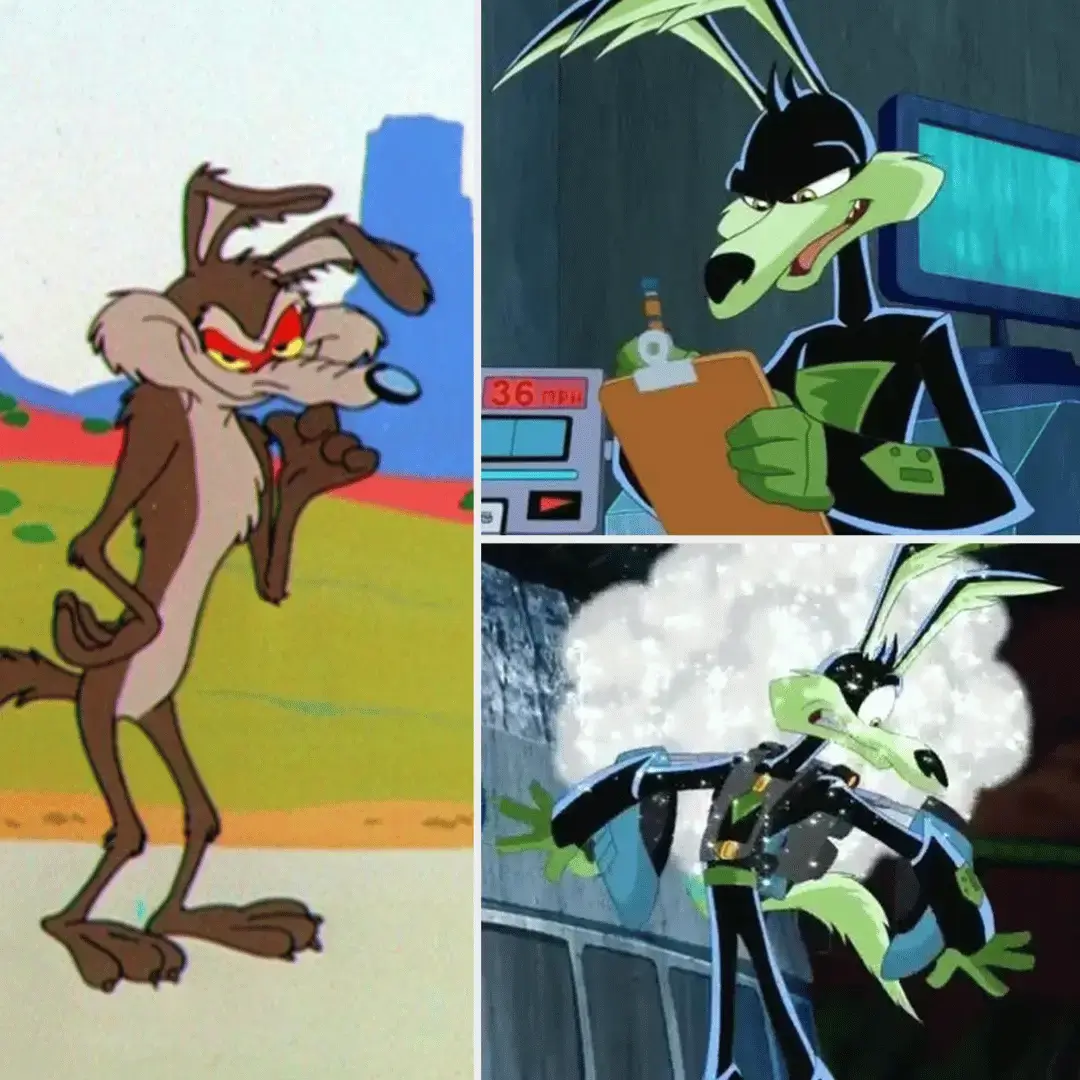
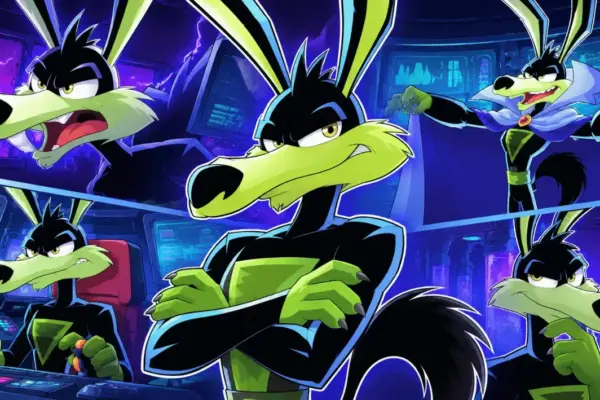
Wile E. Coyote was a genius who never won. Tech E. Coyote is a genius who finally does. The design smooths the scruffy, hapless coyote into a sleek inventor in green-accented black.
- The look: less cartoon-hapless, more competent professional. Tech looks like someone whose gadgets really work.
- The role: the solitary schemer becomes the team’s engineer and strategist, building to protect rather than to chase.
- The power: magnetism and a regeneration factor that turns his ancestor’s endless injuries into a real superpower.
Danger Duck: The Wildcard
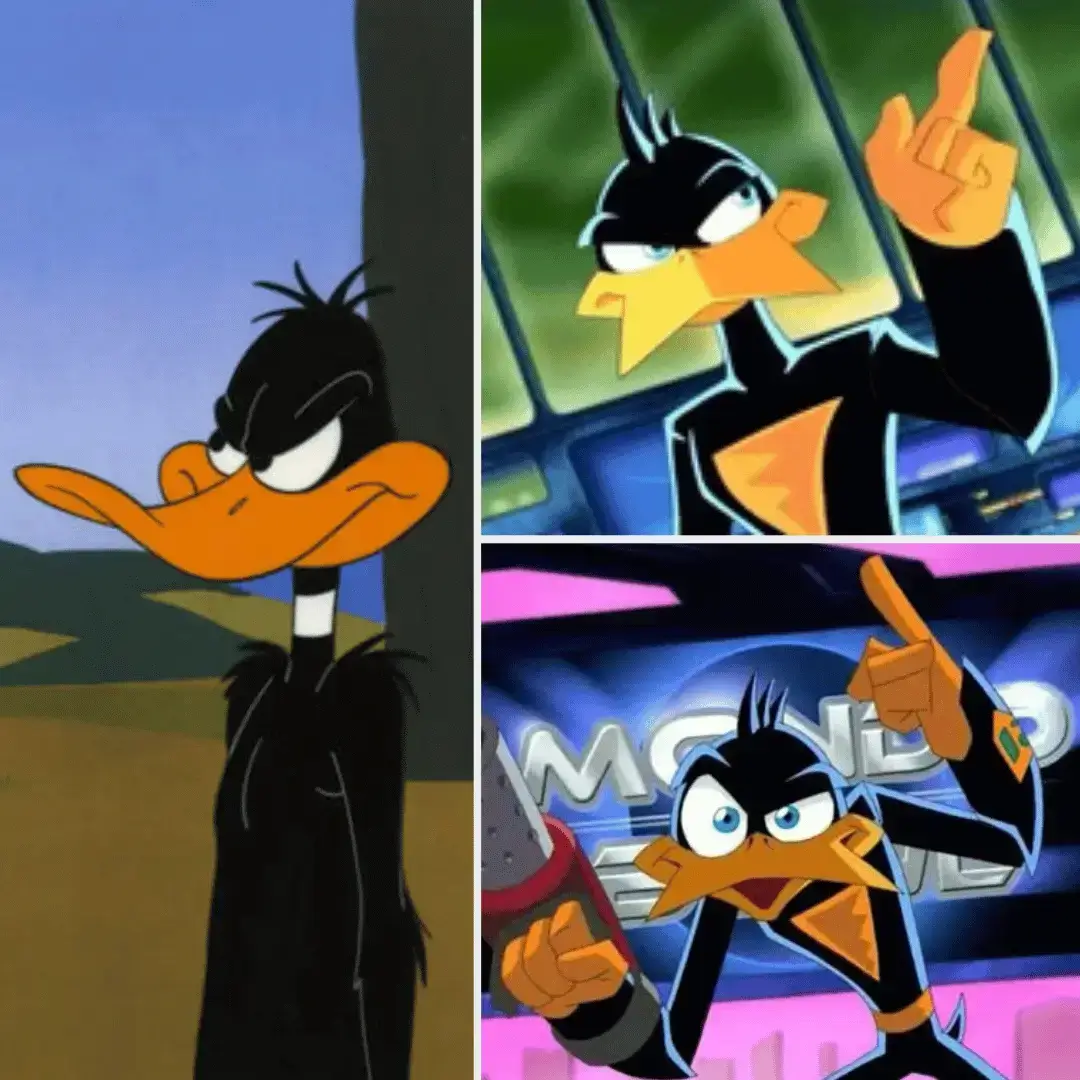
Daffy Duck was a brilliant jerk. Danger Duck is an insecure showoff. The redesign keeps the black-feathered base but adds a crest and an orange-accented suit.
- The look: sleeker and flashier than Daffy, with the swagger built right into the design.
- The role: the greedy con-man becomes an insecure wildcard, keeping the ego but using it to hide a fear of failure.
- The power: unpredictable energy “eggs,” water blasts, and teleportation, a chaotic kit for a chaotic character.
Lexi Bunny: The Originality Analysis
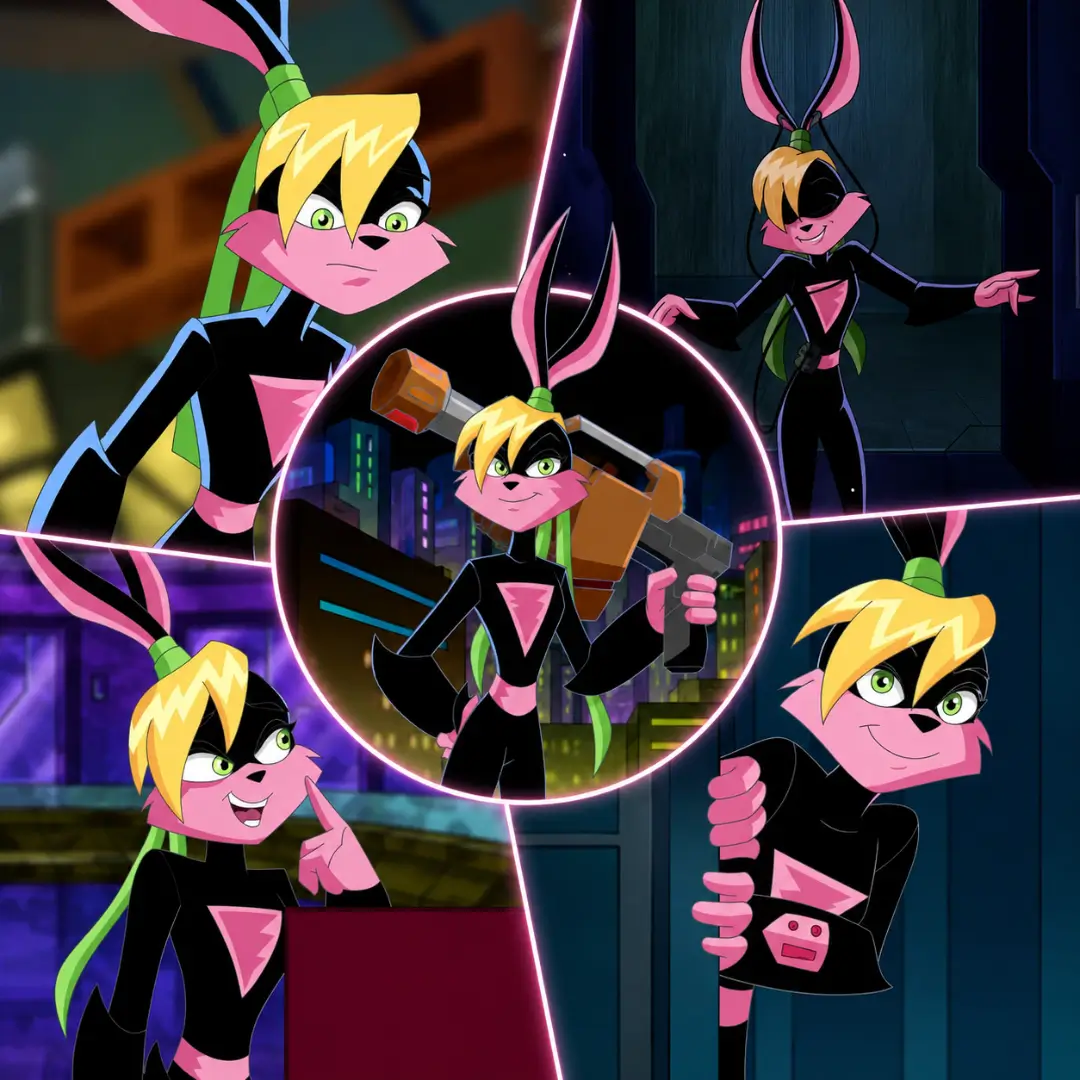
Notice that this dossier has no “before” image. That is the whole point. Lexi Bunny is the one Loonatic with no famous ancestor to redesign.
- The look: a black suit with pink accents and a green ear-ribbon, a clean modern design built from nothing.
- The role: officially a descendant of Lola Bunny, but with so thin a legacy that she is effectively the show’s only original creation, a female lead built from scratch.
- The power: precise Brain Blast energy bolts and long-range Sonic Hearing, making her the team’s recon and clean finisher.
Other Characters: The Supporting Cast
The final two Loonatics round out the team’s extremes: the fastest mind and the strongest body. Neither got a full solo study, but both are sharper reinventions than they first appear.
Rev Runner: The Kinetic Mind
The Road Runner never spoke. He just went “meep meep” and vanished. Rev Runner is the exact opposite, a motor-mouthed inventor who never stops talking, because his brain runs as fast as his legs.
- The archetypal shift: the silent observer becomes the high-anxiety speedster, all nervous energy and rapid-fire chatter.
- The burden of acceleration: Rev is secretly one of the smartest on the team, the only member who can follow Tech’s science. But a mind moving that fast also makes him the most anxious Loonatic, the one who panics when anyone gets hurt.
- The Nexus: he and Tech share the same brainy space but split the work. Tech is the architect who plans, and Rev is the executioner who acts.
Slam Tasmanian: The Gentle Berserker
The Tasmanian Devil was a mindless whirlwind of destruction. Slam Tasmanian keeps the spin and the strength but adds something Taz never had. Loyalty.
- The archetypal shift: the mindless monster becomes a sentient berserker, still barely verbal, but now fighting for a team instead of against everything.
- The gentle giant paradox: Slam is the single most powerful Loonatic, yet also the most good-natured, a walking contradiction of raw force and simple loyalty.
- The Nexus: he is the perfect mirror to Danger Duck. Danger acts tough but is insecure, all ego. Slam is truly tough and completely without ego, all heart.
Legacy vs. Innovation: The Context of the Reboot
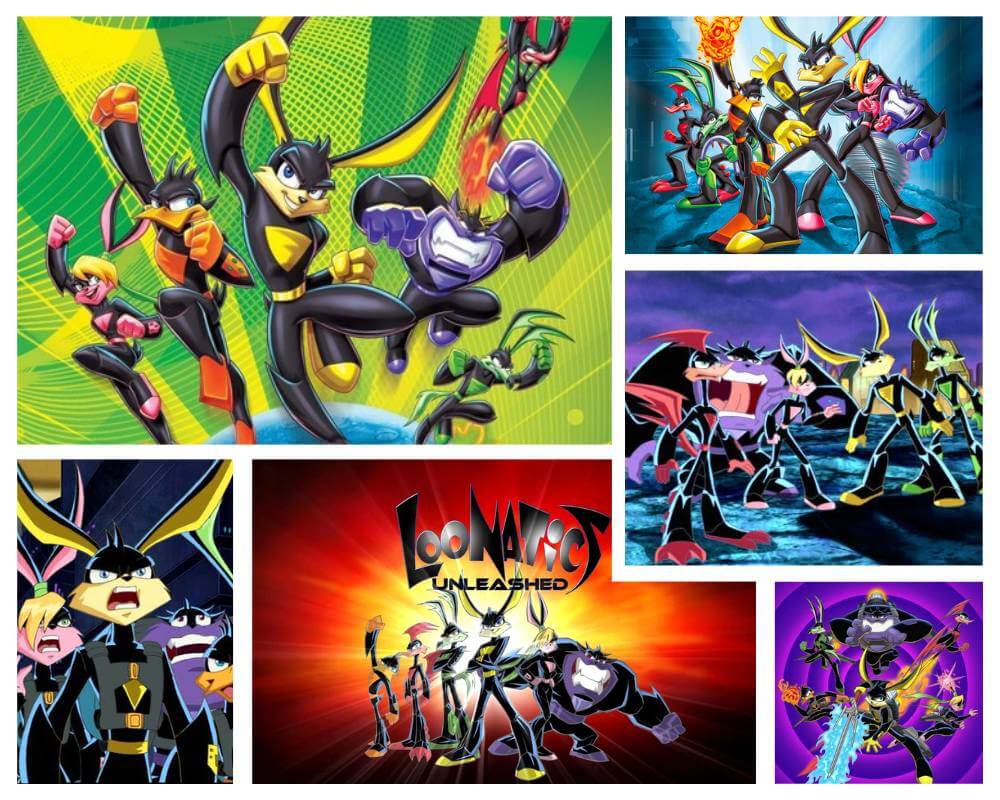
To judge Loonatics Unleashed fairly, you have to remember the storm it walked into. The redesigns were not quietly accepted. They were a scandal.
When the concept art leaked in early 2005, fans were furious. The beloved, rounded characters had been turned into angular, sharp-suited strangers, and a petition to change the designs gathered roughly 85,000 signatures before the show even aired.
Warner Bros. defended the choice, insisting the classics were simply “sharing DNA” with the new versions.
Years later, a Warner executive would call the original designs “a reminder of what not to do.”
Here is the twist. The show’s fearsome reputation never quite matched the show itself.
- Then: critics found the powers arbitrary and the Looney Tunes connection skin-deep. Many fans felt Loonatics Unleashed played the gritty concept too straight, instead of winking at it. It was panned, yet it was also a ratings hit for Kids’ WB.
- Now: Loonatics Unleashed is mostly a forgotten footnote, remembered more for the design outrage than the episodes, and cheerfully mocked in cameos on shows like Teen Titans Go. Even a modern Bugs Bunny short jokes about not wanting to look like Ace.
- The reappraisal: viewers revisiting it today tend to find the edgy reputation was overblown. Underneath the black suits sat a fairly normal, joke-filled superhero cartoon, and arguably a less cynical one than the reboots that came after it.
Was the “Loonatics” Experiment a Success?
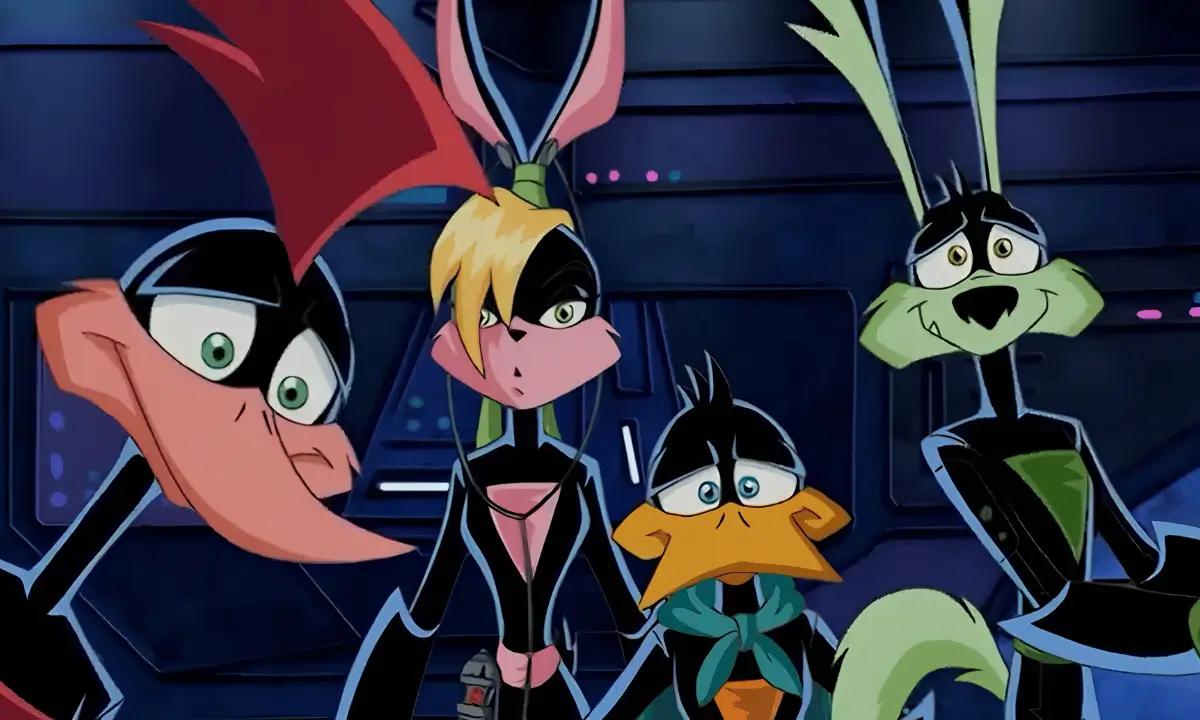
So, after the full autopsy, the question remains. Success or stunt? We measured the show against three tests.
- The Integrity Metric: did it evolve the characters or gut them? Mostly the former. Danger kept Daffy’s ego, Tech kept Wile E.’s genius, Ace kept Bugs’ wit. The souls survived, even if the styling did not.
- The Utility Metric: did the Loonatics Unleashed team really function? Yes. Brains, ego, heart, structure, speed, and muscle is a balanced roster, and the characters truly play off one another.
- The Audience Metric: did it beat the nostalgia trap? Only halfway. It rarely made anyone forget Bugs, which is the one thing a reboot has to do.
When we started this autopsy, we asked whether Loonatics Unleashed was a true evolution of the Looney Tunes brand or a desperate 2000s marketing stunt. The answer is not as clean as either label.
By cultural impact, it is a footnote, and it did not redefine Looney Tunes for a new generation.
By creative risk, though, it is a fascinating triumph. It dared to break the slapstick mold and ask how these archetypes behave under pressure.
It stumbled only when it leaned on edginess at the expense of the humor that made these characters icons in the first place.
That is the Loonatics Autopsy.
Dig into the full character studies for Ace, Tech, Danger, and Lexi, then tell us in the comments: was the reboot a bold evolution, or a stunt that deserved to be forgotten?
I don’t even remember this show! anybody have a free link I can watch it on? I checked 123movies already.
This show was ok. I didn’t like the fact that they had the road runner “Rev Runner” talk in this. I’m pretty sure he never talks at all in the orginal ones. Unless I am wrong? anyway?
I can see why people hated this show when it came out. It felt forced. In general, the show has a pretty rough reputation, and largely for good reason. Warner Bros. tried to shoehorn the classic Looney Tunes into an “extreeeeeme” anime-action mold. The fatal flaw of the show was that it basically carbon-copied the original personalities and just slapped an edgy coat of paint over them. For me it didn’t work.