
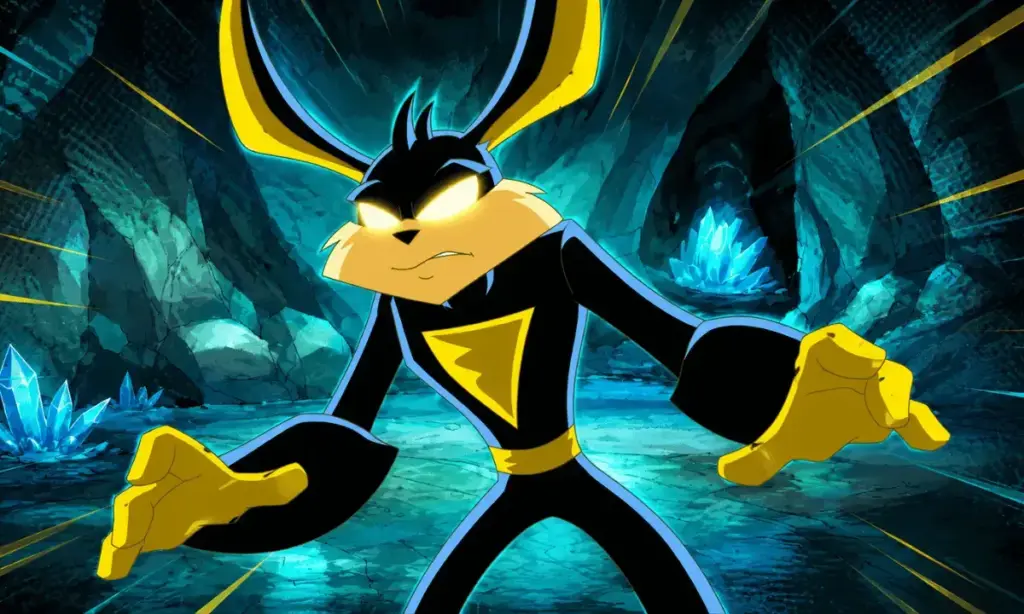
Bugs Bunny is the most famous trickster in animation history. He wins because he is smarter, calmer, and more chaotic than everyone else.
When Loonatics Unleashed rebooted the franchise, they did not just need a new hero. They needed a leader. That is the role of Ace Bunny.
He is handed an impossible job: take the DNA of the ultimate chaos-bringer and turn it into a stoic, disciplined, tactical general.
This analysis looks at the “General’s Burden,” to see whether Ace Bunny carries the weight of his legacy, or whether he is simply a man out of time in a world that demands order over anarchy.
It is the hardest assignment in the whole reboot, and the least thanked.
The Divergence Score: Ace Bunny
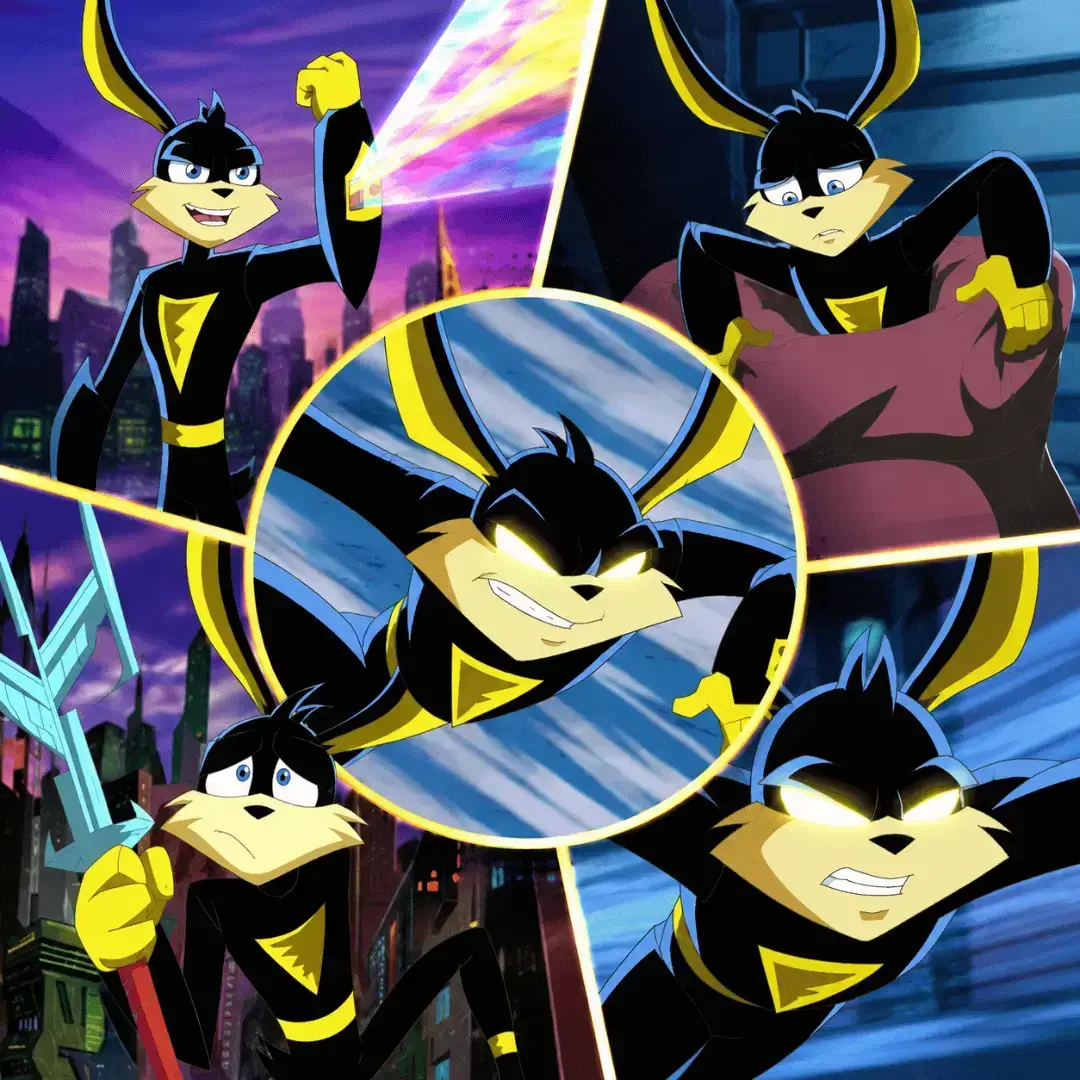
Ace Bunny is the Stoic Anchor of the team. He represents the most drastic departure from the original Looney Tunes DNA, forcing a character defined by chaos into a role defined by order.
- The Legacy Baseline: Bugs Bunny’s trickster archetype. The unstoppable, effortless genius who never breaks a sweat and never loses.
- The Heroic Shift: Ace moves from trickster to general. He does not win by outsmarting enemies with pranks. He wins through discipline, precise aim, and steady tactical pressure.
- The Synergy Metric: 7/10. A controversial redesign. Stripping away Bugs’ effortless ease makes Ace more relatable, but it risks leaving him feeling like a generic leader.
- The “Loonatic” Strength: Laser-eyed discipline. His powers reward focus and a cool head, and he meditates to keep his temper in check. For Ace, staying calm is not a mood. It is a job requirement.
The Archetypal Shift: From Trickster to General
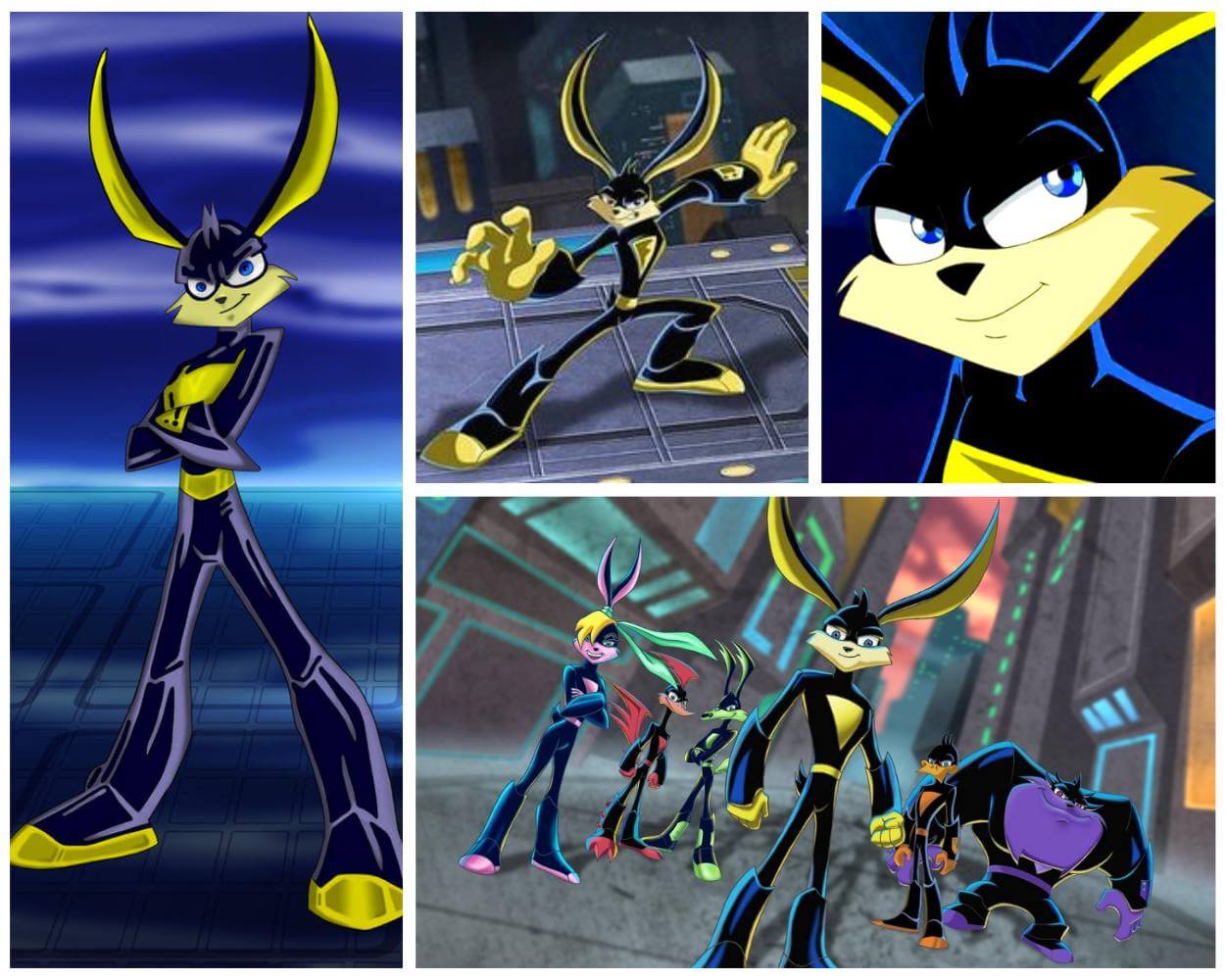
Bugs Bunny never worked for a win. The joke of the character is that chaos comes easy to him.
He leans on a wall, munches a carrot, and the villain destroys himself. Ace Bunny does not get that luxury. Every fight is a responsibility, not a game. That one change rewrites the entire character.
- The effortless original: Bugs wins by being unbothered. Nothing is ever a real threat, because he is always ten steps ahead and never once breaks character.
- The responsible successor: Ace has a team depending on him, so he cannot coast. He wins through preparation and control, not luck and attitude.
- The kept flavor: he did not lose everything. Ace still toys with weaker enemies, cracks jokes, and even carries Bugs’ Brooklyn accent and “What’s up, doc?”
- The tell: the moment a real threat appears, Ace drops the act and gets serious. Bugs never had to. That switch is the whole difference between them.
Tactical Utility: Laser-Vision and Line-of-Sight
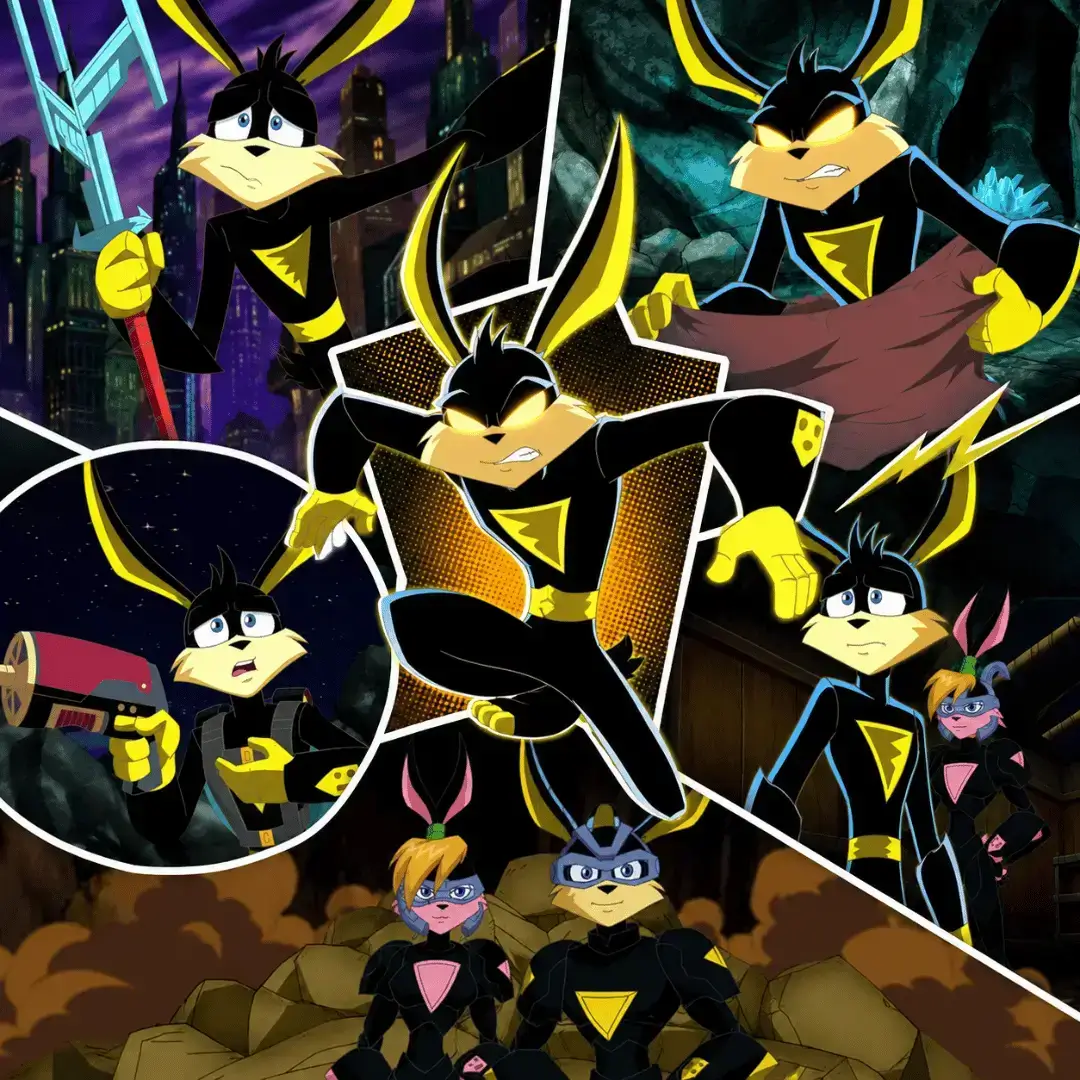
Ace’s toolkit is built for control, not chaos. His signature power is laser vision, fired from his eyes, and a beam has to be aimed. That single fact shapes how he fights and how he leads. Ace Bunny is the rare hero whose powers punish him for losing his cool.
- Laser vision: he shoots optic beams that demand line of sight and a steady aim. Rushing or panicking wastes the shot, so precision is everything.
- The Guardian Strike Sword: his weapon of choice, a collapsible blade revealed to be an alien Frelengian energy weapon. It can fire blasts, reflect lasers, and raise force fields.
- Martial arts first: despite the laser eyes, Ace fights mostly up close, leaning on his training as a skilled martial artist and former stunt double.
- The leadership fit: a distance weapon rewards a clear head. While the others dive into the melee, Ace hangs back a beat, reads the field, and takes the clean shot.
The Psychological Load: The Pressure of Perfection
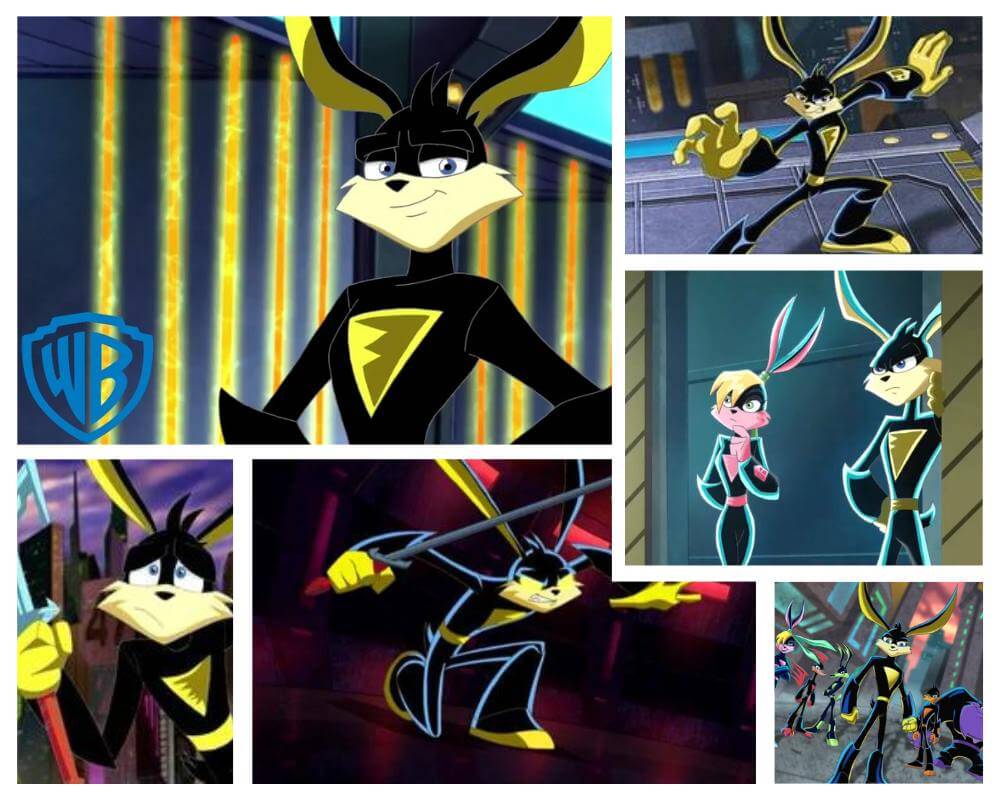
This is the part most viewers miss. Ace’s calm is not confidence. It is pressure.
He is the only Loonatic who is not allowed to fall apart, because five other people are counting on him to hold the line. Charlie Schlatter voices him with a steady, understated cool that never begs for attention.
The performance is so understated that its difficulty is easy to overlook. Staying that composed, mission after mission, is a feat in itself.
- The burden: if Danger panics, it is comic relief. If Ace panics, the team loses its center. His composure is mandatory, not optional.
- The discipline is deliberate: the show makes this literal. Ace meditates to keep his temper in check, quietly working to stay the calm one on purpose.
- The lonely role: he carries the weight of every call. He would even put his friends’ safety over the whole city, which tells you exactly where the pressure sits for him.
- The “boring” myth: fans sometimes call Ace boring. He is not boring. He is burdened. He is the one member who never gets to be goofy, because he is responsible for everyone else’s life.
The Nexus Interaction: The Ace/Danger Contrast
Nowhere is Ace’s role clearer than in his relationship with Danger Duck.
Danger constantly tries to seize the leadership Ace holds, giving orders out of turn and stirring up chaos. Ace absorbs it, reins him in, and somehow keeps the respect flowing both ways. It is the exact best-friend and rival dynamic their ancestors, Bugs and Daffy, were built on.
Their friction is not a flaw in the team. It is the engine that keeps Ace sharp.
The Analytical Verdict: The Anchor of Acmetropolis
So does Ace carry the Loonatics, or just manage them? That question is the quiet argument for his whole character. He does not win the flashiest fights or land the best jokes. He does something harder.
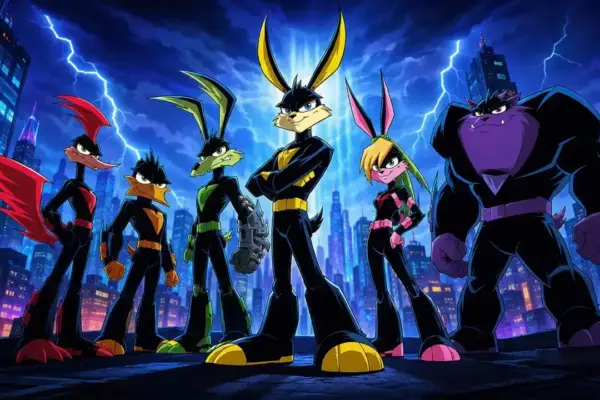
He keeps four volatile personalities pointed in the same direction.
Ace Bunny proves that the trickster did not have to die, but it did have to step down. By trading Bugs’ effortless chaos for hard-won discipline, the show built a leader who is capable of growth, something the perfect, unbeatable Bugs never needed.
A hero who cannot lose has nowhere to grow. A hero who can barely hold it together has everywhere to go.
- Tech, the brains: provided the logic.
- Danger, the ego: provided the unpredictability.
- Lexi, the heart: provided the balance.
- Ace, the anchor: provided the structure.
Remove any one of them and the whole experiment collapses. Ace Bunny is the least flashy piece of that puzzle and the most essential.
Ace Bunny is the reason the Loonatics Unleashed team functions at all.
Do you think he carries the team, or do you miss the effortless Bugs Bunny trickster he used to be? Tell us in the comments below.

I remember as a kid, seeing commercials for this, and I thought they were replacing the Bugs Bunny character design with this. I didn’t understand ( well at the time anyway ), it wasn’t the same characters. Didn’t really care for this cartoon.