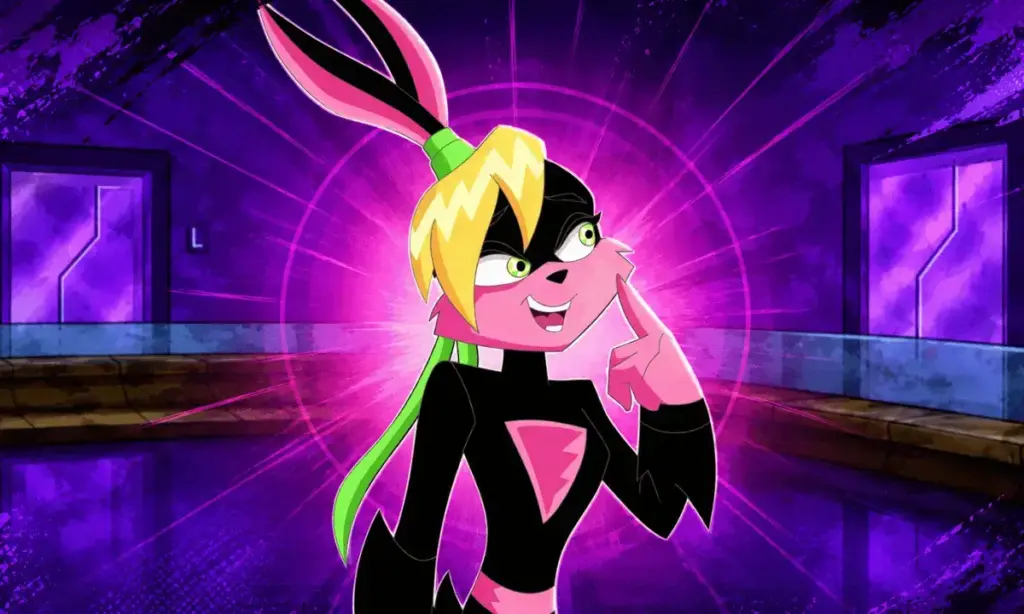
Every member of the Loonatics roster arrived with decades of animation history on their backs. Lexi Bunny is the exception.
On paper she descends from Lola Bunny, but Lola was a 1996 newcomer with barely an archetype to her name.
That left Lexi as the one hero the writers essentially had to build from scratch.
She could not lean on a “wacky rabbit” or a “greedy duck” shorthand to win over the audience. She had to earn her place in a cast of legends with no legacy to inherit.
That is a uniquely difficult starting position. It is what makes Lexi Bunny the most fascinating case study on the team. Get her right, and the reboot has a soul of its own.
Get her wrong, and it is just a nostalgia act in a fresh coat of paint. This analysis looks at the “Lexi Experiment.” Did the writers succeed in creating a compelling original heroine, or does she struggle to find her footing among rebooted icons?
The Archetypal Shift: The “Blank Slate” Problem
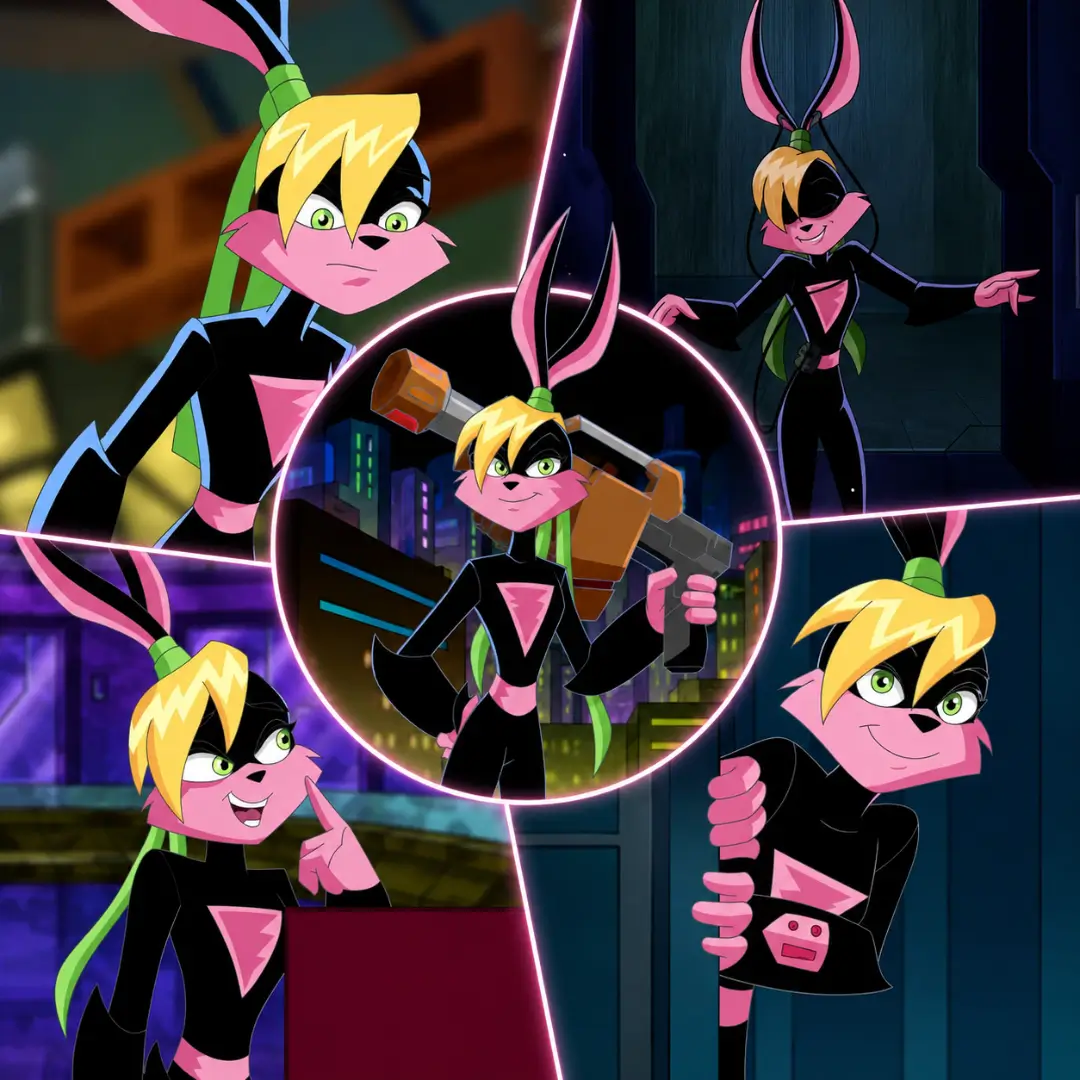
Introducing a brand-new character into a nostalgia machine is a thankless job. The audience shows up for the icons they grew up with.
An original face, dropped into that crowd, starts with zero goodwill and has to earn every bit of it. Lexi Bunny had to become memorable through sheer writing, with no nostalgic hook to fall back on.
Fans had even petitioned against the show’s redesigns before a single episode aired. Walking a brand-new face into that reception took real nerve.
- The recognition gap: fans instantly knew Ace was Bugs and Tech was Wile E. Lexi had no such shortcut. She was a stranger in a room full of old friends.
- The origin: even in the story, she had to prove herself. Before the meteor, Lexi tried out for her university cheer squad and was turned down, because the captain feared being outshone.
- The starting point: early flashbacks paint her as timid and unsure, a world away from the confident hero she becomes.
- The upside: with no archetype to honor, the writers could shape her freely. She was the one Loonatic they could build without a rulebook. Every trait she has is a deliberate choice rather than an inheritance.
Tactical Utility: The Sonic Controller
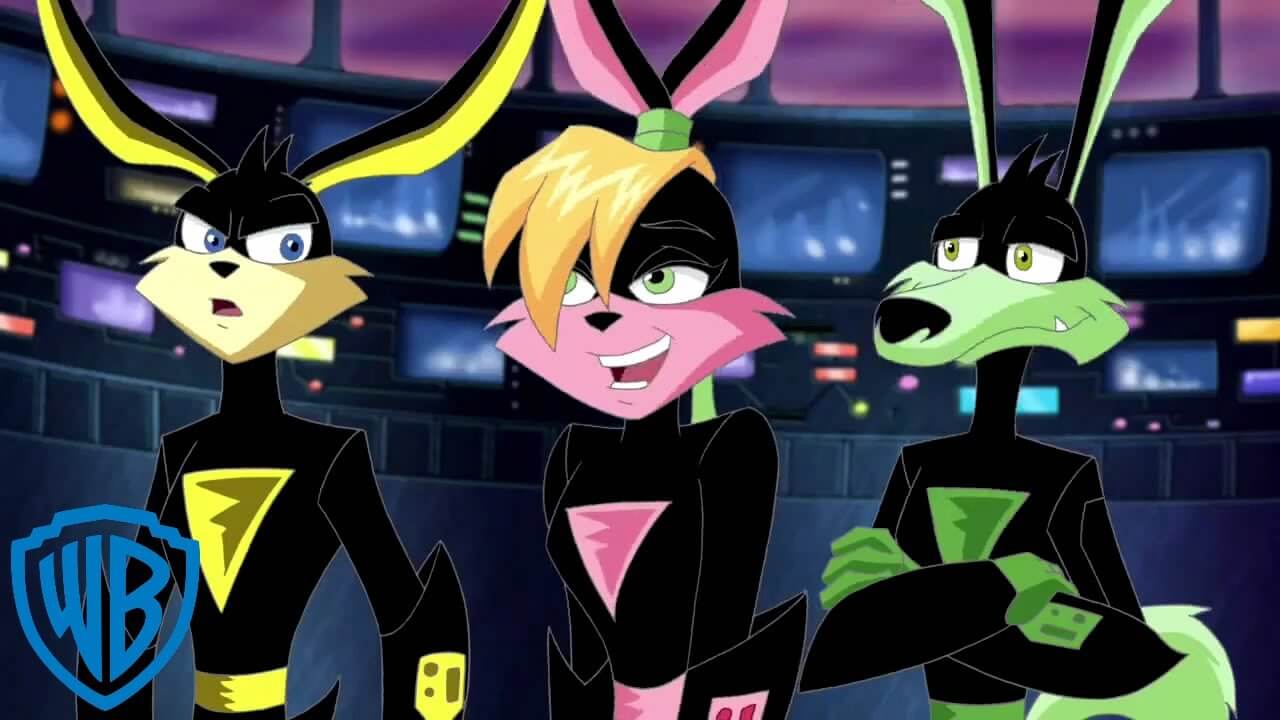
If Danger Duck is chaos and Tech E. Coyote is precision engineering, Lexi is control. Her power set is built for information and accuracy.
That makes her the team’s eyes, ears, and clean finisher. In a firefight, Lexi Bunny is often the one who spots the trap before anyone else walks into it.
- Brain Blast: her signature move. She fires concentrated bolts of psychic energy from the top of her head, usually in tight, aimed bursts rather than a wild spray.
- Sonic Hearing: hypersensitive hearing that lets her eavesdrop on conversations from miles away. She is the team’s built-in reconnaissance. She often knows where the enemy is and what they are planning before the fighting even starts.
- Elite agility: Lexi is the most acrobatic member of the roster, able to navigate any environment a mission throws at her.
- The role: recon plus precision. Where the boys overwhelm a problem, Lexi identifies it, positions for it, and takes the clean shot.
The Psychological Load: The Burden of Representation
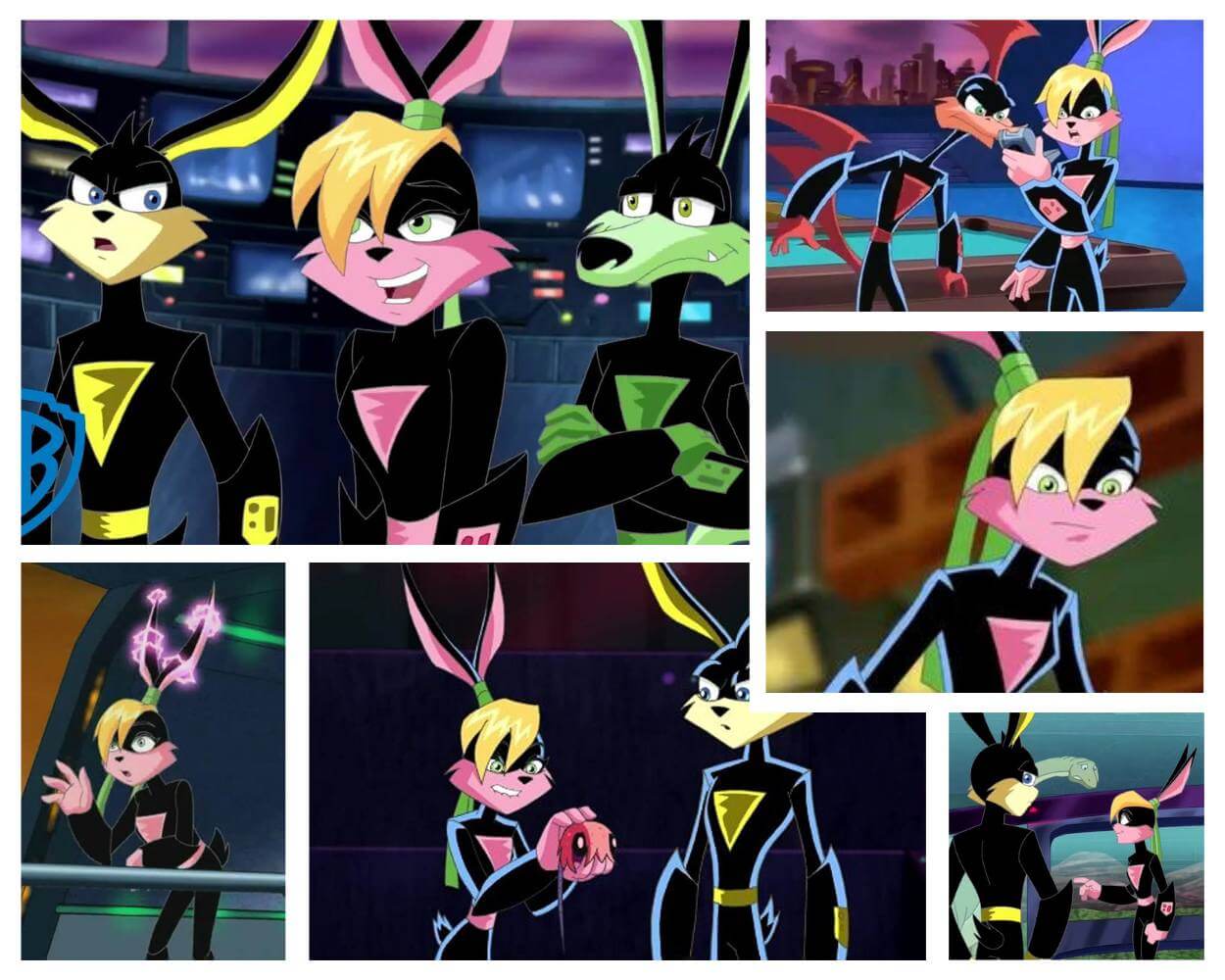
Being the only woman on a team of five men is its own kind of pressure, and the show quietly puts it on Lexi’s shoulders.
She is cast as the voice of reason, the one who keeps five big personalities from flying apart. Jessica DiCicco voices her with a warmth that keeps the role from feeling like a chore.
The result is a character who reads less like a mascot and more like a person. That is rarer than it sounds for the only woman on a superhero team. She is the glue, and glue rarely gets the credit it deserves.
- The lone woman: as the single female Loonatic, Lexi carries the entire weight of representation for the show. Every choice she makes stands in for “the girl on the team.”
- The voice of reason: she is the level head, the mediator who reins in Danger’s ego and balances Ace’s stoicism. That is real labor, and the show leans on it constantly.
- The hidden edge: her calm is not the whole story. The show hints that her Brain Blasts are fueled by bottled-up anger, which means her serenity is partly a lid on something fiercer. It quietly suggests that staying calm is a choice she makes, not a default setting.
- The vulnerability: she gets small, human moments too, like worrying whether a sweater makes her look chubby. They keep her from becoming a flawless token.
The Nexus Interaction: Lexi and the Legacy
Lexi’s place on the team is defined by two relationships, and they pull in opposite directions. With Ace she is the trusted right hand, his second-in-command and closest ally.
With Danger she is the exasperated big sister, snarking at his ego and brain-blasting his tail feathers when he goes too far.
He even calls her “sister,” and the two team up more than any other pair on the show. Between them, Lexi Bunny sees the full spectrum of the team, from its steadiest leader to its loosest cannon. That is exactly why she works as its emotional center.
The Analytical Verdict: The “Lexi Experiment”
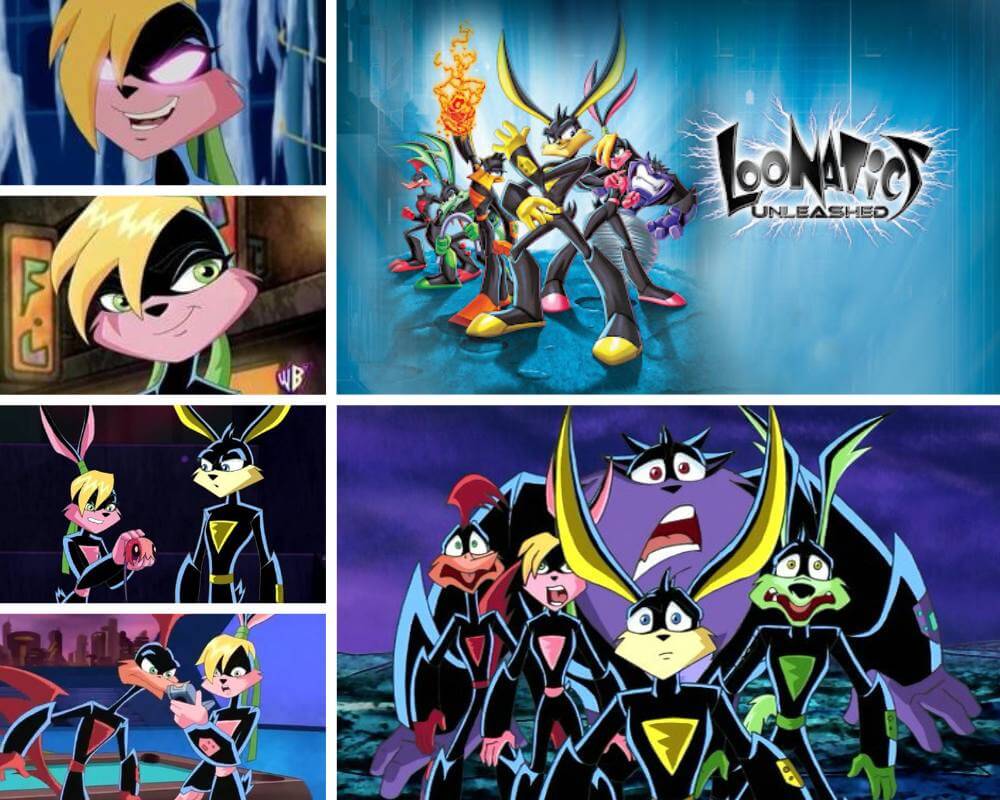
Ultimately, Lexi Bunny proves that a franchise reboot does not have to be a museum piece. While the rest of the team wrestled with the weight of their legacy, Lexi had the freedom to just be.
The show was smarter for it. Lexi Bunny is the clearest sign the writers cared about character, not just merchandise. That single decision, to invent rather than recycle, is one of the most forward-thinking choices the show ever made.
- Narrative necessity: she supplied the emotional intelligence the show needed, balancing Danger’s ego against Ace’s stoicism. Without that ballast, the team would be all extremes and no center.
- The blueprint for originality: she proves audiences do not always need a nostalgic callback. Sometimes they just need a well-written character who fills a gap in the team. Lexi Bunny fills that emotional-center gap so naturally the roster would feel hollow without her.
- The Lola question: had the writers forced Lola Bunny into this role, they likely would have drowned her in romantic subplots. By inventing Lexi, they got a character allowed to be an equal, not a love interest.
Lexi Bunny is the quiet argument that Loonatics Unleashed was more than a nostalgia grab.
Do you think the show was right to invent her, or should they have handed the role to Lola Bunny?
Let us know in the comments below.