
Anime genres trip up almost everyone at first, mostly because a single show gets called shonen, action, fantasy, and comedy all at once.
So here is the plain version: a beginner-friendly guide to 16 popular anime genres and subgenres, with quick examples and my take on each.
If you are brand new, then these four are the easiest doors in:
- Shonen: big emotions, battles, and growth arcs.
- Slice of life: everyday, low-stress comfort viewing.
- Romance: relationship-driven stories.
- Fantasy or isekai: escapism, magic, and other worlds.
Because the five demographic labels cause the most mix-ups, here is how they stack up at a glance.
| Demographic | Target audience | Usually feels like | Try |
|---|---|---|---|
| Shonen | Teen boys (12 to 18) | Action, rivalry, growth | Naruto |
| Shojo | Teen girls (12 to 18) | Emotion, romance, identity | Fruits Basket |
| Seinen | Adult men (18+) | Mature, grounded, darker | Berserk |
| Josei | Adult women (18+) | Realistic adult life and romance | Nodame Cantabile |
| Kodomomuke | Children (under 10) | Gentle, episodic, wholesome | Doraemon |
Anime Genre Guide
Below I break down 16 popular anime genres and subgenres, each with a quick-reference card and easy examples.
If you would rather browse tags like a giant menu, then Anime-Planet’s tag list is one of the cleanest ways to explore: anime-planet.com/anime/tags. For the broader hub version of this topic, see my anime genres page.
Seinen Anime (Young Adult Men)
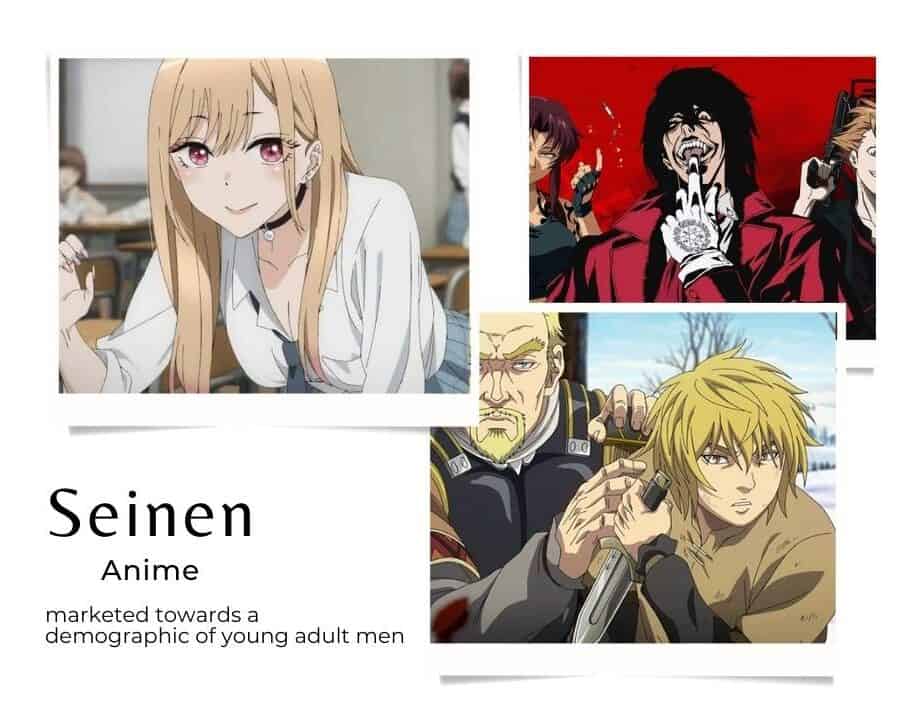
Feels like: Heavier themes, moral ambiguity, grounded tension.
My take: When I want anime with real bite, I drift straight to seinen.
Seinen series tackle mature topics like violence, war, politics, and existential dread without softening the edges. Not all of it is grim, though, since it simply trusts the audience with more nuance and discomfort than most shonen would. One caveat worth knowing: people call Attack on Titan seinen all the time because of how brutal it is, but it technically ran in a shonen magazine. It is the perfect example of tone not matching the label.
Common examples:
- Berserk
- Cowboy Bebop
- Hellsing Ultimate
- Tokyo Ghoul
- Monster
If you like darker vibes, then you will probably also enjoy my lists of horror anime with the creepiest monsters and anime about depression and mental health.
Shonen Anime (Young Teen Boys)
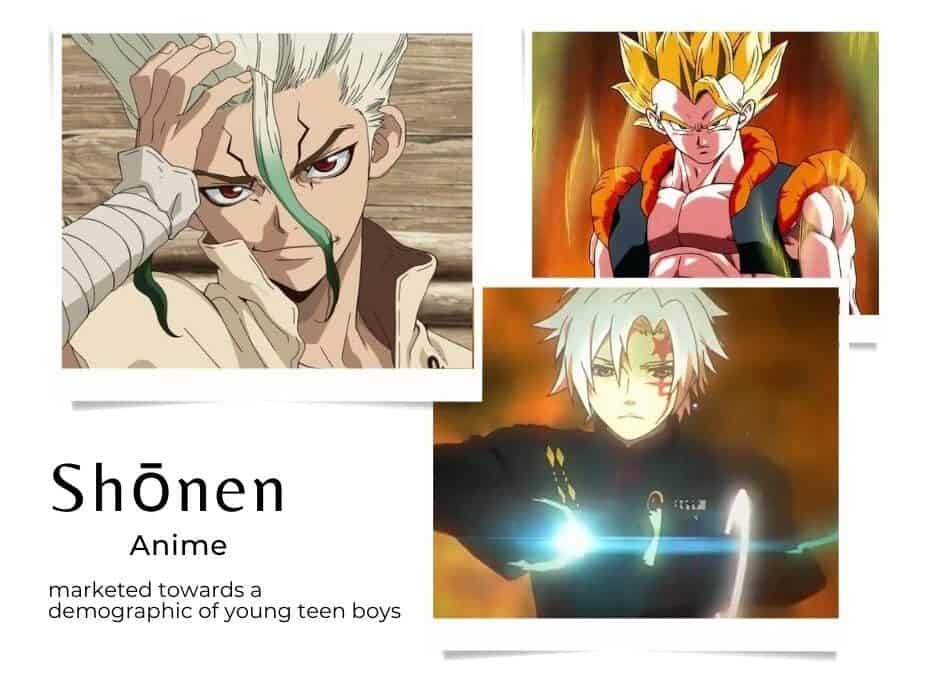
Feels like: Growth arcs, rivalry, teamwork, never-give-up energy.
My take: If someone just wants something fun, shonen is my first stop every time.
Shonen is often translated as boys’ anime, but that undersells it. Really, it is the engine of mainstream anime: big stakes, big feelings, and protagonists who level up through pain, friendship, and stubbornness. And since the label follows the magazine rather than the mood, even something as dark as Attack on Titan counts as shonen.
- Dragon Ball Z
- Naruto
- One Piece
- My Hero Academia
- Attack on Titan
If you are in a shonen phase, then I have guides like anime like Naruto and anime for One Piece fans.
Shojo Anime (Young Teen Girls)
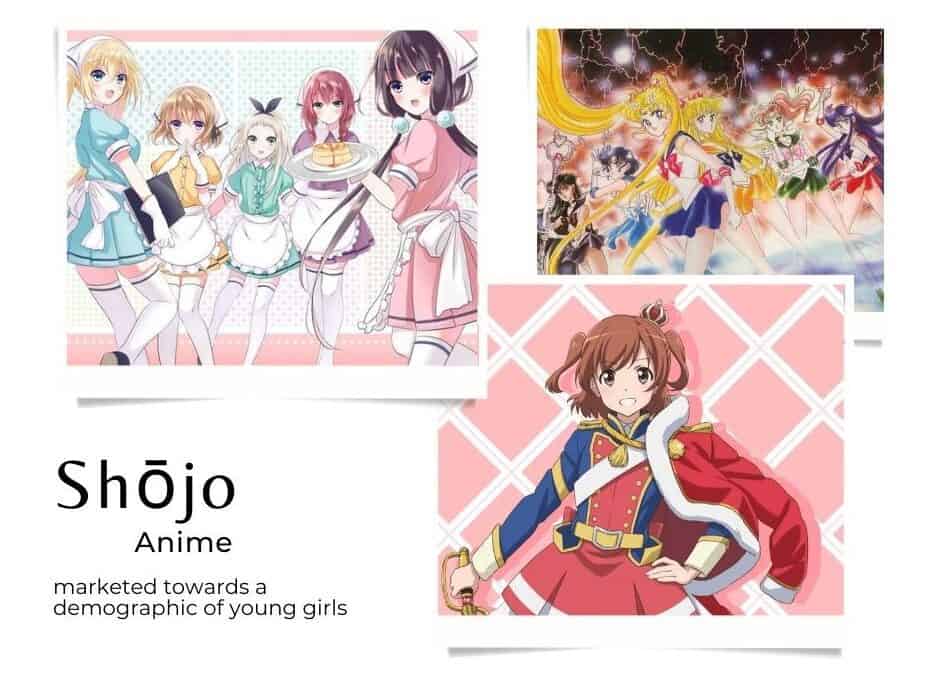
Feels like: Emotional storytelling, relationships, identity, growth.
My take: Shojo is where I go for feelings and real softness without losing the stakes.
Shojo gets mislabeled as just romance, but it is often deeply character-driven and socially sharp. Moreover, it has a long legacy of exploring gender roles, self-image, and relationships in ways that hit hard.
Examples:
- Sailor Moon (also a staple of magical girl anime)
- Cardcaptor Sakura
- Fruits Basket
- Ouran High School Host Club
- My Little Monster
External classic: Revolutionary Girl Utena.
Josei Anime (Young Adult Women)
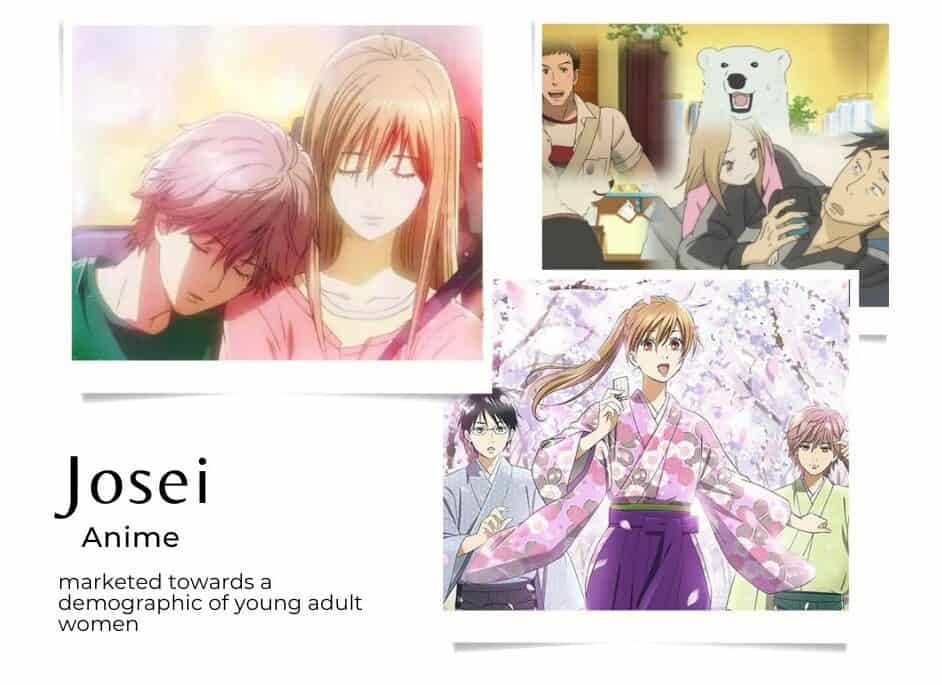
Feels like: Adult relationships, career stress, realism, grounded drama.
My take: Josei feels like life problems, not school problems, which is exactly why it is refreshing.
Josei stories run more grounded and less idealized than most high-school romance setups. As a result, you get more realism in relationship dynamics, career pressure, and identity struggles. If you cannot tell josei from shojo, then the quickest tell is which magazine it ran in.
- Honey and Clover
- Nodame Cantabile
- Chihayafuru
- Paradise Kiss
- Wotakoi: Love is Hard for Otaku
Harem Anime (One Boy Surrounded by Girls)
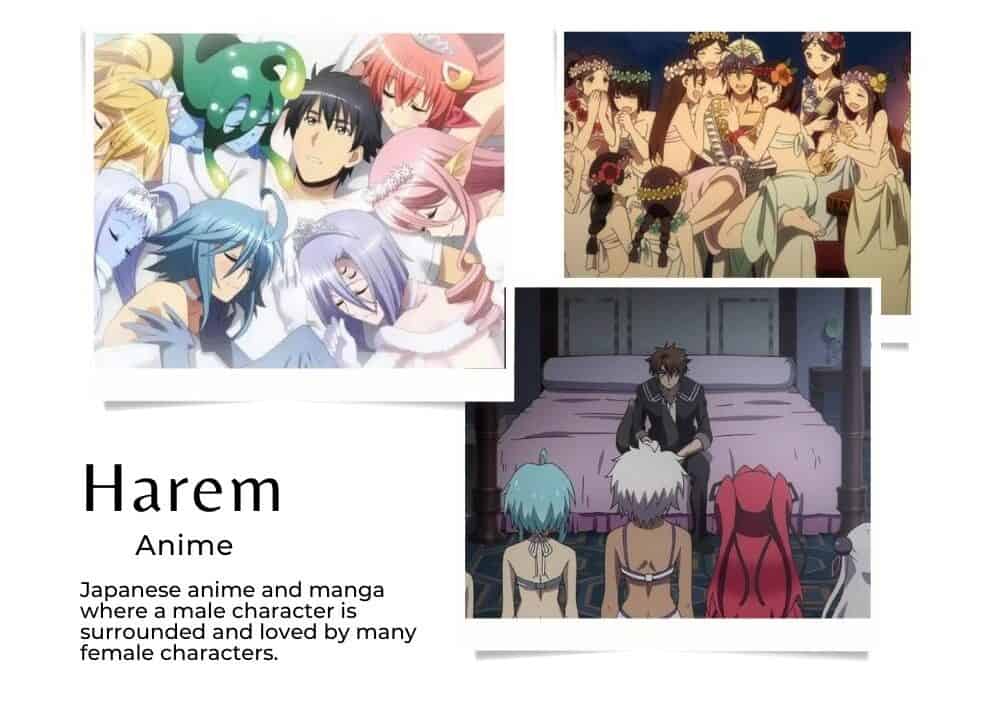
My take: I can enjoy harem shows, but I am picky, and if the lead is cardboard I am out.
Harem is a subgenre built around several romantic interests orbiting one protagonist. Sometimes it is pure comedy, sometimes it is supernatural romance, and sometimes it is just an excuse to stack character archetypes.
- High School DxD (if you want similar shows, see anime like High School DxD)
- Date A Live
- World’s End Harem
- School Days
If you are watching mainly for the fanservice angle, then you will probably like my breakdown of fan service anime series too.
Reverse Harem Anime (One Girl Surrounded by Boys)
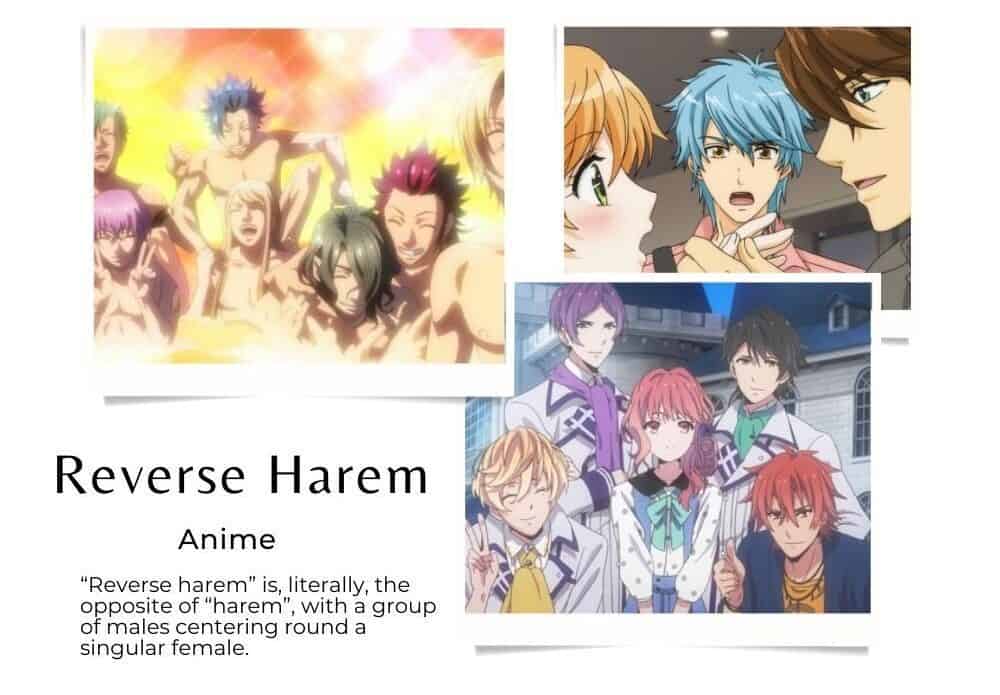
My take: When reverse harem is written well, it is less about collecting boys and more about the heroine’s growth.
Flip the harem setup and you get one heroine surrounded by several male love interests. The best entries use that structure to push her arc forward rather than just parade suitors.
- Ouran High School Host Club
- My Next Life as a Villainess
- Hakuouki
- Brothers Conflict
Kodomomuke Anime (Aimed at Children)
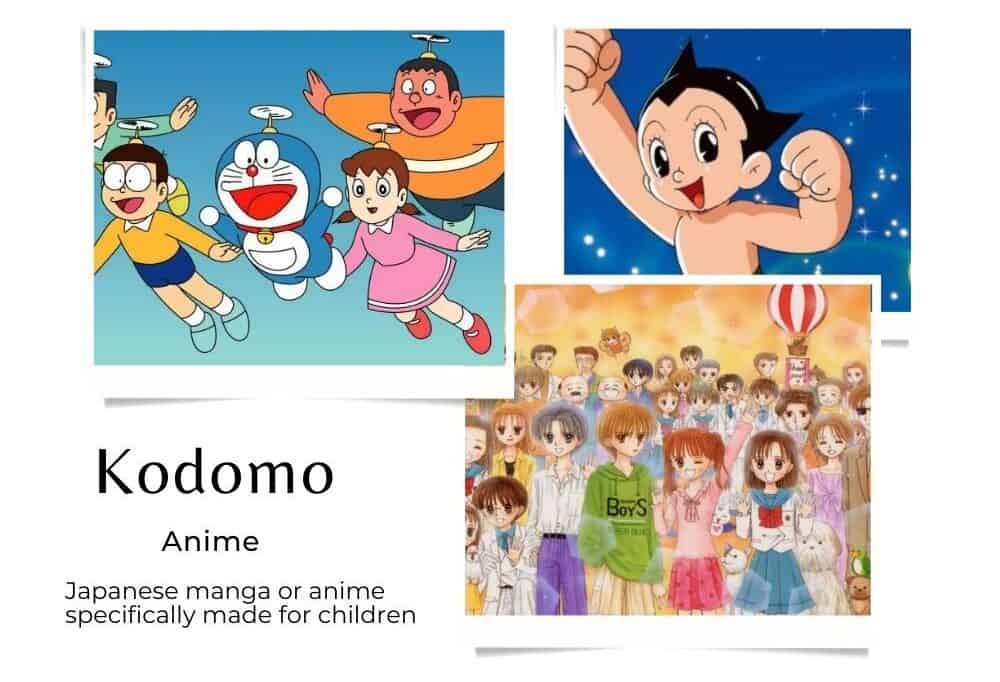
My take: Kodomo looks simple, yet the best ones are timeless comfort shows.
Kodomomuke, often shortened to kodomo, means aimed at children. It is family-friendly, usually episodic, and built to be accessible. Still, that does not mean it skips emotional moments, since sometimes those are the exact shows that hit hardest.
- Doraemon
- Pokemon
- Digimon
- Astro Boy
If you want a deeper read on this demographic label, then I have covered it here: kodomomuke anime.
Romance Anime (Falling in Love)
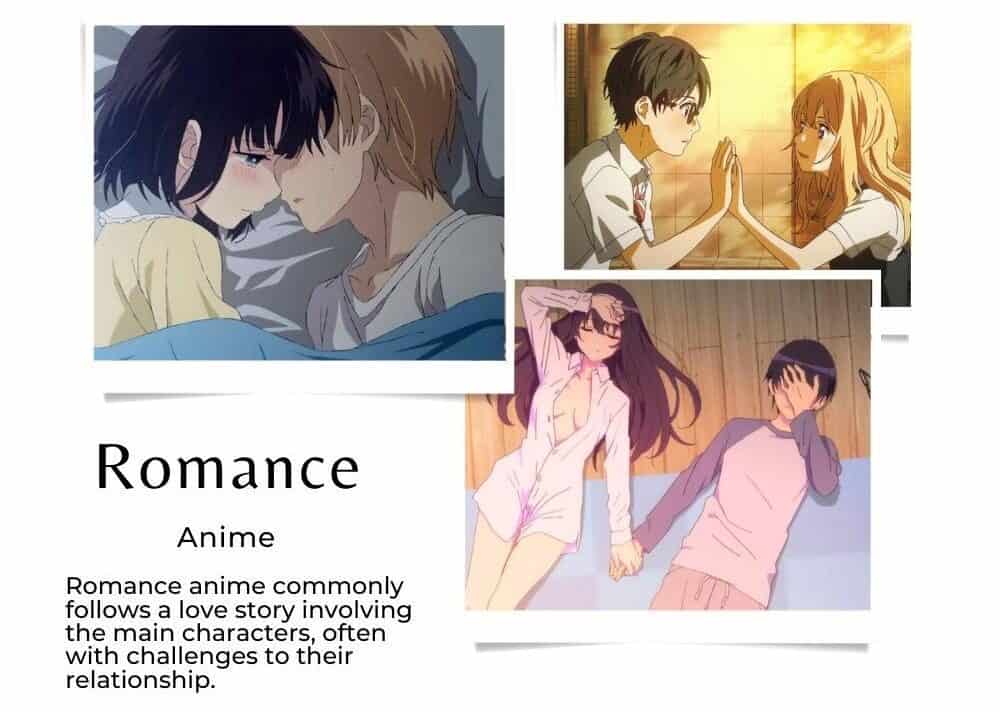
My take: When I want a show that makes me feel something without wrecking me, romance is my safe pick.
Romance anime covers everything from cute romcoms to messy heartbreak. If you like it with a darker twist, then paranormal romance is its own addictive little lane.
- Clannad
- Your Lie in April
- Toradora
- Scum’s Wish
For the darker side, I have a list of horror romance anime, and for something lighter, here is my go-to best romantic comedy anime roundup.
Horror Anime
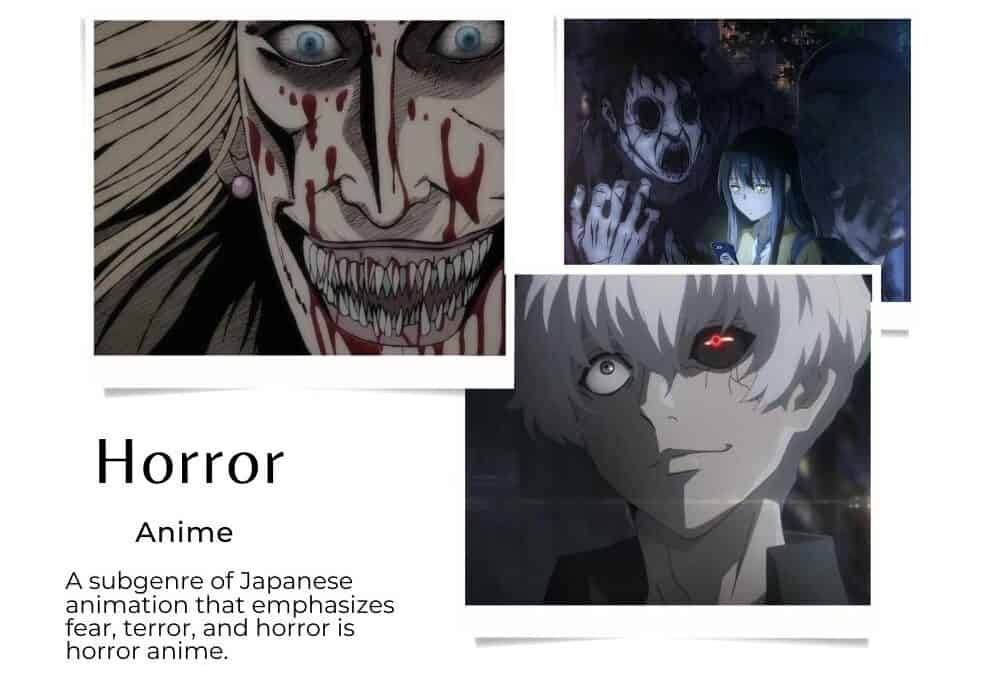
My take: Horror anime is at its best when it builds atmosphere, not just jump scares.
Horror anime ranges from bloody splatter to slow psychological dread to supernatural mystery. For a monster-focused watchlist, I would start with the creepiest monsters in horror anime.
- Shiki
- Higurashi When They Cry
- Parasyte
- Another
- Blood-C
Comedy Anime
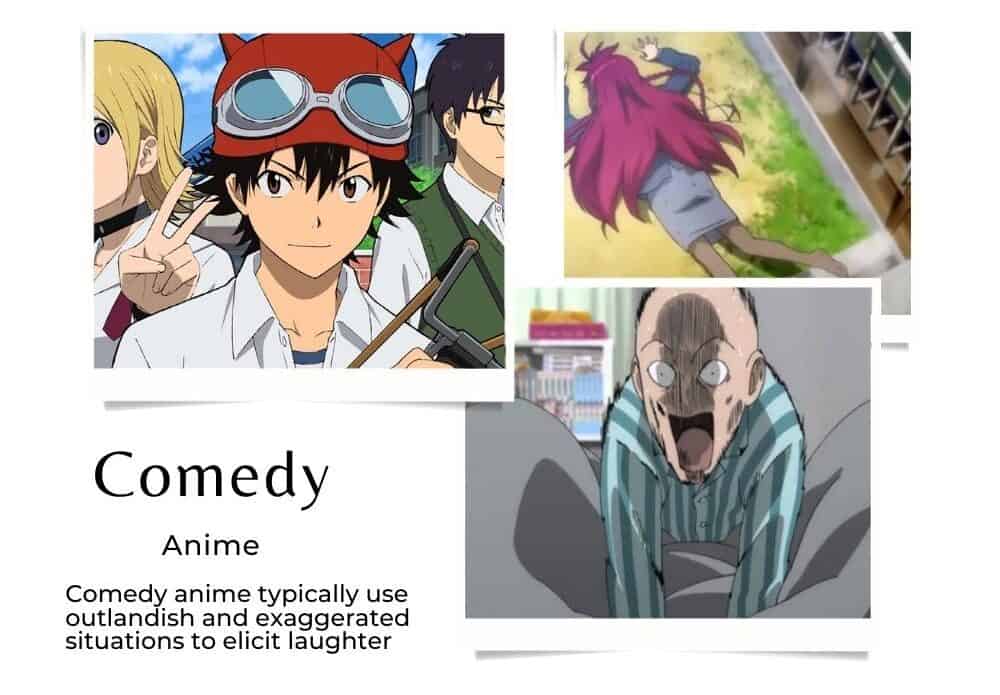
My take: Comedy is my brain-off category, perfect when I want to relax without commitment.
Comedy anime spans quick gag shows, parody, and character-driven awkwardness. Because episodes rarely demand a big time investment, it is easy to dip in and out.
- The Disastrous Life of Saiki K.
- Nichijou
- Miss Kobayashi’s Dragon Maid
- Zombie Land Saga
Fantasy Anime
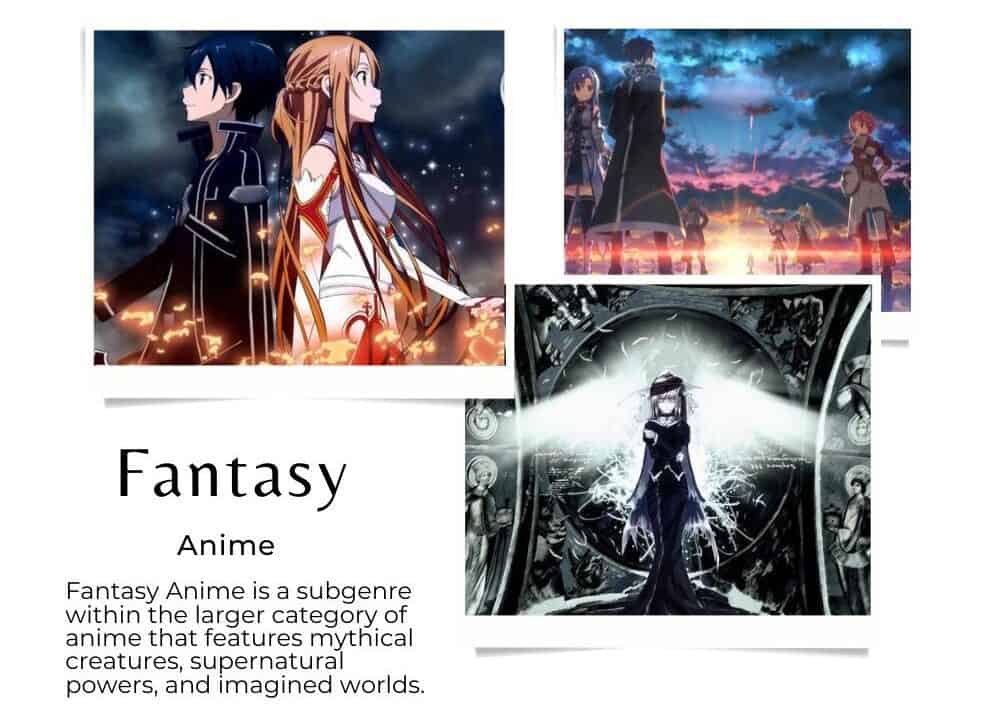
Fantasy anime overlaps heavily with isekai, though plenty of it stays put in its own world rather than transporting anyone. Either way, the worldbuilding usually does the heavy lifting.
- Fullmetal Alchemist
- Overlord
- JoJo’s Bizarre Adventure
- Frieren: Beyond Journey’s End
If you like fantasy but want a specific sub-style with gears and machines, then you may like steampunk anime.
Ecchi Anime
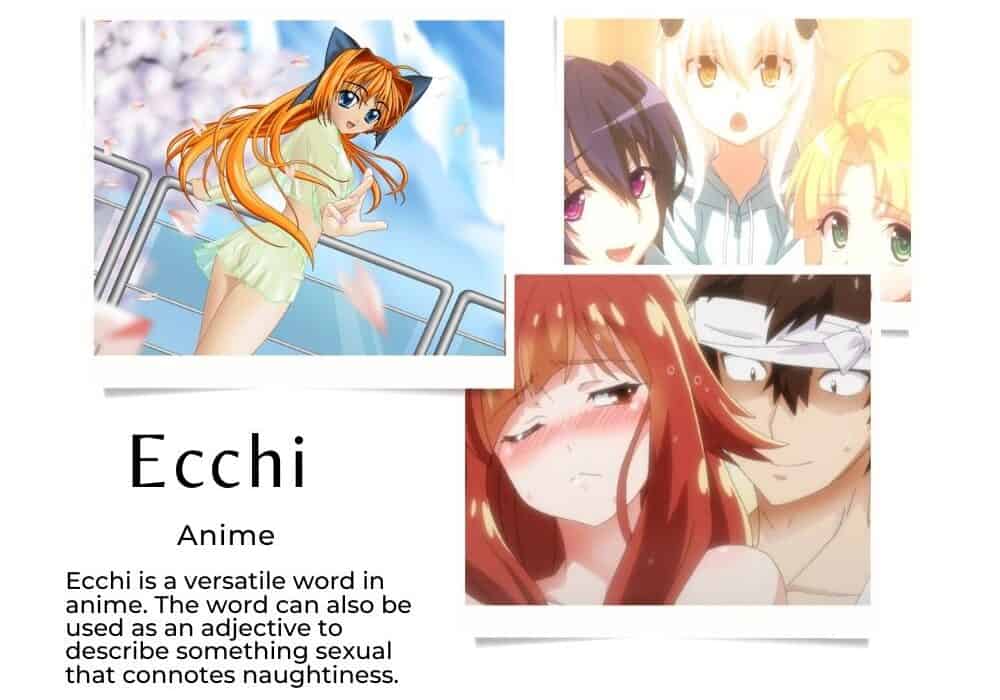
Ecchi leans on sexual themes and innuendo, usually driven by comedic misunderstandings and fanservice. It is not the same as hentai, which is explicit adult content, yet it can still range from mild to very bold.
- High School DxD
- Kill la Kill
- Highschool of the Dead
- My Dress-Up Darling
For a more structured list, my fan service anime series guide has you covered.
Mecha Anime
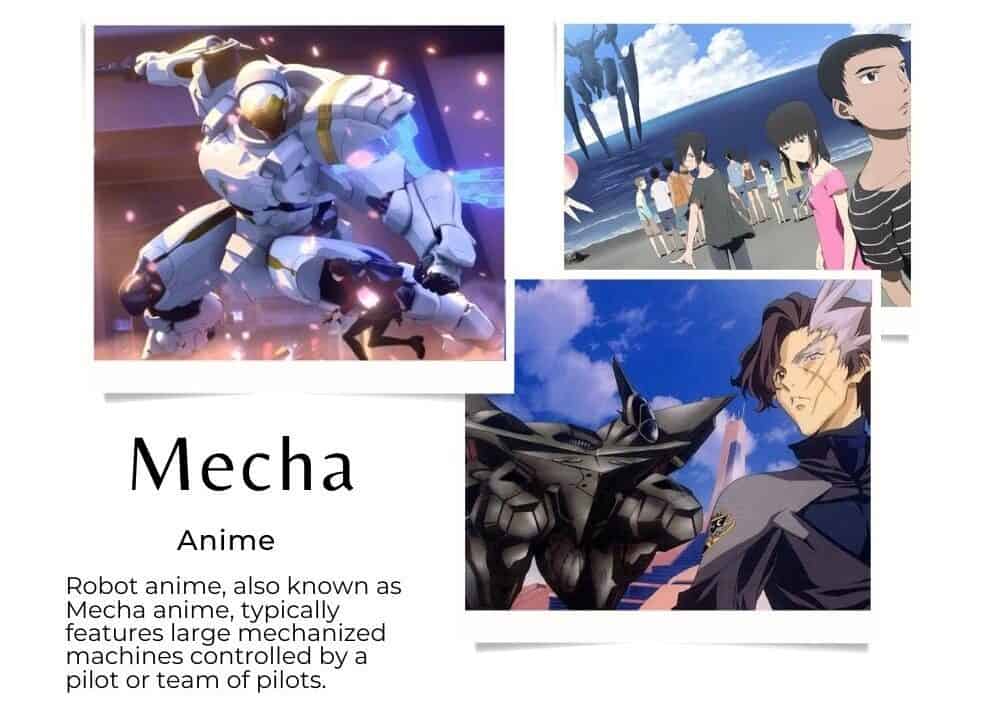
Mecha anime centers on large piloted machines, whether robots, suits, or vehicles. It can be all spectacle, yet the best mecha uses those machines to talk about war, identity, and power.
- Gundam
- Neon Genesis Evangelion
- Eureka Seven
- Code Geass
- Darling in the FranXX
Isekai Anime (Other World)
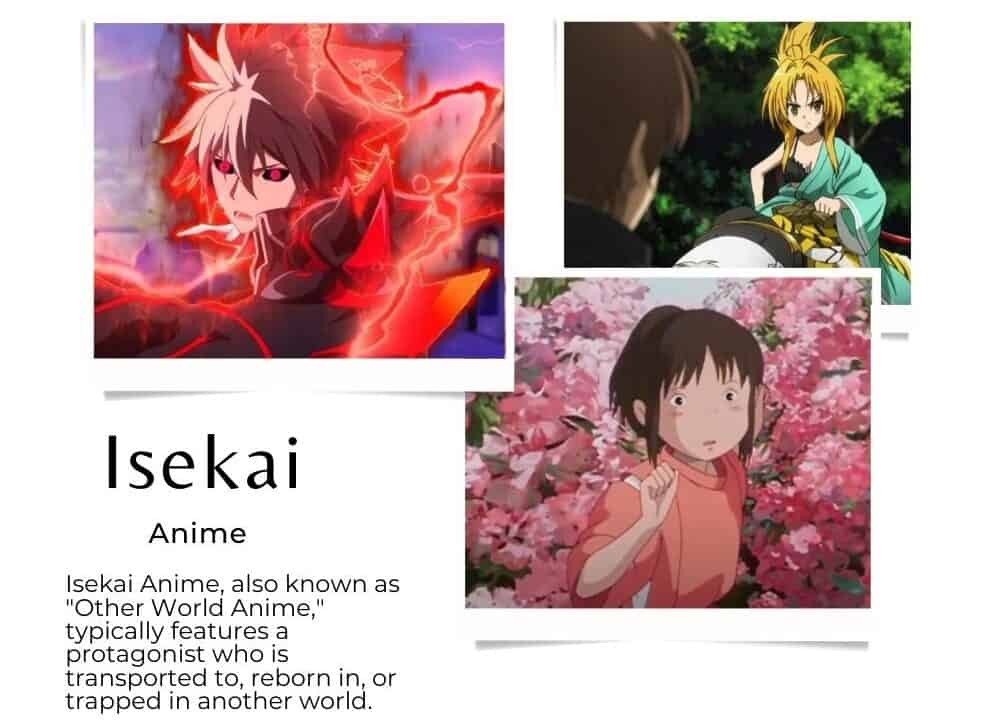
Isekai means the protagonist is transported, reborn, or trapped in another world, usually a fantasy one. Often it explores identity and starting over, though it can also lean hard into power fantasy.
- Re:Zero, Starting Life in Another World
- The Rising of the Shield Hero
- The Vision of Escaflowne
- Sword Art Online
- That Time I Got Reincarnated as a Slime
If your isekai taste overlaps with harem tropes, then I have a separate guide for that niche: isekai harem anime.
Yaoi and Boys’ Love (BL)

Boys’ Love centers on romantic relationships between male characters, and depending on the title it can run from sweet and emotional to far more explicit. Terminology varies, since some fans use yaoi for explicit works and shounen-ai for softer romance, but BL is the common umbrella now.
- Given
- Sasaki and Miyano
- Junjou Romantica
- Sekaiichi Hatsukoi
- Yuri!!! on Ice (BL-adjacent, with sports and romance-coded dynamics)
If you want a darker BL-adjacent thriller, then Banana Fish comes up a lot, though it is its own thing rather than a typical romance template.
Yuri and Girls’ Love (GL)
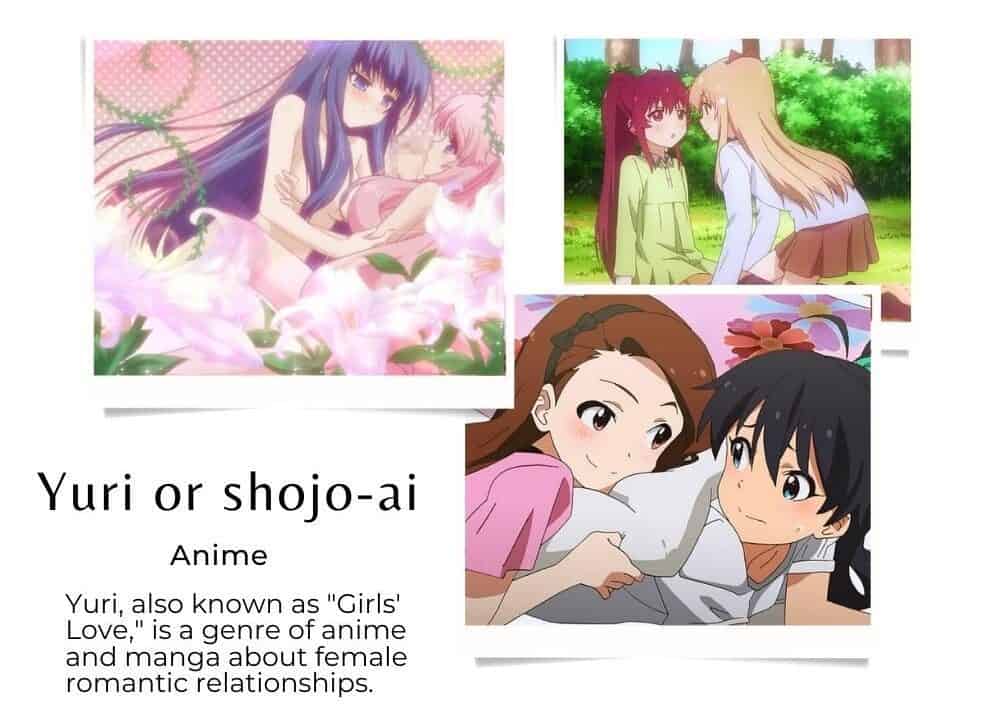
Yuri, often called Girls’ Love, centers on romantic relationships between women. Like BL, it spans soft emotional romance, comedy, and more mature stories. You will sometimes see shojo-ai used for lighter fare, yet yuri is the most common umbrella term today.
- Bloom Into You
- Citrus
- Sweet Blue Flowers
- YuruYuri
- Simoun
More Anime Genres Worth Knowing
Sixteen labels barely scratch the surface, so here are a few more you will run into fast:
- Slice of life: low-stakes everyday moments, basically a warm bath in show form. Try K-On or March Comes in Like a Lion.
- Sports: teamwork, training, and clutch moments. Try Haikyuu, or check my boxing anime picks.
- Psychological: mind games and moral rot. Try Death Note or Monster.
- Magical girl: transformation sequences and hope, sometimes with a dark twist. Start with magical girl anime like Madoka Magica.
- Sci-fi: future tech, space, and big ideas. Try Steins;Gate or Cowboy Bebop.
What Should You Watch First?
Want hype and long journeys: start with shonen.
Want mature themes: try seinen, with a little horror if you like tension.
Want romance: go romance first, then decide between romcom (lighter) and drama (heavier).
Want escapism: fantasy or isekai, and if you like chaotic romance, isekai harem is its own lane.
That is the quick map. Anime genres overlap constantly, so try not to stress the labels too much.
Instead, use them to find more of what you already love, then follow your taste from there.
Which genre are you starting with? Tell me in the comments.
Shonen is NOT a Genre (and other anime misconceptions)
This is such a crucial post for anyone new to the medium! I feel like one of the biggest hurdles for new anime fans is understanding the terminology. We often throw around words like “Shonen” or “Seinen” as if they describe the plot, but as you pointed out, they actually describe the target demographic.
I think this distinction is super important because it helps viewers find what they actually like. For example, a lot of people assume Shonen anime is just “battle manga” like Dragon Ball Z or Jujutsu Kaisen. But technically, rom-coms like The Quintessential Quintuplets or tear-jerkers like Your Lie in April are also Shonen because they run in Shonen magazines. It really opens up your watchlist when you realize “Shonen” just means “targeted at teen boys,” not necessarily “guys punching each other.”
The same goes for Seinen anime (targeted at adult men). A lot of people think Seinen just means “gore and violence” like Berserk or Gantz. But Kaguya-sama: Love is War is also a Seinen! It’s a Seinen because the humor is psychological and creates a specific relatable tension for older audiences, even though it’s a romantic comedy.
I am really glad you included Josei on this list. It is criminally underappreciated. Shows like Nana or Wotakoi: Love is Hard for Otaku offer such a refreshing break from the high school setting we see in Shojo anime. Josei usually deals with office life, marriage, and drinking after work—problems that hit way harder for adult fans.
I also wanted to add a note on the Isekai genre, which has basically become its own demographic at this point! It’s fascinating to see how it evolved from classic “portal fantasy” (like Inuyasha or Digimon) to the modern “reincarnation with a cheat skill” trope we see in Mushoku Tensei. It feels like Isekai is currently the most saturated genre, but it’s also the most creative because writers have to come up with wild gimmicks (like being reincarnated as a vending machine) just to stand out.
Thanks for breaking this down so clearly. It’s a great resource to send to friends who ask, “What is a Tsundere?” or “Why is this show called a Slice of Life?” I’d love to see a follow-up post on the specific “Character Archetypes” (like Yandere, Kuudere, etc.), as that’s usually the next rabbit hole new fans fall into. Great guide!