Black-and-white anime is easy to overlook because many famous titles were later remade in color.
Search for Dororo, Cyborg 009, or Astro Boy today and a newer adaptation usually appears first. The original series can feel hidden behind their own remakes.
That does not make the monochrome versions obsolete.
Early television animators relied on strong silhouettes, heavy shadows, expressive faces, and clear staging because they could not use color to separate every element. Modern directors occasionally return to the same limited palette because it can feel intimate, dreamlike, or disturbing.
This guide covers 13 anime that are fully or predominantly black and white. It includes foundational television series, hard-to-find historical works, two modern independent films, and one recent horror adaptation.
Before you start
Black and white does not always mean color never appears
- Most early television selections are completely monochrome
- Tamala 2010 is predominantly black and white but uses deliberate color and CG passages
- Several titles have later color remakes with nearly identical names
- Streaming notes refer to Canada and the United States and can change by region
13 Black-and-White Anime Worth Watching
The order moves from harder-to-find discoveries toward the most important historical and modern landmarks. It is not a strict claim that every lower entry is better than the one before it.
Kaizoku Ouji (1966)
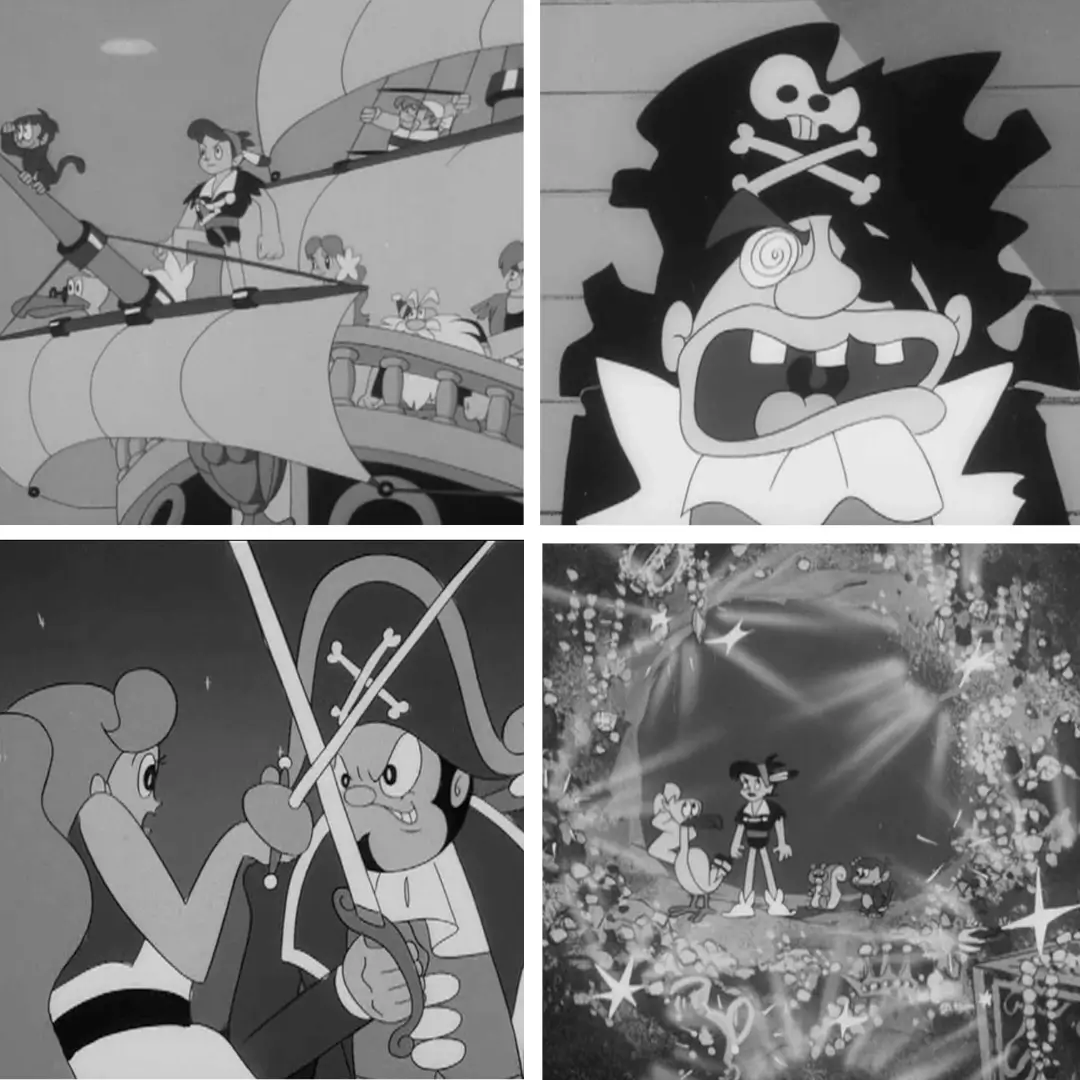
- Studio / creator: Toei Animation; based on work associated with Shotaro Ishinomori
- Monochrome release: 31 episodes, May to November 1966
- Choose this version: The 1966 television series, also called The Pirate Prince
- Availability checked July 2026: I could not confirm a licensed English-language stream
Kaizoku Ouji is a deep cut even by 1960s anime standards.
A boy named Kid learns that his real father was the legendary pirate Captain Morgan. He inherits a ship, gathers a crew, and begins an old-fashioned adventure across the seas.
The series is visually simpler than Toei’s later work, but the pirate setting gives it a different rhythm from the robots and science-fiction heroes that dominate histories of early television anime.
It is better approached as an archival discovery than as an easy recommendation. The show survives, but licensed English-language access remains extremely limited.
Tamala 2010: A Punk Cat in Space (2002)
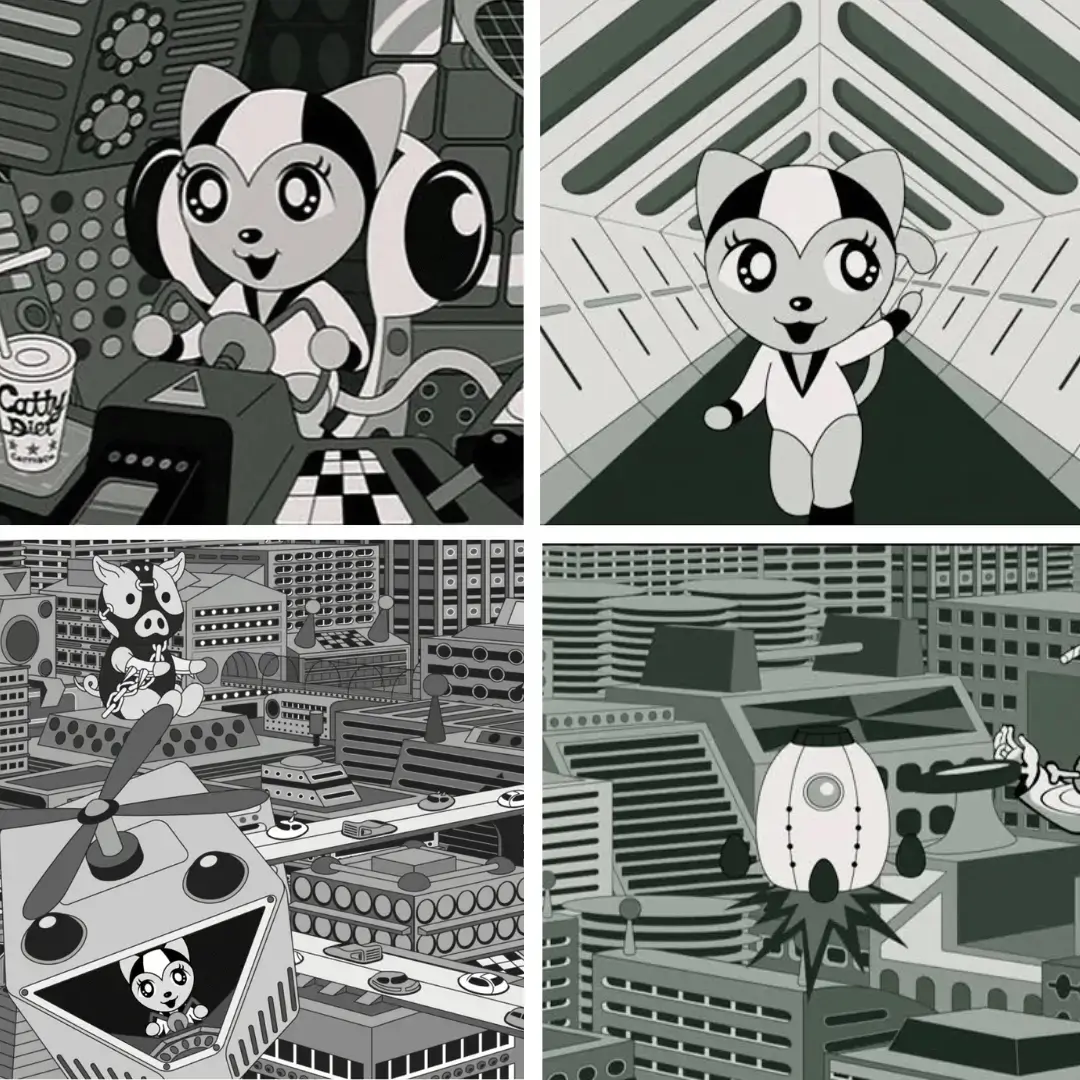
- Studio / creator: t.o.L, also known as Trees of Life
- Monochrome release: 2002 feature film
- Choose this version: Predominantly monochrome, with intentional color and computer-generated sequences
- Availability checked July 2026: The Criterion Channel listed it through July 31, 2026; availability may rotate afterward
Tamala 2010 looks like a lost cute-animal cartoon that wandered into a science-fiction conspiracy.
Tamala is a rebellious kitten living in a corporate-controlled future. Her attempt to travel home turns into a story involving consumer culture, religion, reincarnation, and a company that seems to own almost everything.
The movie is not completely black and white. Its stark retro style is interrupted by carefully chosen color and CG passages.
Those interruptions are part of the design rather than a mistake. The film uses visual inconsistency to make its world feel commercial, artificial, and unstable.
This is the strangest selection on the list and one of the easiest modern entries to watch as a complete feature.
She and Her Cat (1999)
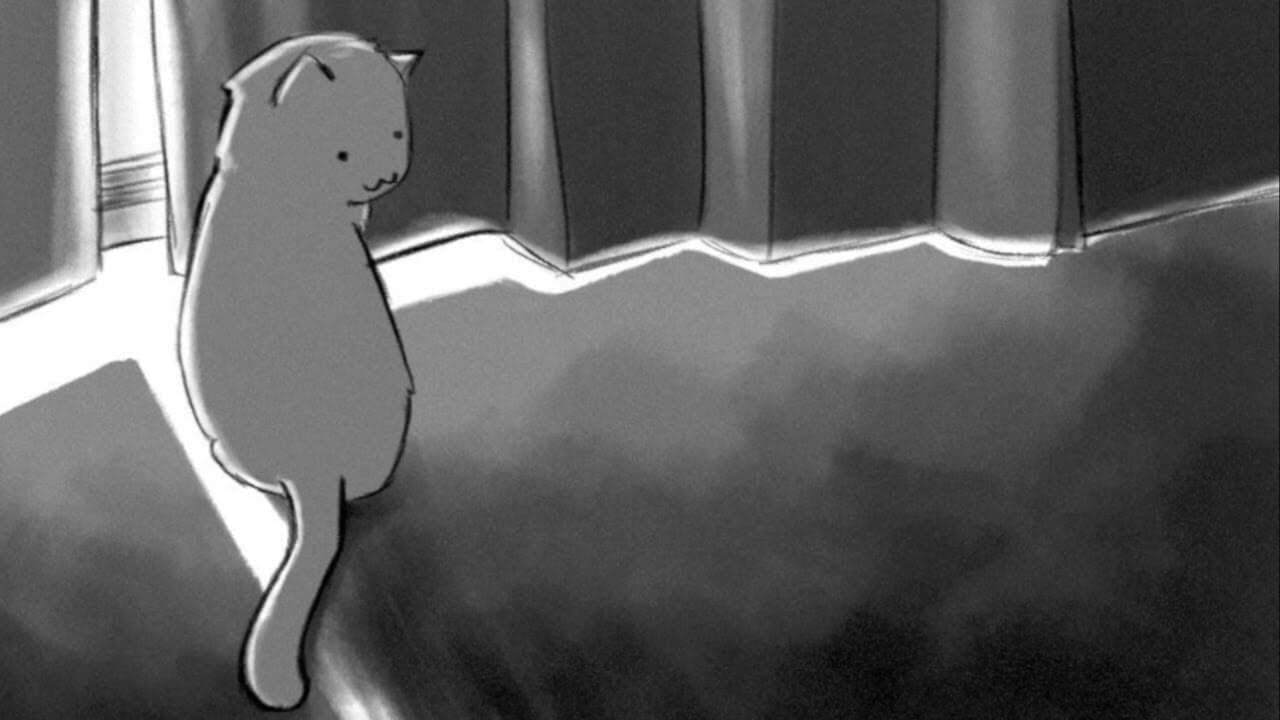
- Studio / creator: Written, directed, animated, and largely produced by Makoto Shinkai
- Monochrome release: 1999 short film, approximately five minutes
- Choose this version: The original short, not the 2016 color television series Everything Flows
- Availability checked July 2026: Currently listed by the Criterion Channel
Before Your Name and Weathering with You, Makoto Shinkai made this tiny black-and-white film about a woman and the cat who watches her life.
The story is narrated from the animal’s point of view. He understands her routines, moods, and loneliness without fully understanding the adult problems causing them.
The monochrome photography and handmade production give the short a private, diary-like feeling.
Do not confuse it with She and Her Cat: Everything Flows, the color television series released in 2016. That later adaptation expands the premise, but Shinkai’s original is the work that belongs on this list.
Osomatsu-kun (1966)
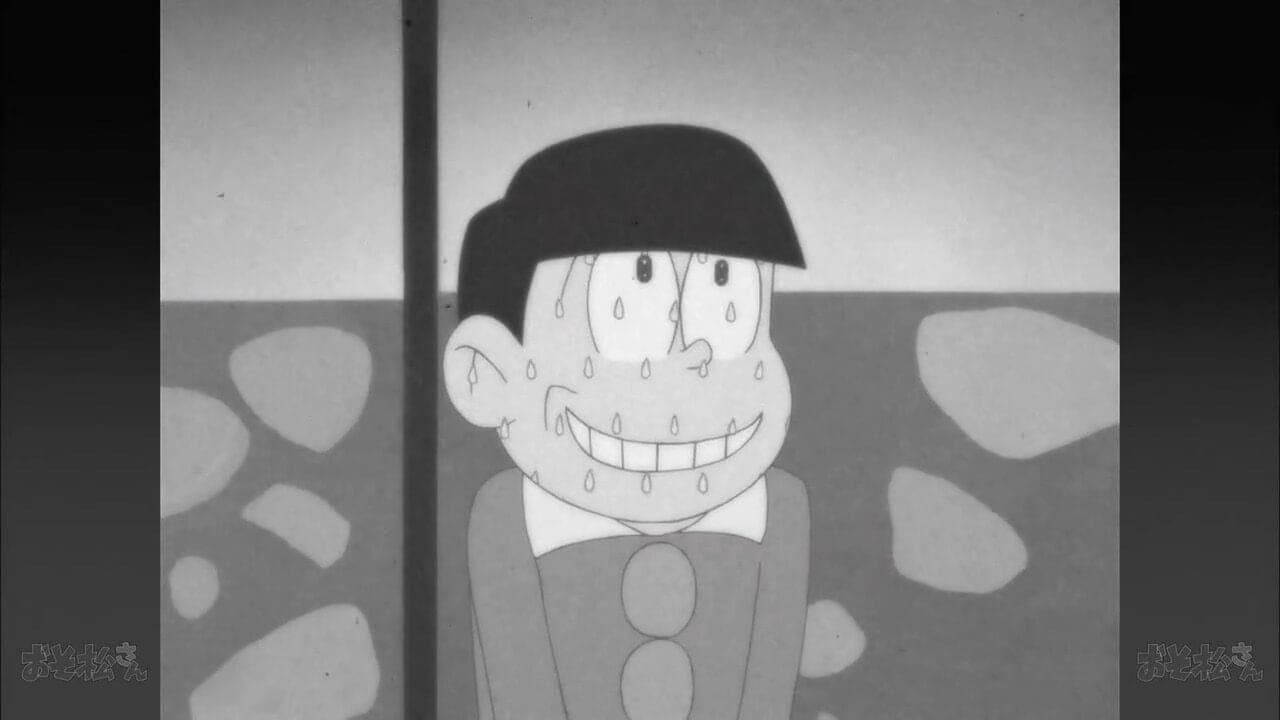
- Studio / creator: Children’s Corner and Studio Zero; based on Fujio Akatsuka’s manga
- Monochrome release: 1966 to 1967
- Choose this version: The first black-and-white adaptation, not the 1988 remake or Mr. Osomatsu
- Availability checked July 2026: I could not confirm a current licensed English-language stream
Early television anime was not limited to noble robot boys and serious adventures.
Osomatsu-kun follows six identical brothers through a rapid series of misunderstandings, scams, slapstick fights, and neighborhood chaos.
The animation is loose and elastic, closer to a newspaper gag strip brought to life than to the polished character acting associated with modern anime.
The title creates an especially easy version mix-up. The 1988 adaptation is in color, while Mr. Osomatsu, launched in 2015, turns the brothers into dysfunctional adults.
The 1966 series is the monochrome original and the best place to see the comedy before later versions rebuilt it for new generations.
8 Man (1963)
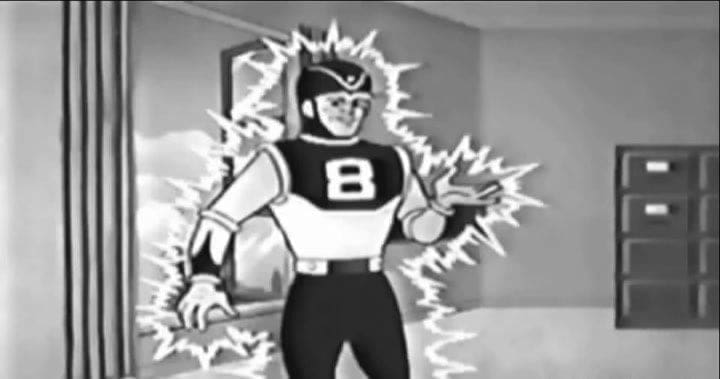
- Studio / creator: TCJ, later known as Eiken; created by Kazumasa Hirai and Jiro Kuwata
- Monochrome release: 56 episodes, 1963 to 1964
- Choose this version: The original black-and-white television series, also released in English as Eighth Man
- Availability checked July 2026: No stable licensed English stream was confirmed during this review
8 Man helped establish the cyborg detective as a television-anime hero.
Detective Hachiro Azuma is murdered and has his memories transferred into an artificial body. He returns as the police department’s unofficial eighth detective while hiding what he has become.
The premise gives the action a darker foundation than the cheerful superhero surface suggests. Azuma can run at extreme speed and survive impossible attacks, but his human life has already ended.
Rather than calling the series a direct ancestor of every later cyborg story, it is safer to recognize it as one of the earliest major Japanese television works built around a human consciousness inside a machine.
Ookami Shounen Ken (1963)
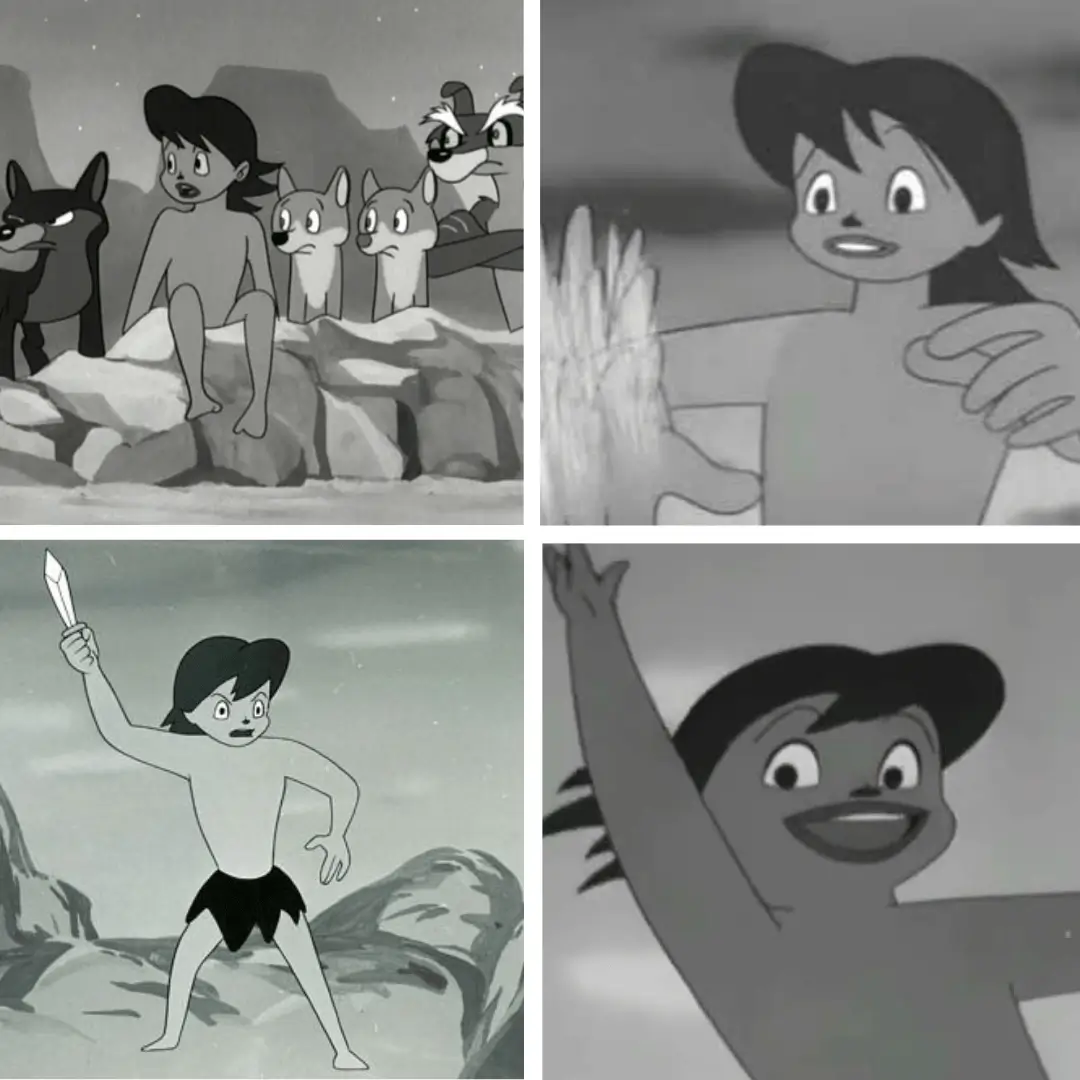
- Studio / creator: Toei Animation
- Monochrome release: 86 episodes, 1963 to 1965
- Choose this version: The original black-and-white television series, also called Ken, the Wild Boy
- Availability checked July 2026: No current licensed English-language stream was confirmed
Ookami Shounen Ken was Toei Animation’s first television anime series.
It was also an important early example of an original anime created for television rather than adapted from an existing manga.
Ken is a human boy raised among wolves in a jungle near the Himalayas. He protects his animal community with help from two young wolves and other allies.
The original article claimed the series ran at a higher frame rate than its peers. I could not verify that claim reliably, so it has been removed.
The show’s real historical importance is strong enough without it. This was Toei learning how to produce continuing animation for television, years before Dragon Ball and One Piece.
For more studio history, see my guide to major Japanese anime studios.
Otogi Manga Calendar (1961)
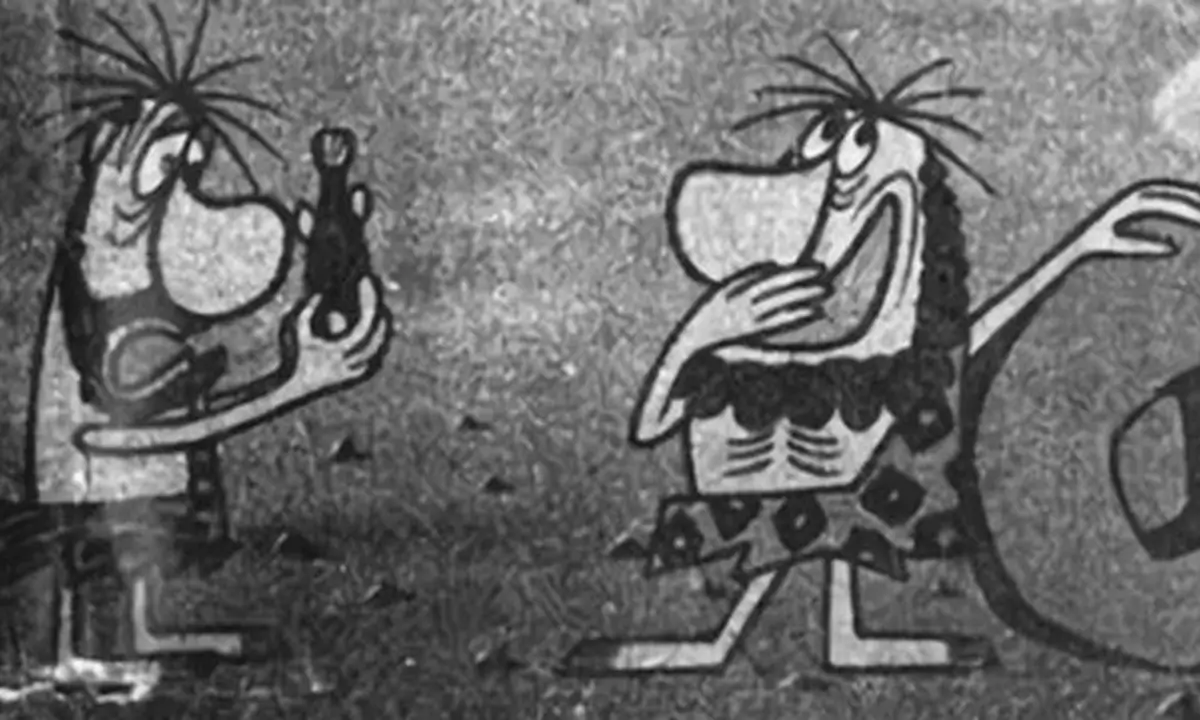
- Studio / creator: Otogi Production; created by Ryuichi Yokoyama
- Monochrome release: The project began as Instant History in 1961 and continued under the Otogi Manga Calendar title from 1962 to 1964
- Choose this version: Treat the two titles as phases of the same short-form historical project
- Availability checked July 2026: Only archival fragments and documentation are readily accessible
This entry needs a naming correction.
The pioneering series began in 1961 as Instant History. After moving to another broadcaster in 1962, it continued under the title Otogi Manga Calendar.
Each short used animation, photographs, and news material to explain an event associated with that day in history.
It is often identified as the first made-for-television anime series. That does not mean it was the first Japanese animation ever shown on television, and it was not a conventional half-hour entertainment series like Astro Boy.
Very little is readily available to watch today. This is an essential historical entry, but not a practical binge recommendation.
Cyborg 009 (1968)
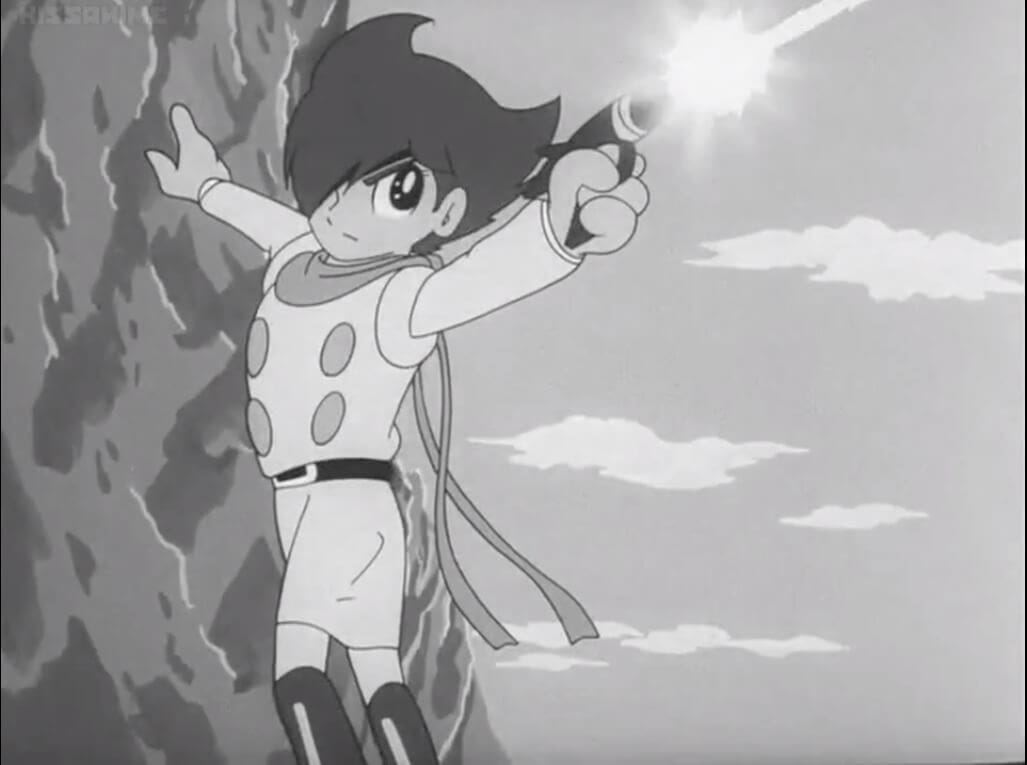
- Studio / creator: Toei Animation; based on Shotaro Ishinomori’s manga
- Monochrome release: 26 episodes, April to September 1968
- Choose this version: The monochrome 1968 television series; the earlier 1966 theatrical movie was in color
- Availability checked July 2026: I could not confirm a licensed English-language stream for the 1968 series
Nine people are kidnapped, altered into weapons, and expected to serve the organization that rebuilt them.
Instead, the cyborgs rebel.
That team structure still feels modern because every member carries a different ability and a different reason to resent the people who changed them.
The version trap works in reverse here. Toei released a color Cyborg 009 movie in 1966, followed by the black-and-white television series in 1968. Later television adaptations returned to color.
The monochrome series is leaner and rougher than the versions many viewers know, but the moral centre is already present: people turned into technology fighting to reclaim control of their lives.
Tetsujin 28-go (1963)
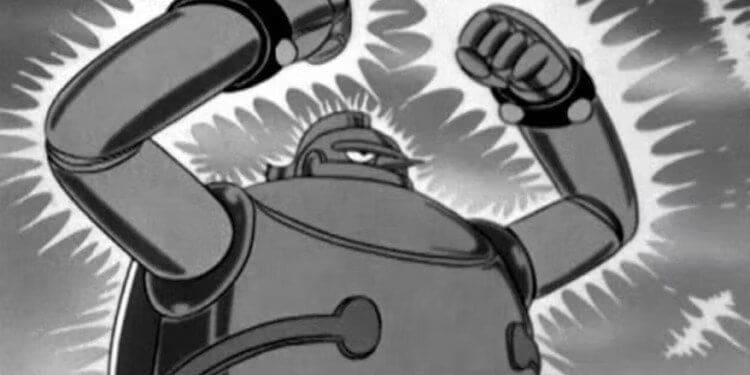
- Studio / creator: TCJ, later Eiken; based on Mitsuteru Yokoyama’s manga
- Monochrome release: Original television run began in 1963
- Choose this version: The 1963 black-and-white series, known in English as Gigantor
- Availability checked July 2026: The English-language Gigantor version is available on services including Tubi in supported regions; availability varies
Tetsujin 28-go is one of the foundational giant-robot anime.
Young detective Shotaro Kaneda controls an enormous robot using a remote. The machine has no morality of its own. In the right hands it protects people, and in the wrong hands it becomes a weapon.
That distinction separates Tetsujin from later piloted robots. Shotaro does not sit inside the machine. He must command it from outside, where the remote can be lost, stolen, or taken by an enemy.
The 1980 and 2004 adaptations are in color. Look for the 1963 production or the English dub title Gigantor when searching for the monochrome version.
GeGeGe no Kitaro (1968)
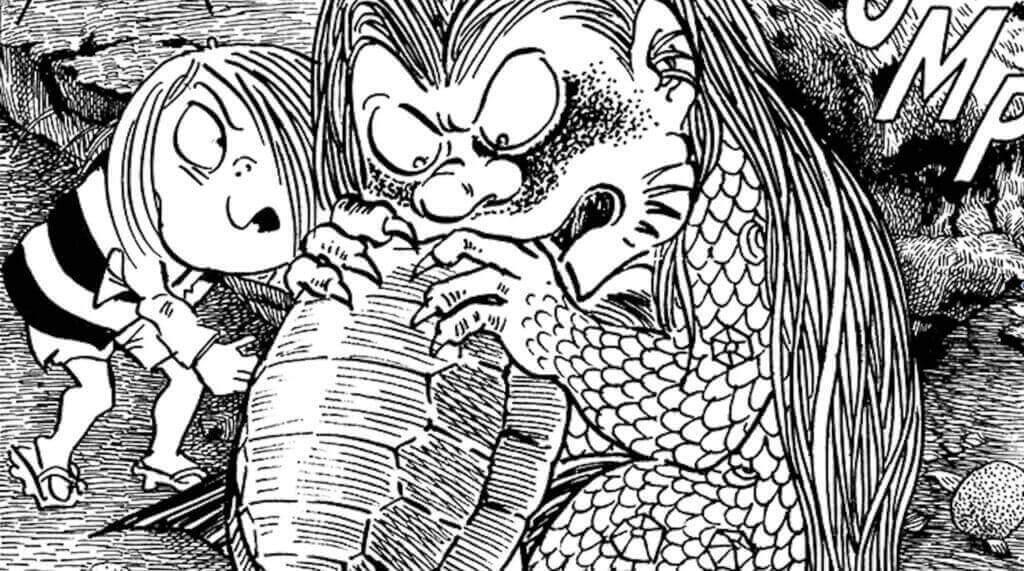
- Studio / creator: Toei Animation; based on Shigeru Mizuki’s manga
- Monochrome release: 65 episodes, 1968 to 1969
- Choose this version: The first series is black and white; the 1971 sequel and later adaptations are in color
- Availability checked July 2026: The original series remains difficult to find through licensed English-language services
The first GeGeGe no Kitaro series helped bring yokai folklore into Japanese television’s mainstream.
Kitaro is the last survivor of the Ghost Tribe. With help from his father, a tiny eyeball with a body, he responds when humans are threatened by malicious supernatural creatures.
Shigeru Mizuki’s designs already carry the rough textures of folk illustration and old ghost stories. Black and white strengthens that connection.
Toei’s own history dates the first series to 1968 and notes that the 1971 follow-up was the first Kitaro series produced in color.
Do not substitute a newer adaptation if the monochrome atmosphere is what attracted you. The later shows reinterpret the same world with very different visual priorities.
Dororo (1969)
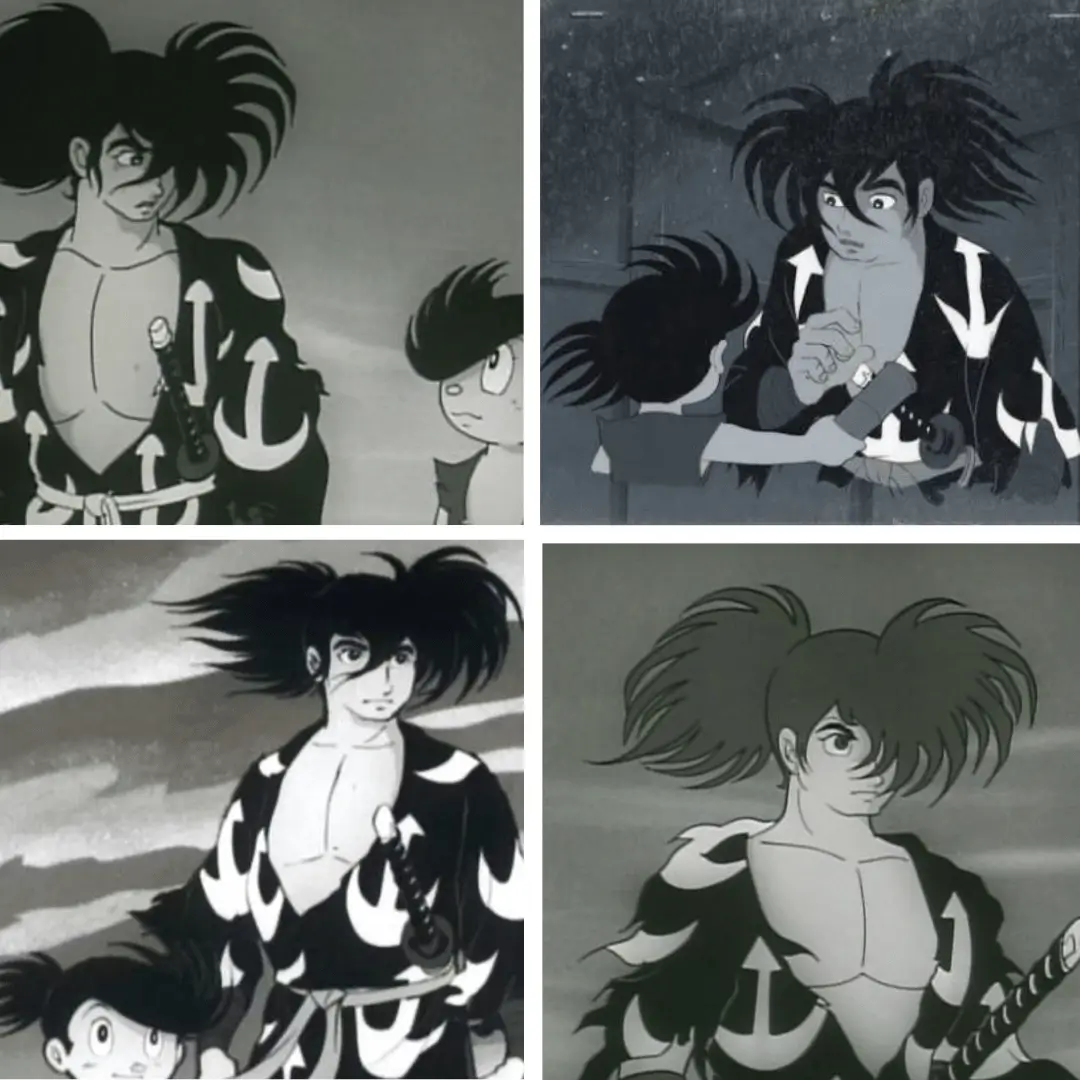
- Studio / creator: Mushi Production; based on Osamu Tezuka’s manga
- Monochrome release: 26 episodes, April to September 1969
- Choose this version: The 1969 monochrome series, not the 2019 color adaptation
- Availability checked July 2026: No stable licensed English-language stream was confirmed during this review
Dororo is one of the strongest arguments for watching the older version instead of treating it as a draft for the remake.
Hyakkimaru was born missing much of his body after his father offered him to demons. Equipped with artificial limbs and hidden weapons, he travels with a young thief named Dororo and kills the creatures connected to what was stolen from him.
Tezuka Productions confirms that the television pilot was made in color, but the full series was produced in monochrome because the budget was tighter.
The limitation became an advantage. The heavy shadows, empty landscapes, and simplified monsters give the series a bleak folktale quality.
The 2019 adaptation is smoother and more expansive. The 1969 version feels harsher, stranger, and closer to the difficult end of early television anime.
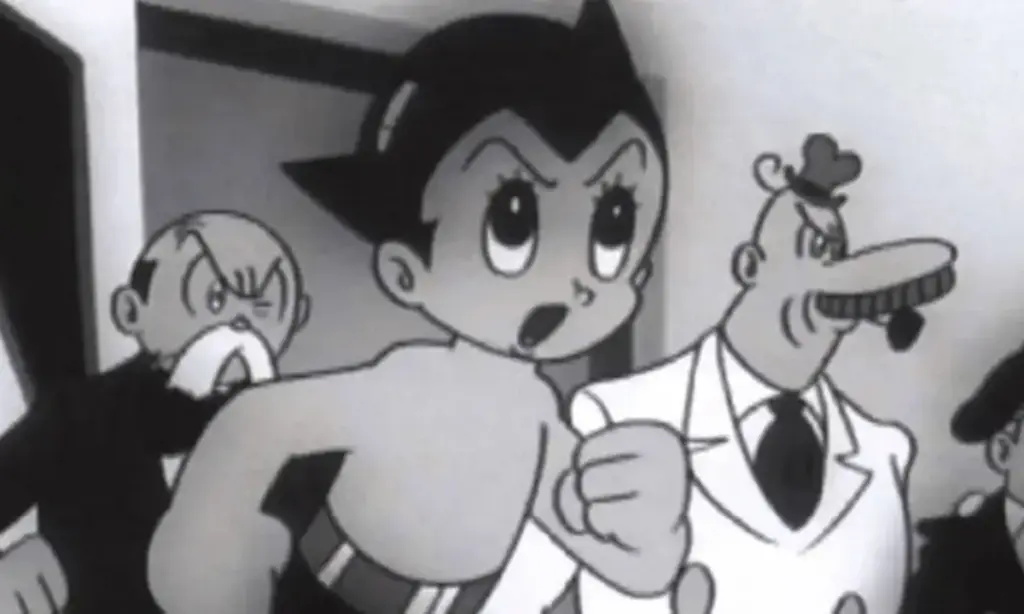
Astro Boy (1963)
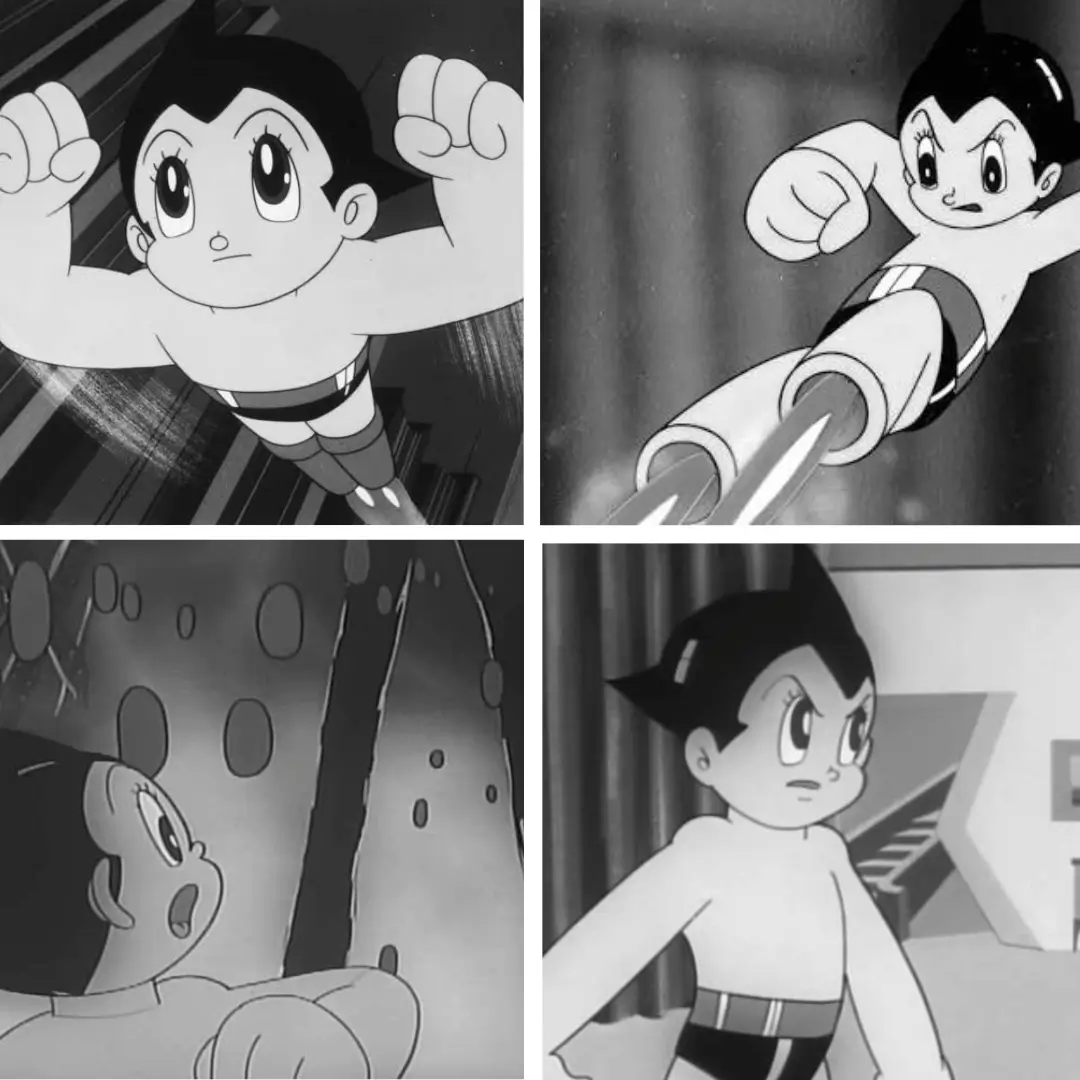
- Studio / creator: Mushi Production; created by Osamu Tezuka
- Monochrome release: 193 episodes, 1963 to 1966
- Choose this version: The original monochrome series, not the 1980 or 2003 color remakes
- Availability checked July 2026: Currently available through RetroCrush in supported North American regions
Astro Boy was not the first Japanese animation shown on television.
It was the first Japanese weekly 30-minute animated series, and that distinction is more important to the development of the modern industry.
Osamu Tezuka and Mushi Production built a repeatable television format around a robot child created to replace a scientist’s dead son.
The series combined action, comedy, tragedy, and arguments about whether artificial beings deserve rights. Those themes gave the limited animation more emotional weight than its low budget suggests.
The official Tezuka history identifies the show as a 193-episode monochrome production and credits it with establishing the foundation for Japanese television animation.
For a wider selection from this period, see my guide to old-school anime shows.
Modern Spotlight: Uzumaki (2024)
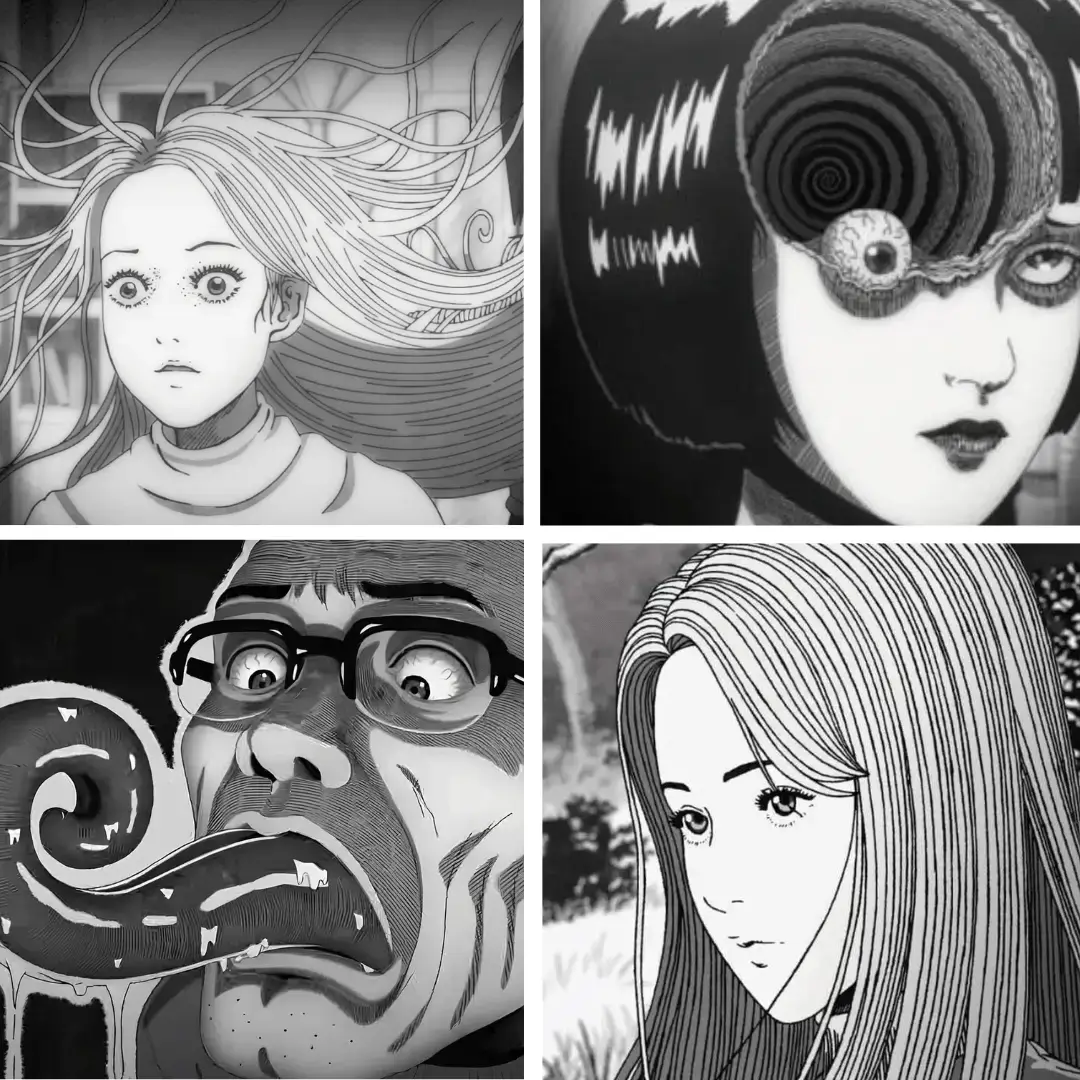
- Studio / creator: Adult Swim and Production I.G USA, with animation work led across multiple production teams
- Monochrome release: Four episodes, 2024
- Choose this version: A deliberately black-and-white adaptation designed to resemble Junji Ito’s manga
- Availability checked July 2026: All four subtitled and dubbed episodes are currently listed on Adult Swim; digital purchase is also available
Uzumaki proves that monochrome anime is not only a historical category.
The four-part series adapts Junji Ito’s story of a town consumed by spirals. Hair, smoke, shells, eyes, tongues, and entire bodies bend toward the same shape.
The decision to remain black and white was essential. Color would have moved the series away from Ito’s dense ink work, while monochrome lets the animation feel like manga panels beginning to move.
This recommendation needs one warning.
The first episode received strong praise for its fluid animation and fidelity to the source. The following episodes suffered a visible drop in consistency after serious production problems. Executive producer Jason DeMarco later acknowledged that the team chose to release all four episodes despite those flaws rather than abandon the project.
That makes Uzumaki an uneven series rather than an uncomplicated masterpiece.
It still belongs here because its best sequences demonstrate what modern black-and-white animation can achieve, while its troubled production is part of the honest assessment.
Why Were Early Anime Made in Black and White?
Black and white was not initially an artistic rebellion.
It was the normal and affordable television format.
Japanese broadcasters were still transitioning to color during the early 1960s, and animation was expensive even without adding color production. Studios already had to reduce drawings, reuse cels, hold on still images, and depend heavily on dialogue and sound.
Monochrome lowered another barrier.
That history still needs careful wording:
- Instant History was an early made-for-television anime series beginning in 1961
- Astro Boy became the first weekly Japanese 30-minute animated television series in 1963
- Wolf Boy Ken was Toei Animation’s first television series and an early original TV anime
- Kimba the White Lion became the first full color Japanese television anime series in 1965
- Monochrome productions continued through the end of the decade, including Dororo in 1969
The palette was economical, but directors still developed a visual language around it.
Dark shadows could hide missing detail. Clear silhouettes kept characters readable. Strong black shapes made monsters, robots, and action poses stand out on small television screens.
That is why the best early series do not merely look unfinished without color.
They look designed for contrast.
How to Avoid the Color-Remake Trap
- Astro Boy: Choose 1963, not 1980 or 2003
- Dororo: Choose 1969, not 2019
- Cyborg 009: Choose the 1968 TV series, not the 1966 color film or later remakes
- Tetsujin 28-go: Choose 1963 or search for the English title Gigantor
- GeGeGe no Kitaro: Choose the 1968 first series
- Osomatsu-kun: Choose 1966, not 1988 or Mr. Osomatsu
- She and Her Cat: Choose Shinkai’s 1999 short, not the 2016 color series
Black-and-White Anime: Quick Answers
What is the best black-and-white anime to start with? Astro Boy is the best historical starting point. Dororo is stronger for dark fantasy, while She and Her Cat is the easiest short introduction.
Is Uzumaki completely black and white? Yes. The 2024 anime was designed in monochrome to preserve the look of Junji Ito’s manga.
Was Astro Boy the first television anime? Not exactly. Earlier short-form animation projects existed, including Instant History. Astro Boy was the first weekly Japanese 30-minute animated television series.
What was Japan’s first color television anime series? Kimba the White Lion, also known as Jungle Emperor, began in 1965 and is generally recognized as the first full color Japanese television anime series.
Why is Dororo black and white? Tezuka Productions says its pilot was made in color, but the 1969 television series used monochrome because the budget was tighter.
Where can I stream classic black-and-white anime? Availability is limited. Astro Boy is currently on RetroCrush in supported North American regions. She and Her Cat and Tamala 2010 have been available through the Criterion Channel, while Uzumaki is listed on Adult Swim. Many other entries lack a current licensed English-language stream.
More Than an Old Television Limitation
The earliest anime on this list used black and white because television budgets and technology left little choice.
The modern entries use it because the absence of color can create something specific.
It can make a five-minute relationship feel private.
It can turn a city into a corporate nightmare.
It can make a demon story resemble an old folktale or a horror manga begin to move.
That range is the real reason these works belong together.
Black-and-white anime is not one genre or one historical period.
It is a visual tool that creators have used for economy, intimacy, comedy, history, and dread.
Which monochrome anime belongs on your watchlist?
Share your pick in the comments.
Availability note: Streaming information was checked in July 2026. Catalogues vary by country and can change without notice.