
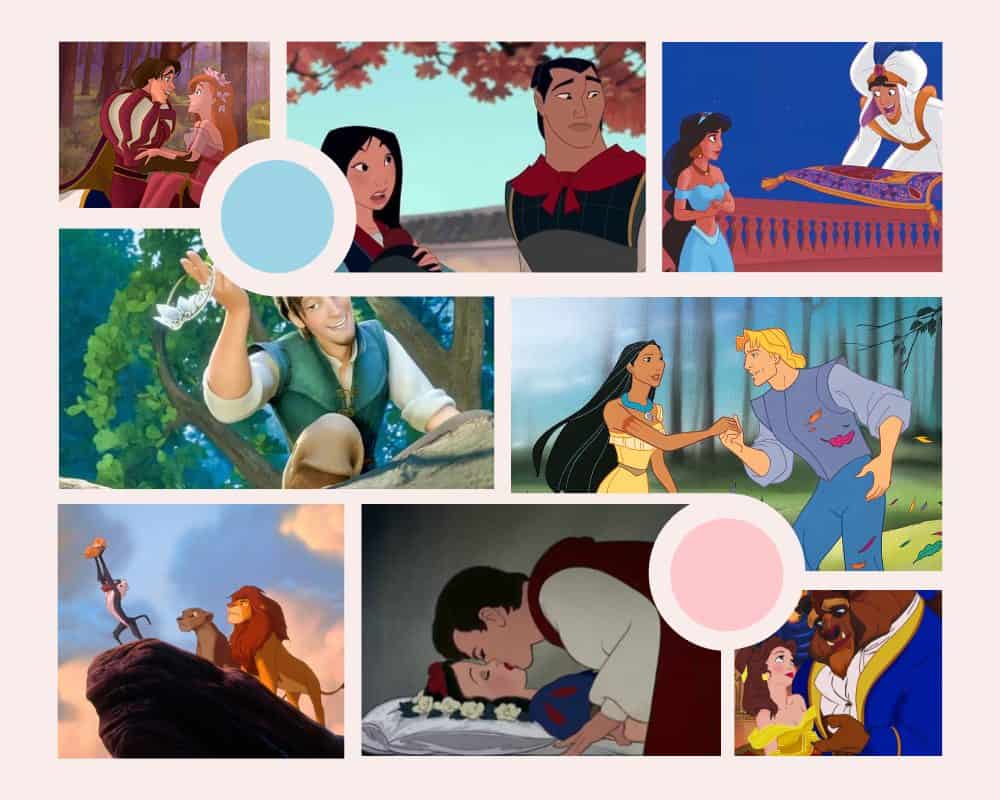
Disney princes rarely get the spotlight their princesses do, yet they quietly shaped how a couple of generations learned to picture romance, bravery, and what a decent guy looks like.
Here is the twist: there is no official “Disney Princes” line the way there is a Disney Princess franchise, so the princes are usually just counted as the princesses’ love interests.
That leaves them oddly underrated, which is why the great Disney princes deserve a proper accounting, and, in this case, a personal award each.
Ranked below by cultural footprint, every prince walks away with one unique, fully earned trophy.
Disney Princes, Ranked (With an Award Each)
The order runs on cultural footprint: how famous and how influential each prince is, from the studio-defining leads down to the deep-cut spin-off royals. The ranking measures fame; the award measures what makes each one memorable.
Every Disney prince below gets exactly one.
Apollo (Hercules: The Animated Series)
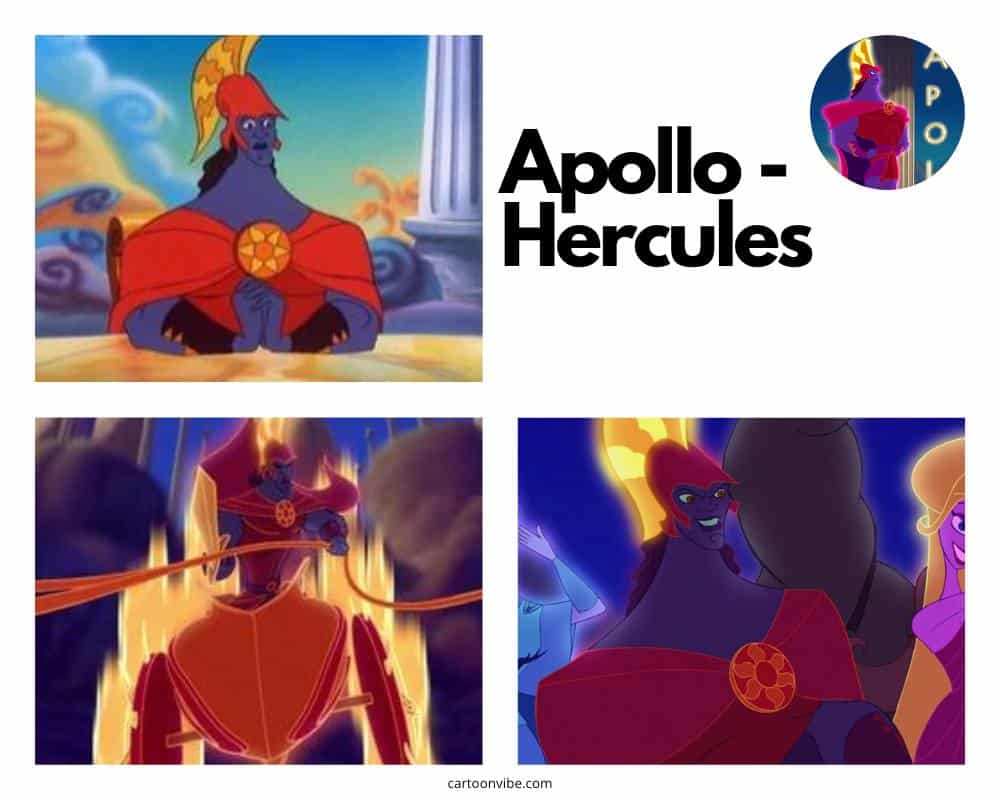
Apollo rounds out the list from Hercules: The Animated Series, the Greek god of the sun, music, and prophecy who serves as a mentor and father figure to Hercules. He is written as wise, kind, and a capable fighter, a positive role-model deity in a spin-off that rarely gets discussed.
- Award: Most Underrated Mentor
- Why he wins it: he brings real mentor energy to a deep-cut animated series most fans forgot existed.
- My take: the deepest cut on the list, and a wholesome one.
James (Sofia the First)
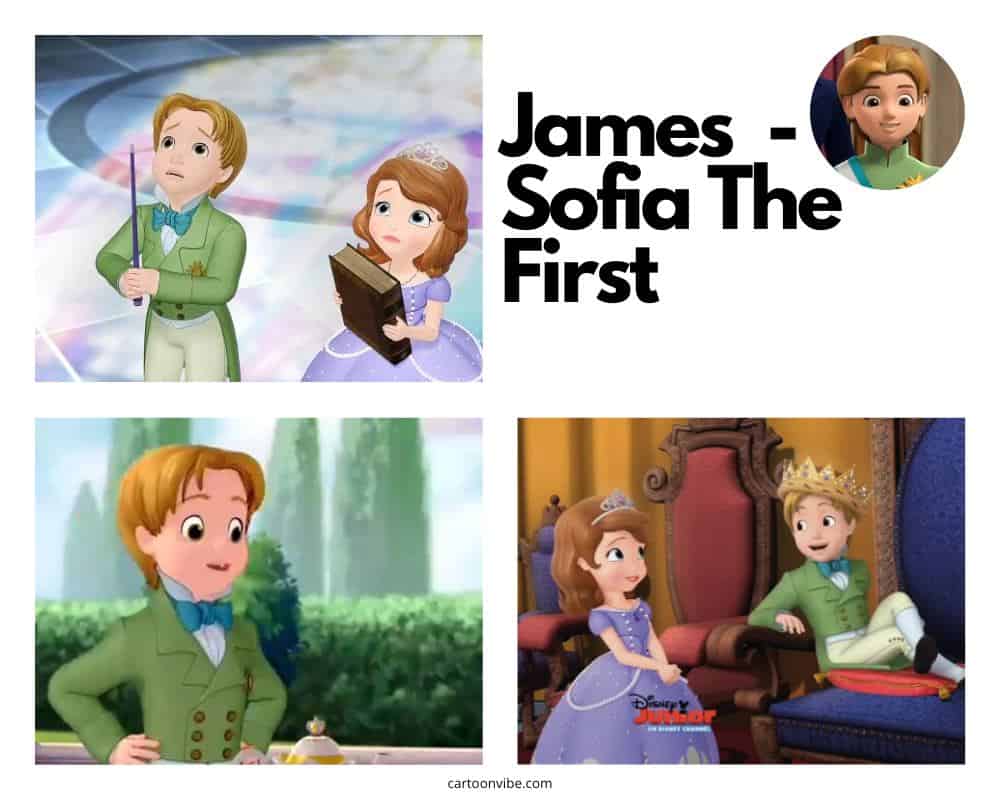
James is Princess Sofia’s older brother from the Disney Junior series, and his arc is a small, sweet one: he starts as a teasing big-brother type and matures into a supportive prince who learns about responsibility and family. He is aimed squarely at younger viewers, but the growth is real.
- Award: Most Wholesome Big Brother
- Why he wins it: his whole journey is learning to show up for his little sister.
- My take: a preschool-era prince who models decent sibling behavior.
Prince Kit (Cinderella 2015)
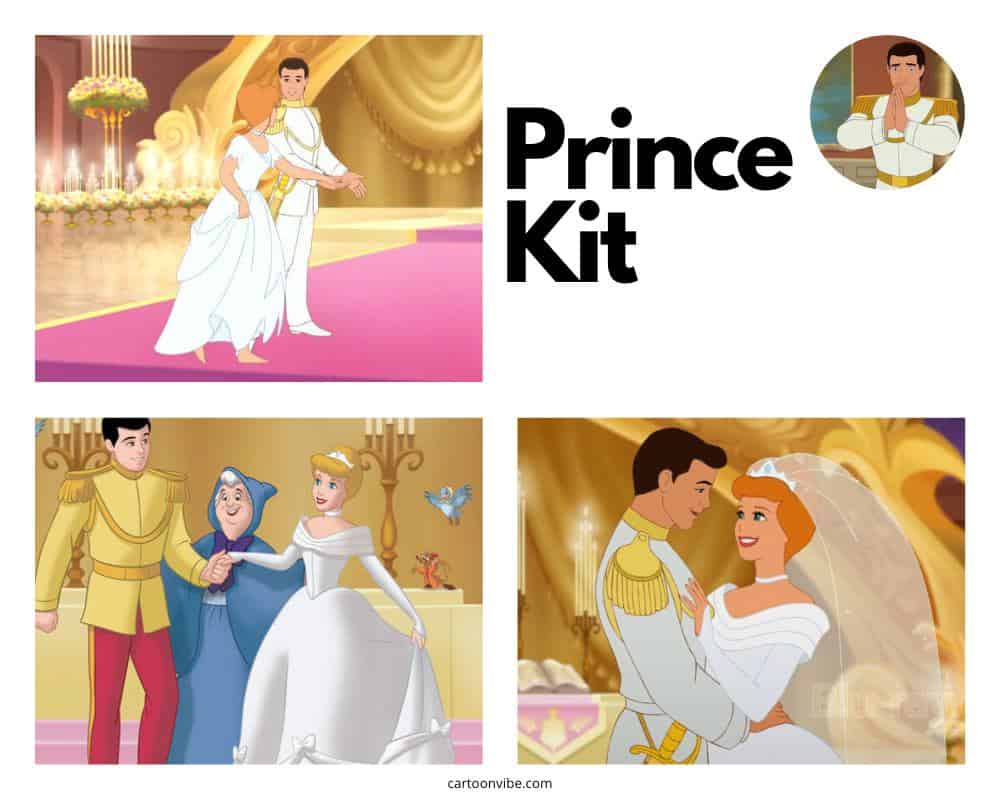
Prince Kit is the live-action Cinderella’s answer to how thin the animated Charming was. The 2015 film gives him warmth, a real relationship with his father, and honest care for Cinderella, making him one of the more likable live-action princes even if critics wanted more depth.
- Award: Most Improved Remake
- Why he wins it: he takes the blankest prince in the canon and gives him an actual inner life.
- My take: proof the archetype works once someone writes it a personality.
Prince Edward (Enchanted)
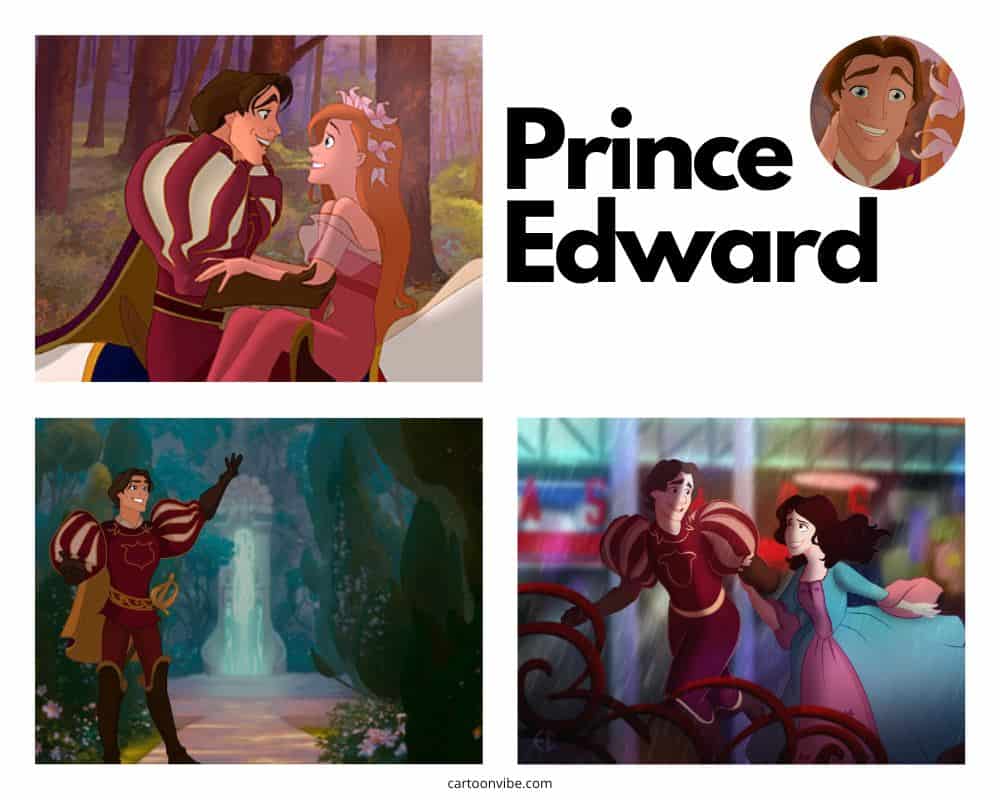
Prince Edward is a loving parody of the entire archetype. He starts as the textbook handsome prince and Giselle’s intended, then the 2007 film reveals him to be shallow, self-absorbed, and hilariously out of his depth in the real world. He exists specifically to poke fun at the classic Disney prince.
- Award: Most Needlessly Dramatic
- Why he wins it: he sword-fights a city bus, bursts into song mid-sentence, and treats every moment like a grand operatic climax.
- My take: the prince as affectionate self-parody.
Prince Florian (Snow White and the Seven Dwarfs)
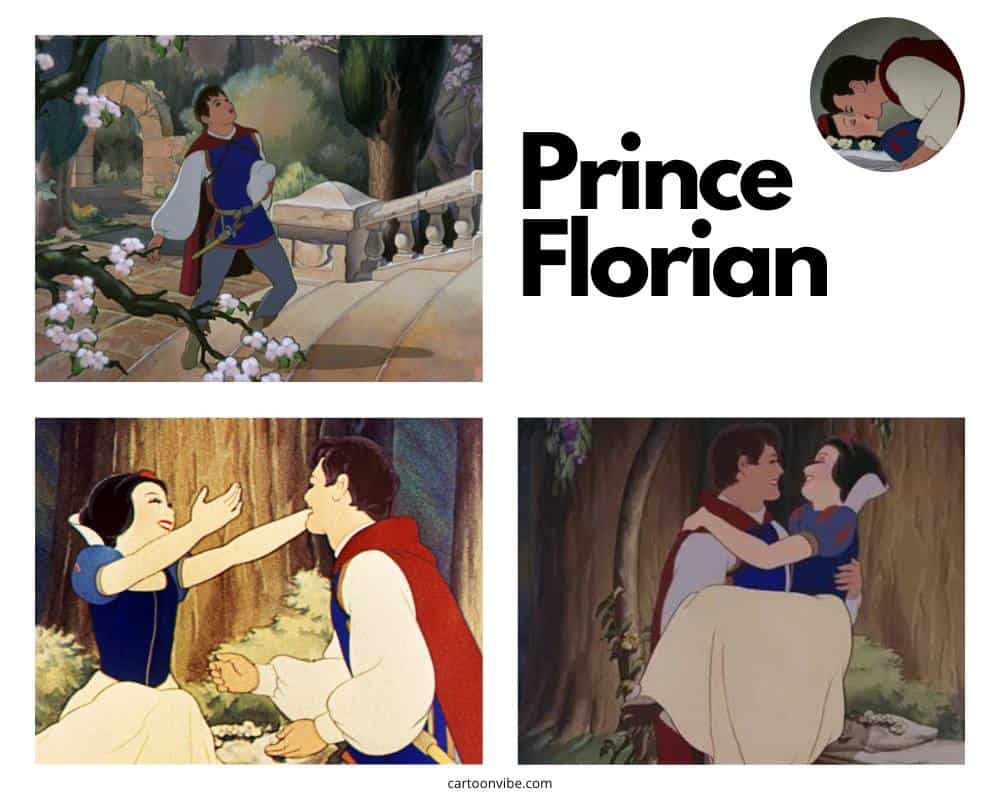
Florian is the one that started it all, the first Disney prince ever made, even if he barely appears. He embodies the earliest fairy-tale ideals, bravery and love at first sight, waking Snow White with a kiss. He is only ever “The Prince” on screen; “Florian” came from later Disney France marketing, and “Ferdinand” is a long-standing mix-up.
- Award: The “Blink and You’ll Miss Him” Award
- Why he wins it: he has under two minutes of screen time because animators found a realistic human male so hard to draw that they cut most of his scenes.
- My take: the founding prince, and the least seen.
John Smith (Pocahontas)
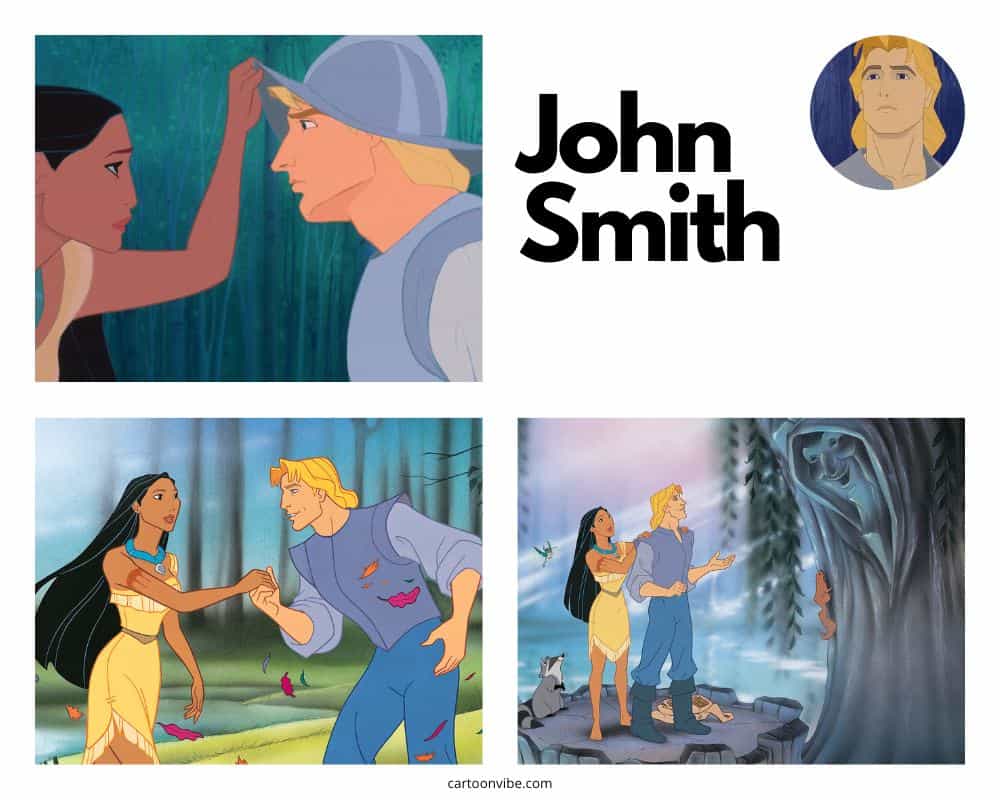
John Smith was a deliberate break from the polished fairy-tale prince, a soldier and explorer written as flawed and complex rather than perfect. Over the 1995 film he makes real mistakes and changes his mind, which was new for a Disney male lead. Voiced by Mel Gibson and based on the real historical figure, the film has drawn steady criticism for romanticizing colonization and playing loose with history.
- Award: Biggest Change of Heart
- Why he wins it: he arrives as a colonial soldier and leaves questioning everything he came to do, a real on-screen shift.
- My take: a flawed lead from a film that has aged into a real debate.
Li Shang (Mulan)
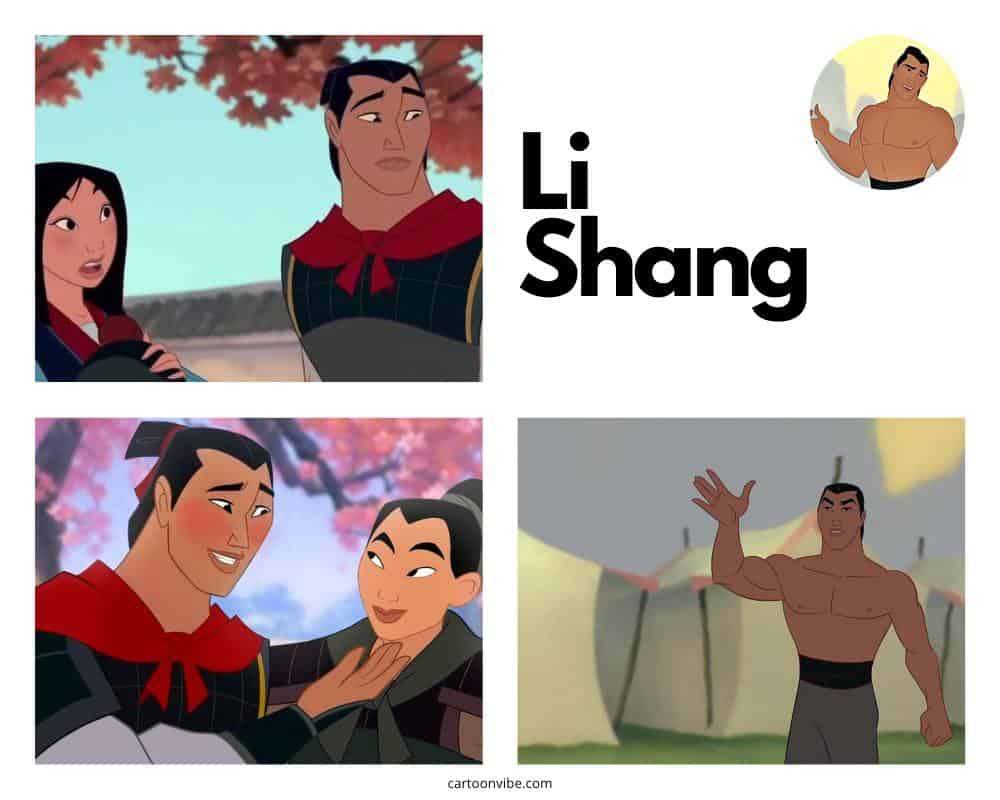
Li Shang is one of the most quietly progressive characters in the lineup, an army captain who leads by earning respect and gives it back in kind. His arc is realizing that Mulan is fully his equal, which made him a low-key role model for dismantling gender roles. Voiced by B.D. Wong, he became a bisexual icon to many fans, and Disney wrote him out of the 2020 live-action remake, splitting him into a mentor and a separate love interest because producers felt a commanding officer doubling as the romance felt wrong after the MeToo era.
- Award: Best Training Montage
- Why he wins it: he leads “I’ll Make a Man Out of You,” one of the most iconic sequences Disney has ever animated.
- My take: a captain written with more nuance than most princes get.
Hans (Frozen)
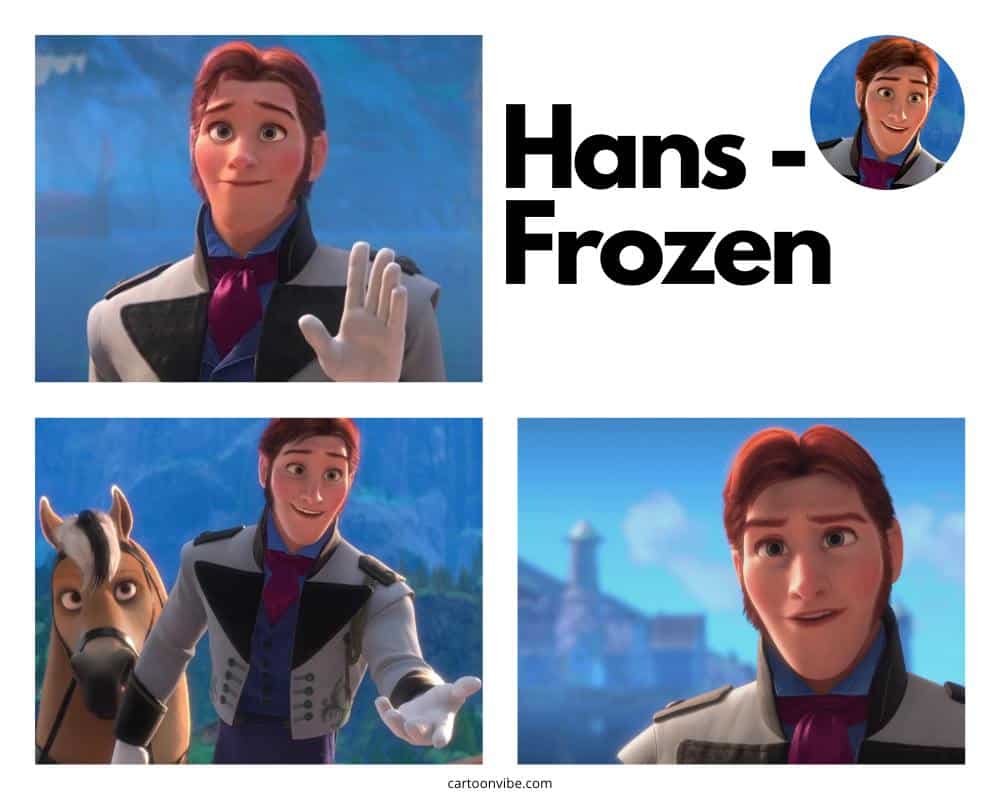
Hans is Disney deliberately dismantling the love-at-first-sight prince. He plays the perfect charming suitor for most of Frozen, then reveals he has been manipulating Anna for the throne the entire time. The tell was hiding in plain sight: he is the thirteenth in line to the throne of the Southern Isles, which is exactly why he is so desperate to marry into power.
- Award: Biggest Red Flag
- Why he wins it: the whole point of the character is that charm is not the same as character; he is a con with a nice jaw.
- My take: the twist that retired love at first sight for a generation.
Kristoff (Frozen)
Kristoff is the everyman of the group, a gruff ice harvester whose closest friend is a reindeer named Sven and who is pointedly not royalty, a fact the film uses to contrast him with the charming-prince trope and with Hans. He warms up to Anna slowly and sincerely, with no love-at-first-sight shortcut. He also has the most considerate manners in the lineup: at the end, he pauses to ask permission before kissing her.
- Award: Most Respectful (He Asks First)
- Why he wins it: he stops mid-moment to ask Anna’s consent before their first kiss, a small green flag that stuck with audiences.
- My take: the anti-Hans, and the film knows it.
Prince Naveen (The Princess and the Frog)
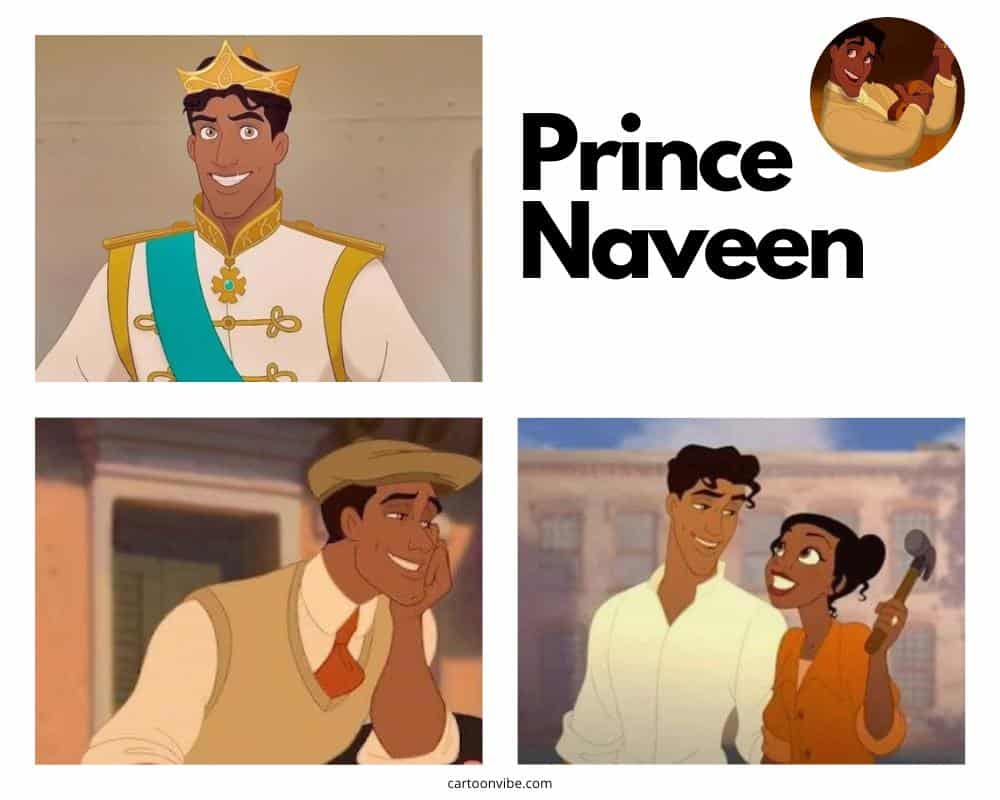
Prince Naveen has one of the most satisfying arcs of any Disney prince. He starts as a spoiled, broke charmer coasting on his looks, prince of the fictional Maldonia, until Dr. Facilier turns him into a frog and forces him to learn responsibility, work, and real love alongside Tiana. The 2009 film also gave us Tiana, Disney’s first Black princess, making Naveen part of a real milestone.
- Award: Most Improved
- Why he wins it: he goes from a jobless playboy to a partner who cooks, works, and grows up, all while stuck as a frog.
- My take: the clearest glow-up of character in the prince canon.
Prince Charming (Cinderella)

Prince Charming is the literal blueprint, the character whose title became shorthand for the fairy-tale gentleman. He is kind and gracious, but the 1950 film gives him almost no personality or screen time, which is exactly why later princes read as such upgrades. He is also never named on screen; Disney France later floated “Henri.”
- Award: The “Wait, What’s His Name?” Award
- Why he wins it: the man who defined Prince Charming is never given a name in his own movie.
- My take: an archetype so thin he is a well-dressed plot function.
Prince Phillip (Sleeping Beauty)
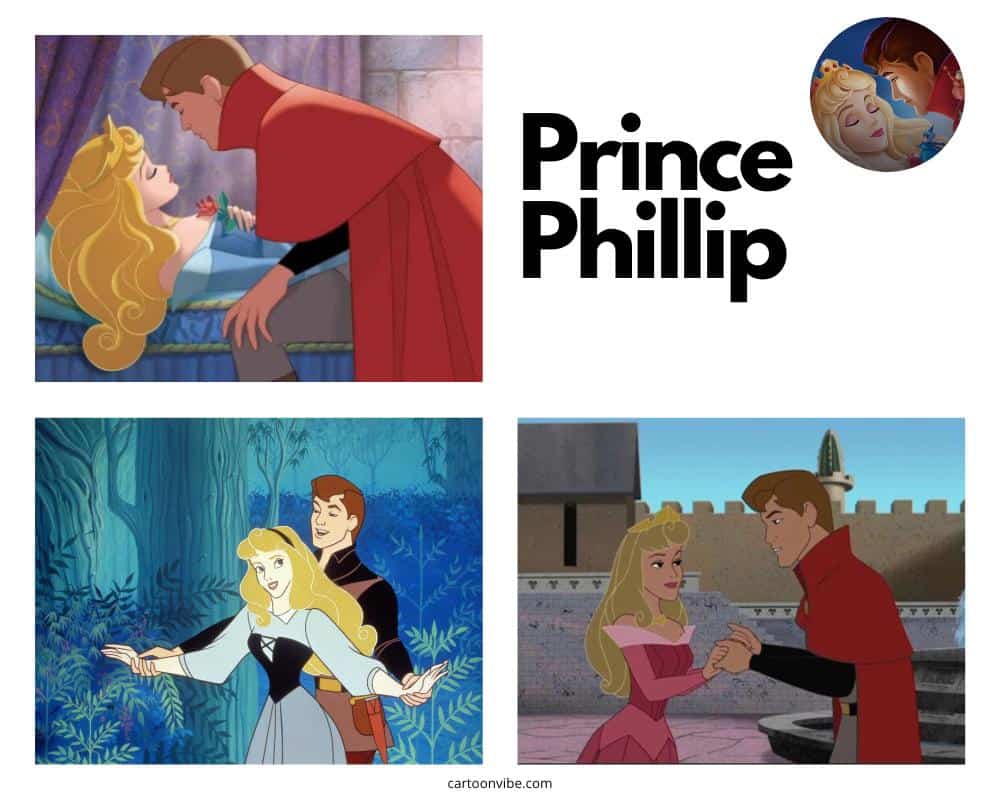
Prince Phillip is the first Disney prince the studio truly took seriously, and it shows. He was the first given a proper name and a real role, to the point that most of Sleeping Beauty’s second act is built around him while Aurora sleeps. He does the heavy lifting himself, battling Maleficent in full dragon form to break the curse.
- Award: Best Dragon-Slaying Technique
- Why he wins it: he fights Maleficent as a fire-breathing dragon and wins, the first prince to do real combat.
- My take: the blueprint for the prince who is a plot driver, not a plot device.
Hercules (Hercules)
Hercules is a prince of the gods, the son of Zeus born divine but raised mortal, who has to prove himself a true hero to earn his place back on Mount Olympus. His journey from gawky outcast to selfless champion reframed heroism around heart rather than muscle, with the film stating outright that a true hero is measured by the strength of his heart. In the end he gives up godhood itself to stay with Megara.
- Award: Best Grand Romantic Gesture
- Why he wins it: he trades immortality and a seat on Mount Olympus to grow old with the woman he loves.
- My take: the rare prince who wins the girl by giving up literally everything else.
Simba (The Lion King)
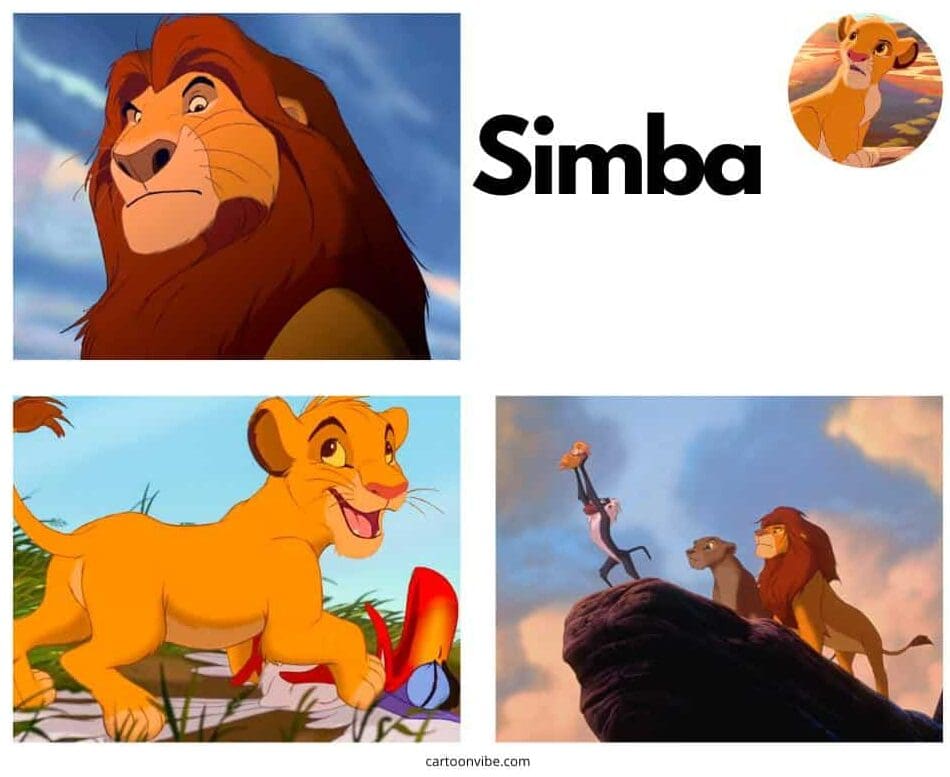
Simba is royalty of a different kind, the lion prince and future king of the Pride Lands in The Lion King, so he rarely gets grouped with the human princes. His coming-of-age arc, fleeing the guilt of his father’s death and finally returning to claim his throne, is the hero’s journey in its purest Disney form. Mufasa’s death remains one of the studio’s defining gut-punches.
- Award: Longest Gap Year (Hakuna Matata Era)
- Why he wins it: he answers royal trauma by running off to eat bugs with a meerkat and a warthog until adulthood.
- My take: the only prince whose arc includes a full carefree exile.
Flynn Rider (Tangled)
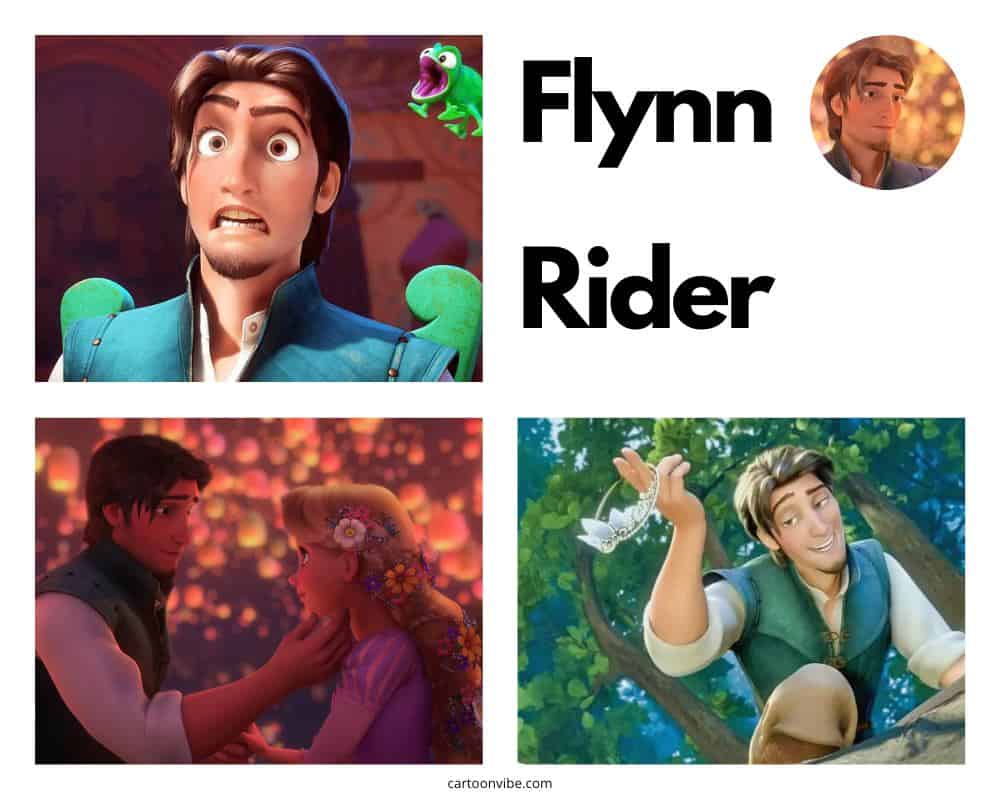
Flynn Rider proved Disney could write a truly funny love interest. He is a witty, roguish thief whose real name is Eugene Fitzherbert, and his hostility-to-romance chemistry with Rapunzel carries the whole film. Flynn’s look was no accident: the filmmakers reportedly held a meeting with the women at the studio to design the most handsome leading man they could.
- Award: Most Scientifically Engineered Smolder
- Why he wins it: the studio reportedly polled its women staff to build the most handsome prince possible, then handed him a signature smolder.
- My take: the rogue who made flawed and funny the new default.
Prince Eric (The Little Mermaid)
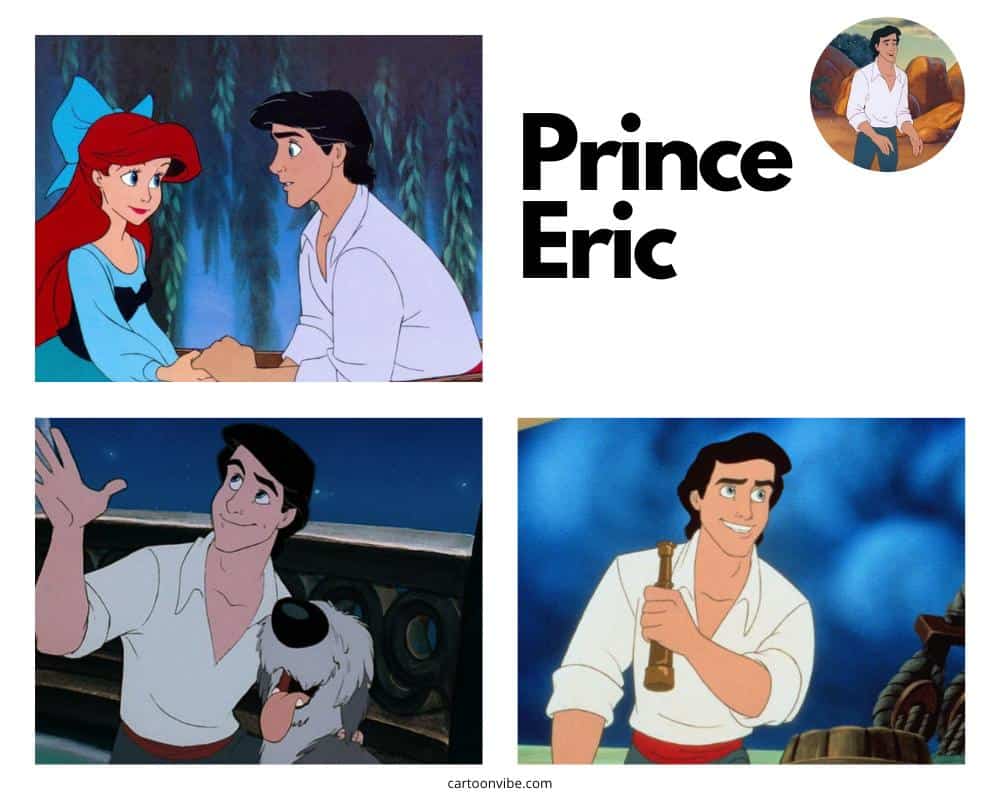
Prince Eric reinvented the role. After decades of interchangeable princes, he arrived with an actual personality, a dog named Max, a loyal butler in Grimsby, and a backstory: he has rejected every arranged match in the kingdom, holding out for real love. He was the first prince since Phillip to truly drive the plot, and the first built with a deliberately distinct design instead of a generic template.
- Award: Biggest Green Flag
- Why he wins it: he turns down every match the kingdom arranges and waits for a partner he loves.
- My take: personality, a dog, and standards; the template every Renaissance prince followed.
Prince Adam / The Beast (Beauty and the Beast)
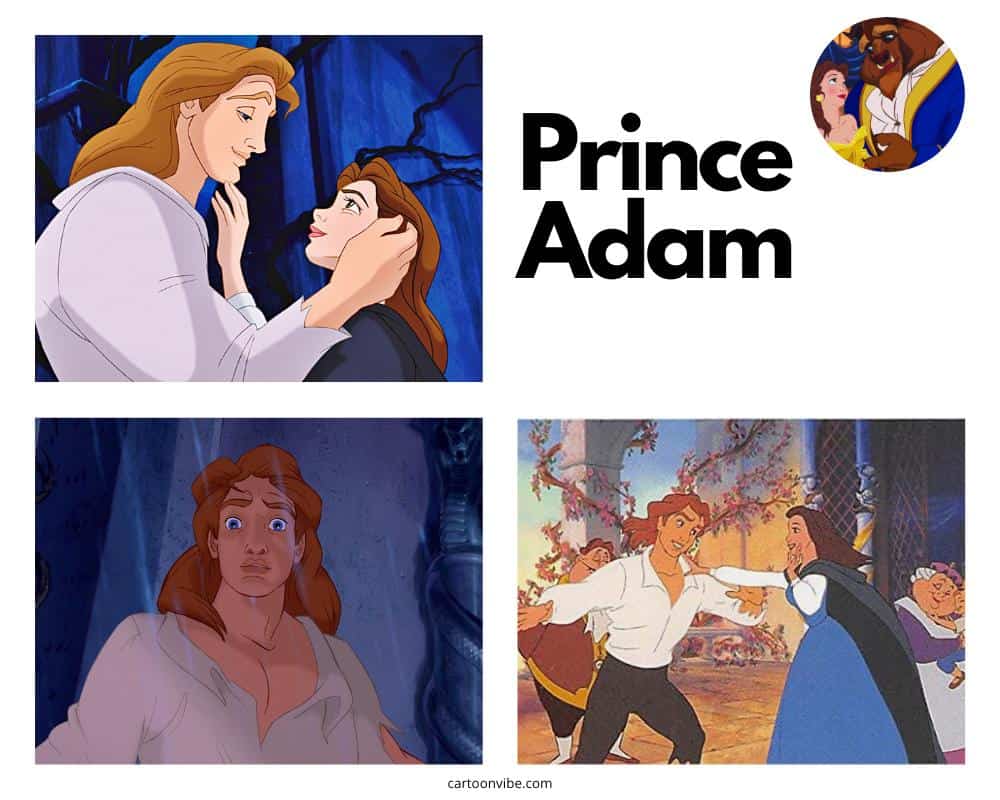
The Beast is the most complex prince Disney ever built, a cruel royal cursed into a monster who can only break the spell by learning to love and be loved. His redemption is the entire thesis of the film. Worth knowing: “Prince Adam” is not official, it traces to a 1998 trivia game and some merchandise, and his design is a deliberate animal mashup, a buffalo’s head, a lion’s mane, a boar’s tusks, a gorilla’s brow, and a bear’s body.
- Award: Best Redemption Arc
- Why he wins it: he starts the film as the villain of his own story and earns his way out of it.
- My take: proof a Disney lead can begin truly unlikable and still win the romance.
Aladdin (Aladdin)
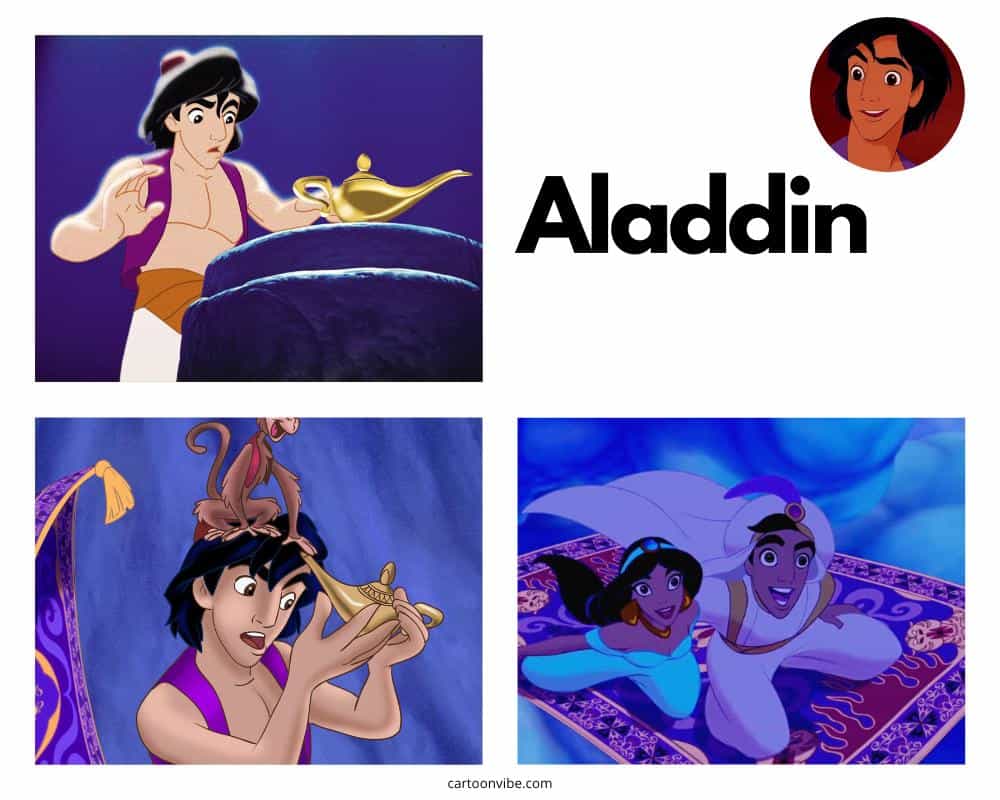
Aladdin is the only Disney prince who is not royal by birth, a street kid who cons his way into a palace and earns the crown by growing into someone worth it. His whole arc is about class and honesty: he wins Jasmine only after he drops the fake “Prince Ali Ababwa” persona the Genie conjured for him. That underdog honesty is why Aladdin remains one of the most relatable leads in the canon.
- Award: Most Creative Cover Story (Prince Ali Ababwa)
- Why he wins it: the Genie invents an entire kingdom on the spot so a street rat can pass as royalty.
- My take: the only prince whose real flaw is pretending to be a prince.
How Many Disney Princes Are There?
Because there is no official line, the count depends on who you ask. The most commonly cited “core” group is ten princes, each paired with a classic princess: Florian, Prince Charming, Phillip, Eric, the Beast, Aladdin, John Smith, Li Shang, Naveen, and Flynn Rider.
Beyond those, other male leads such as Hercules, Kristoff, and Hans get folded in depending on the list, which is how you end up with a lineup like this one.
What Makes a Disney Prince? Eight Common Traits
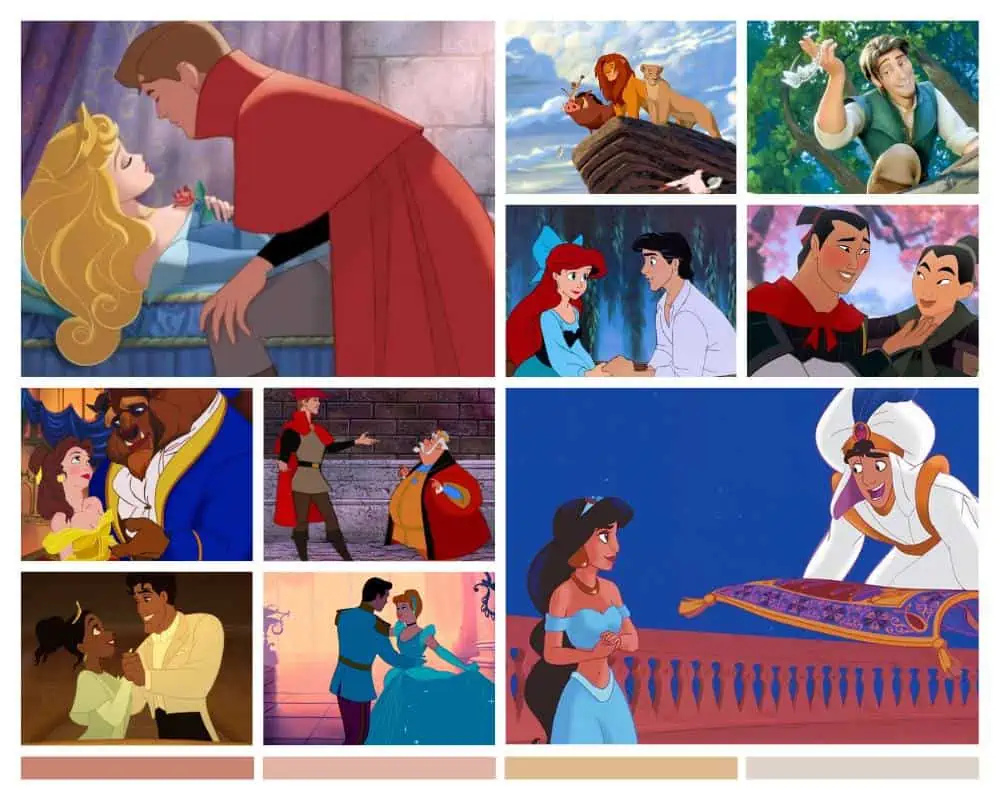
Across every entry above, a handful of traits keep resurfacing:
- Handsome: almost always drawn with strong, classic features.
- Brave: willing to risk their own safety for someone else.
- Loyal and protective: fiercely devoted to the people they love.
- Confident: a clear sense of inner strength and conviction.
- Charming: able to win people over with charisma and wit.
- Independent: active in their own story rather than waiting around.
- Musical: a surprising number get their own song.
- Royal: usually of royal blood, or royal by marriage.
The evolution is the interesting part. Early princes like Florian and Charming were flawless plot devices who showed up to rescue and marry the princess.
The modern ones, Aladdin, Naveen, Flynn, and Kristoff, are flawed, funny, and allowed to grow, which says a lot about how the idea of an ideal partner has changed.
So who takes your top trophy, the classic charmers like Phillip and Eric, or the funny, flawed modern ones like Flynn and Naveen? Drop your pick in the comments.

– Prince Florian – I see him as gentle, romantic, quiet, and old-fashioned. He has a soft fairy-tale personality and feels like the classic dream prince type.
– Prince Charming – I would describe him as graceful, polite, patient, and traditional. He has a calm royal personality and gives off that classic elegant prince energy.
– Prince Phillip – I see Phillip as brave, romantic, loyal, and confident. He feels more active than some of the earlier princes because he actually fights for the person he loves.
– Prince Eric – I think Eric has an adventurous, kind, curious, and open-hearted personality. He feels romantic, but also free-spirited because he loves the ocean and wants more from life.
– Beast / Prince Adam – I see him as emotional, wounded, stubborn, and protective. His personality starts off angry and closed-off, but he slowly becomes softer, kinder, and more selfless.
Disney Princes and Romantic Male Leads
– Aladdin – I see Aladdin as clever, charming, brave, and playful. He can be insecure at times, but deep down he has a good heart and wants to be seen for who he really is.
– John Smith – I would describe him as adventurous, bold, curious, and open-minded by the end of the story. He starts off with his own beliefs, but he changes when he learns from Pocahontas.
– Li Shang – I see Shang as disciplined, serious, honorable, and loyal. He is strict at first, but his personality shows a strong sense of duty, fairness, and respect.
– Prince Naveen – I think Naveen is charming, funny, carefree, and flirtatious at first. What makes him interesting is how he grows into someone more responsible, sincere, and loving.
– Flynn Rider / Eugene Fitzherbert – I see Eugene as witty, sarcastic, clever, and secretly soft-hearted. He acts selfish at first, but underneath that confidence is someone who wants love, trust, and a real home.
– Kristoff – I would describe Kristoff as loyal, awkward, honest, protective, and down-to-earth. He is not flashy like a classic prince, but that is what makes him feel more real and lovable.
Disney Male Heroes and Prince-Style Characters
– Hercules – I see Hercules as kind, brave, innocent, and determined. He wants to prove himself, but his best personality trait is that he stays gentle even when he becomes powerful.
– Tarzan – I would describe Tarzan as curious, protective, loyal, and instinctive. His personality feels pure because he is learning about the world while still staying connected to his family and home.
– Quasimodo – I see Quasimodo as gentle, shy, kind, artistic, and deeply emotional. He has one of the softest personalities because he wants love and acceptance more than anything.
– Milo Thatch – I think Milo is intelligent, awkward, curious, passionate, and kind. He is not the typical heroic male lead, but his personality makes him easy to root for.
– Jim Hawkins – I see Jim as rebellious, emotional, adventurous, and misunderstood. His personality has a lot of hurt behind it, but he grows into someone brave and responsible.
– Kenai – I would describe Kenai as stubborn, emotional, protective, and immature at first. His story is powerful because he learns empathy, responsibility, and what family really means.
– Prince Edward – I see Edward as dramatic, romantic, innocent, and very fairy-tale minded. He is funny because he acts like a perfect storybook prince, but he also has a genuinely good heart.
– Ralph – I think Ralph is insecure, loyal, protective, and emotional. He may not be a prince, but he has a hero personality because he wants to be accepted and do the right thing.
– Nick Wilde – I see Nick as sarcastic, clever, guarded, and charming. His personality is shaped by disappointment, but once he trusts someone, he becomes loyal and surprisingly caring.
– Maui – I would describe Maui as confident, funny, proud, and larger-than-life. He hides his insecurity behind jokes and ego, but his personality becomes more caring as the story goes on.
Villain or Complicated Disney Princes
– Prince Hans – I see Hans as charming on the surface, but manipulative, ambitious, and selfish underneath. His personality works because he pretends to be the perfect prince while hiding who he really is.
– King Magnifico – I would describe him as charismatic, proud, controlling, and insecure. He presents himself as a noble ruler, but his personality becomes darker when he feels his power being challenged.