
The 1970s were the decade Saturday morning cartoons became a weekly institution. Networks devoted hours to animation, Hanna-Barbera produced shows at remarkable speed, and the success of Scooby-Doo in 1969 turned mystery-solving teenagers into one of the decade’s most copied formats.
This guide covers 33 shows, specials and cartoon packages associated with the era.
The main sections focus on 70s cartoons that premiered between 1970 and 1979. The final section separates nine older programs that continued, returned in reruns or became closely associated with cartoons in the 1970s.
The wider rise of the Saturday-morning format is covered in this history from The Saturday Evening Post and in my guide to ABC Saturday morning cartoons.
What Made Cartoons in the 1970s Different
The decade has a texture you can recognise within about four seconds of any episode, and there are practical reasons for it.
- Limited animation kept costs down, so movement was reused constantly.
- Backgrounds and chase sequences were recycled across whole seasons.
- Broadcast standards tightened after 1960s parent-group pressure, so slapstick violence gave way to mysteries and problem-solving.
- Laugh tracks were added to cartoons, which had not been standard before.
The Scooby Formula: Mystery-Solving Teens
One 1969 show reset the entire decade, and every studio spent the seventies rebuilding it with a different gimmick attached.
Josie and the Pussycats (1970)
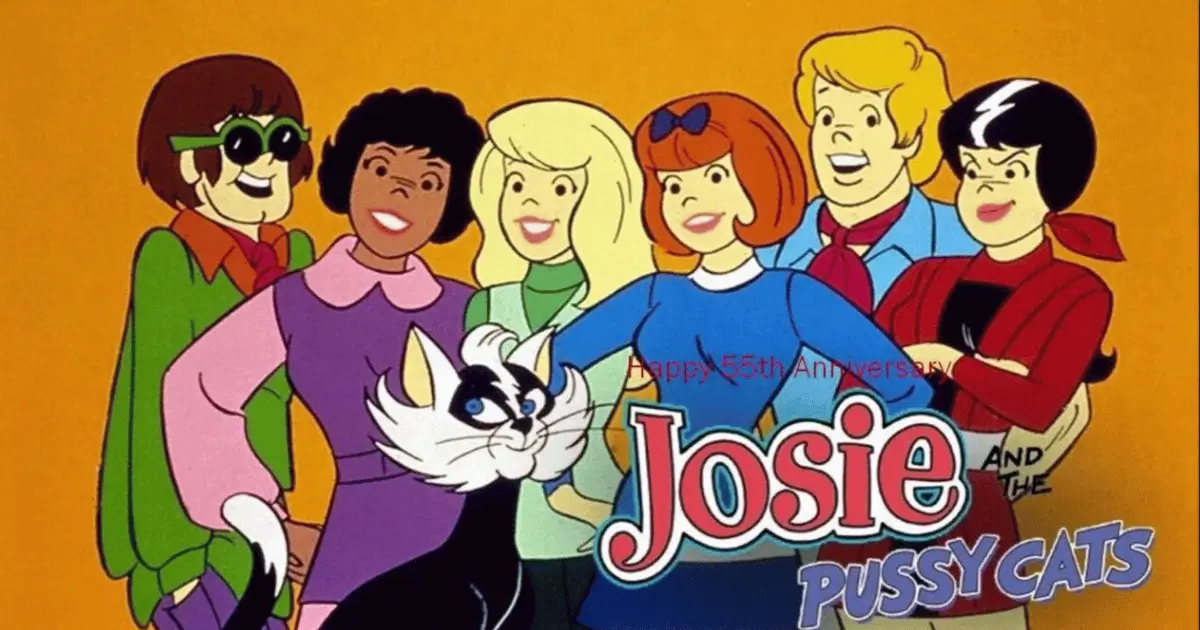
An all-girl band tours the world and keeps stumbling into criminal plots. Hanna-Barbera adapted it from the Archie Comics series for CBS.
- Josie, Valerie and Melody travel with a manager and a hanger-on.
- The band recorded real songs released as an album.
- A 1972 sequel sent the group into orbit as Josie and the Pussycats in Outer Space.
The Funky Phantom (1971)
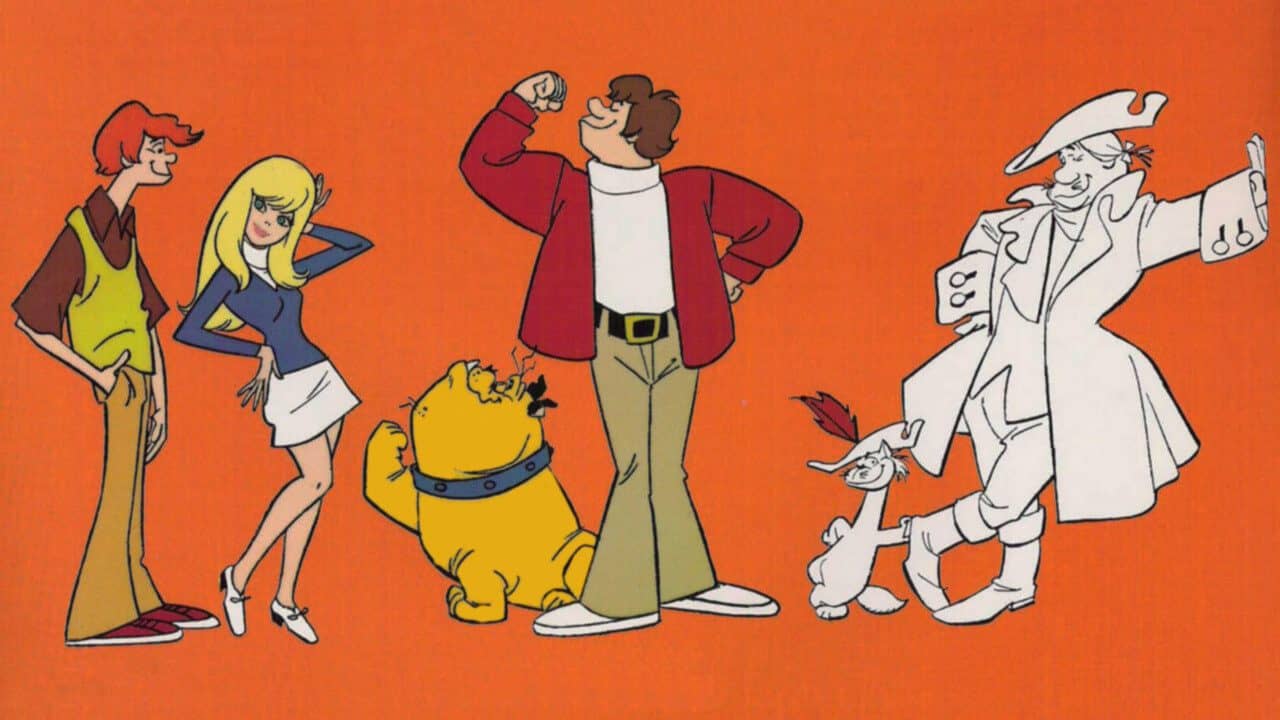
In The Funky Phantom, three teenagers accidentally release the ghost of a Revolutionary War soldier from a grandfather clock, and he joins the group.
- Jonathan Wellington Muddlemore haunts alongside his ghost cat.
- The teens drive a dune buggy called the Looney Duney.
- Only seventeen episodes were made.
Speed Buggy (1973)
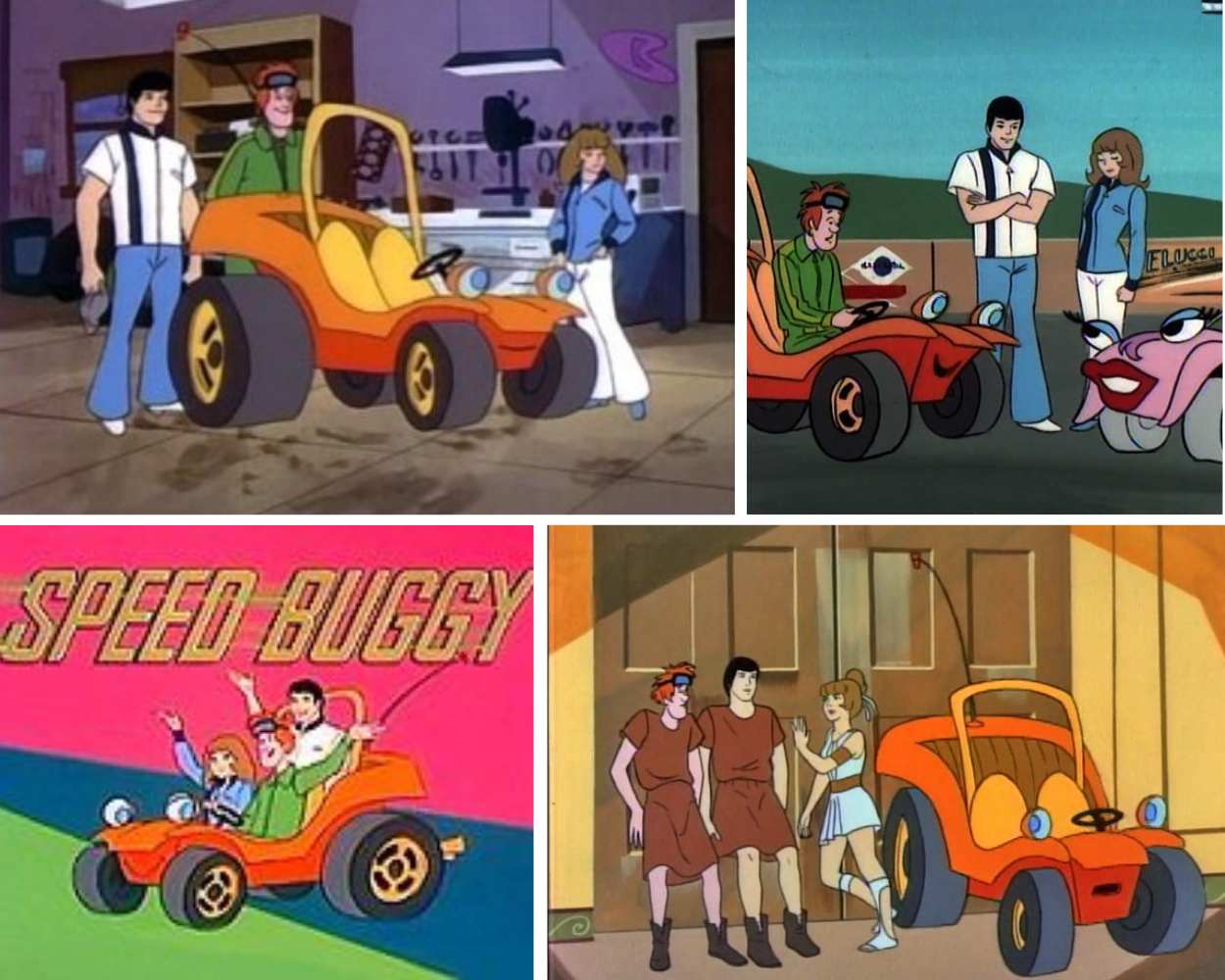
A sentient dune buggy travels the racing circuit with three teenage friends and solves mysteries between events.
- Speed Buggy communicates in sputters and engine noises.
- The trio are Tinker, Debbie and Mark.
- Sixteen episodes aired on CBS.
Jabberjaw (1976)
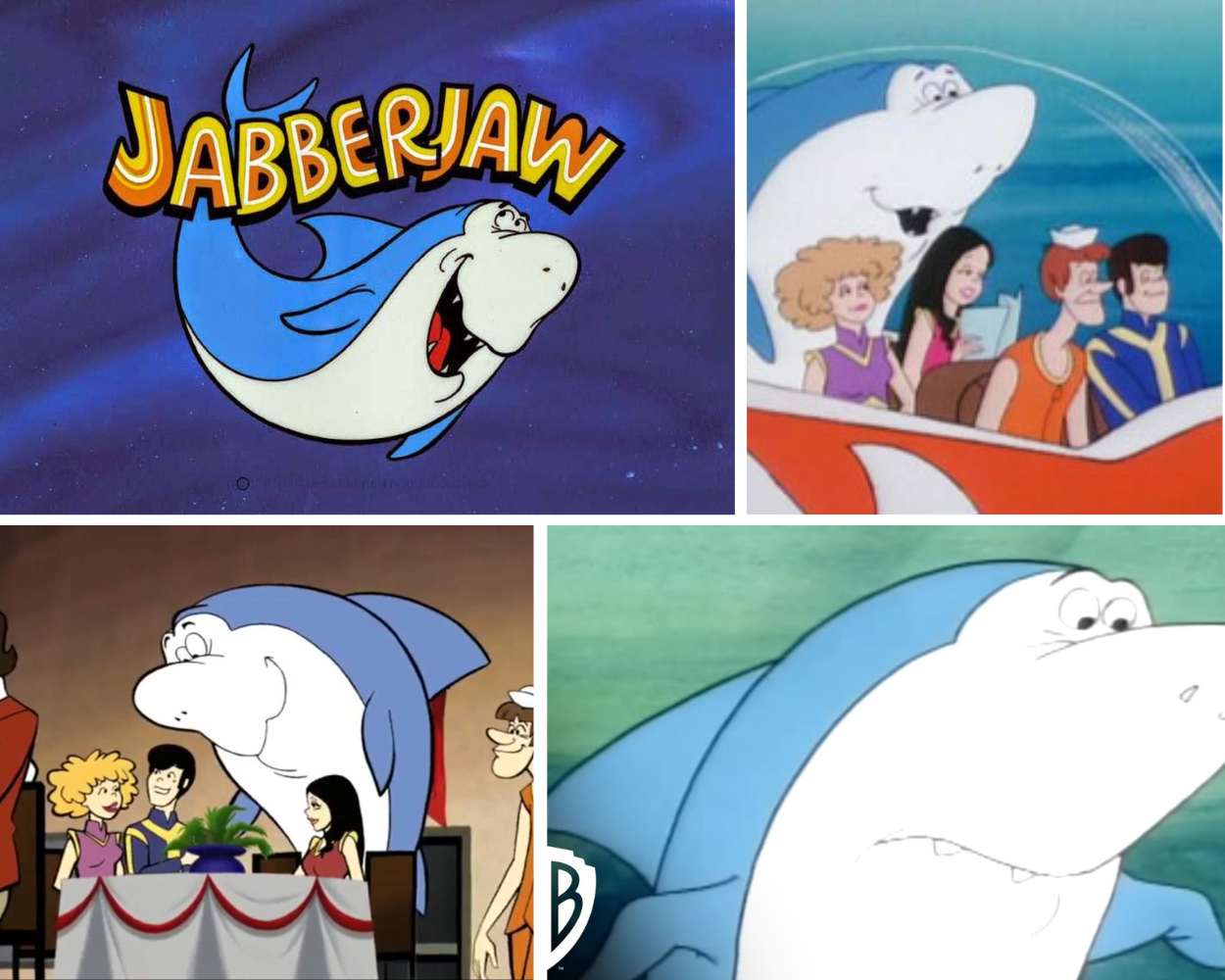
A fifteen-foot great white shark plays drums in a band and solves crimes in an underwater future city.
- The band is called the Neptunes.
- Frank Welker gave Jabberjaw a Curly Howard-style voice, while the “no respect” complaint echoed Rodney Dangerfield.
- Its setting is Earth in 2076, entirely underwater.
70s Superhero and Action Cartoons
Superheroes moved from comics into Saturday morning properly in this decade, and the results ranged from earnest to extremely strange.
Super Friends (1973)
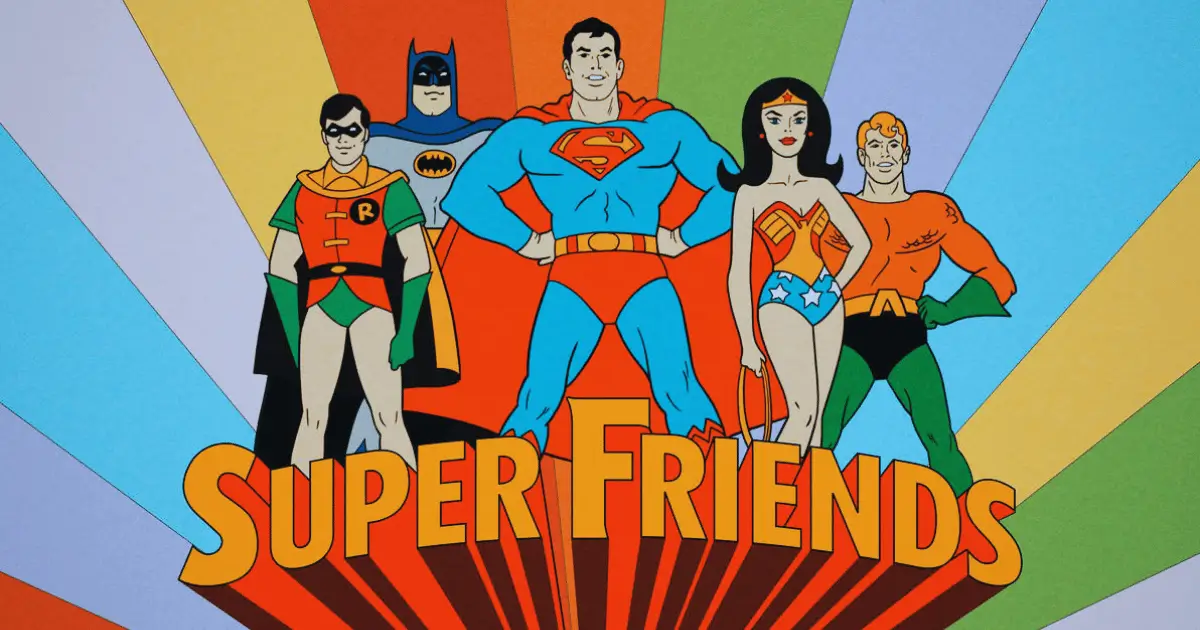
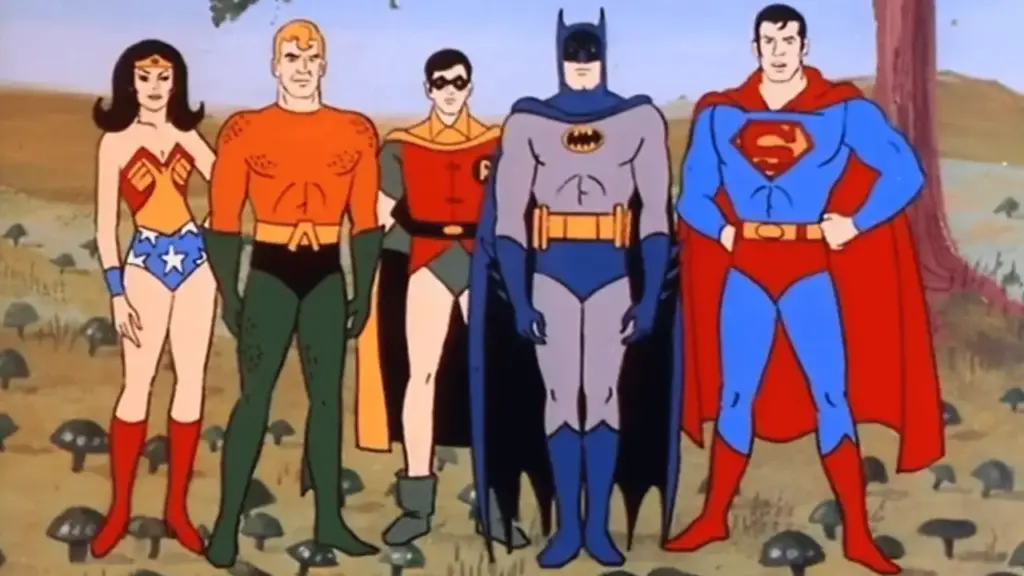
DC’s biggest heroes arrive as a television team in a first season that emphasizes rescues, environmental threats and problem-solving more than comic-book combat.
- Superman, Batman, Wonder Woman and Aquaman anchor the roster.
- Wendy, Marvin and Wonder Dog were added as young audience surrogates.
- The series ran in various forms into the 1980s.
Tarzan, Lord of the Jungle (1976)
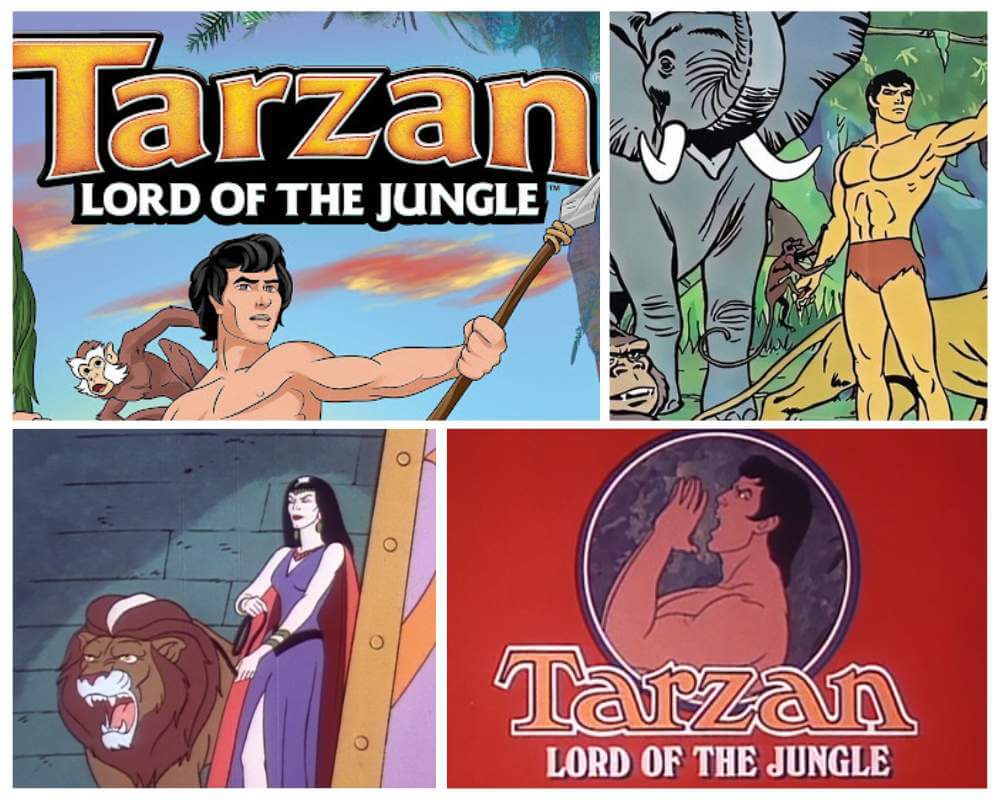
Filmation’s adaptation went back to the Edgar Rice Burroughs novels rather than the film version most people knew.
- This Tarzan is articulate rather than monosyllabic.
- The animation leans on rotoscoping for the movement.
- Filmation produced 36 episodes across four seasons and several changing CBS package titles.
Godzilla (1978)
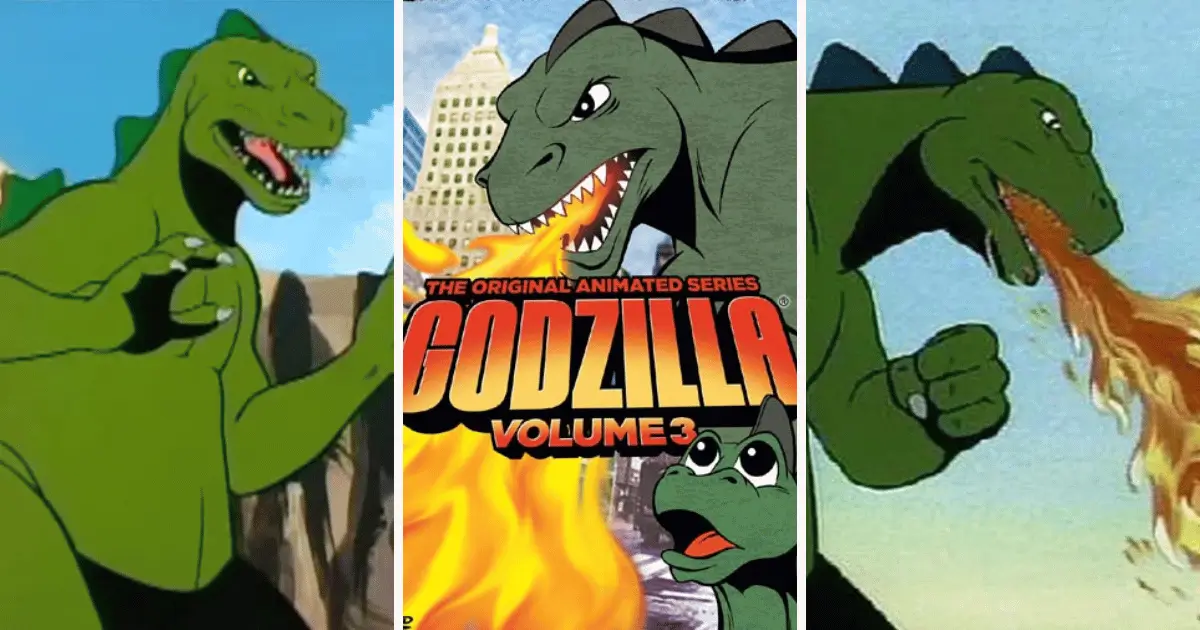
Hanna-Barbera licensed Godzilla for a Saturday-morning series in which he answers a signal device and helps a research crew.
- The crew summon him with a communicator when trouble arrives.
- He is joined by a small comic relief cousin, Godzooky.
- Don Messick provided Godzooky’s voice.
Plastic Man (1979)
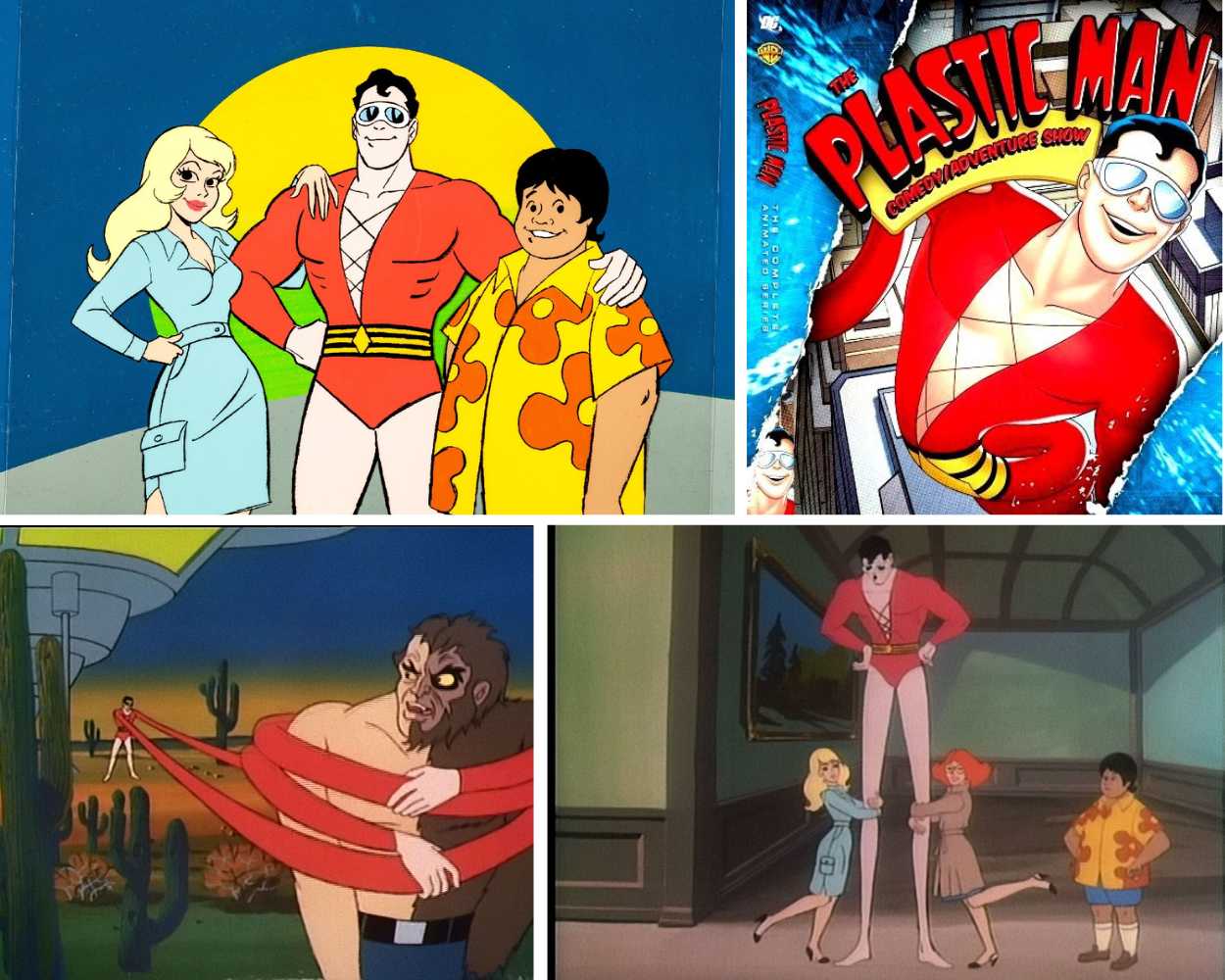
The stretching DC hero got his own comedy-adventure show right at the end of the decade.
- Ruby-Spears produced it for ABC.
- Plastic Man travels with Penny and a character called Hula-Hula.
- The tone is closer to comedy than to Super Friends.
Hanna-Barbera’s Comedy Machine
Hanna-Barbera produced an extraordinary volume of half-hour comedies in these years, and the premises got increasingly odd as the decade wore on.
The Pebbles and Bamm-Bamm Show (1971)
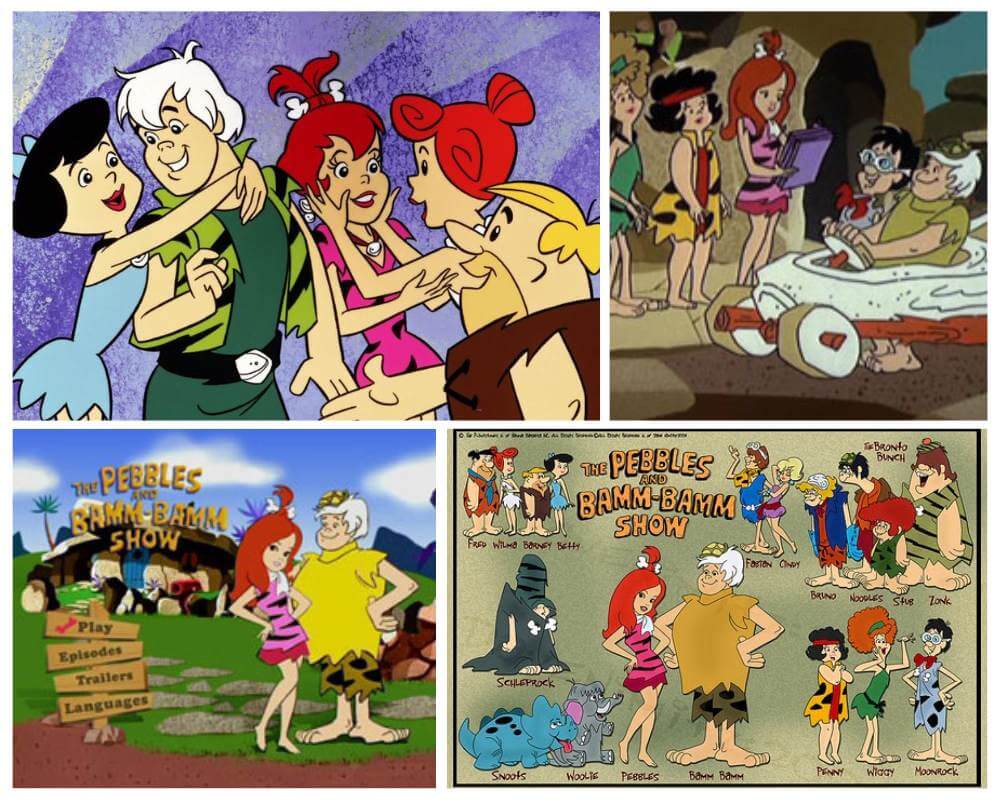
The Flintstones’ children are aged up into teenagers dealing with high school in Bedrock.
- Sally Struthers voiced Pebbles.
- The format borrows heavily from Archie-style teen comedy.
- It ran on CBS for one season.
The Addams Family (1973)
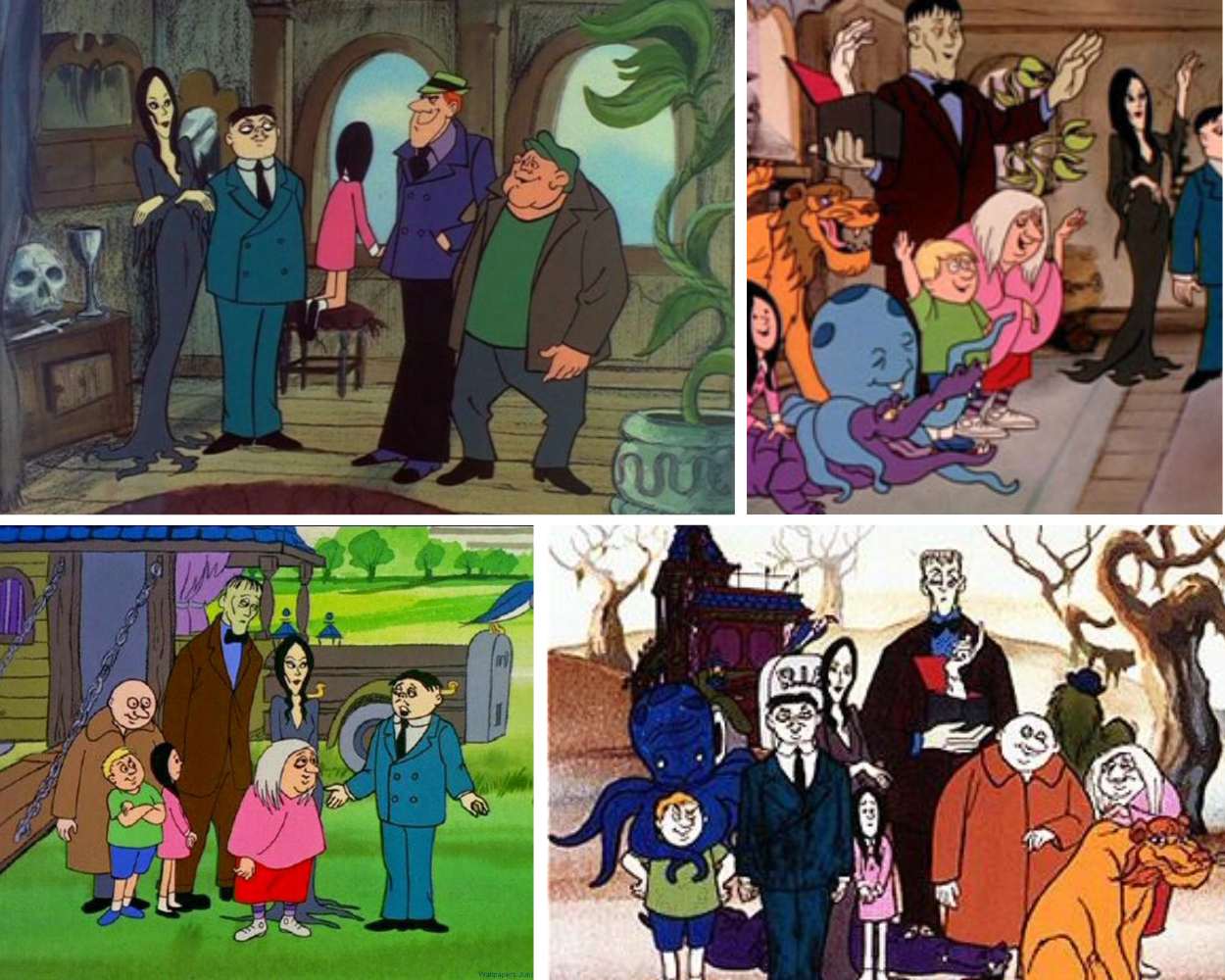
Hanna-Barbera animated the Charles Addams characters and sent them touring America in a haunted camper van.
- Jackie Coogan and Ted Cassidy reprised Fester and Lurch from the live series.
- The family travel rather than staying in the mansion.
- Sixteen episodes aired on NBC.
Inch High, Private Eye (1973)
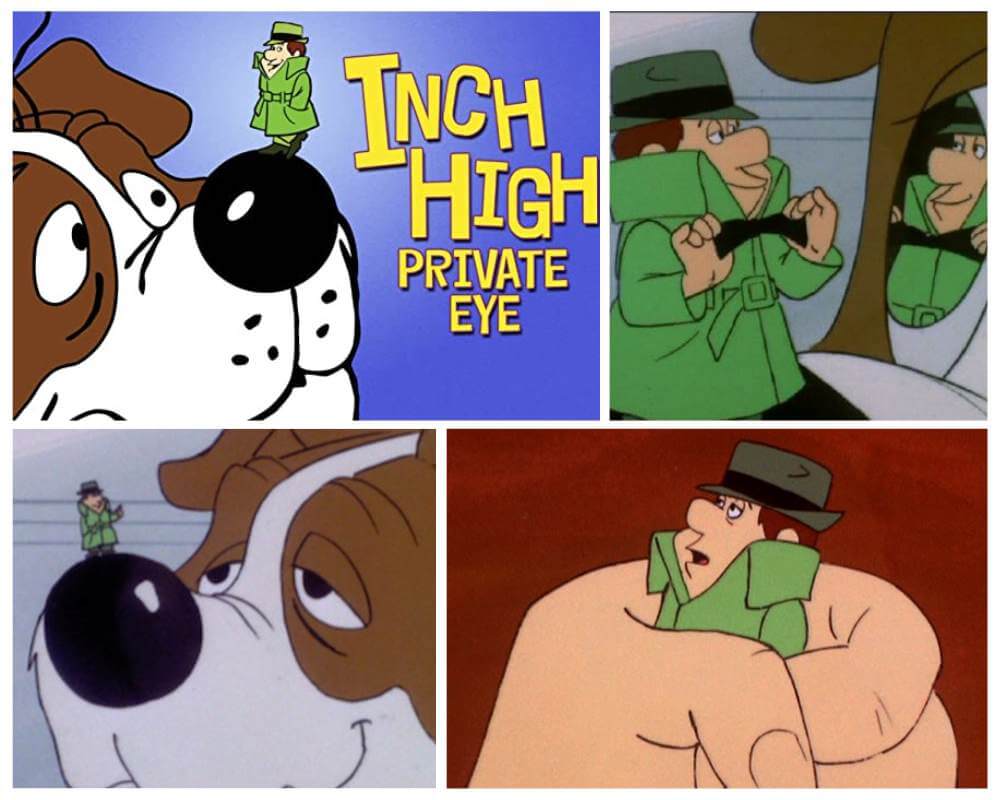
A detective the size of a thumb works cases for the Finkerton Detective Agency, largely by accident.
- Lennie Weinrib voiced the lead.
- He travels with his niece Lori and a dog named Braveheart.
- The agency name is a play on Pinkerton.
Wheelie and the Chopper Bunch (1974)
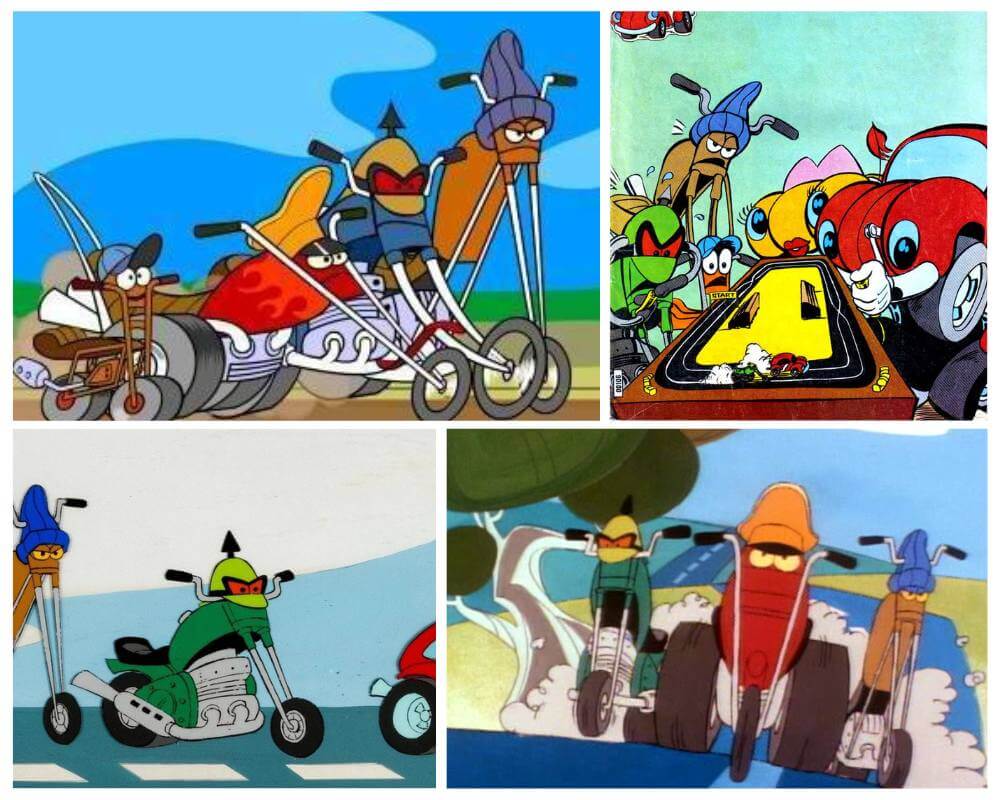
A sentient Volkswagen Beetle who races and performs stunts is harassed by a motorcycle gang.
- Wheelie communicates through his windshield rather than speech.
- The Chopper Bunch are led by a bike named Chopper.
- Thirteen episodes were produced for NBC.
The Great Grape Ape Show (1975)
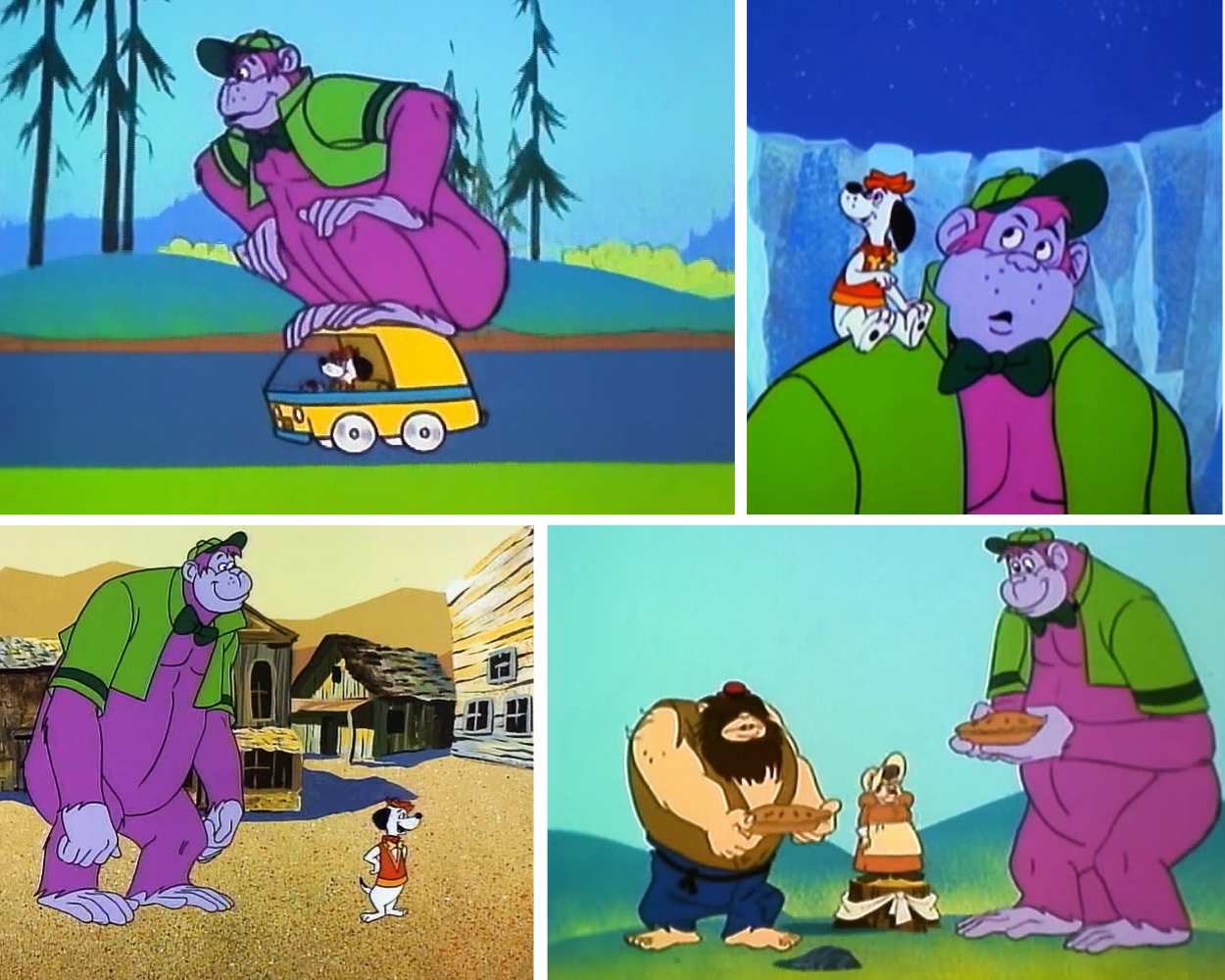
A forty-foot purple gorilla travels the country with a small dog who acts as his handler.
- Grape Ape says his own name constantly, and little else.
- Beegle Beagle is his companion and voice of reason.
- Bob Holt voiced the ape, Marty Ingels the dog.
The Robonic Stooges (1977)
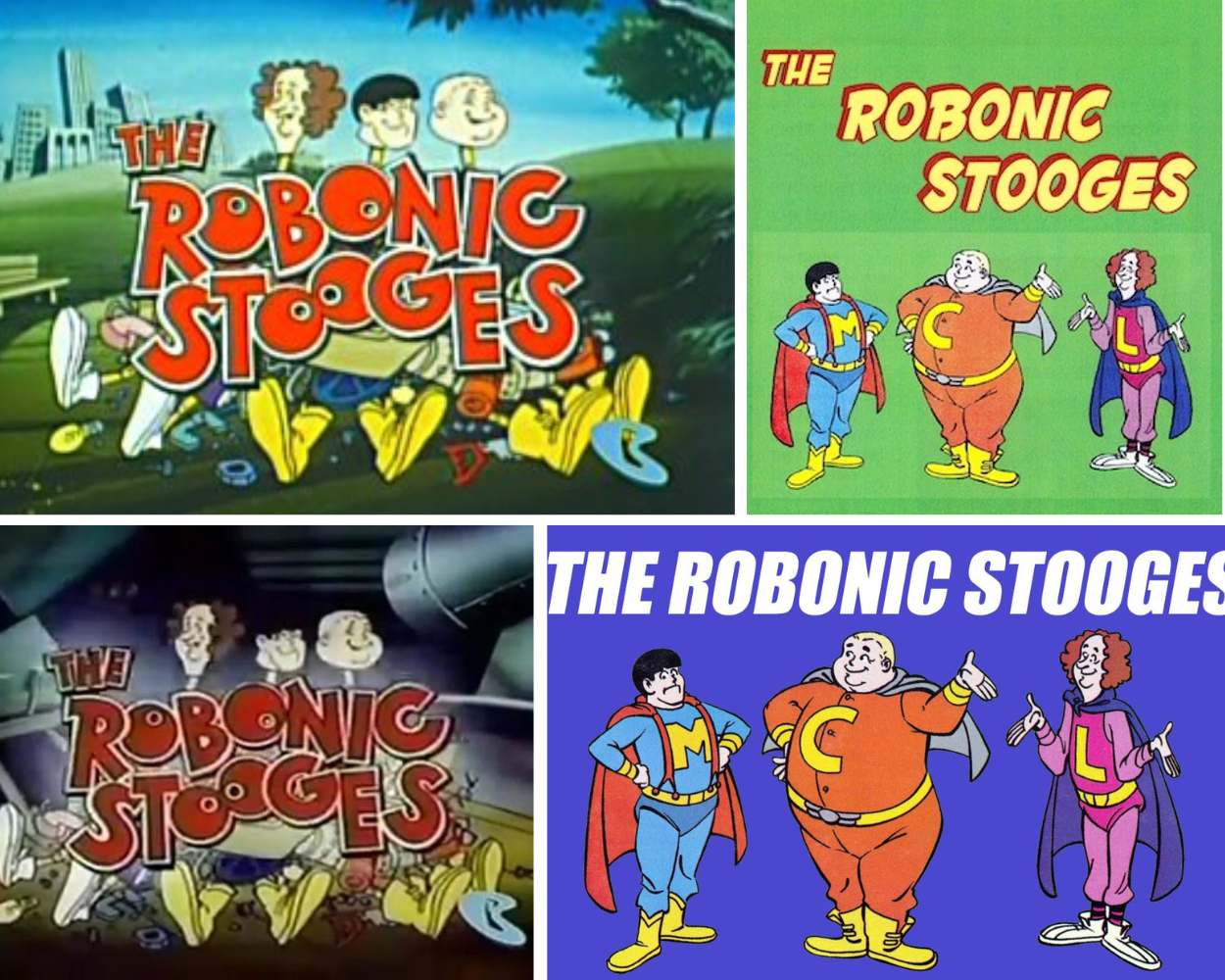
The Three Stooges are rebuilt as cyborg crime-fighters with extendable limbs.
- Moe, Larry and Curly gain bionic arms and legs.
- The premise parodies The Six Million Dollar Man.
- It debuted inside The Skatebirds in 1977, then received its own half-hour slot in early 1978.
Fred Flintstone and Friends (1977)
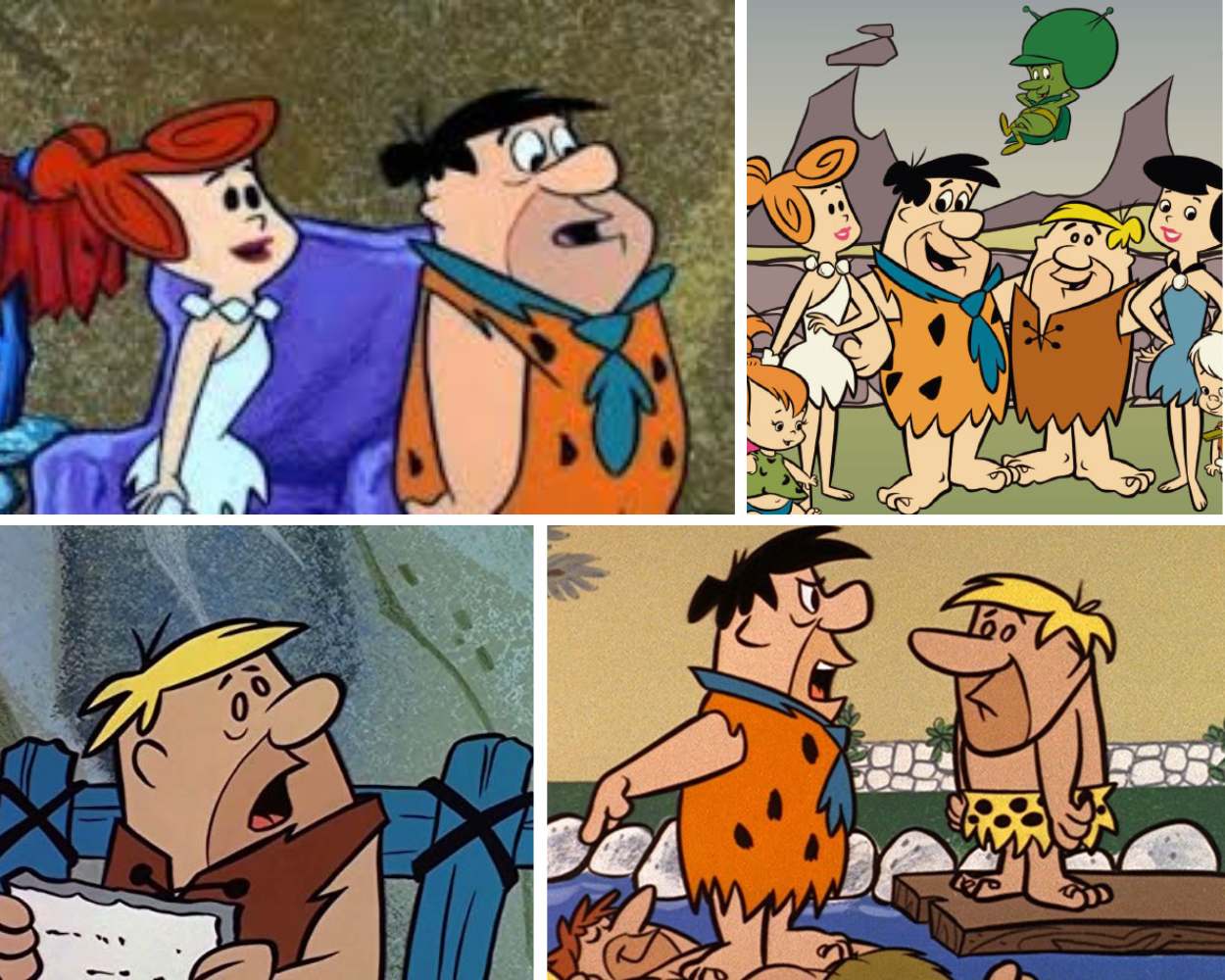
A syndication package that bundled older Hanna-Barbera series together under new wraparound segments.
- It repackaged shows including Jeannie, Partridge Family 2200 AD and Goober.
- New Fred Flintstone introductions were recorded to link them.
- The package was aimed at weekday afternoon slots.
Witches, Monsters and Spooky Saturday Mornings
Filmation built a small franchise out of the Archie universe’s supernatural corner, and it ran through the first half of the decade.
Sabrina and the Groovie Goolies (1970)
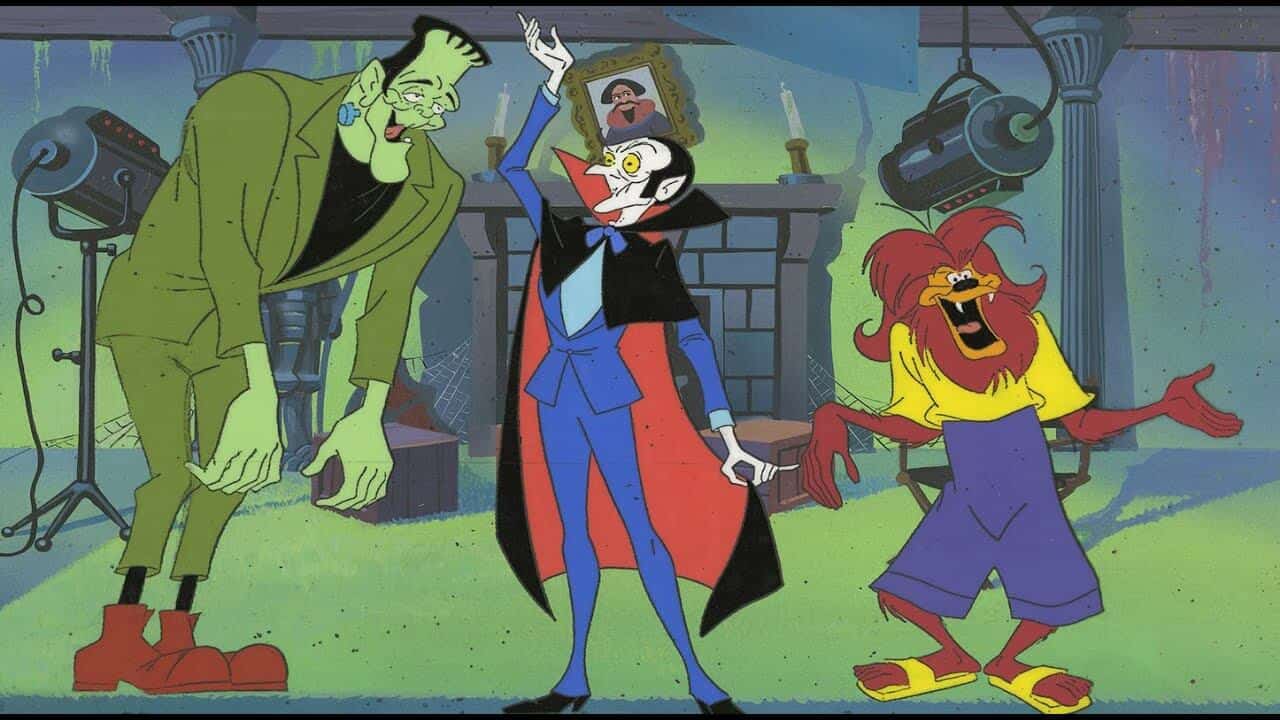
Sabrina the teenage witch shares an hour with a house full of friendly Universal-style monsters.
- Filmation produced it for CBS.
- The Goolies include Drac, Frankie and Wolfie.
- The two halves were later split into separate shows.
Sabrina, the Teenage Witch (1971)
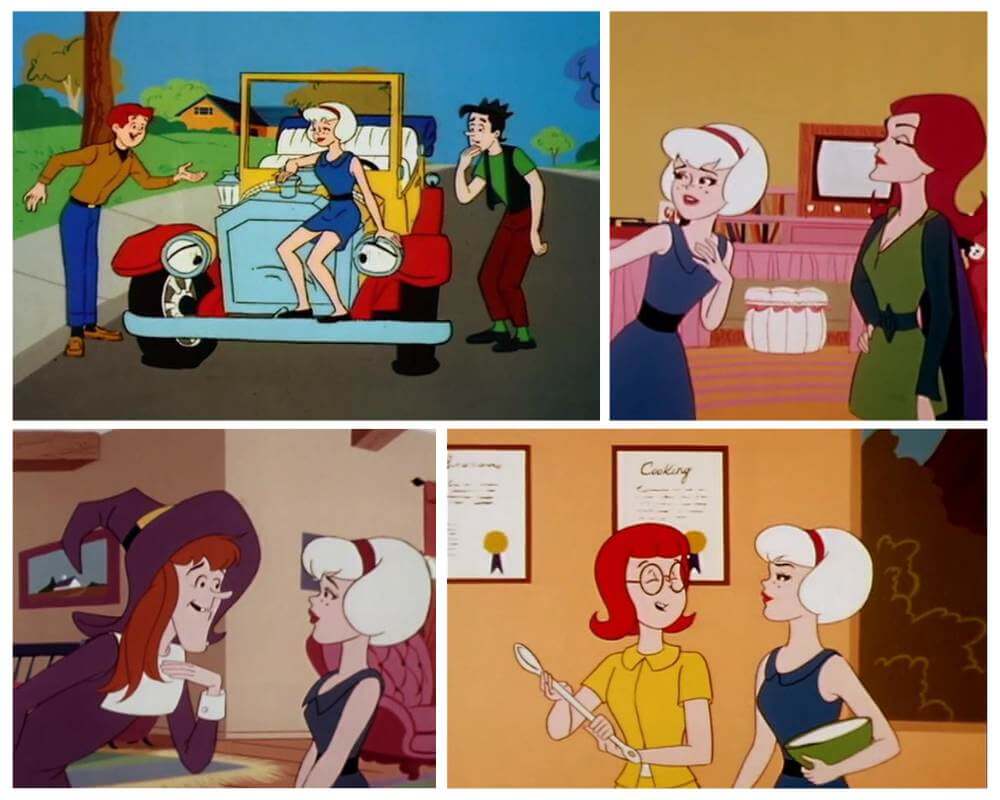
The title Sabrina, the Teenage Witch was used when Filmation repackaged Sabrina’s existing animated segments as a separate program.
- It ran on CBS from 1971 to 1974.
- Sabrina navigates Riverdale while hiding her powers.
- Sabrina had first appeared in Archie comics in 1962.
Cartoons That Tried to Teach You Something
Educational animation became a serious business in this decade, partly as a response to the same pressure that softened the action shows.
Schoolhouse Rock! (1973)
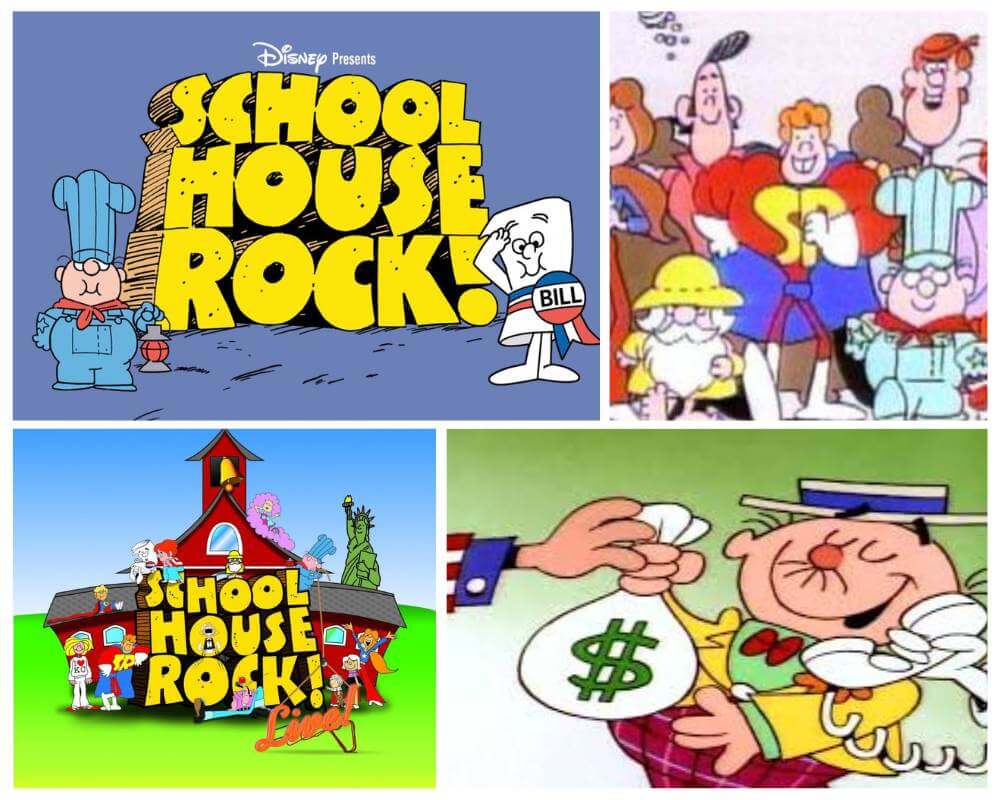
Three-minute musical shorts about grammar, maths, history and science, dropped between ABC’s Saturday programs.
- It began with multiplication tables before expanding.
- Grammar Rock and America Rock followed.
- The songs were written and performed by working jazz musicians.
Fat Albert and the Cosby Kids (1972)
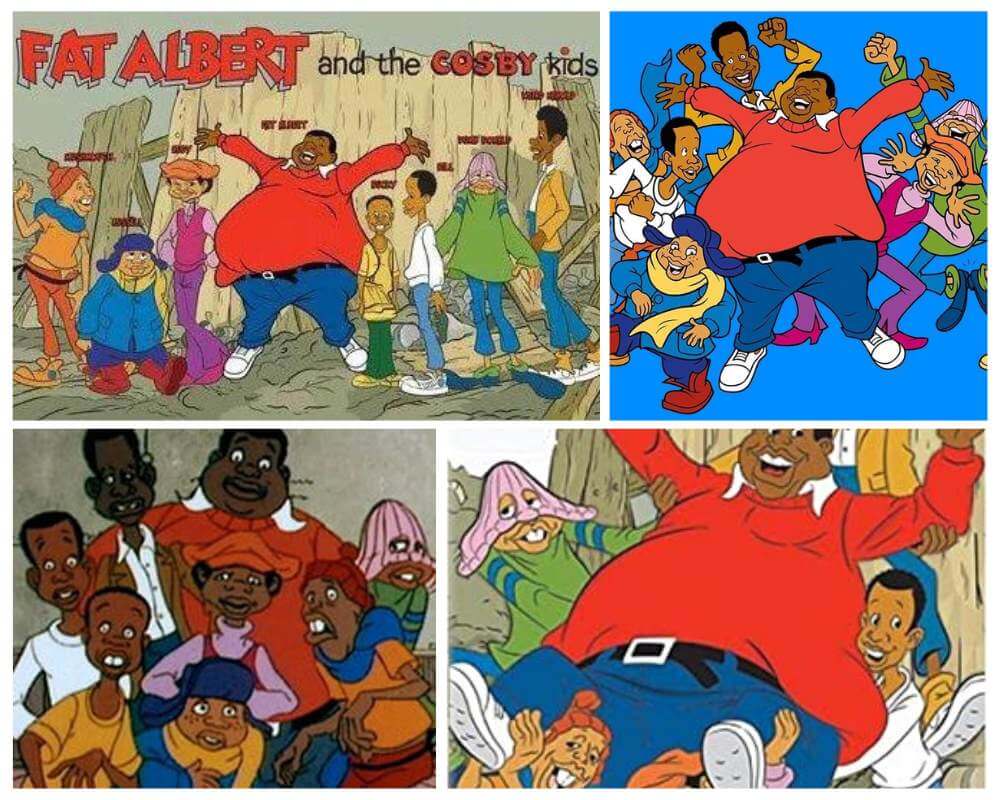
Filmation’s series followed a group of friends in inner-city Philadelphia, with each episode built around a lesson.
- It ran on CBS for twelve seasons.
- Educational consultants worked on the scripts.
- The Junkyard Band performed on instruments made from scrap.
Beyond the Standard Saturday-Morning Cartoon
Not every title associated with cartoons in the 1970s was a half-hour American animated series. This section includes anime, an animated television special and one clearly labelled puppet-show exception.
Harlem Globetrotters (1970)
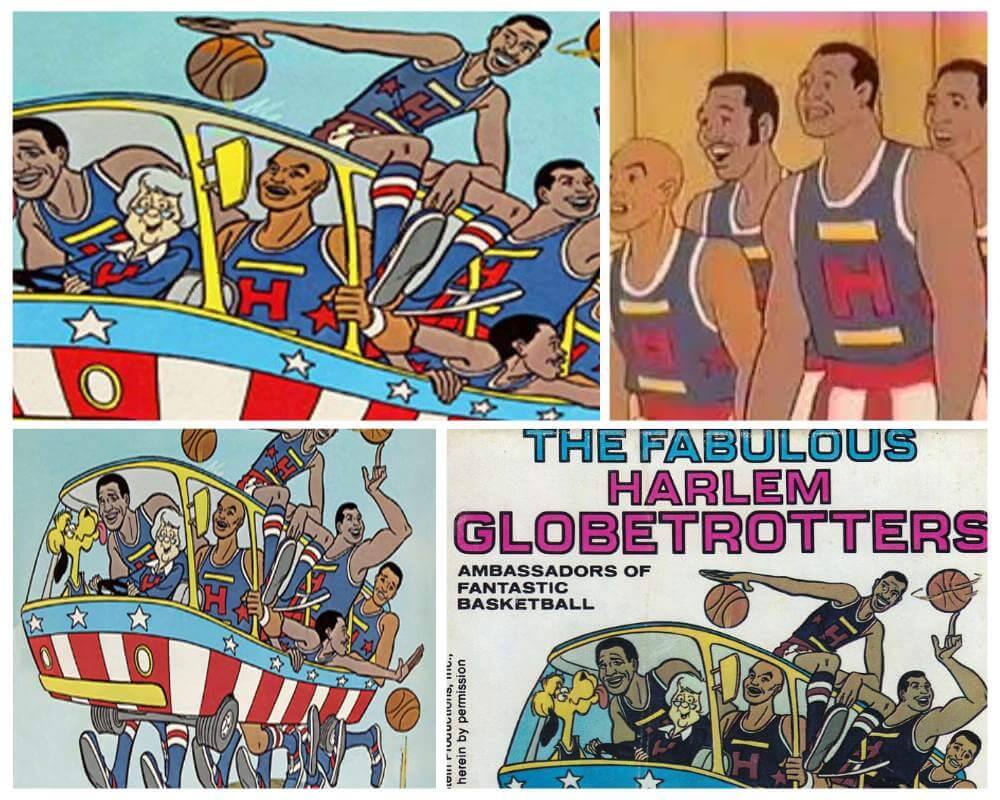
Hanna-Barbera animated the basketball team as travelling problem-solvers who resolve each episode with a game.
- It premiered on CBS in September 1970.
- The real team members lent their names to the characters.
- It ran for two seasons and stayed in reruns for years.
Mazinger Z (1972)
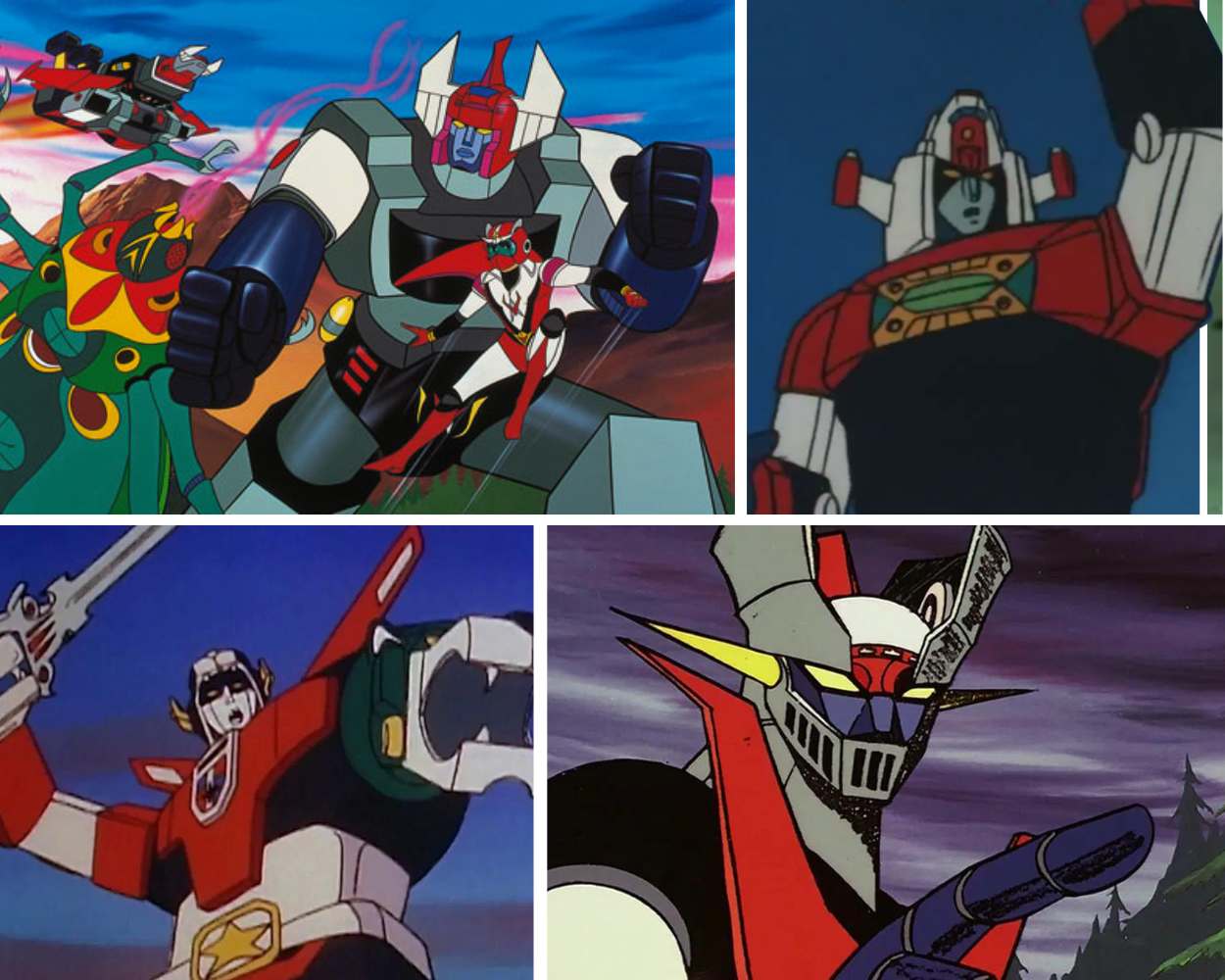
Go Nagai’s series helped establish the now-familiar idea of a giant super robot piloted from inside by a human being.
- It aired in Japan from 1972 to 1974.
- Koji Kabuto pilots the robot from a cockpit in its head.
- Earlier giant robots had been controlled remotely.
The Hobbit (1977)
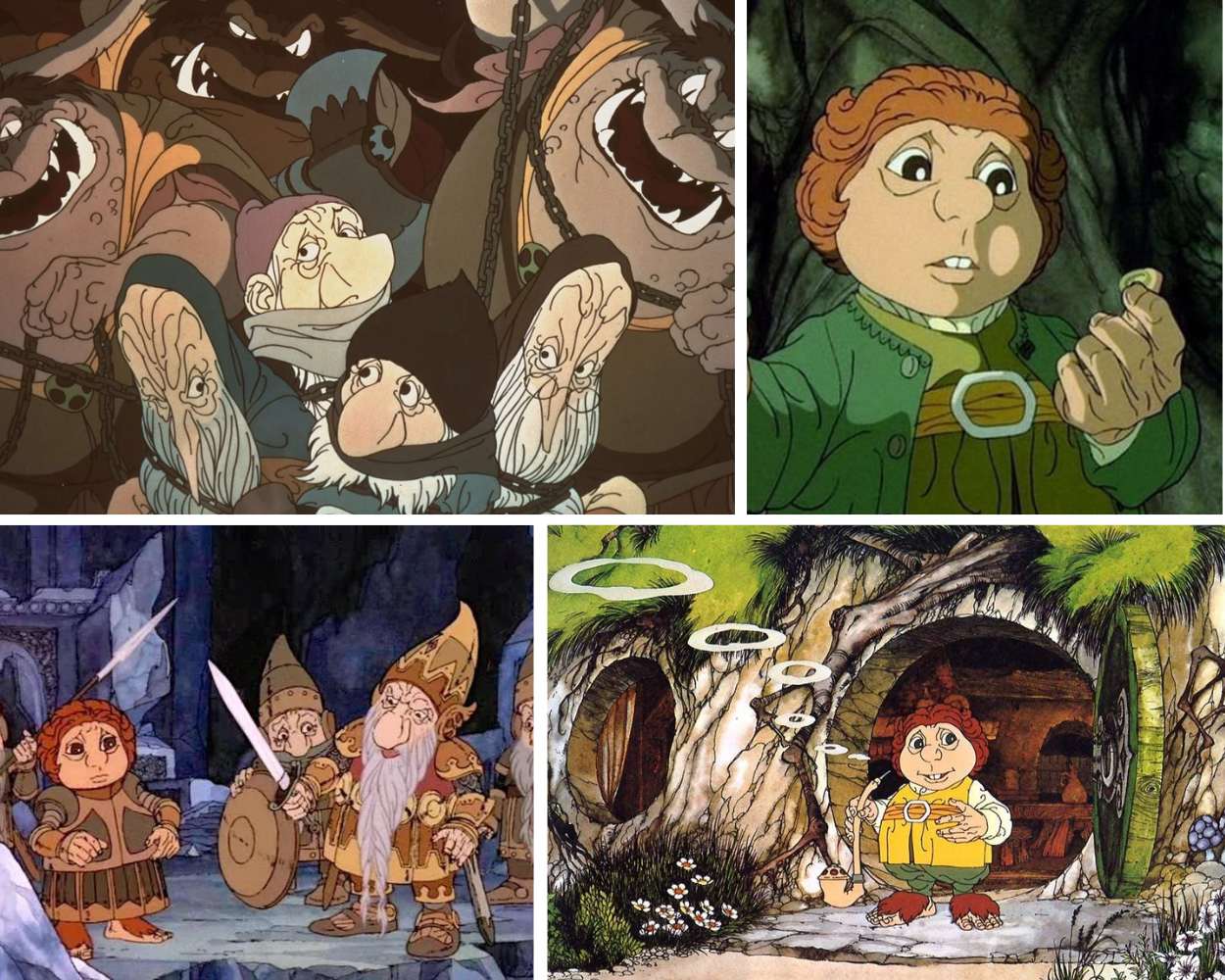
Rankin/Bass produced a feature-length animated version of the Tolkien novel for NBC.
- It aired as a television special in November 1977.
- Topcraft in Japan handled the animation.
- John Huston voiced Gandalf.
The All-New Popeye Hour (1978)
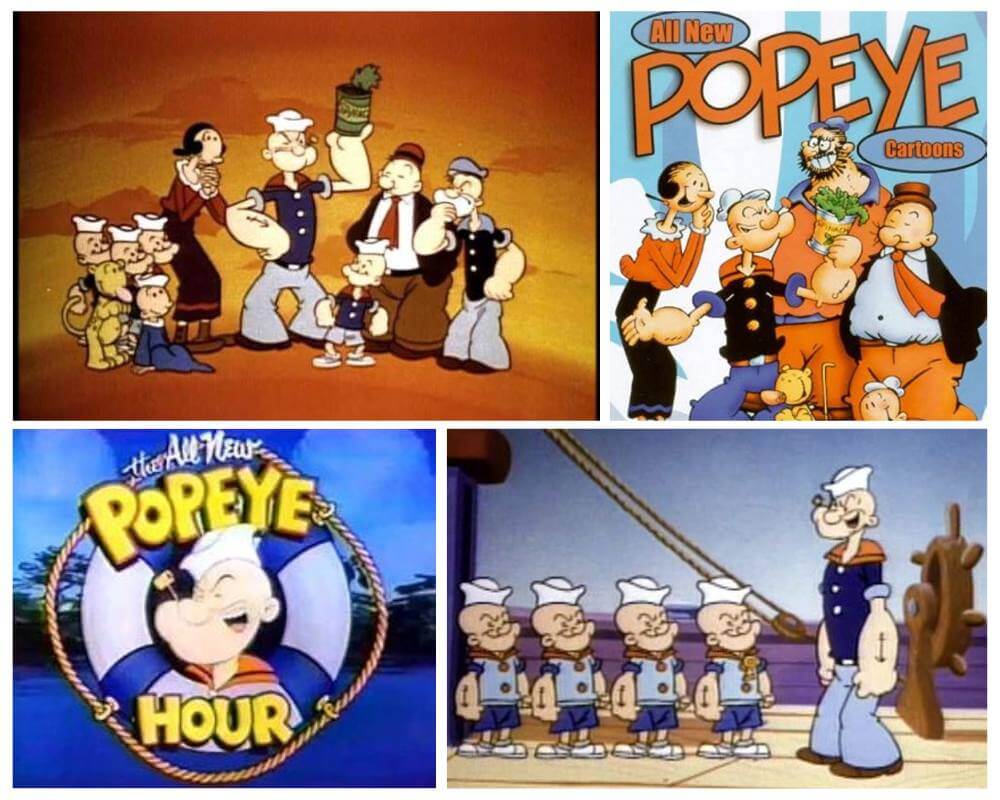
Hanna-Barbera revived Popeye for CBS with new shorts made under seventies broadcast standards.
- Jack Mercer returned to voice Popeye.
- The violence of the original shorts was heavily reduced.
- Segments included Dinky Dog and health-and-safety spots.
The Muppet Show (1976)
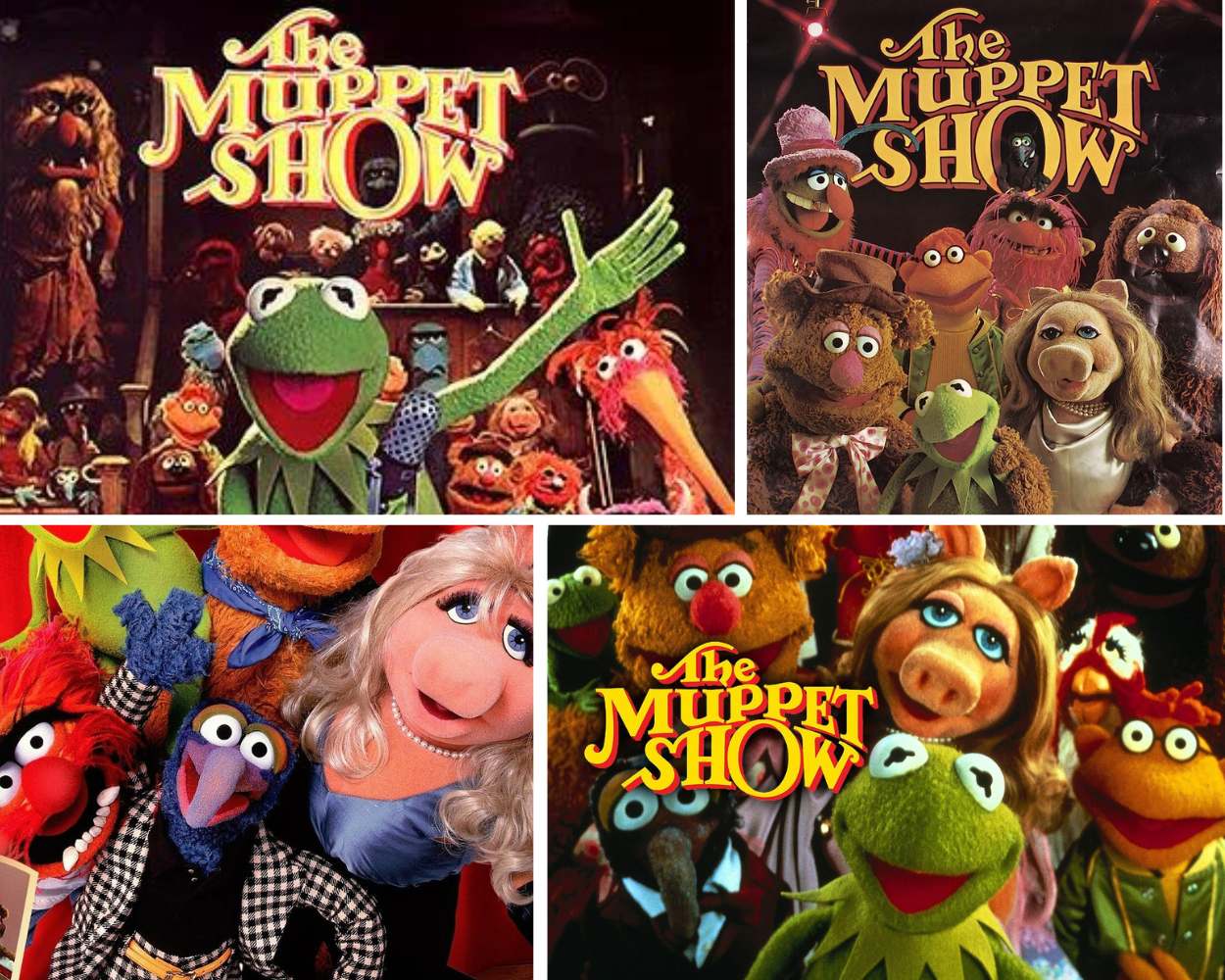
Jim Henson’s variety show ran in first-run syndication from 1976. It is not a cartoon, but it is often grouped with the family television remembered from the same decade.
- It was produced in England for ITV and syndicated internationally.
- Each episode featured a human guest star.
- It ran for five seasons.
Premiered Earlier but Became 70s Cartoon Staples
These nine entries are often remembered as 70s cartoons because they remained visible in reruns, new packages or franchise continuations throughout the decade. Their original premiere dates tell a different story.
Scooby-Doo, Where Are You! (1969)
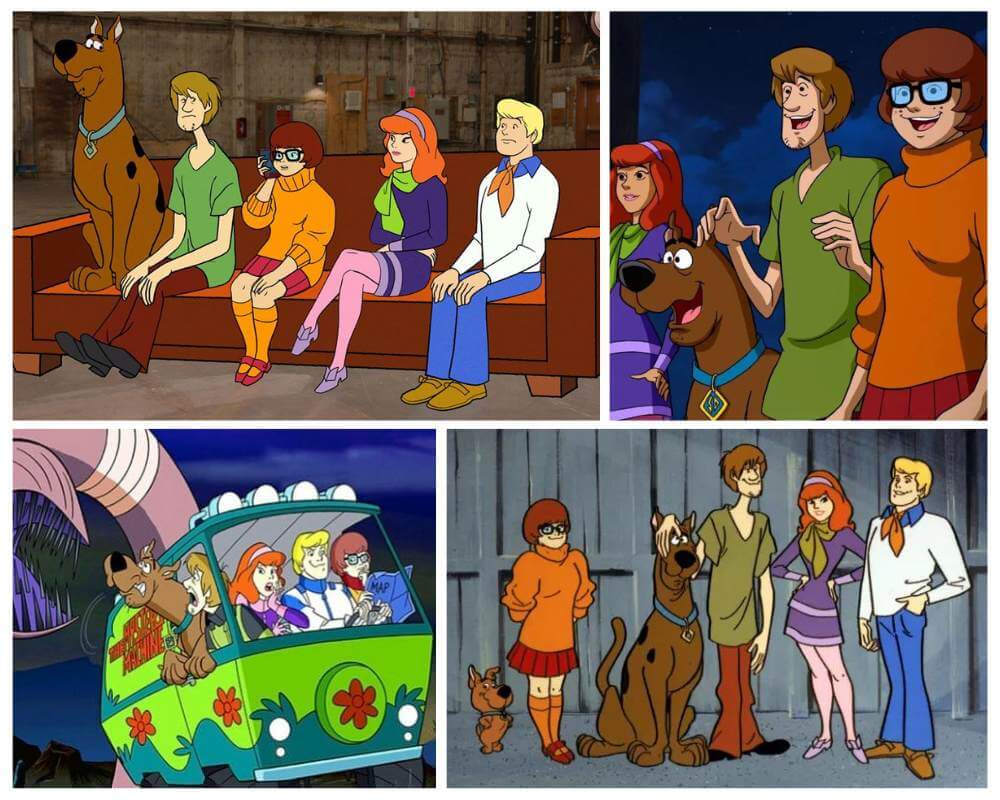
The show that set the template for everything in the first section of this guide premiered on CBS in September 1969.
- Joe Ruby and Ken Spears created it for Hanna-Barbera.
- The mystery format was a direct answer to violence complaints.
- The franchise ran continuously through the seventies in new forms.
The Pink Panther Show (1969)
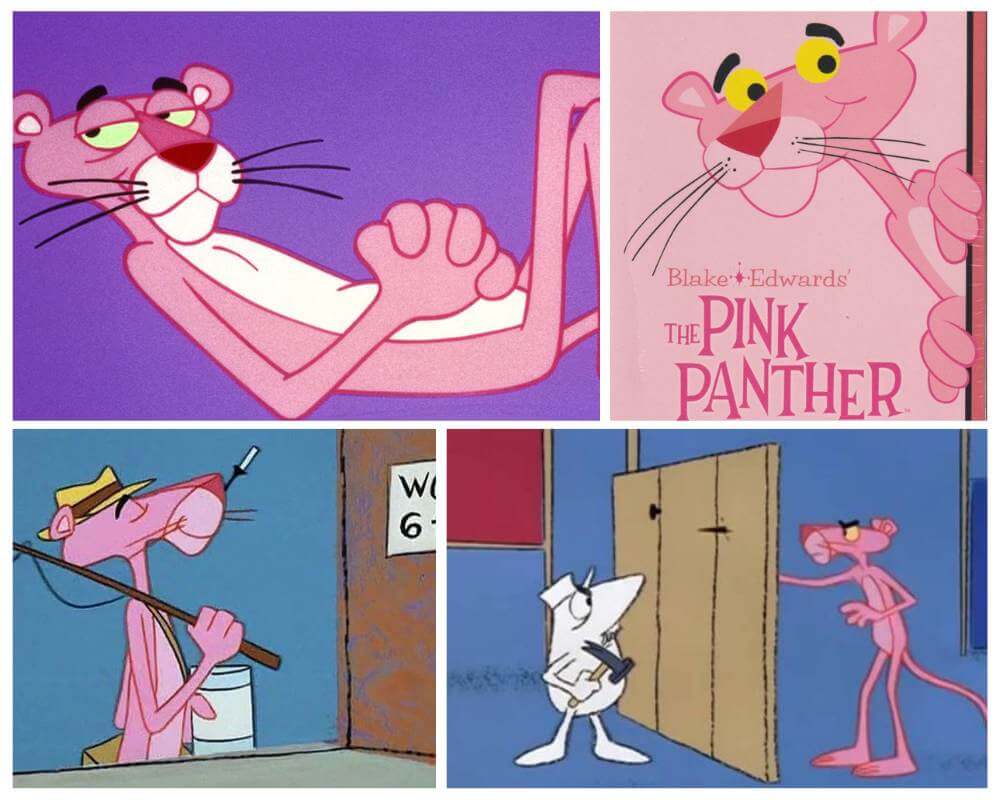
DePatie-Freleng’s showcase of theatrical shorts began on NBC on 6 September 1969 and ran there until 1978.
- The shorts themselves date back to 1964.
- NBC added a laugh track, which was new for theatrical cartoons.
- The format changed name and length repeatedly across the decade.
The Hardy Boys (1969)
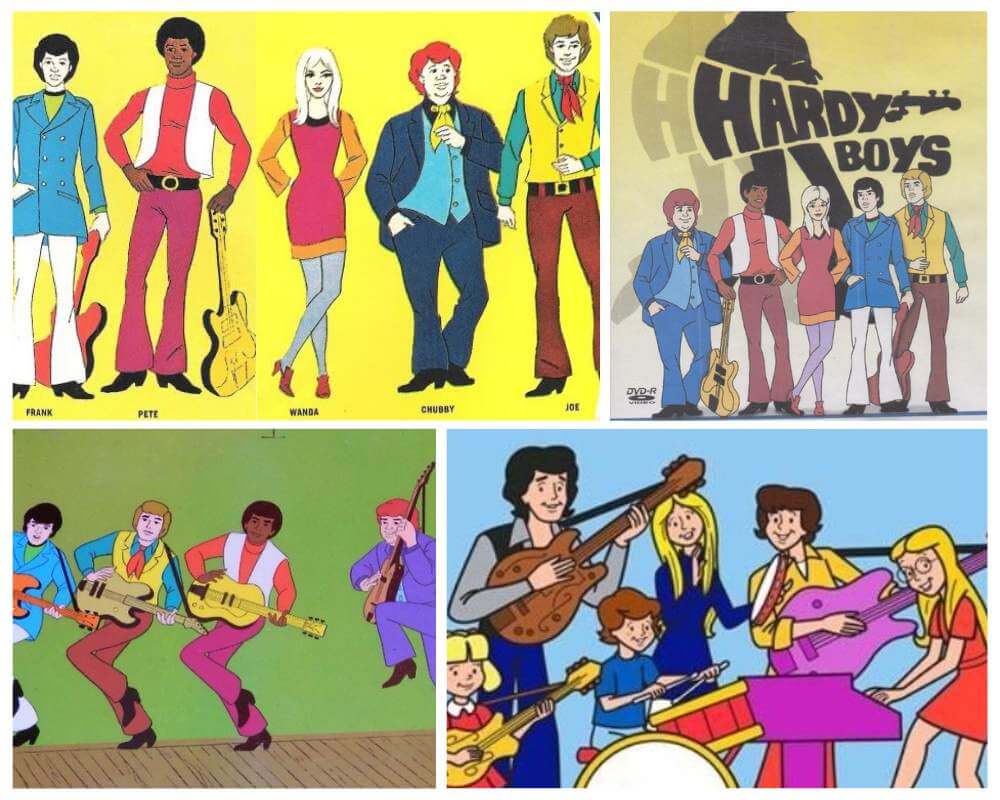
Filmation turned the detective novels into a touring rock band who solve mysteries, premiering on ABC in September 1969.
- It launched a week before Scooby-Doo reached air.
- A real band called The Hardy Boys recorded and released records.
- It ran for two seasons.
Cattanooga Cats (1969)
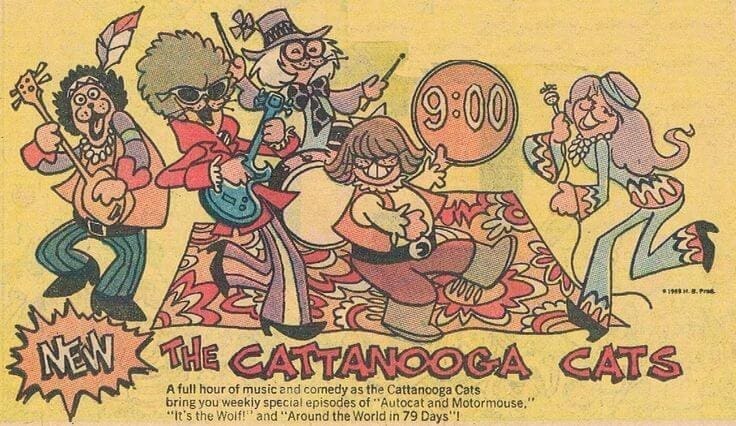
A bubblegum-pop band of Southern cats fronted an hour-long package show that premiered in September 1969.
- It carried the Motormouse and Autocat chase segments.
- Around the World in 79 Days and It’s the Wolf! also ran inside it.
- The package ran through the 1970 to 1971 season.
The Adventures of Gulliver (1968)
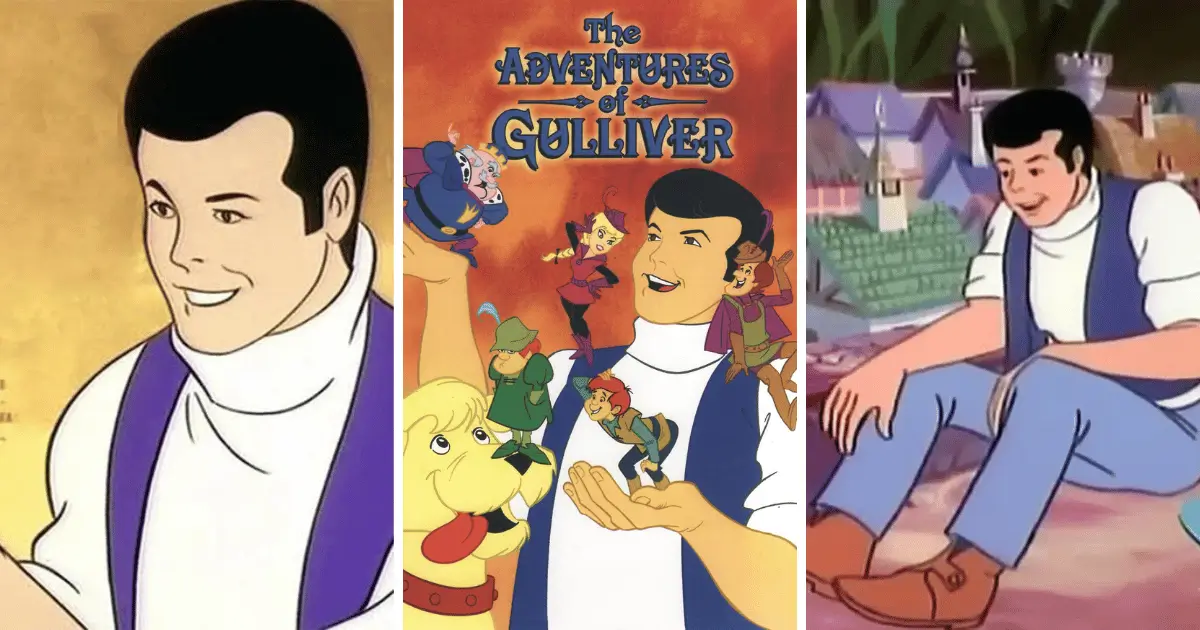
Hanna-Barbera’s Swift adaptation follows Gary Gulliver searching for his father in Lilliput.
- It premiered on ABC on 14 September 1968.
- The original run ended on 4 January 1969 after seventeen episodes.
- Joe Ruby and Ken Spears wrote for it before creating Scooby-Doo.
The Jetsons (1962)

Hanna-Barbera’s space-age family sitcom ran for exactly one season in primetime before television made it immortal.
- The original run was 24 episodes across 1962 and 1963.
- It was the first programme broadcast in colour on ABC.
- New episodes were not made until 1985.
The Bugs Bunny Show (1960)
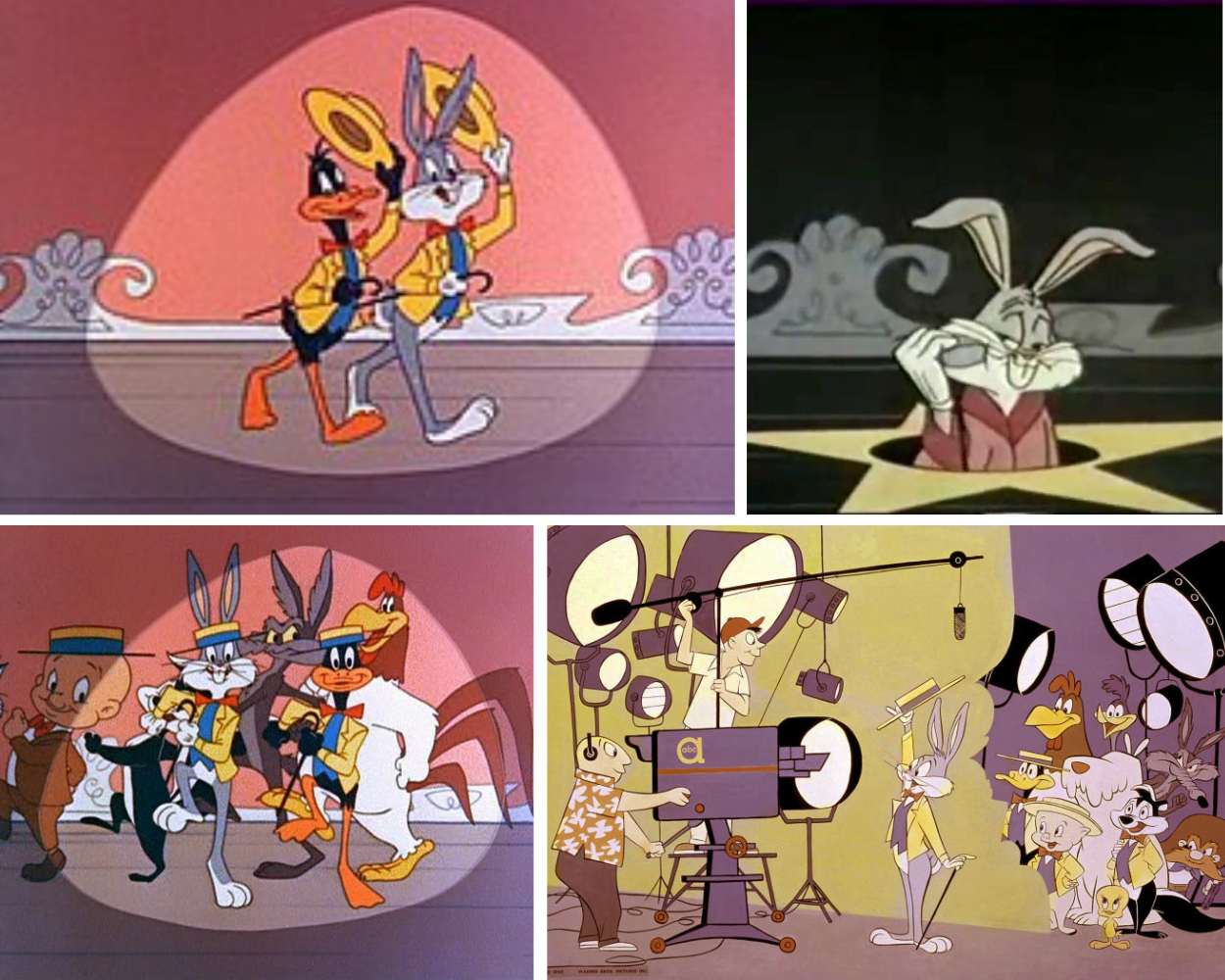
The package that brought the Warner theatrical shorts to television began on ABC in primetime in 1960.
- It moved to Saturday mornings in 1962.
- The format was repackaged and retitled repeatedly for two decades.
- New bridging animation was produced to link the shorts.
The Road Runner Show (1966)
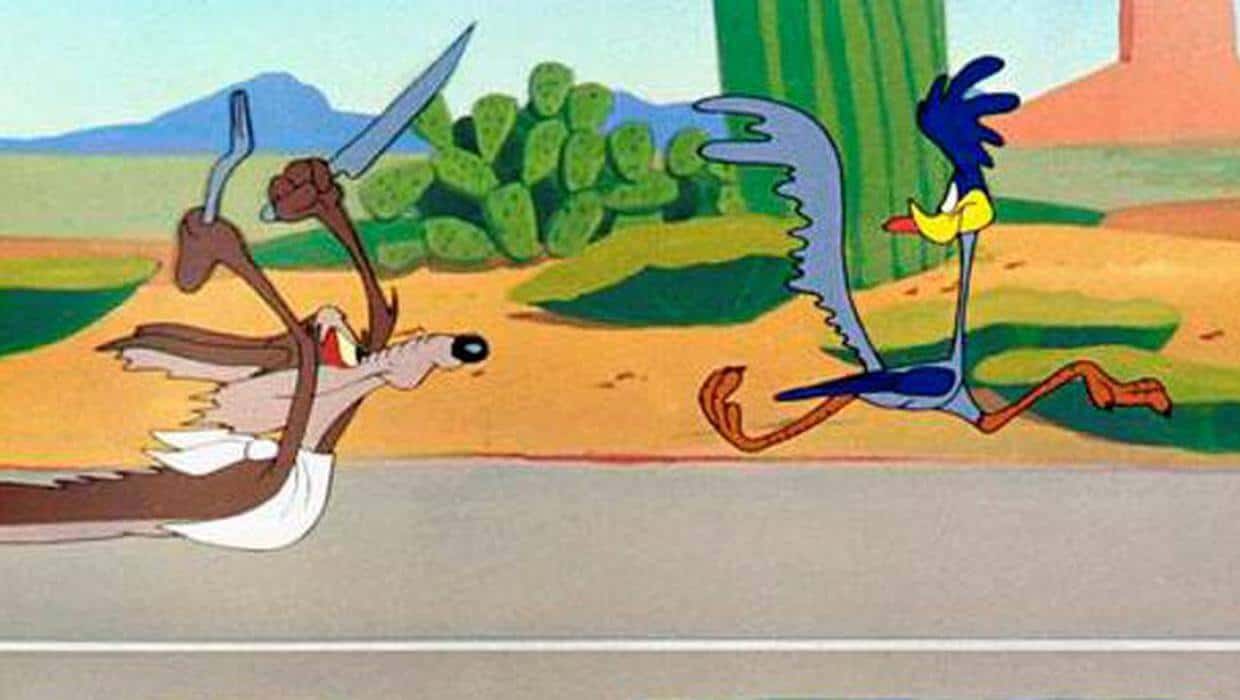
Another Warner repackaging, this one built around the Coyote and Road Runner shorts.
- It began on CBS in 1966.
- It later moved to ABC in the early seventies.
- The theatrical shorts run from 1949 onward.
Looney Tunes
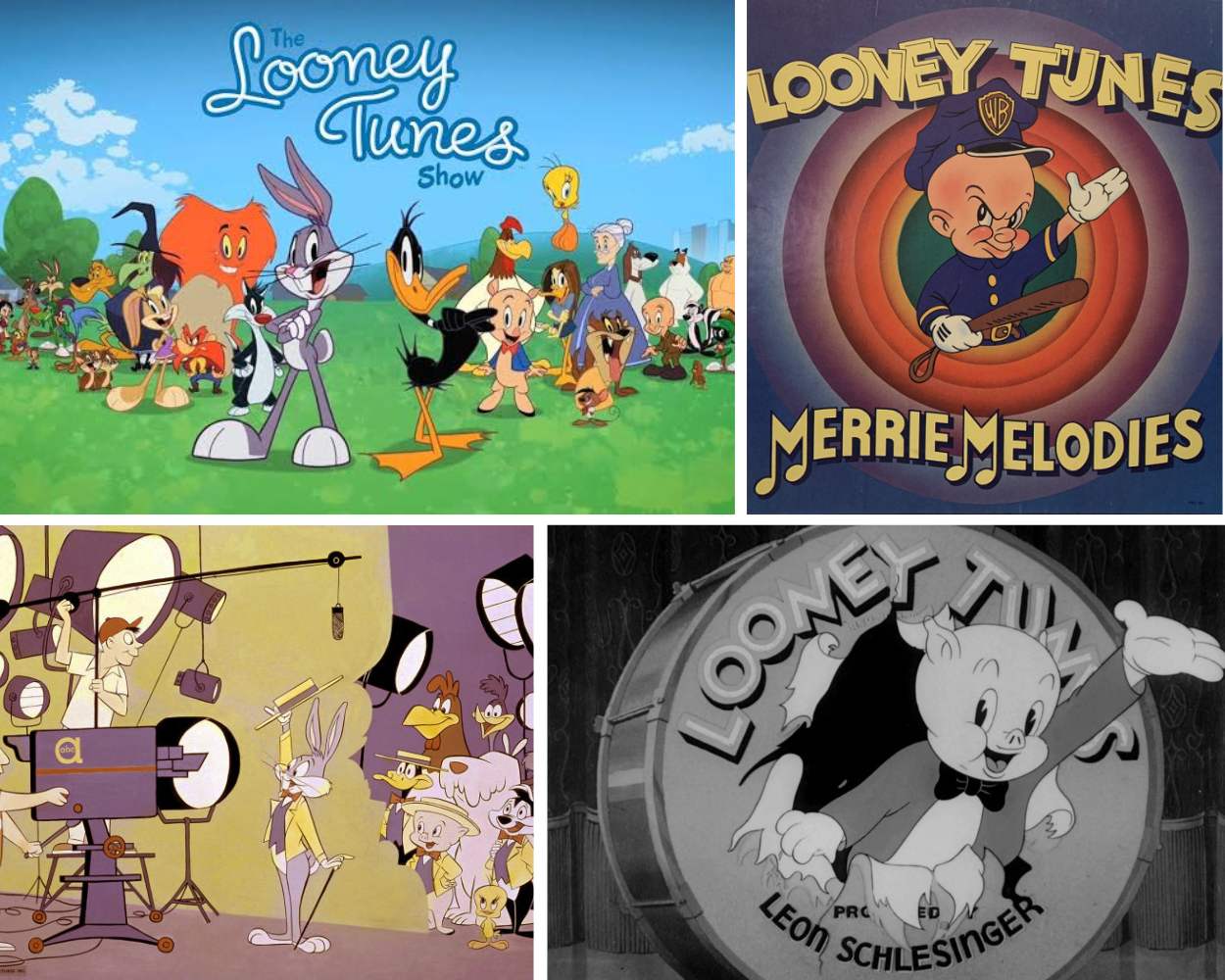
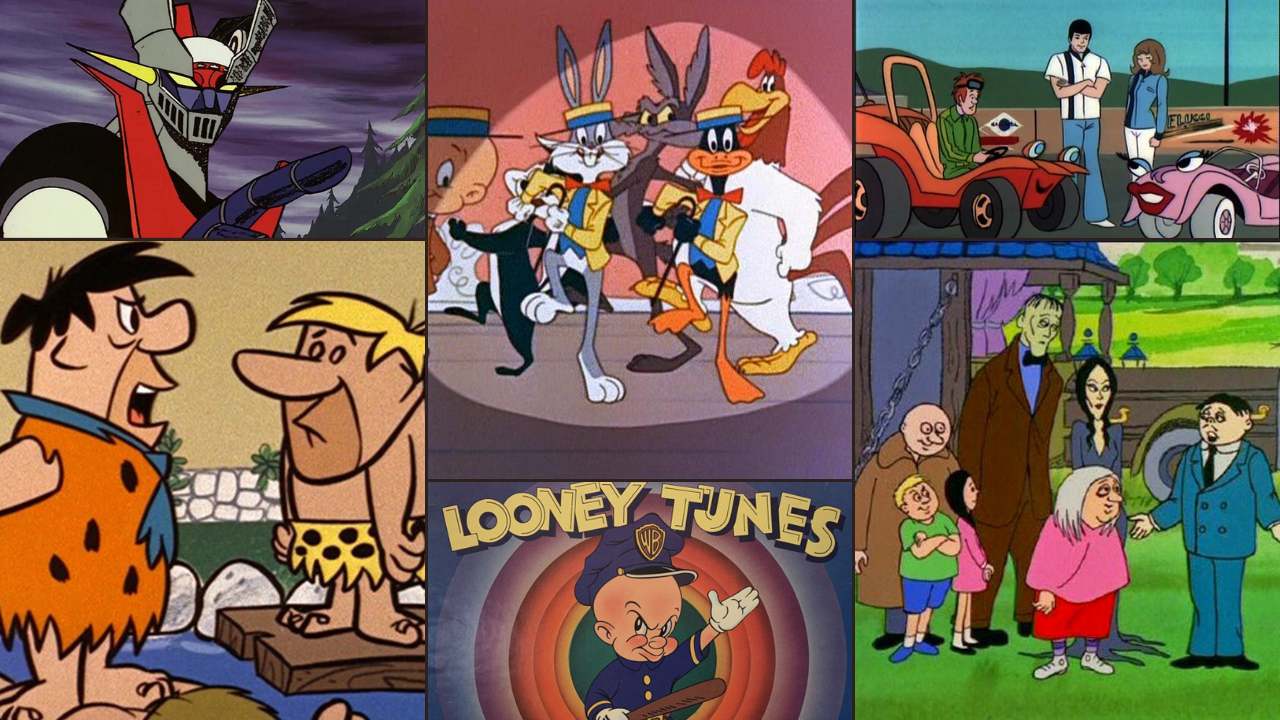
The Warner shorts themselves are not a seventies property at all, though they were unavoidable on seventies television.
- Warner started the series in 1930.
- The classic theatrical era ended in 1969.
- Television packages kept the shorts in constant rotation afterwards.
Questions About 70s Cartoons
Which Japanese cartoons from the 70s matter most? Mazinger Z is the key entry on this list because it helped establish the internally piloted super-robot format that shaped later mecha anime.
Was Scooby-Doo a 70s cartoon? It premiered in September 1969, so technically no, but the franchise ran continuously through the seventies and defined the decade’s output.
What are the best 70s superhero cartoons? Super Friends from 1973 is the biggest, with Plastic Man in 1979 and Filmation’s Tarzan in 1976 alongside it.
Where can I watch 70s cartoons now? Availability shifts constantly, though a good deal of Hanna-Barbera and Warner material rotates through the major streaming services depending on region.
The best 70s cartoons are worth revisiting because the decade’s limits are visible in every episode. Tight budgets, stricter network standards and the success of the Scooby mystery formula gave cartoons in the 1970s a look and rhythm unlike any other period.
If the decade after this one is more your era, our guide to cartoons in the 1980s picks the story up. So which of these did your Saturday mornings belong to, and did I put anything in the wrong decade?
Let me know in the comments.
Does anyone remember Wheelie and the Chopper Bunch? Its was a bizarre 1974 cartoon. that took place in a world completely devoid of humans, populated entirely by talking, sentient vehicles lol . Yes it was weird, haha. It featured a red Volkswagen Beetle protagonist facing off against a motorcycle gang, mimicking human soap-opera drama with zero human characters in sight.
Speed Buggy! such a classic. I rememeber my older brother making fun of me because I use to think it was the same as scooby doo. Same as the The Funky Phantom. With The Funk Phantom though, Hanna-Barbera actually knocked off their own show.
Following the massive success of Scooby-Doo in 1969, television networks demanded more of the exact same formula. Hanna-Barbera obliged by creating a series of clones throughout the 1970s, and The Funky Phantom (which debuted in 1971) was the very first one they produced.
A classic example of a forgotten 1970s cartoon is Jabberjaw (1976), another Hanna-Barbera production that heavily copied the Scooby-Doo formula, but with an incredibly bizarre, underwater twist.
Jabberjaw was ok, as I got older I realized it was just a cash in from Steven Spielberg’s Jaws. They did good though, because I remember all the characters lol.
I like the Scooby Doo cartoons and Josie and the Pussycats I purchases about 40 cartoons of the 60’s to the early 80’s shows. I also have the school hour rock. I recall it on commercials on ABC.
What I appreciate most about 70’s kids’ shows is how experimental they were. You had educational content, surreal humor, and morality plays all mixed together. Even something like The Electric Company feels bold by today’s standards, especially in how it blended learning with pop culture and sketch comedy. It makes me think about why so many people still search for “classic 70s kids shows worth watching” instead of just writing them off as dated.
I also think these shows benefit from being rewatched without nostalgia goggles. Some are definitely products of their time, but others still work because the core ideas are strong. They focus on curiosity, creativity, and emotional intelligence rather than nonstop stimulation. That pacing feels refreshing now.
I am curious what others think. Which 70’s kids’ show surprised you the most on a rewatch as an adult? And are there any from that era you think are actually better now because you finally understand what the creators were trying to do?