
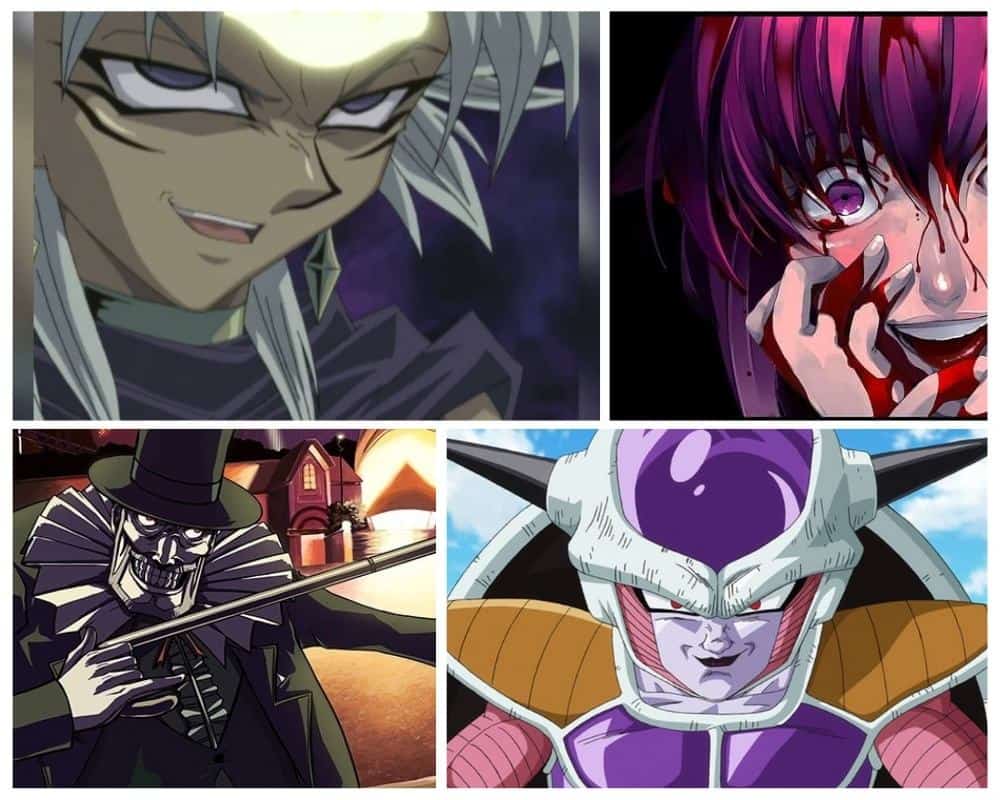
The scariest anime laughs almost always belong to villains, or to characters who have crossed so far over the line you can hear the madness in every syllable.
A great scary laugh hits different from a jump scare: it is not just noise, it is a warning that empathy has left the building and something horrible is on the way.
This is not a plain power ranking, it is a sonic anatomy of madness, a countdown of the scariest anime laughs ever recorded, where the laugh itself does the damage.
Each one gets a quick Laugh Audit, including the seiyuu behind the sound, because the voice actor is half the horror.
- They stay calm during chaos, which is never a reassuring sign.
- They signal cruelty: someone is enjoying the suffering.
- They break normal human behavior, which triggers instant unease.
- They pair perfectly with horror: dread, helplessness, and escalation, the same beats you get from the best anime villains.
Scariest Anime Laughs, Ranked
These scariest anime laughs are ranked by how completely the laugh burrows into your memory, not by who would win a fight.
Each entry is an audio analysis first, with a Laugh Audit covering the seiyuu, the texture of the sound, and an Insanity Index out of 10 for how unsafe it makes you feel.
Mad Pierrot (Cowboy Bebop)

Mad Pierrot shows up for a single episode and never leaves your head. Banjo Ginga gives Tongpu a childlike, wheezing titter attached to a grown man committing atrocities, and the contrast is pure nightmare fuel, playful sounds laid over monstrous acts. Even Spike, who is almost never rattled, gets pushed into survival mode. It is the clearest case on this list of psychological horror smuggled into a sci-fi action show.
- Seiyuu: Banjo Ginga (JP)
- Crawl factor: a childlike, wheezing titter stapled to something monstrous
- Insanity Index: 10/10
Hidan (Naruto Shippuden)

Hidan’s laugh is one of the most disturbing moments in a mainstream shonen. Masaki Terasoma voices it as a ragged, ecstatic howl that arrives mid-ritual, breathless with pleasure while he does something your brain wants to reject.
It is not a fight anymore, it is worship, and the glee is what tips it from violence into horror.
- Seiyuu: Masaki Terasoma (JP); Chris Edgerly (EN)
- Crawl factor: a ragged, ecstatic howl, breathless with religious pleasure
- Insanity Index: 8/10
Donquixote Doflamingo (One Piece)

Doflamingo laughs like he already owns the room and enjoys proving it. Hideyuki Tanaka gives him a smug, drawn-out delivery that stays calm and amused in the middle of total chaos.
The trigger is usually somebody else’s suffering, which he treats as entertainment, and the composure is the scary part: he never raises his voice because he never needs to.
- Seiyuu: Hideyuki Tanaka (JP); Robert McCollum (EN)
- Crawl factor: a smug, drawn-out drawl delivered like he already won
- Insanity Index: 7/10
Yuno Gasai (Future Diary)

Yuno’s laugh is the sound of logic collapsing. Tomosa Murata plays the whiplash beautifully, a breathy, sweet giggle that curdles into something flat and dead-eyed the instant her obsession takes the wheel.
It is not villain strategy like Light, it is pure emotional volatility, and that unpredictability is what makes it scary. When Yuno laughs, someone is about to get hurt, badly.
- Seiyuu: Tomosa Murata (JP); Brina Palencia (EN)
- Crawl factor: a breathy, sweet giggle that curdles into a flat, dead-eyed laugh
- Insanity Index: 8/10
Yami Marik (Yu-Gi-Oh!)
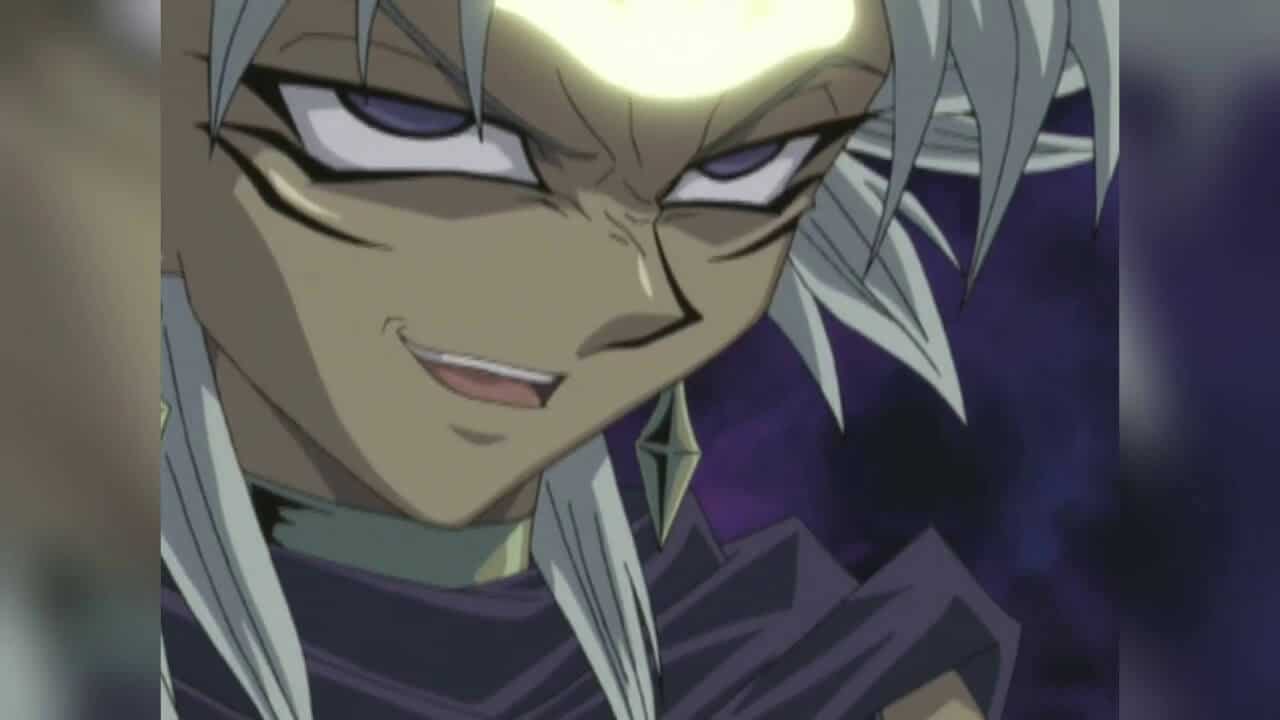
Yami Marik proved you can build real dread inside a card-game show. Tetsuya Iwanaga, who voices both Marik and his dark half, lets the laugh escalate alongside the cruelty until it is shredding his own voice, a shrieking peal that keeps finding a higher, uglier register.
There is no gore here, only intent, and that is the lesson: joy built from torment is frightening enough on its own.
- Seiyuu: Tetsuya Iwanaga (JP); Jonathan Todd Ross (EN)
- Crawl factor: a shrieking, escalating peal that tears at his own voice as it climbs
- Insanity Index: 9/10
Rena Ryuugu (Higurashi When They Cry)

Rena’s laugh is the fastest tonal switch in horror anime. Mai Nakahara plays her sweet and soft right up until the moment she decides you are the problem, and then the voice cracks mid-syllable into something guttural and wrong.
The terror is not only what she does, it is how instantly the whole scene flips and how trapped you feel once it has. Few laughs turn a normal conversation into danger this fast.
- Seiyuu: Mai Nakahara (JP); Mela Lee (EN)
- Crawl factor: a sing-song lilt that fractures mid-word into something guttural
- Insanity Index: 9/10
Frieza (Dragon Ball Z)
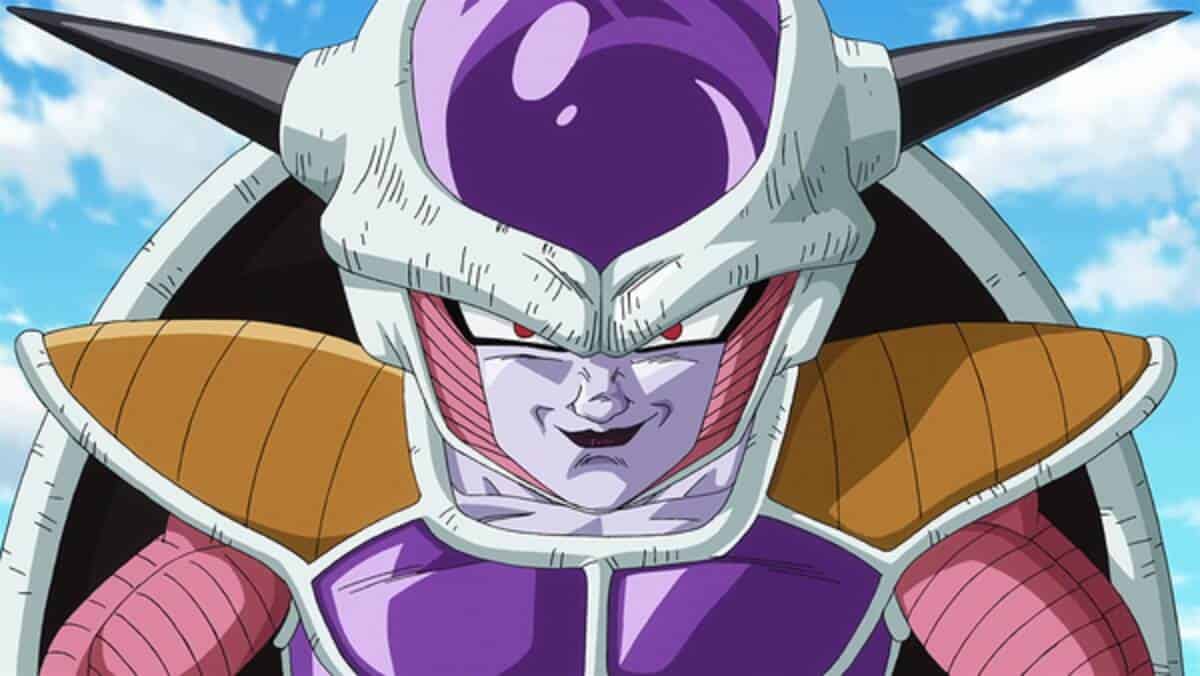
Frieza’s giggle is a masterclass in tonal wrongness. Ryusei Nakao voices him with a light, high, almost delicate lilt, a voice built for sadistic villains, and the horror lives in the mismatch: a being who erases whole worlds sounds like he is sharing a private joke.
It usually peaks right as the cruelty does, because to Frieza the suffering is the punchline. He enjoys power more than victory, and the laugh proves it.
- Seiyuu: Ryusei Nakao (JP); Christopher Ayres, Linda Young (EN)
- Crawl factor: a light, high-pitched giggle that unsettles precisely because it is so delicate
- Insanity Index: 7/10
Alucard (Hellsing)
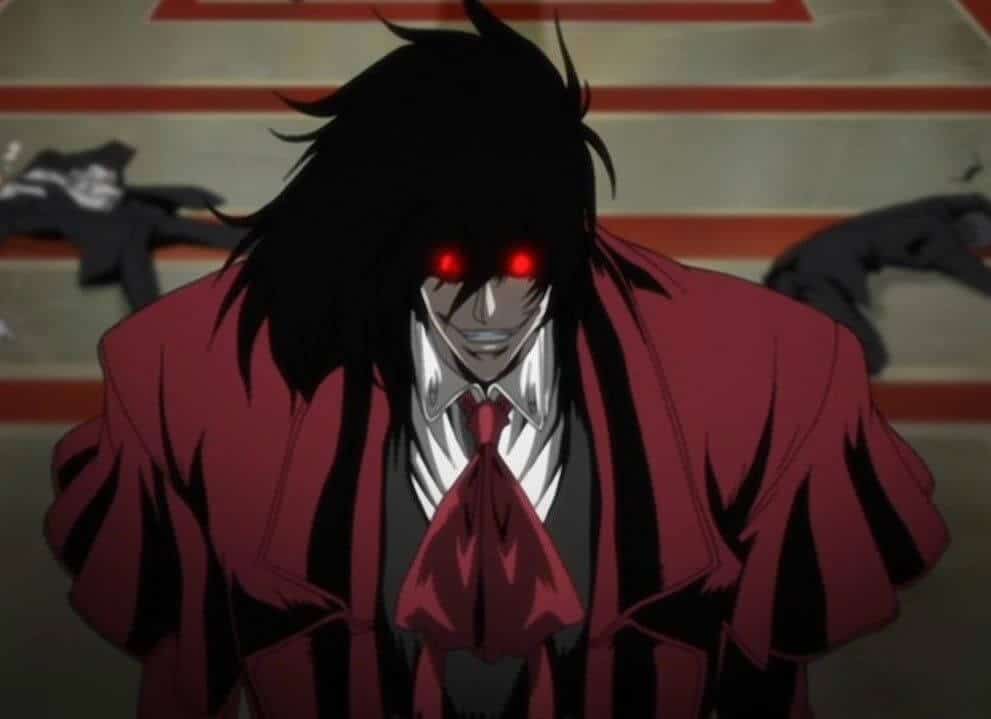
Alucard’s laugh is the sound of a predator playing with its food. Joji Nakata, who called Alucard his favorite role to voice, pitches it low and wet, a rumble that makes clear he enjoys your fear more than the kill, while Crispin Freeman’s English take is just as gold-standard for gothic menace.
The laugh tends to arrive once a fight is already decided, and it always says the same thing: you are done.
- Seiyuu: Joji Nakata (JP); Crispin Freeman (EN)
- Crawl factor: a low, wet, rumbling chuckle that sounds like it is savoring your fear
- Insanity Index: 9/10
Dio Brando (JoJo’s Bizarre Adventure)
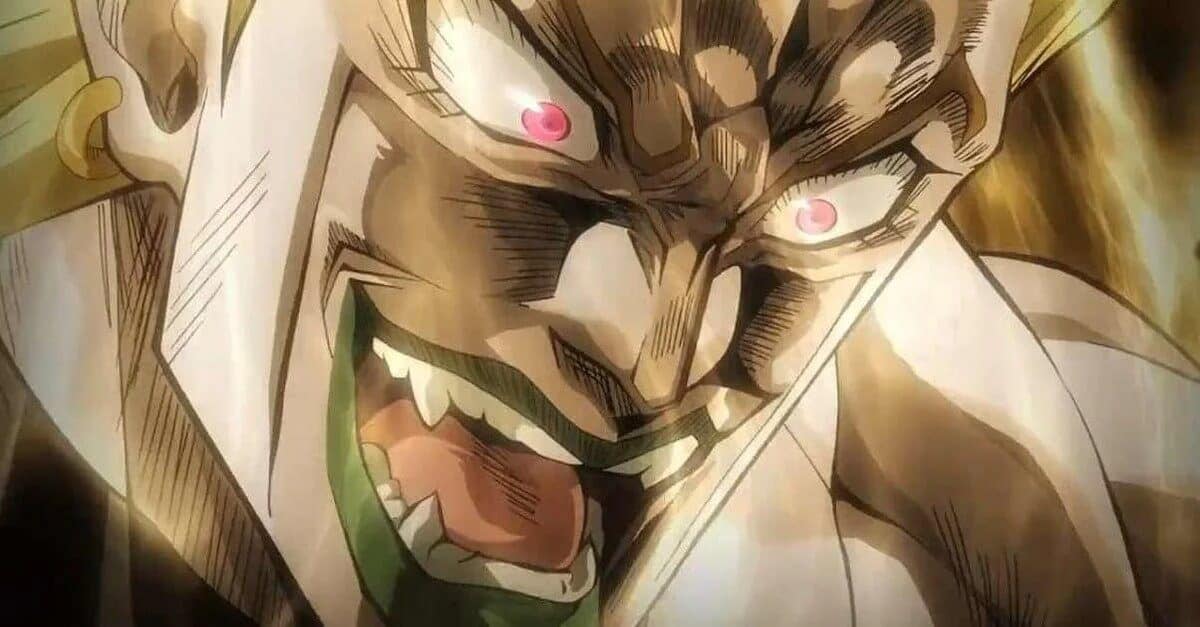
Dio’s laugh is opera. Takehito Koyasu, who owns one of the deepest, most theatrical voices in the industry, plays it enormous, a bottomless, room-filling roar that treats the whole world as his stage.
He does not laugh because he is winning, he laughs because you dared to fight back, and the sheer grandeur of it is what sticks. Nothing about Dio is subtle, and that is the point.
- Seiyuu: Takehito Koyasu (JP); Patrick Seitz (EN)
- Crawl factor: a booming, operatic roar, theatrical and bottomless
- Insanity Index: 7/10
Light Yagami (Death Note)

In the final stretch of Death Note, Light’s laughter is not an outburst, it is a high-pitched, jagged descent into total ego-death. Mamoru Miyano’s performance is the reason the scene is unforgettable: he lets the control slip note by note until the righteous mask falls away and only the god complex is left.
The trigger is always the same, a plan clicking into place and empathy switching off, and if you like mind-games that trigger dread you will want anime anxiety shows next.
- Seiyuu: Mamoru Miyano (JP); Brad Swaile (EN)
- Crawl factor: a high, jagged cackle that keeps climbing past the point of control
- Insanity Index: 8/10
How Does Laughter Fit Into Horror Anime?
It seems strange that a laugh could scare anyone, but laughter is a signal. In a normal scene it means comfort. In a horror moment it means the opposite: the character is disconnected from reality, empathy, or consequence.
Anime even has its own vocabulary of evil laughs, from the quiet, building snicker (“kukuku”) to the smug, controlled “fufufu,” and that stylization is part of why the scariest anime laughs stick.
The scariest anime laughs flip a switch in your head, and the thought lands instantly: this person is enjoying what is happening.
The scariest anime laughs are only one flavor of expression-based horror. If you want more, the scariest smiles in anime pair perfectly, some of those faces are worse than the laughs, and so does horror anime with the creepiest monsters.
For a full throwback mood, the 90s anime era is a deep rabbit hole.
So who gives you the scariest anime laugh of all?
Did I rank yours too low, or leave one off completely?
Tell me in the comments.
I am so glad I clicked on this post because that fact about “warai kakku” (laughing with the throat) just connected so many dots for me. I have been an anime fan for years, and I always wondered why Japanese voice actors (seiyuu) sound so distinctively different from Western voice actors when it comes to intense emotional outbursts, specifically those evil anime laughs.
It makes perfect sense now. In Western animation, a villain’s laugh is often deep and belly-driven, like a “Ho Ho Ho” or a standard “Muahaha.” But in anime, you get these jagged, hysterical, scraping sounds that feel like they are tearing the character’s throat apart. Knowing that this is actually a linguistic technique and a specific way of projecting sound adds a whole new layer of appreciation for the medium. It explains why characters like Frieza or Dio Brando sound so uniquely terrifying—they aren’t just acting; they are physically manipulating their vocals in a way that is culturally distinct.
I completely agree with your mention of Frieza from Dragon Ball Z. That laugh is iconic not just because it is scary, but because it conveys his personality perfectly. It is high-pitched, polite, yet dripping with condescension. It is the sound of someone who believes they are untouchable. On the flip side, you have someone like Alucard, whose laugh is just pure, guttural sadism. It is amazing how much character development can be packed into a single sound effect.
The Higurashi mention is also spot on. Rena Ryuugu is the perfect example of the “gap moe” or contrast that horror anime does so well. She looks adorable, but when that manic laughter starts, you know the psychological horror is about to kick in. That specific switch from “cute” to “terrifying” is something I think anime handles better than any other visual medium, and the voice acting is 90% of the reason why.