Every television family eventually gets a dog.
The Jetsons got one who could argue back.
Astro, the Jetsons’ dog, speaks in a deep growl, adds extra R sounds to his words, and spends the closing credits chasing a cat on a treadmill high above Orbit City.
He also has one of the strangest backstories in Hanna-Barbera history. Before he belonged to Elroy, he was called Tralfaz and lived with a billionaire. After joining the Jetsons, he survived a custody trial decided by a robot jury.
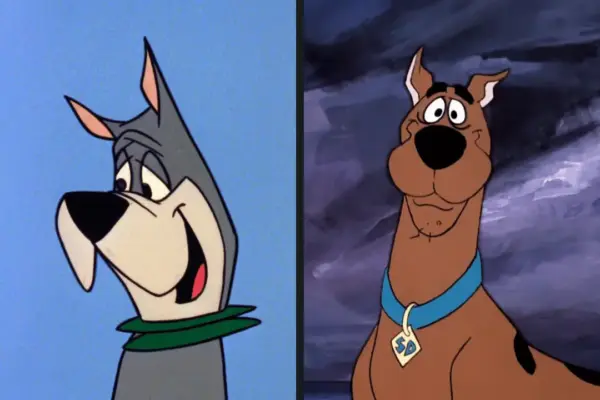
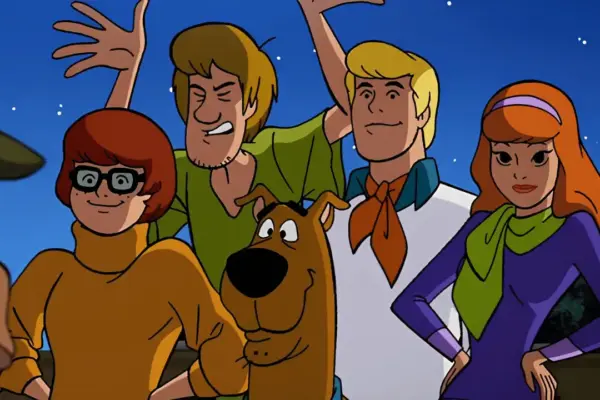
Astro’s influence reaches beyond his own series. Don Messick and Iwao Takamoto later helped create Scooby-Doo, another talking Great Dane with a closely related speech pattern.
Astro did not literally turn into Scooby, but the creative line between the two dogs is impossible to miss.
Character file
Astro
- The Jetson family’s talking Great Dane
- Designed by Iwao Takamoto
- Originally voiced by Don Messick
- Debuted in “The Coming of Astro” on October 14, 1962
- Former name: Tralfaz
- Closest family bond: Elroy Jetson
Who Is Astro From The Jetsons?
Astro is the family dog in The Jetsons, but he was not part of the household when the series began.
He first appears several episodes into the original 1962 run. Elroy finds him, brings him home, and immediately treats him as part of the family.
George is less convinced.
In a future filled with automated appliances and mechanical servants, George assumes a robot dog will be easier to manage than a living one. That sets up Astro’s first story and one of the show’s clearest arguments about technology.
The Dog Who Beat a Robot
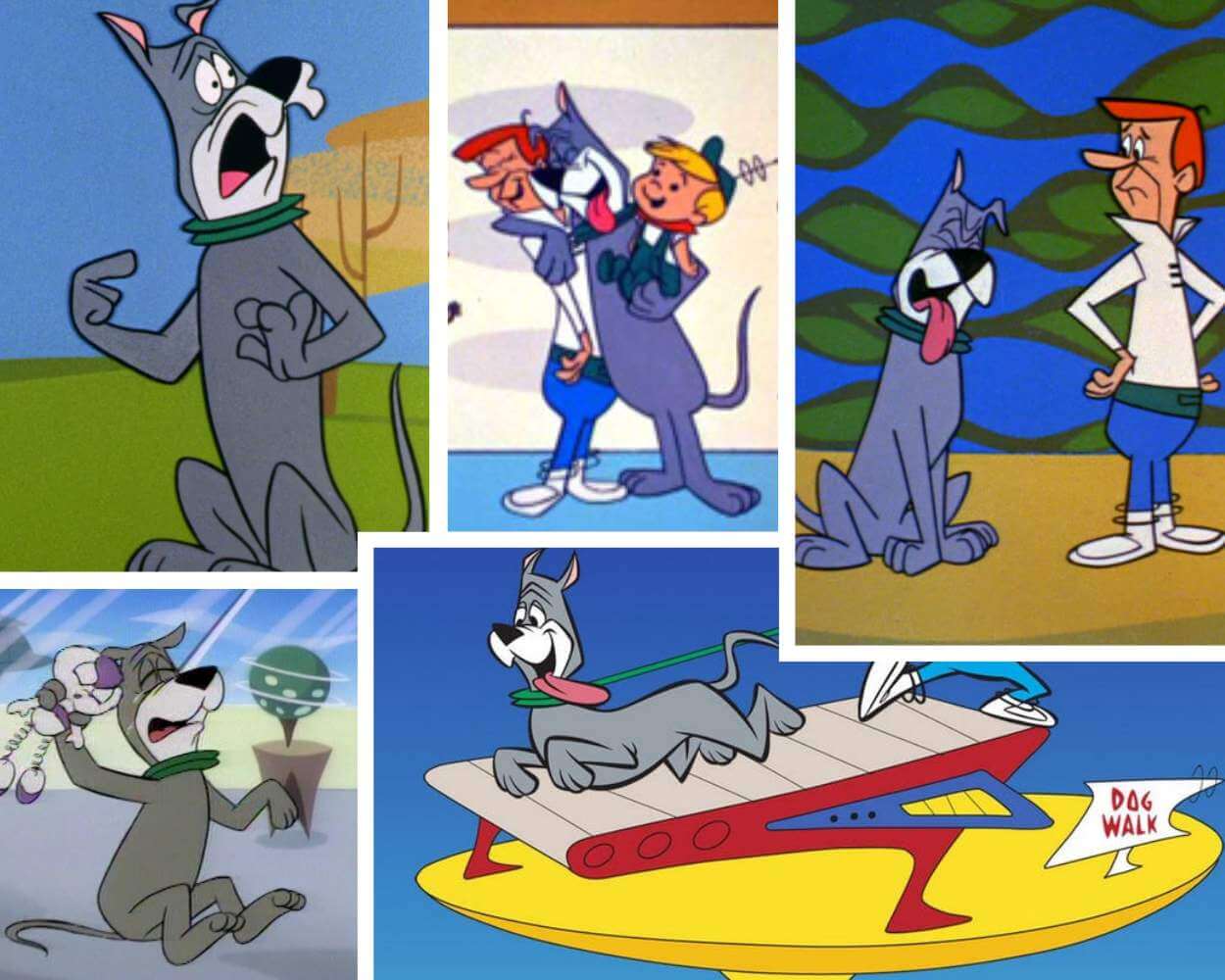
“The Coming of Astro” aired on October 14, 1962.
Elroy wants to keep the stray Great Dane, but George refuses. Instead, he buys the family an expensive electronic dog named ’Lectronimo.
The mechanical pet promises everything George thinks a futuristic household should want. It does not shed, need feeding, or bring the unpredictability of a real animal.
Then a burglar enters the apartment.
Astro responds like a loyal family dog. ’Lectronimo proves far less useful, and the living pet earns his place in the household.
What Astro’s first episode establishes
- Elroy chooses Astro before the rest of the family does
- George initially prefers a predictable electronic pet
- Astro proves that loyalty cannot be programmed
- The supposedly outdated dog defeats the futuristic replacement
That idea defines Astro for the rest of the franchise.
Almost everything in Orbit City can be replaced by a newer machine. Astro cannot.
Why Was Astro Originally Called Tralfaz?
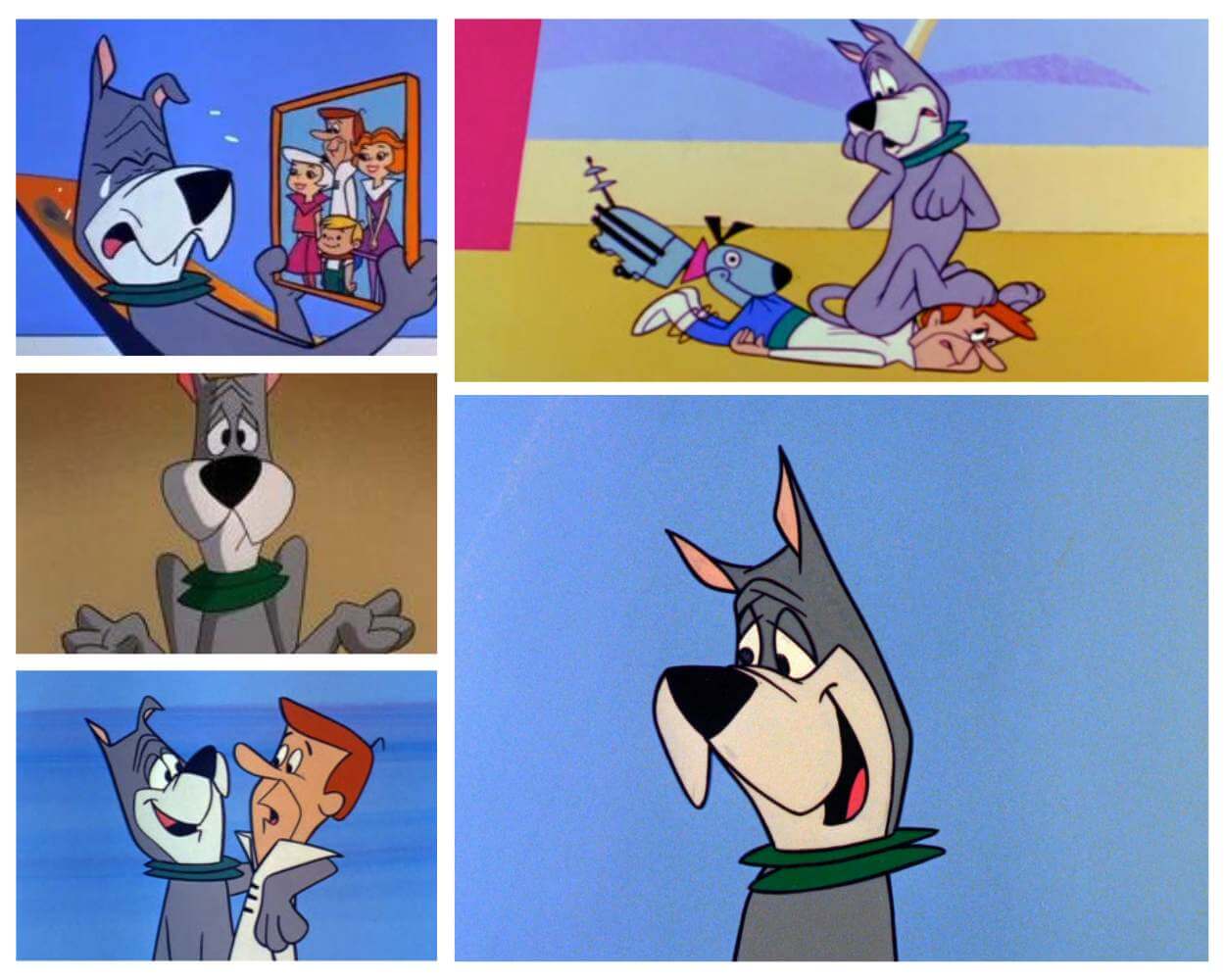
The series reveals Astro’s earlier life in “Millionaire Astro,” which aired on January 6, 1963.
A wealthy businessman named Gottrockets recognizes Astro as his missing dog. Before Astro met Elroy, the millionaire owned him and called him Tralfaz.
Gottrockets does not simply ask for the dog back. He takes the Jetsons to court.
The episode becomes a futuristic custody case involving lawyers, a computerised courtroom, and a robot jury called Jury-Vac.
The Tralfaz case
A dog, two homes, and one robot jury
- Gottrockets identifies Astro as his former dog, Tralfaz
- A pedigree supports the millionaire’s ownership claim
- Jury-Vac awards the dog to Gottrockets
- Astro receives luxury but misses the Jetsons
- Gottrockets eventually returns him to the family he chose
The story works because Astro is offered everything a dog could supposedly want: space, servants, expensive food, and a wealthy owner.
None of it replaces affection.
He wants Elroy, George, and the noisy apartment in Orbit City. Gottrockets eventually recognizes that Astro is happier with the Jetsons and lets him return.
The name Tralfaz became a deep-cut piece of cartoon trivia, but the episode is more than a strange name reveal. It confirms that Astro chose his family.
How Does Astro Talk?
Astro’s speech is often described as a lisp, but that is not quite accurate.
He adds an R sound to words, especially near the beginning. “I love you, George” becomes something closer to “Ri rove roo, Reorge.”
The invented pattern is sometimes called rhotic replacement.
Don Messick referred to this kind of performance as “growl talk.” Astro’s voice was high and affectionate, with enough understandable English for the family and audience to follow him.
He is not fully articulate in the way a human character is. His short phrases sit somewhere between speech, barking, and emotional sound effects.
Did Astro Inspire Scooby-Doo?
Astro and Scooby-Doo share more than a species.
Iwao Takamoto designed both dogs. Don Messick created both original voices. Each character is a talking Great Dane whose words often begin with extra R sounds.
Astro came first in 1962. Scooby-Doo, Where Are You! premiered seven years later in 1969.
The creative connection
From Astro to Scooby-Doo
- Astro debuted in 1962
- Scooby-Doo debuted in 1969
- Don Messick originated both voices
- Iwao Takamoto designed both Great Danes
- Both use a similar R-heavy speech pattern
It is safer to call Astro a creative predecessor than to say he directly became Scooby-Doo.
Messick later distinguished the performances by giving Scooby a deeper, more barrel-chested version of the growl. Astro remained lighter and more openly affectionate.
Scooby became the larger cultural icon, but Astro gave Hanna-Barbera an earlier model for a dog who could speak, panic, complain, and function as a full comedy character.
Astro’s Top Secret
“Astro’s Top Secret,” which aired on December 9, 1962, gives the dog one of his best original-series showcases.
Astro accidentally swallows Elroy’s flying toy car. The toy continues operating inside him, making it appear that Astro can fly.
Mr. Cogswell concludes that the dog must be connected to a secret Spacely Sprockets invention. He sends his employee Harlan to investigate and eventually kidnap Astro.
The entire corporate mystery rests on a misunderstanding that only makes sense in Orbit City: an industrial spy interrogates a dog because the dog may contain anti-gravity technology.
The truth is much smaller. Astro has swallowed a toy.
That contrast is where the episode works best. The adults immediately imagine patents, profits, and corporate sabotage. Elroy simply wants his dog back.
The Most Famous Dog Treadmill on Television
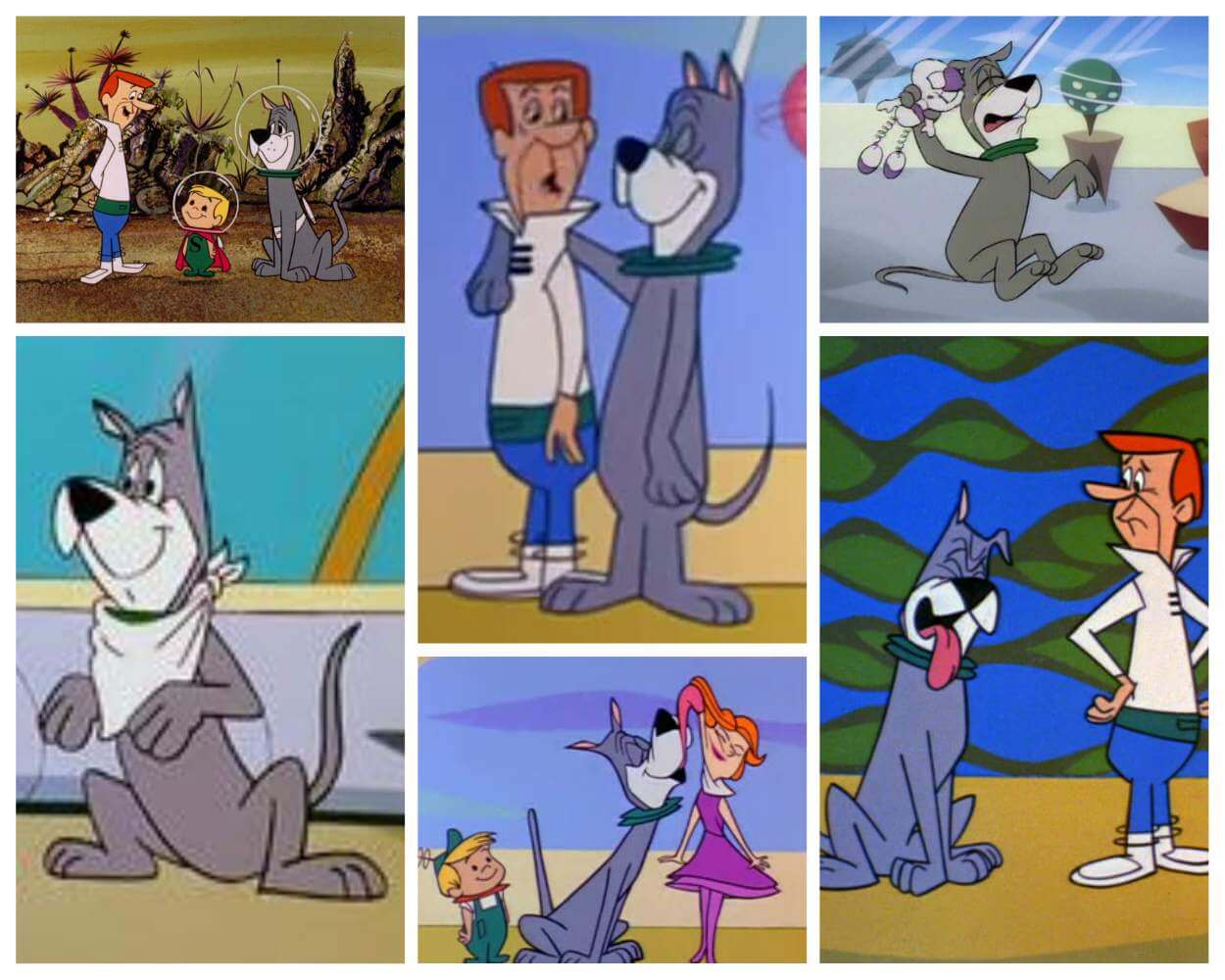
Astro’s most familiar scene is not part of a regular episode.
In the original closing credits, George takes him outside to use the building’s electronic dog-walk treadmill. A cat appears, Astro gives chase, and the machine accelerates.
Astro and the cat eventually jump away. George remains trapped on the belt, running at full speed and shouting:
“Jane! Stop this crazy thing!”
The gag mirrors the ending of The Flintstones, where the family cat puts Fred outside for the night.
Why the closing gag lasted
- It repeats at the end of every original episode
- It gives the series its most famous spoken line
- The futuristic machine fails because of ordinary animal behaviour
- Astro escapes while George pays for the chaos
The scene became one of the clearest summaries of the entire show. Technology promises convenience, a normal pet introduces disorder, and George suffers the consequences.
Astro After the Original Jetsons Series
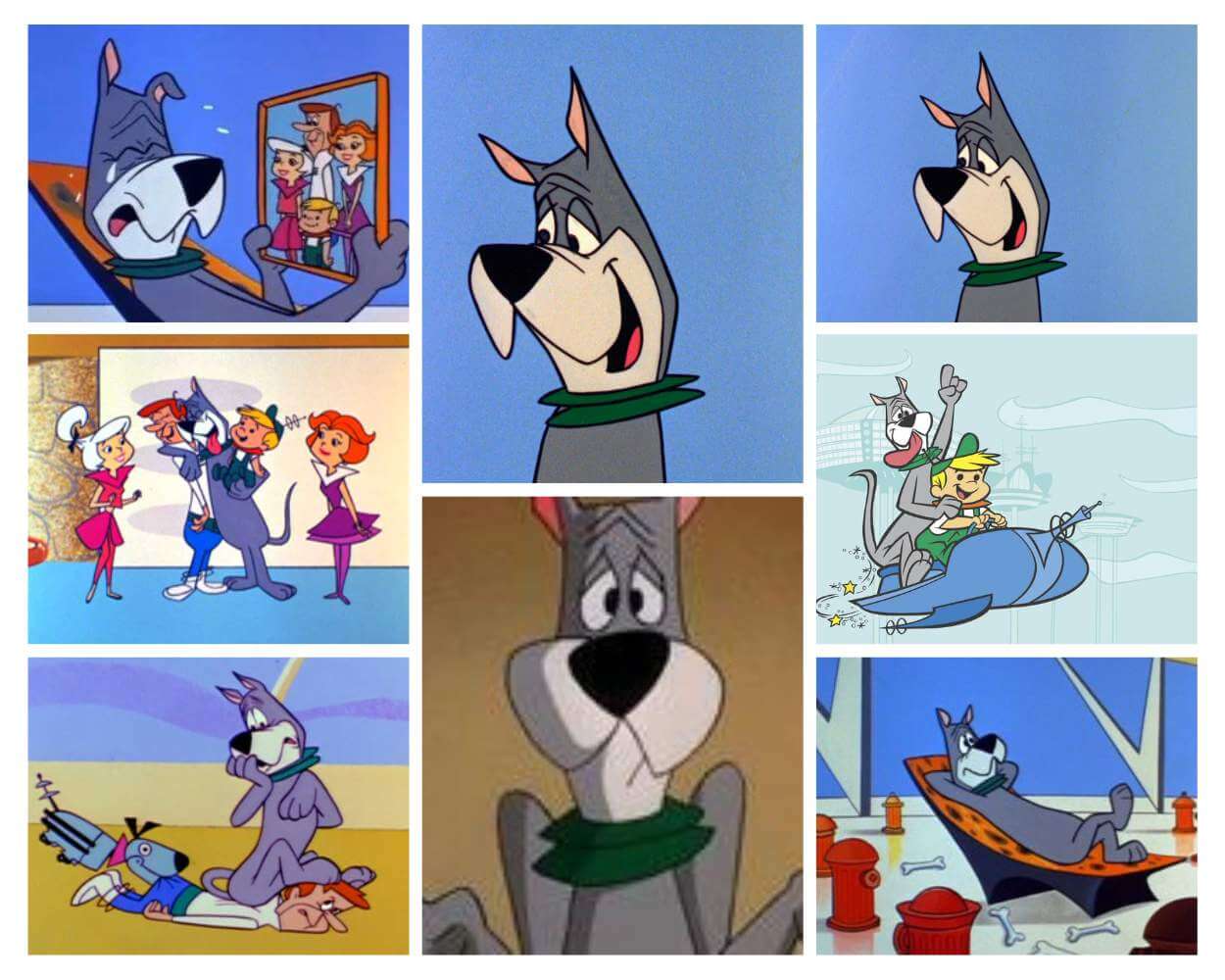
The original prime-time run produced only 24 episodes, but Astro remained part of nearly every major Jetsons revival.
- The 1985 revival: Astro returns with the family in the new syndicated episodes
- The Jetsons Meet the Flintstones (1987): Astro accidentally changes Elroy’s time-machine setting
- Rockin’ with Judy Jetson (1988): Another late Don Messick appearance
- Jetsons: The Movie (1990): Astro joins the family’s move to an asteroid community
- The Jetsons & WWE: Robo-WrestleMania! (2017): Frank Welker voices Astro
- Jellystone!: A reimagined Astro appears among the wider Hanna-Barbera cast
Astro belongs to a long Hanna-Barbera line that includes Huckleberry Hound, Muttley, and Scooby-Doo.
What separates him is his place inside a family sitcom. He is not a mystery-solving partner or a villain’s sidekick. He is a pet who wants to sit beside George and be told he is a good dog.
Quick Answers About Astro From The Jetsons
What kind of dog is Astro? Astro is a talking Great Dane designed by Iwao Takamoto.
Who voiced Astro? Don Messick created Astro’s original voice. Messick later became the original voice of Scooby-Doo.
When did Astro first appear? He debuted in “The Coming of Astro,” which aired on October 14, 1962.
What was Astro’s original name? His former owner called him Tralfaz. “Millionaire Astro” reveals the name during a custody dispute.
Who owned Astro before the Jetsons? Astro previously belonged to the wealthy Gottrockets, but he preferred life with the Jetson family.
Whose dog is Astro? Elroy brings him home and has the strongest claim to being his owner. Astro is also deeply attached to George and frequently calls him his best friend.
Can Astro talk? Yes. He speaks in short phrases using an R-heavy growl, turning words such as “love” and “George” into “rove” and “Reorge.”
Did Astro become Scooby-Doo? No, but Astro came first and shares Scooby’s original voice actor, designer, breed, and speech pattern. He is best described as an important creative predecessor.
The First Dog of the Future
Astro earns his place in the Jetson family by defeating a robot for the job.
Everything after that builds the legend: a millionaire’s mansion, a custody trial, a flying-dog misunderstanding, and a treadmill that George can never stop.
His greatest contribution may be the simplest one.
Astro showed Hanna-Barbera that a talking dog could be more than a mascot. He could argue, panic, love his family, and carry an episode.
Seven years later, Scooby-Doo took that idea into another genre and changed Saturday morning television.
Astro ran the first lap.
Which Jetsons character should this series cover next?
Share your pick in the comments.