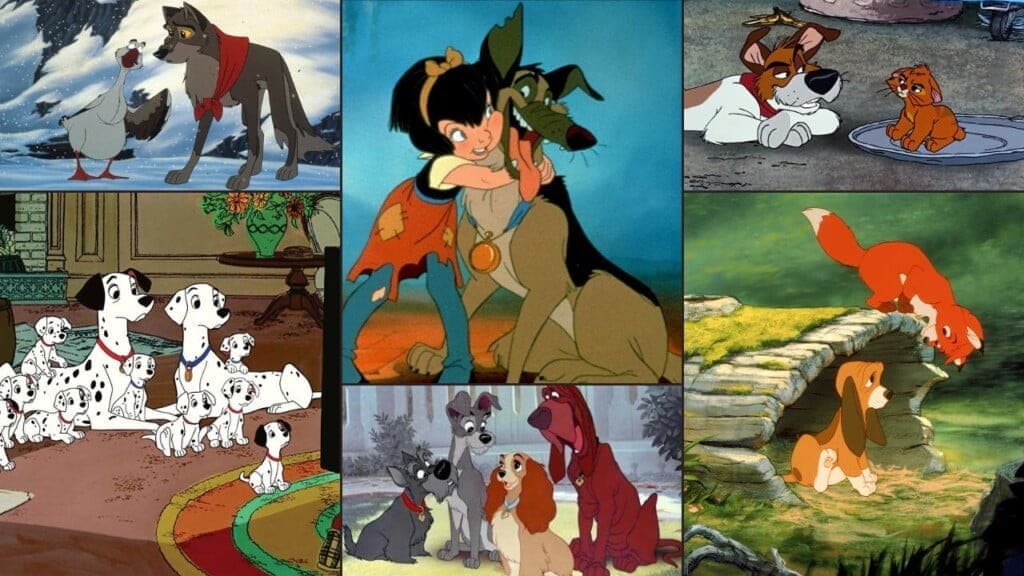
Trace animation back to its roots, and you find a paw print on almost every milestone.
Long before superheroes took over, the dog was the animator’s gold standard. It bridged surreal slapstick and real, aching sentiment.
Think about the range.
Pluto never says a word, yet his loyalty reads loud and clear. Brian Griffin sips a martini and drips with cynical wit.
So the cartoon dog has grown from a simple sidekick into a vessel for whatever a story wants to say about us.
This one is a movie list, though.
I pulled together 15 of the best animated dog movies.
They span 1955 Disney classics to modern misfires. For each, I added the stuff other sites skip: a realism score, an animation note, and a behind-the-scenes fact. So let us peel back the cels.
Short on time?
The safe Disney dog movies are Lady and the Tramp and The Fox and the Hound. Want a good cry? Add Balto. For something modern and clever, go straight to Bolt. The rest range from cult gems to gloriously bad.
The Best Animated Dog Movies
Here are 15 animated dog movies worth your time. Together they span seven decades. I am not ranking them, just celebrating them. So watch in any order you like.
About the realism score: it is a quick 1-to-5 gauge. A 5 means the dog mostly acts like a real dog. A 1 means it is wearing a cape and flying. It is subjective, and it is entirely for fun.
StarDog and TurboCat (2019)

This one is a British underdog, literally. Buddy is a Golden Retriever. His owner shoots him into space in 1969. Fifty years later, he wakes up with superpowers and no idea where his boy went. So he teams up with a gadget-obsessed vigilante cat called TurboCat. Together they survive a town that has banned pets.
Basically, it is Superman-dog meets Batman-cat. It is cheap and predictable. Still, the kids in the room will not care.
Realism score: 1/5.
Behind the scenes: this was Red Star 3D’s first feature. Before that, the Sheffield studio mostly built 4D rides for theme parks.
Rock Dog (2016)
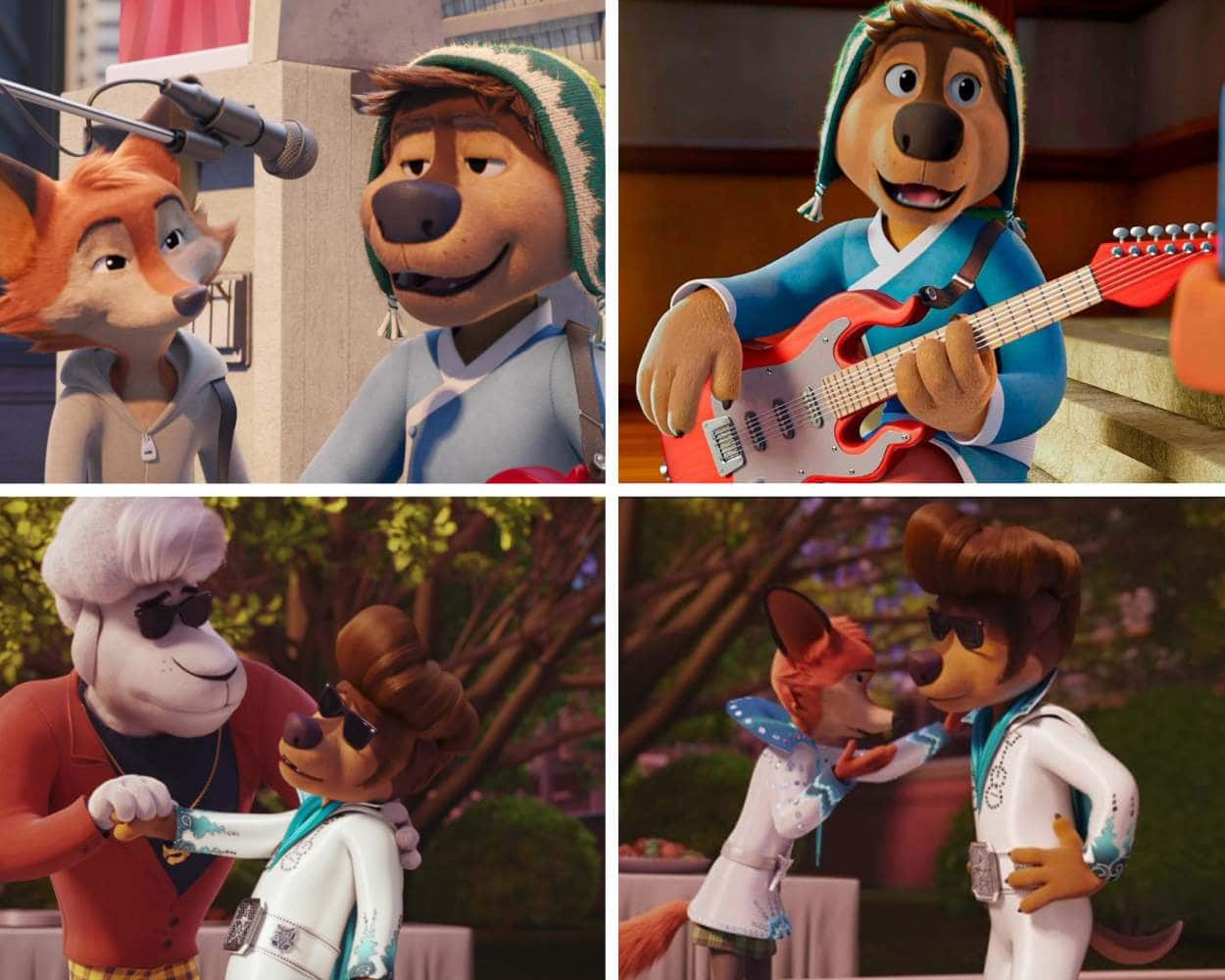
On Snow Mountain, Tibetan mastiffs guard a village of sheep. Their stern leader Khampa has banned music. But his son Bodi finds a fallen radio and catches the rock bug. So he heads to the city to chase his dream. There he hunts down a reclusive rock legend, who happens to be a cat.
The animation is uneven and the story is thin. Still, the heart is real. Plus the soundtrack has a couple of bangers.
Realism score: 2/5.
Behind the scenes: it adapts the graphic novel Tibetan Rock Dog by Chinese rock star Zheng Jun. At $60 million, it was the most expensive Chinese-financed animated film ever. It also flopped.
Pets United (2019)
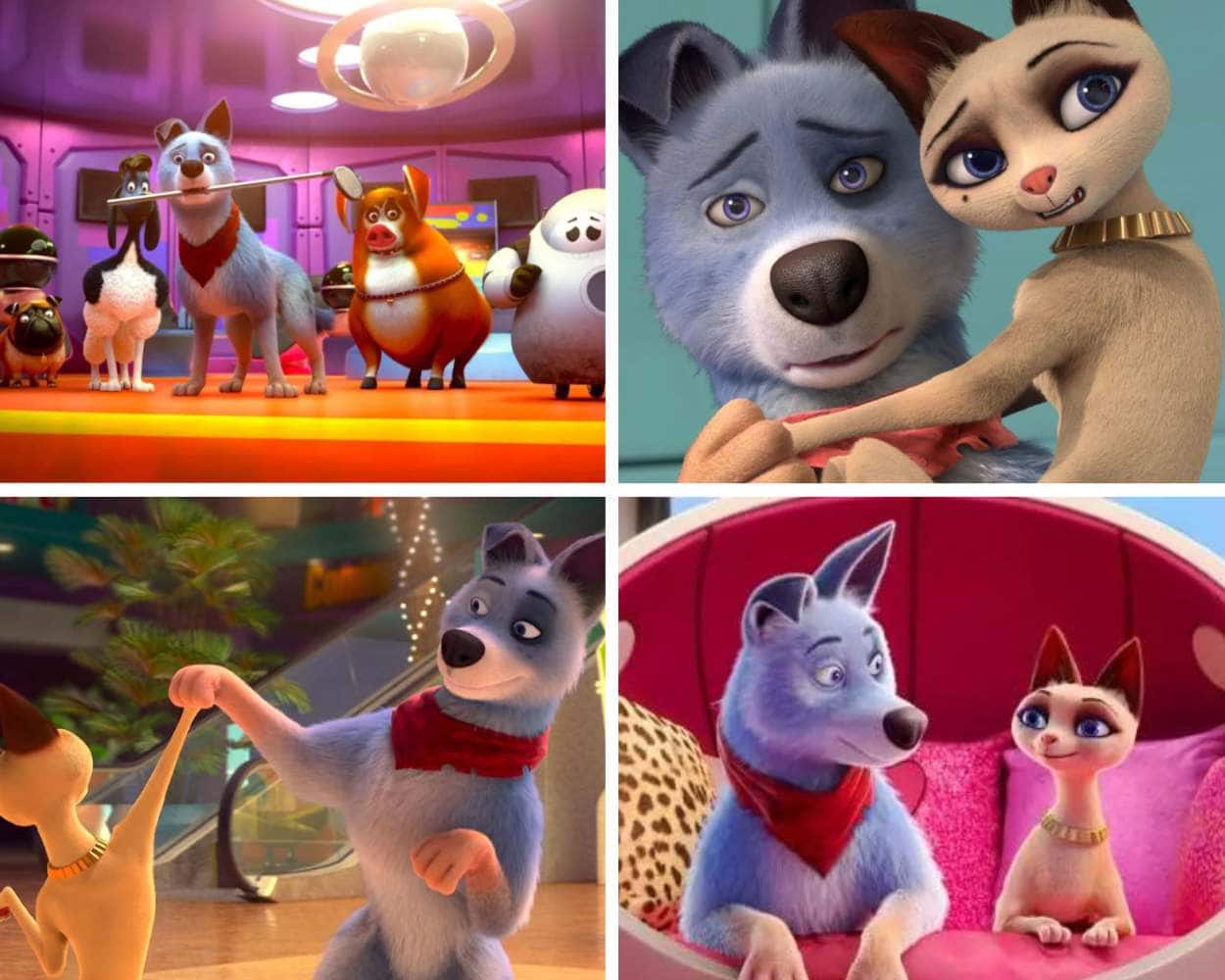
The setting is a shiny high-tech city. A crew of pampered pets lives large, until the humans vanish. Then a power-hungry mayor unleashes a robot army. So a self-centered stray dog named Roger has to lead the ragtag rescue.
It is a budget Secret Life of Pets. Still, it is harmless and colorful enough for a rainy afternoon.
Realism score: 1/5.
Behind the scenes: this is a German-produced feature. In fact, it is one of a whole wave of low-budget European pet films chasing the Illumination formula.
Arctic Dogs (2019)
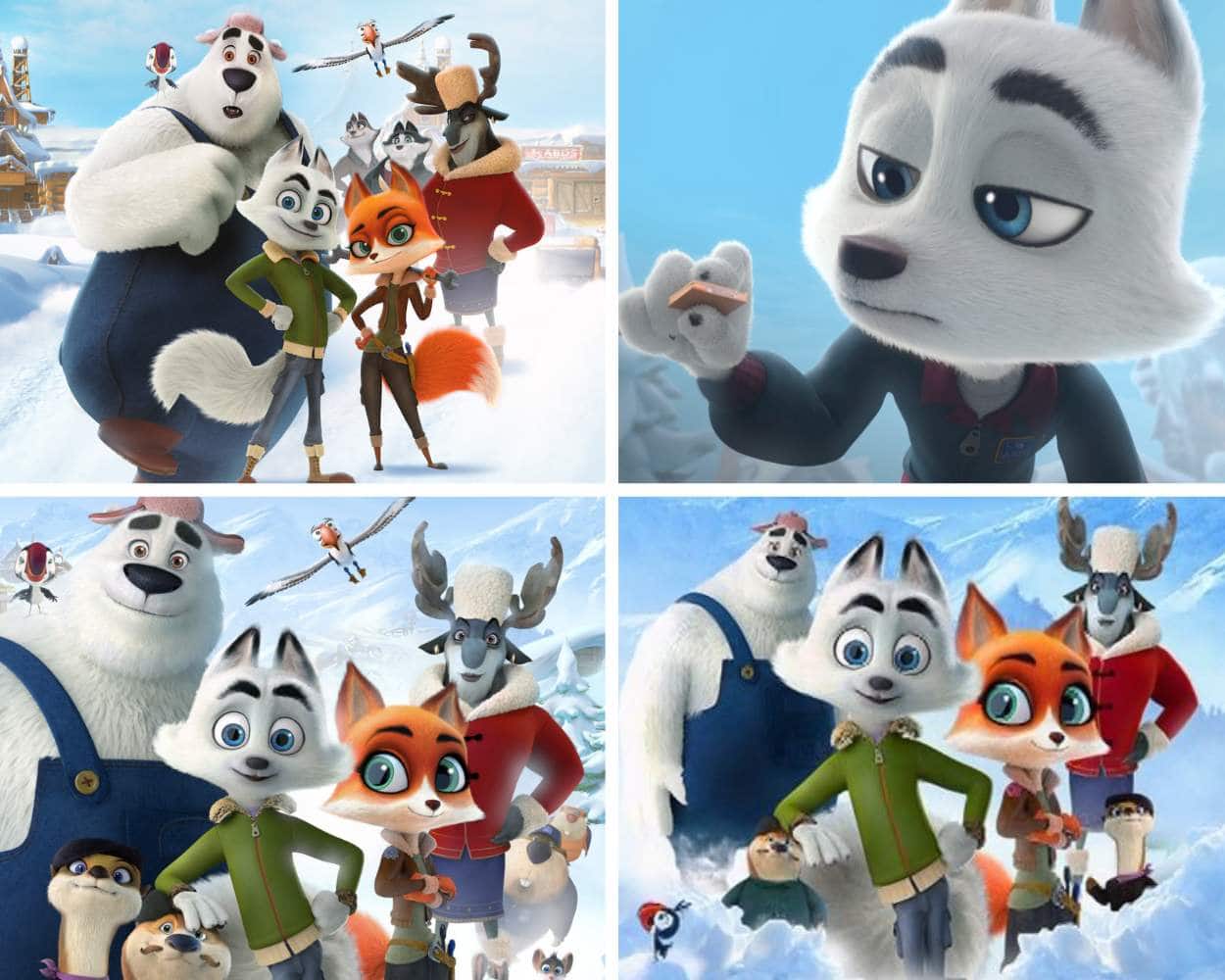
Swifty is an Arctic fox stuck in the mailroom. He dreams of joining the elite husky couriers, the Top Dogs. So he commandeers a sled and delivers a mystery package. There he stumbles onto a villain’s plot to melt the Arctic. Then he has to save the day with a crew of huskies.
The plot is stock, and the reviews were brutal. Still, the husky ensemble is fun. Fair warning, though: the lead is a fox, even if the dogs run the show.
Realism score: 1/5.
Behind the scenes: the voice cast is huge. It packs in Jeremy Renner, Alec Baldwin, John Cleese, Anjelica Huston, James Franco, and Heidi Klum. So the film’s flop is all the more surprising.
DC League of Super-Pets (2022)
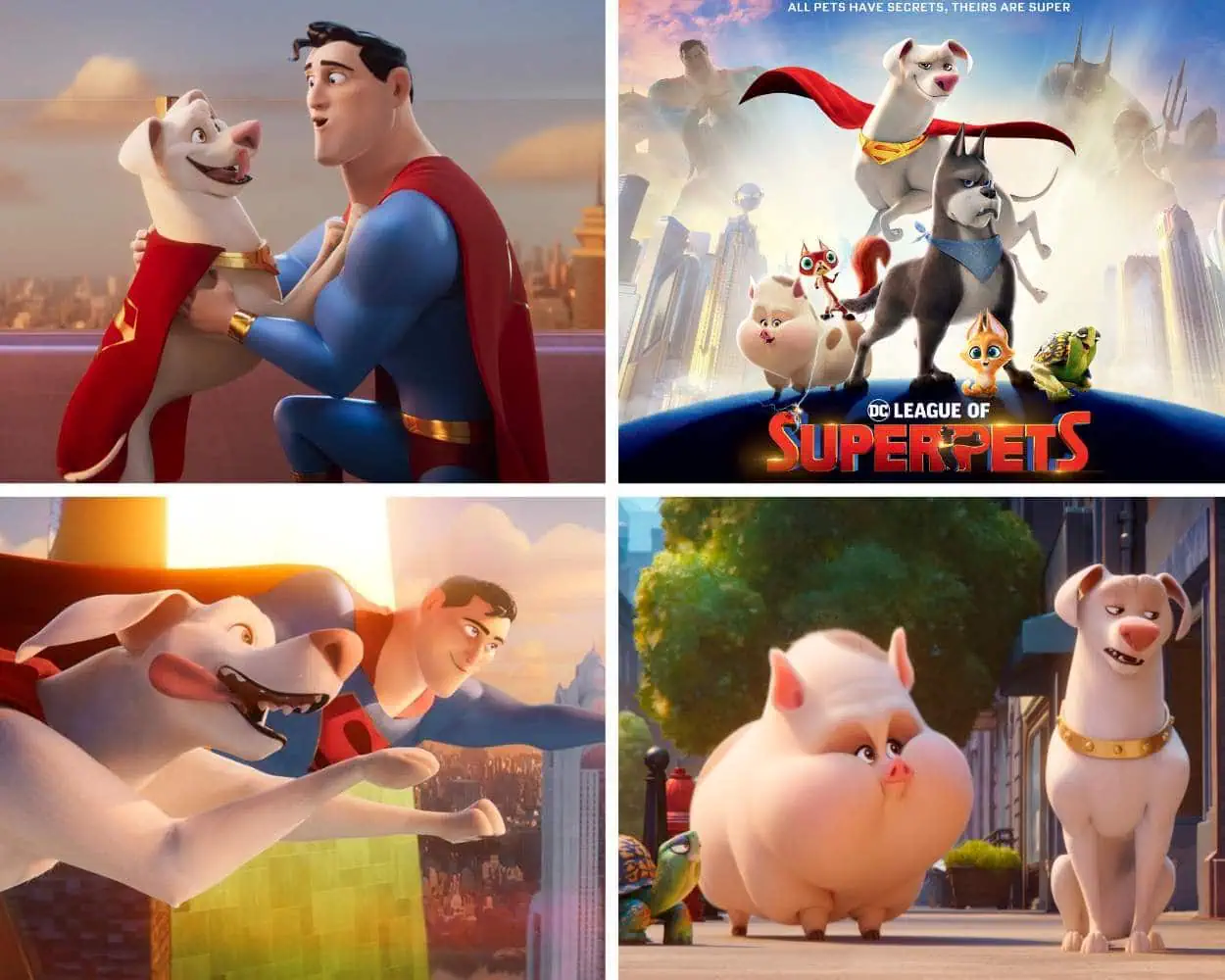
Superman’s dog Krypto has all his owner’s powers and none of his patience. Then villains capture the Justice League. So Krypto has to build a team fast. He whips a shelter-full of newly superpowered animals into shape. A nearsighted Boxer named Ace leads them.
It is louder and sillier than it needs to be. Still, Dwayne Johnson and Kevin Hart clearly had a blast.
Realism score: 1/5.
Behind the scenes: it draws on DC’s old Legion of Super-Pets comics. It also doubles, quietly, as a pitch for adopting shelter animals.
Rover Dangerfield (1991)
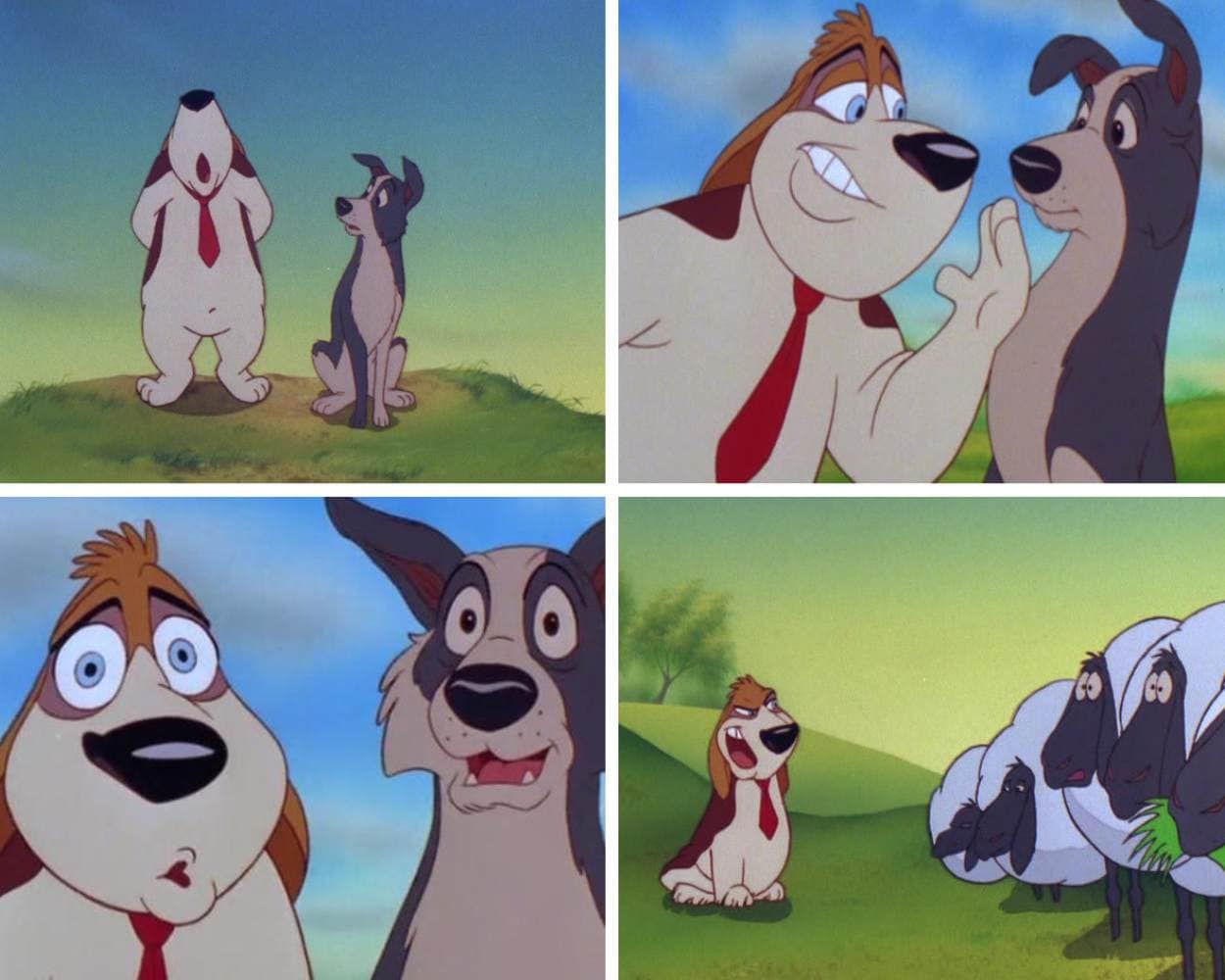
Only Rodney Dangerfield could turn a cartoon dog into a wisecracking Vegas act. Rover is a Sin City show dog. Then his owner dumps him on a farm. There he has to earn respect from animals who do not get his shtick.
The humor leans adult, but it stays kid-safe. Still, Dangerfield’s growly one-liners carry the whole thing.
Realism score: 3/5.
Behind the scenes: this was Dangerfield’s passion project. He dreamed up the story, co-wrote it, produced it, and voiced Rover himself.
Frankenweenie (2012)

This is Tim Burton’s black-and-white stop-motion love letter. It honors old monster movies and every kid who ever lost a pet. Young Victor adores his dog Sparky. Then a car kills Sparky. So Victor does the only logical thing: he reanimates him with lightning. After that, he tries to hide a stitched-together dog from the neighbors.
It is macabre and tender. In fact, it is one of the most heartfelt things Burton has made.
Realism score: 3/5.
Behind the scenes: this remakes Burton’s 1984 short of the same name.
That short was so dark that Disney reportedly fired him. Before that, he had animated on The Fox and the Hound there.
The Secret Life of Pets (2016)

Here is a great premise: what does your dog do while you are at work? Max is a happy Manhattan terrier. Then his owner brings home a big, sloppy rescue named Duke, and Max’s cozy life flips. The two get lost in the city. There they have to survive an underground army of abandoned pets. A furious bunny leads it.
It is fast, funny, and gorgeous. It is also one of the sharpest modern animated dog movies. Still, the plot quietly borrows the bones of Toy Story.
Realism score: 4/5.
Behind the scenes: it was a massive original hit for Illumination, the Minions studio. Better yet, the pet-behavior gags feel grounded enough that real dog owners nod along.
Bolt (2008)
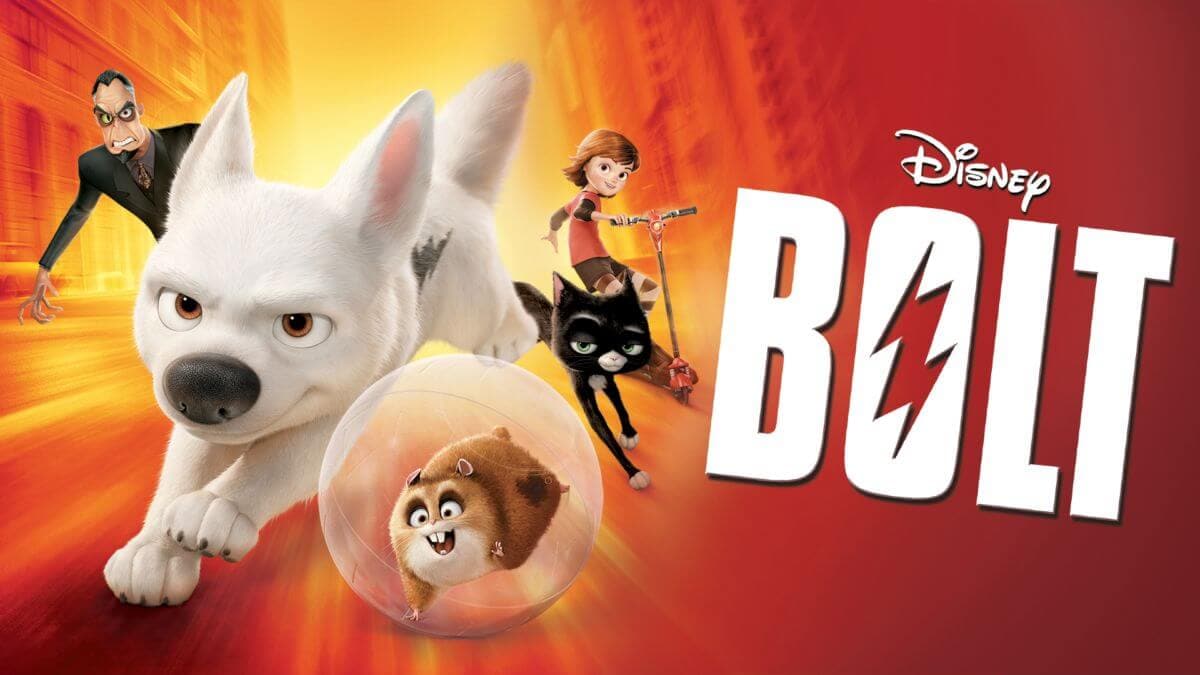
Bolt is a TV star who thinks his superpowers are real. The show never lets him learn otherwise. Then a mix-up ships him across the country.
So he has to survive as an ordinary dog. Along the way, he figures out who he is without the green screen.
It is warm and funny. In fact, it is one of Disney’s most underrated animated dog movies. Plus the cynical cat and starstruck hamster steal every scene.
Realism score: 3/5.
Behind the scenes: this was the first film John Lasseter fully oversaw after Disney bought Pixar. It began as a different movie called American Dog. Then a big retool reshaped it, and a soft, painterly look made it feel more storybook than slick.
Oliver and Company (1988)
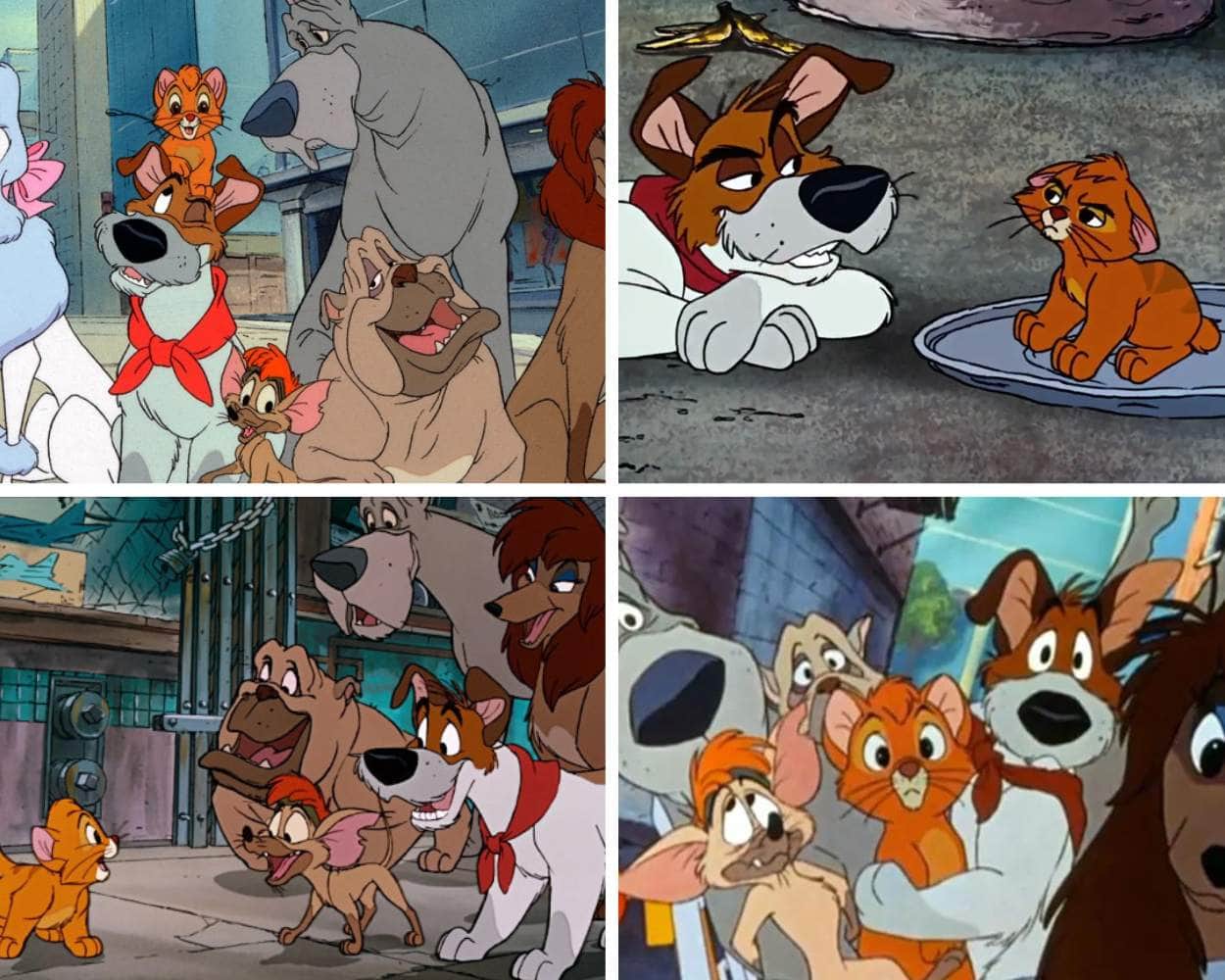
Disney drops Oliver Twist into 1980s New York. But here is the twist: Oliver is a kitten, and Fagin’s gang are streetwise dogs. A cool mutt named Dodger takes the little guy under his paw. So the crew’s scrappy loyalty drives the whole story.
Yes, the lead is a cat. Still, the dogs run this movie, and the city-dog energy is infectious.
Realism score: 3/5.
Behind the scenes: Billy Joel voiced Dodger and sang “Why Should I Worry.” The film also gave Disney an early test of computer-generated backgrounds, for the cars and cityscapes.
The Fox and the Hound (1981)
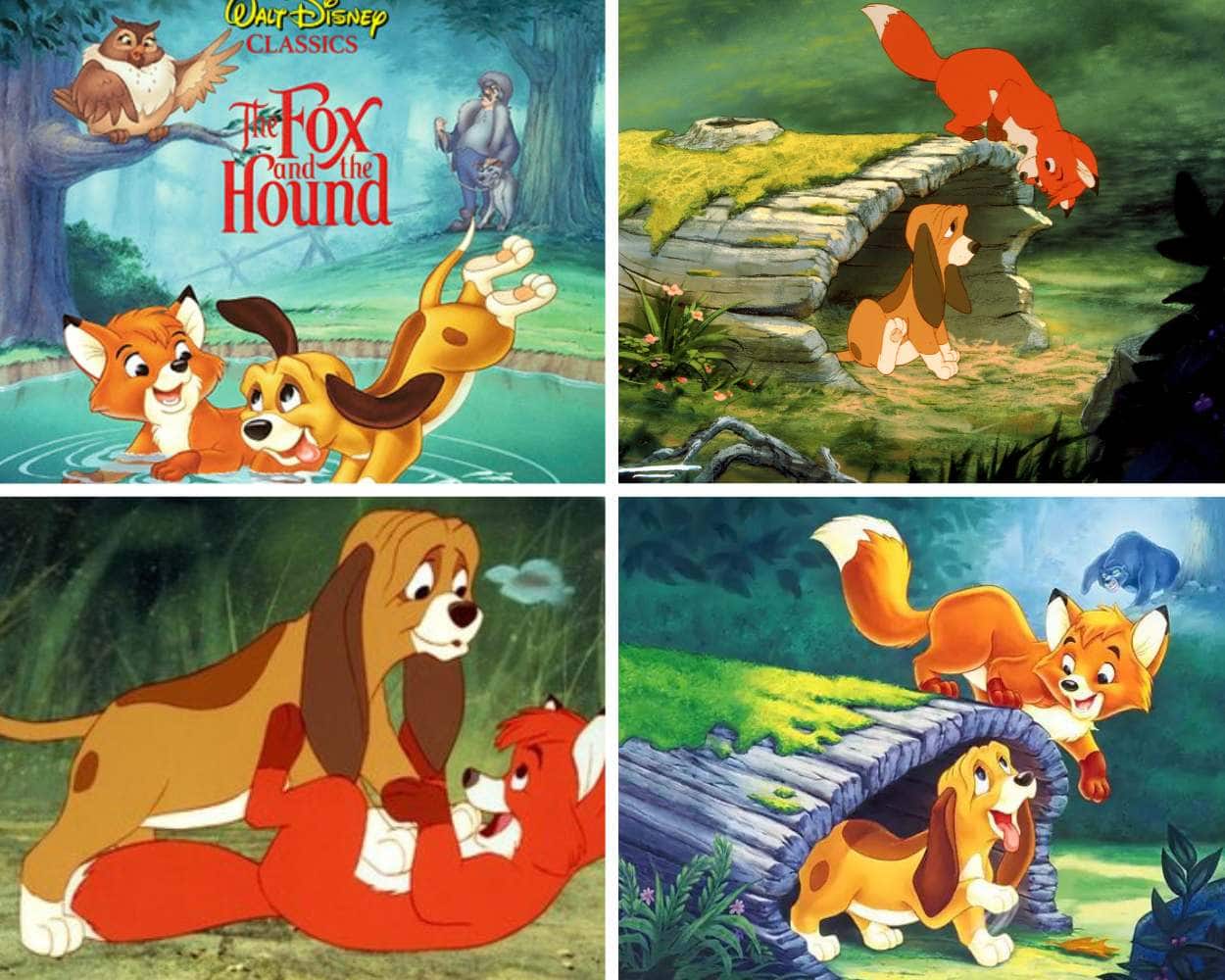
A hound puppy named Copper and an orphaned fox kit named Tod become best friends. Neither one grasps that they should be rivals. Then they grow up, and the world starts pulling them apart.
It is gentle and gorgeous. In fact, it is one of the great sad animated dog movies. That “we will always be friends” moment wrecks me every single time.
Realism score: 4/5.
Behind the scenes: this was a rocky, transitional Disney production. Animator Don Bluth and about a dozen others quit the studio partway through. Meanwhile, a young Tim Burton and Brad Bird were coming up on it.
Balto (1995)
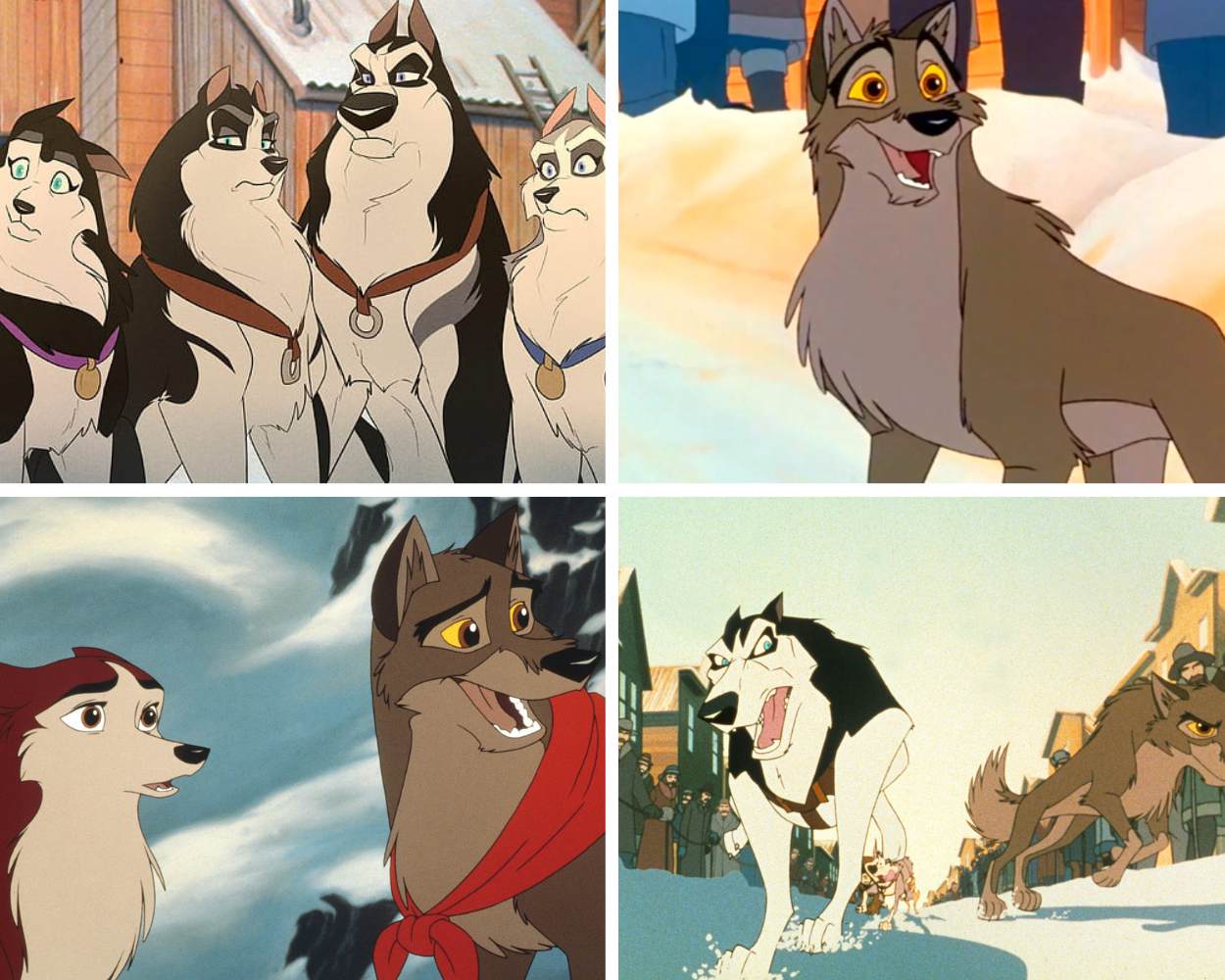
This one draws loosely on a true story. In 1925, a sled dog team raced medicine across frozen Alaska. The sick children of Nome needed it fast. Balto, a half-wolf outcast, has to beat the town’s distrust to help lead the run.
It is stirring stuff. Plus the finale out on the ice is nerve-wracking.
Realism score: 4/5.
Behind the scenes: the real Balto was all dog, not part wolf. In fact, historians credit a Siberian husky named Togo with the longest, most dangerous leg of the 1925 serum run. Balto just got the statue in Central Park.
All Dogs Go to Heaven (1989)
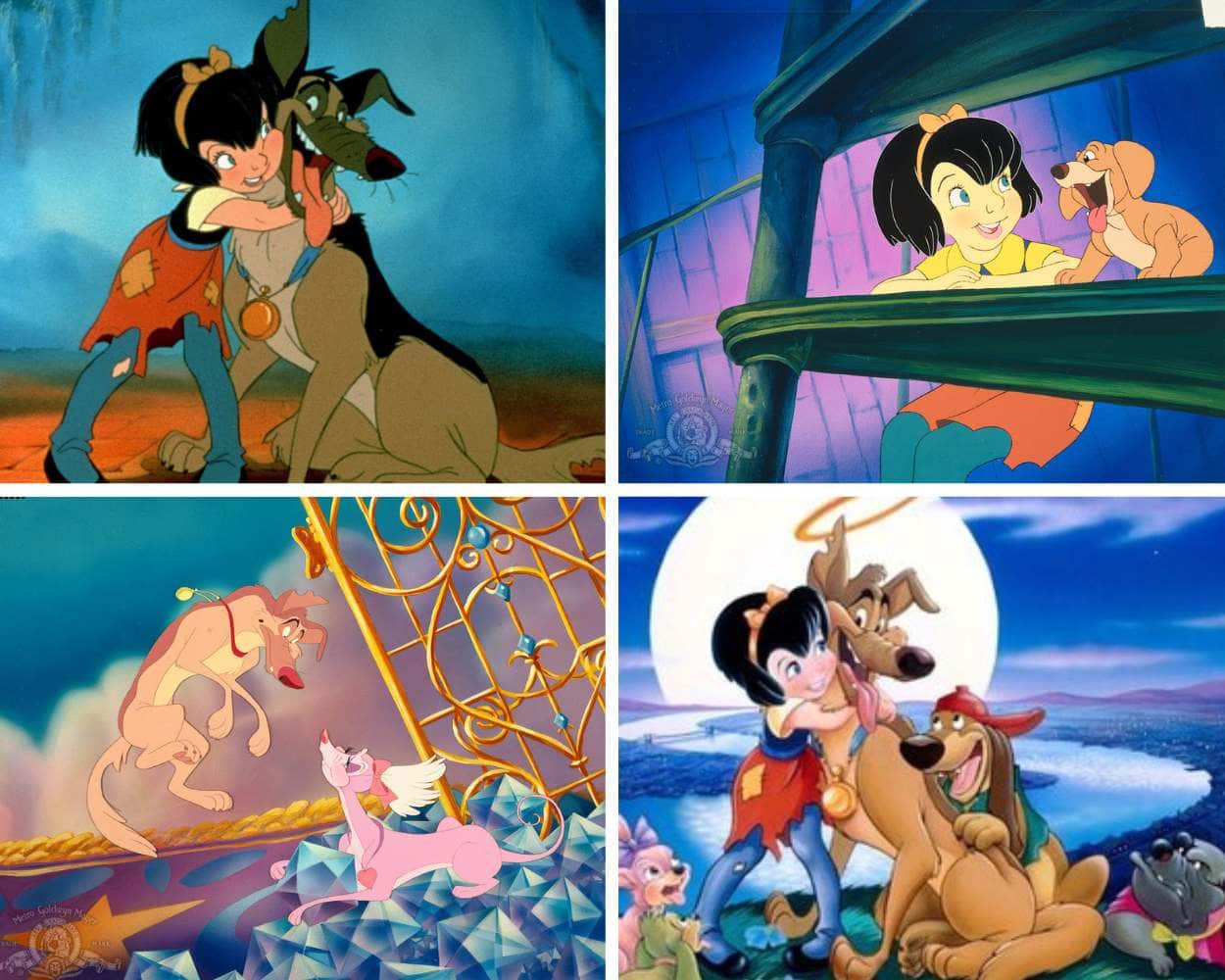
This is Don Bluth’s scrappy, surprisingly dark tale. Charlie is a con-artist German shepherd. Then his own partner murders him. So Charlie sneaks back from heaven. There he finds redemption through an orphan girl who can talk to animals.
It is one of the odder animated dog movies of the 80s. It is uneven and stranger than you remember. Still, it has real soul, plus a killer vocal turn from Burt Reynolds.
Realism score: 2/5.
Behind the scenes: it opened the exact same day as Disney’s The Little Mermaid, back in November 1989. So it flopped at the box office. Then it became a home-video staple for a whole generation.
Lady and the Tramp (1955)
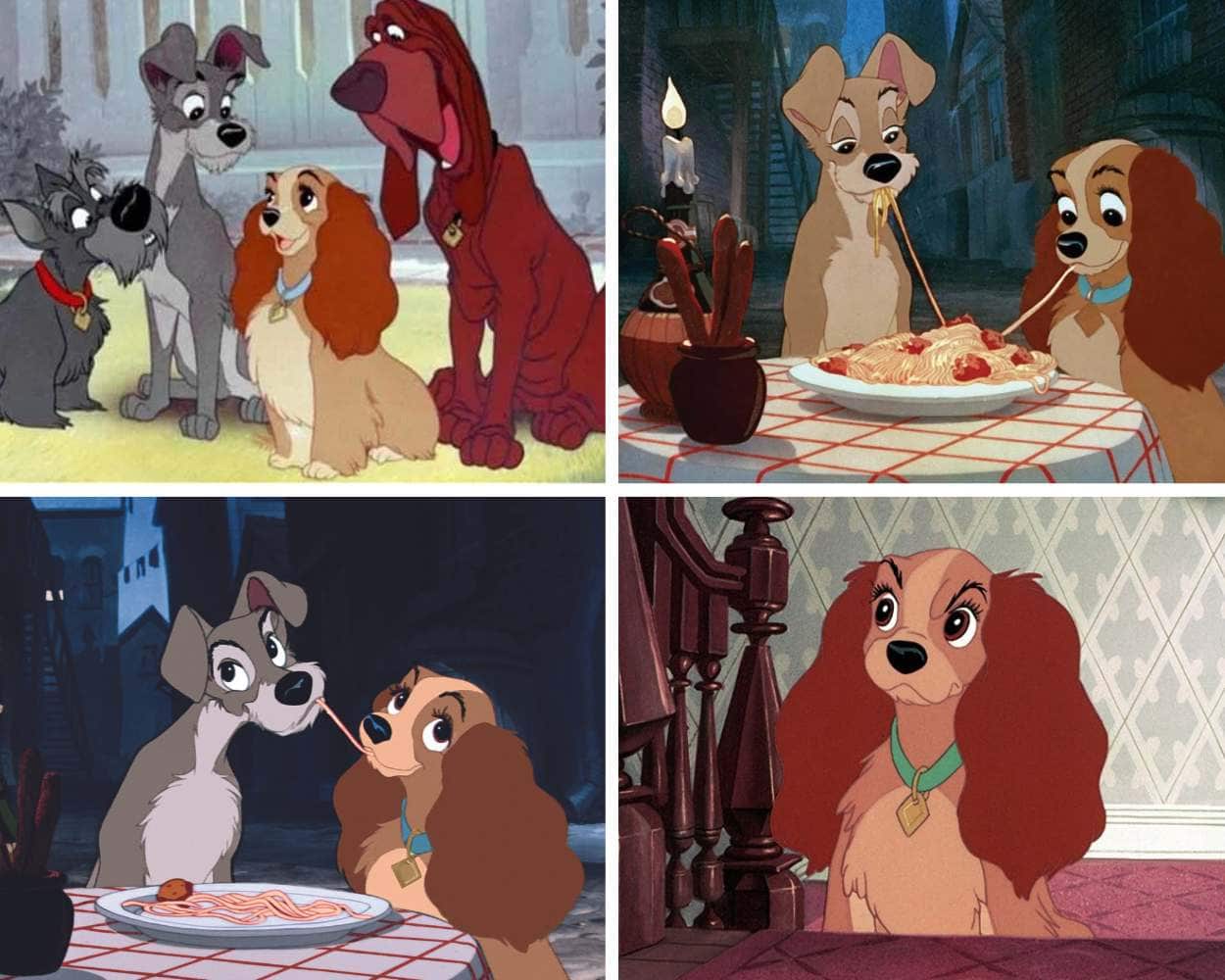
This is the one that made spaghetti romantic. Lady is a pampered cocker spaniel. Then a new baby arrives, a scheming aunt takes over, and her world tips over. Soon she is out on the streets. There she falls for Tramp, a charming mutt with no leash and no rules.
Seventy years on, it is still one of the warmest animated dog movies Disney ever made.
Realism score: 4/5.
Behind the scenes: Disney filmed it in CinemaScope, a first for any animated feature.
That is why the world feels so wide and cinematic, right down at a dog’s-eye view near the pavement.
One Hundred and One Dalmatians (1961)
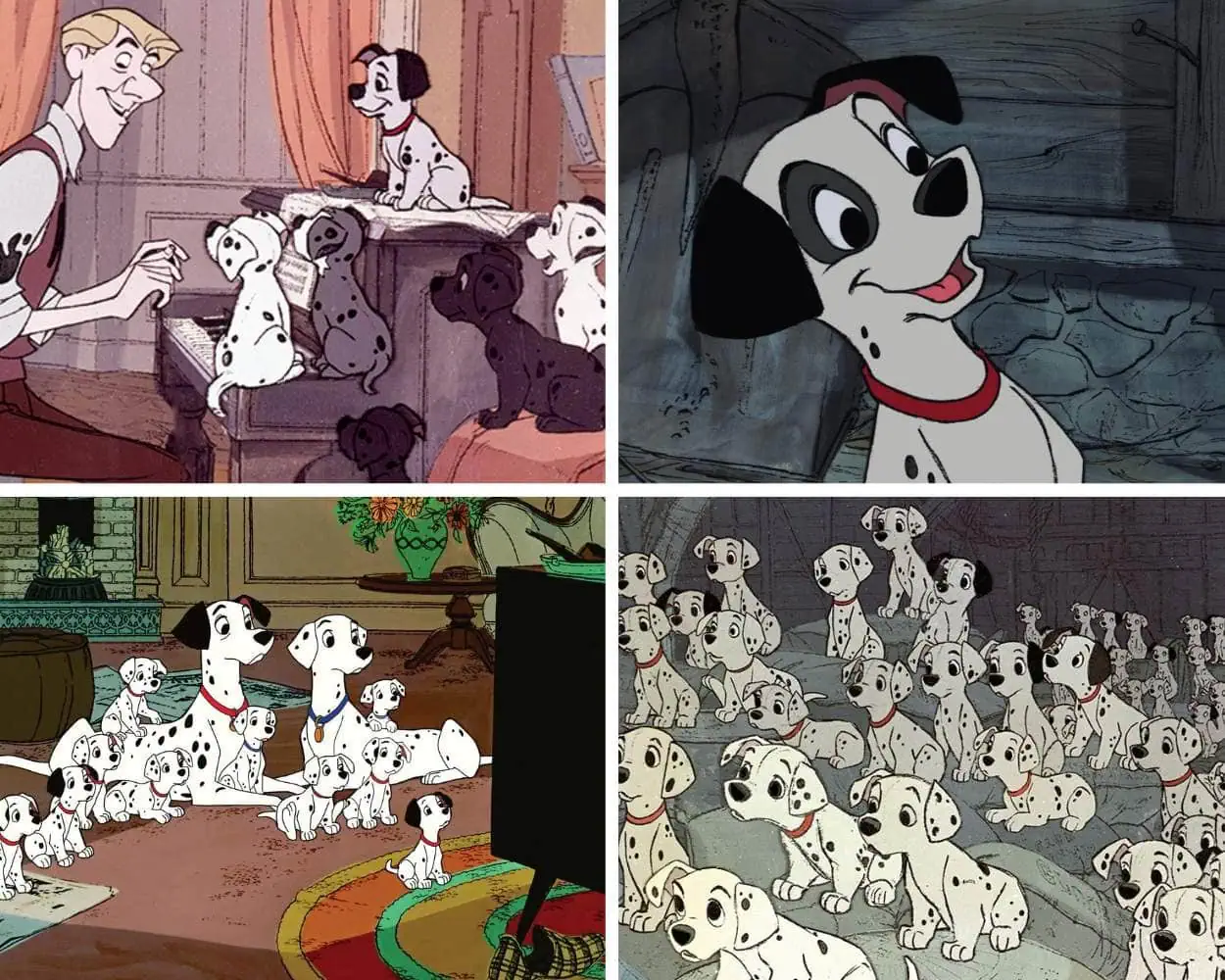
Pongo and Perdita are happy London dogs. They are raising a litter of 15 puppies. Then the fabulously evil Cruella de Vil steals them, plus dozens more, to make a spotted fur coat. So the parents launch a rescue across the snowy countryside. A nationwide network of barking dogs helps them.
It is fast, funny, and effortlessly stylish. Plus Cruella is still one of the all-time great Disney villains.
Realism score: 4/5.
Behind the scenes: this was the first Disney feature to use the Xerox process, which copied drawings straight onto cels.
That is why the linework looks so sketchy and alive. It also made animating 101 spotted dogs by hand possible at all.
The Psychology of the Cartoon Dog
Here is why animators keep reaching for dogs. A dog can carry a whole emotional scene without a single word.
Pluto never speaks, yet you always know how he feels. Snoopy runs a rich inner life on pure pantomime. We already read real dogs through body language. So animators can pin sadness, courage, guilt, or pure joy onto a cartoon dog, and we feel it at once. In short, the dog becomes a clean, wordless mirror for human emotion. That is why the quietest gut-punch in so many animated dog movies belongs to the pup, not the person.
The Legends: Dogs That Defined the Medium
Before the animated dog movies above, a few cartoon dogs wrote the rulebook.
Tex Avery’s Droopy weaponized the deadpan. He was a slow, sad-eyed basset hound who won by doing almost nothing. Meanwhile, Disney’s Pluto proved a wordless dog could anchor a whole series. Then Scooby-Doo turned the scaredy-dog into a franchise that never stopped running.
Production spotlight: the creators lifted the Scooby-Doo gang almost wholesale from the sitcom The Many Loves of Dobie Gillis. Writers Joe Ruby and Ken Spears mapped Fred, Daphne, Velma, and Shaggy onto its leads. Then designer Iwao Takamoto built Scooby as a deliberately flawed Great Dane. The name? Frank Sinatra, scatting “doo-be-doo-be-doo” in “Strangers in the Night.”
Grew up on these? Then dig into my rundowns of the most famous cartoon pets and crime-fighting dogs like T.U.F.F. Puppy.
Modern Icons: How Cartoon Dogs Grew Up
Today’s cartoon dog looks nothing like its ancestors.
The 1960s gave us Underdog, a caped super-mutt with a realism score of about 1. Today’s headliner is Bluey, an Australian Blue Heeler.
Her whole appeal is how true it feels. In fact, the show is really about parenting, imagination, and the small heartbreaks of being little.
Set that beside the pure slapstick of the Hanna-Barbera era, and you see how far the genre traveled. It went from dogs as gag machines to dogs as our most honest family mirror. So the best animated dog movies of today owe as much to Bluey as to Disney.
Animation-style spotlight: not every modern dog is cozy. Courage the Cowardly Dog used its trembling pink pup as a lens for horror. When Courage panics, the art style itself warps into surreal, over-saturated nightmares. So you feel his dread before anything scary even happens.
The Unsung Hero: Augie Doggie and Doggie Daddy
Every roundup of animated dog movies skips this one. So here is your something-different pick.
Augie Doggie and Doggie Daddy ran from 1959 to 1961, as part of The Quick Draw McGraw Show. It followed a bright, ambitious pup and his devoted single father, a pair of dachshunds. Doggie Daddy sounded like a Jimmy Durante impression, all gruff Brooklyn warmth.
He forever sighed “Augie, my son, my son,” then beamed “dat’s my boy who said dat.” It is gentle and sweet.
In fact, it was quietly ahead of its time in centering a single dad.
Track down an episode, and you can see where a lot of cartoon-dad tenderness got its start.
Your turn. Every generation has that one cartoon dog. Maybe yours taught you about loyalty, humor, or friendship. So which one did I miss? Drop your childhood favorite in the comments, and it might just earn a spot on this list of animated dog movies.