
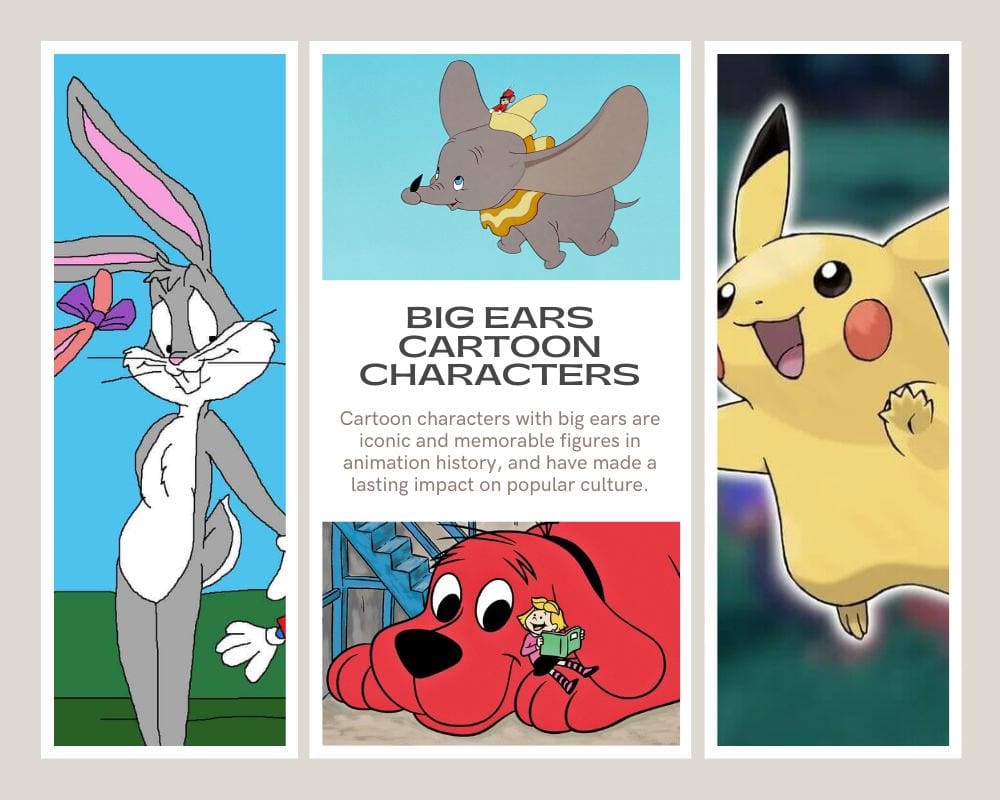
Cartoon characters with big ears stick in your memory for a reason: ears are an animator’s secret weapon.
They make a silhouette recognizable in one glance, they amplify expressions, and they can turn a simple head tilt into a full emotional sentence.
Think of Stitch’s ears drooping into puppy flaps when he is caught, or Yoda’s twitching with ancient intent, the ears do the heavy lifting long before the dialogue does.
Why Big Ears Work in Animation
The cartoon characters with big ears we love can signal innocence (Dumbo), mischief (Bugs), or pure chaos (Richard Watterson), and sometimes they are simply branding, Mickey’s ears are closer to a logo than a body part.
Disney alone gave us more famous cartoon characters with big ears than any other studio.
A few reasons they keep showing up:
- Silhouette power: you can recognize the character in a single glance, even in shadow.
- Emotion amplifier: ears can perform happiness, fear, embarrassment, or curiosity on their own.
- Comedy tool: big ears make a reaction bigger with no dialogue required.
- Cute factor: oversized features read as friendly and approachable.
The Four Big-Ear Archetypes (A Quick Drawing Reference)
If you are sketching your own big-eared character, almost every one of these cartoon characters with big ears falls into one of four shape languages. Each is drawn differently and signals something different:
- Round “logo” ears (Mickey, Minnie): two clean circles drawn to read as full circles from any angle, silhouette over realism. The most brand-friendly ear on Earth.
- Tall rabbit ears (Bugs, the Wattersons, the Tiny Toons crew): long verticals that bend and flop from the base; animators use them like a second set of eyebrows.
- Droopy “spaniel” ears (Dumbo, Clifford): oversized, soft shapes that hang and sway with gravity and mood, the default for gentle, huggable characters.
- Pointed “bat/alert” ears (Pikachu, Peppy, Calamity, and honorable-mention Stitch): sharp triangles that stand upright to signal alertness, energy, or a flicker of mischief.
Cartoon Characters With Big Ears, Ranked
These cartoon characters with big ears are ranked by design iconicness, by how famous the character is and how hard those ears work. Each entry gets a quick Ear Audit: the ear type, an Expression Multiplier from 1 to 10 (how much the ears drive the character’s emotional range), and one extra design note.
Calamity Coyote (Tiny Toon Adventures)
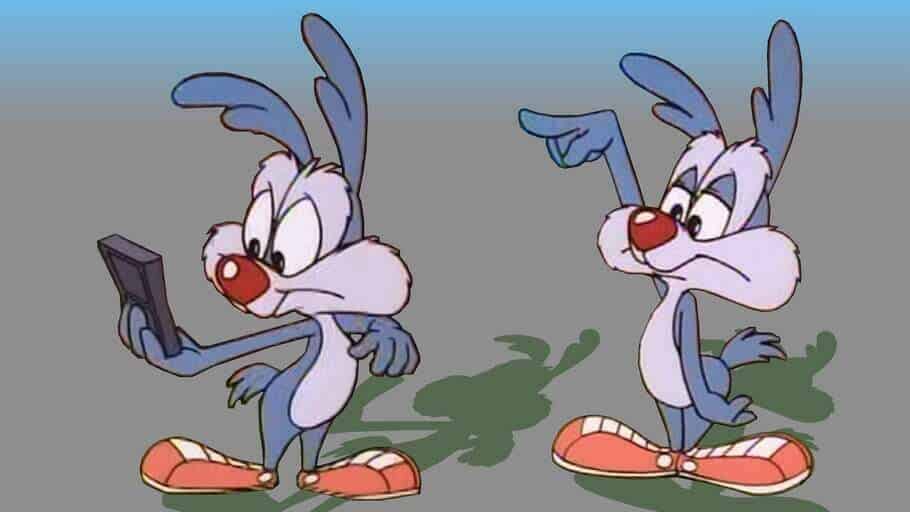
Worth clearing up: this is Calamity Coyote from Tiny Toon Adventures, Wile E.’s pint-sized understudy at Acme Looniversity, not Wile E. himself. His tall, sharp coyote ears sell the alert-predator silhouette, always pricked and listening, which makes the inevitable ACME-gadget failure land that much funnier.
- Ear type: tall, sharp pointed coyote ears
- Expression Multiplier: 5/10, they read ‘ready’ even when the plan is not
- Design utility: the alert-predator silhouette, permanently on the hunt
Peppy Hare (Star Fox)
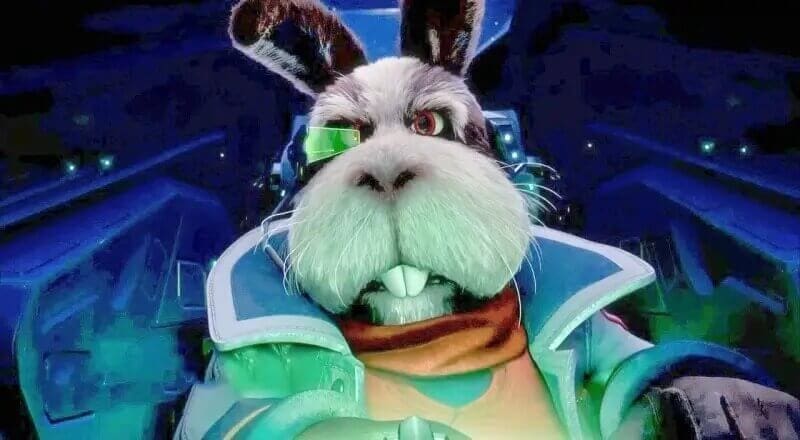
Peppy shows how ears can do character work before a line of dialogue. The tall hare ears read species instantly and, paired with his age, code him as the wise veteran of the Star Fox team, the mentor you trust on sight.
- Ear type: tall hare ears
- Expression Multiplier: 5/10, more identity than emotion
- Design utility: instant species and age read, a mentor by silhouette alone
Anais Watterson (The Amazing World of Gumball)

Anais has the widest cuteness-to-maturity gap on this list. The oversized rabbit ears on a tiny body scream adorable toddler, while the writing hands her the sharpest, most level head in the family, and the design leans into that contrast on purpose.
- Ear type: oversized rabbit ears on a small body
- Expression Multiplier: 6/10, subtle, matching her deadpan
- Cuteness factor: Deceptively sweet
Babs Bunny (Tiny Toon Adventures)
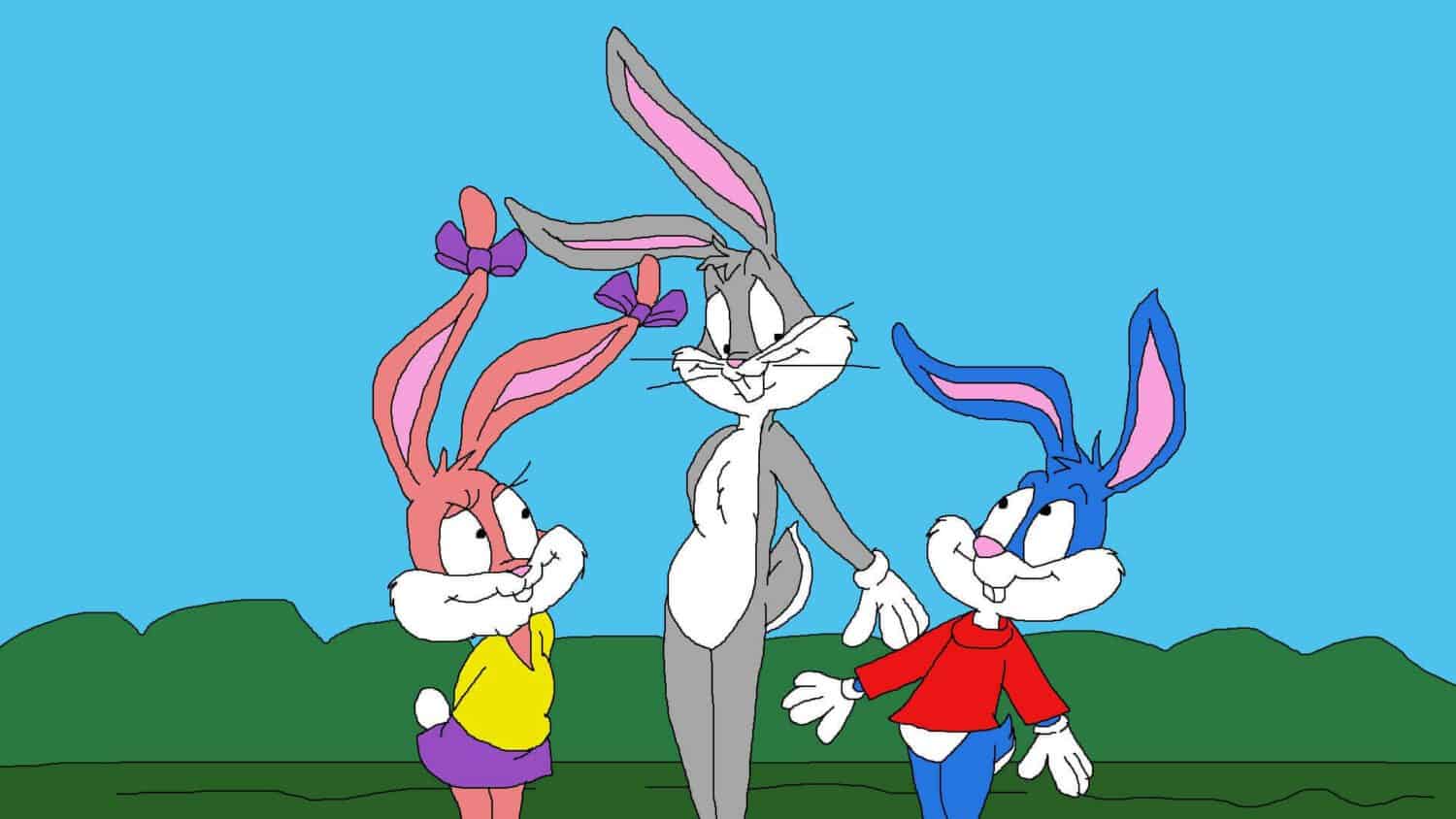
Babs animates her ears like punctuation. In a character built on impressions and rapid-fire gags, the flexible ears bounce, twist, and snap in time with the jokes, working less like anatomy and more like a second set of hands.
- Ear type: flexible ‘comedy prop’ rabbit ears
- Expression Multiplier: 9/10, the ears are part of the performance
- Best seen in: any of her impression bits, where the ears sell the transformation
Buster Bunny (Tiny Toon Adventures)
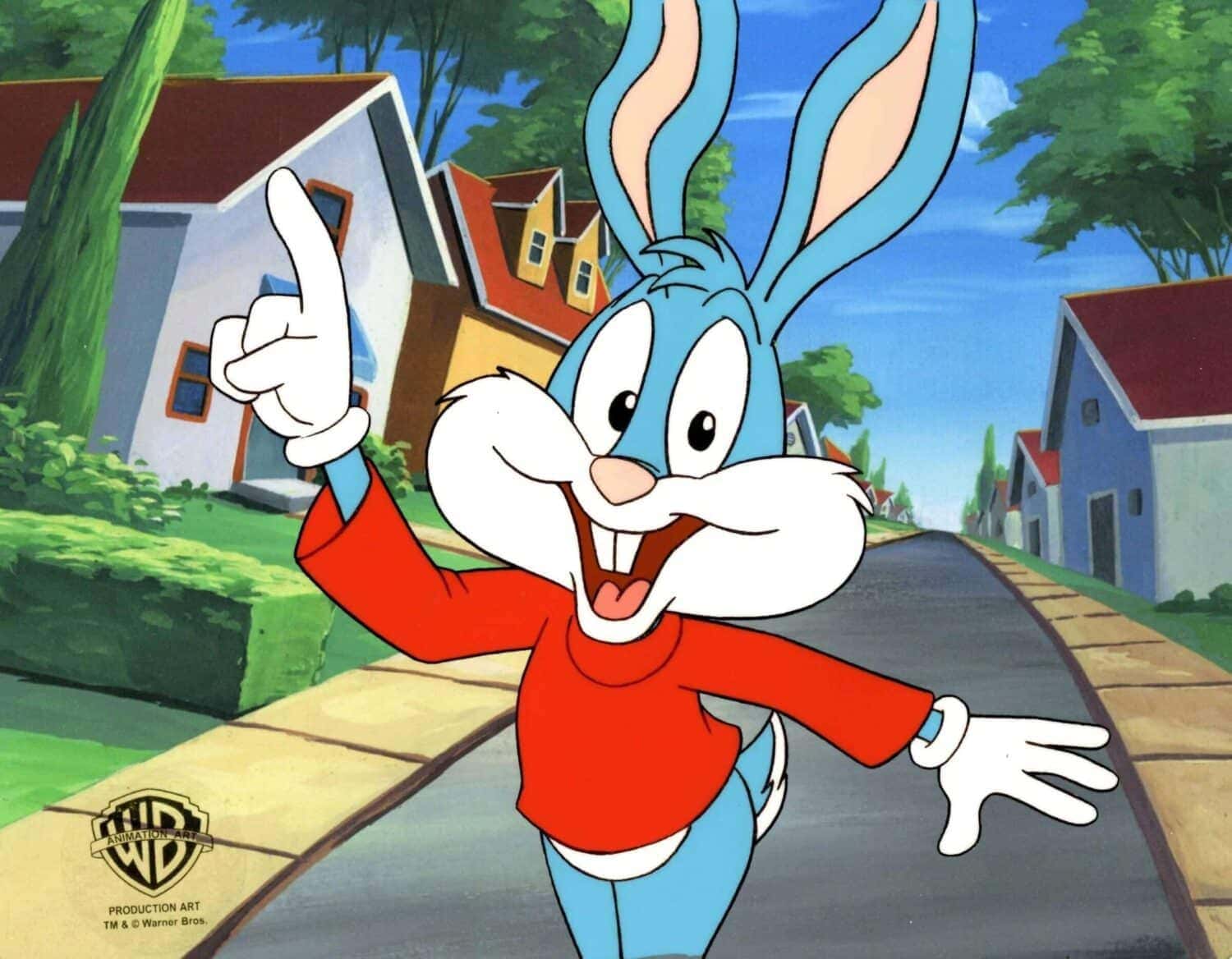
Buster is the textbook lead-rabbit design: tall ears, bold silhouette, and enough expressive flex to keep Tiny Toons’ hyperactive animation readable at full speed. The ears are the anchor that lets the show go as fast and loud as it wants.
- Ear type: tall rabbit ears (classic lead design)
- Expression Multiplier: 7/10, built to stay legible in chaos
- Cuteness factor: Plucky
Richard Watterson (The Amazing World of Gumball)
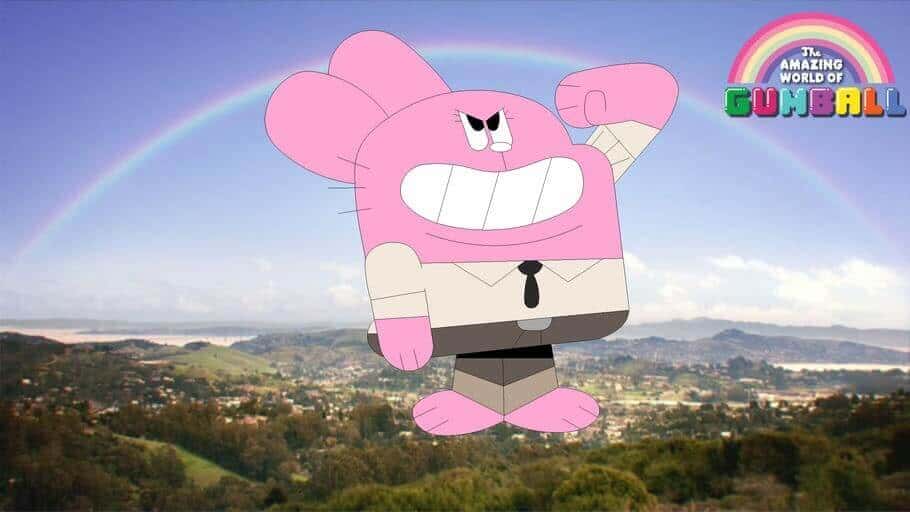
Richard’s ears react a half-second before his brain does, which is the entire joke. On a big, soft, clueless-dad body, the large rabbit ears amplify every overreaction, turning simple confusion into full-body physical comedy.
- Ear type: large rabbit ears on a heavyset frame
- Expression Multiplier: 8/10, the ears panic before he does
- Best seen in: just about any Gumball episode where a plan falls apart, which is all of them
Lola Bunny (Looney Tunes)
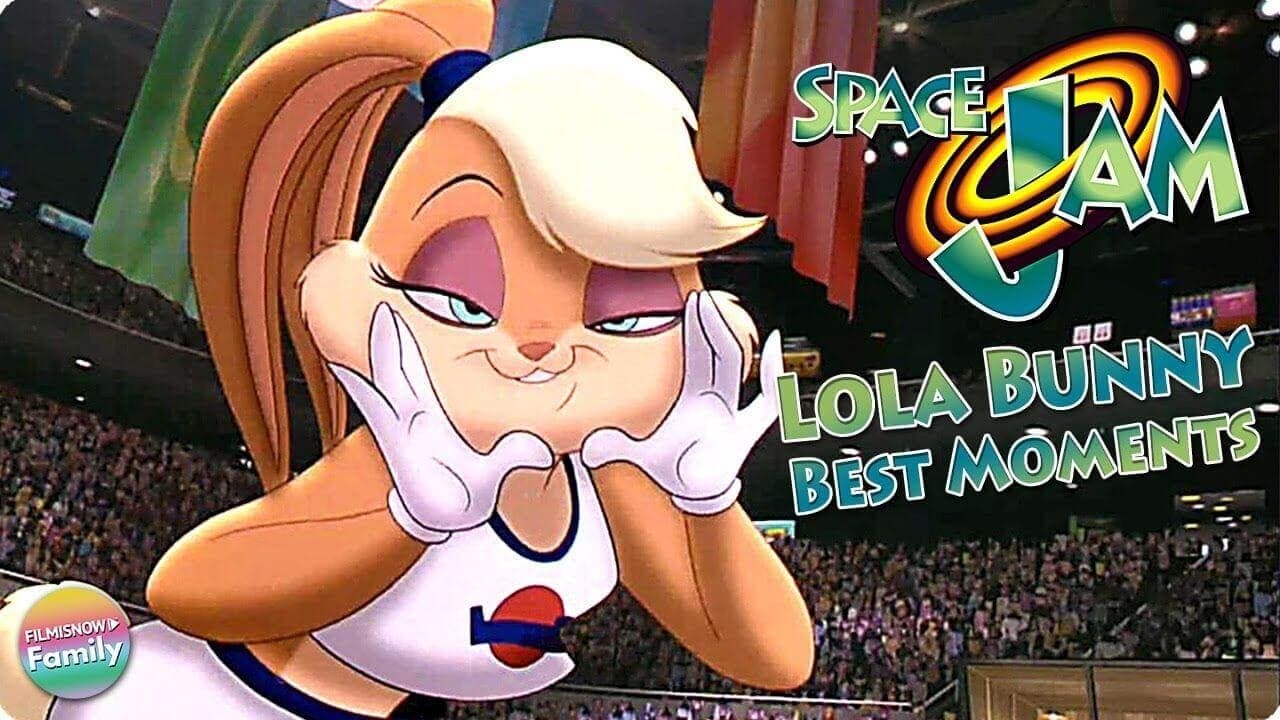
Lola pairs big rabbit ears with big confidence, and the contrast is the whole appeal. The ears read bunny, but the sleek, athletic design and the assertive writing make sure she never lands as a decorative sidekick.
- Ear type: sleek tall rabbit ears
- Expression Multiplier: 6/10, expressive but controlled, like the character
- Cuteness factor: Confident
Clifford the Big Red Dog
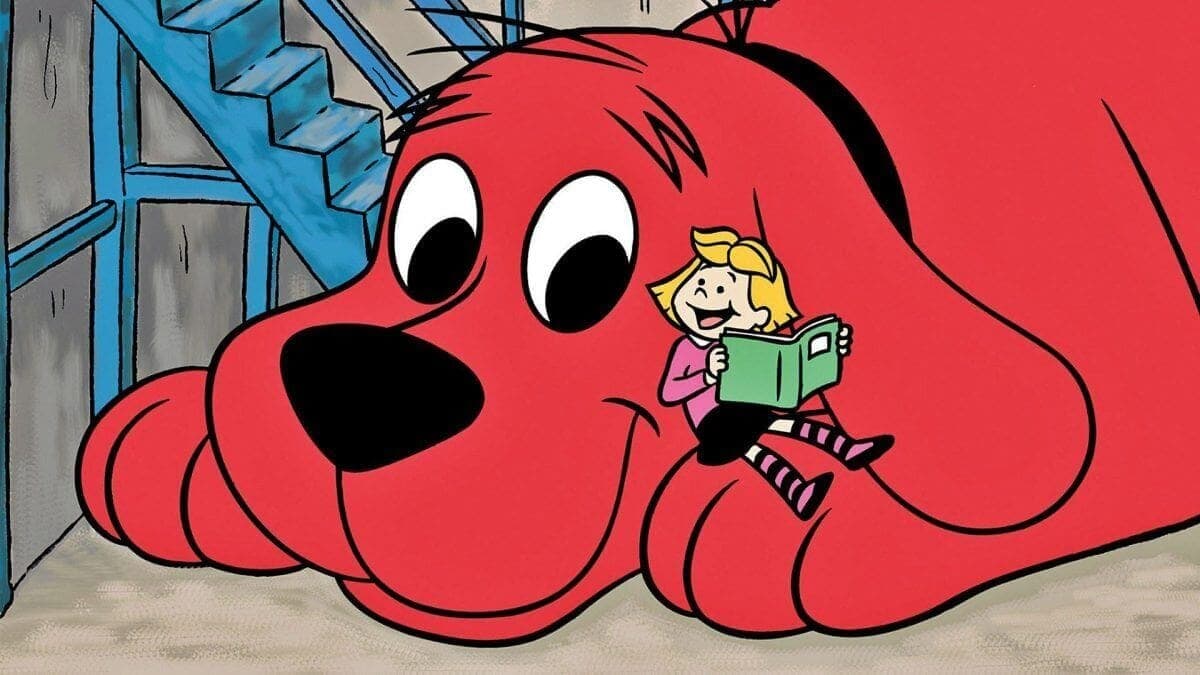
Clifford is one of the friendliest cartoon characters with big ears, and his ears follow the same rule as the rest of him: everything is big, soft, and unthreatening.
The large floppy ears reinforce the gentle-giant read on sight, making a dog the size of a house feel like the safest thing in the neighborhood.
- Ear type: large floppy dog ears (classic droopy-spaniel style)
- Expression Multiplier: 6/10, they flop with the mood and soften the scale
- Cuteness factor: Peak ‘aww’
Minnie Mouse
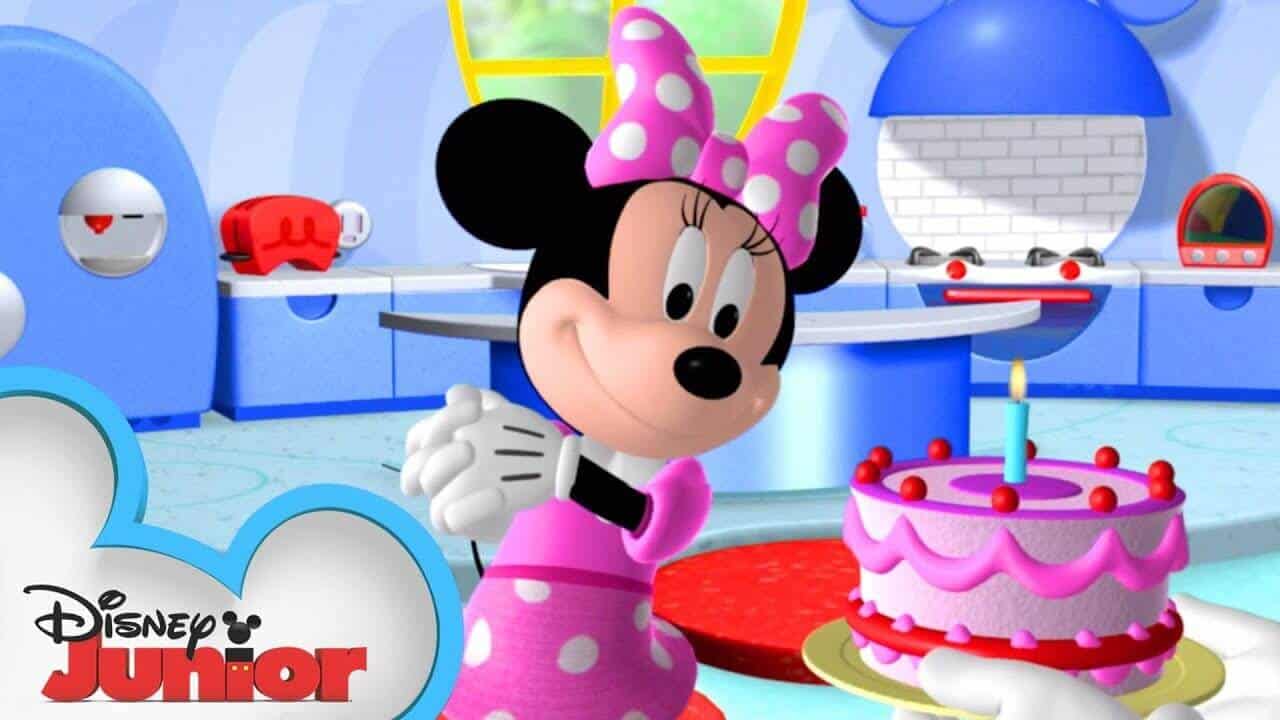
Minnie runs the same round-ear silhouette as Mickey, which is the point: they read as a pair instantly, and the bow handles the rest of the identity work. It is a small masterclass in how a single accessory can turn an identical ear shape into a completely separate character brand.
- Ear type: round ‘logo’ ears plus the signature bow
- Expression Multiplier: 3/10, branding first, exactly like Mickey
- Cuteness factor: Sweet and regal
Pikachu (Pokemon)
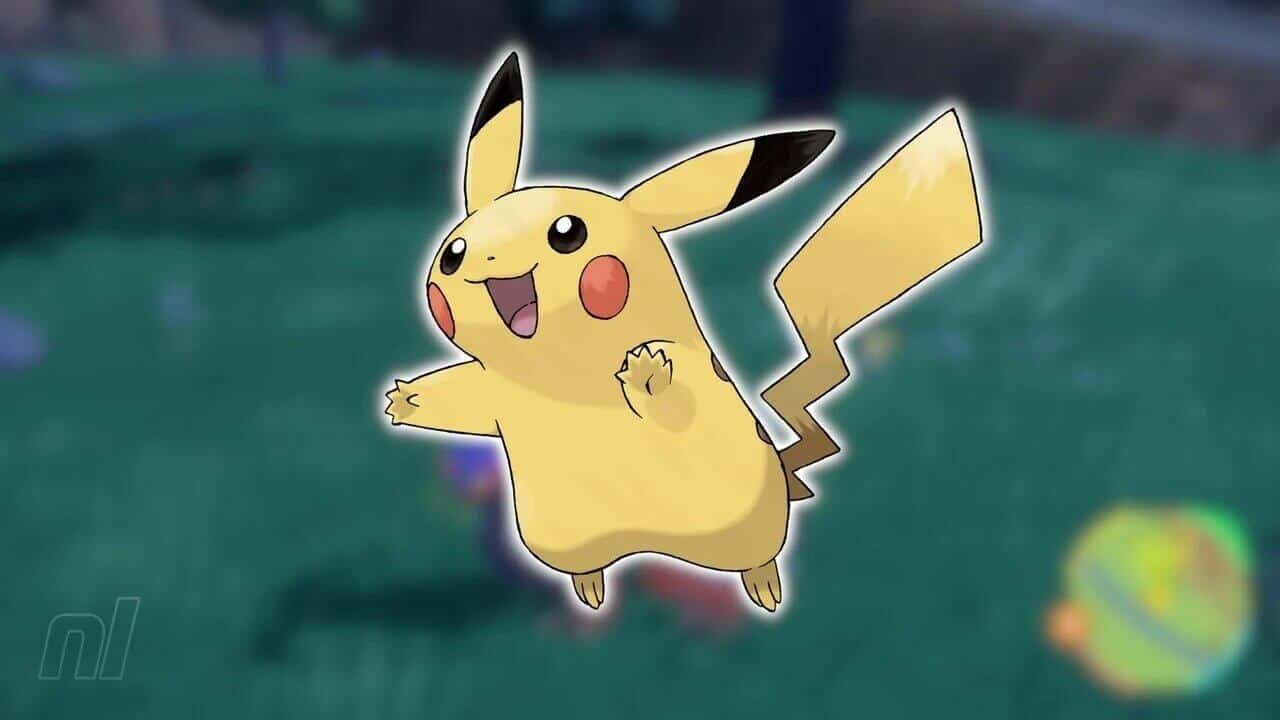
Pikachu’s long, black-tipped ears are half of what makes the silhouette readable in a single shadow.
They droop when he is sad and stand sharp when he is charged, doing quiet emotional work most mascots skip, and it pairs him with other yellow cartoon characters. The black lives only on the ears, which is exactly why the black-tail Mandela effect fooled so many people.
- Ear type: long pointed ears with black tips
- Expression Multiplier: 7/10, they droop and prick to sell the mood
- Cuteness factor: Peak ‘aww’
Dumbo
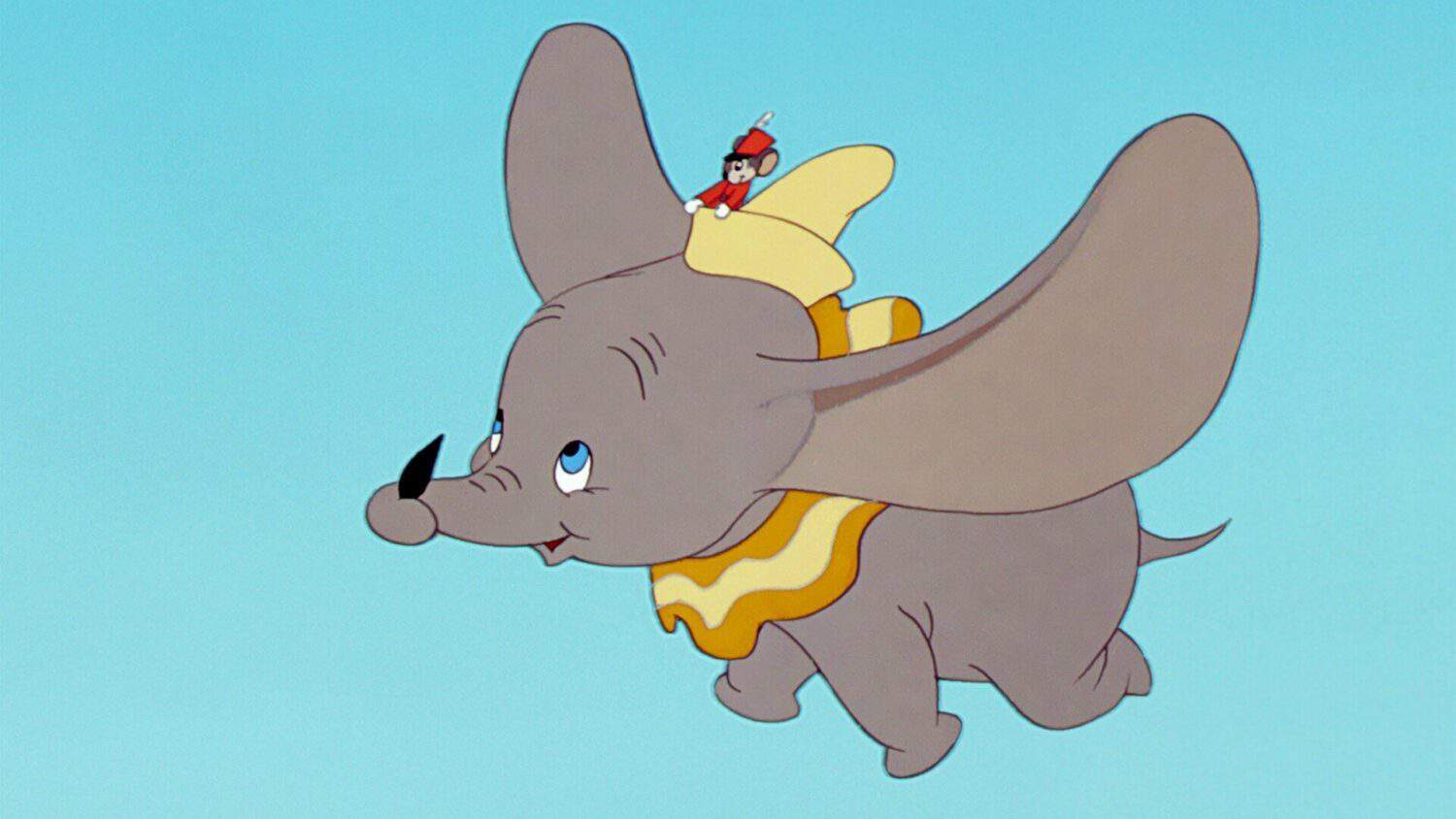
Dumbo is the purest case of ears-as-plot in the whole medium. The film weaponizes his oversized ears first as a source of shame, then flips them into literal wings, and no other design makes its central feature carry the entire emotional arc so completely.
He belongs on any list of elephant cartoon characters too.
- Ear type: oversized floppy elephant ears (the droopy-spaniel family)
- Expression Multiplier: 9/10, they slump with shame and lift with triumph
- Design utility: a literal flight apparatus, the ears are the superpower and the story
Bugs Bunny
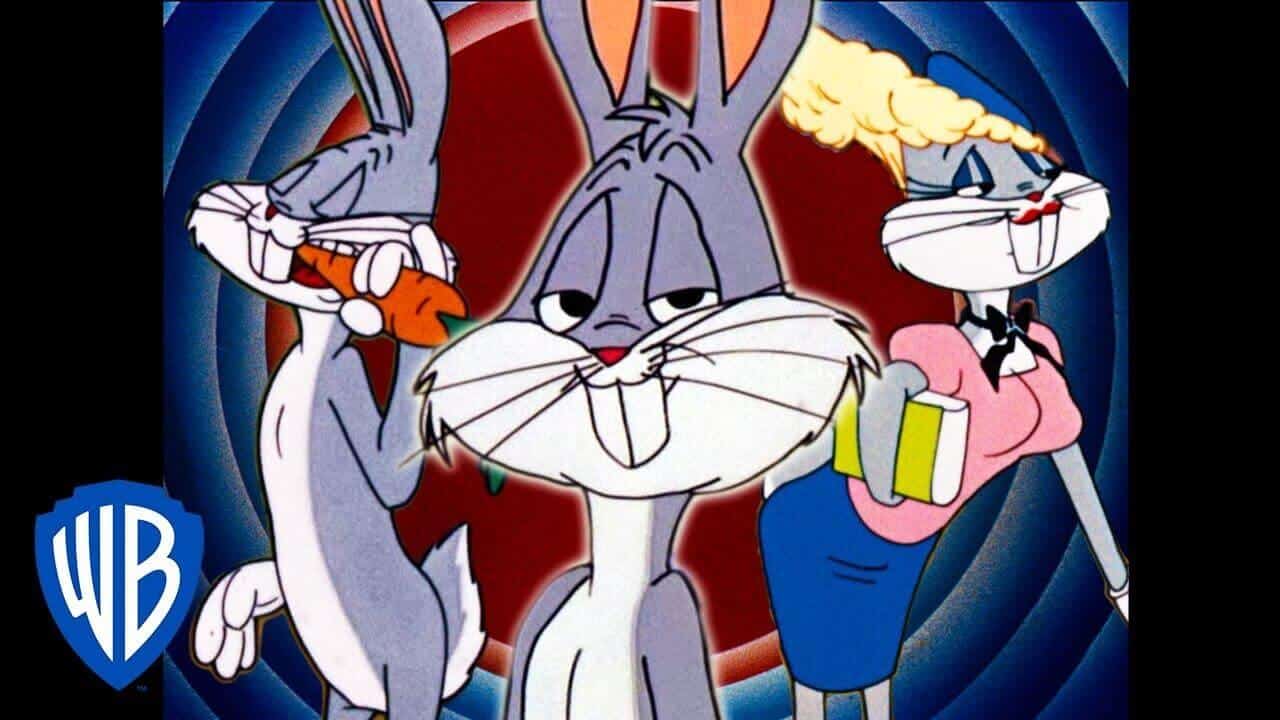
Bugs’s ears do the acting his face is too laid-back to bother with. Tall, flexible, and endlessly expressive, they droop, perk, and cross to telegraph sarcasm while Bugs himself stays unbothered, the calm center of every chaos he causes.
As a buck-tooth icon too, he slots neatly beside other buck teeth cartoon characters.
- Ear type: tall rabbit ears with attitude
- Expression Multiplier: 8/10, the ears carry the sarcasm so his eyes can stay half-lidded
- Cuteness factor: Mischievous
Mickey Mouse
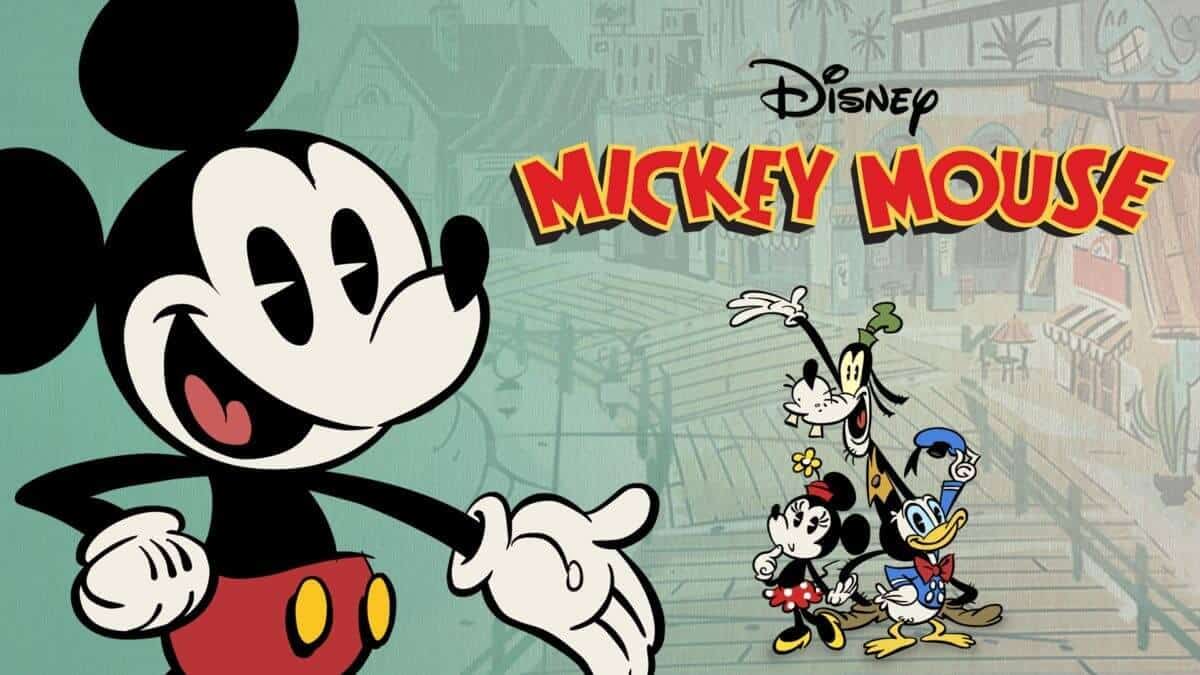
Mickey’s ears are the most successful design decision in animation history, so iconic they work as a logo before they work as anatomy.
The clever trick is that they are impossible: those two perfect circles famously stay facing the camera no matter which way Mickey turns, because the silhouette matters more than the physics. He also sits comfortably beside other mouse-eared icons and the wider world of mouse cartoon characters.
- Ear type: round ‘logo’ ears, drawn as two clean circles from any angle
- Expression Multiplier: 3/10, branding rather than a mood ring; the face does the emoting
- Design utility: the most valuable two circles in cartooning, pure silhouette recognition
Cartoon Characters With Big Ears: Quick Answers
Who is the most famous cartoon character with big ears? Mickey Mouse, whose round ears double as a global brand symbol, is the most recognizable of all the cartoon characters with big ears.
Why do cartoon characters have big ears? Big ears improve silhouette recognition, amplify facial and body expressions, and make a design read as cuter or funnier, all without a word of dialogue.
Can Dumbo fly with his ears? Yes. His oversized ears act as wings, and the famous magic feather is just a confidence trigger, the flight was always his.
Are big ears only a cute-character thing? Often, but not always. They also power trickster designs like Bugs and chaos-agents like Richard Watterson, because oversized ears make physical comedy hit harder.
Honorable Mentions
More cartoon characters with big ears worth a nod, several of which deserve full entries once we have art for them:
- Stitch (Lilo & Stitch), the bat-like ears that droop from menace to lovable in one beat.
- Yoda (Star Wars), a masterclass in less-is-more, the ears twitch with intent.
- Bluey (Bluey), whose blue heeler ears do quiet emotional work every episode.
- Jerry (Tom & Jerry), Shrek, and Piglet round out the classics.

Fun Fact about Dumbos big ears: It wasn’t a doodle gone wrong, nor was it a random whim of an artist obsessed with ears. It was a carefully crafted evolution of design, born from two distinct moments in time.
The story begins in the late 1930s with Helen Aberson, the author. She sat down to write a fable about an outcast, a little elephant whose physical difference would eventually become his salvation. But words were only half the magic; she needed someone to give form to her “Ugly Duckling.”
Enter Harold Pearl, the original illustrator. He didn’t sketch giant ears because he found them aesthetically pleasing. He drew them because he was following a map, Aberson’s specific instructions for ears that were “EXTRA BIG and EXTRA PINK.” Pearl’s job was to visualize a burden, a heavy, dragging weight that would make the reader instantly understand the little elephant’s struggle.
But the Dumbo we truly know and love came to life in the hands of a second artist: Vladimir “Bill” Tytla, a legendary Disney animator.
When Disney acquired the rights, Tytla was tasked with animating the character. He wasn’t interested in just drawing a funny animal; he wanted to draw a soul. Searching for inspiration, Tytla looked not at elephants in a zoo, but at his own toddler son, Peter.
He watched how Peter stumbled, how he looked up at adults with wide, trusting eyes, and how he wore his emotions openly. Tytla realized the ears weren’t just props; they were emotional barometers.
He animated them to act as extensions of Dumbo’s feelings. When Dumbo was sad, the ears didn’t just hang—they dragged on the floor, heavy with sorrow. When he was happy, they perked up like wings even before he flew. The artist didn’t make the ears big because he “liked” them; he made them big so that without Dumbo speaking a single word, the audience could hear his heart loud and clear.
WESTERN CARTOON CHARACTERS (BIG & WEIRD EARS) 🐰👂
1. Bugs Bunny (Looney Tunes)
2. Dumbo (Disney – The most iconic big ears)
3. Mickey Mouse (Disney – Round iconic ears)
4. Minnie Mouse (Disney)
5. Stitch (Lilo & Stitch – Huge alien ears)
6. Shrek (Shrek – Trumpet-shaped ears)
7. Mr. Crocker (The Fairly OddParents – Ears located on his neck!)
8. Roger Rabbit (Who Framed Roger Rabbit)
9. Buster Bunny (Tiny Toon Adventures)
10. Babs Bunny (Tiny Toon Adventures)
11. Oswald the Lucky Rabbit (Disney)
12. Goofy (Disney – Long floppy ears)
13. Pluto (Disney)
14. Wile E. Coyote (Looney Tunes)
15. Jerry Mouse (Tom & Jerry)
16. Trixie (Toy Story 3 – Triceratops with horn-like ears? No, Mr. Potato Head with ear parts!)
17. Mr. Potato Head (Toy Story – Detachable ears)
18. Piglet (Winnie the Pooh)
19. Rabbit (Winnie the Pooh)
20. Eeyore (Winnie the Pooh – Droopy ears)
21. Judy Hopps (Zootopia)
22. Nick Wilde (Zootopia)
23. Courage (Courage the Cowardly Dog)
24. CatDog (Dog end has floppy ears, Cat has pointy ones)
25. Ickis (Aaahh!!! Real Monsters – Giant red ears)
26. Ren (Ren & Stimpy – Tiny weird ears or sometimes huge)
27. Stimpy (Ren & Stimpy – No ears? Actually small holes usually)
28. SpongeBob (SpongeBob SquarePants – Holes acting as ears)
29. Bartok (Anastasia – Albino bat with huge ears)
30. Despereaux (The Tale of Despereaux)
31. Fievel Mousekewitz (An American Tail)
32. Gadget Hackwrench (Chip ‘n Dale: Rescue Rangers)
33. Pinky (Pinky and the Brain)
34. The Brain (Pinky and the Brain)
35. Rocko (Rocko’s Modern Life – Wallaby ears)
36. Lola Bunny (Space Jam / Looney Tunes)
37. Cream the Rabbit (Sonic the Hedgehog)
38. Big the Cat (Sonic the Hedgehog)
39. Tails (Sonic the Hedgehog – Fox ears)
40. Bing Bong (Inside Out – Elephant ears)
41. Mort (Madagascar – Mouse lemur ears)
42. King Julien (Madagascar)
43. Gumball Watterson (The Amazing World of Gumball)
44. Anais Watterson (The Amazing World of Gumball)
45. Darwin Watterson (The Amazing World of Gumball – Shadow/fin ears?)
46. Richard Watterson (The Amazing World of Gumball)
47. Panini (Chowder)
48. Chowder (Chowder – Bear/Cat/Rabbit hybrid ears)
49. Radar (Astro Boy 2009 film / Series)
ANIME CHARACTERS (KEMONOMIMI & ELVES) 🦊🌿
50. Naruto Uzumaki (Naruto – Often drawn with prominent ears in style)
51. Inuyasha (Inuyasha – Dog ears)
52. Sesshomaru (Inuyasha – Pointy elf-like ears)
53. Tomoe (Kamisama Kiss – Fox ears)
54. Holo (Spice and Wolf – Wolf ears)
55. Raphtalia (The Rising of the Shield Hero – Raccoon ears)
56. Felix / Ferris Argyle (Re:Zero – Cat ears)
57. Chiyo Mihama (Azumanga Daioh – “Pigtails” that look like ears/fly away)
58. Chi (Chi’s Sweet Home)
59. Puck (Re:Zero – Cat spirit ears)
60. Blair (Soul Eater – Cat form)
61. Tony Tony Chopper (One Piece – Reindeer ears)
62. Carrot (One Piece – Rabbit mink)
63. Frieza (Dragon Ball Z – Purple bioceramic ear-things in final form)
64. Piccolo (Dragon Ball Z – Pointy Namekian ears)
65. Beerus (Dragon Ball Super – Large Sphinx cat ears)
66. Kurama (Yu Yu Hakusho – Fox ears in Yoko form)
67. Kiki (Kiki’s Delivery Service – Jiji the cat’s ears)
68. Totoro (My Neighbor Totoro)
69. Luna (Sailor Moon)
70. Artemis (Sailor Moon)
71. Pikachu (Pokémon – Iconic black-tipped ears)
72. Jigglypuff (Pokémon – Cat-like ears)
73. Eevee (Pokémon – Large fox/rabbit ears)
74. Meowth (Pokémon)
75. Vaporeon (Pokémon – Fin ears)
76. Sylveon (Pokémon – Ribbon-like ears)
77. Lucario (Pokémon)
78. Mewtwo (Pokémon – Horn-like ears)
79. Cinnamoroll (Sanrio – Ears so big he flies with them)
80. My Melody (Sanrio – Bunny ears)
81. Kuromi (Sanrio – Jester hat/ears)
82. Filo (The Rising of the Shield Hero – Wing ears)
83. Leafa (Sword Art Online – Sylph/Elf ears)
84. Deedlit (Record of Lodoss War – Extremely long elf ears)
85. Emilia (Re:Zero – Half-elf ears)
SCI-FI & ALIENS (WEIRD & POINTY) 👽🖖
86. Yoda (Star Wars: Clone Wars / Rebels)
87. Grogu / Baby Yoda (The Mandalorian / Cartoons)
88. Ahsoka Tano (Star Wars: Clone Wars – Montrals/Head-tails, acts as ears)
89. Spock (Star Trek: The Animated Series)
90. Nightcrawler (X-Men: Evolution)
91. Beast Boy (Teen Titans – Pointy elf-like ears)
92. Starfire (Teen Titans – No visible ears?)
93. Miss Martian (Young Justice)
94. Martian Manhunter (Justice League)
95. Invader Zim (Invader Zim – No ears, but uses wig with no ears?)
96. Gir (Invader Zim – Dog suit ears)
97. Krumm (Aaahh!!! Real Monsters – Holds his eyes, has armpit hair, no ears?)
98. Stitch (Lilo & Stitch)
99. Morph (Treasure Planet)
100. Gremlins (Gremlins – Mogwai ears)