
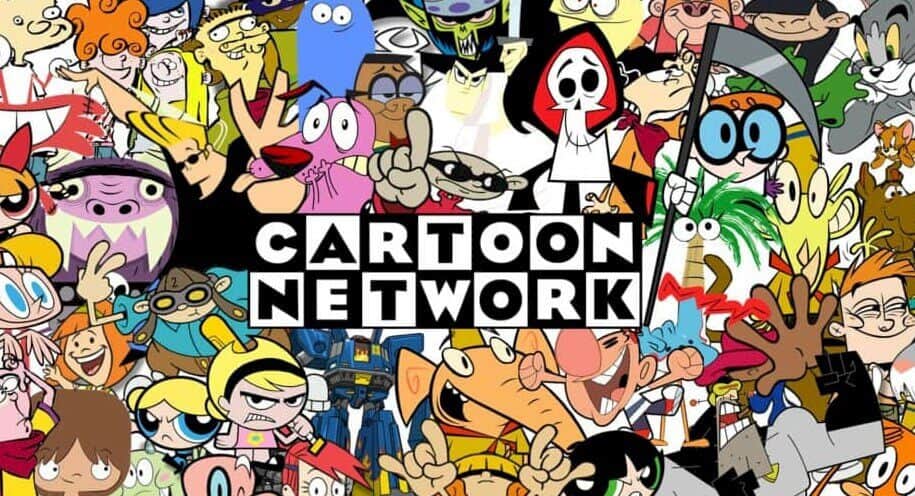
If you were a kid in the 90s or early 2000s, you know the feeling. Friday night, a bowl of sugary cereal, and the Cartoon Cartoon Fridays intro starting up.
You were not just watching TV. You were clocking into a different world, and that world had a name.
Cartoon Network history is bigger than a list of shows. It is the story of how one channel dragged animation out of the Saturday-morning toy-commercial corner and proved it could be art, comedy, horror, and big-budget storytelling all at once.
The road from dusty Looney Tunes reruns to something like Adventure Time was not a straight line, either, since it ran through a 320 million dollar gamble, a citywide bomb scare, and a few total reinventions of what kids’ TV was even allowed to be.
So grab the cereal.
This is the whole story, from the black-and-white checkerboard era to the Warner Bros. shake-up we are living through now, and why it meant so much to a whole generation.
The Origin: Ted Turner’s $320 Million Gamble
Cartoon Network exists because one man really, really loved old cartoons. In 1991, media mogul Ted Turner bought Hanna-Barbera Productions for a reported 320 million dollars, outbidding Universal’s parent company and Hallmark to get it.
Plenty of people thought he was nuts. Why pay a fortune for a library of old cartoons like The Flintstones, The Jetsons, and Scooby-Doo? Turner’s reasoning was almost boringly practical, though. He needed content to fill a 24-hour channel, and Hanna-Barbera handed him the studio plus a massive vault of classic animation to do it with.
So on October 1, 1992, Cartoon Network launched. The very first cartoon they aired was a 1946 Looney Tunes short called The Great Piggy Bank Robbery. Cheeky, low-key, and a little random, which pretty much set the tone for the next three decades.
Cartoon Network at a glance:
- Launched: October 1, 1992, by Ted Turner’s Turner Broadcasting.
- Founding president: Betty Cohen, who understood that a cartoon channel needed a personality, not just a schedule.
- First cartoon aired: the 1946 Looney Tunes short The Great Piggy Bank Robbery.
- First original series: Space Ghost Coast to Coast (1994).
- Library at launch: an 8,500-hour vault of classic shorts from Hanna-Barbera, MGM, and the pre-1948 Warner Bros. catalog.

How Big Did Cartoon Network Really Get?
The scale of it still amazes me. Cartoon Network started small, almost as an experiment carried by just 233 cable systems, and within a decade it was a fixture in tens of millions of homes. When people ask when Cartoon Network started and how it grew so fast, this is the simplest way to picture it.
Launch and peak figures via Ad Age, “Cartoon Network Turns 20”; recent U.S. household counts reflect the ongoing cord-cutting decline. At its global peak the brand reached hundreds of millions of homes across 178 countries.
From 2 million homes to a worldwide presence in 178 countries in twenty years, that is not slow growth. That is a channel that found a nerve and kept pressing it. The recent slide back toward 66 million U.S. homes is less about the shows and more about the collapse of cable itself, which matters for the rest of this story.
The Golden Age: The Cartoon Cartoons Era (1996 to 2004)
This is the stretch that defines childhood for Millennials and older Gen Z, and it is the era I get most nostalgic about. Rather than lean on Hanna-Barbera reruns, the network started making its own Cartoon Cartoons.
The philosophy was refreshingly simple: let weird artists make weird shows. While other channels tested every idea against a focus group, Cartoon Network handed the keys to people like Genndy Tartakovsky and Craig McCracken. The system that fed it was a shorts showcase called What a Cartoon!, also aired as World Premiere Toons, where the network commissioned dozens of one-off cartoons and greenlit the best ones into full series. That is exactly how the classics found their way onto the air.
This era also gave us Courage the Cowardly Dog, which traumatized a whole generation of us, and Ed, Edd n Eddy, the longest-running of the original Cartoon Cartoons. Meanwhile, Toonami showed up and introduced a huge audience to anime like Dragon Ball Z. For a lot of us, that block was the gateway drug to a much bigger world.
The Renaissance: The Adventure Time Era (2010 to 2018)
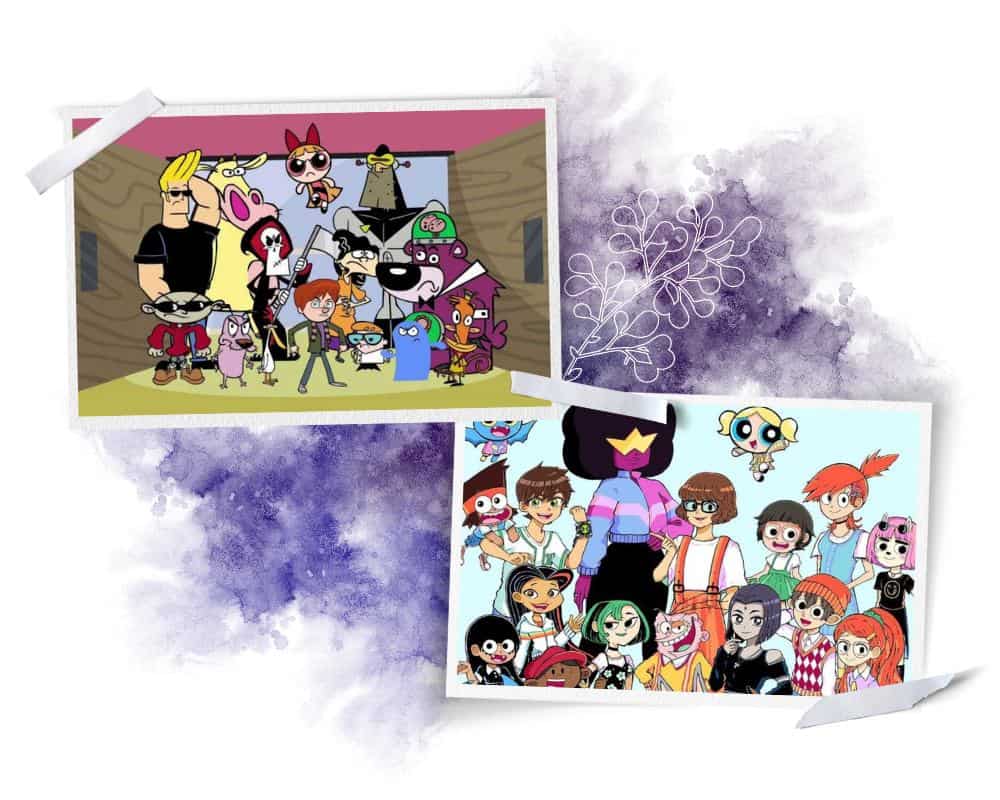
After a rough patch in the late 2000s, which included a live-action experiment called CN Real that we do not need to dwell on, the network reinvented itself yet again. The 2010s leaned hard into serialized storytelling and real emotional depth. These were not just slapstick gag machines anymore. Instead, they had lore, and they explored mental health, grief, identity, and what it really feels like to grow up.
The Big Three of the 2010s
Adventure Time started as a boy and his dog whacking monsters, and it ended as a strange, beautiful meditation on war, loss, and the cycles of time. I would argue it is the single most influential cartoon of the 21st century, and I am not alone in that.
Regular Show was a show about a blue jay and a raccoon that played like a stoner comedy aimed at kids, and somehow it worked. It dragged that adult cartoon sensibility into a daytime slot and made it feel natural.
Steven Universe, created by Rebecca Sugar, was the first Cartoon Network series led solely by a woman. Because of that, it broke real ground in LGBTQ representation and treated big feelings as serious storytelling rather than filler between fights.
Diversity and Inclusion: More Than Just Cartoons
One area where Cartoon Network consistently beat its competitors was representation. It did not just pay lip service to diversity. Instead, it baked inclusion into the DNA of the shows themselves.
Craig of the Creek is the example I always point to. The show centers a mostly Black cast and earns real credit for its authentic look at Black culture, hair textures, and family life. Since more than half of American kids today are kids of color, Cartoon Network figured out early that its content should look like its actual audience.
From the same-sex wedding on Steven Universe to Clarence quietly putting same-sex parents in the background like it was the most normal thing in the world, the network normalized inclusivity without ever getting preachy about it. That is a harder balance to strike than it sounds.
The Controversies: It Wasn’t All Smooth Sailing
You cannot run a channel for thirty-plus years without breaking a few eggs, and Cartoon Network has had its share of real disasters.
The 2007 Boston Bomb Scare
This one is legendary, and not in a good way. To promote the Aqua Teen Hunger Force movie, the network planted LED placards of the Mooninites, those pixelated little aliens, around Boston. The city mistook them for explosive devices, so bomb squads rolled out, parts of the city shut down, and the resulting panic became a full-blown emergency. Once the dust settled, the head of Cartoon Network resigned, and Turner Broadcasting paid out around 2 million dollars in compensation. All for some glowing cartoon aliens flipping people off.
The Infinity Train Cancellation
More recently, the cancellation of Infinity Train hit fans hard. It was one of the highest-rated shows on the network and dealt head-on with divorce and trauma, the kind of material a lot of kids’ TV avoids. Because it was later pulled from Max entirely, many read the move as a signal that the new corporate owners did not see animation as something worth protecting. We will come back to that.
The Best Cartoon Network Shows, Era by Era
Trying to list every show is a fool’s errand, so instead here are the pillars that built the empire, sorted by the vibe each one brought to the channel. If you are hunting down old Cartoon Network shows to rewatch, start here, and for the complete archive the Cartoon Network wiki has every last one.
The pillars (90s classics):
- Dexter’s Laboratory
- Johnny Bravo
- Cow and Chicken
- The Powerpuff Girls
- Ed, Edd n Eddy
- Courage the Cowardly Dog
The action era (early 2000s):
- Samurai Jack
- Justice League and Justice League Unlimited
- Teen Titans
- Ben 10, the merchandise king with reportedly billions in toy sales
- Codename: Kids Next Door
- The Grim Adventures of Billy and Mandy
The modern era (2010s):
- Adventure Time
- Regular Show
- The Amazing World of Gumball
- Steven Universe
- Over the Garden Wall, a miniseries masterpiece
- We Bare Bears
Cartoon Network History Timeline: 1992 to Today
If you want the whole Cartoon Network history at a glance, here are the milestones that truly moved the needle, from launch day to the Warner Bros. era.
| Year | Milestone |
|---|---|
| 1991 | Ted Turner buys Hanna-Barbera and its cartoon library for 320 million dollars |
| 1992 | Cartoon Network launches on October 1 in 2 million U.S. homes |
| 1993 | The channel goes international, starting in Latin America |
| 1994 | Space Ghost Coast to Coast becomes the first original series |
| 1996 | Dexter’s Laboratory arrives and ends the year as the number one show |
| 1998 | The Powerpuff Girls premieres and becomes the first global franchise |
| 2001 | Adult Swim launches as a late-night programming block |
| 2005 | Ben 10 debuts and grows into a merchandising powerhouse |
| 2010 | Adventure Time premieres and reshapes modern animation |
| 2013 | Steven Universe debuts, the first CN series led solely by a woman |
| 2022 | Warner Bros. merges with Discovery to form Warner Bros. Discovery |
| 2024 | Most Cartoon Network content is pulled from streaming libraries |
| 2025 | Warner Bros. Discovery announces a split into two companies by mid-2026 |
Is Cartoon Network Shutting Down? The Warner Bros. Question
This is the question I get asked most, so let me be straight about it. Who owns Cartoon Network, and is it really dying?
The channel is owned by Warner Bros. Discovery, the conglomerate formed in 2022 when AT&T’s WarnerMedia merged with Discovery.
That merger triggered waves of layoffs and content cuts, and animation took some of the hardest hits. Cartoon Network Studios was folded into Warner Bros. Animation back in 2022, and since 2024 much of the network’s library has quietly vanished from streaming.
Media researchers have argued bluntly that Cartoon Network changed animation forever and Warner Bros. should not let it die, and it is hard to disagree.
Then things got messier.
In June 2025, Warner Bros. Discovery announced it would split into two separate companies by mid-2026: one called Warner Bros. for the studios and streaming (HBO Max, DC, the film library), and one called Discovery Global for the linear TV networks.
As a cable channel, Cartoon Network most likely lands on the networks side, while Cartoon Network Studios stays tied to the streaming side, so the brand is being pulled in two directions at once. On top of that, the whole company has drawn takeover interest heading into 2026, which leaves its future ownership wide open.
For the current state of play, the Cartoon Network page is the fastest way to check what has changed since I wrote this.
The honest read, though, is more hopeful than the doom headlines suggest. The linear channel is still on the air, and the brand is not gone. Revivals of The Powerpuff Girls and Gumball have been floated, and Adult Swim, which shares the same channel space, is still thriving.
In other words, Cartoon Network is diminished, not dead, and there is a real difference between the two.
What it taught us holds up regardless of who signs the cheques.
Cartoon Network proved that cartoons did not have to be a vehicle for selling cereal and action figures.
They could be art, they could be strange, and they could wreck you emotionally and make you laugh in the same episode. Most importantly, they could be for everyone.
So what is your favorite era of Cartoon Network?
Are you a checkerboard-era 90s kid, an Adventure Time romantic, or somewhere in between?
Drop it in the comments, because this is exactly the kind of argument I am always up for.

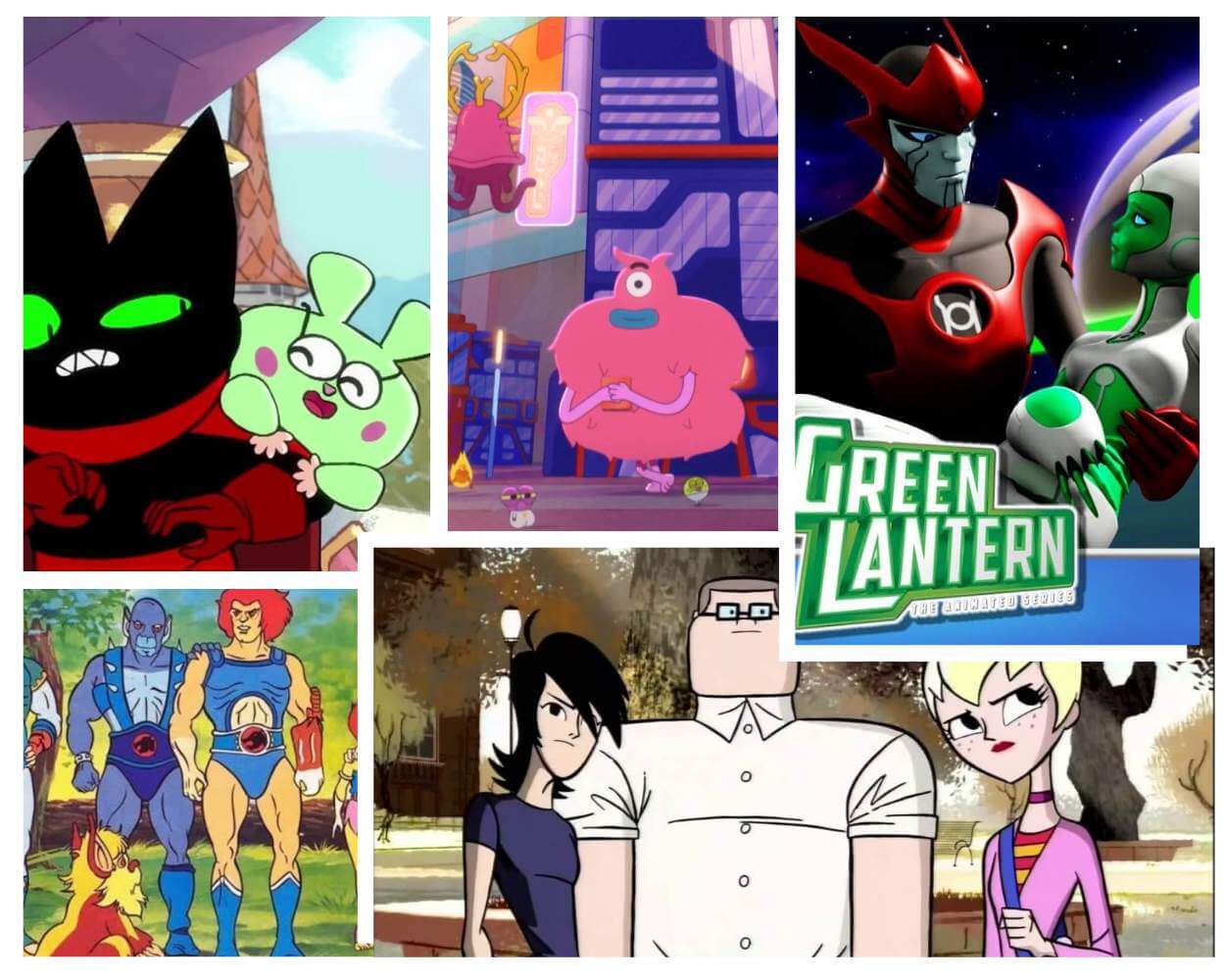
THE GOLDEN ERA (90s – EARLY 2000s CLASSICS) 🏆📺
1. Dexter’s Laboratory (The genius boy inventor)
2. The Powerpuff Girls (Sugar, spice, and everything nice)
3. Johnny Bravo (The pompadoured ladies’ man)
4. Ed, Edd n Eddy (The scamming trio; longest running of the classic era)
5. Courage the Cowardly Dog (Surreal horror-comedy)
6. Cow and Chicken (Absurdist humor)
7. I Am Weasel (Spin-off of Cow and Chicken)
8. Samurai Jack (Cinematic masterpiece by Genndy Tartakovsky)
9. Codename: Kids Next Door (Kids fighting adult tyranny)
10. The Grim Adventures of Billy & Mandy (Dark comedy)
11. Foster’s Home for Imaginary Friends (Creative and heartwarming)
12. Mike, Lu & Og (The island adventure)
13. Sheep in the Big City (Meta-humor)
14. Time Squad (History-traveling trio)
15. Whatever Happened to… Robot Jones? (80s style aesthetic)
16. Evil Con Carne (Brain in a jar trying to take over the world)
17. Megas XLR (Giant robots and slushies)
THE RENAISSANCE ERA (2010s HITS) ✨⚔️
18. Adventure Time (Revolutionized modern animation)
19. Regular Show (Surreal workplace comedy)
20. The Amazing World of Gumball (Mixed media masterpiece)
21. Steven Universe (Emotional storytelling and songs)
22. Chowder (Breaking the fourth wall and unique art style)
23. The Marvelous Misadventures of Flapjack (The bridge between eras)
24. We Bare Bears (Viral internet culture meets bears)
25. Over the Garden Wall (Critically acclaimed mini-series)
26. Infinity Train (Sci-fi anthology; cult following)
27. Craig of the Creek (Imaginative play in the woods)
28. Summer Camp Island (Cozy and magical)
29. OK K.O.! Let’s Be Heroes (Video game tribute)
30. Clarence (Realistic childhood slice-of-life)
ACTION & SUPERHEROES (TOONAMI & DC) 🦸♂️💥
31. Teen Titans (The iconic 2003 series)
32. Justice League / Justice League Unlimited (The gold standard of DC)
33. Batman: The Animated Series (Often aired on CN/Toonami)
34. Ben 10 (Original Series)
35. Ben 10: Alien Force (Mature sequel)
36. Ben 10: Ultimate Alien
37. Ben 10: Omniverse
38. Star Wars: The Clone Wars (The CGI series)
39. Samurai Jack (Season 5 – Adult Swim conclusion)
40. Generator Rex (Nanite-punk action)
41. The Secret Saturdays (Cryptid hunting family)
42. Sym-Bionic Titan (Cancelled too soon)
43. ThunderCats (2011 Reboot – Anime style)
44. Young Justice (Originally aired on CN)
45. Green Lantern: The Animated Series (CGI cult classic)
46. Beware the Batman (CGI detective focus)
47. Transformers: Animated (Stylized art)
EXPERIMENTAL & CHANGING ANIMATION STYLES 🎨🖌️
48. The Amazing World of Gumball (2D, 3D, Puppetry, Live Action mix)
49. Chowder (Textures stayed static while characters moved)
50. Home Movies (Squigglevision – Adult Swim/CN)
51. Angela Anaconda (Cut-out photo animation)
52. Primal (Genndy Tartakovsky’s silent dinosaur epic – Adult Swim)
53. Samurai Jack (No outlines technique)
54. Class of 3000 (Art style by OutKast’s André 3000)
CONTROVERSIAL / MIXED RECEPTION (THE “DARK AGES” & REBOOTS) 📉🤔
55. Teen Titans Go! (Hated by original fans, but massive ratings success)
56. The Powerpuff Girls (2016 Reboot – Criticized for writing/animation)
57. Ben 10 (2016 Reboot – Aimed at much younger kids)
58. ThunderCats Roar (Criticized for “CalArts” style comedy)
59. Uncle Grandpa (Polarizing surreal humor)
60. Secret Mountain Fort Awesome (Often cited for “ugly” character design)
61. The Problem Solverz (Criticized for eye-straining visuals)
62. Johnny Test (Whip-crack sound effect overload)
63. Total DramaRama (Toddler spinoff of Total Drama)
64. Almost Naked Animals (Strange premise)
REALITY & LIVE ACTION (THE CN REAL ERA) 🎬🚫
65. Destroy Build Destroy (Explosions with Andrew W.K.)
66. Dude, What Would Happen? (Mythbusters for kids)
67. Incredible Crew (Sketch comedy)
68. Level Up (MMORPG turned live action series)
69. Tower Prep (Mystery sc-fi; cult following despite live action)
70. Out of Jimmy’s Head (Live action/Animation hybrid – poorly received)
ACQUIRED & CANADIAN CO-PRODUCTIONS 🍁🌍
71. Total Drama Island (The reality show parody)
72. 6teen (Teen slice of life)
73. Stoked (Surfing comedy)
74. Grojband (Garage band exploits)
75. Johnny Test (Originally WB, then CN staple)
76. Mucha Lucha! (Flash animation wrestling)
77. Xiaolin Showdown (Martial arts fantasy)
78. Hi Hi Puffy AmiYumi (Based on the J-Pop duo)
79. Code Lyoko (French anime-style with CGI virtual world)
80. Totally Spies! (French anime-style spy girls)