
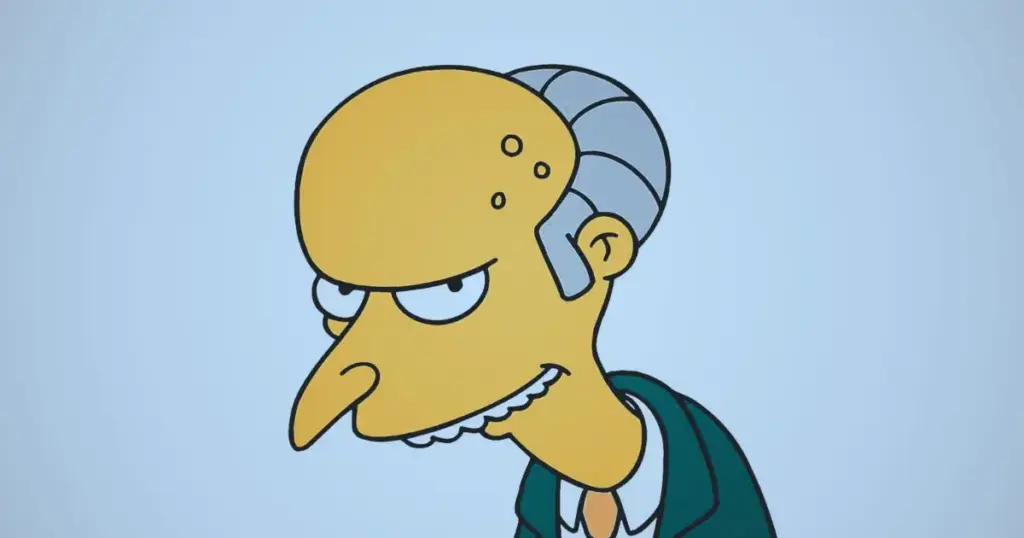
Big nose cartoon characters are some of the most iconic designs in all of animation, because a nose is basically a shortcut to personality.
A long nose can make a character look smug, grumpy, curious, villainous, or weirdly lovable, sometimes all at once. Animators have leaned on this little trick since the very beginning.
When I think of big nose cartoon characters, a few classics jump straight to mind: Squidward, Ferb, and Phineas. The funny part is that even if you forget their catchphrases, you never forget the silhouette. That is the whole power of a great cartoon nose.
Cartoons have used long noses, pointy noses, and big hooked noses forever, from Disney (hello, Pinocchio) all the way to Nickelodeon and beyond. Sometimes it is pure comedy.
Other times it is character shorthand for a villain, a grump, or a snob. Either way, it is a design choice that sticks.
Quick note before we dive in: big noses have also been used poorly in some older media to push ugly stereotypes.
In this list, I am focused purely on recognizable character design and how animation uses exaggeration. I am not making any claims about real people.
The Best Big Nose Cartoon Characters
This one is a countdown. The further you scroll, the more iconic the nose gets.
So the single most famous big-nosed cartoon character of all time is waiting at the very bottom.
Let’s start with the deep cuts and work our way up.
Big Nose Thug (Tangled)
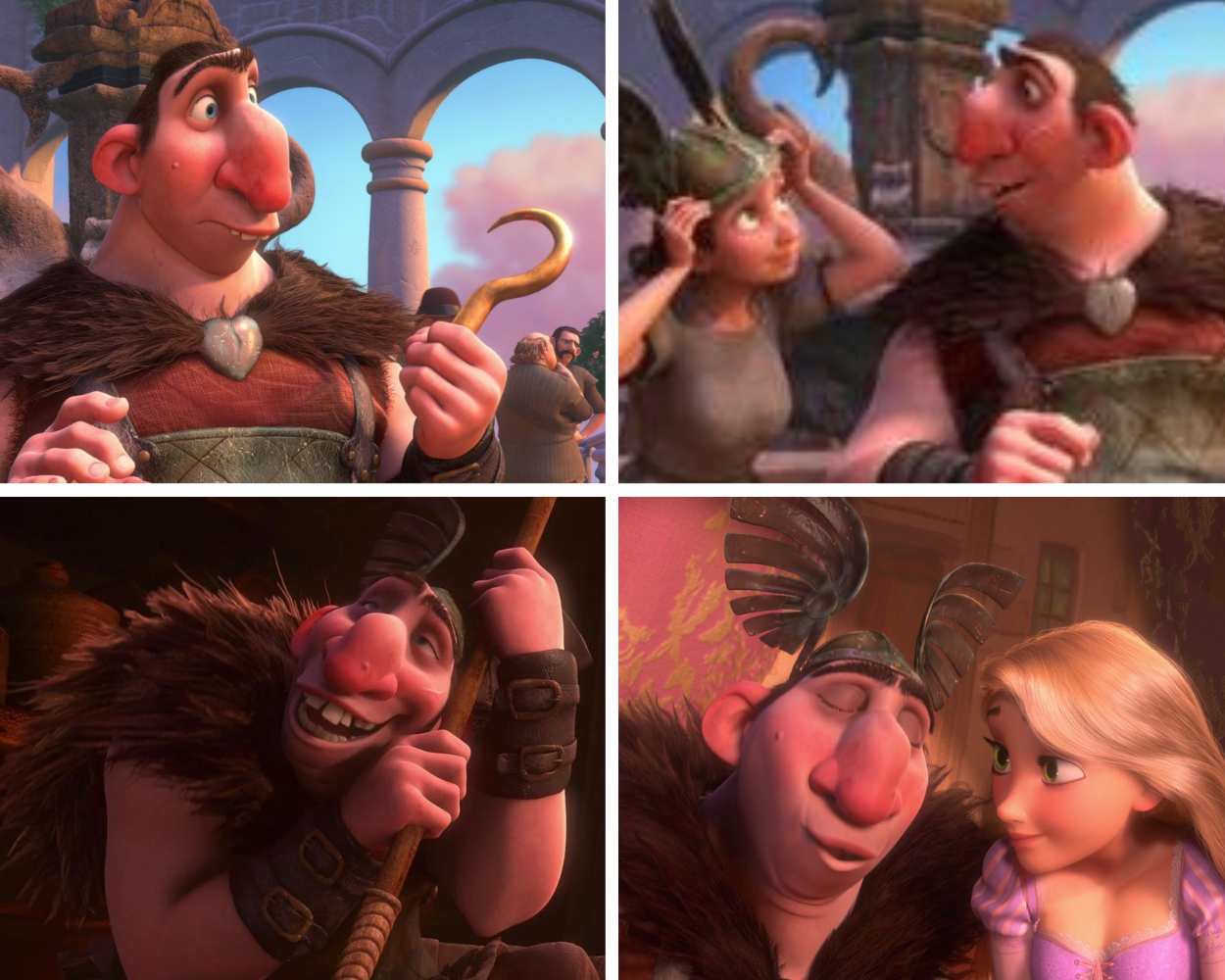
We start with the most on-the-nose entry possible. This Snuggly Duckling regular from Tangled is literally credited as “Big Nose,” and his enormous schnoz is the entire joke.
Here is the sweet twist, though. In the song “I’ve Got a Dream,” he reveals he secretly wants to find true love, which makes him weirdly wholesome.
Nose type: Huge, and the name says it all
Why it works: it is a comedic visual cue that reads instantly in a crowd
My take: I respect the sheer honesty of naming him “Big Nose.”
The Little Man, aka “Big Nose” (The Pink Panther)
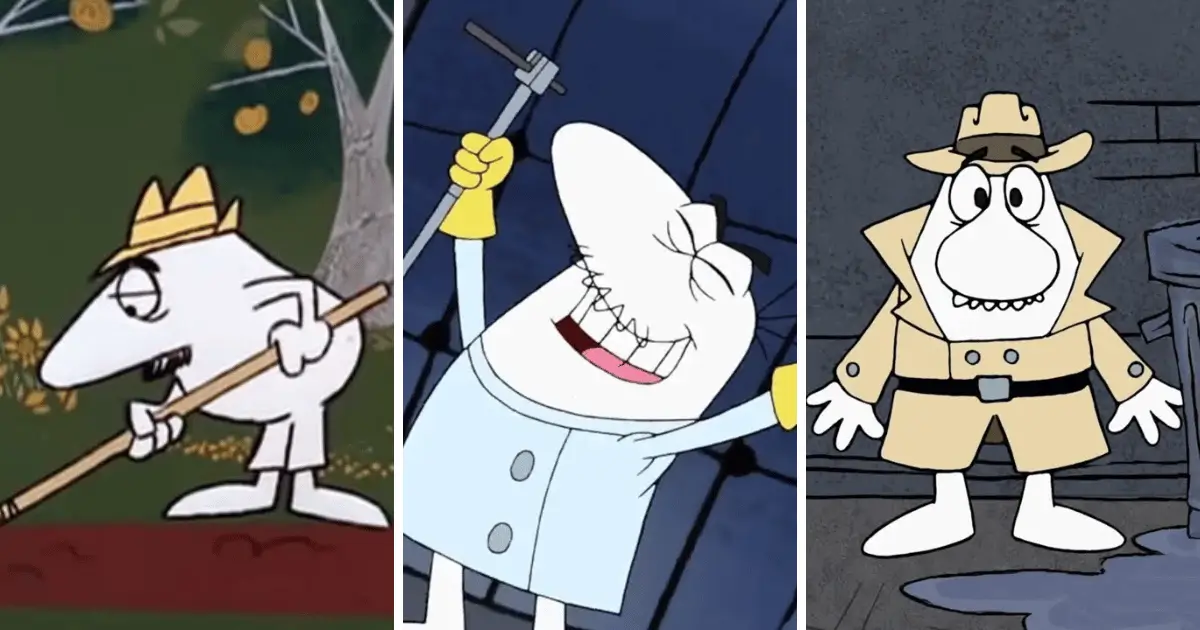
Next, the Little Man is the short, mustachioed foil who spends most of his Pink Panther shorts losing his temper. Fittingly, fans and even some credits just call him “Big Nose,” since that oversized nose is his most defining feature. He is a masterclass in silent slapstick built around one very expressive face.
Nose type: the entire identity
Why it works: when a character is nicknamed “Big Nose,” the design has done its job
My take: a character built out of pure irritation, perfect for slapstick.
You also have a dedicated internal page for him: The Little Man (Pink Panther).
Hugh Neutron (Jimmy Neutron)
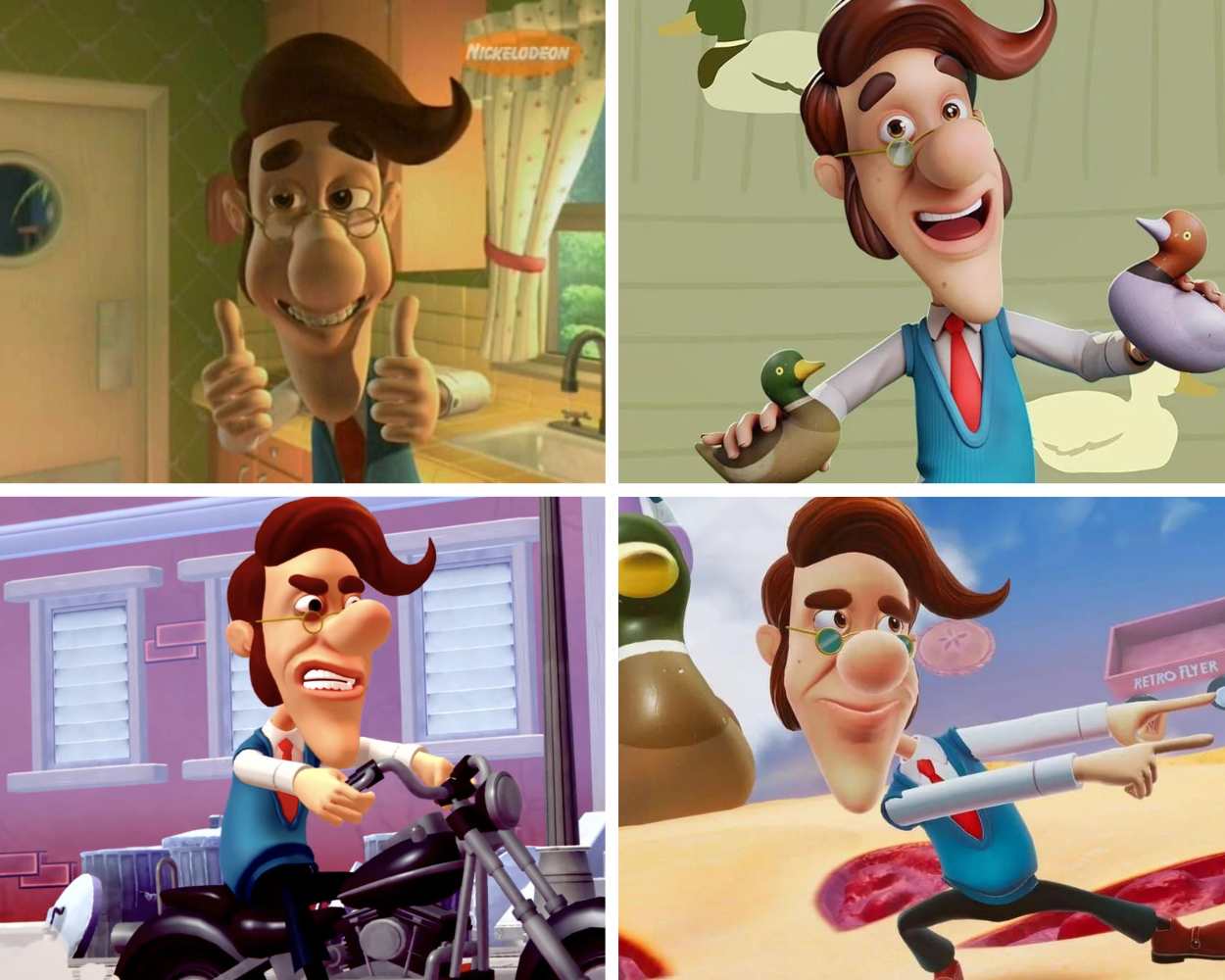
Jimmy’s lovably clueless dad is the perfect example of the “awkward dad” nose. Hugh pairs that big, round nose with thick glasses and an obsession with ducks and pie. As a result, the design nails his goofy energy before he even speaks. He is my honest go-to answer whenever someone asks for a big nose cartoon character with glasses.
Nose type: big dad nose plus glasses combo
Why it works: it screams “harmless, distracted dad” the instant you see him
My take: a textbook example of nose-plus-glasses character design.
Captain K’nuckles (The Marvelous Misadventures of Flapjack)
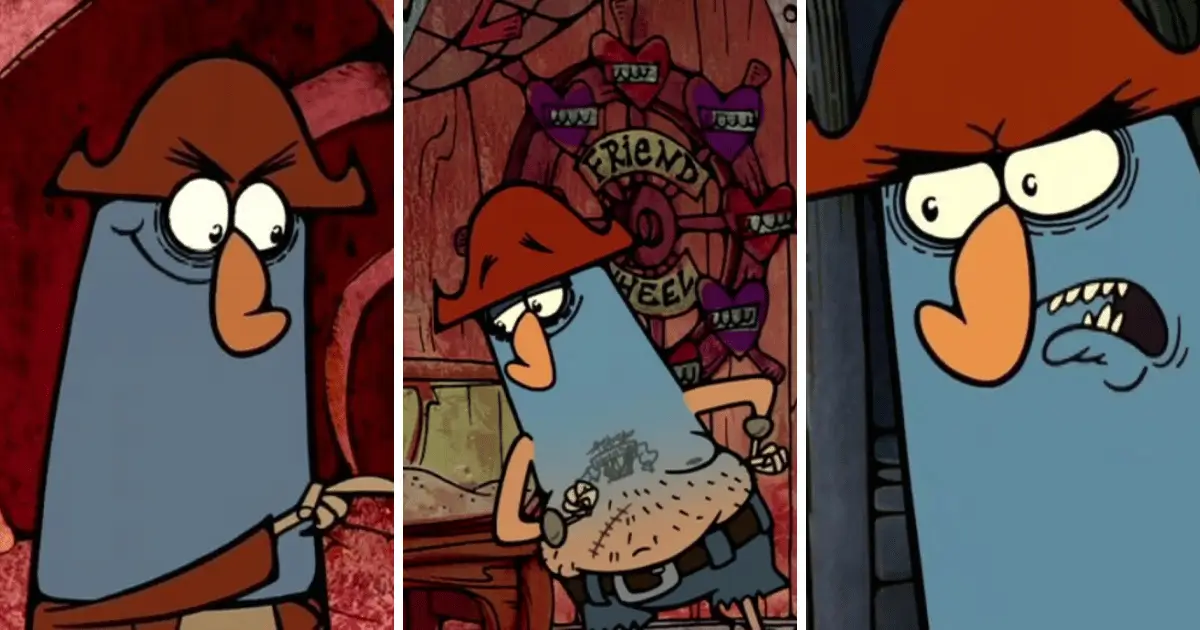
Meanwhile, Captain K’nuckles is a washed-up adventurer with a giant, weathered orange nose that tells you everything you need to know about him.
Voiced by Brian Doyle-Murray, he is a lazy, candy-obsessed schemer, and that nose reads as “this guy is trouble” from a mile off. Flapjack was ahead of its time, and K’nuckles was a big part of its weird charm.
Nose type: long and orange, a pirate caricature done right
Why it works: it instantly signals a lovable, untrustworthy rogue
My take: his nose is basically part of his resume.
Billy (The Grim Adventures of Billy & Mandy)
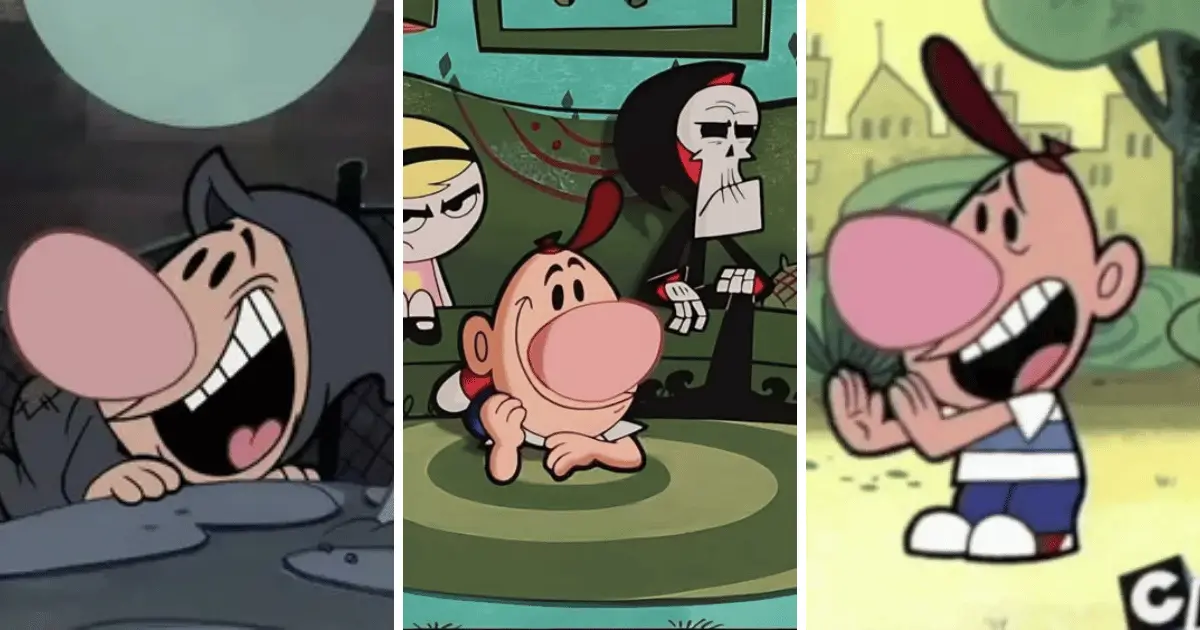
Then there is Billy, whose giant red nose perfectly matches his giant lack of brain cells.
The show even jokes that his IQ sits somewhere around negative five, and that big, dopey nose sells the chaos instantly. He is proof that a “gross-out” design can still be weirdly endearing.
Nose type: big and rounded, pure goofy energy
Why it works: the nose matches his not-thought-through personality perfectly
My take: Billy looks like he breathes entirely through chaos.
Pearl (Steven Universe)
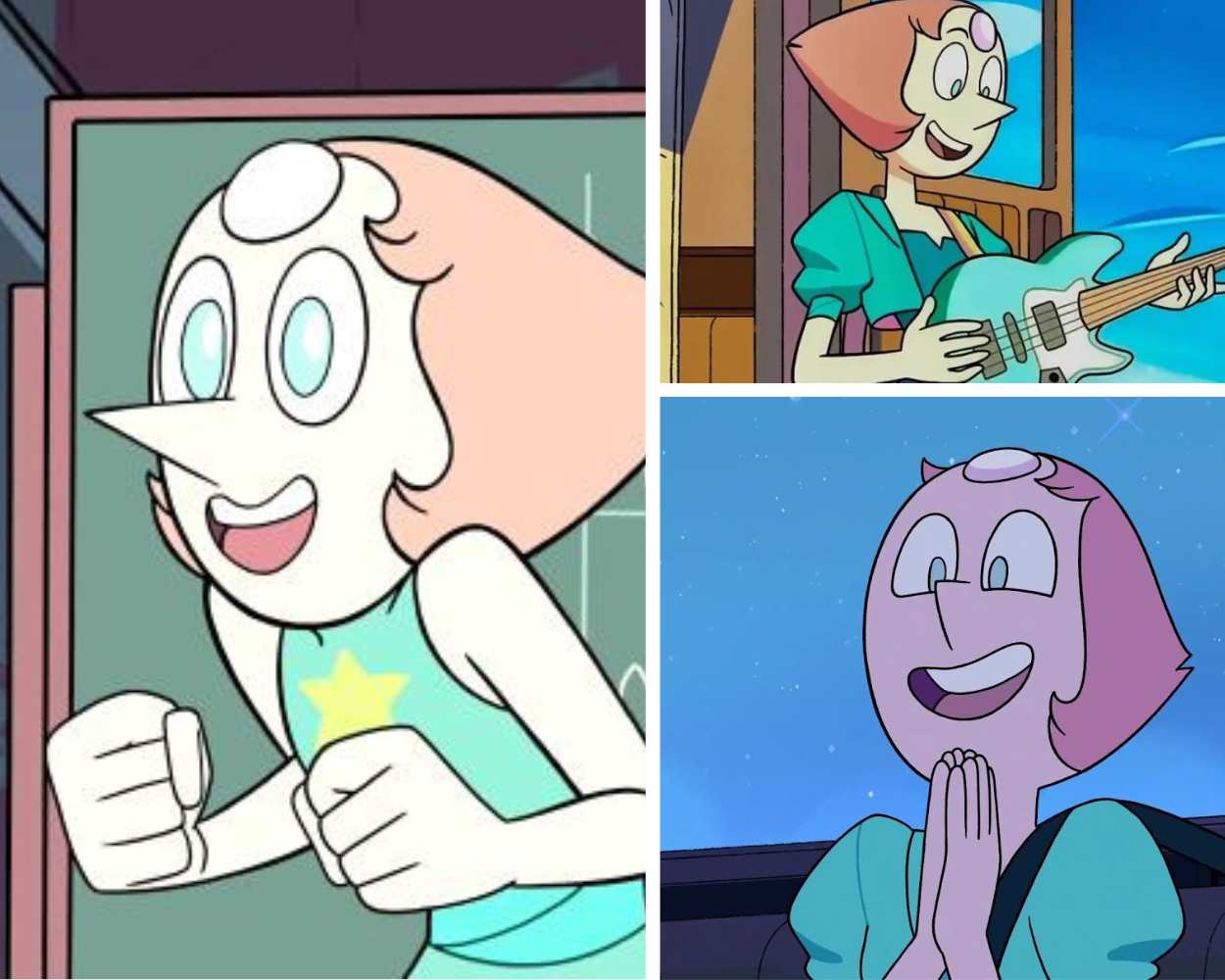
Pearl brings a completely different energy to this list. Her sharp, pointed nose is elegant rather than comedic, and it quietly reinforces her precise, refined, slightly uptight personality.
It is a great reminder that a big or prominent nose does not have to be a punchline.
Nose type: pointy, elegant, and precise
Why it works: it reinforces her controlled, perfectionist personality
My take: a sharp nose can make a character read as intelligent without a word of dialogue.
Stimpson J. Cat (Ren & Stimpy)
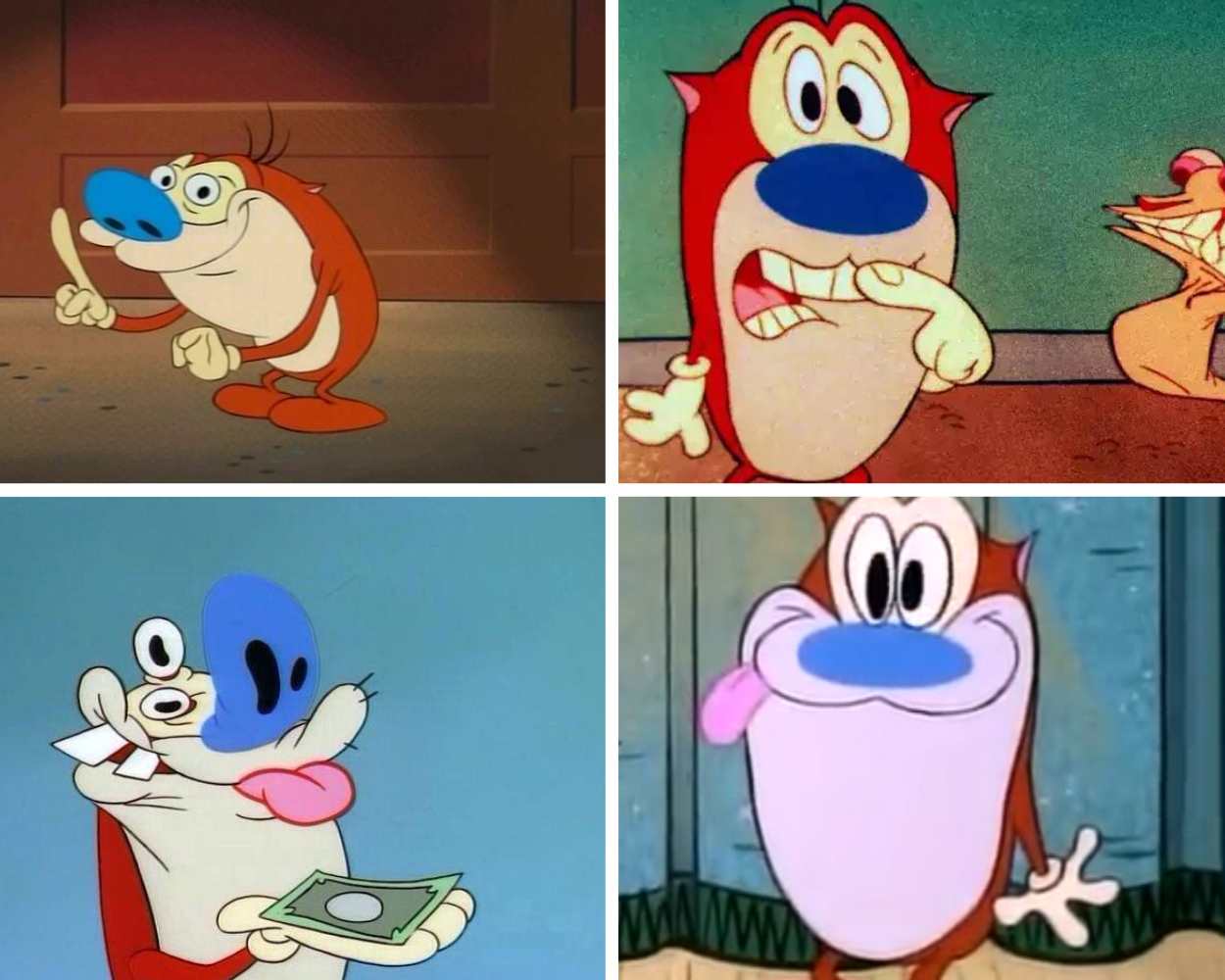
Next up, Stimpy is a dim, sweet-natured cat with a big, bulbous nose that pops in every single scene.
Ren & Stimpy was built on gross-out, rubbery, in-your-face design, and Stimpy’s nose is one of its most recognizable features. For all the show’s chaos, that nose helped make him a true 90s icon.
Nose type: big red nose with a visual gag built in
Why it works: the shape and color make it pop against everything around it
My take: Stimpy is proof that gross-out design can still be iconic.
If you want to go deeper, he has a dedicated page: Stimpson J. Cat.
Flint Lockwood (Cloudy with a Chance of Meatballs)
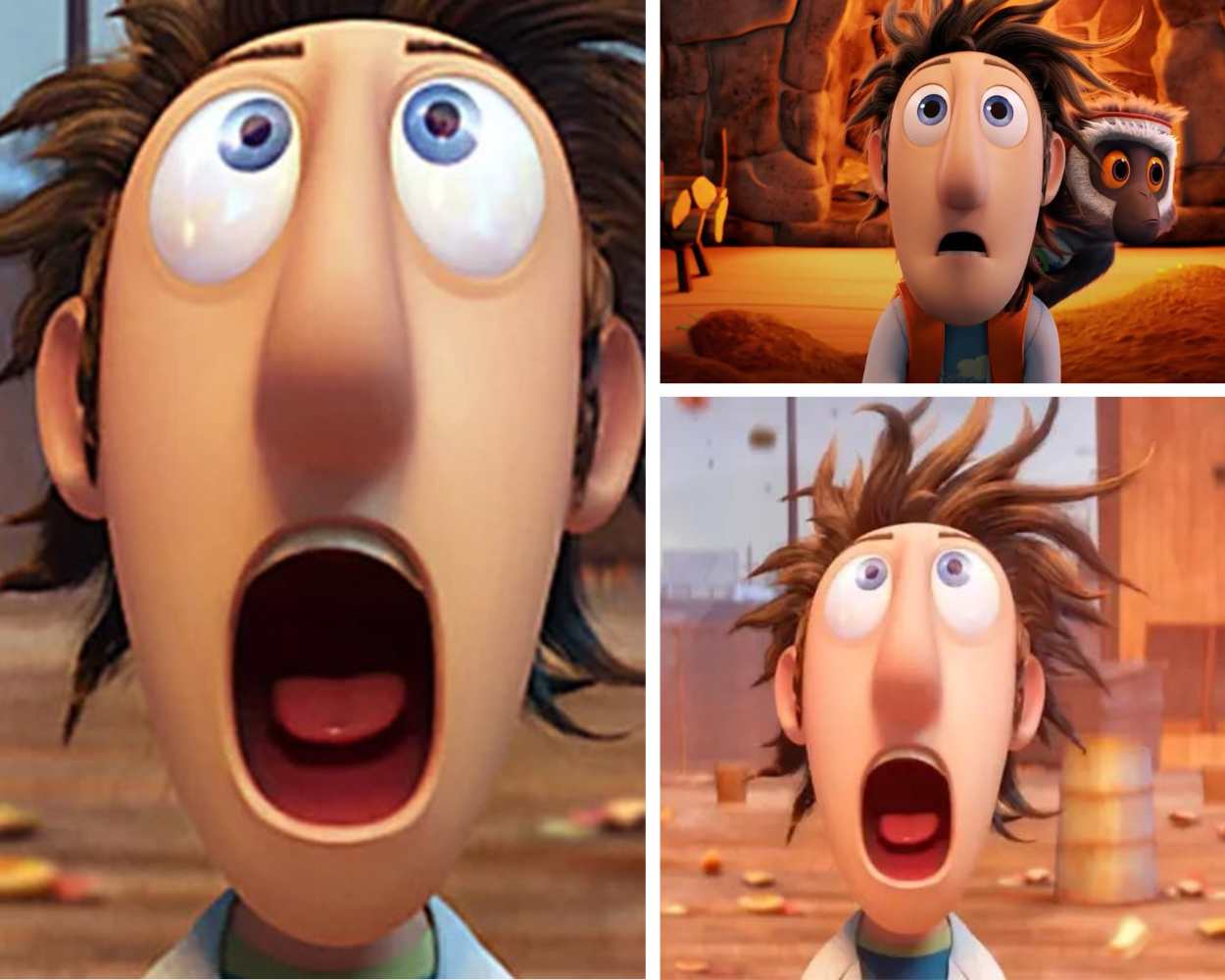
Flint is the awkward-inventor archetype turned into a character, and his long, slightly oversized nose is a big part of that.
Voiced by Bill Hader, he always looks like he is mid-thought, mid-experiment, or mid-disaster. The nose gives his lanky silhouette a distinct, science-nerd shape.
Nose type: long and nerdy, pure inventor energy
Why it works: it matches the awkward-genius character style
My take: the nose makes him look like he is always mid-idea.
He has a dedicated page here: Flint Lockwood. And yes, he is absolutely a skinny cartoon character.
Mr. Bean (Animated Series)
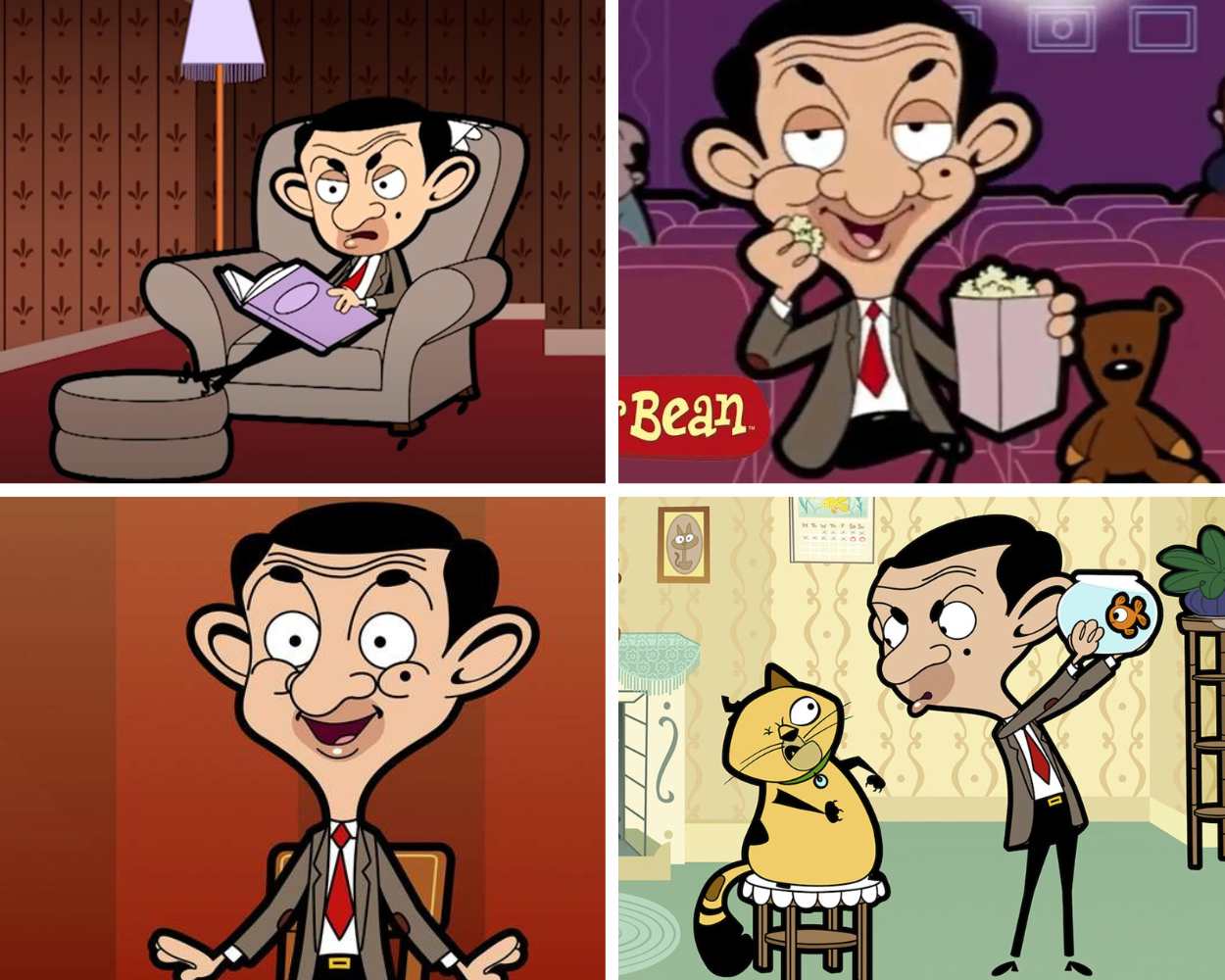
The animated Mr. Bean keeps Rowan Atkinson’s rubber-faced comedy alive, and the nose does a lot of the heavy lifting.
In a mostly realistic art style, that prominent nose gives him a silhouette you can recognize in a single frame. Since the show runs on near-silent physical comedy, an expressive face like his is essential.
Nose type: realistic but prominent
Why it works: in a human-style show, the nose still gives him a distinct outline
My take: silent comedy plus an expressive face is a perfect match.
Dr. Doofenshmirtz (Phineas and Ferb)
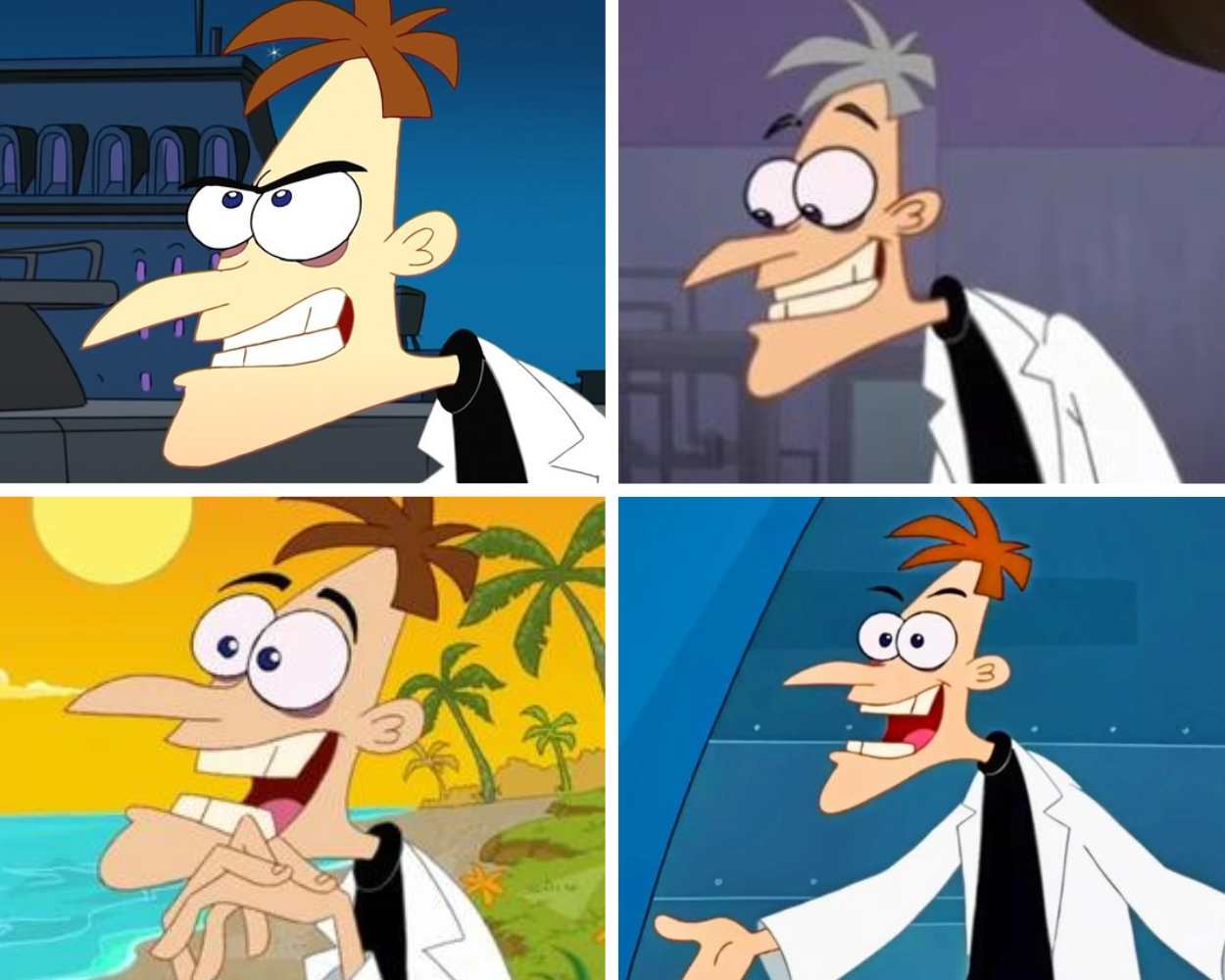
Similarly, Doofenshmirtz has a long, pointy nose that says “cartoon villain” the instant he appears, which is exactly the joke.
The writing makes him one of the most lovable, tragic-backstory-having bad guys in modern animation. His nose is villain-coded, but his heart absolutely is not.
Nose type: long villain nose, but harmless
Why it works: the nose says mad scientist while the writing makes him lovable
My take: the best comedic villains always have a strong silhouette.
Squidward is a good bridge into green-character lists too: cartoon characters that are green.
Grunkle Stan (Gravity Falls)
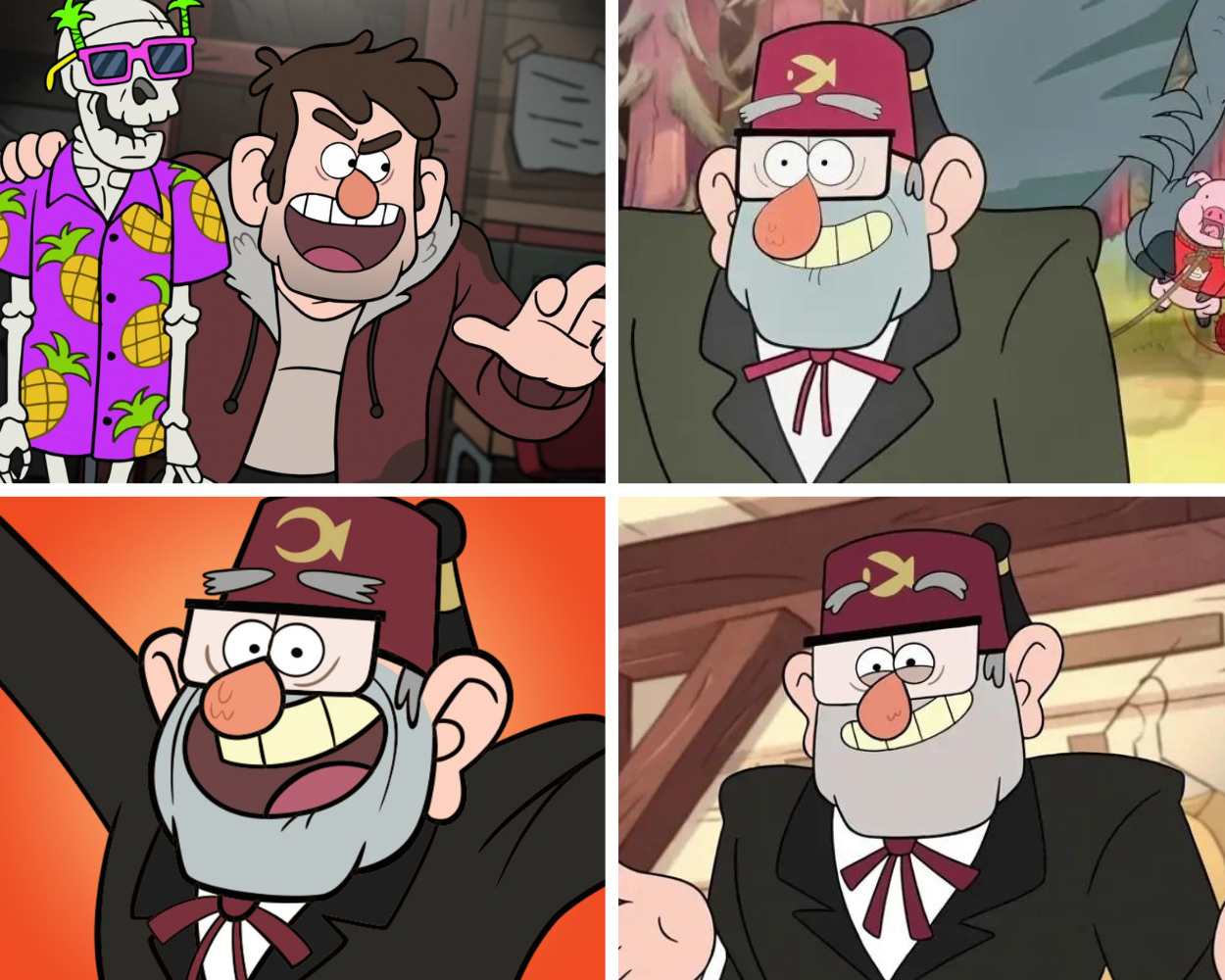
Grunkle Stan is a con artist, a tourist-trap owner, and secretly the beating heart of Gravity Falls.
Naturally, his big, blocky nose sells that grifter vibe perfectly. Voiced by series creator Alex Hirsch, Stan looks like a man who can smell a scam from a mile away. It is a design that says “this guy has stories” before he opens his mouth.
Nose type: big and blocky, matching his grifter energy
Why it works: the nose sells the idea that this man has stories
My take: Stan looks like he can smell a scam from a mile away.
Gravity Falls is a linking goldmine, and there is a hub page: Gravity Falls characters.
Nigel Thornberry (The Wild Thornberrys)
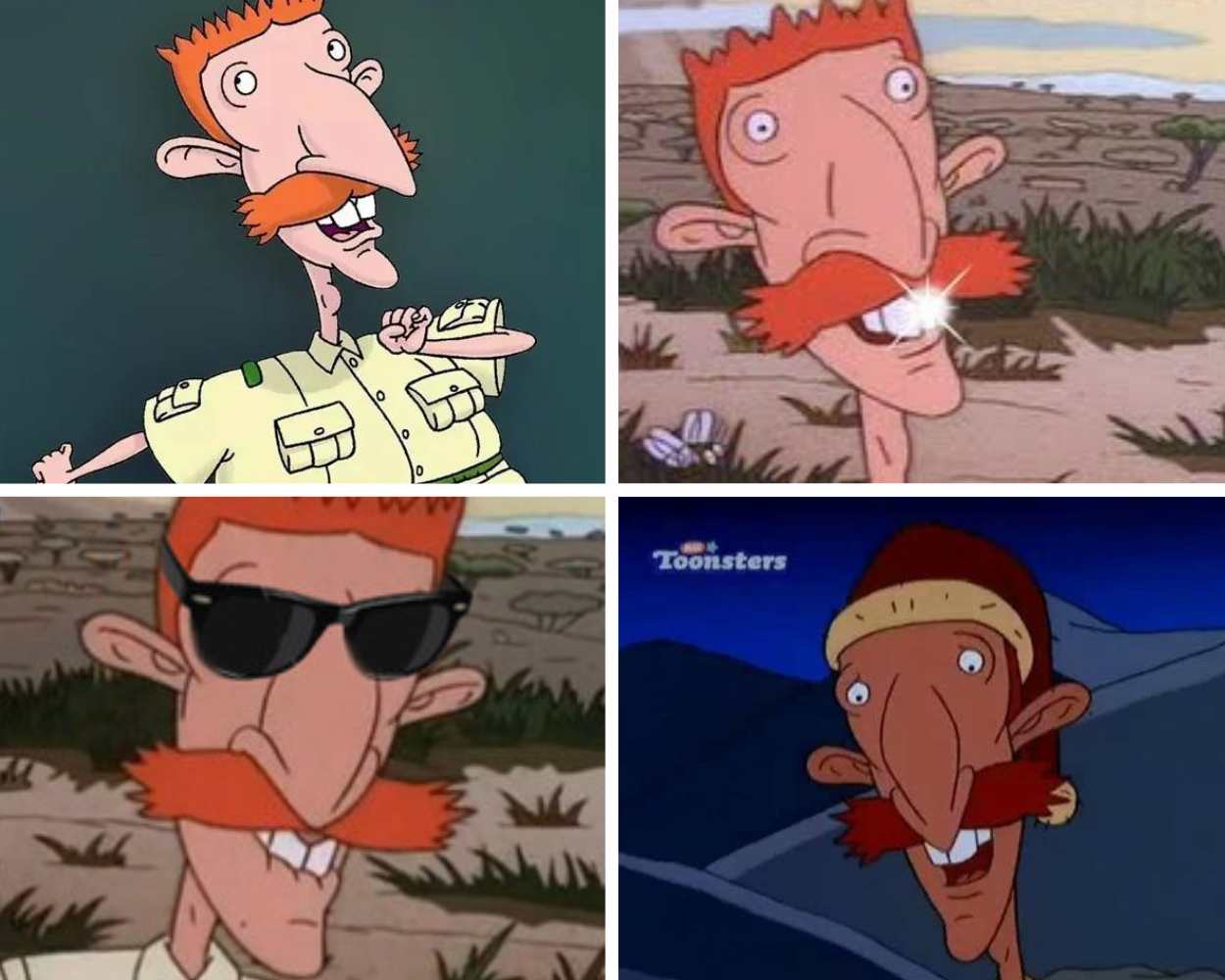
By contrast, Nigel is a booming, over-enthusiastic wildlife documentarian, and his enormous nose is as loud as his personality.
Voiced by the legendary Tim Curry, his “Smashing!” energy turned him into a full-blown internet meme years after the show ended. That giant nose and bushy mustache are half of what makes his face so quotable.
Nose type: long “explorer” nose
Why it works: it is exaggerated in a way that matches his loud personality
My take: his entire face feels like a catchphrase.
Dick Dastardly (Wacky Races)
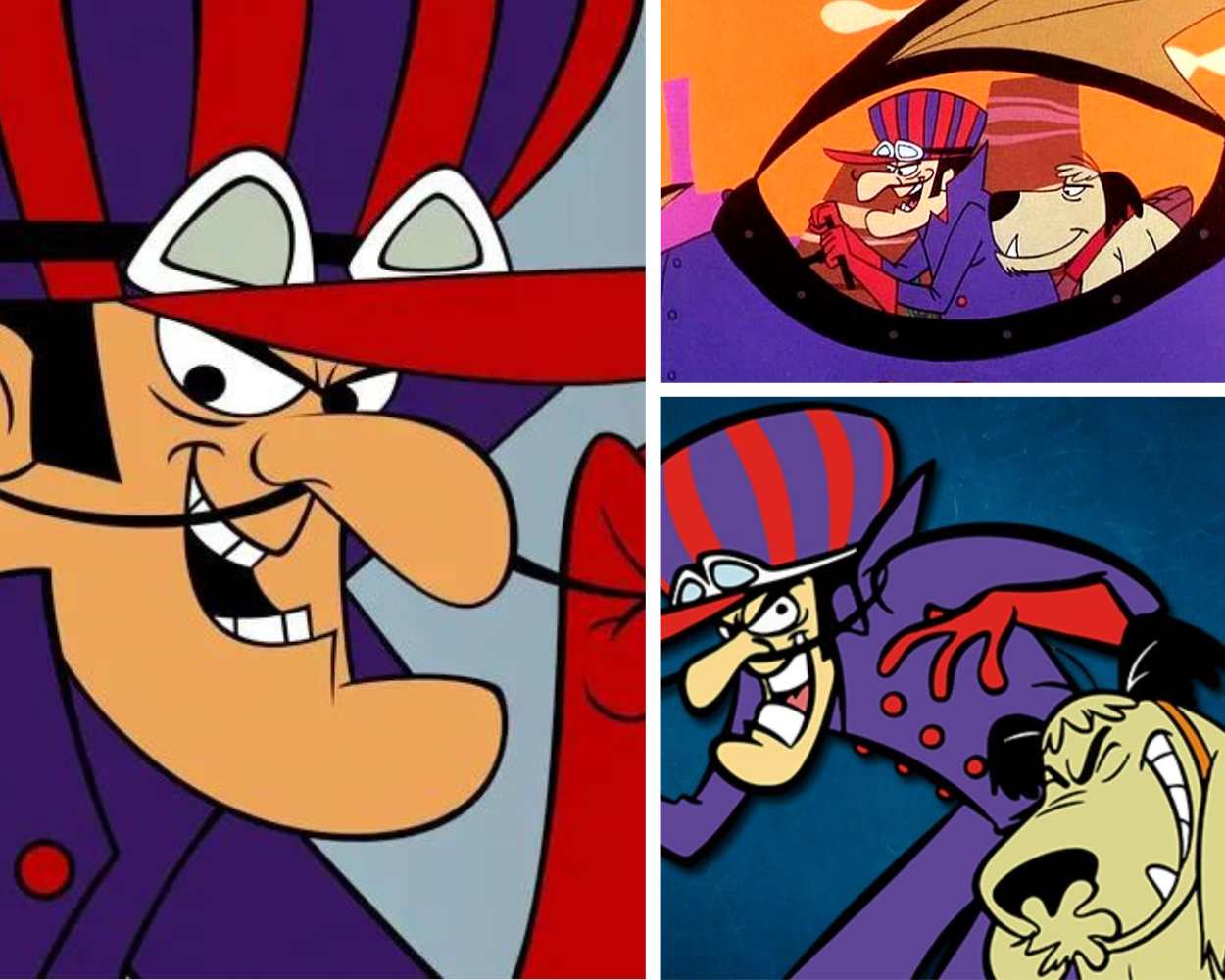
Dick Dastardly is the platonic ideal of the mustache-twirling cartoon villain, and that long, sloping nose is a huge part of the package.
This Hanna-Barbera schemer, always paired with his snickering dog Muttley, was famously inspired by British actor Terry-Thomas. If you searched for cartoon villains with big noses, he would land in the top three.
Nose type: long villain nose, classic Hanna-Barbera energy
Why it works: he is shaped like a cheat code for “cartoon villain”
My take: the silhouette alone tells you he is up to no good.
The perfect internal link lives right here: cartoon characters in Wacky Races.
Gargamel (The Smurfs)
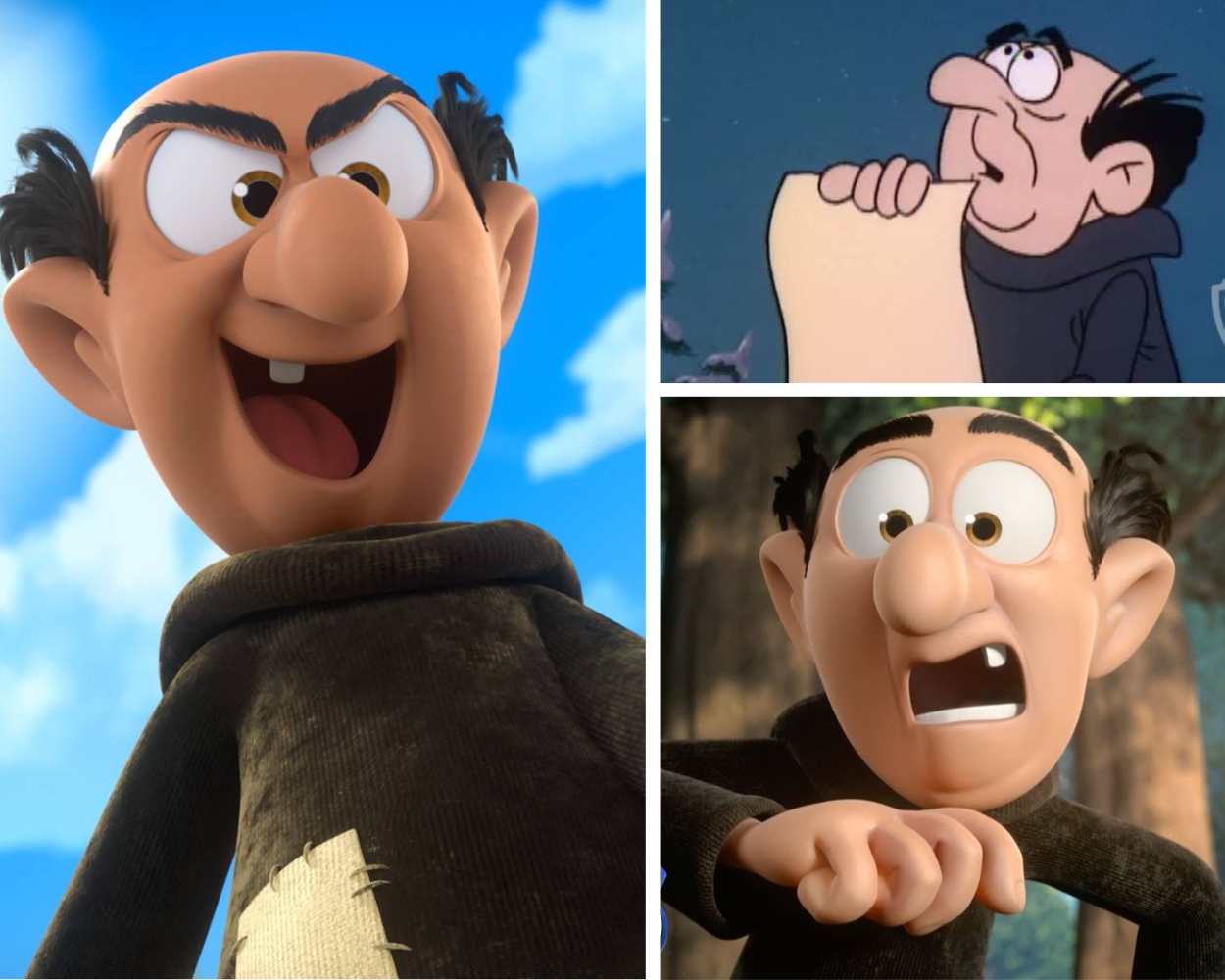
Gargamel is the wizard who has spent decades trying and failing to catch the Smurfs. Meanwhile, his big hooked nose is old-school villain design at its purest.
Created by Belgian cartoonist Peyo, he reads as an antagonist the second he appears on screen. Paired with his cat Azrael, he looks like a man who hates joy as a concept.
Nose type: big hooked nose, the classic villain shape
Why it works: it is an instant old-school antagonist cue
My take: Gargamel looks like he hates joy as a concept.
Grumpy (Snow White and the Seven Dwarfs)

Then we have Grumpy, easily the most memorable of Snow White’s seven dwarfs, and his big, round, classic-Disney nose is a huge reason why.
Dating all the way back to 1937, his design proves that a big nose can feel warm and huggable instead of mean. Under all the grumbling, he is a total softie, and the nose somehow tells you that.
Nose type: big, with that classic Disney roundness
Why it works: the nose amplifies his grumpy silhouette instantly
My take: this is big-nose design that feels warm, not harsh.
Ferb Fletcher (Phineas and Ferb)
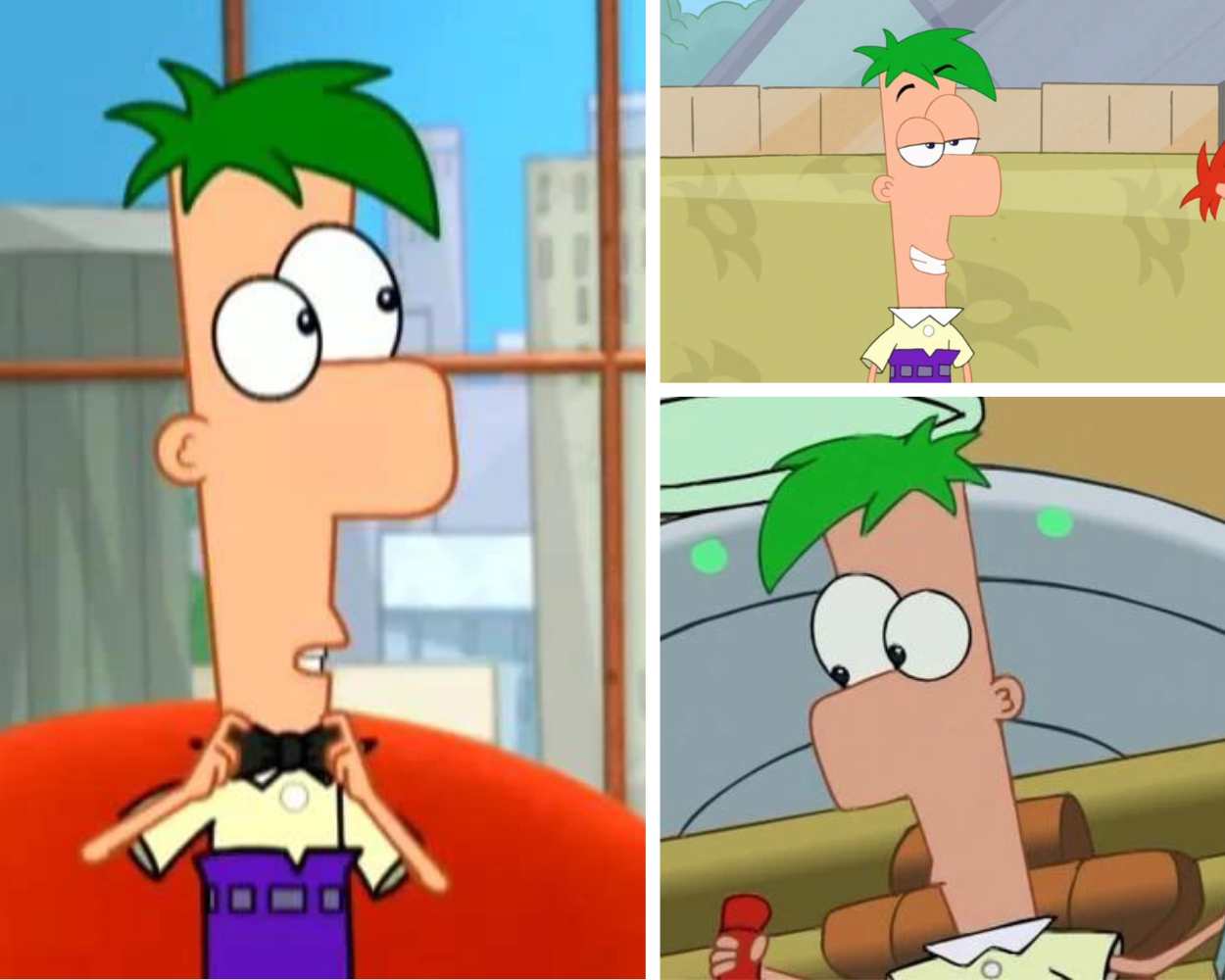
Ferb is a masterclass in “simple shapes, instantly recognizable character.” His long, flat, rectangular nose sells his whole calm, quietly-competent, “I already built it” vibe. The best part is that Ferb barely speaks all series and still manages to steal scenes with nothing but that silhouette.
Nose type: long and flat, radiating quiet confidence
Why it works: the nose helps sell his calm, unbothered genius
My take: Ferb barely talks and still steals every scene.
Since we are in the Phineas and Ferb universe, Candace Flynn belongs on your reading list too.
Phineas Flynn (Phineas and Ferb)

Phineas is proof that a nose can basically become a logo. His entire head is a triangle, nose included.
In fact, it is so distinct that you could draw him with five lines and still know exactly who it is. In a mostly optimistic, curious way, that pointy nose always feels like it is aiming him toward his next big idea.
Nose type: triangle nose, pure silhouette branding
Why it works: five lines and he is still unmistakably Phineas
My take: this is peak pointy-nose cartoon character design.
His spiky-hair energy fits another list perfectly: cartoon character with spiked hair.
Gru (Despicable Me)
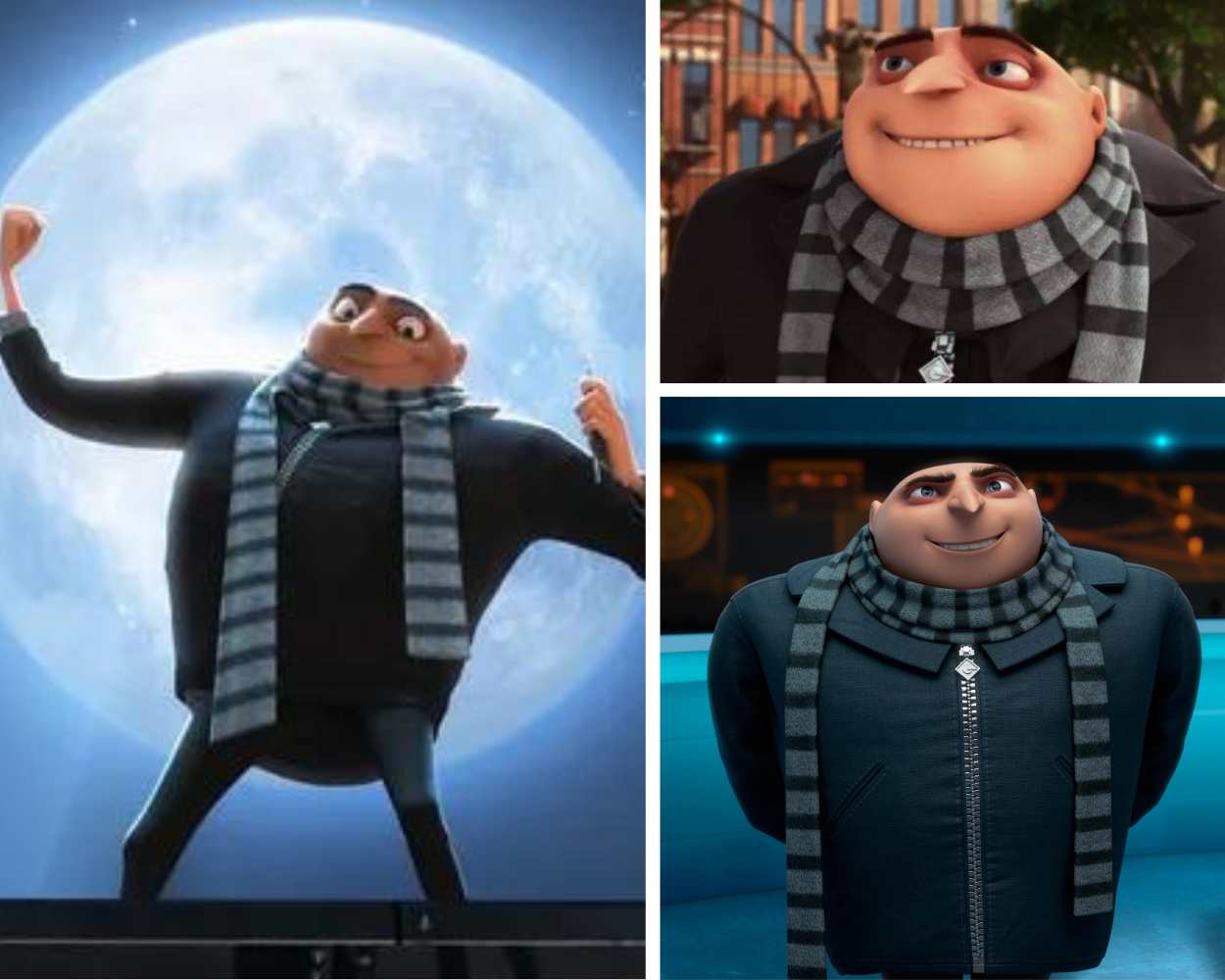
Gru’s long, pointed nose is basically half of his character arc.
Voiced by Steve Carell, he starts as a hunched, sharp-nosed supervillain, and that menacing silhouette slowly softens into one of animation’s most beloved dads. The Despicable Me and Minions films have grossed billions, so clearly that nose did not scare anyone off.
Nose type: long, with a full villain silhouette
Why it works: it screams supervillain, then the story flips him into a softie dad
My take: the nose really is half his character arc.
Mr. Burns (The Simpsons)
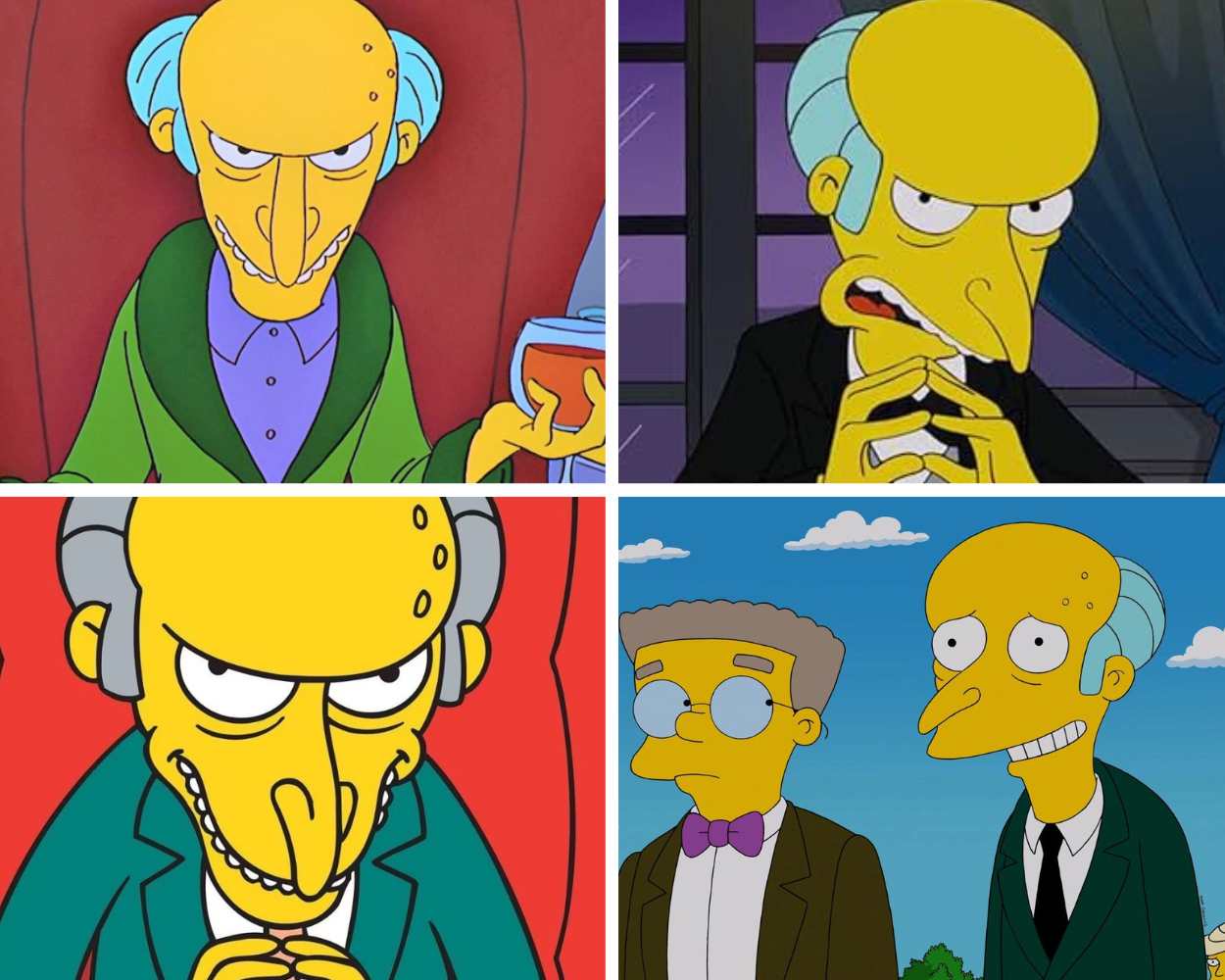
Mr. Burns is one of TV’s greatest villains, and his long, sharp, hooked nose is central to the whole predatory design.
Voiced by Harry Shearer, the Springfield tycoon looks like he is always plotting, which he almost always is. Pair that nose with a slow, steepled-finger “Excellent,” and you have a truly iconic silhouette.
Nose type: sharp and villain-coded
Why it works: it makes him look like he is permanently scheming
My take: the nose plus “Excellent” is a lethal combo.
Goofy (Disney)
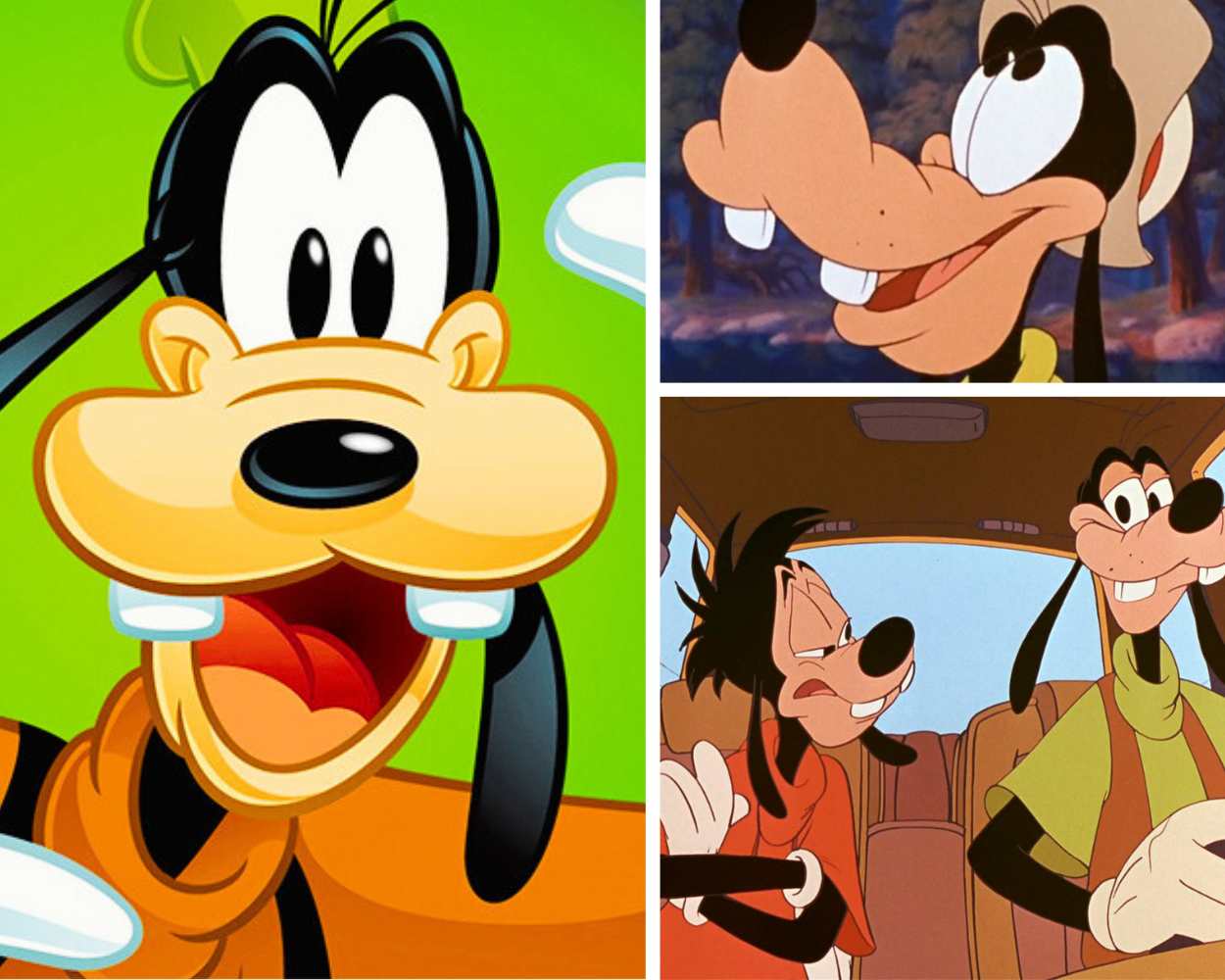
Goofy has been making people laugh since 1932, and his big, round, friendly nose is a core part of that timeless charm.
Where villains get sharp, hooked noses, Goofy’s soft round one makes him instantly approachable and huggable. He is living proof that a big nose can read as pure warmth.
Nose type: big round nose, friendly and classic
Why it works: the round shape makes him instantly approachable
My take: if big noses can be cute, Goofy proves it.
He anchors the Disney cluster nicely, and your duck list is a natural side link: cartoon duck characters.
Popeye (Popeye the Sailor Man)
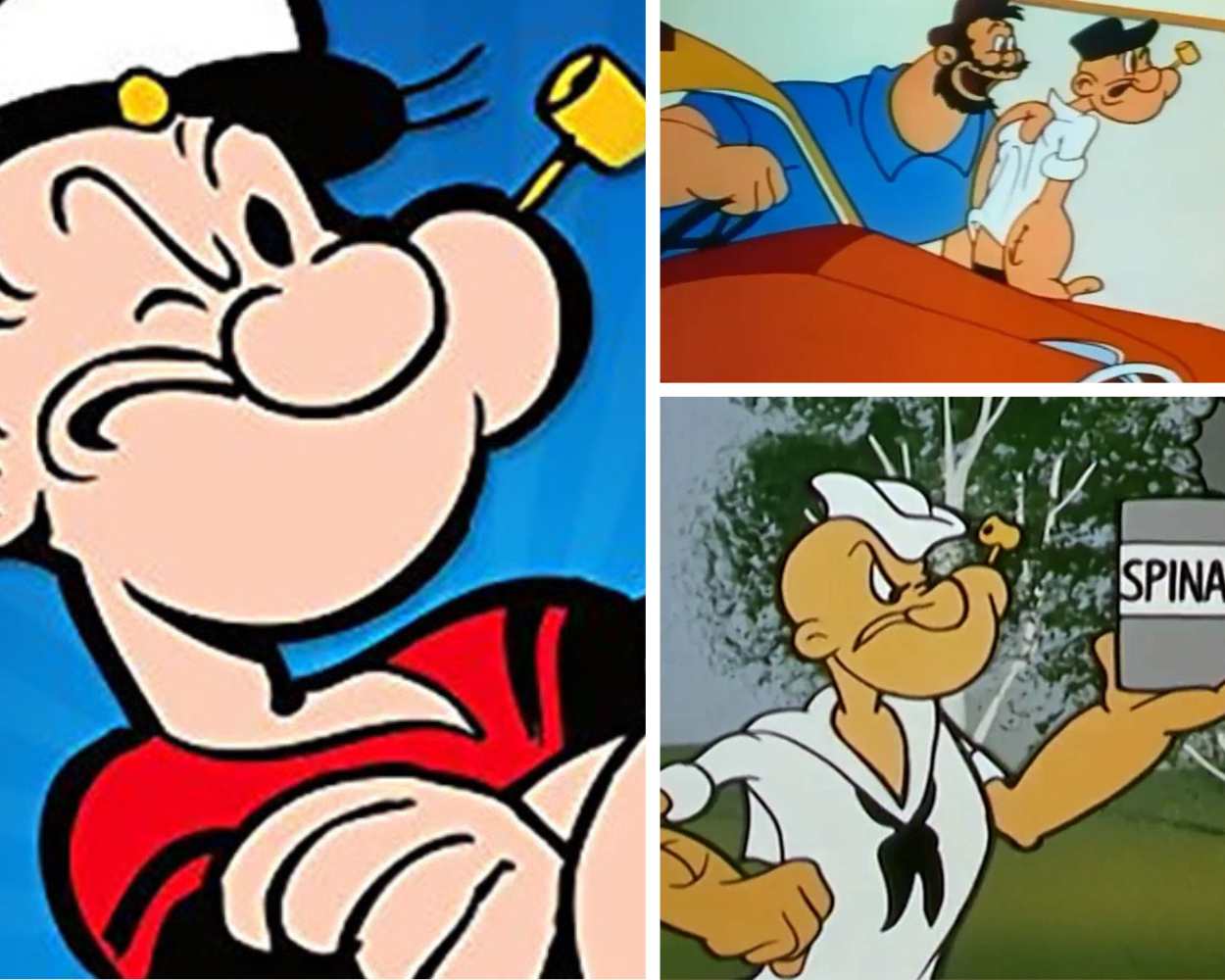
Popeye is one of the oldest big-nosed icons still recognized worldwide today.
Created by E.C. Segar back in 1929, the spinach-powered sailor has a classic long nose built for exaggerated expression and slapstick. Alongside his corncob pipe and squinting eye, that nose is a huge part of a silhouette people still know almost a century later.
Nose type: classic long nose, old-school cartoon style
Why it works: his whole face is built for expression and slapstick
My take: one of the earliest big nose cartoon character designs people still know on sight.
SpongeBob SquarePants
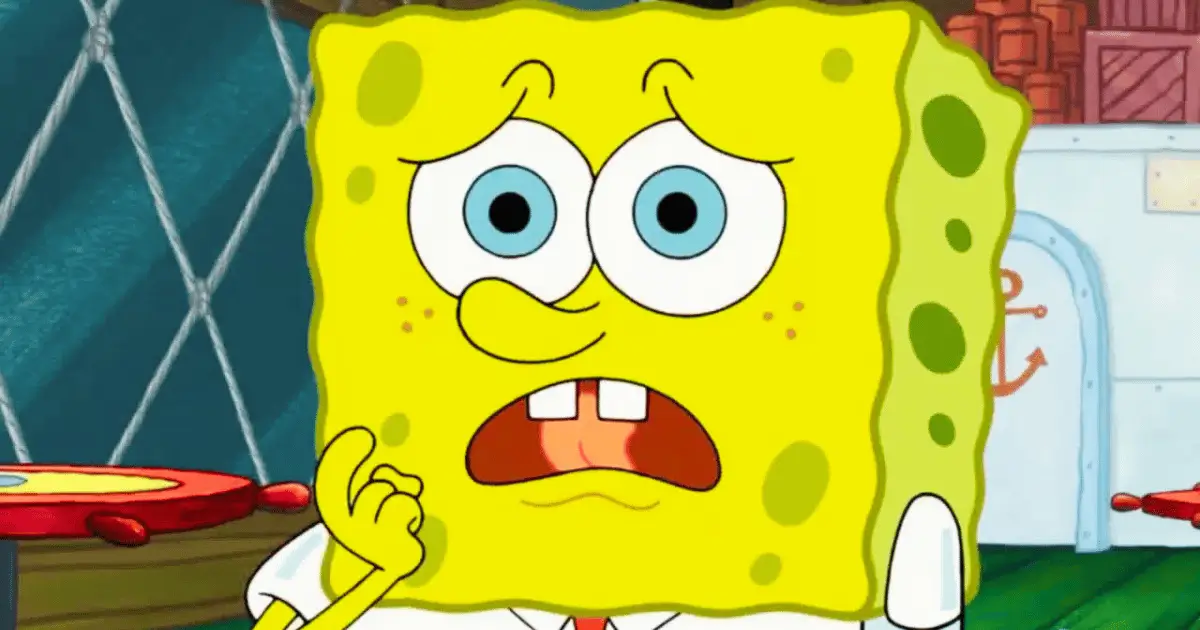
Here is one that sneaks up on you. SpongeBob’s nose looks small head-on, but catch him in profile and it is surprisingly long and prominent.
Because his face is otherwise so simple, that nose is a quiet but essential part of one of the most recognizable silhouettes in television history.
Nose type: small head-on, but long and prominent in profile
Why it works: the nose is a key part of that icon-level silhouette
My take: once you see it from the side, you cannot unsee it.
For internal linking, Pearl Krabs is already a strong match.
Squidward Tentacles (SpongeBob SquarePants)
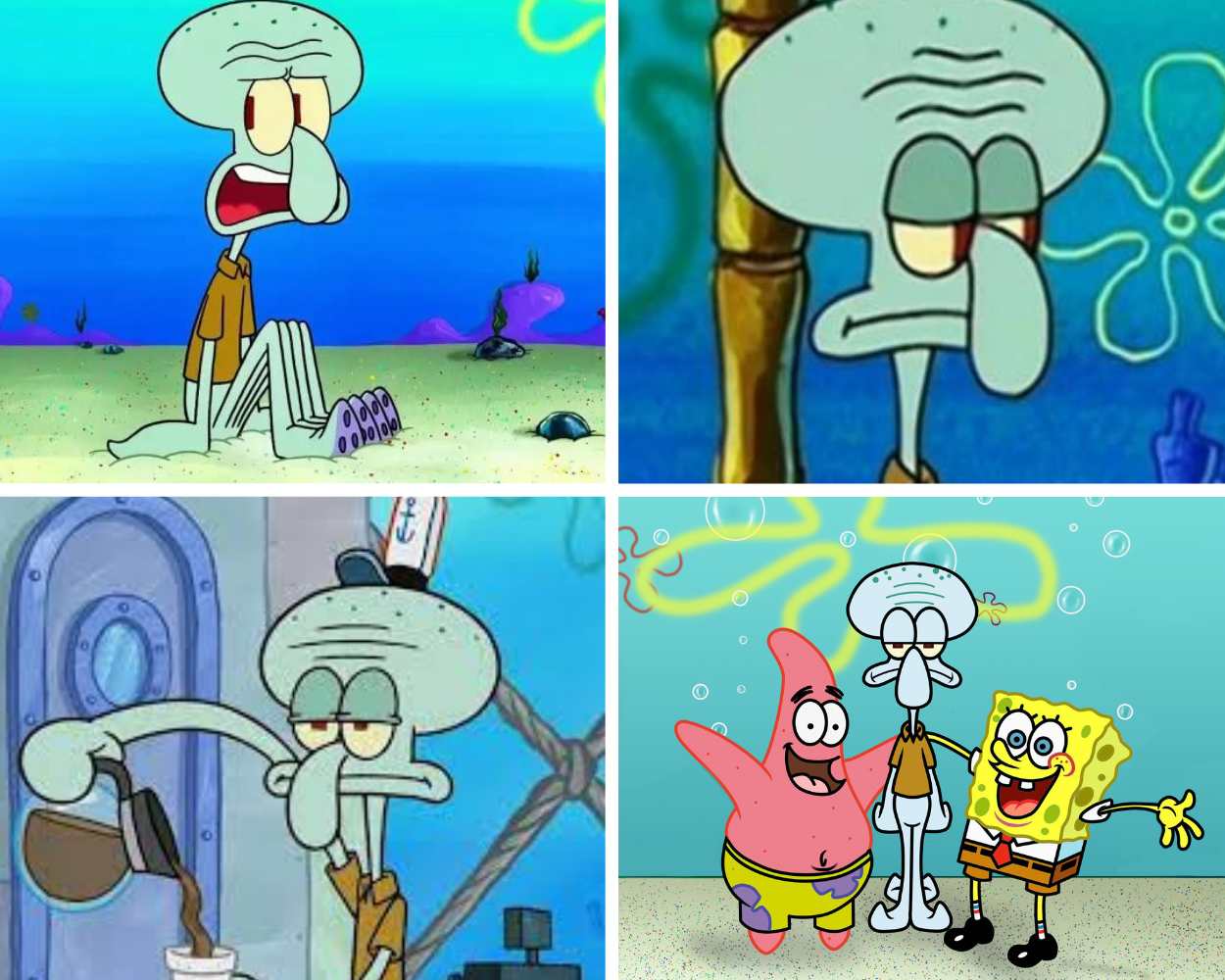
At number two, Squidward is arguably the face of the entire big-nose trope. His long, drooping nose does not just sit there, it practically frowns for him, perfectly matching his permanently miserable mood.
In a cast full of loud characters, that grumpy silhouette makes him one of the most recognizable big nose cartoon characters ever drawn.
Nose type: droopy and dramatic, professional-grade suffering
Why it works: his nose basically frowns for him
My take: Squidward’s nose is the face of “I hate it here.”
He is a great cross-link for a SpongeBob cluster: SpongeBob villains.
Pinocchio (Disney)
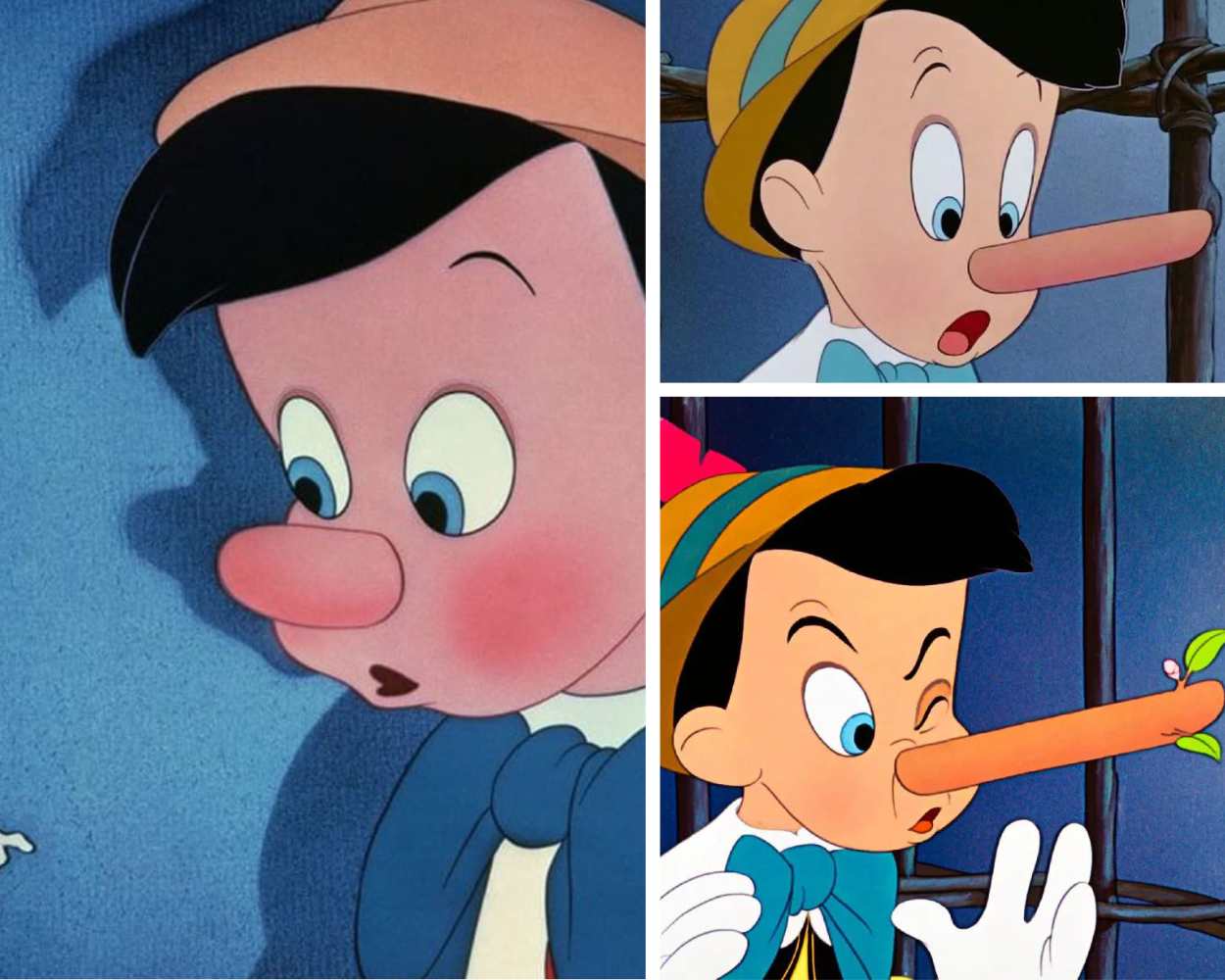
And here he is, my number one. Pinocchio is the most iconic of all big nose cartoon characters, because his nose is not just a design choice, it is the entire plot. Every time he tells a lie, it grows, turning it into the most famous physical lie detector in fiction.
Adapted from Carlo Collodi’s 1883 novel into Disney’s 1940 classic, he set the standard that everyone else on this list is quietly measured against.
Nose type: the “story nose,” because it is literally the plot
Why it works: a physical lie detector is a perfect cartoon mechanic
My take: when someone searches big nose Disney characters, this is who they mean.
Did you know? Disney’s Pinocchio was the first animated feature to win a competitive Academy Award. It took home two Oscars in 1941, including Best Original Song for “When You Wish Upon a Star.”
So that is my full ranking of the best big nose cartoon characters, counting all the way down to Pinocchio himself.
From long noses and pointy triangle noses to big round friendly ones, these designs prove that a single feature can carry an entire character.
Whether it signals a villain, a grump, or a lovable goof, the nose almost always tells the story first.
Who did I leave off your list?
Let me know in the comments.
Characters like Squidward Tentacles, Phineas Flynn, and Ferb Fletcher are instantly recognizable even in shadow. You could remove their dialogue entirely and still know exactly who they are just from that nose shape and posture. That kind of visual storytelling is honestly impressive.
I also like that you called out how noses can mean different things depending on the show. With Squidward, the nose amplifies his bitterness and superiority complex. With Phineas, it feels curious and optimistic, almost like it is pointing him toward the next big idea. Then you have someone like Pinocchio, where the nose is literally part of the plot and becomes a moral barometer. That is animation using exaggeration at its smartest.
The disclaimer matters too. Big noses have definitely been misused historically, and it is good to separate harmful stereotypes from intentional cartoon exaggeration. In modern animation, it feels more about readability and memorability than anything else. People still search things like “cartoon characters with big noses” or “why cartoons exaggerate facial features” because these designs stick in a way realistic ones often do not.
What I am curious about is whether anyone else associates big-nosed characters with specific personality types automatically now. Do you expect sarcasm, awkwardness, or intelligence the moment you see one? And is there a big-nosed cartoon character you liked as a kid but only appreciated as an adult once you realized how much character work that design was quietly doing?