
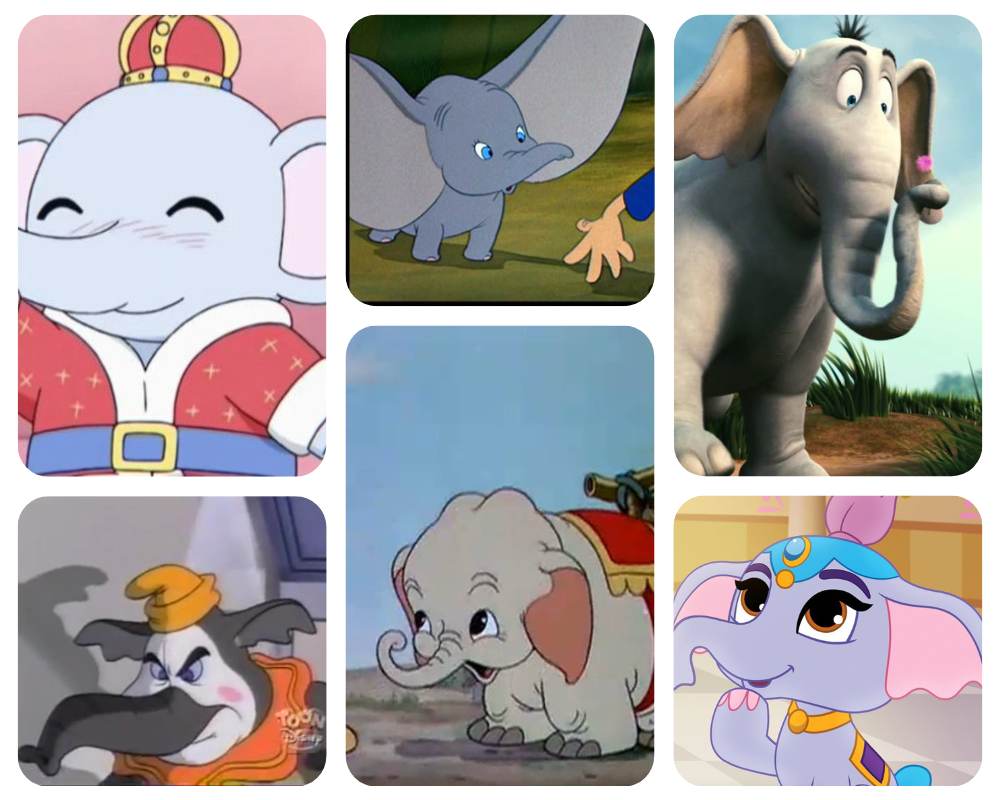
An elephant is the heaviest thing a cartoon can put on screen, and animation rarely wastes that weight.
The great elephant cartoon characters are anchors: they stand for the pull of memory, the pain of being the one who does not fit, or the dignity of an entire civilization built at their scale.
A trunk can play a gag, a hug, and a heartbreak inside the same scene, which is why these characters lodge in your memory long after the show ends.
Rank them by raw popularity and a pattern emerges, because the ones people never forget are almost always the ones carrying the most underneath the fun.
The Elephantine Allegory Scale
Before the ranking, one lens worth naming.
Beyond size and floppy ears, cartoon elephants tend to fall into three roles, and the measure that separates a beloved icon from a forgettable cameo is allegorical weight: how much the character is asked to represent.
Three archetypes cover almost all of them.
- The Sage (the Memory Keeper). Wisdom, history, and parental stability. These elephants guide the hero or embody the weight of the past. Manny, Mrs. Jumbo, and Zunesha live here.
- The Vulnerable Giant (the Outsider). Enormous bodies paired with fragile feelings. They set physical size against emotional sensitivity to expose how cruelly a world treats “different.” Dumbo is the prototype.
- The Anthropomorphic Authority (the Socialite). Elephants fully woven into human-style society, standing for leadership, dignity, and the civilized. Babar built the mold.
Every elephant cartoon character below is tagged with the archetype it serves and a quick read on the weight it carries.
Elephant Cartoon Characters, Ranked by Popularity
The order runs on cultural footprint: franchise reach, cross-generational recognition, and how widely each elephant cartoon character is still searched and referenced today. Design and depth break the ties.
Snorkdro / Snooker (Samurai Jack)
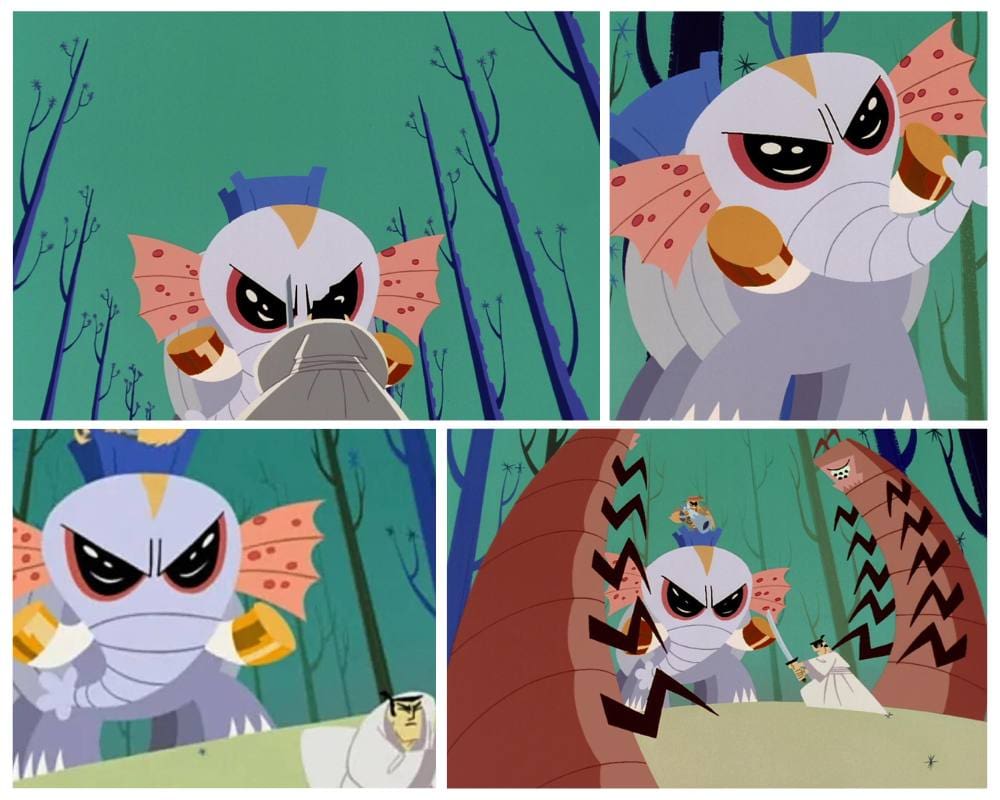
The alien elephant mount from Samurai Jack is where the allegory scale bottoms out. It looks like an elephant and functions like a vehicle, and that is the entire role. Sometimes a cartoon elephant is set dressing, and this is the clearest example, a fun one if you like strange creature designs.
- Archetype: Off the scale
- Allegorical weight: close to zero; a functional creature, not a symbol.
- Why it is a curiosity: it stretches the idea of an elephant character to its limit.
The Mammoth Calf (Mom for a Mammoth Baby)
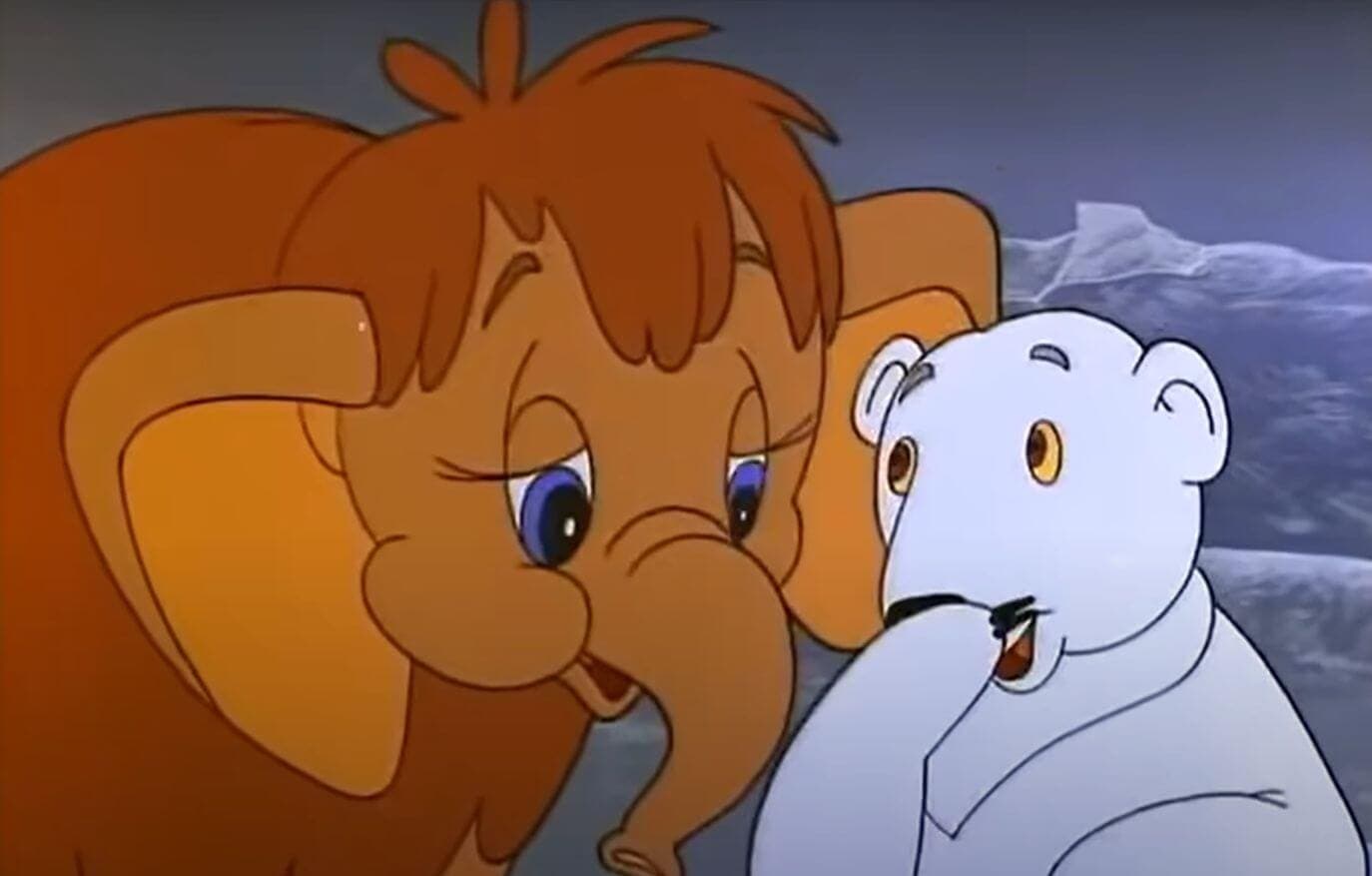
The baby mammoth from the Soviet short Mom for a Mammoth Baby is a deep cut that still hits the lost-child chord hard. An orphan crossing the world to find a mother stands in for every kid who has felt out of place, and the animation earns the tears fast.
- Archetype: The Vulnerable Giant
- Allegorical weight: the orphan outsider; belonging as the thing being searched for.
- Why it is here: a bittersweet deep cut that still lands emotionally.
Taj (Whisker Haven / Palace Pets)
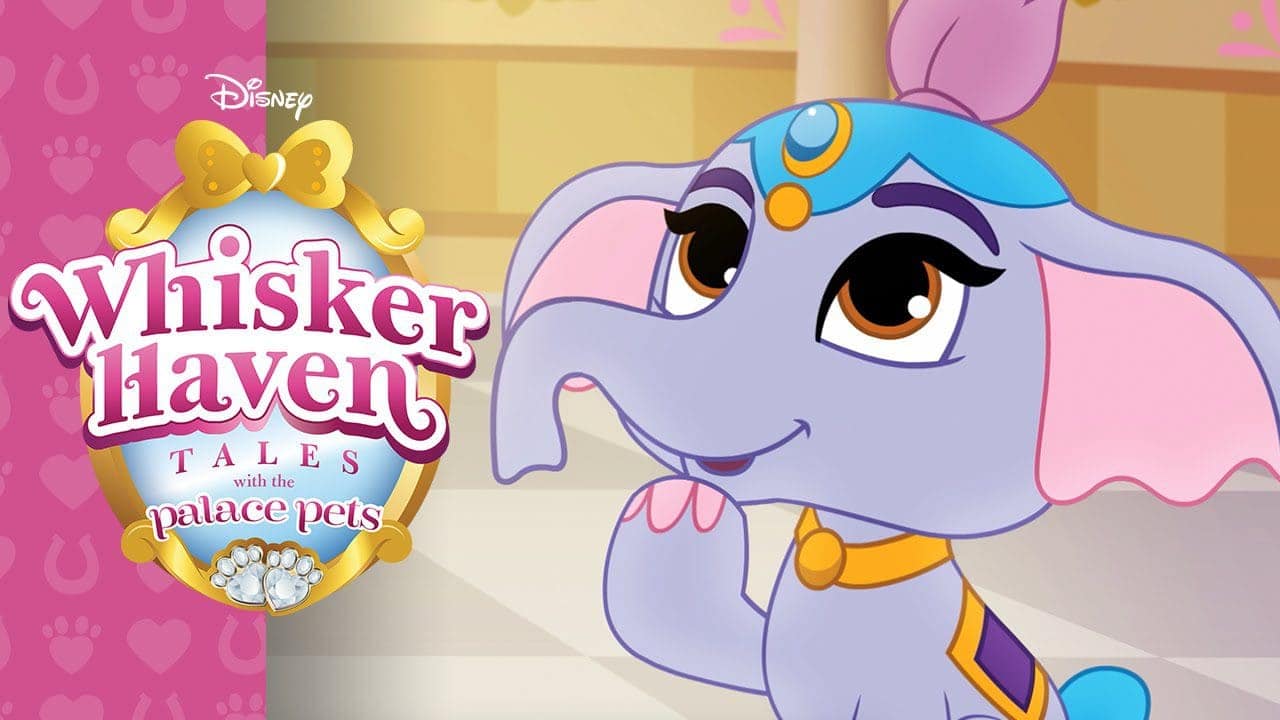
Taj is a baby elephant built for one job, melting hearts, in the Palace Pets corner of the Disney princess world. He is pure cuteness with a princess bond, and that is the whole pitch.
- Archetype: The Vulnerable Giant
- Allegorical weight: the tender infant; sweetness with little else to carry.
- Why he is here: a designed-to-be-adorable cute elephant cartoon character.
King (Onegai My Melody)
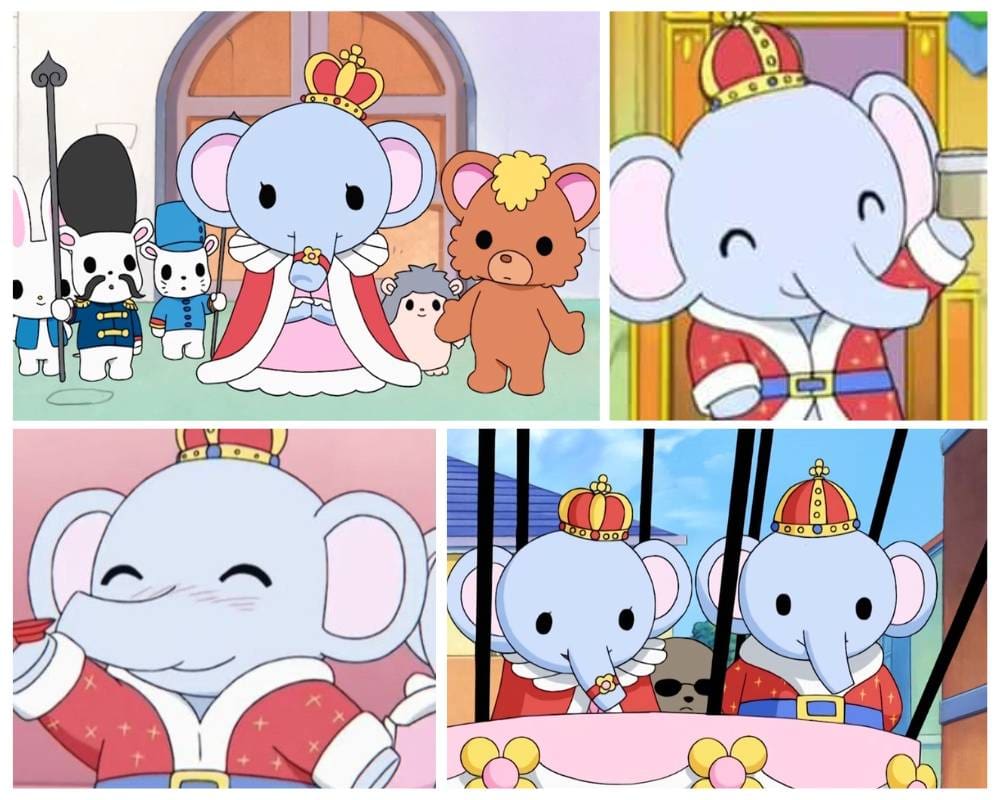
King is exactly what the name promises in Onegai My Melody, a goofy elephant ruler who cannot escape his own love drama. Sanrio uses him as a comic authority figure, dignified on paper and humbled in practice.
- Archetype: The Anthropomorphic Authority
- Allegorical weight: the authority who is secretly the punchline; a crown that fools no one.
- Why he counts: the ruler who still gets humbled is a fun read.
Ella Elephanilla (Viva Piñata)
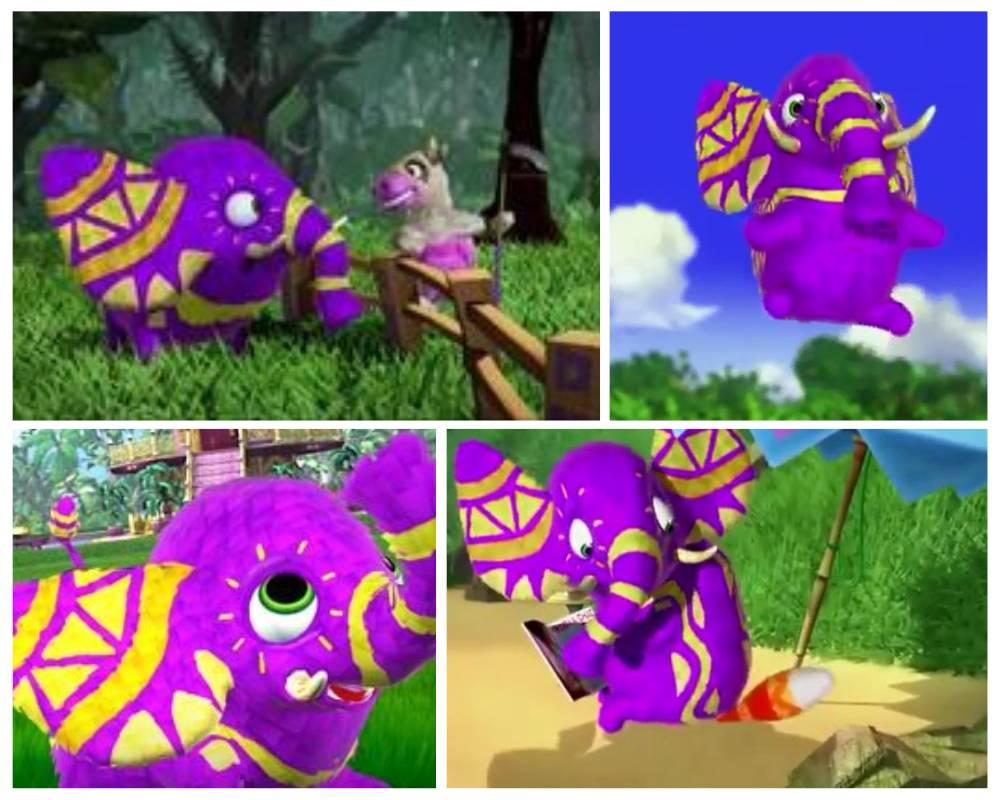
Ella Elephanilla is Viva Piñata’s ballet-obsessed, perpetually distracted elephant, endearing precisely because she is a mess. She is the lovable-flaw archetype, all earnest intentions and misplaced keys.
- Archetype: The Vulnerable Giant
- Allegorical weight: the charming scatterbrain; vulnerability played for warmth.
- Why she is here: a quirky elephant cartoon character that expands the category.
Flaps the Elephant (Bonkers)
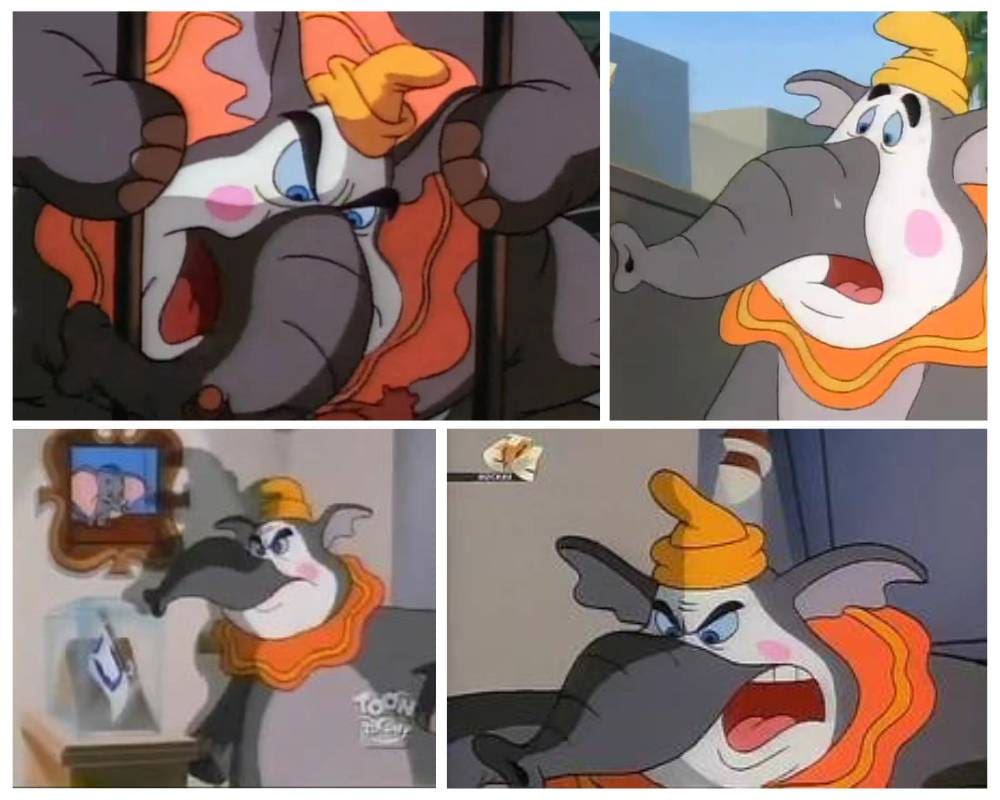
Flaps is the rare elephant villain, a Toon crook from Bonkers who steals Dumbo’s flag to sell it to the highest bidder. He inverts the anthropomorphic authority into an anthropomorphic criminal, fully at home in a Toon society he is happy to rob.
- Archetype: The Anthropomorphic Authority
- Allegorical weight: authority gone crooked; the civilized elephant as con artist.
- Why he is a fun pick: an elephant antagonist is a nice change of pace.
Bobo the Elephant (Gone Batty, Looney Tunes)
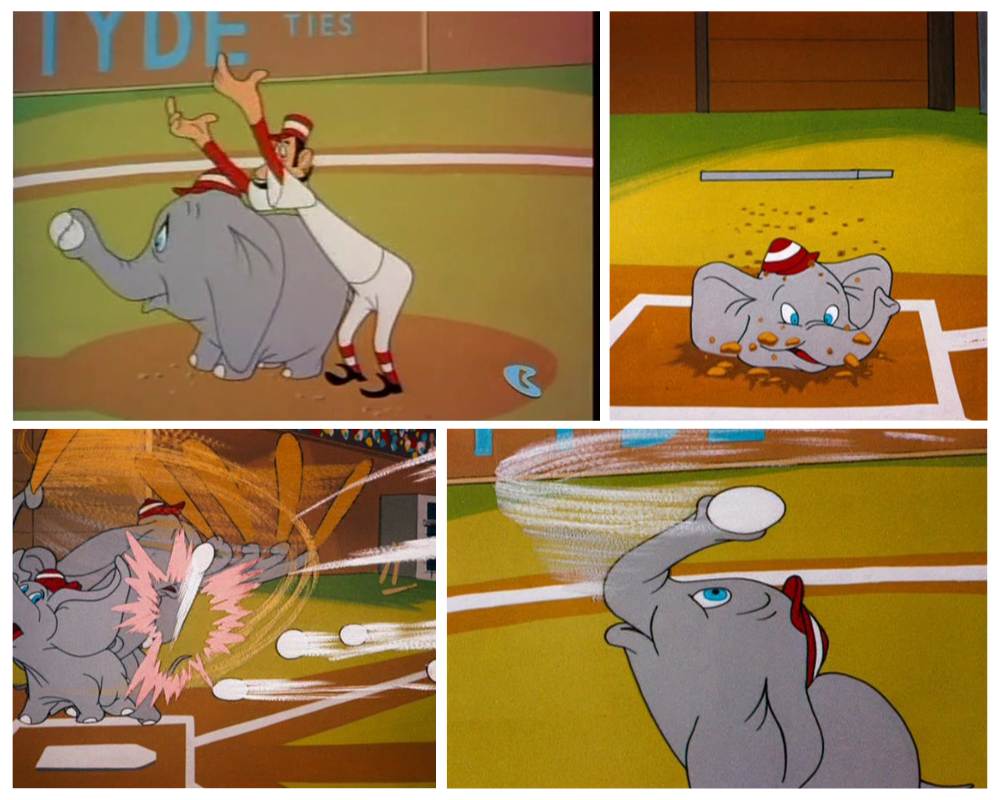
Bobo turns up in Looney Tunes as a mostly silent presence whose design carries the gag on its own. He is a mascot-tier elephant, the kind whose job is to be instantly readable in a single frame.
- Archetype: The Anthropomorphic Authority
- Allegorical weight: the sight gag; identity delivered at a glance.
- Why he made it: a modern-ish elephant that still reads as classic.
Baby Bobo (Mickey’s Elephant)
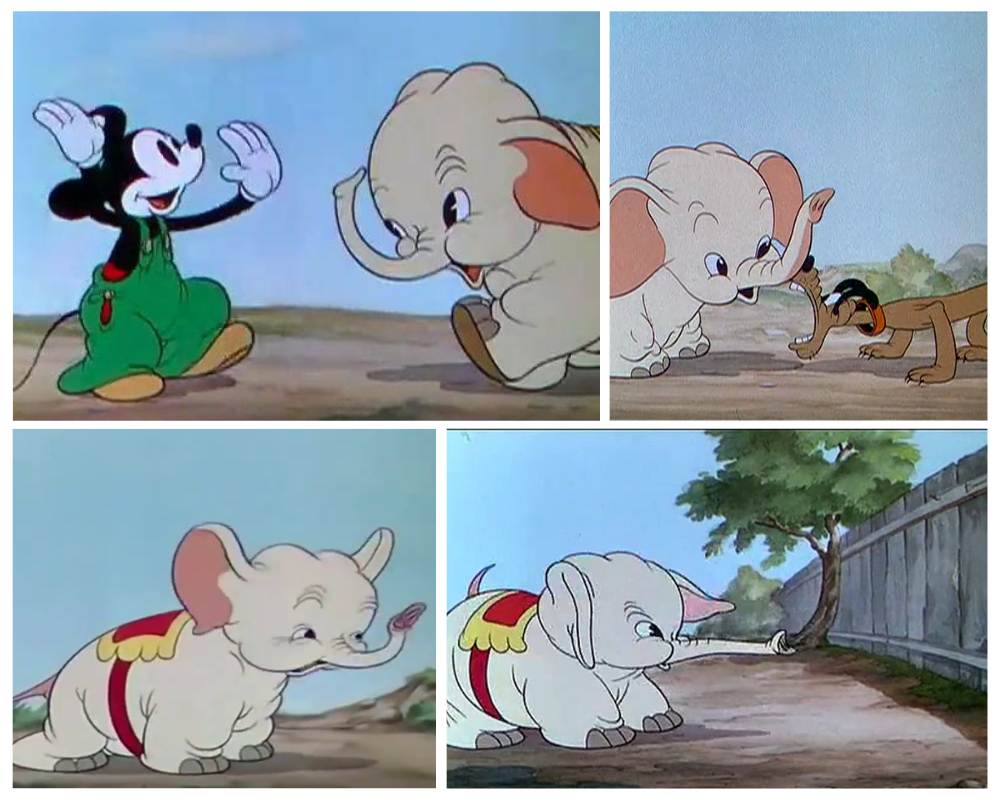
Baby Bobo, from the 1936 short Mickey’s Elephant, is a deep cut where the comedy comes from a small pet elephant causing outsized chaos. It is early Disney animation finding its feet, and Bobo is a charming relic of that era.
- Archetype: The Vulnerable Giant
- Allegorical weight: the small dependent; a giant still learning the world.
- Why he is here: a forgotten piece of Disney elephant history.
Sappy Stanley (Tiny Toon Adventures)
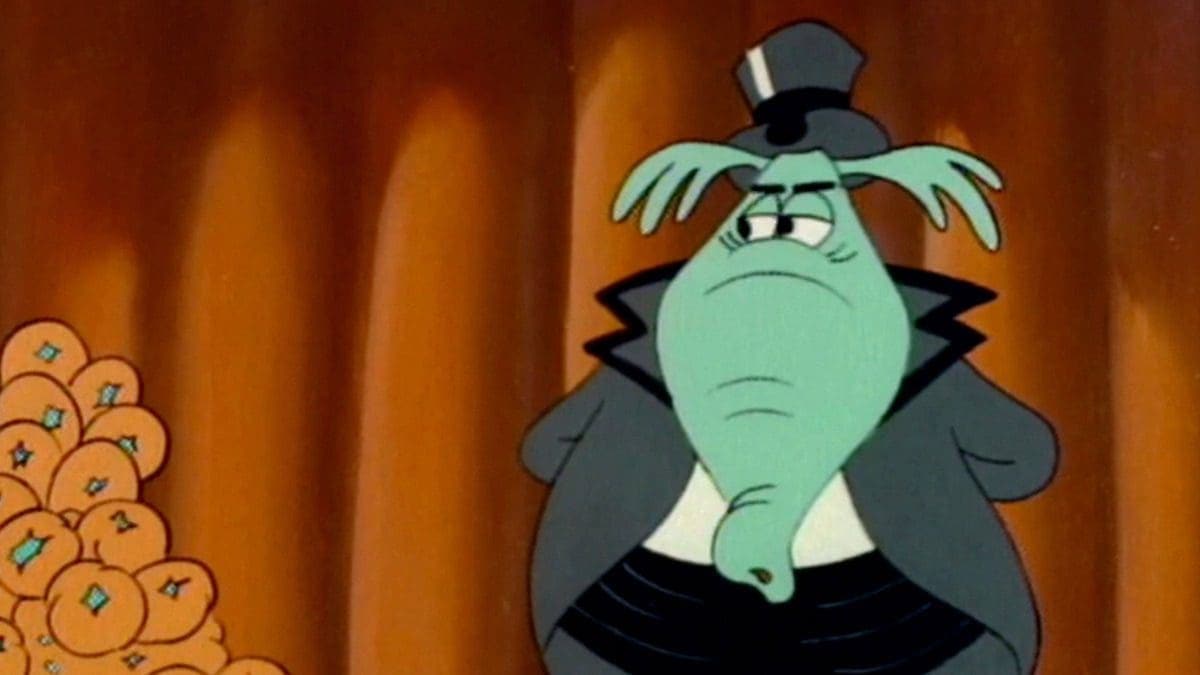
Sappy Stanley appears once in Tiny Toon Adventures and sticks precisely because he is a sentimental parody, an elephant played for maximum emotional excess. One-off characters rarely land this cleanly.
- Archetype: The Vulnerable Giant
- Allegorical weight: sentiment turned into a bit; feeling as the entire joke.
- Why I kept him: one episode was enough to cement him.
Sidney the Elephant (Terrytoons)
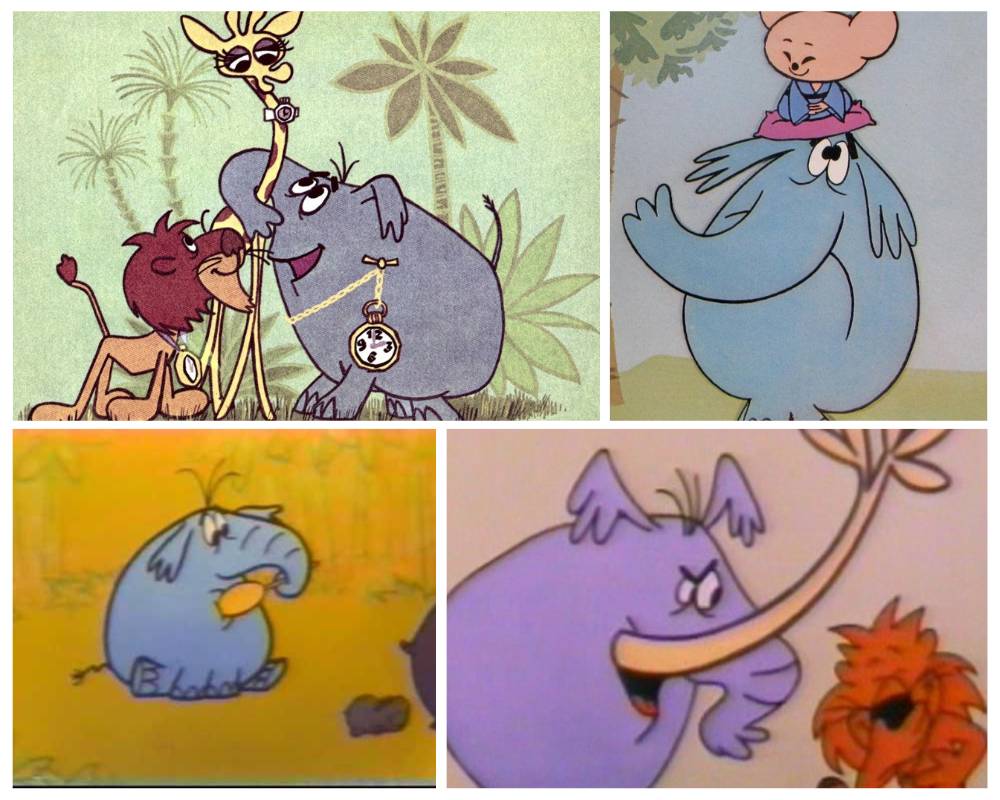
Silly Sidney is a mid-century Terrytoons elephant whose comedy runs on nerves and self-pity, a timid giant who flinches at his own shadow. The design is simple and the era is dated, but the neurotic-elephant template for later elephant cartoon characters starts here.
- Archetype: The Vulnerable Giant
- Allegorical weight: the anxious giant, decades before Tantor made it a genre.
- Why he earns a spot: a vintage time capsule of studio-era comedy.
Nelson the Elephant (64 Zoo Lane)
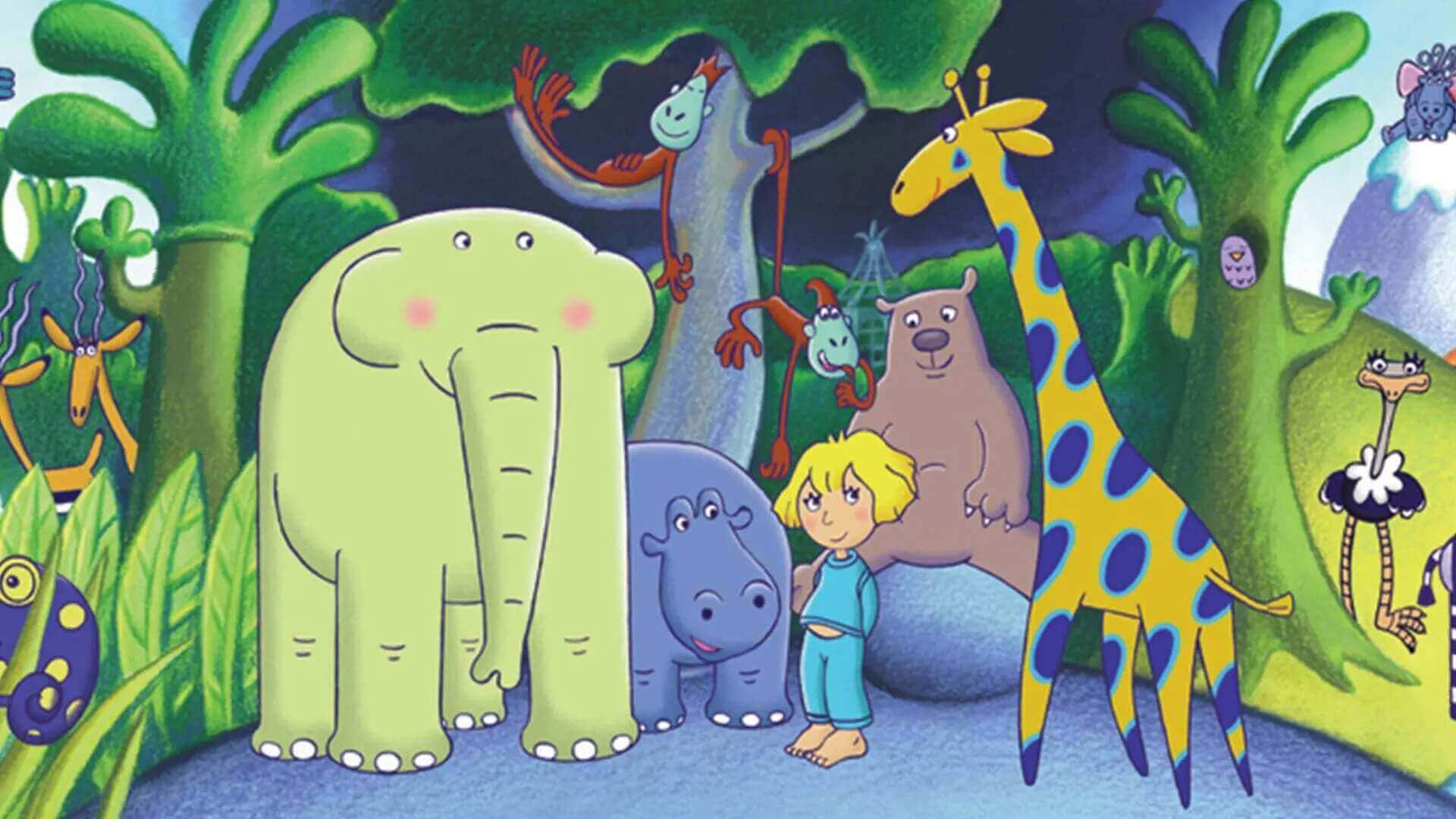
Nelson narrates 64 Zoo Lane as the patient mentor, the steady adult who guides the stories without softening into a pushover. He models a specific brand of authority: warmth with a firm edge when the moment calls for it.
- Archetype: The Sage
- Allegorical weight: the paternal anchor; guidance that still includes the word no.
- Why he holds up: calm until he has to be strict, which feels true to life.
Goliath II
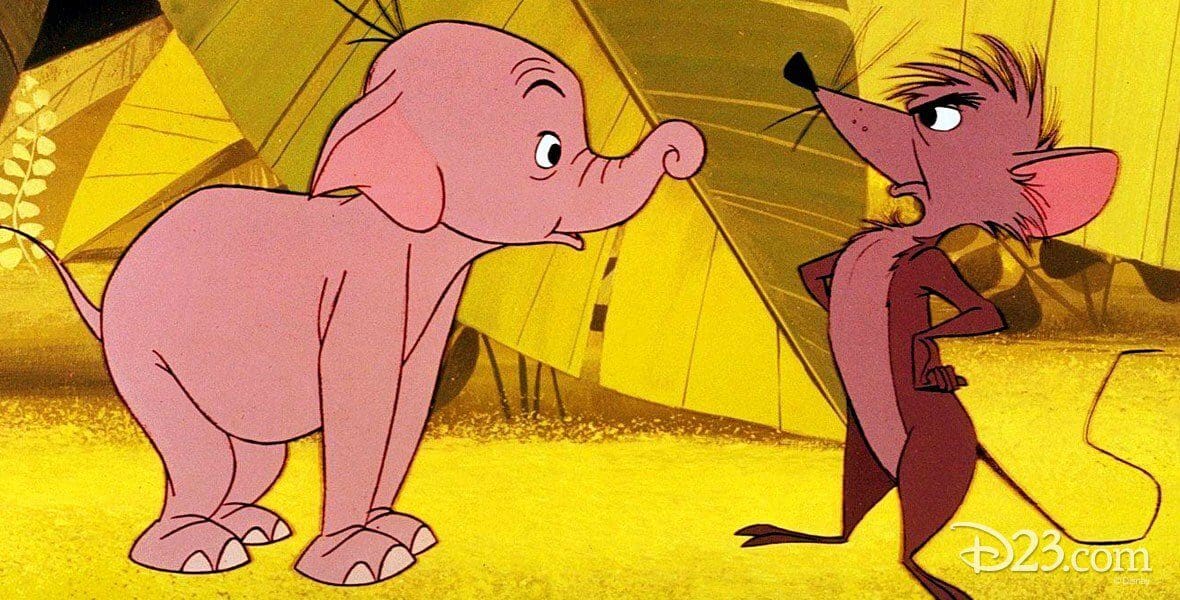
Goliath II flips the giant premise by being the smallest elephant in the herd, a runt in a family built on size. Disney’s short mines its whole arc from a little elephant proving that courage is not measured in tons.
- Archetype: The Vulnerable Giant
- Allegorical weight: the outsider by scale; worth decoupled from size.
- Why he lands: a classic underdog setup with an elephant twist.
Ned the Elephant (Timon & Pumbaa)
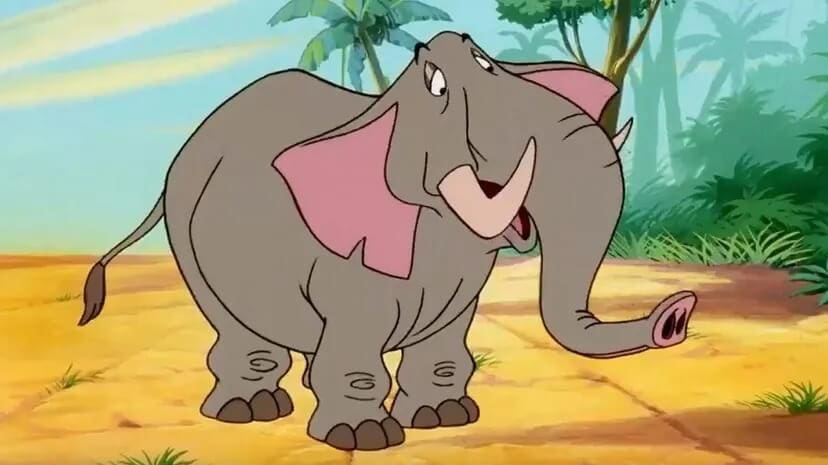
Ned is famous inside Timon and Pumbaa for one reason: he is popular, and Pumbaa wants to be him. That makes him a clean study of the socialite archetype, the elephant whose entire value in the story is status.
- Archetype: The Anthropomorphic Authority
- Allegorical weight: the elephant as social currency; belonging treated as the goal.
- Why he counts: a whole episode hangs on wanting to be him.
Burt the Elephant (Madagascar)
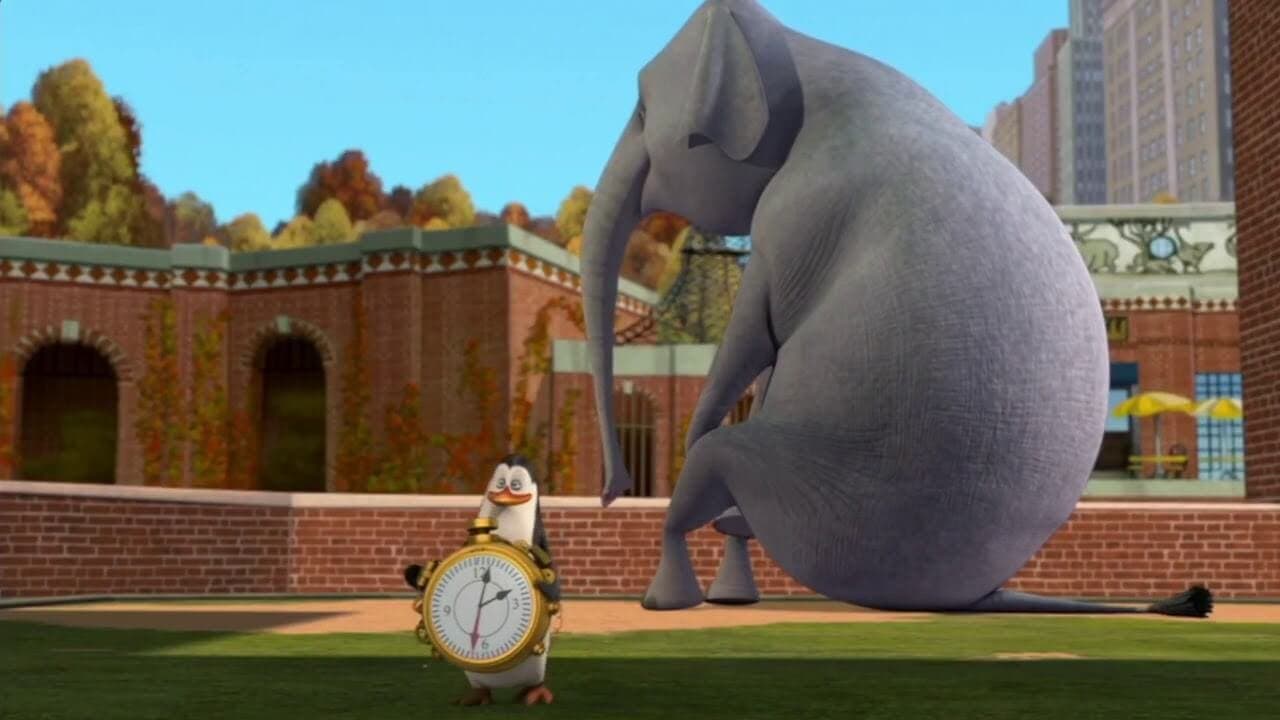
Burt gets minimal Madagascar screen time and still lands the franchise’s sharpest elephant-memory gag, quietly recalling every slight with the patience of something that never forgets. He is a side character built entirely on the one myth everyone knows about elephants.
- Archetype: The Sage
- Allegorical weight: memory as identity; the past filed away and never lost.
- Why he made it: he squeezes a lot of wisdom into small moments.
Benjamin (Benjamin Blümchen)
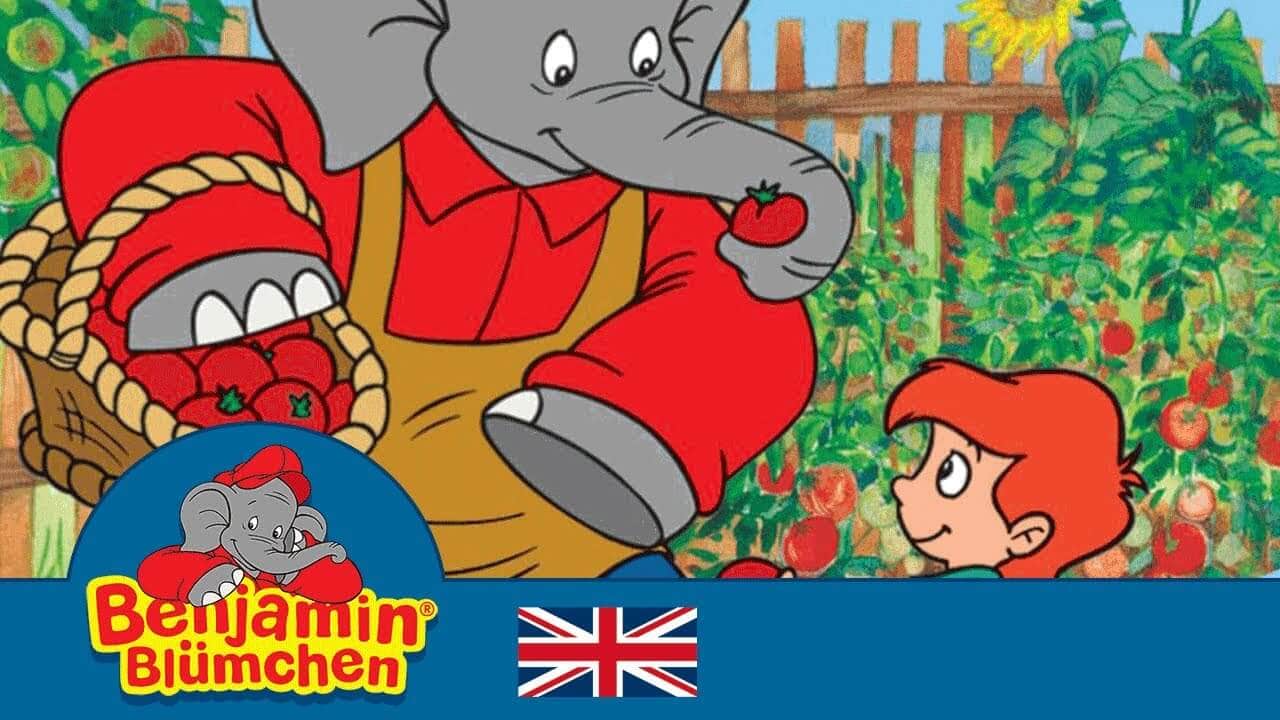
Benjamin Blümchen is a talking zoo elephant who holds down odd jobs across an entire German town, which makes him one of animation’s most fully socialized elephants. Decades of audio dramas and cartoons built him into comfort media for generations of kids in Germany.
- Archetype: The Anthropomorphic Authority
- Allegorical weight: the elephant as neighbor and worker; total integration into human society.
- Why he ranks: a real cultural institution, even if it is regional.
Lotsa Heart Elephant (Care Bears)
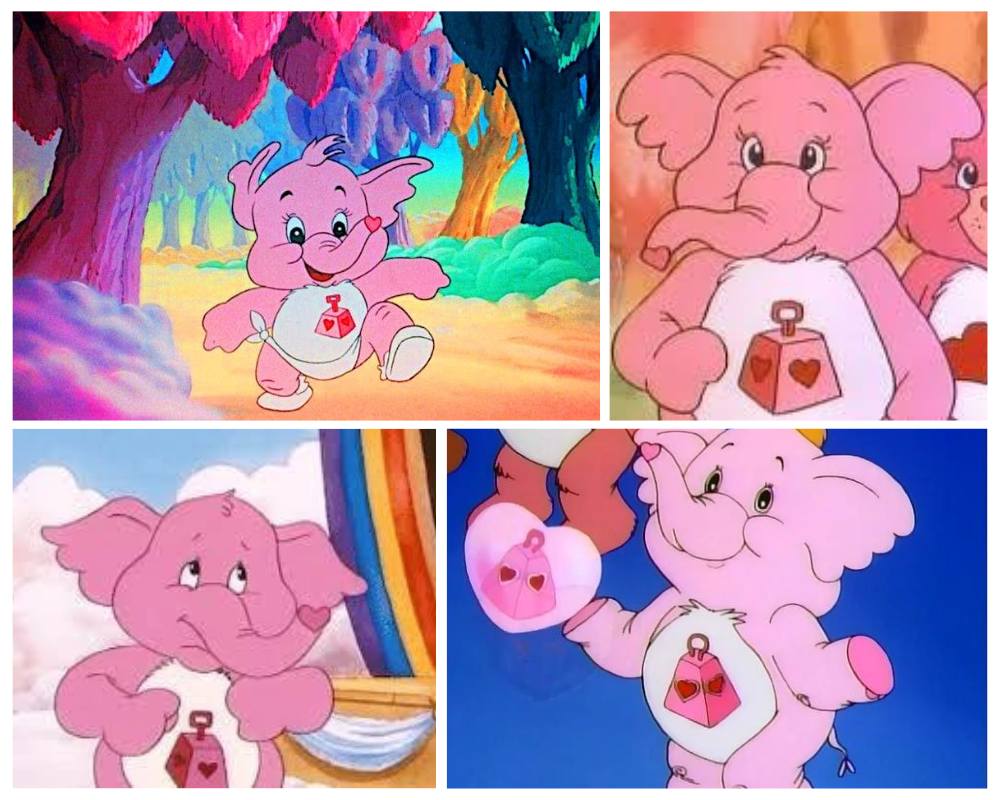
Lotsa Heart Elephant exists to make caring literal, a Care Bear Cousin whose entire function is dispensing affection. The design is sincere to the point of being disarming, and that unembarrassed warmth is why a generation still remembers her alongside the rest of the Care Bears family.
- Archetype: The Sage
- Allegorical weight: emotional wisdom as a civic duty; care as the whole worldview.
- Why she works: she commits to sweetness with zero irony.
Snorky (The Banana Splits)
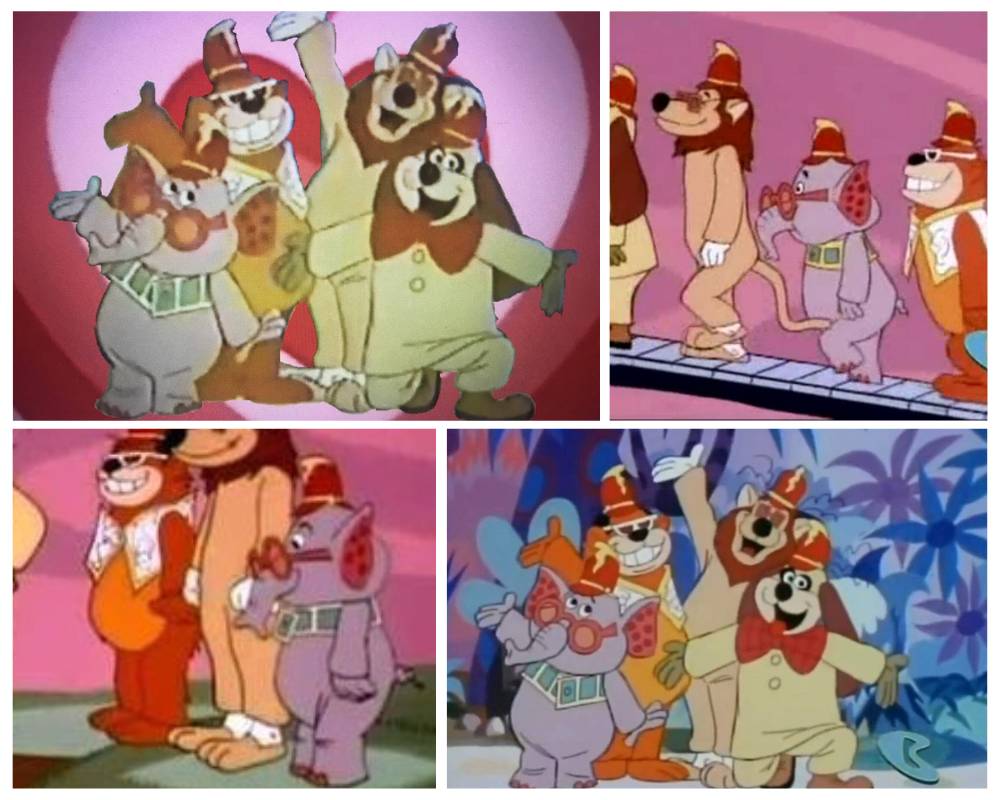
Snorky honks instead of talks, yet he carried the Banana Splits as the quiet member of a loud band. He is the socialite by association, a performer in a troupe whose whole personality comes through in body language. He is a fixture of classic Saturday morning cartoons.
- Archetype: The Anthropomorphic Authority
- Allegorical weight: expression without speech; personality delivered as pure performance.
- Why he endures: the honking communication never gets old.
Elmer the Patchwork Elephant
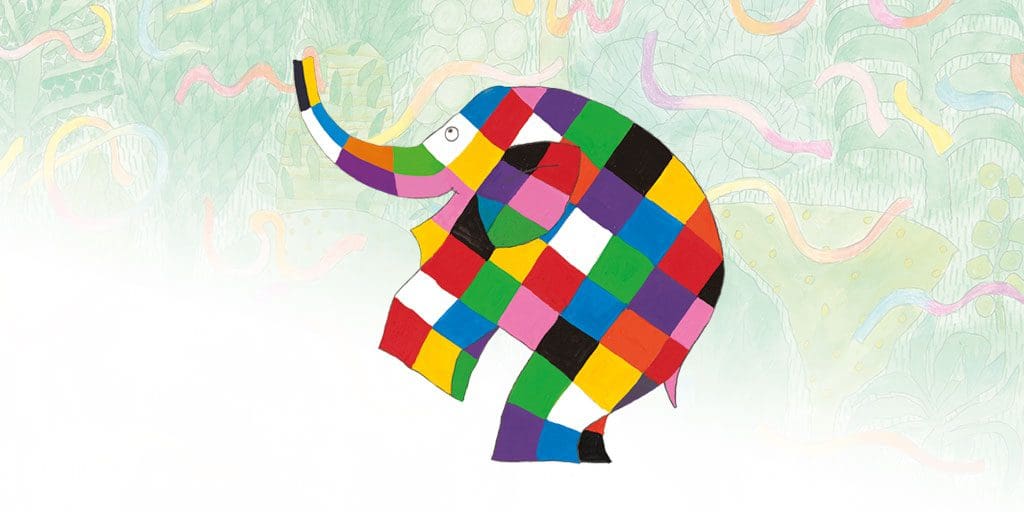
Elmer runs the outsider allegory in the brightest possible palette. His multicolored hide makes him the one who does not match, and the day he paints himself grey to fit in is the day everyone realizes the herd is duller without him, which lands him among the warmest elephant cartoon characters for kids.
- Archetype: The Vulnerable Giant
- Allegorical weight: difference as the point; conformity exposed as the real loss.
- Why he lands: the message arrives without a lecture attached.
Zunesha (One Piece)
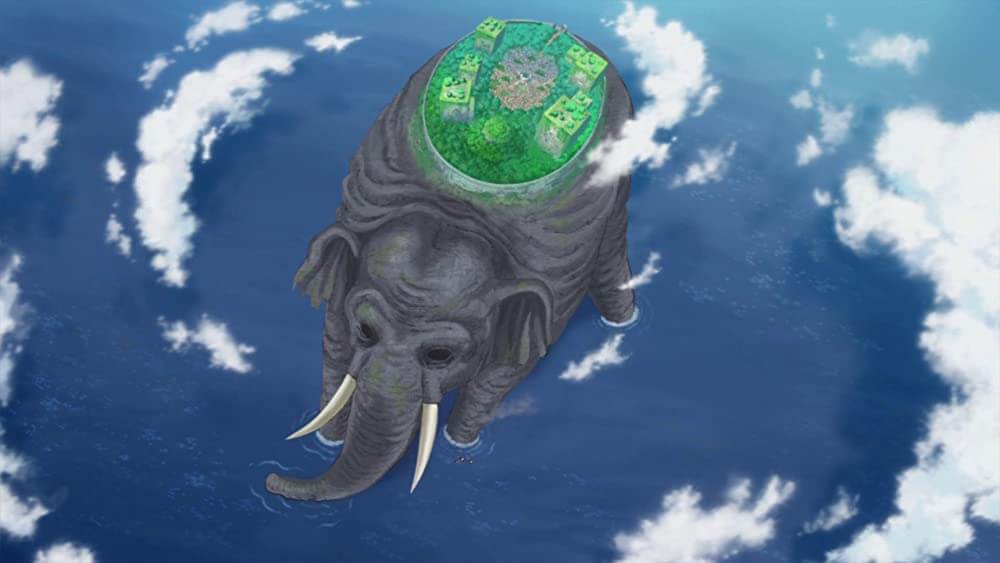
Zunesha is the elephant as living history, a beast so large it carries an entire nation on its back and has walked for a thousand years under the weight of an ancient crime. One Piece uses it as geography, myth, and memory at once, one of the strongest ideas in the whole anime.
- Archetype: The Sage
- Allegorical weight: the literal weight of the past; punishment and endurance on a mythic scale.
- Why it belongs: an elephant reimagined as a walking landmark.
Emily Elephant (Peppa Pig)
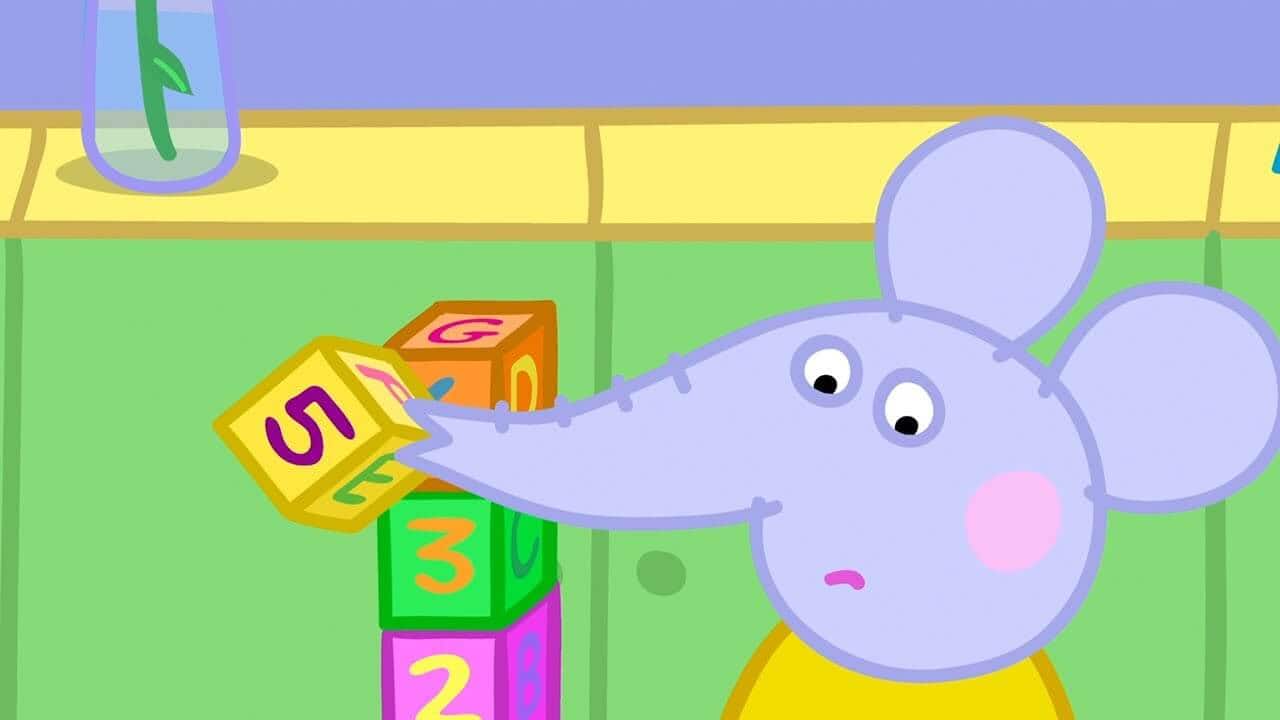
Emily is Peppa Pig’s gentlest outsider, shy on arrival and slowly drawn out by the group. For a preschool show she models something real: the quiet kid is not broken, just warming up on her own schedule.
- Archetype: The Vulnerable Giant
- Allegorical weight: the timid newcomer; sensitivity treated as normal rather than a flaw.
- Why she counts: she is a realistic new-friend character for young viewers.
Mrs. Jumbo (Dumbo)
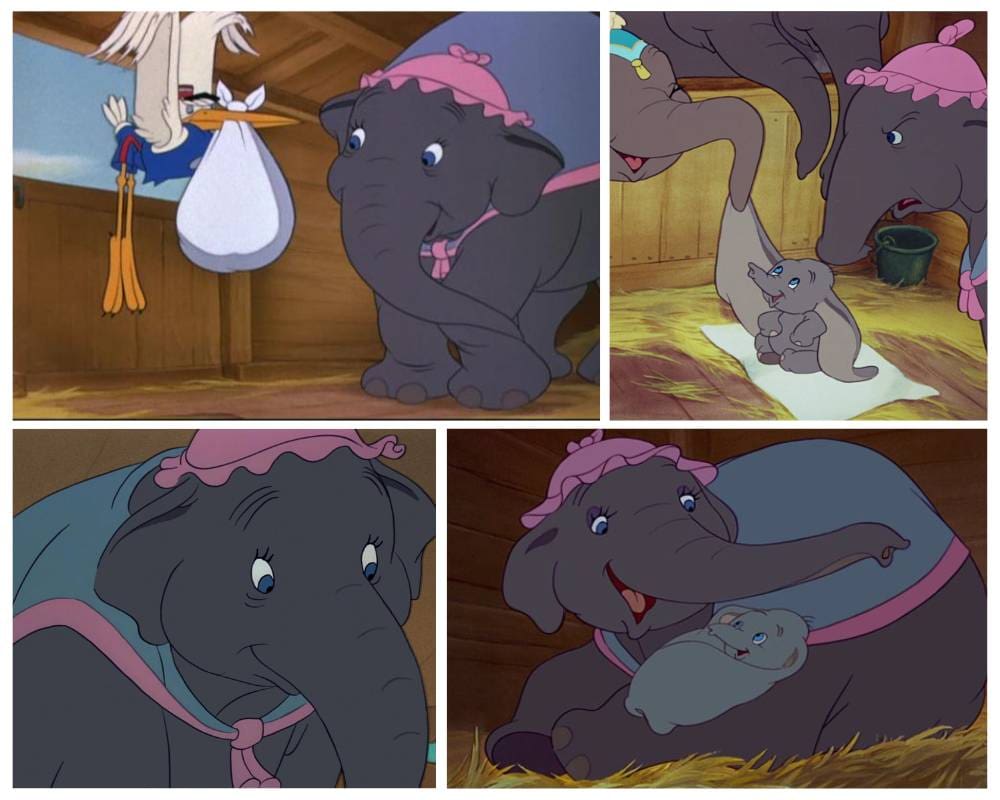
Mrs. Jumbo barely appears, yet she anchors Dumbo’s emotional core as pure maternal force. Her one act of defiance, protecting her child from bullies, gets her chained as mad, and the “Baby Mine” sequence remains one of Disney’s most devastating uses of a parent.
- Archetype: The Sage
- Allegorical weight: maternal stability as the story’s moral center, even from a locked cage.
- Why she lingers: that lullaby scene is one of animation’s great gut-punches.
Lumpy (Pooh’s Heffalump Movie)
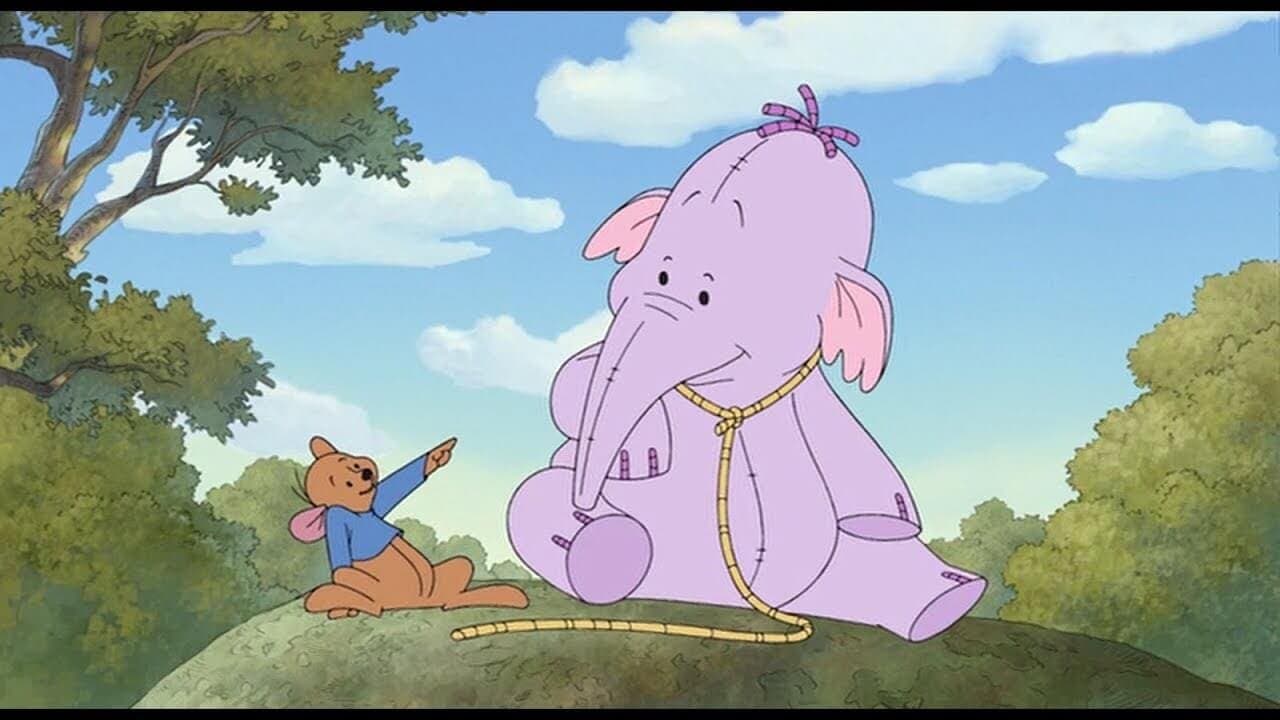
Lumpy takes the Hundred Acre Wood’s scariest legend, the Heffalump, and reveals it as a lonely kid who wants a friend. Pooh’s Heffalump Movie runs its entire message through him: the thing you are taught to fear is usually just misunderstood.
- Archetype: The Vulnerable Giant
- Allegorical weight: the feared outsider; prejudice dissolved the moment you meet him.
- Why he matters: he turns fear into friendship, a clean lesson for kids.
Nangi (Zootopia)
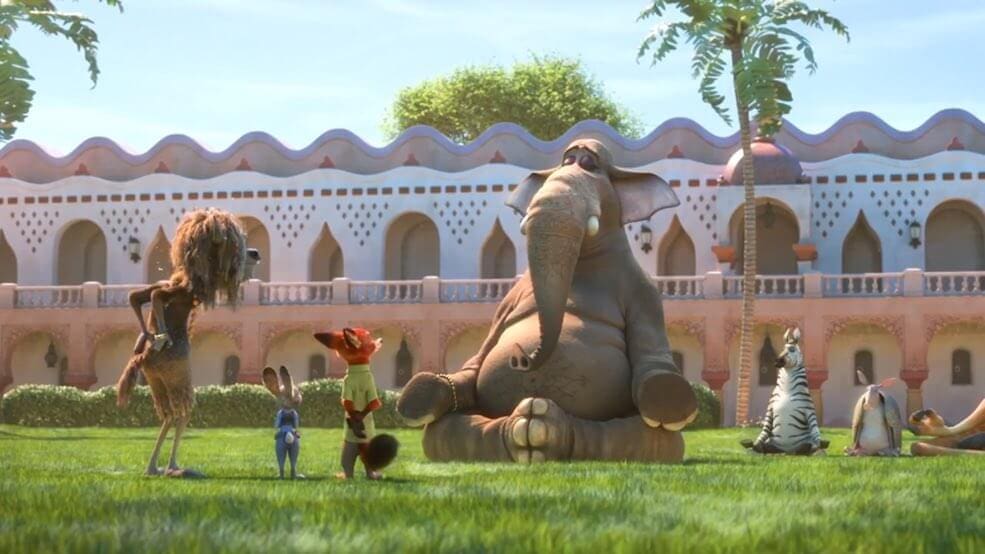
Nangi is on screen for seconds, yet the unimpressed yoga elephant became one of Zootopia’s most quoted background gags. She represents the fully integrated civic elephant, a working professional in a mammal metropolis who would rather be anywhere else. She is one of the small roles that make Zootopia feel lived-in.
- Archetype: The Anthropomorphic Authority
- Allegorical weight: the elephant as ordinary citizen; world-building through sheer apathy.
- Why she sticks: a huge personality squeezed into a tiny role.
Colonel Hathi (The Jungle Book)
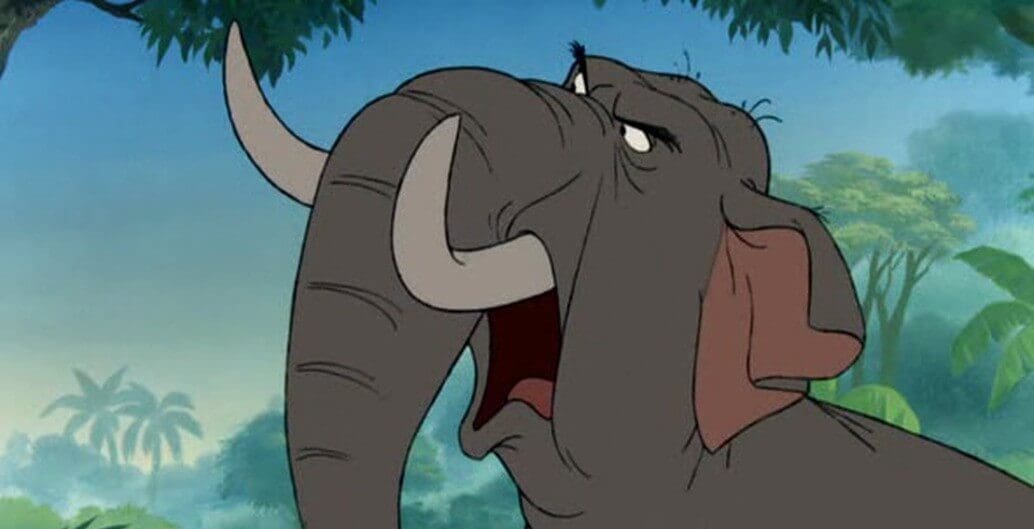
Colonel Hathi runs the jungle like a parade ground, and the joke is that his authority is entirely self-appointed. The Jungle Book uses him as a pompous patriarch whose dawn patrol accomplishes nothing, a sharp little satire of military self-importance wrapped in a Disney elephant.
- Archetype: The Anthropomorphic Authority
- Allegorical weight: authority as performance; the uniform matters more than the mission.
- Why he works: he takes himself seriously so the audience does not have to.
Meena (Sing)
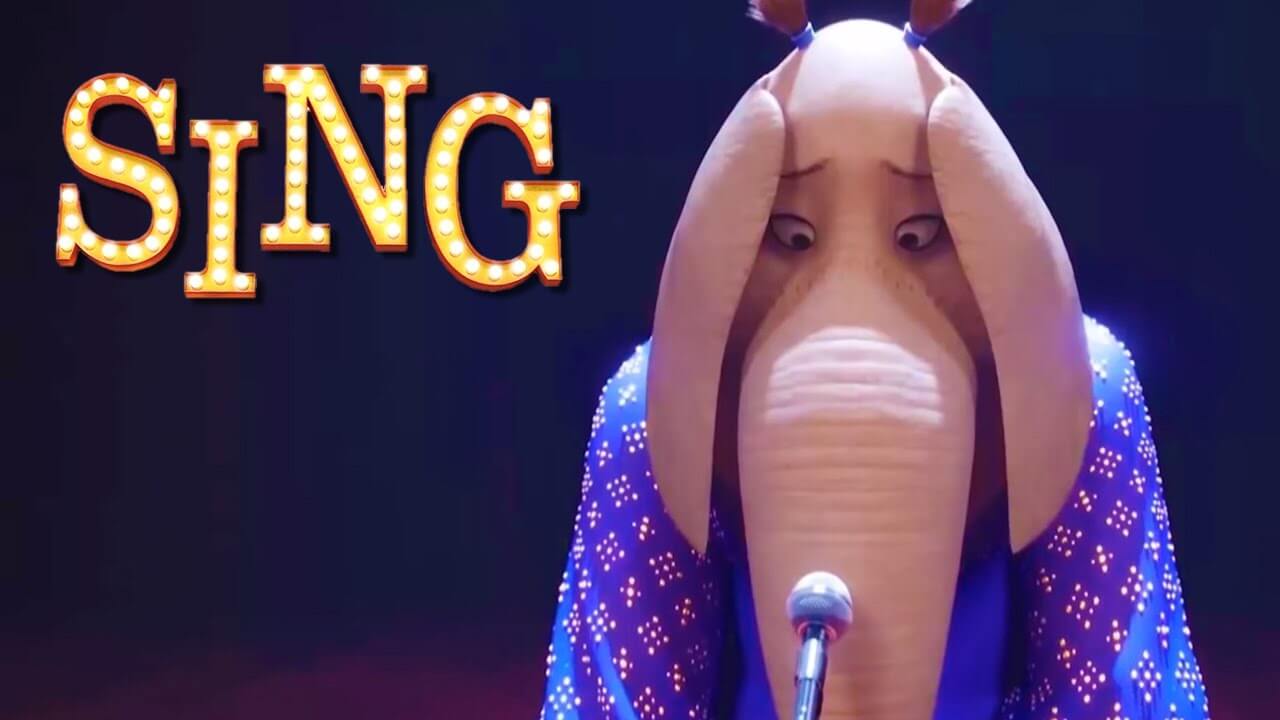
Meena is the modern Dumbo and the rare recent elephant cartoon character to headline a hit film, a teenage elephant with a powerhouse voice trapped behind crippling stage fright. Sing frames her whole arc around the gap between what she can do and what fear lets her do, and the payoff when she finally sings is built entirely on that tension.
- Archetype: The Vulnerable Giant
- Allegorical weight: the sensitive giant; talent throttled by self-doubt until it is not.
- Why she resonates: her confidence arc feels earned instead of handed to her.
Tantor (Disney’s Tarzan)
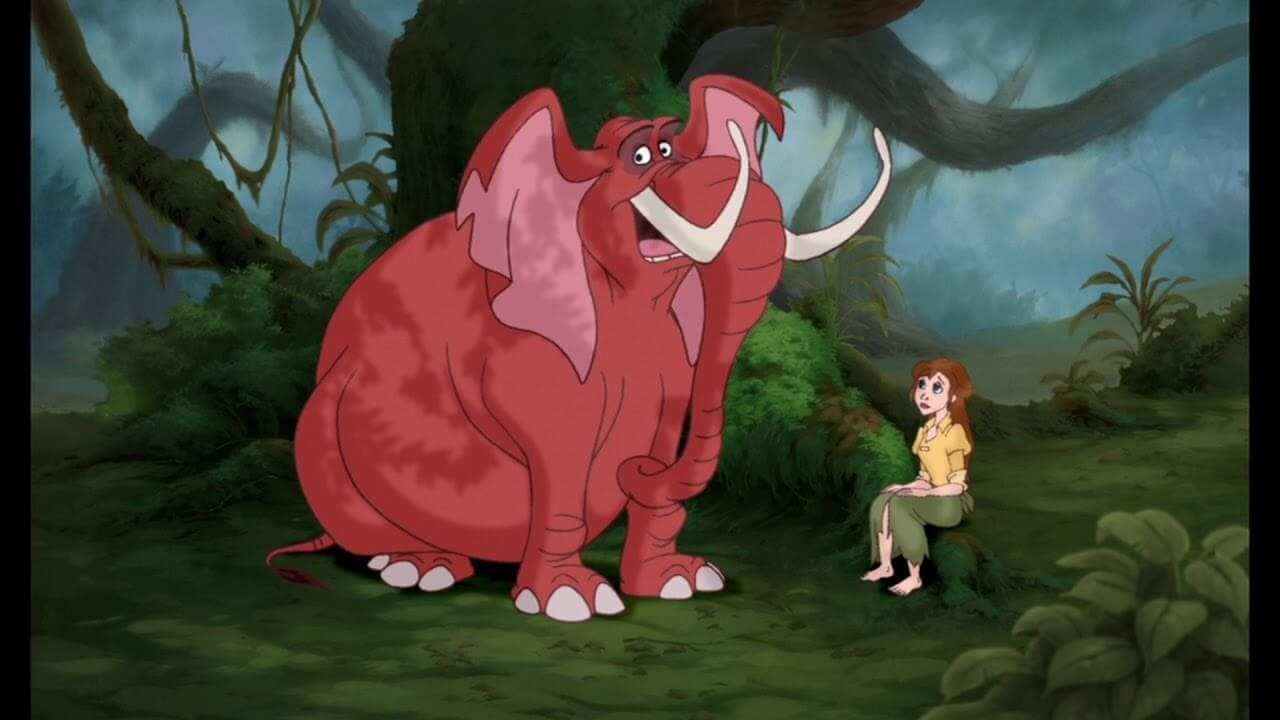
Tantor inverts the gentle giant by making the largest creature in the jungle the most anxious. Disney’s Tarzan gets its sharpest comic timing from an elephant convinced every stray ripple hides a piranha, and that neurosis is what makes him a favorite Disney elephant cartoon character rather than an imposing one.
- Archetype: The Vulnerable Giant
- Allegorical weight: size as comedy; strength undercut by a nervous system that never relaxes.
- My read: the anxiety is the character, and it works every time.
Babar
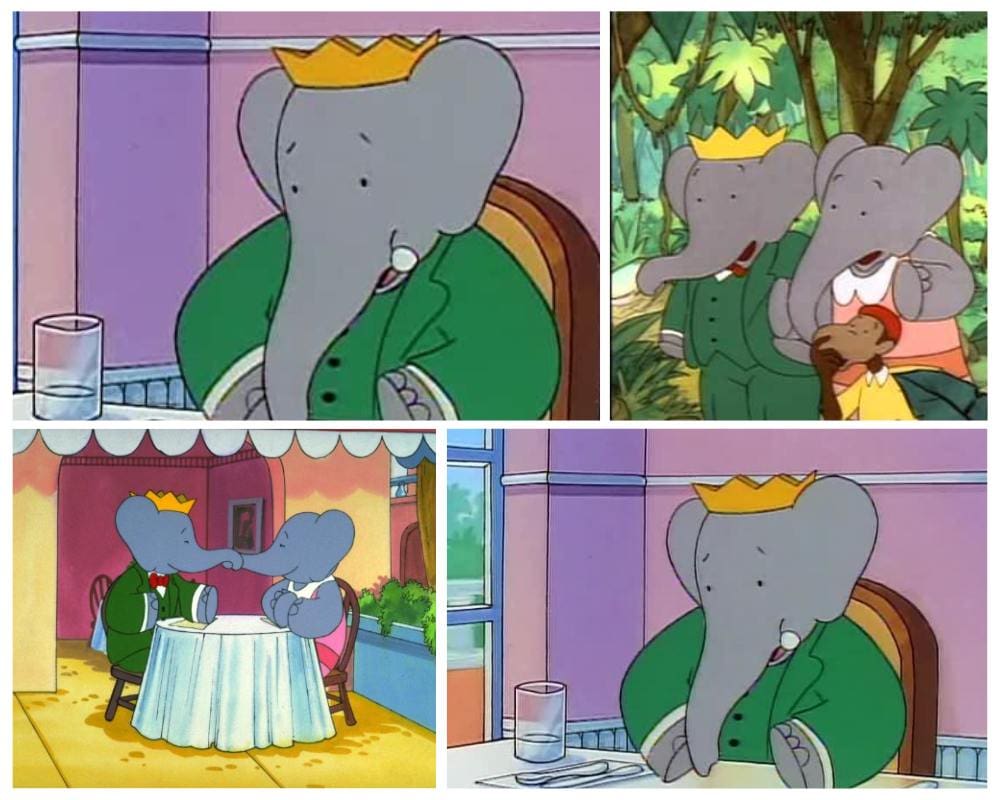
Babar is the original anthropomorphic authority, an orphaned calf who puts on a suit, builds Celesteville, and rules it with a gentleness that defined the archetype. Before Disney standardized the talking-animal kingdom, Babar was already modeling the civilized elephant, crown and all.
- Archetype: The Anthropomorphic Authority
- Allegorical weight: the elephant as head of state; dignity and governance in proboscidean form.
- Why he is royalty here: he wrote the rulebook for the dignified elephant cartoon character.
Horton the Elephant (Horton Hears a Who!)
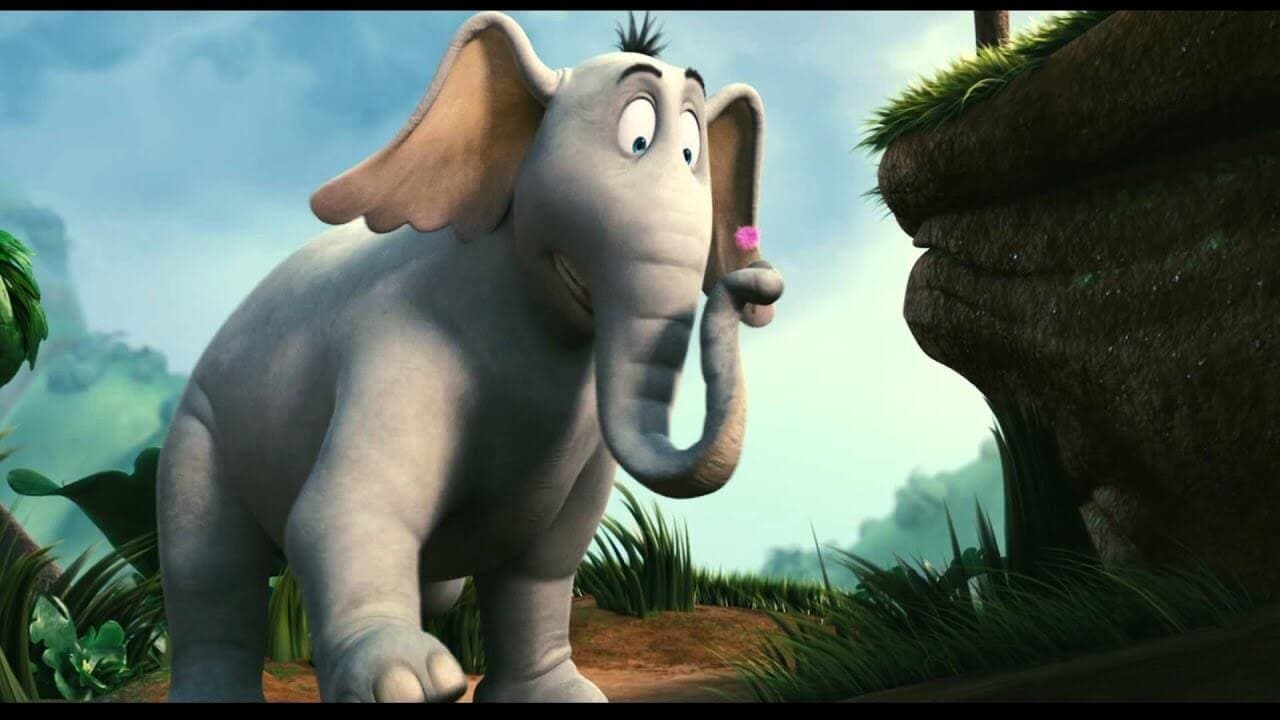
Horton turns a simple premise, a person is a person no matter how small, into stubborn moral gravity. Dr. Seuss built him as the conscience of the jungle, ridiculed for hearing what no one else will, and two feature films kept one of the most beloved elephant cartoon characters in front of new generations. His story is at heart an argument about conviction.
- Archetype: The Sage
- Allegorical weight: the moral anchor; his faithfulness is the whole point of the story.
- Why he endures: he makes kindness read as strength, not softness.
Manny (Ice Age)
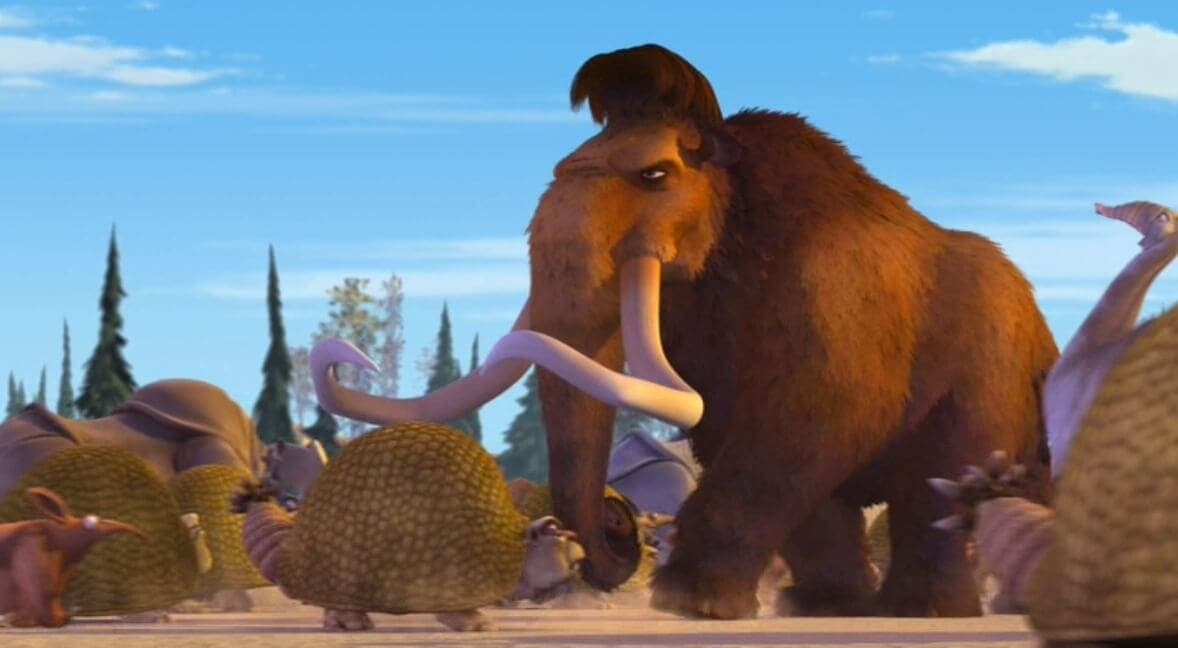
Manny spends the Ice Age films carrying the weight of a family he lost, which is exactly what makes his slow thaw into the herd’s father figure land.
He is a mammoth rather than a modern elephant, but he surfaces in every elephant-cartoon-character search anyway, and his grief-to-guardian arc is one of the sturdiest in family animation.
- Archetype: The Sage
- Allegorical weight: the past made physical; every choice is shadowed by what he is afraid to lose again.
- Why he ranks this high: the franchise reach is enormous and the emotional core is real.
Dumbo
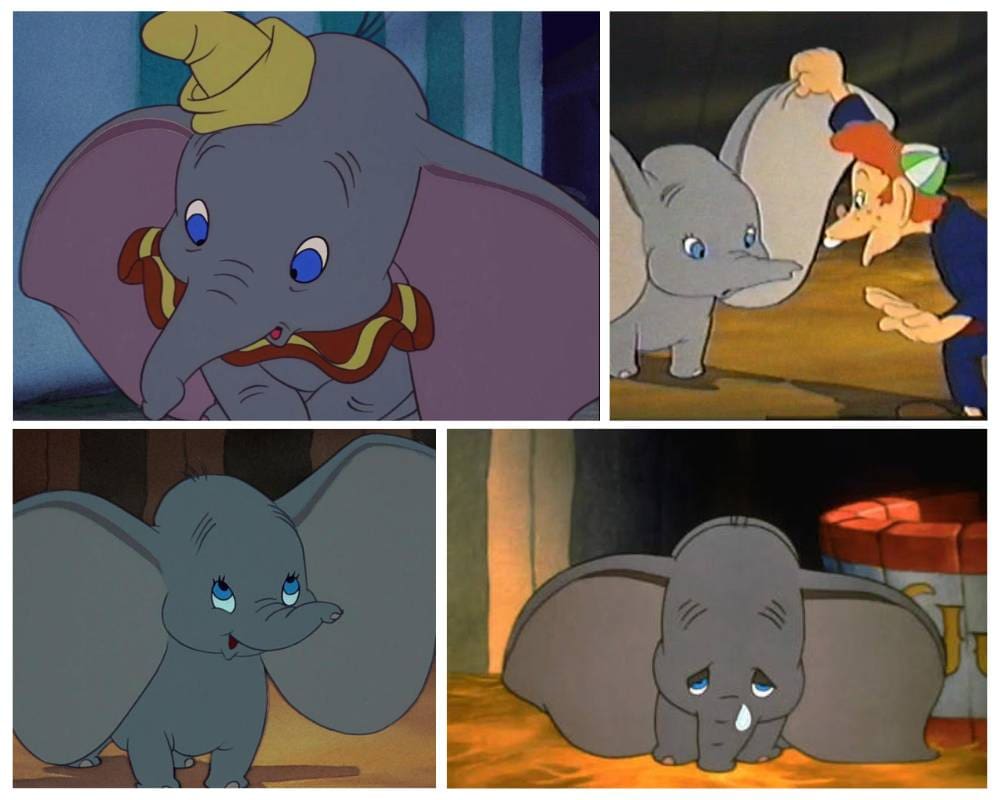
Dumbo is the blueprint. Every vulnerable-giant elephant that followed borrows from a mute baby whose oversized ears turn from a punchline into the thing that sets him free.
The circus mocks what makes him different until difference becomes flight, and that single arc is why he still tops any list of elephant cartoon characters with big ears more than eighty years on. You can trace the whole archetype back to his 1941 debut.
- Archetype: The Vulnerable Giant
- Allegorical weight: carries the entire “difference is a superpower” allegory on his ears.
- Why he is number one: no other cartoon elephant is this culturally load-bearing.
The Heaviest Hitters, In Short
Popularity crowns Dumbo, Manny, and Horton, but the category rewards range: Babar for dignity, Tantor for comedy, Zunesha for sheer mythic scale, and the Mammoth Calf for a quiet gut-punch.
The elephant cartoon characters that endure are the ones doing the most work under the surface, which is what makes the gentle giant such a durable animation archetype.
- Which elephant cartoon character carries the most weight for you, a heavyweight icon like Dumbo or a deep cut nobody expects?
- Drop your pick in the comments. The best cases might headline the next update.
THE DISNEY CLASSICS & MOVIE STARS 🐘🎪
1. Dumbo (Dumbo – The flying elephant)
2. Mrs. Jumbo (Dumbo – Dumbo’s protective mother)
3. Tantor (Tarzan – The neurotic, germaphobe red elephant)
4. Colonel Hathi (The Jungle Book – Leader of the Dawn Patrol)
5. Hathi Jr. (The Jungle Book – “Hup, two, three, four!”)
6. Winifred (The Jungle Book – Hathi’s wife)
7. Lumpy / Heffridge Trumpler Brompet Heffalump IV (Pooh’s Heffalump Movie)
8. Mrs. Heffalump (Winnie the Pooh)
9. The Heffalumps (Winnie the Pooh – The nightmare honey thieves)
10. Horton (Horton Hears a Who! – The faithful protector)
11. Meena (Sing – The shy singer with a powerful voice)
12. Nana Noodleman (Sing – The diva grandmother)
13. Jerry Jumbeaux Jr. (Zootopia – Owner of the ice cream shop)
14. Nangi (Zootopia – The yoga instructor)
15. Bing Bong (Inside Out – Part cat/dolphin, but mostly Elephant)
16. Goliath II (Goliath II – The tiny elephant Disney short)
17. Elmer Elephant (Silly Symphony)
18. Dolores (The Big Wash – Goofy’s elephant)
TELEVISION FAVORITES (WESTERN CARTOONS) 📺🥜
19. Babar (Babar – King of the Elephants)
20. Celeste (Babar – Queen)
21. Pom, Flora, Alexander, Isabelle (Babar – The children)
22. Basil (Babar – The advisor)
23. Raj (Camp Lazlo – The neat freak Indian elephant)
24. Tree Trunks (Adventure Time – The sweet, apple-pie-baking miniature elephant)
25. Ancient Psychic Tandem War Elephant (Adventure Time – Finn’s beast)
26. Stampy (The Simpsons – Bart’s “Ivory Dealer” prize)
27. Shep (George of the Jungle – An elephant who thinks he is a dog)
28. Lotsa Heart Elephant (Care Bears – The pink cousin)
29. Woolma (Top Cat – The lovestruck elephant)
30. Undercover Elephant (CB Bears / Hanna-Barbera)
31. Sidney the Elephant (Terrytoons)
32. Eloise (Popeye – The elephant he babysits)
33. Snorky (The Banana Splits – Live action suit, but animated in spinoffs)
34. Oscar (Summer Camp Island)
35. Bo (Garfield and Friends)
36. Harry (Stanley – The pet elephant)
37. Burt (The Penguins of Madagascar)
MAMMOTHS & PREHISTORIC PACHYDERMS ❄️🦣
38. Manny / Manfred (Ice Age – The grumpy dad mammoth)
39. Ellie (Ice Age – The opossum-raised mammoth)
40. Peaches (Ice Age – Manny and Ellie’s daughter)
41. Julian (Ice Age – Peaches’ husband)
42. Mammoth Mutt (Krypto the Superdog – Alien dog that inflates)
43. Snuffleupagus (Sesame Street – Animated segments; Mammoth-like)
44. Mamoswine (Pokémon – Woolly Mammoth)
45. Great Tusk (Pokémon – Ancient Paradox Donphan/Mammoth)
46. Woolly (The Croods – The massive mount)
ANIME ELEPHANTS & MONSTERS 🎌🥘
47. Zunesha (One Piece – The colossal elephant carrying the island of Zou)
48. Funkfreed (One Piece – Spandam’s sword that “ate” the Elephant Fruit)
49. Jack the Drought (One Piece – Beast Pirates, turns into a Mammoth)
50. Baba (One Piece – Smile user with an elephant coming out of his chest)
51. Phanpy (Pokémon – The little blue elephant)
52. Donphan (Pokémon – The tire-rolling elephant)
53. Cufant (Pokémon – Steel type)
54. Copperajah (Pokémon – Giant steel elephant)
55. Iron Treads (Pokémon – Future robot elephant)
56. Pamela (Dragon Ball – Fighter in the 22nd Tenkaichi Budokai)
57. Ganesha (DanMachi / Is It Wrong to Try to Pick Up Girls in a Dungeon? – Elephant mask god)
58. Pao (Dragon Ball – One of the villagers)
59. Elephantmon (Digimon)
60. Mammothmon (Digimon)
61. SkullMammothmon (Digimon)
62. Binzuma (Hunter x Hunter – Chimera Ant with elephant features)
VIDEO GAME & BOOK ADAPTATIONS 🎮📚
63. CJ (Animal Crossing Movie – The blue lazy elephant)
64. Margie (Animal Crossing Movie)
65. Axel (Animal Crossing)
66. Eloise (Animal Crossing)
67. Taj the Genie (Diddy Kong Racing – Elephant genie)
68. Yono (Yono and the Celestial Elephants)
69. Tembo (Tembo the Badass Elephant)
70. Waddle Dee (Kirby – Wait, no. **Phan Phan** is the elephant enemy in Kirby)