There is a specific kind of dread that only a natural disaster anime can pull off. No final boss. No chosen one with a glowing sword. Just ordinary people, an ordinary morning, and then the ground moves.
I love this genre because it drops the fantasy and asks a simpler question.
What would you really do? Where would you run, and who would you try to reach before the phones go dead?
Every pick below is a real disaster of the natural world: earthquakes, tsunamis, a typhoon, an erupting volcano, and rain that will not stop.
I ranked them from solid to unmissable, counting up to my favorite.
Only have one night?
Start with Tokyo Magnitude 8.0 for something grounded and human, or Japan Sinks: 2020 if you want relentless. Both sit at the top of this list for a reason.
The Best Natural Disaster Anime
These are the titles I keep coming back to when I want the ground to feel a little less steady. Here is my ranked list, counting up to my favorite.
Typhoon Noruda – Typhoon
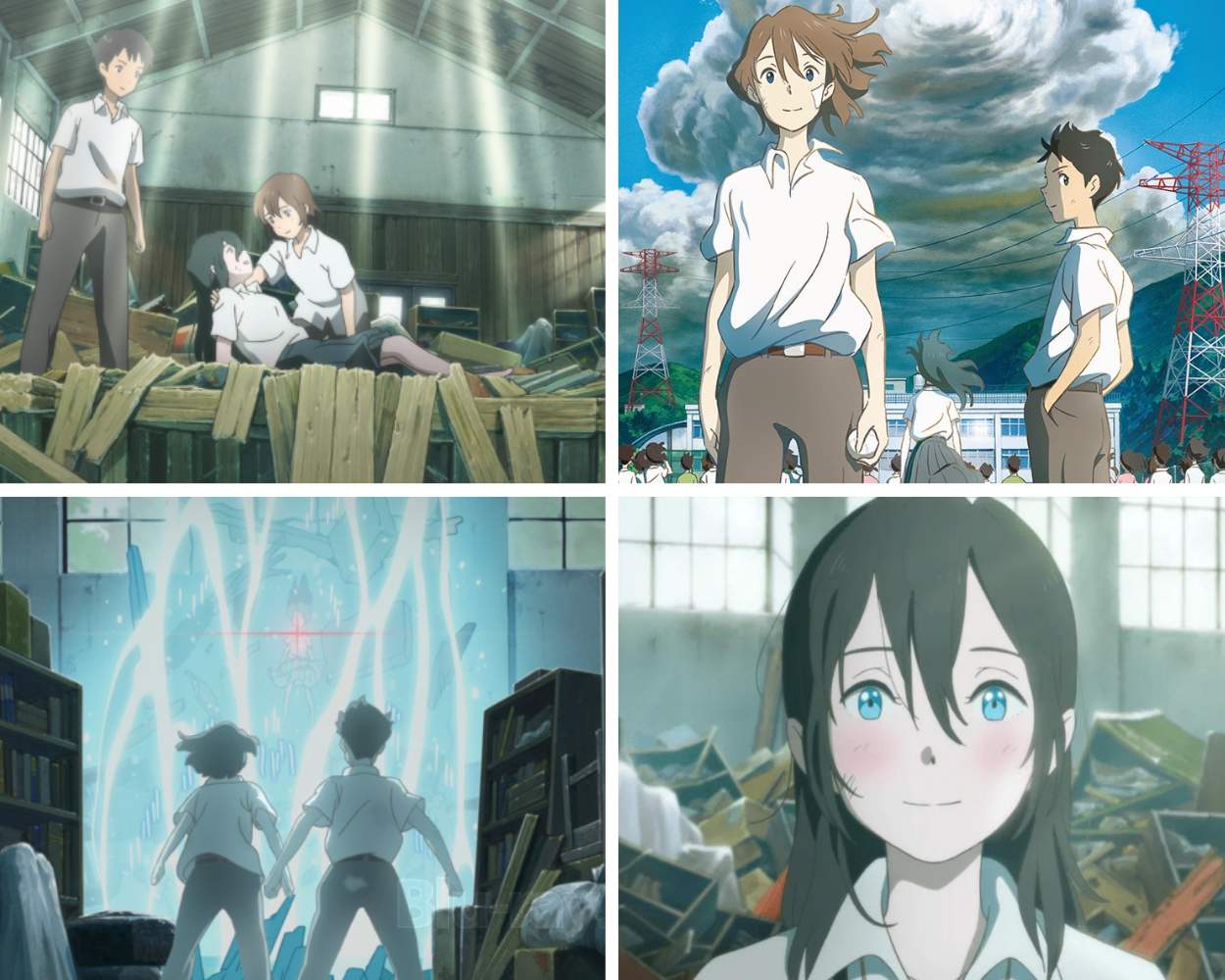
This is a 27-minute short from Studio Colorido, and it moves like a compressed feature film. A typhoon closes in on a small island school right before the culture festival, and the students end up riding it out inside the building.
The lead is Shuichi Azuma, a kid who just quit baseball and picked a fight with his best friend Saijo. Then a red-eyed girl named Noruda appears in the middle of the storm, and it turns out she is tied to it.
Do not expect deep answers, because the runtime is too short for that. What you get is gorgeous rain animation and a small story about patching up a friendship while the sky falls apart.
Watch it for:
- Some of the best storm and water animation in any short.
- A quick, low-commitment mood piece under half an hour.
A Spirit of the Sun – Earthquakes and Eruption
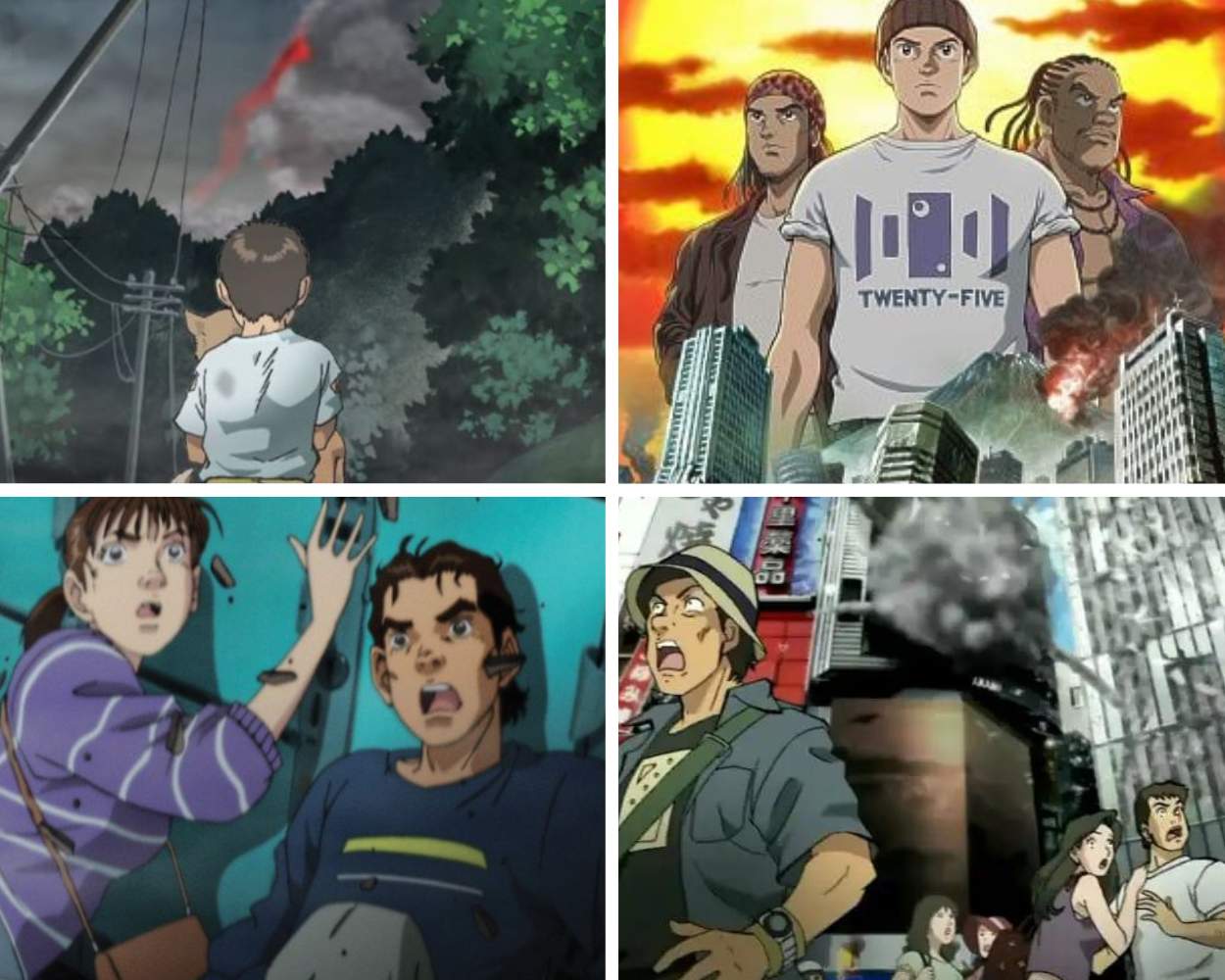
In 2002, a chain of massive earthquakes, a tsunami, and the eruption of Mount Fuji tears Japan in half and kills tens of millions. A boy named Genichiro Ryu survives the collapse and is raised in Taiwan.
Fifteen years later, Japan is split between US and Chinese control, and refugees are scattered across Asia. What begins as a disaster movie turns into a tense political drama about immigration, blame, and rebuilding.
This 2006 Madhouse special is underseen and a little rough around the edges. Even so, that opening half hour of Japan coming apart is unforgettable, and it earns its place as a grounded natural disaster anime built on real quake fears.
Why it is worth digging up:
- The opening disaster sequence is relentless and hard to shake.
- A rare anime that treats a quake as a political turning point.
Weathering With You – Endless Rain
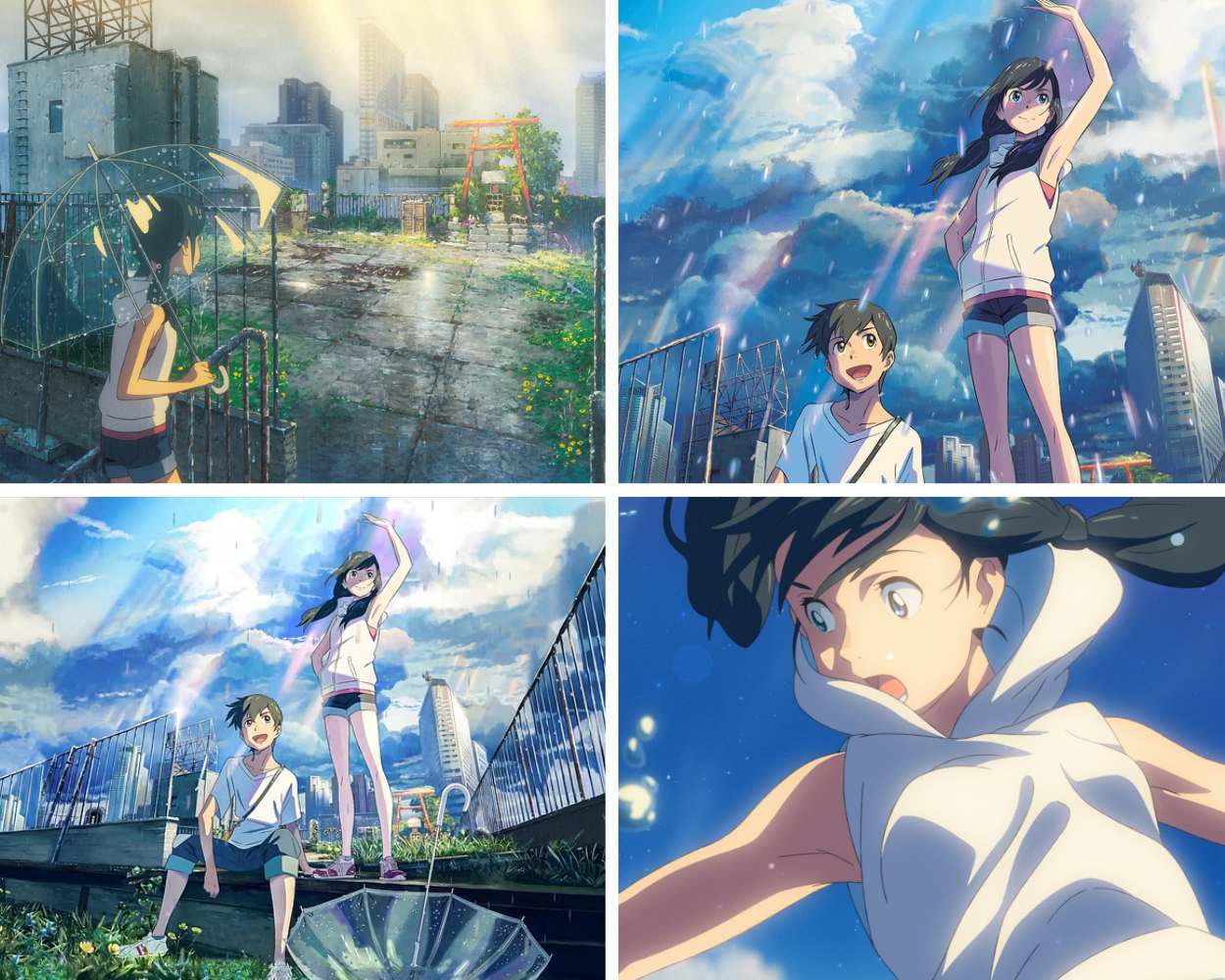
Makoto Shinkai basically owns the modern weather-disaster movie, and this is his rain film. Hodaka runs away to a Tokyo that will not stop raining, and meets Hina, a girl with a supernatural knack for clearing the sky just by praying.
The catch is that her power comes at a price, and the film quietly becomes a story about climate, sacrifice, and choosing one person over the whole world.
It is gorgeous. The rain looks better than rain has any right to look. If Your Name wrecked you, treat this as the companion piece.
What I liked:
- The flooded-Tokyo imagery, which lands harder every year.
- A climate metaphor that never gets preachy.
- Shinkai’s usual jaw-dropping backgrounds.
Tokyo Magnitude 8.0 – Earthquake
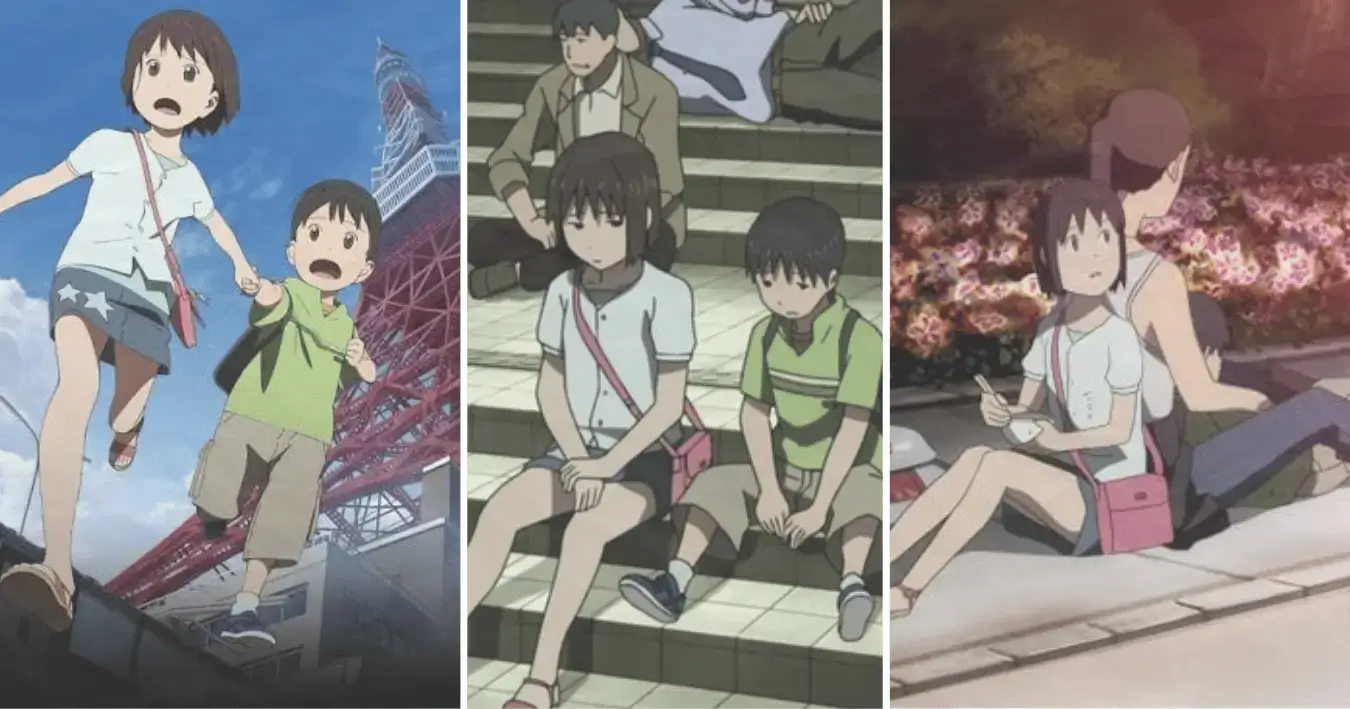
This is the one I recommend first when someone wants a real natural disaster anime. No monsters, no powers, just a magnitude 8.0 earthquake that levels Tokyo during summer break.
Mirai is a bored, sulky middle-schooler visiting an exhibition with her little brother Yuuki when it hits. The rest of the series is the long, frightening walk home to find their mom.
It gets the details right. The aftershocks, the rumors, the strangers who help, the ones who do not. And it builds to an emotional gut-punch late in the series that I will not spoil here.
Why it is my number two:
- Grounded and realistic from the first tremor.
- A sibling story that sneaks up on you.
- An ending that reframes the entire show.
Japan Sinks: 2020 – Earthquake and Tsunami
My number one, and the most relentless natural disaster anime on this list. Based on Sakyo Komatsu’s classic novel and directed by Masaaki Yuasa, it follows the Mutou family as a chain of earthquakes and tsunamis begins to literally sink Japan into the sea.
This one does not let up. The moment you think the family is safe, the ground opens again. It is messy, raw, and sometimes divisive, but nothing else here made me feel the sheer randomness of a disaster this hard.
Watch the trailer above, then brace yourself.
Why it takes the top spot:
- Unflinching about who survives and who does not.
- The Mutou family feels like real, flawed people.
- Yuasa’s loose, kinetic animation makes the chaos land.
Why Natural Disaster Anime Hits So Hard
Here is what I think separates the best natural disaster anime from the average Hollywood disaster blockbuster.
Western disaster films usually treat the catastrophe as spectacle.
A wave, a fault line, a hero who punches the problem.
Japanese animation tends to treat disaster as memory instead.
This is a country shaped by real earthquakes and tsunamis, so these shows lean into collective grief, social inequality, and the small acts of care that hold people together when everything else fails. Call it the disaster of civilization. The real subject is not the wave, it is what the wave reveals about us.
There is also a reason these intense stories feel weirdly comforting.
Watching a crisis from your couch hands your brain the adrenaline of danger inside a safe environment. Psychologists call the payoff excitation transfer. The fear spikes, then resolves, and you are left with relief instead of panic.
That is also why so many of these shows pivot to healing once the shaking stops. The story becomes about friendship, food, small kindnesses, and rebuilding.
Those iyashikei, or healing, beats are doing real work. They let you set down the anxiety the disaster stirred up.
So if these stories pull you in, you are not being morbid.
You are rehearsing resilience from the safest seat in the house, and then getting to walk away.