
The scariest horror anime monsters do not win with size or teeth. They win by getting into your head and refusing to leave.
I have watched a lot of horror anime, the loud and gory kind and the quiet, psychological kind, and the creatures that stay with me all share one thing: they exploit a specific human vulnerability, whether that is body horror, the uncanny valley, or plain existential dread.
Most “scariest monster” lists reach for the same giants: the Titans, the Shinigami, whatever Junji Ito drew last.
Those are famous, not necessarily the scariest. The seven horror anime monsters below are the ones that burrow deeper, a few of them deep cuts you will not find on the bigger sites, ranked by how badly each one frightens.
Fair warning: this gets into violence, body horror, and some very dark themes.
What Makes an Anime Monster Truly Frightening
After years of this, I have found that the monsters who linger all pull one of the same four levers. It is never really about the gore:
- Unpredictability. You cannot power up and punch your way out. The rules belong to the monster, not to you.
- Body horror. Anything that takes what a human body is supposed to be and breaks it.
- Dread. It wins with fear and inevitability, not muscle.
- Helplessness. A victim, a town, or a whole system with no exit.
Each monster below gets a Terror Audit: what kind of fear it deals, the uncanny trigger that makes it work, the moment it earns its reputation, and what it quietly says about us.
The Scariest Horror Anime Monsters, Ranked
Tiyanak – Trese
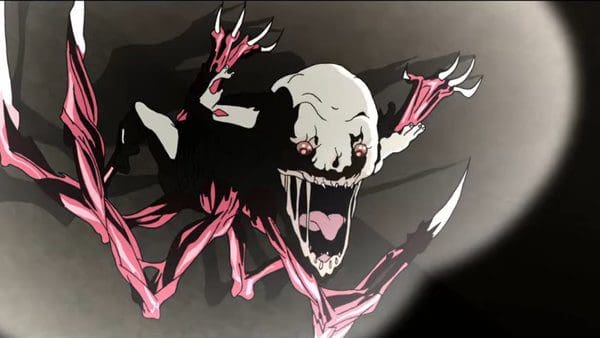
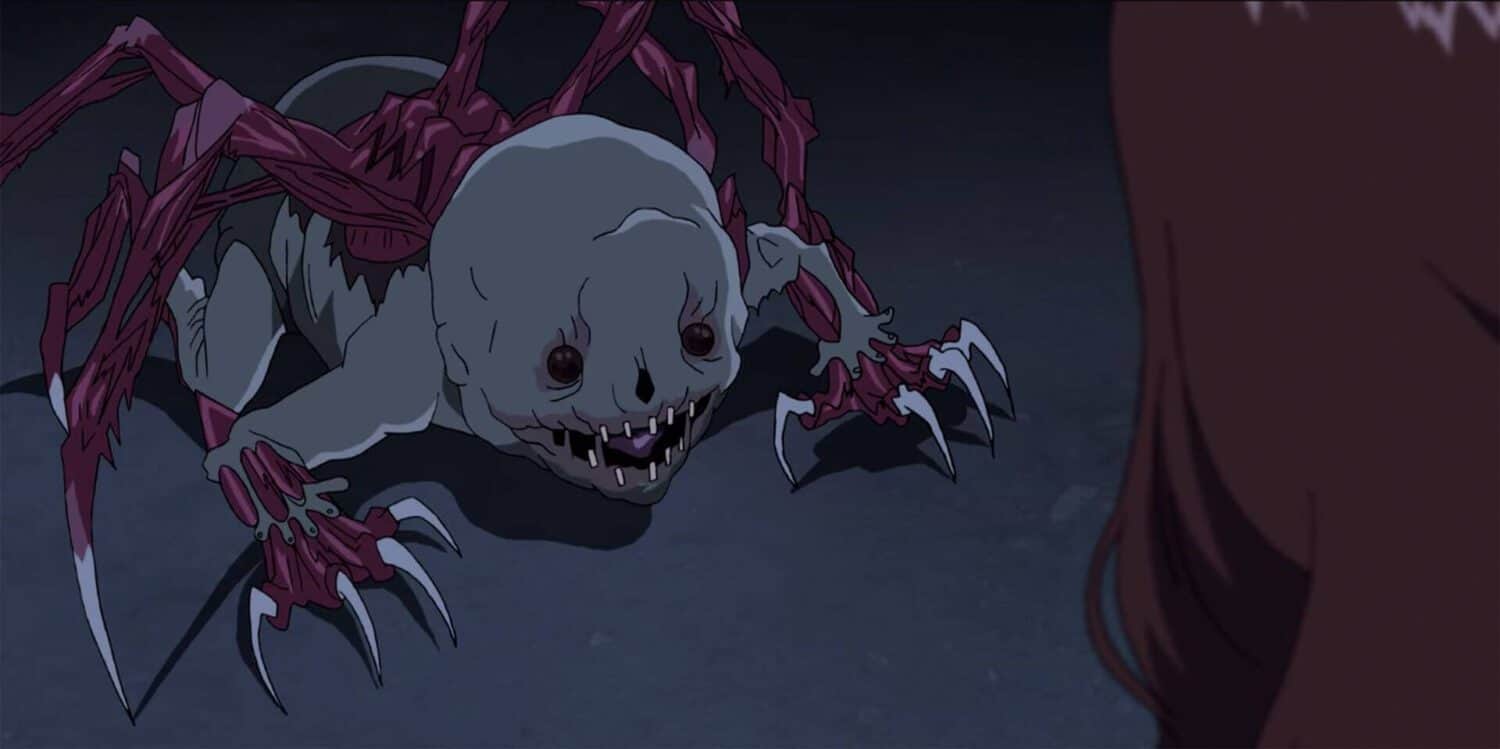
Tiyanak is terrifying because it weaponizes empathy. Pulled straight from Philippine folklore, it takes the form of a crying infant abandoned in the wild, and it feeds on exactly the people decent enough to stop and help.
Trese hands it a tragic backstory that makes it sadder without making it any less lethal, and that pairing, pity and threat in one small body, is what lodges it in your memory.
It is scariest not for the damage it does but for the instinct it turns against you.
Uncanny trigger: mimicry, it imitates a helpless crying baby to lure the compassionate
Defining moment: the Trese case that uncovers its tragic, vengeful origin
Humanity mirror: the instinct to protect a crying child is the exact instinct it turns into bait
Bunny Elder Bairn – Blood-C
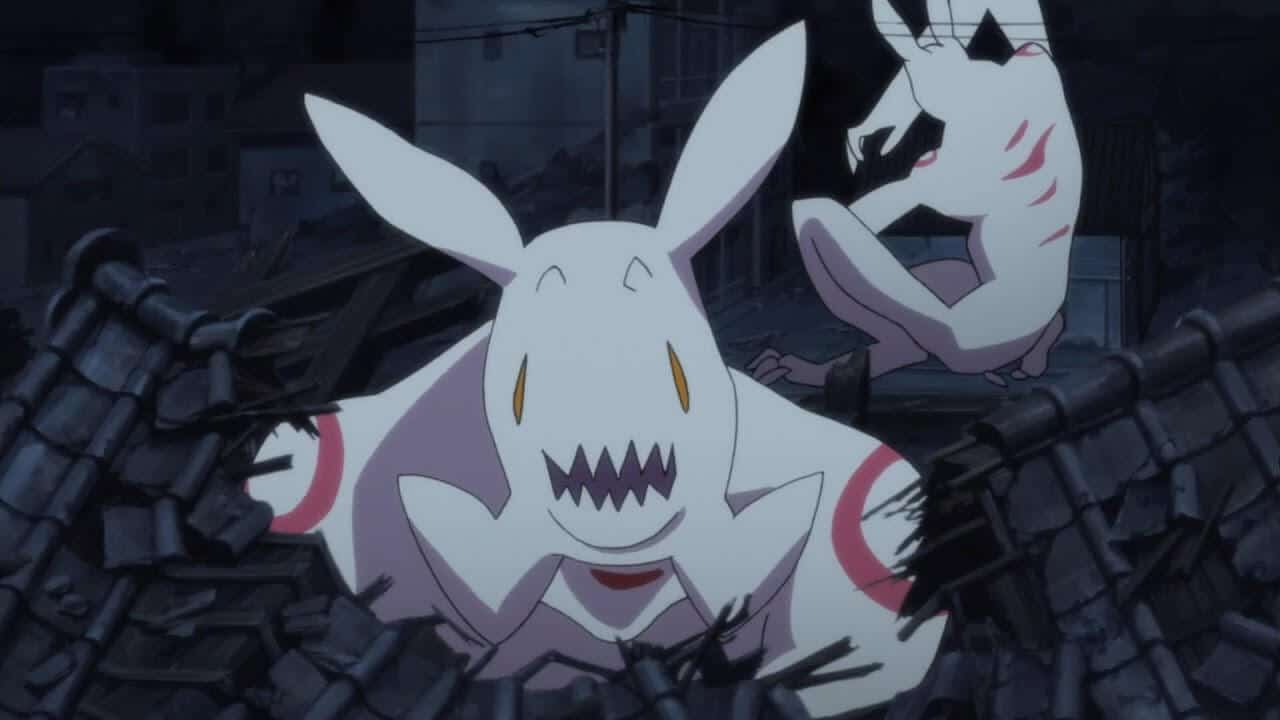
The Bunny Elder Bairn is a masterclass in design bait-and-switch. It looks like a tall, white, red-striped rabbit, all soft ears and little gold eyes, right up until its limbs unfold into razors, bludgeons, and something the show stages as a living meat grinder.
Released in the finale of Blood-C, a swarm of them devours an entire town in minutes.
The horror is the mismatch: nothing disarms you faster, or kills you faster, than a monster shaped like something harmless.
Uncanny trigger: a cute rabbit whose arms reshape into blades and grinders
Defining moment: the Blood-C finale, when the bunnies multiply and massacre Saya’s town
Humanity mirror: we are wired to trust soft, round, familiar shapes, and that trust is the trap
Neuronist Painkill – Overlord
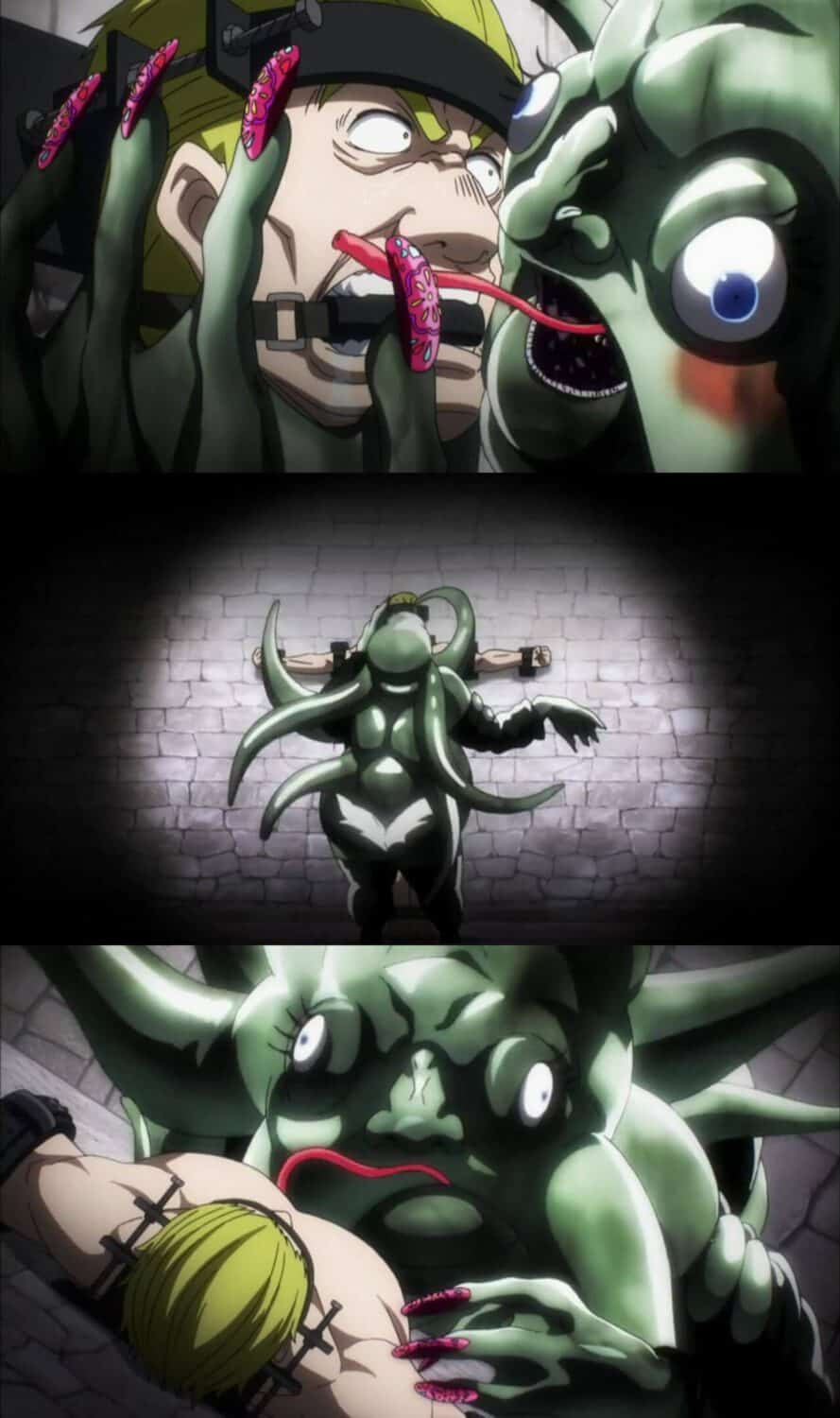
Neuronist Painkill is what happens when body horror is played completely straight.
The chief torturer of Nazarick is a bloated grey corpse trailing tentacles, its long fingers tipped with painted nails, its face a distorted fold of skin, all of it wrapped in the affectations of a preening, self-satisfied personality.
The scare is not the violence itself but the calm pride behind it, a creature that treats torture as a craft and cannot wait to show you its work.
Uncanny trigger: abnormal anatomy, a swollen corpse performing human vanity
Defining moment: its interrogations deep in Nazarick’s Room of Truth
Humanity mirror: cruelty is at its most frightening when it is calm, professional, and proud
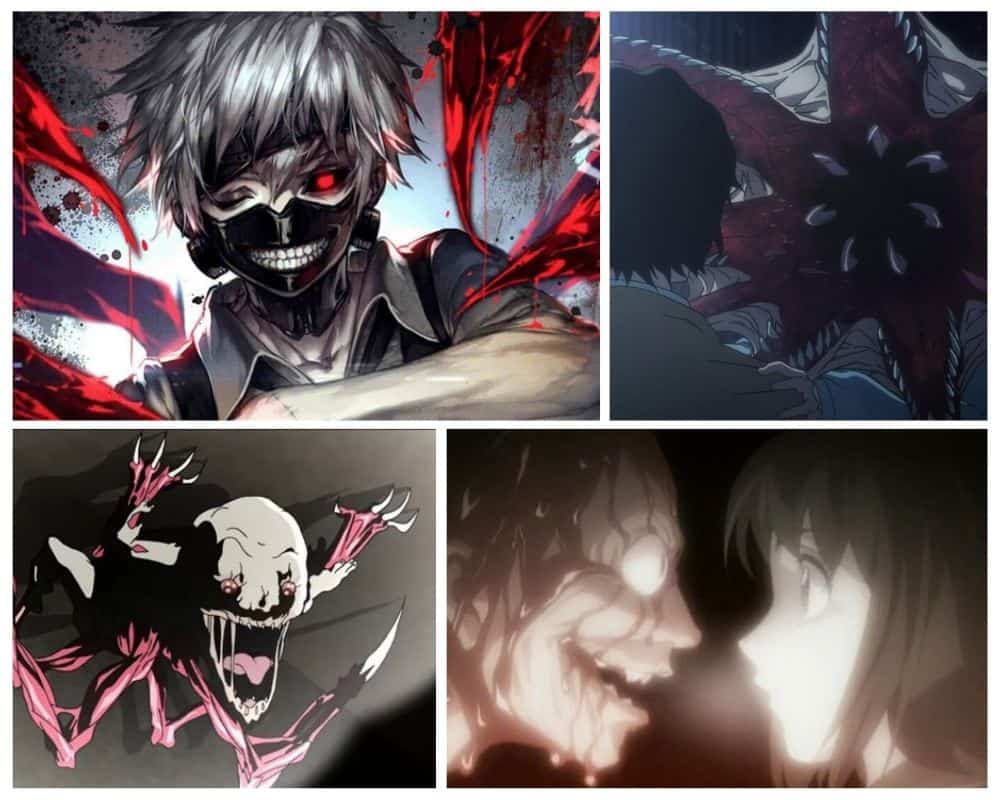
The One-Eyed Owl (Eto Yoshimura) – Tokyo Ghoul
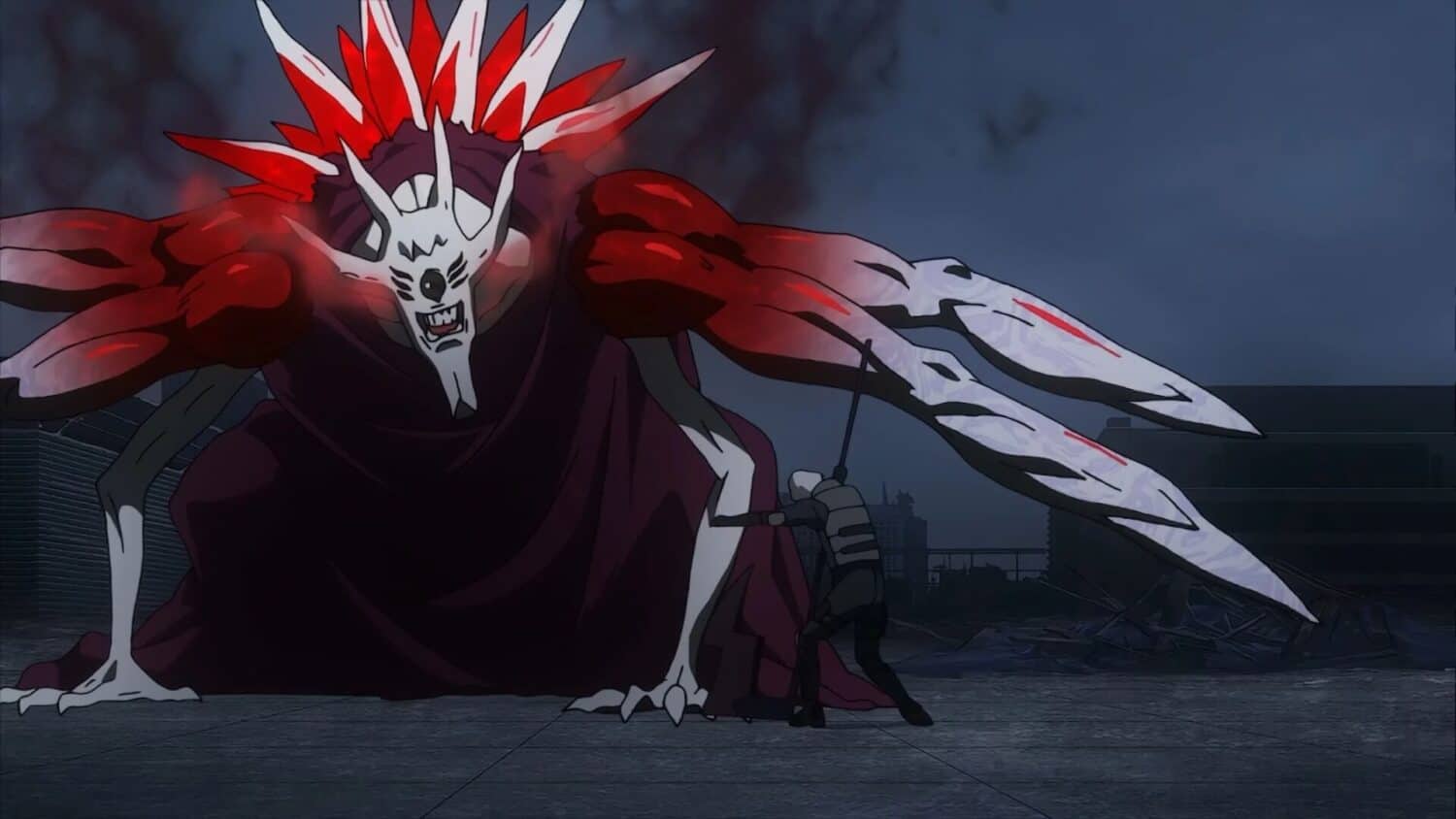
The One-Eyed Owl spends much of Tokyo Ghoul as a rumor, a bandaged silhouette too strong to fight and too fast to flee, and the dread builds precisely because you rarely see it clearly.
Then the reveal lands: beneath the wrappings is Eto Yoshimura, a gentle-seeming novelist and a half-human, half-ghoul born into a world that was never going to accept her.
That reframes the monster as a product of the society terrified of it, which is far more unsettling than any single rampage. Eto is the rare horror figure whose tragedy makes her scarier, not softer.
Uncanny trigger: human-like mimicry, a calm human face concealing an unstoppable ghoul
Defining moment: the Owl’s assault on the CCG and the reveal of who wears the bandages
Humanity mirror: the monster the world fears most was shaped by the world that feared her first
Urado (Kaneyuki Miyama) – Ghost Hunt
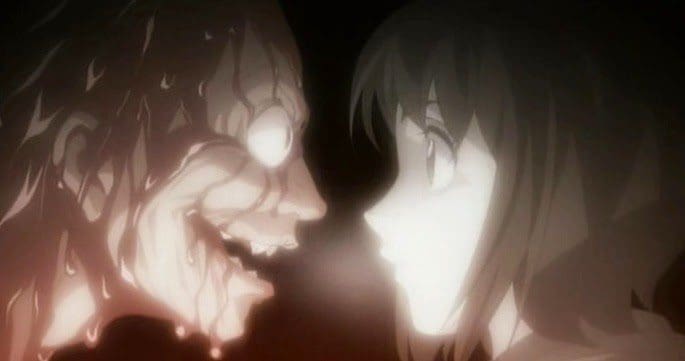
Urado is the scariest kind of monster because he chose to become one. In life he was Kaneyuki Miyama, a wealthy, sickly man so afraid of death that he modeled himself on Elizabeth Bathory and Vlad the Impaler, murdering the young and bathing in their blood to steal their years.
Death did not stop him; his spirit keeps killing anyone who enters his mansion, and in a series built around exorcising ghosts, his is the one case the hunters openly admit they cannot resolve.
That admission, that some horrors simply cannot be beaten, is the most frightening thing Ghost Hunt ever does.
Uncanny trigger: a human who deliberately made himself this, no supernatural excuse required
Defining moment: the Bloodstained Labyrinth, the only case the ghost hunters leave unsolved
Humanity mirror: the worst monster here began as an ordinary man who could not accept that he would die
Parasytes – Parasyte: The Maxim
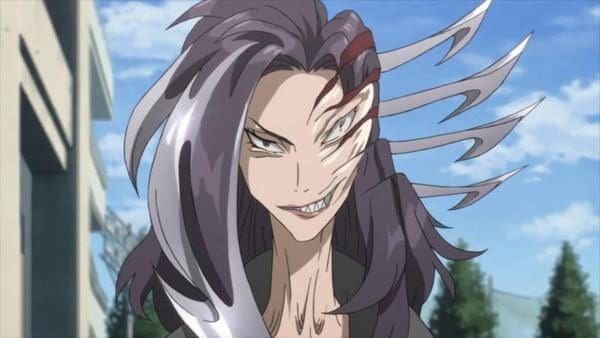
The Parasytes deliver body horror at its most surgical. An alien worm burrows into a human, hollows out the brain, and wears the body like a costume, and when it strikes, the face splits open into a fan of eyes and blades in a way that violates everything you understand about anatomy.
What lifts Parasyte: The Maxim from gore to real dread is the philosophy underneath: the creatures hunt humans the way humans hunt everything else, and the show refuses to let you feel superior about it.
They make you ask what truly separates us from them, and the honest answer is deeply uncomfortable.
Uncanny trigger: abnormal anatomy, a human head unfolding into eyes and blades
Defining moment: the early infestations, and Migi seizing control of Shinichi’s hand
Humanity mirror: they hunt us the way we hunt everything else, and the story will not let us pretend otherwise
The Shiki (Corpse Demons) – Shiki
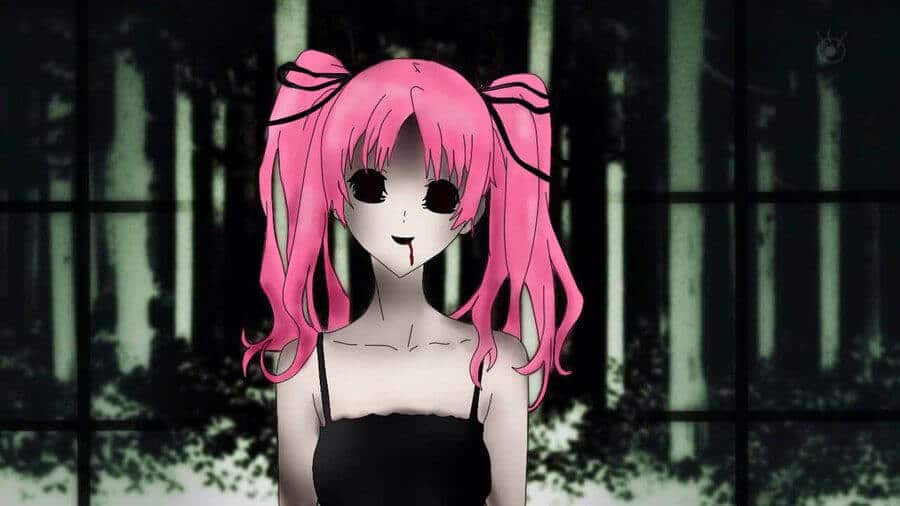
Nothing on this list frightens me the way the Shiki do, because the horror is so quiet and so complete. Based on Fuyumi Ono‘s novel, the story drops risen dead, corpse demons who look, speak, and grieve exactly like the neighbors they used to be, into the isolated village of Sotoba, then simply lets the town die one household at a time.
There is no boss to punch.
Worse, as the living fight back, they grow every bit as ruthless as the dead, until the line between victim and monster stops existing. It is the closest anime has come to pure, hopeless dread, the kind that works best when nothing is even happening on screen.
If you like your monsters risen and hungry, the wider world of zombie anime is the natural next step.
Uncanny trigger: the dead who are indistinguishable from the neighbors they replaced
Defining moment: the slow, creeping death of Sotoba, house by house
Humanity mirror: cornered by monsters, ordinary people become monsters, and the difference quietly disappears
Where to Take Your Horror Watchlist Next
If these got under your skin, keep the dread going.
The scariest anime laughs and the scariest smiles in anime mine the same uncanny-valley vein from a different angle, while a dive into anime from the 1990s turns up where a lot of the genre’s nastiest ideas were born.
And if you need to reset your nervous system afterward, a palette cleanser of magical-girl anime is not the worst idea.
So which of these horror anime monsters would top your own list?
Tell me in the comments, if you dare.

In my experience watching horror anime, the moments that genuinely “break you” aren’t usually the jump scares. It’s the slow burns. It’s when the anime manipulates the silence, the lighting, and the mundane details of everyday life to make you feel unsafe in your own room. I think that is where the medium really shines compared to live-action. In animation, artists can distort reality in subtle ways—slightly elongating a shadow, warping a character’s facial expression just enough to hit the “uncanny valley,” or using discordant sound design—to create a level of unease that feels incredibly personal.
You mentioned that the creepiest designs often have rules or human cruelty baked into them, and that is a brilliant observation. When a monster is just a “beast,” you know you just have to run away. But when a monster is born from human cruelty or a specific ritual, it forces the viewer to engage with why the monster exists. It adds a layer of tragedy to the terror. The best horror anime monsters are often reflections of our own societal failures or personal guilts. That specific brand of storytelling—where the external horror mirrors an internal struggle—is what transforms a scary show into a masterpiece that leaves you thinking about it for weeks.