Pete Puma is proof that a cartoon character can appear in a single short, lose every scene he is in, and still be remembered seventy years later.
He is a scraggly orange mountain lion with a mallet, a terrible plan, and one of the strangest voices in the entire Looney Tunes catalogue. He tried to eat a baby rabbit once, in 1952, and never quite recovered.
Almost everything memorable about him comes down to that voice and a single running gag about sugar lumps. He is not a major character, he has almost no story, and he beats himself over the head with a hammer until he passes out.
None of that has stopped generations of people from doing his laugh.
He Only Appeared in One Golden Age Cartoon
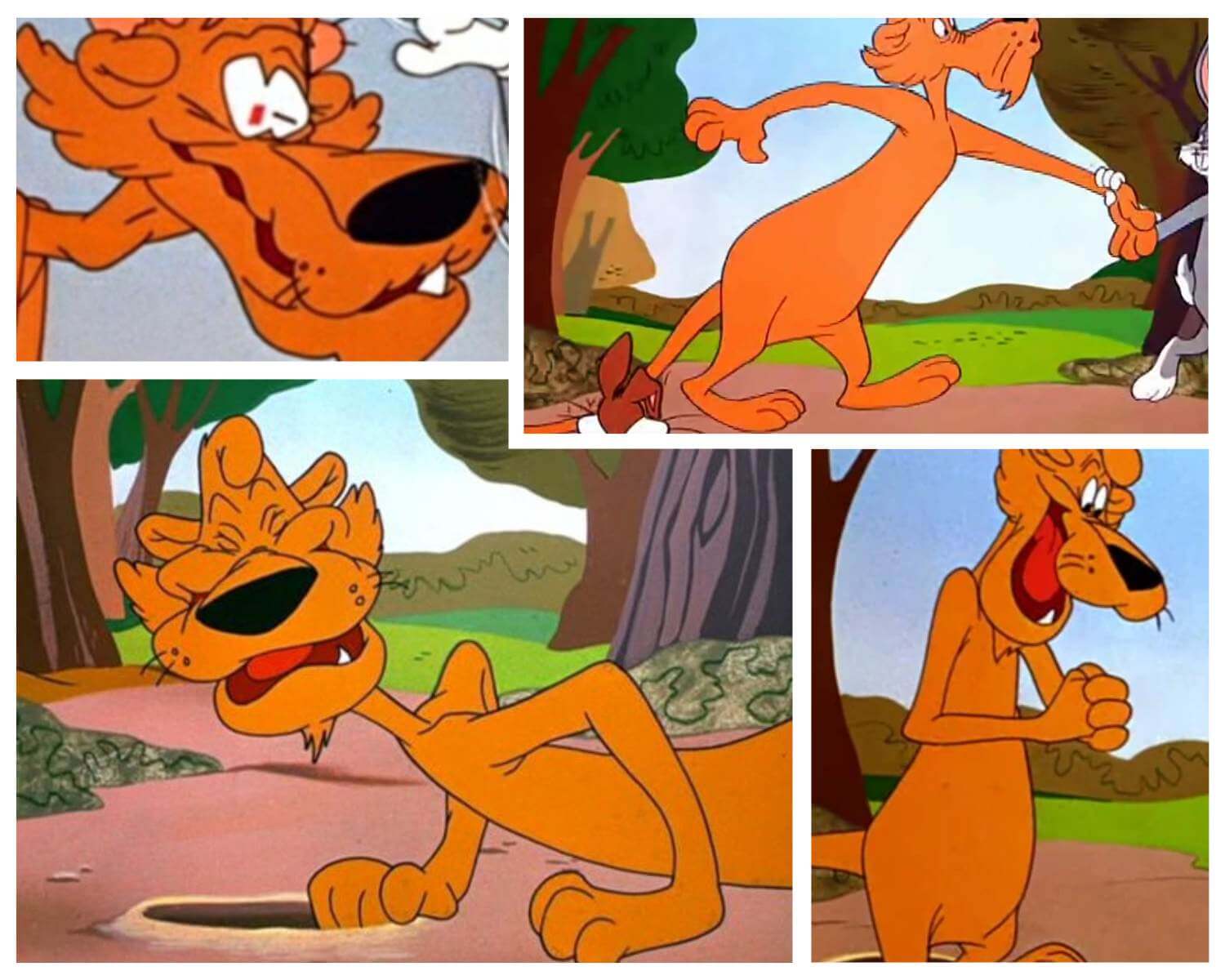
The single most surprising fact about Pete Puma is how little screen time built his reputation. He had exactly one classic-era appearance.
- His only Golden Age short is Rabbit’s Kin, from 1952.
- Robert McKimson directed it, with a script by Tedd Pierce.
- In it, Pete tries to eat a small rabbit that Bugs has taken under his wing.
- Bugs Bunny spends the short humiliating him with a series of tricks.
The Voice Is the Whole Character
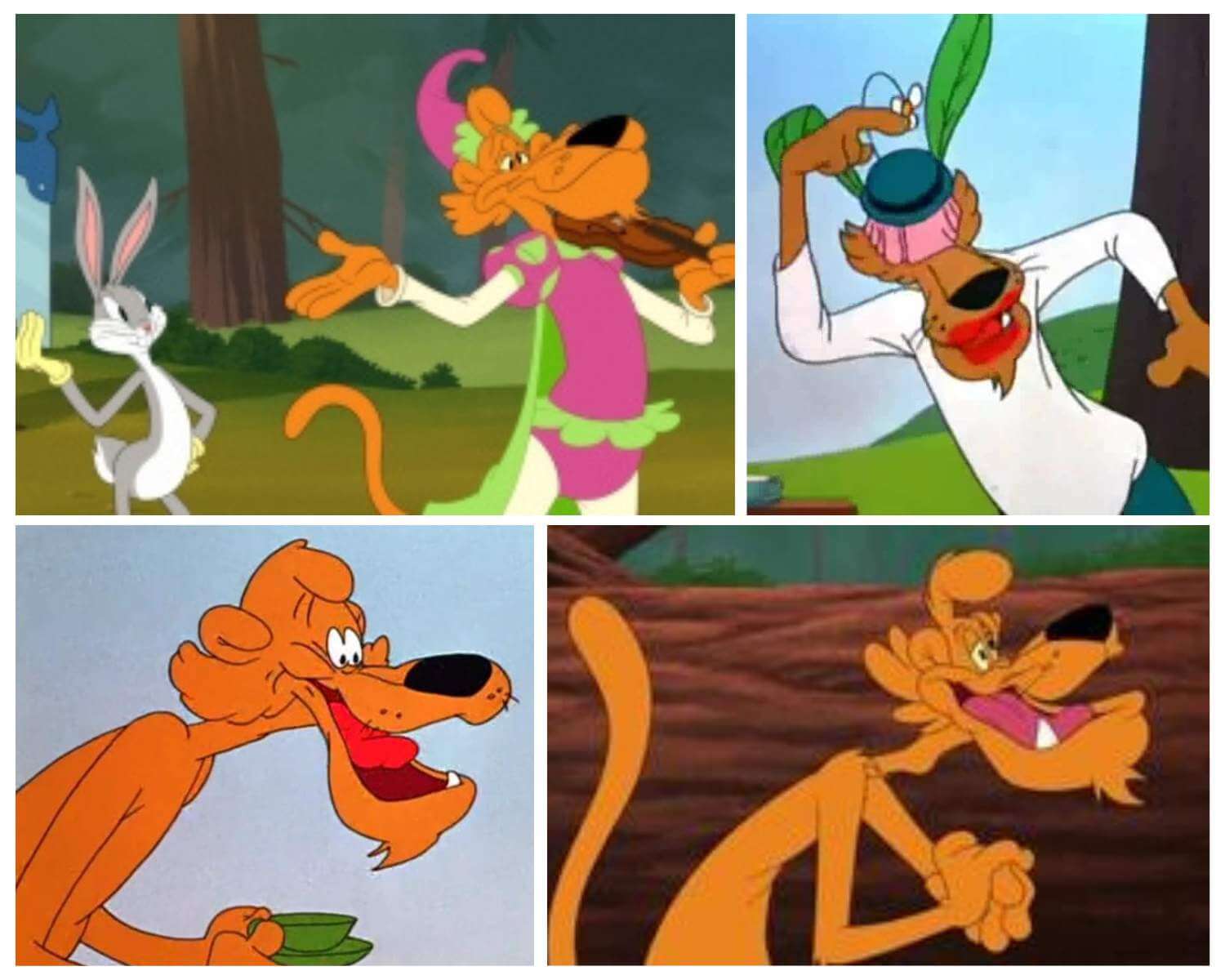
Pete Puma is remembered almost entirely for how he sounds, and the voice is a specific piece of 1950s comedy history rather than an invention.
- Stan Freberg performed the voice, though he went uncredited.
- It is a slow, plodding, punch-drunk delivery, not a high-pitched one.
- Every few lines break into a wheezy, inhaled chortle.
- That laugh is the single most imitated thing about the character.
The How Many Lumps Gag
The scene everyone remembers is a tea party, and it is one of the cleanest running gags Robert McKimson ever staged.
- Bugs offers Pete tea and asks how many lumps of sugar he wants.
- Pete answers “three or four”, and Bugs clobbers him on the head with a mallet.
- The blows raise matching lumps on Pete’s skull rather than sugar in a cup.
- Pete never once catches on to the joke.
What He Looks Like
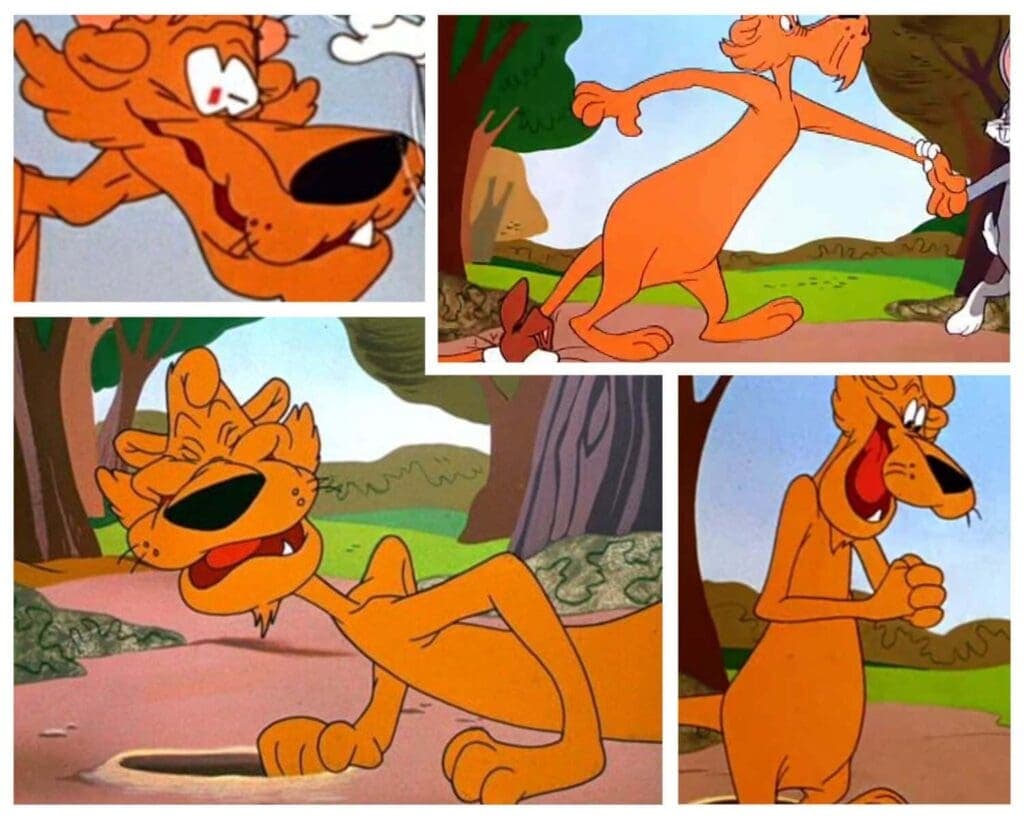
Pete’s design matches his voice, all shabby edges and misplaced confidence, and it reads clearly even in a crowd.
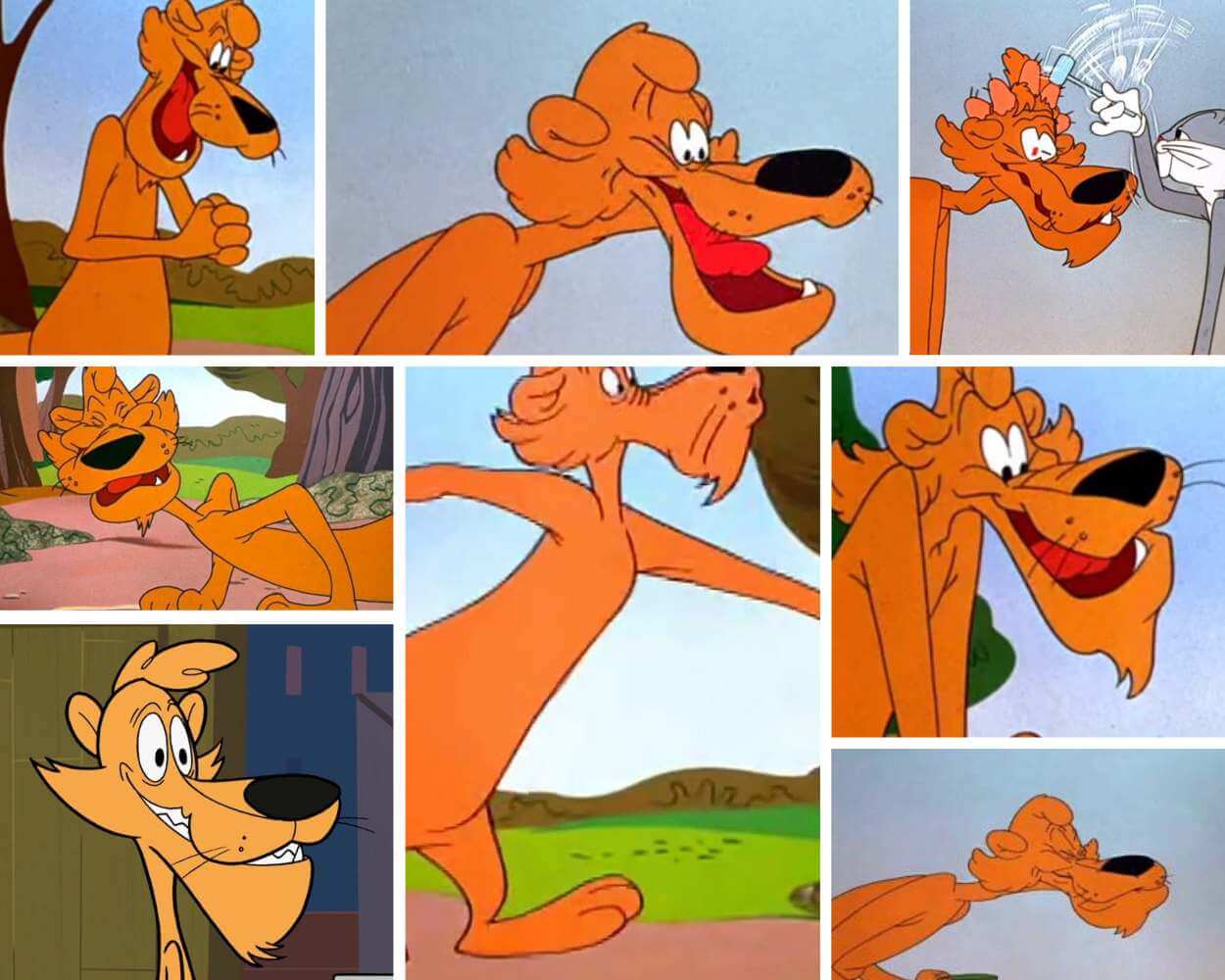
- He is a large, scraggly orange or tan mountain lion.
- His fur is unkempt and his frame is loose and gangly.
- A permanent wide grin sits under half-lidded, none-too-bright eyes.
- He towers over Bugs yet never once poses a real threat.
The Drag Disguise Scene
Rabbit’s Kin has one more sequence that fans single out, and it is as strange as anything in the short.
- Pete tries to grab the rabbit by disguising himself as its mother.
- His costume is leaves for ears and a skirt with his tail poking out.
- He keeps the same goofball voice and laugh throughout.
- The disguise fools nobody for a second.
The 45-Year Wait for a Second Short
Having made such an impression, Pete then did almost nothing for decades, which is part of why his return was notable.
- He made no further theatrical shorts through the 1950s, 60s, 70s or 80s.
- His second theatrical outing was Pullet Surprise, in 1997.
- That short pairs him with Foghorn Leghorn instead of Bugs.
- Stan Freberg returned to voice him again.
Where He Turned Up Later
Between and after his two shorts, Pete became a reliable background player the studio could drop into almost anything.
- He worked as the janitor at Acme Looniversity across Tiny Toon Adventures.
- The crowd scenes of Space Jam in 1996 include him.
- He turned up in Carrotblanca as a waiter and in later Christmas specials as a janitor again.
- Freberg voiced most of these later appearances himself.
The Looney Tunes Show Reinvented Him
The 2011 series is where the modern idea of Pete comes from, and it is a real departure from the 1952 original.
- He is recast as a dim-witted friend of Daffy Duck rather than a Bugs villain.
- John Kassir voiced this version.
- He works a rotating series of odd jobs around town.
- The menace is dropped entirely in favour of amiable stupidity.
Frequently Asked Questions About Pete Puma
A few of the questions that come up most about this character.
What animal is Pete Puma? A mountain lion, also called a puma or cougar, drawn as a large scraggly orange cat.
Who voiced Pete Puma? Stan Freberg originated the voice, uncredited, in 1952 and returned for later appearances. John Kassir voiced him in The Looney Tunes Show.
What is Pete Puma’s catchphrase? His exchange over “how many lumps do you want?” is the line everyone remembers, capped by the moment he demands even more of them for himself.
How many cartoons was Pete Puma in? Only one during the classic era, Rabbit’s Kin in 1952. His second theatrical short, Pullet Surprise, did not arrive until 1997.
More Questions About the Looney Tunes Puma
Why is Pete Puma’s voice so strange? Stan Freberg based it on Frank Fontaine’s comedy character Crazy Guggenheim, a plodding, laughing dimwit popular on 1950s television.
Is Pete Puma friends with Daffy Duck? Only in The Looney Tunes Show from 2011. In the original short he is an enemy of Bugs Bunny.
Did Pete Puma ever beat Bugs Bunny? No. He spends his one Golden Age short being outwitted, and even ends up hitting himself on the head with the mallet Bugs was using on him.
Who did Pete Puma fight in his second cartoon? Foghorn Leghorn, in the 1997 short Pullet Surprise, rather than Bugs Bunny.
Pete Puma is a reminder that Looney Tunes was, at its best, a showcase for voices as much as for drawings. He has no arc, no victories and barely any screen time, and none of it matters next to the sound of him asking for a whole lot of lumps.
So do you rank Pete among the great one-shot Looney Tunes characters, and can you do the laugh?
Let me know in the comments.