
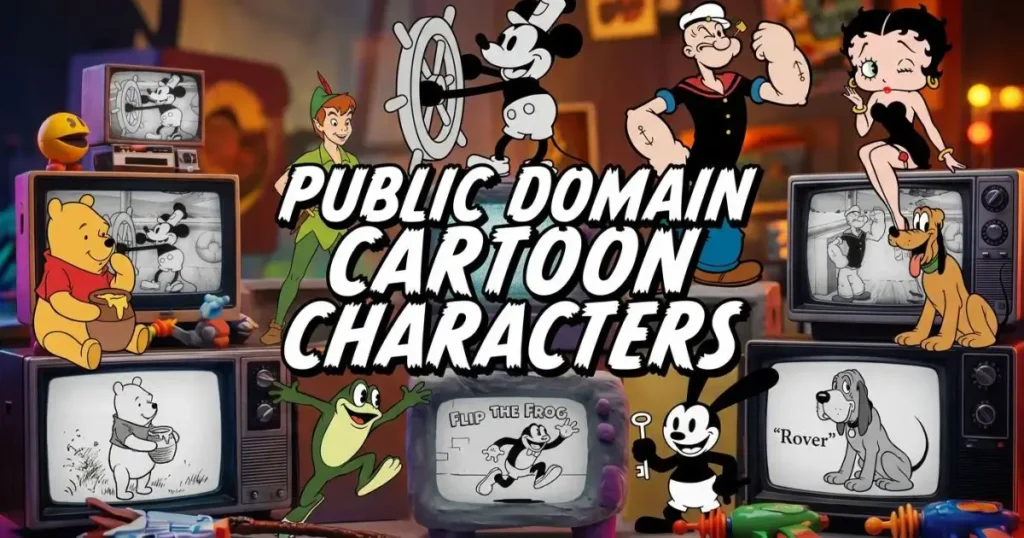
Public domain cartoon characters are one of my favorite rabbit holes. Every January, a fresh batch of old cartoons loses copyright protection and becomes free for anyone to use.
The tricky part is knowing which characters are truly free and which ones still belong to Disney and friends. So here are my top 20, with the year each one went free, a big set of tables at the end with close to 100 characters, and the mistakes I see people make over and over.
How Public Domain Works
In the US, these old cartoons get 95 years of copyright protection. After that, the work enters the public domain and anyone can use it. No license, no lawyers, no royalties.
That is the law working the way it was meant to. Creators get a long window to profit, then the work belongs to everyone.
If you want the deep legal breakdown, Duke University’s Public Domain Day page tracks every year’s new arrivals in plain language, and the U.S. Copyright Office covers the rules themselves.
The Big Mistake To Avoid
Here is the part people get wrong, so read this before you reuse anything.
Only the original version goes free, not the version in your head today. Take Mickey Mouse. Only the 1928 Steamboat Willie Mickey is public domain, the rough black-and-white mouse with pie-eyes and no gloves. The polished modern Mickey in red shorts and white gloves is still under copyright.
Fairy tales trip people up the same way. Cinderella, Snow White, and Alice have been free as stories for ages, but Disney’s movie versions are not. You can write your own Cinderella all day.
You cannot copy Disney’s 1950 design. There is a fun irony there, since Disney built its early empire on free fairy tales, then fought hard to lock up its own versions.
Then there is trademark, which is separate from copyright. Even after copyright ends, a company can keep a trademark on a character’s name and logo, which can stop you from selling lookalike merch.
That protection never expires.
Still not public domain, no matter what people search:
- Bugs Bunny first showed up in 1940, so he is not free until the 2030s.
- Donald Duck debuted in 1934. Still copyrighted.
- Goofy arrived in 1932. Also still locked up.
My Top Public Domain Cartoon Characters
Mickey Mouse
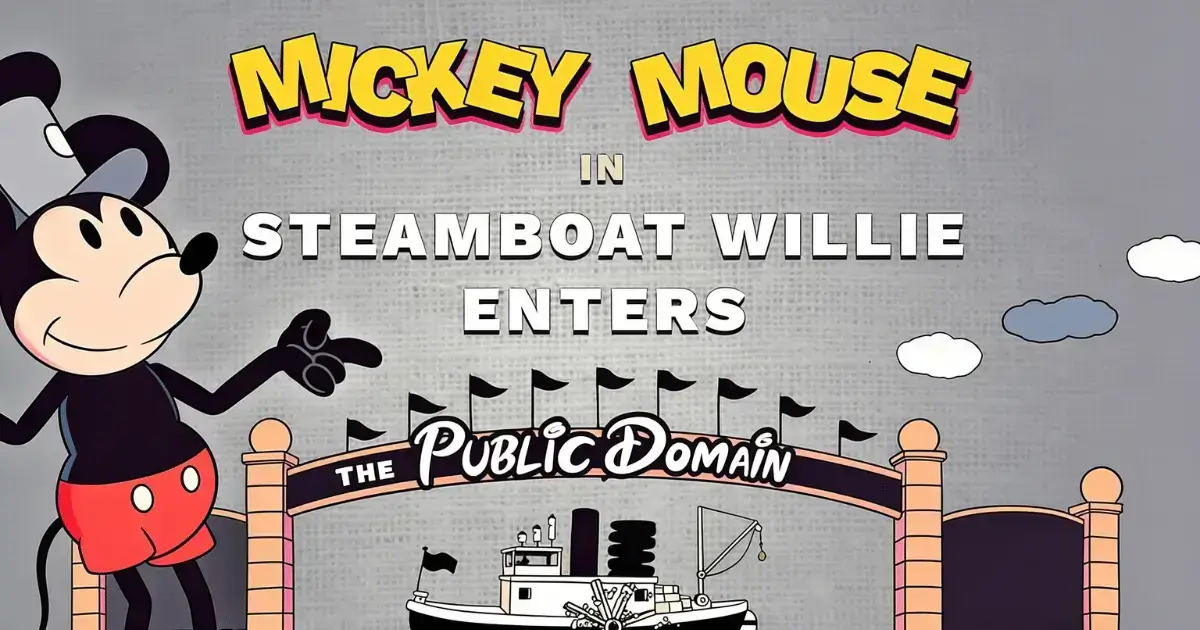
Entered public domain: 2024
This is the big one. The Mickey from Steamboat Willie, the 1928 black-and-white short, went public domain in 2024. That is the rascal Mickey, not the cuddly modern one.
You can build on that early version, but Disney still owns everything that came after, plus the trademark on his name.
A lot of people assume the modern Disney Mickey, the cheerful one on every lunchbox, is free now. He is not, and that mix-up could land someone in real legal trouble. Only the 1928 version is fair game. Growing up, Mickey was everywhere for me, on cereal boxes, birthday cards, and bed sheets, so it still feels strange that any version of him belongs to the public now.
The Steamboat Willie Mickey also has a completely different vibe. He is mischievous and a little mean, much closer to a silent-film troublemaker than the friendly mascot we grew up with.
Minnie Mouse
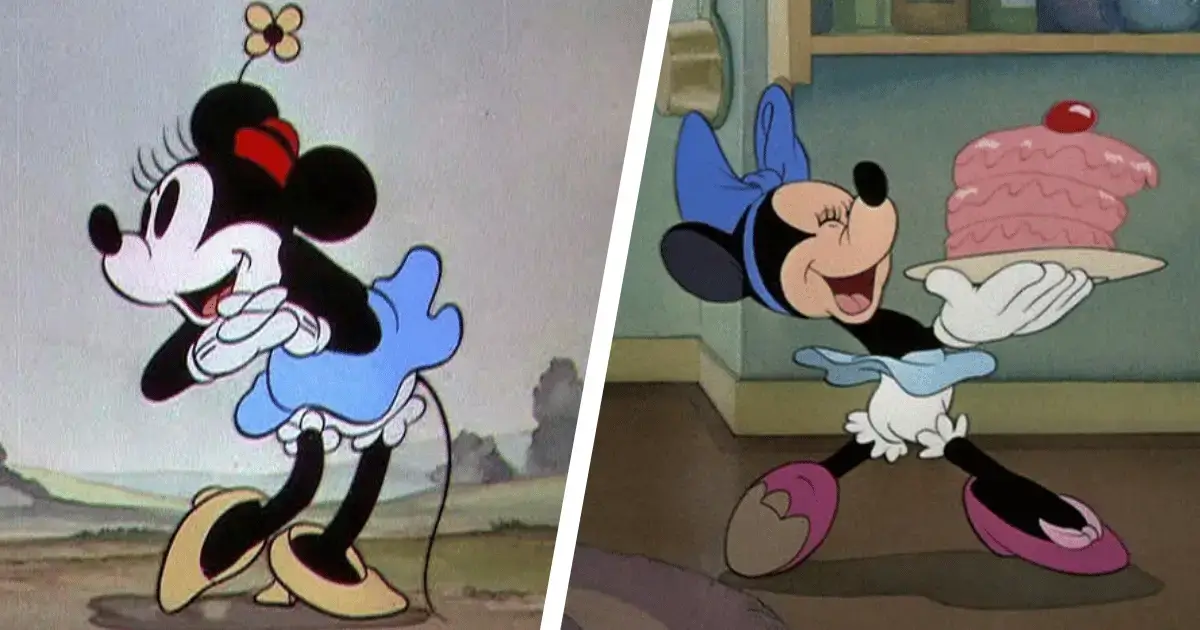
Entered public domain: 2024
Minnie rode in on the same boat.
Her 1928 Steamboat Willie version is free too. The same rule as Mickey applies, so stick to the early design and keep an eye on the trademark when it comes to products.
I always found it neat that Minnie was there from the very first frame, never an afterthought, even back in 1928.
Popeye
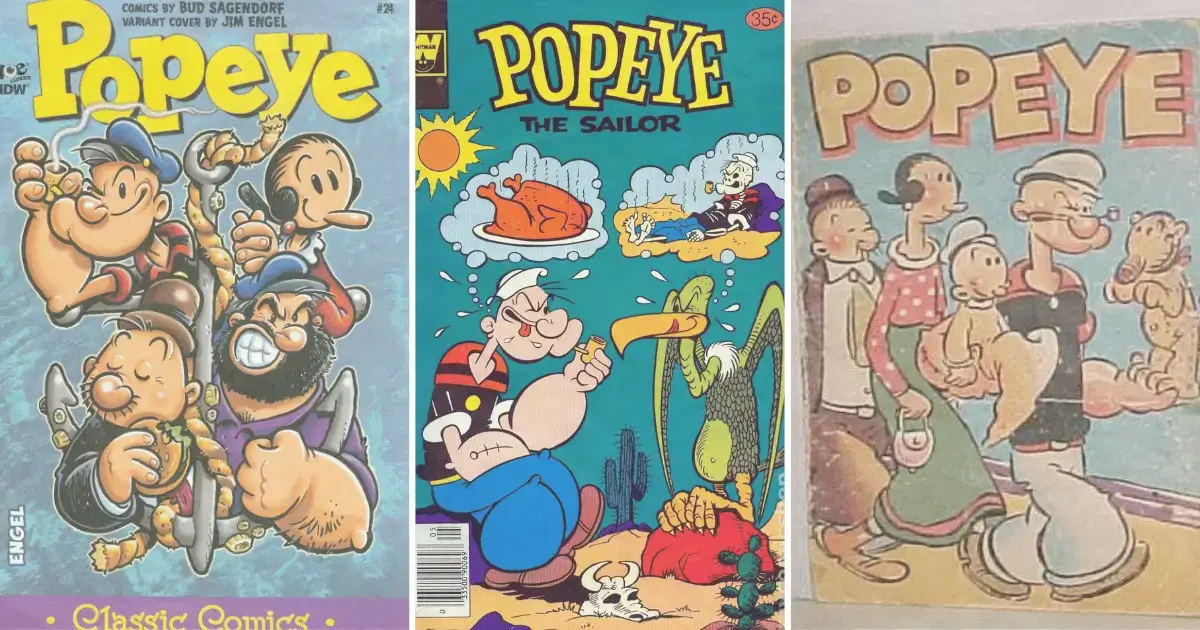
Entered public domain: 2025
Popeye first appeared in the Thimble Theatre comic strip in 1929, so that original sailor went free in 2025. The catch trips a lot of people up.
The 1933 Fleischer cartoon Popeye, the spinach-chugging version most of us picture, is still under copyright for a few more years.
Popeye reruns were a staple for me, and the spinach gag never once got old. It is funny that the version everyone quotes, the gravel-voiced sailor punching his way out of trouble, is the 1933 cartoon that is still locked up. The 1929 comic Popeye is rougher and meaner, more street brawler than hero.
If you want to use Popeye legally right now, that is the version you have to work from.
Betty Boop
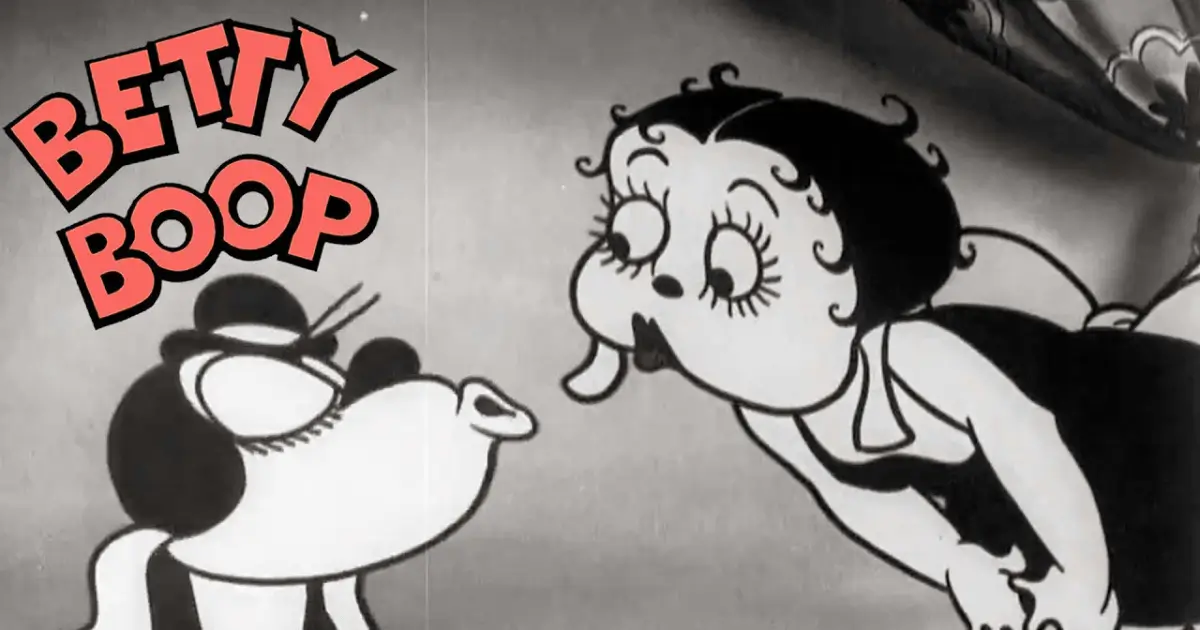
Entered public domain: 2026
Betty is the newest big name on the list.
Her first cartoon, Dizzy Dishes, came out in 1930, so that version went free in 2026. Here is a fun bit most people do not know: the 1930 Betty was part dog, with floppy ears instead of her famous hoop earrings. Fleischer Studios pushed back hard and argued she is not really free, but that is the same losing argument the Sherlock Holmes estate once tried.
I have a soft spot for Betty. She was one of the first cartoon characters with real adult attitude, made before the strict content rules of the mid-1930s sanded her down.
The early shorts are strange and dreamlike in a way modern cartoons rarely attempt. If you have never watched Dizzy Dishes, it is worth ten minutes of your time, even just to see how bold animation was willing to be back then.
Oswald the Lucky Rabbit
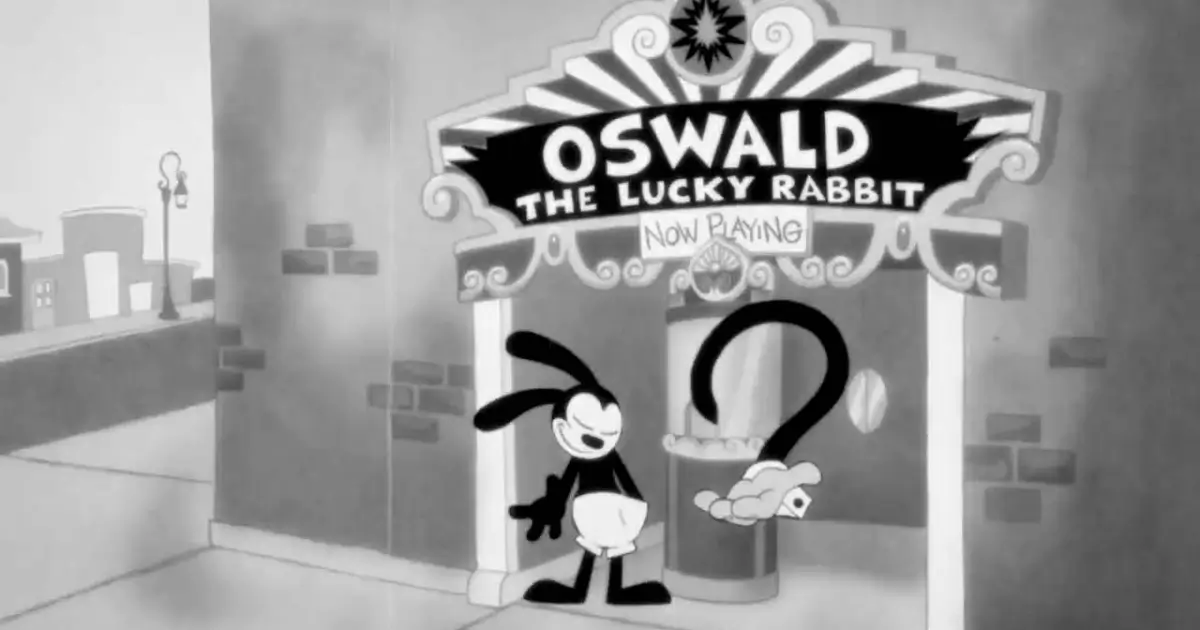
Entered public domain: 2023
Oswald was Walt Disney’s first real star, before Mickey existed. Disney lost the rights to him in a famous deal, and that loss is the whole reason Mickey got created. The 1927 Oswald shorts entered the public domain in 2023.
There is a real lesson in Oswald for any creator. Disney lost him over a contract dispute, went home, and built Mickey out of equal parts spite and necessity.
The character he lost is now free for everyone, and the one he built to replace it became the most fiercely protected mascot in the world. I think about that whenever someone tells me losing a project is the end of the road.
Felix the Cat
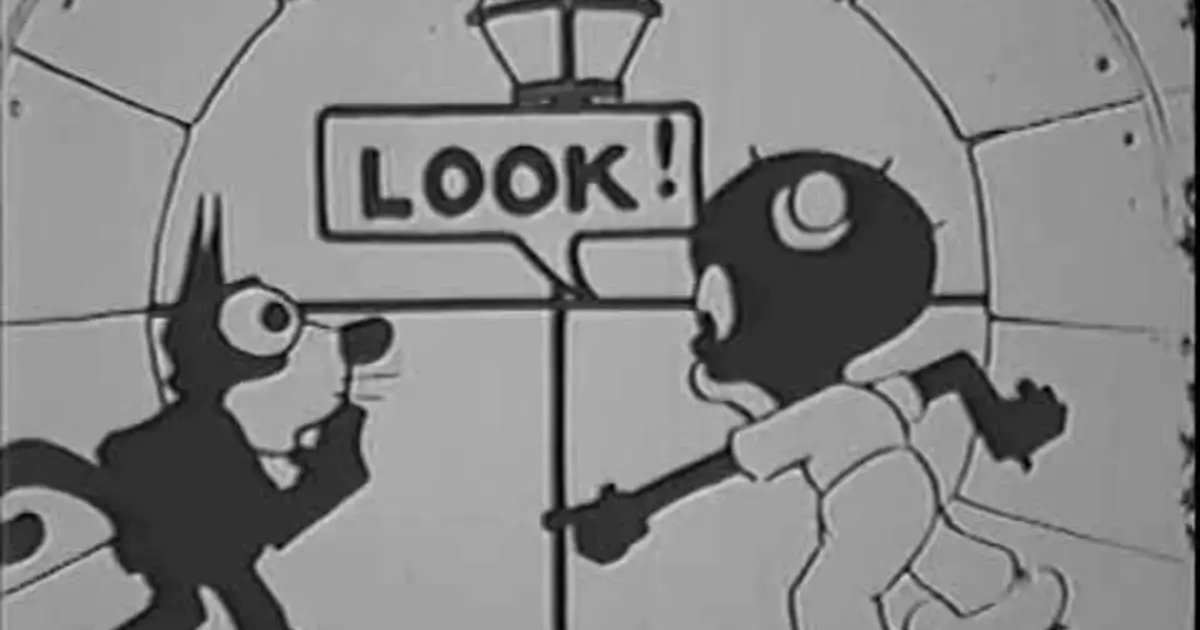
Status: long public domain
Felix is older than all of them. He first appeared around 1919, so his early silent shorts have been free for years. He is one of the safest classic characters to play with, as long as you stick to those early cartoons and not the later redesigns.
Felix does not get the love he deserves anymore. Before Mickey ever existed, he was the most famous cartoon character on the planet.
That sly grin, and the way he could pull objects out of thin air and bend them into whatever he needed, shaped a huge amount of what came after him. If you like animation history at all, he is worth a deeper look.
Koko the Clown
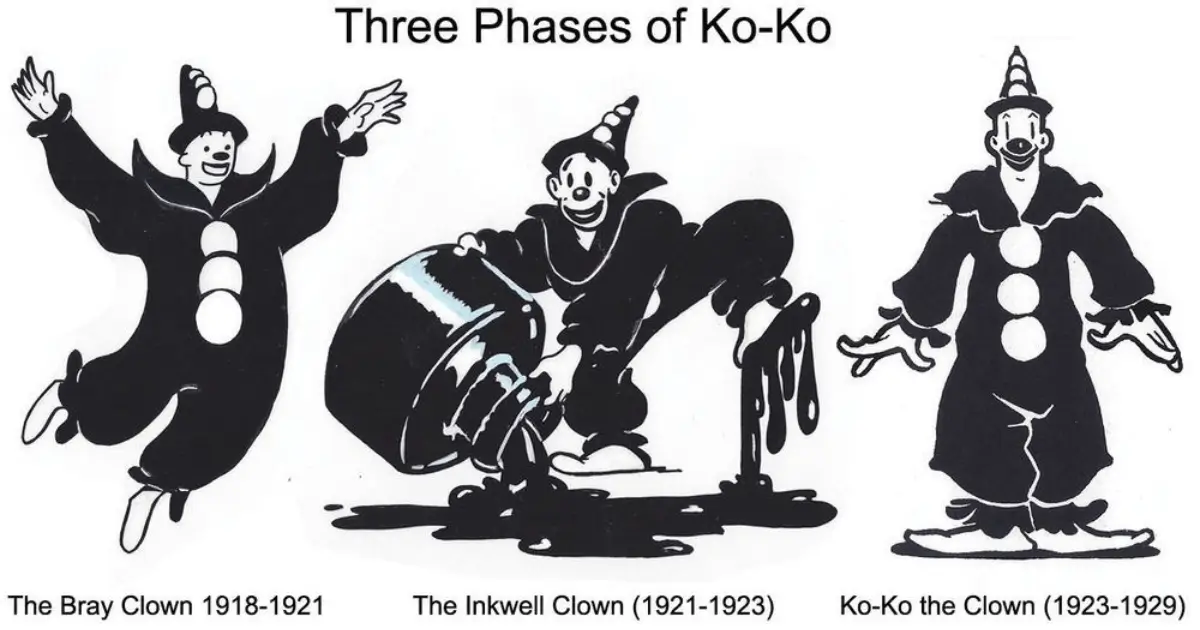
Status: long public domain
Koko came out of Max Fleischer’s Out of the Inkwell series around 1918.
Those early shorts are long past copyright. He does not get talked about much now, but he was a huge deal in early animation, along with the rotoscope technique that came with him, the same trick Fleischer later used on Betty Boop and Popeye.
Gertie the Dinosaur
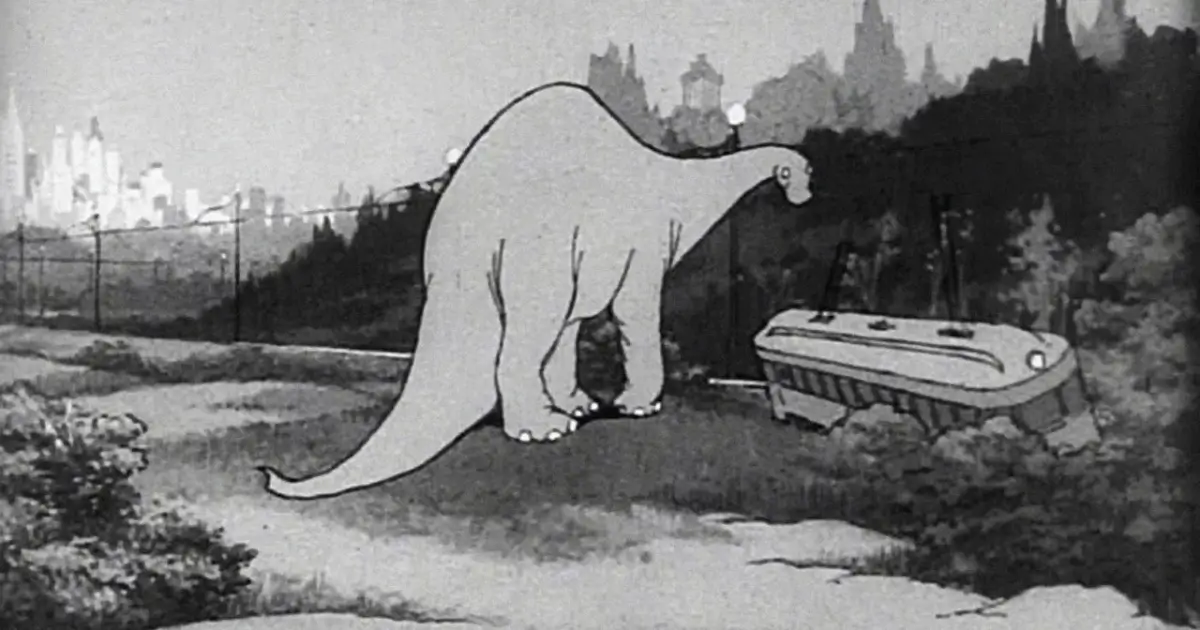
Status: long public domain
Gertie is a piece of history. Winsor McCay drew her in 1914, and she is often called the first cartoon character with a real personality.
She has been free for a very long time, and she is a lovely pick if you want something with real vintage weight behind it.
Pluto
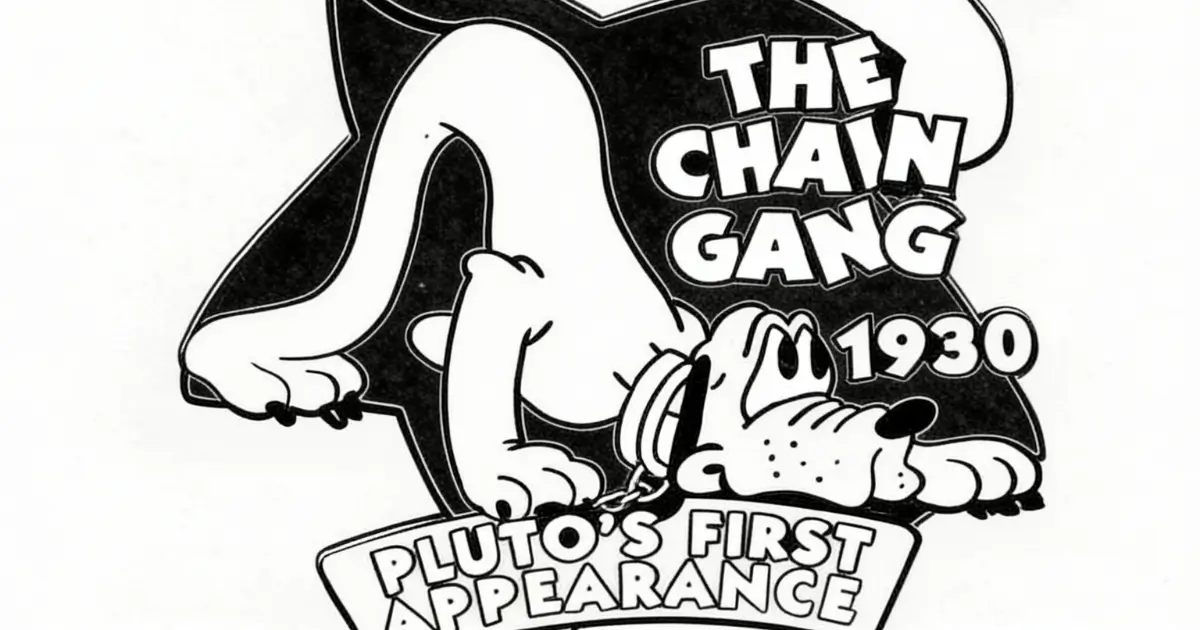
Entered public domain: 2026
Pluto is a 2026 arrival with a twist.
His debut was as an unnamed dog in the 1930 short The Chain Gang, and that version is free. The fully formed Pluto that Disney built up later is a different matter, and Mickey’s ownership of him as a pet did not lock in until a 1931 short. So tread carefully and stick to the 1930 appearance.
Flip the Frog
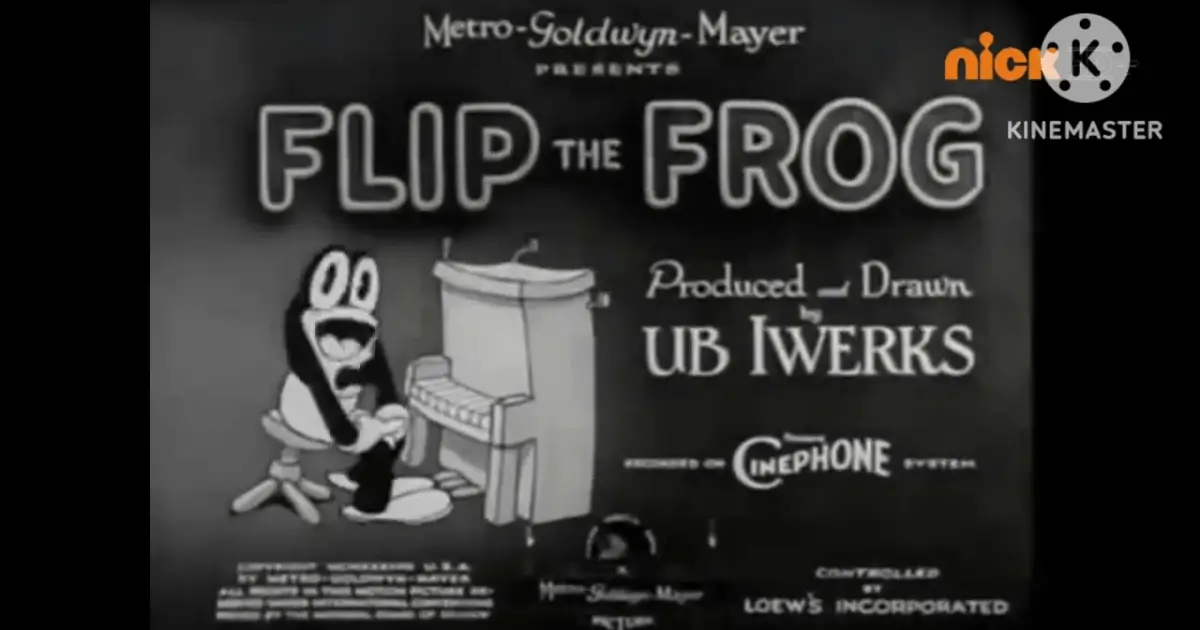
Entered public domain: 2026
Flip is an Ub Iwerks creation, and Iwerks helped design Mickey before he left Disney to go solo.
Flip’s first sound cartoon, Fiddlesticks, came out in 1930 and went free in 2026. It was also the first cartoon made in color with sound, which makes Flip a fun choice if you want something recognizable to animation buffs but not overused by everyone else.
Bosko
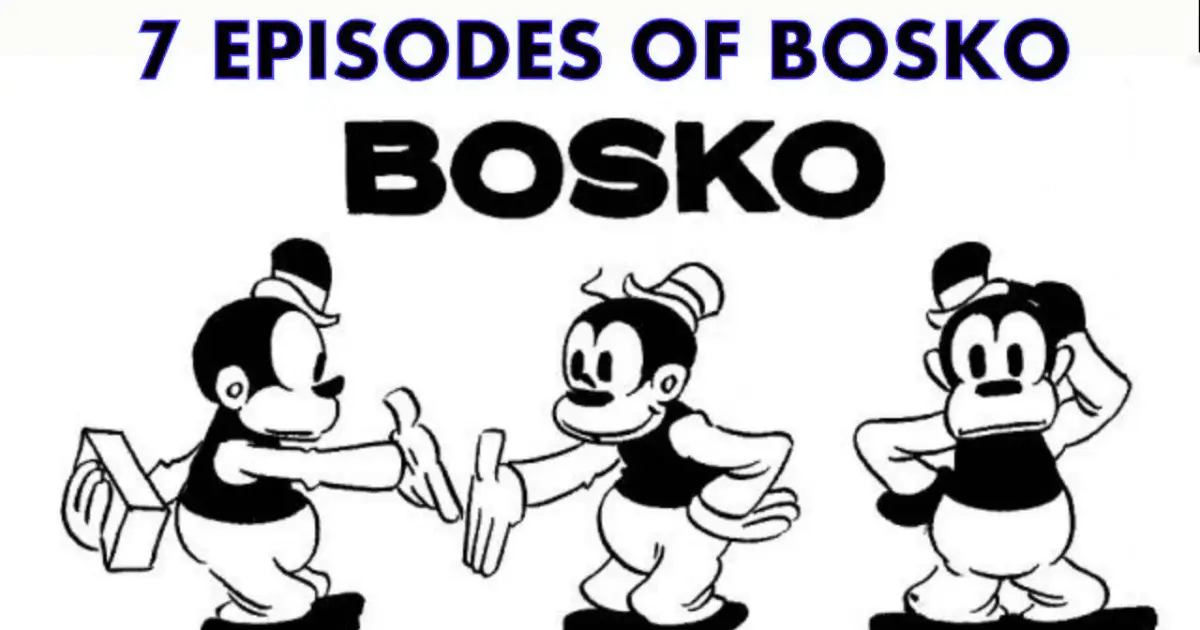
Entered public domain: 2025
Bosko was the very first Looney Tunes star, back in 1929, long before Bugs or Daffy. Several of his early shorts are now in the public domain.
If you want a true Looney Tunes deep cut that is free to use, this is the one, since the famous stars are still locked up tight for over a decade more.
Horace Horsecollar
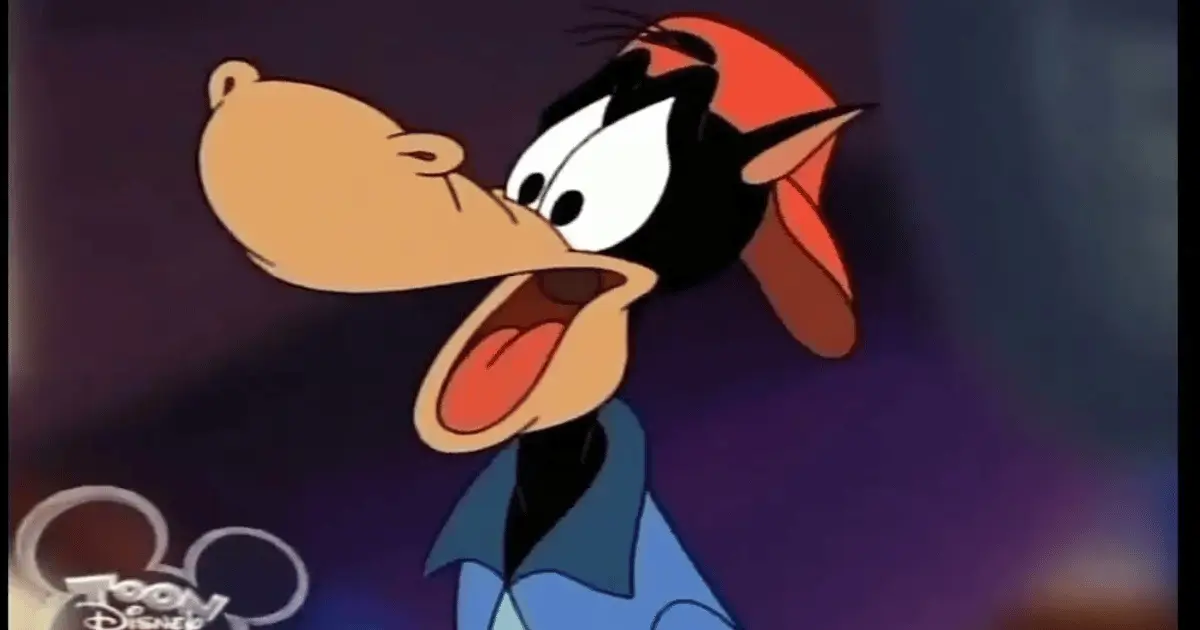
Entered public domain: 2025
Horace is one of Mickey’s oldest sidekicks. He showed up in 1929, so that early version went free in 2025.
He is a great example of a character almost nobody thinks about that is fair game right now, which makes him perfect if you want a Disney-adjacent look without the legal headache.
Clarabelle Cow
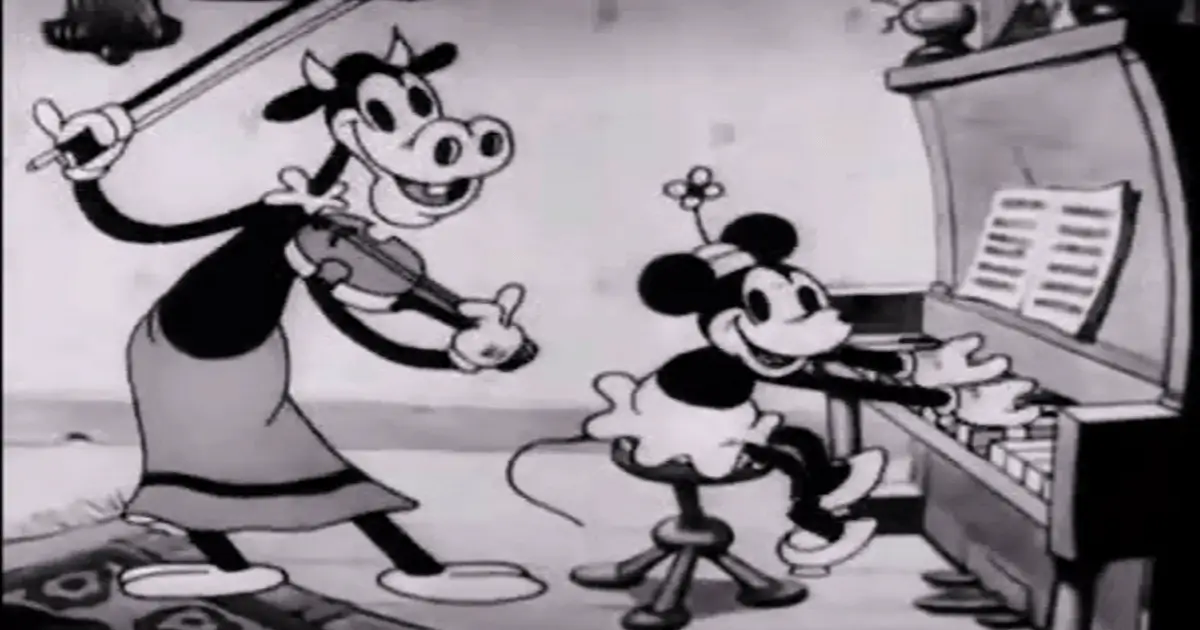
Entered public domain: 2026
Clarabelle is another early Mickey supporting player. Her earliest appearances put her in the public domain in 2026.
Like the rest of the old Disney crew, only that early version counts, and the modern one stays protected.
Pete (Peg-Leg Pete)
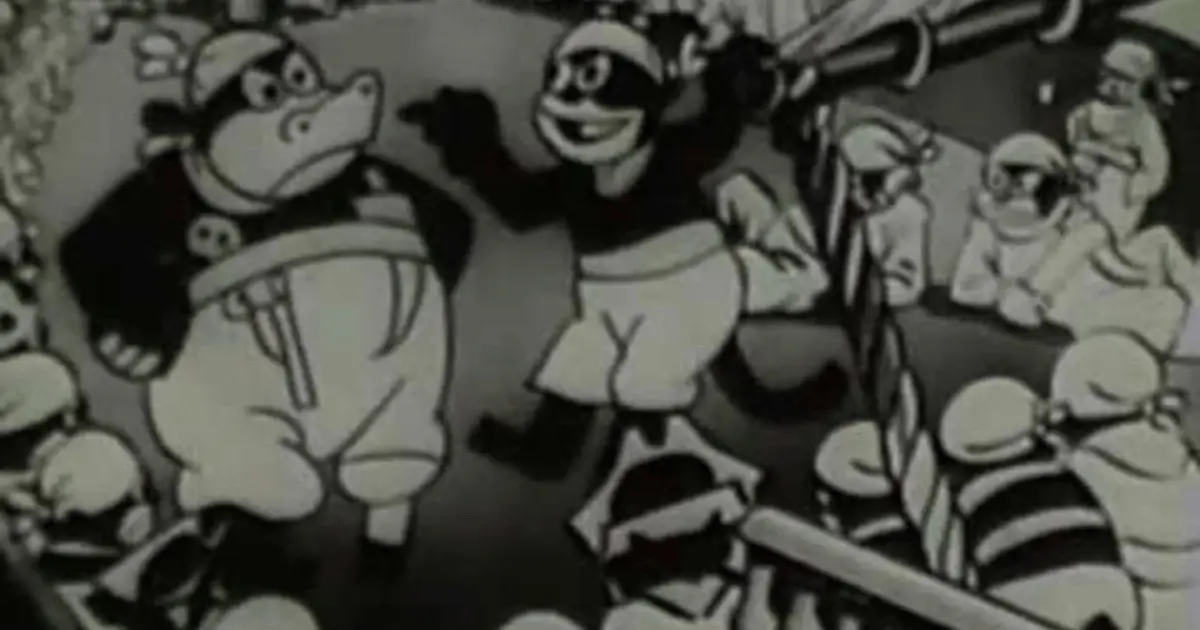
Entered public domain: 2021
Pete is the oldest Disney character of them all. He started as a villain back in 1925, before Mickey even existed, so his earliest version has been free since 2021.
Most people have no idea the Disney villain predates the Disney hero, which makes him a fun bit of trivia and a free design all at once.
Krazy Kat
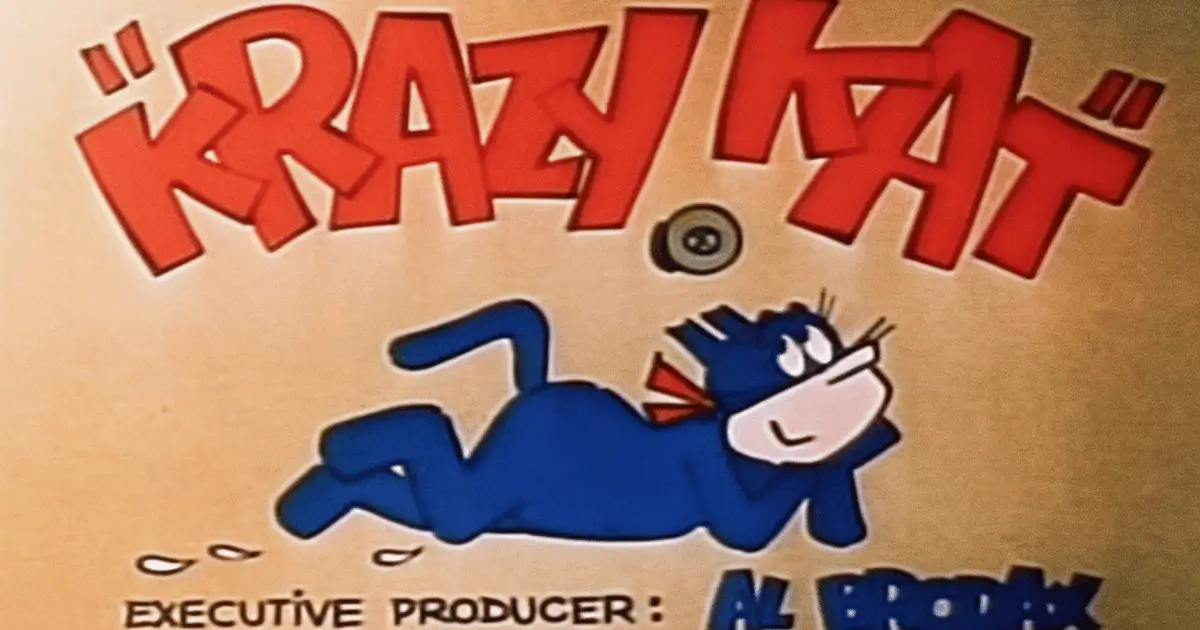
Status: early shorts public domain
Krazy Kat started as a newspaper comic in 1913 and moved into animation soon after.
The early cartoon shorts are in the public domain.
The strip itself is treated as a real work of art by a lot of critics, so this one carries some weight if you want something with a bit of prestige behind it.
The Skeleton Dance
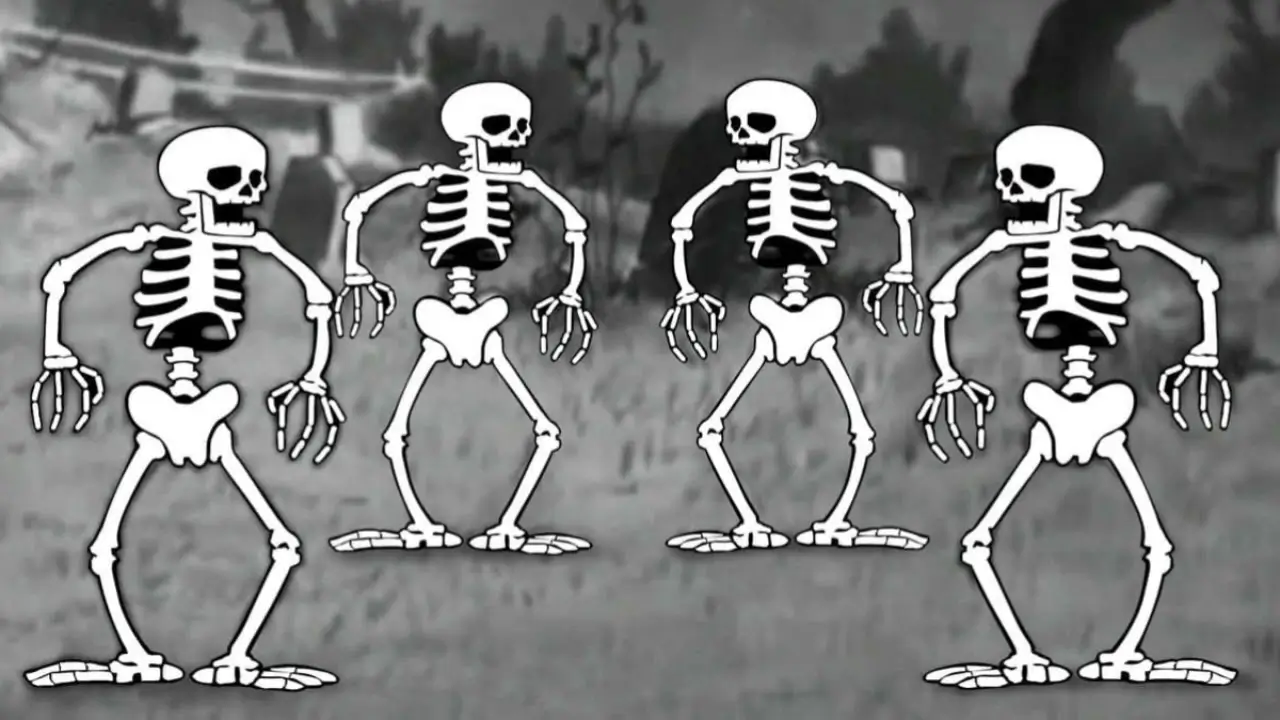
Entered public domain: 2025
This one is a short rather than a single character, but the dancing skeletons from the 1929 Silly Symphony went free in 2025.
They are perfect for spooky projects, and they are pure early Disney from the days before the studio got cautious.
I love that something this playful is now open to everyone.
Mutt and Jeff
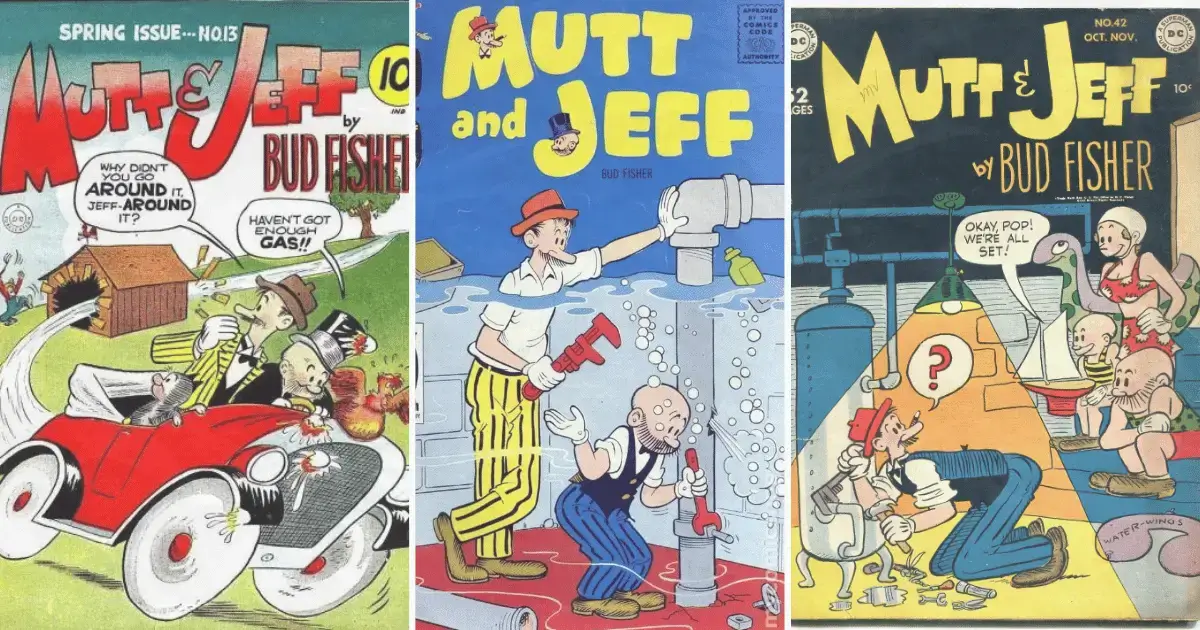
Status: long public domain
Mutt and Jeff started as a newspaper comic in 1907 and became animated shorts in the 1910s.
Those early cartoons are long in the public domain. They count as one of the first true comic-to-cartoon crossovers, which makes them a neat footnote for any animation project, and a free one at that.
The full lists of Public Domain Cartoon Characters
That is my top 20, but the full picture is much bigger. I found close to 100 characters that are free in one way or another, so I sorted them into a few lists below. One important note before the tables.
1. Newly public domain in 2026 (the 1930 versions)
| Character | First Appeared | Public Domain (US) |
|---|---|---|
| Betty Boop | 1930 | 2026 |
| Bimbo | 1930 | 2026 |
| Pluto (as Rover) | 1930 | 2026 |
| Flip the Frog | 1930 | 2026 |
| Clarabelle Cow | 1930 | 2026 |
| Toby the Pup | 1930 | 2026 |
| 1930 Mickey Mouse shorts | 1930 | 2026 |
| Second-year Silly Symphony characters | 1930 | 2026 |
2. Already public domain before 2026
| Character | First Appeared | Public Domain (US) |
|---|---|---|
| Fantoche (Fantasmagorie figure) | 1908 | Long public domain |
| Little Nemo | 1911 | Long public domain |
| Colonel Heeza Liar | 1913 | Long public domain |
| Gertie the Dinosaur | 1914 | Long public domain |
| Bobby Bumps | 1915 | Long public domain |
| Mutt and Jeff (cartoons) | 1916 | Long public domain |
| Farmer Al Falfa | 1916 | Long public domain |
| Krazy Kat (cartoons) | 1916 | Long public domain |
| Koko the Clown | 1918 | Long public domain |
| Felix the Cat | 1919 | Long public domain |
| Aesop’s Film Fables characters | 1921 | Long public domain |
| Julius the Cat | 1924 | Long public domain |
| Pete (Peg-Leg Pete) | 1925 | 2021 |
| Oswald the Lucky Rabbit | 1927 | 2023 |
| Mickey Mouse (Steamboat Willie) | 1928 | 2024 |
| Minnie Mouse | 1928 | 2024 |
| Popeye (comic strip) | 1929 | 2025 |
| Horace Horsecollar | 1929 | 2025 |
| Bosko (early shorts) | 1929 | 2025 |
| The Skeleton Dance | 1929 | 2025 |
3. Public-domain storybook and fairy-tale characters used in cartoons
These are not always cartoon-original, but they show up in cartoons constantly, and the source characters are public domain.
If you want to use them, my advice is simple: do not copy Disney or any modern studio design. Build your own version straight from the original story.
Duke lists examples like Winnie-the-Pooh, Snow White, Cinderella, Dracula, Frankenstein’s Monster, Robin Hood, Santa Claus, and the Oz characters, and you can read their full writeup on Duke’s Public Domain Day 2026 page.
| Character | Source | Public Domain |
|---|---|---|
| Cinderella | Fairy tale | Folk tale, always free |
| Snow White | Grimm fairy tale | Folk tale, always free |
| Sleeping Beauty | Fairy tale | Folk tale, always free |
| Little Red Riding Hood | Fairy tale | Folk tale, always free |
| The Big Bad Wolf | Fairy tale / folklore | Folk tale, always free |
| The Three Little Pigs | Fairy tale | Folk tale, always free |
| Goldilocks | Fairy tale | Folk tale, always free |
| Hansel and Gretel | Grimm fairy tale | Folk tale, always free |
| Rapunzel | Grimm fairy tale | Folk tale, always free |
| Rumpelstiltskin | Grimm fairy tale | Folk tale, always free |
| Puss in Boots | Fairy tale | Folk tale, always free |
| Jack (and the Beanstalk) | Fairy tale | Folk tale, always free |
| The Gingerbread Man | Fairy tale | Folk tale, always free |
| Thumbelina | Andersen | Long public domain |
| The Little Mermaid | Andersen (1837) | Long public domain |
| The Snow Queen | Andersen | Long public domain |
| The Ugly Duckling | Andersen | Long public domain |
| Mother Goose | Nursery rhymes | Folklore, always free |
| Humpty Dumpty | Nursery rhyme | Folklore, always free |
| Old King Cole | Nursery rhyme | Folklore, always free |
| The Pied Piper | Legend | Folklore, always free |
| Santa Claus | Folklore | Folklore, always free |
| Jack Frost | Folklore | Folklore, always free |
| Alice | Alice in Wonderland (1865) | Long public domain |
| The Mad Hatter | Alice in Wonderland | Long public domain |
| The Cheshire Cat | Alice in Wonderland | Long public domain |
| The White Rabbit | Alice in Wonderland | Long public domain |
| Peter Pan | J.M. Barrie (1904) | Public domain in the US |
| Captain Hook | Peter Pan | Public domain in the US |
| Tinker Bell | Peter Pan | Public domain in the US |
| Pinocchio | Collodi (1883) | Long public domain |
| Dorothy | Wizard of Oz (1900) | Long public domain |
| Scarecrow | Wizard of Oz | Long public domain |
| Tin Woodman | Wizard of Oz | Long public domain |
| Cowardly Lion | Wizard of Oz | Long public domain |
| Toto | Wizard of Oz | Long public domain |
| Robin Hood | Legend | Folklore, always free |
| Little John | Robin Hood legend | Folklore, always free |
| King Arthur | Legend | Folklore, always free |
| Merlin | Arthurian legend | Folklore, always free |
| Aladdin | One Thousand and One Nights | Long public domain |
| Sinbad the Sailor | Arabian Nights | Long public domain |
| Ali Baba | Arabian Nights | Long public domain |
| Mulan (Hua Mulan) | Chinese ballad | Folklore, always free |
| Hercules | Greek myth | Folklore, always free |
| Dracula | Bram Stoker (1897) | Long public domain |
| Frankenstein’s Monster | Mary Shelley (1818) | Long public domain |
| Dr. Jekyll and Mr. Hyde | Stevenson (1886) | Long public domain |
| The Invisible Man | H.G. Wells (1897) | Long public domain |
| Long John Silver | Treasure Island (1883) | Long public domain |
| Captain Nemo | Jules Verne (1870) | Long public domain |
| Sherlock Holmes | Arthur Conan Doyle | Public domain in the US |
| Tarzan | Edgar Rice Burroughs (1912) | Long public domain |
| The Headless Horseman | Washington Irving (1820) | Long public domain |
| Tom Sawyer | Mark Twain (1876) | Long public domain |
| Paul Bunyan | American folklore | Folklore, always free |
| Winnie-the-Pooh | A.A. Milne (1926) | 2022 |
| Piglet and Eeyore | A.A. Milne (1926) | 2022 |
| Tigger | A.A. Milne (1928) | 2024 |
Not public domain yet, the common mistakes
These are the ones people get wrong the most. None of them are free yet.
Here is when the earliest versions are on track to enter the US public domain, assuming the law does not change again.
| Character | Debuted | Free (on track) |
|---|---|---|
| Goofy | 1932 | 2028 |
| Popeye (Fleischer cartoon) | 1933 | 2029 |
| Donald Duck | 1934 | 2030 |
| Porky Pig | 1935 | 2031 |
| Snow White (Disney film) | 1937 | 2033 |
| Daffy Duck | 1937 | 2033 |
| Superman | 1938 | 2034 |
| Batman | 1939 | 2035 |
| Bugs Bunny | 1940 | 2036 |
| Tom and Jerry (MGM) | 1940 | 2036 |
| Woody Woodpecker | 1940 | 2036 |
That is what I love about this whole topic. A century of animation is slowly opening back up to everyone, one year at a time.
The characters that built the medium are becoming ours to play with again, and that feels like the system finally doing what it was meant to do.
My advice stays the same through all of it: use the truly old versions with confidence, build your own take instead of copying a modern design, and check your own country’s rules before you publish.
Do that, and a hundred years of cartoon history is yours to enjoy.
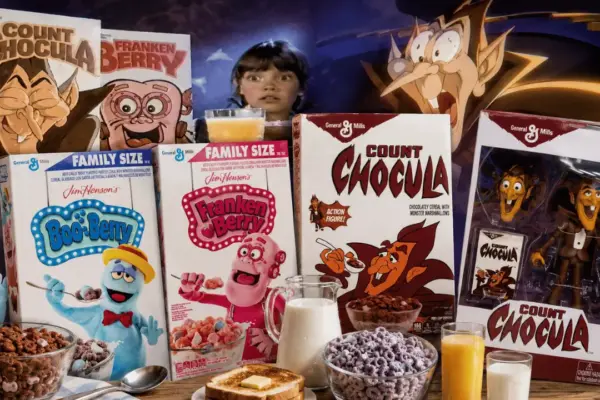
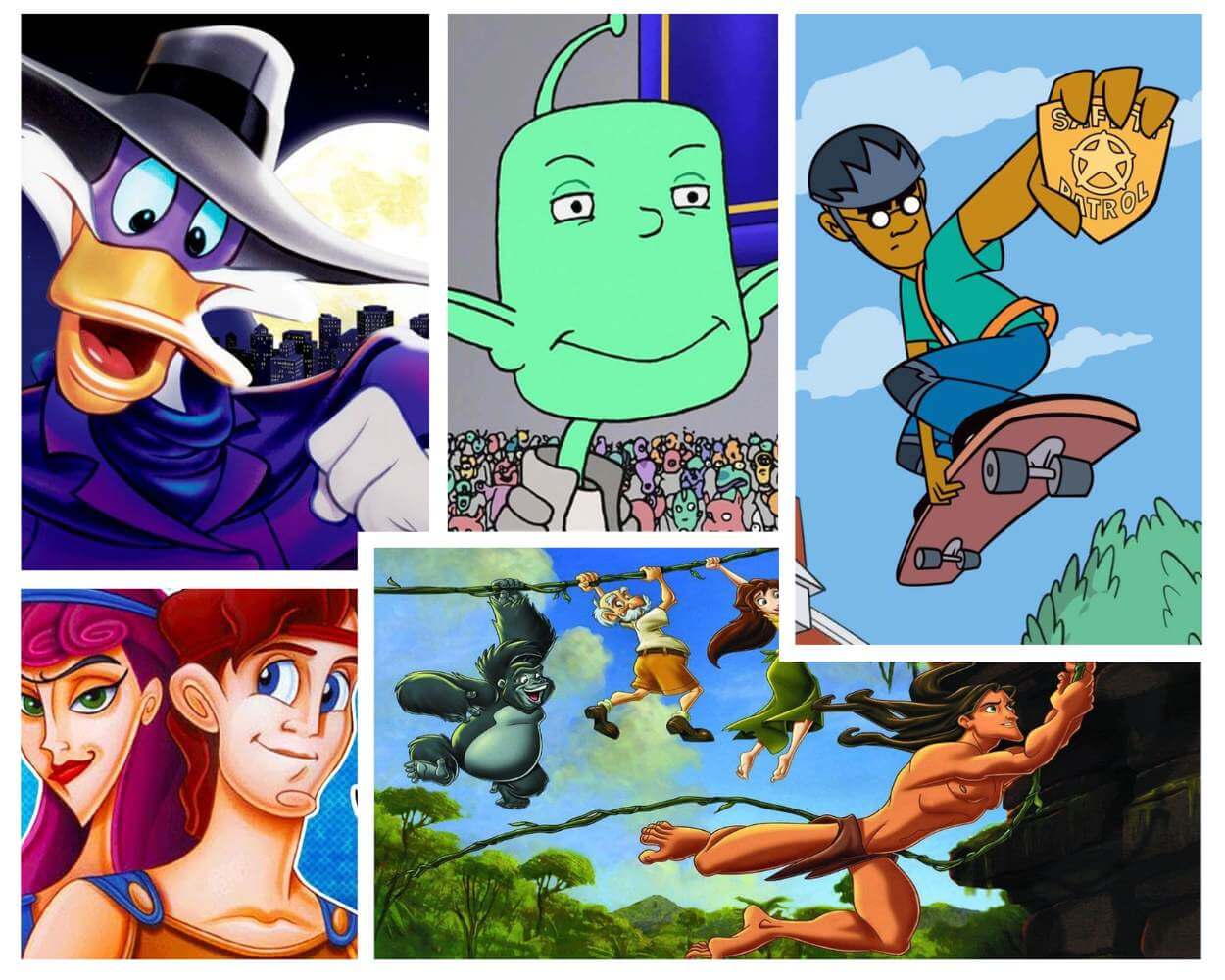
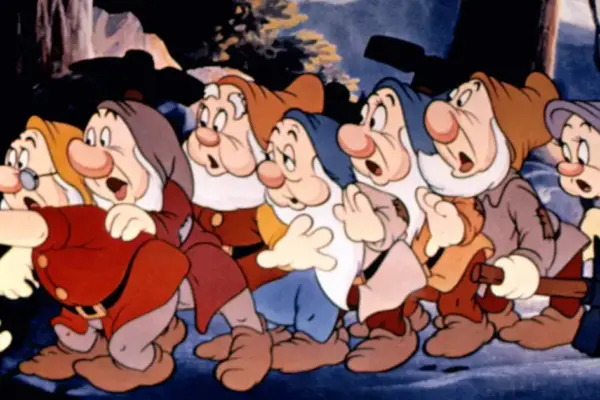
One of the most fascinating things about public domain cartoons is that the rights usually apply only to the earliest, original version of a character.
For example, the earliest Mickey Mouse from Steamboat Willie can be used more freely in the United States, but that does not mean every version of Mickey Mouse is free to use.
The modern Mickey with later design changes, color details, branding, logos, and Disney trademark connections can still be protected.
That is what makes public domain cartoons so interesting and tricky at the same time.
A creator may be able to remix an old black-and-white version of a character, but they still need to avoid making it look like an official Disney, Fleischer, Warner Bros., or studio-approved project.
The same idea can apply to other classic cartoon characters too.
Early versions of a character might become public domain before the more familiar modern version does.
So when people say a cartoon character is public domain, it is important to ask which version, which cartoon, and which country the law applies to.
That little detail is what makes public domain animation such a fun topic for artists, writers, YouTubers, indie game creators, and cartoon fans.
It opens the door for new stories, parodies, horror versions, remixes, tributes, and creative experiments, but it also comes with rules that creators still have to respect.
I recently saw a horror movie with Winnie The Pooh and was wondering how they were able to use his name and look without getting any copyright hits. I wonder if they will do that with other characters.
Several cartoons and classic children’s characters whose copyright terms have expired have been adapted into movies, go watch the Mickey Mouse horror movie trailor lol – most of them are silly, but I did see the Winnie The Pooh one and laughed.