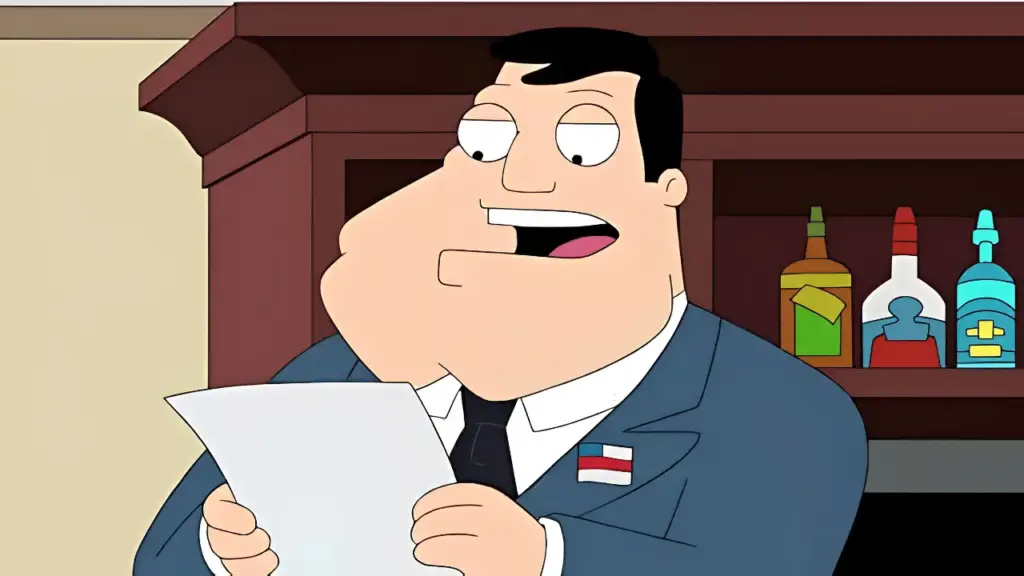
Stan Smith is the last man on earth still trying to live like it is 1955. He has the guns, the SUVs, and the unshakable belief that his word is law. But behind the square jaw and the CIA badge, Stan might be the most fragile character in all of American Dad.
He is a man terrified of irrelevance, fighting to hold his nuclear family together while being the exact reason it keeps threatening to fall apart.
So let me stop calling Stan Smith a simple CIA agent and dig into what he really is: a walking psychological paradox.
| Role | CIA agent and self-appointed patriarch of the Smith family |
| Debut | Season 1 (2005) |
| Voiced by | Seth MacFarlane |
| Core trait | Fragile masculinity dressed up as total confidence |
| Age | 42 |
| Best dynamic | Francine Smith |
| Chaos rating | 8 out of 10 (usually the cause of the chaos, rarely the fix) |
The Fragile Patriot
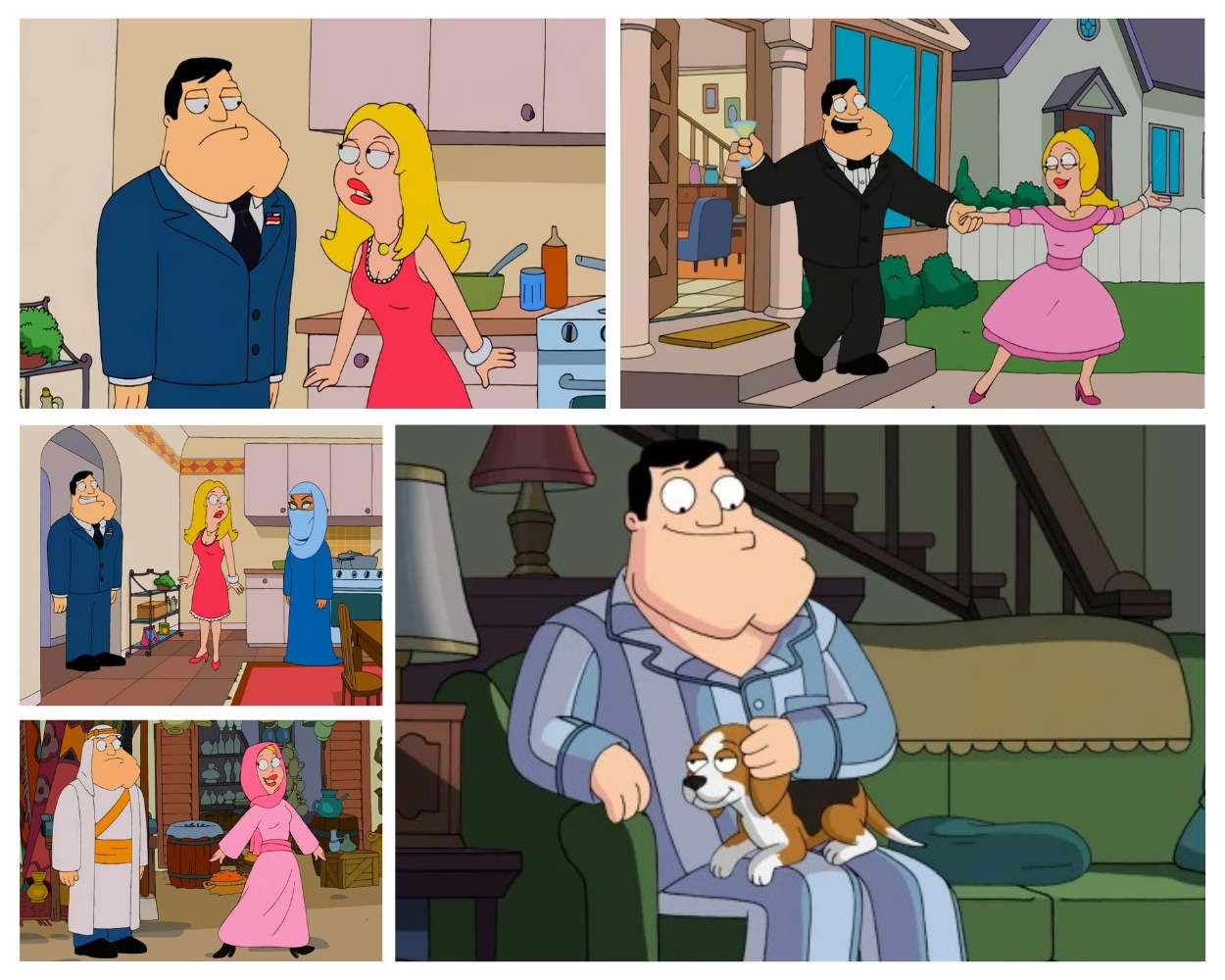
Here is the real Stan Smith, stripped of the flag-waving. On the surface he is a rigid, ultra-patriotic tough guy who believes he is the hero of the American dream. Underneath, he is a codependent man-child who cannot handle being wrong.
That gap is his entire character. Stan projects total certainty, yet almost every episode exposes how insecure he really is. He is the ultimate fixer who is completely incapable of fixing his own ego.
What makes him work is that the show never lets him off the hook. Stan causes his own disasters, learns a lesson, then resets to factory settings by the next episode. He is a living anachronism, and that stubborn refusal to change is exactly why he is so fun to watch.
The Super Patriot
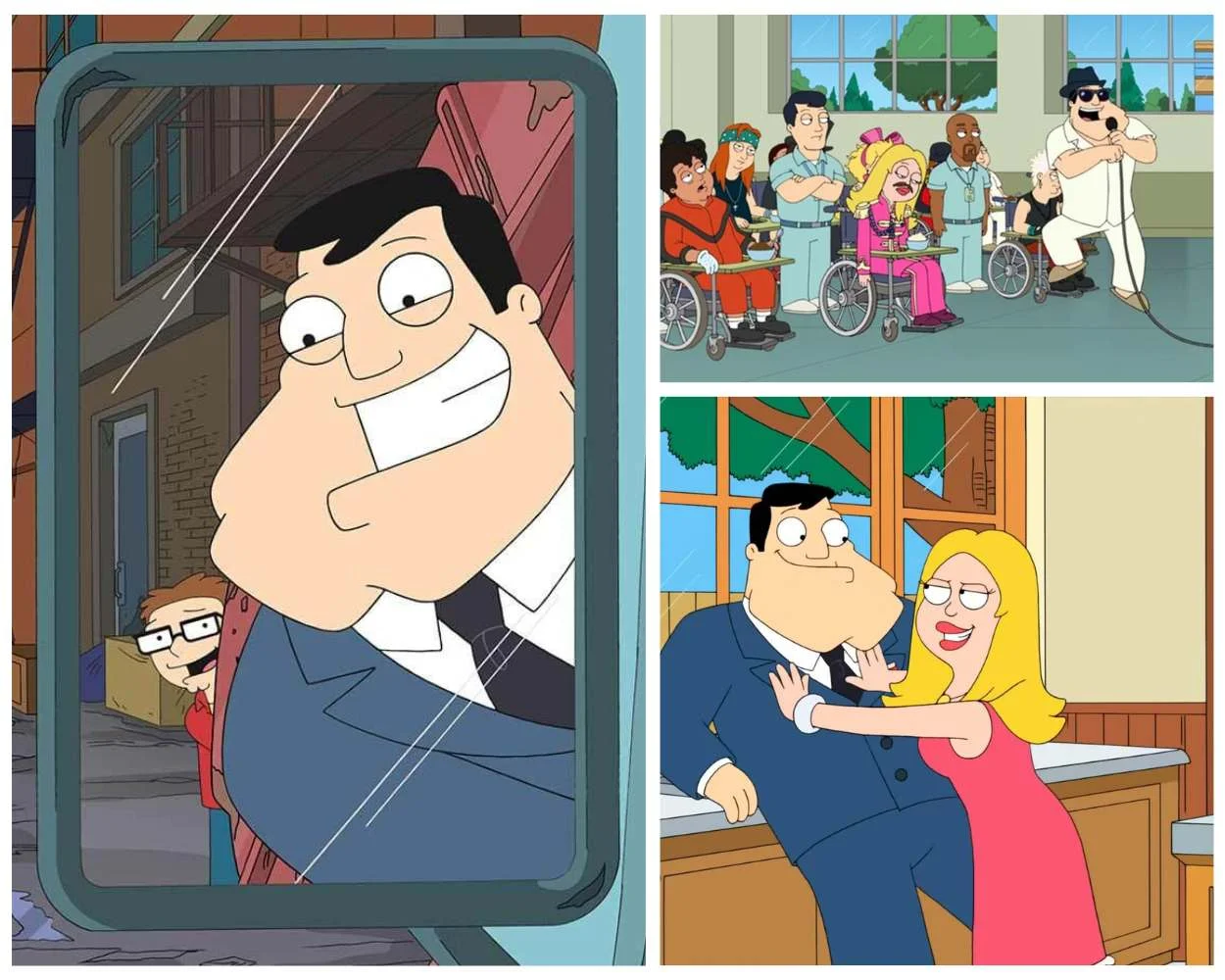
Stan Smith’s over-the-top patriotism is the armor he wears over all that insecurity. The white shirt, the tie, the flag-waving speeches: it is a costume that lets him feel like a hero.
The show uses this as pure satire. Stan is a deliberate caricature of a certain kind of fear-driven, my-country-right-or-wrong mindset, and the writers push it to absurd extremes for comedy.
He will bulldoze his own family to defend an ideal he barely understands.
The joke lands because his patriotism is never really about the country. It is about Stan needing to be the strongest, most righteous man in the room. Strip away the flags and you find a guy desperate to matter.
Stan and Francine, a Codependency Study
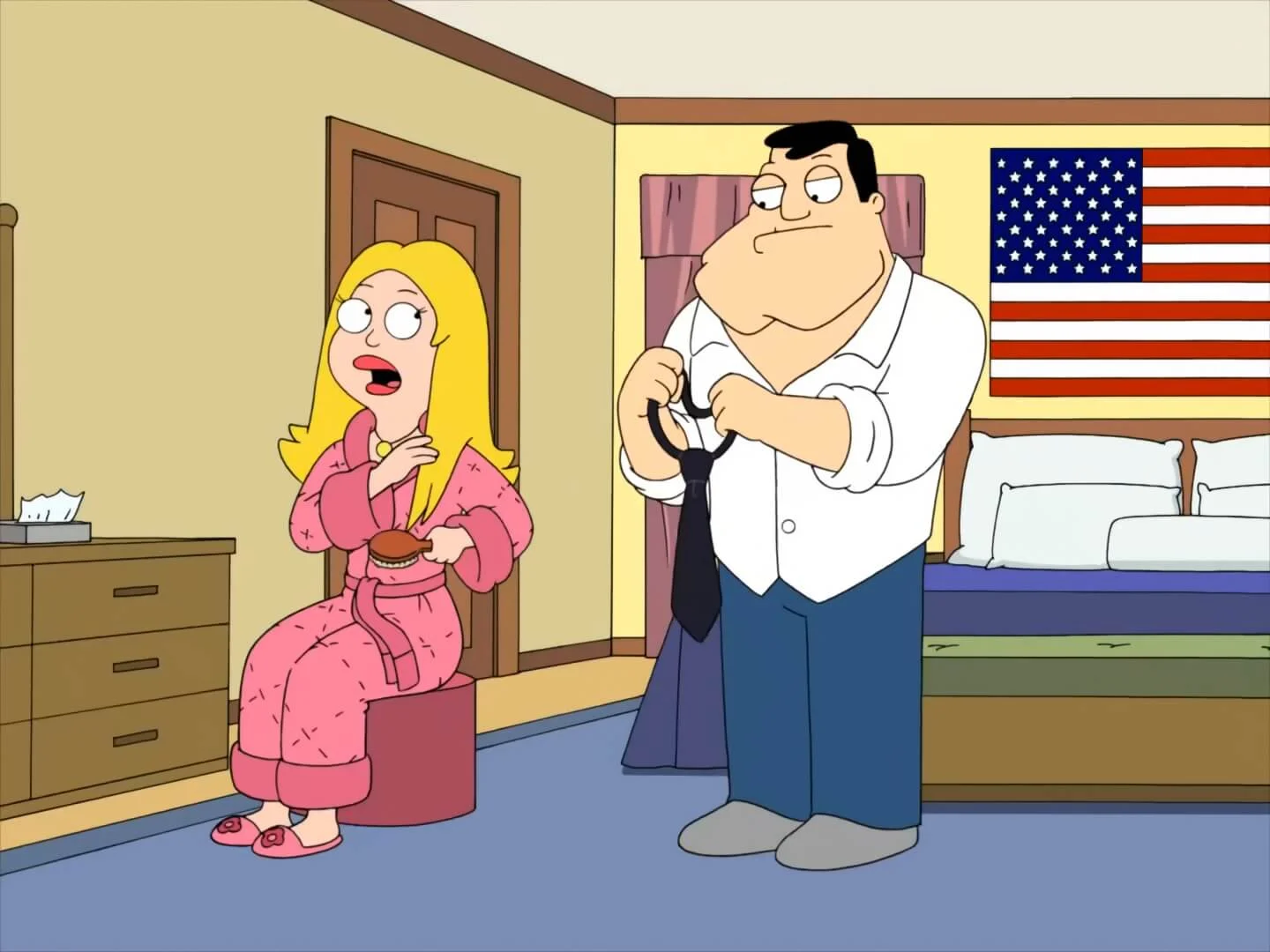
Stan’s best dynamic, and the one that reveals him most, is his marriage to Francine. On paper it looks traditional. In practice it is a fascinating codependency study.
Stan needs Francine as his emotional stabilizer. She is the only person who can absorb his ego, talk him off his latest ledge, and clean up the wreckage of his schemes. Without her, he falls apart fast.
Francine, for her part, stays because she is the one person alive who can truly manage him. Their marriage swings between sweet and dysfunctional, but that mutual dependence is the glue. Stan is only ever half a person without Francine steering him.
The Fixer Who Cannot Fix His Own Ego

As a CIA field agent and weapons expert, Stan Smith has worked under Bullock since the 1980s. On the job he is confident, capable, and armed to the teeth. It is the one arena where his bravado is partly earned.
But the show loves to collide his spy life with his home life. Stan will treat a parenting problem like a hostage situation, or bring CIA gadgets into a family dinner with predictably disastrous results.
That contrast is the point. Stan can defuse a bomb but cannot defuse an argument with his teenage daughter. The fixer who solves national security threats is helpless against his own stubborn pride.
A Patriot Living With an Alien and a Fish

Here is the irony at the heart of the show. Stan Smith, the model of buttoned-up American values, shares his home with a sardonic alien and a talking goldfish.
Roger is the extraterrestrial Stan rescued from Area 51, now hiding out as a chaotic member of the household.
Klaus is a former East German Olympic ski-jumper whose mind the CIA swapped into a goldfish to stop him winning gold at the 1986 Winter Olympics.
The setup quietly undercuts everything Stan claims to stand for. A man this obsessed with order and normalcy lives in the least normal house in the country, and mostly just rolls with it.
Stan’s Politics and How They Softened
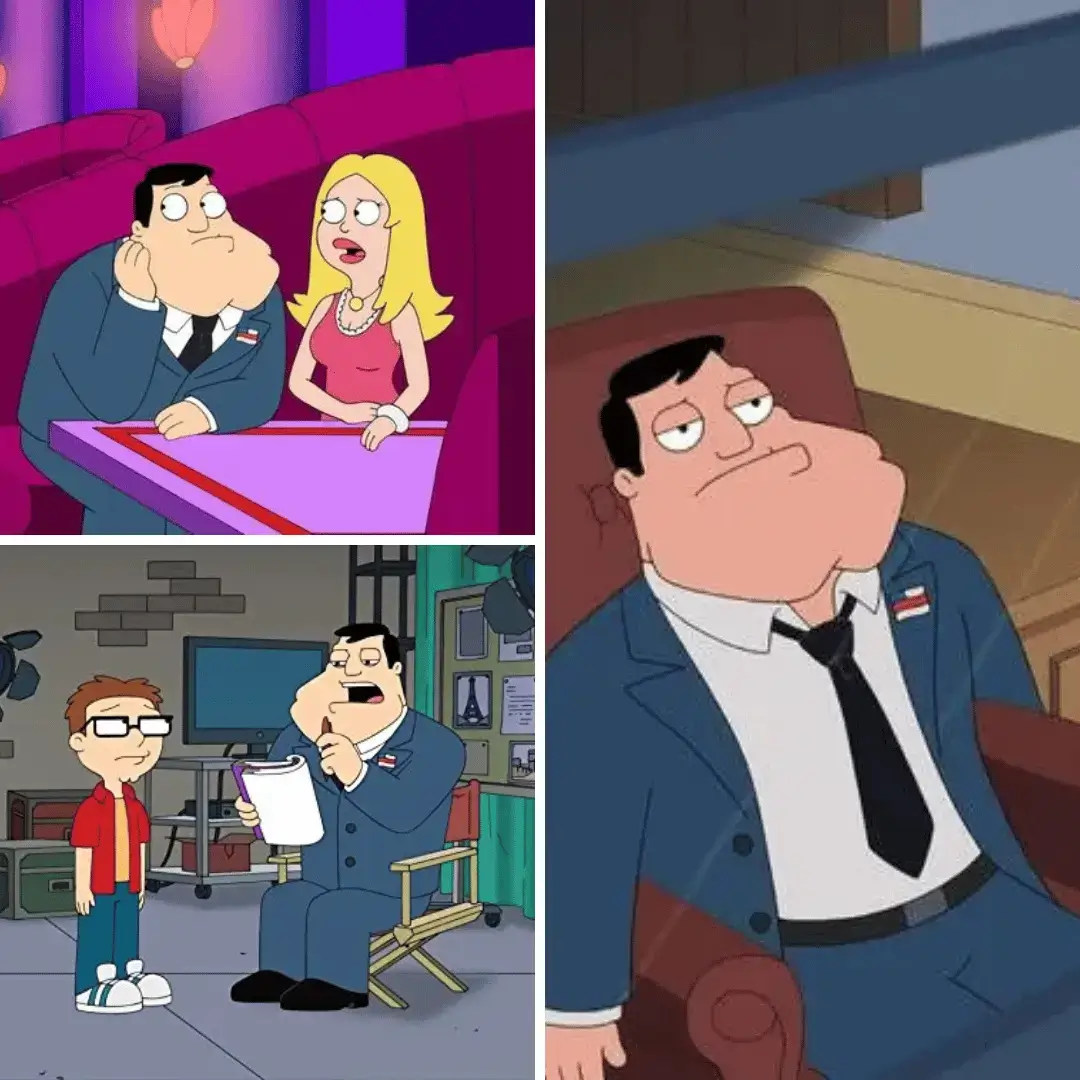
You cannot talk about Stan Smith without his politics, since they define the satire. He idolizes Ronald Reagan and George Bush, quotes their speeches, and takes hardline conservative stances on nearly everything.
What is interesting is his character development arc.
The early Stan was a fairly one-note political punchline. Over the seasons, the writers softened him, letting his views bend when reality forced his hand, like the way he warms up after learning a conservative neighbor is gay.
That evolution is why Stan outlived his own premise. He started as a target for satire and grew into a rounded, contradictory person. The politics are still there, but now they are one layer of a much deeper character.
Stan and Bullock, the Approval He Craves
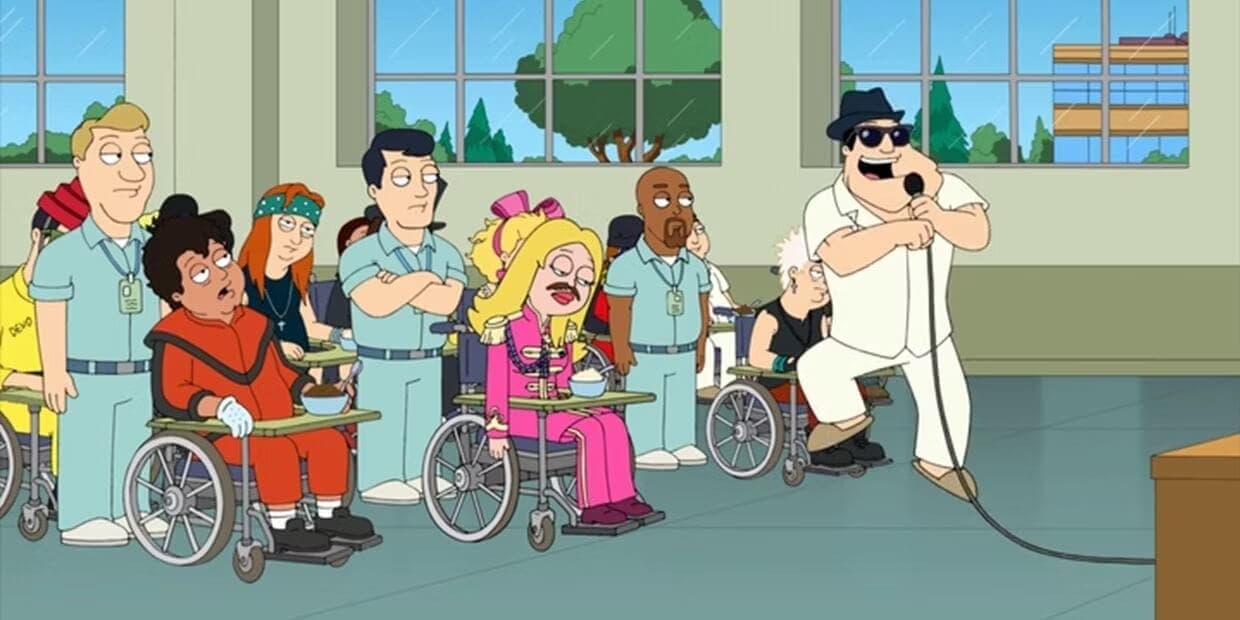
Outside the family, Stan’s most telling relationship is with his boss, Avery Bullock. Stan worships him and spends much of the series chasing his approval.
The problem is that Bullock is a depraved lunatic who treats Stan like a toy. He dangles promotions, meddles in Stan’s family, and generally uses him for entertainment.
Stan keeps coming back for more.
This is Stan’s need to matter in a nutshell. He craves validation from an authority figure so badly that he ignores how little that figure respects him. It is one of the sharpest windows into his insecurity.
Stan’s Most Iconic Moments

For a highlight reel of Stan’s iconic moments and quotes, a few episodes stand out. In “Stan of Arabia,” he uproots the whole family to Saudi Arabia after embarrassing himself at a CIA function. In “Bush Comes to Dinner,” he invites the President over and slowly loses his mind trying to impress him.
Then there are the truly unhinged premises, like the episode where a CIA pill turns Stan into a woman.
These are peak Stan: a man so certain of himself that the universe keeps finding new ways to humble him.
Watch a run of these and his appeal clicks. Stan fails spectacularly, learns nothing lasting, and somehow stays lovable through all of it.
The Psychology of Stan’s Fragile Masculinity

At his core, Stan Smith is a study in fragile masculinity. Every macho display, every refusal to cry, every attempt to prove he is the alpha comes from a deep fear of looking weak.
This is what makes him more complex than Peter Griffin, his obvious MacFarlane cousin. Peter is pure chaotic id, a man who acts on impulse. Stan has a rigid worldview and a real arc, so his failures feel like the collapse of an entire belief system rather than random gags.
That psychology is the engine of the whole show.
Stan is not just dumb or loud. He is a man performing strength to hide how scared he is of everything changing around him.
Guns, Gyms, and Show Tunes
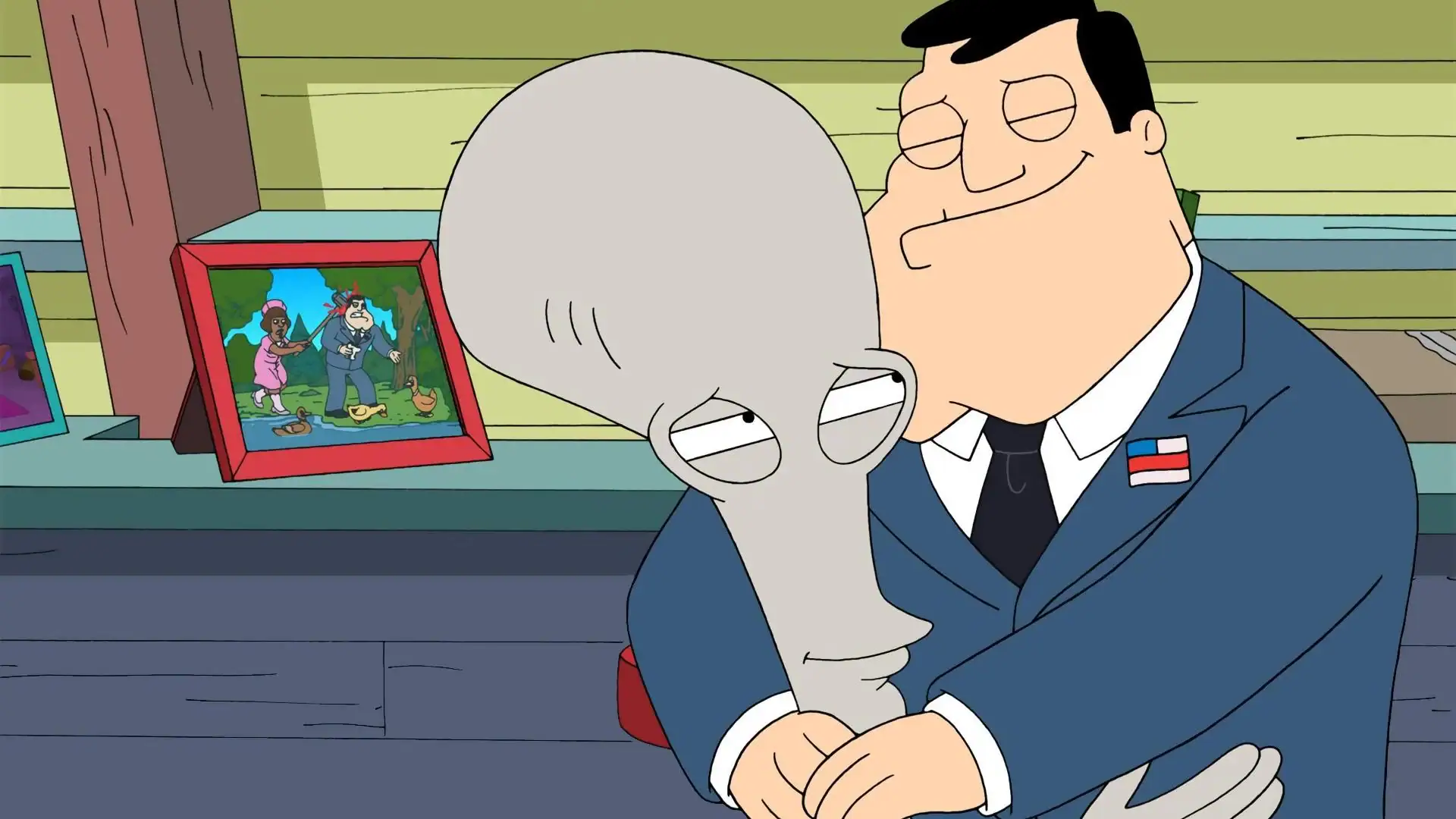
Stan Smith’s hobbies are a comedy engine all on their own. He loves guns, hard workouts, and Republican fundraisers, all of it lining up neatly with his tough-guy image.
Then the show throws a curveball. This same man is secretly obsessed with show tunes and musical theater, a passion that sits hilariously against his macho posturing.
The joke is smarter than it looks.
Stan’s interests both confirm and puncture the stereotype of the conservative American male. He is exactly who you expect and then, suddenly, not at all, which keeps the character from ever going flat.
Body Swaps and Forced Growth

Some of the best Stan Smith episodes drop him into pure science fiction. Body swaps, time travel, and reality-bending schemes yank him far out of his comfort zone.
Take “Da Flippity Flop,” where Klaus hijacks Stan’s body and leaves him stuck as the goldfish. Watching Stan lose the one thing he prizes most, control of his own body, is both hilarious and weirdly revealing.
These wild premises do more than deliver gags. They force Stan to question the beliefs he clings to, and every so often he comes out the other side a slightly better man before snapping back to his old self.
Stan and Roger, the Enabler and the Parasite
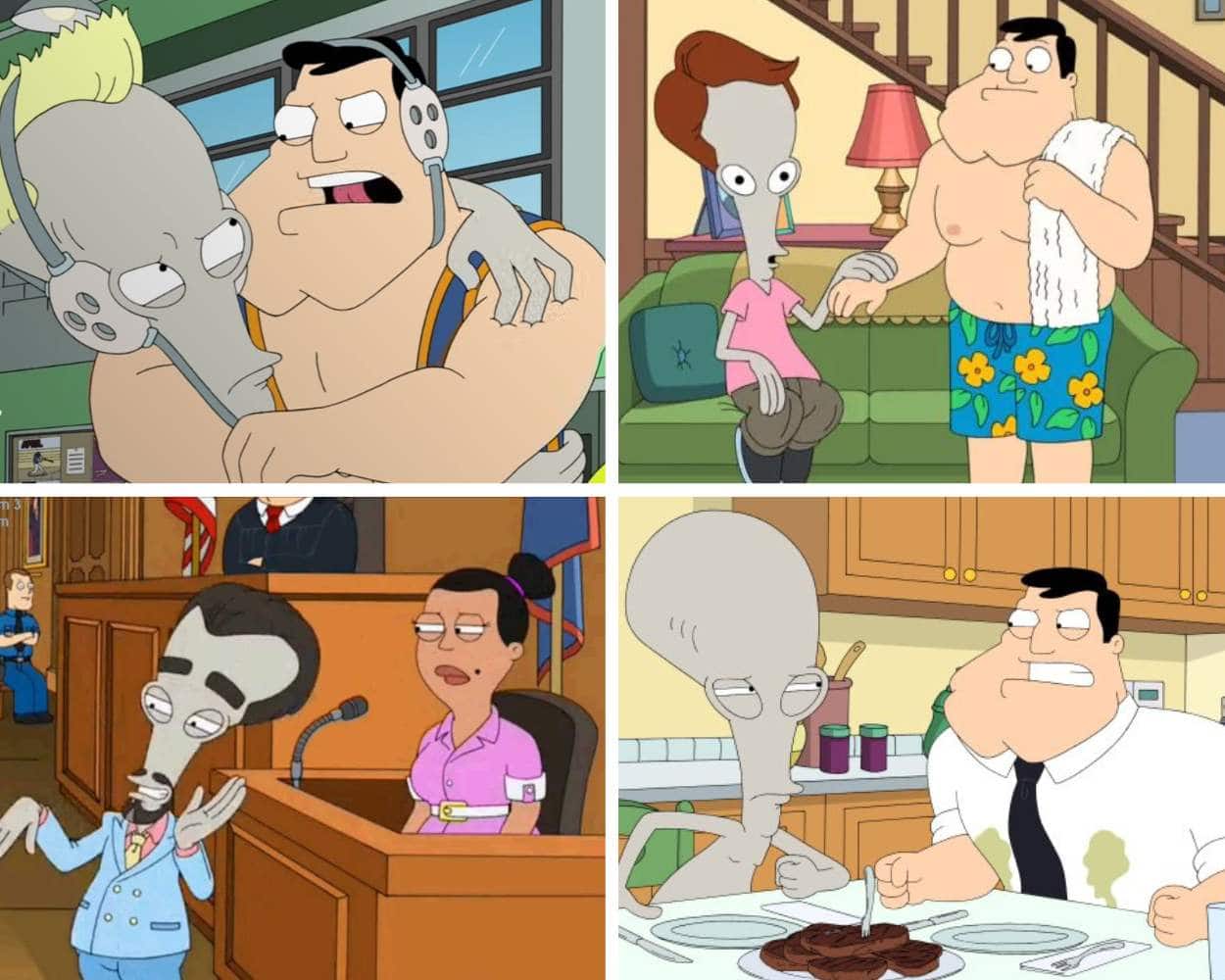
Stan’s relationship with Roger is the show’s other great dynamic, and it is a dark one. These two are basically two sides of the same narcissistic coin.
Roger is the parasite, a manipulative alien who feeds off the family’s chaos. Stan is the enabler who keeps letting him get away with it, partly out of guilt and partly because they are more alike than he wants to admit.
They clash constantly, yet Roger often shows up for Stan when it counts. Their bond bounces between real friendship and open warfare, which makes them endlessly watchable together.
Stan and Steve: Is Stan a Good Father?

So is Stan a good father? His bond with his son Steve is where that question gets tested hardest. Stan spends years trying to toughen up his sensitive, nerdy kid into his idea of a real man.
Most of the time he gets it painfully wrong.
Stan struggles to connect with a son who loves things he does not understand, and his heavy-handed lessons usually backfire.
Yet the love is real. Stan does want to guide Steve, and Steve badly wants his father’s approval.
They are proof that Stan can be a bad dad and a devoted one at the same time.
Stan and Hayley, Ideological Rivals

If Steve is the son Stan cannot mold, Hayley is the daughter who fights him head-on. She is a liberal activist, and their opposing politics fuel some of the show’s funniest arguments.
Their clashes get cartoonishly extreme, with Stan sometimes going to near-totalitarian lengths to control her choices. It is satire of the classic parent-child political divide, cranked up to eleven.
Still, the love underneath is never in doubt.
Stan will drop everything to defend Hayley when her honor is on the line. They may never agree on a single issue, but the bond holds.
The Fan Theories Worth Debating
Stan attracts some great fan theories, and two are worth your time.
The first is the Secret Genius theory. It suggests Stan’s stupidity is really a defense mechanism. He is so terrified of being proven wrong that he unlearns inconvenient things on purpose to protect his worldview.
The second is the Agent Chaos theory. This one argues Stan is secretly the CIA’s best asset precisely because he is so unpredictable. Nobody, not even his own agency, can guess what he will do next, which makes him impossible to counter.
Stan Smith is a walking contradiction.
He is both the hero and the villain of his own story, and whether he is saving the world or wrecking the kitchen, we cannot help rooting for his pure, unfiltered commitment to being Stan.
He is the anchor of a very strange household, and you can meet the rest of them in my full American Dad characters guide.
So where do you land? Are you team “Stan is a lovable dad” or team “Stan needs to be held accountable”?
Let me know in the comments.