Tweety Bird did not begin as the sweet yellow canary most people recognize.
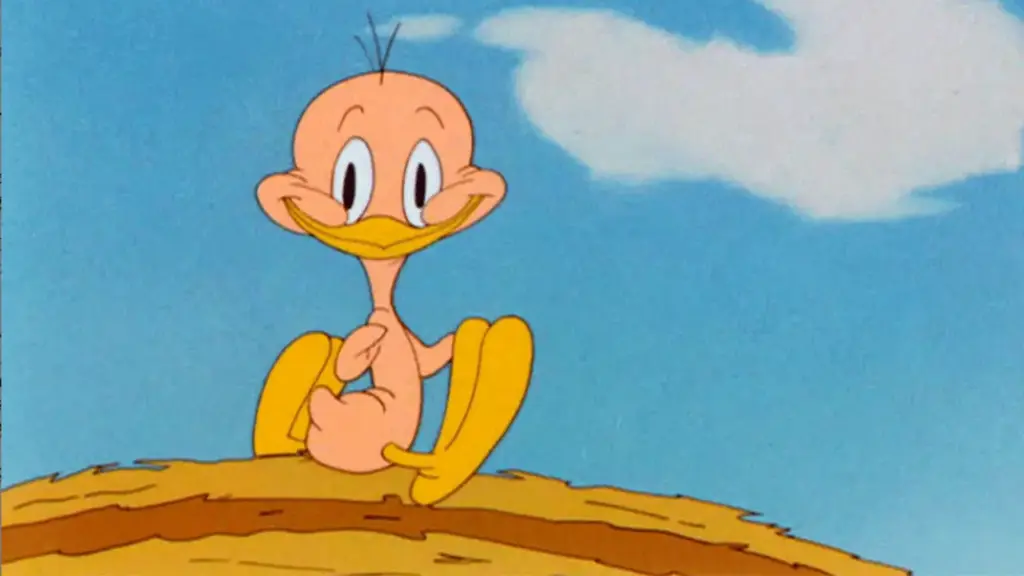
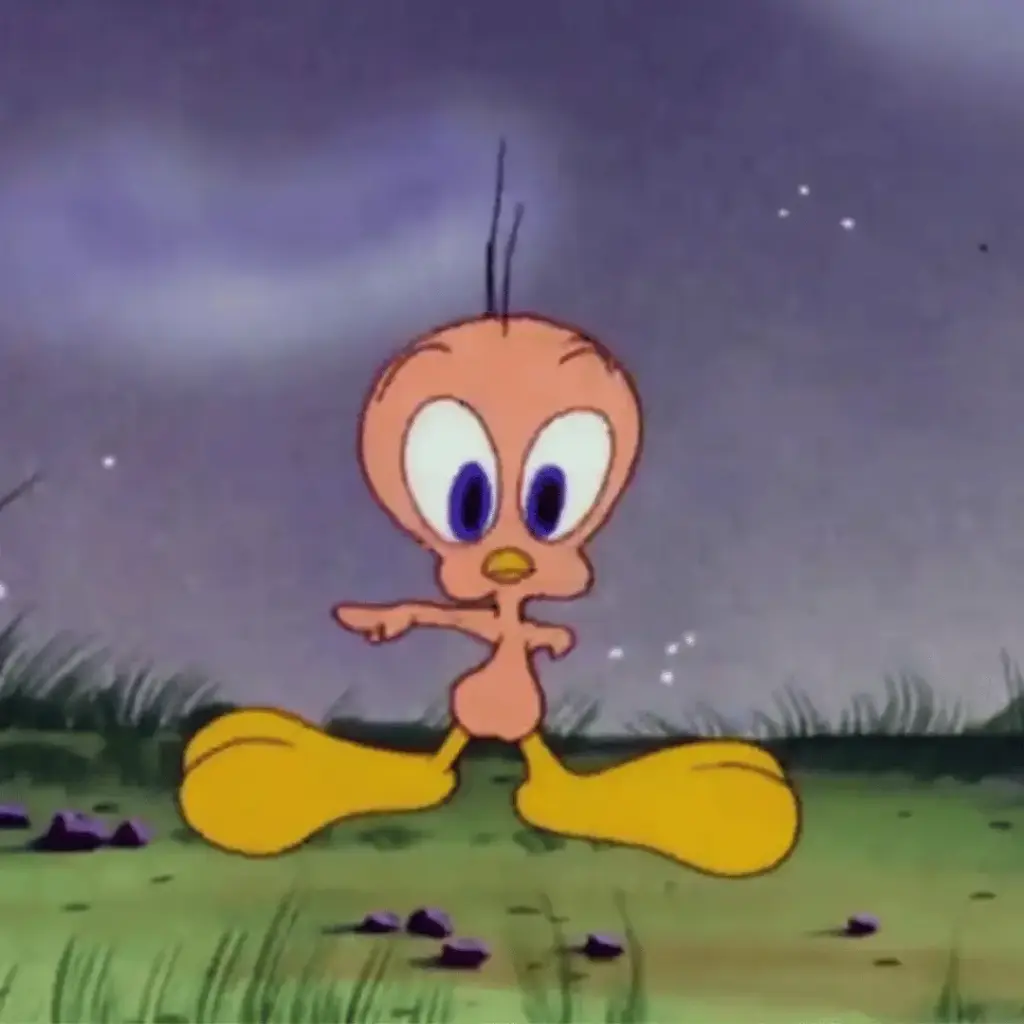
He was pink, featherless and far more aggressive.
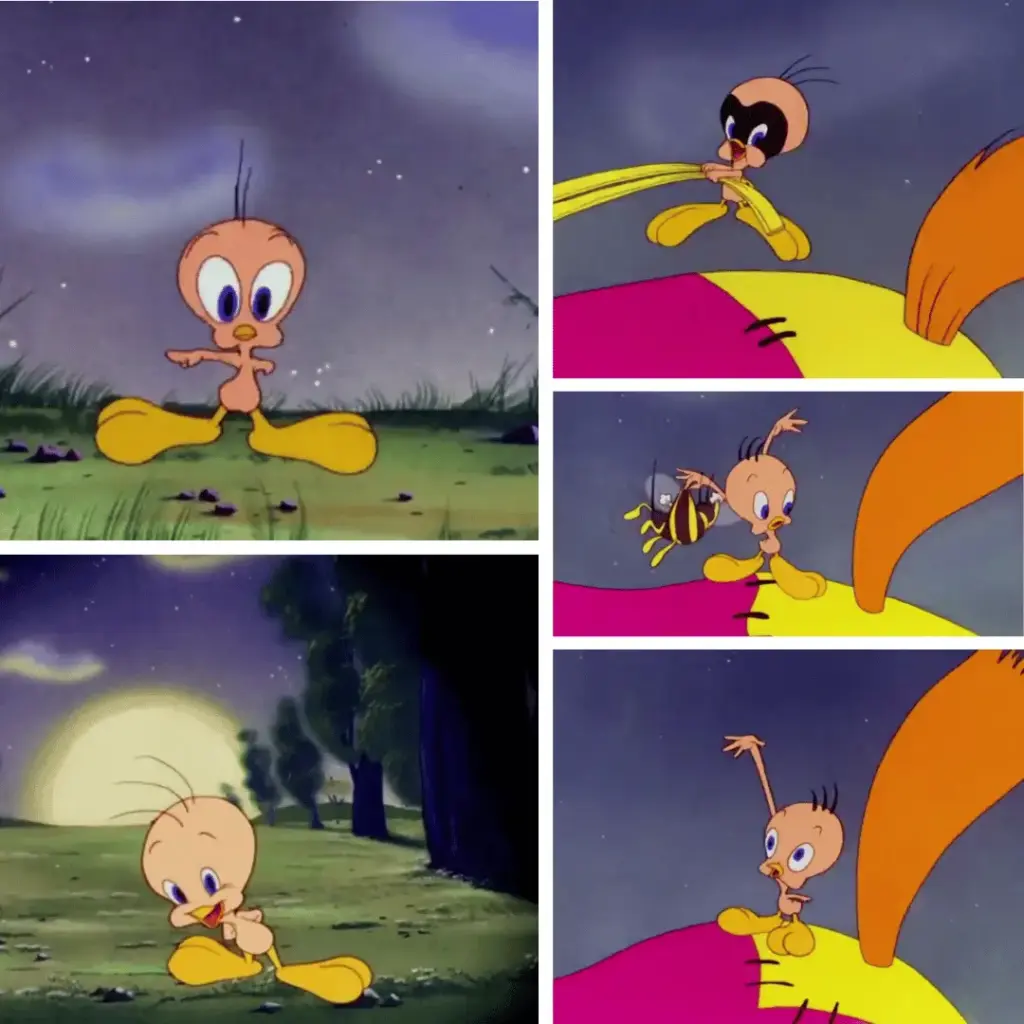
The little bird made his first appearance in the 1942 Warner Bros. cartoon A Tale of Two Kitties, where two cats attempt to reach his nest. He is never named on screen, but studio model sheets identify him as Orson.
That original design lasted for three cartoons.
Tweety did not receive his familiar yellow feathers until 1947, when director Friz Freleng paired him with Sylvester in Tweetie Pie. According to creator Bob Clampett, the change followed complaints that the featherless bird appeared naked.
The redesign did more than give Tweety something to wear. It changed his species, softened his personality and created the version that Warner Bros. would use for decades.
The short version
- Original appearance: A Tale of Two Kitties on November 21, 1942
- Original name: Orson on the studio model sheets
- Original color: Pink because he was drawn as a featherless baby bird
- Original personality: More aggressive than the later Tweety
- Yellow redesign: Tweetie Pie in 1947
- First Sylvester pairing: Also Tweetie Pie
- Sex: Male
- Species today: Canary
Was Tweety Bird Originally Pink and Featherless?
Yes. Tweety Bird’s original design was pink, featherless and meant to resemble a newly hatched baby bird.
He debuted on November 21, 1942, in the Merrie Melodies short A Tale of Two Kitties, directed by Bob Clampett.
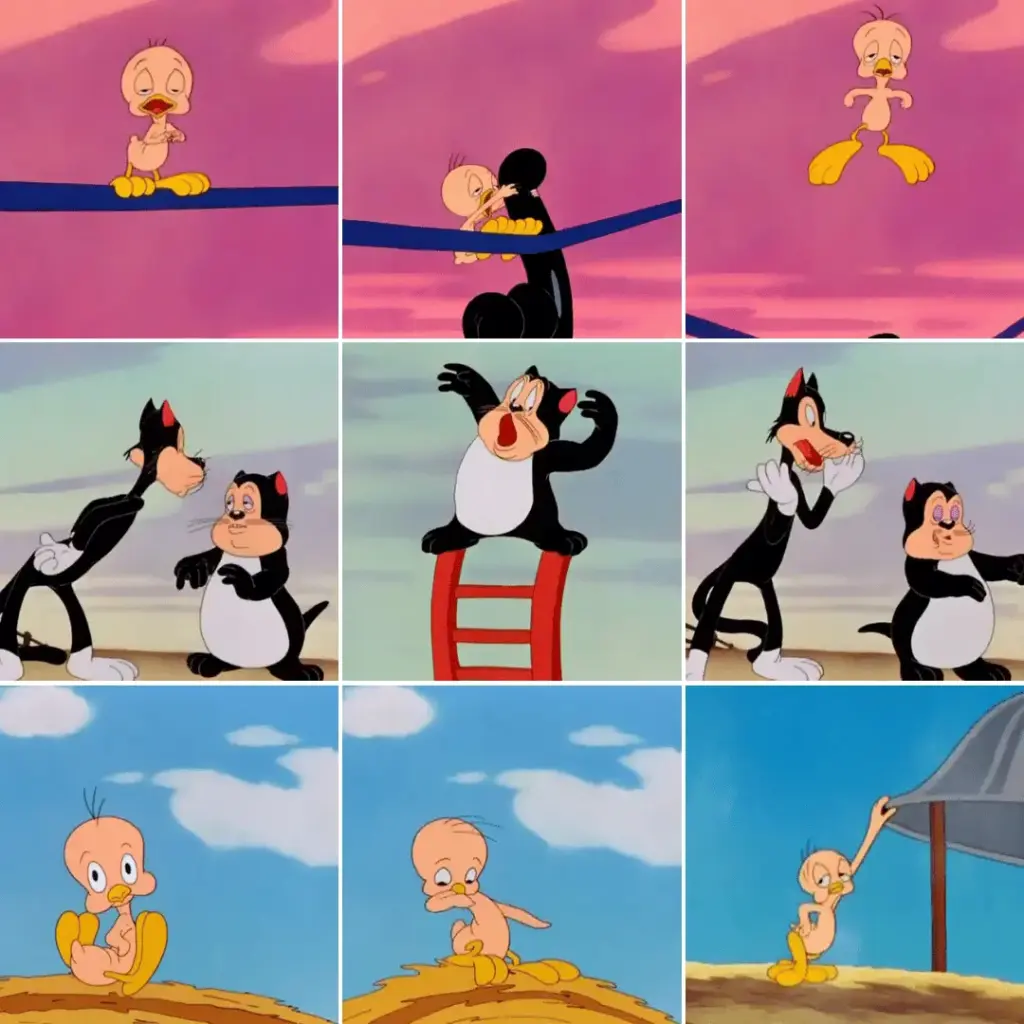
The cartoon follows Babbit and Catstello, two cats modeled after the comedy team Abbott and Costello. They spend the short trying to reach a small bird living in a nest high above the ground.
The bird appears helpless.
He is not.
Tweety repeatedly outsmarts the cats and delivers an early version of the line that became his trademark:
“I tawt I taw a putty tat.”
The bird is never called Tweety or Orson during the cartoon itself.
The name Orson comes from the production artwork created behind the scenes.
Who Was Orson the Bird in Looney Tunes?
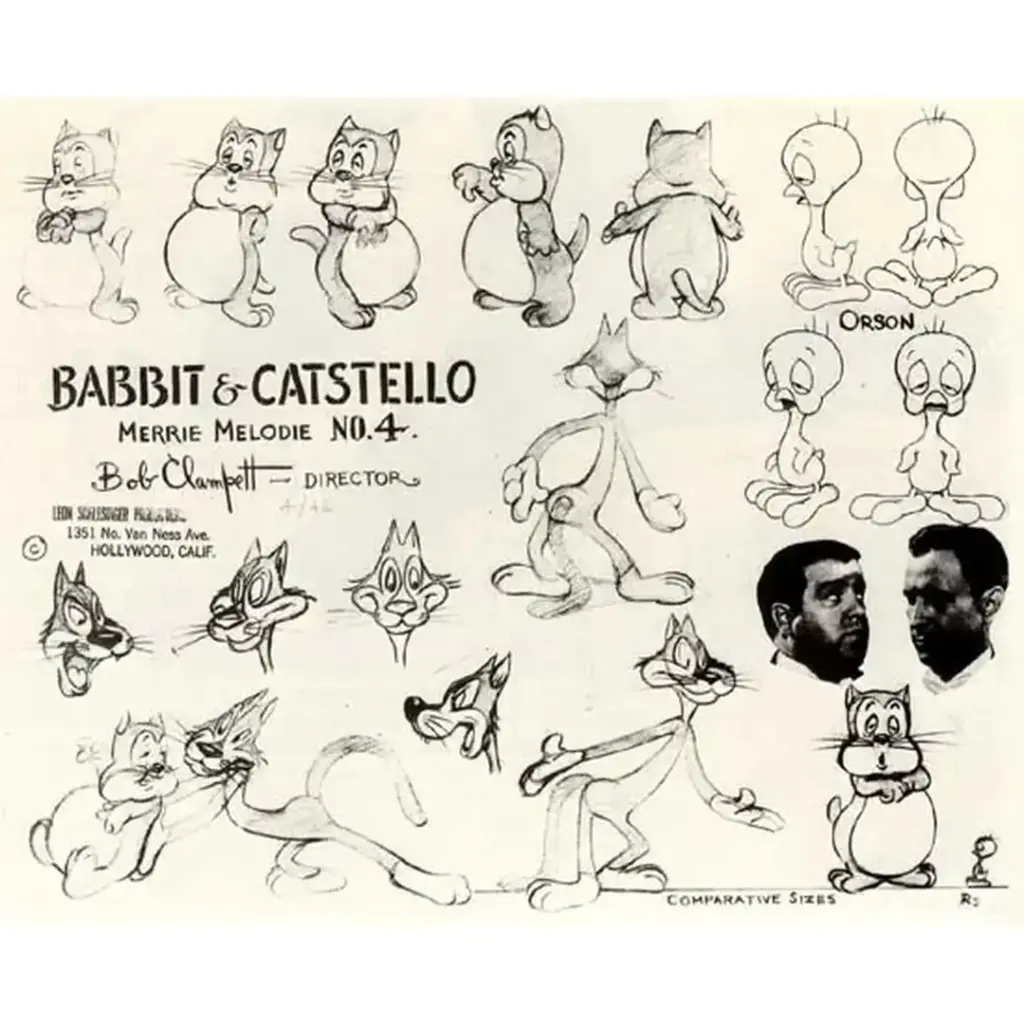
Orson was the working name used for the early version of Tweety Bird.
Animation researchers have found the name on studio model sheets prepared for A Tale of Two Kitties. The same basic baby-bird concept had also appeared briefly in Clampett’s earlier 1942 cartoon Wacky Blackout.
That does not mean audiences in 1942 knew him as Orson.
On screen, he was simply an unnamed little bird.
What the name Orson actually means
- It appeared on Warner Bros. production artwork.
- It was not spoken in A Tale of Two Kitties.
- The bird was renamed Tweety for his second starring cartoon.
- The common claim that Orson was named after Orson Welles remains unconfirmed.
The name Tweety was used by the time Birdy and the Beast arrived in 1944.
Animation historian Devon Baxter connects the name to an earlier Clampett idea involving twin baby birds called “Twick” and “Tweet.” Whatever its exact development, Tweety quickly proved more memorable than Orson.
Why Was Tweety Bird Pink Originally?
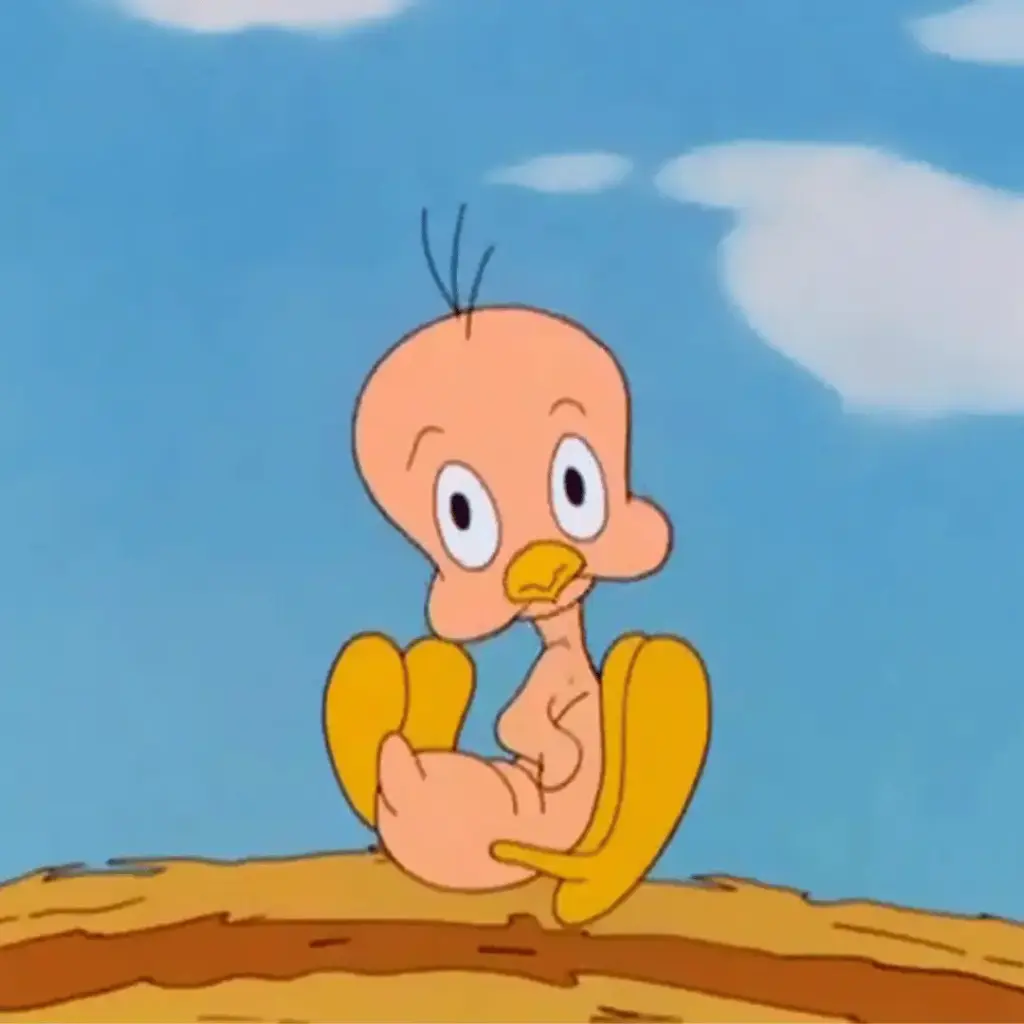
Tweety was pink because the color represented bare skin.
Bob Clampett said the design was inspired by one of his own nude baby photographs. He turned the oversized head, rounded cheeks and vulnerable body of a human infant into a tiny bird.
The Clampett Studio archive still describes that baby photograph as the starting point for the character.
The design explains several of Tweety’s original features:
- An enormous head compared with the rest of his body
- Very small wings and feet
- Soft pink skin instead of visible feathers
- Large cheeks and a slightly jowly face
- The proportions of a baby rather than an adult bird
Clampett was not initially drawing a specific breed.
The early Tweety lives in an outdoor nest and is best understood as a generic wild baby bird. He did not become clearly associated with domestic canaries until the later yellow design.
The simplest answer
Tweety was not pink because Warner Bros. originally imagined him as a pink species of bird. He was pink because he was supposed to be a naked hatchling.
He also belongs in an unusual corner of my guide to pink cartoon characters, since his color represented skin rather than fur, clothing or feathers.
The Original Tweety Bird Was More Violent
The original Tweety did not merely escape from cats.
He actively punished them.
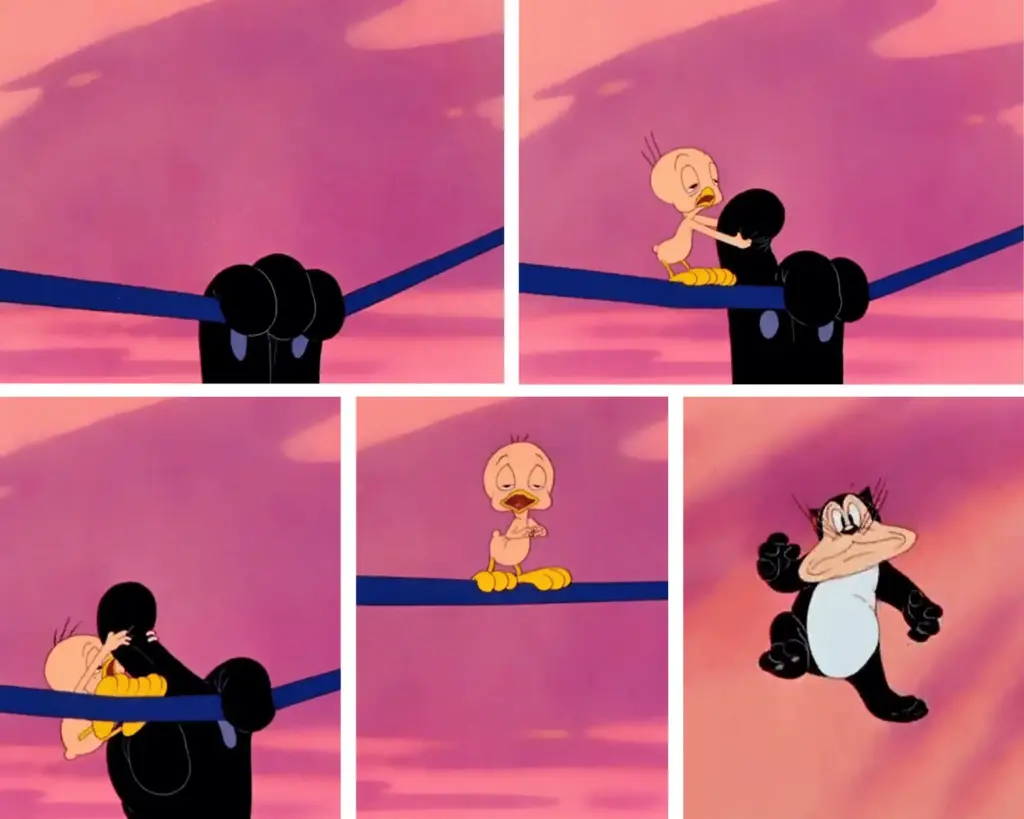
In A Tale of Two Kitties, Catstello ends up dangling from a wire by his toes.
Tweety walks over and begins playing “This Little Piggy,” pulling away one toe with each verse until the cat falls.
The joke captures the original character perfectly.
He looks like a defenseless baby, but he understands exactly what he is doing.
The pattern continued in the next two cartoons:
- Birdy and the Beast (1944): Tweety allows a pursuing cat to continue running through the air before reminding him that cats cannot fly.
- A Gruesome Twosome (1945): Two rival cats battle for the chance to eat him while Tweety encourages their destruction.
- The basic formula: Predators see an easy meal, while Tweety proves to be the most dangerous character in the cartoon.
Later Tweety cartoons softened that aggression.
Friz Freleng’s version often appears innocent while Sylvester’s own schemes collapse around him. Tweety still fights back, but the humor relies more heavily on the contrast between his sweet appearance and the cat’s suffering.
The personality change
Clampett’s Tweety frequently causes the pain himself. Freleng’s Tweety is more likely to stand nearby looking innocent while Sylvester creates his own disaster.
Was Tweety Bird Censored for Being Naked?
According to Bob Clampett, the Production Code office objected to Tweety’s featherless appearance because the bird looked nude.
The character remained pink for three starring shorts:
- A Tale of Two Kitties in 1942
- Birdy and the Beast in 1944
- A Gruesome Twosome in 1945
The Motion Picture Production Code, commonly called the Hays Code, regulated what Hollywood movies and cartoons could show. Its rules covered nudity, sexual suggestions, language and many other subjects.
Cartoons were not exempt.
Later animation histories often connect the complaint to a joke in A Gruesome Twosome. A cat calls Tweety “the naked genius,” borrowing the name of a Broadway play and drawing direct attention to the fact that the bird has no feathers.
The Cartoon Brew history of the Hays Code argues that this line made the issue impossible for the censors to overlook.
There does not appear to be a publicly available Production Code memo settling every detail of that exchange. The safest conclusion is therefore:
What the evidence supports
Clampett later said that censors objected to Tweety appearing naked. The change to feathers followed when the character moved to Friz Freleng, but the precise studio conversation survives mainly through recollections and later animation histories.
The censorship angle is especially ironic because Tweety’s first cartoon already jokes about the Hays Office.
Catstello begins a rude gesture and then stops himself, blaming the censors for what he cannot show.
A few years later, the same censorship system was credited with giving the bird a coat.
Why Did Tweety Bird Turn Yellow?
Tweety became yellow when Friz Freleng inherited the character and directed Tweetie Pie.
The short was released on May 3, 1947.
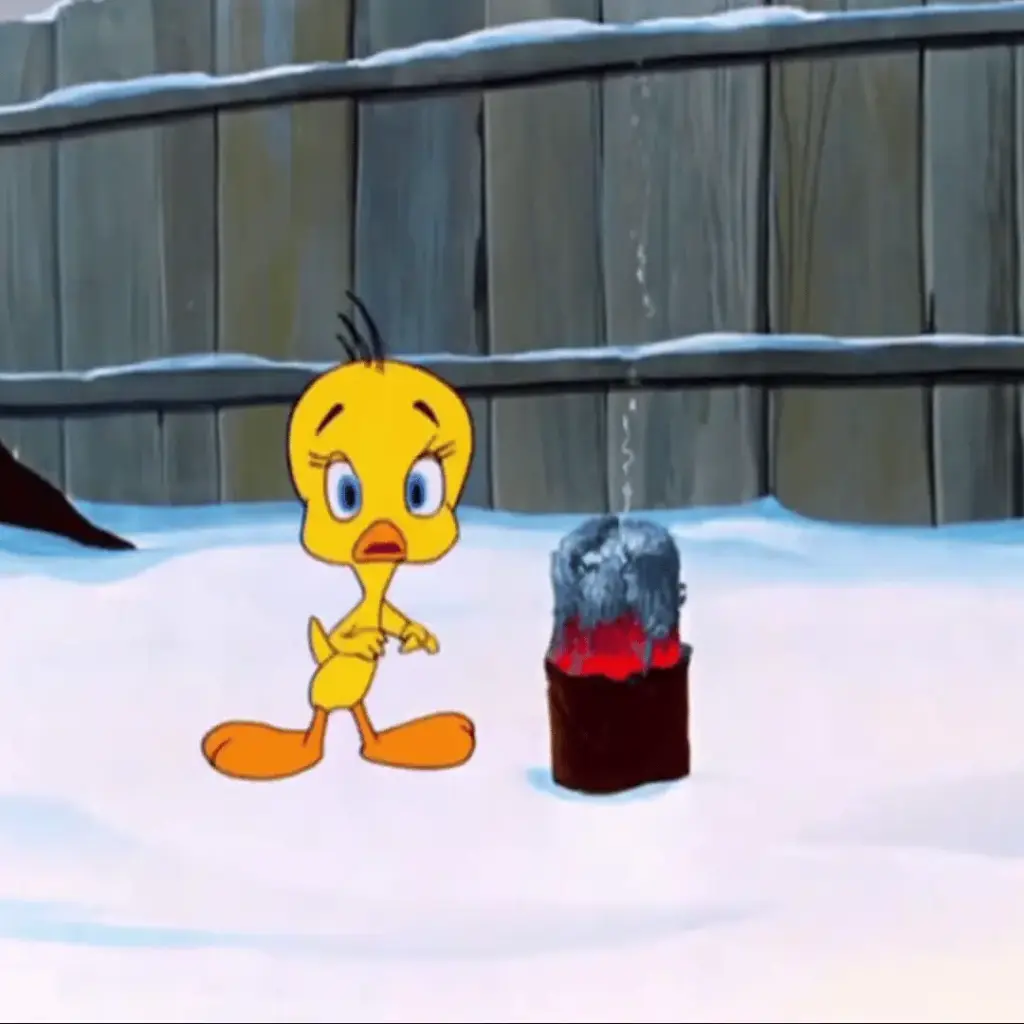
The feathers solved the nudity complaint, but Freleng made several other changes:
- Tweety became bright yellow.
- His blue eyes and long eyelashes became more prominent.
- His expressions became sweeter and less openly aggressive.
- He moved from an outdoor nest into a domestic birdcage.
- He gained a protective owner.
- He was paired with Sylvester.
Sylvester was not a completely new character. A similar black-and-white cat had already appeared in earlier Warner Bros. cartoons.
What Tweetie Pie created was the famous pairing.
The cat is called Thomas in the short, but his appearance and behavior clearly belong to the character who became Sylvester.
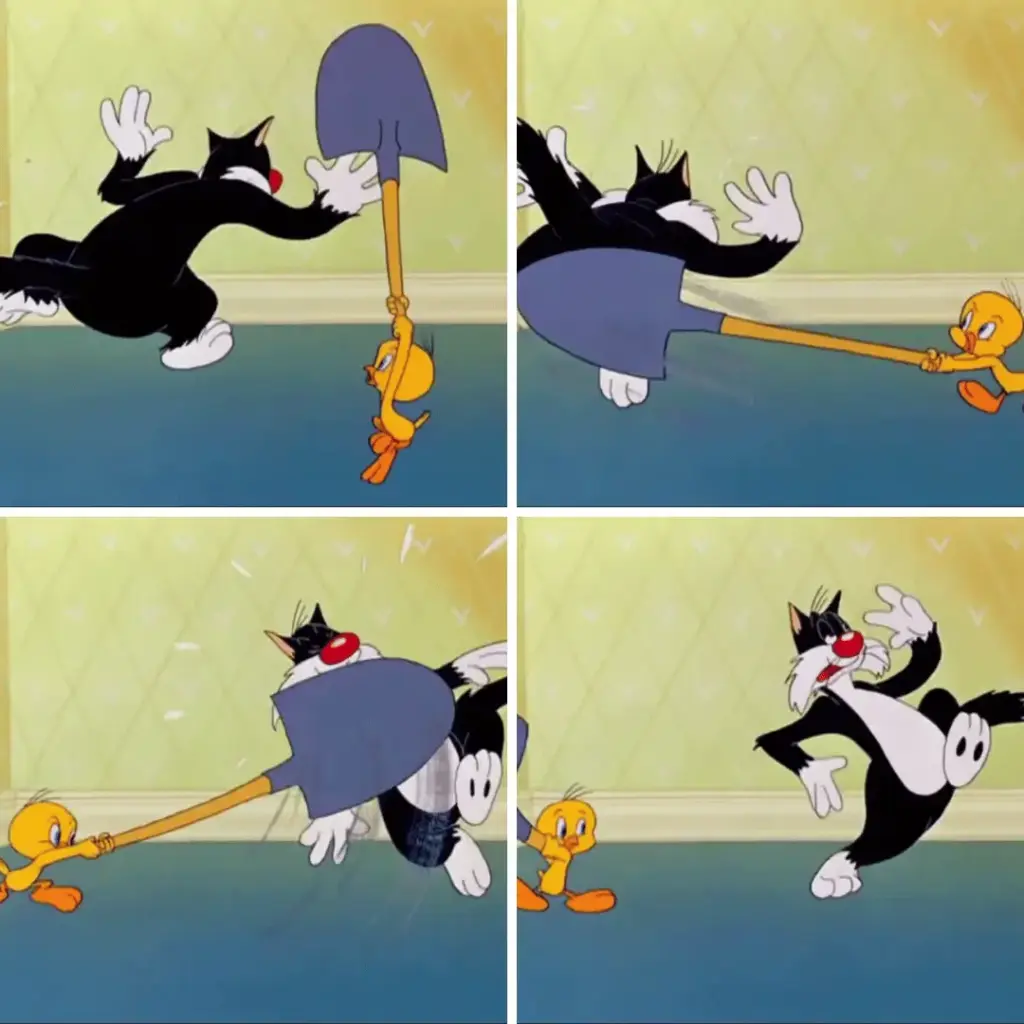
The new combination was an immediate success.
Tweetie Pie won the Academy Award for Short Subject (Cartoon), with producer Edward Selzer receiving the award at the 1948 ceremony. It was Warner Bros.’ first win in the cartoon category.
Why the 1947 redesign mattered
In one cartoon, Warner Bros. established Tweety’s yellow feathers, domestic-canary setting and partnership with Sylvester. Nearly everything audiences now associate with him arrived five years after his debut.
Tweety Bird’s Original Design vs. His Yellow Design
| Feature | Original Tweety | Yellow Tweety |
|---|---|---|
| Debut | 1942 | 1947 |
| Color | Pink skin | Yellow feathers |
| Working name | Orson | Tweety |
| Home | Outdoor nest | Domestic birdcage |
| Species | Unspecified baby bird | Canary |
| Personality | Openly aggressive | Sweet-looking but still dangerous |
| Main opponent | Different cats | Sylvester |
Is Tweety Bird a Boy or a Girl?
Tweety Bird is male.
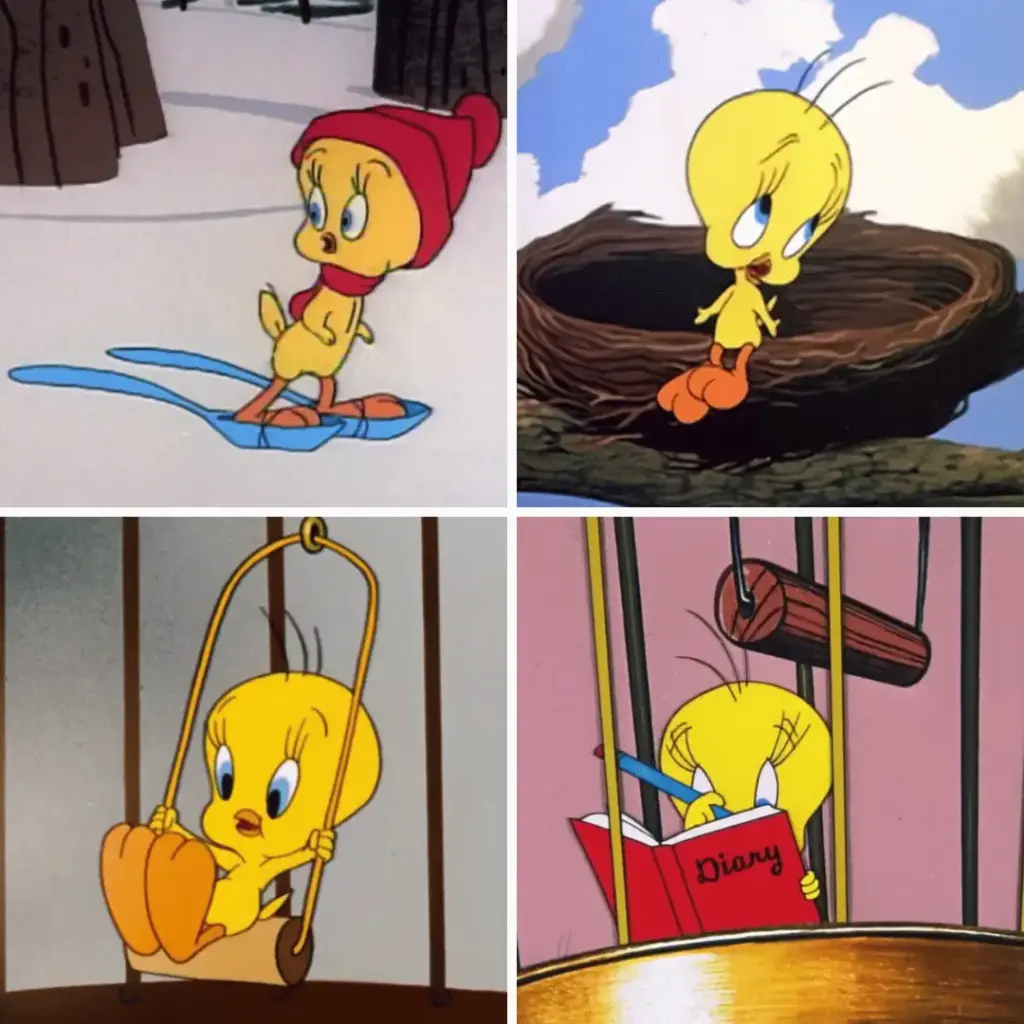
The confusion is easy to understand.
Tweety has long eyelashes, a high voice and a name that does not clearly indicate sex. Those cues are often used to identify female characters in animation.
Warner Bros. material has consistently referred to Tweety with male pronouns, and the cartoons occasionally address him directly as a boy.
In the 1953 short Snow Business, for example, Granny enters a room containing Tweety and Sylvester and greets them as “boys.”
Why the confusion began
The long eyelashes became prominent during the same redesign that gave Tweety yellow feathers. They softened his face and made him look more innocent, but they also led generations of viewers to assume he was female.
What Kind of Bird Is Tweety Bird?
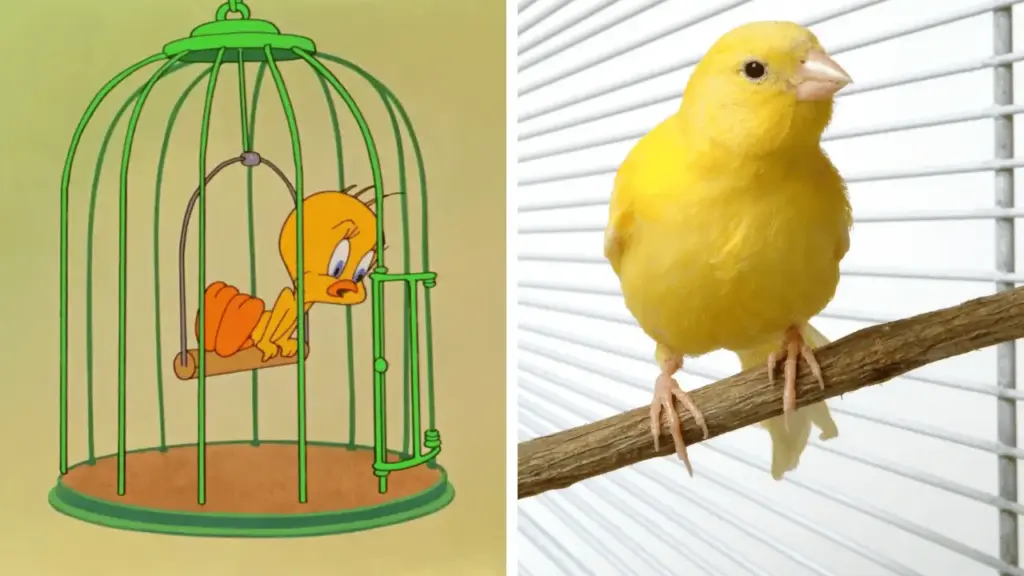
Tweety is now officially portrayed as a yellow canary.
His original 1942 appearance was less specific.
Clampett’s featherless bird lived in a nest and was not identified as a canary in the cartoon.
The 1947 redesign changed how audiences read him. A small yellow bird living in a cage with a protective owner immediately suggested a domestic canary.
Later cartoons and television series made that identity explicit.
- Before 1947: An unspecified wild baby bird
- After 1947: A yellow domestic canary
- Unchanged: The oversized head, tiny body and ability to defeat much larger cats
Tweety’s species was not literally chosen by the censors. Still, the chain of events is hard to miss: the complaints led to feathers, the feathers were yellow, and the yellow bird was developed into a canary.
For more animated birds, see my guide to memorable bird cartoon characters.
Is the Original Pink Tweety Bird Public Domain?
A Tale of Two Kitties is treated as a public-domain work in the United States because its copyright was not renewed under the rules then in effect.
That means the 1942 short can be copied, shown and adapted in the United States without obtaining copyright permission for that film.
The distinction between the 1942 bird and modern Tweety still matters.
The public-domain boundary
- Available from the 1942 short: Its footage and original pink baby-bird elements
- Added later: Yellow feathers, the established canary identity and the regular Sylvester partnership
- Still relevant: Warner Bros. trademarks and branding
- Location matters: Public-domain status may differ outside the United States
The safest description is not that every version of Tweety now belongs to everyone.
It is that the exact 1942 cartoon and the original elements presented in it are in the United States public domain, while later additions remain separate.
For more examples of characters with early open versions, read my guide to public-domain cartoon characters.
How Tweety Bird’s Redesign Created an Icon
The original Tweety was funny because he behaved nothing like he looked.
He appeared to be a defenseless baby and then attacked predators with surprising enthusiasm.
Freleng kept that contrast but refined it.
The yellow feathers made Tweety brighter and easier to merchandise. The eyelashes strengthened the illusion of innocence. The birdcage gave Sylvester a clear target, while Granny created a reason the cat could never attack openly.
Most importantly, Sylvester became the perfect opponent.
Tweety did not need to search for trouble. Trouble arrived at his cage in the form of a hungry cat with an elaborate plan.
That formula lasted because it was simple enough to repeat without feeling exactly the same:
- Sylvester sees Tweety.
- Sylvester builds a plan.
- Tweety notices more than he admits.
- The plan collapses.
- Tweety ends the cartoon looking innocent.
Tweety Bird began as Orson, a naked pink hatchling modeled after Bob Clampett’s baby photograph.
Five years later, he had yellow feathers, long eyelashes, a cage, an Oscar-winning cartoon and the cat who would chase him for the rest of the century.
The redesign did not simply cover him up.
It turned an aggressive one-off baby bird into one of Warner Bros.’ most recognizable characters.
For more stories about classic cartoons changing with cultural standards, read my articles on how Pepé Le Pew’s reputation changed and why Cartoon Network temporarily shelved Speedy Gonzales.