
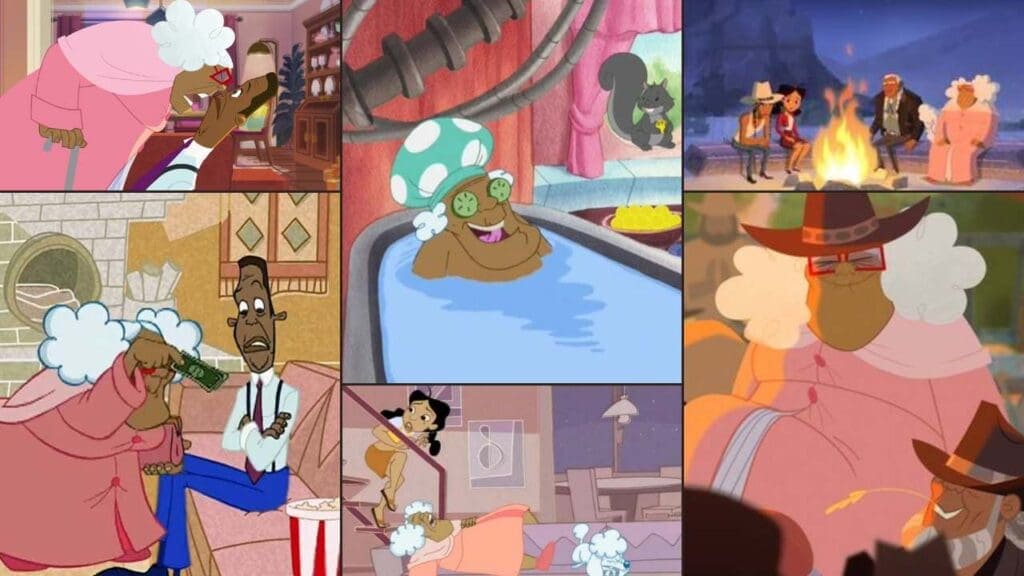
In the loud, high-energy world of The Proud Family, one character stands above the rest, literally and figuratively.
Suga Mama is not just a beloved grandmother. She is the show’s anchor, its sharpest wit, and every so often, its biggest troublemaker.
Whether she is schooling Oscar on life or stealing a scene with one perfectly timed insult, she reminds us that a family’s real strength often comes from the person with the most sass and the biggest heart.
More than twenty years after she first hit our screens, I still think Suga Mama is the gold standard for how to write a matriarch who is as tough as she is loving.
Let me break down why.
Suga Mama: The Unstoppable Heart of The Proud Family
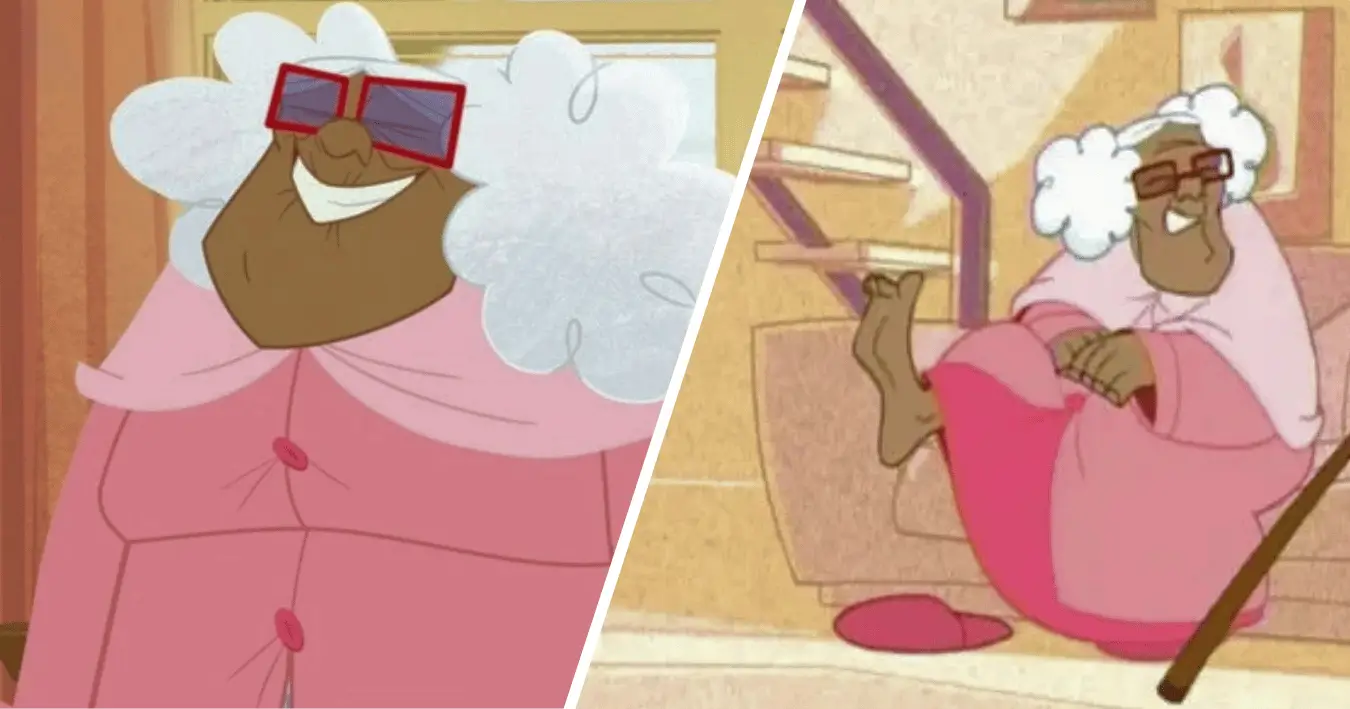
Her full name is Charlette “Suga Mama” Towne-Proud, and she is the beating heart of the Proud household.
She is Oscar and Bobby’s mother, Trudy’s mother-in-law, and the grandmother to Penny, BeBe, and CeCe. She is voiced by Jo Marie Payton, who a lot of us know as Harriette Winslow from Family Matters.
Here is my whole take on her in one line. In a house where Oscar is always chasing a wild get-rich-quick scheme and Penny is drowning in middle-school drama, Suga Mama is the only one living in the real world.
She is the family’s moral compass, even if that compass is pointing at you with a cane. That is what makes her more than a background grandma. She is the show’s truth-teller.
Suga Mama at a glance: Full name Charlette Towne-Proud. Voiced by Jo Marie Payton. Oscar’s mother and Penny’s grandmother. Known for her Afro puffs, red glasses, a cane she is not afraid to swing, and a poodle named Puff. Why it matters: every detail about her was designed to feel like a real, specific person, not a generic “nice old lady.”
The Art of the ‘Suga’ Slang: Why Her Delivery Is Iconic

If you ask fans why they love Suga Mama, the answer usually comes back the same way: the woman is funny.
Her comedy is all in the delivery. She never beats around the bush, she never softens the blow, and she always gets straight to the point. If something is foolish, she says so, usually before the person has finished being foolish.
A lot of her best lines are aimed at Oscar, and they land because they are equal parts brutal and loving. Her signature line to him sums up the whole show in eight words.
The line that says it all: After a full episode of insulting and even chasing her son around, Suga Mama tells Oscar, “Sometimes I like you, but I always love you.” That single quote is the key to her character. Her sass is just the surface. The love underneath is the foundation.
What makes her humor work is that it is never mean for the sake of being mean.
She roasts the people she cares about because she is paying closer attention to them than anyone else in the room. Why it matters: the show proved that a grandmother could be the funniest character in the cast, not the quiet one waiting in the kitchen.
Beyond the Apron: How Suga Mama Redefined the Grandmother

To understand why Suga Mama landed like a revelation, you have to look at the grandmothers who came before her.
For decades, animation leaned on the same tired template.
The cartoon grandma was passive and soft-spoken, defined almost entirely by her kitchen, her knitting, or her need to be rescued. She existed as a gentle background fixture, a comforting sounding board for the younger heroes and nothing more.
Then The Proud Family showed up and introduced a matriarch who did not just bend that mold. She shattered it.
Suga Mama is loud, active, opinionated, and completely in charge. She has hobbies, grudges, a love life, and a backstory.
She is a full person with an edge, and the show treats her that way from the first episode. Why it matters: giving a grandmother that much depth and attitude was rare in 2000s animation, and it quietly told an entire audience that getting older does not mean fading into the background.
Rooted in a real matriarch: Creator Bruce W. Smith named Suga Mama after his own mother, Mary, who disliked being called “grandma.” He built the character around her bold spirit. That is a big reason Suga Mama feels so real. She was based on a woman who refused to be softened, too.
The Matriarch’s Edge: Why She’s the Toughest Character on the Block

Do not let the Afro puffs and the cane fool you. Suga Mama might be the single toughest character in the whole show.
This is a grandmother who does Tae Bo, watches and throws down in wrestling, and grew up riding rodeo. Her list of physical feats is absurd in the best way:
- She is a former baseball coach with real athletic skill.
- She grew up bull-riding and doing rodeo back home in Towne, Oklahoma.
- In a crossover with Lilo & Stitch, she beat the giant Captain Gantu in a wrestling match without a single scratch, one of many over-the-top feats on her résumé.
Her toughness is not just physical, either. This ties right back to my favorite thing about her. In most cartoons, the grandma is the peacekeeper. Suga Mama is usually the one pointing out that Oscar’s latest scheme is doomed before it even starts.
She was never there to be sweet. She was there to be right.
Why it matters: by making a grandmother the smartest and most grounded person in the room, the show handed her a kind of authority that older women rarely got in animation, and it treated aging with a lot more respect because of it.
She earned that edge: Suga Mama’s backstory explains a lot. Her father, Pa Towne, was old-fashioned and refused to let her join the family business because she was not “ladylike” enough. She spent her whole life fighting to be taken seriously. No wonder she has no patience for anyone who underestimates her now.
The Softer Side: Puff, Papi, and Penny

For all her edge, Suga Mama has a big, warm center, and the show is careful to remind you of it.
Her poodle, Puff, gets a level of tenderness she rarely shows anyone else. The name is a nod to her beloved Afro puffs, and the two of them are basically a team, right down to a shared dislike of Oscar.
Then there is Papi, her longtime crush. Papi only speaks Spanish, and he spends most of his time insulting Suga Mama in a language she does not understand, which she happily takes as flirting. It is one of the show’s funniest running gags, and it shows a lighter, almost girlish side of her.
Most of all, there is her bond with Penny. With her granddaughter, Suga Mama drops the armor. She listens, she gives real advice, and she often takes Penny’s side. Why it matters: those quieter moments keep her from being a one-note joke and turn her into someone you want in your corner.
The running gag that never gets old: Suga Mama is head over heels for Papi, and Papi cannot stand her. Every rude thing he mutters in Spanish, she hears as sweet talk. It is silly, it is charming, and it quietly reminds you that she is still very much living her life.
The Legacy of the Proud Matriarch
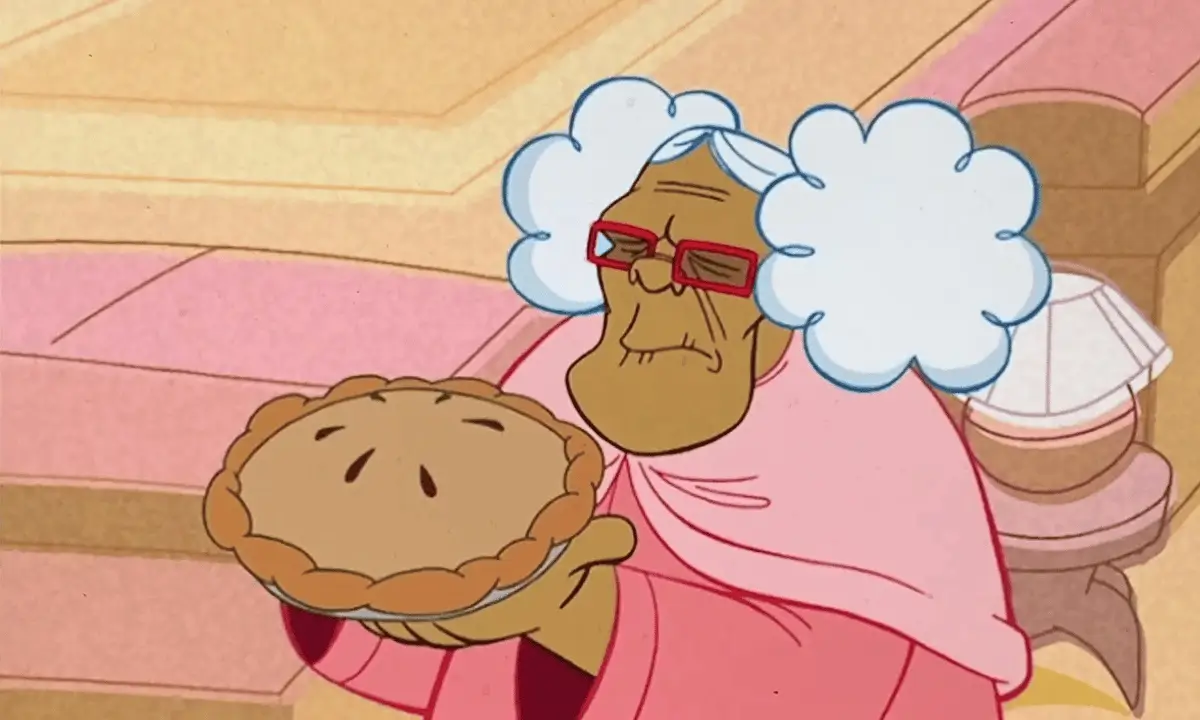
Two decades on, Suga Mama has not aged a day, and neither has her impact.
She stands as one of the most memorable Black cartoon characters ever put on screen, and a huge part of that is how she grounds the Proud family in something real. Through her, the show reaches back into history, family tradition, and the lived experience of an older Black woman who has seen it all.
When The Proud Family came back with the reboot, Louder and Prouder, on Disney+, Suga Mama returned exactly as sharp as ever, with Jo Marie Payton back in the role. A whole new generation got to meet her, and she fit right into the 2020s without losing a step.
That staying power is the real proof of the character. Why it matters: Suga Mama showed writers and viewers alike that an older woman could be funny, fierce, wise, and fully alive, all at once. That is a template a lot of shows are still catching up to.
Why fans still love her: Suga Mama never asked to be liked. She earned it by being honest, hilarious, and loyal to her family no matter what. In a media landscape that usually pushes older characters to the sidelines, she grabbed the spotlight and refused to give it back.
Standing Tall Against Oscar: The Heart of the Show

If you ask me, the funniest and truest part of the whole series is the relationship between Suga Mama and her son Oscar.
On the surface, it looks brutal. She constantly compares him to his more successful older brother Bobby, mocks his failed schemes, and is not above chasing him around the house. Oscar gives it right back, poking fun at her age every chance he gets.
But the show never lets you forget what is underneath. The moment anyone outside the family comes after Oscar, Suga Mama is the first one standing in front of him.
- The clearest example comes when her own sister, Sista Spice, tries to swindle people and set Oscar up to take the fall. Suga Mama shuts it down immediately and defends her son, admitting that she might not always like him, but she will always love him.
That is the whole magic of the character in one relationship.
The insults are the comedy.
The fierce, unconditional loyalty is the heart. Why it matters: Suga Mama taught a generation that tough love is still love, and that the person giving you the hardest time is sometimes the one who has your back the most.
So let me ask you this.
Who was the Suga Mama in your family, the one with the sharpest tongue and the biggest heart?
Because I think everyone has one, and if you do not, there is a decent chance it was you.
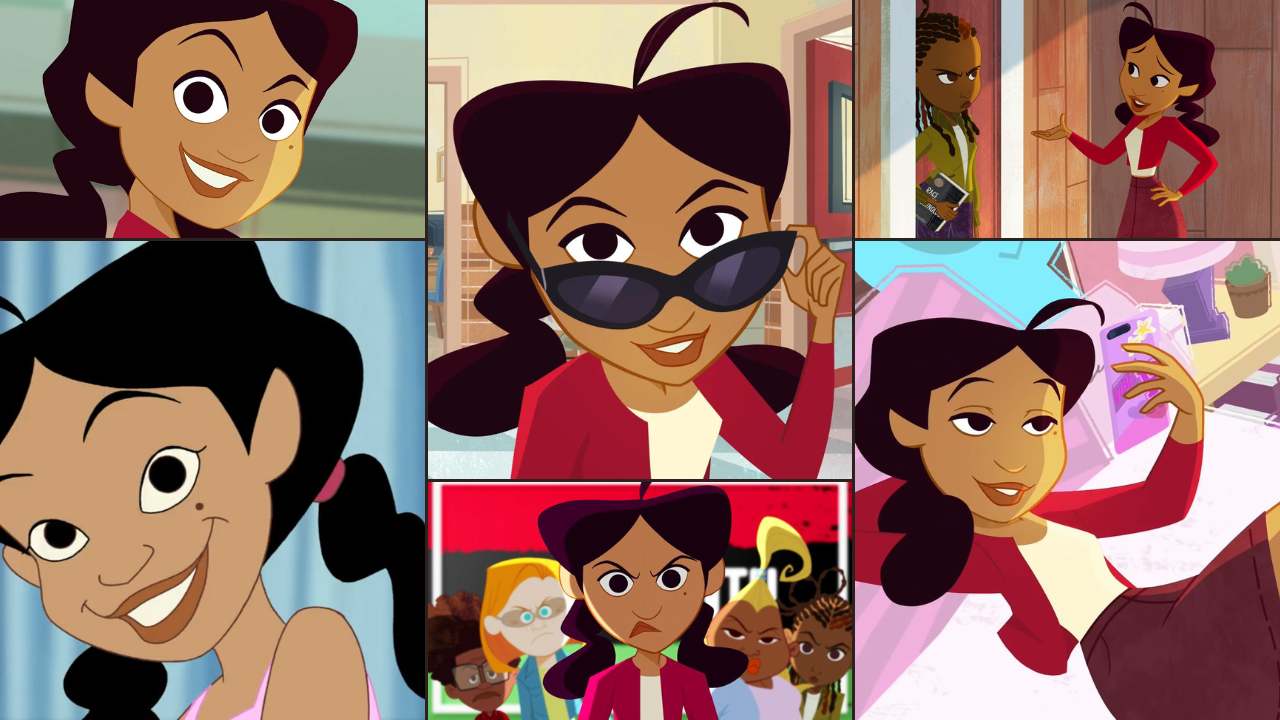


My interpretation has always been that Suga Mama’s attitude toward Oscar is her way of showing love. She doesn’t coddle him because she believes resilience comes from being challenged. It’s easy to focus on the jokes, but there are plenty of moments where she protects him when it really matters. That balance is what makes their dynamic work.