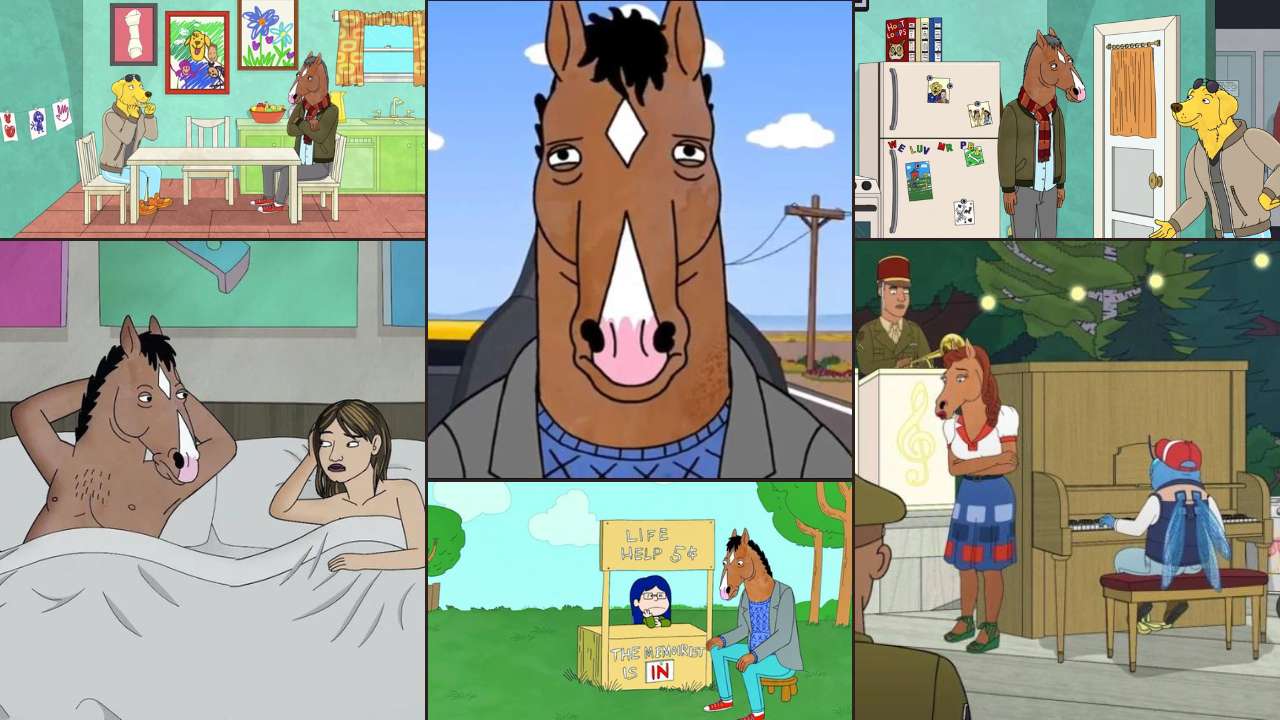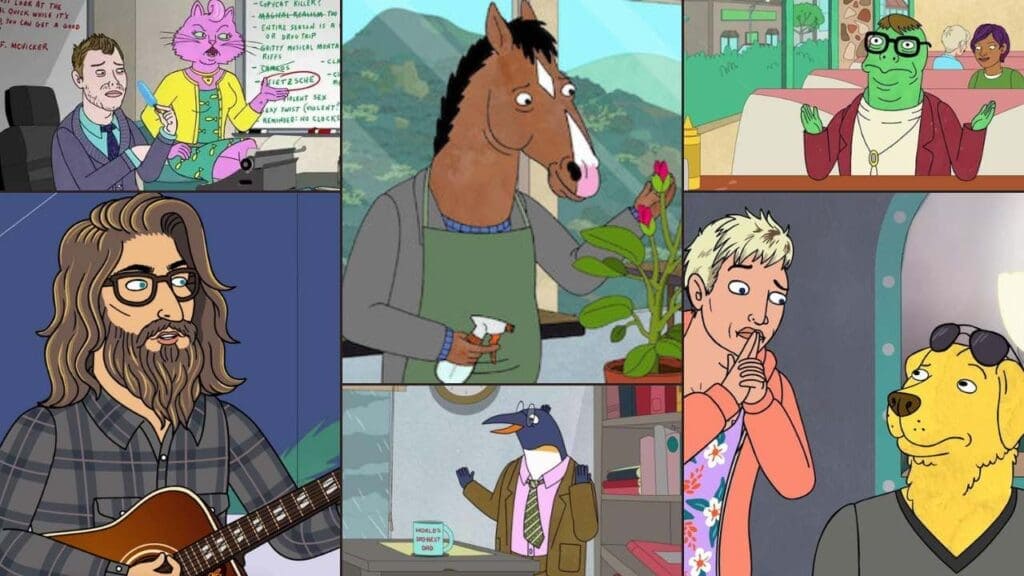
BoJack Horseman looks like a show about a talking horse. It is really a show about grief.
And once you notice one particular fan theory, you cannot unsee it. The five main BoJack Horseman characters line up almost perfectly with the five stages of grief.
Created by Raphael Bob-Waksberg, the series ran for six seasons and 77 episodes between 2014 and 2020. That gave the writers plenty of room to turn a Hollywood satire into one of the most honest portraits of pain on television.
Let me walk you through the theory character by character, and make the case for why it explains these BoJack Horseman characters so well.
The Theory: The Five Stages of Grief
The five stages of grief come from psychiatrist Elisabeth Kübler-Ross and her 1969 book On Death and Dying. You have probably heard them: denial, anger, bargaining, depression, and acceptance.
The theory is simple. Each of the five main BoJack Horseman characters gets stuck in one of those stages and processes their trauma through it.
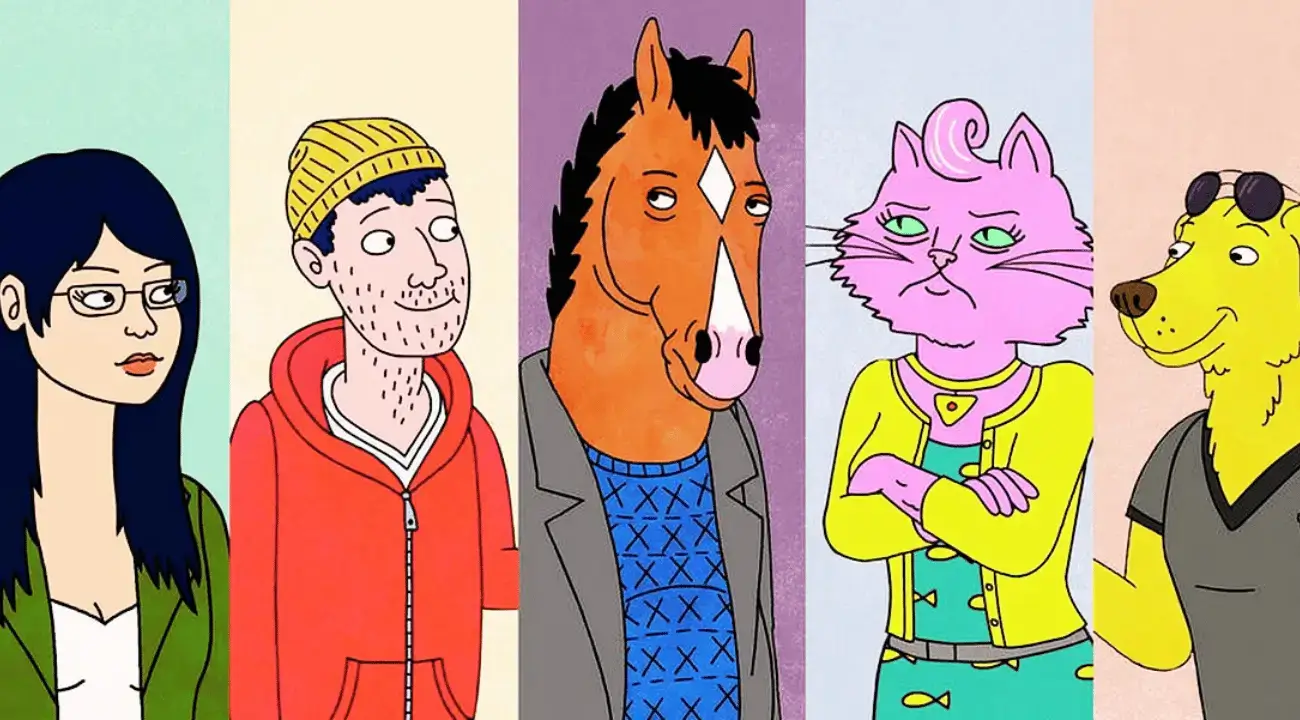
Here is how the main BoJack Horseman characters line up:
- Denial: Mr. Peanutbutter. He buries every hard truth under relentless optimism.
- Anger: Diane Nguyen. She runs on a low, righteous frustration with the world.
- Bargaining: Princess Carolyn. She hustles and negotiates to keep everyone afloat.
- Depression: BoJack Horseman. He is the heavy, inescapable sadness at the center.
- Acceptance: Todd Chavez. He rolls with life’s absurdity and lets things be.
Now let me take each of them one at a time.
BoJack Horseman: Depression
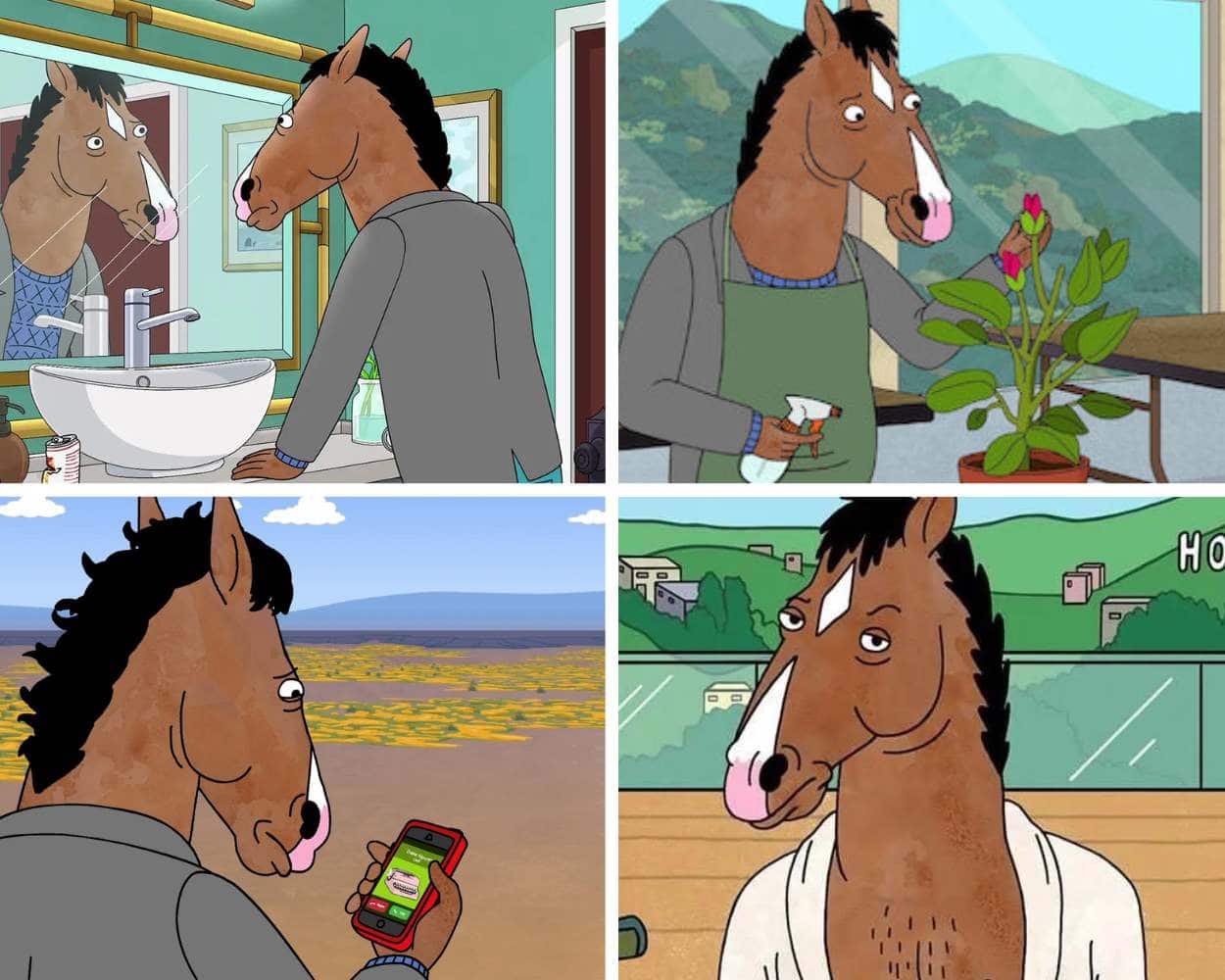
BoJack is the washed-up star of a 90s sitcom called Horsin’ Around, voiced by Will Arnett. He is also one of the most fully realized pictures of depression I have seen in animation.
He is smart, funny, and rich. None of it touches the hole in the middle of him.
He drinks, he burns bridges, and he keeps telling himself he is broken beyond repair.
The Theory: Depression. BoJack is the stage of heavy, inescapable sadness. Self-loathing, the cycle of self-destruction, and the deep belief that he is fundamentally broken. He carries the weight the whole cast is trying to avoid.
Here is the cruel part. BoJack wants to skip straight to acceptance. He wants to be a good person.
But every time he gets close, he slides right back into the same self-hatred. He keeps trying to reach the finish line without doing the work of the stages in between.
Diane Nguyen: Anger
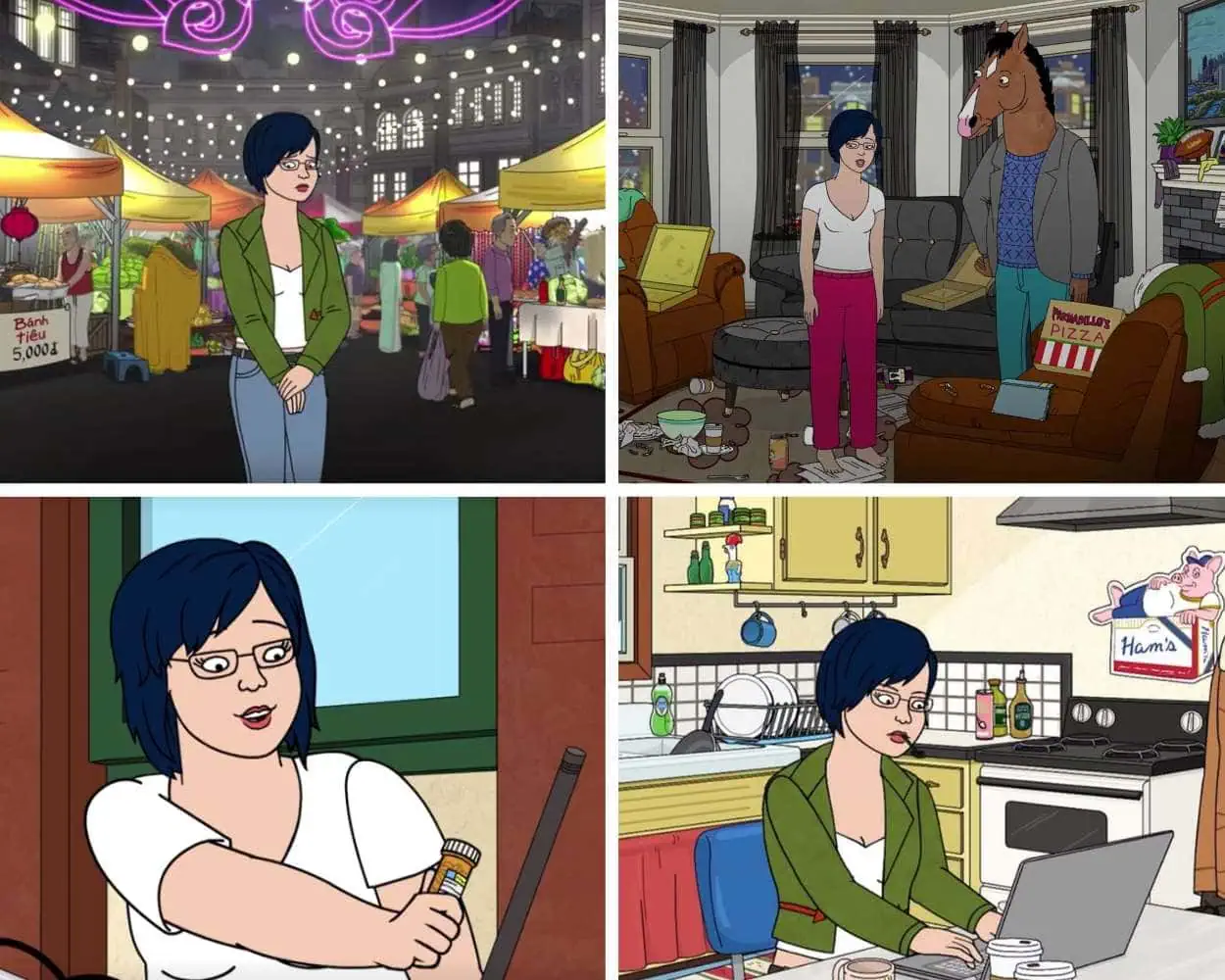
Diane is a Vietnamese-American writer who starts out ghostwriting BoJack’s memoir, voiced by Alison Brie. People call her the show’s moral compass, and she is.
But look closer, and what really drives her is anger.
Not shouting, table-flipping anger. A low, simmering frustration with how unfair the world is and how often people let each other down.
The Theory: Anger. Diane channels the “why is everything so unfair” stage. Her righteous frustration fuels her fight for truth and change, whether she is exposing a beloved celebrity or chasing a story in a war zone.
That anger is both her fuel and her cage. It powers her crusades, and it also burns her out and keeps the peace she wants just out of reach.
I went much deeper on her arc in my Diane Nguyen profile.
Princess Carolyn: Bargaining
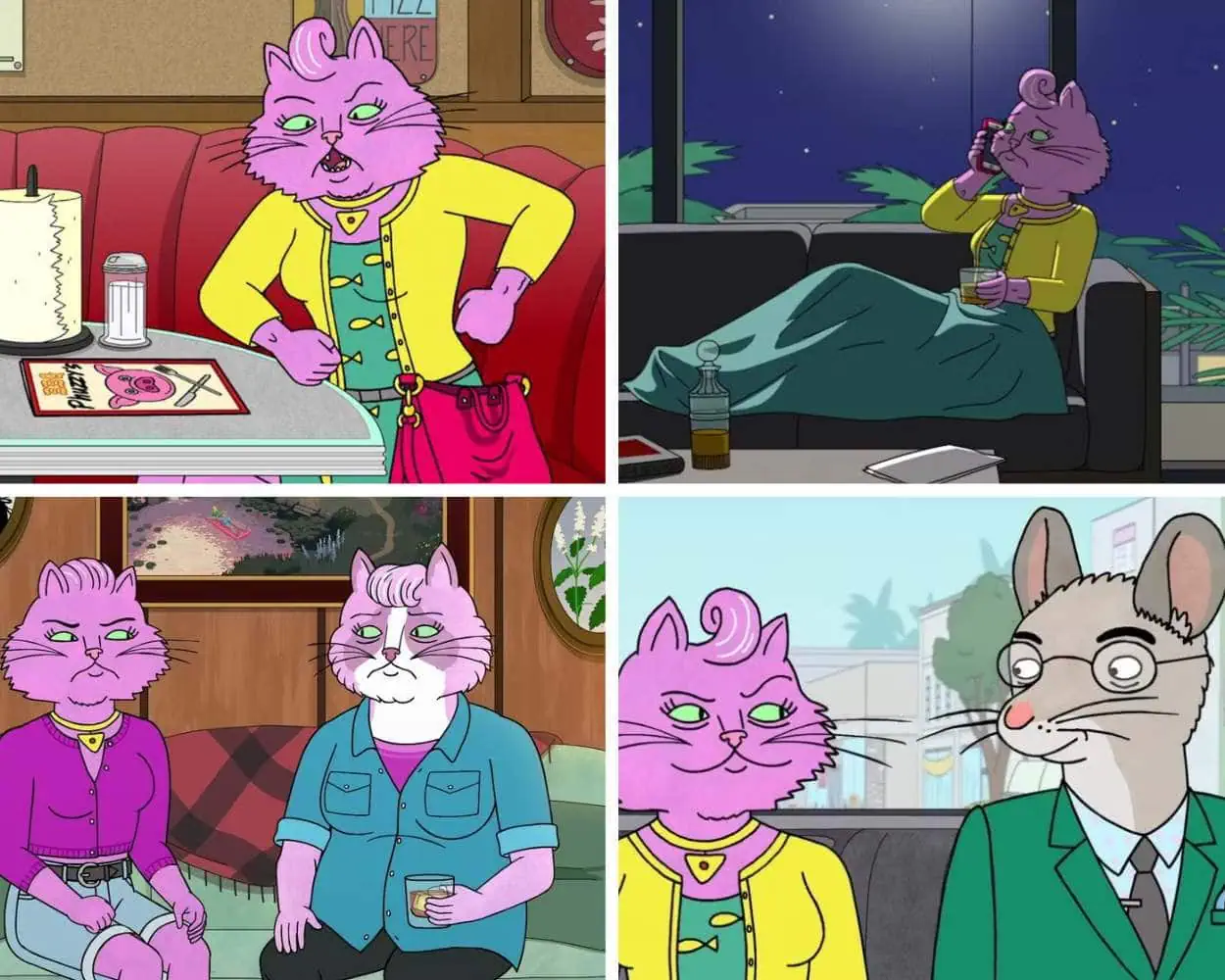
Princess Carolyn is BoJack’s agent turned manager, a pink Persian cat voiced by Amy Sedaris. She is the ultimate fixer.
And fixing is really just bargaining in a sharper outfit.
Her whole life is a run of deals, trade-offs, and promises she makes to herself and breaks by morning.
The Theory: Bargaining. Princess Carolyn tries to outrun her pain by working harder, spinning every setback into something manageable, and bargaining with the universe to keep everyone, including herself, afloat.
When her worst day hits, she does not sit down and cry. She invents a story where it all works out and tells herself that is enough.
That is bargaining in its purest form. I wrote a whole piece on why her hustle is really a trauma response.
Todd Chavez: Acceptance

Todd is the human who crashed on BoJack’s couch and never left, voiced by Aaron Paul. He looks like pure comic relief.
But he might be the healthiest one in the room.
He rolls with the punches, forgives people who do not deserve it, and lets life be as strange as it wants to be.
The Theory: Acceptance. Todd lets things happen instead of forcing them. He has a rare gift for taking life’s absurdity as it comes, without the desperate need to control the outcome that eats at everyone else.
Todd is the closest anyone on this show gets to peace. He does not need to steer the chaos, so it never crushes him the way it crushes the others.
I made the full case for him in my Todd Chavez profile.
Mr. Peanutbutter: Denial

Mr. Peanutbutter is the golden Labrador and former sitcom star who never stops smiling, voiced by Paul F. Tompkins. His optimism is not really a personality.
It is a shield.
He drowns every hard truth in noise and good vibes. When his brother is seriously ill, he cannot sit with it. When his own marriages collapse, he acts like everything is fine.
The Theory: Denial. Mr. Peanutbutter is “ignorance is bliss” in dog form. He deflects every uncomfortable truth with cheerful distractions, refusing to admit his own unhappiness or the cracks in his relationships.
There is a reason he keeps moving. If he ever stood still long enough to feel what is underneath, he might not like what he finds.
I unpacked that idea in my Mr. Peanutbutter profile.
Why the Five Stages of Grief Theory Makes Sense
Here is what makes this more than a fun label game.
It explains why these BoJack Horseman characters can never quite reach each other.
The BoJack Horseman characters are all grieving the same thing, the plain difficulty of being alive in a hard world. They are just stuck in different rooms of that process.
Put a denier and a depressive in the same conversation and they are speaking different emotional languages. That gap is why Mr. Peanutbutter and Diane could never make their marriage work, and why Princess Carolyn could never fix BoJack no matter how hard she tried.
The Cycle, Not the Ending
Most people treat this theory as a snapshot. I think it works better as a trap.
The five stages were never a neat staircase. Even Kübler-Ross said people loop back and skip around, and later research agrees the process is messy. You can read about the model here.
That is exactly what happens to these BoJack Horseman characters. Nobody graduates.
BoJack wants to be at acceptance so badly, and he keeps crashing back into depression. Mr. Peanutbutter refuses to leave denial because leaving is terrifying.
Each of them runs the same lap over and over, just in a different lane. What is fascinating to me is not that they represent the stages of grief. It is that they are all failing to move past them.
When the Stages Collide
The real magic of the show is what happens when these BoJack Horseman characters bump into each other.
They do not heal each other. They trigger each other.
Take BoJack and Mr. Peanutbutter. It makes so much sense that they are drawn together and pushed apart at the same time.
BoJack, stuck in depression, is looking for a reason to stay miserable. Mr. Peanutbutter, stuck in denial, is aggressively pretending the misery is not there.
Put them in a room and they do not cancel out. Each one amplifies the exact thing the other is trying to run away from.
The same goes for Princess Carolyn and BoJack. You cannot bargain someone out of depression, so every deal she offers him just bounces off.
My Personal Take
Here is why the theory sticks with me, beyond how tidy it is.
I do not really see these BoJack Horseman characters as symbols of grief. I see them as different versions of myself at different points in my life.
We have all had a Princess Carolyn phase, where we tried to bargain and hustle our way out of a disaster. We have all had a Diane phase, where we were just plain angry at everything.
The show works because none of us are only one stage. We are all of them, all the time. That is the part the theory gets right, even when it oversimplifies.
The Rest of Hollywoo
The five stages are the heart of the show, but the BoJack Horseman characters around them make the world feel alive. Here are the supporting players worth knowing.
Sarah Lynn
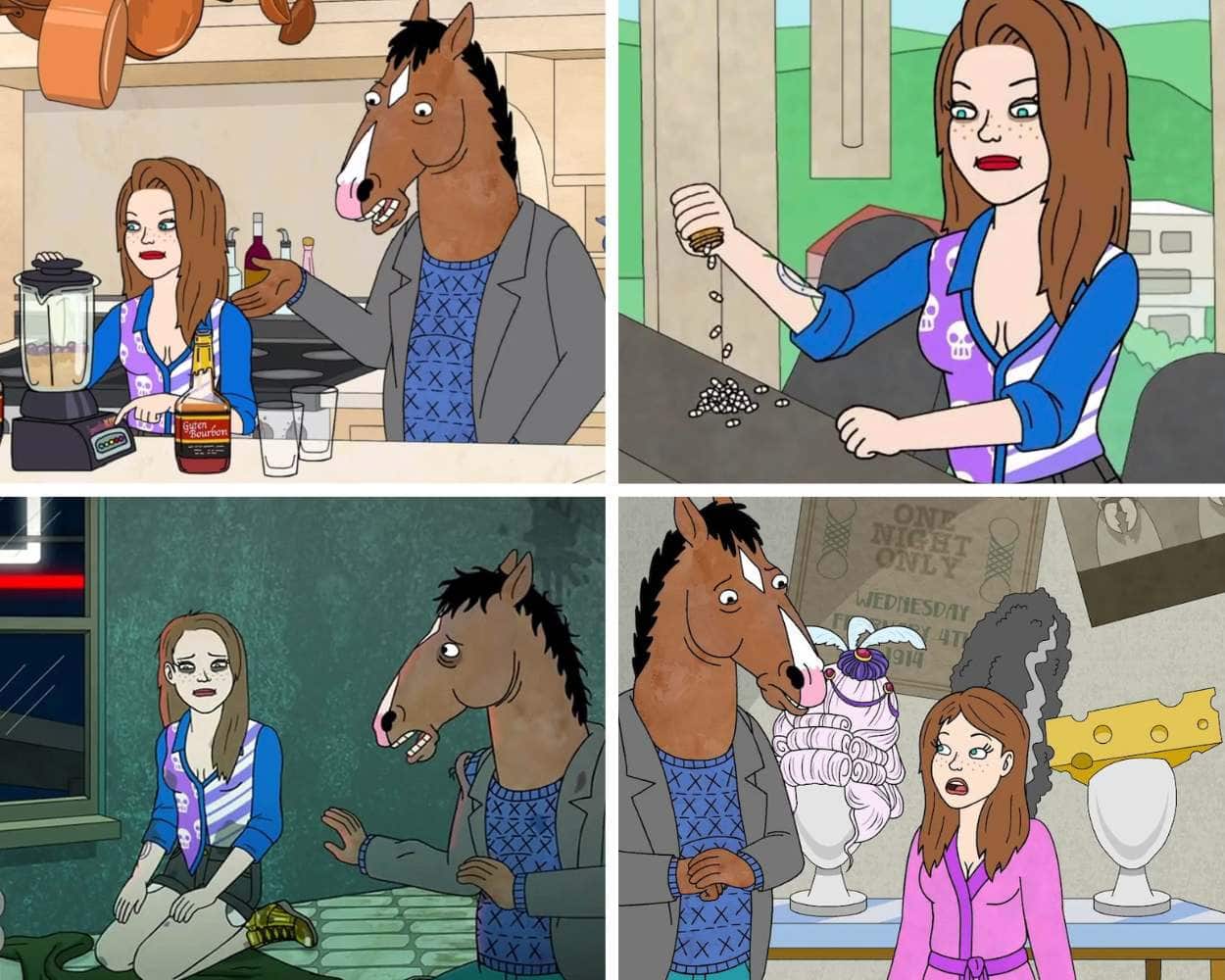
Sarah Lynn is a child star from Horsin’ Around turned troubled pop icon, voiced by Kristen Schaal. Her story is the show’s sharpest attack on what fame does to kids. Her death lands as one of the series’ hardest moments.
Hollyhock
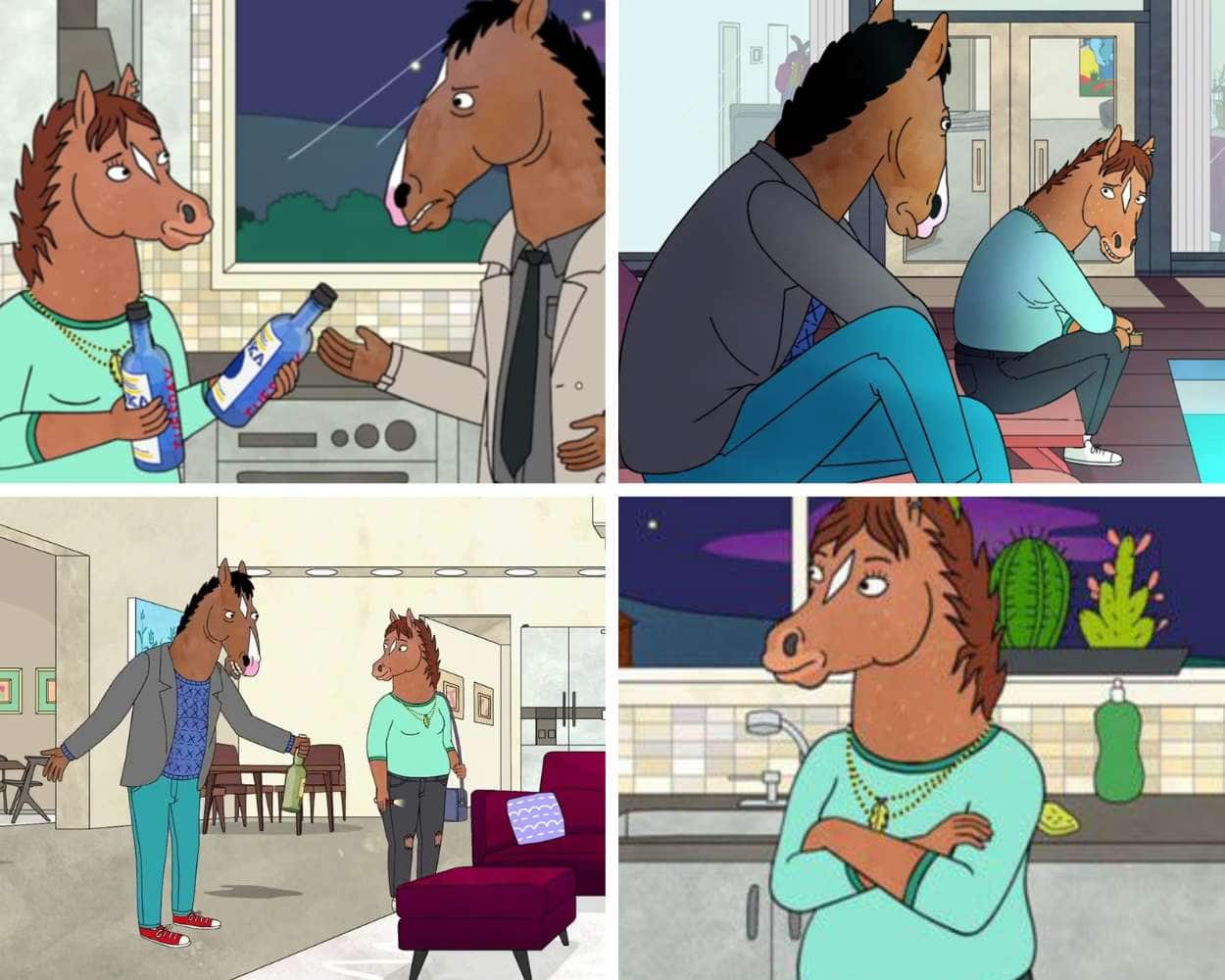
Hollyhock first appears in the Season 3 finale and becomes a major character in Season 4, voiced by Aparna Nancherla. She thinks she is BoJack’s daughter, then learns she is his half-sister. Butterscotch, BoJack’s father, had an affair with the family’s young live-in helper, Henrietta.
Beatrice Horseman
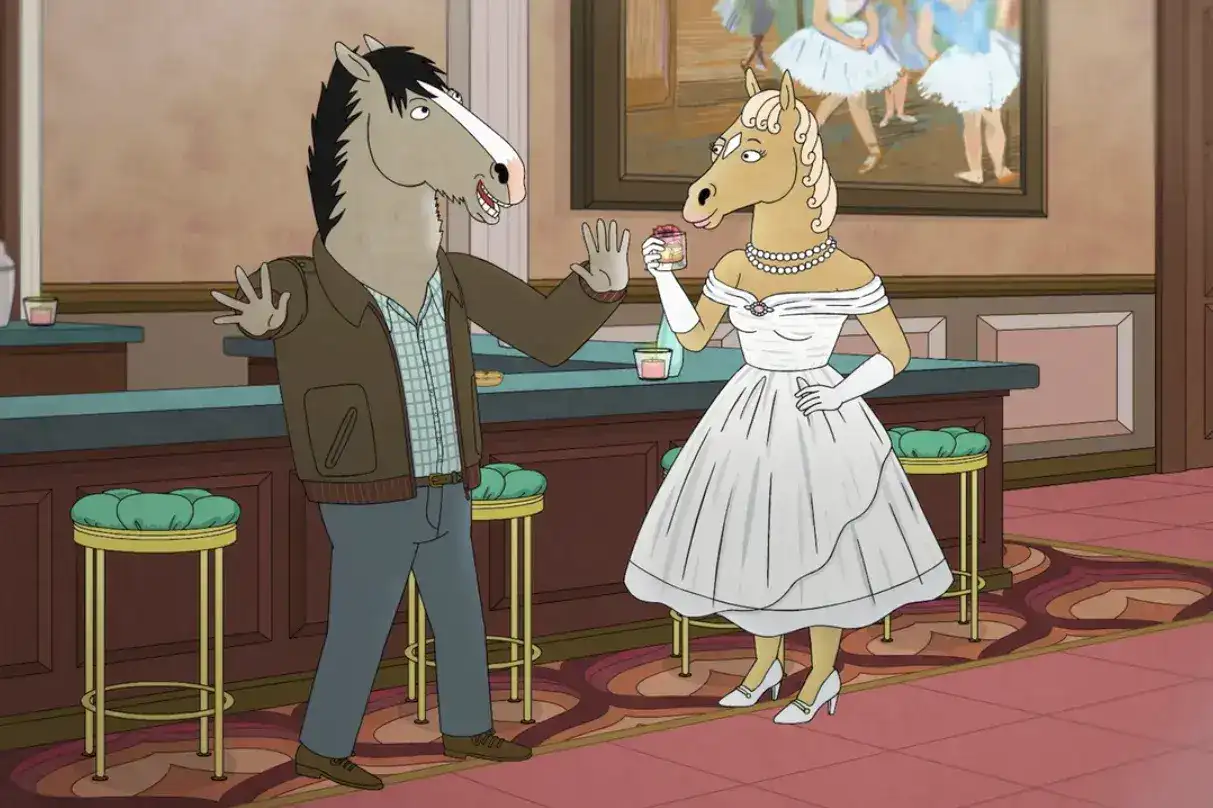
Beatrice is BoJack’s mother, voiced by Wendie Malick. She is cold and cruel on the surface. Then the show reveals her past, including watching her own father have her mother lobotomized, and you finally see where BoJack’s damage was born. She is the clearest study of generational trauma in the whole series.
Rutabaga Rabitowitz and Vanessa Gekko
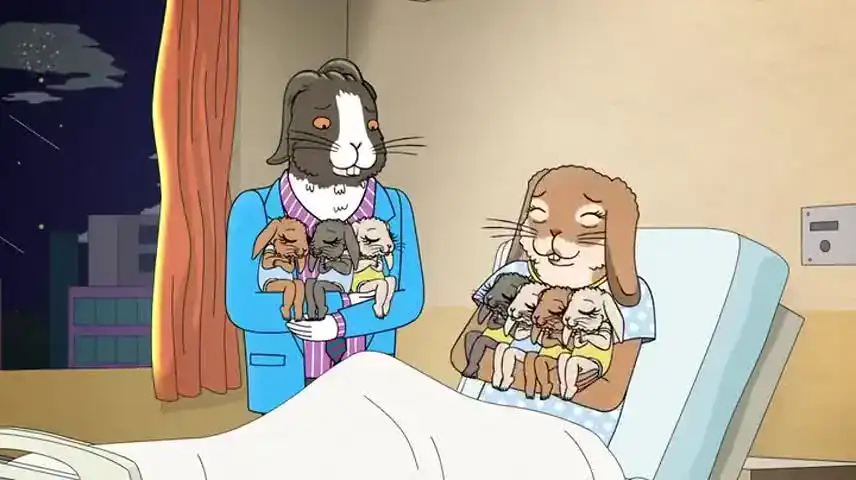
Rutabaga Rabitowitz (Ben Schwartz) and Vanessa Gekko (Kristin Chenoweth) are rival agents who show the cutthroat side of the business. The show gives even its sharks real inner lives, so they never flatten into cartoon villains.
Herb Kazzaz
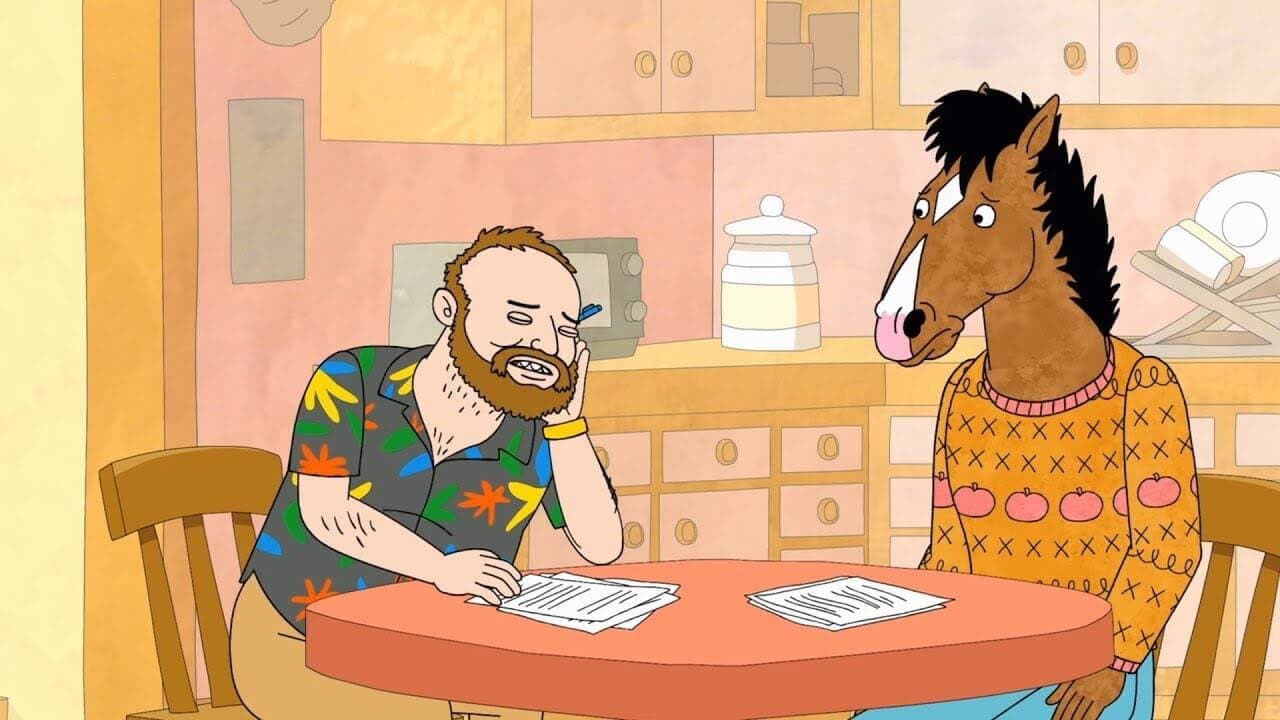
Herb Kazzaz is BoJack’s former best friend, the man who created Horsin’ Around and made him a star, voiced by Stanley Tucci. The network forced Herb out, BoJack stayed silent, and their friendship never recovered. When Herb is dying, he refuses to forgive BoJack. It is the show’s hardest lesson: some things do not get fixed.
Joey Pogo
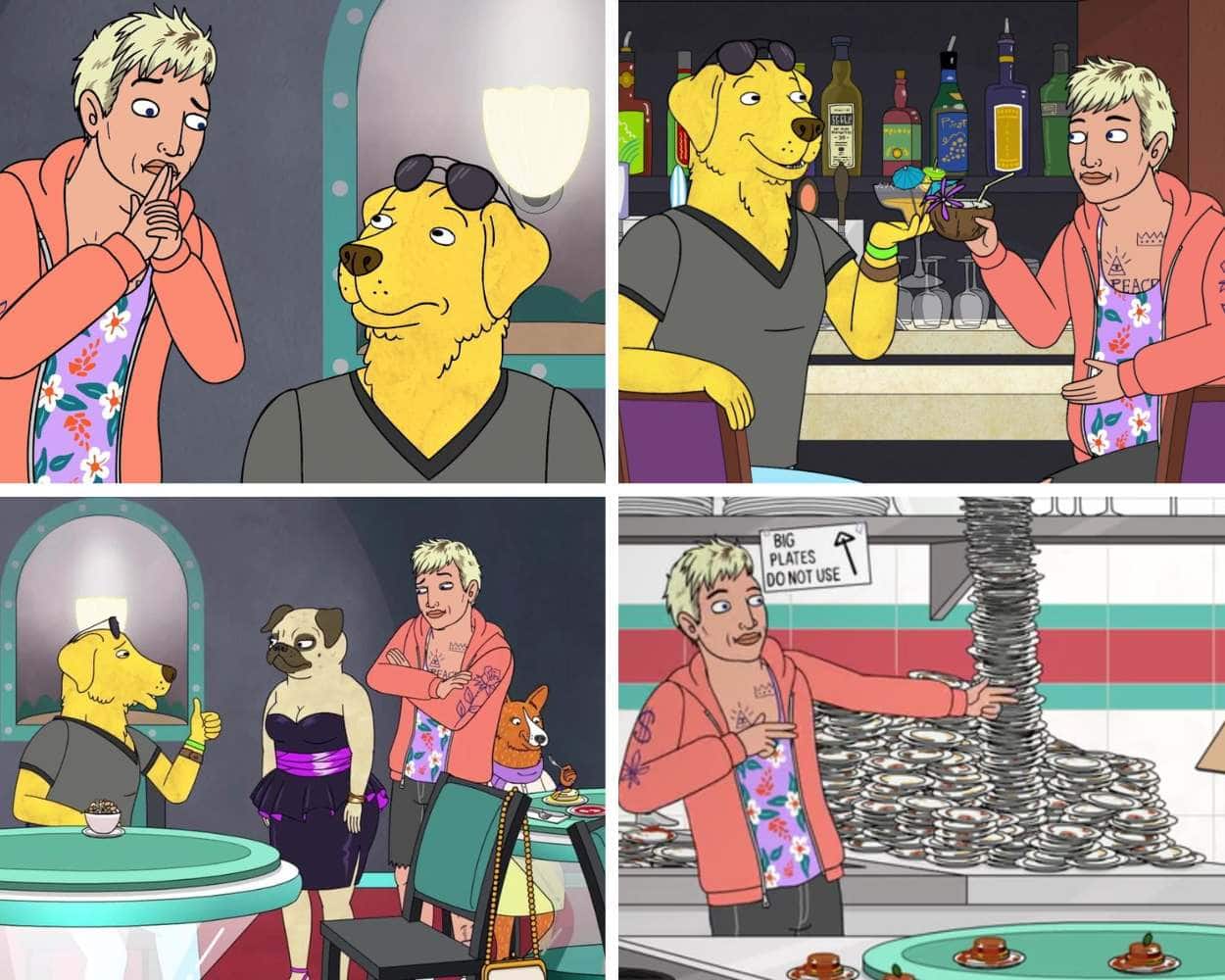
Joey Pogo is a teen pop star, voiced by Hilary Swank, who first appears in Season 6. He tours with Mr. Peanutbutter talking about depression, and later gets together with Pickles.
A Ryan Seacrest Type
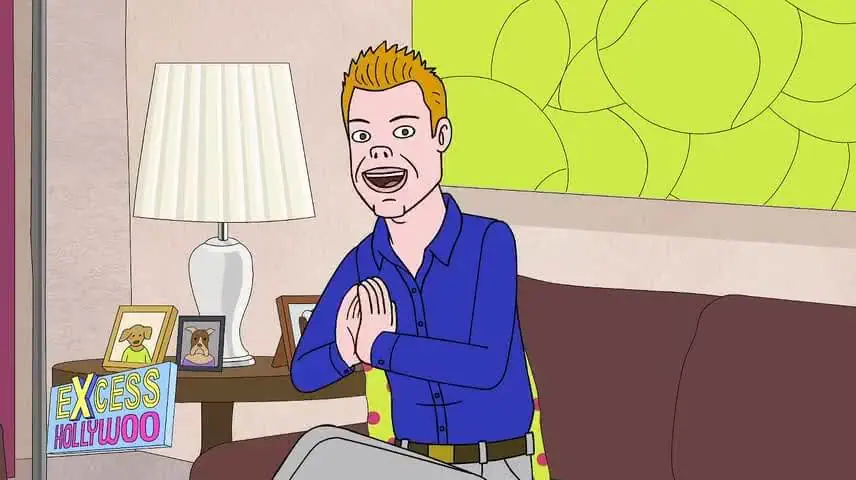
A Ryan Seacrest Type is exactly what the name promises, a hyper-enthusiastic talk-show host who parodies the real Ryan Seacrest, voiced by Adam Conover. He hosts a show called Excess Hollywoo.
Judah Mannowdog
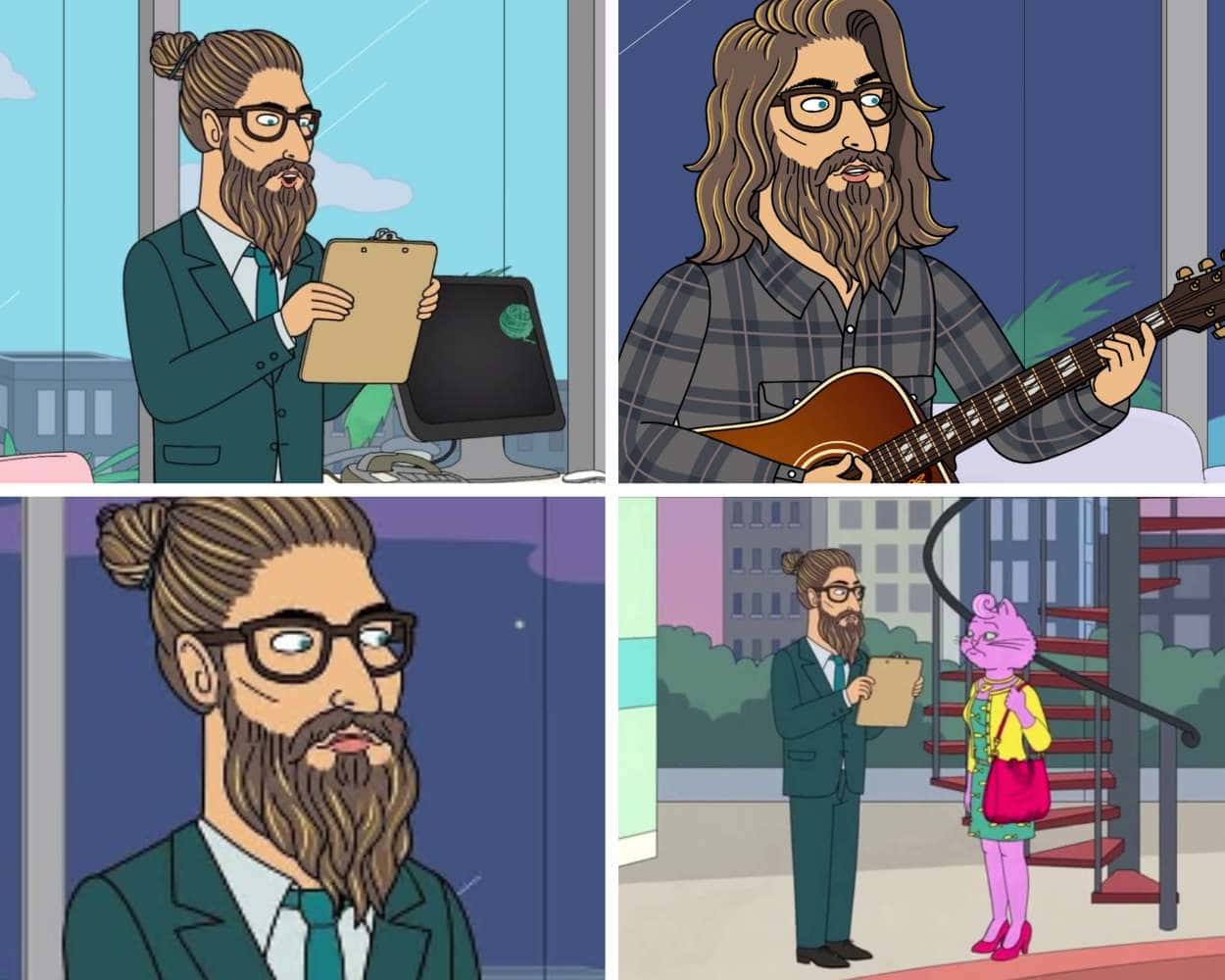
Judah Mannowdog is Princess Carolyn’s assistant, voiced by Diedrich Bader. She fires him in Season 4, he returns in Season 6, and he quietly becomes the one person who takes care of her. He writes her a song and marries her right before the finale.
Pinky Penguin
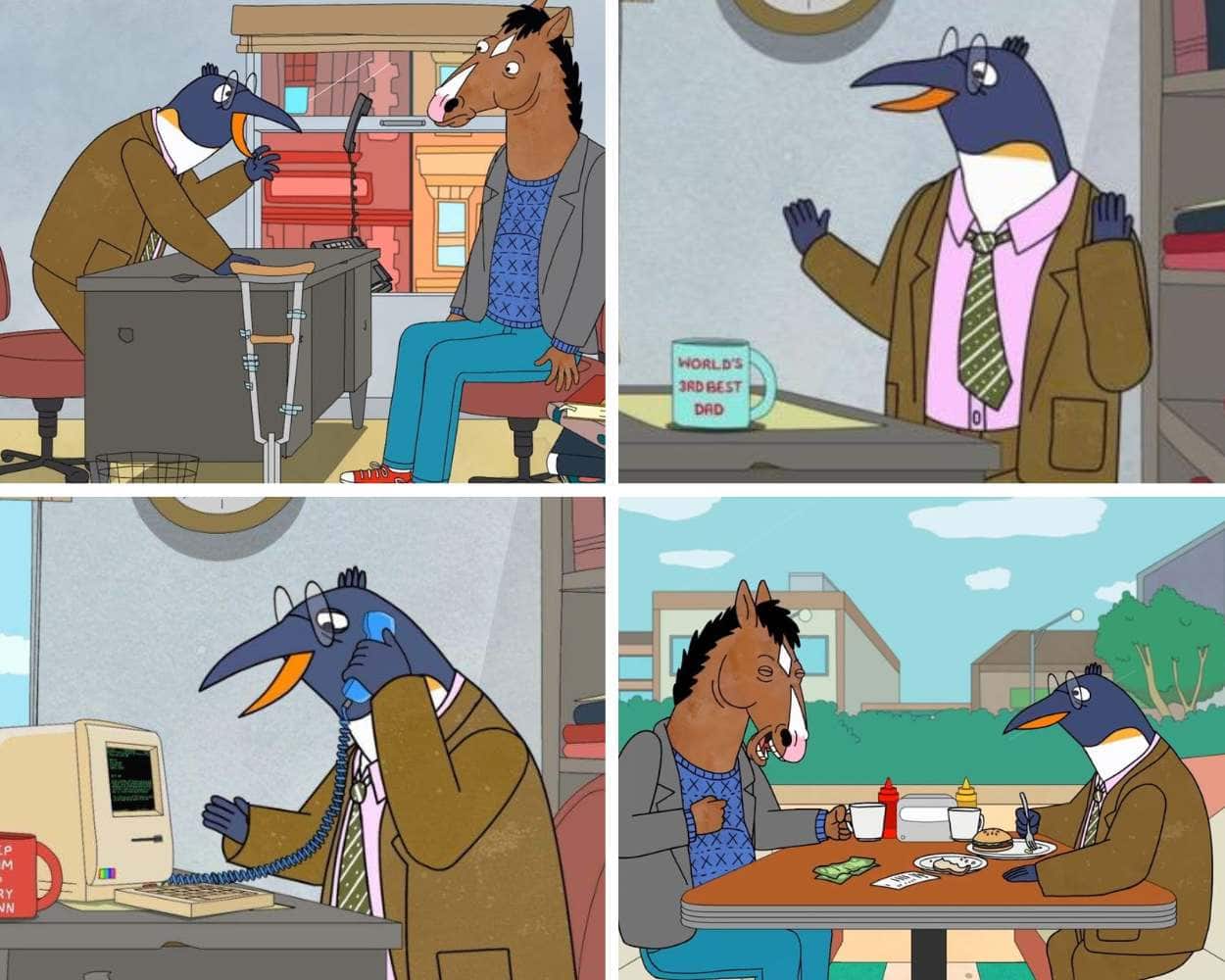
Pinky Penguin is an anxious book publisher at Penguin Publishing, voiced by Patton Oswalt. He is always scrambling to keep his company alive, and he cares deeply about the people he works for.
Charley Witherspoon
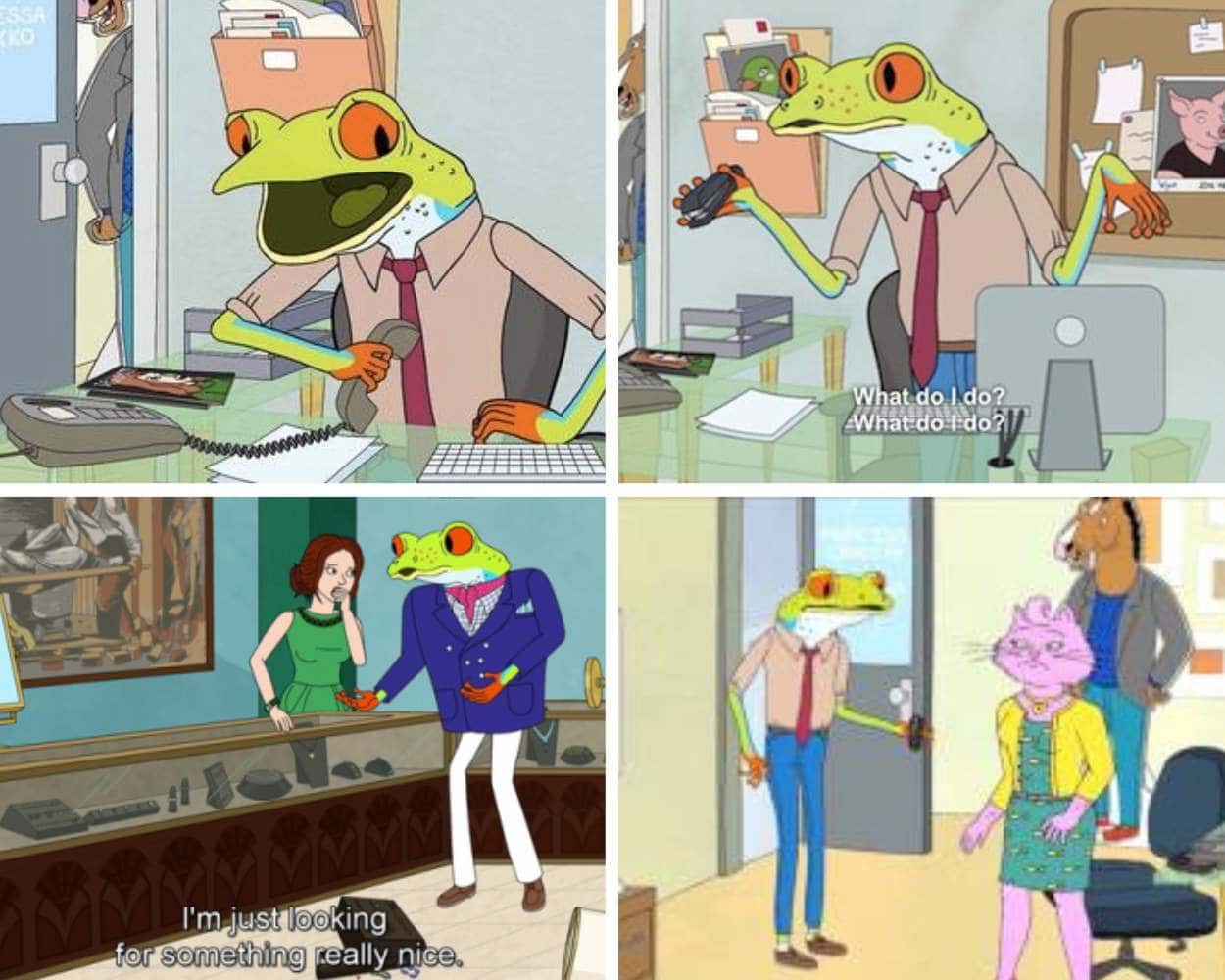
Charley Witherspoon is a tree frog agent at the Vigor agency and the boss’s son, voiced by creator Raphael Bob-Waksberg himself. He first turns up in the Season 1 episode “Say Anything.”
Lenny Turteltaub
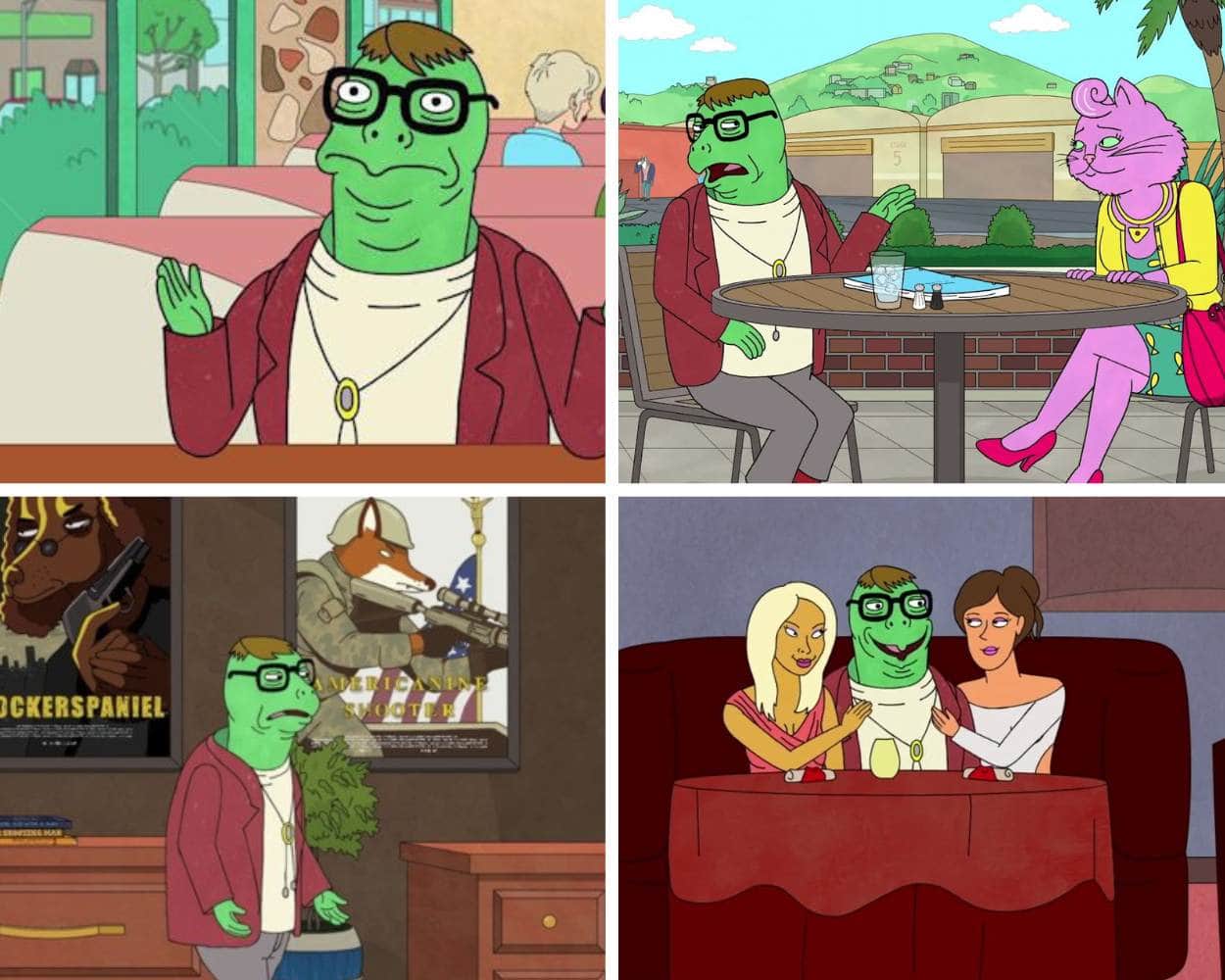
Lenny Turteltaub is a movie producer with a flat, dry delivery, voiced by J.K. Simmons. He cares about the money, not the art, and he is not shy about saying so.
Ana Spanakopita
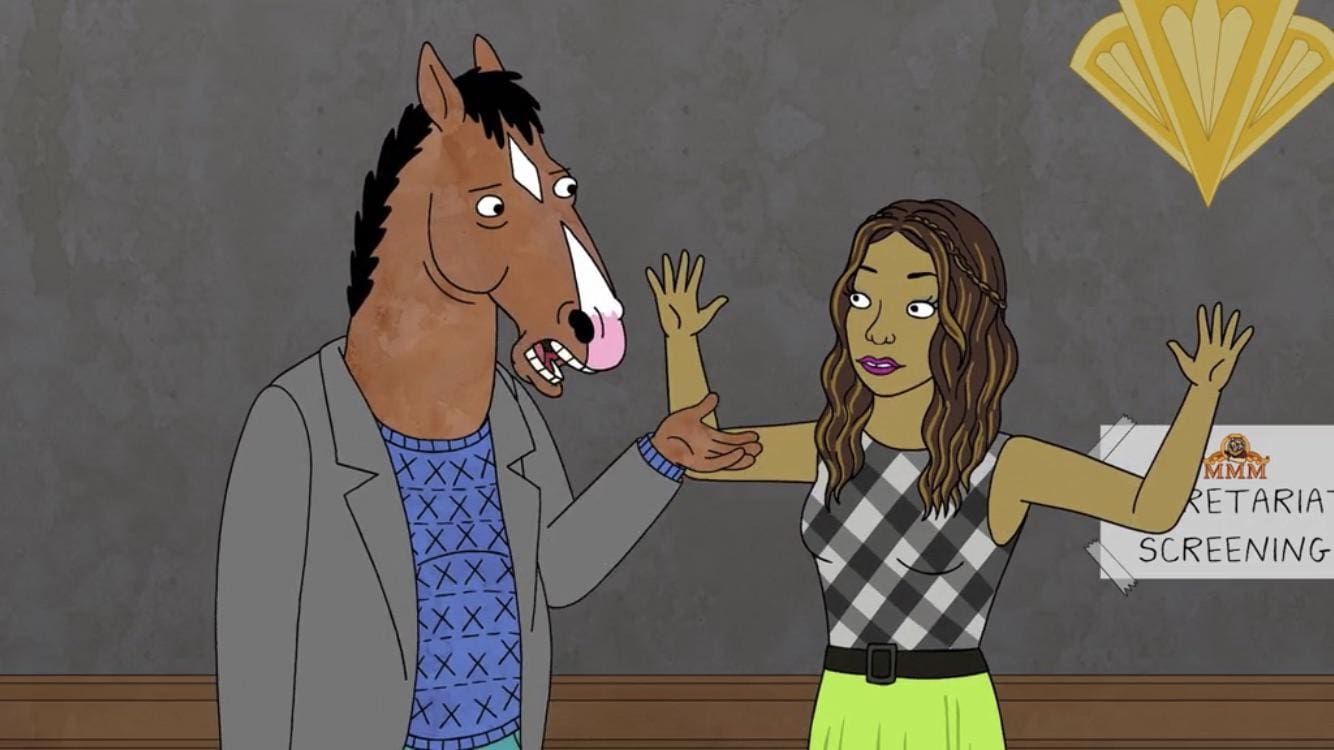
Ana Spanakopita is a ruthless awards publicist, voiced by Angela Bassett, who will do almost anything to win her clients an Oscar. She briefly becomes a love interest and handler for BoJack during his awards run.
Flip McVicker
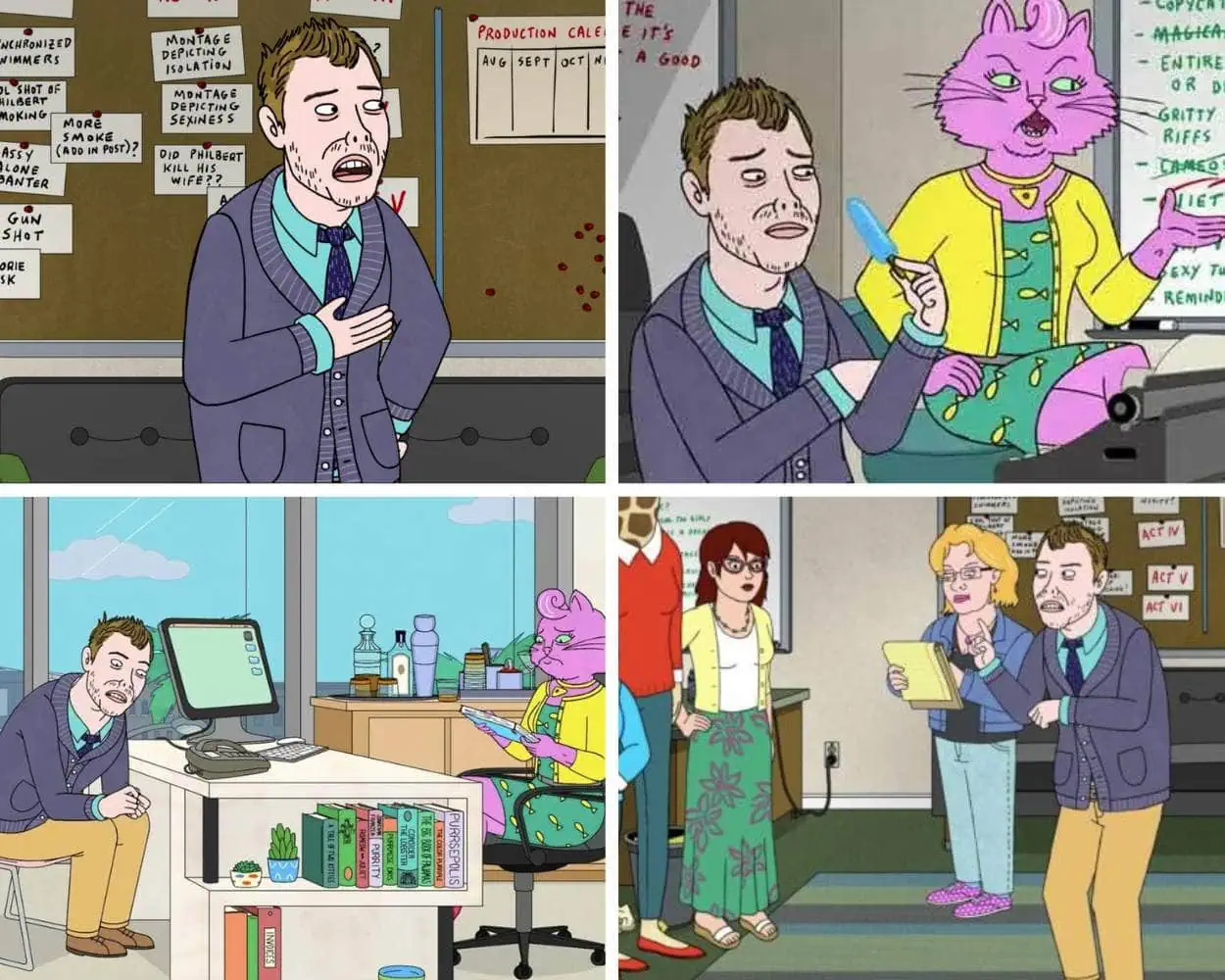
Flip McVicker is the pretentious creator of the prestige drama Philbert, voiced by Rami Malek. His show is where Diane’s good intentions get twisted into something ugly.
The Full Voice Cast
Part of what makes these BoJack Horseman characters so vivid is the cast behind them. Here are the leads and the key recurring players.
- Will Arnett: BoJack Horseman
- Amy Sedaris: Princess Carolyn
- Alison Brie: Diane Nguyen
- Aaron Paul: Todd Chavez
- Paul F. Tompkins: Mr. Peanutbutter
- Adam Conover: A Ryan Seacrest Type
- Keith Olbermann: Tom Jumbo-Grumbo
- Diedrich Bader: Judah Mannowdog
- Kristen Schaal: Sarah Lynn
- Patton Oswalt: Pinky Penguin
- Raphael Bob-Waksberg: Charley Witherspoon
- Aparna Nancherla: Hollyhock
- J.K. Simmons: Lenny Turteltaub
- Stanley Tucci: Herb Kazzaz
- Wendie Malick: Beatrice Horseman
- Angela Bassett: Ana Spanakopita
- Rami Malek: Flip McVicker
- Stephanie Beatriz: Gina Cazador
- Lake Bell: Katrina Peanutbutter
- Maria Bamford: Kelsey Jannings
- Kimiko Glenn: Stefani Stilton
- Ben Schwartz: Rutabaga Rabitowitz
- Raúl Esparza: Ralph Stilton
- Margo Martindale: Character Actress Margo Martindale
- Cedric Yarbrough: Officer Meow-Meow Fuzzyface
- Abbi Jacobson: Emily
- Lisa Kudrow: Wanda Pierce
- LaKeith Stanfield: Guy
- Hong Chau and Julia Chan: Pickles Aplenty
- Olivia Wilde: Charlotte Moore
- Kristin Chenoweth: Vanessa Gekko
- Hilary Swank: Joey Pogo
- Alan Arkin: J.D. Salinger
- Andre Braugher: Woodchuck Coodchuck-Berkowitz
A Note on Truth
One important thing before you take this too far.
The show’s creators, including Raphael Bob-Waksberg, have never said the cast was built as the five stages of grief. This is a fan reading, not a blueprint.
Most fans and critics agree these BoJack Horseman characters are far too layered to be trapped in a single box. They all cycle through every stage at different points.
But as a tool for understanding the show, it is one of the best there is. It explains why the cast feels so balanced, and why their conversations so often turn into people talking straight past each other.
If you want to keep going, I ranked the show’s high points in my best BoJack Horseman episodes.
So I will leave you with a question. Do you think the theory fits one character better than the rest? Or does it feel a little too simple for a show this layered? Either way, arguing about it is half the fun.