
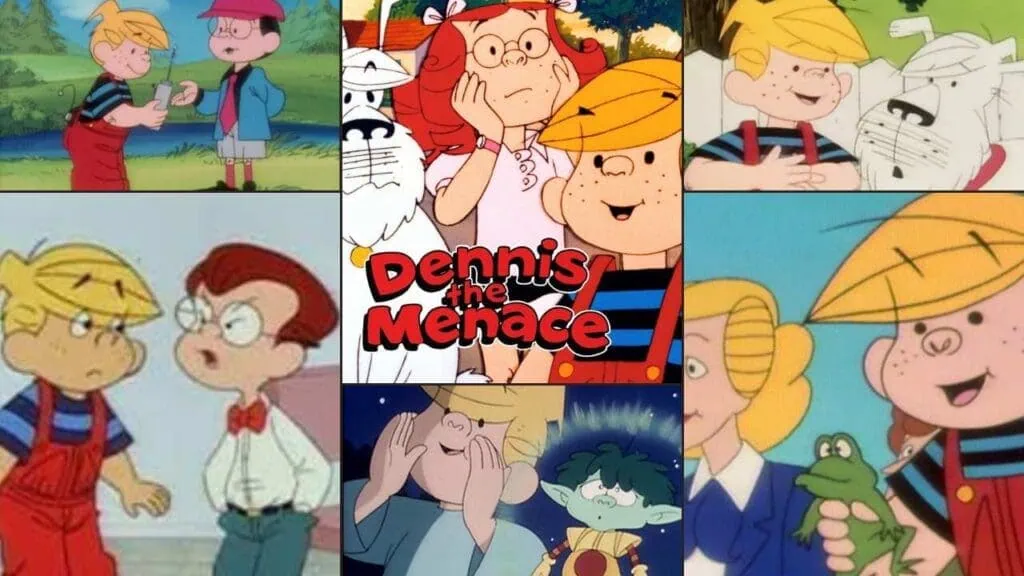
We all know the look on Mr. Wilson’s face when he spots that familiar blond head popping up over the fence.
But here is what I think a lot of us missed as kids. The 1986 Dennis the Menace cartoon was never really about a bratty boy causing trouble.
It was a neighborhood tug-of-war between two completely different ways of living. Mr. Wilson wants a quiet, orderly life. Dennis wants a high-speed adventure out of every single day. And the two of them are stuck living right next door to each other.
Rewatch it now and it plays less like a comedy and more like a study of two people who should not work together, and somehow need each other.
The Timeless Energy of Dennis the Menace
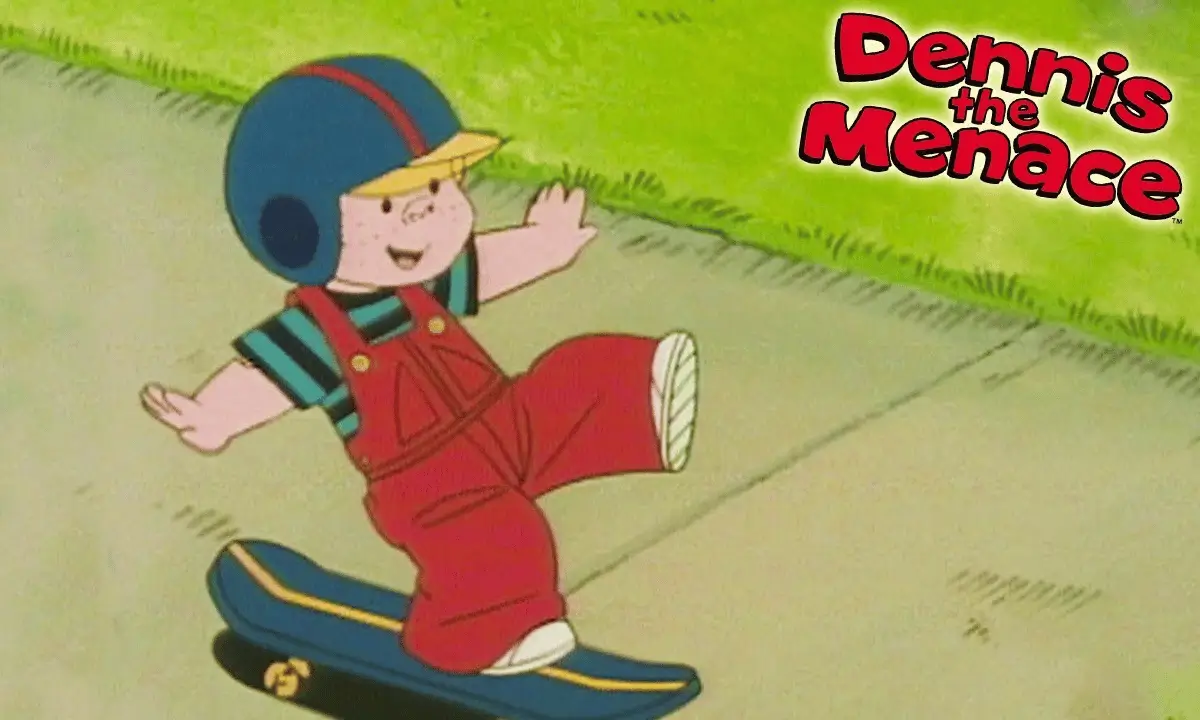
I grew up on this show, and it still holds up better than it has any right to.
It was based on Hank Ketcham’s classic comic strip and produced by the animation giant DiC. Here are the basics:
- Based on: Hank Ketcham’s Dennis the Menace comic strip
- Produced by: DiC, with Crawleys Animation co-producing season 2
- Aired: 1986 to 1988, first in syndication, then Saturday mornings on CBS
- Format: 78 episodes, each split into three short six or seven minute stories
- Sponsor: General Mills, which is also credited as the copyright owner
Watching it as an adult, one thing jumps out that has nothing to do with the jokes.
A quiet culture shock: Dennis roams the entire neighborhood, builds treehouses, and turns a dull afternoon into a full expedition, all with no adult hovering over him and no screen in sight. Watched today, that kind of free-range childhood almost feels like science fiction.
That freedom is the fuel. But to understand the show, you first have to understand its speed.
The Physics of Mischief: Why Dennis Is a Perpetual Motion Machine

Dennis does not walk. He launches.
The whole appeal of Dennis the Menace was built around that energy. The animation is bright and bouncy, the character designs are big and loud, and the pacing barely lets you breathe.
That was not an accident. This was 1980s Saturday-morning comedy, tuned for a “don’t blink or you’ll miss it” rhythm.
The format helped, too. Cramming three separate stories into a single half hour meant every short had to hit fast, land the joke, and get out. There was no room to slow down.
Built for speed: Each half hour of Dennis the Menace packed in three six or seven minute stories. That rapid-fire structure is a big part of why the show feels so frantic and fun, and why it still reads as high-energy to a generation raised on short-form video.
All that energy needs somewhere to go. And it almost always aimed straight at the man next door.
The Neighborhood Tug-of-War: Dennis vs. Mr. Wilson

Here is the heart of the whole show, and my favorite way to read it.
Think of it as the physics of mischief. Every action Dennis takes, powered by pure curiosity, triggers an equal and opposite reaction from Mr. Wilson, powered by his need for order.
Dennis wants to help, explore, and share. Mr. Wilson just wants to read his paper in peace. Neither one is the villain. They simply want opposite things from the exact same afternoon.
And here is the part that makes me love the pairing. They need each other more than either would ever admit.
- Mr. Wilson gives all of Dennis’s chaos a target and a shape. Without a grumpy neighbor to win over, Dennis is just a whirlwind with nowhere to blow.
- Dennis gives Mr. Wilson’s quiet life a pulse. Without a small blond tornado next door, Mr. Wilson is just a lonely retiree in a very tidy house.
The show even hands you a counterweight. Mrs. Martha Wilson, George’s wife, adores Dennis, which quietly proves the boy was never the problem. He just needed the right kind of grown-up to meet his energy.
One voice, both sides: In season one, the late, great Phil Hartman voiced Mr. Wilson, Dennis’s dad Henry Mitchell, and even the family dog Ruff. So the same performer played both ends of Dennis’s world, the patience and the exasperation. Maurice LaMarche took over those roles in season two.
That dynamic is why the “menace” nickname has always sold Dennis a little short.
Why the “Menace” Label Doesn’t Tell the Whole Story

Call a kid a menace and you picture a brat. Dennis was never that.
The single most important fact about him is simple: Dennis always means well. Every disaster he causes starts with a good intention that just went sideways at high speed.
He is not trying to wreck Mr. Wilson’s day. He is trying to help paint the fence, or share his frog, or fix the barbecue. The mess is a side effect of caring too much and thinking too little.
That is the show’s quiet lesson, and it lands even harder now. Dennis taught a generation that curiosity is a strength, even when it leaves a trail of accidental chaos behind it.
The reframe: Dennis the Menace is not a story about a bad kid. It is a story about a good kid with more energy and curiosity than the world around him knows what to do with. In an age of scheduled playdates and screen limits, that feels almost radical.
Of course, Dennis never adventured alone. He had a whole crew of co-conspirators.
Beyond the Blond Hair: The Supporting Cast of Chaos

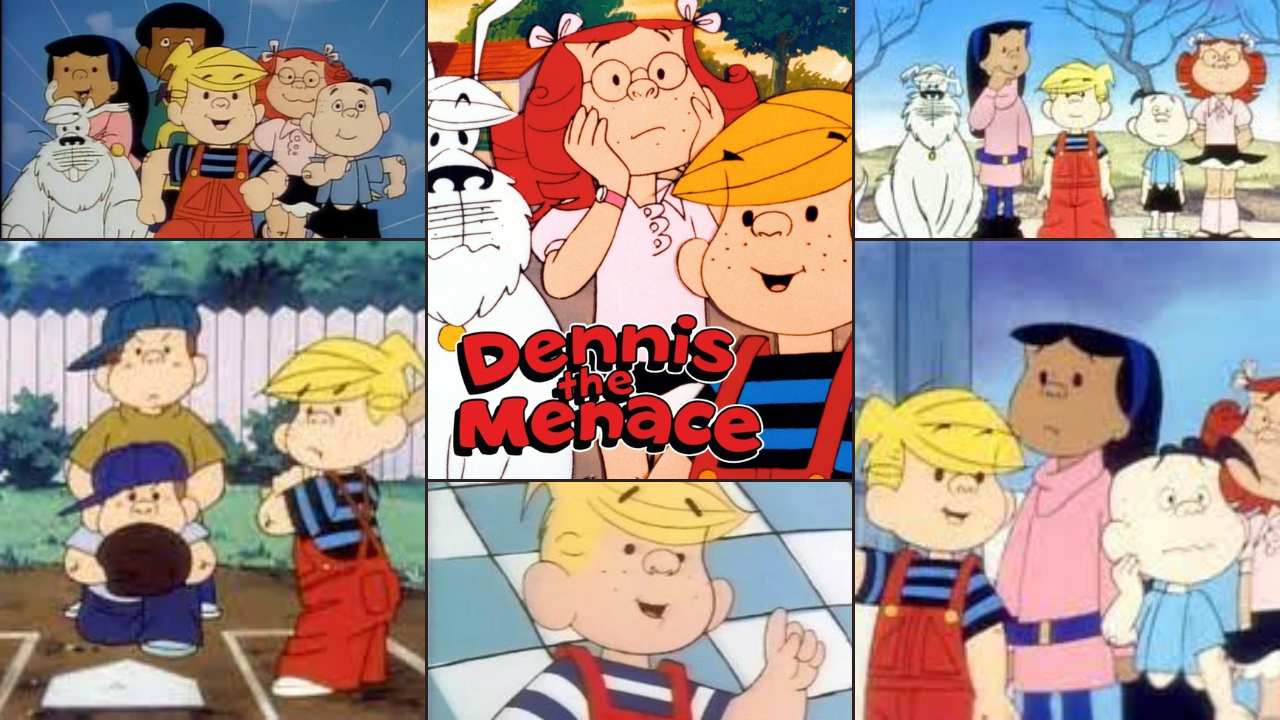
Every one of Dennis’s friends brings a different reaction to his energy. Some fuel it, some try to slow it down. Meet a few of the best cartoon characters in his orbit:
- Joey McDonald: Dennis’s loyal best friend, a bit younger and more cautious, who gets swept into every adventure anyway.
- Tommy Anderson: another close friend and a steady partner in mischief.
- Margaret Wade: the proper, precocious girl with a not-so-secret crush on Dennis, forever trying to civilize him.
- Gina Gillotti: the warm, tomboyish friend who is far more likely to join a scheme than talk him out of it.
- PeeBee Kappa: the resident boy genius and gadget builder, whose name is a pun on Phi Beta Kappa.
- Jay Weldon: Dennis’s towering, basketball-loving friend.
- Ruff and Hot Dog: the family dog and cat, and Ruff is right there for most of the trouble.
Character note: Margaret is not just a love interest, and PeeBee is not just comic relief. Each friend is really a different answer to one question: what do you do with a kid who has this much energy? Some match it, some manage it, and Margaret tries to redirect it entirely.
And then there were the grown-ups, doing their best to keep up.
The Grown-Ups Who Kept Up

Dennis’s parents, Henry and Alice Mitchell, are the calm at the center of the storm. They balance patience with the occasional exhausted sigh, and they never treat Dennis like a problem to be fixed.
Next door, George and Martha Wilson round out the adult world, one endlessly frazzled and one endlessly fond.
The voice cast is a big reason it all works.
Voice-cast trivia: Dennis was voiced by Brennan Thicke, the son of actor Alan Thicke. And with Phil Hartman handling most of the adult men in season one before Maurice LaMarche stepped in, the show quietly stacked its cast with serious comedic talent.
All of this energy started, believe it or not, as a single newspaper panel.
From Comic Strip to Screen: The Evolution of a Legend

The 1986 Dennis the Menace cartoon was just one stop in a very long journey.
- Dennis first hit the big screen as a beloved live-action sitcom that ran from 1959 to 1963, with Jay North as Dennis. Decades later, the character got his most famous movie moment.
In 1993, the John Hughes-produced film brought Dennis back with Mason Gamble in the lead, Walter Matthau as a perfectly grumpy Mr. Wilson, and Christopher Lloyd as the villain Switchblade Sam. It is the version a lot of people picture first.
A wild coincidence: Two different Dennis the Menace comics launched in the very same week of March 1951. One was Hank Ketcham’s American strip, the other a British character in the comic Beano. The creators had no idea about each other, and to this day the two tweak their names in each other’s countries to avoid confusion.
The Comic Behind the Cartoon

Hank Ketcham launched the American Dennis the Menace strip on March 12, 1951, and it appeared in just 16 newspapers at first. It went on to run in more than a thousand papers around the world.
Everything that came after, the sitcom, the movies, and this bright, frantic 1986 cartoon, grew out of that one panel of a curious little boy who could not sit still.
For more on the wider world of the show, the fan wiki is a fun rabbit hole.
My honest take? Strip away the “menace” label, and Dennis the Menace is one of the warmest shows about childhood ever made. It is a reminder that curiosity and order do not have to be enemies.
Sometimes they are just two neighbors who make each other’s lives a lot more interesting.
Which side of the fence were you on as a kid?
The adventurer, or the one who just wanted a little peace and quiet?

Just a fun note – Alan Thicke Theme Song, While Dennis was voiced by Brennan Thicke (son of Alan Thicke), Alan Thicke actually co-wrote the iconic, high-energy theme song for this cartoon alongside his frequent musical partner, Lou Natale, making the show a biggerThicke family production.