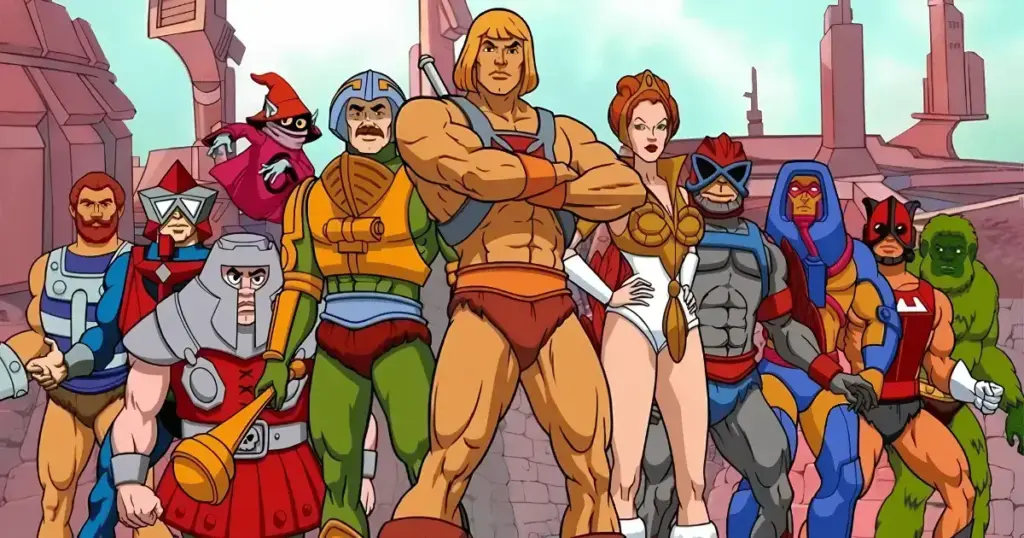
Start counting episodes from the biggest weekday cartoons of the 1980s and 1990s, and one number keeps appearing: 65.
TaleSpin stopped there. He-Man, Inspector Gadget, DuckTales, and Batman: The Animated Series all reached it before receiving additional episodes.
That pattern appeared across rival animation studios that agreed on very little else.
Sixty-five was not chosen because it produced the perfect story. It was useful because it filled a television schedule.
Once studios began building cartoons around that target, the number influenced production orders, rerun packages, and even the kind of stories those shows could tell.
65 Episodes Is a Calendar, Not a Narrative
The logic behind the number comes down to one simple piece of television arithmetic: 5 x 13.
The syndication math: 5 weekdays multiplied by 13 weeks equals exactly 65 episodes.
A 13-week block is roughly one quarter of a year. For broadcasters and advertisers, that made it a familiar unit for planning schedules and selling commercial time.
A local station could run one new episode every weekday for 13 weeks before repeating anything.
When an independent station bought a cartoon package in the 1980s, it was not buying a carefully paced serialized story. It was buying enough programming to fill the same after-school slot from Monday through Friday.
In practical terms, the package provided three things:
- The Slot: A dependable half-hour block, often scheduled after school from Monday through Friday.
- The Term: Thirteen weeks of weekday programming.
- The First Run: 65 half-hour episodes before the station needed to begin repeating them.
One purchase, one broadcast year
65 episodes x 4 passes = 260 weekday slots = 52 weeks
A station could repeat the same package four times and cover 52 weeks of weekday slots. New children continually entered the audience, while familiar episodes remained easy to schedule. For distributors, 65 became an extremely convenient number of finished half-hours.
Inspector Gadget Puts the Math on a Calendar
Inspector Gadget arrived in 1983 with a first season of 65 episodes. The dates commonly attached to that original run show the scheduling logic almost perfectly.
The pattern, on a calendar
Monday, September 5, 1983 to Friday, December 2, 1983
Those dates contain 65 weekdays when counted inclusively: 13 weeks from Monday through Friday. They illustrate exactly how a distributor could present the package as one complete quarter of fresh weekday programming.
There is one important caveat. A syndicated cartoon did not have one synchronized national premiere.
Local stations bought the package and placed it wherever it fit their schedules. The dates above are best understood as the commonly listed rollout pattern, not proof that every city aired the same episode on the same day.
The useful part is the shape of the schedule: 65 weekdays in a row.
The Syndication Formula
How 65 Became Television’s Favourite Number
The Magic Number Equation
5 Days a Week x 13 Weeks = 65 Episodes
This filled exactly one quarter of weekday afternoon television without a single repeat. A local station could then loop the package four times to cover a 52-week broadcast year.
The Broadcast Dilemma
Before 1983
Weekday cartoon blocks were not new. Independent stations had filled morning and after-school hours with animation for decades, usually relying on theatrical shorts, older television cartoons, and local hosts. The missing piece was a steady supply of new shows deep enough to air five days a week. Network cartoons were commonly ordered in much smaller batches for Saturday mornings.
He-Man Proves the Weekday Model
1983
After failing to secure a traditional network deal, Filmation, Mattel, and Westinghouse took He-Man directly to local stations with an order of 65 episodes. Inspector Gadget entered first-run syndication that same year with an identical first-season count. Their success showed that a new cartoon could bypass Saturday morning and become a daily after-school attraction. The FCC’s later relaxation of rules surrounding program-length commercials made the toy-driven model easier to expand, but the weekday syndication experiment was already underway.
The Rise of the After-School Strip
1983 to 1996
Once the model worked, studios reached the target in different ways. G.I. Joe combined two five-part mini-series with 55 additional episodes. The Transformers reached 65 after a 16-episode first year and a 49-episode second season. Gargoyles followed 13 episodes with 52 more. ThunderCats and Disney’s DuckTales each delivered 65 in a large opening order. Successful shows could then continue beyond the threshold. He-Man produced another 65, bringing its total to 130.
The Rule Becomes a Hard Cap
Late 1990s
Disney Channel later turned the old syndication target into an internal ceiling. Original series were often limited to 65 episodes, giving the channel a large rerun library without committing indefinitely to one cast or production. Lizzie McGuire and Even Stevens both ended on that number. The policy began to loosen when That’s So Raven reached 100 episodes and Kim Possible returned for a fourth season after initially stopping at 65.
Why the Formula Faded
1997 onward
Cable weakened the old logic. With Nickelodeon, Cartoon Network, and other children’s channels available throughout the day, viewers no longer depended on one local station’s after-school slot. Broadcast rules also changed. The Children’s Television Act of 1990 limited advertising during children’s programs, and FCC guidelines adopted in 1996 encouraged stations to carry three hours of educational programming each week. The Disney Afternoon left syndication in 1999, and Kids’ WB ended its weekday block on December 30, 2005.
The Stations That Needed 65 Episodes
Independent stations multiplied through the 1970s and 1980s, especially in growing local markets. Each one needed hours of affordable programming that competitors had not already repeated to death.
- Several stations in the same market could be competing for young viewers.
- Much of the available cartoon library had already been repeated for years.
- Off-network sitcoms often needed a much larger episode library before daily reruns became attractive.
- A weekly network cartoon could take years to build enough episodes for a weekday strip.
That was the problem first-run syndication solved.
A weekly network series might survive for several seasons and still lack enough episodes for a useful weekday package. Edwin T. Vane of Group W Productions summarized the economics in a 1986 interview: “The producer can’t make any money on the first network run.”
First-run syndication skipped that long buildup. Produce 65 episodes at the beginning, sell the package directly to stations, and enter the rerun market immediately.
He-Man Proved the Model
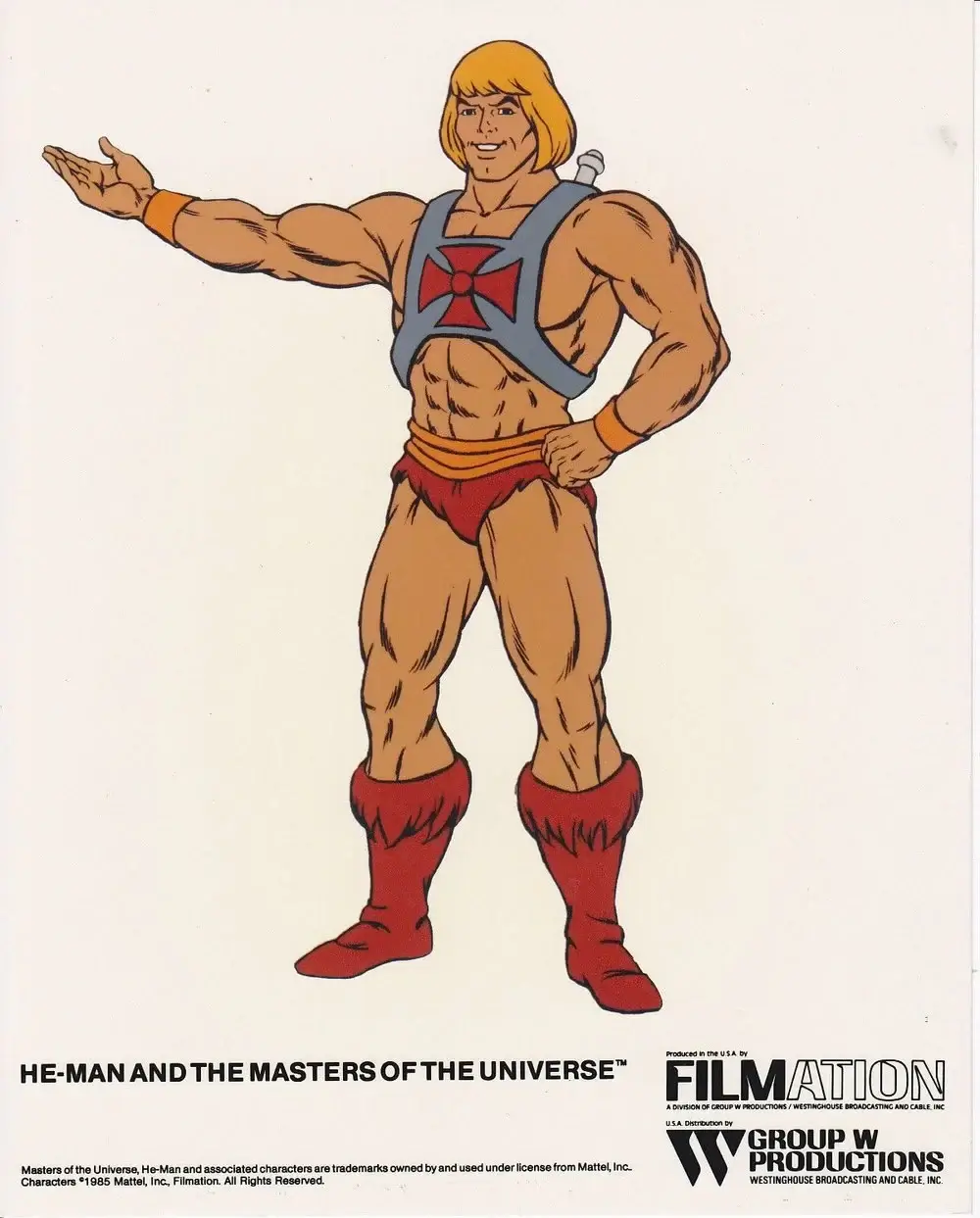
Without a traditional network order, Filmation had to take a much larger risk. In return, the 65-episode plan offered something Saturday morning could not: a new episode every weekday for an entire quarter.
The size of the bet
- Mattel and Westinghouse helped finance the unusually large production order
- The series was sold station by station rather than through one national network
- Filmation had to deliver new episodes at a relentless weekday pace
- Lou Scheimer later described the project as a major gamble for the studio
Filmation founder Lou Scheimer also saw a production advantage. In his telling, the format allowed the studio to “end up doing 65 of these a year.” Instead of staffing up for a short Saturday morning order and then slowing down again, Filmation could keep artists working through a much longer production cycle.
He-Man debuted in barter syndication in September 1983. Alongside Inspector Gadget, it helped establish the modern weekday cartoon model of producing a large batch of new animated episodes specifically for first-run syndication.
The regulatory climate was changing at the same time.
Under FCC chairman Mark Fowler, children’s television rules were being relaxed during the early 1980s, and the commission changed its policy toward program-length commercials in 1984.
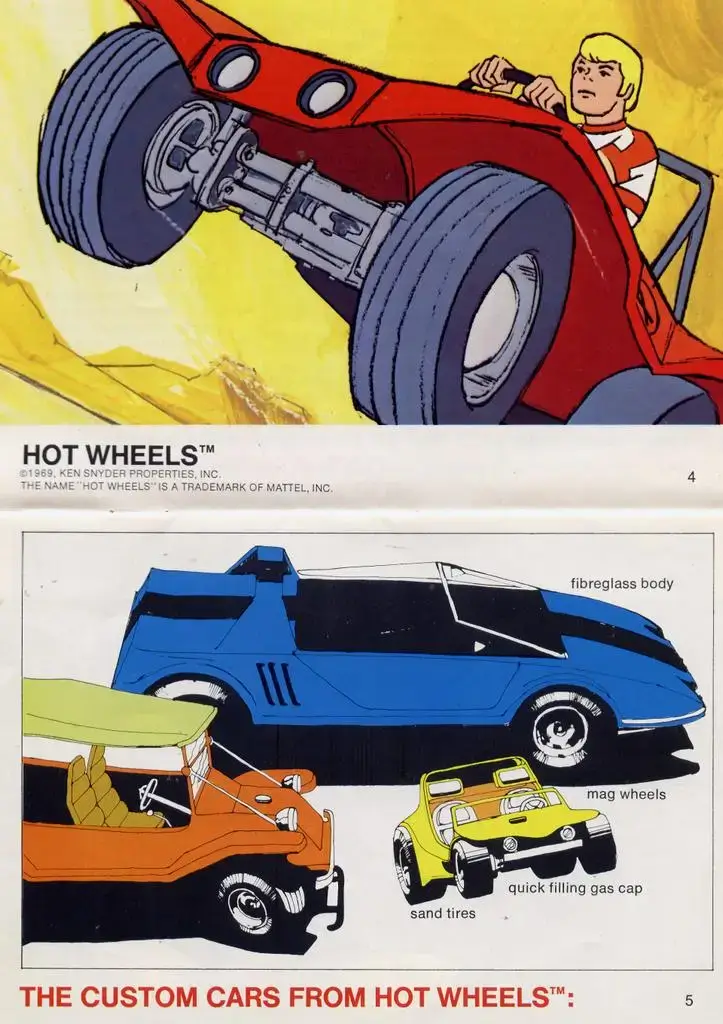
Earlier toy-based cartoons had faced much greater scrutiny. ABC’s Hot Wheels, for example, drew FCC criticism in 1969 because the series was closely tied to Mattel’s toy cars. By the mid-1980s, that boundary had become far easier for producers and toy companies to cross.
How Cartoons Worked Their Way to 65 Episodes
Once you know the target, you can see how different productions worked their way toward it. Sixty-five was not always delivered as one neat season.
- G.I. Joe: ten episodes of mini-series, then an order for 55 more
- The Transformers: 16 in year one, then 49 in season two
- Gargoyles: 13, then 52
- Jem: 26, then 27, then 12
- ThunderCats and DuckTales: 65 in a single first season
- He-Man: 65 twice, for 130
The Transformers shows what happened once a series moved beyond the original package.
Its first two seasons brought the library to 65 episodes. Later orders pushed the total to 98, including a very short final season. By that point, the show was no longer being built around one perfectly balanced 13-week block.
Saturday Morning Ran the Same Math at a Slower Speed
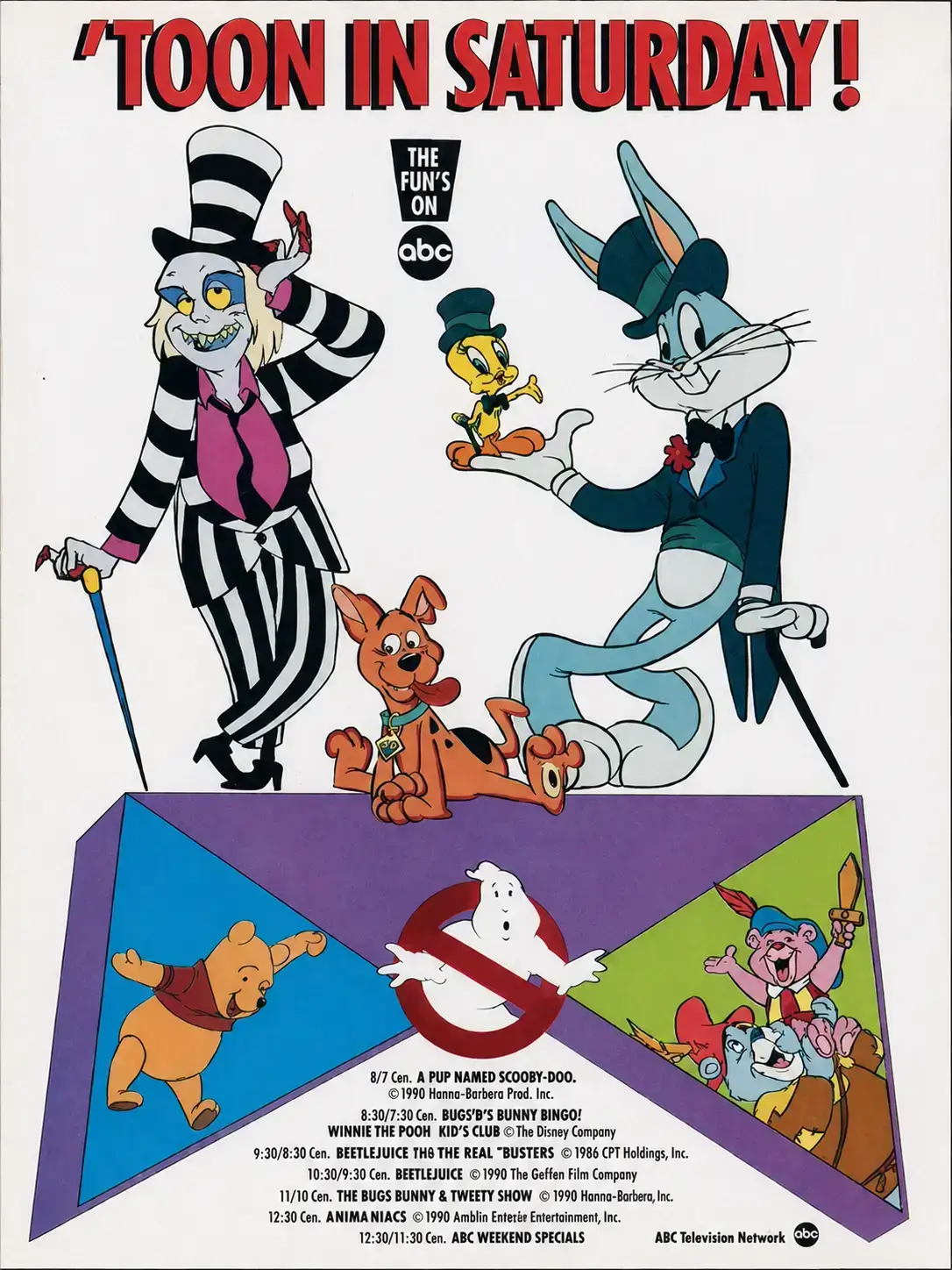
The other number that appears constantly in old television is 13, and it comes from the same scheduling habit.
Mark Evanier, who wrote for network cartoons during the era, has described a common Saturday morning arrangement: 13 episodes, with each one repeated several times during the year. A smaller follow-up order could then stretch the rerun cycle without requiring another full season.
Scooby-Doo, Where Are You! followed a variation of that pattern. CBS aired 17 episodes in 1969, ordered eight more for 1970, and continued repeating the resulting library long after production stopped.
The constant was never 65, and it was never 13
- Once a week, four plays a year: 13 episodes
- Five days a week, four plays a year: 65 episodes
The basic idea was the same, but the weekday strip moved five times faster. Saturday morning economics needed one episode each week. After-school syndication needed five, which made the opening order far more expensive.
What the Calendar Did to the Cartoons Themselves
The arithmetic is simple. The more interesting question is what it did to the stories.
A cartoon made for weekday syndication had to survive being shown out of order. Local stations could rearrange episodes, skip one, or begin with whichever tape arrived first.
Batman: The Animated Series is a famous example. Its original broadcast order differed sharply from its production order, which is why later home-video releases reorganized the episodes.
ThunderCats also spread the five-part “Lion-O’s Anointment” storyline across its first season instead of airing every chapter together.
That scheduling pressure encouraged several familiar habits in 1980s action cartoons:
- Most episodes began and ended with the world returned to normal
- Major character development was limited because viewers might see the episodes out of sequence
- Villains escaped so they could return without a complicated explanation
- Closing lessons, such as the morals on He-Man, gave each story a clean ending
The lack of continuity in many 1980s cartoons is often blamed entirely on low budgets or toy-driven writing. Both mattered, but the schedule mattered too. Serialization became risky when the broadcaster, rather than the producer, controlled the running order.
That is part of what made Gargoyles feel different.
Its 52-episode second season used recurring consequences and longer story arcs inside a weekday strip. The show worked against the habits of the format, which is one reason viewers still discuss it as an ongoing drama rather than only as a nostalgic rerun.
The 65th Episode Became a Ceiling
A useful target can also become a convenient stopping point.
- Batman: The Animated Series: 65, then 20 more, stopped at 85
- DuckTales: 65, then 35 more across three short seasons
- Lizzie McGuire: stopped on 65
- Even Stevens: stopped on 65
Batman: The Animated Series began with a 65-episode order that created a complete weekday syndication package. Fox later ordered 20 more episodes and promoted the series under the title The Adventures of Batman & Robin.
DuckTales followed a similar opening strategy. Disney committed to 65 episodes for weekday syndication in 1987, then expanded the series after it became a success.
The show eventually reached 100 episodes and helped establish the programming block that became The Disney Afternoon.
By then, 65 had become more than a syndication target. Disney Channel later used it as an internal limit for many original productions.
That ceiling began to disappear when That’s So Raven reached 100 episodes and Kim Possible received a fourth season after its original 65-episode run.
No, Not Every Old Cartoon Stopped at 65 Episodes
The pattern mainly applies to one group: half-hour cartoons produced for weekday first-run syndication from the early 1980s into the 1990s, along with some later cable productions that inherited the same ordering habits. Outside that group, the totals vary wildly.
- The Flintstones: 166, in prime time, from 1960
- Scooby-Doo, Where Are You!: 25
- Darkwing Duck: 91
- Inspector Gadget: 86
- The Transformers and Tiny Toon Adventures: 98 each
- DuckTales: 100
- ThunderCats and He-Man: 130, which is 65 twice
Sixty-five was a strong target, not a law. Some shows stopped there because the original package was complete. Successful series often received more episodes, while others ended well before reaching it.
The FCC myth worth killing
A common internet explanation claims that the FCC required syndicated shows to contain at least 13 weeks of episodes. There was no rule forcing producers to make 65 cartoons. Thirteen weeks was a useful broadcast and advertising unit, not a legal minimum.
The commission’s real fingerprints on this era sit elsewhere:
- The financial interest and syndication rules limited network control over the syndication market
- The FCC’s 1984 policy changes made toy-centered children’s programming easier to produce and sell
What Broke the Model
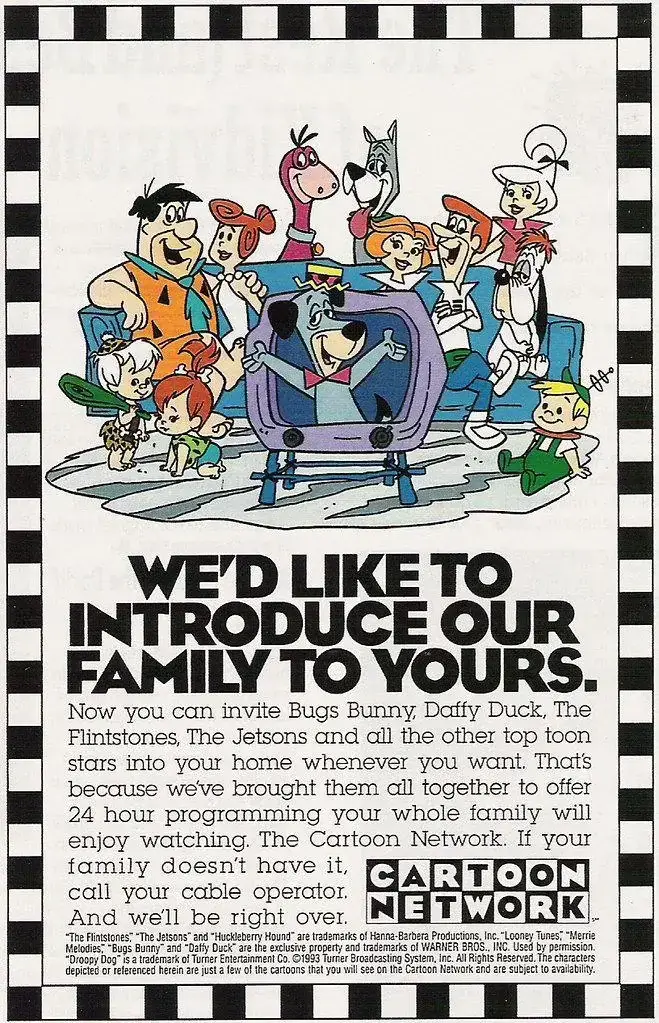
Cable gradually weakened the premise.
A child with Nickelodeon, USA Network, or Cartoon Network no longer depended on one local station at one particular hour. Cartoons were available throughout the day, which made the traditional after-school strip less valuable.
- 1990: The Children’s Television Act limits advertising during children’s programming
- 1992: Cartoon Network launches with animation available throughout the day
- 1996: New FCC guidelines push broadcasters toward three weekly hours of educational children’s programming
- 1999: The Disney Afternoon leaves syndication
- 2005: Kids’ WB ends its weekday block on December 30
The end of the Kids’ WB weekday schedule marked the close of the traditional American after-school cartoon-block era.
The Number Outlived Its Own Reason
Cable channels controlled their own schedules, so they did not need to sell local stations one 13-week package at a time.
Episode orders became more flexible, often landing at 26, 39, 52, or other totals. Even so, the old multiples continued to appear.
Dexter’s Laboratory finished with 78 half-hour episodes.
So did The Powerpuff Girls.
Seventy-eight is six times 13.
Cartoon Network did not need the old syndication formula, but the television business was still accustomed to ordering programs in familiar blocks.
That is how scheduling habits survive. The original reason fades, while the number continues to look normal to everyone making the decisions.
Not every cartoon that reached 65 was cancelled because of the number. Some had already run their course, and others continued well beyond it. But when the total appears again and again, it is usually because television was planned as a schedule before it was treated as an archive.
The animators did not invent the target. The writers did not invent it. The children watching after school certainly did not invent it.
The calendar did.
Which cartoon do you think still had the most life left when production ended?
Drop your pick in the comments.