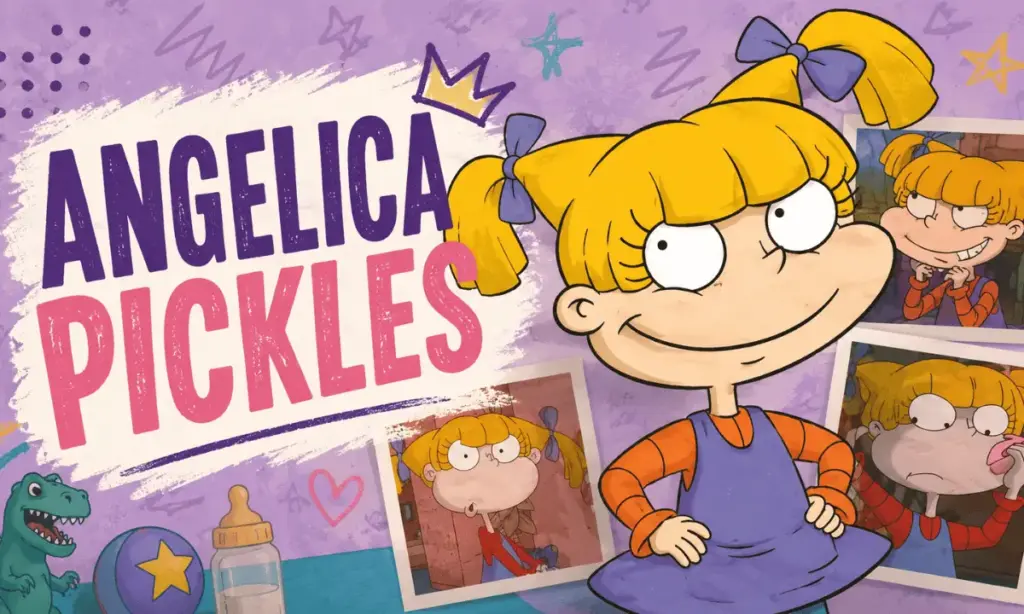
Every 90s kid remembers Angelica Pickles as the ultimate villain of Rugrats.
She lied, she schemed, and she spent most of her screen time tormenting Tommy and Chuckie.
But re-watch the show as an adult, and the “bully” narrative starts to wobble. Was Angelica really just a brat, or was she a product of her environment?
My take is that Angelica Pickles was ahead of her time.
She was arguably the first female anti-hero a lot of us ever met, a tiny Machiavellian genius running circles around everyone.
Let’s put her on trial.
The Angelica File: At a Glance
| Full name | Angelica Charlotte Pickles |
| Age | 3 years old |
| Role | Rugrats’ antagonist (and secret anti-hero) |
| Voiced by | Cheryl Chase |
| Prized possession | Her Cynthia doll |
| Best frenemy | Susie Carmichael |
| Catchphrase | “You dumb babies!” |
| Scheming level | 10 out of 10 |
The Case That Angelica Was a Bully
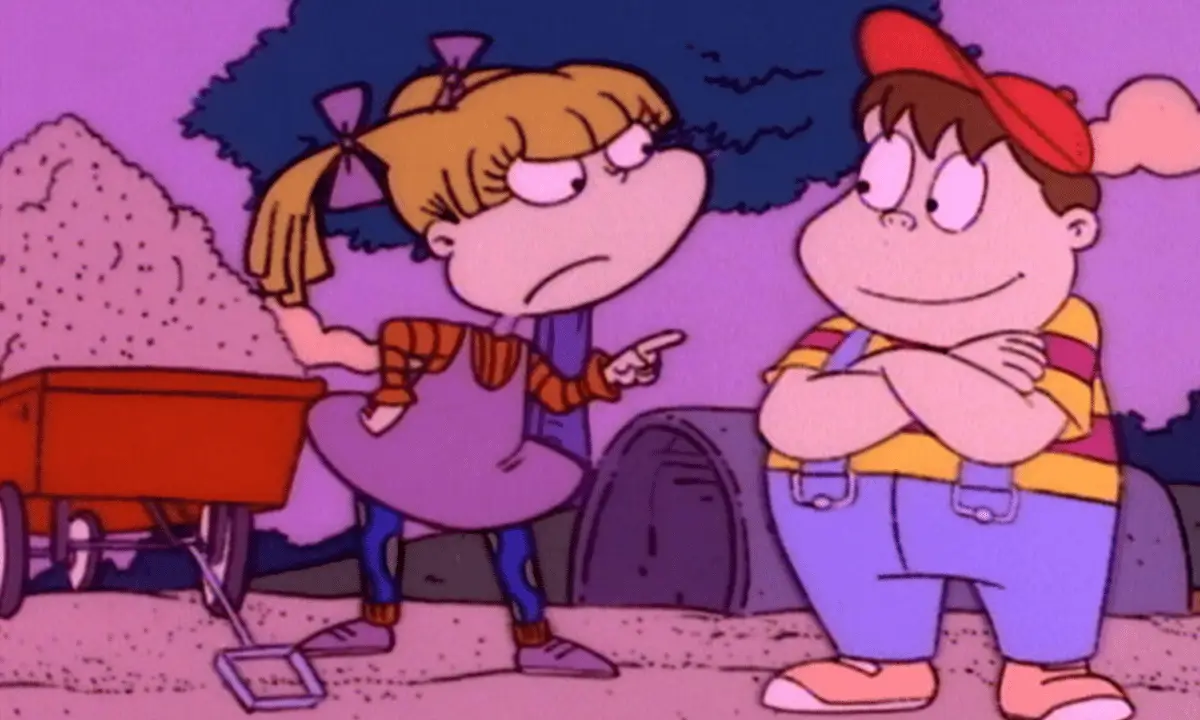
Let’s be fair and start with the prosecution. On paper, the case against Angelica is strong. She is the oldest kid in the group, and she uses that edge to push the younger child characters around constantly.
The evidence of bullying is right there in almost every episode:
- She spins terrifying tall tales to scare Tommy, Chuckie, Phil, and Lil.
- She bosses the babies into servant roles under her self-crowned “Queen Angelica” rule.
- She steals, she lies, and she happily takes credit for chaos she caused.
- Her go-to insult, “You dumb babies,” is basically her catchphrase.
No wonder she got a reputation.
For a show about sweet, adventurous babies, Angelica really was the resident menace.
The Case That She Was Misunderstood

Now the defense. Watch closely and a very different Angelica appears, one driven by insecurity rather than pure evil.
The evidence of a misunderstood kid stacks up too:
- She acts out mostly to get attention she is starving for at home.
- She shows real vulnerability whenever her tough act cracks.
- She is fiercely protective of “her” babies against any outside threat.
- In every Rugrats movie, she flips sides and helps the babies beat the actual villain.
That is not the profile of a cartoon villain. That is a three-year-old with a complicated inner life.
The Machiavellian Toddler

Here is where I flip the whole “brat” label on its head. Angelica Pickles was not just mean. She was the single most intelligent character on the show.
Her superpower is language. Angelica and Susie can both talk to the babies and to the grown-ups, while the babies’ chatter is pure gibberish to any adult in the room.
That makes Angelica a translator with total leverage. She can twist what the babies say, feed lies to the adults, and never get caught, because the babies have no way to rat her out. While everyone else was busy being a baby, Angelica was running a high-stakes social operation.
My take: Angelica was not bullying the babies for no reason. In her own mind, she was preparing them for the harsh realities of the world. That is villain logic, sure, but it is also weirdly strategic for a preschooler.
The Absent-Parent Theory: Charlotte and Drew

To understand Angelica Pickles, you have to look at her parents. Her behavior did not come from nowhere.
Her mom, Charlotte, is a corporate powerhouse who is always glued to her phone, barking her famous “Yes, Jonathan?” into a headset while closing deals. Her dad, Drew, is the doting softie who spoils her rotten and calls her Princess, then worries she is turning out too spoiled.
Put those together and you get a kid raised on a very 90s cocktail: a workaholic parent and an indulgent one. Angelica’s tantrums read less like cruelty and more like a cry for attention in a house where one parent is never fully present.
The dark theory: Fans once cooked up a grim theory that Angelica imagined the babies to cope with tragedy at home. It is a chilling read, but the creators have flatly debunked it. The show’s origin was much simpler, so treat that one as pure fan fiction.
Angelica vs. Susie: The Real Moral Compass
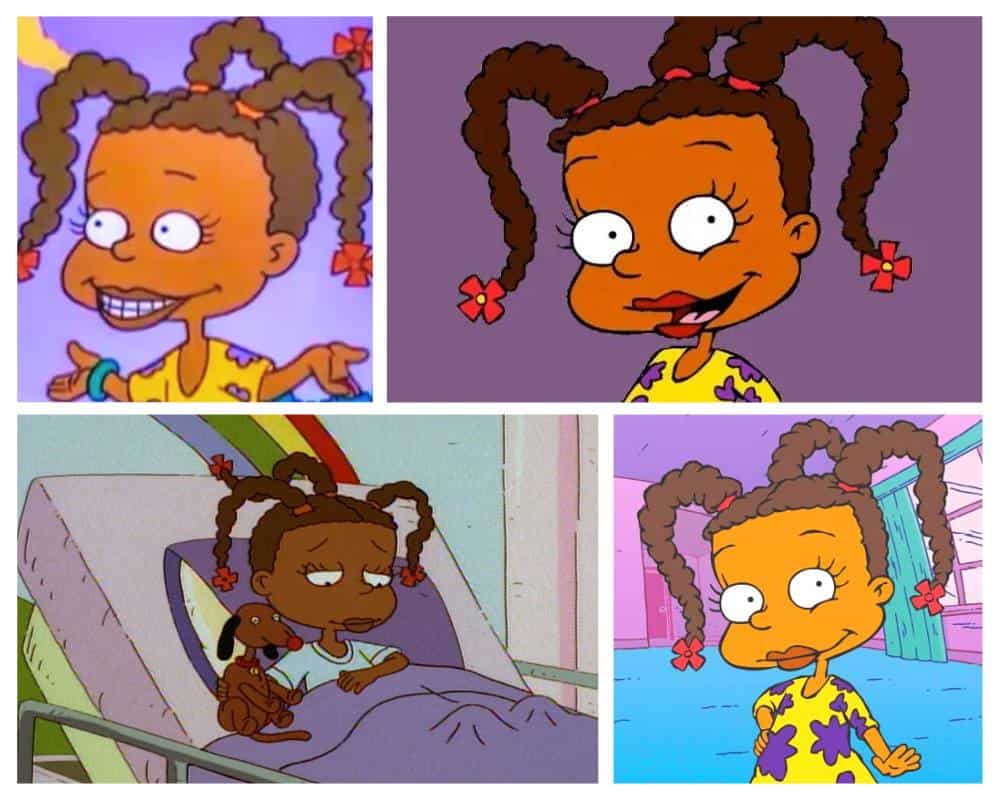
You cannot analyze Angelica Pickles without Susie Carmichael. Susie is her true foil, and the contrast is the whole point.
Susie is roughly Angelica’s age, but she is kind, honest, and quick to debunk Angelica’s myths before they can hurt the babies. Where Angelica manipulates, Susie reassures.
The show clearly knew Angelica needed a counterweight, so it built one. Their rivalry keeps Angelica from tipping into full villainy, and by the time we reach “All Grown Up,” the two even grow into something like mutual respect. Little detail worth noting: Susie has siblings, while Angelica stays an only child, which quietly reinforces why Susie is so much more secure.
The Narrative Engine of Rugrats

Here is the part fans overlook. Angelica was not just an obstacle. She was the engine that made the plot go.
Without her schemes, the babies would have no reason to leave the playpen. Her lies send them on quests, her threats force them to be brave, and her chaos pushes them to grow. In “A Rugrats Passover,” she even plays the Pharaoh to Tommy’s Moses, refusing to let the babies go.
Strip Angelica out of the show and the adventures simply stop. In that sense, she is not the villain of Rugrats. She is its motor.
The Humanizing Moment
If you still think she is a straight-up villain, here is the detail that breaks it. Angelica is deeply territorial about the babies, and it works in their favor.
Her whole attitude boils down to one rule: nobody gets to mess with her dumb babies except her. The second an outside threat appears, she plants herself between it and the little ones. She torments them, but she also guards them.
The movies seal the argument. Time and again, Angelica ends up risking herself to help rescue the babies and take down the real bad guy. A pure bully does not do that. A complicated, loyal, three-year-old anti-hero does.
How Angelica Was Created

Angelica Pickles almost did not exist. She was not in the original Rugrats pilot at all.
Co-creator Paul Germain added her later, and he based her on a real bully he knew growing up. He wanted a character who could create friction and give the sweet baby world some edge.
Not everyone was on board. Co-creator Arlene Klasky openly disliked how cruel Angelica was in the early seasons and clashed with the writers over it. By around 1996, once the writers had softened her and added more layers, even Klasky came around to the more complex version we remember.
Cynthia, Fluffy, and Angelica’s World

For all her scheming, Angelica has a soft, human side revealed through the things she loves. Chief among them is Cynthia, her prized doll.
Cynthia is a scruffy parody of Barbie, complete with chopped hair, and Angelica adores her, filling her room with Cynthia merchandise. She also dotes on her cat, Fluffy, who is every bit as feisty as her owner. In “Fluffy vs. Spike,” the cat wreaks havoc and poor Spike, Tommy’s dog, takes the blame.
A few more fun bits of Angelica trivia:
- She has an oddly specific list of hated foods: coconuts, baked apples, broccoli, flan, and spinach.
- She is defined by her purple dress, polka-dot tights, and blonde pigtails tied with purple ribbons.
- In “All Grown Up,” teen Angelica trades bullying for the mall, fashion, and fame, though she never fully loses her edge.
The Voice of Angelica: Cheryl Chase

So much of Angelica Pickles’ charm comes from her voice, provided by Cheryl Chase. Chase created that unmistakable whiny, high-pitched tone by constricting her vocal cords to sound like a petulant little kid.
What makes her work special is the range. She can snap from a bratty outburst to a moment of real tenderness in a single line, which is exactly what keeps Angelica from being a flat villain.
Chase has stuck with the role across every era, from the original series to “All Grown Up,” the preschool spinoff, and the modern reboot. You can see her full body of work on her IMDb page.
So, Was Angelica Pickles Really a Bully?
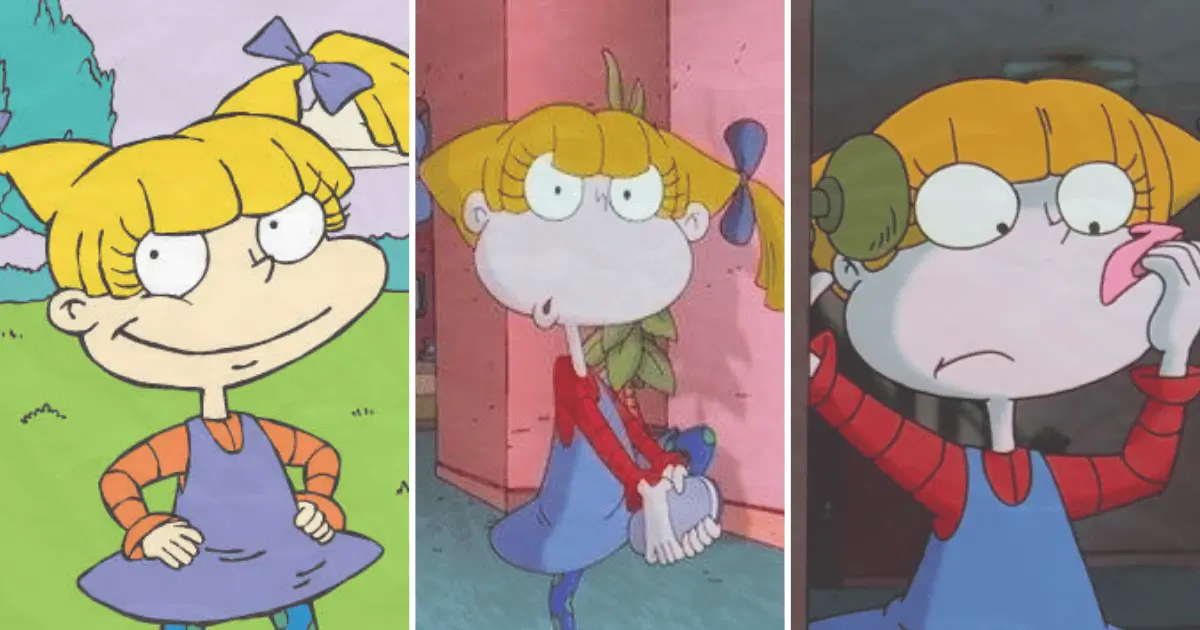
My verdict? Angelica was a bully on the surface and something far richer underneath. She was insecure, neglected at times, fiercely smart, and secretly loyal to the very babies she tortured.
That is not a flaw in the writing. It is what made her iconic.
The culture agrees, too: TV Guide once ranked her the 7th greatest cartoon character of all time, and Girls Inc. even honored her for inspiring kids to be strong, smart, and bold.
For a fuller history, her character is well documented on Wikipedia and across the wider Rugrats franchise, with deeper episode notes on the Rugrats wiki.
Angelica Pickles was the original mean girl of Saturday morning television, but is it time we give her a pass for being a toddler in a chaotic world?
Was she a straight-up villain, or just the most misunderstood kid on the playground?
Let me know where you stand.