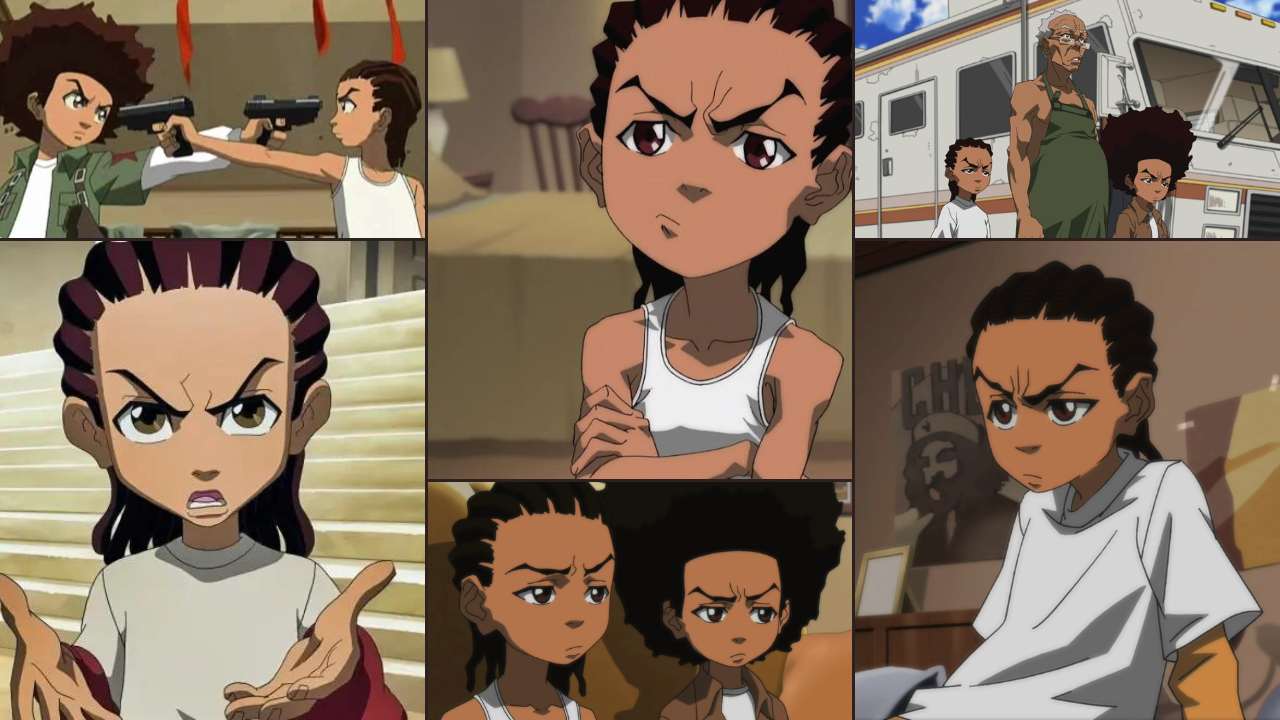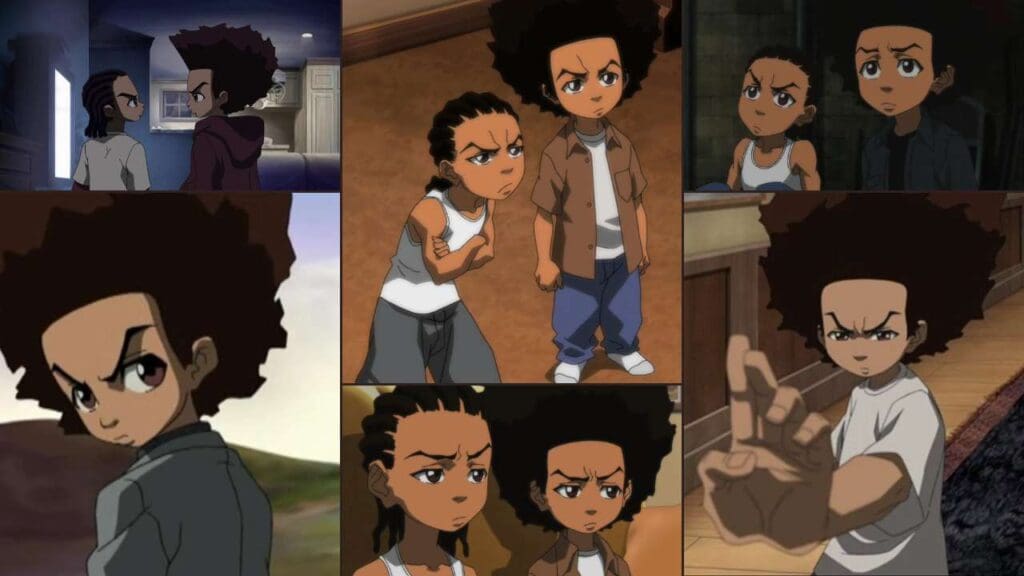
Huey Freeman is the ten-year-old revolutionary at the heart of Aaron McGruder’s The Boondocks, and he is also its narrator and moral compass. With his towering Afro and a mind sharper than most adults in the room, he breaks the mold of your typical cartoon character.
He calls himself a revolutionary, and he acts as our guide through the minefield of suburban American life, full of racial tension and quiet absurdity.
Using humor and a heavy dose of satire, Huey drops insights that can make you laugh, think, and squirm all at once. That is a hard balance to pull off, and the show nails it.
Here is my quick-reference card before we get into the deep dive.
Full name: Huey Freeman
Age: 10 years old
Voiced by: Regina King
First appeared: The Boondocks comic strip in the 1990s, then Adult Swim in 2005
Named after: Huey P. Newton, co-founder of the Black Panther Party
Role: Protagonist, narrator, and self-described revolutionary
Huey Freeman, The Boondocks’ Hero
At first glance, Huey reads as a cynic who has checked out of the world around him. But under that flat expression is an activist who wants real change. He is a kid fighting the status quo and a loud supporter of black power and radical politics. He is not detached at all. He just refuses to pretend everything is fine.
He uses that quick wit to shine a light on things most people ignore, from the commercialization of Christmas to the slow creep of consumer culture.
In many ways he is the living version of the old line, “the child is the father of the man.” His read on race and politics runs deeper than that of nearly every grown-up on the show. Frankly, it runs deeper than plenty of grown-ups off it too.
If you want a literary comparison, I would point to Mark Twain’s Huckleberry Finn.
Both characters work as mirrors, reflecting the contradictions of their world back at it, including the everyday experiences of black people in America.
Nicknames:
- Angry Kid with Afro (from the comics)
- Huey McHater (courtesy of Riley)
- The Famous Revolutionary
- Hilton Brothers (both boys, by Dewey Jenkins)
Martial Artist, Intellectual, and Conspiracy Theorist
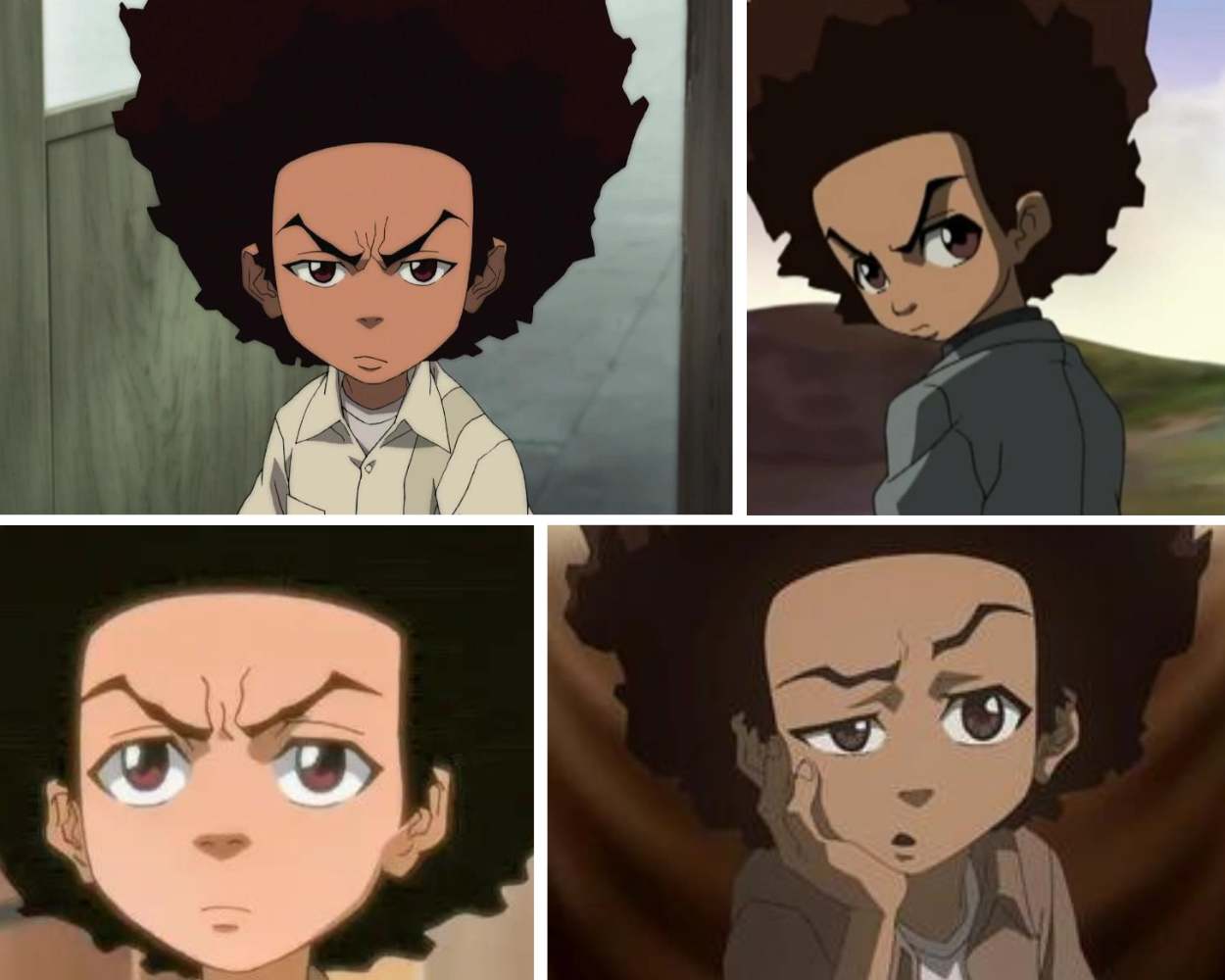
For all his heavy realism, Huey is still a child, and the show never lets you forget it. Sure, he is an expert martial artist, a razor-sharp political analyst, and a committed conspiracy theorist.
Yet he is also a kid who wonders about God, the meaning of life, and, in one very funny case, the real story behind Santa Claus.
That side of him shows up best in “A Huey Freeman Christmas,” where his skepticism about the holiday runs straight into Jazmine’s wide-eyed faith in Santa, while his younger brother Riley runs his own one-kid war on mall Santas.
His childlike hope keeps breaking through anyway. He believes in a better world, and he will take on anyone who stands in the way, even if that means a one-kid hunger strike.
That mix of youthful energy and grown-up wisdom is what makes him one of the most layered characters in animation. Whether he is arguing about a secret government plot or drilling his martial arts, there is never a dull moment with Huey. So his refusal to give in to cynicism, even while he sees through everything, quietly makes him a role model.
The Personality of Huey Freeman

Huey’s personality is the engine of the whole series. He is smart, principled, and socially aware, and he never backs down from calling out injustice, even in the very white suburb of Woodcrest. He does not do peer pressure.
His politics lean hard into socialism, clearly shaped by Marxism.
That worldview centers on the struggle between the working class and the people at the top. Still, his serious front hides real moments of vulnerability and affection. That is what keeps him from being a one-note character. Underneath the strength and conviction, there is a kid who cares deeply, and that combination is why he stuck with so many viewers.
Tyler’s take: Huey might be the best-written kid in all of adult animation. He is a ten-year-old with the reading list of a college professor, and the show plays that as both a joke and a real strength.
The Yin to Riley’s Yang
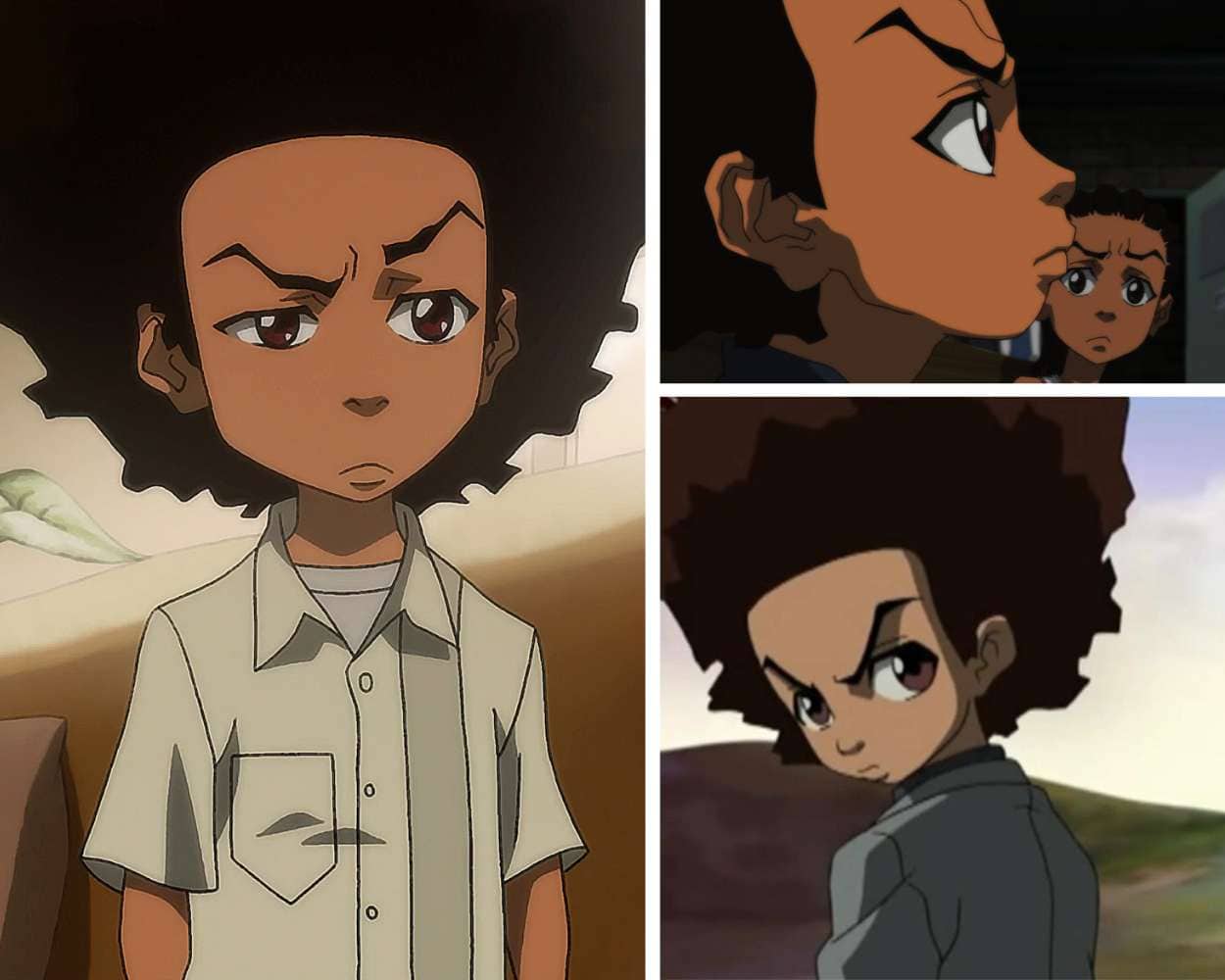
Huey gets a lot deeper the second you put him next to his little brother.
Where Huey is calm and analytical, Riley is loud and impulsive, which makes him the perfect foil. On top of that, Huey’s belief in black power and activism sets him apart from Riley’s more checked-out attitude toward anything serious.
Their clashing personalities show off very different experiences within the same family and community.
Together they form a balance, a two-part system in constant motion, each one pushing and shaping the other. Through that push and pull, the show digs into sibling dynamics, family bonds, and a lot of bigger cultural questions.
Noteworthy Episodes Featuring Huey Freeman
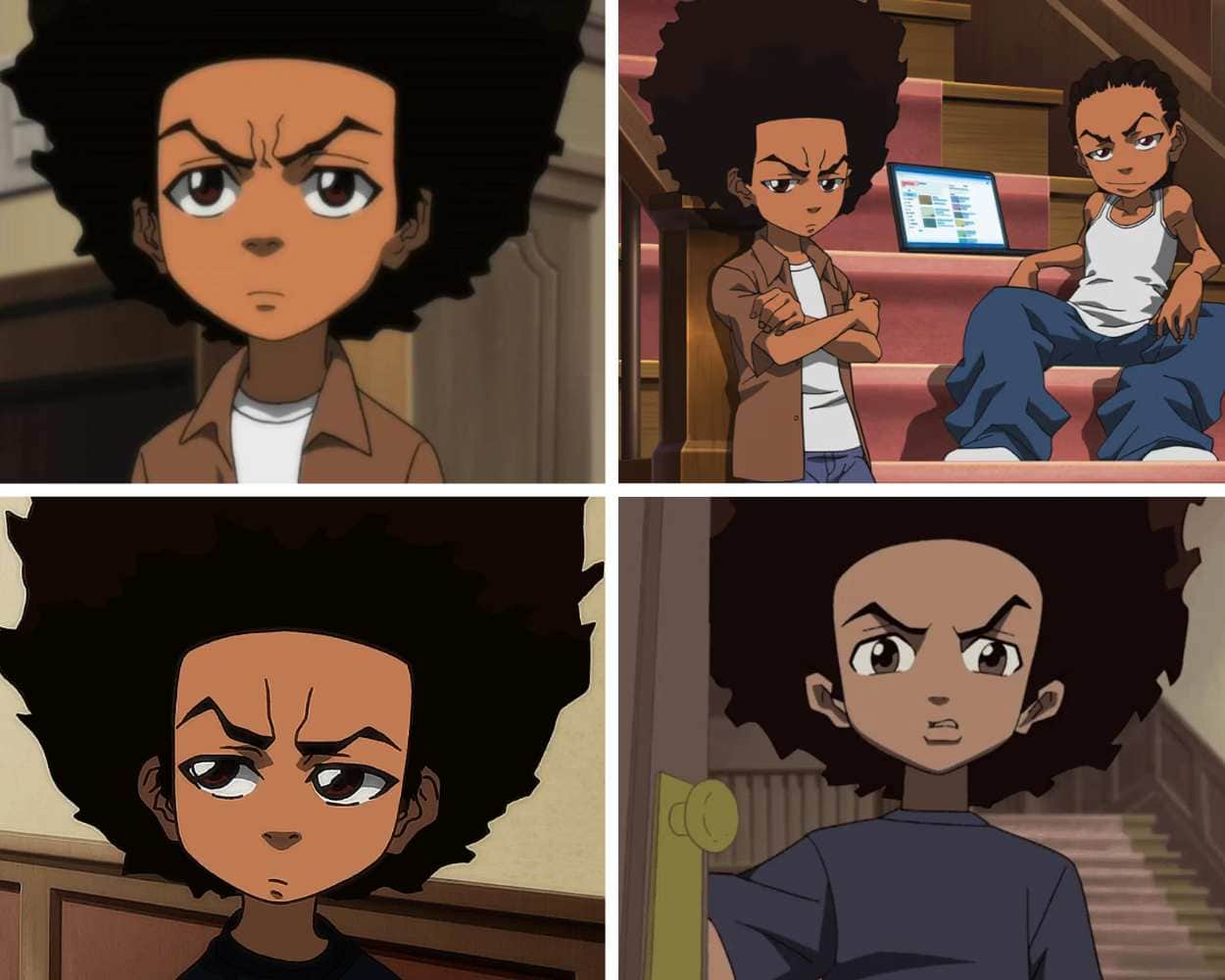
If you want to see Huey at his best, these are the episodes I would start with:
- Return of the King: Huey imagines Martin Luther King Jr. waking from a coma into a modern America that has lost the plot. It is the show’s boldest, most talked-about episode.
- A Huey Freeman Christmas: his war on holiday commercialism, complete with a stubborn hunt for a more honest Santa.
- The Trial of R. Kelly: Huey takes a stand while the crowd around him refuses to.
- The Itis: a sharp jab at fast food, addiction, and consumerism.
- The Story of Gangstalicious: a look at exploitation inside the music industry.
Across all of them, Huey stays the same catalyst for change.
Through his actions and words, he keeps dragging uncomfortable social issues into the open, which is exactly why the show still hits so hard.
Huey and Riley Freeman
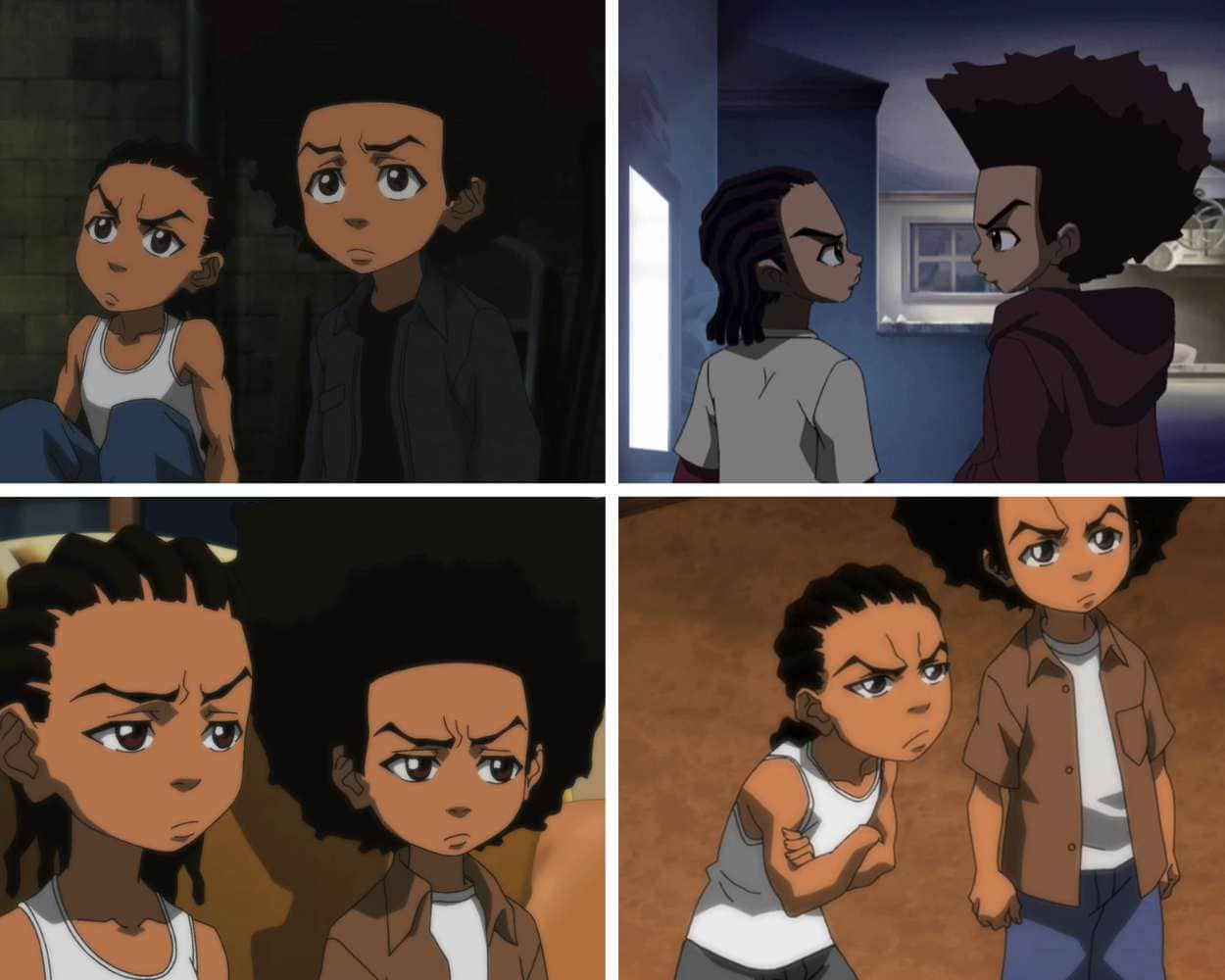
Huey, the politically switched-on older brother, is constantly at odds with Riley, who basically embodies everything Huey cannot stand. While Huey critiques the culture, Riley soaks up gangsta rap, bling, and bravado, all of which Huey sees as poison.
In their day to day, Huey often acts more like a father than a brother.
Despite the constant arguing and his disapproval of Riley’s choices, his love for his brother wins out. He keeps trying to steer Riley the right way, and Riley keeps ignoring him, which usually ends with Riley facing the fallout later. Naturally, plenty of these disputes escalate into full-blown brawls.
Huey and Granddad Robert Freeman
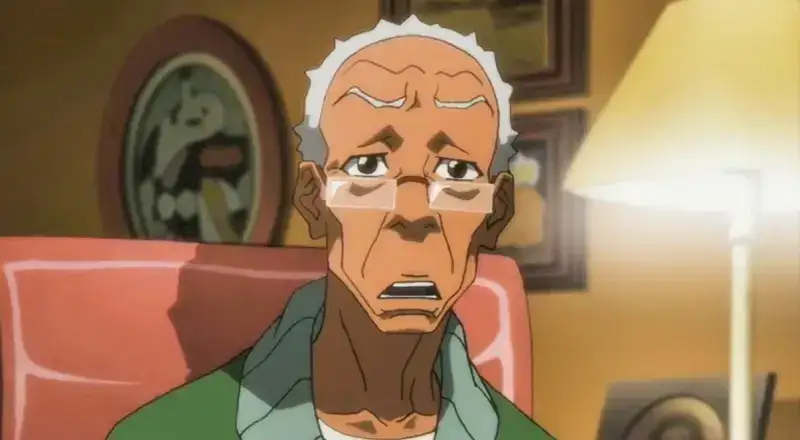
The boys’ paternal grandfather and legal guardian, Robert Freeman, spends most of the series bumping heads with Huey’s politics.
Worth noting for the fans who always ask: the show never really explains what happened to Huey and Riley’s parents. Granddad simply has custody and moved the family out to the suburbs.
Their bond looks warmer in the comic strip than it does on screen, where they argue constantly.
A lot of that friction comes from Granddad’s obvious favoritism toward Riley, who cheerfully backs his wild schemes. In episodes like “Granddad’s Fight,” “The S-Word,” and “The Story of Thugnificent,” Huey tries to talk sense into him, and it almost never works.
Huey and Jazmine Dubois
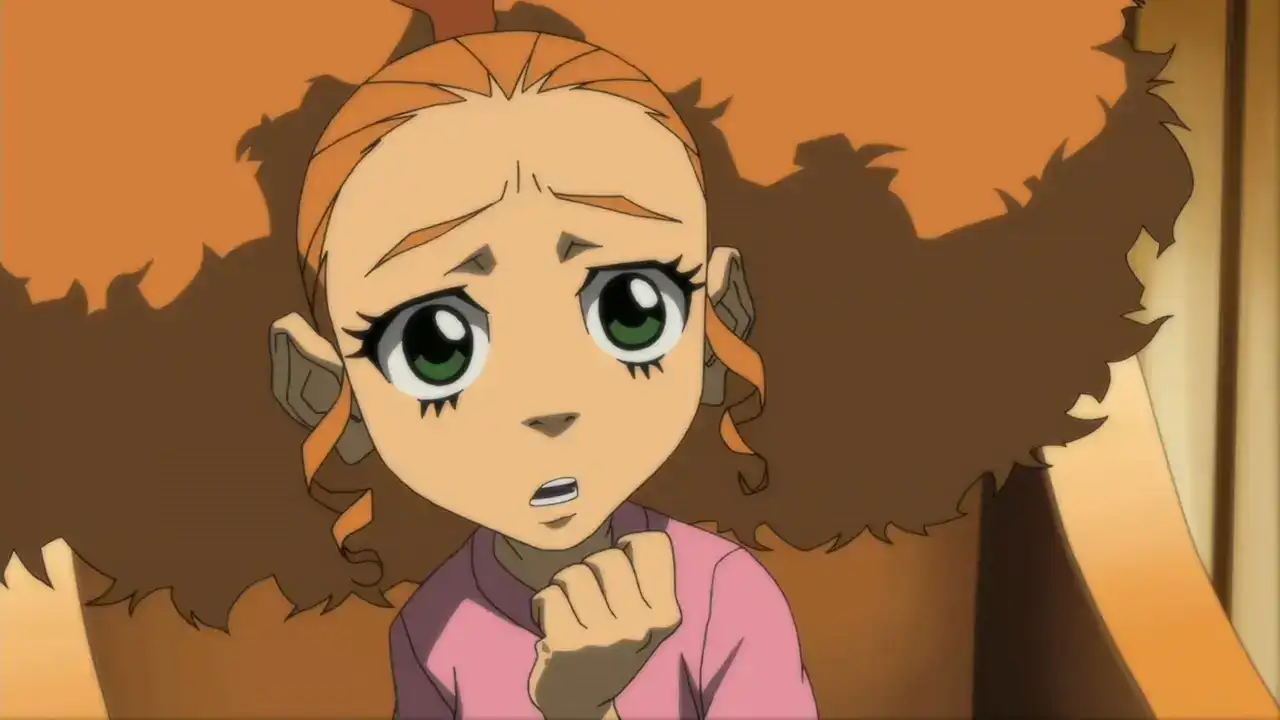
Huey spends a lot of time with Jazmine, even though he often brushes her off for being naive and politically clueless. In the series they grow closer, and she becomes the only kid besides Riley he really lets in.
You see it when he opens up about wanting to reconnect with an old friend in Chicago during “Wingmen,” and when he trusts Jazmine to help him free a wrongly jailed man in “The Passion of Reverend Ruckus.”
For all his cool distance, he shows real concern for her, like when he pushes to get her out of a shady near-child-labor contract with Ed Wuncler Sr. in “The Block Is Hot,” or lets her stay over during “The Fried Chicken Flu” because he thinks the world is ending.
Huey and Cindy McPhearson
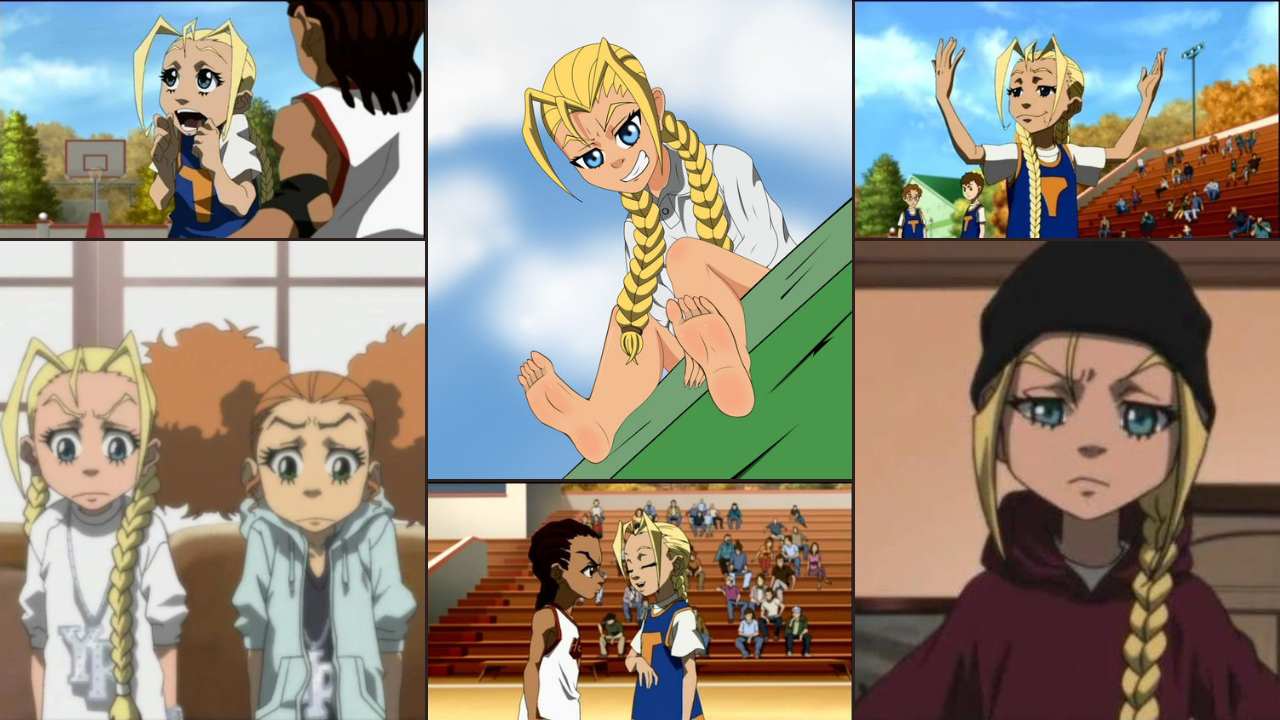
Then there is Cindy McPhearson, the white, blonde classmate who adds a strange new wrinkle to Huey’s world. Despite her background, she is fascinated by black culture and constantly adopts the stereotypes she thinks are cool. Their dynamic runs on Huey’s blunt criticism of her act, which Cindy somehow reads as friendship. The result is equal parts funny and awkward.
Other Relationships
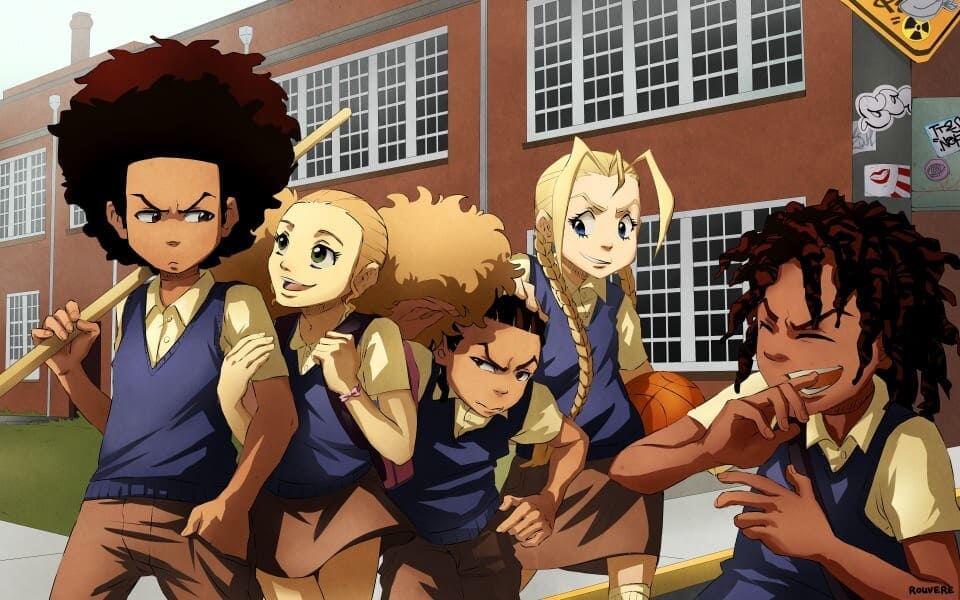
- Michael Caesar: Huey’s best friend in the comic strip. He shares Huey’s brains and left-leaning politics, and the two of them open up space for the show’s sharpest debates.
- Uncle Ruckus: a black man drowning in self-hatred and worship of white culture, which makes him Huey’s total opposite. Their scenes are pure satire, with Huey calling out Ruckus’s internalized racism at every turn.
- Ed Wuncler III and Gin Rummy: a bumbling rich grandson and an Iraq War veteran who commit crimes and skate free thanks to privilege. Huey’s run-ins with them expose how wealth and power bend the rules.
- Ed Wuncler Sr.: the wealthy white businessman who stands in for capitalist greed. His shady deals give the show a clean target for its takes on money and systemic racism.
- Tom DuBois: Jazmine’s father and a successful lawyer. Huey needles Tom’s buttoned-up, assimilationist lifestyle, which pokes at questions of racial identity and class.
How Old Is Huey Freeman?
Huey Freeman is 10 years old. That is the running joke and the whole point of the character. A ten-year-old should not be this well-read, this jaded, or this ready to fight the system. His age is exactly what makes his speeches land so hard. The kid is in elementary school and already sees through everything.
Who Voices Huey Freeman?
Huey is voiced by Regina King, the Oscar-winning actress who also voices Riley. Yes, the same person plays both brothers, and she gives them completely different energy. For my money, casting one adult woman as two very different young boys is one of the smartest choices the show ever made. It works so well that most viewers forget it is happening.
Who Is Huey Named After?
Huey takes his name from Huey P. Newton, one of the founders of the Black Panther Party. That fits him perfectly. He openly idolizes Muhammad Ali, and his bedroom walls are covered in posters of Che Guevara, Malcolm X, Martin Luther King Jr., and Hugo Chavez. The room alone tells you everything about who this kid wants to be.
Huey Freeman’s Most Iconic Moments
Hot take: “Return of the King” is not just the best Boondocks episode. It is one of the boldest half-hours any animated show has ever put on the air.
People search for Huey’s quotes constantly, and the reason is his delivery. He speaks in calm, deadpan monologues while the world burns around him. A few moments stand out:
- His dream in the pilot, where he calmly tells a garden party of wealthy guests that Jesus was black, that Ronald Reagan was the devil, and that the government lied about 9/11, right before chaos erupts.
- His “Return of the King” speech, easily his most quoted scene, where a revived Dr. King finally loses patience with the modern world.
- His deadpan claim to be a “retired domestic terrorist,” which lands in the season 3 premiere as the news media brands him a public threat.
Is The Boondocks Based on a Real Person?
No, The Boondocks is not based on a real person. It is a fictional animated series created by Aaron McGruder, built out from his comic strip of the same name. Huey and the rest of the Freemans are original characters.
As for where it all takes place, the family lives in the fictional suburb of Woodcrest after moving up from the South Side of Chicago.
That culture clash, a Chicago kid dropped into a sleepy white suburb, drives a huge chunk of the comedy and the commentary.
Quick Facts about Huey Freeman
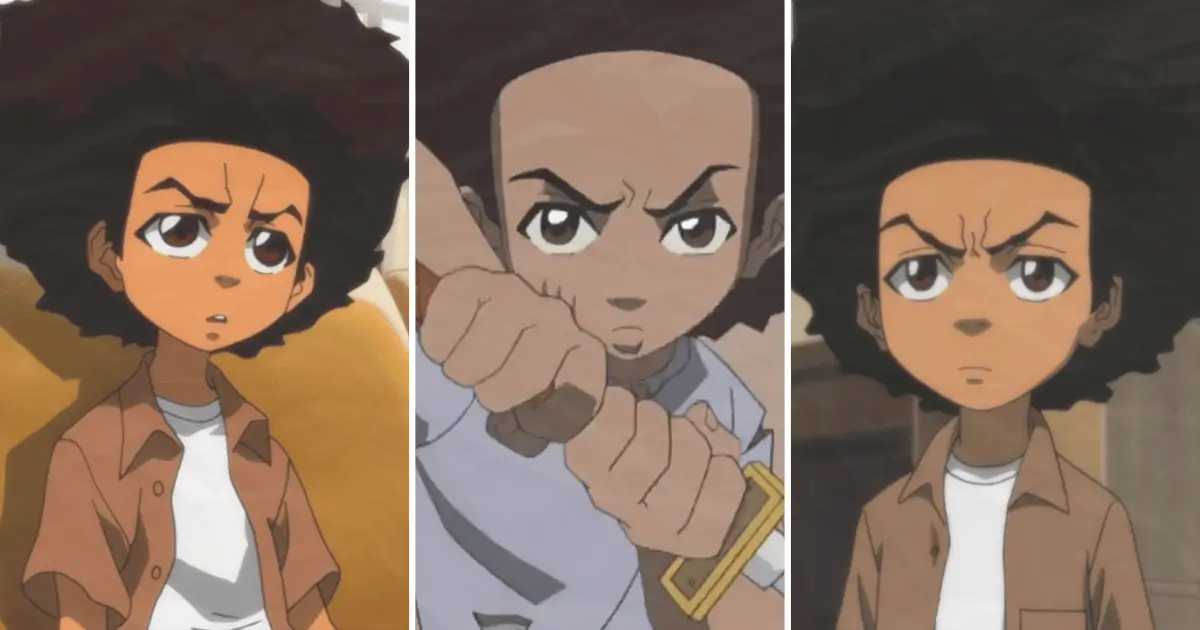
Here is the short version if you just want the highlights:
- He is the hero of The Boondocks, based on the comic strip by Aaron McGruder.
- He is defined by strong moral conviction and a drive to fight injustice.
- He has a complicated relationship with Riley, and the two constantly test each other’s beliefs.
- He also leans on Granddad Robert, who steps in as a father figure.
- Despite being 10, he is written as wise beyond his years and serves as the voice of reason.
- The show found a cult following through Adult Swim, Cartoon Network’s late-night block.
Trivia
- He is named after Huey P. Newton, co-founder of the Black Panther Party.
- He is a serious martial artist, comfortable in several fighting styles that the show loves to put on display.
- He calls himself a “domestic terrorist” and later a “retired domestic terrorist,” a nod to his revolutionary streak.
- He constantly critiques American society, from racial injustice to capitalism to the media.
- For all his understanding of these issues, he rarely manages to change anything, which gives him a quietly tragic edge.
- His intelligence and worldview leave him isolated, often at odds with a brother and grandfather who would rather just go along to get along.
That is my full breakdown of Huey Freeman, from his politics to his family to why a ten-year-old with an Afro became the beating heart of The Boondocks.
He is a fan favorite for a reason.
Who is your favorite character from the show?
Drop a comment and let me know.