
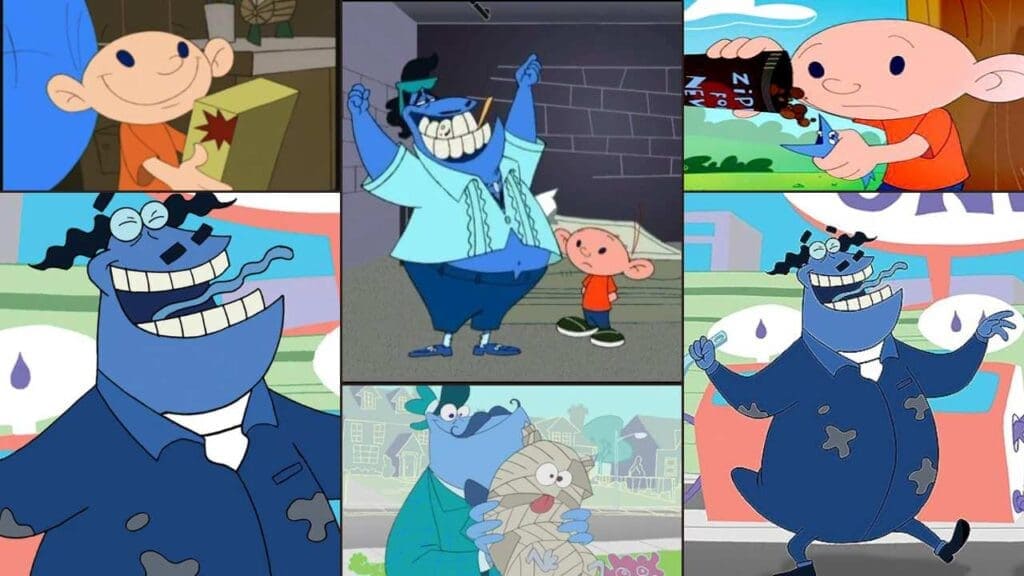
Some forgotten cartoons disappear because they never had much to offer. Ned’s Newt is not one of them.
This Canadian-German comedy had a sharp premise, a memorable theme song, and one of the most flexible cartoon characters of the late 1990s. Newton could become almost anyone or anything, which let the writers jump from movie parody to family comedy without slowing down.
The setup was wonderfully simple.
A nine-year-old boy buys the only pet he can afford, a quiet little newt named Newton. Then Newton eats far too much special pet food and grows into a six-foot, 500-pound, talking shapeshifter.
That is Ned’s Newt in one sentence, but the show had more going on than its strange premise suggests.
What Is Ned’s Newt?
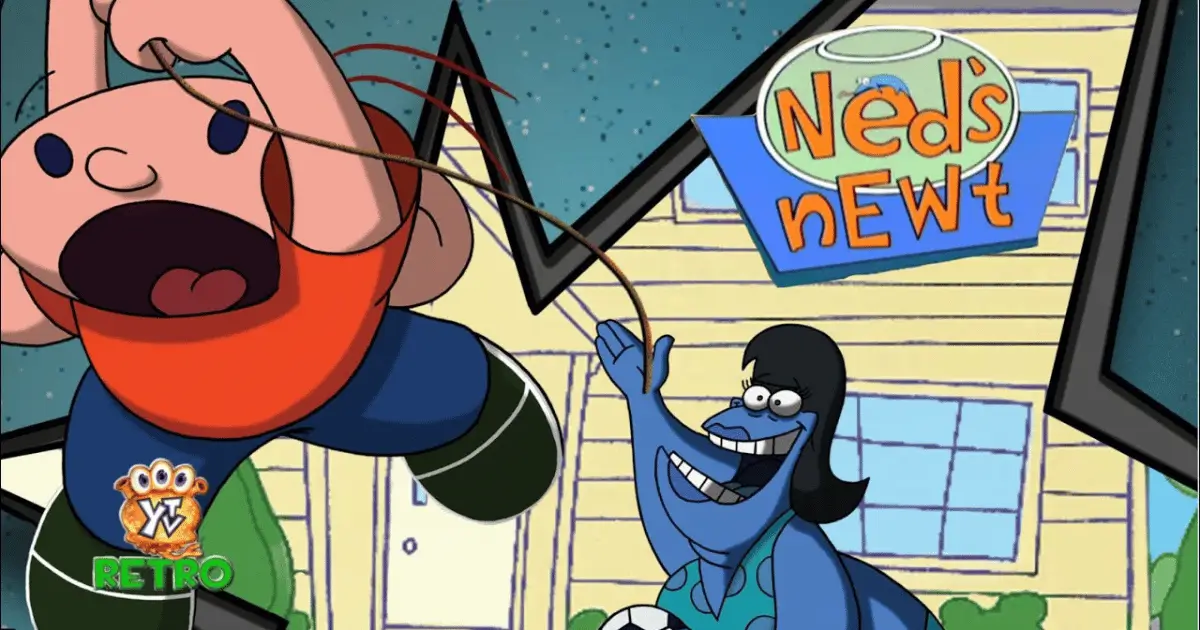
Ned’s Newt is an animated fantasy comedy created by Andy Knight and Mike Burgess. Nelvana produced the series as a Canada-Germany co-production with TMO Film GmbH.
It premiered on Teletoon in 1997 and ran for three seasons, producing 39 half-hour episodes made up of 78 shorter stories.
The basic formula stayed consistent. Ned faced an ordinary childhood problem, Newton tried to help, and the solution became far larger and stranger than the original problem.
Newton’s shapeshifting made that structure almost limitless. A school assignment could turn into a movie parody. A family trip could become an adventure story. A small attempt to impress Linda could end with half the town in chaos.
The humour moved quickly and relied heavily on impressions, pop-culture references, visual gags, and Newton speaking directly to the audience. That gave children an easy story to follow while adults caught jokes aimed over their heads.
Canadian premiere: October 17, 1997
Original Canadian network: Teletoon
Seasons and episodes: 3 seasons, 39 half-hours and 78 story segments
Created by: Andy Knight and Mike Burgess
Production: Nelvana and TMO Film GmbH
Newton’s voices: Harland Williams, followed by Ron Pardo
Theme music: Pure West
A Boy and His Giant Newt
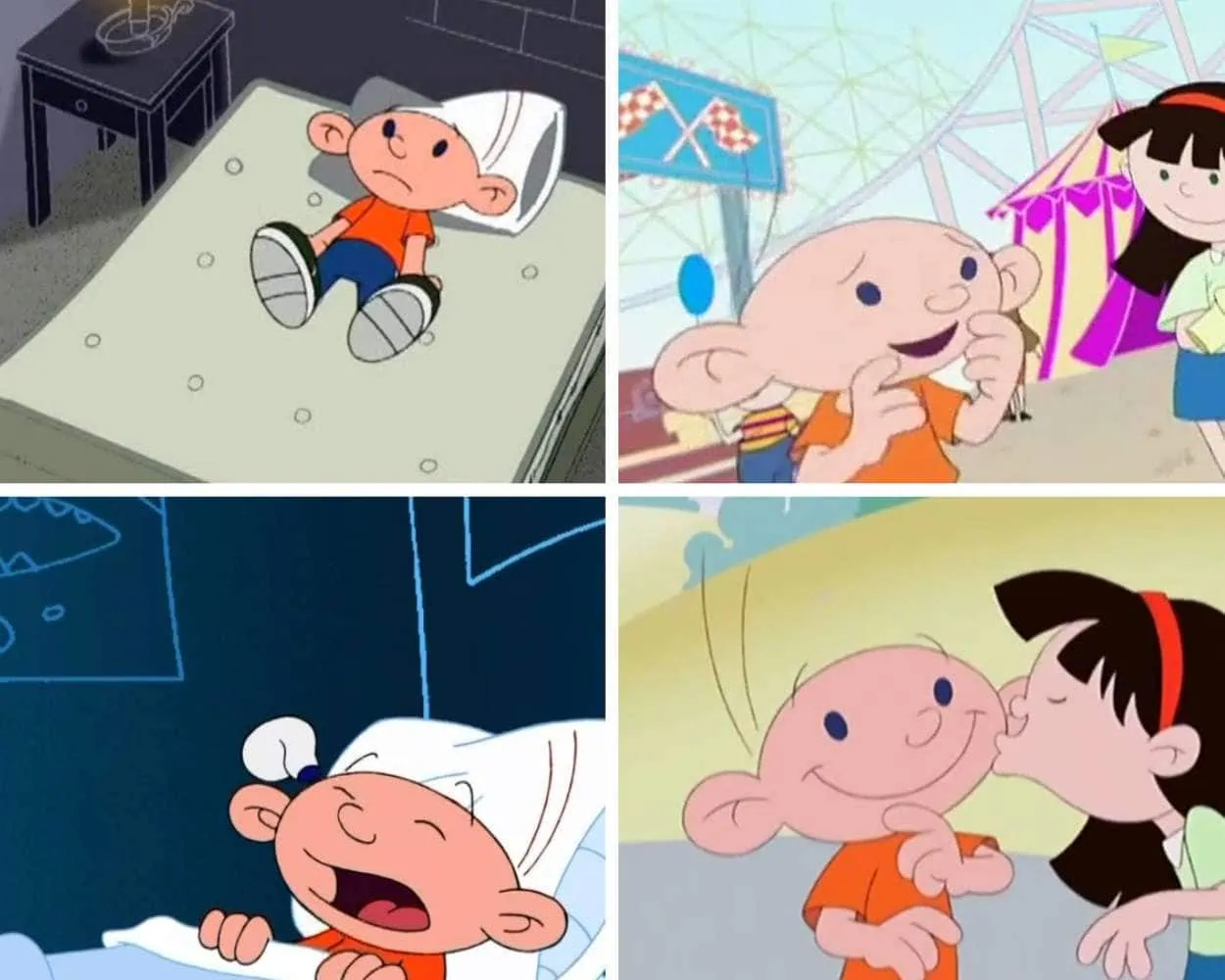
Ned Flemkin is a fairly ordinary nine-year-old. He worries about school, wants to impress Linda Bliss, and regularly finds himself embarrassed by his parents.
His life changes when he finally saves enough money to buy a pet.
Unfortunately, nearly every animal in the store costs more than he can afford. Ned leaves with a newt, names him Newton, and quickly discovers that his new pet does little beyond sitting on a rock.
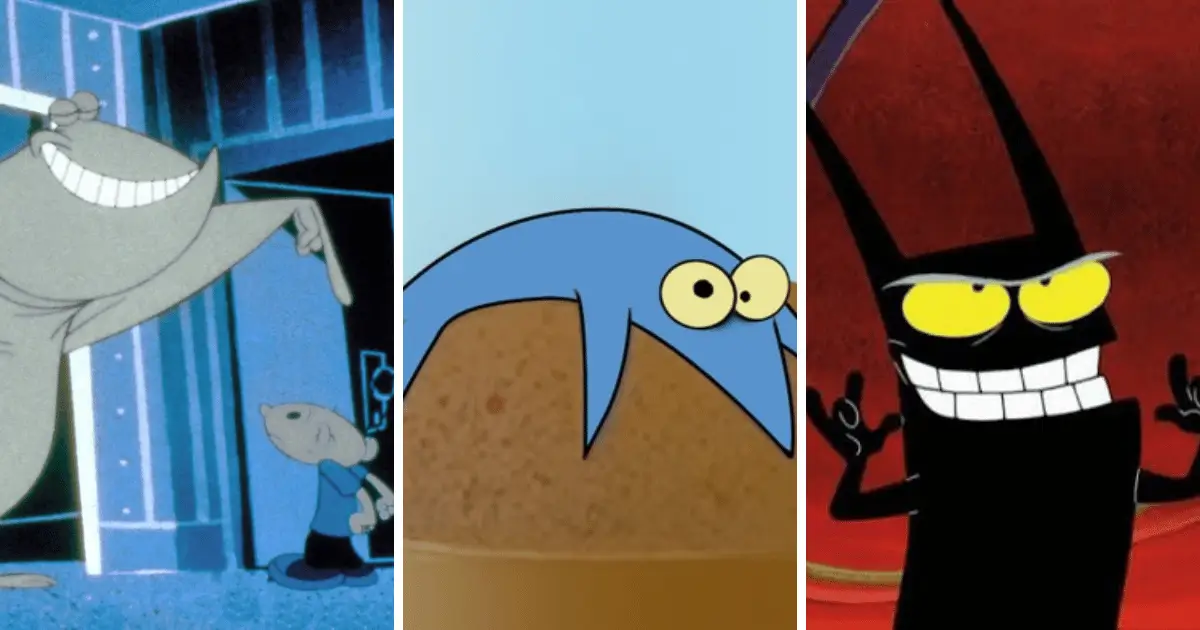
The pet-store owner, known only as The Usual Guy, gives Ned a can of Zippo Newt Food and warns him not to use too much.
Newton eventually eats far more than the recommended amount.
The food transforms him into a giant, green, fast-talking creature with the ability to reshape his body. He can become a celebrity, an animal, a vehicle, or almost anything else the story requires.
The effect is temporary. When the Zippo wears off, Newton returns to his normal size, usually at the exact moment Ned needs him most.
That creates the show’s central tension. Newton wants to help, but he rarely understands when to stop. Ned then has to hide both Newton’s existence and the damage left behind.
What Made Newton Different

Plenty of cartoons gave a child an unusual pet. Newton was different because he could become an entirely new character every few seconds.
He often copied movie stars, action heroes, television hosts, monsters, and familiar character types. One moment he might sound like an old Hollywood detective. The next, he could be doing an exaggerated action-movie impression or reshaping himself into a machine.
That freedom let the writers treat Newton almost like a one-character sketch-comedy show.
His behaviour also reflected whatever he had recently seen on television. He did not always understand the reference, but he committed to it completely.
This is where Harland Williams became essential. Williams brought a stand-up comedian’s rhythm to the performance, filling Newton’s dialogue with voices, strange pauses, sudden noises, and improvised-sounding reactions.
The result has often been compared with Robin Williams as the Genie in Aladdin. The similarity is not that the characters are identical. Both performances give the impression that the actor could take the scene anywhere at any moment.
Newton’s Shapeshifting Was the Show’s Secret Weapon
Newton’s transformations were not limited to disguises.
He could stretch, flatten, split himself into props, imitate vehicles, or rebuild his body around a joke. The rules changed whenever a funnier visual idea appeared.
That looseness made the series feel more like a theatrical cartoon than a tightly controlled television comedy.
By the third season, Newton increasingly acknowledged that he was inside a cartoon. In one gag, he stops to complain about the way his belly button has been drawn and then questions whether a newt should have one at all.
Those fourth-wall jokes have aged well because they do not depend entirely on knowing a specific 1990s reference. Newton knows the show is ridiculous, and he seems delighted by it.
Why Newton works: He is not simply powerful. He is enthusiastic, impulsive, and desperate to make Ned happy. His good intentions are what create most of the trouble.
The Music and Voice Acting
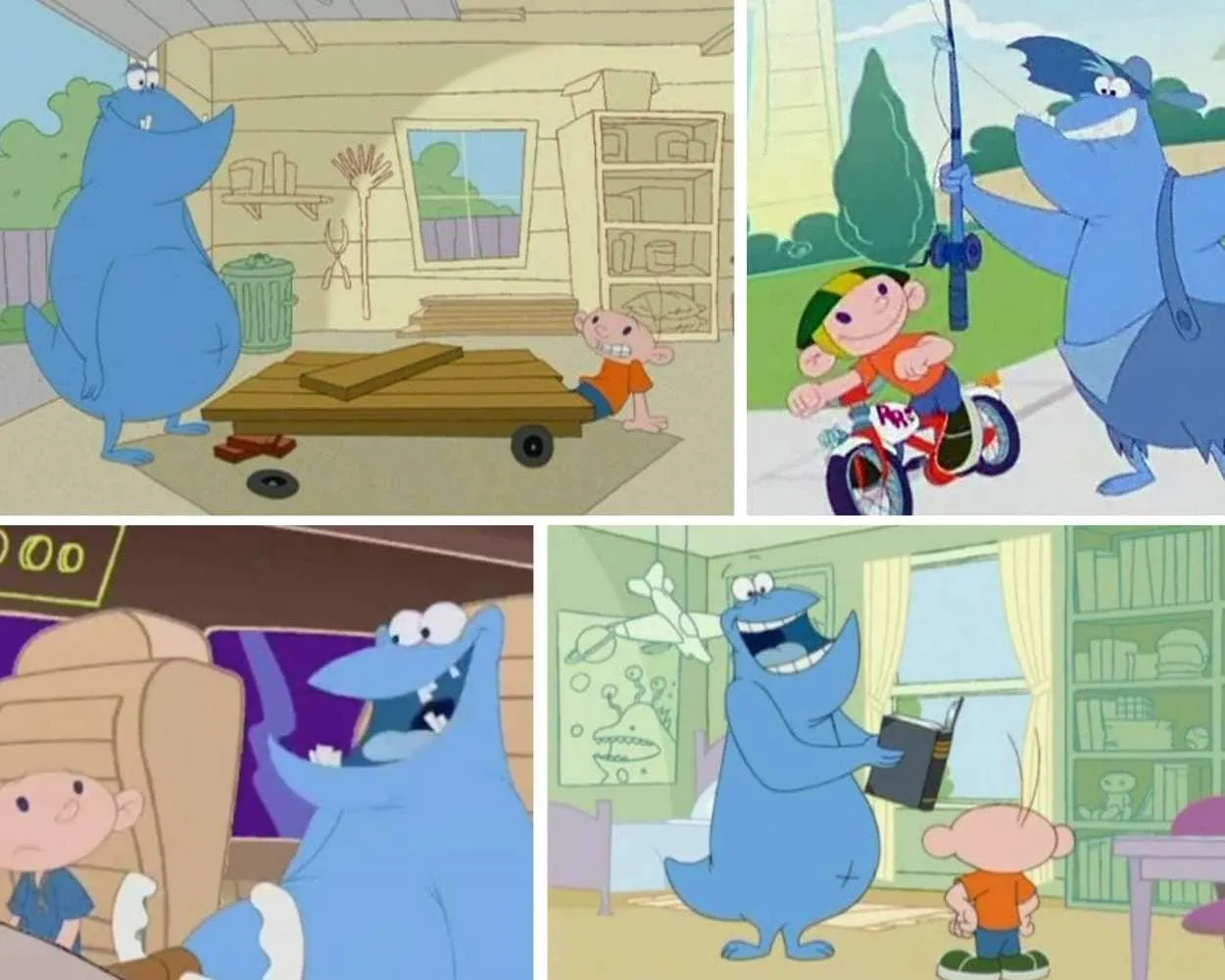
The theme song is often the first part of the show people remember.
Pure West created the opening music, which explains the complete premise before the first story begins. It introduces Ned, the pet store, the Zippo food, and Newton’s transformation in less than a minute.
That kind of theme was common in older cartoons, but this one is unusually effective. Even viewers who have not watched the series in years can often remember the rhythm and parts of the story it tells.
That theme song: The opening does more than create nostalgia. It acts as a complete origin story, allowing almost any episode to work for a first-time viewer.
Harland Williams voiced Newton through the first 35 half-hour episodes. Ron Pardo took over for the final four.
The change is noticeable, but Pardo had to perform one of the hardest roles in the series. Newton was not built around one stable voice. He constantly moved between impressions, characters, and emotional extremes.
Tracey Moore gave Ned the right balance of frustration and affection. Ned can be embarrassed by Newton, but the friendship never feels fake. Peter Keleghan and Carolyn Scott also make Ned’s parents sound caring without becoming overly sentimental.
Ned’s Newt Characters
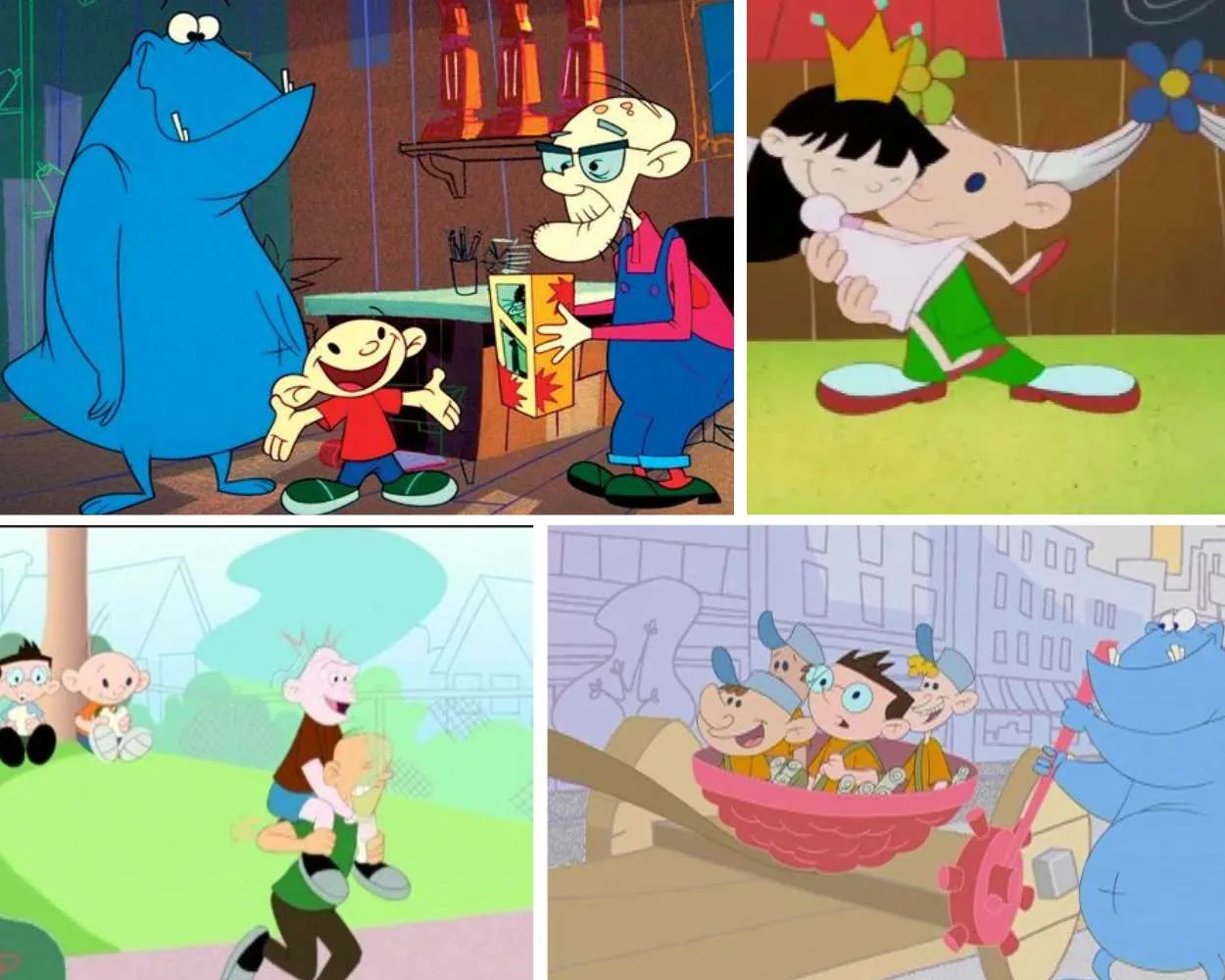
Here is a closer look at the main characters and the roles they play:
- Ned Flemkin: The nine-year-old at the centre of the story. Ned wants a normal childhood, but owning a giant shapeshifting newt makes that almost impossible.
- Newton: Ned’s pet and best friend. Zippo Newt Food turns him into a 500-pound, talking shapeshifter whose attempts to help usually make the problem larger.
- Linda Bliss: Ned’s neighbour and school crush. She remains unaware of Newton’s secret, which makes Ned’s attempts to impress her even more complicated.
- Doogle Pluck: One of Ned’s friends. His curiosity and ideas frequently help start the episode’s main problem.
- Rusty McCabe: A confident classmate and frequent rival for Linda’s attention.
- The Usual Guy: The pet-store owner who sold Ned both Newton and the Zippo food. He appears in different jobs and places throughout the series.
- Eric and Sharon Flemkin: Ned’s parents. They remain close to discovering Newton’s secret without fully understanding what is happening.
Ned’s Newt Cast
The principal voice cast includes:
- Harland Williams as Newton in episodes 1 through 35
- Ron Pardo as Newton in episodes 36 through 39
- Tracey Moore as Ned Flemkin
- Carolyn Scott as Sharon Flemkin and Miss Bunn
- Peter Keleghan as Eric Flemkin
- Jonathan Wilson as Rusty McCabe
- Tracy Ryan as Linda Bliss
- Colin O’Meara as Doogle Pluck and additional characters
- Jim Milington as The Usual Guy
An unexpected fan: Author and illustrator Edward Gorey reportedly called Ned’s Newt the greatest animated show on television during a 1998 Newsday interview. It is an unusual endorsement, but the series’ fast visual humour and odd transformations fit Gorey’s taste for eccentric art.
Production and Broadcast History
Ned’s Newt was part of Teletoon’s earliest original programming period. The series premiered in Canada on October 17, 1997, the day the channel launched.
Nelvana produced it with Germany’s TMO Film GmbH, while Studio B Productions also contributed during part of the run.
Fox Kids introduced the series to American viewers on February 7, 1998. The American block did not broadcast the entire 39-episode library during its original run.
Years later, Qubo returned the series to American television and aired more of the catalogue. Teletoon Retro also carried the complete run in Canada beginning in 2011.
This scattered broadcast history helps explain why memories of the show vary. Some viewers know only the first season. Others discovered the later Ron Pardo episodes through reruns.
Awards and Recognition
The original article incorrectly credited the series with a Canadian Screen Award. That award name did not exist during the show’s run.
The episode segment “Back to the Futile” received a 1999 Gemini Award nomination for writing in a children’s or youth program or series. Writers Kenn Scott and John Pellatt were nominated for the episode.
The show did not win that Gemini, but the nomination is still useful evidence that the writing received industry recognition beyond its cult following.
Ned’s Newt Fun Facts
- The complete series contains 39 half-hour episodes and 78 individual stories.
- Harland Williams voiced Newton for 35 episodes before Ron Pardo took over for the final four.
- Fox Kids began airing the show in the United States in February 1998 but did not show the complete Canadian run.
- Three American VHS releases arrived in 1999: Home Alone with Newt, Jurassic Joyride, and Saturday Night Fervor.
- Teletoon Retro brought all 39 episodes back to Canadian television in 2011.
- Qubo later introduced the series to another generation of American viewers.
Where to Watch Ned’s Newt
The streaming situation has changed since the original version of this post was written.
As of July 2026, the series is not currently available free on Tubi in Canada. Tubi still has a page for the show, but it marks the content as unavailable.
Canadian viewers can currently find at least part of the series for digital purchase through Apple TV. Availability and season counts can change, so check the listing before buying.
Availability, pricing, and episode selection vary by region.
In the United States, current listings show a mixture of subscription and free options depending on the service, including channel add-ons and ad-supported platforms. Those services may not be available in Canada.
The show never received a widely available complete-series DVD set. Older VHS releases contain only selected episodes.
My take: Ned’s Newt is exactly the kind of show that deserves a proper restored release. The humour is fast, the premise still works, and Harland Williams turns Newton into one of the most unpredictable cartoon sidekicks of the decade.
Why Ned’s Newt Is Still Worth Watching
The series is not remembered because it told one enormous story. It is remembered because it could turn almost any small childhood problem into a bizarre comedy.
Ned gave the show a relatable centre. Newton supplied the chaos.
That balance kept the premise from becoming exhausting. Under the impressions and transformations, the series was still about a lonely child who finally found the perfect friend, even if that friend regularly destroyed the house.
The animation, references, and celebrity impressions place it firmly in the late 1990s. The friendship and comic timing have aged much better.
You can read more about the production on its Wikipedia page or explore Harland Williams’ filmography.
Did you watch Ned’s Newt when it originally aired?
Which Newton transformation or impression do you still remember?
Share it in the comments.


