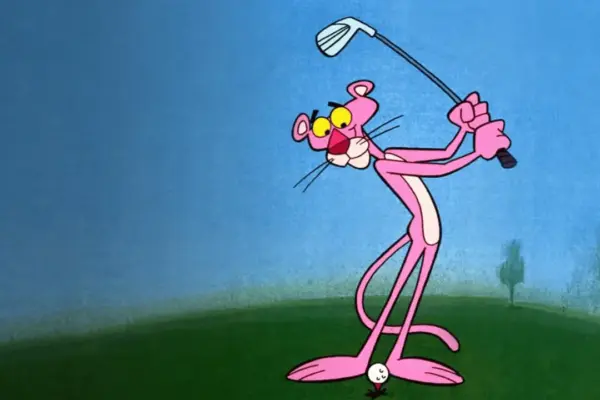
The Pink Panther is the star of his own shorts, but the Little Man is the soul of the comedy.
In the long history of animation, few characters have perfected the art of the slow burn quite like he has.
He is the quintessential straight man in a world that refuses to play by his rules: a stiff, self-important figure who takes every task with total seriousness, only to be dismantled by a cool, silent, pink feline.
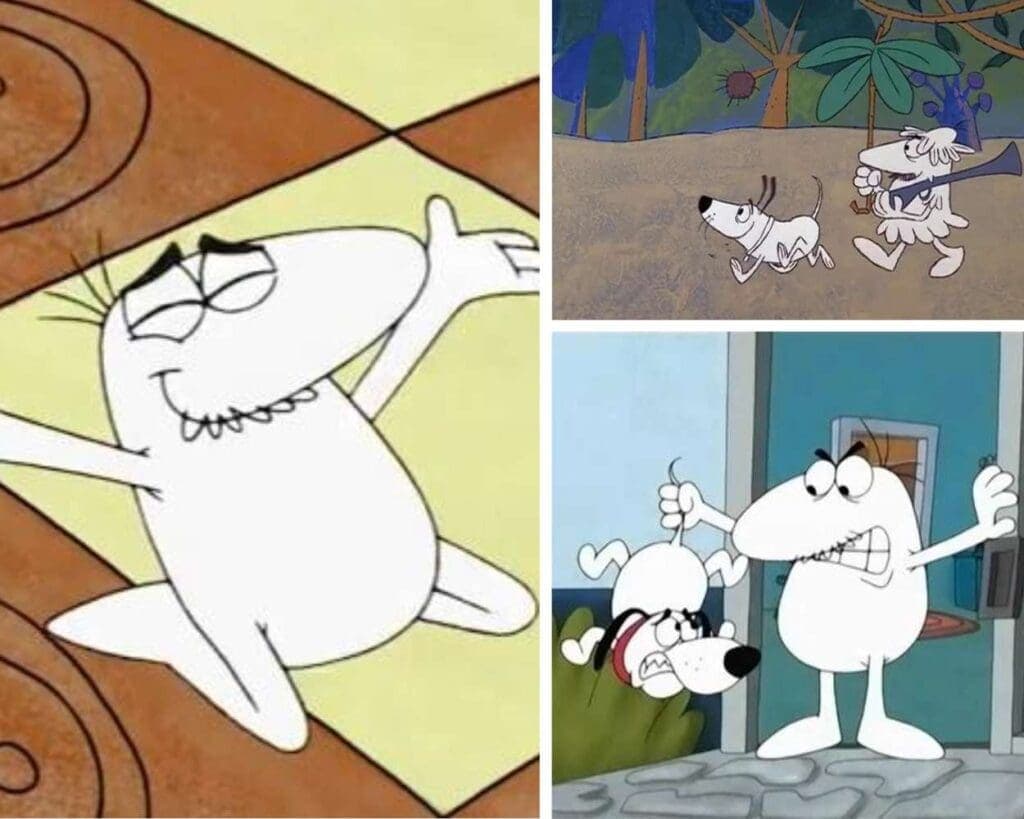
With his oversized nose, his bristling mustache, and a posture that screams self-importance, he stands in sharp contrast to the effortless grace of the Panther. Every plan he makes is doomed to collapse in spectacular, physics-defying fashion.
He is the walking definition of a comedy of errors, a man who refuses to admit he is outmatched and keeps pushing forward even as the world falls down around him.
The Little Man File
- Series: The Pink Panther
- Debut: The Pink Phink (1964)
- Primary role: The overconfident everyman
- Core trait: Absolute, unearned confidence
- Chaos rating: 10/10 (usually the cause of his own undoing)
- Best dynamic: The Pink Panther (the silent rival)
- Signature move: The slow-burn realization
Who Is the Little Man (Big Nose)?

The Little Man is the recurring foil of the Pink Panther in the classic theatrical shorts. He is the closest thing the silent, scheming cat has to a nemesis, though he usually just wants to be left alone, and the Panther will not allow it.
One quick myth to clear up first: he is not the Inspector. That French detective is a separate DePatie-Freleng character based on Jacques Clouseau. The two only resemble each other. He is a silent everyman who shows up in a new job almost every short.
- He debuted in the very first Pink Panther short in 1964.
- He stuck around for the entire 16-year theatrical run.
- He played a painter, a hunter, a homeowner, a businessman, whatever the gag needed.
His debut won an Oscar: The Pink Phink won the 1964 Academy Award for Best Animated Short. It was the first time a studio ever won an Oscar with its very first cartoon, an absurdly good start for both DePatie-Freleng and its new star.
The Psychology of Misplaced Confidence

Here is what makes him tick. He never truly breaks after a failure, because he is certain the failure was not his fault.
He believes the world should run on order. Effort should pay off, rules should hold, and a job done right should stay done. So when a pink cat undoes all of it, he does not question himself. He assumes the world glitched, and he tries the exact same approach again, harder.
- He is too proud to imagine that he is the problem.
- He is so fixated on looking competent that he misses the obvious fix.
- He mistakes stubbornness for a strategy.
He is a caricature of his own creator: the animators modeled him on their boss, director Friz Freleng, right down to the mustache, the short stature, and the famously short temper. Those same Freleng traits had already inspired his angriest Looney Tunes creation, Yosemite Sam. The two grumps are basically twins.
The Art of the Slow Burn
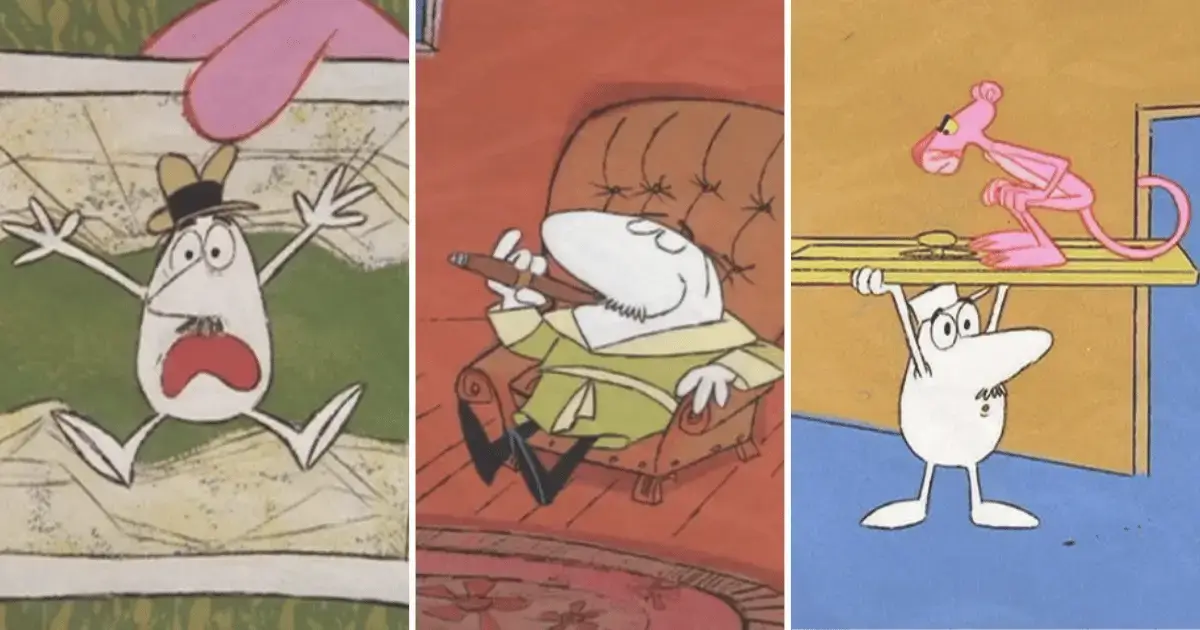
The comedy in these shorts was never just a hit with a hammer. Instead, it was about the wait. Big Nose realizes, three seconds too late, that he has walked straight into disaster.
That delay is the whole joke, and it lives entirely on his face. The eyes go wide. The mustache twitches. Then comes the slow, dawning horror of a man who finally understands his own doom.
- The setup: he commits to a plan with total certainty.
- The beat: something is quietly, obviously wrong.
- The payoff: the realization lands a moment too late to matter.
This is a masterclass in classic cartoon slapstick timing. Hand-drawn animation captured these micro-expressions in a way a lot of modern shows still cannot match, and it is why any real Pink Panther character study has to start with the pause before the punchline, not the punchline itself.
Order vs. Chaos: The Little Man and the Panther
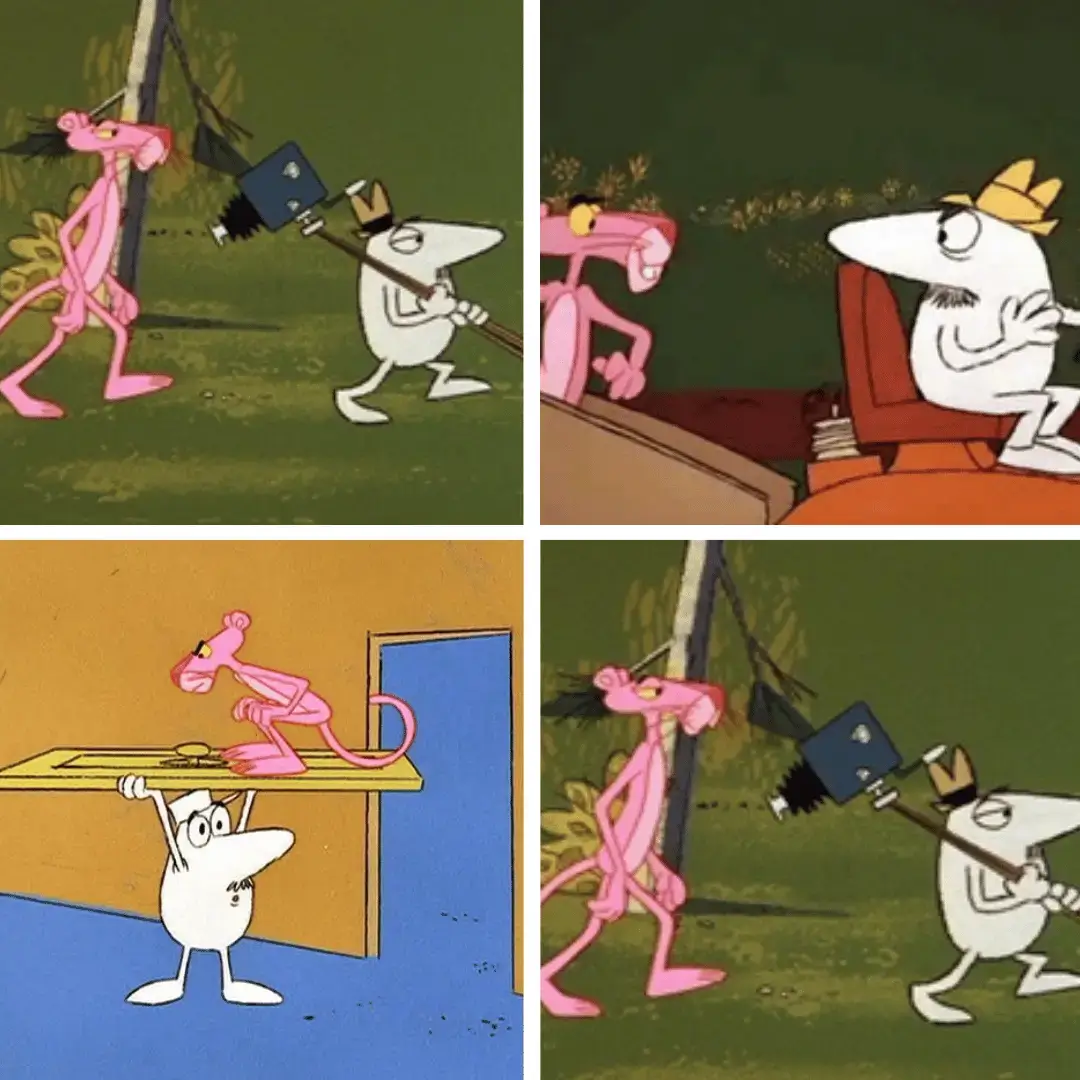
At its heart, every short is a clash of two philosophies. The Little Man stands for order: rules, routine, and the way things are supposed to go. The Pink Panther is pure chaos, all mischief, whimsy, and effortless cool.
The catch is that chaos has to win. If he ever succeeded, the comedy would die on the spot. In fact, his failure is the fuel that keeps the Panther’s world spinning.
- Order sets the trap, then walks into it.
- Chaos strolls through untouched.
- The audience roots for the loser, every single time.
He is not always alone: in a number of shorts he has a loyal dog who tries to protect him from the Panther. The twist is that the dog almost always gets charmed by the cat and switches sides before the short is over.
Does the Little Man Ever Speak?
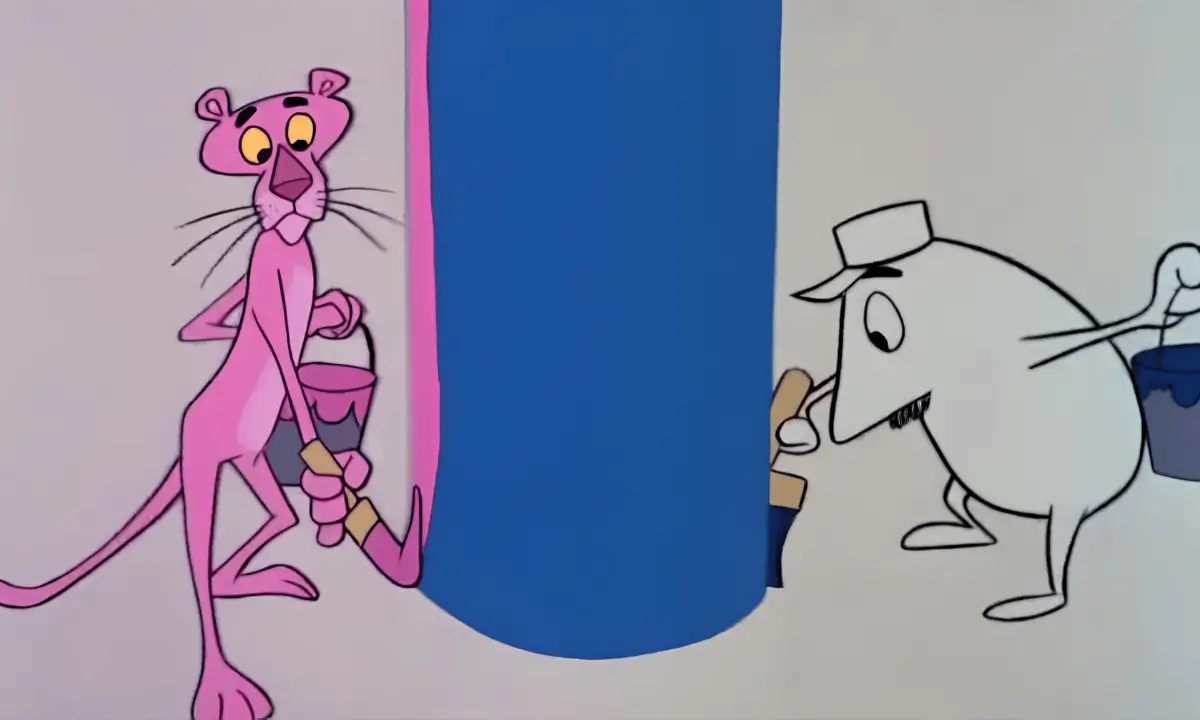
For most of his career, no. Like the Panther himself, he was a creature of pure pantomime, telling you everything through a slow burn, a double take, or a furious glare. That silence is a big part of why the shorts travel so easily across languages.
He has been given a voice a handful of times, though, which is the answer most people are hunting for.
- A brief speaking cameo in the 1970 short “Bridgework,” voiced by Lennie Weinrib.
- A full speaking role in the 1993 series The Pink Panther, voiced by Wallace Shawn.
- A return to wordless vocal effects in the 2010 revival, Pink Panther and Pals.
When he finally spoke: after decades of silence, he got a full voice in the 1993 series, courtesy of Wallace Shawn, the unmistakable voice of Vizzini (“Inconceivable!”) in The Princess Bride. He spent that series muttering his schemes out loud in villainous little monologues.
Why Does the Little Man Hate the Pink Panther?
This is one of the most-searched questions about him, and the honest answer is that there is no grand backstory. He does not start out as a villain. He is usually just a regular guy trying to do a regular thing, and the Pink Panther arrives as an agent of chaos who ruins it.
So the antagonism is reactive. The Panther invades his space, upstages him, and humiliates him, so he escalates.
The harder he tries to win, the worse it goes. That loop is the engine of almost every short, and it is exactly why he is so easy to root for even as the technical bad guy.
Still, that is the real secret of the character.
He is not a true villain.
He is all of us on a bad day, swinging wildly at a problem that simply will not quit, whether he shows up as the big-nosed painter of 1964 or the scheming Big Nose of later years.
Why Slapstick Still Matters in 2026
Modern animation is loud, fast, and wall-to-wall with dialogue. Against all of that noise, the quiet precision of Big Nose feels refreshing, even sophisticated.
His humor is universal. It never depended on words, so it clears every language barrier without a subtitle. A kid today reads that wide-eyed panic exactly the way a 1964 audience did.
- No dialogue means no translation and no dated references.
- The comedy is built on timing, which never goes out of style.
- The slow burn rewards patience in a way fast CGI rarely tries to.
Decades later, that egg-shaped grump with the big nose remains one of the most quietly brilliant straight men animation has ever produced. He also slipped right back into his classic role in the Cartoon Network revival, renamed Big Nose, still scheming, still losing, exactly as the natural order demands.
Settle the debate:
- Do you know him best as the Little Man, as Big Nose, or by some other name entirely?
- Which of his shorts is your all-time favorite?
Drop your pick in the comments.
He spent sixteen years losing gracefully, so he has earned a little appreciation from the people who still remember him.