
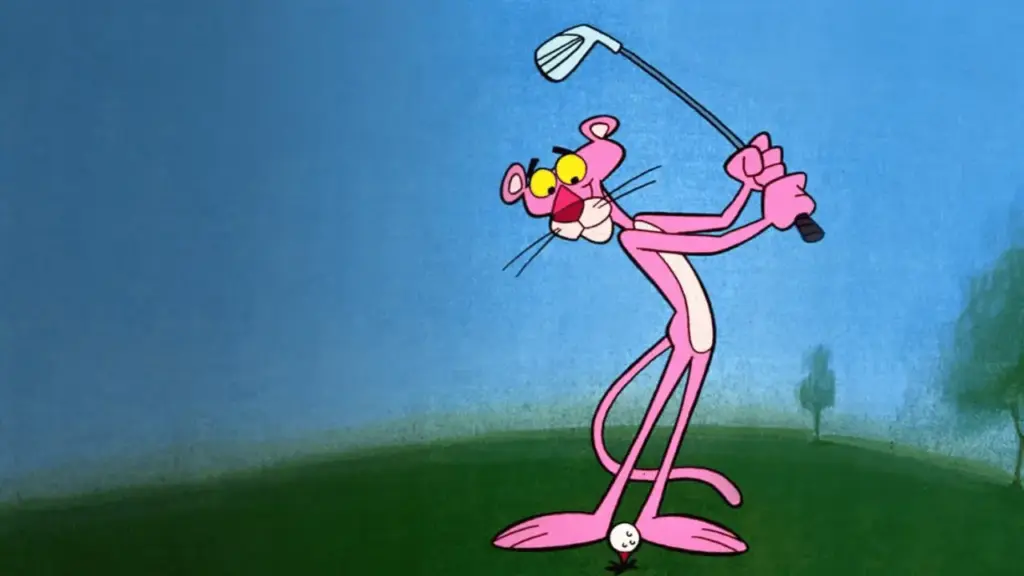
Yes, the Pink Panther talked.
In the original theatrical cartoon series, he spoke in exactly two shorts, both released in 1965.
The first gave him one sentence. The second allowed him to talk throughout the story.
After that, the theatrical cartoons returned to pantomime and kept him mostly silent for the rest of their run.
That is not the end of the answer, however.
A 1993 television series gave the Pink Panther a regular speaking role across 60 episodes, with Matt Frewer providing the voice.
So the familiar trivia is only partly right:
The answer
Two talking theatrical shorts, then a talking TV series
- Sink Pink: One line at the end of the 1965 short
- Pink Ice: The Panther speaks throughout the 1965 short
- 1965 voice: Usually credited to impressionist Rich Little
- 1993 television series: Matt Frewer voiced him across 60 episodes
- Later revival: Pink Panther and Pals returned him to silent comedy
The Pink Panther Was Created Without a Voice
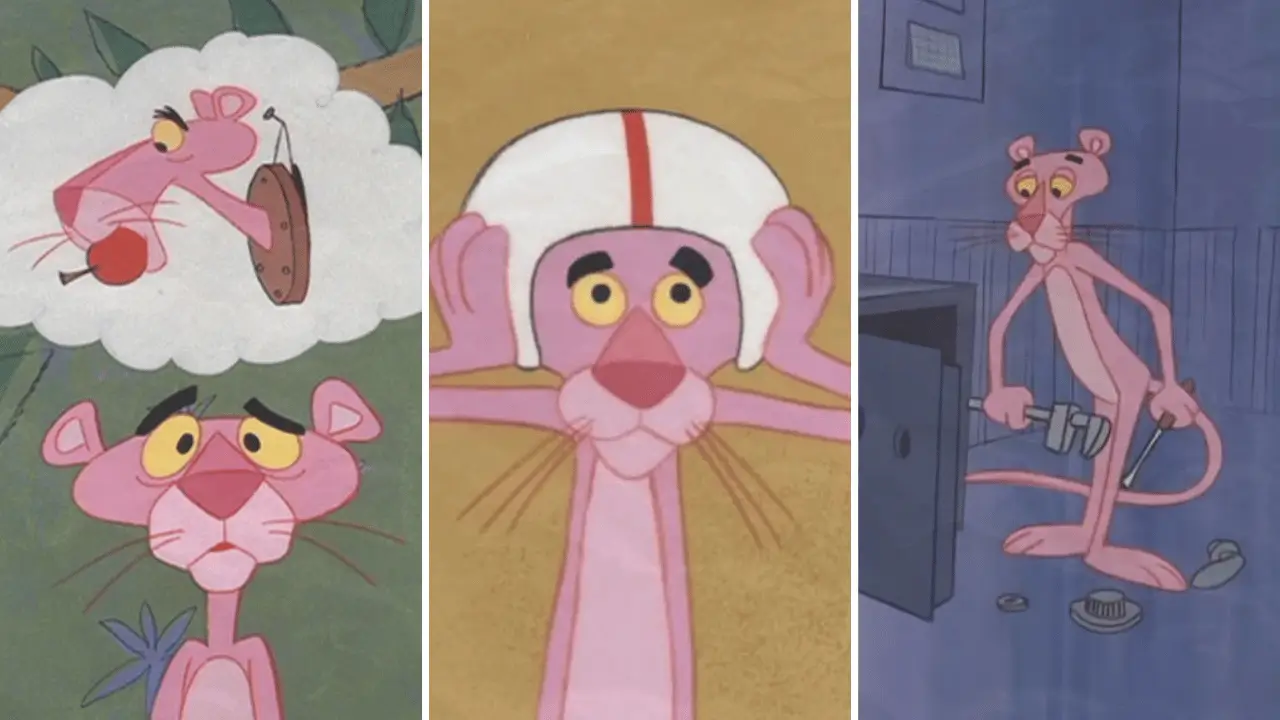
The animated Pink Panther began as a character in a movie title sequence.
In Blake Edwards’ 1963 film The Pink Panther, the name refers to a valuable diamond. DePatie-Freleng Enterprises turned that jewel into a smooth animated cat who interacted with the opening credits while Henry Mancini’s famous theme played.
The title sequence was credited to DePatie-Freleng, the studio founded by David H. DePatie and Friz Freleng after the original Warner Bros. cartoon operation closed.
The American Film Institute’s production history notes that contemporary critics praised the animated titles even when their reviews of the live-action movie were mixed.
The character was visually elegant, playful, and completely wordless.
Audiences responded strongly enough for United Artists to commission a theatrical cartoon series.
The First Short Proved Silence Worked
The Pink Phink arrived in 1964 and established the classic formula.
The Panther battles a small, mustached man over the color of a house. One wants it blue. The other keeps painting it pink.
There is no need for dialogue.
The characters communicate through expressions, movement, music, and timing. The joke remains clear whether the audience speaks English, Spanish, French, or no spoken language at all.
The short won the Academy Award for Short Subject, Cartoon. The Academy’s official 1965 record lists producers David H. DePatie and Friz Freleng as the winners.
Silence was not something the studio had to overcome.
It was one of the character’s biggest strengths.
The First Time the Pink Panther Talked
Sink Pink
Sink Pink was released on April 12, 1965.
A big-game hunter builds an ark and gathers pairs of animals by claiming that another flood is coming. The only animal he cannot capture is the Pink Panther.
The Panther remains silent through almost the entire short.
At the end, he turns toward the audience and says:
“Why can’t man be more like animals?”
That brief sentence is the first spoken dialogue generally attributed to the animated character.
The Internet Animation Database, TV Guide, and several current cast listings credit Rich Little as the Panther.
There is one complication.
Some later television-package credits assign the Panther’s line to Paul Frees, who unquestionably voiced the hunter and other characters in the short. Because the original theatrical cartoon did not provide a clear onscreen voice credit, the surviving databases are not perfectly consistent.
Rich Little is the standard modern attribution, but the Sink Pink credit is not as secure as the one for Pink Ice.
The Short Where He Talked Throughout
Pink Ice
Pink Ice was released on June 13, 1965.
This time, the studio did not limit the Panther to one sentence.
He owns a diamond mine and tries to stop two rival miners from stealing his gems. The characters talk throughout the six-minute story.
Rich Little’s credit is much clearer here. The TV Guide cast listing identifies him as the Pink Panther, while animation records also list him as the short’s voice performer.
The Panther speaks with a polished British delivery commonly described as a David Niven-style voice.
That choice made sense.
Niven played Sir Charles Lytton, the sophisticated jewel thief in the original 1963 live-action film. Giving the cartoon Panther a similar voice connected him to the movie that created him.
The two theatrical speaking appearances
- April 12, 1965: Sink Pink, one closing line
- June 13, 1965: Pink Ice, sustained dialogue
- After June 1965: The theatrical series returns to pantomime
Did Audiences Hate the Talking Pink Panther?
There is no strong evidence of a dramatic audience backlash.
The talking experiment clearly did not become the new format. The shorts immediately returned to their mostly silent style, and Pink Ice remained the only classic theatrical entry built around sustained Panther dialogue.
That tells us the producers preferred the wordless version.
It does not prove that viewers protested, reviews forced a reversal, or one disastrous screening killed the idea.
The most responsible conclusion is simpler:
- The silent character had already won an Academy Award
- Pantomime suited the Panther’s cool, controlled personality
- Dialogue made him feel more ordinary and less mysterious
- A wordless cartoon could play internationally without redubbing the lead
The studio tested a voice twice and then went back to what already worked.
Was the Pink Panther Completely Silent After 1965?
Not completely.
“Silent” usually means that the Panther does not carry conversations or explain the plot.
Some cartoons include laughs, gasps, yelps, sneezes, or other brief vocal sounds. Voice performers including Mel Blanc have been credited with incidental noises in parts of the franchise.
Those sounds do not turn the character into a regular speaking lead.
Within the classic theatrical series, Sink Pink and Pink Ice remain the two dialogue exceptions.
The 1993 Series Made Him Talk Again
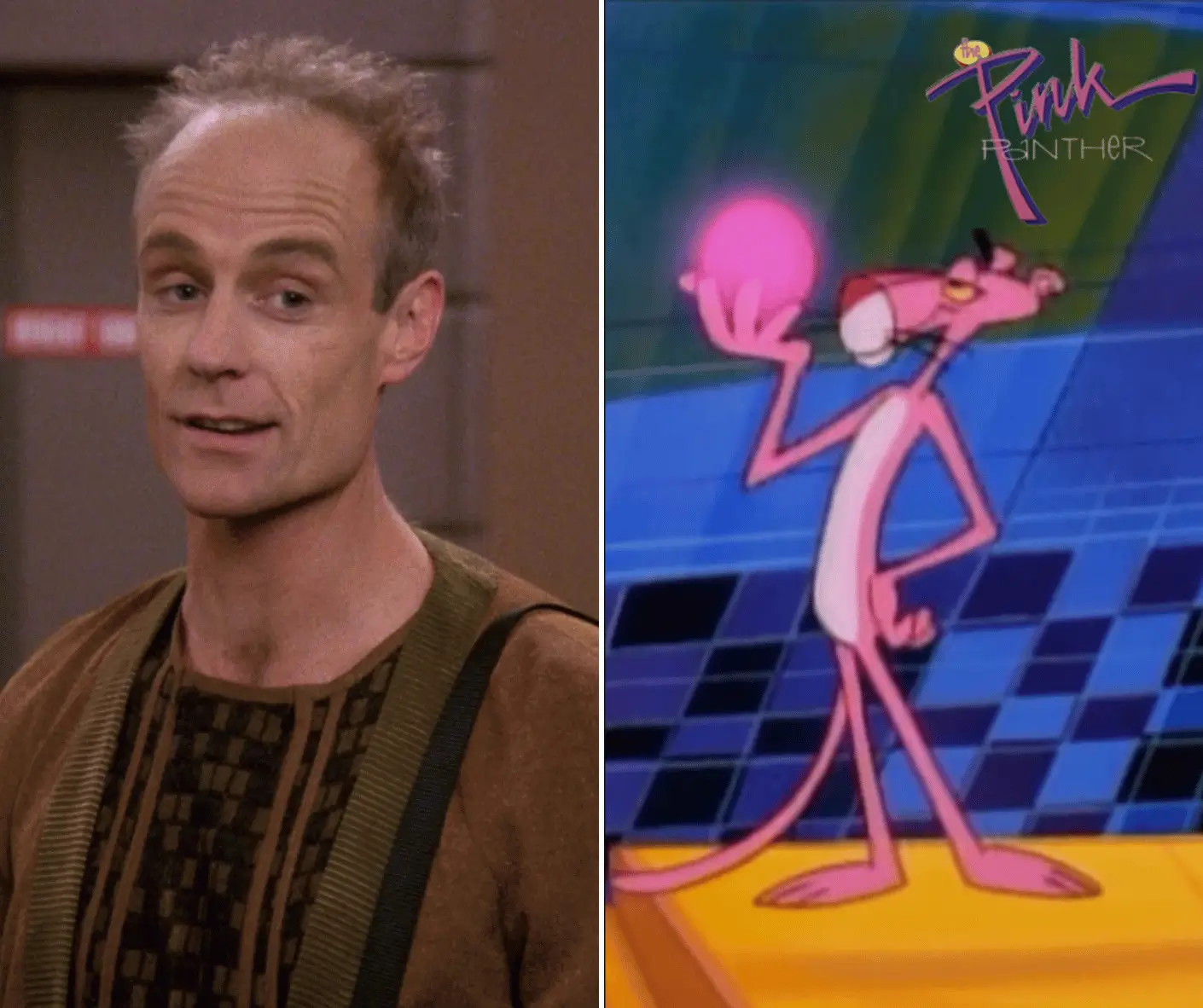
The largest exception arrived almost three decades later.
MGM launched a new syndicated Pink Panther television series in 1993. Matt Frewer, best known for playing Max Headroom, gave the Panther a regular voice.
The series produced 60 episodes over two seasons.
Frewer told UPI at the time that he avoided giving the character an exaggerated cartoon voice. He described it as a heightened version of his own voice and said the Panther still relied heavily on physical reactions rather than nonstop talking.
The contemporary UPI report on the new series even compared the original character to mime Marcel Marceau.
So saying the 1993 Panther “talked” is correct, but he was not turned into a constant chatterbox in every scene.
- Series: The Pink Panther
- Launch: 1993
- Episodes: 60
- Voice: Matt Frewer
- Approach: Regular dialogue mixed with traditional visual comedy
Why the Next Revival Made Him Silent Again
The speaking format ended with the 1990s television series.
When Pink Panther and Pals premiered in 2010, its Panther segments returned to the visual style of the original shorts.
The new character designs were younger and more modern, but the Panther did not speak. Music, gestures, reactions, and slapstick once again carried the story.
That does not prove the 1993 series failed because of his voice.
It does show which version the franchise considered most recognizable.
When the producers wanted a modern show that still felt like the classic Pink Panther, they removed the dialogue.
Rich Little’s Strange David Niven Connection
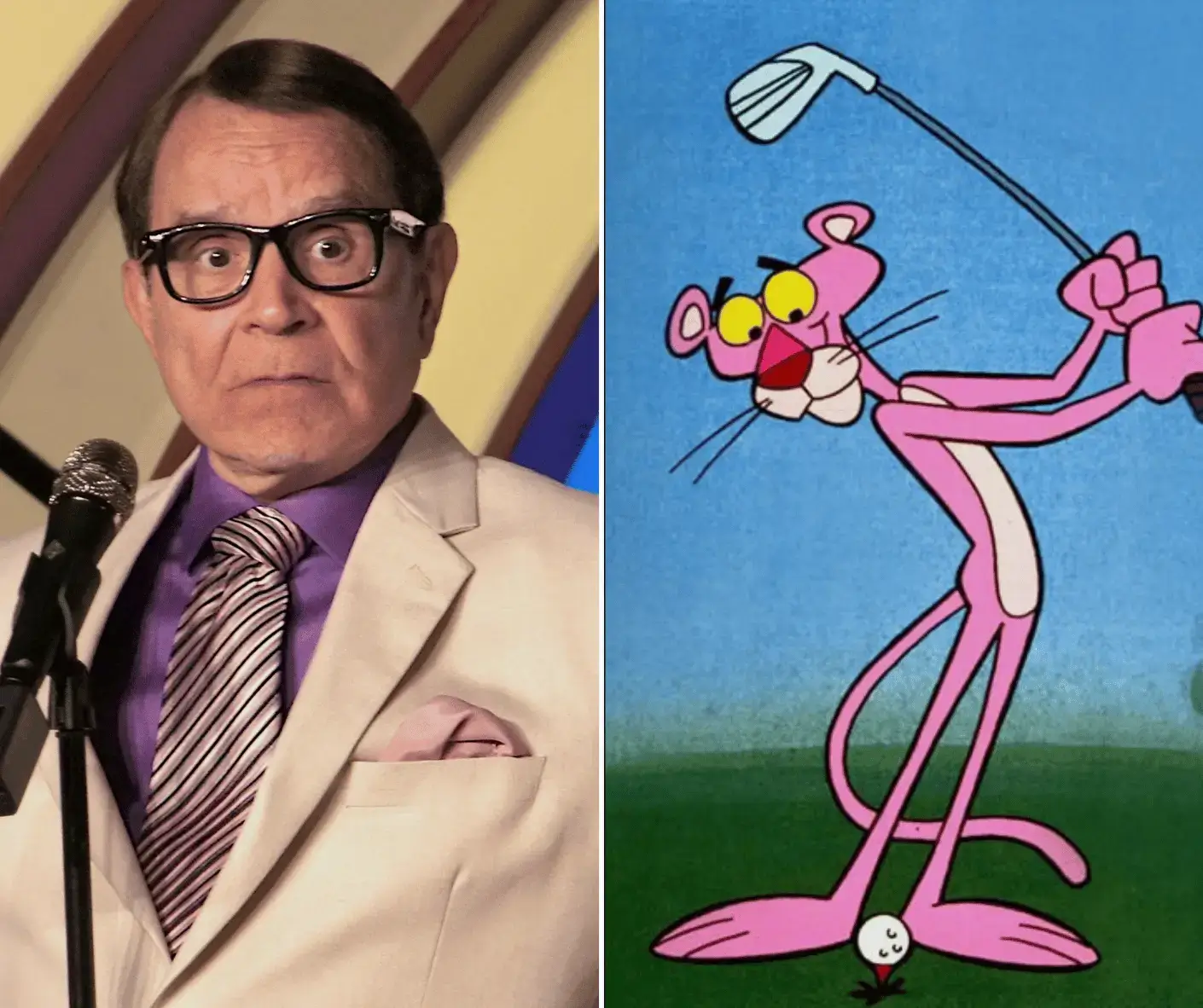
The most remarkable part of the story came years after the cartoons.
Rich Little had given the Pink Panther a voice modeled on David Niven’s polished British delivery.
In the early 1980s, Niven returned as Sir Charles Lytton in Trail of the Pink Panther and Curse of the Pink Panther. He was seriously ill with amyotrophic lateral sclerosis, commonly called ALS, and the disease had weakened his voice.
Little was hired to dub Niven’s dialogue.
A contemporary UPI report from August 1983 quoted Little saying that he dubbed Niven in both films as a tribute to an actor he admired.
The impressionist who had once made the cartoon Panther sound like David Niven later made David Niven sound like himself.
That strange circle is real.
Quick Answers About the Pink Panther’s Voice
Did the Pink Panther ever talk? Yes. He spoke in two classic theatrical shorts from 1965 and later became a regular speaking character in a 60-episode television series launched in 1993.
Which Pink Panther shorts have dialogue? Sink Pink gives him one line at the end. Pink Ice gives him sustained dialogue throughout the story.
What does he say in Sink Pink? “Why can’t man be more like animals?”
Who voiced the Pink Panther in 1965? Rich Little is the standard credit for both shorts. His Pink Ice credit is well established, while some later listings conflict over the single Sink Pink line.
Who voiced the Pink Panther in the 1993 series? Matt Frewer.
Why was the Pink Panther usually silent? Pantomime matched his cool personality, kept the visual comedy universal, and had already proved successful. There is no reliable evidence that one large audience backlash forced the decision.
Did Pink Panther and Pals make him talk? No. The 2010 revival returned him to silent physical comedy.
The Panther Who Said More by Saying Less
The Pink Panther did talk.
He spoke once at the end of Sink Pink, talked throughout Pink Ice, and received a regular voice in the 1993 television series.
But the character’s longest and most successful identity remained wordless.
His raised eyebrow, careful walk, perfectly timed glance, and Henry Mancini’s theme could communicate more than a full page of dialogue.
The theatrical record is still a great piece of trivia:
Two talking shorts in 1965. One line in the first, a full speaking role in the second.
The wider franchise tells a larger story.
The Pink Panther tried a voice more than once, but silence always became his default again.
That is how he became the definitive pink cartoon character without needing to explain himself.
If jump to the end of the video, you will hear him speak. Also, fun fact, The Pink Panther actually broke his silence again in the late 1970s and 1980s for a series of high-profile, televised Nike commercials. In those ads, he spoke with a completely different, smooth American voice to pitch sneakers.