Every country seems to have one cartoon that feels less like a television show and more like a piece of home.
For a generation of Canadians, that cartoon was The Raccoons.
It was made in Ottawa, built around a distinctly Canadian forest and eventually shown in more than 180 countries. Long before environmental storytelling became a regular part of children’s television, Bert Raccoon and his friends were already fighting to protect their home from clear-cutting, mining and development.
I can still hear the first few notes of “Run With Us” without even trying.
Yet The Raccoons is often treated as a nostalgic footnote. Before ReBoot became an international symbol of Canadian animation, the Evergreen Forest had already shown that a homegrown cartoon could travel around the world.
Why the show mattered
A Canadian cartoon with global reach
- Created and produced in Ottawa
- 60 episodes across five seasons, plus four specials
- Environmental storytelling years before Captain Planet
- Broadcast in more than 180 countries
What Was The Raccoons?
The Raccoons ran as a regular CBC series from 1985 to 1991, after four earlier specials introduced the characters and the Evergreen Forest. Episodes continued airing in the United States on Disney Channel into 1992.
Kevin Gillis created the franchise, and the animation was produced in Ottawa. Atkinson Film-Arts handled the early work, with Hinton Animation Studios taking over during the series run.
The basic setup was part woodland adventure and part domestic comedy.
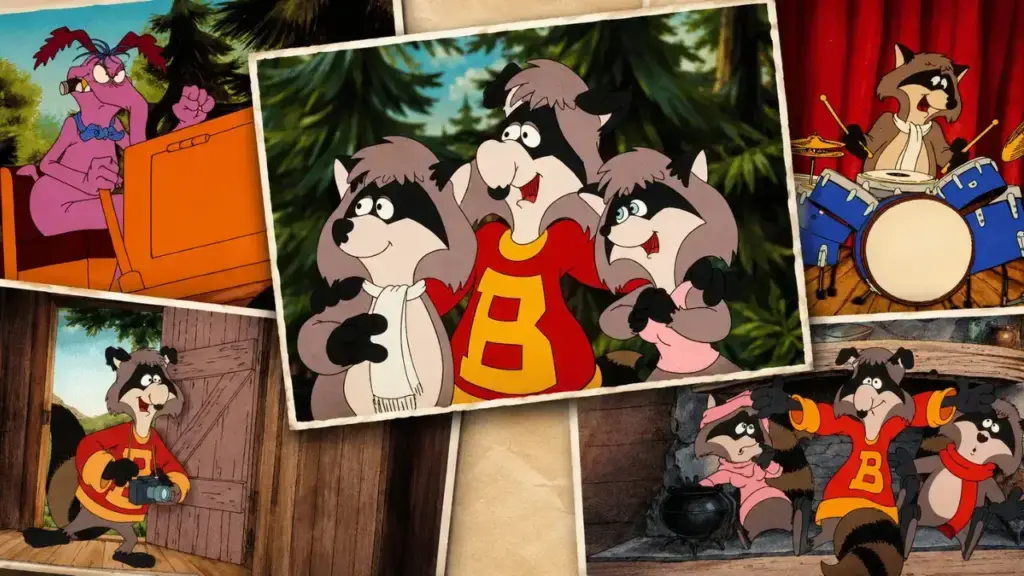
Bert Raccoon, an enthusiastic bachelor with more confidence than judgment, lived with his married friends Ralph and Melissa. Their lives were regularly disrupted by Cyril Sneer, a wealthy pink aardvark whose latest plan usually involved logging, mining or developing another corner of the Evergreen Forest.
The supporting cast gave the world much of its warmth.
Schaeffer, the gentle sheepdog voiced by Carl Banas, was the dependable giant of the group. Cyril’s three pig employees supplied the slapstick, while later seasons expanded the community through Ralph’s newspaper, the Evergreen Standard.
The show
60 episodes, 4 specials, 1980 to 1992
- Created by Kevin Gillis in cooperation with the CBC
- Animated in Ottawa by Atkinson Film-Arts and later Hinton
- Aired on CBC, Disney Channel and BBC television
- Reached audiences in more than 180 countries
Calling it a comedy does not quite cover the tone. The series could be silly, but it also dealt with money, loyalty, family pressure, business ethics and loss. That emotional range is one reason so many adults remember watching it alongside their children.
It Started With a Christmas Special
The idea began in the late 1970s, when Kevin Gillis was working on Celebrity Cooks with newspaper columnist Gary Dunford. An encounter with raccoons near an Ottawa-area cottage helped spark the concept, which was initially imagined as live action.
Instead, it became The Christmas Raccoons, an animated special that aired on CBC on December 17, 1980.
The central conflict was already in place. Cyril Sneer wanted to clear-cut the Evergreen Forest, and the raccoons had to stop him. The environmental theme was not something added after the franchise became successful. It was there from the beginning.
The special found buyers outside Canada. Gillis later told CBC, “As the demand grew, we grew with it.” The Raccoons on Ice followed in 1981, The Raccoons and the Lost Star in 1983 and Let’s Dance! in 1984.
The Strangest Guest List in 1980s Animation
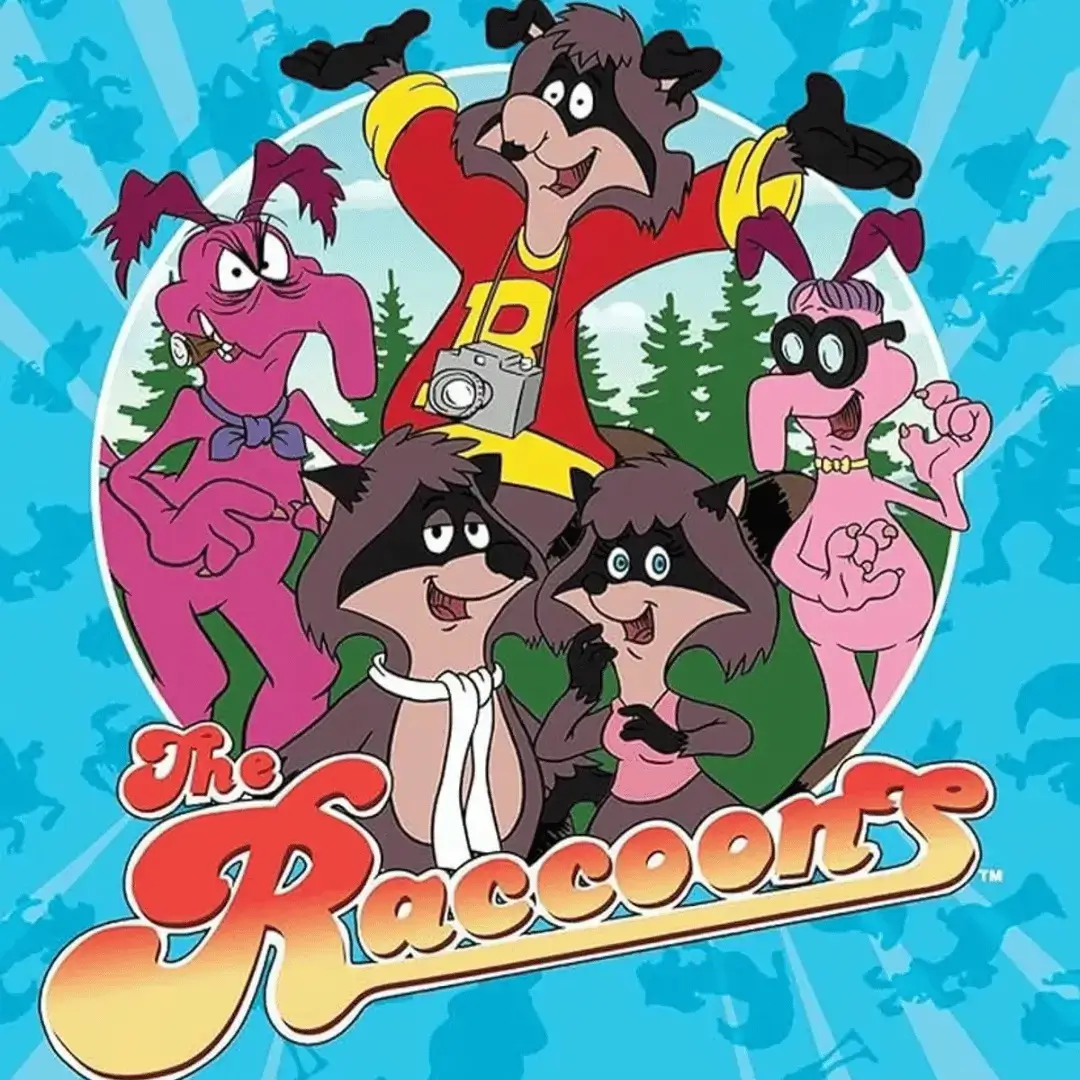
The early specials had a guest list that looked more like a Canadian variety program than a modest children’s cartoon.
The guest list
- Rich Little narrated the first three specials
- Rita Coolidge voiced Melissa and performed several songs
- Rupert Holmes played Ranger Dan in the first special
- Leo Sayer took over the role in The Raccoons on Ice
- Danny Gallivan called the special’s climactic hockey game
Danny Gallivan may be my favourite detail.
The Raccoons on Ice builds toward a winner-take-all hockey game for Evergreen Lake. Rather than hire someone to imitate a Canadian broadcaster, the producers brought in one of the most famous play-by-play voices in the country.
It is a joke designed for Canadian parents, hidden inside a cartoon their children were already enjoying.
Bert Raccoon, the Engine of the Whole Thing
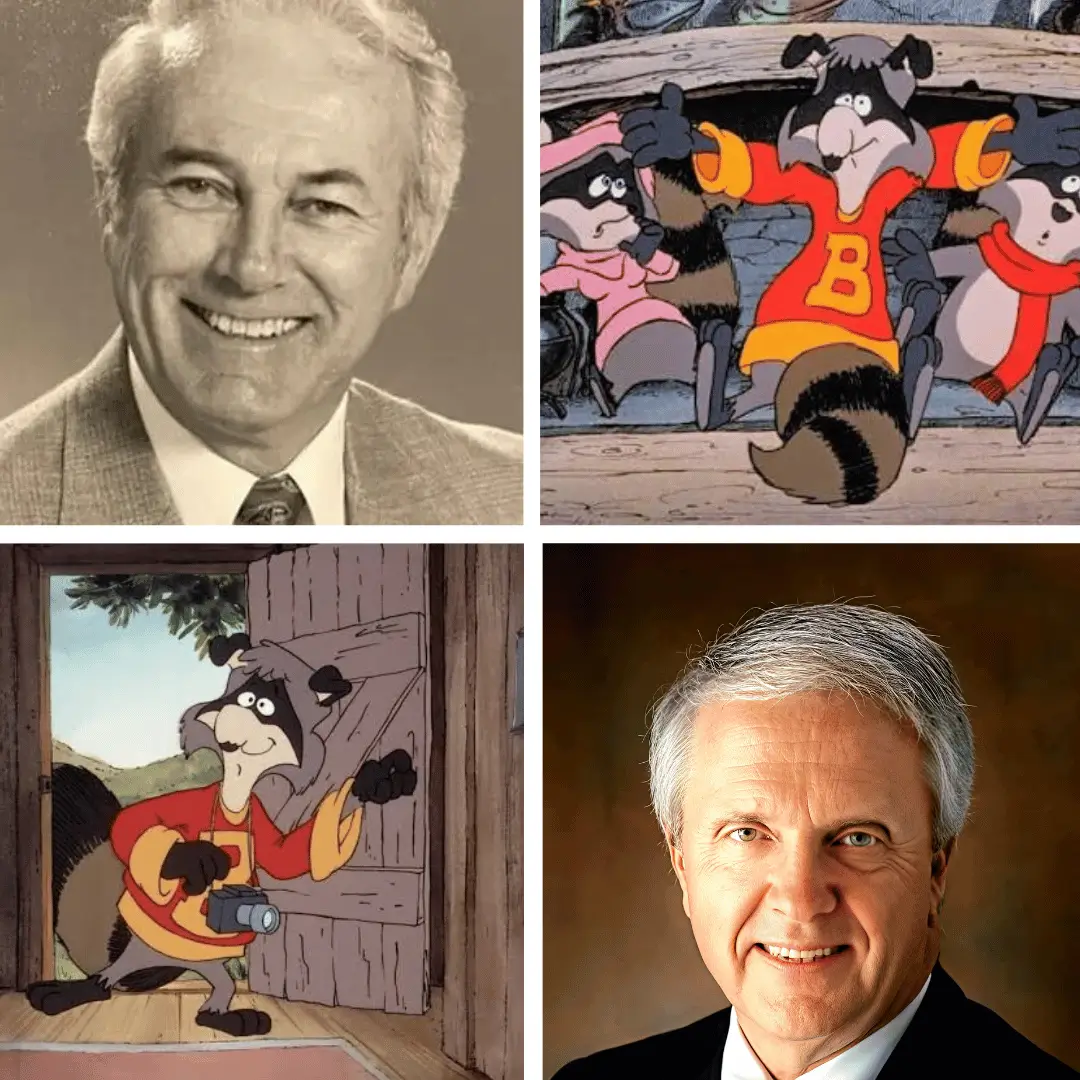
Bert was the character many younger viewers immediately understood.
Len Carlson voiced him as a bundle of restless energy: loud, loyal, curious and almost never willing to think before jumping into trouble. Bert’s enthusiasm drove the plots because he could turn an ordinary afternoon into a forest-wide emergency.
His place in the household was equally important. Bert lived with Ralph and Melissa, a married couple, but the series never treated him like an unwanted guest or a permanent burden. He was simply part of the family.
That arrangement gave The Raccoons a warmer and less conventional home life than many cartoons from the same period. Its central family was built as much on friendship and loyalty as marriage or blood.
Cyril Sneer, the Villain Who Grew a Soul
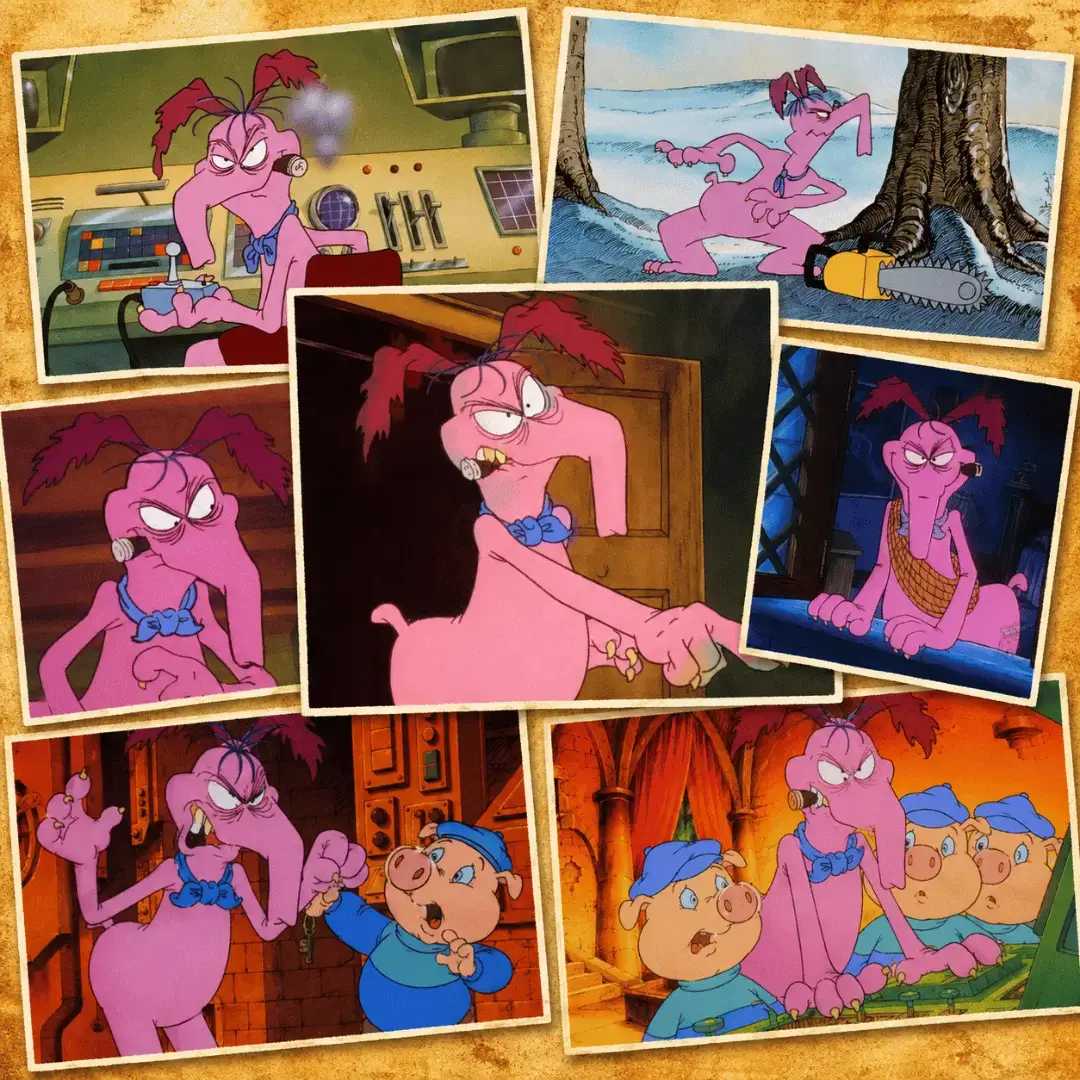
Michael Magee gave Cyril Sneer a gravelly voice that made every business plan sound dangerous.
On paper, Cyril was a straightforward villain: a cigar-smoking industrialist with a fortune, a demolition habit and very little patience. In the early stories, his schemes repeatedly threatened the Evergreen Forest.
Then the series allowed him to change.
Across five seasons, Cyril became more complicated, especially through his relationship with his gentle son, Cedric. He never stopped being greedy or difficult, but he gradually became capable of loyalty, affection and even the occasional decent decision.
Cyril stayed in the story, but he stopped being only a symbol.
What made the writing different
The conflict was personal
- Cyril was a businessman, not a faceless pollution monster
- His son Cedric was friends with the raccoons
- Victories rarely solved every problem permanently
- Characters were allowed to change without losing their comic roles
A villain with a family, a payroll and a complicated place in the community can teach more than a monster made entirely of smoke.
Green Years Before Captain Planet
The dates matter here.
The Christmas Raccoons built its story around clear-cutting in December 1980.
Captain Planet and the Planeteers did not premiere until September 1990.
Green before green
Environmental stories across three decades
- 1972: The Lorax airs as a television special
- 1980: The Christmas Raccoons opens with clear-cutting
- 1985: The Raccoons brings the conflict into a weekly series
- 1990: Captain Planet turns environmentalism into its central formula
The Lorax reached television first, so The Raccoons did not invent environmental animation. What it did differently was build conservation, development and responsibility into the recurring life of a weekly cartoon.
It also avoided turning every episode into a lecture.
The series usually taught stewardship through consequences. Cyril’s schemes damaged places the characters cared about, and protecting the forest required cooperation rather than a speech delivered directly to the audience.
“Run With Us”: The Song That Outlived the Show
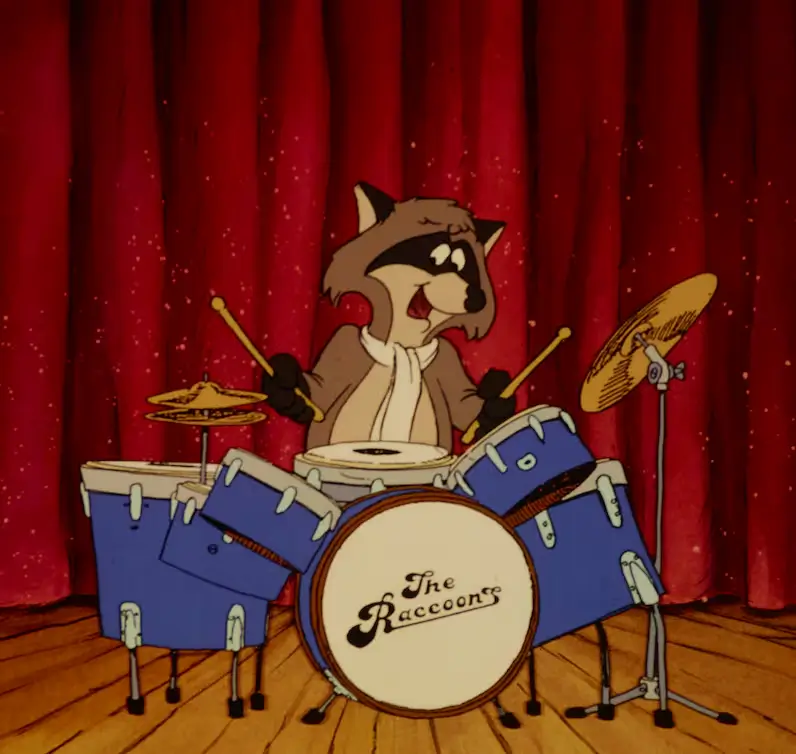
Then there is the song.
“Run With Us” was written by Kevin Gillis, Jon Stroll and Steve Lunt. Lunt performed the first-season version, but the recording most viewers remember belongs to Lisa Lougheed, who took over from season two.
Lougheed later became part of the cast as Lisa Raccoon during the final two seasons.
Her version of “Run With Us” was released as a single in 1987, followed by the Evergreen Nights album. The song continued circulating long after the regular television run ended, helped by fan covers, vinyl reissues and its use in later popular culture.
The song
Run With Us
- Written by Kevin Gillis, Jon Stroll and Steve Lunt
- Lisa Lougheed’s version was used from season two onward
- Released as a single in 1987
- Officially released to streaming services in April 2026
The production is unmistakably 1980s, but the emotion still works. Few cartoon themes feel so much like the final scene of every episode.
How Big the Series Became
Calling The Raccoons a global hit sounds less exaggerated once the numbers appear.
By the third week of its CBC run, the series reportedly drew more than two million viewers and ranked as the ninth most-watched program in Canada. Kevin Gillis has also said the show eventually reached roughly 180 countries.
The reach in numbers
- More than 2 million Canadian viewers by its third week
- Reportedly the ninth most-watched Canadian program at the time
- $4.75 million spent on the first 11 episodes
- A Monday evening family slot on CBC
- Broadcast in roughly 180 countries
The export order was unusual too. The series premiered on Disney Channel in the United States on July 4, 1985, months before its CBC debut. Canada’s defining woodland cartoon entered America on Independence Day.
Why 60 Episodes and Not 65?
The series ended with 60 half-hour episodes, five short of the number discussed in why so many old cartoons have 65 episodes.
That difference is useful because it shows that 65 was never a universal law. The number was especially valuable for weekday first-run syndication packages in the United States.
The Raccoons was a CBC and Disney Channel co-production released in regular season orders. The available production history does not suggest that Gillis and his partners were building toward a mandatory 65-episode package.
Sometimes a show ended at 60 simply because that was where its production story ended.
The Long Fade and the Restoration
The final new CBC episode aired in March 1991, while Disney Channel continued showing the series in the United States into 1992. After that, the Evergreen Forest slowly became harder to visit.
Reruns became less common, the specials were difficult to find and the show survived largely through old recordings, imported releases and fan communities.
Kevin Gillis never completely let it go. He retained the original 35mm film material, which eventually made a high-quality restoration possible.
Gillis discussed a possible reboot in 2015, and redesigned characters later appeared during another development effort. It did not become a series.
The restoration went further. Remastered episodes began streaming on Crave in 2022 and expanded to ITVX, BritBox and other platforms in 2023 and 2024.
The return in stages
Restoration before revival
- 2015 onward: Gillis discusses possible new versions
- 2022: restored episodes begin streaming on Crave
- 2023–2024: the remaster expands to more platforms and countries
- 2026: the original music receives its first full digital rollout
The 2026 Revival Starts With the Music
In 2026, the franchise began another return, although it is not yet a confirmed animated reboot.
In partnership with Vancouver’s 604 Records, the original music catalogue began its first official digital rollout. Lisa Lougheed’s remastered “Run With Us” reached streaming services on Earth Day, April 22, 2026.
A remastered edition of Evergreen Nights followed on June 5, along with a new version of the theme by the Vancouver duo Fionn.
The rollout covers three music albums and two storybook albums, with remastered recordings, unreleased material and new covers. The label calls it the beginning of a wider franchise revival, but no new animated series has been formally commissioned.
My Take: The Canadian Animation Story Starts Earlier Than We Remember
The Raccoons proved that a Canadian production could build an original animated world and sell it internationally.
Nelvana was already developing its own global business in Toronto, and ReBoot would later place Vancouver at the centre of computer animation.
The Evergreen Forest belonged to a different chapter: CBC backing, Ottawa artists, hand-painted cels and a series confident enough to feel Canadian without limiting its audience to Canada.
This one is personal for me.
Plenty of cartoons entertained me.
The Raccoons felt like it knew my postal code. The snow looked familiar. The hockey jokes landed. Even the villain felt Canadian: not a wizard or alien, but a businessman in an office deciding what part of the forest should become profitable next.
Then the credits arrived, and “Run With Us” somehow made the ending feel larger than the episode.
Animation Archives
From Sketchpad to Primetime: The Raccoons Legacy
The story of Canada’s Evergreen Forest, from a single special to a global television series.
The Idea Takes Shape in Ottawa
Late 1970s
Kevin Gillis begins developing a raccoon story after working with columnist Gary Dunford and encountering raccoons near an Ottawa-area cottage. The original idea shifts from live action to animation, with producer Sheldon Wiseman helping bring the project together.
The Environmental Debut
1980
CBC airs The Christmas Raccoons on December 17. The special introduces the Evergreen Forest and Cyril Sneer through a story about clear-cutting, establishing the environmental conflict that will remain part of the franchise.
The Specials Build an Audience
1981 to 1984
The Raccoons on Ice, The Raccoons and the Lost Star and Let’s Dance! expand the cast, music and international audience. The response convinces CBC and Disney Channel that the concept can support a regular series.
The Weekly Series Arrives
1985
The regular series premieres on Disney Channel in July and reaches CBC that autumn. The first 11 episodes cost a reported $4.75 million, with the Canadian broadcaster placing the show in a family-friendly Monday evening slot.
The World and Sound Expand
1986 to 1988
The series becomes a fully animal community after the human characters leave. Lisa Lougheed takes over “Run With Us,” releases the song as a single and becomes closely associated with the franchise through Evergreen Nights and her later role as Lisa Raccoon.
The Original Run Ends
1991
CBC airs the final new episode in March 1991. After 60 episodes and five seasons, the production leaves behind roughly half a million hand-painted cels and one of the most recognizable bodies of work in Canadian television animation.
Quick Answers About The Raccoons
Is The Raccoons a Canadian cartoon?
Yes. Kevin Gillis created the franchise with Canadian partners, and the series was animated in Ottawa. It aired on CBC in Canada, Disney Channel in the United States and BBC television in the United Kingdom.
How many episodes were produced?
The regular series produced 60 half-hour episodes across five seasons. Four specials preceded it, beginning with The Christmas Raccoons in 1980.
Who sings “Run With Us”?
Lisa Lougheed performs the best-known version, used from the second season onward. Steve Lunt performed the first-season recording.
Is Cyril Sneer an aardvark or an anteater?
Officially, Cyril is an aardvark, even though many viewers remember him as an anteater.
Is The Raccoons coming back?
The restored series has returned to streaming, and the music catalogue received a major digital release in 2026. New franchise projects have been discussed and promoted, but no new animated series has been formally announced for production.
The Raccoons built its reputation in a distinctly Canadian way.
It did not need constant noise or spectacle. It had memorable characters, an unusually thoughtful villain, environmental stories that trusted the audience and a closing song almost impossible to forget.
Four decades later, the series is easier to watch again, the music has reached streaming services and the Evergreen Forest no longer feels quite as forgotten.
What comes back to you first: “Run With Us,” Cyril Sneer’s growl or the snow-covered forest?
Share your memory in the comments.
The best responses may help choose the next stop in this Canadian animation series.