One of early television’s most imaginative cartoon heroes looked as though somebody had drawn him during breakfast.
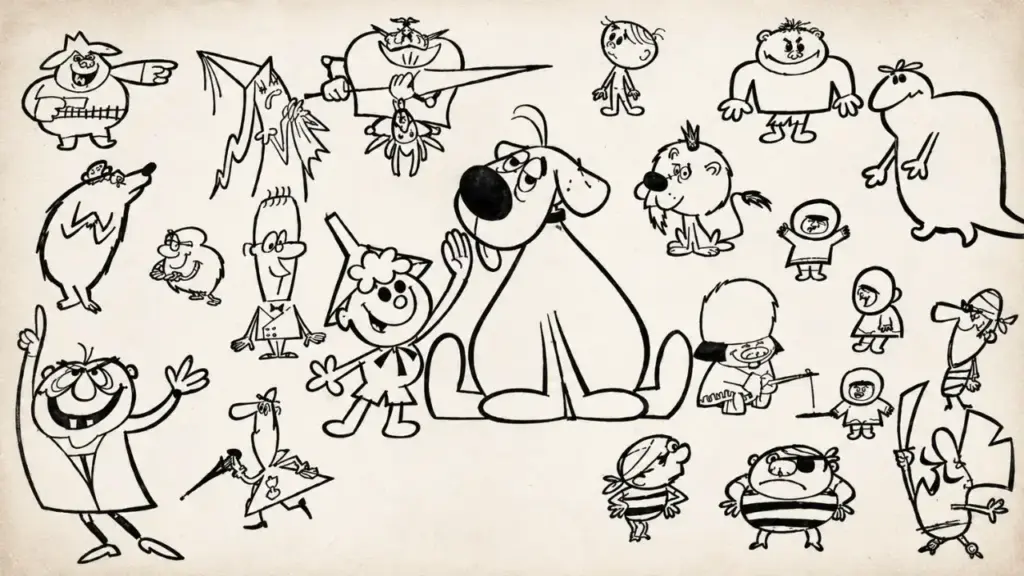
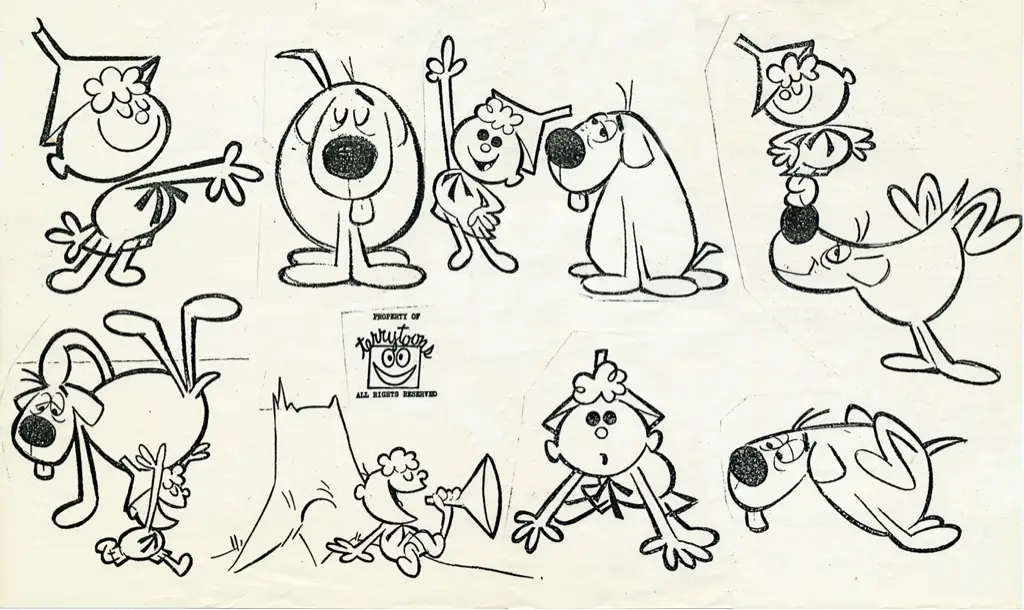
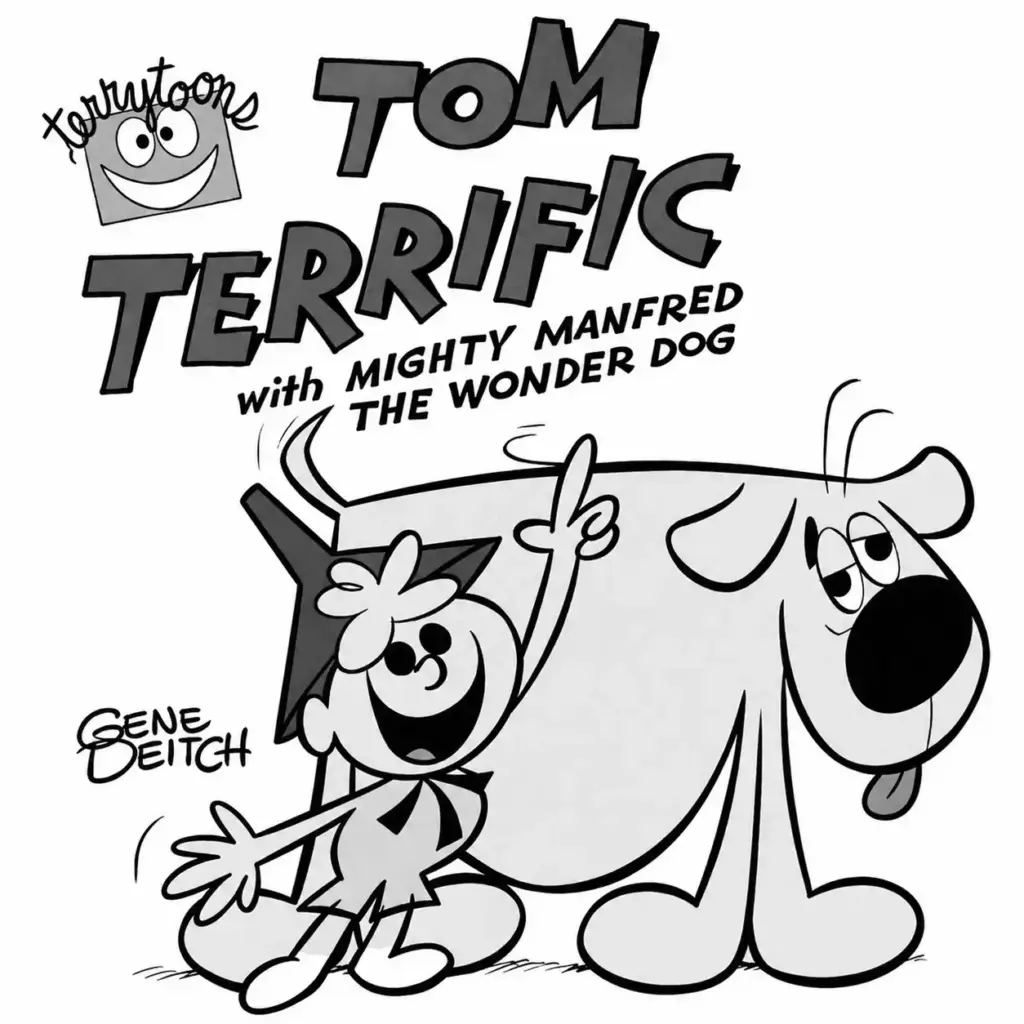
Tom Terrific was little more than a collection of black lines: a round-headed boy, a funnel-shaped thinking cap and a sleepy dog who rarely seemed interested in saving anyone.
That simplicity was not a weakness. It was the entire trick.
Beginning in 1957, Tom transformed into airplanes, trains, trees and practically anything else he could imagine while appearing inside Captain Kangaroo on CBS.
The cartoon lasted only 26 complete adventures, but its story stretches much further.
It connects:
- An Academy Award-winning animation director
- A future Pulitzer Prize-winning cartoonist
- An early pioneer of adult animation
- The original voice of Eustace on Courage the Cowardly Dog
- A rock band named after one of its villains
- A 2019 trademark dispute involving Tom Brady and Tom Seaver
What appeared to be a disposable five-minute children’s cartoon turned out to have one of the strangest afterlives in early television animation.
Tom Terrific at a glance
- Creator: Gene Deitch
- Studio: Terrytoons, then owned by CBS
- Debut: June 10, 1957
- Original home: Captain Kangaroo
- Format: 26 stories divided into 130 short weekday chapters
- Voice cast: Lionel Wilson performed every character
- Main sidekick: Mighty Manfred the Wonder Dog
- Main villain: Crabby Appleton, “rotten to the core”
- Visual style: Minimalist black-and-white line animation
What Was Tom Terrific?
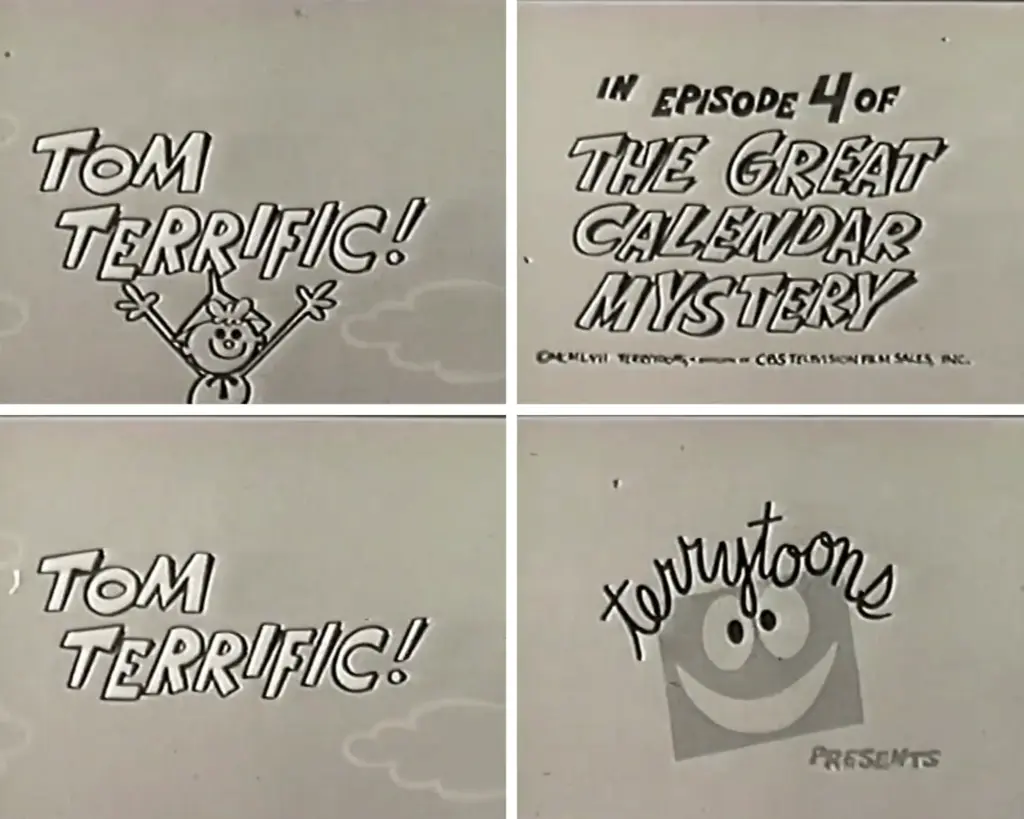
Tom Terrific was an early cartoon created specifically for television rather than repurposed from theatrical shorts.
Tom lived in a treehouse that served as his world headquarters. Whenever trouble appeared, he placed a funnel-shaped “thinking cap” on his head.
The cap appeared to sharpen his intelligence, but its most useful power was transformation. Tom could reshape himself into almost anything required by the story.
His transformations included:
- Airplanes and helicopters
- Trains and automobiles
- Animals and insects
- Trees and household objects
- Machines designed to solve a particular problem
The show’s theme song explained the idea better than any detailed superhero origin could have:
If you see a plane on high,
A diesel train go roaring by,
A bumblebee or a tree,
It’s me!
Tom’s companion was Mighty Manfred the Wonder Dog.
The name suggested a fearless super-dog. Manfred was actually slow, sleepy and more interested in food than adventure.
That contrast drove much of the comedy. Tom approached every mystery with breathless enthusiasm, while Manfred responded as though saving the world had interrupted a perfectly good nap.
The basic Tom Terrific formula
- A villain or unusual character created a problem.
- Tom announced that he was ready for action.
- Manfred reluctantly followed him.
- Tom transformed into several objects while investigating.
- Each weekday chapter ended before the problem was resolved.
- Friday’s installment completed the adventure.
Tom Terrific Was Built Like a Weekday Serial
Tom Terrific was not originally presented as 130 unrelated cartoons.
The series consisted of 26 complete stories. Each story was divided into five short chapters, with one installment shown every weekday on Captain Kangaroo.
The structure worked like this:
- Monday: The problem and villain were introduced.
- Tuesday through Thursday: Tom investigated, transformed and usually encountered another complication.
- Friday: Tom solved the mystery and defeated the villain.
Each chapter included recap material for viewers who had missed the previous morning and a preview designed to bring them back the following day.
That made Tom Terrific an unusually early example of serialized children’s television.
Instead of expecting preschool viewers to follow a half-hour story in one sitting, it offered a small piece every morning and turned the final resolution into a weekly event.
A Saturday version was also planned
Gene Deitch’s surviving 1958 production instructions reveal another clever detail. The five weekday chapters could be combined into a longer Saturday presentation.
Editors created that version by removing the repeated recaps and previews, allowing the entire story to play as one continuous cartoon.
Who Created Tom Terrific?
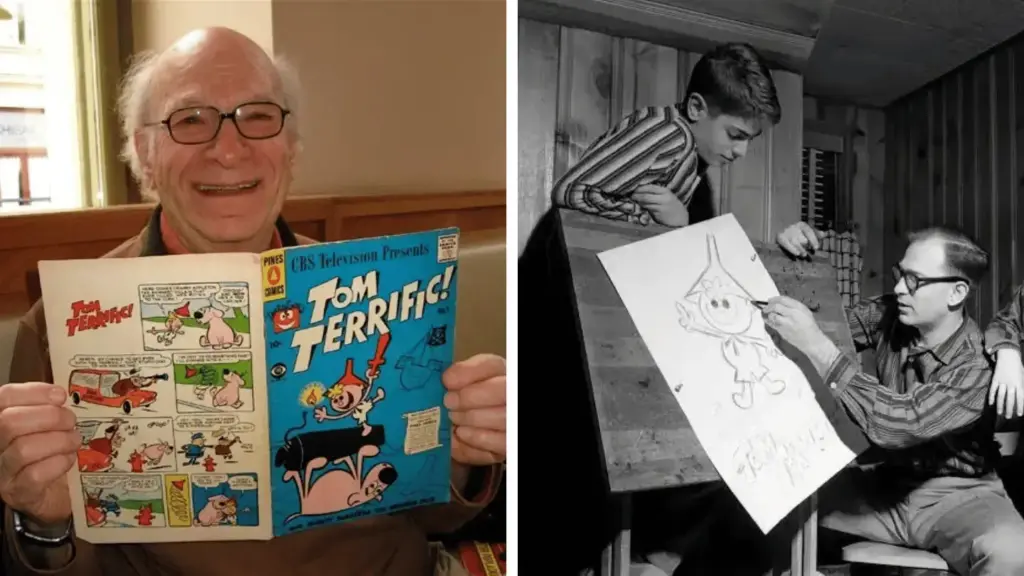
Tom Terrific was created by Gene Deitch, one of the most unconventional directors to pass through the American animation industry.
Deitch had worked at UPA, the influential studio behind visually modern cartoons such as Gerald McBoing-Boing. UPA rejected the idea that every cartoon needed Disney-style realism and detailed movement.
That philosophy shaped Tom Terrific.
The cartoon’s drawings were simple, but the staging, dialogue and timing were carefully controlled. Deitch understood that a strong pose and a funny line could communicate more than several seconds of expensive animation.
CBS had purchased Terrytoons from founder Paul Terry in 1955. The network then hired Deitch to revitalize a studio best known for characters such as Mighty Mouse, Heckle and Jeckle and Deputy Dawg.
Deitch later described the assignment as an attempt to transform what he considered one of animation’s most creatively stagnant studios.
Tom Terrific became the most enduring creation of that short-lived experiment.
Gene Deitch after Tom Terrific
- He established his own New York animation studio.
- His film Munro won the Academy Award for Best Animated Short.
- He directed a series of unusual Tom and Jerry theatrical shorts.
- He directed and produced animated adaptations of children’s books.
- He lived and worked in Prague for most of his later career.
- He continued creating animation into his nineties.
The Comics Journal history of Gene Deitch describes Tom Terrific as one of the most beloved results of his effort to bring a more modern sensibility to Terrytoons.
Tom Terrific Began as Terr’ble Thompson
Tom Terrific did not begin at Terrytoons.
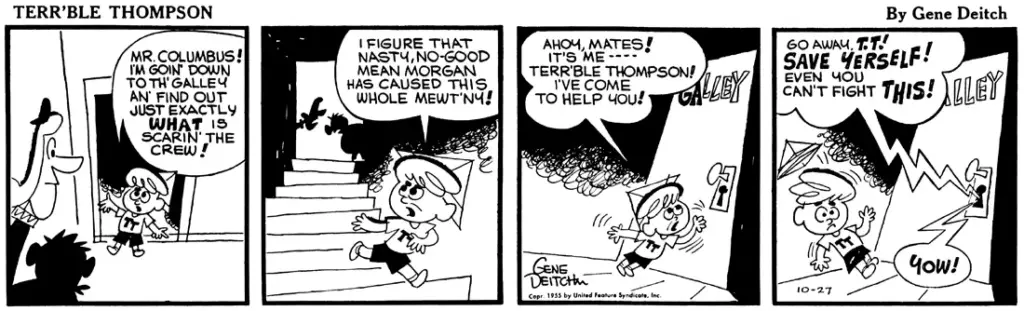
In 1955, Deitch created a newspaper comic strip called The Real-Great Adventures of Terr’ble Thompson.
Its young hero was Thaddeus “Terr’ble” Thompson, a self-proclaimed “Hero of History” who travelled through time and became involved with famous historical figures.
The strip reflected Deitch’s love of E.C. Segar’s Popeye. Like Segar, Deitch enjoyed:
- Invented words
- Deliberate mispronunciations
- Strange character names
- Long-running comic adventures
- Children behaving with complete confidence in absurd situations
The strip was syndicated by United Feature Syndicate but lasted only from late 1955 into 1956.
Deitch was working full time while producing it and found the schedule almost impossible to maintain. When he moved to Terrytoons, he reshaped the basic idea into something that could work in animation.
What changed from Terr’ble Thompson?
- Thaddeus Thompson became Tom Terrific.
- The historical-adventure premise became a broader fantasy format.
- Tom gained the ability to transform into objects.
- Mighty Manfred became his regular canine companion.
- The continuing newspaper narrative became five-part television stories.
Deitch’s son Simon later described Tom Terrific as essentially a reworked or “reformed” version of the earlier strip.
Why Did Tom Terrific Look So Simple?
Tom Terrific’s appearance is often explained as the result of a low budget.
That is true, but it is only half the answer.
The production had little money and an extremely fast delivery schedule. Detailed backgrounds, fluid character animation and large voice casts were never realistic possibilities.
Deitch responded by creating a style that made the limitations feel intentional.
The characters appeared against mostly empty white space, with only the lines needed to establish a location or gag. Tom’s body was so flexible that it could change shape without requiring a complicated transformation sequence.
The visual approach offered several advantages:
- Drawings could be completed quickly.
- Character models were easy to reproduce.
- Transformations required little visual explanation.
- The uncluttered images remained clear on small black-and-white televisions.
- Viewers had to imagine more of the world themselves.
It was partly budget animation and partly creative problem-solving.
The drawings did not attempt to compete with theatrical cartoons. They resembled illustrations from a child’s notebook, which made Tom’s world feel as though it was being invented while the audience watched.
My take
Tom Terrific would probably be less memorable with smoother animation. The empty backgrounds and loose drawings make the cartoon feel like imagination in motion rather than a cheaply imitated theatrical short.
How One Actor Voiced the Entire Cartoon
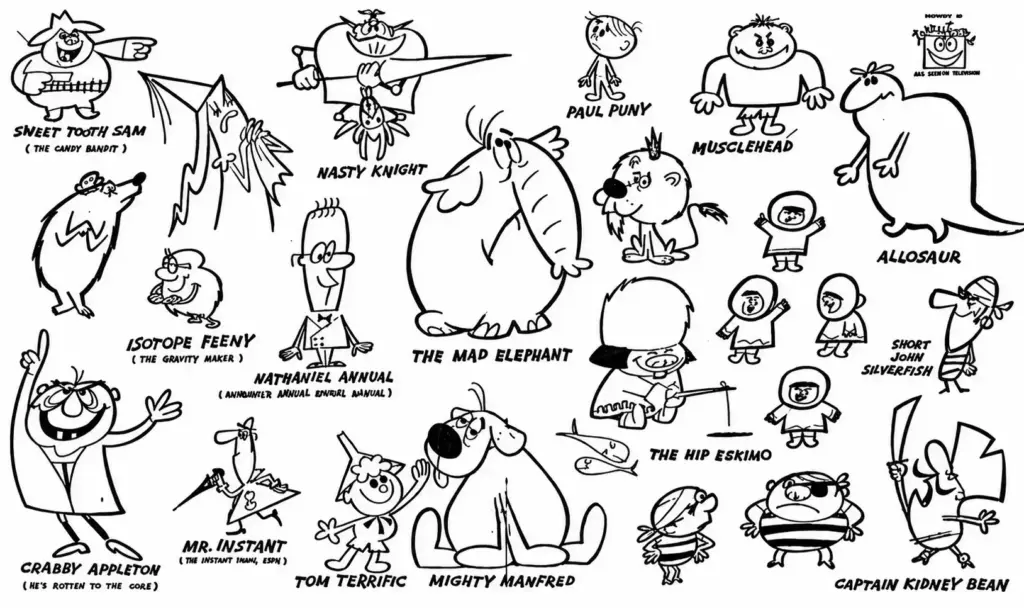
Every speaking character in Tom Terrific was performed by Lionel Wilson.
Wilson voiced:
- Tom Terrific
- Mighty Manfred
- Crabby Appleton
- Captain Kidney Bean
- Isotope Feeney
- Sweet Tooth Sam
- Mr. Instant
- The cartoon’s many incidental characters
Tom spoke with constant excitement. Manfred sounded half asleep. Crabby Appleton hissed like a theatrical melodrama villain.
The voices were different enough that a child could easily assume an entire cast was involved.
Wilson’s performance was even more impressive because of the way the soundtracks were recorded.
The “Live-Mix” Recording Method
Deitch later provided a detailed explanation of the process on his Gene Deitch Credits archive.
Music and sound effects were arranged in sequence on separate strips of audio tape. Wilson wore headphones and performed the complete script while responding to those prerecorded cues.
Instead of recording every line separately, the team attempted to capture an entire finished soundtrack in a continuous performance.
Why the live-mix method mattered
- It reduced the need for expensive editing.
- Wilson could switch between characters without separate recording sessions.
- Dialogue, music and effects were timed together from the beginning.
- The finished animation could be created to match a precisely timed soundtrack.
- An episode could be completed faster under Terrytoons’ demanding schedule.
Deitch compared the method to producing an old radio drama, except without live musicians and sound-effects performers in the studio.
He also admitted that it reduced the animators’ freedom because their scenes had to match his already finished timing.
Under the circumstances, he considered that the lesser of two problems.
Lionel Wilson’s Surprising Final Cartoon Role
Lionel Wilson’s connection to animation did not end with Tom Terrific.
More than 40 years later, he became the original voice of the bitter farmer Eustace Bagge on Cartoon Network’s Courage the Cowardly Dog.
The contrast is remarkable.
In 1957, Wilson voiced a cheerful boy hero, his sleepy dog and every villain they encountered. In the late 1990s, he became famous to a different generation as the man constantly yelling “Stupid dog!” at Courage.
Wilson voiced Eustace through the early part of the series before leaving the role. His 2003 obituary still identified both Tom Terrific and Eustace among his most recognizable performances.
The Hidden Talent Behind Tom Terrific
The drawings were minimal, but the people working behind them were anything but minor.
Deitch brought younger artists and writers into Terrytoons in an attempt to challenge the studio’s established habits.
The most notable was Jules Feiffer.
Before becoming one of America’s most acclaimed cartoonists and playwrights, Feiffer worked in the Terrytoons story department.
Deitch later explained that Feiffer made important contributions to the stories and dialogue of Tom Terrific. Feiffer himself recalled writing several installments.
Jules Feiffer after Terrytoons
- His long-running comic strip appeared in The Village Voice.
- He won the Pulitzer Prize for editorial cartooning.
- He wrote the screenplay for Carnal Knowledge.
- He wrote the animated short Munro for Gene Deitch.
- He became a celebrated playwright, author and children’s-book illustrator.
Animation historian Gene Deitch also credited Terrytoons artists such as Eli Bauer, Larz Bourne and Jim Tyer with helping shape the studio’s work during this period.
Tyer was particularly valuable. His loose, exaggerated animation gave movement to characters who otherwise could have appeared completely static.
Did Ralph Bakshi Work on Tom Terrific?
Maybe, I couldn’t locate an actual source that proved he did or didn’t.
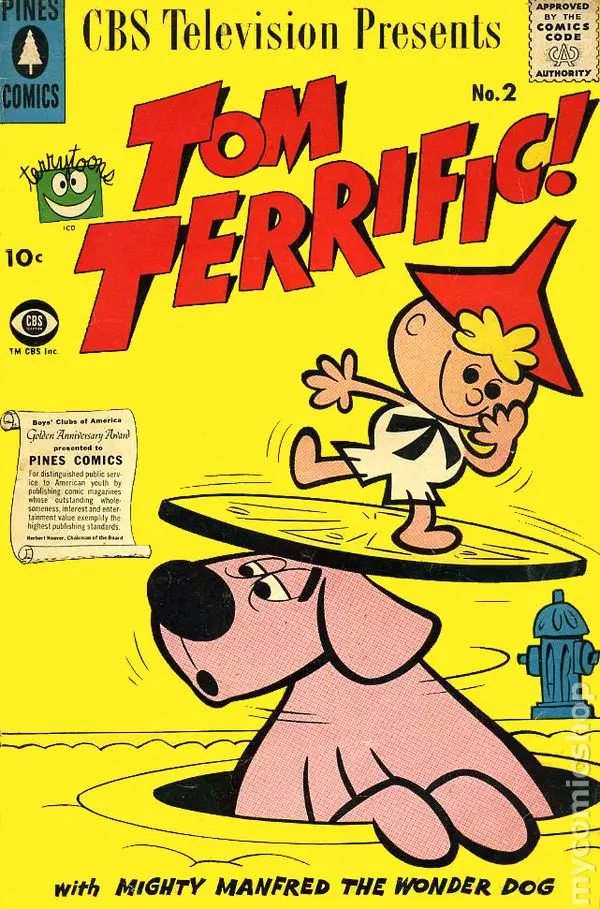
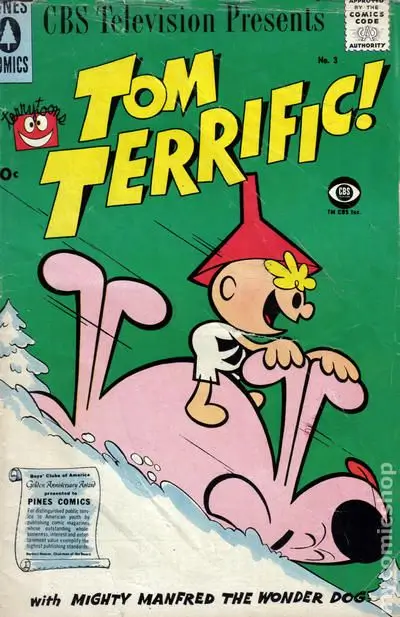
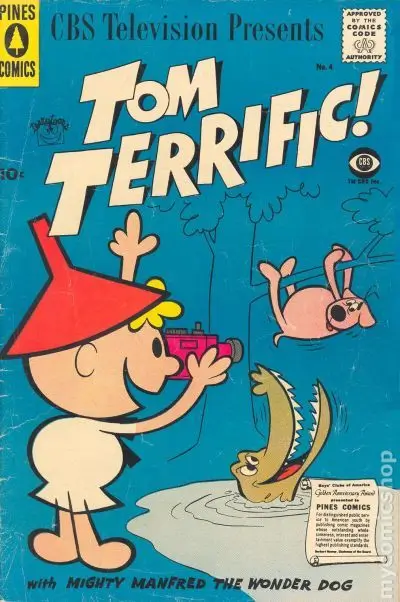
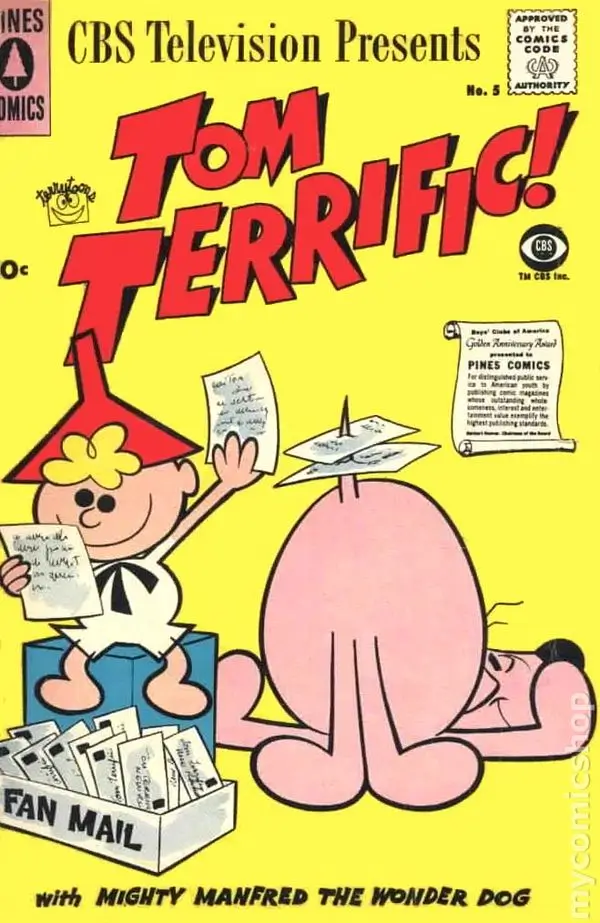
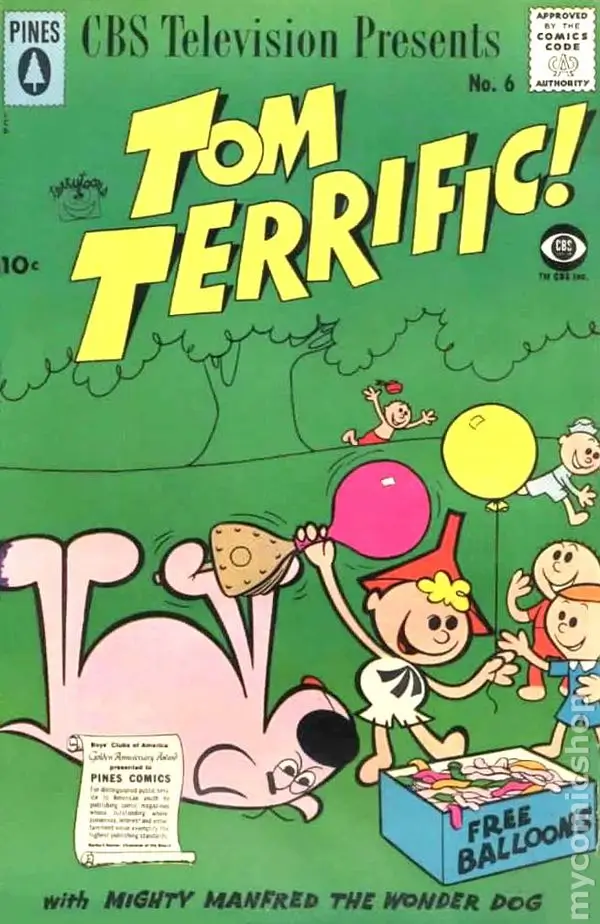
Tom Terrific appeared in a six-issue comic-book series published by Pines Comics between 1957 and 1958.
Several animation histories state that a young Ralph Bakshi drew some of those stories. Bakshi was working at Terrytoons during this period and later became one of the most important directors in American adult animation.
His films included:
- Fritz the Cat
- Heavy Traffic
- Wizards
- The Lord of the Rings
- American Pop
However, surviving comic-book records do not clearly identify the artists behind most of the Tom Terrific stories.
The Grand Comics Database entry for the first issue, for example, leaves most writing and artwork credits unidentified.
Don Markstein’s Toonopedia says some stories were drawn by Bakshi, while Lambiek describes the credit more cautiously as a claim made by secondary sources.
The most accurate conclusion is that Bakshi is widely associated with the comic books, but the exact stories he drew have not been firmly documented.
Tom Terrific’s Villains Were Half the Fun
Tom’s enemies rarely needed complicated introductions. Their names explained exactly what kind of trouble they caused.
Tom Terrific’s rogues’ gallery
- Crabby Appleton: Tom’s best-known enemy, who was proudly “rotten to the core”
- Mr. Instant: The Instant Thing King and creator of instant trouble
- Captain Kidney Bean: A pirate captain with an appropriately ridiculous name
- Sweet Tooth Sam: A candy bandit who stole treats from children
- Isotope Feeney: A dangerous inventor known as “the Meany”
Crabby Appleton became the standout.
He did not merely commit crimes. He celebrated being unpleasant, introducing himself through a song declaring that he was rotten to the core.
The character was memorable enough that a California rock band adopted the name Crabby Appleton in the late 1960s. The group later used an image of the villain for its 1971 album Rotten to the Core.
All 26 Tom Terrific Stories
Tom Terrific’s 26 adventures were produced in two groups of 13.
Exact broadcast dates vary among modern episode databases, but the story titles are much better established.
View the first 13 Tom Terrific stories
- The Nasty Knight
- The Pill of Smartness
- Sweet Tooth Sam
- Snowy Picture
- Crabby Appleton’s Dragon
- Captain Kidney Bean
- The Gravity Maker
- Scrambled Dinosaur Eggs
- Who Stole the North Pole?
- Instant Tantrums
- Track Meet, Well Done
- The Great Calendar Mystery
- Elephant Stew
View the second 13 Tom Terrific stories
- The Missing Mail Mystery
- Isotope Feeney’s Foolish Fog
- Moon Over Manfred
- The Prince Frog
- Go West, Young Manfred
- The Million Manfred Mystery
- The Flying Sorcerer
- The Silly Sandman
- The Big Dog Show-Off
- The Everlasting Birthday Party
- Crabby Park
- The End of Rainbows
- Robin’s Nest Crusoe
The surviving 1958 production plan is especially valuable because it lists the second group of stories and identifies several assigned directors.
When Did Tom Terrific Air?
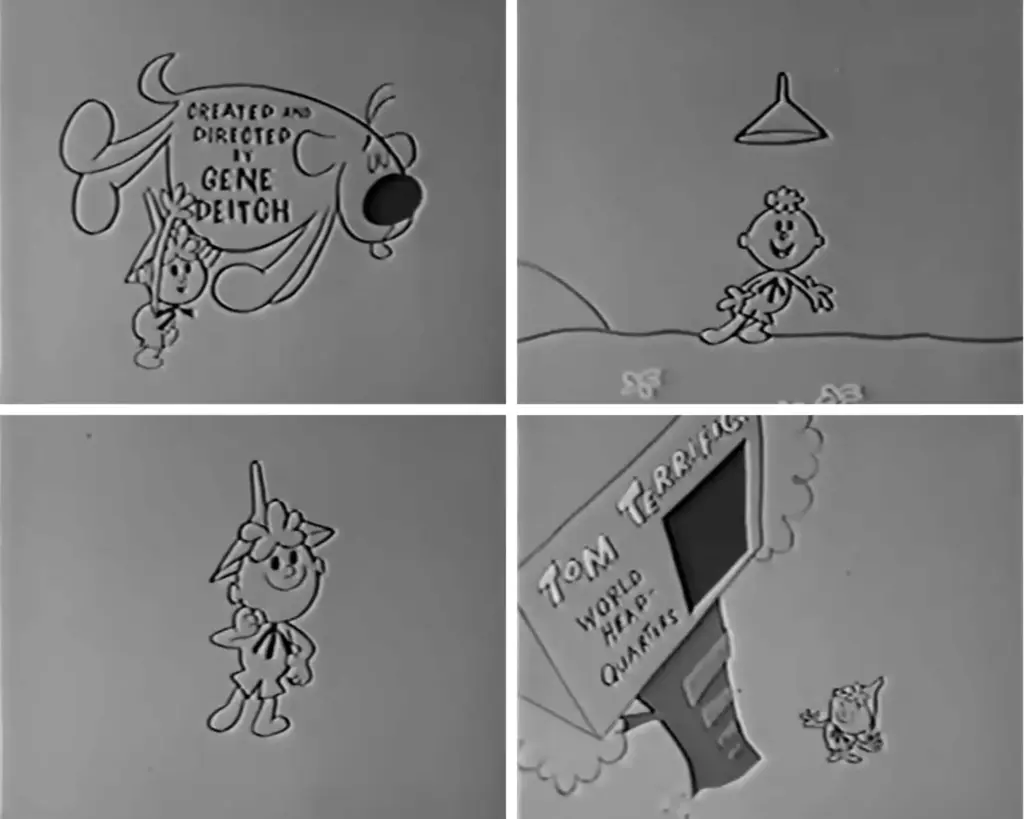
Tom Terrific debuted as a Captain Kangaroo segment on June 10, 1957.
The first group of 13 stories was produced for the original run. A second group of 13 followed in 1958.
Together they created:
- 26 complete weekly stories
- 130 individual weekday chapters
- Approximately 650 minutes of serialized animation
The original production period was brief, but CBS continued using the cartoons on Captain Kangaroo after new installments stopped.
That rerun life explains why the character was remembered by far more children than the small number of original stories might suggest.
Bob Keeshan later discussed Tom Terrific in his extensive Television Academy interview, placing the cartoon among the recurring elements viewers associated with Captain Kangaroo.
Why Did Tom Terrific End?
There is no strong evidence that Tom Terrific disappeared because children rejected it.
The more important event was the end of Gene Deitch’s creative experiment at Terrytoons.
Deitch clashed with studio production manager Bill Weiss and other members of the old Terrytoons organization. His attempt to replace the studio’s established formulas with modern design and younger creative talent created considerable internal resistance.
Deitch was dismissed in 1958.
The second group of Tom Terrific stories was already in development, but his departure effectively ended the period that had created the series.
Why no third batch followed
- The series was closely identified with Deitch’s creative leadership.
- His experimental Terrytoons team began to break apart.
- The studio returned to more familiar characters and production methods.
- CBS could continue rerunning the 130 completed chapters without funding new ones.
Tom Terrific was therefore not given a conventional finale. Production simply stopped while the existing library remained useful to CBS.
Tom Terrific Comic Books
The character moved into comic books almost immediately.
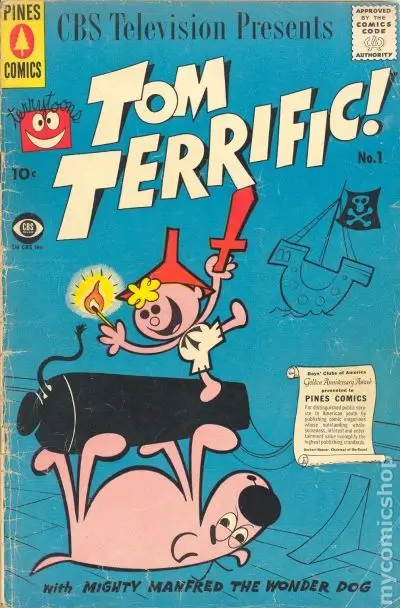
Pines Comics published six issues of Tom Terrific between the summer of 1957 and the fall of 1958.
The comics expanded the world beyond the 26 television stories and occasionally included other Terrytoons characters as backup features.
Tom Terrific comic-book facts
- Publisher: Pines Comics
- Issues: Six
- Publication period: Summer 1957 through Fall 1958
- Original price: 10 cents
- Typical length: 36 pages
- Backup characters: Included other CBS Terrytoons properties such as Sidney the Elephant
The Tom Terrific Trademark Dispute
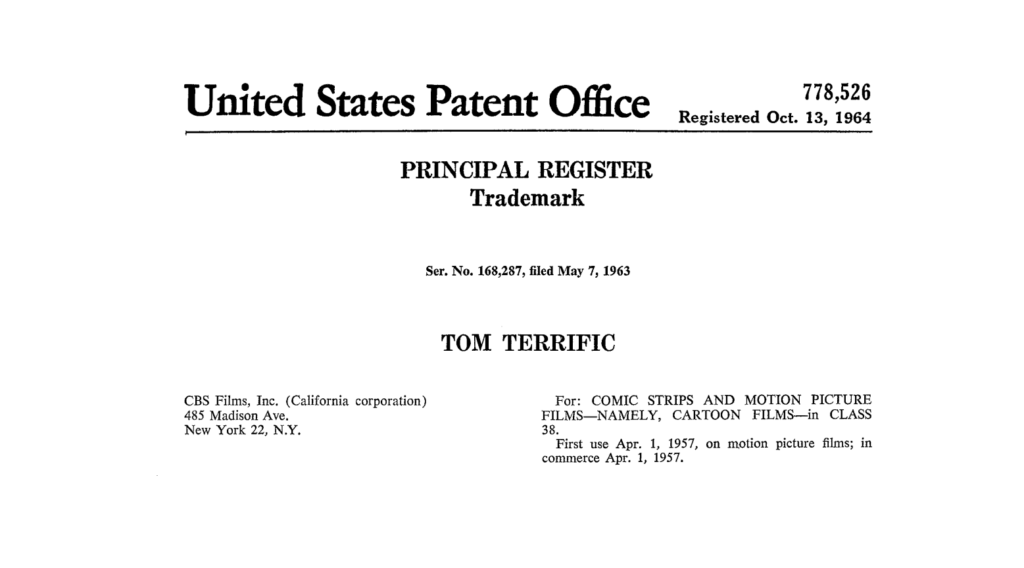
More than 60 years after the cartoon’s debut, the name Tom Terrific became part of an unexpected sports controversy.
By then, “Tom Terrific” was strongly associated with Tom Seaver, the Hall of Fame pitcher who led the New York Mets to their surprising 1969 World Series championship.
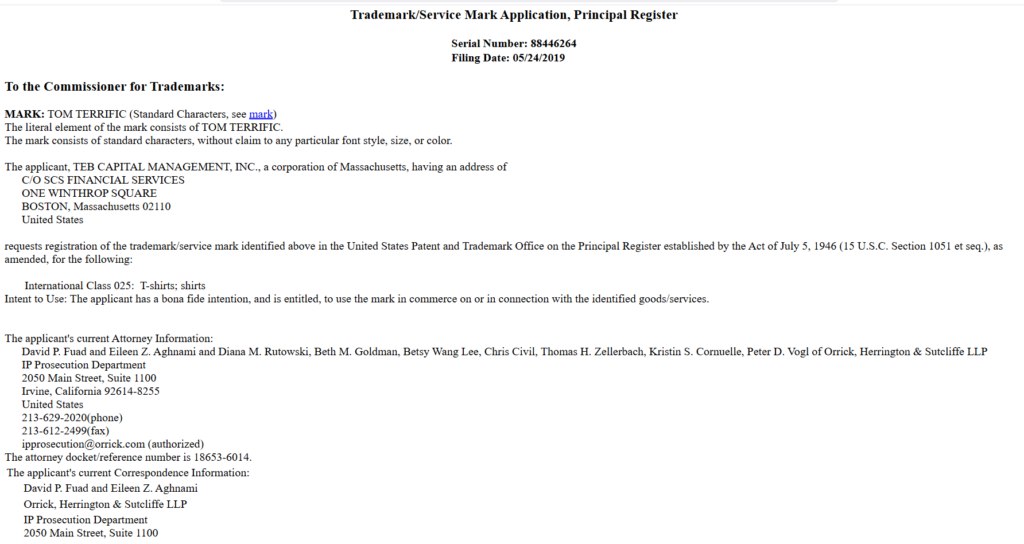
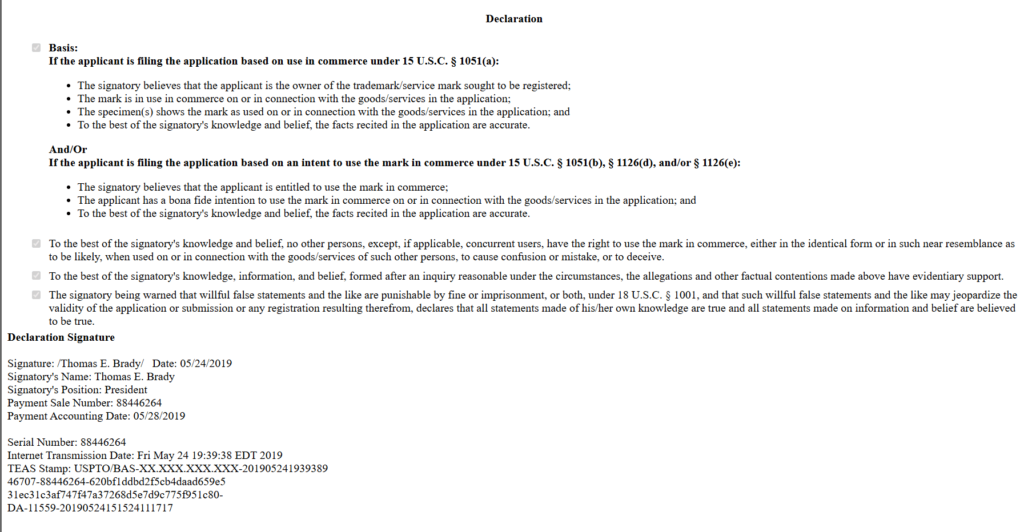
In May 2019, a company connected to NFL quarterback Tom Brady filed applications seeking to register “Tom Terrific” for merchandise including:
- Trading cards
- Posters
- Printed photographs
- Shirts and T-shirts
Mets fans objected immediately. The Mets also responded publicly, stating that there was only one Tom Terrific.
The U.S. Patent and Trademark Office refused Brady’s applications.
The USPTO concluded that “Tom Terrific” pointed uniquely and unmistakably to Tom Seaver and that consumers could wrongly assume a connection between Seaver and Brady’s proposed merchandise.
U.S. Patent and Trademark Office refusal, as reported by ESPN
Brady later said that he did not like the nickname and claimed he had filed in an attempt to stop others from applying it to him.
The cartoon created an unusual wrinkle in the story: Gene Deitch’s Tom Terrific had used the name years before Seaver became famous.
However, the cartoon was not the basis of the USPTO refusal. The legal dispute focused on the public’s association between the nickname and Tom Seaver.
There is also no firm evidence that Seaver received his nickname directly from the cartoon, even though the timing makes that possible.
Other Unexpected Pieces of the Tom Terrific Legacy
Tom Terrific never received a major modern reboot, but traces of the cartoon continued appearing in unexpected places.
Where Tom Terrific’s influence resurfaced
- Crabby Appleton: A late-1960s rock band took its name from Tom’s best-known villain.
- Tom Tomorrow: Cartoonist Dan Perkins reportedly chose his pen name after misremembering Tom Terrific’s surname.
- Ralph Bakshi: Some histories connect the future adult-animation director to the tie-in comics.
- Lionel Wilson: Tom’s entire voice cast later became the original voice of Eustace Bagge.
- Tom Seaver: The cartoon title predated the baseball star’s famous nickname.
The show’s strongest legacy may be less tangible.
Tom did not need a detailed origin, expensive special effects or a heavily designed world. He needed a treehouse, a funnel and the conviction that imagination could solve almost anything.
Watch The Great Calendar Mystery
One of the better-known surviving stories is “The Great Calendar Mystery.”
Crabby Appleton steals the weekends and holidays from a calendar factory, leaving children facing an endless cycle of school days.
It is a perfect Tom Terrific premise: a child’s complaint turned into a literal crime that only imagination can solve.
The Tiny Cartoon That Left Enormous Footprints
Tom Terrific looks like almost nothing.
A few black lines. A funnel hat. A tired dog. A treehouse floating in white space.
Yet behind those drawings was a director trying to reinvent an old animation studio, a gifted actor performing an entire cast in one recording session and young artists who would later reshape American comics and animation.
The series also anticipated several ideas that became increasingly important to television cartoons:
- Stories continuing across multiple days
- A visual style designed for television rather than theaters
- Limited animation treated as an artistic choice
- A child hero powered by imagination instead of physical strength
- Humour written to entertain adults as well as children
That is why Tom Terrific deserves more than a short encyclopedia entry.
It was not simply an old segment on Captain Kangaroo. It was a clever response to the economic realities of early television and proof that a tiny budget did not have to produce a tiny idea.
For more early animation history, explore my guide to cartoons of the 1950s. You can also read about Courageous Cat, another strange television hero from the early days of syndicated animation.