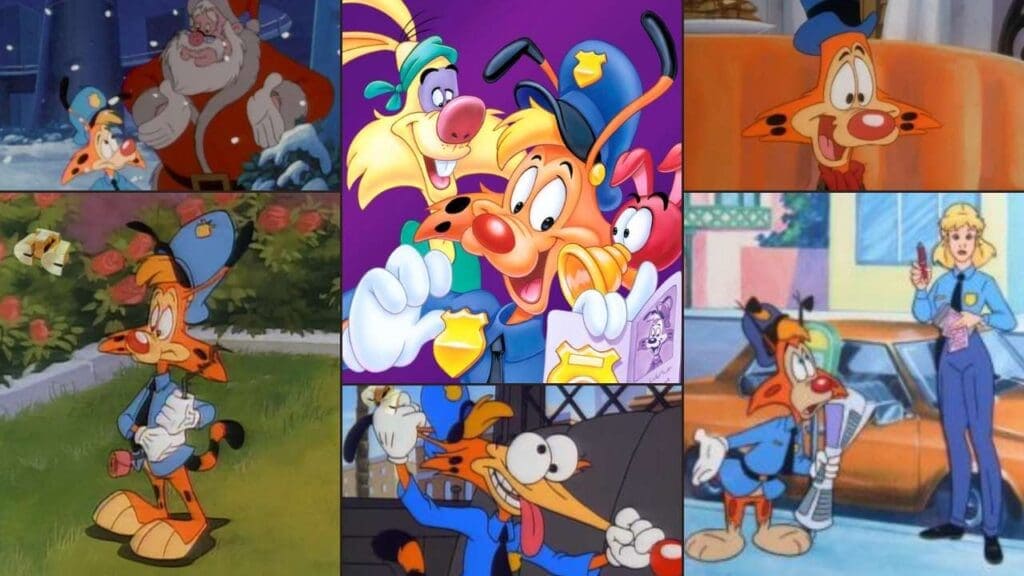
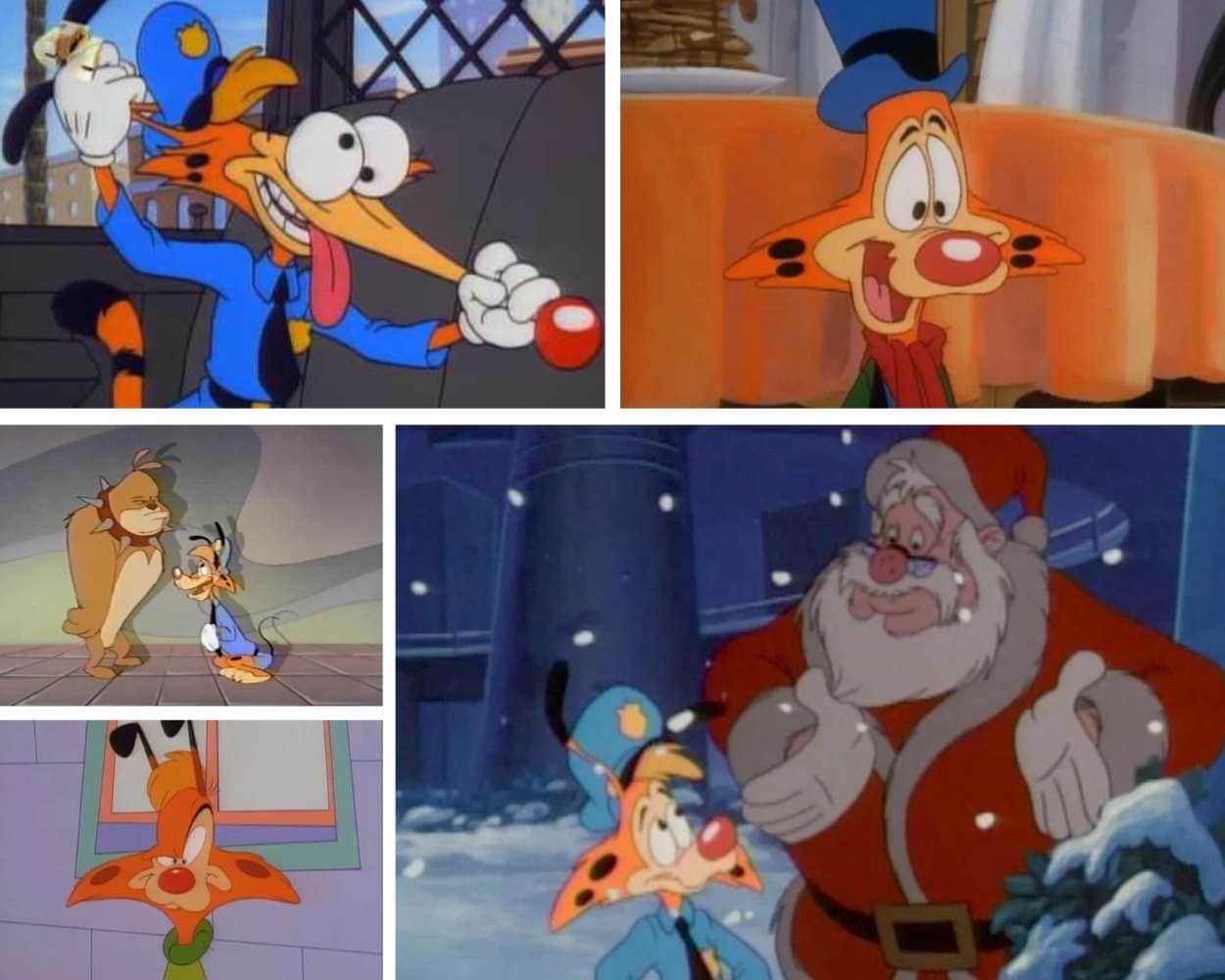
Bonkers D. Bobcat is one of those 1990s Disney characters I completely forgot existed until a wave of nostalgia hit, and then it all came rushing back: the wild orange fur, the police badge, the pure chaos.
He is the star of Disney’s 1993 to 1994 series Bonkers, a hyperactive Toon bobcat who trades cartoon stardom for a badge with the Toon Division of the Hollywood Police Department.
When 90s TV animation exploded, Bonkers was Disney’s answer to Roger Rabbit, a brand-new toon built for that same live-action-meets-cartoon energy.
Mickey, Donald, and Goofy had the legacy.
Bonkers was the loud new kid trying to earn a spot, and for a couple of years he really did.
Bonkers D. Bobcat: quick facts
- Species: Toon bobcat
- First appearance: the short “Petal to the Metal” (1992)
- Main series: Bonkers (1993 to 1994)
- Fictional studio: Wackytoons Studios, home of his “He’s Bonkers” shorts
- Voiced by: Jim Cummings
- Inspired by: the runaway success of Who Framed Roger Rabbit
Rediscovering Bonkers D. Bobcat
Here is the backstory I never knew as a kid: Disney created Bonkers because its partnership with Steven Spielberg’s Amblin over Roger Rabbit had soured. Instead of fighting over shared characters, Disney built its own wacky toon in the same spirit, and Bonkers D. Bobcat was the result. He even shares that Roger Rabbit trait of losing his mind the moment things get zany.
He is not the sharpest cop at the station, and his cartoon logic wrecks about as many cases as it cracks.
But that is exactly the charm.
When Bonkers is on screen, there is never a dull moment.
From Cartoon Star to Cop

What made Bonkers D. Bobcat stand out is that he had a real narrative, which is rare for a character this hyperactive.
He started as a mega-star at Wackytoons Studios headlining the “He’s Bonkers” shorts. Then his ratings slipped, a rival studio’s show knocked him out of first place, and his boss W.W. Wacky fired the whole cast.
Did he mope? No. He stumbled straight into police work, and the show turned into a buddy-cop comedy pairing a manic toon with a very human, very grumpy detective.
Those misadventures, part slapstick and part heart, are what made the show click for me.
The Bonkers Backstory
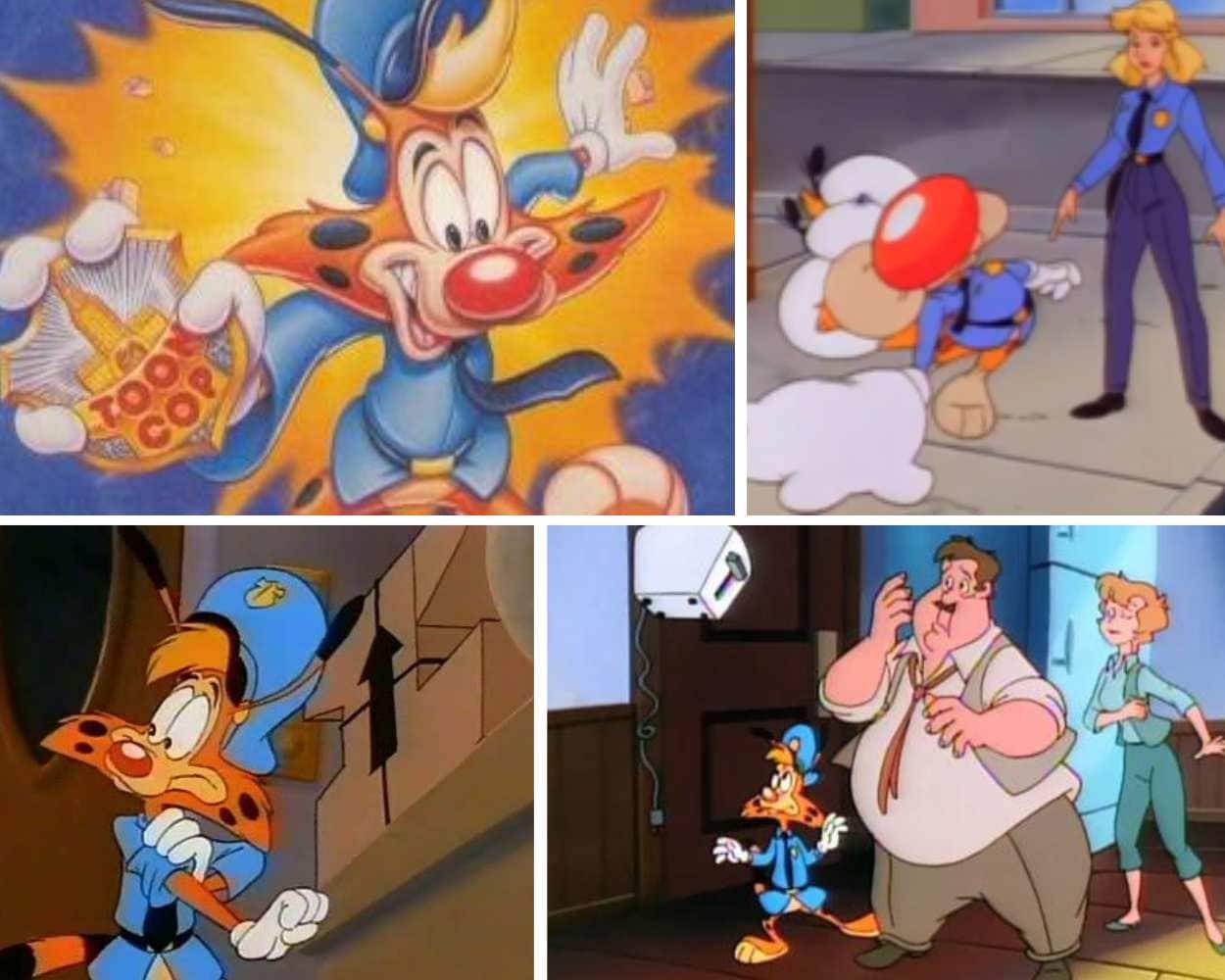
Back in his Hollywood days, Bonkers was a knobby-eared toon bobcat head over heels for his leading lady, Fawn Deer.
His nervous little sidekick Jitters A. Dog was almost always at his side, and his gruff rival was Grumbles the Grizzly.
Behind the scenes, his crew included Fall-Apart Rabbit, his stunt double who literally comes to pieces, the Mad Hatter and March Hare as his makeup artists, and Toots, an odd pet that doubles as a horn.
Then the ratings dropped and the show was cancelled. Soon after, Bonkers accidentally foiled a park mugger and saved Disney royalty, Donald Duck himself, mostly thanks to veteran officer Lucky Piquel. Bonkers got the credit and a Citizen of Valor award from Police Chief Leonard Kanifky.
When Bonkers bragged that his old detective cartoons had prepared him for real cases, the chief took it literally and offered him a job on the Hollywood PD.
Bonkers said yes, picked Lucky as his partner, and after cracking a case where a villain called the Collector kidnapped every toon in town, he turned down his old studio job to help launch the Toon Division.
Friends and Foes
Every good toon needs a supporting cast, and Bonkers had a deep bench. Here are the ones worth knowing:
- Lucky Piquel: his first human partner, a grumpy detective who hates toons (also voiced by Jim Cummings).
- Miranda Wright: his second partner, who takes over after Lucky leaves for the FBI.
- Fawn Deer: his cartoon leading lady and long-time crush.
- Jitters A. Dog: his anxious sidekick from the Wackytoons days.
- Fall-Apart Rabbit: his stunt double, who falls apart on cue.
- Grumbles the Grizzly: his rival and former studio boss.
- Chief Leonard Kanifky: the police chief who hires him by mistake.
- Marilyn Piquel: Lucky’s genius daughter and a huge Bonkers fan.
- The Collector: the toon-napping villain from the pilot.
Jim Cummings, the Voice of Bonkers

Bonkers simply would not work without Jim Cummings, one of the most prolific voice actors alive.
He nailed the character’s manic energy, machine-gun dialogue, and the occasional flash of real warmth. If the voice sounds familiar, it should: Cummings also plays Winnie the Pooh, Tigger, and Darkwing Duck.
Two bits of trivia I love here. First, Cummings pulled double duty and voiced Bonkers’ human partner Lucky Piquel too, so he was often acting against himself.
Second, a young, pre-fame Jim Carrey reportedly auditioned for Bonkers, and was so cocky that he told the room “Gentlemen, you may leave” on his way out.
Cummings has joked that if Carrey had won the part, he might never have become a movie star.
The Show’s Strangest Quirk: Two Partners
This is the thing that confuses everyone who tries to rewatch Bonkers. The series has two different human partners and two slightly different versions of the bobcat, because it was made by two production teams.
- Lucky Piquel era: Bonkers’ first partner, a toon-hating detective. These episodes are calmer and more detective-focused.
- Miranda Wright era: after Lucky heads to the FBI, Sergeant Miranda Wright steps in, and the humor leans harder into slapstick.
The catch is that the Miranda Wright episodes were produced first, but the Lucky Piquel episodes are the ones that explain how Bonkers became a cop. That is why his ears, spots, and tail visibly change between episodes and why the timeline feels scrambled.
Watch-order tip: start with the Lucky Piquel episodes. They set up the whole cop origin, so everything after makes far more sense.
Bonkers D. Bobcat: The Origin in Order

If you want the story beat by beat, here is how Bonkers goes from washed-up actor to founding cop:
- His cartoon show drops in the ratings and gets cancelled.
- He accidentally stops a park mugger and saves Donald Duck.
- Officer Lucky Piquel helps make the arrest, and Bonkers gets the credit.
- Chief Leonard Kanifky hands him the Citizen of Valor award.
- The chief mistakes his cartoon roles for real police work and offers him a badge.
- Bonkers joins the Hollywood PD and chooses Lucky as his partner.
- The Collector kidnaps all of his toon friends, and Bonkers cracks the case.
- He turns down his old studio job and helps found the Toon Division.
Where to Find Bonkers

Bonkers D. Bobcat did not have a huge footprint, but he turns up in more places than you would expect.
TV and film
- Raw Toonage (1992), as the “He’s Bonkers” shorts
- Going Bonkers (1993), the feature-length pilot special
- Bonkers (1993 to 1994), the main series
Video games
- Bonkers (Super Nintendo, 1994)
- Bonkers (Sega Genesis, 1994)
- Bonkers: Wax Up! (Game Gear, 1995)
He has also resurfaced in modern Disney shorts like Chibi Tiny Tales, usually as a quick nostalgia nod. As a Toon bobcat, he is one of the more unusual entries in Disney’s long list of iconic characters.
Bonkers at the Disney Parks
For a stretch in the mid-1990s, Bonkers was a walkaround character at the Disney parks, including a spot in the Disney Afternoon stage show at Mickey’s Starland. Once his series wrapped and the Disney Afternoon era wound down, so did his park appearances. These days he is fully retired, which is part of why he feels like such a deep-cut nostalgia pick.
Final Thoughts
Bonkers D. Bobcat never reached Mickey or Roger Rabbit levels of fame, and the scrambled two-team production probably did not help.
But for a couple of chaotic years, he was one of the most purely fun toons Disney put on TV.
If you want to give him a fair shot, start with the Lucky Piquel episodes and let the madness build from there.