
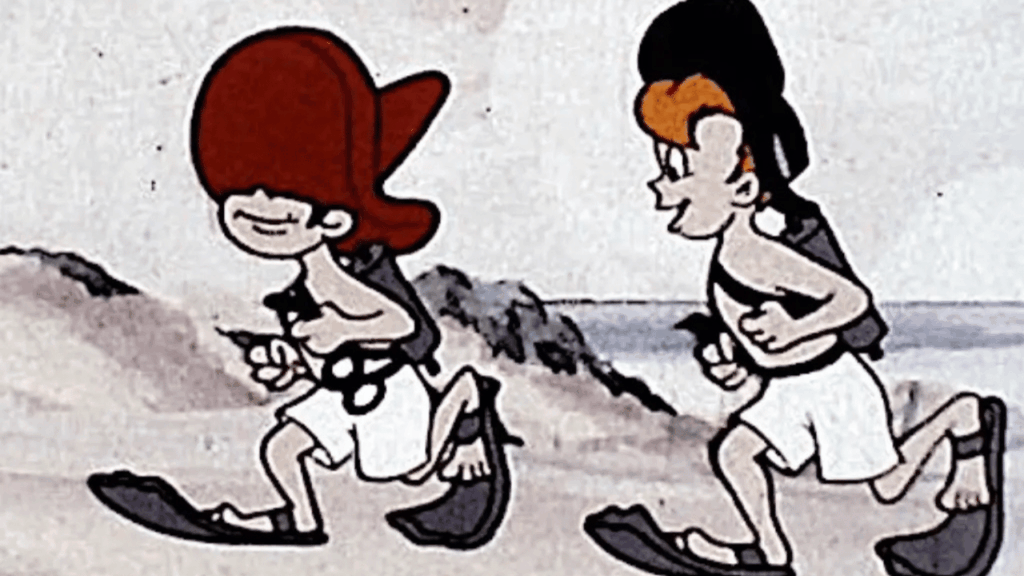
Most forgotten cartoons disappear for ordinary reasons. Bucky and Pepito is remembered because animation historians have spent decades arguing that it might be one of the worst cartoons ever shown on television.
Produced by Sam Singer, the same low-budget animation producer later associated with Courageous Cat and Minute Mouse, the series arrived in television syndication in 1959.
It featured:
- An American boy dressed like a cowboy
- His Mexican friend, Pepito
- Five-minute Western adventures
- Extremely limited animation
- Some remarkably attractive painted backgrounds
- A racial stereotype that has aged far worse than the animation
Yet the strangest part of the story is not its reputation.
Although the cartoon originally carried a copyright notice, the registration was apparently never renewed. That is why surviving episodes are now generally treated as public-domain films in the United States and continue to circulate freely online.
Bucky and Pepito at a glance
- Creator and producer: Sam Singer
- Studio: Samsing Creations and Trans-Artists Productions
- Debut: 1959
- Format: Approximately five-minute syndicated cartoons
- Reported episode count: 36
- Voices: Dal McKennon
- Music: Johnny Holiday, with Gerald Dolin credited on the theme song
- Current status: Partially lost and generally treated as public domain in the United States
What Was Bucky and Pepito?
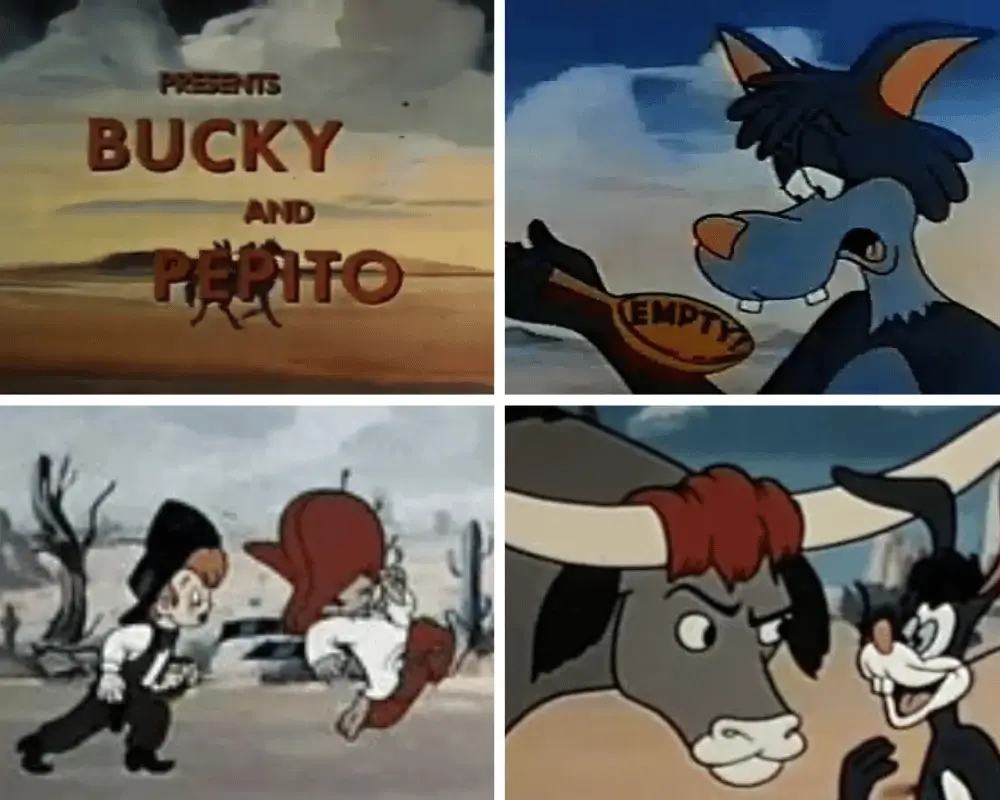
Bucky and Pepito was a Western-themed animated series made for local television syndication.
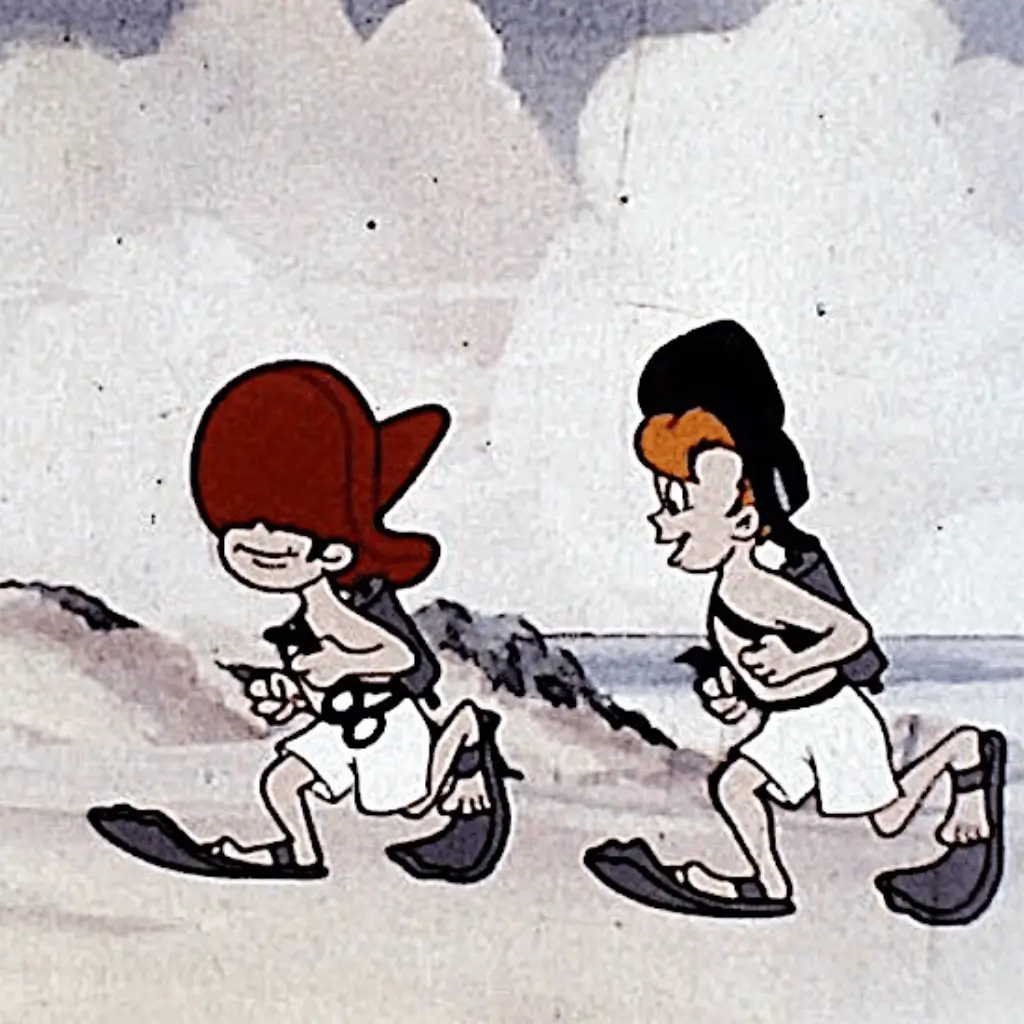
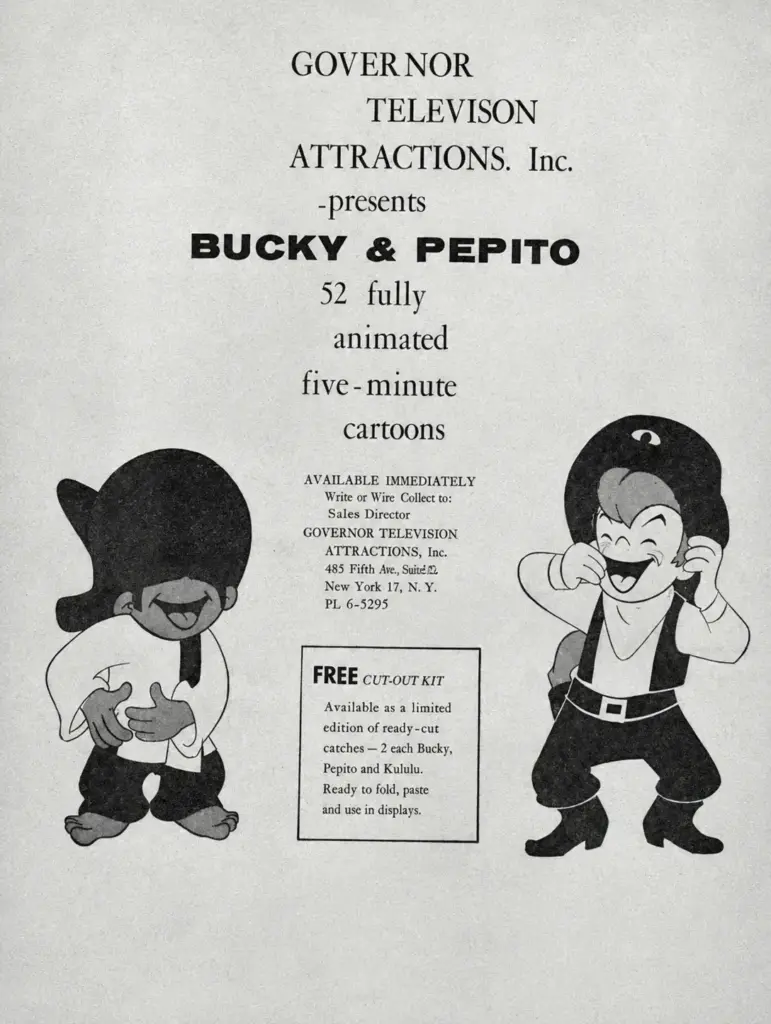
Bucky was a red-haired American boy who lived on a ranch and dressed like a child pretending to be a cowboy. Pepito was his younger Mexican friend, usually hidden beneath an oversized sombrero.
The two boys encountered coyotes, elephants, troublesome animals and other problems around the American Southwest. Pepito frequently relied on gadgets or unusual contraptions to get them out of trouble.
The stories were simple and rarely lasted more than five minutes.
The basic Bucky and Pepito formula
- An animal or local troublemaker causes a problem.
- Bucky and Pepito attempt to chase it away.
- Pepito introduces a gadget or improvised solution.
- The plan creates more chaos than expected.
- The story ends after one final slapstick gag.
Trans-Artists Productions originally contracted for 52 five-minute shorts, but trade sheets and surviving broadcast logs only confirm about 36 completed titles that actually made it to air.
Unlike a nationally scheduled Hanna-Barbera show, Bucky and Pepito did not have a single network time slot shared by the entire country.
Local television stations purchased the syndicated package and inserted the shorts into children’s programs. A station could place one between older theatrical cartoons, commercials and segments hosted by a local entertainer.
That short, flexible format made Bucky and Pepito useful even if the cartoons themselves were not especially good.
The Same Producer Behind Courageous Cat
Bucky and Pepito was created by Sam Singer through Samsing Creations and Trans-Artists Productions.
Singer built much of his career around inexpensive animation made quickly for television. His studio was not competing directly with Disney theatrical animation. It was selling affordable programming to stations that suddenly had hours of airtime to fill.
Several names connected to Bucky and Pepito later appeared on Courageous Cat.
Key Bucky and Pepito credits
- Sam Singer: Creator and executive producer
- Dal McKennon: Voice of both Bucky and Pepito
- Reuben Timmins: Director credited on surviving episodes, including “The Coyote Catcher”
- Ed Fourche: Production manager on “The Coyote Catcher”
- Johnny Holiday: Music supervisor and co-writer of the theme
- Gerald Dolin: Co-writer of the theme song
Singer later produced Courageous Cat and Minute Mouse, another syndicated series featuring Dal McKennon and music connected to Johnny Holiday.
Courageous Cat was hardly lavish, but next to Bucky and Pepito it can look surprisingly polished.
Why Is Bucky and Pepito Considered So Bad?
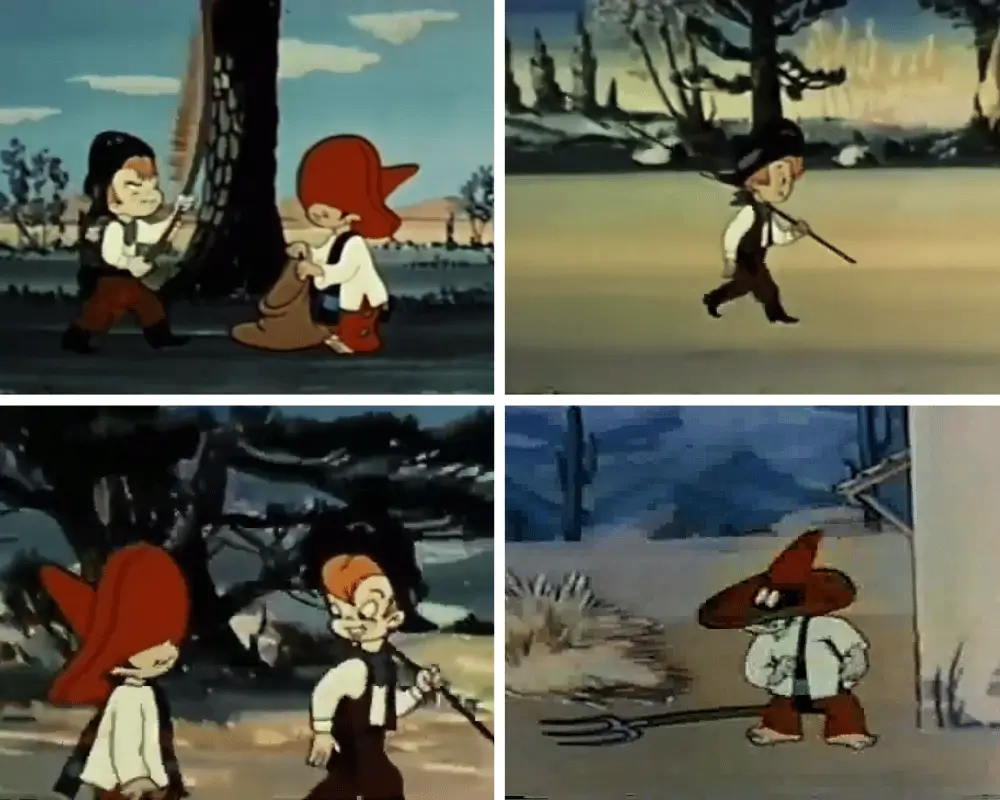
Calling something “the worst cartoon ever made” is obviously subjective.
Bucky and Pepito did not receive that label because of one angry modern review, however. Its reputation has followed it through animation books, collector screenings and home-video compilations for decades.
Animation historian Don Markstein wrote that there was widespread agreement among cartoon fans that it was among the worst animation ever shown on American television.
Harry McCracken supplied the most frequently repeated description.
Bucky and Pepito set “a standard for awfulness that no contemporary TV cartoon has managed to surpass.”
Harry McCracken, quoted by Cartoon Brew
The series was later included in Jerry Beck’s screenings of notoriously bad animation. An episode also appeared in Cartoon Brew’s aptly named Cartoon Dump web series.
Bucky and Pepito was even represented on Rembrandt Films’ Worst Cartoons Ever! DVD.
The Animation Was Extremely Limited
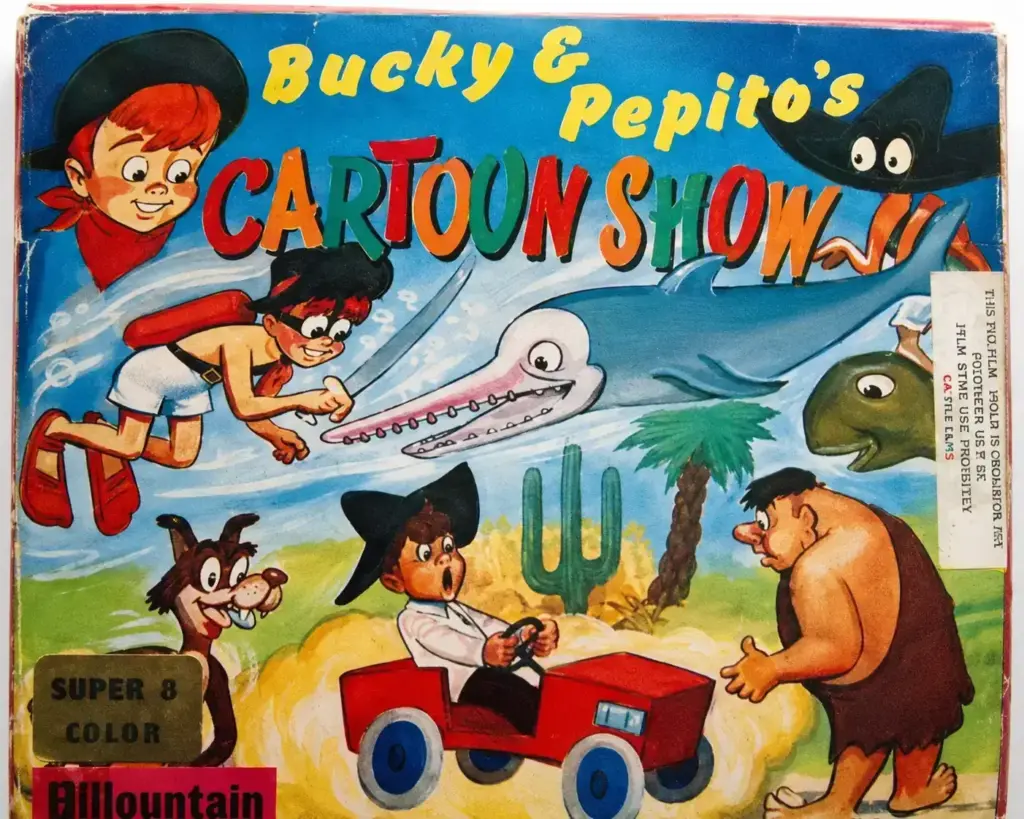
Television cartoons of the late 1950s were often produced with smaller budgets than theatrical animation. Hanna-Barbera also reused backgrounds, poses and walk cycles, but it compensated with strong character designs, comic timing and memorable voices.
Bucky and Pepito frequently looked crude even beside its television competition.
Common complaints include:
- Stiff characters that barely move
- Awkward walk cycles
- Long pauses between actions
- Drawings that change noticeably between shots
- Weak lip synchronization
- Stories assembled from disconnected slapstick gags
The animation can feel less like a finished cartoon than a storyboard that was pushed onto television before the remaining work was completed.
The Backgrounds Were Surprisingly Good
There is one important exception to all that criticism: the backgrounds.
Markstein praised the painted desert scenery, distant mountains and carefully shaded skies. In several episodes, the environments are far more attractive than the characters moving across them.
That contrast makes the cartoon look even stranger.
The backgrounds suggest a handsome Southwestern adventure. Then Bucky and Pepito shuffle into the frame like drawings from a completely different production.
My honest reaction
I would not confidently call Bucky and Pepito the worst cartoon ever made. There are too many terrible contenders for that title. What makes it memorable is the contrast: attractive painted landscapes, barely animated characters and stories that often seem to stop rather than end.
The Pepito Problem
Any honest discussion of Bucky and Pepito has to address its biggest problem, and it is not the limited animation.
Pepito is an openly stereotyped depiction of a Mexican child.
He is identified by:
- An enormous sombrero covering most of his face
- An exaggerated accent
- Slow and supposedly lazy behaviour
- A subordinate relationship with the American character
- Dialogue and jokes built around his ethnicity
Both boys were voiced by Dal McKennon, a white American actor who later became known for Gumby, Archie Andrews and numerous Disney and Walter Lantz characters.
Animation historian Hal Erickson discusses Pepito’s stereotyped portrayal in his encyclopedia of television cartoons. Don Markstein was even more direct, describing the character as a “pure Mexican stereotype.”
This was not an isolated problem. Many cartoons from the 1950s relied on racial and ethnic caricatures as an easy source of humour.
That historical context explains how a character like Pepito reached television. It does not make the portrayal less offensive.
Bucky and Pepito is therefore more valuable as an example of what early television animation got wrong than as a forgotten show that deserves a modern revival.
Why Is Bucky and Pepito in the Public Domain?
Under the copyright rules applying to American works published in 1959, protection originally came in two terms.
The copyright holder needed to file a renewal during the appropriate renewal window to preserve the second term. Available copyright databases do not show that renewal for Bucky and Pepito.
The films are therefore generally treated as public-domain works in the United States.
How the copyright expired
- The production was registered and carried a copyright notice in 1959.
- The original copyright term lasted 28 years.
- A renewal needed to be filed during the required renewal period.
- No renewal for the films appears in the relevant records.
- The cartoons consequently entered the U.S. public domain.
The U.S. Copyright Office notes that copyright duration for works published before 1978 depends on several factors, including publication date and renewal history.
This distinction matters.
Bucky and Pepito was not “too cheap to copyright.” It was copyrighted and then apparently neglected when the time came to renew it.
That is less catchy, but it is the more accurate story.
The series is far from alone. Several public-domain cartoon characters and shorts became freely available because their owners missed renewals, used defective notices or otherwise failed to maintain the rights required at the time.
Can You Watch Bucky and Pepito for Free?
Yes. Several surviving episodes circulate through public-domain archives and video platforms.
For example, a complete copy of “The Coyote Catcher” is available through Wikimedia Commons.
That does not mean every episode is easily available.
The series is often described as partially lost because only a portion of the reported 36 cartoons circulates widely in complete, watchable form.
What survives today?
- Several complete episodes are available through archives and video sites.
- Additional titles are known from television listings and collector records.
- Some shorts survive in privately held 8mm or 16mm prints.
- The location and condition of many episodes remain unclear.
- No complete, professionally restored collection is widely available.
Public-domain status makes it easier for collectors to copy and share surviving films. It does not guarantee that someone preserved every original print.
That is the irony of Bucky and Pepito.
The copyright neglect that allows us to watch the cartoon freely also reflects the broader neglect that allowed so much of it to disappear.
Known Bucky and Pepito Episodes
Modern episode databases generally list 36 cartoons. Unfortunately, the surviving documentation is inconsistent, and not every title is available in a complete public copy.
The following titles appear in episode guides, collector records or surviving prints:
- “Cal’s Mis’ Steak”
- “The Coyote Catcher”
- “Crazy Car Capers”
- “Dog Catcher Daze”
- “Cal Coyote Flies Again”
- “Bone Meets Bonehead”
- “The Wandering Elephant”
- “The Vexin’ Texan”
- “The Time Machine”
- “The Lone Pine Tree”, sometimes listed as “The Lost Pine Tree”
- “Sailor’s Story”
- “Texas Jack and the Bean Patch”
- “Jumpin’ Frijoles”
- “The Howlin’ Coyote”
- “Watch Dog for Hire”
- “The Lion Tamer”
A longer collection of reported titles can be found through the surviving Toon Tracker episode guide. IMDb also maintains a shorter Bucky and Pepito episode listing.
Because the records conflict, dates and episode numbering should be treated cautiously.
Who Was Sam Singer?
Sam Singer was a producer who specialized in inexpensive television animation.
His productions included:
- The Adventures of Paddy the Pelican
- The Adventures of Pow Wow
- Bucky and Pepito
- Courageous Cat and Minute Mouse
- The original version of Sinbad Jr.
Singer has sometimes been called the “Ed Wood of animation,” comparing his low-budget cartoons to the famously cheap films of director Ed Wood.
That description is funny, but it can obscure the business model behind the work.
Television expanded rapidly during the 1950s. Local stations needed inexpensive children’s programming, and syndicated cartoons could be sold repeatedly without the expense of a national network production.
Singer filled that market.
He was not making animation to compete with Disney features or Warner Bros. theatrical shorts. He was making a large amount of affordable material for stations that needed something, almost anything, to fill five minutes.
Bucky and Pepito shows what that business model looked like when cost-cutting overwhelmed nearly everything else.
Quick Answers About Bucky and Pepito
What was Bucky and Pepito?
Bucky and Pepito was a syndicated Western cartoon created by producer Sam Singer. It followed an American boy dressed as a cowboy and his Mexican friend through short adventures in the American Southwest.
When did Bucky and Pepito air?
The series debuted in 1959. Modern reference guides commonly date its syndicated run from September 1959 through March 1960.
How many Bucky and Pepito episodes were made?
Most episode guides list 36 shorts. Don Markstein’s Toonopedia described the total more cautiously as “about three dozen.”
Who voiced Bucky and Pepito?
Dal McKennon voiced both title characters. McKennon later became known for roles in Gumby, Archie, Disney productions and Walter Lantz cartoons.
Why is Bucky and Pepito considered one of the worst cartoons?
Critics have attacked its stiff animation, weak timing, crude character drawings, disconnected stories and offensive portrayal of Pepito. Its painted desert backgrounds are generally considered the strongest part of the production.
Is Bucky and Pepito racist?
Pepito is built around stereotypes of Mexicans that were common in older American cartoons. His oversized sombrero, exaggerated accent and supposedly slow behaviour have been widely criticized by animation historians.
Is Bucky and Pepito public domain?
The surviving films are generally treated as public domain in the United States because the original 1959 copyright was apparently not renewed.
Can you watch Bucky and Pepito online?
Yes. A selection of surviving episodes can be found through public-domain archives, Wikimedia Commons and video-sharing platforms.
The “Worst Cartoon Ever” That Nobody Renewed
Bucky and Pepito is not a lost masterpiece waiting to be rediscovered.
The animation is stiff. The stories are thin. Pepito’s portrayal is offensive, even when judged alongside many other 1950s cartoons.
Still, dismissing the show as nothing more than garbage misses what makes it historically interesting.
It captures a moment when television’s demand for animation grew faster than the industry’s ability, or willingness, to produce it well. Stations needed content, Sam Singer knew how to deliver it cheaply, and Bucky and Pepito was one of the results.
The cartoon was not too cheap to copyright. It was copyrighted and then left behind so completely that nobody appears to have renewed it.
That neglect is why surviving episodes can still be watched today.
For more animation history, explore my guide to cartoons of the 1950s.
You can also read the story of Courageous Cat, the Batman parody produced by Sam Singer one year later.
It’s always wild to remember that Dal McKennon voiced BOTH Bucky and Pepito. McKennon was a legendary voice actor, he was Pokey in Gumby, Buzz Buzzard for Walter Lantz, and even the voice of Disney’s Big Thunder Mountain Railroad! It just goes to show that even top-tier voice talent couldn’t rescue animation and timing this stiff.