
Pepe Le Pew spent seventeen years chasing the same cat across movie screens, then another six decades hopping through reruns, VHS tapes, and a Space Jam movie. After that, he vanished.
No press release marked the exit. Warner Bros. never announced a ban, a retirement, or a farewell short. The skunk simply stopped appearing in 2021, and the loudest cartoon argument of that year played out around an empty space.
I went back and watched his 1945 debut before writing this, and the ending genuinely surprised me. The first joke Warner Bros. ever told about Pepe Le Pew was that Pepe Le Pew is a fake.
The Short Version
- First appearance: Odor-able Kitty (January 6, 1945), directed by Chuck Jones
- Got his name in: Scent-imental Over You (1947)
- Peak: For Scent-imental Reasons won the Academy Award for Best Animated Short of 1949
- Last classic short: Louvre Come Back to Me! (1962)
- The turn: cut from Space Jam: A New Legacy, then the 2021 consent debate
- Status now: back on official Blu-ray since 2025, still absent from new productions
Pepe Le Pew’s 1945 Debut Was a Joke at His Expense
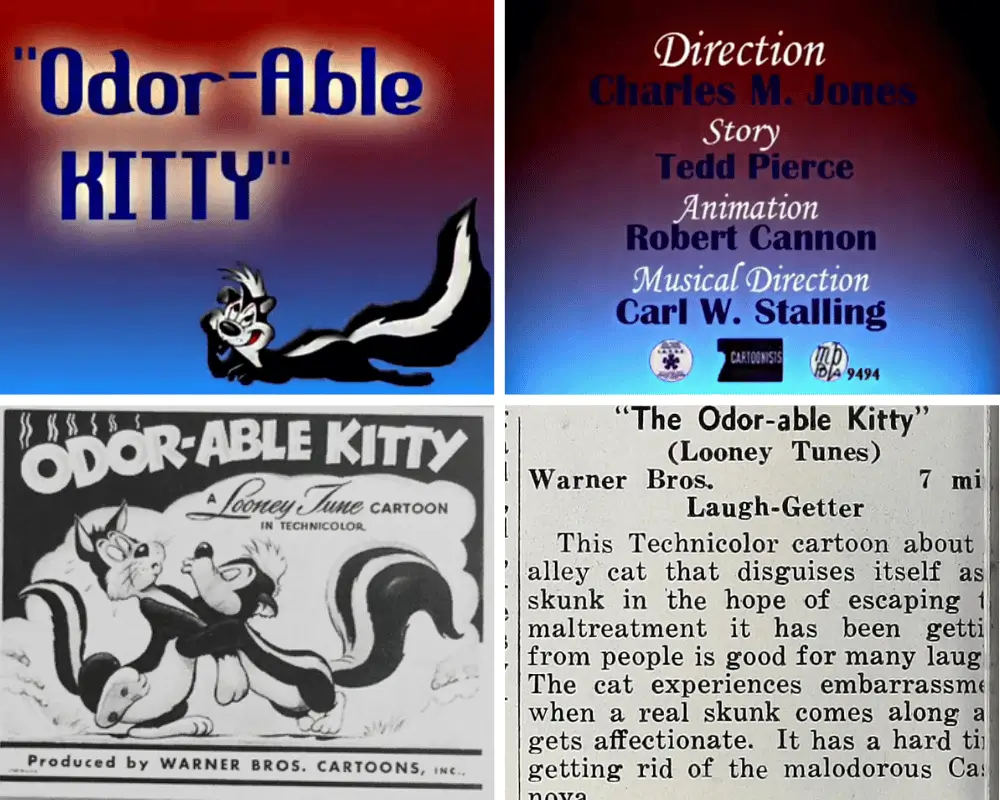
Odor-able Kitty reached theaters on January 6, 1945. Chuck Jones directed it from a story by Tedd Pierce, and the skunk was not even the lead.
The star is a battered alley cat. Kicked by butchers and chased by dogs, he paints a white stripe down his back – with limburger cheese and garlic for authenticity – so the whole town will finally leave him alone.
It works, right up until an amorous skunk mistakes him for the love of his life. Cue the hopping, the Franglais, and the kissing of one very unwilling arm.
Then comes the twist. The skunk is not French at all. His real name is Henry, the accent is an act, and his furious wife turns up with the kids to haul him home.
So the pursued party in short number one was a male cat, and the pursuer was a married American fraud. The formula stayed loose because nobody knew a star had arrived. In fact, Warner did not settle on the name Pepe Le Pew until Scent-imental Over You in 1947.
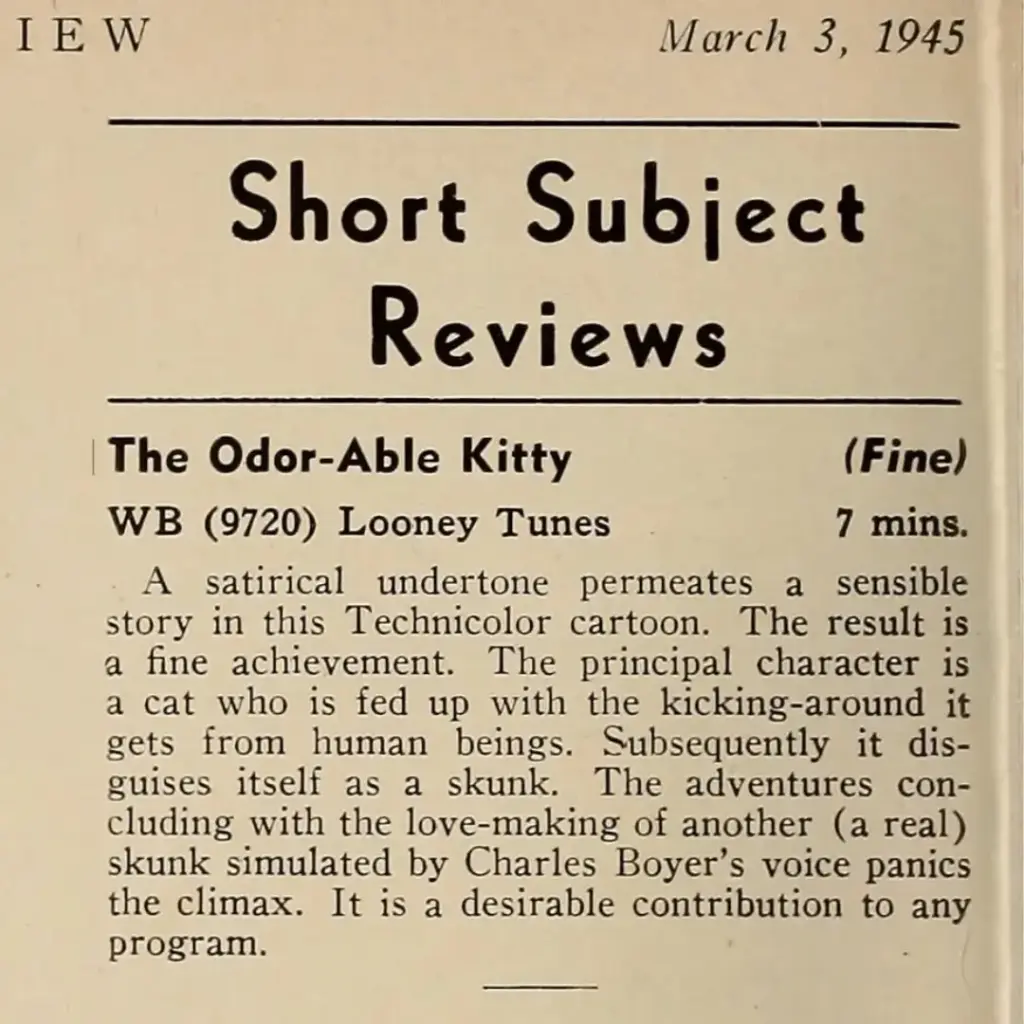
Showmen’s trade review
Chuck Jones Built Him From a Movie Star and a Coworker
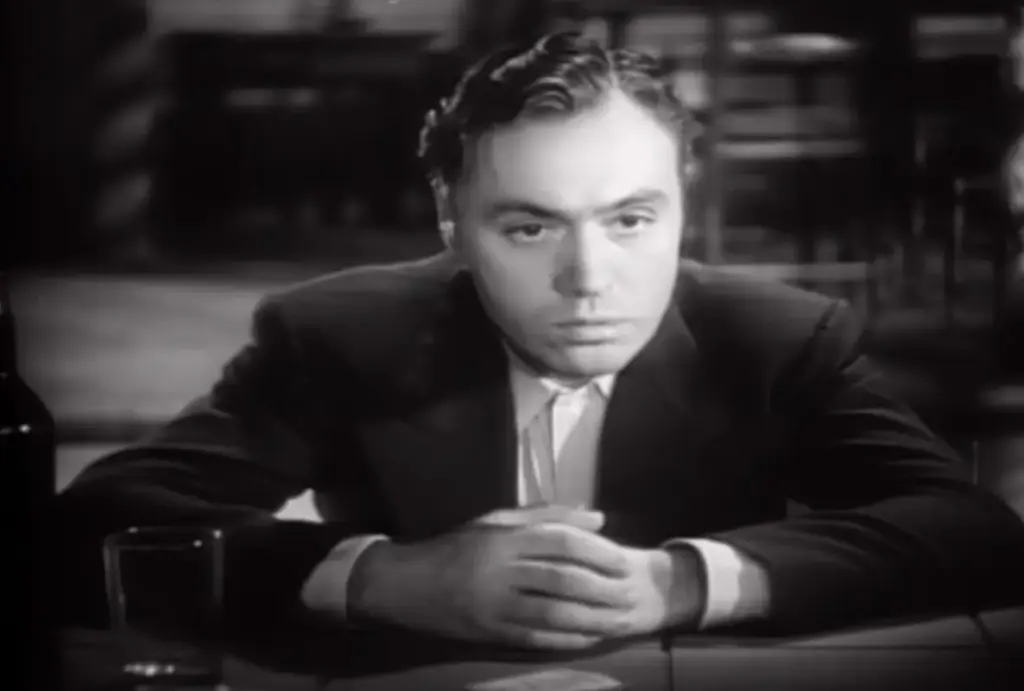
Two real men sit under the fur. The first came from the movies: Charles Boyer’s jewel thief Pepe le Moko in Algiers (1938), the suave screen Frenchman a generation of Americans grew up imitating. Pepe’s name, his purr, and his “cats-bah” all trace back to that performance – even though Boyer never actually says the come-with-me-to-the-Casbah line everyone remembers.
The second came from down the hall. Warner story man Tedd Pierce styled himself a ladies’ man, and Jones wrote in his memoir Chuck Amuck that Pierce could not imagine a woman turning him down and meaning it. The skunk was, in part, an office roast.
Jones later admitted a third ingredient in his follow-up book, Chuck Reducks: himself.
– Chuck Jones in Chuck Reducks, on writing his own shyness into a skunk with bulletproof confidence, via Cartoon Research
Mel Blanc built the voice off Boyer too, close to the fussy Professor LeBlanc he played on Jack Benny’s radio show. Studio producer Eddie Selzer reportedly grumbled that nobody would laugh at any of it.
The Formula Won an Oscar in 1950
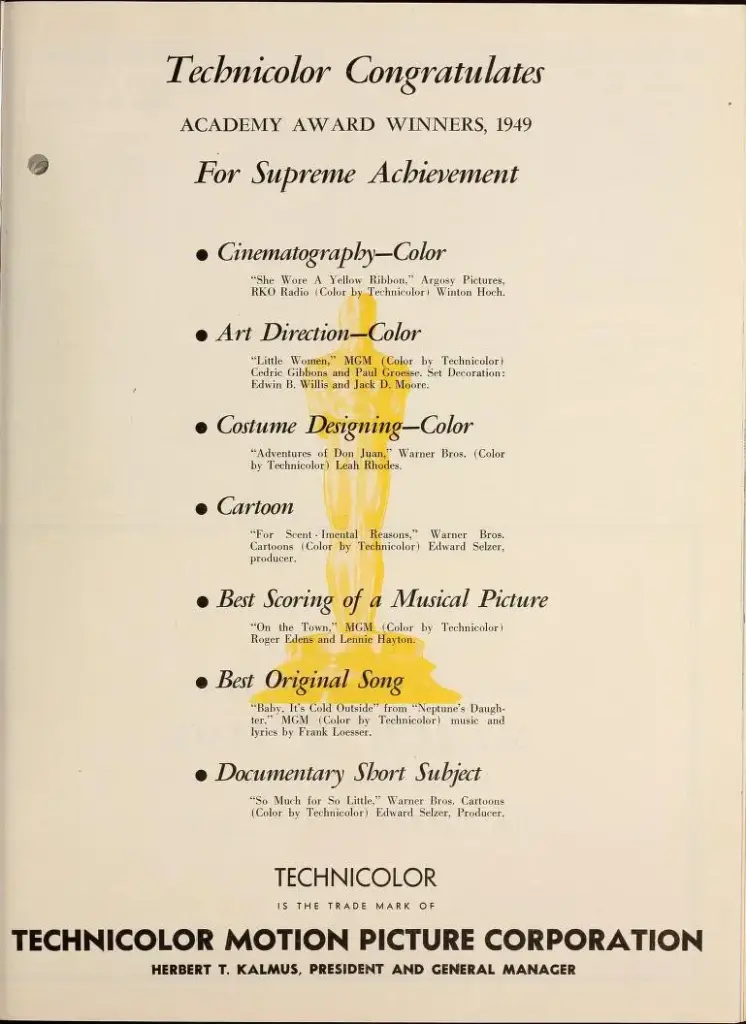
Selzer was wrong. For Scent-imental Reasons (1949) won the Academy Award for Best Animated Short, presented at the March 1950 ceremony, and the win locked the series template in place:
- A black cat picks up an accidental white stripe – wet paint, usually
- Pepe declares eternal love in cheerful Franglais
- She runs; he follows at a leisurely hop, certain this is all flirtation
- Her stated objection, inside the cartoon, is the smell – never the pursuit
- Pepe loses. Every time. He never notices.
The cat did not even have a name for years. Warner’s marketing department eventually christened her Penelope Pussycat, long after audiences knew the routine by heart.
Jones steered a run of some fifteen starring shorts through Louvre Come Back to Me! in 1962, and Mel Blanc voiced the skunk until his death in 1989. A relay of successors followed, from Maurice LaMarche in the 1996 Space Jam to Rene Auberjonois on The Looney Tunes Show.
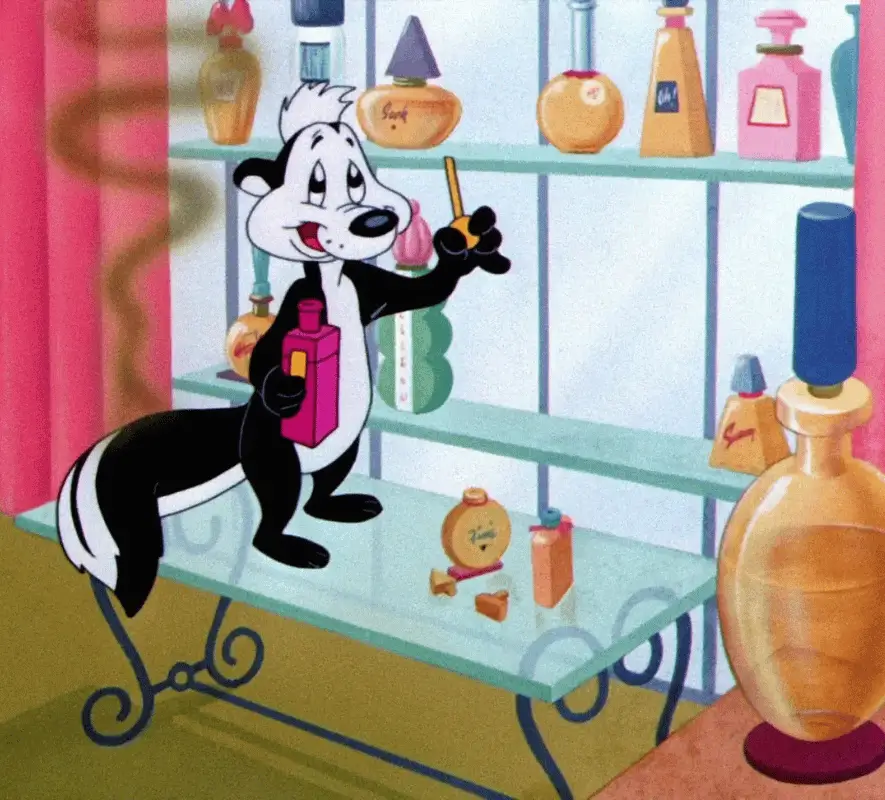
Did the Cartoons Ever Flip the Joke?
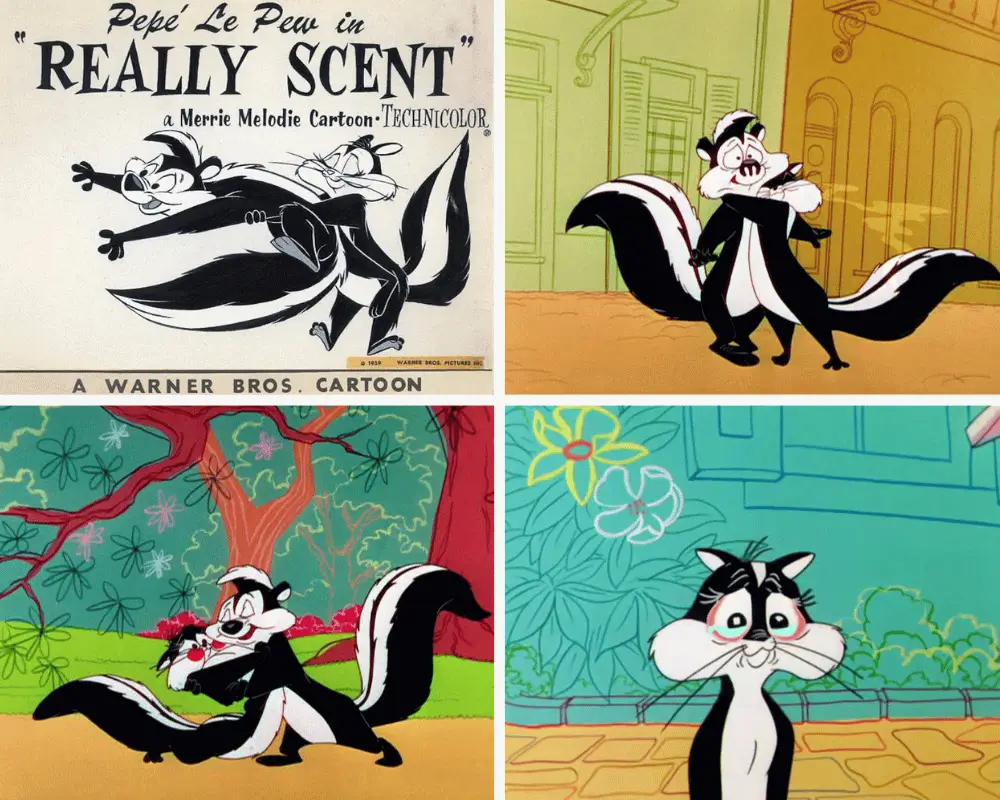
Yes.
The series was more self-aware than its reputation suggests. His debut target was a male cat in paint. Scent-imental Over You (1947) had him wooing a chihuahua wrapped in a skunk pelt.
Then Really Scent (1959) – the one classic entry Abe Levitow directed instead of Jones – inverted the whole machine: a cat born with white markings actually wants a skunk of her own, the smell is the only obstacle, and by the finale she is the one doing the chasing.
- Even the farewell short, Louvre Come Back to Me! (1962), plays out as a love triangle, with a tomcat named Pierre competing for Penelope and losing every round to the smell.
The writers clearly understood the gag ran in both directions.
What never flipped was the baseline: pursuit as comedy, refusal as a technicality.
How the Same Gag Reads in 1945 and 2026
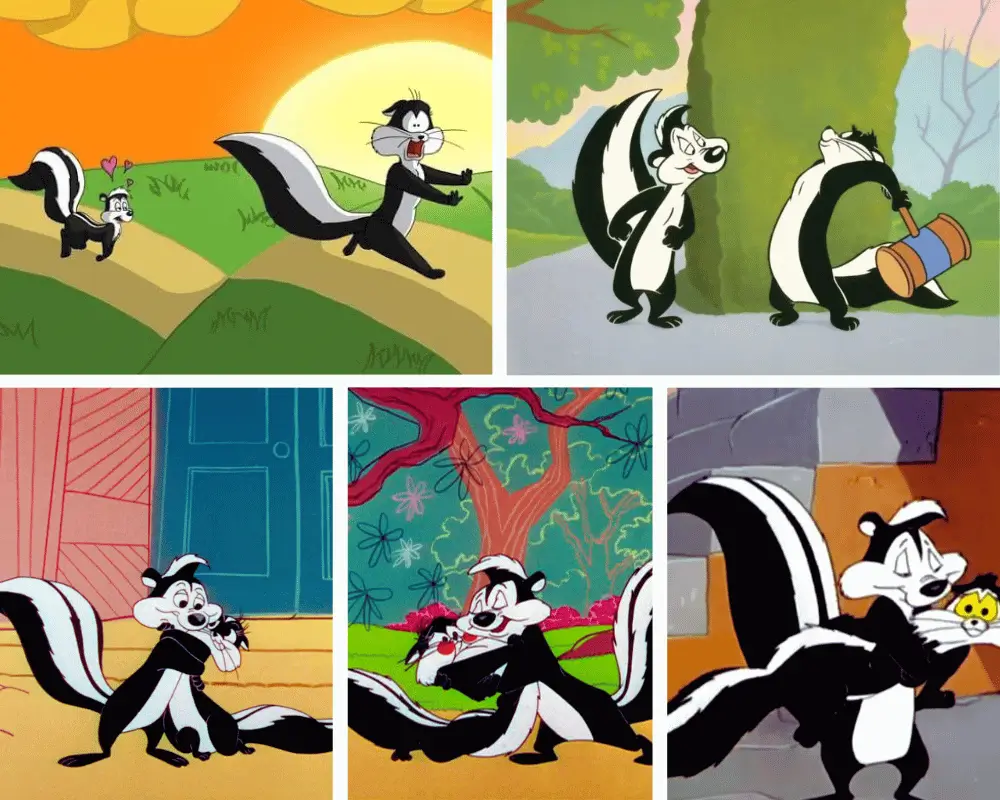
Generations met him in reruns – the world I covered in my Saturday morning cartoons guide – where the chase read as pure vaudeville. Audiences in 1949 watched a movie-Frenchman parody exaggerated past absurdity and failing forever. Audiences now often see something else.
The table below is the whole argument in miniature.
| The beat | How it was built (1945-1962) | How it often reads now |
|---|---|---|
| The pursuit | A vaudeville chase, the engine of every short | The textbook clip in a consent conversation |
| The accent | An affectionate Charles Boyer parody | A national stereotype played for laughs |
| Penelope’s struggle | A gag obstacle – her problem is the smell | A “no” ignored for seven straight minutes |
| The arm kisses | Stock movie-Casanova shorthand | Unwanted contact, repeated after refusal |
| The ending | Pepe loses and learns nothing – the joke is on him | A footnote next to the chase itself |
The modern reading did not start in 2021, either.
- Dave Chappelle was calling the skunk a rapist onstage in his 2000 special Killin’ Them Softly. During the 2021 blowup, one employment lawyer chimed in to say she screens Pepe clips to teach managers what “unwelcome” means – the same footage, rebooked as an HR training aid.
The trope itself kept evolving too.
Tiny Toon Adventures gender-flipped the entire template in 1990 with Fifi La Fume – I traced her side of the story in my Fifi La Fume profile – which shows the chase formula outlived its inventor by decades.
Was Pepe Le Pew a Villain?
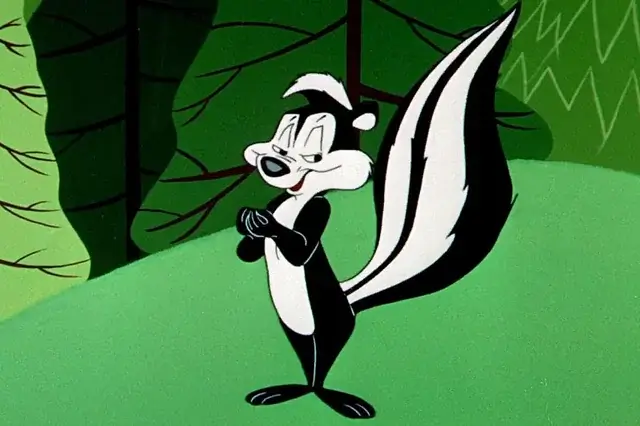
No.
And the distinction matters, because it explains why he aged harder than characters who behave far worse.
A cartoon villain – a Gaston, a Bluto – knows the other person objects and does not care. The story frames him as wrong, so audiences in any decade know where to stand.
- Pepe belongs to a different comic species: the oblivious, tone-deaf romantic. He genuinely cannot conceive that his attention is unwelcome. The cartoons never punish the pursuit itself; they only let it fail, and they invite you to find the failure adorable.
Critics argue that sympathetic framing is the whole problem. Villainy comes labeled, while obliviousness comes packaged as charm, and charm is what children absorb. Defenders answer that the label is right there on screen – Pepe never once wins, and kids read clowns as clowns, not as instruction manuals.
Both points can be true at once.
- He was never written as a predator.
- He was written as a fool, and the fool’s behavior is what stopped being funny.
The Space Jam Scene Cut
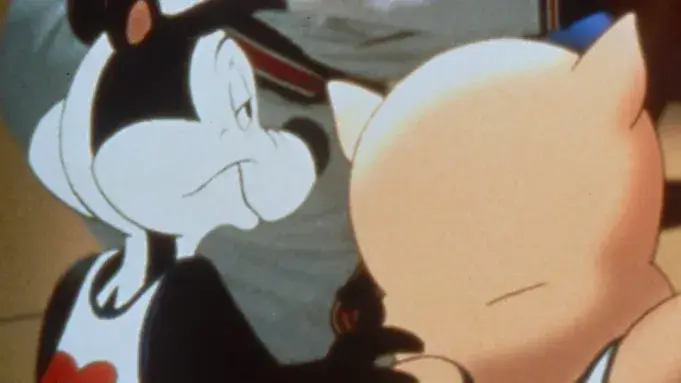
Warner actually filmed Pepe’s reckoning. In June 2019, original director Terence Nance shot a black-and-white Casablanca parody for Space Jam: A New Legacy, with Jane the Virgin actress Greice Santo at the bar and Pepe cast as the bartender who will not take a hint.
As Deadline reported, the scene played like a formal correction of the character:
- Pepe kisses Santo’s arm; she slams him into a chair, pours her drink on him, and slaps him spinning on his stool
- LeBron James and Bugs Bunny arrive, hunting for Lola
- Pepe admits Penelope Pussycat has taken out a restraining order against him
- LeBron tells him flatly that he cannot touch other Tunes without their consent
Santo, who has spoken publicly about surviving harassment, wanted that lesson out in the world.
– Greice Santo’s spokesperson, on why she wished the scene had survived, via Deadline
Then Malcolm D. Lee replaced Nance, the production dropped the scene, and the animation never got made. People who saw a rough cut in late 2020 found no skunk anywhere in it. Santo’s camp later floated a $100,000 offer for the footage; Warner’s lawyers answered that soliciting studio property is a crime, and the offer got reframed as a bid to buy it from the studio directly.
The 2021 Column Arrived After the Cut
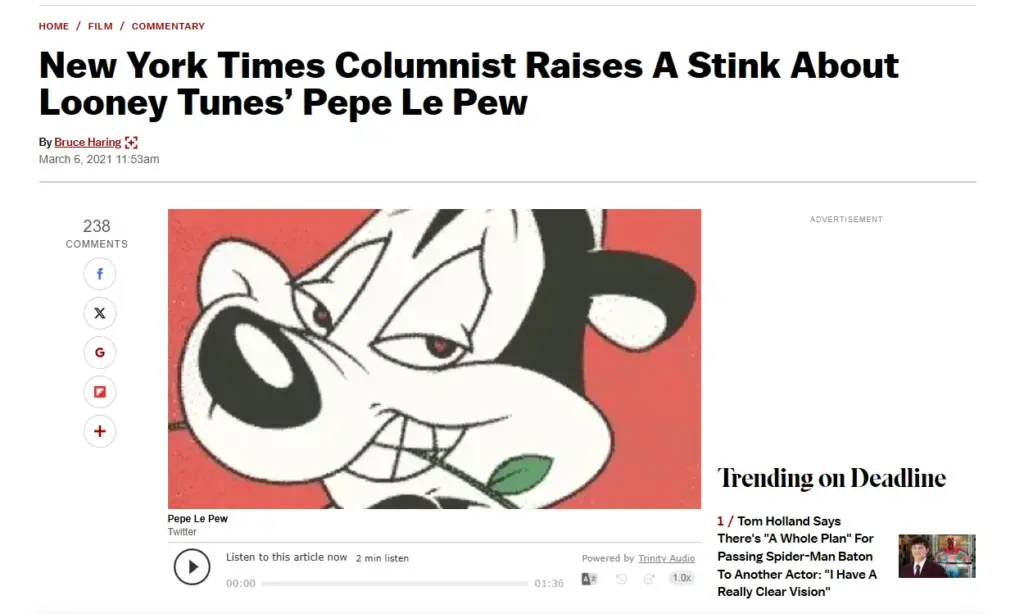
On March 3, 2021, New York Times columnist Charles M. Blow published “Six Seuss Books Bore a Bias,” a piece mostly about the imagery that got six Dr. Seuss titles pulled from print. One line said the skunk of his childhood “normalized rape culture.”
The backlash arrived fast, so Blow expanded his case on Twitter three days later. His argument: Pepe grabs and kisses a stranger repeatedly without consent, holds on while she struggles, and in one short locks a door to keep her from leaving.
The same column flagged Speedy Gonzales as a stereotype, for the record.
Within days, Deadline and The Hollywood Reporter broke the news that Pepe was out of Space Jam: A New Legacy – and out of Warner’s current film and TV plans entirely.
The two stories fused in the public mind almost instantly: columnist complains, studio caves.
Except the timeline runs the other way. The scene had been cut roughly a year earlier, during the director change, for reasons Warner never explained. The internet fired a skunk the studio had already quietly benched.
Did Warner Bros. Ban Pepe Le Pew?
Not officially. To this day, Warner Bros. has issued no statement retiring, banning, or condemning the character – which is its own kind of answer.
The absence did the talking instead. He sat out the HBO Max series Looney Tunes Cartoons. A solo Pepe feature that kicked around development in the 2010s never surfaced again.
- New Legacy shipped without him in July 2021, while the Droogs from A Clockwork Orange collected courtside cameo seats – an inconsistency plenty of critics enjoyed pointing out.
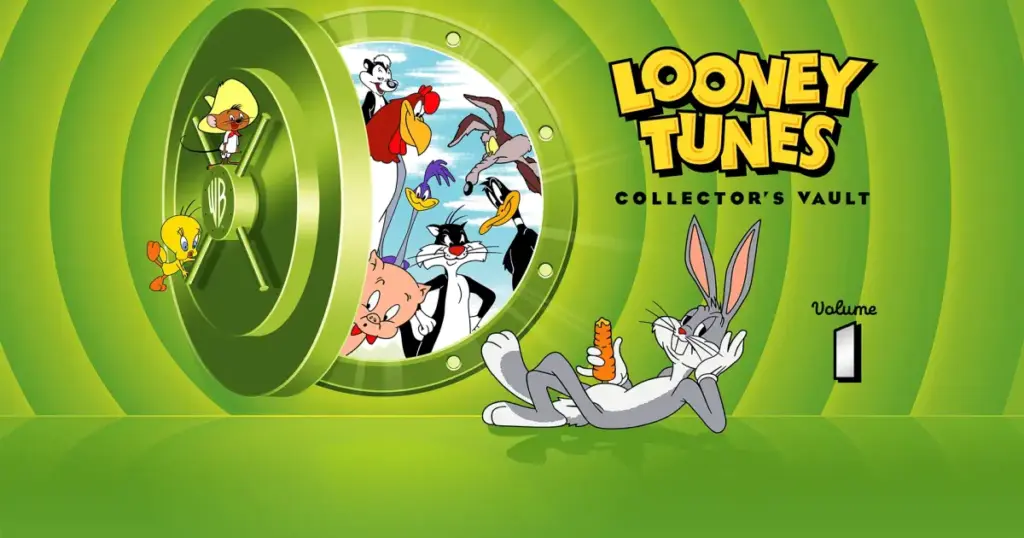
Then the archive door reopened. Warner Archive’s Looney Tunes Collector’s Vault Volume 1 Blu-ray, released in June 2025, returned Pepe shorts to official circulation after fans noticed his absence from four straight Collector’s Choice volumes.
Warner library historian George Feltenstein said it plainly: “Pepe has not been canceled.”
Still, do not confuse the vault with the studio. That same March, every classic 1930-1969 short left the Max streaming service in a business sweep toward adult and family programming. As of mid-2026 the picture holds: Pepe is on disc, off streaming along with the rest of the classics, and absent from every new production.
Five Ways Studios Handle a Character That Ages Out
Pepe’s quiet shelf is only one play in a much older Warner playbook. Set the five side by side and the pattern gets clearer:
| The play | Example | How it went |
|---|---|---|
| Lock the vault | The Censored Eleven (1968) | Eleven shorts with racist content pulled from distribution; never officially reissued |
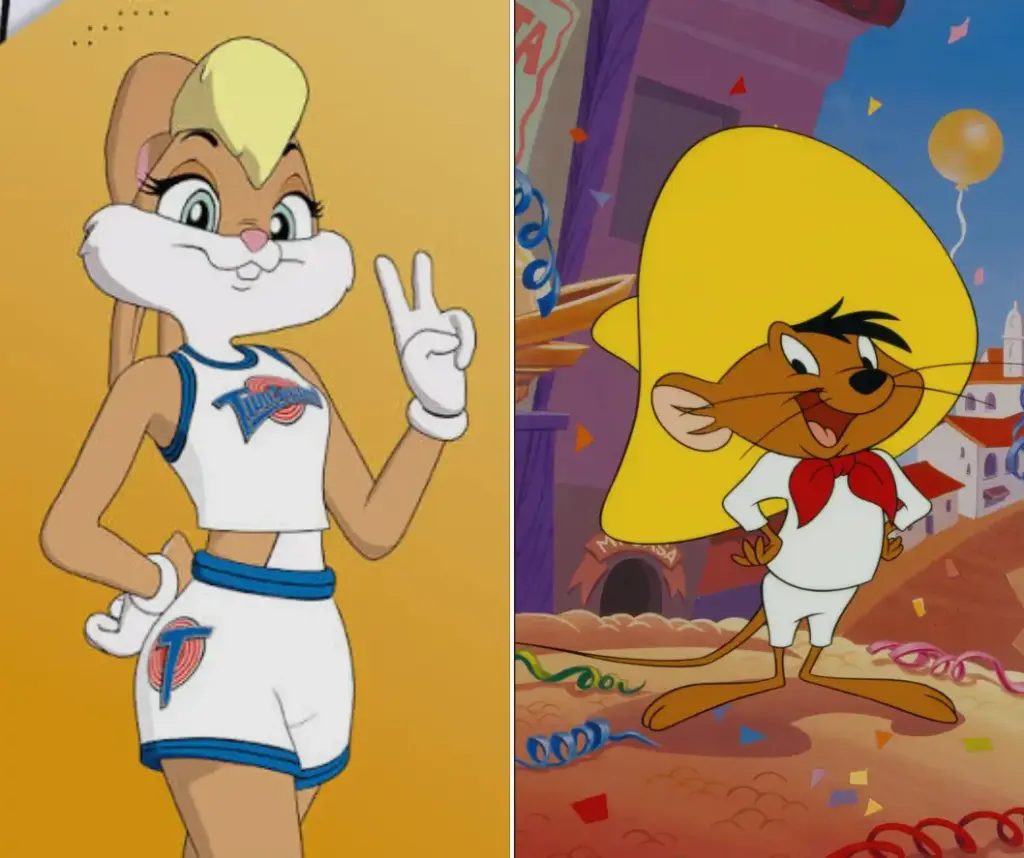
| Pause, then return | Speedy Gonzales (1999-2002) | Cartoon Network shelved his shorts over stereotype concerns; Latino fans and LULAC called him a cultural icon, and he came back |
| Add context, keep the film | Golden Collection disclaimers (2000s) | DVDs open with a products-of-their-time warning – Whoopi Goldberg delivers it on camera in Volume 3 – instead of edits |
| Retool the character | Elmer Fudd (2020), Lola Bunny (2021) | The rifle vanished from Looney Tunes Cartoons; Lola was redesigned for New Legacy |
| The quiet shelf | Pepe Le Pew (2021-present) | No statement, no edit, no context card – just absence from new work |
Speedy is the sharpest contrast, because he appears in the very film Pepe was cut from. Blow’s column criticized both characters, but the communities involved answered in opposite directions. Mexican and Mexican-American audiences largely claimed the mouse as their own, and comedian Gabriel Iglesias – the first Mexican actor to voice him – met the debate in character: “U can’t catch me cancel culture.”
Nobody was ever going to mount that defense of Pepe’s behavior. France did not adopt him. The gag had no constituency, so the quietest option cost Warner nothing.
Lola shows the retool path instead. Director Malcolm D. Lee reworked her design for New Legacy, telling Entertainment Weekly it mattered “to reflect the authenticity of strong, capable female characters.” The full story of that redesign is in my Lola Bunny deep dive.
Where That Leaves the Skunk
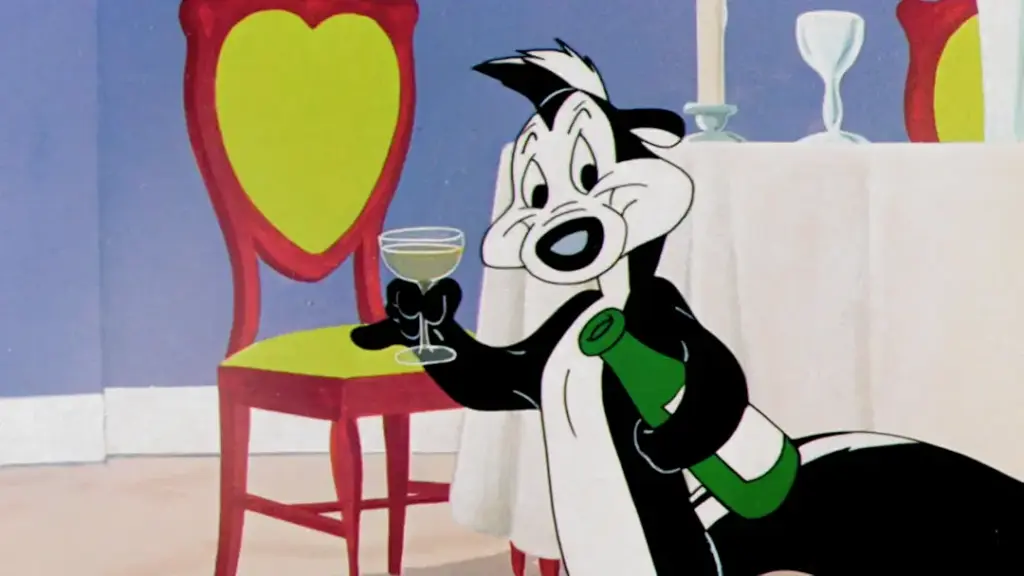
Here is where I land after a week in the archive.
Pepe Le Pew was built as a joke about delusion – a fraud in short number one, a fool in every short after – and on those terms the cartoons still work as time capsules of what 1949 found hilarious. At the same time, the modern critique is simply accurate about what happens on screen: a stranger says no for seven minutes and the music stays cheerful.
Both readings hold, which is why the argument never resolves.
- What actually happened to him is more interesting than either camp’s version. A column did not cancel him; his own studio benched him a year earlier, without explanation, then partially rehabilitated him on Blu-ray once the noise died down.
Warner now treats him the way institutions treat most awkward inheritances: preserved, unpromoted, and available to anyone who goes looking.
That may be the honest ending for a character whose entire bit was failing to read the room. The room changed. The skunk, frozen at 1962, never could.
Read next: my Fifi La Fume profile for the trope’s strange second life, or my guide to 50s cartoons for the world that made Pepe a star.

The 1950 Academy Award Announcements – For Scent-imental Reasons won the 1949 Academy Award for Best Animated Short. However, period trade papers reveal a famous piece of studio drama: the Oscar wasn’t awarded to director Chuck Jones, it went to Warner Bros. producer Edward Selzer.
I’ll do a write up later on how Hollywood initially treated directors vs. producers during the Golden Age of Animation