
The 1950s were the decade cartoons moved from the movie theatre into the living room.
At the beginning of the decade, most animation still meant theatrical shorts starring characters such as Bugs Bunny, Popeye, Woody Woodpecker, and Mighty Mouse. Television needed a different production model. Weekly broadcasts could not afford the thousands of drawings used in a polished cinema short.
Studios responded with limited animation, short serialized stories, repackaged film libraries, and programs built specifically for local television stations.
This ranking covers 20 influential 50s cartoons and television packages. They are ordered by lasting impact rather than by animation quality or personal nostalgia.
How the ranking works
- Every ranked entry began between 1950 and 1959
- Original television cartoons and packages of theatrical shorts are both included
- Influence matters more than visual quality
- A separate bonus section covers one show often misfiled under the 1950s that actually debuted in 1960
How Cartoons Were Made in the 1950s
Nearly every development on this list begins with the cost of television animation.
- Theatrical animation was expensive: A seven-minute cinema short could require thousands of individual drawings
- Television budgets were smaller: Networks and local stations could not pay theatrical production costs
- Limited animation reduced movement: Studios held poses, reused backgrounds, and moved only part of a character
- Writing and voices became more important: Strong dialogue could carry scenes with very little animation
- Syndication opened another market: Producers could sell the same short episodes directly to stations across the country
Limited animation did not simply make the pictures cheaper. It changed the kind of stories television cartoons told.
Dialogue, recurring personalities, cliffhangers, and repeatable comedy formats became more valuable than constant movement.
That trade-off launched the television-animation business. My guide to Hanna-Barbera cartoons follows the studio that eventually turned the method into an industry.
The 20 Most Influential 50s Cartoons, Ranked
Bucky and Pepito (1959)
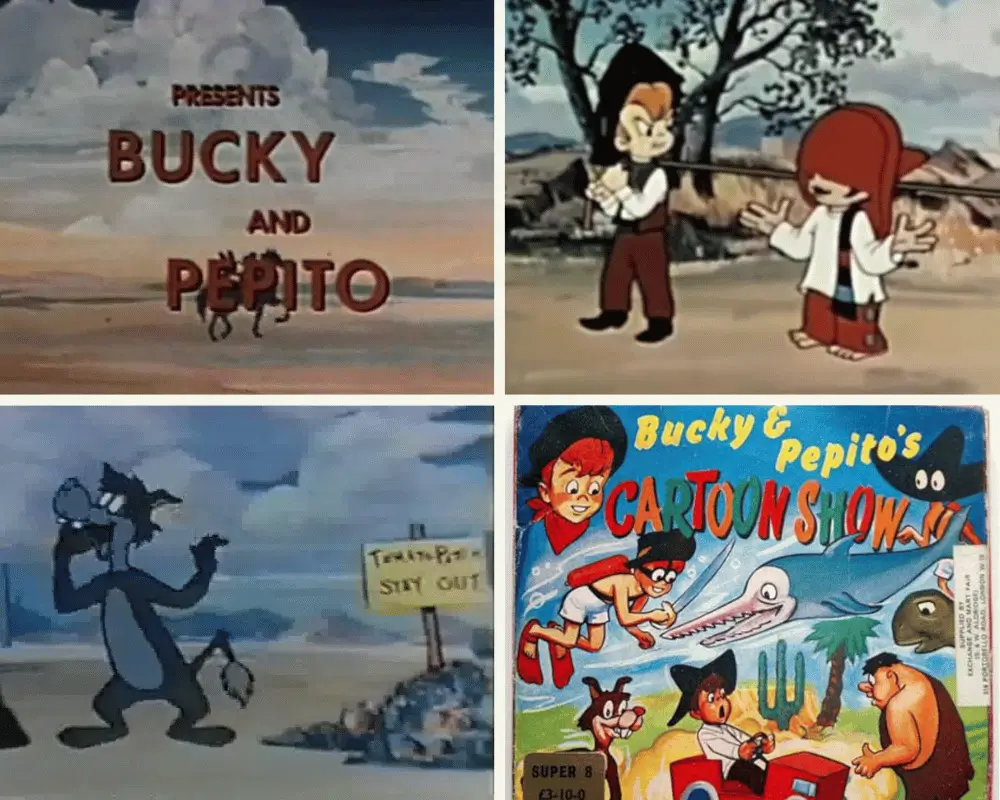
While it certainly isn’t influential in the sense of being the ‘best,’ Bucky and Pepito has earned a permanent spot in animation history. It is frequently analyzed in historical books and constantly pops up in media discussions as the definitive benchmark for the worst cartoon ever made.
Its influence doesn’t stem from artistic merit, but from its legacy of infamy.
- The shorts were produced for television syndication.
- The animation was extremely limited, even for the era.
- The series is now discussed more often as a production cautionary tale than as entertainment.
The Adventures of Paddy the Pelican (1950)
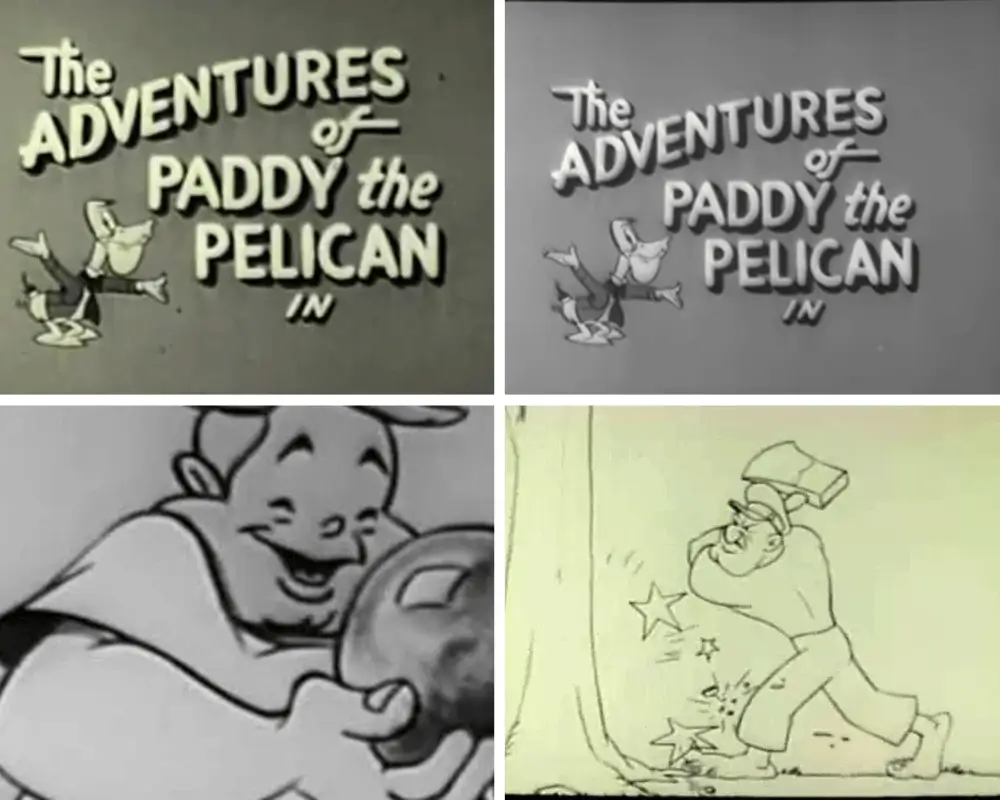
Paddy the Pelican was one of the earliest animated characters created for American television.
- The program appeared on ABC in 1950
- It was produced in Chicago rather than by a major Hollywood studio
- Very little footage is readily available today
Paddy arrived at almost the same time as Crusader Rabbit, but it did not find the same workable balance between cost and storytelling.
Its historical value comes from showing how experimental television animation still was. Producers knew audiences wanted cartoons. They had not yet learned how to make them consistently.
The Adventures of Spunky and Tadpole (1958)
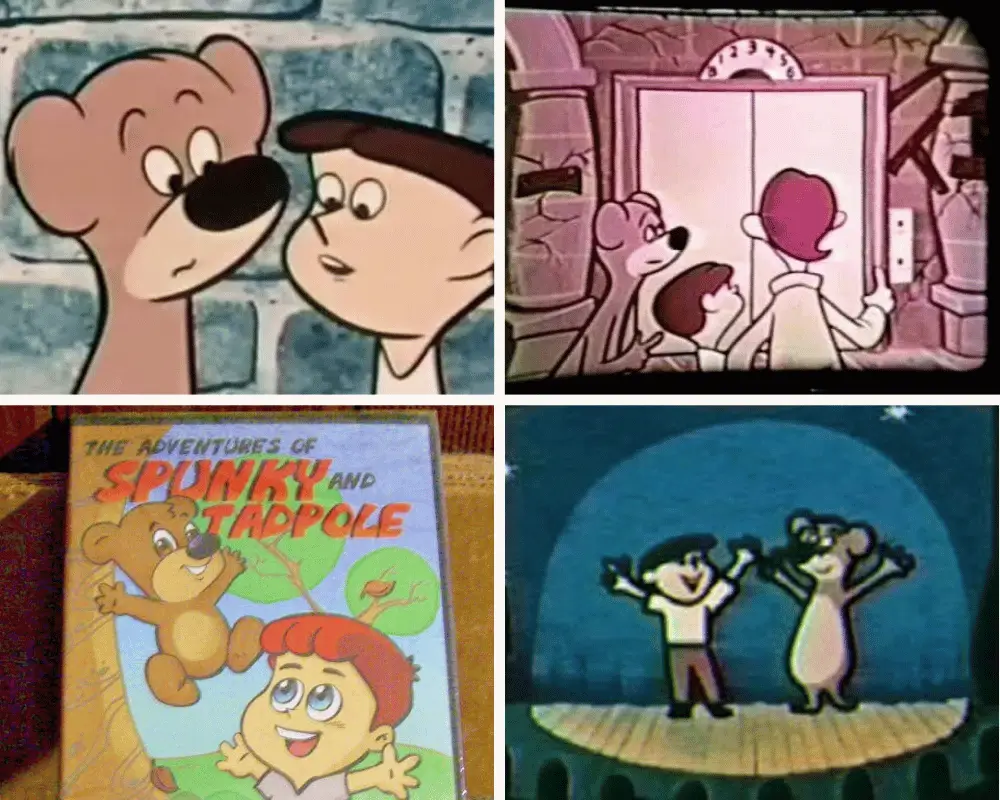
A boy named Spunky and his talking bear Tadpole travel through short cliffhanger adventures.
- The series was sold directly to local stations
- Episodes were designed to play as continuing serials
- The program came from a small independent production operation
Spunky and Tadpole represents the syndication side of cartoons from the 1950s.
Small studios did not need a national network order. They could produce a library of short episodes and sell packages market by market.
Captain Pugwash (1957-1966)
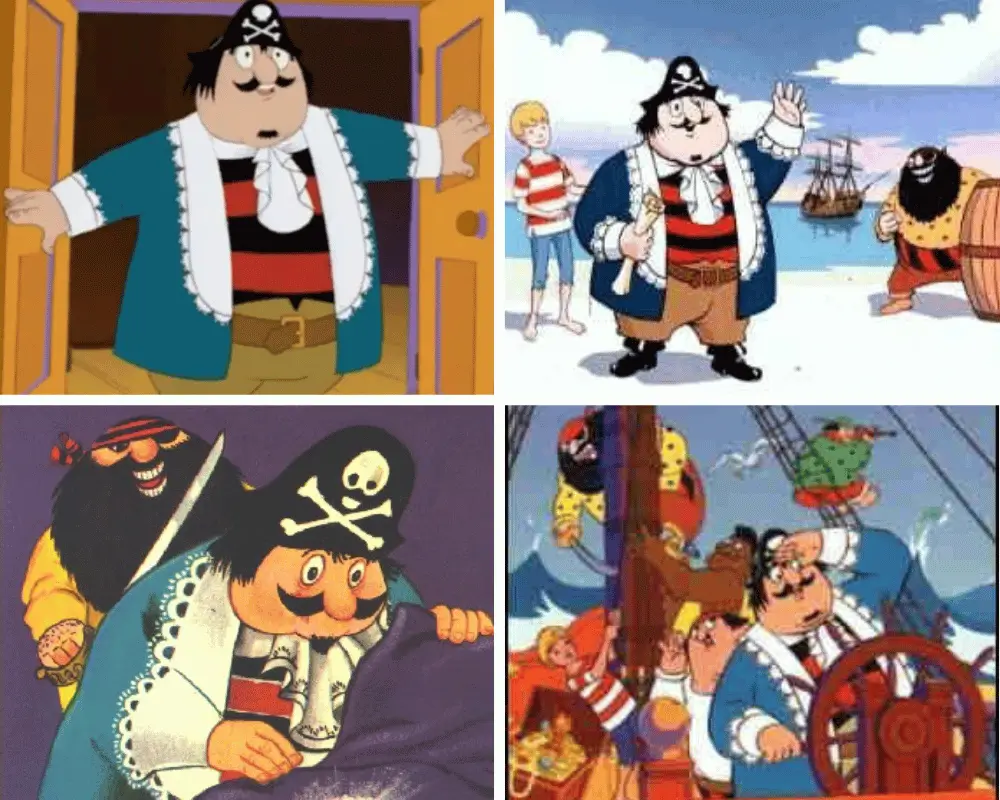
Captain Pugwash is a cowardly British pirate who commands the Black Pig and repeatedly runs into Cut-Throat Jake.
- John Ryan created the character for comics and books
- The television series began on the BBC in 1957
- Cardboard cutouts were moved with hidden levers against painted backgrounds
The movement was filmed in real time rather than one frame at a time. That gave the show an unusual look somewhere between animation, puppetry, and an illustrated storybook.
John Ryan and his small team proved that memorable children’s television did not require conventional cel animation. The frequently repeated claims about rude character names are false and were successfully challenged by Ryan.
Hergé’s Adventures of Tintin (1957)
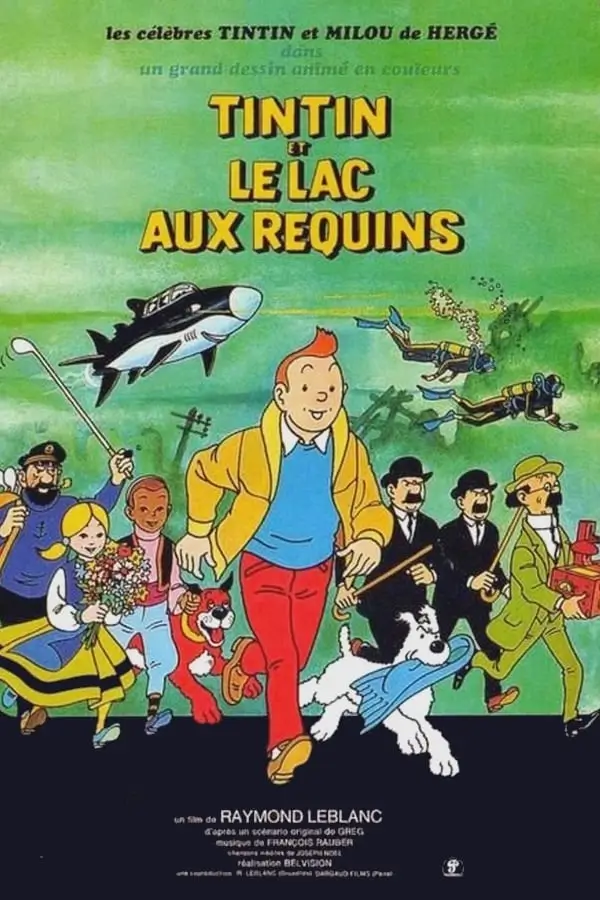
Belvision brought Tintin, Snowy, Captain Haddock, and other characters from Hergé’s comics into short animated television chapters.
- The production was based in Belgium
- Stories were adapted from existing Tintin albums
- The adventures were divided into short serialized installments
The adaptation took considerable liberties with the books, but it was an early attempt to turn a major European comic property into regular television animation.
It helped establish a model that later Franco-Belgian adaptations would follow with more resources and greater fidelity.
Mighty Mouse Playhouse (1955-1967)
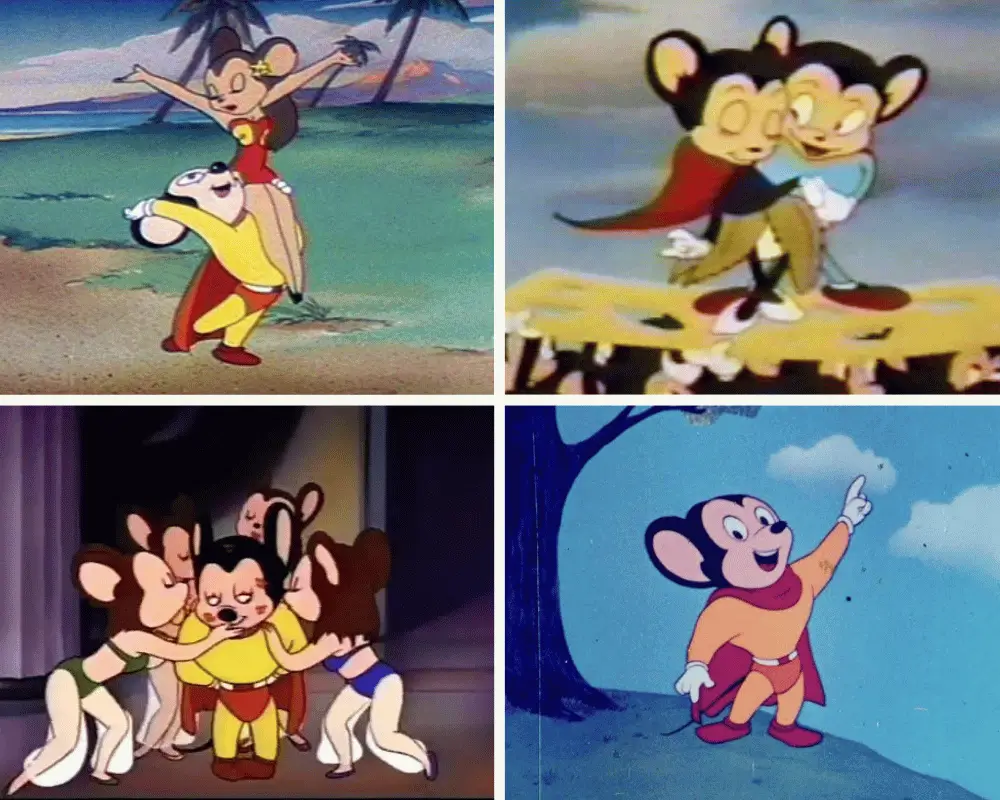
Mighty Mouse Playhouse repackaged Terrytoons theatrical shorts for CBS on Saturday mornings.
- It premiered on December 10, 1955
- The program introduced older Mighty Mouse shorts to a much larger television audience
- It remained on CBS for more than a decade
The show did not invent Saturday morning children’s television, but it helped prove that a national network could build a durable weekend audience around cartoons.
A contemporary Time listing placed Mighty Mouse Playhouse on CBS in December 1955. Its long run helped make Saturday morning a natural home for animation.
Tom Terrific (1957-1959)
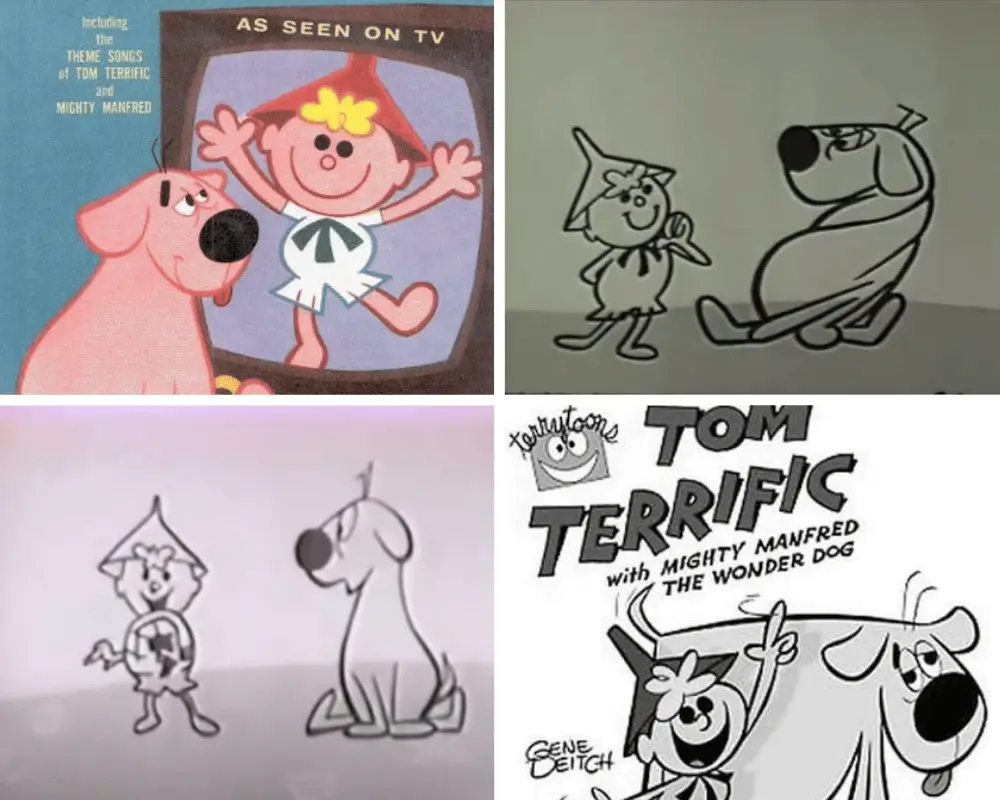
Tom Terrific is a young hero in a funnel-shaped hat who can transform into almost anything.
- Terrytoons produced the shorts for Captain Kangaroo
- Stories aired in serialized chapters
- The drawings were intentionally simple and sketchlike
The minimalist design was not merely a budget problem. It became the show’s visual identity.
Tom Terrific demonstrated that a strong idea and clear silhouette could hold a young audience without elaborate backgrounds or fluid motion.
Matty’s Funday Funnies (1959)
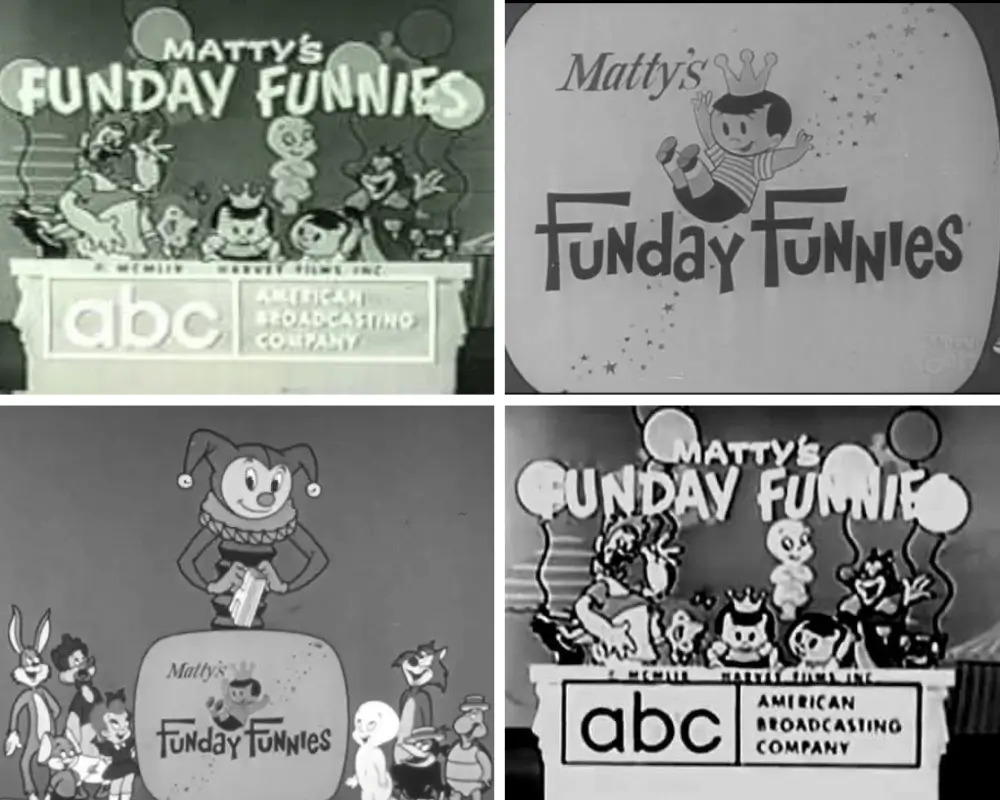
This ABC cartoon block used Mattel’s mascots Matty Mattel and Sister Belle to present older Famous Studios shorts.
- The program premiered in 1959
- It included Casper, Baby Huey, and Herman and Katnip cartoons
- Mattel sponsored the show and appeared directly in its presentation
The connection between toy advertising and children’s programming would become much stronger in later decades.
Matty’s Funday Funnies is an early example of a toy company using a cartoon block to place its brand beside the entertainment itself.
The larger history is covered in my article about Saturday morning cartoons.
Clutch Cargo (1959)
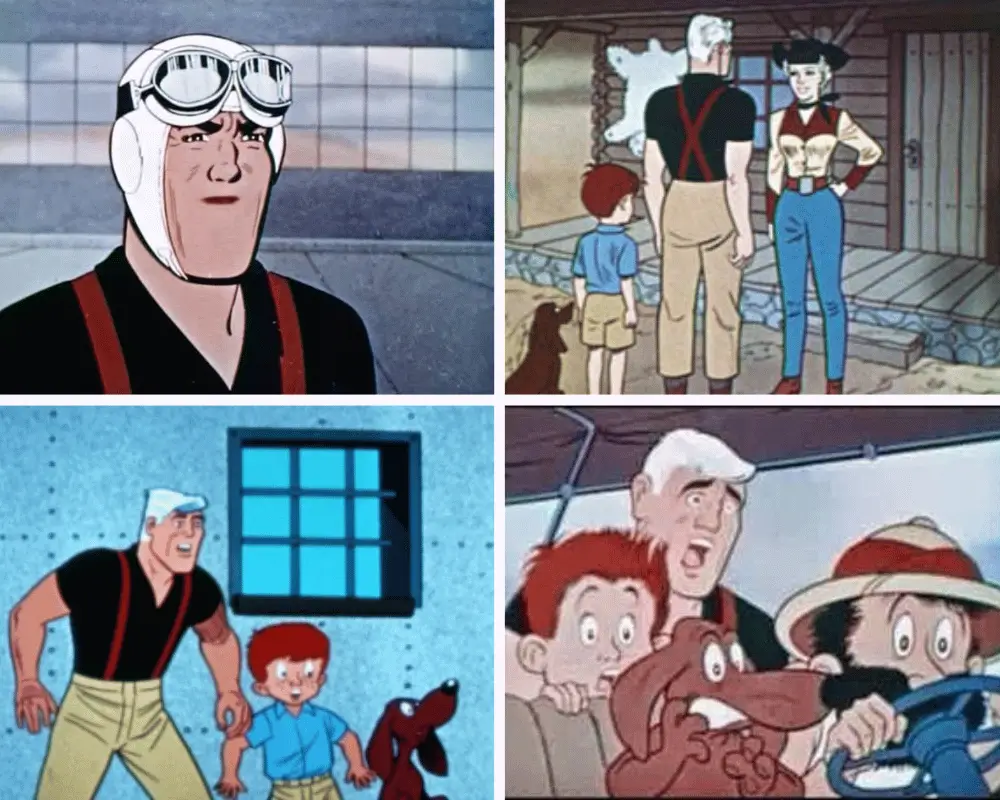
Clutch Cargo is an adventure pilot who travels with Spinner, Paddlefoot, and a rotating cast of allies.
- The episodes used extremely limited movement
- Syncro-Vox placed filmed human mouths over still character drawings
- The unusual technique became more famous than the plots
The moving lips saved animators from drawing mouth shapes for every line.
The result remains instantly recognizable and slightly unsettling. Later comedy programs repeatedly parodied the effect because no other television cartoon looked quite like it.
Felix the Cat (1958)
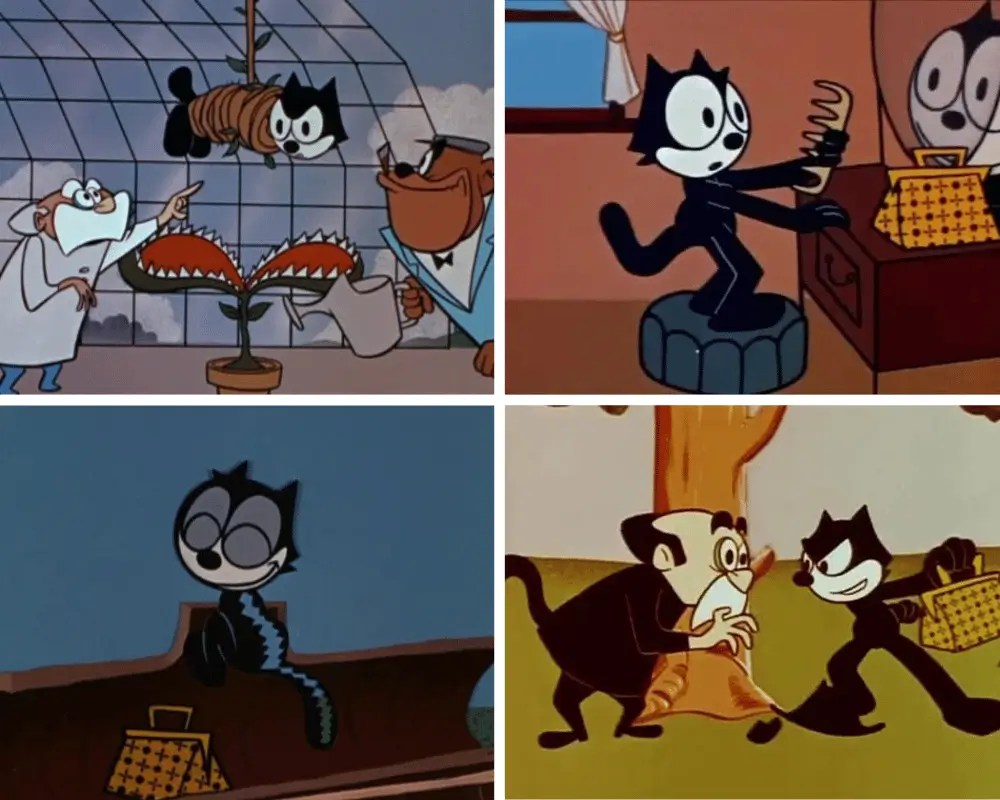
Joe Oriolo rebuilt the silent-era cartoon star for television.
- Felix gained the Magic Bag of Tricks
- The Professor, Rock Bottom, and other recurring villains joined the cast
- A catchy theme song helped define the new version
This was not a simple revival of the 1920s Felix.
The television series gave him a new mythology designed for short, repeatable adventures. It proved an animation character could be substantially reinvented for another medium and generation.
Felix’s earlier career appears in my guide to the world of silent cartoons.
Winky Dink and You (1953-1957)
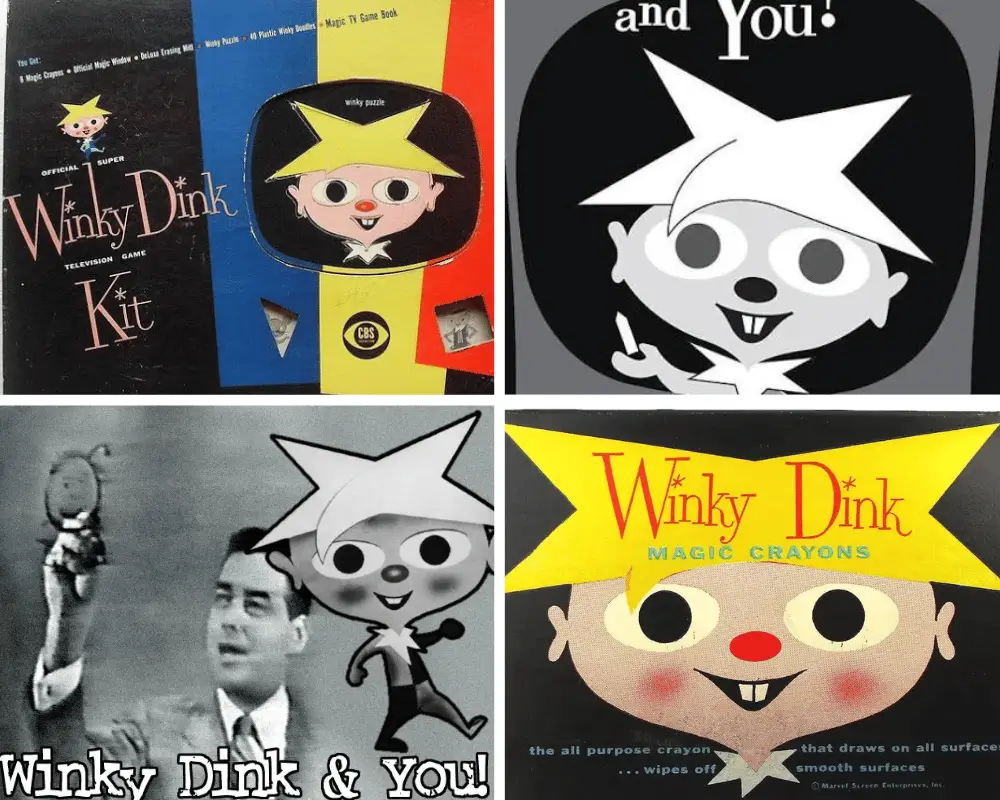
Winky Dink and You asked children to draw on a transparent plastic sheet placed over the television screen.
- Viewers completed paths, bridges, and objects during the story
- The kit included a vinyl screen and special crayons
- Children who skipped the screen sometimes drew directly on the television glass
The program turned television viewing into an activity rather than a completely passive experience.
It is often described as an early form of interactive television. That wording is more useful than calling it definitively the first, because other experimental audience-participation programs also existed.
Popeye the Sailor on Television (1956)
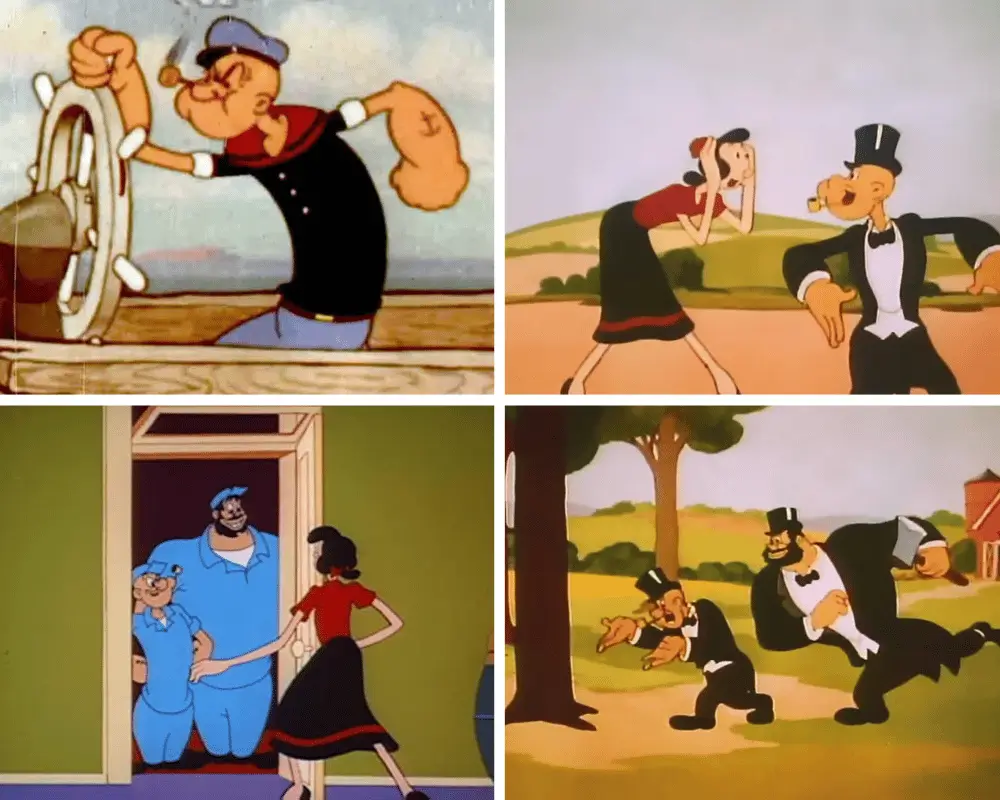
This was not a newly animated series. It was the television arrival of Paramount’s theatrical Popeye library.
- Associated Artists Productions acquired the shorts in 1956
- Local stations built hosted programs around the cartoons
- Popeye became one of television’s most watched cartoon characters
The ratings showed broadcasters that old theatrical cartoons could become valuable television libraries.
Cartoon Research’s history of Popeye’s television syndication explains how strongly the package performed and why it encouraged demand for new cartoons made directly for TV.
The Woody Woodpecker Show (1957)
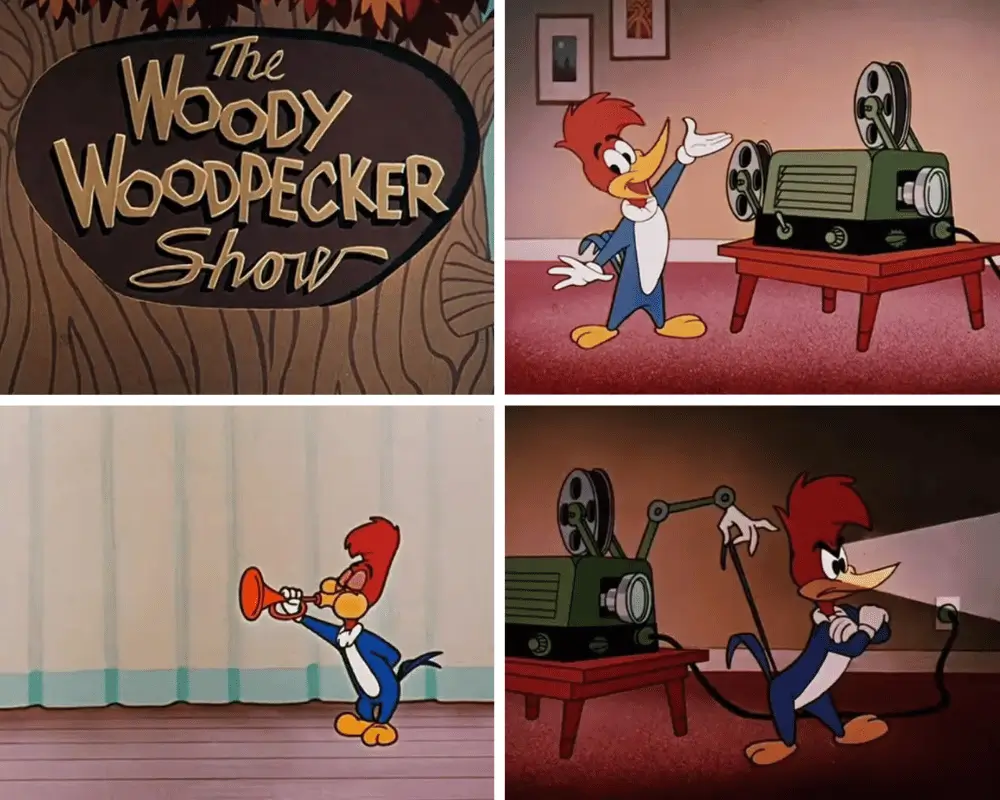
Walter Lantz packaged older theatrical cartoons with new introductions and educational live-action material.
- The program debuted on ABC in October 1957
- Lantz appeared in “A Moment with Walter Lantz” segments
- The host pieces explained aspects of animation production
The format gave stations a television show without requiring an entirely new half hour of animation each week.
It also introduced young viewers to how cartoons were drawn, recorded, and photographed.
Colonel Bleep (1957)
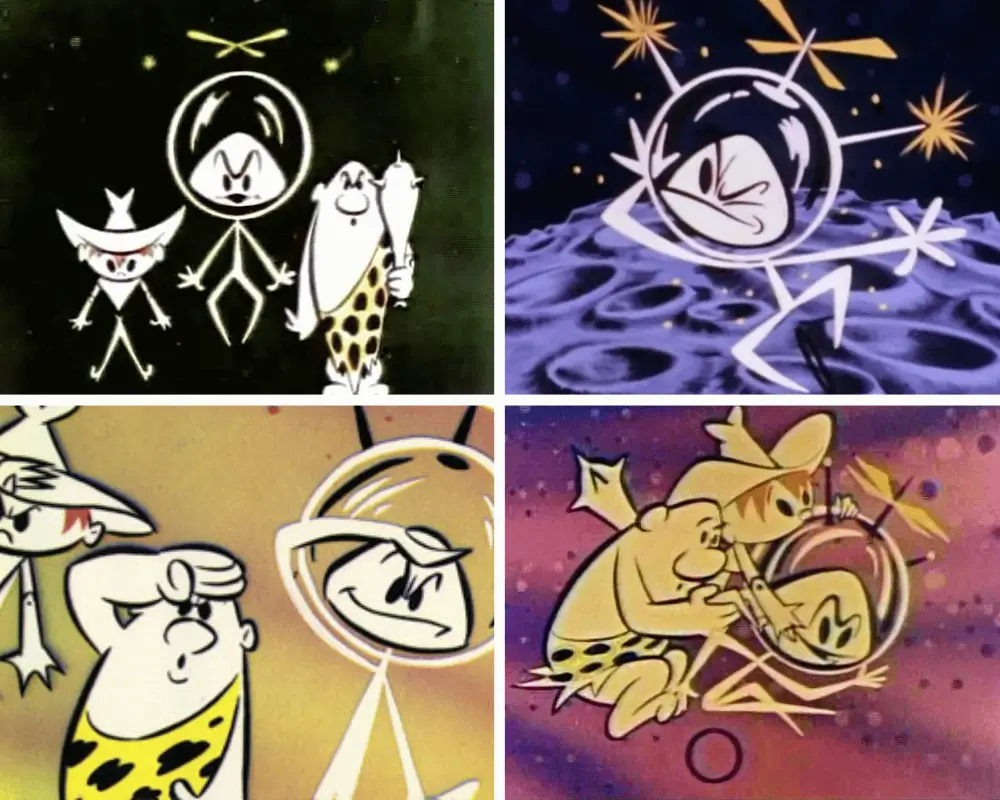
Colonel Bleep is an interplanetary agent who operates from Zero Zero Island with Squeak and Scratch.
- The series was produced by Soundac in Florida
- Episodes were filmed in color on 16mm
- The movement was highly limited and carried by narration and sound effects
Colonel Bleep is widely identified as the first animated series produced in color specifically for television.
Director Jack Schleh told animation historians that this was a deliberate production decision, even though most families still owned black-and-white sets. Cartoon Research documents the claim in its history of Colonel Bleep.
Its space-age setting also fits into the longer history covered in my guide to space cartoons and anime.
Gumby (1955)
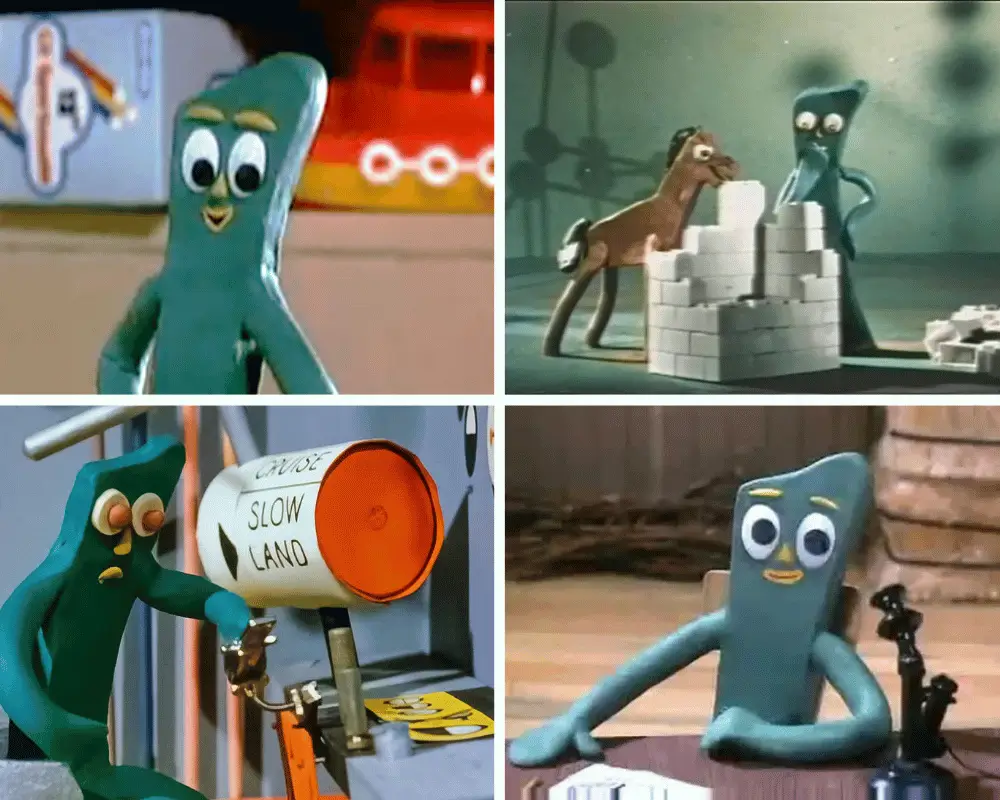
Art Clokey created Gumby after experimenting with abstract clay animation in the student film Gumbasia.
- Gumby appeared on television in the mid-1950s
- Clokey Films produced 22 longer episodes during 1956 and 1957
- The character and his horse Pokey were animated through stop motion
Gumby gave television a handmade world that did not resemble cel animation.
The official Gumby history says the character came to life in 1955 and traces the early productions through Clokey Films’ 1950s episodes.
The character’s repeated revivals, merchandise, and later pop-culture parodies made him one of the decade’s most durable creations.
Quick Draw McGraw (1959)
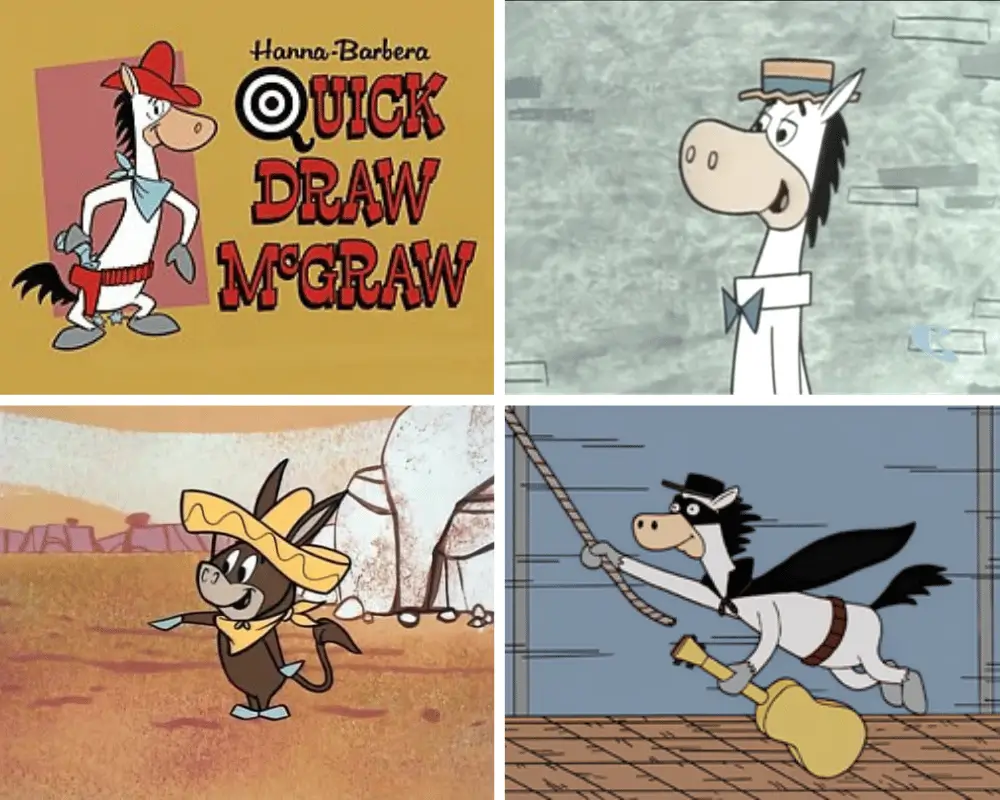
Quick Draw is a well-meaning horse lawman who usually creates as many problems as he solves.
- Daws Butler voiced Quick Draw and Baba Looey
- El Kabong is his masked, guitar-swinging alter ego
- The package also featured Augie Doggie and Snooper and Blabber
The series showed how quickly Hanna-Barbera could apply its television formula to another genre.
A Western parody, a family comedy, and a detective spoof could all share the same half hour without requiring completely different production systems.
Rocky and His Friends (1959)
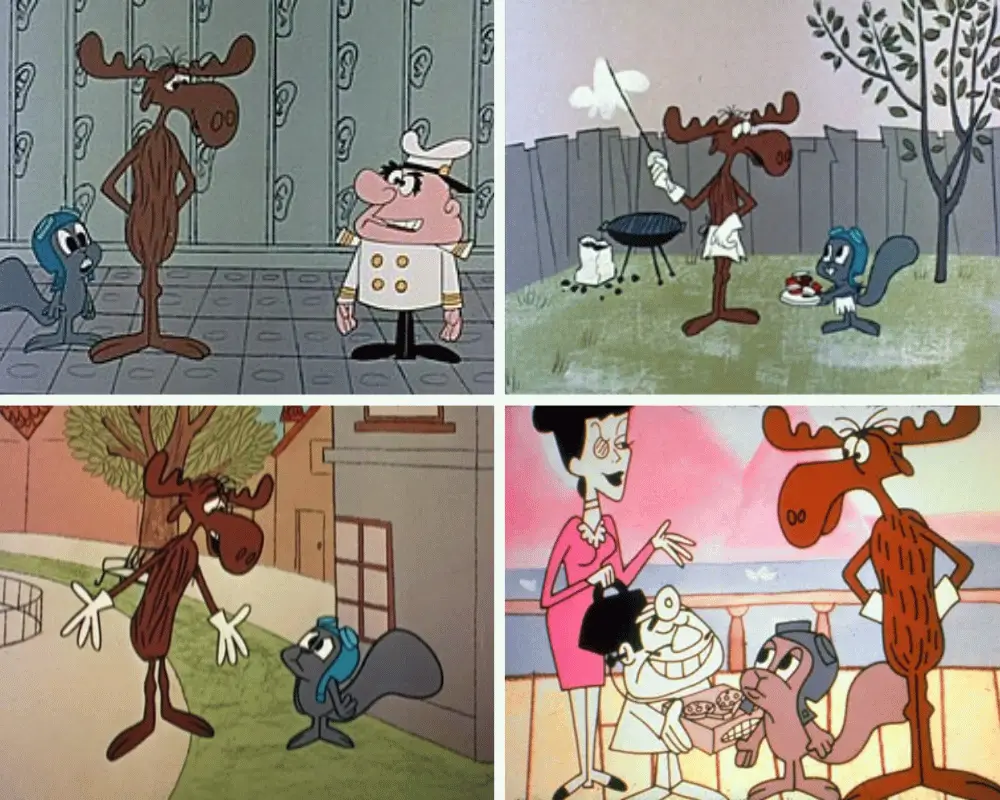
Rocky the flying squirrel and Bullwinkle the moose starred in serialized adventures filled with wordplay, political satire, and deliberate absurdity.
- Jay Ward and Bill Scott developed the series
- Boris and Natasha parody Cold War spies
- Supporting segments included Peabody’s Improbable History and Fractured Fairy Tales
The show trusted adults and children to laugh at different parts of the same script.
Its layered writing became a model for later animation that wanted to reach families without talking down to younger viewers.
Crusader Rabbit (1950)
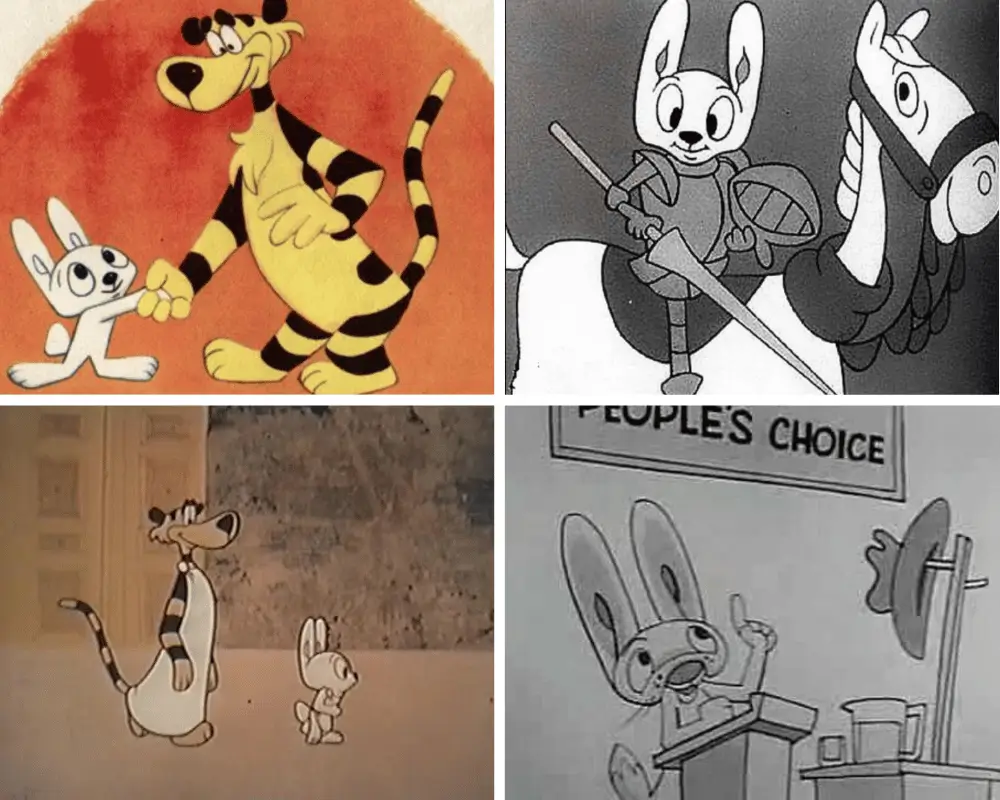
Crusader Rabbit and Rags the Tiger travel through short satirical adventures presented as continuing chapters.
- Alex Anderson and Jay Ward created the series
- The first episodes reached television in 1950
- The stories used narration and cliffhangers to compensate for limited movement
- Crusader Rabbit is generally recognized as the first animated series created specifically for television.
Cartoon Research’s history of the making of Crusader Rabbit explains how Anderson adapted limited-animation ideas to a television budget.
The show proved that original animation did not have to begin in movie theatres.
The Ruff & Reddy Show (1957)
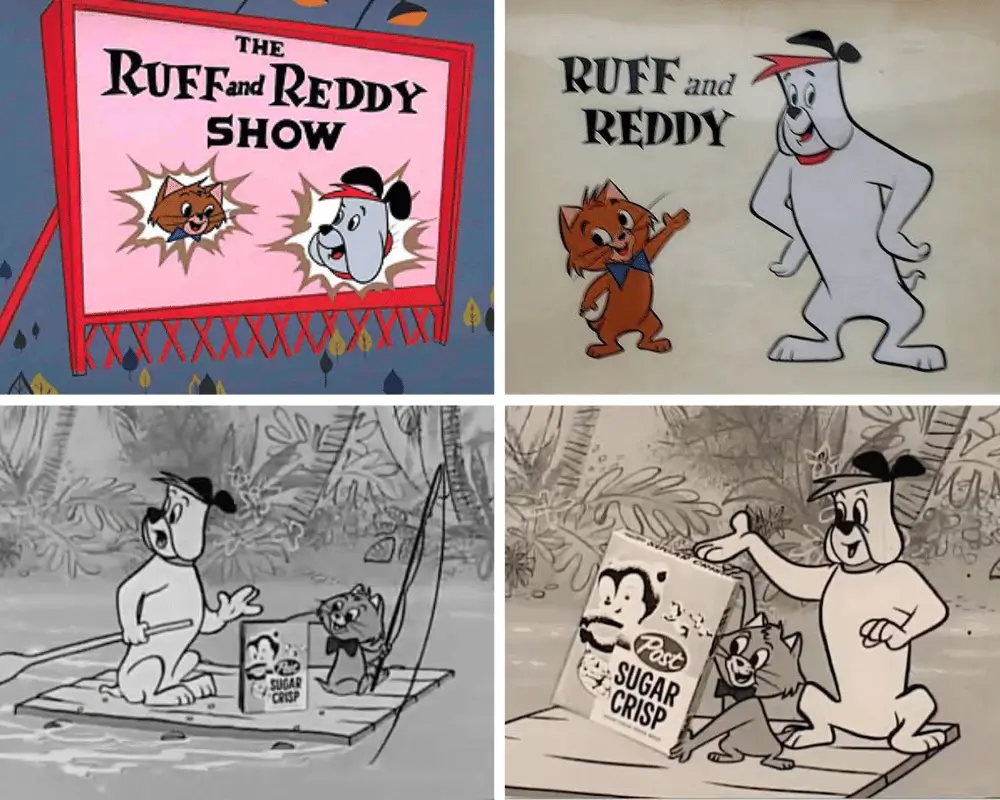
Ruff the cat and Reddy the dog travel through science-fiction, Western, and fantasy serials.
- The program debuted on NBC in December 1957
- It was Hanna-Barbera’s first television production
- The cartoon chapters appeared inside a live-action children’s show
William Hanna and Joseph Barbera created the series after MGM closed the animation unit where they had made Tom and Jerry.
The program proved their new company could produce original television cartoons at a price broadcasters would accept.
Everything from Yogi Bear to Scooby-Doo followed that first proof of concept.
The Huckleberry Hound Show (1958)
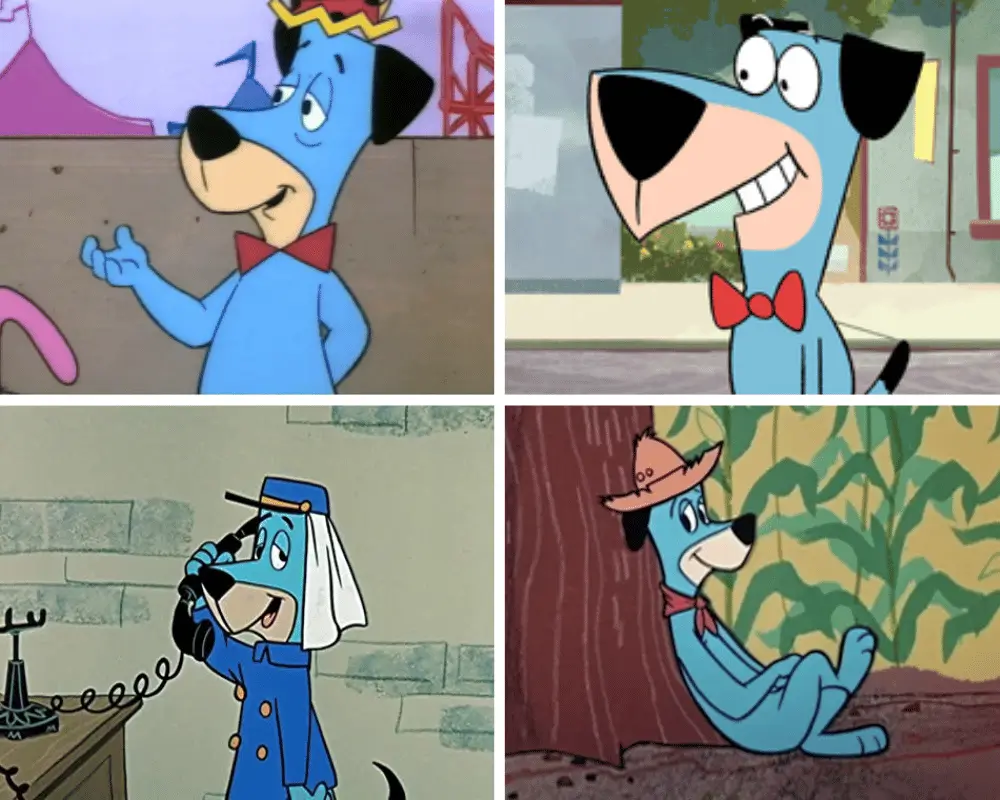
Huckleberry Hound’s calm Southern delivery carried a syndicated package that also introduced Yogi Bear and Pixie and Dixie.
- The show premiered in 1958
- Daws Butler voiced Huckleberry Hound
- It became both a ratings success and an industry milestone
The show won the Emmy for Outstanding Achievement in the Field of Children’s Programming at the 1960 ceremony.
The Television Academy identifies it as the first animated series to win an Emmy. That recognition helped establish made-for-television animation as more than a cheap substitute for theatrical cartoons. The Academy’s history of important Emmy firsts confirms the milestone.
The Huckleberry Hound Show also launched Yogi Bear and gave Hanna-Barbera the success it needed to dominate television animation during the 1960s.
How 1950s Cartoons Built Television Animation
The decade did not produce one perfect model for television cartoons.
It produced several models at once.
Crusader Rabbit proved an original animated serial could be made for television. Mighty Mouse Playhouse and Popeye demonstrated the value of theatrical libraries. Gumby showed that stop motion could become a television institution. Ruff and Reddy launched Hanna-Barbera, while Huckleberry Hound gave the new studio credibility and a breakout hit.
The animation was often limited because the budgets demanded it.
The influence was not.
The amount of work that went into cartoons back then! Cartoons were entirely handcrafted, Artists drew thousands of individual frames on paper using peg bars, which were then traced and painted onto clear plastic sheets called cels. These cels were layered over painted backgrounds and photographed one by one under a rostrum camera to create the illusion of movement.
Whatever happened to Interactive TV? In 1953, the show Winky Dink and You let children use a special static-cling plastic screen and crayons to draw directly on their TVs to help characters solve puzzles. It did require you to purchase a kit with a vinyl sheet, so just another money thing back then, same as today I guess lol.
Looney Tunes / Merrie Melodies are some good vintage toons which were released as shorts directed by Chuck Jones and Tex Avery, including the 1955 classic One Froggy Evening (introducing Michigan J. Frog) and the 1950 masterpiece Rabbit of Seville.