In December 2017, one of the world’s best-known medical journals put a cartoon bear’s clinical judgment under review.
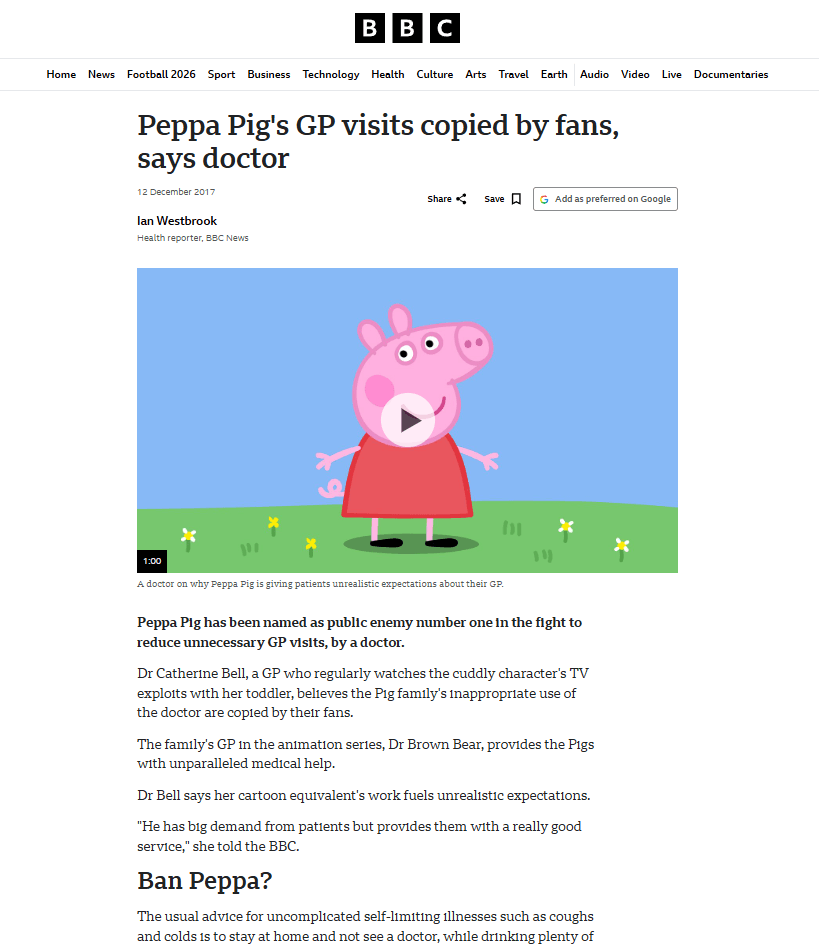
The Peppa Pig study is a real, peer-reviewed BMJ article written by a working general practitioner. It examines Dr Brown Bear’s behaviour through three mock clinical cases. Beneath the joke is a serious question: could television’s most helpful doctor give families unrealistic ideas about what their real GP should provide?
The article is funny, but the point behind it is not. Dr Catherine Bell used a children’s cartoon to say something sharp about patient expectations and the pressure facing primary care.
What Is the Peppa Pig Study?
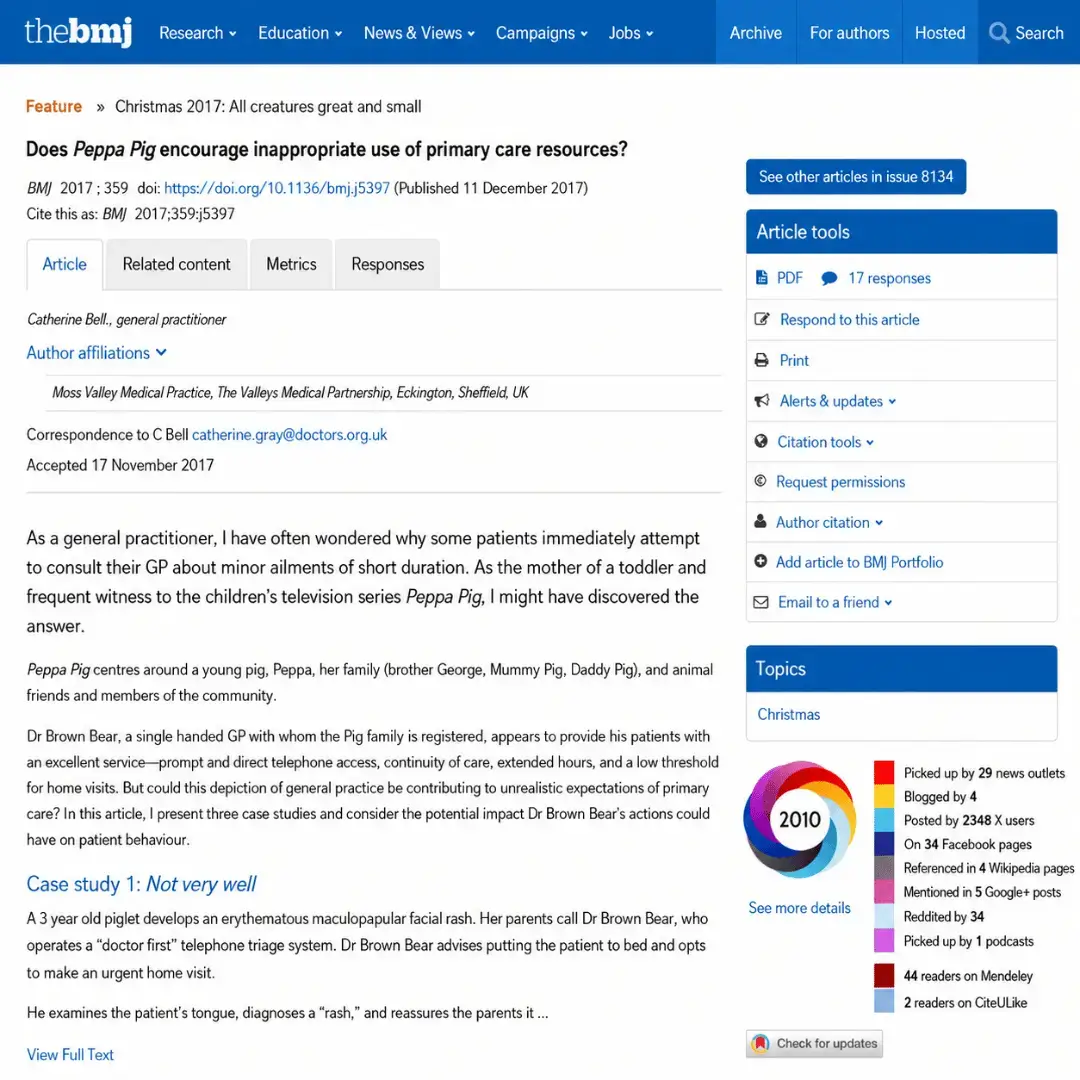
On 11 December 2017, the BMJ published Does Peppa Pig encourage inappropriate use of primary care resources? The author was Dr Catherine Bell, a general practitioner working near Sheffield.
The idea grew from something Bell had noticed at work. Some patients sought GP appointments for minor illnesses that would usually improve on their own.
At home, she was also spending plenty of time watching Peppa Pig with her toddler. That was when she noticed how clearly the series presents its own version of family medicine.
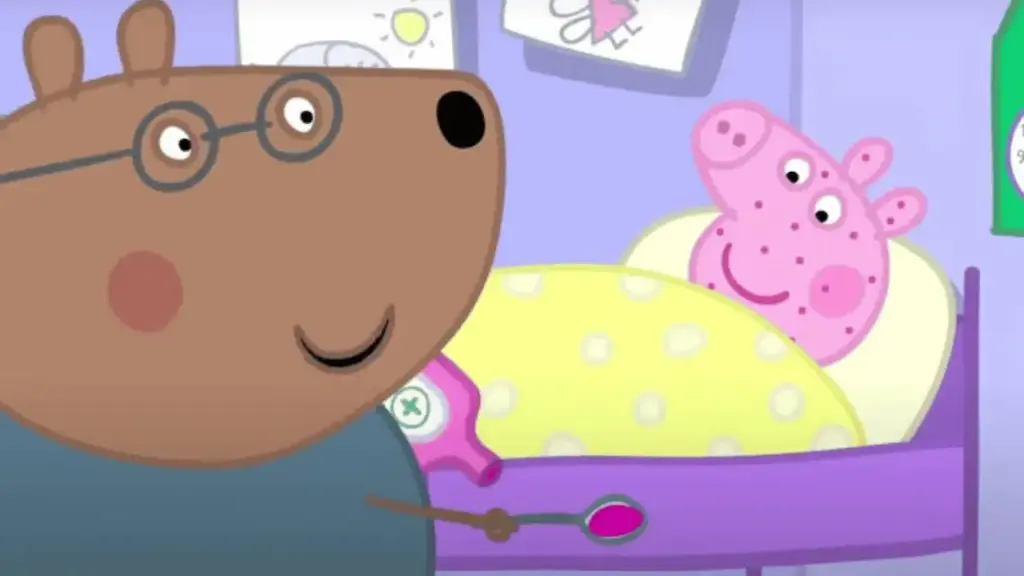
Dr Brown Bear answers immediately, makes home visits within minutes, and often arrives with medicine. Bell treated those scenes as clinical evidence and reviewed three episodes as a tongue-in-cheek case series.
The paper
Does Peppa Pig encourage inappropriate use of primary care resources?
- Author: Dr Catherine Bell, a general practitioner near Sheffield
- Published: the BMJ Christmas issue, 11 December 2017
- Format: a three-case review of Dr Brown Bear’s practice
- Citation: BMJ 2017;359:j5397
The venue is part of the story. The BMJ published the article in its Christmas issue, which is known for applying serious academic methods to unusual or light-hearted subjects.
That combination made the paper irresistible to the news media. Within days, Dr Brown Bear’s approach to primary care was being debated far beyond the pages of a medical journal.
Dr Brown Bear, Television’s Most Accessible Doctor
For anyone who has not spent much time with preschool television, Peppa Pig began in 2004 and grew into an international children’s franchise.
The Pig family’s doctor is Dr Brown Bear, a single-handed GP who appears to treat most of the town. His service would be remarkable in any healthcare system.
The Brown Bear service
- Answers his own phone immediately
- Makes home visits within minutes
- Provides continuity for the entire community
- Appears to be available whenever anyone calls
Bell lists these features in the language of general practice: direct telephone access, continuity of care, extended availability, and a remarkably low threshold for home visits.
That final point carries much of the joke. In real primary care, home visits are generally reserved for patients who cannot reasonably attend the practice. Dr Brown Bear treats them as the natural response to almost any complaint.
He is not a realistic portrait of an overworked GP. He is the doctor a small child would invent, endlessly patient, instantly available, and always ready to make everything better.
The Three Cases the Paper Reviews
Bell structures the article like a medical case series, using three episodes as Dr Brown Bear’s clinical record.
Each case includes a patient, a presenting complaint, the doctor’s response, and a dry assessment of whether that response was justified.
Case One: The Rash
Case one: the rash
Episode: Not Very Well
- The patient: a three-year-old piglet with a facial rash
- The response: an urgent home visit, reassurance, and medicine
- The verdict: unnecessary attendance and questionable prescribing
Bell notes that Peppa’s rash would probably have improved with or without treatment. She then pushes the joke further, suggesting that such enthusiasm for visiting a well child might resemble a private doctor trying to create more business.
The medicine raises the more serious concern. Prescribing something for a likely self-limiting viral illness can teach families that every minor condition requires treatment.
Case Two: The Cold
Case two: the cold
Episode: George Catches a Cold
- The patient: an 18-month-old piglet with cold symptoms
- The response: another prompt home visit and examination
- The advice: rest, warmth, and fluids, with no prescription
- The verdict: unnecessary visit, but sensible treatment advice
Dr Brown Bear earns partial credit in the second case. The home visit is difficult to justify, but his advice is sensible. George should rest, stay warm, drink something, and allow the cold to pass.
Bell recognizes that this episode models self-care rather than presenting medicine as the automatic answer.
In an article built around criticism, that small victory matters.
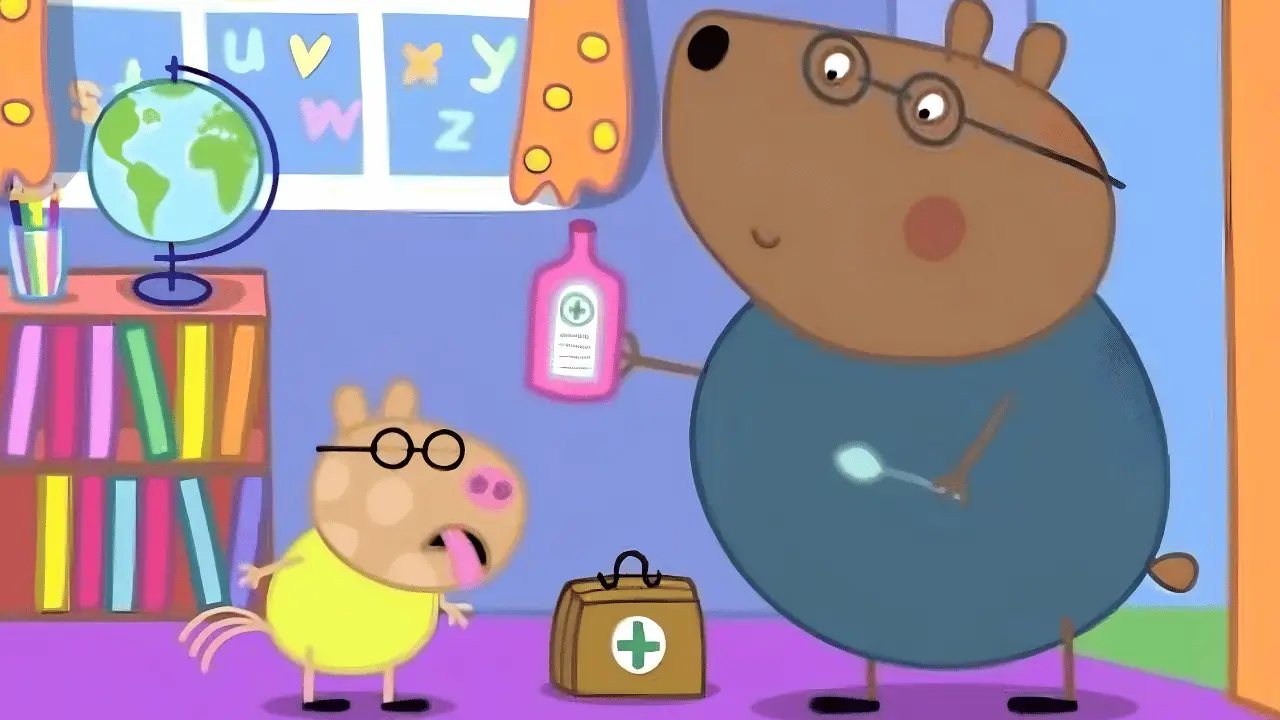
Case Three: The Playgroup Outbreak
Case three: the playgroup outbreak
Episode: Pedro’s Cough
- The patient: a three-year-old pony who coughs three times
- The response: an immediate callout and a dose of medicine
- The escalation: pink medicine for the playgroup and their parents
- The finale: Dr Brown Bear catches the cough and receives the same treatment
The third case is where the article’s joke becomes a full disciplinary hearing. Bell points to several problems:
- Confidentiality receives little attention
- Parental consent is not shown
- There is no visible record keeping
- Medicine is handed out with almost no clinical explanation
Bell jokingly diagnoses Dr Brown Bear with burnout. His patients have learned that a few coughs are enough to bring him running, and by the end of the episode he has become ill himself.
The humour lands because the underlying problem is recognizable. A doctor who is always available eventually becomes a doctor with no boundaries.
What the Peppa Pig Study Concluded
The article’s conclusion is careful rather than absolute.
Bell argues that Peppa Pig presents children and parents with a particular image of primary care.
That image includes: immediate access, rapid home visits, and medicine for minor illnesses. The concern is that repeated exposure could help create unrealistic expectations of real doctors.
Bell does not claim that the cartoon has been proven to change patient behaviour. She treats it as a hypothesis worth studying, especially because the series reaches such a large international audience.
She also gives the show credit. The article notes its positive messages about healthy eating, exercise, and road safety, and it calls for further research rather than declaring Peppa guilty.
Two final jokes helped make the article famous. The competing interests statement explains that Bell’s child has no sponsorship arrangement with Peppa Pig. The paper then closes by reporting that Dr Brown Bear was approached for comment but could not respond during a fitness to practise investigation.
That line appeared in many reports about the study, including a widely shared press summary. It was a perfect ending to an argument that had been serious all along.
Yes, It Is Real: The BMJ Christmas Issue
The BMJ has published a dedicated Christmas issue since 1982. It includes research and commentary on subjects that would look unusual in almost any other medical journal.
The tone may be playful, but the work is not meant to be a hoax. Christmas submissions still face editorial review, and research papers are expected to meet the journal’s usual standards of rigour and transparency.
The subjects are simply more entertaining.
One famous paper pointed out that parachutes had never been tested in a conventional randomized controlled trial. Another sits naturally beside the Peppa Pig article: Cartoons Kill.
Published in 2014, it compared death in children’s animated films with death in adult dramas. Its methods section listed the research setting as “Authors’ television screens, with and without popcorn”.
From the same family
Cartoons Kill, BMJ 2014
- 45 children’s animated films compared with 90 adult dramas
- Important characters faced about 2.5 times the death risk
- The measured risk of on-screen murder was also higher
- The idea began with concern over the opening of Finding Nemo
The tradition works because the joke stays in the subject and the presentation, not in fabricated data.
That is why an article about a cartoon bear can carry a DOI, receive responses from doctors, and remain part of the medical literature years later.
It also explains why doctors return to the Christmas issue when they want to make a serious point from an unexpected direction.
The Aftermath: Doctors Defend Dr Brown Bear
The Peppa Pig article quickly started a small but lively medical debate.
Some responses agreed that children’s television makes doctors look unrealistically available. Others argued that the show offers something valuable: it teaches young children that a doctor is kind, familiar, and nothing to fear.
In February 2018, the BMJ published one response under the title Peppa Pig: a helpful portrayal of visiting the doctor.
Its argument was straightforward. A brief examination and reassuring treatment may be an idealized version of medicine, but that can still help a frightened child understand what a doctor visit feels like.
Another response pointed to Curious George Goes to the Hospital as a stronger example of explaining healthcare to children in a realistic but comforting way.
The profession clearly understood the original paper as an invitation rather than a final verdict.
For a few weeks, doctors debated the clinical standards of a cartoon bear. Behind the jokes were real disagreements about access, patient expectations, and the way children learn what healthcare is supposed to look like.
My Take: The Show Was Never the Patient
Dr Brown Bear is not a health policy document. He exists to reassure a three-year-old watching from the sofa.
The lesson is simple: doctors are kind, illness usually passes, and being examined is nothing to fear.
Preschool storytelling often needs that kind of exaggeration. Fireman Sam reaches the fire immediately, and Dr Brown Bear reaches the patient before anyone has time to worry. Judged by that standard, he does his job perfectly.
The article never seriously argues that the character should behave like an exhausted real-world GP.
The satire is aimed at the gap between his fictional service and the reality of British general practice. Bell wrote at a time when primary care was under heavy pressure and immediate appointments or casual home visits were far from normal.
That makes the cartoon bear useful. His impossible availability becomes a measuring stick for everything patients may wish the real system could provide.
That is the clever part of the paper. Bell used a familiar children’s character to make readers think about access, workload, and expectations without turning the article into another dry policy report.
The One Fair Hit: The Pink Medicine
One criticism does stick to the show itself: the pink medicine.
Several of the medical stories end with a dose of something, even when the illness appears minor and likely to improve on its own. Young children learn through repetition, and the research on how cartoons shape children suggests that preschoolers can imitate behaviour they repeatedly see.
The quiet message is that medicine, rather than rest and time, is what makes an illness disappear.
That would be easy to change without losing Dr Brown Bear’s charm. Replace some of those bottles with reassurance, fluids, tissues, and an early night. The doctor remains comforting, but the treatment becomes more believable.
Quick Answers About the Peppa Pig Study
Is the Peppa Pig study real? Yes. It appeared in the BMJ Christmas issue on 11 December 2017. Its full title is Does Peppa Pig encourage inappropriate use of primary care resources?, and the formal citation is BMJ 2017;359:j5397.
Who wrote the Peppa Pig study? Dr Catherine Bell, a general practitioner working near Sheffield. The idea came from her experience with minor-illness consultations and from watching Peppa Pig with her toddler.
Did the study say Peppa Pig is bad for children? No. The article recognizes positive messages about healthy eating, exercise, and road safety. Its concern is narrower: Dr Brown Bear may present a level of access and prescribing that real primary care cannot match.
Which episodes does the paper review? Three: Not Very Well (the rash), George Catches a Cold (the cold), and Pedro’s Cough (the playgroup outbreak).
The Final Diagnosis
Dr Brown Bear may be the only children’s cartoon doctor to have inspired a peer-reviewed BMJ article questioning his clinical judgment.
That is less an insult than a strange kind of honour.
The Peppa Pig study has lasted because it works in two ways at once. It is a very good joke, but it is also a thoughtful argument about what patients expect from the people who care for them.
So now the consultation is open.
Which cartoon doctor would you trust with your own care?
And which one should be called before a review board?
Drop your picks in the comments, and the best diagnoses may help shape a follow-up post.