
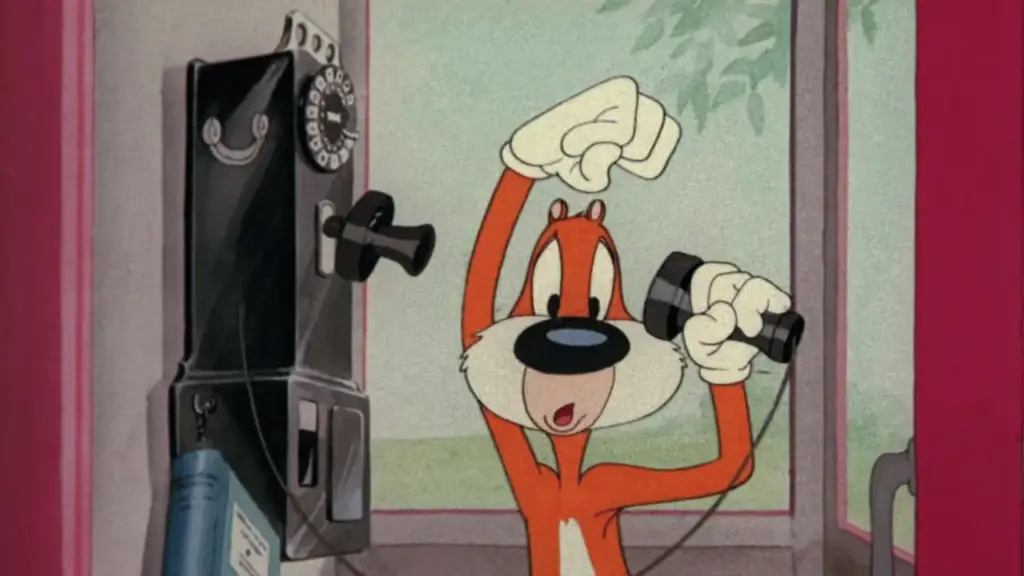
Most cartoon characters disappear quietly.
Screwy Squirrel went out with what looked like a death scene.
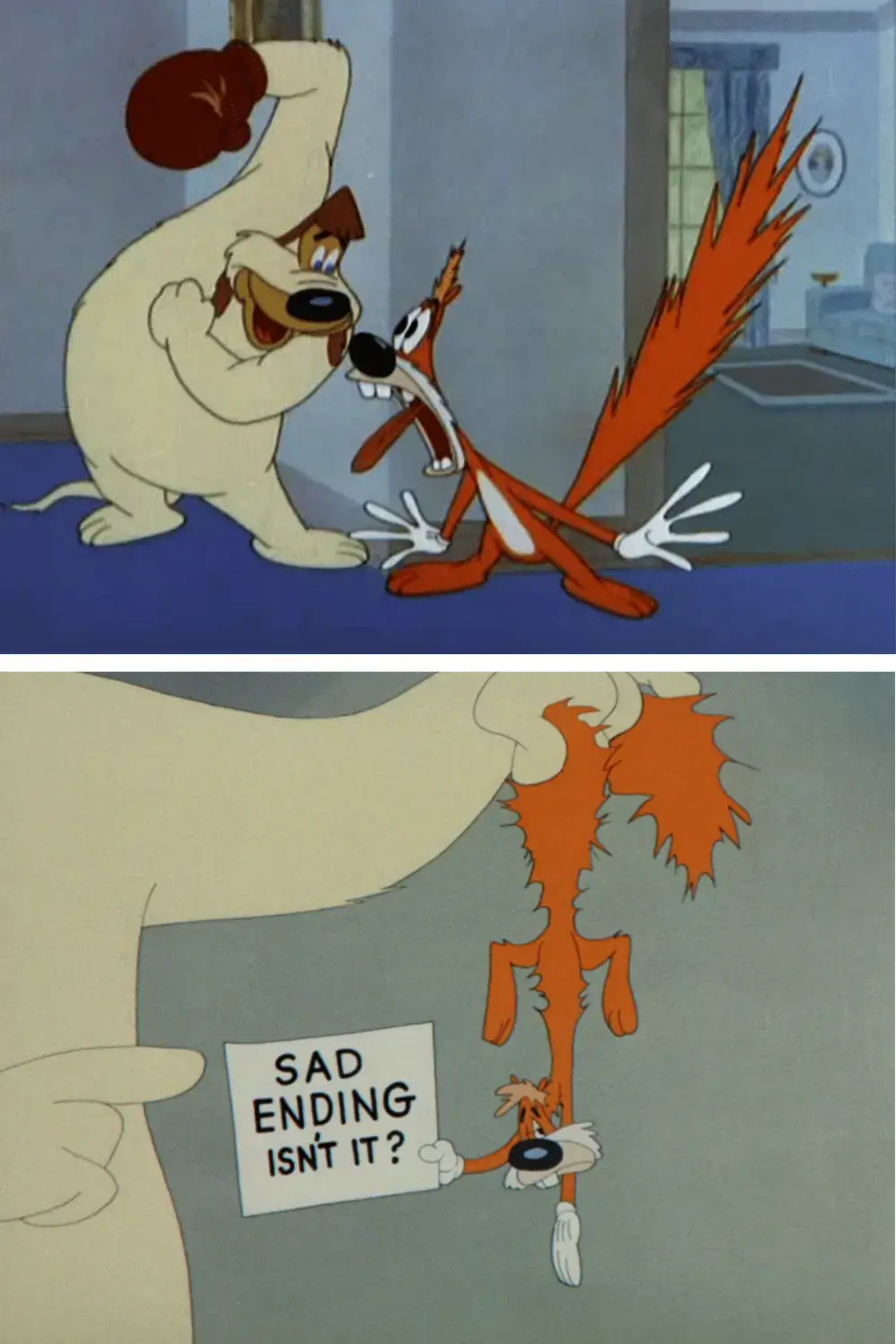
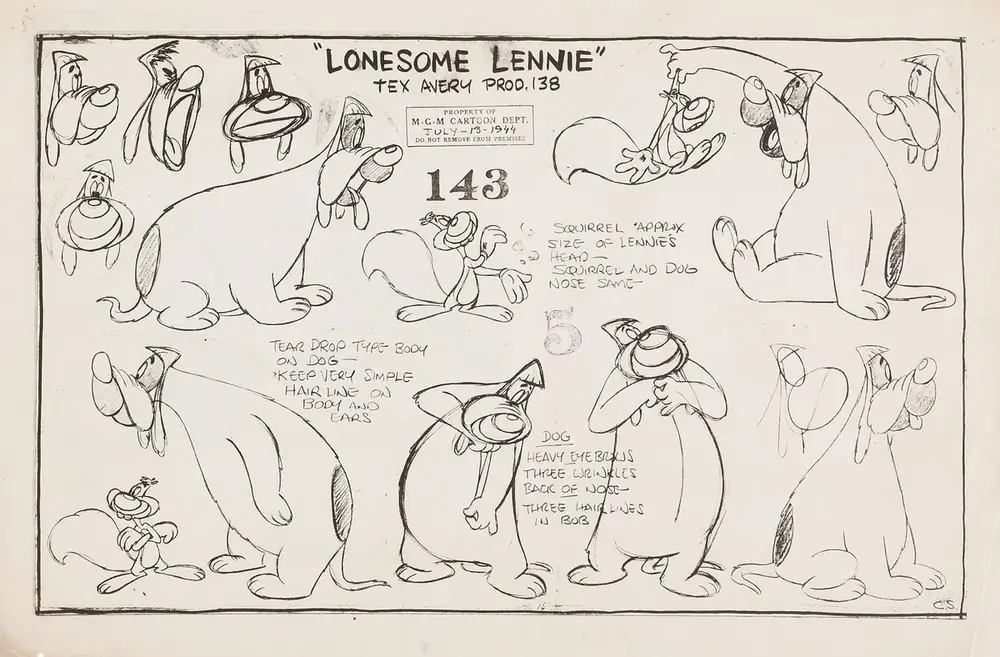
In the final short of his original MGM run, a huge dog named Lenny squeezes him until he stops moving. Lenny pulls the flattened squirrel from his pocket and mourns the loss of his little friend.
Then Screwy opens one eye and holds up a sign:
“Sad ending, isn’t it?”
The gag ended a run of only five theatrical cartoons.
It did not prove that Screwy literally died, and it did not remove him from animation forever. The character was revived decades later.
What really ended in 1946 was Tex Avery’s attempt to turn Screwy into a recurring MGM star.
The short answer
Five MGM shorts and one deliberately fake-looking funeral
- Tex Avery introduced Screwy in Screwball Squirrel in 1944
- The original series produced five shorts between 1944 and 1946
- Lonesome Lenny ends with Screwy apparently crushed by a hug
- His final sign turns the death into another fourth-wall joke
- Hanna-Barbera revived the character for television in 1993
Who Was Screwy Squirrel?
Screwy Squirrel was Tex Avery’s most aggressive answer to the cute cartoon animal.
He was noisy, dishonest, violent, and completely aware that he lived inside a cartoon.
That last trait mattered most.
Screwy did not simply defeat an opponent. He manipulated the soundtrack, pulled at the edge of the screen, multiplied himself, and set up jokes that made the audience part of the trick.
He behaved less like a character with goals and more like a walking collection of cartoon gags.
He Was Created to Destroy Cuteness
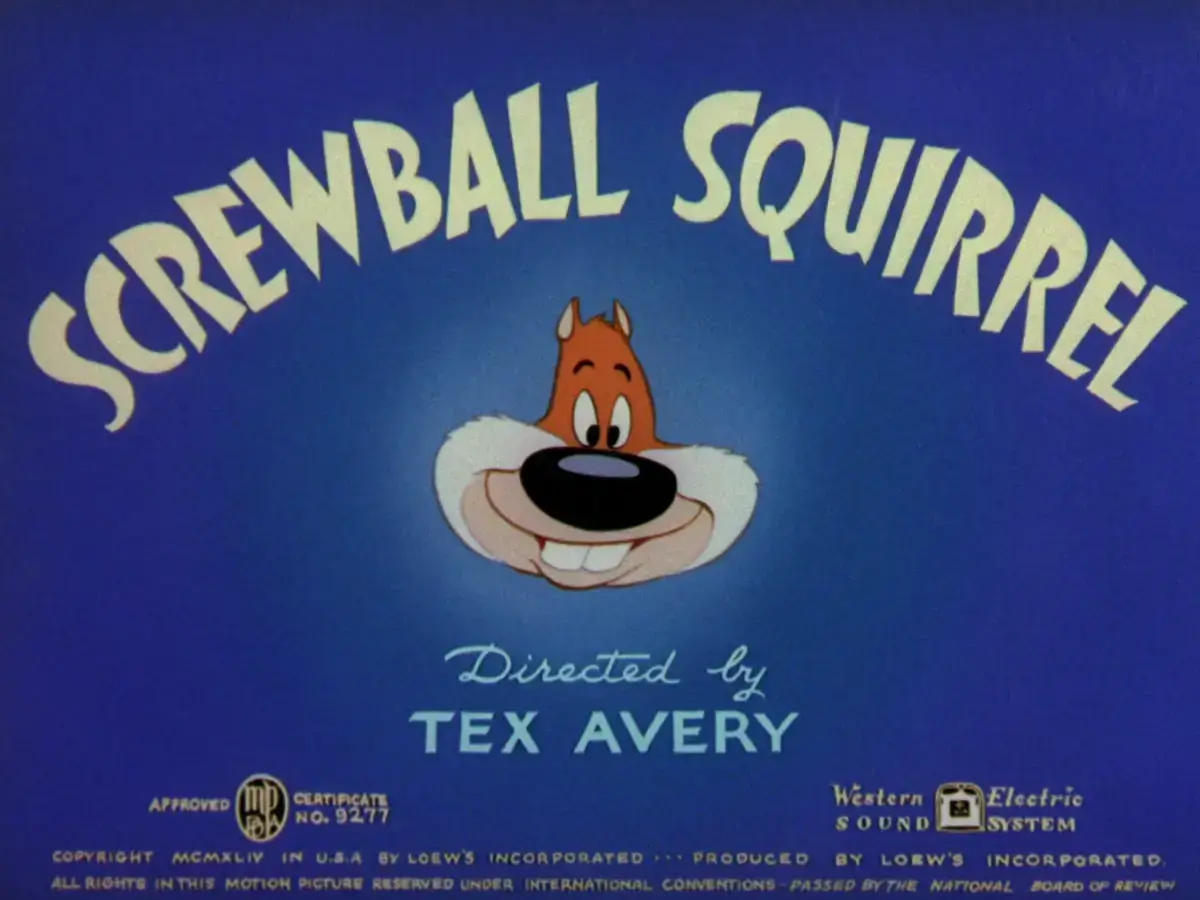
Screwball Squirrel opened in theatres on April 1, 1944.
The first scene looks as though it belongs to a much gentler cartoon.
Sammy Squirrel skips through a pleasant forest collecting nuts. He has soft features, a sweet voice, and a story about his cute woodland friends.
Screwy interrupts him and asks what kind of cartoon this is supposed to be.
When he hears the answer, he takes Sammy behind a tree and beats him up offscreen.
Screwy then takes over the picture.
Animation historian John Canemaker described the character as several steps beyond the early chaotic Daffy Duck. A Cartoon Research retrospective also notes that the opening deliberately attacks the softer Disney-style forest cartoon.
The message is clear without needing a production memo:
This will not be a cute squirrel story.
Five Screwy Squirrel Shorts
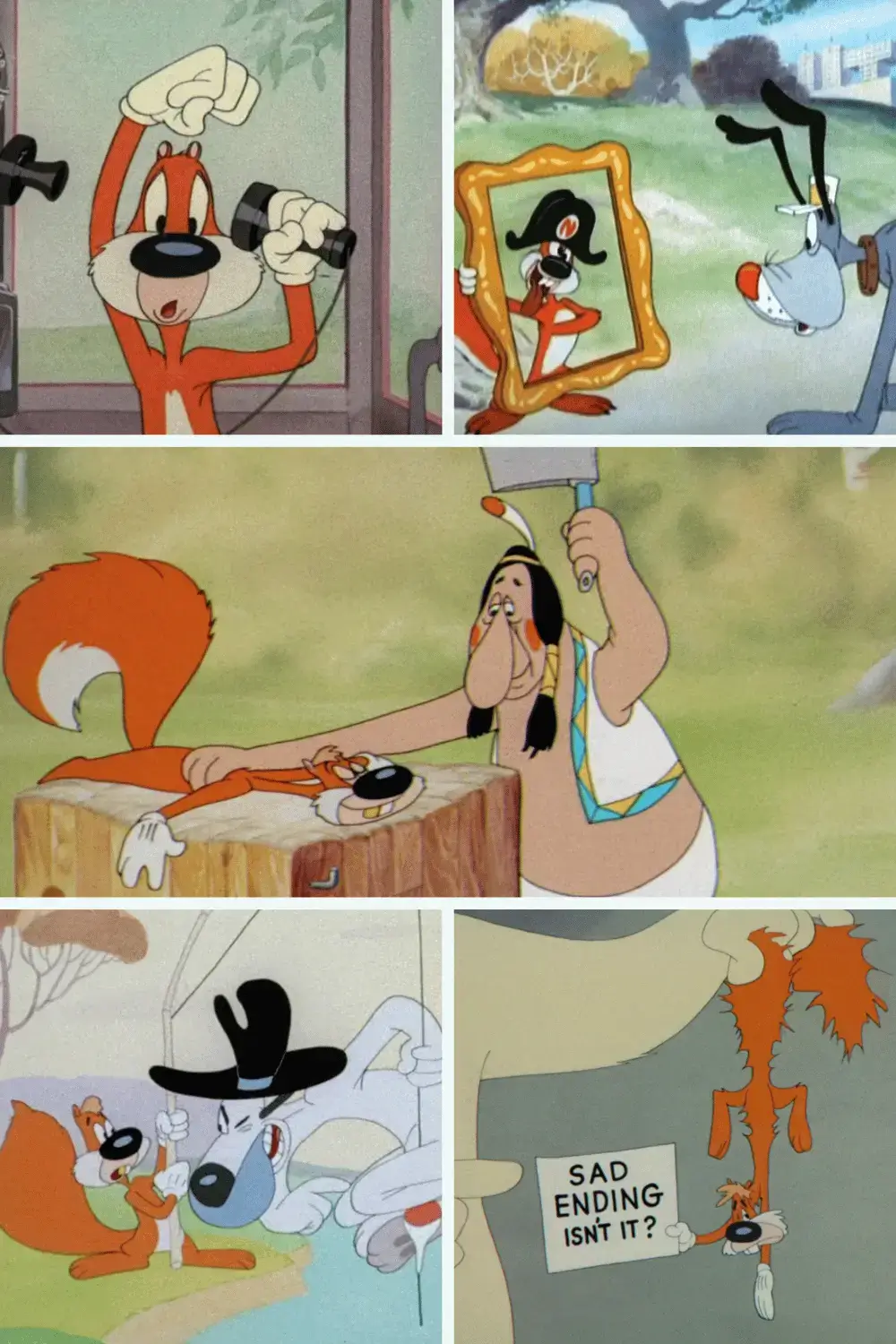
Screwy’s complete original MGM filmography fits into five titles.
| Short | Release | Main opponent |
|---|---|---|
| Screwball Squirrel | April 1, 1944 | Meathead |
| Happy-Go-Nutty | June 24, 1944 | Meathead |
| Big Heel-Watha | October 21, 1944 | Heel-Watha |
| The Screwy Truant | January 13, 1945 | Meathead |
| Lonesome Lenny | March 9, 1946 | Lenny |
The dates match the Tex Avery filmography, which identifies Lonesome Lenny as the final original Screwy cartoon.
Wally Maher supplied Screwy’s voice throughout the MGM run.
Meathead appears in three of the five shorts as a large dog built to absorb whatever punishment Screwy invents. He fills the same basic position as Elmer Fudd or Yosemite Sam, except Screwy gives him almost no reason to deserve the abuse.
Why Screwy Was Harder to Like Than Bugs Bunny
Bugs Bunny usually waits for someone else to start the fight.
Droopy remains calm while a louder character creates the problem.
Even the wild early Daffy Duck often feels as though he is celebrating his own freedom rather than trying to hurt someone.
Screwy rarely needs a reason.
He humiliates Meathead because Meathead is there. He attacks Sammy because Sammy’s cartoon sounds boring. He can be funny, but he is not designed to be admirable.
That distinction explains why the gags often outshine the star.
You remember the broken fourth wall, the multiplying squirrels, and the chase that ignores physical space. You may not remember anything Screwy wants beyond creating the next joke.
Leonard Maltin made a similar point in Of Mice and Magic, arguing that Avery pushed the character so far that little room remained for audience affection.
That does not make the shorts unsuccessful as comedy.
It makes Screwy a difficult character to build a lasting series around.
Did Tex Avery Hate Screwy Squirrel?
“Hate” may be stronger than the surviving evidence can prove.
It is fair to say that Avery came to dislike the character and did not consider him one of his successes.
According to an account preserved by animation historian Yowp on Tralfaz, Avery told Joe Adamson that Screwy “was never too funny.” Animator Mark Kausler also recalled sending Avery drawings of Screwy and later learning that Avery discarded material featuring the character.
The full Tralfaz account quotes Kausler’s conclusion that Screwy bothered Avery because the character never caught on the way Bugs Bunny had.
That last explanation is Kausler’s interpretation, not a direct Avery quotation.
What the evidence supports
- Avery produced only five original Screwy shorts
- He later dismissed the character as not very funny
- Kausler remembered Avery discarding Screwy drawings
- No surviving statement proves that one specific failure or audience reaction ended the series
Why Did Tex Avery Stop Making Screwy Cartoons?
There is no known studio memo giving one official reason.
The most likely answer is a combination of creative limits and personal preference.
Screwy was built to escalate. Each cartoon had to become faster, stranger, and more violent than the previous one.
That approach leaves little room for growth.
Droopy offered Avery a more flexible contrast. His calm personality made everyone around him look more frantic. Screwy was already operating at maximum intensity before a story even began.
Contemporary trade reviews were not uniformly hostile. Tralfaz has reproduced positive reviews for The Screwy Truant and other entries.
It is therefore too simple to say audiences rejected him.
The safer conclusion is that Screwy did not become a major star, while Avery himself lost interest in continuing the experiment.
What Happens in Lonesome Lenny?
Lonesome Lenny is a broad parody of John Steinbeck’s Of Mice and Men and the 1939 film adaptation.
A wealthy woman wants a small animal to keep her enormous dog Lenny company.
Lenny is friendly, lonely, and dangerously strong. He loves small animals so much that his hugs crush them.
Tex Avery voiced Lenny himself, using an imitation of actor Lon Chaney Jr.’s performance from the film version of Steinbeck’s story. Cartoon Research’s survey of Avery’s voice performers confirms Wally Maher as Screwy and Avery as Lenny.
The short follows the expected chase pattern until Lenny finally catches Screwy.
This time, Screwy does not immediately spring back into shape.
Lenny produces his flattened little friend and tells the audience that Screwy does not move anymore.
Then the sign appears.
Did Screwy Squirrel Actually Die?
Not in any firm, literal sense.
The ending is staged like a death scene, but Screwy opens an eye and participates in the final gag.
A character who can wink, move, and hold up a sign is not behaving like a corpse.
The better interpretation is that Avery faked Screwy’s death while genuinely ending his MGM series.
The apparent death makes the finale memorable because it turns the structure of Of Mice and Men into one last fourth-wall joke.
The character survives the gag. The original starring career does not.
Screwy Squirrel Came Back in 1993
The original claim that nobody animated Screwy again needs correcting.
Hanna-Barbera revived him for Droopy, Master Detective, a Fox Kids series launched in 1993.
The program generally included two Droopy stories and one new “Screwball Squirrel” segment. This version of the squirrel lived in a public park and tormented a park attendant named Dweeble and his dog Rumpley.
It was not a continuation made by Avery’s MGM unit, and the character design and comic timing were different.
It was still a genuine animated revival. Avery had died in 1980, so the new series arrived after his lifetime, but it disproves the broader claim that Screwy was never animated again.
The revival also creates an unusual connection to the studio history covered in my Hanna-Barbera cartoon guide.
Tex Avery’s failed MGM star eventually became supporting material in a Hanna-Barbera television production.
Was Slappy Squirrel Based on Screwy?
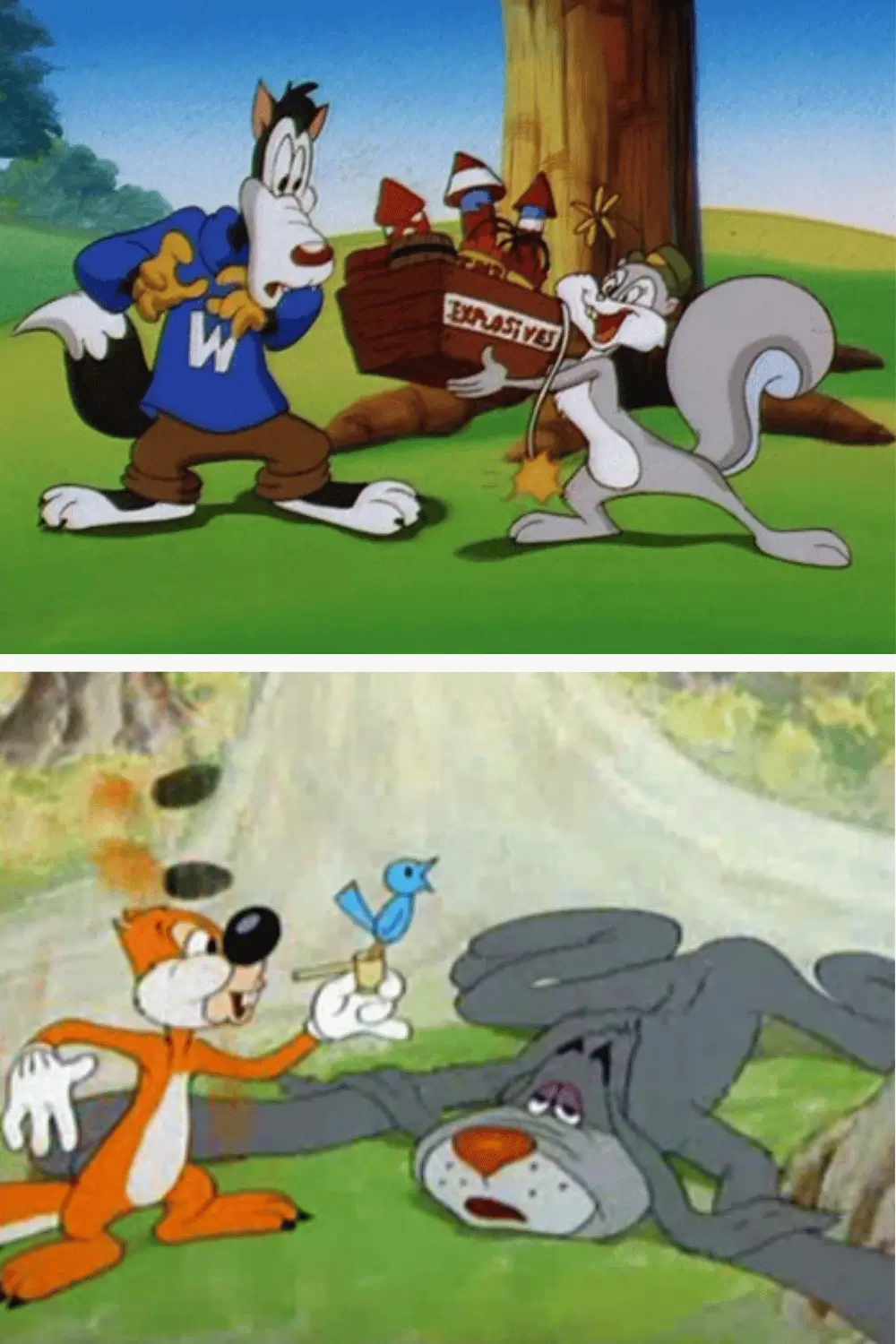
Slappy Squirrel from Animaniacs is frequently compared with Screwy.
Both characters understand old cartoon logic, use exaggerated violence, and torment slower opponents. Slappy’s fictional old cartoons even use the name “Slap-Happy Squirrel,” which sounds like a deliberate echo of screwball-era character names.
However, I have not found a strong creator quotation proving that Slappy was officially conceived as Screwy aged by 50 years.
The comparison is reasonable.
It should be presented as an influence or resemblance rather than a documented one-to-one adaptation.
Quick Answers About Screwy Squirrel
What happened to Screwy Squirrel? Tex Avery stopped making the original MGM series after five shorts. The last one, Lonesome Lenny, uses an apparent death as its final joke.
How many original Screwy Squirrel cartoons are there? Five: Screwball Squirrel, Happy-Go-Nutty, Big Heel-Watha, The Screwy Truant, and Lonesome Lenny.
Did Screwy Squirrel die? The ending pretends that Lenny crushed him, but Screwy opens an eye and holds up a sign. The scene is better understood as a fake death gag.
Who created Screwy Squirrel? Tex Avery created him for MGM. Wally Maher voiced Screwy in the five original shorts.
Who voiced Lenny? Tex Avery voiced Lenny in the final cartoon.
Why did Avery stop using Screwy? No single official reason survives. Avery later dismissed the character as not very funny, and Screwy never developed into a star on the level of Droopy.
Did Screwy appear after 1946? Yes. Hanna-Barbera revived him in new “Screwball Squirrel” segments for Droopy, Master Detective in 1993.
The Character Who Outlived His Own Ending
Screwy Squirrel was never built to be lovable.
He was built to wreck the cartoon around him.
That made the five original shorts fast, inventive, and unlike almost anything else MGM was producing. It also left the character with nowhere obvious to go.
Avery’s final joke gave Screwy the perfect ending for that kind of career.
He appears dead.
He interrupts his own funeral.
Then the cartoon stops before anyone can ask what comes next.
The original MGM run was over, but the squirrel was still too difficult to keep buried.
Which forgotten theatrical cartoon character should I investigate next?
Share your pick in the comments.

The opening scene of Screwball Squirrel smashing the cute Disney-fied squirrel was actually a personal jab by Tex Avery. Avery famously detested the “cute, talking-animal” realism that Walt Disney was pushing at the time, making Screwy the ultimate anti-Disney weapon.
The Tom and Jerry Connection: Screwy’s main foil, Meathead the Dog, was so popular as a generic “punching bag” character that MGM’s Hanna-Barbera unit actually stole his design and name to use as a rival cat in several Tom and Jerry shorts (like Sufferin’ Cats!).